






Abstract
The Expert Panel for Cosmetic Ingredient Safety (Panel) assessed the safety of 7 radish root-derived ingredients, most of which are reported to function as hair and skin conditioning agents in cosmetic products. Because final product formulations may contain multiple botanicals, each containing similar constituents of concern, formulators are advised to be aware of these constituents and to avoid reaching levels that may be hazardous to consumers. With radish root-derived ingredients, the Panel was concerned about the presence of anthocyanins and isothiocyanates in cosmetics. Industry should use current good manufacturing practices to minimize impurities that could be present in botanical ingredients. The Panel reviewed the available data and concluded that these ingredients are safe in cosmetics in the present practices of use and concentration described in this safety assessment when formulated to be non-sensitizing.
Keywords
Introduction
This assessment reviews the safety of the following 7 radish root-derived ingredients as used in cosmetic formulations:
Lactobacillus/Radish Root Ferment Extract Filtrate
Lactobacillus/Radish Root Ferment Filtrate
Leuconostoc/Radish Root Ferment Filtrate
Leuconostoc/Radish Root Ferment Lysate Filtrate
Raphanus Sativus (Radish) Root Extract
Raphanus Sativus (Radish) Root Juice
Raphanus Sativus (Radish) Root Powder
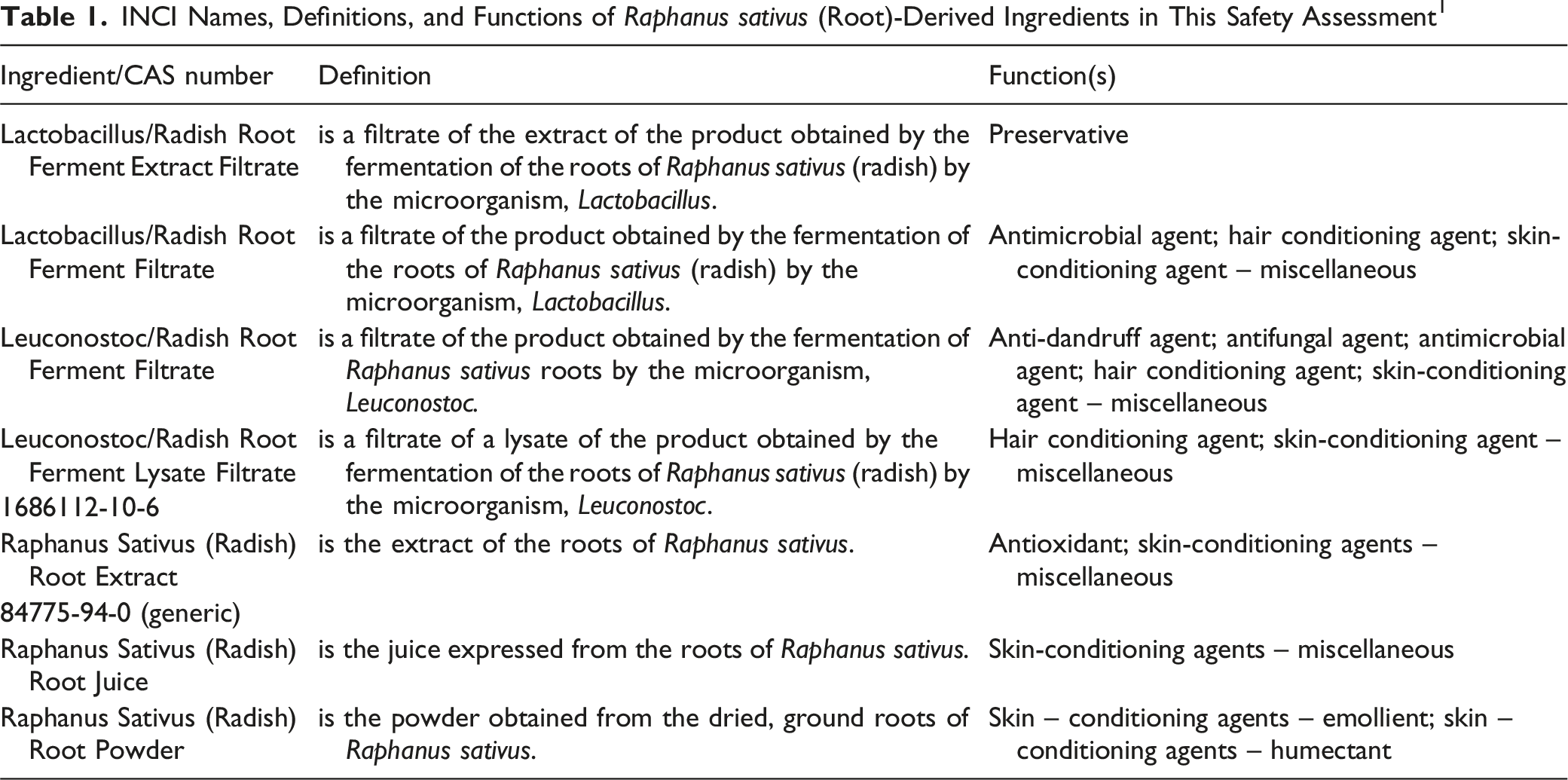
INCI Names, Definitions, and Functions of Raphanus sativus (Root)-Derived Ingredients in This Safety Assessment 1
The ingredients reviewed in this safety assessment are derived from radish roots, which are consumed as food; daily exposure from food use would result in much larger systemic exposures than those from use in cosmetic products. Therefore, the primary focus in this assessment of these ingredients is to evaluate the potential for effects from topical exposures.
Botanicals, such as radish root-derived ingredients, may contain hundreds of constituents. However, in this assessment, the Panel will assess the safety of each of the radish root-derived ingredients as a whole, complex mixture; toxicity from single components may not predict the potential toxicity of botanical ingredients.
This safety assessment includes relevant published and unpublished data that are available for each endpoint that is evaluated. Published data are identified by conducting an exhaustive search of the world’s literature. A listing of the search engines and websites that are used and the sources that are typically explored, as well as the endpoints that the Panel typically evaluates, is provided on the Cosmetic Ingredient Review (CIR) website (https://www.cir-safety.org/supplementaldoc/preliminary-search-engines-and-websites; https://www.cir-safety.org/supplementaldoc/cir-report-format-outline). Unpublished data are provided by the cosmetics industry, as well as by other interested parties.
The cosmetic ingredient names, according to the Dictionary, are written as listed above, without italics. In many of the published studies, it is not known how the substance being tested compares to the ingredient as used in cosmetics. Therefore, if it is not known whether the ingredients being discussed are cosmetic ingredients, the test substances will be identified by the standard taxonomic practice of using italics to identify genus and species (ie, “Lactobacillus/radish root…”, “Leuconostoc/radish root…”, or “Raphanus sativus (radish)….” However, if it is known that the substance is a cosmetic ingredient, the International Nomenclature Committee (INC) terminology will be used (eg, Raphanus Sativus (Radish) Root Extract).
Chemistry
Definition and Plant Identification
The ingredients in this report are related as derivatives from the same species, Raphanus sativus. Additionally, only ingredients made from the root portion of the Raphanus sativus plant are being reviewed. The definitions of these radish root-derived ingredients are presented in Table 1. 1 Leuconostoc/Radish Root Ferment Lysate Filtrate and Raphanus Sativus (Radish) Root Extract have the CAS Nos. 1686112-10-6 and 84775-94-0, respectively. The other ingredients do not have CAS numbers assigned.
Raphanus sativus is a tap root from the Brassicaceae family, which has been historically cultivated in Asia and Europe. 2 It grows in temperate climates at altitudes between 190 and 1240 m, is 30–90 cm high, and has thick edible roots which have a pungent taste and are of various sizes, forms, and colors. 3 Generically, the root is defined as the organ of a plant that absorbs and transports water and nutrients, lacks leaves and nodes, and is usually underground. 1
Four of these ingredients are filtrates of Raphanus sativus fermented with either the Lactobacillus or Leuconostoc microorganism. Both strains are gram-positive and anaerobic, occurring as non-spore forming rods and cocci, and are considered lactic acid bacteria because they consume carbohydrates to produce lactic acid. 4 A lysate is obtained by breaking down cell outer membranes via chemical or physical processes. 5 The filtrate ingredients in this report are made by removing the bacterial cells (alive or dead), potentially along with other larger weight molecules, from the fermented products. 5
Chemical Properties
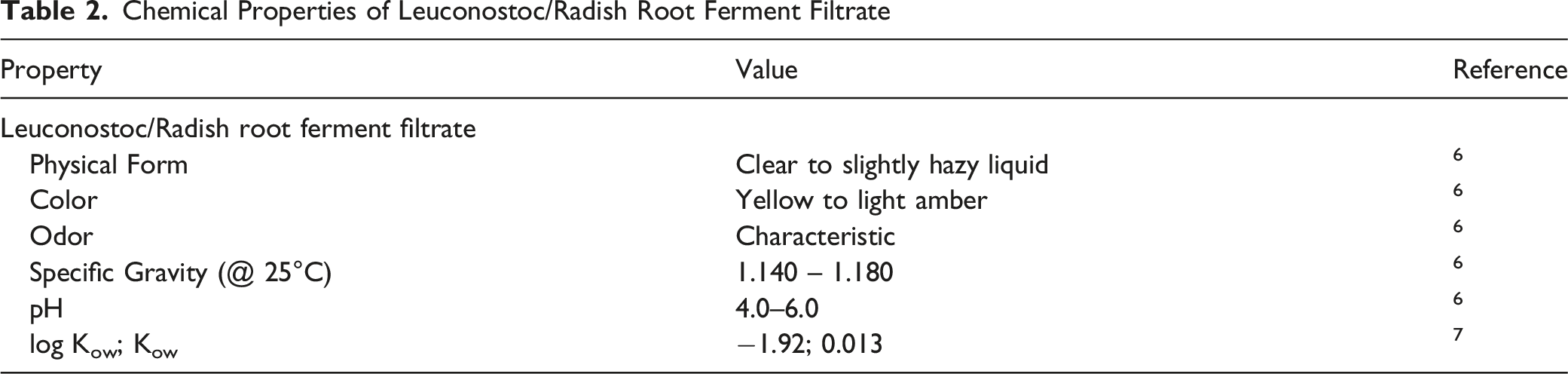
Leuconostoc/Radish Root Ferment Filtrate
Chemical Properties of Leuconostoc/Radish Root Ferment Filtrate
Method of Manufacture
In some cases, the definition of the ingredients, as given in the Dictionary, provides insight as to the method of manufacture, and these are captured below. Additionally, some of the methods described are general to the processing of the radish root-derived ingredients, and it is unknown if they apply to cosmetic ingredient manufacturing.
Lactobacillus/Radish Root Ferment Extract Filtrate
Lactobacillus/Radish Root Ferment Extract Filtrate is a filtrate of the extract of the product obtained by the fermentation of the roots of Raphanus sativus (radish) by the microorganism, Lactobacillus. 1
Lactobacillus/Radish Root Ferment Filtrate
Lactobacillus/Radish Root Ferment Filtrate is a filtrate of the product obtained by the fermentation of the roots of Raphanus sativus (radish) by the microorganism, Lactobacillus. 1
Leuconostoc/Radish Root Ferment Filtrate
Leuconostoc/Radish Root Ferment Filtrate is a filtrate of the product obtained by the fermentation of Raphanus sativus roots by the microorganism, Leuconostoc. 1
Leuconostoc/Radish Root Ferment Lysate Filtrate
Leuconostoc/Radish Root Ferment Lysate Filtrate is a filtrate of a lysate of the product obtained by the fermentation of the roots of Raphanus sativus (radish) by the microorganism, Leuconostoc. 1
Raphanus Sativus (Radish) Root Extract
Radish roots, sized 30 cm each, were made into powder by washing, cutting into ∼3 mm pieces, being dried at 60°C for 21 h, and then being blended and sieved with a 60 mesh sifter. 8 The resulting powder was macerated at a 1:10 ratio at ∼24°C using 3 different solvents (hexane, ethyl acetate, and ethanol) for 8, 16, and 24 h. The resulting suspensions were filtered and evaporated at 45°C.
One gram of powdered black Raphanus sativus roots was used to make an ethanolic radish root extract. 9 Aqueous ethanol, 50 mL, 50% (v/v) was used to extract the powder on a magnetic stirrer for 120 min at room temperature, and then centrifuged at 5000 rpm for 10 min at 4°C.
Raphanus Sativus (Radish) Root Juice
Fresh Raphanus sativus roots were washed well and processed in an electric blender to obtain 2 L of fresh root juice. 10 The Raphanus sativus root juice was then filtered and concentrated in a rotary evaporator at 35 ± 5°C under reduced pressure. The resulting material was freeze dried to obtain a semisolid mass of 40 g, 11.3% w/w, which was then dissolved in distilled water.
Raphanus Sativus (Radish) Root Powder
White radish roots were washed with water, sliced, and dried at 50°C. 11 The dried slices of white radish were ground to a powder and sieved through a 40 mesh sifter. The resulting product was stored in a sealed bag and frozen at −20°C until extraction. In another study, peeled and unpeeled black radish roots were sliced and freeze-dried before being ground to a fine powder and sifted through a 0.5 mm mesh sieve; the powdered samples were stored in air-tight containers at 4°C. 9
Composition and Impurities
Leuconostoc/Radish Root Ferment Filtrate
A supplier has reported that a sample of Leuconostoc/Radish Root Ferment Filtrate, with a pH 4.0–6.0, comprises 48.80% water, 30.60% protein, 20.10% phenolics (tested as salicylic acid), and 0.50% polysaccharide content. 12 Specifications for this ingredient provide the following parameters: <20 ppm heavy metals, <10 ppm lead, <2 ppm arsenic, and <1 ppm cadmium. 6 Additionally, the ingredient was specified to be positive to ninhydrin, and potentially contain 18%–22% phenolics (tested as salicylic acid), and 0.10–0.50% bacteriocins (quantified via high-performance liquid chromatography).
Raphanus Sativus (Radish) Root Extract
In one study, a 16-h, crude ethyl acetate Raphanus sativus root extract contained the highest total phenolic and flavonoid content at 37.37 mg gallic acid equivalents (GAE)/g, and 5.74 mg quercetin equivalents (QE)/g, respectively. 8 A compositional analysis of fresh radish root extracts yielded a flavonoid content of 267.47 ± 6.38 mg quercetin/100 g, total phenolic content of 371.59 mg/100 g, and 380 ± 0.87 g/100 g potassium (highest mineral content). 13 Silica gel chromatography of a dichloromethane extract of Raphanus sativus roots yielded the following constituents: 3-(E)-(methylthio)methylene-2-pyrrolidinethione, a mixture of 4-methylthio-3-butenyl isothiocyanate and 4-(methylthio)butyl isothiocyanate, β-sitosterol, β-sitosteryl-3β-glucopyranoside-6'-O-palmitate, monoacylglycerols, and a mixture of α-linolenic acid and linoleic acid. 14 A methanolic extract of Daikon (vegetable; a Raphanus sativus var.) was the most constituent-rich, compared to extracts made with water, petrolatum, ethanol, and chloroform; phytochemical screening showed the presence of alkaloids, flavonoids, tannins, saponins, steroids, terpenoids, and glycosides. 15
High performance liquid chromatography (HPLC) analyses were used to compare glucosinolate, anthocyanin, and total isothiocyanate concentrations in 8 varieties of radish sprouts and 8-wk old radish tap roots. 16 No anthocyanins were found in the mature tap roots; glucosinolate and isothiocyanate concentrations were significantly greater in the sprouts than in the mature tap roots.
Varying amino acid compositions were observed in anionic and cationic isoperoxidases isolated from crude Raphanus sativus enzyme extracts. 17 In another amino acid sequence analysis, 3 isoferredoxin isoproteins were purified from white radish roots, while 2 isoferredoxin isoproteins were obtained from the leaves. 18 Although the amino acid sequence of the root and leaf-derived isoferredoxin isoproteins differed, no significant physiological differences in the coupling activities of these ferredoxin isoproteins were measured in the NADP+-photoreduction system of radish chloroplasts and glutamate synthase.
Use
Cosmetic
The safety of the cosmetic ingredients addressed in this assessment is evaluated based on data received from the US Food and Drug Administration (FDA) and the cosmetics industry on the expected use of these ingredients in cosmetics, and does not cover their use in airbrush delivery systems. Data are submitted by the cosmetic industry via the FDA’s Voluntary Cosmetic Registration Program (VCRP) database (frequency of use) and in response to a survey conducted by the Personal Care Products Council (Council) (maximum use concentrations). The data are provided by cosmetic product categories, based on 21CFR Part 720. For most cosmetic product categories, 21CFR Part 720 does not indicate type of application and, therefore, airbrush application is not considered. Airbrush delivery systems are within the purview of the US Consumer Product Safety Commission (CPSC), while ingredients, as used in airbrush delivery systems, are within the jurisdiction of the FDA. Airbrush delivery system use for cosmetic application has not been evaluated by the CPSC, nor has the use of cosmetic ingredients in airbrush technology been evaluated by the FDA. Moreover, no consumer habits and practices data or particle size data are publicly available to evaluate the exposure associated with this use type, thereby preempting the ability to evaluate risk or safety.
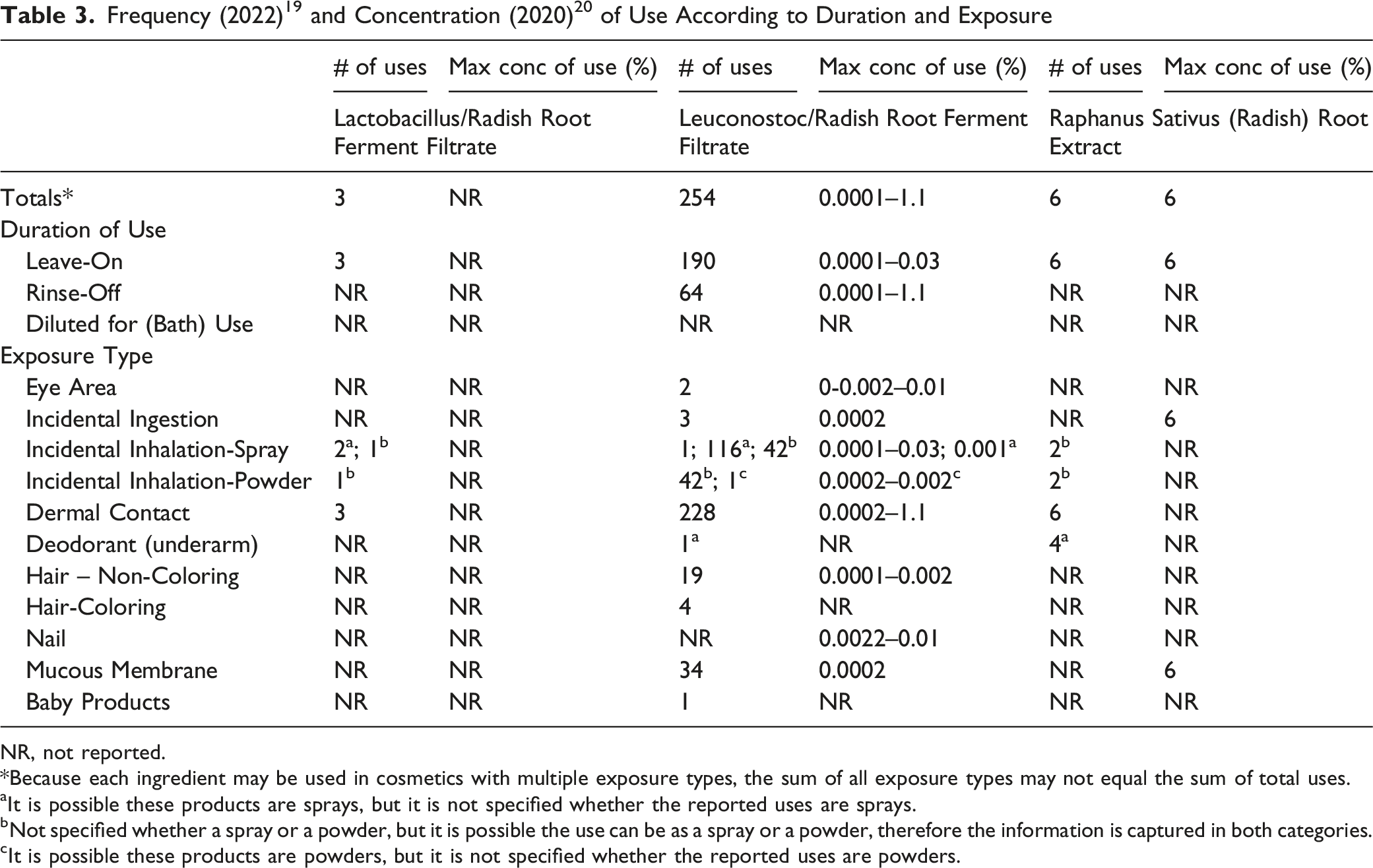
NR, not reported.
*Because each ingredient may be used in cosmetics with multiple exposure types, the sum of all exposure types may not equal the sum of total uses.
aIt is possible these products are sprays, but it is not specified whether the reported uses are sprays.
bNot specified whether a spray or a powder, but it is possible the use can be as a spray or a powder, therefore the information is captured in both categories.
cIt is possible these products are powders, but it is not specified whether the reported uses are powders.
Radish root-derived ingredients have been reported to be used in products that may lead to incidental ingestion and exposure to mucous membranes; for example, Raphanus Sativus (Radish) Root Extract is reported to be used in a lipstick at up to 6%. 20 Leuconostoc/Radish Root Ferment Filtrate is reported to be used in products that may come into contact with the eyes; for example, at up to 0.01% in other eye makeup preparations. 20 Leuconostoc/Radish Root Ferment Filtrate has 1 reported use in baby lotions, oils, powders, and creams. Additionally, Leuconostoc/Radish Root Ferment Filtrate is reported to be used in products that could be potentially inhaled, for example, Leuconostoc/Radish Root Ferment Filtrate is used in spray face and neck products at up to 0.03%. 20 In practice, as stated in the Panel’s respiratory exposure resource document (https://www.cir-safety.org/cir-findings), most droplets/particles incidentally inhaled from cosmetics would be deposited in the nasopharyngeal and tracheobronchial regions and would not be respirable (ie, they would not enter the lungs) to any appreciable amount.
Although products containing some of these ingredients may be marketed for use with airbrush delivery systems, this information is not available from the VCRP or the Council survey. Without information regarding the frequency and concentrations of use of these ingredients, and without consumer habits and practices data or particle size data related to this use technology, the data are insufficient to evaluate the exposure resulting from cosmetics applied via airbrush delivery systems.
All of the radish root-derived ingredients named in the report are not restricted from use in any way under the rules governing cosmetic products in the European Union. 21
Non-Cosmetic
According to the US FDA, commercially-produced products of carbohydrates, such as glucose, sucrose, or lactose, which undergo lactic acid fermentation, are generally recognized as safe (GRAS) for their intended use in foods [21CFR § 184.1016]. Leuconostoc is an approved bacterial strain used to produce a butter starter distillate [21CFR § 184.1848].
Furthermore, Raphanus sativus roots are consumed as cruciferous vegetables worldwide, both raw and cooked, in pickles, salads, and curries. 22 Of note, Raphanus sativus fermented with Lactobacillus strains is consumed as a non-salted dish called Sinki in South Asia. 23 The Korean dish, kimchi, comprises variations of a mixed vegetable brine fermentation (achieved with lactic acid bacteria, such as Lactobacillus or Leuconostoc), and often includes radish roots. 24 Generally, Lactobacillus and Leuconostoc strains are used in the lactic acid fermentation of dairy, sauerkraut, and various food products.25,26
Toxicokinetic Studies
No relevant toxicokinetics studies on radish root-derived ingredients were found in the published literature, and unpublished data were not submitted. In general, toxicokinetics data are not expected to be found on botanical ingredients because each botanical ingredient is a complex mixture of constituents.
Toxicological Studies
Subchronic Toxicity Studies
Oral
Raphanus Sativus (Radish) Root Extract
Groups of albino rats were dosed with 0, 150, 250, 350, 450, or 550 mg/kg bw of methanolic Daikon (vegetable; a Raphanus sativus var.) extract, in the diet, for 90 d. 15 Body weight, as well as various hematological parameters and enzymes, including red blood cell count, hemoglobin, white blood cell count, aspartate aminotransferase (AST), alanine transaminase (ALT), acid phosphatase (ACP), urea, uric acid, and protein were measured and compared at 30 and 90 d of treatment. Upon sacrifice, heart, kidney, liver, spleen, and brain weights were also measured, and those of treated animals were compared to controls. No statistically significant differences were observed between the mean body weights, organ weights, and measured hematological parameters in treated animals, compared to controls, throughout the experiment.
Developmental and Reproductive Toxicity Studies
Developmental and reproductive toxicity studies were not found in the published literature, and unpublished data were not submitted.
Genotoxicity Studies
Leuconostoc/Radish Root Ferment Filtrate
The genotoxicity potential of Leuconostoc/Radish Root Ferment Filtrate was evaluated in a bacterial reverse mutation assay (Ames test) at concentrations of 1.5, 5, 15, 50, 150, 500, 1500, and 5000 µg/plate, in distilled water, using the following strains: Salmonella typhimurium TA98, TA100, TA1535, TA 1537, and Escherichia coli WP2 uvrA. 27 Distilled water served as the negative control and appropriate positive controls were used. The test substance did not induce a mutagenic effect in the presence or absence of metabolic activation.
Raphanus Sativus (Radish) Root Juice
In a Comet assay, the genotoxic potential of radish juice made from white, red, and large red Raphanus sativus tubers, as well as dichloromethane extracts of hydrolyzed Raphanus sativus white and cherry belle, red tubers, was tested in breast adenocarcinoma (MCF-7), chronic myelogenous leukemia (K562), and colorectal cancer (HT-29) cell lines. 28 Each cell line was incubated with 500 µl of the root juice and 50 µg/mL of the dichloromethane juice extract; porcine aortic endothelial (PAE) cell lines were used as the negative control and immortalized cell lines exposed to 0.01% hydrogen peroxide for 20 min were used as positive controls. Tail length, percent deoxyribonucleic acid (DNA), and tail moment measurements were used to evaluate the extent of DNA damage. Juices from all 3 tubers exhibited significantly lower DNA damage in the porcine aortic endothelial cells, compared to positive controls; the juice extracts were not considered genotoxic towards normal PAE cells. The breast adenocarcinoma cell line, MCF-7, showed the greatest amount of genetic fragmentation among all cancer cells, and the white tuber root juice was the most genotoxic towards aberrant cell lines.
Carcinogenicity Studies
Carcinogenicity studies were not found in the published literature, and unpublished data were not submitted.
Other Relevant Studies
Antioxidant and Radical Scavenging Potential
Raphanus Sativus (Radish) Root Extract and Raphanus Sativus (Radish) Root Juice
A freeze-dried juice and methanolic extract of white Raphanus sativus roots were evaluated for tyrosinase inhibition, 2,2-diphenyl-1-picrylhydrazyl (DPPH) radical scavenging ability, cytotoxicity, and l-ascorbic acid content. 29 The ability of Raphanus sativus root extract and root juice to scavenge DPPH, superoxide anion, and singlet oxygen was measured in triplicate and used to calculate average half-maximal inhibitory concentration (IC50) values, compared to l-ascorbic acid and Trolox©, a water soluble analog of Vitamin E. Various concentrations of the Raphanus sativus root extract and root juice in 20% v/v propylene glycol (in water) were tested, in tandem with l-ascorbic acid and licorice extract as reference tyrosinase inhibitors, using the DOPAchrome method. Lactate dehydrogenase (LDH) activity in fibroblasts treated with the root extract and root juice, compared to l-ascorbic acid and sinapic acid, was used to measure cytotoxic activity. Five replicates of the root extract and root juice were titrated with 0.1 N iodine to determine the l-ascorbic acid or vitamin C content. The freeze-dried juice showed higher potential for tyrosinase inhibition compared to the methanolic extract (IC50 = 3.09 mg/mL vs IC50 = 9.62 mg/mL). The radical scavenging activity of the freeze-dried juice on DPPH radical, superoxide anion radical, and singlet oxygen were also greater compared to the methanolic extract (IC50 = 0.64, 4.20, 1.42 mg/mL vs IC50 = 1.25, 6.28, 2.40 mg/mL). Although a dose-dependent release of LDH was observed for both the root extract and root juice, the observed cytotoxicity was relatively lower than in the reference antioxidants. The authors surmised that the higher l-ascorbic content of 1 mg of freeze-dried Raphanus sativus root juice compared to the root extract (24.11 µg vs 8.28 µg), as well as higher phenolic content, may be responsible for greater anti-tyrosinase and radical scavenging activity, possibly lending to skin lightening.
Raphanus Sativus (Radish) Root Extract
Raphanus sativus radish root extracts were eluted using 3 solvents with varying polarities (hexane (non-polar), ethyl acetate (semi-polar), and ethanol (polar)) for 8, 16, and 24 h each, to determine which extract would have the highest phenolic or flavonoid content. 8 The radish root extract extracted with ethyl acetate for 16 h was found to have the highest flavonoid content, and was used for further testing. The ethyl acetate radish root extract was tested for phenolic and flavonoid content stability based on changes in pH (4, 5, 6, and 7) and heating temperature (70, 80, 90°C). In conjunction, the IC50 value of the ethyl acetate root extract was measured in a DPPH assay. Overall, decreases in total phenolic and flavonoid content, as well as antioxidant activity, were observed when the radish root extract was exposed to increasing heat and pH. Statistically significant interactions between change in pH and heating temperature with antioxidant activity were observed. The radish root extract with a pH of 4 at a temperature of 70°C had an IC50 value (1071.93 ± 45.71 mg/L) closest to that of the control extract (770.78 ± 99.91 mg/L) which was not exposed to pH or temperature changes).
Antimicrobial Activity
Leuconostoc/Radish Root Ferment Filtrate
According to specifications provided by a supplier, a sample of Leuconostoc/Radish Root Ferment Filtrate is expected to have a minimum inhibitory concentration (MIC) of 1%–4% against Pseudomonas aeruginosa, 0.50%–4% against Escherichia coli, and 0.25%–2% against Aspergillus brasiliensis, Candida albicans, and Staphylococcus aeruginosa. 6
Raphanus Sativus (Radish) Root Juice
The antimicrobial potential of Raphanus sativus root juice was compared to that of ampicillin in strains of Staphylococcus aureus, Escherichia coli, Pseudomonas aeruginosa, Klebsiella pnuemoniae, and Enterococcus faecalis. 10 Upon incubation with 0.078–2.5 mg/mL of the root juice for 24 h, the highest MIC values were against P. aeruginosa at 0.625 ± 0.4 mg/mL and S.aureus at 0.312 ± 0.2 mg/mL (significantly greater than the corresponding ampicillin MIC values of 0.156 ± 0.8 mg/mL and 0.156 ± 0.07 mg/mL) and the Raphanus sativus root juice MIC values against E.coli and E. faecalis were equivalent to ampicillin MIC values.
Dermal Irritation and Sensitization Studies
Dermal Irritation and Sensitization Studies
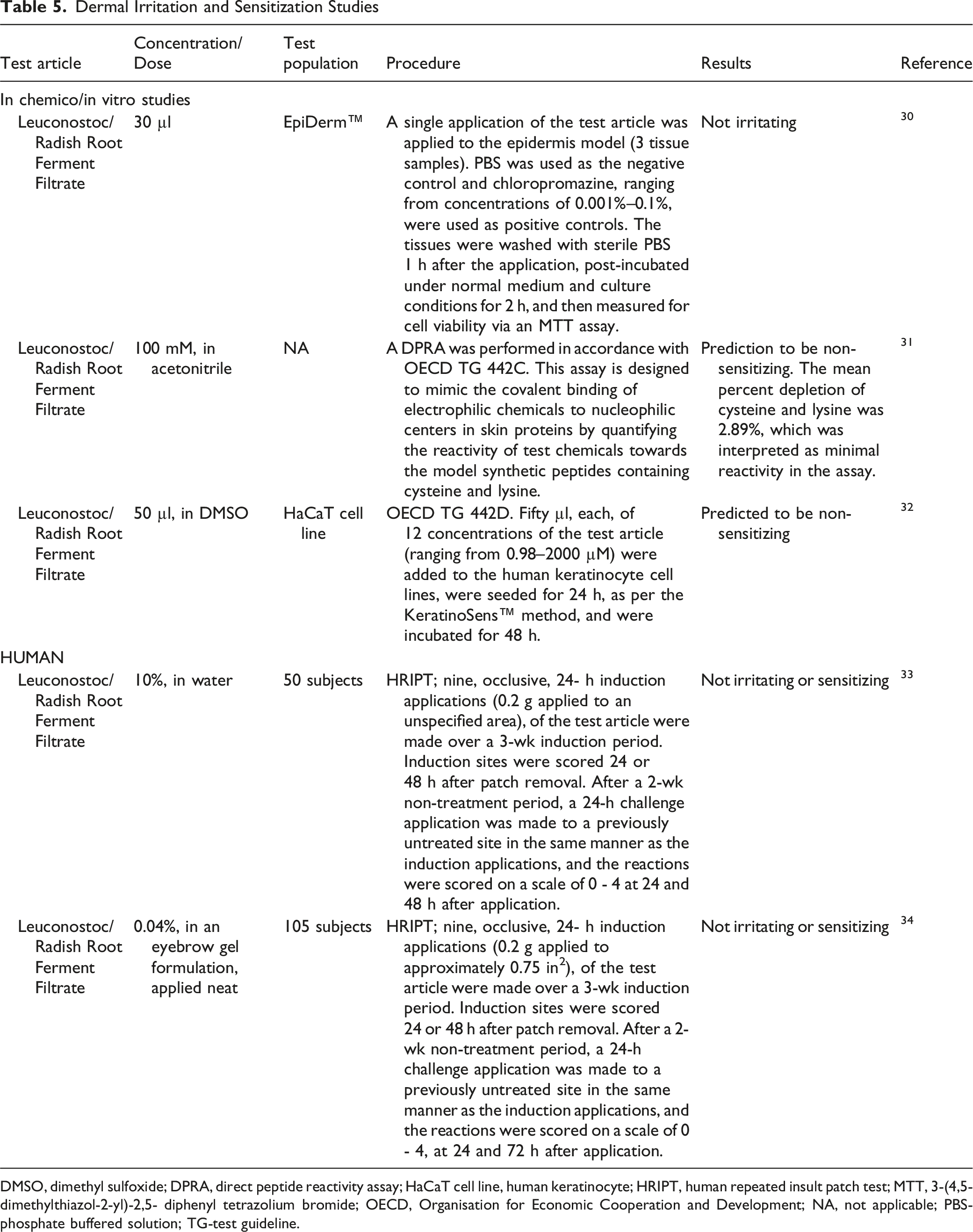
DMSO, dimethyl sulfoxide; DPRA, direct peptide reactivity assay; HaCaT cell line, human keratinocyte; HRIPT, human repeated insult patch test; MTT, 3-(4,5-dimethylthiazol-2-yl)-2,5- diphenyl tetrazolium bromide; OECD, Organisation for Economic Cooperation and Development; NA, not applicable; PBS- phosphate buffered solution; TG-test guideline.
In a dermal irritancy test, a single application of 30 µl Leuconostoc/Radish Root Ferment Filtrate to 3 tissue samples of a reconstructed three-dimensional human epidermis model (EpiDerm™) was considered non-irritating. 30 The mean percent depletion of cysteine and lysine in response to Leuconostoc/Radish Root Ferment Filtrate was 2.89%, in a direct peptide reactivity assay (DPRA), performed according to Organisation of Economic Cooperation and Development (OECD) test guideline (TG 422C); the test article was predicted to not cause sensitization. 31 Leuconostoc/Radish Root Ferment Filtrate was also evaluated for sensitization potential in an antioxidants response elements–transcription factor Nrf2 (ARE-Nrf2) luciferase assay utilizing the KeratinoSens™ cell line, in accordance with OECD TG 442D. 32 In this assay, transfection with the luciferase gene allows for measurement of the activation of the Keap1-Nrf2-ARE complex, a proxy for sensitization. No significant increases in luciferase expression were observed; the test article was predicted to be a non-sensitizer. Leuconostoc/Radish Root Ferment Filtrate was determined to be neither an irritant or a sensitizer in 2 separate human repeated insult patch tests (HRIPT), when tested at 10% in water using 50 subjects, and at 0.04% in an eyebrow gel formulation, which was applied neat to 105 subjects.33,34
Phototoxicity
In Vitro
Leuconostoc/Radish Root Ferment Filtrate
The phototoxicity of Leuconostoc/Radish Root Ferment Filtrate was tested using a reconstructed three-dimensional human epidermis model (EpiDerm™). 35 Five concentrations of the test article 0, 0.4%, 1.2%, 3.7%, and 11%, diluted in Dulbecco’s modified Eagle medium were used. Sterile deionized water and 0.001%–0.1% chloropromazine were used as negative and positive controls, respectively. After the EpiDerm™ model was incubated in growth media for 1 h, 50 µl of each test article concentration was applied to tissue inserts and allowed to incubate overnight at 37°C. The tissue inserts were either irradiated with 6 J/cm2 UVA (ultraviolet A), or incubated without irradiation, for 1 h at room temperature and were tested in a 3-(4,5-dimethylthiazol-2-yl)-2,5-diphenyl tetrazolium bromide (MTT) assay. As per the definition of a potential photoirritant reducing cell viability by ≥ 20%, when comparing irradiated to non-irradiated controls, significant reduction was only seen in the 11% concentration (significantly higher than use levels in cosmetics), with and without radiation (51.1% and 72.6%, respectively). Leuconostoc/Radish Root Ferment Filtrate was therefore not considered a photoirritant at the 0.4, 1.2, or 3.7% concentrations.
Ocular Irritation Studies
In Vitro
Leuconostoc/Radish Root Ferment Filtrate
The ocular irritation potential of Leuconostoc/Radish Root Ferment Filtrate to cause eye irritation was evaluated in a reconstructed human cornea-like epithelium test, using an EpiOcular™ three-dimensional human cornea model. 30 Fifty μl of the undiluted test article were applied to 2 tissue samples. The treated tissues were incubated for 90 min, washed out with PBS, post-incubated under normal medium and culture conditions for 2 h, and then measured for cell viability via an MTT assay. The negative control tissues received applications of de-ionized water. The test article was considered to be non-irritating.
Clinical Studies
Occupational Exposures
A 46-yr-old kitchen porter, with metal allergy and no prior food allergies, presented to the emergency room with dizziness, generalized eruptions on the skin, and gastrointestinal upset. 36 During recent employment in a Korean kitchen, she had been exposed to Raphanus sativus roots while chopping fresh young radish, 1 and 3 d prior to her hospital treatment. Upon initial exposure, she experienced immediate urticaria with pruritus and burning sensation (which spontaneously disappeared); however, upon second exposure, the pruritus presented more severely with generalized erythematous eruption and dizziness. Systemic anaphylatic symptoms manifested within 12 h. Upon hospital admission, total serum immunoglobulin E (IgE) level was measured at 30 IU/L; she received subcutaneous epinephrine (0.3 mL) followed by intravenous saline and antihistamine. Three weeks post-recovery, she tested positive to a skin prick test with young radish extract; 5 controls tested with a skin prick test using young radish extract and 55 common allergens did not exhibit positive reactions. The allergic reaction was attributed to biphasic, IgE-mediated anaphylaxis to physical contact with young radish.
A 38-yr-old waitress, with no prior history of dermatological illness, developed an acute vesiculo-bullous dermatitis of both palms, 3 wk after chopping tomatoes, cabbage, endive, and radishes for the salad bar. 37 She sought medical attention 2 wk after the dermatitis appeared; findings were normal, with the exception of the sides of her fingers, which were more severely affected. Patch tests were performed with the neat application of Raphanus sativus root juice, cabbage leaf, tomato fruit, and endive leaf. Additionally, patch tests were performed with 0.1% allyl isothiocyanate, 0.1% benzyl isothiocyanate, 0.05% phenyl isothiocyanate, 1% sinigrin, and 1% myrosinase (all in petrolatum). Samples of the thioglucoside, sinigrin, which yields allyl isothiocyanate, and of the enzyme, myrosinase, were mixed together and either applied to the skin immediately after mixture or 1 wk later; a positive reaction to the previously mixed test article was observed. Positive reactions to allyl isothiocyanate, and benzyl isothiocyanate were also observed. There was no reaction to freshly mixed sinigrin and myrosinase. No further details were provided.
Summary
This assessment reviews the safety of the following 7 radish root-derived ingredients. According to the Dictionary, various functions are reported for these ingredients, with hair and skin conditioning agents being the most common. Reported functions for two of these ingredients, including use as an antimicrobial agent, an anti-dandruff agent, and an antifungal agent are not considered cosmetic in the US, and therefore, use as such does not fall under the purview of the Panel. Commercially-produced products of carbohydrates, such as glucose, sucrose, or lactose, which undergo lactic acid fermentation (fermentation organism not identified), are GRAS for their intended use in foods; Leuconostoc is an approved strain used as a butter starter distillate. Leuconostoc/Radish Root Ferment Filtrate is reported to have the greatest frequency of use, in 254 formulations, 190 of which are in leave-on products. The highest reported concentration of use amongst these ingredients is for Raphanus Sativus (Radish) Root Extract, at up to 6% in lipstick formulations. Raphanus sativus roots are widely consumed in raw, cooked, and fermented forms; in the US, foods that are commercially produced using lactic acid fermentation are considered to have GRAS status.
Groups of albino rats were administered up to 550 mg/kg bw/d of methanolic Daikon (vegetable) extract, in the diet, for 90 d. Throughout the course of the experiment, no statistically significant differences were seen between controls and treated animals for mean body weights, organ weights, and hematological parameters such as red blood cell count, hemoglobin, white blood cell count, AST, ALT, ACP, urea, uric acid, and protein levels.
Leuconostoc/Radish Root Ferment Filtrate was not genotoxic when tested at concentrations up to 5000 µg/plate in an Ames test. In a study evaluating the genotoxic potential of several Raphanus sativus root juices against cancerous cell lines, 500 µl of the white tuber root juice caused the most DNA damage in all aberrant cell lines; the breast cancer adenoma cell line was the most highly affected.
Raphanus sativus root juice exhibited a higher potential for tyrosinase inhibition (IC50 = 3.09 mg/mL vs 9.62 mg/mL), radical scavenging, and had a higher content of l-ascorbic acid than a methanolic Raphanus sativus root extract. In another study, ethyl acetate Raphanus sativus root extract exposed to pH and temperature changes exhibited an IC50 value that was closest to an unexposed control extract at a pH of 4 and temperature of 70°C. A sample of Leuconostoc/Radish Root Ferment Filtrate exhibited MIC values of 1%–4% against P. aeruginosa, 0.50%–4% against E.coli, and 0.25%–2% against A.brasiliensis, C.albicans, and S.aeruginosa. The highest MIC values for a Raphanus sativus root juice, which were greater than the corresponding ampicillin MIC values, were against P. aeruginosa and S. aureus at 0.625 ± 0.4 mg/mL and 0.312 ± 0.2 mg/mL, respectively.
A single 30 µl application of Leuconostoc/Radish Root Ferment Filtrate did not cause irritation in a triplicate series of EpiDerm™ model epidermis tests. In a DPRA assay testing the sensitizing potential of 100 mM Leuconostoc Ferment Filtrate, the mean percent depletion for cysteine and lysine was 2.89%; the test article was predicted to be a non-sensitizer. Leuconostoc/Radish Root Ferment Filtrate, tested at concentrations of up to 2000 µM in DMSO (50 µl), was found to be non-sensitizing in an ARE-Nrf2 luciferase assay. Leuconostoc/Radish Root Ferment Filtrate, as a 10% dilution in water, did not cause sensitization in an occlusive HRIPT using 50 subjects. An eyebrow gel formulation containing 0.04% Leuconostoc/Radish Root Ferment Filtrate also was found to be non-sensitizing in an occlusive HRIPT using 105 subjects.
Leuconostoc/Radish Root Ferment Filtrate was tested for phototoxicity at 0, 0.4, 1.2, 3.7, and 11% (in Dulbecco’s modified Eagle medium) in an irradiated EpiDerm™ reconstructed epidermis model. Leuconostoc/Radish Root Ferment Filtrate was not considered a photoirritant at concentrations less than 11%; however, it was possibly photoirritating at 11% (significantly higher than cosmetic use levels) due to ≥20 % reduction in cell viability when compared to non-radiated controls, both with and without radiation. Leuconostoc/Radish Root Ferment Filtrate was not considered an ocular irritant when tested in 2 EpiOcular™ human cornea-like epithelium tissue samples.
A 46-yr-old female kitchen porter, with pre-existing metal allergy, presented to the emergency room with dizziness, generalized eruptions on the skin, and gastrointestinal upset after chopping fresh young radish 1 and 3 d prior to hospitalization. Systemic anaphylactic symptoms manifested within 12 h. Three weeks post-recovery the subject tested positive to a skin prick test with young radish extract, which was attributed to biphasic, IgE-mediated anaphylaxis upon physical contact. A 38-yr-old female waitress developed an acute vesiculo-bullous dermatitis of both palms 3 wk after chopping tomatoes, cabbage, endive, and radishes for the salad bar. Patch tests were performed with the neat application of all plant substances, plus, 0.1% each of allyl isothiocyanate, benzyl isothiocyanate, sinigrin, myrosinase, and 1% sinigrin, either mixed with 1% myrosinase 1 wk prior to application, or mixed with 1% myrosinase immediately prior to application. Positive reactions were observed for Raphanus sativus root juice, allyl isothiocyanate, benzyl isothiocyanate, and to the sinigrin previously mixed with myrosinase.
Discussion
The Panel reviewed the safety of 7 ingredients obtained from radish roots, all of which are derived from the Raphanus sativus species. The Panel concluded that the available data are sufficient for determining that all 7 ingredients are safe in cosmetics in the present practices of use and concentration when formulated to be non-sensitizing. The Panel noted that the radish roots, from which the ingredients included in this safety assessment are derived, are consumed regularly as food, and, therefore, these food exposures would likely result in much larger systemic exposure compared to that resulting from use in cosmetic products. Likewise, the fermentation of a few of these ingredients with lactic acid bacteria, Lactobacillus and Leuconostoc strains, which have GRAS status, was not concerning to the Panel. The Panel discussed that although data from a wide variety of radishes is included in this report (ie, various colors, sizes, etc.), most of these radishes are indicated to be consumed as food, mitigating any concerns for systemic toxicity. Additionally, the potential for systemic exposure from the absorption of these ingredients through the skin is expected to be much less than the potential for systemic exposure from absorption through oral exposures. These considerations, coupled with low reported use concentrations and negative findings in human dermal irritation and sensitization studies, led the Panel to determine that the radish root-derived ingredients are safe as used in cosmetic products when formulated to be non-sensitizing.
An in vitro study investigated the potential for a freeze-dried juice and methanolic extract of white Raphanus sativus root to have an inhibitory effect on tyrosinase activity, which can be associated with skin-lightening. Upon review of the paper by the Panel, it was noted that very low potency for inhibiting tyrosinase was actually demonstrated in the study. Nevertheless, the Panel stated that skin lightening is considered to be a drug effect and should not occur during the use of cosmetic products.
Because final product formulations may contain multiple botanicals, each possibly containing the same constituents of concern, formulators are advised to be aware of anthocyanins and isothiocyanates, and to avoid reaching levels that may be hazardous to consumers. The Panel also expressed concern about pesticide residues, heavy metals, and other plant species that may be present in botanical ingredients. They stressed that the cosmetics industry should continue to use current good manufacturing practices (cGMPs) to limit impurities.
The Panel discussed the issue of incidental inhalation exposure resulting from these ingredients (eg, Leuconostoc/Radish Root Ferment Filtrate is reported to be used at up to 0.03% in spray face and neck products). Inhalation toxicity data were not available; however, the Panel reiterated that radish root-derived ingredients are used as foods, mitigating concerns of systemic toxicity. Additionally, the Panel noted that in aerosol products, the majority of droplets/particles would not be respirable to any appreciable amount. Furthermore, droplets/particles deposited in the nasopharyngeal or tracheobronchial regions of the respiratory tract present no toxicological concerns based on the chemical and biological properties of these ingredients. Coupled with the small actual exposure in the breathing zone and the low concentrations at which these ingredients are used, the available information indicates that incidental inhalation would not be a significant route of exposure that might lead to local respiratory or systemic effects. A detailed discussion and summary of the Panel’s approach to evaluating incidental inhalation exposures to ingredients in cosmetic products is available at https://www.cir-safety.org/cir-findings.
The Panel’s respiratory exposure resource document (see link above) notes that airbrush technology presents a potential safety concern, and that no data are available for consumer habits and practices thereof. As a result of deficiencies in these critical data needs, the safety of cosmetic ingredients applied by airbrush delivery systems cannot be assessed by the Panel. Therefore, the Panel has found the data insufficient to support the safe use of cosmetic ingredients applied via an airbrush delivery system.
Conclusion
The Expert Panel for Cosmetic Ingredient Safety concluded that the following 7 radish root-derived ingredients are safe in cosmetics in the present practices of use and concentration described in the safety assessment when formulated to be non-sensitizing:
Lactobacillus/Radish Root Ferment Extract Filtrate*
Lactobacillus/Radish Root Ferment Filtrate
Leuconostoc/Radish Root Ferment Filtrate
Leuconostoc/Radish Root Ferment Lysate Filtrate*
Raphanus Sativus (Radish) Root Extract
Raphanus Sativus (Radish) Root Juice*
Raphanus Sativus (Radish) Root Powder*
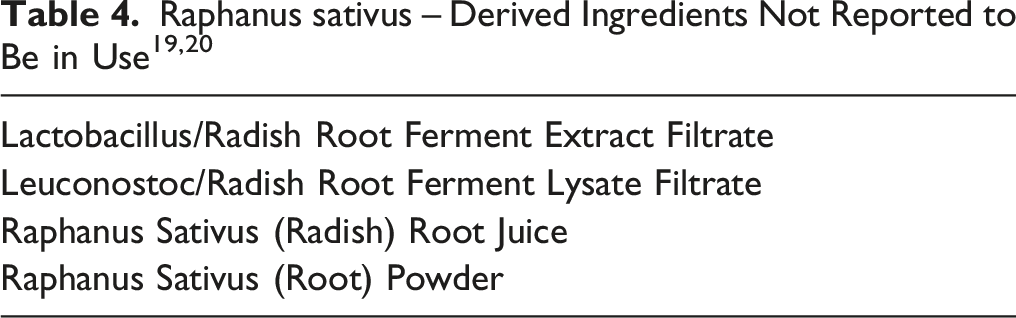
*Not reported to be in current use. Were ingredients in this group not in current use to be used in the future, the expectation is that they would be used in product categories and at concentrations comparable to others in this group.
Footnotes
Author’s Note
Unpublished sources cited in this report are available from the Director, Cosmetic Ingredient Review, 555 13th Street, NW, Suite 300W, Washington, DC 20004, USA.
Author Contributions
The articles in this supplement were sponsored by the Cosmetic Ingredient Review.
Funding
The authors disclosed receipt of the following financial support for the research, authorship, and/or publication of this article: The articles in this supplement were sponsored by the Cosmetic Ingredient Review. The Cosmetic Ingredient Review is financially supported by the Personal Care Products Council.
Declaration of Conflicting Interests
The authors declared no potential conflicts of interest with respect to the research, authorship, and/or publication of this article.