







Abstract
Siamenoside I, a cucurbitane glycoside 300 times sweeter than sucrose, is found in monk fruit (Siraitia grosvenorii). The triterpene glycosides in monk fruit, such as mogroside V, siamenoside I, and mogroside III, comprise around 1% of the fruit flesh. These mogrosides share a core structure, mogrol, with varying numbers of glucose units attached to carbon-3 of the cucurbitane backbone and/or carbon-24 of the triterpene side chain. Previous in vitro fecal homogenate metabolism and in vivo pharmacokinetic research indicated that mogrosides are deglycosylated to a common metabolite, the aglycone mogrol, by intestinal flora prior to absorption. This study was conducted using a purified siamenoside I produced via fermentation and a monk fruit extract in an in vitro human fecal homogenate system to confirm the deglycosylation of siamenoside I by intestinal microflora to the common metabolic intermediate, mogrol. The rates of deglycosylation of siamenoside I and monk fruit extract showed essentially complete metabolism to mogrol within 8 h at 0.2 mg/mL and 2 mg/mL for siamenoside I, and 8 h at 0.2 mg/mL and 16 h at 2 mg/mL for monk fruit extract, in both male and female pooled fecal homogenates with no apparent sex differences. Overall, no difference was observed in the deglycosylation rates of purified siamenoside I or siamenoside I present in monk fruit extract to the mogrol metabolite further confirming the deglycosylation of mogrosides in the lower gastrointestinal tract.
Introduction
Siamenoside I is a cucurbitane glycoside that is 300 times sweeter than sucrose (Figure 1A). Siamenoside I and many other sweet-tasting glycosides present in the fruit of Siraitia grosvenorii, commonly known as Luo Han Guo or monk fruit, are collectively known as mogrosides. Extracts of monk fruit have a long history of use as a sweetener in Chinese herbal medicine for over 100 years.1-3 The triterpene glycosides in monk fruit, such as mogroside V, siamenoside I, and mogroside III, comprise only around 1% of the flesh of the fresh monk fruit and have been historically obtained by solvent extraction. These triterpene glycosides or mogrosides share a core structure, mogrol, with varying numbers of glucose units attached to carbon-3 of the cucurbitane backbone and/or carbon-24 of the triterpene side chain.4,5 Structure of siamenoside I and mogrol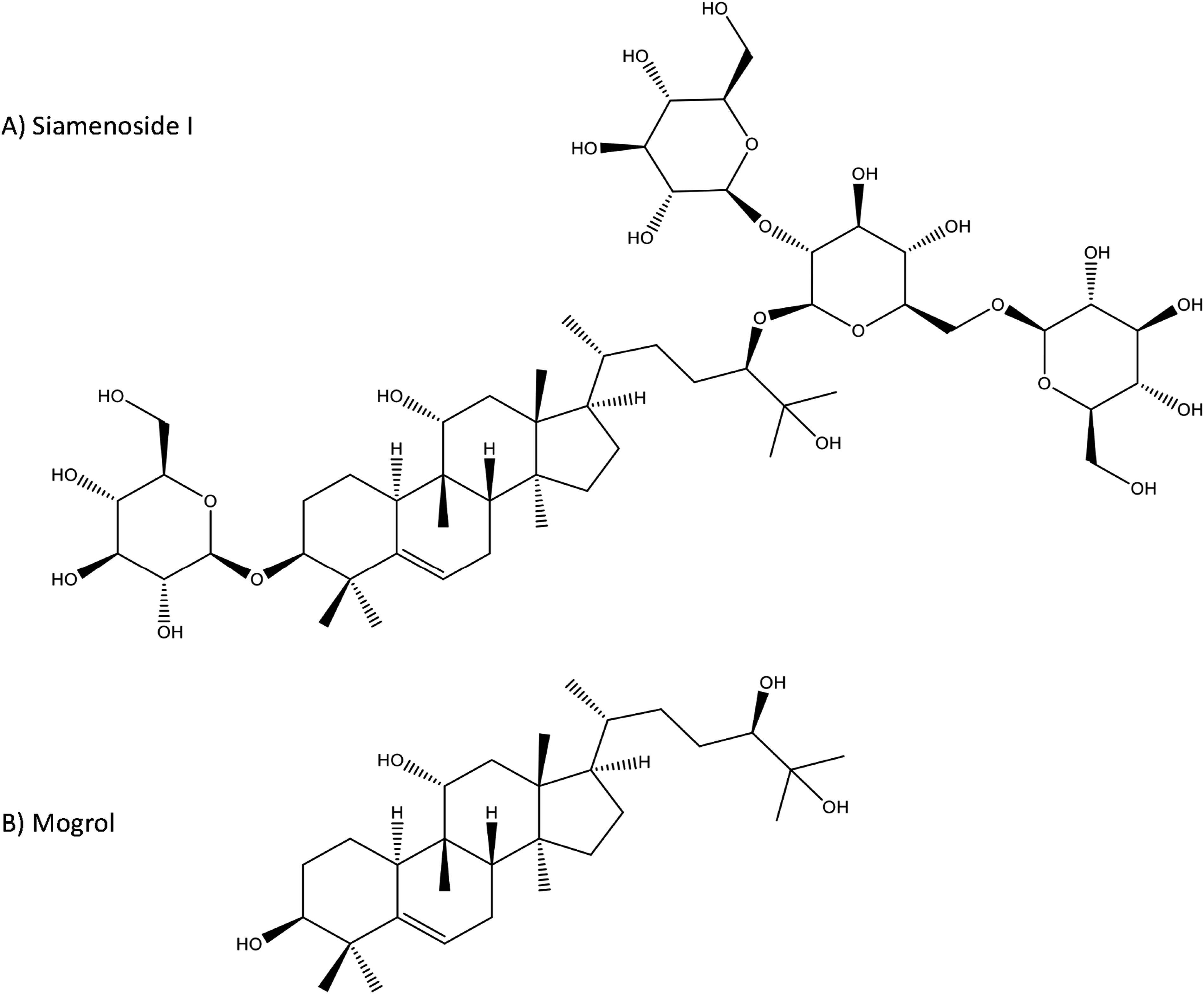
Incubation with human intestinal microbiota resulted in successive deglycosylation of mogroside III to mogroside IIA and the aglycone mogrol. 6 Mogroside V underwent a stepwise deglycosylation to siamenoside I, mogroside IVE, mogroside IIIE, mogroside IIIA, mogroside IIE, mogroside IIA, mogroside IE, mogroside IA, and mogrol in an in vitro incubation with intestinal microbiota of healthy Chinese men. 7 The mogrosides mogroside IIIE, mogroside V, siamenoside I, and isomogroside V shared a common metabolic fate with deglycosylation of the glucose units attached to the cucurbitane backbone to produce mogrol within 24 h during an in vitro evaluation using pooled human male and female intestinal fecal homogenates. 4
Pharmacokinetic studies also indicate that mogrosides are unlikely to be absorbed following ingestion and likely to undergo hydrolysis by intestinal flora in the lower gastrointestinal tract, and that absorption is primarily the aglycone mogrol. A monk fruit glycoside solution was mainly excreted in feces as the aglycone mogrol and its mono- and diglucosides, with a trace amount of conjugated forms of mogrol and its monoglucoside reported in portal blood, 2 h after oral administration to Wistar rats. 8 Following the oral administration of mogroside V, no mogroside V and only a trace amount of mogrol was detected in rat plasma with an estimated bioavailability of 8.73 ± 1.46% and a 2.46 ± 0.19-hour elimination half-life 9 which, when considered in the context of the in vitro fecal homogenate studies, indicated that mogroside V was metabolized to mogrol in the intestine prior to its limited absorption. Pharmacokinetics and metabolism of a single oral dose of [14C]-siamenoside I with intact and bile duct-cannulated rats showed that elimination of radioactivity was rapid and primarily through feces. 5 Absorption was estimated at approximately 42 to 43% with systemic exposure of only approximately 1% to 1.5% of the administered dose. 5 Mogrol was the major component detected in feces and was a significant component of the systemic radioactivity. 5
The currently available literature indicates that mogrosides are deglycosylated to a common metabolite structure, the aglycone mogrol, by intestinal flora prior to absorption. In addition, an in vitro human fecal homogenate metabolism model has been established as an acceptable experimental system for predicting in vivo mogroside metabolism in a manner similar to that for steviol glycosides.4,5,10 The present study was conducted using purified siamenoside I made via fermentation and siamenoside I as present in monk fruit extract in an in vitro pooled human male and female fecal homogenate system to more fully understand and confirm the deglycosylation of siamenoside I by intestinal microflora to the common metabolic aglycone structure mogrol.
Materials and Methods
This study used an adaptation of the in vitro anaerobic pooled human fecal homogenate conditions and experimental procedures established for steviol glycosides and mogrosides that have been used in new ingredient evaluations by regulatory authorities including the Food and Drug Administration and the European Food Safety Authority.4,10-13
Preparation of Test and Control Articles
Siamenoside I and Monk Fruit Extract
The test article contained 75.8% siamenoside I (Figure 1) with a total mogroside content of 91.9%, and it was sourced from Cargill, Wayzata, MN (USA). The monk fruit extract was the USP (United States Pharmacopeia) Reference Standard (Lot F0L190). Both the test and standard articles were dissolved in deionized water to provide a stock solution of 50 mg/mL for spiking incubation samples at the testing concentration of 2 mg/mL (ie, a 25x dilution after spiking). The 50 mg/mL stock solution was diluted with deionized water to provide a stock solution at 5 mg/mL prior to spiking incubation samples at the testing concentration of 0.2 mg/mL (ie, a 25x dilution after spiking).
Mogrol
Mogrol (100% pure, Sigma Aldrich; Figure 1) was dissolved in dimethyl sulfoxide (DMSO) to provide a stock concentration of 10 mg/mL for spiking incubation samples at the testing concentration of 0.2 mg/mL (ie, a 50x dilution after spiking). Mogrol and siamenoside I at 0.2 mg/mL were evaluated to establish negative and stability control (data not reported).
Rebaudioside A
Rebaudioside A (100% pure, Sigma Aldrich) was dissolved in deionized water:DMSO (1:1, v/v) to provide a control article stock solution at a concentration of 50 mg/mL for spiking incubation samples at the testing concentration of 2 mg/mL (ie, a 25x dilution after spiking). The 50 mg/mL stock solution was diluted with deionized water to a concentration of 5 mg/mL for spiking incubation samples at the testing concentration of 0.2 mg/mL (ie, a 25x dilution after spiking).
Human Fecal Homogenate Test System
Fecal material (10 g to 20 g from each donor) was collected from 12 healthy volunteer donors (6 males and 6 females). The donors had no known gastrointestinal disease and an absence of ingestion of products containing monk fruit or stevia sweeteners, antibiotic medications, and laxatives for at least 14 days prior to the morning of the fecal collection. The fecal materials were immediately collected upon voiding in a pre-labeled 100 mL screw-capped polypropylene specimen container pre-filled with 50 mL 0.2 M potassium phosphate buffer (pH 7.0) and 2 mL of Oxyrase®. The initial stool-to-buffer ratio of the collected sample was determined based on the tare-weight of the screw-capped stool sample container with the initial volume of buffer used. All fecal materials were stored at room temperature before being used in pooled fecal homogenate preparation.
Under anaerobic conditions, fecal materials from 2 donors of the same sex were pooled by appropriate volume resulting in 3 lots of pooled male human fecal homogenates and 3 lots of pooled human female homogenates. The pooled human fecal homogenates were diluted with 0.2 M potassium phosphate buffer (pH 7.0) with vigorous mixing to provide 12.5-fold diluted human fecal homogenates. These homogenates were then centrifuged, the supernatant collected in a separate container followed by 3-fold dilution with brain-heart infusion broth and Oxyrase® (2%, v/v), and pre-incubated overnight to establish anaerobic conditions.
In vitro Pooled Human Fecal Homogenates Incubation Procedures
The test articles, siamenoside I and USP monk fruit extract, and the positive control rebaudioside A were incubated in triplicate at target concentrations of 0.2 mg/mL and 2 mg/mL in each of 3 lots of male and female pooled fecal homogenates. Blank fecal homogenate samples with no test articles were also prepared. The stability control articles, mogrol and siamenoside I, were incubated at target concentrations of 0.2 mg/mL in brain-heart infusion broth. Incubation was performed in 2 mL snap-cap vials containing 10 μL of the appropriate test article or control article solution with 0.5 mL pre-incubated human fecal homogenate or, for stability control articles, brain-heart infusion broth. Additions were performed inside a polyethylene glove box, which was purged with nitrogen to ensure <1% oxygen level. The samples were vortexed and incubated under an anaerobic environment at 37°C in a calibrated environmental chamber for 0, 8, 16, 24, and 48 hours. Samples for the 0-hour time point had methanol added prior to the spiking with the test, control, or stability articles. At the end of each incubation time interval, a 1 mL volume of methanol was added to each sample as a denaturing agent to stop the metabolic reactions and was gently mixed, sonicated for 5 min, and centrifuged to remove protein precipitates. The supernatants were stored at −70°C until LC/MS quantitation.
LC/MS Analytical Methodology
The disappearance of the mogroside siamenoside I and the formation of mogrol (Figure 1), the completely deglycosylated terminal metabolite, were monitored by a validated LC/MS assay. No interference due to partially hydrolyzed mogrosides was observed in the LC/MS assay.
Quantitative analysis was performed on an Agilent 1100 series HPLC with a Waters Quattro-Micro triple quadrupole mass spectrometer equipped with an electrospray ionization (ESI) source. Operating in positive ion mode, selected Ion Reaction (SIR) transitions were optimized as follows: siamenoside m/z 1125 ([M]+) and mogrol m/z 423 + 441 + 459 ([M-(H2O)n]+). Source parameters were set to an capillary voltage of 3800 V, desolvation temperature of 375°C, desolvation gas flow at 400 L/Hr, and cone gas flow at 30 L/Hr. Chromatographic separation was achieved on a reversed-phase C18 column, using a gradient elution with mobile phase A (0.1% formic acid in deionized water) and mobile phase B (0.1% formic acid in acetonitrile) at a flow rate of 0.3 mL/min and a total run time of 10 min. Calibration standards were prepared over a concentration range of 150 to 15 000 ng/mL (siamenoside) and 100 to 10 000 ng/mL (mogrol). Calibration standards and quality control samples were prepared fresh on the day of assay and in a matrix composition comparable to the test sample matrix to minimize potential assay matrix effects. For the LC/MS analysis, rebaudioside A and iso-steviol were used as internal standards for siamenoside I and mogrol, respectively. Test samples were brought to room temperature followed by sonication for 5 min and vortex mixing. Regression analysis based on a composite of both sets of calibration standards was used for assay calibration data at the beginning and end of an assay sequence. Assay performance was assessed by interspersing quality control samples within the assay sequence.
Results
Metabolism of Siamenoside I
Summary of Siamenoside I Metabolism at 0.2 and 2 mg/mL in Pooled Male and Female Human Fecal Homogenates After Anaerobic Incubation for Up to 48 h at 37°C
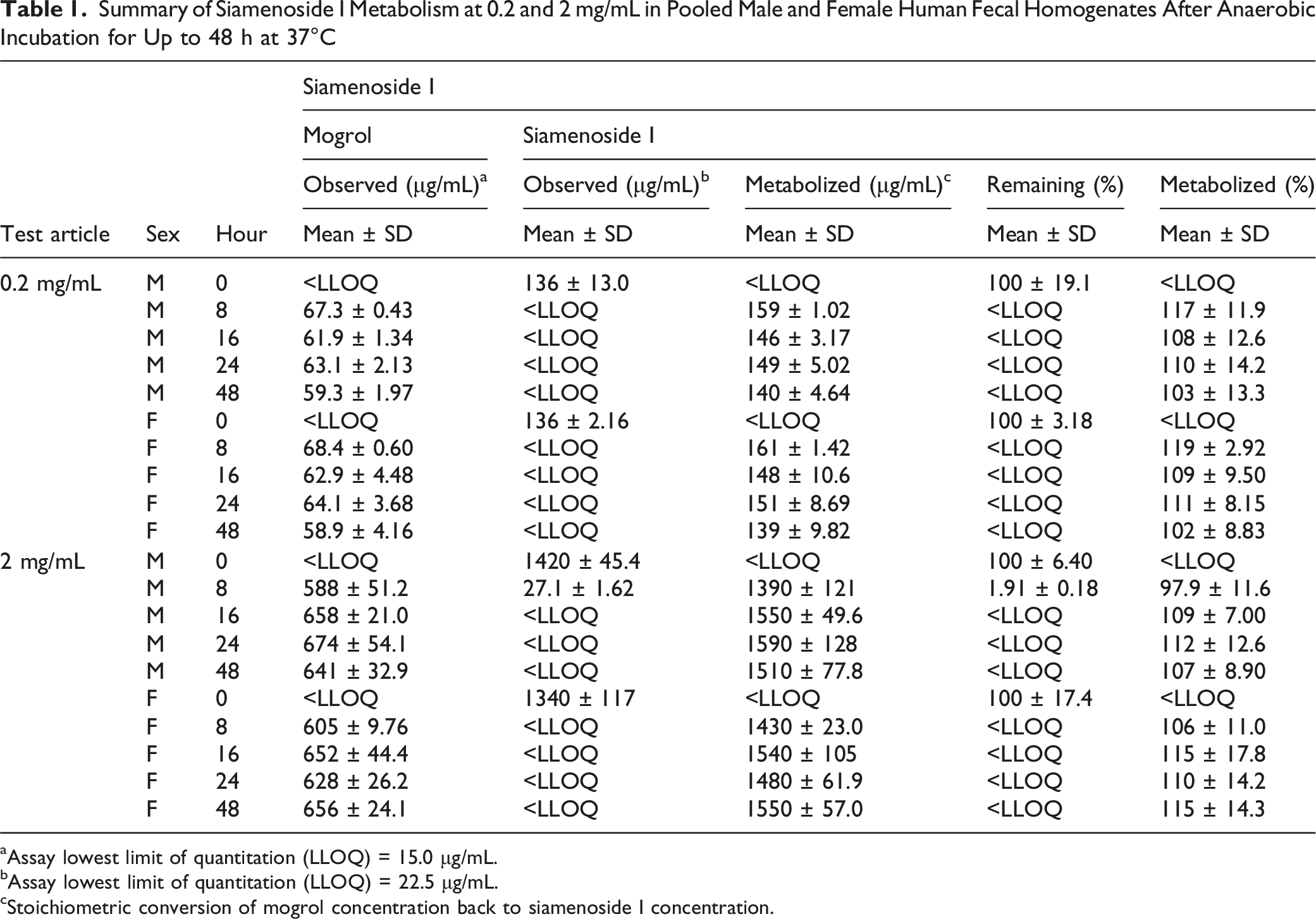
aAssay lowest limit of quantitation (LLOQ) = 15.0 μg/mL.
bAssay lowest limit of quantitation (LLOQ) = 22.5 μg/mL.
cStoichiometric conversion of mogrol concentration back to siamenoside I concentration.
Metabolism of USP Monk Fruit Extract
Summary of USP Monk Fruit Extract Metabolism at 0.2 and 2 mg/mL in Pooled Male and Female Human Fecal Homogenates After Anaerobic Incubation for Up to 48 h at 37°C
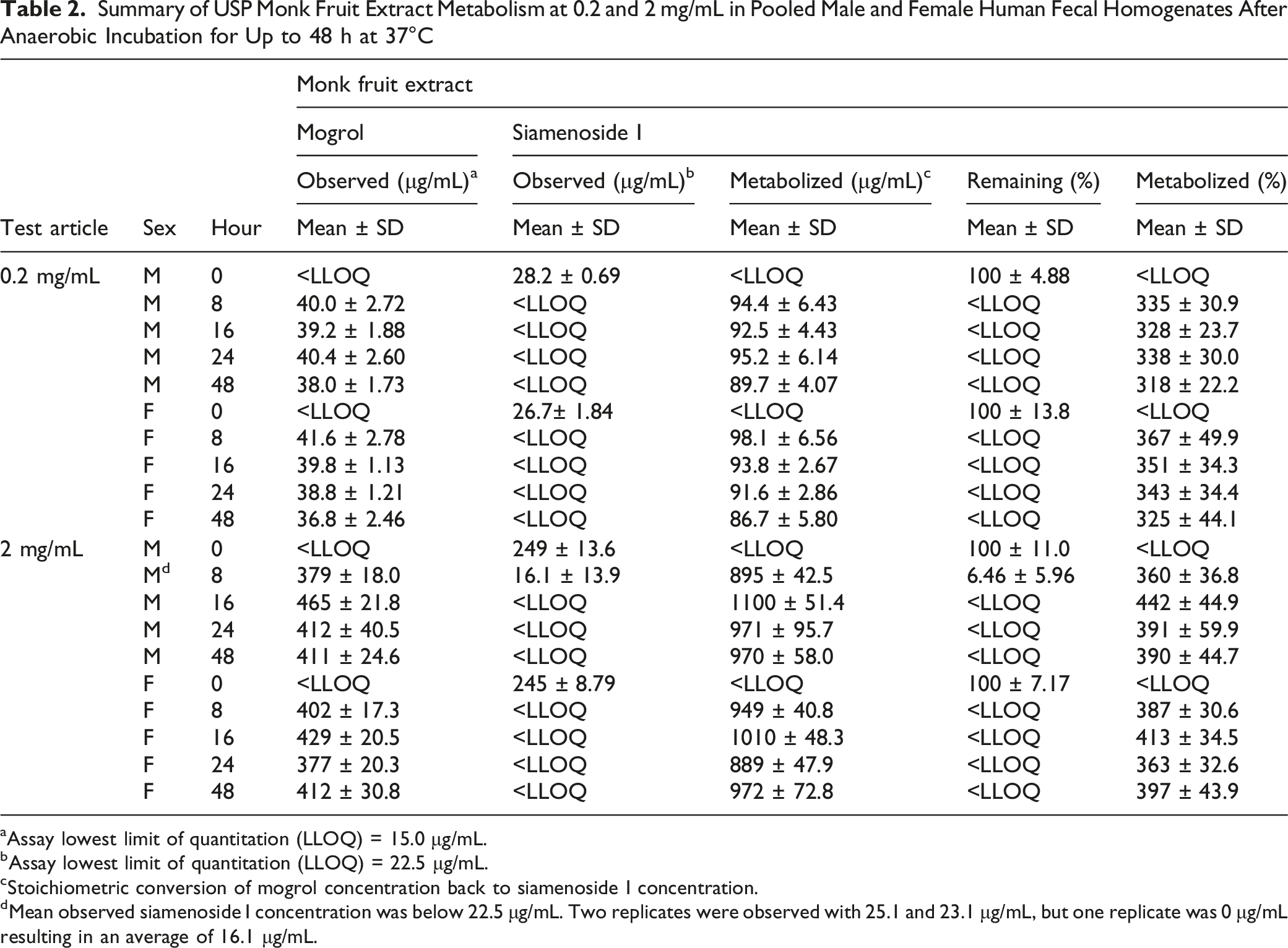
aAssay lowest limit of quantitation (LLOQ) = 15.0 μg/mL.
bAssay lowest limit of quantitation (LLOQ) = 22.5 μg/mL.
cStoichiometric conversion of mogrol concentration back to siamenoside I concentration.
dMean observed siamenoside I concentration was below 22.5 μg/mL. Two replicates were observed with 25.1 and 23.1 μg/mL, but one replicate was 0 μg/mL resulting in an average of 16.1 μg/mL.
Metabolism of Rebaudioside A
Summary of Rebaudioside A (Positive Control) at 0.2 and 2 mg/mL in Pooled Male and Female Human Fecal Homogenates After Anaerobic Incubation for Up to 48 h at 37°C
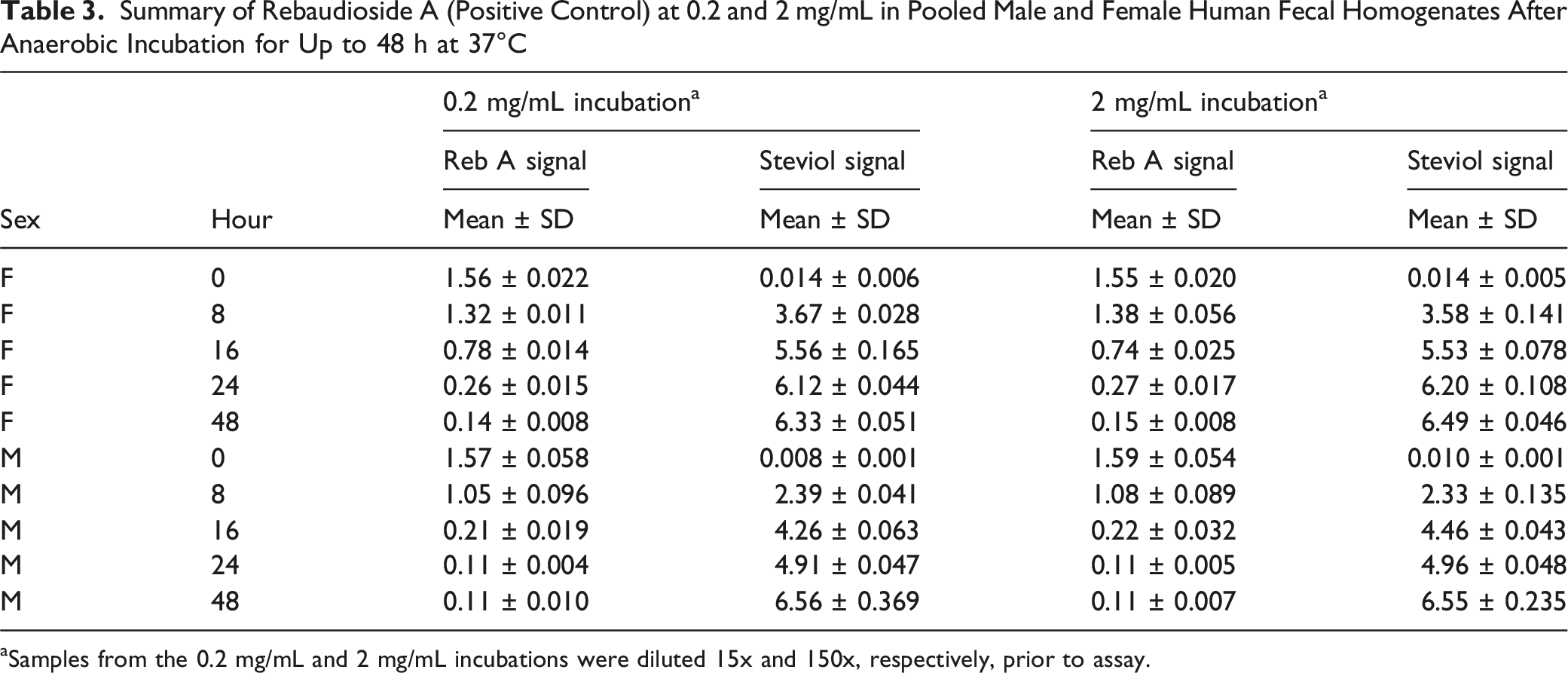
aSamples from the 0.2 mg/mL and 2 mg/mL incubations were diluted 15x and 150x, respectively, prior to assay.
Discussion
These study results demonstrate that siamenoside I, as an isolated mogroside or as a component of monk fruit extract, is metabolized in pooled human male and female fecal homogenates to the aglycone mogrol, the common and terminal deglycosylated metabolite. The rates of deglycosylation of siamenoside I in both the test article and standard monk fruit extract at a concentration of 0.2 mg/mL showed essentially complete hydrolysis to mogrol after 8 h. When each of the test articles was incubated at 2 mg/mL, the siamenoside I declined rapidly while mogrol increased rapidly over the initial 8-h study period. Siamenoside I concentrations were below the limit of quantitation for both the test article and standard monk fruit extract after 16 hours and 8 h for males and females, respectively. The rates of deglycosylation were similar to those reported by Bhusari et al 4 that also showed near complete hydrolysis of siamenoside I to mogrol within an initial 8-h study period with slightly slower rates of deglycosylation at the increased siamenoside I incubation concentrations in human male fecal homogenates. In addition, the current study aligns with the finding from pharmacokinetic studies that demonstrated mogrosides, including siamenoside I, are unlikely to be absorbed following ingestion and likely undergo hydrolysis by the intestinal flora in the lower gastrointestinal tract, and that absorption is primarily the aglycone mogrol.5,8,9 These studies demonstrated that, following oral exposure, mogrosides were primarily excreted as mogrol in the feces with only a very small amounts of mogrol detected systemically.
In summary, the rates of deglycosylation of siamenoside I at relatively high gastric concentrations of 0.2 mg/mL and 2 mg/mL showed rapid and essentially complete metabolism to mogrol within the initial 8-h period in both male and female pooled fecal homogenates. No apparent differences in the rate of deglycosylation were observed between the male and female pooled fecal homogenates indicating no sex differences. During the initial 8-h period, mogrol, the total deglycosylated metabolite, accounted for the molar equivalent of complete metabolism of the siamenoside I to mogrol. Similarly, the rate of deglycosylation of siamenoside I in monk fruit extract, and the formation of the deglycosylated metabolite mogrol, was shown to be rapid and essentially complete after 8 h at 0.2 mg/mL and 16 hours at 2.00 mg/mL. It was estimated that siamenoside I contributed about 12 to 13% of the mogrosides in monk fruit extract. The observation of a 300% to 400% molar conversion to the mogrol metabolite, based on molar equivalent converted percentage of metabolized siamenoside I, indicated that other mogrosides known to be present in monk fruit extract (eg, mogroside IIIe, mogroside V, and isomogroside) were likewise being deglycosylated over time to mogrol. Overall, no apparent differences were observed in the deglycosylation rates of purified siamenoside I or siamenoside I in the USP monk fruit extract to the aglycone mogrol metabolite further confirming the deglycosylation of mogrosides in the lower gastrointestinal tract.
Footnotes
Acknowledgments
We would like to acknowledge the technical team at BRI Biopharmaceutical Research Inc. in Vancouver, BC, Canada.

Author Contributions
Ashley Roberts: Conceptualization, methodology, and writing—Review & Editing. Canaan Lam Methodology, investigation, formal analysis, and data reporting. Jennifer L.G. van de Ligt: Writing—original draft and writing—review & editing. Sachin Bhusari: Methodology and writing—review & editing. Alex K. Eapen: Writing—review & editing.
Funding
The authors disclosed receipt of the following financial support for the research, authorship, and/or publication of this article: This work was supported by Cargill, Incorporated, United States.
Declaration of Conflicting Interests
The authors declared the following potential conflicts of interest with respect to the research, authorship, and/or publication of this article: Author AR is a paid consultant to Cargill to advise on design, conduct, and reporting of metabolism data. Author CL was an employee of BRI during the conduct of the study and drafting of this manuscript; no personal fees were received. BRI Biopharmaceutical Research Inc., a bio-analytical testing company regularly providing services related to food and beverage safety to various entities within the public and private sectors, received funds for conducting the study. Author JL is the founder of Food Edge Solutions; no personal fees were received. Food Edge Solutions LLC, a private consulting firm regularly providing services related to food and beverage safety to various entities within the public and private sectors, received funds for preparing this manuscript. Author SB was an employee of the Coca Cola Company during design, conduct, and reporting of this study. Author AE was an employee of Cargill, Incorporated during the conduct of the study and drafting of this manuscript, and during employment, received stock options.