







Abstract
Connection to nature is a growing area of study and there is consensus that increases in that connection lead to positive individual health outcomes. There is also a growing body of evidence that suggests it could be predictive of increased pro environmental behaviors (PEBs). This article highlights research on nature connection and discusses its implications for interpretation. It then describes a program called “Restorative Birdwatching” inspired by the “Five Pathways to nature connection” created by the Nature Connectedness Research Group at the University of Derby. Using the PANAS and IINS scales, researchers measured participants’ mood and nature connection with pre and post surveys. The results show a relationship between the activity and mood improvement as well as increased nature connection. They corroborate the findings of larger, more scientifically robust studies and demonstrate the viability of nature connection as a modality for interpretive program design and evaluation.
Introduction
Nature connection, connectedness to nature, nature connectedness, nature relatedness, and nature connection science are all key words used in academic literature to describe people’s individual relationship with the natural world and more specifically how they see themselves in relation to it. There is a growing body of evidence that increased psychological connection to nature has significant benefits for individual physical and mental health and for the planet in terms of increased pro-environmental behaviors (PEBs). Since 2014, there have been at least five meta-analyses and literature reviews published across a broad array of publications and disciplines investigating these relationships. Their findings consistently showed that increased contact with and connection to nature has significant benefits and that it is a trait which can be affected by external interventions in ways that can be measured (Barragan-Jason et al., 2022; Barragan-Jason et al., 2023; Capaldi et al., 2015; Restall & Conrad, 2015; Sheffield et al., 2022). Review of 16-meta-analyseis, which included 832 independent studies, “found consistent conclusions across geographically diverse experimental studies that physical connection with nature improved human cognition, social skills, physical and mental health, and psychological connection to nature. Experiments also showed that psychological connection with nature had significant positive impact on pro environmental behaviors and values” (p. 1).
Despite the clear connection between connectedness to nature and the goals of many interpretive sites, this framework has only begun to appear in interpretive theory and practice. Nature connection is an implicit part of most natural history interpretation, but to date, only two articles have been published in the Journal of Interpretation Research with “connection to nature” or “nature connection” listed as keywords. The other related key words “nature connectedness,” “connectedness to nature,” “nature relatedness,” and “nature connection science” have not appeared to date. Of the articles that have been published, one examined interpreters’ own connection to nature in relation to the outcomes of their programs (Dussler & Deringer, 2020) and the other examined the potential of non-personal exhibits to impact connectedness to nature in their viewers (Pennisi et al., 2017). Both articles share findings which corroborate those of the studies mentioned above and their results suggest that interpretation can have an impact on nature connection in individuals. Similarly, a manual search of the National Association for Interpretation’s magazine Legacy, including issues from 2025 to 2013 (the entirety of what is currently available digitally), found many articles which also implicitly discussed nature connection and related themes, but revealed only one article that explicitly explored nature connection as a framework for interpretation. That 2023 article is written by the author of this article and covers the same topic and program. Based on the findings from a variety of related disciplines, and the gap in the literature, nature connection presents a clear opportunity for the field of interpretation.
Professional interpreters have long understood that the goal of interpretation is to provoke further engagement or action, but those outcomes are often very difficult to measure especially when they are expressed in PEBs (pro-environmental behaviors) after contact with the interpretive site. Measurements of learning outcomes such as pre and post tests are time consuming, challenging to administer, and unreliable unless done in strictly controlled settings (Carleton-Hug & Hug., 2009; Stern et al., 2014). Furthermore, knowledge transfer alone does not guarantee future action, and it may not be the precursor for PEBs that environmental education has historically thought it to be. With that in mind, nature connection could be transformative for the practice of interpretation because it provides a roadmap for impactful program and exhibit design as well as tools for measuring that impact which are practical for front line staff to administer. Post experience PEBs are hard to measure, but connection to nature is not. As the literature review will show, increased nature connection is correlated with and potentially predictive of increased PEBs. The tools used to measure nature connection in social science research and experiments could also be used to evaluate the effectiveness of interpretive programs based on the evidence that increased nature connection is predictive of a variety of outcomes which align with the goals of interpretive sites.
This article presents a small-scale case study for both presenting and evaluating in person interpretive programs using the theory and tools developed by and used for nature connection research. While the experiment itself did not meet the rigors and controls necessary to produce conclusive independent data, its findings corroborate those of more formal studies. The interpretive program featured in the experiment, OC Parks Restorative Bird Watching, was designed based on the “5-pathways to nature connectedness” developed by Nature Connectedness Research Group (NCRG) at the University of Derby in the United Kingdom and was evaluated using the PANAS (Positive and Negative Affect Schedule; Watson et al., 1988) scale and the IINS (Illustrated Inclusion of Nature In Self; Kleespies et al., 2021) scale in order to measure change in participant mood and self-identified connection to nature. Both tools frequently appear in nature connection literature, and their results are widely accepted. The results of this investigation show great potential for nature connection as a framework for interpretation.
Literature Review
The OC Parks Restorative Bird Watching Program was based on the theory and practice known as Nature Connection Science, developed by the Nature Connectedness Research Group (NCRG) at the University of Derby in the United Kingdom. They have found that nature connectedness inspires people to take pro-environmental actions (Lengieza et al., 2023) and suggest that there is an opportunity for organizations and programs to cultivate nature connectedness in support of institutional and societal goals (Sheffield et al., 2022). In addition to these findings from the UK, there is also a large body of international literature which demonstrates the potential for nature connection in interpretation.
Besides the meta-analysis and systematic reviews mentioned in the introduction (Barragan-Jason et al., 2022; Capaldi et al., 2015; Restall & Conrad, 2015; Sheffield et al., 2022). Several studies provide evidence for the claims made here. Direct contact with nature through activities such as hiking, biking and bird watching can support and build nature connectedness. Similar outcomes can be achieved in direct contact based immersive exhibits at nature and environmental education centers (Pennisi et al., 2017). There is significant evidence from a variety of sources which show that nature connection is a relationship which personal and non-personal interventions can manipulate in positive and productive ways (Barragan-Jason et al., 2022; Sheffield et al., 2022).
The connections between increased nature connectedness and individual health and happiness are so strong that doctors across the world are writing prescriptions for nature and including time outdoors in formal care plans (Migl et al., 2024). One meta-analysis of the research on the relationship between nature contact and emotions shows that even brief contact with nature can improve positive emotions and show measurable reductions in negative emotions (Mcmahan & Estes, 2015).
The literature is not as definitive on the relationship between increased nature connection and increased pro-environmental behaviors (PEBs) but a strong correlation is widely recognized. A 2009 study found that higher nature relatedness correlated with both pro-environmental attitudes and behavior as well as higher levels of concern over ecological issues (Nisbet et al., 2009). Multiple studies conclude that while there is clear connection between nature connection and PEBs further investigation and experimentation is needed to determine a causal relationship (Barragan-Jason et al., 2022; Restall & Conrad, 2015; Whitburn et al., 2020). One such study concluded that “the extent to which people feel part of nature can be enhanced by simple interventions involving contact with nature and mindfulness practices” (Barragan-Jason et al., 2022, p. 5). Also, a 2021 editorial advocates that human-nature connection could be a useful leverage point for changing behavior in the face of the climate crisis and mentions the NCRG’s “Five Pathways” as a specific tool to use in that endeavor (Riechers et al., 2021).
There is also evidence that knowledge-based interpretation and environmental education does not promote connection to nature and therefore may be a less effective strategy for meeting interpretive goals related to behavior change and especially PEBs (Lumber et al., 2017). Richardson (2023), argues that this may be because focusing on science and knowledge alone may suppresses emotional connections. A separate 2022 meta-analysis of 146 correlational studies and 59 experimental studies came to similar conclusions (Barragan-Jason et al., 2022).
The Five Pathways to Nature Connectedness
According to NCRG, the Five Pathways to Nature Connection include: senses, emotion, meaning, compassion, and beauty. They were first identified in an article published in 2017 and proposed as an alternative to the traditional scientific knowledge modalities used by environmental education (Lumber et al., 2017). Richardson and Butler (2022, p. 10) wrote that they represent “ways of being in, engaging with and relating to nature that help us grow closer to nature. Research has found that when people activate these pathways when engaging with nature, they feel closer to the rest of the natural world.” The pathways, designed to put the theory of Nature Connection Science into action, have broad application and provide flexibility to individuals and institutions who use them to guide interactions with nature. They are usable in just about any context and can be applied to existing interpretive opportunities or used to create new ones.
The first pathway is “senses” and includes using all five senses to engage with nature. Specific activities may include observing objects closely, listening to birds or other nature sounds, feeling textures of various natural materials, smelling flowers or other scents in the environment, and even tasting things when used judiciously.
“Beauty” focuses on noticing and appreciating the beauty of nature and finding opportunities to celebrate it. Activities that engage participants directly include art, poetry, journaling, discussion, and reflection as well as indirectly appreciating nature through the art and/or music produced by others about nature.
The “emotions” pathway to nature connection focuses on the feelings nature evokes in us, including awe, wonder, joy and delight. This pathway can be activated in nearly every interpretive context, but seeking moments of peace, calm or awe in nature through meditation, reflection or creativity can all be effective (Lumber et al., 2017; Richardson et al., 2020).
The pathway of “meaning” is also a core value of interpretation, as it involves exploring our personal and cultural stories about what nature means to us. This pathway can be activated through sharing personal stories and anecdotes, storytelling and folklore, celebrations of natural events and phenomena (i.e., the solstice or equinox), as well as creative activities such as literature, poetry, art and song. The practice of Thematic Interpretation developed by Tilden and refined by Ham is specifically designed to activate meaning by connecting tangible elements to intangible ideas, concepts, and feelings which make topics personally relevant to participants. Thematic Interpretation’s emphasis on provocation or answering the question “so what?,” make it an ideal modality for activating the meaning pathway (Ham 1992; Tilden 1957).
The final pathway “compassion” is activated by opportunities to care for or look after nature. These opportunities can include volunteerism and community service, such as habitat restoration, trash cleanups, planting wildlife friendly gardens, feeding animals and birds when appropriate and even purchasing eco-friendly products.
OC Parks’ Restorative Birdwatching Program
Orange County (OC) Parks is a special district within the County of Orange in coastal Southern California. The agency manages over 60,000 acres across 42 properties which include regional parks, wilderness parks, ecological reserves, historic sites, beaches, nine nature centers, two campgrounds and a small zoo. They receive over 15 million visitors a year and employ about 300 staff.
In spring and summer of 2023, OC Parks offered an interpretive program based on the Five Pathways to nature connection which was designed to test if the methodology could increase nature connection and improve mood over a short period of time. The program, entitled, “Restorative Birdwatching” was a 2-hour guided walk held at a remote historic home and garden in rural Orange County, California. It was advertised for adults as “a slow paced and accessible walk which will encourage practices designed to emphasize the positive mental health benefits of birdwatching by connecting to nature through guided observation, community building, sharing stories, creativity and practicing mindfulness.” The program was offered once a month from May to September 2023 with a combined total of 55 participants throughout five sessions. The May and June audiences were the biggest with participation declining in the hottest months of August and September, which follows trends consistent across OC Parks’ program and general attendance. The programs were advertised online through agency websites, monthly newsletters, social media platforms (Facebook, X and Instagram) and an event calendar managed by the Mindful Birding Network.
The program was designed to activate all Five Pathways through direct observation, discussion and reflection, but “senses,” “beauty,” and “emotions” were the primary focus of the planned content. These pathways were chosen because senses, beauty, and emotions all involve direct interaction with or reaction to the landscape with very little mediation needed from a facilitator, allowing each participant to have experiences that were specifically valuable to themselves. Focusing on these aspects allows for meaning making to be a personal experience and therefore more relevant to each individual participant. Additionally, because senses, beauty, and emotions as expressed in the program all involve observation of birds, researchers hoped that leaning into them would promote the restorative and mood enhancing effects associated with direct contact with nature. Opportunities to express meaning and compassion were built into the closing and debrief activities so that individuals would be able to share their personal revelations.
Birdwatching was chosen as the entry point into nature connectedness programming because it is a very popular activity in the communities OC Parks serves. There is also evidence that birds hold a particular place in our collective consciousness and provoke emotional responses in people which can be greater than contact with other aspects of the natural world. A large-scale study involving 26,000 people across 26 European countries found that a wide variety of bird species, rather than mammals and trees, were associated with increased life satisfaction at a similar magnitude to that linked to income (Methorst et al., 2021). Furthermore, a separate study involving over 400 participants in the UK demonstrated, “strong correlations between levels of avian biodiversity within a greenspace and human emotional response to that space” (Cameron et al., 2020, p. 1).
Demographically, the participants in Restorative Birdwatching were on average older and more affluent than OC Parks’ typical park visitors. However they reflected the ethnic diversity of Orange County, CA. Overall participants ranged from 30 to 70 years old and came from Caucasian, Latino, and Asian backgrounds (demographics based on observation, not surveyed data). Most of the participants had attended activities offered by the park system previously, but by show of hands, none had previously visited the program site. The attendees included experienced bird watchers who joined for the opportunity to explore a new location as well as people with no prior birdwatching experience who were most interested in the mindful and mentally restorative aspects of the program. Loaner binoculars and a brief tutorial on how to use them were provided to all participants who did not bring their own.
The program site, Arden: Helena Modjeska Historic House and Gardens, is on the National Register of Historic Places and provides about 200 yards of flat well-groomed trails, manicured Victorian-style gardens, ample shade and places to sit, a babbling brook and an abundance of avian life, especially in the spring.
The program began with an OC Parks staff facilitator introducing the activity with statements of intent and gratitude, followed by a reading of the poem “Peace of the Wild Things” by Wendell Berry to help set the mood. In a circle, everyone, including the facilitator introduced themselves and shared their “spark bird” whose observation inspired them to get more interested in birds and birdwatching. The goal was to break the ice and make participants feel comfortable sharing with each other.
Participants were then encouraged to open themselves up to the world around them through a guided mindfulness exercise. It began by asking them to feel their connection to the earth through their toes and slowly moving their awareness through their body and then out into the world around them, becoming aware of all the unique sights, sounds, smells and impressions. Following the introductory exercises, the group started very slowly moving through the space and observing birds. The goal was to focus on every opportunity for avian observation which presented itself, no matter how mundane or common the bird was.
For each bird seen, participants were encouraged to explore a series of questions: What is it doing? Is it interacting with other birds? Describe its coloration and plumage. Is it making sounds? If so, what do they remind you of? Does this bird spark memories or bring any stories to mind? Do you have any new questions based on your observations?
The questions were designed to provoke curiosity, spark conversation and build connections between past experiences and current observations. Direct identification was avoided as much as possible because of its association with ending observation and exploration of an organism rather than sparking curiosity.
After a period of engaging with the birds seen in the participants’ immediate vicinity, the group transitioned to an observation of bird song. Participants were given a series of questions to contemplate while conducting a 5-minute silent listening session. These included: How many different types of calls can you hear? Can you identify birds of the same species calling to each other? Does each call sound the same, or are there differences? What do you think they are trying to say? After the silent listening session concluded, the facilitator led a discussion which encouraged people to share their experiences, both related and unrelated to the provided prompts.
The next phase of the program was an activity adapted from Ornitherapy by Holly Merker, Richard Crossley and Sophia Crossley (Merker, 2021). The exercise included an independent mindful observation with the following instructions: Find a spot to quietly stand or sit. Close your eyes and slowly count backwards from five. Open your eyes and look at the world around you. Do a quick inventory of the following: What do you see? What do you hear? What do you smell? How does your skin feel? Then start interacting with the natural world. After about 10 min, the group was called back together and encouraged to share their experiences.
In the final facilitated exercise, participants were challenged to independently find an individual bird and follow/observe it for as long as it stayed within visual or auditory proximity. Participants were asked to report the following information back to the group when their observation concluded: What is beautiful about your bird? Tell the story of what you observed. What was the bird trying to achieve? What did you learn about that bird? What questions do you have about it? What can we do to make their lives better?
In this portion of the program, facilitators found that allowing small groups to form organically for more personal conversation was far more effective for getting people to share than a more structured, large group discussion. In those small groups participants shared moving and thoughtful stories about their own experiences, tips and tricks for more effective observation and their own knowledge of the birds being observed. Trust and a sense of community was seemingly quick to develop among a group of strangers united around a common passion and curiosity for birds.
The program concluded with a closing circle where participants were given a final opportunity to share stories, observations, and reactions to the activities they completed. Statements of gratitude for the participants, the place and the birds observed were offered to end the experience.
Data Collection Methods
After registering for the programs online, participants were notified via email that data would be collected via pre- and post-program surveys but were not given any specific details as to what they would be asked. They were informed that participation in the study was anonymous and optional. If they wished to opt out, all they needed to do was inform the facilitator when they arrived. Upon arrival and after verbally confirming their willingness to participate in the optional survey, participants received a 2-sided document to complete featuring two different measurement tools. The first was the Positive and Negative Affect Schedule (PANAS; Watson et al., 1988; Figure 1) to measure change in mood. The reverse side of the sheet included the Illustrated Inclusion of Nature in Self (IINS) scale (Kleespies et al., 2021; Figure 2). The participants received a second copy of the same form at the end of the experience and completed both the PANAS and IINS tools again so that any changes in mood or self-identified connection to nature could be measured.
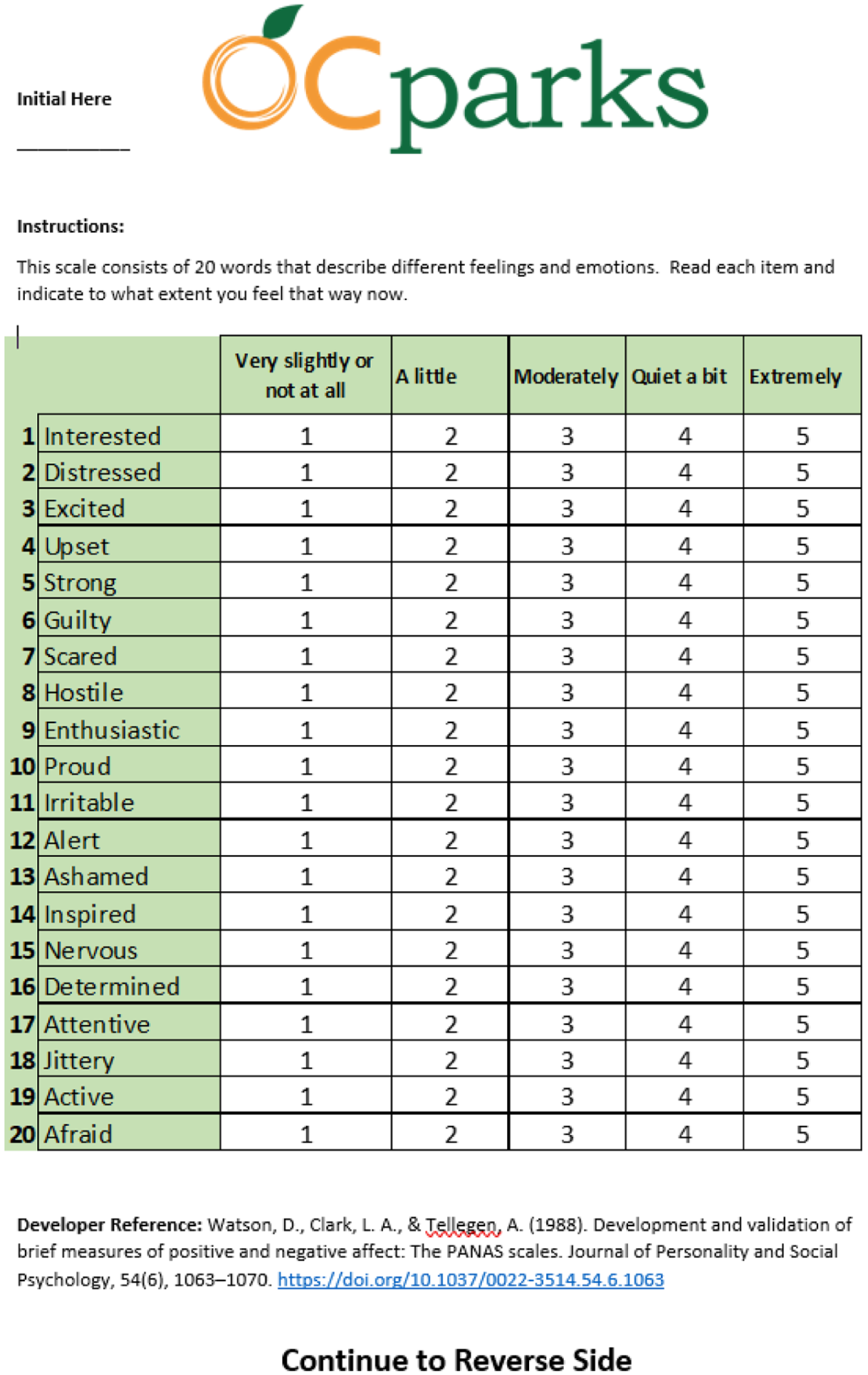
OC Parks PANAS form.
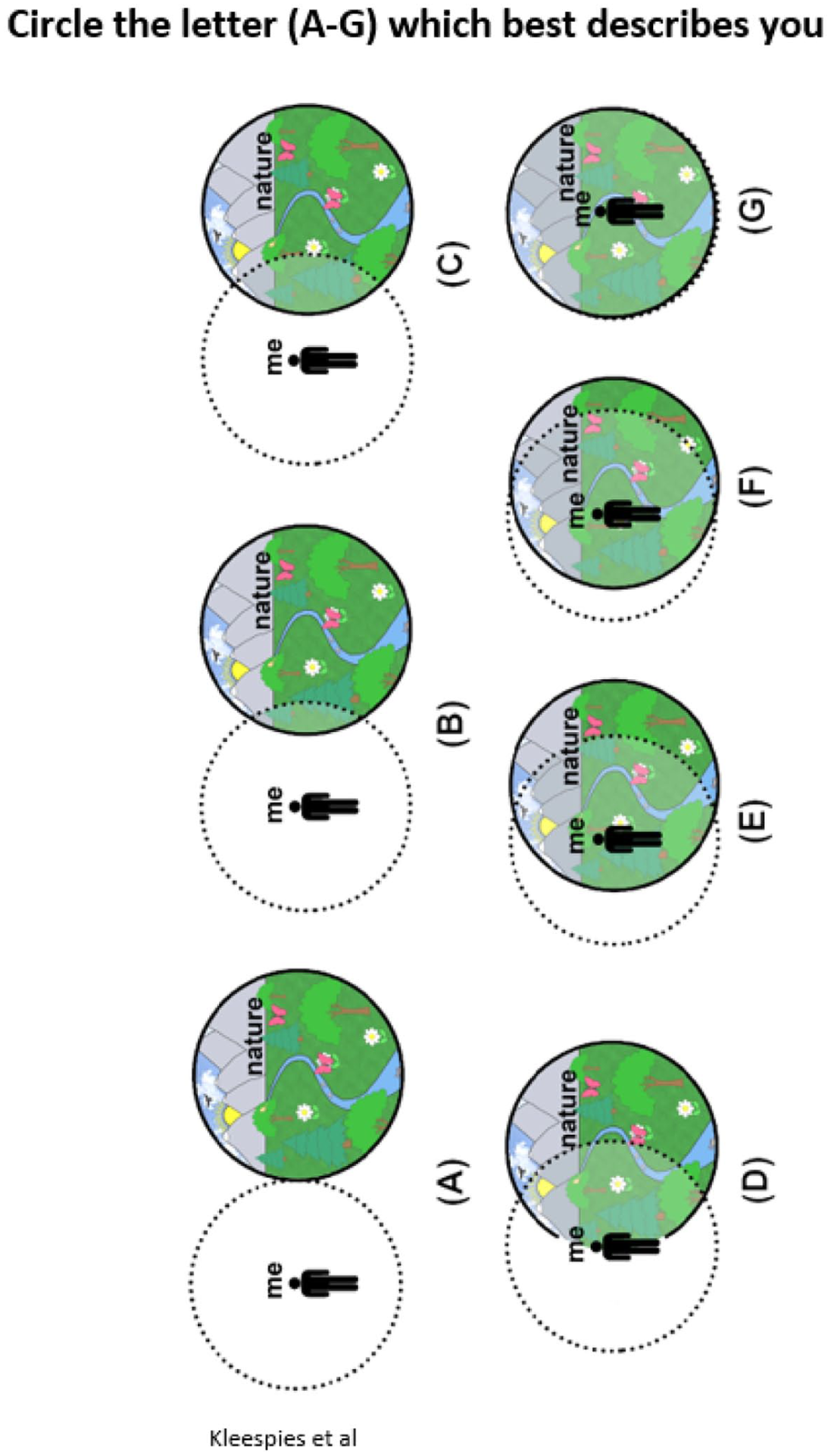
OC Parks IINS form.
The PANAS is a questionnaire that consists of 10 “positive” and 10 “negative” feelings or states (Figure 1). The positive category includes the following feelings: attentive, active, alert, excited, enthusiastic, determined, inspired, proud, interested and strong. The negative category includes hostile, irritable, ashamed, guilty, distressed, upset, scared, afraid, jittery and nervous. They are intermixed in a list and participants are asked to rate their current mood in relation to each factor on a scale of 1–5, 1 being “not at all” and 5 being “very much.” When tabulating the data, researchers add the numeric value of the positive and negative responses separately, giving a score for each set with a maximum of 50 points per category. When the results of the pre- and post-surveys are compared, increases or decreases in each score correspond with changes in positive and/or negative moods. For example, if a participant’s positive score went from 35 to 38 and their negative score went from 22 to 10, this would be understood as a marginal increase in positive emotions and a decrease in negative emotions, demonstrating an overall improvement in mood.
The IINS was adapted from a more widely used tool called the Inclusion of Nature in Self Scale (INS). The INS scale is one of 11 tools featured in the Practitioner Guide to Assessing Connection to Nature published in 2020 by the North American Association for Environmental Education. The scale features 7 choices represented by pairs of circles. The word nature is in one circle and the word self in in the other. In the first choice there is no overlap between the circles and across the scale they become progressively more overlapping until they overlay with each other completely in the final choice. Participants are asked to select the image which best answers the questions “how interconnected with nature are you” (Salazar et al., 2020). The INS is scored on a seven-point scale where a score of one indicates the lowest nature connection and a score of seven represents the closest possible connection.
The illustrated version was originally developed to accommodate young children and people with learning disabilities who typically have lower abilities of abstraction. It uses the exact same layout as the original INS scale but includes a few changes to make the meaning clearer. These include changing the word “self” in the left circle to “me” and the addition of a generic human outline underneath it. The right circles continued to say “Nature,” but a color illustration of a nature scene was added to the background (Figure 2) and there is published evidence that it the data it produces is comparable to that of the original INS scale (Kleespies et al., 2021).
The illustrated version was chosen for the OC Parks study because the Restorative Birdwatching activity was advertised to the public as being “accessible” and investigators wanted to ensure that all aspects of the program were as inclusive as possible for guests with learning disabilities.
Only 47 people completed the IINS form as opposed to the 55 who completed the PANAS form. The IINS was on the back side of a single sheet of paper and in the first program session, facilitators did not realize that eight participants failed to fill out the additional form. After the first program session, “Continue to Reverse Side” was added to the evaluation form and that along with consistent reminders from the facilitators alleviated the problem for the rest of the experiment. While it is possible those eight participants in the first session opted out of the IINS intentionally, the fact that no one else failed to complete the IINS once the form was updated and reminders were given indicates that it was an unintentional error.
Data Analysis
After the results were collected, they were put through a paired samples t-test to determine whether there is statistical evidence that the mean difference between paired observations is significantly different from zero and Cohen’s d was used to determine the effect size. A common interpretation of effect size is less than 0.50 is a small size, 0.50 to 0.80 is a moderate size, and 0.80 or above is a large effect size. The larger the effect size, the stronger the relationship between the variables being measured (Cohen, 1988).
Results
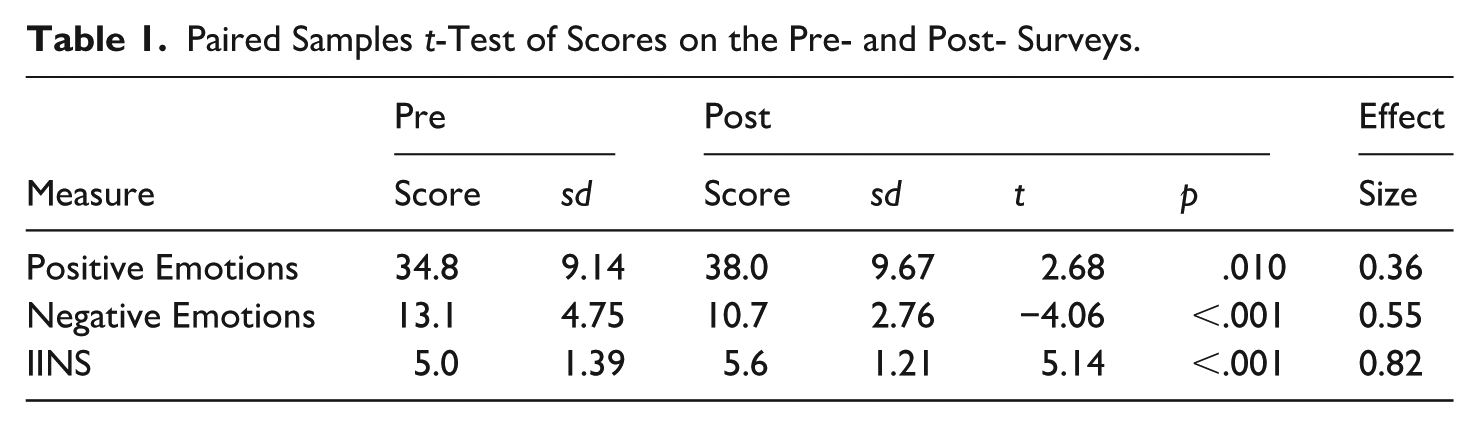
The results of the pre- and post-program surveys in the Restorative Birdwatching programs show statistically significant increases in positive emotions with a small effect size and statistically significant decreases in negative emotion with a moderate effect size on the PANAS Scale. They also show a statistically significant trend toward higher levels of nature connection on the IINS Scale with a large effect size (Table 1).
Paired Samples t-Test of Scores on the Pre- and Post- Surveys.
In the final debrief of the program many participants expressed appreciation for a moving and emotionally refreshing experience. While no qualitative data was formally collected, four participants wrote additional notes on their post survey form which included: “feel much more present,” “thank you, grateful,” and 2 people added “grateful” as a 21st PANAS choice and scored themselves a 5 (the highest possible).
Discussion
The results collected by the OC Parks study show statistically relevant changes to positive and negative emotions as well as nature connection. This suggests that a short-term Five Pathways based intervention like the OC Parks Restorative Bird Watching could have a measurable impact on those qualities and supports the proposition that the measurement tools can be an effective method of program evaluation. These results also corroborate data presented in larger scale studies including a 2015 meta-analysis of articles which used the PANAS scale to measure the effect of contact with the natural environment (McMahan & Estes, 2015).
The OC Parks study showed increases in positive emotions and decreases in negative emotions, with a larger effect size on the latter. Which is consistent with other studies that used the PANAS scale to measure the impact of short-term nature experiences. McAllister et al. (2017) and Watkins-Martin et al. (2021) also found positive affect less elastic than negative affect in larger, more scientifically robust studies.
Similar to Richardson and colleagues’ study in the UK (2022), the results of the OC Parks study also measured an increase in nature connectedness from an activity using the Five Pathways, though the OC Parks study emphasized only three of them. The OC Parks restorative bird watching program specifically demonstrated the value of the pathways of sense, beauty and emotion for enhancing nature connectedness.
When organized by starting IINS score, the sample shows multiple informative trends (Table 2). The group with the largest change between in nature connectedness over the course of the program were those who reported their pre-program level of nature connection at level D (Figure 2). Of the 14 participants who selected that level of nature connection at the beginning, 12 (85%) reported an increase in connectedness on the post survey. The group whose initial answer was D was also the largest cohort group on the pre-program survey, with 29% of the total participants. Lumber et al. (2017) demonstrated that increases in nature connectedness occur primarily through intentional engagement and that activating pathways such as emotion and meaning requires intentional participation, attentional focus, and emotional receptivity. If the intervention’s effectiveness is variable based on individuals’ baseline connection to nature, then individuals with moderate levels of connection—who are sufficiently receptive to engage but have not yet established habitual interaction—may be particularly responsive to opportunities for further engagement, especially in an organized setting.
OC Parks Sample Organized by Starting IINS Choice (A-G).
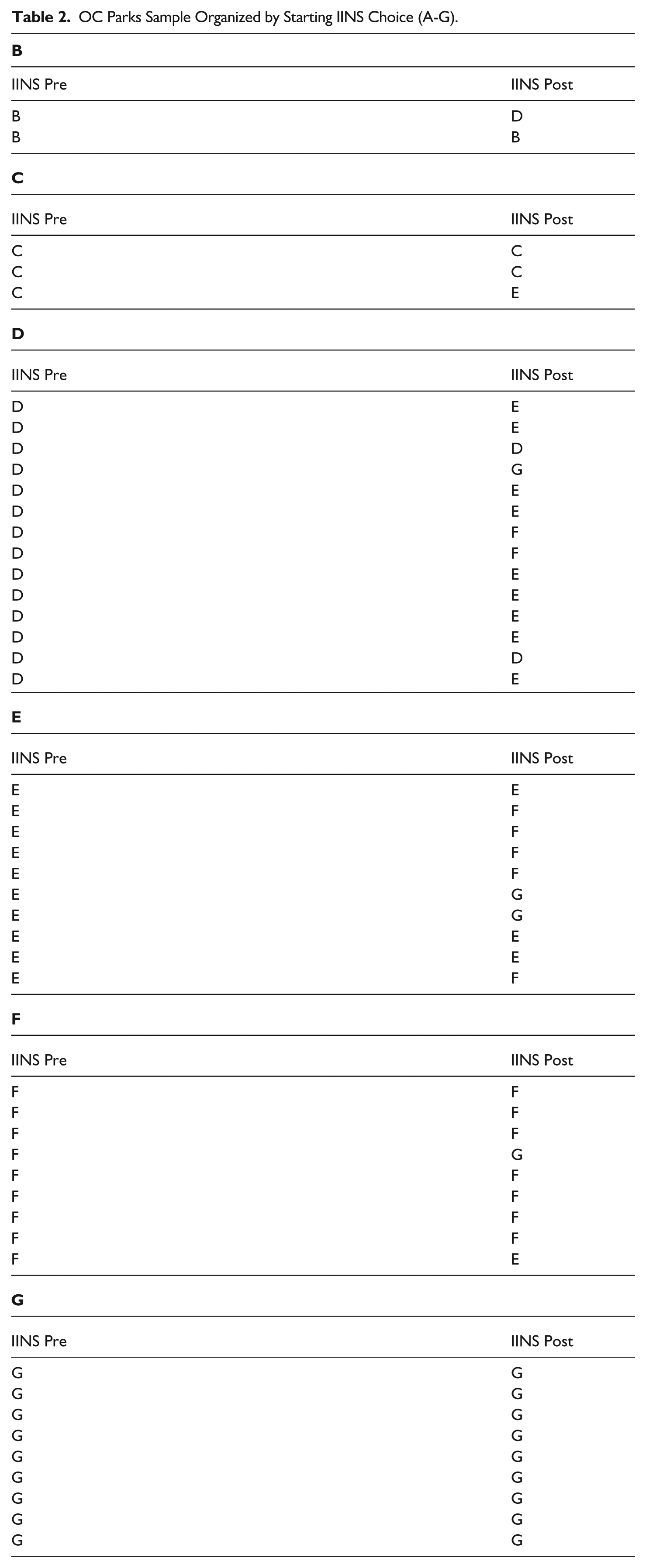
Out of the five people who initially reported lower level of nature connection (answers B and C) only two people (40%) reported an increase in nature connection over the course of the activity. This aligns to some degree with previous findings that people with lower connection to nature may benefit less psychologically from contact with nature (Chang et al., 2024), though the small sample size precludes strong conclusions.
The OC Parks activity can serve as proof-of-concept for interpretive programs designed using the Five Pathways to specifically address nature connectedness and mood enhancement. It also demonstrates that the PANAS and IINS tools can be used to evaluate the impact of interpretive programs on their participants.
Limitations
The results show a relationship between participating in the Restorative Birdwatching program and improved mood and an increase in self-identified nature connection. However, the study lacked any controls and had a very small sample size, so it cannot definitively establish a causal relationship. Only after comparing the results to an average change in emotion and nature connectedness for the established time frame and to the impact of unstructured time in the same location could those claims be made.
Another limitation of this study is that there is no way to know how long the effects lasted after the Restorative Birdwatching program, since there was no follow up contact with the participants. The NCRG has found evidence that long term and more specifically, repeated experiences which are designed to increase nature connectedness, are the most effective for creating lasting change in behavior and mental health (Sheffield et al., 2022). The effectiveness of a one-off experience may be limited, and the changes measured in mood and nature connectedness may dissipate in subsequent hours, days, weeks or months.
Selection bias is also a concern with this sample. The people who opted into this activity all came with at least some pre-established connection to nature. This naturally made them more receptive to the programs message. A sample which was more representative of the general public may well have produced different results or at the very least a smaller effect size.
Implications for Practice
The results of this study provide insight into both the design and evaluation of interpretive programs. The evidence gathered by OC Parks supports the NCRG’s claim that the “Five Pathways to Nature Connectedness” can be an effective framework for programs designed to improve mood and nature connection, particularly for the pathways of sense, beauty, and emotion. Since increased nature connection is linked to increased pro-conservation behavior (Whitburn et al., 2020) and community health (Sheffield et al., 2022), the pathways can serve as a roadmap for organizations whose mission and/ or goals include those types of outcomes. The Five Pathways, and senses, beauty, and emotion in particular, could also be an effective tool for those accomplishing those objectives related to mental health and wellness, which are increasingly common in the fields of environmental education and interpretation (Dussler & Deringer, 2020; NRPA, 2021). The Five Pathways can be woven into existing programming through simple questions and conversation starters or used to create totally new opportunities like OC Parks did.
In addition to program design, the OC Parks study also has notable implications for program evaluation. Stiff competition for funding and increasing pressure to justify expenses (especially in public agencies) is driving a growing emphasis on evaluation and data. When applying for grants, submitting for awards, or justifying new initiatives, there is often a need to provide data which demonstrates the effectiveness of programs or initiatives. The OC Parks study shows how a non-academic or research organization can deploy the same tools used in formal social science research to gather quantitative data on the impact of programs. The PANAS and IINS scales are widely used psychometric measurement tools with potential to serve as individual program evaluators because there is a large body of published research showing that they can successfully measure change over a short period of time. These scales produce results which are broadly accepted as accurate measurements of mood and nature connection which can then be used to justify activities and expenses and compare effects of individual activities to large scale studies and trends because they are predictive of broader outcomes related to wellness and PEBs.
The PANAS and IINS forms are simple, easy to understand, relatively accessible and easy to deploy (Figures 1 and 2). Most participants in the OC Parks study took 1 to 3 min to complete both forms, and it did not create a serious imposition on either the guests or the facilitator. If more interpretive sites were to adopt these tried-and-true measurement tools for their internal program evaluations it could give them a common language with which to compare practices and techniques. If organizations could compare data on how specific techniques or program models performed on these scales it could inspire significant innovation and improvement in outcomes for the field overall. It could also eventually contribute to creating large collective datasets which could answer the core questions addressed in this article in a definitive or causal way.
Conclusion
The Five Pathways to Nature Connectedness provided an effective framework for impactful interpretive programs. Generating conclusive results will always be a challenge when evaluating individual interpretive programs, but the model and tools presented here gives practitioners an opportunity to gather important evidence related to how effective their interpretive programming is in supporting their organizational goals and mission. If the methodology were widely adopted it could give interpreters a common language for evaluation which could lead to much larger, more robust datasets and the possibility of more conclusive results in the future.
Footnotes
Acknowledgements
I would like to thank Bruce Johnson, Brian Forist, Jacquie Gilson, and Mike Mayer whose generous help and support made this publication possible.

Funding
The author received no financial support for the research, authorship, and/or publication of this article.
Declaration of Conflicting Interests
The author declared the following potential conflicts of interest with respect to the research, authorship, and/or publication of this article: I am a member of NAI’s board of directors.