







Abstract
Symbols associated with seasonal religious festivals are periodically displayed by service providers, but do these symbols serve more than just a decorative function? Findings from seven experiments suggest they do. In the presence of such symbols, individuals soften their evaluations of a personally experienced service failure encounter. This effect emerges through the activation of forgiveness but only among those with a religious upbringing and only when the encounter involves service failure (rather than neutral service). The softening of service evaluations in the presence of such symbols is reversed, however, when service failure is observed (rather than directed at the self) and when the recipient of that failure is perceived to be vulnerable. Contextual exposure to symbols associated with seasonal religious festivals therefore presents a double-edged sword for managers; depending upon the service failure recipient, these symbols can harden or soften evaluations of the service failure encounter.
Christmas is the season for kindling the fire of hospitality in the hall, the genial flame of charity in the heart.
Examining the influence of religious festival symbols on customers’ service evaluations may seem anachronistic given the decline in religious attendance that has occurred in many Western nations over recent decades (Australian Bureau of Statistics 2013; Office for National Statistics 2012; Pew Research Center 2015; Twenge et al. 2015). And yet, despite this recent trend toward secularism, a sizable proportion of the populations in Western nations have had a religious upbringing (Pew Research Center 2015), instilling in them a set of religious mental associations that could be activated by contextual exposure to symbols associated with religious festivals (see Shariff et al. 2016). At the same time, religious festival symbols are commonly encountered in the public sphere, whether on the facades of places of worship, via cultural expressions such as artwork or music, or within servicescapes. When examined in combination, these sociocultural dynamics suggest that the symbols associated with religious festivals may exert an important, if largely unrecognized, influence on the service evaluations of a sizable proportion of the population.
Over seven experiments, we argue and find evidence for the notion that symbols associated with religious festivals activate religious beliefs around forgiveness among those with a religious upbringing, increasing tolerance for service failures directed toward the self. Such symbols represent a double-edged sword, however. When a service failure incident is observed (rather than directed at the self) and the recipient of that failure is perceived to be vulnerable (rather than nonvulnerable), the presence of symbols associated with religious festivals heightens perceptions of social injustice, increasing the harshness with which an observer evaluates that incident. These findings suggest that the relegation of religion to the status of a control or dispositional variable, as is common in much consumer research (Mathras et al. 2016), runs the very real risk of ignoring the potential for religious symbols, such as those associated with religious festivals, to dynamically influence a range of managerially relevant outcomes. Our findings go some way toward addressing this oversight.
Literature Review
Forgiveness and Religion
Interpersonal forgiveness involves a “prosocial change toward a perceived transgressor” (McCullough, Pargament, and Thoresen 2000, p. 9), and these prosocial changes include letting go of any resentment felt toward the transgressor and relinquishing the desire for retribution (Exline et al. 2003; McCullough and Worthington 1999). A mandate for forgiveness can be found across multiple religious creeds. In the Judeo Christian tradition, forgiveness involves both transcendent and interpersonal dimensions: God’s removal of sin among the faithful and an analogous requirement for the faithful to follow God’s example and forgive the sins of others (Enright et al. 1991). In Buddhism, forgiveness is embedded within more general prescriptions concerning the importance of displaying forbearance, compassion, and magnanimity (Enright et al. 1991; Rye et al. 2001), while in Islam, the faithful are encouraged to pardon the offenses of others just as Allah pardons their offenses (Rye et al. 2001).
While most religions place considerable value on forgiveness, systematic reviews and meta-analyses of the empirical literature suggest that the relationship between measures of religiosity and forgiveness tends to be small (Davis et al. 2013; Fehr, Gelfand, and Nag 2010; McCullough and Worthington 1999). One explanation for the limited influence that theological mandates for forgiveness have on the practices of the faithful may lie in the contextual salience afforded to one’s religious beliefs. For example, behaviors consistent with forgiveness, such as magnanimity, emerge among the religious only after their religious beliefs have been activated via priming; in the absence of such priming, no heightened tendency to engage in magnanimous responses is observed (Schuman et al. 2014). This finding is consistent with a recent meta-analysis of 93 studies, which found that priming religion had a moderate effect on whether the religious adopt prosocial behaviors (Shariff et al. 2016). The origin of this effect lies in the ability of religious primes to activate preexisting religious beliefs, for similar effects on prosocial behavior do not emerge when religious priming is directed toward those without a religious background (Shariff et al. 2016). On the basis of this research, the likelihood that those with a religious background will forgive is maximized when their religious belief system has been made salient via priming.
Priming Religious Beliefs Via Contextual Exposure to Religious Festival Symbols
There are four general methods by which religious beliefs may be primed: explicitly, implicitly, subliminally, and contextually (Shariff et al. 2016). Explicit primes make religion salient by asking individuals to nominate their religious affiliation or read passages of scripture (e.g., Schumann et al. 2014), while implicit primes obscure the focus of the prime, such as by asking participants to unscramble sentences featuring religious content (e.g., Shariff and Norenzayan 2007). Subliminal primes, in contrast, involve presenting religious stimuli below the length of time necessary for participants to consciously attend to such stimuli (e.g., Johnson, Rowatt, and LaBouff 2010). Although explicit, implicit, and subliminal primes are effective means for making religious beliefs salient (Shariff et al. 2016), their relevance and generalizability to real-world settings is constrained by the nonnaturalistic procedures required to utilize these primes. More relevant to real-world settings are contextual primes, which involve supraliminal but incidental exposure to symbols as varied as religious buildings (LaBouff et al. 2012) and the Islamic call to prayer (Aveyard 2014). These contextual primes can have profound, if frequently unrecognized, influences on behavior. Voting in a church, for example, increases electoral support for issues that have a religious dimension (Rutchick 2010), while individuals are more likely to agree to organ donation requests when the person making that request is wearing a Christian cross (Guéguen, Bougeard-Delfosse, and Jacob 2015).
While religious symbols are manifold, few rival those associated with the religious festival of Christmas in terms of the extent to which they have permeated the public sphere. In nations around the world, Christmas symbols are commonly encountered in retail and service settings, on streetscapes, and in homes during the weeks leading up to Christmas. Some of these symbols overtly draw on Christian imagery (e.g., nativity scenes, angels, stars), while others have more pagan or secular origins (e.g., Christmas trees, holly), yet all, by virtue of their strong connection with the religious festival of Christmas, have become infused with a shared set of rich sociocultural meanings (Caplow and Williamson 1980; Hirschman and LaBarbera 1989). Several theorists, for example, have argued that Christmas symbols help to sacralize the purchasing of Christmas gifts by decommodifying ordinary goods and transforming them into gifts worthy of signifying one’s love or respect for another (Bartunek and Do 2011; Belk 1989). It is our contention that such symbols do more than just sacralize the purchasing of gifts, however; for those with a Christian upbringing and who, as a result of this upbringing, have forged an association between Christmas symbols and Christianity, contextual exposure to Christmas symbols may activate beliefs associated with Christianity, influencing their readiness to forgive instances of service failure.
Service Failure, Service Satisfaction, and Forgiveness
Although exceptional customer service may be the stated aspiration of all service organizations, there will be moments in every organization when service delivery does not meet a customer’s expectations. Such discrepancies are termed service failure (McCollough, Berry, and Yadav 2000) and can give rise to a host of adverse ancillary outcomes for the organization responsible for that failure. For example, dissatisfaction with the service encounter is common following service failure (McCollough, Berry, and Yadav 2000; Smith, Bolton, and Wagner 1999), as are feelings of resentment (Bougie, Pieters, and Zeelenberg 2003) and a more general desire to engage in retaliatory actions, such as disseminating negative word of mouth (Bonifield and Cole 2007). Forgiveness, which involves relinquishing feelings of resentment and the desire for retaliation (Exline et al. 2003; McCullough and Worthington 1999), should therefore soften customers’ postservice failure evaluations and behaviors (see Tsarenko and Tojib 2011). Prior research supports this contention. As Tsarenko and Tojib (2015) found, forgiveness mediates the relationship between brand transgression and brand repurchase intentions, while Yagil and Luria (2016) identified various manifestations of forgiveness following a service failure encounter, including positively reframing the service failure and engaging in perspective taking.
Given its role as an antecedent of general forgiveness, religion may also influence the readiness with which consumers forgive a service failure encounter. Tsarenko and Tojib (2012), for instance, noted that religiosity positively influences the extent to which consumers forgive service failure encounters, while Cowart, Ramierz, and Brady (2014) found that consumers were more likely to forgive a service interruption if the reason for that interruption could be attributed to the service provider’s observance of a religious holiday. A limitation with this body of research, however, is that it implicitly treats religion as a dispositional construct; whether contextual religious belief primes are sufficient to mitigate dissatisfaction with service failure has not previously been explored. This consideration is particularly important, given the aforementioned tendency for religious belief priming to increase the likelihood that the faithful will act in accordance with their religious beliefs (Schuman et al. 2014; Shariff et al. 2016) and the greater managerial utility associated with processes involving contextual rather than dispositional factors. On the basis of this reasoning, and given the more general effect of forgiveness on service failure evaluations, we argue that:
While the priming of religion may decrease dissatisfaction with service failure encounters, we argue that there will be no equivalent boost in service satisfaction following a neutral service encounter. Satisfaction, after all, is an evaluative construct (Mano and Oliver 1993), and there is no religious belief that systematically influences how the faithful will evaluate neutral interpersonal encounters. For this reason, the effect of religious belief priming on service satisfaction should be restricted to service failure encounters, as follows:
Service Failure Experienced by Vulnerable Others
So far, discussion has been limited to the potentially ameliorative effect of one religious belief—forgiveness—on the evaluation of personally experienced service failures. Most religions are imbued with a plurality of beliefs, however (Moses 2002), and the specific beliefs to which those with a religious upbringing will attend may depend, in part, on situational factors. Consider social justice and charity, an intertwined set of relatively universal religious beliefs that are characterized by a desire to protect vulnerable members of society (Cascio 2003; Fensham 1962) and which, following the priming of religious beliefs, are manifested by a sensitization to the plight of vulnerable in-group members (Pichon and Saroglou 2009; Różycka-Tran 2017). Among those who have had their religious beliefs primed, perceptions of social injustice should consequently be greater when service failure is directed toward a vulnerable, as opposed to a nonvulnerable, third-party recipient.
Once an individual perceives an instance of third-party service failure as being socially unjust, an opposing dynamic to that associated with forgiveness is likely to emerge. The basis for this contention lies in the observation that individuals react negatively to perceived injustices experienced by neutral or unknown third parties (Kahneman, Knetsch, and Thaler 1986; Turillo et al. 2002) and that witnessing a service failure directed toward a third party reduces perceptions of service fairness and repatronage intentions (Mattila, Hanks, and Wang 2014). Thus, while forgiveness may result in the relinquishment of retributive motivations (Exline et al. 2003; McCullough and Worthington 1999), perceptions of third-party injustice tend to trigger retributive motivations (Folger, Cropanzano, and Goldman 2005), hardening evaluations of service failures experienced by vulnerable third parties. On the basis of this reasoning, the following hypotheses are defined:
Overview of Studies
Seven experiments were conducted to test the study hypotheses. In Study 1a, we tested our general contention that exposure to symbols associated with a religious festival (i.e., Christmas) will reduce the severity with which those who have had a religious upbringing (i.e., raised in a Christian household) will evaluate service failure encounters. While we argue that the basis for this effect lies in the ability of Christmas symbols to prime religious beliefs, it is conceivable that secular associations with Christmas may also be evoked by exposure to such symbols. A conceptual replication (Crandall and Sherman 2016) using an implicit religious belief prime was therefore conducted in Study 1b to confirm our underlying contention. We then conducted a series of follow-up studies to further probe the influence that contextually priming religious beliefs via exposure to Christmas symbols have on service failure evaluations. Specifically, Study 2 assessed the mediating role of forgiveness among those who had been exposed to Christmas symbols, while Study 3 identified a boundary condition for this effect. Studies 4a and 4b then demonstrated how the direction of this effect is reversed when service failure is observed (rather than experienced directly) and when the recipient of that observed service failure is perceived to be a vulnerable member of the community. Finally, Study 5 explored two other managerially relevant postservice failure outcomes that could be affected by exposure to Christmas symbols: intention to switch service providers and intention to warn others about the service provider.
Study 1a
Pretest
A pretest involving 220 Amazon Mechanical Turk (MTurk) participants residing in the United States was conducted to determine whether religiosity was activated following incidental exposure to symbols associated with a religious festival (i.e., Christmas). While MTurk provides a useful method for collecting data from demographically heterogeneous samples (Buhrmester, Kwang, and Gosliang 2011; Paolacci, Chandler, and Ipeirotis 2010), some MTurk participants have been found to mischaracterize their demographic profile so as to “meet” a study’s inclusion criteria (Wessling, Huber, and Netzer 2017). To minimize the economic incentive for mischaracterizing their demographic profile, and given that asking individuals to nominate their religious affiliation can prime religion (Shariff et al. 2016), participants were asked to specify their religious upbringing at the end of the study. All participants were then paid US$0.50 as a reward for completing the study, but 53 participants who reported being raised in a non-Christian household and 5 participants who did not follow the study instructions were subsequently removed from the data set, leaving 162 participants (female = 72) aged between 19 and 66 years (M = 37.74, standard deviation [SD] = 11.06) available for analysis.
Participants were randomly assigned to one of the three conditions, and in each condition, participants were presented with two images of the same hotel (see the Online Appendix for copies of these images). 1 In the religious belief prime condition (n = 50), the two images featured Christmas decorations, while in the neutral prime condition (n = 56), no decorations were featured. A third condition (festivity prime, n = 56) was also included to determine whether the potential influence of Christmas decorations on service dissatisfaction was ultimately attributable to the festive, as opposed to religious, meanings associated with Christmas. To that end, the images in the festivity prime condition featured New Year’s Eve decorations as this secular, nonreligious festival shares with Christmas an association with hedonism and revelry, particularly the (over)consumption of food and alcohol (Pettigrew, Ryan, and Ogilvie 2001).
After viewing the two images, participants completed an adapted version of the Brief Multidimensional Measure of Religiousness/Spirituality (BMMRS; α = .97; Fetzer/National Institute on Aging Working Group 1999) and the Santa Clara Strength of Religious Faith Questionnaire—Short Form (SCSRFQ; α = .94; Plante et al. 2002) to ascertain whether the religious belief prime had indeed activated religiosity. Participants then rated the level of service they were expecting from the hotel (1 = terrible, 7 = excellent) and the likelihood that a person patronizing the hotel was doing so for pleasure (1 = extremely unlikely, 7 = extremely likely) to determine whether the religious belief prime changed service expectations or the perceived purpose for traveling, both of which could conceivably influence service evaluations. Finally, participants completed the positive (α = .82) and negative (α = .94) affect subscales of Mackinnon et al.’s (1999) Positive Affect and Negative Affect Schedule (PANAS) before reporting their age, gender, and religious upbringing.
Two analyses of covariance (ANCOVAs) with positive and negative affect acting as covariates indicated that the experimental conditions significantly influenced BMMRS scores, F(2, 157) = 33.17, p < .001, and SCSRFQ scores, F(2, 157) = 28.63, p < .001. Planned comparisons involving independent-measures t tests indicated that participants in the religious belief prime condition (M = 4.15, SD = 1.42) had significantly greater BMMRS scores than those in the festivity prime condition (M = 2.21, SD = 1.29), t(104) = 7.34, p < .001, and neutral prime condition (M = 2.23, SD = 1.43), t(104) = 6.91, p < .001. No differences in BMMRS scores were found between participants in the festivity and neutral prime conditions, t(110) = −0.06, p = .96. A similar pattern was observed for the SCSRFQ scores; while scores in the religious belief prime condition (M = 3.01, SD = 0.86) exceeded those in the festivity (M = 1.99, SD = 0.84), t(104) = 6.15, p < .001, and neutral prime conditions (M = 1.81, SD = 0.89), t(104) = 7.05, p < .001, no differences were observed between the festivity prime condition and the neutral prime condition, t(110) = 1.13, p = .26. Together, these findings indicate that Christmas decorations activate feelings of religiosity among those with a Christian upbringing, supporting the notion that incidental exposure to religious festival symbols can prime religious beliefs.
Two additional ANCOVAs with positive and negative affect once again acting as covariates were conducted to rule out the possibility that the religious belief prime condition may have altered service expectations or the perceived purpose of travel. Results indicated that service expectations did not differ among those in the religious belief prime (M = 6.33, SD = 0.77), festivity prime (M = 6.19, SD = 0.80), or neutral prime conditions (M = 6.45, SD = 0.71), F(2, 157) = 1.59, p = .21. Similarly, the perceived likelihood that a person staying at the hotel would be traveling for pleasure did not vary among those allocated to the religious belief prime (M = 5.70, SD = 1.43), festivity prime (M = 5.89, SD = 1.15), or neutral prime conditions (M = 5.64, SD = 1.35), F(2, 157) = 0.85, p = .44. Examined in their totality, these findings suggest that among those with a Christian upbringing, the mere presence of Christmas decorations was sufficient to activate religiosity while leaving service expectations and perceptions around the purpose for travel unchanged.
Participants and Procedure
One hundred and eighty members of the MTurk workforce residing in the United States completed the Study 1a materials. The same Christmas-themed stimuli examined in the pretest were used as the means for priming religious beliefs in Study 1a, so responses from participants who reported not being raised in a Christian household (n = 31) as well as those who did follow the study instructions (n = 8) were removed. In total, 141 participants (female = 61) aged between 19 and 68 years (M = 34.33, SD = 10.96) remained available for analysis.
Participants were first informed that the study was examining various facets of consumer behavior and that the tasks they completed may appear unrelated. Next, participants read a service failure scenario adapted from previous research (see Wong, Newton, and Newton 2016). Embedded within this scenario were images of the hotel in which the scenario was ostensibly set and which featured Christmas decorations (religious belief prime, n = 48), New Year’s Eve decorations (festivity prime, n = 47), or no seasonal or holiday decorations (neutral prime, n = 46). Participants then rated how satisfied, delighted, and favorable they felt about the service described in the scenario on a 7-point scale anchored by the terms not at all and to a great extent. These items, which were adapted from existing scales (McCollough, Berry, and Yadav 2000; Westbrook 1980), were reverse coded and averaged to form a measure of service dissatisfaction (α = .85). Finally, participants completed the positive (α = .77) and negative (α = .82) affect subscales of the PANAS and reported their age, gender, and religious upbringing.
Results and Discussion
A one-way (religious belief prime vs. festivity prime vs. neutral prime) independent-measures ANCOVA was used to determine whether incidental exposure to Christmas decorations reduced dissatisfaction with a service failure encounter. Because service satisfaction may vary with mood (Holbrook and Gardner 2000; Knowles, Grove, and Pickett 1999), the positive and negative affect subscales of the PANAS were also included as covariates to control for any potential mood-related effects arising from exposure to the Christmas decorations or the service failure scenarios. Results indicated that neither positive affect, F(1, 136) = 1.49, p = .22, nor negative affect, F(1, 136) = 0.45, p = .50, significantly covaried with service dissatisfaction. The priming main effect was, however, significant, F(1, 136) = 17.86, p < .001. Independent-measures t tests conducted to examine this main effect revealed that participants exposed to the religious belief prime reported less service dissatisfaction (M = 5.58, SD = 0.90) than those exposed to the festivity prime (M = 6.36, SD = 0.71), t(93) = 4.68, p < .001, and neutral prime (M = 6.43, SD = 0.68), t(92) = 5.11, p < .001; see Figure 1. However, no difference was observed between those exposed to the festivity and neutral primes, t(91) = −0.46, p = .65. Thus, and consistent with Hypothesis 1, priming religious beliefs was effective at softening evaluations of service failure. 2
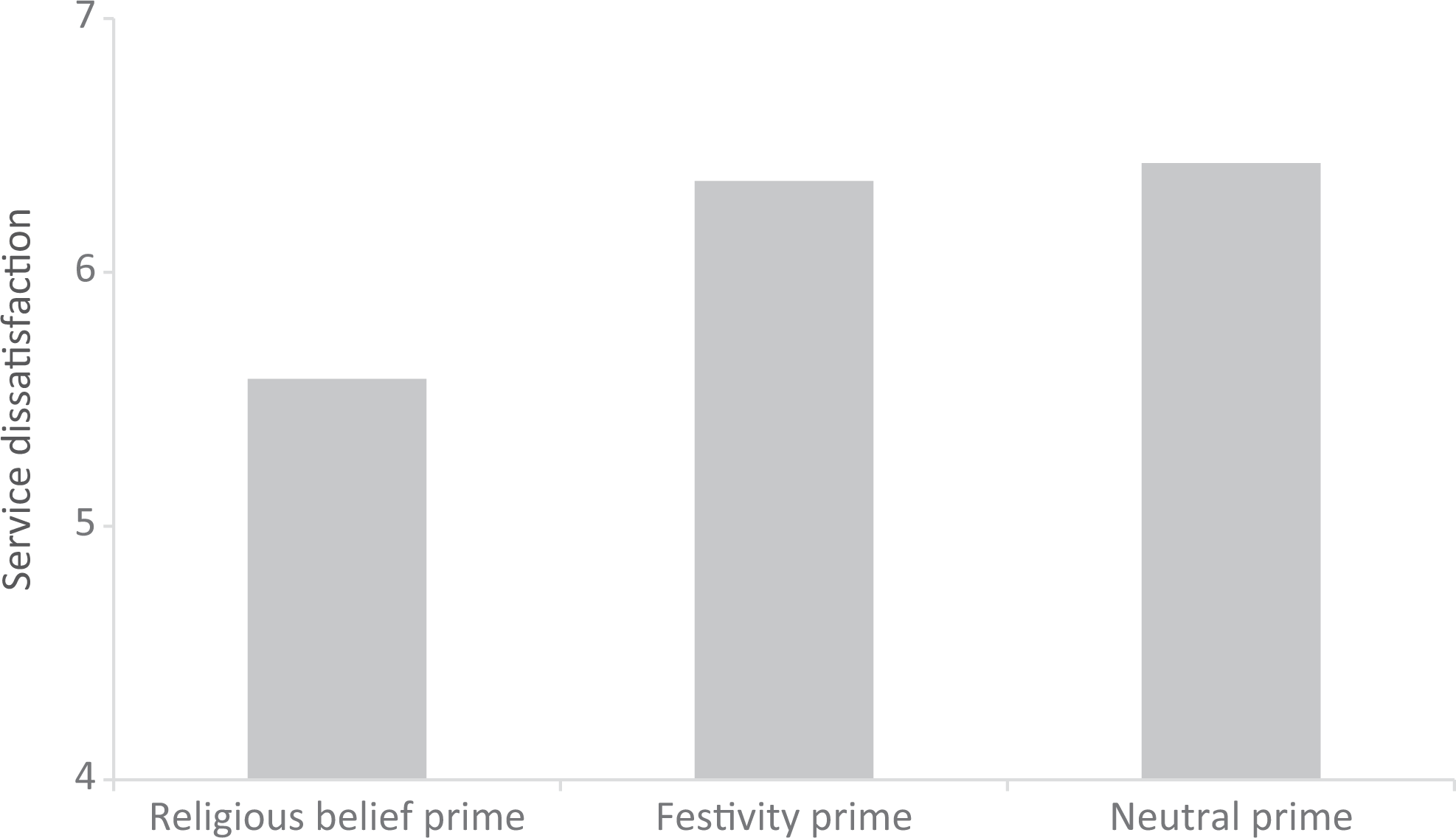
Dissatisfaction with a service failure encounter following the priming of religious beliefs via Christmas decorations (Study 1a).
Study 1b
Study 1a provided preliminary evidence that exposure to Christmas symbols reduces service failure dissatisfaction among those with a Christian upbringing. While this effect was interpreted in line with the Study 1a pretest findings that Christmas symbols activate religious beliefs, it is conceivable that other secular associations specific to Christmas, such as the tradition of gift-giving (Caplow 1992; Eckstein 2001), were also activated. A conceptual replication (Crandall and Sherman 2016) of the Study 1a findings was therefore conducted using an implicit religious belief priming task unrelated to Christmas. Identifying equivalent findings to those reported in Study 1a would lend further support to our argument that it is the activation of religious, as opposed to secular, beliefs that are ultimately responsible for decreasing service failure dissatisfaction following incidental exposure to Christmas symbols.
Participants and Procedure
One hundred and twenty MTurk participants residing within the United States were invited to take part in the study. Because the implicit religious belief priming task used in this study was not tied to any particular religious tradition or belief system, the participant inclusion criteria were broadened to include all participants who reported having being raised in a religious household of any kind. After removing those who did not meet this inclusion criteria (n = 31) or follow all study instructions (n = 11), 78 participants (female = 35) ranging in age from 19 to 65 years (M = 38.55, SD = 11.93) remained available for analysis.
Consistent with Study 1a, participants were first informed that the study was examining various facets of consumer behavior and that the tasks being presented may appear unrelated to each other. Participants then completed a sentence unscrambling task designed to implicitly prime religious beliefs (Shariff and Norenzayan 2007) and which required participants to generate grammatically correct, four-word sentences from lists of five words. Specifically, those randomly assigned to the neutral prime (n = 37) were asked to unscramble 10-word lists containing nonreligious, neutral content (e.g., “fall was worried she always” could be unscrambled to become “she was always worried”), while those assigned to the religious belief prime (n = 41) unscrambled five-word lists featuring neutral content and five-word lists containing a targeted religious word (e.g., “sacred was book refer the” could be unscrambled to become “the book was sacred”). Participants then read the service failure scenario used in Study 1a. After reading the scenario, participants completed the 3-item Service Dissatisfaction Scale used in Study 1a (α = .81), followed by the positive (α = .65) and negative (α = .70) affect subscales of the PANAS (Mackinnon et al. 1999). The study ended after participants reported their age, gender, and religious upbringing.
Results and Discussion
A one-way (religious belief prime: neutral vs. religious) independent-measures ANCOVA with positive and negative affect included as covariates revealed that while positive affect significantly covaried with dissatisfaction, F(1, 74) = 11.40, p < .01, negative affect did not, F(1, 74) = 0.85, p = .40. Results also indicated that participants were less dissatisfied with the service encounter following completion of the religious belief prime (M = 5.87, SD = 0.53) than after completion of the neutral prime (M = 6.43, SD = 0.65), F(1, 74) = 17.62, p < .001; see Figure 2, replicating the Study 1a findings and providing further support for Hypothesis 1.
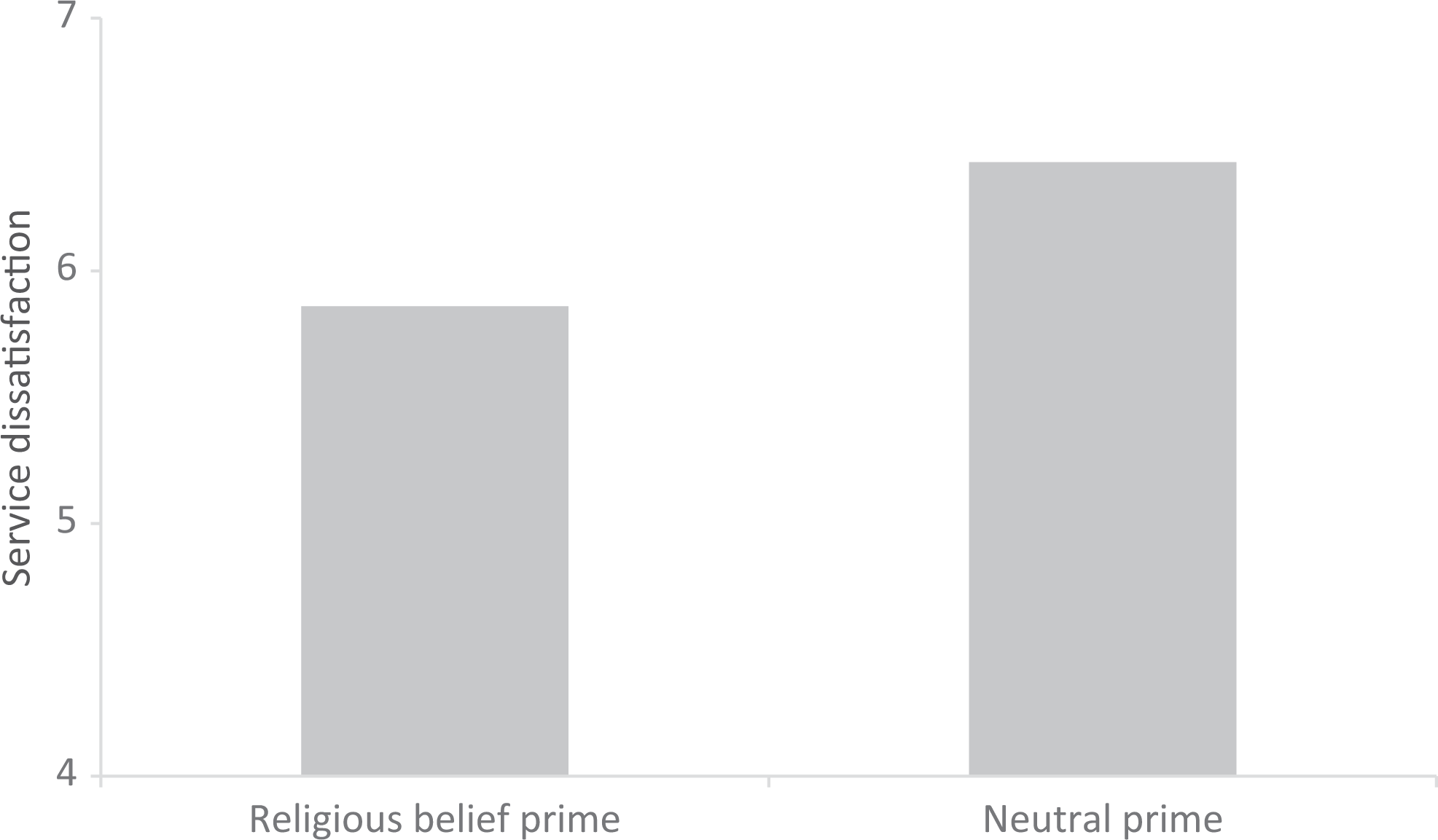
Dissatisfaction with a service failure encounter following the semantic priming of religious beliefs (Study 1b).
Study 2
Study 1a established that exposure to Christmas symbols softened evaluations of service failure among those raised in a Christian household, while Study 1b provided convergent evidence that this effect was attributable to the activation of religious beliefs. The principal purpose of Study 2 was to explore whether an individual’s sense of forgiveness mediated the effects identified in Studies 1a and 1b. A secondary purpose was to provide further confirmatory evidence that it was the activation of religious beliefs that was responsible for the observed effects by directly comparing responses among participants with and without a Christian upbringing.
Participants and Procedure
Five hundred MTurk workers residing in the United States were invited to complete the Study 2 materials. Unlike the previous studies, all participants, irrespective of their religious upbringing, were included in the analyses. However, 49 participants who did not follow all study instructions were excluded from analysis. The age of the remaining 451 participants (female = 228) ranged between 20 and 73 years (M = 37.79, SD = 11.65).
As in the previous studies, participants were first informed that the study was examining different facets of consumer behavior and that the tasks they would be asked to complete may consequently appear unrelated. In Studies 1a and 1b, the service failure scenario featured both an inattentive concierge and a rude receptionist. To rule out the possibility that participants may have had different expectations of these service workers, the wording of the service failure scenario was modified in this study, so that only one service worker (the concierge) was responsible for the service failure. As in Study 1a, integrated into this scenario were images of the hotel in which the service failure incident ostensibly took place, and these images were manipulated to feature either Christmas decorations (religious belief prime, n = 226) or no Christmas decorations (neutral prime, n = 225). Next, participants completed the 3-item Dissatisfaction Scale used in Studies 1a and 1b (α = .94) as well as a 4-item Forgiveness Scale adapted from Aquino, Tripp, and Bies (2006) in which all items were scored on 7-point Likert-type scales ranging from strongly disagree to strongly agree. These items, which included “I will let go of any bad feelings I have toward the concierge” and “I will let go of any resentment I feel toward the concierge,” were averaged to form a scale of forgiveness (α = .92). The study concluded after participants completed the positive (α = .81) and negative (α = .69) affect subscales of the PANAS (Mackinnon et al. 1999) and reported their age, gender, religious upbringing, and current religious affiliation.
Results and Discussion
Participants were coded according to whether they were raised in a Christian household (Christian upbringing, n = 337) or a household that did not identify with Christianity (no Christian upbringing, n = 114). A 2 (religious belief prime: neutral vs. religious) × 2 (Christian upbringing: no vs. yes) independent-measures ANCOVA with positive and negative affect acting as covariates was then conducted. Results indicated that positive affect, F(1, 445) = 0.91, p = .34, negative affect, F(1, 445) = 0.31, p = .58, and the main effects associated with the religious belief prime, F(1, 445) = 1.65, p = .20, and Christian upbringing, F(1, 445) = 0.12, p = .73, had no significant influence on service dissatisfaction. However, the Religious Belief Prime × Christian Upbringing interaction was significant, F(1, 445) = 4.54, p < .05.
Planned contrasts involving independent-measures t tests were then conducted to assist in the interpretation of this interaction. Among participants with a Christian upbringing, those allocated to the religious belief prime reported significantly less dissatisfaction with the service encounter (M = 5.77, SD = 1.30) than those in the neutral prime condition (M = 6.17, SD = 0.80), t(335) = 3.34, p < .01; see Figure 3. However, among those with no Christian upbringing, no significant difference in service dissatisfaction was observed among those allocated to the religious belief prime (M = 6.07, SD = 0.80) and neutral prime conditions (M = 5.97, SD = 1.11), t(112) = −0.54, p = .59. These findings, which are consistent with those reported in Studies 1a and 1b, provide further support for Hypothesis 1. The findings also demonstrate that the softening of service failure evaluations following exposure to Christmas symbols was isolated to those with a Christian upbringing.
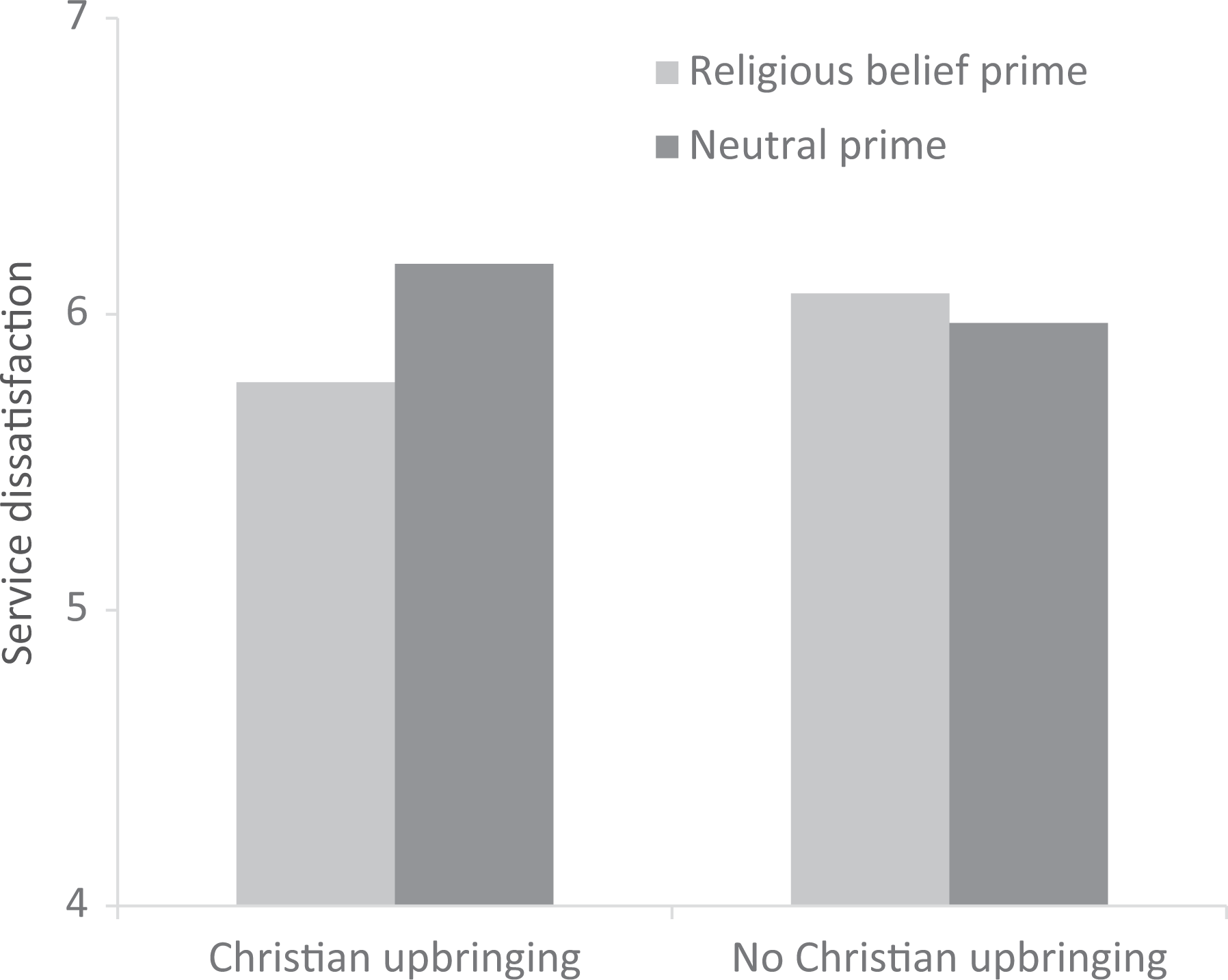
Dissatisfaction with a service failure encounter following the priming of religion beliefs via Christmas decorations (Study 2).
Model 8 of Hayes’s (2013) PROCESS macro with 10,000 bootstrapped samples and with positive and negative affect acting as covariates was then used to explore whether forgiveness was the mechanism responsible for the softening of service evaluations following exposure to Christmas symbols. The index of moderated mediation was significant (index = −.32, 95% confidence interval [CI] = [−.53, −.15]), indicating that the indirect effect of forgiveness on the relationship between the religious belief prime and service dissatisfaction was conditional on having had a Christian upbringing. Spotlight analyses were then conducted to shed light on this significant effect. Results indicated that the indirect effect of forgiveness was only significant among participants with a Christian upbringing (effect = −0.24, 95% CI [−.36, −.14]); among those with no Christian upbringing, the indirect effect of forgiveness was not significant (effect = 0.08, 95% CI [−.06, .23]). These findings indicate that forgiveness mediates the influence of the religious belief prime on service dissatisfaction among those with a Christian upbringing, supporting Hypothesis 2.
While having a Christian upbringing moderated the mediating effect of forgiveness, it is conceivable that this moderating effect was ultimately attributable to the subset of participants with a Christian upbringing who continued to practice Christianity. To rule out this alternative explanation, all participants who reported being raised in a Christian household were categorized according to whether they maintained a Christian faith (current Christian, n = 212) or no longer identified as Christian (lapsed Christian, n = 125). Model 8 of Hayes’s (2013) PROCESS macro with 10,000 bootstrapped samples and with positive and negative affect acting as covariates was then used to determine whether the mediating effect of forgiveness on the relationship between exposure to the religious belief prime and service dissatisfaction was moderated by being a current Christian. The index of moderated mediation was found to be nonsignificant (index = .03, 95% CI [−.15, .22]), with spotlight analyses indicating that forgiveness was a significant mediator among both current Christians (effect = −0.23, 95% CI [−.39, −.11]) and lapsed Christians (effect = −0.26, 95% CI [−.45, −.12]). These findings, combined with those outlined above, lend further weight to the notion that Christmas symbols activate notions of forgiveness among those raised in a Christian household, irrespective of whether they continue to profess a Christian faith.
Study 3
In Studies 1a–2, making religious beliefs salient minimized the severity with which service failure encounters were evaluated among those with a religious upbringing. What remains unclear, however, is whether the priming of religious beliefs can enhance service evaluations following a neutral service experience. The purpose of Study 3 was therefore to assess a potential boundary condition by determining whether the effect that religious belief priming has on service evaluations is restricted to service failure encounters.
Participants and Procedure
Two hundred members of the MTurk workforce who resided in the United States were invited to take part in the study. Participants who were not raised in a Christian household were excluded from all analyses (n = 51), as were those who did not follow all study instructions (n = 5). The remaining 144 participants (female = 77) ranged in age from 18 to 69 years (M = 39.58, SD = 11.54).
Study 2 only featured a service failure scenario, so in this study, an equivalent neutral service scenario that described the concierge giving satisfactory service was also developed. Participants were randomly assigned to read either the service failure scenario (n = 74) or neutral service scenario (n = 70). As with Studies 1a and 2, embedded within these scenarios were pictures of the hotel in which the service interaction took place, and these pictures featured either Christmas decorations (religious belief prime, n = 68) or no Christmas decorations (neutral prime, n = 76). Next, participants completed the same 3-item Dissatisfaction Scale (α = .98) employed in the previous studies. The study ended after participants completed the positive (α = .78) and negative (α = .80) affect subscales of the PANAS (Mackinnon et al. 1999) and reported their age, gender, and religious upbringing.
Results and Discussion
A 2 (religious belief prime: neutral vs. religious) × 2 (service: neutral vs. failure) independent-measures ANCOVA with positive and negative affect included as covariates indicated that neither positive affect, F(1, 138) = 0.43, p = .52, nor negative affect, F(1, 138) = 0.26, p = .61, significantly covaried with service dissatisfaction. However, both the religious belief prime, F(1, 138) = 18.83, p < .001, and service conditions, F(1, 138) = 613.72, p < .001, had significant main effects on service dissatisfaction levels. An independent-measures t test conducted among the 76 participants in the neutral condition revealed a significant difference in service dissatisfaction between those allocated to the service failure (M = 6.32, SD = 0.58) and neutral service conditions (M = 1.96, SD = 1.03), t(74) = 22.66, p < .001; see Figure 4, suggesting that the manipulation of the service scenarios was successful. Most importantly, the interaction between service condition and religious belief prime was also significant, F(1, 138) = 10.35, p < .01. Planned contrasts revealed that in the service failure condition, participants exposed to the religious belief prime reported less service dissatisfaction (M = 5.34, SD = 0.73) than those in the nonreligious belief prime condition (M = 6.32, SD = 0.58), t(72) = −6.36, p < .001, mirroring the results from Studies 1a to 2 and providing further support for Hypothesis 1. Conversely, in the neutral service condition, no differences were observed between those in the religious belief prime (M = 1.82, SD = 0.61) and neutral prime conditions (M = 1.96, SD = 1.03), t(68) = −0.64, p = .52. These findings are consistent with the notion that the influence of religious belief primes on service evaluations is confined to service failure contexts, supporting Hypothesis 3.
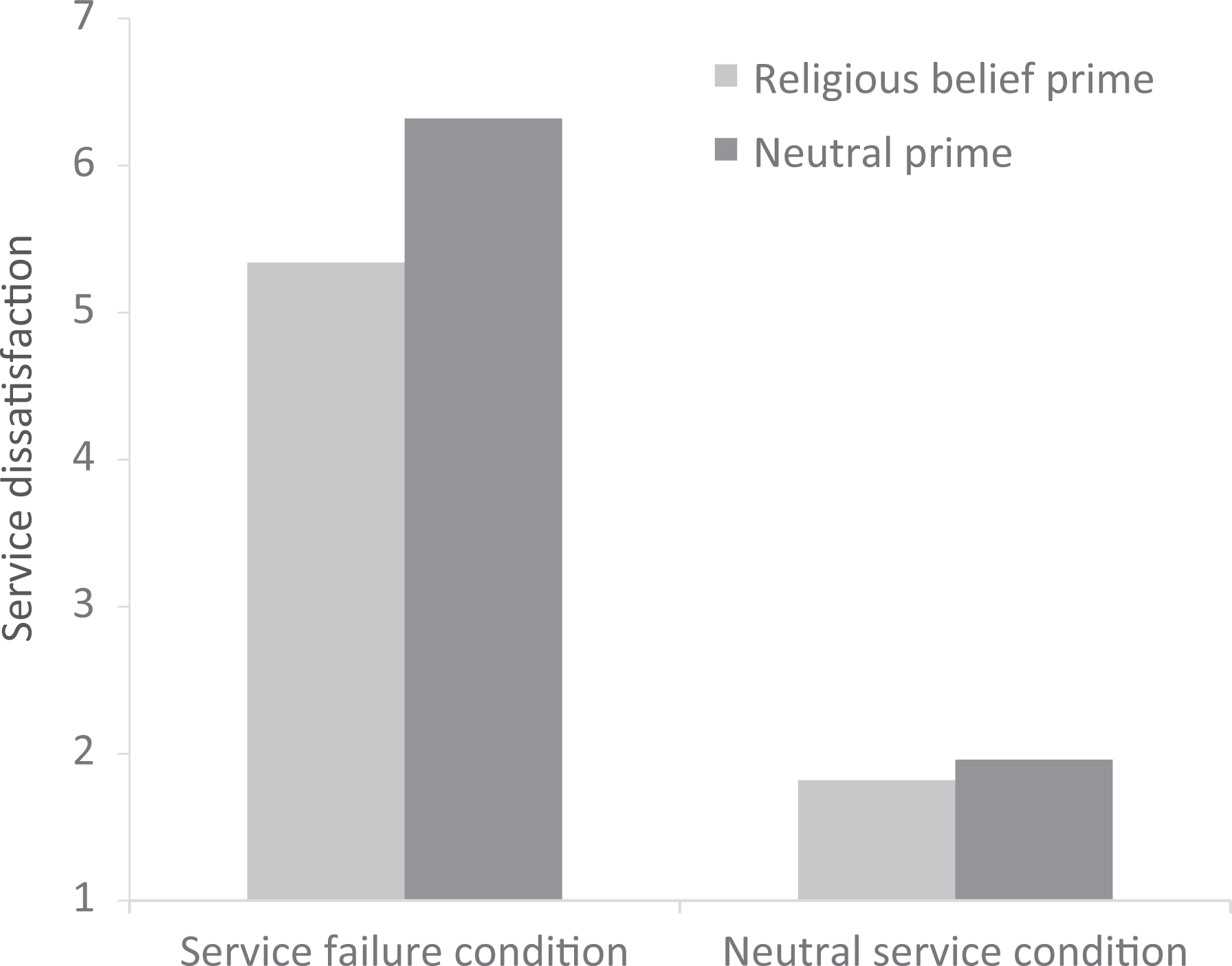
Dissatisfaction with neutral service and service failure encounters following the priming of religious beliefs via Christmas decorations (Study 3).
Study 4a
The previous studies reported in this article suggest that priming religious beliefs during a service failure encounter will activate forgiveness among those with a religious upbringing (Study 2), softening their evaluations of that encounter (Studies 1–3). Priming religious beliefs may, however, activate responses other than a heightened propensity for forgiveness. For example, many religious creeds espouse the importance of protecting the vulnerable, so witnessing a vulnerable third-party experience service failure may actually harden service evaluations among observers for whom religious beliefs have been made salient. The purpose of Study 4a was to test this effect.
Participants and Procedures
As with the previous studies, 250 MTurk participants residing within the United States were invited to take part in the study. Participants who were not raised in a Christian household (n = 64) or who had not followed all study instructions (n = 12) were excluded from analyses. The age of the remaining 174 participants (female = 92) ranged from 21 to 63 years (M = 37.47, SD = 10.38).
Two new variations of the service failure scenario used in Study 3 were developed and examined: a scenario featuring an elderly retiree (service failure recipient: vulnerable third party) and another featuring a business executive (service failure recipient: nonvulnerable third party). These social roles were chosen on the basis of a pretest in which 29 MTurk respondents (female = 14) aged between 22 and 61 years (M = 34.66, SD = 10.44) rated the perceived vulnerability of both roles on a 7-point scale anchored by the terms “not at all vulnerable” and “very vulnerable.” A repeated-measures t test revealed that the elderly retiree was indeed perceived as being more vulnerable (M = 5.83, SD = 1.47) than the business executive (M = 2.69, SD = 1.39), t(28) = −6.79, p < .001.
In the main study, participants were randomly assigned to read a scenario in which the recipient of the service failure was an elderly retiree (service failure recipient: vulnerable third party, n = 62) or a business executive (service failure recipient: nonvulnerable third party, n = 58). To permit comparison with the previous studies, a third condition in which the service failure experience was directed toward the self (service failure recipient, self, n = 54) was also included. These scenarios were presented alongside images of a hotel featuring Christmas decorations (religious belief prime, n = 89) or no Christmas decorations (neutral prime, n = 85). Participants then completed the 3-item Dissatisfaction Scale (α = .87) employed in the previous studies. The study ended after participants completed the positive (α = .82) and negative (α = .75) affect subscales of the PANAS (Mackinnon et al. 1999) and reported their age, gender, and religious upbringing.
Results and Discussion
A 2 (religious belief prime: neutral vs. religious) × 3 (service failure recipient: vulnerable third party vs. nonvulnerable third party vs. self) independent-measures ANCOVA was used to examine variations in service dissatisfaction, with the positive and negative affect subscales of the PANAS serving as covariates. Neither positive affect, F(1, 166) = 2.24, p = .14, nor negative affect, F(1, 166) = 1.01, p = .32, was identified as significant covariates, and while service failure recipient had a significant main effect on service dissatisfaction, F(2, 166) = 4.36, p < .05, priming religious beliefs did not, F(1, 166) = 0.59, p = .45. Results also revealed a significant Religious Belief Prime × Service Failure Recipient interaction, F(2, 166) = 4.26, p < .05. Planned contrasts showed that among recipients of the service failure (i.e., service failure recipient: self), those who had been exposed to the religious belief prime reported less service dissatisfaction (M = 5.51, SD = 0.96) than those in the neutral prime condition (M = 6.04, SD = 0.37), t(52) = −2.63, p < .05; see Figure 5, replicating the findings from Studies 1–3 and providing further support for Hypothesis 1. However, when participants observed a service failure that had been directed toward a vulnerable third party, dissatisfaction levels were greater among those in the religious belief prime condition (M = 6.31, SD = 0.62) relative to those in the neutral prime condition (M = 5.98, SD = 0.62), t(60) = 2.12, p < .05. Thus, and consistent with Hypothesis 4, the presence of a religious belief prime hardened evaluations of service failure encounters directed toward a vulnerable third party. This effect only emerged when the recipient of the service failure was perceived to be vulnerable; when the third-party recipient was not seen as being vulnerable, no differences in dissatisfaction were observed between those exposed to the religious belief prime (M = 5.76, SD = 0.90) or neutral prime conditions (M = 5.82, SD = 0.84), t(56) = −0.26, p = .79.
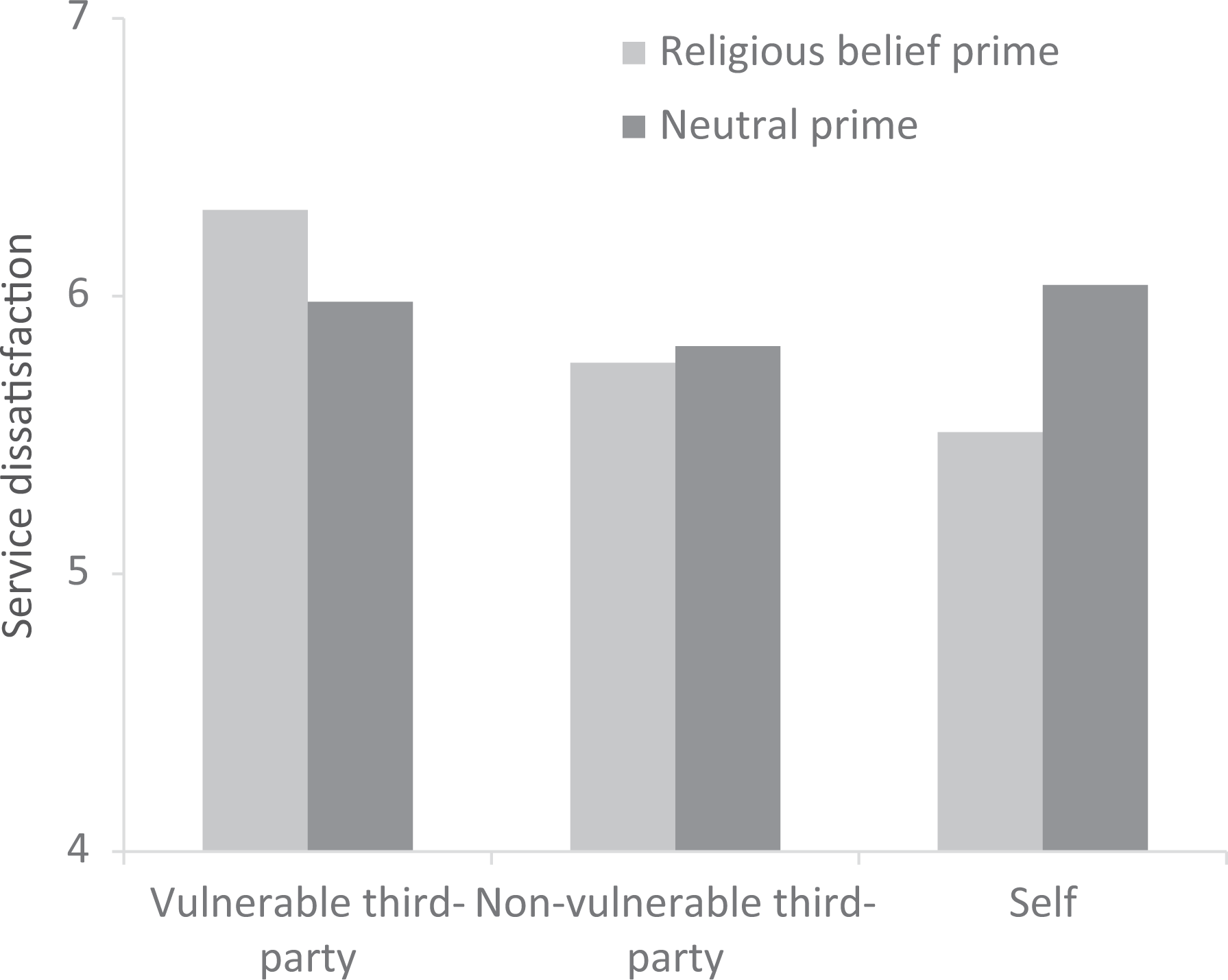
Dissatisfaction with service failure encounters directed toward the self or others following the priming of religious beliefs via Christmas decorations (Study 4a).
Study 4b
The Study 4a findings suggest that among those with a religious upbringing, the tendency for priming religious beliefs to soften postservice failure dissatisfaction is reversed (maintained) when the service failure recipient is a vulnerable third party (oneself). The purpose of Study 4b was therefore to explain the mechanisms responsible for this reversal of the religious belief priming effects observed in Studies 1a–4a.
Participants and Procedure
Consistent with the previous studies, 360 U.S. residents who were members of the MTurk workforce were recruited. Those who were not raised in a Christian household (n = 78), did not follow the study instructions (n = 15), or successfully guessed the study hypotheses (n = 1) were removed, leaving 266 (female = 136) participants aged between 18 and 75 years (M = 40.22, SD = 12.68) available for analysis.
Participants were randomly presented with the Study 4a scenarios describing an observed service failure scenario directed toward either an elderly person (vulnerable third party, n = 138) or a business person (nonvulnerable third party, n = 128). Integrated into these scenarios were images of the hotel in which these scenarios were set and which had been manipulated to feature either Christmas decorations (religious belief prime, n = 132) or no Christmas decorations (neutral prime, n = 134). After reading the scenarios, participants completed the 3-item Service Dissatisfaction Scale used in Studies 1a–4a (α = .75). Participants also completed a 3-item Perception of Social Injustice Scale adapted from existing research (Patterson, Cowley, and Prasongsukarn 2006). Sample items included “The concierge did not put the proper effort into helping this hotel guest” and “The concierge did not give this hotel guest the necessary courtesy.” These items, which were scored on 7-point Likert-type scales ranging from strongly disagree to strongly agree, were summed such that higher scores denoted greater perceptions of social injustice (α = .72). Participants then completed the 4-item Forgiveness Scale used in Study 2 (α = .90) and the positive affect (α = .79) and negative affect (α = .69) subscales of the PANAS (Mackinnon et al. 1999). The study concluded after participants reported their age, gender, and religious upbringing.
Results
A 2 (religious belief prime: neutral vs. religious) × 2 (vulnerability of service failure recipient: low vs. high) independent-measures ANCOVA, with positive and negative affect serving as covariates, was conducted. Neither positive affect, F(1, 260) = 0.80, p = .37, nor negative affect, F(1, 260) = 0.07, p = .80, acted as significant covariates, and while the vulnerability of the service failure recipient had a significant main effect on service dissatisfaction, F(1, 260) = 10.31, p < .01, the religious belief prime did not, F(1, 260) = 0.11, p = .74. More importantly, the Religious Belief Prime × Vulnerability of Service Failure Recipient interaction was significant, F(1, 260) = 8.09, p < .01. Planned contrasts were then conducted to tease apart this significant interaction effect. Independent-measures t tests indicated that when the vulnerability of the service failure recipient was perceived to be high, service dissatisfaction was significantly higher in the religious belief prime condition (M = 6.06, SD = 0.65) than in the neutral prime condition (M = 5.78, SD = 0.58), t(136) = 2.66, p < .01; see Figure 6. However, when the perceived vulnerability of the service failure recipient was low, service dissatisfaction did not differ between the religious belief prime (M = 5.52, SD = 0.77) and neutral prime conditions (M = 5.74, SD = 0.83), t(126) = −1.58, p = .12. These findings replicate those observed in Study 4a and are consistent with Hypothesis 4.
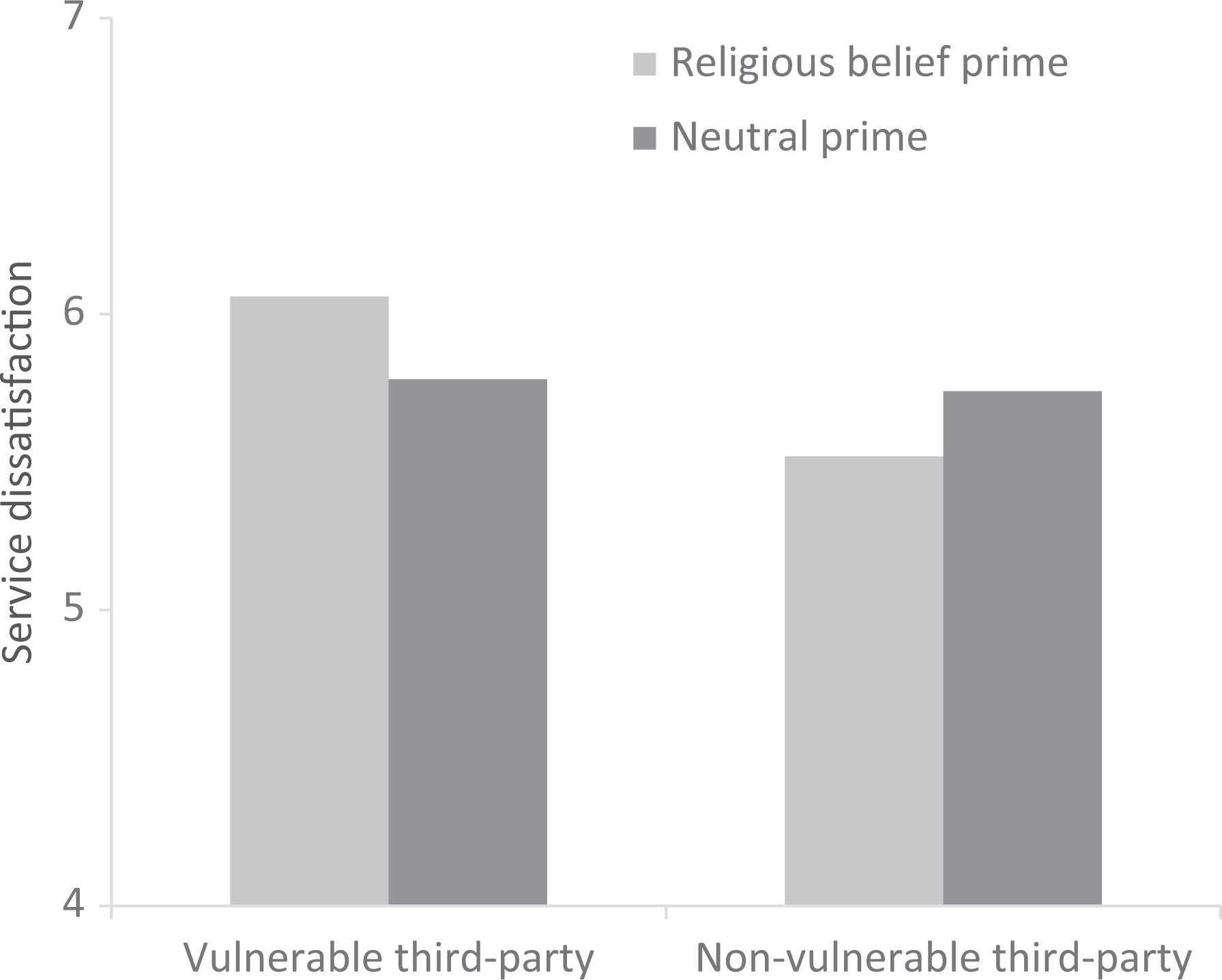
Dissatisfaction with service failure encounters directed toward others following the priming of religious beliefs via Christmas decorations (Study 4b).
To explain the mechanisms underpinning this hardening of service failure evaluations, Model 8 in Hayes’s (2013) PROCESS macro was used with 10,000 bootstrapped samples and with both positive and negative affect serving as covariates. The mediating effect of forgiveness was also examined to explicitly rule out its involvement in this putative effect. Results indicated that the index of moderated mediation was significant for both perceptions of social injustice (index = .11, 95% CI [.00, .25]) and forgiveness (index = .17, 95% CI [.05, .32]). That is, the mediating effect of both perceptions of social injustice and forgiveness on the relationship between religious belief prime and service dissatisfaction was conditional on the vulnerability of the service failure recipients. Spotlight analyses were then conducted to further understand the nature of these moderated mediation effects. These analyses revealed that the mediating effect of perceptions of social injustice on the relationship between religion condition and service dissatisfaction was significant when the vulnerability of the service failure recipient was high (effect = 0.11, 95% CI [.00, .23]). However, when the vulnerability of the service failure recipient was low, the mediating effect of perceptions of social injustice was nonsignificant (effect = 0.00, 95% CI [−.03, .05]). These findings align with Hypothesis 5.
A similar analytical process was conducted with respect to forgiveness. These analyses revealed that when the vulnerability of the service failure recipient was low, forgiveness had no effect on the relationship between the religious belief prime and service dissatisfaction (effect = −0.08, 95% CI [−.19, .01]). Conversely, and contrary to the direction of the Study 2 mediation findings, when the vulnerability of the service failure recipient was high, forgiveness had a significant positive mediating effect on the relationship between religious belief priming and service dissatisfaction (effect = 0.08, 95% CI [.01, .18]). These findings suggest that when the recipient of a service failure encounter is a vulnerable third party, the priming of religious beliefs ultimately reverses the normal ameliorative influence that forgiveness exerts on service dissatisfaction.
Study 5
Studies 1a–4b focused exclusively on the effect of religious belief priming on service dissatisfaction. Reduced service dissatisfaction is, however, only one potential outcome of service failure encounters; other outcomes, such as warning others about the service provider (Bonifield and Cole 2007; Wetzer, Zeelenberg, and Pieters 2007) and switching to a competing service provider (Keaveney 1995; Mattila, Hanks, and Wang 2014), are also commonly observed. A final study was consequently conducted to determine whether religious belief priming also influenced these other common postservice failure outcomes.
Participants and Procedure
Four hundred and twenty participants residing in the United States were recruited via MTurk. After removing 110 participants who were not raised in a Christian household and a further 14 participants who did not follow the study instructions, 296 participants (female = 155) aged 19–86 years (M = 37.31, SD = 12.96) remained available for analysis.
Participants were randomly presented with one of the scenarios used in Study 4a and which described a service failure encounter directed toward an elderly retiree (service failure recipient: vulnerable third party, n = 99), a business executive (service failure recipient: nonvulnerable third party, n = 100), or the self (service failure recipient: self, n = 97). Embedded within these scenarios were images of a hotel featuring Christmas decorations (religious belief prime, n = 150) or no Christmas decorations (neutral prime, n = 146). Participants then completed a 3-item scale assessing warning intentions (α = .96) adapted from Zhang, Feick, and Mittal (2013) and Alexandrov, Lilly, and Babakus (2013). Specifically, participants were asked to evaluate the extent to which they would warn friends and relatives about visiting the hotel featured in the scenario using three 7-point Likert-type scales anchored by the labels “very unlikely to warn/very likely to warn,” “probably will not warn/probably will warn,” and “certain not to warn/certain to warn.” Participants also completed a 4-item scale adapted from Tsarenko and Tojib (2012) that assessed switching intentions (α = .92) and which was scored on 7-point Likert-type scales ranging from strongly disagree to strongly agree. Sample items included “I will spend less money at this hotel” and “I will stop doing business with this hotel.” Finally, participants completed the positive (α = .78) and negative (α = .77) affect subscales of the PANAS (Mackinnon et al. 1999) and reported their age, gender, and religious upbringing.
Results and Discussion
A 2 (religious belief prime: neutral vs. religious) × 3 (service failure recipient: vulnerable third party vs. nonvulnerable third party vs. self) independent-measures ANCOVA was used to separately evaluate changes in warning intentions and switching intentions, with the positive and negative affect subscales of the PANAS serving as covariates in both sets of analyses. ANCOVA results for warning intentions indicated that although negative affect acted as a significant covariate, F(1, 288) = 3.86, p = .05, positive affect did not, F(1, 288) = 2.32, p = .13. Moreover, while service failure recipient had a significant main effect on warning intentions, F(2, 288) = 11.69, p < .001, priming religious beliefs did not, F(1, 288) = 3.92, p = .24. The Religious Belief Prime × Service Failure Recipient interaction did, however, have a significant effect, F(2, 288) = 9.01, p < .001. Planned comparisons revealed that when the service failure recipient was a vulnerable third party, exposure to the religious belief prime increased warning intentions (M = 5.77, SD = 1.46) relative to those exposed to the neutral belief prime (M = 5.09, SD = 1.68), t(97) = 2.15, p < .05; see Figure 7. In contrast, when the recipient of the service failure was the self, exposure to the religious belief prime decreased warning intentions (M = 3.71, SD = 1.41) compared with those exposed to the neutral belief prime (M = 5.06, SD = 1.76), t(95) = −4.18, p < .001. Finally, in the low vulnerability condition, no difference in warning intentions were observed between those exposed to the religious belief prime (M = 4.44, SD = 1.81) and neutral belief prime (M = 4.45, SD = 1.91), t(98) = −0.03, p = .98.
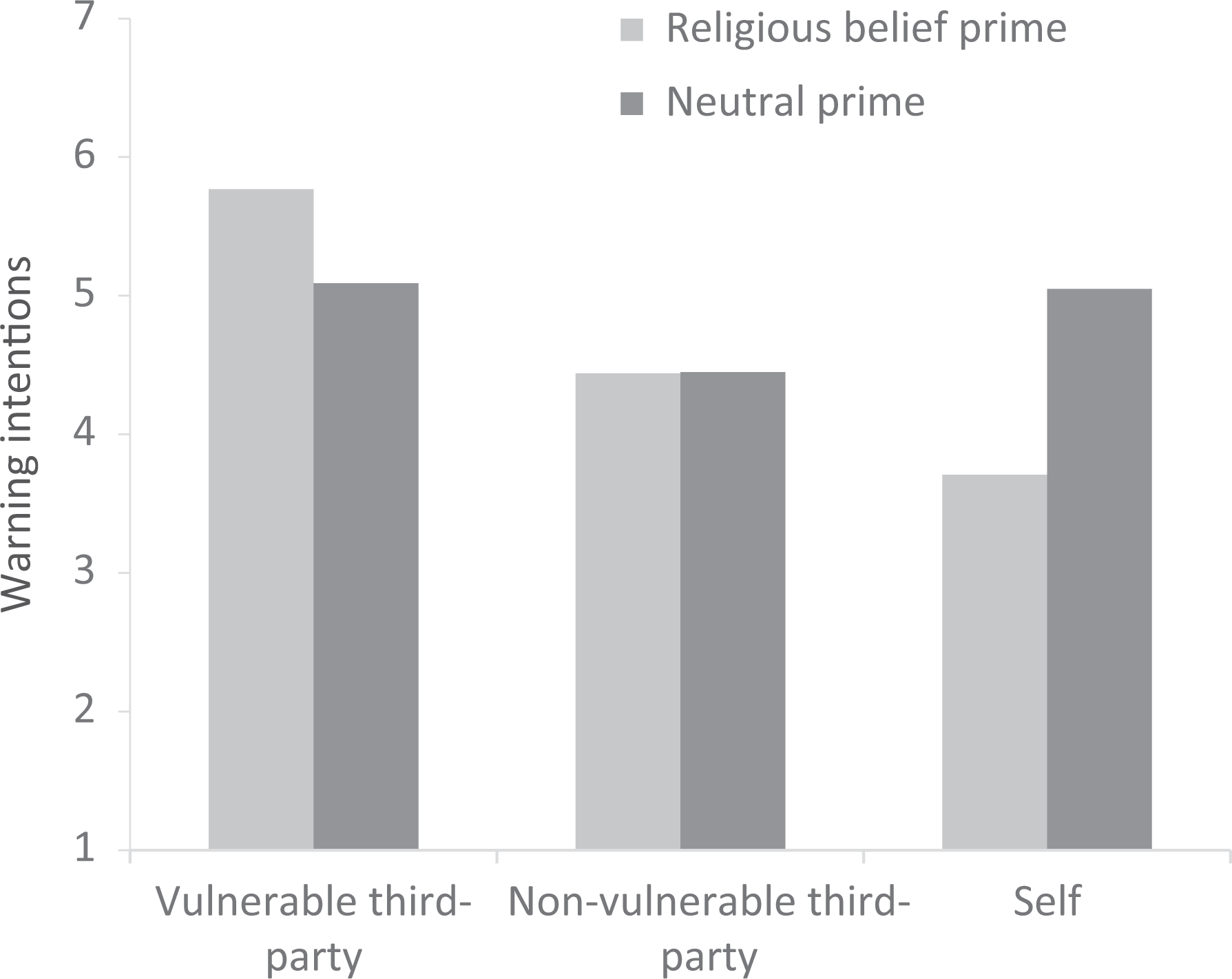
Warning intentions following the priming of religious beliefs via Christmas decorations (Study 5).
A similar pattern of results was found for switching intentions. Specifically, ANCOVA results indicated that positive affect, F(1, 288) = 0.09, p = .76, and negative affect, F(1, 288) = 0.57, p = .45, had no significant effect on switching intentions, and while service failure recipient had a significant direct effect on switching intentions, F(2, 288) = 4.61, p < .05, exposure to the religious belief prime did not, F(1, 288) = 0.02, p = .90. More importantly, the Religious Belief Prime × Service Failure Recipient interaction was once again significant, F(2, 288) = 5.84, p < .01. Planned comparisons indicated that when the service recipient was a vulnerable third party, exposure to the religious prime significantly increased switching intentions (M = 5.57, SD = 1.35) relative to those presented with the neutral prime (M = 4.99, SD = 1.31), t(97) = 2.20, p < .05; see Figure 8. The opposite pattern of results was found when the service failure recipient was the self, with switching intentions significantly lower among those presented with the religious prime (M = 4.36, SD = 0.95) compared to the neutral prime (M = 5.06, SD = 1.42), t(95) = −2.87, p < .01. Finally, when the service recipient was a nonvulnerable third party, no differences were observed between those presented with the religious belief prime (M = 4.99, SD = 1.40) and neutral prime (M = 4.93, SD = 1.37), t(98) = 0.22, p = .83. Examined together, these results indicate that exposure to a religious belief prime does more than just influence how service failure scenarios are evaluated; it also influences other managerially relevant intentions including intention to warn others about the hotel and intention to switch to alternative service providers.
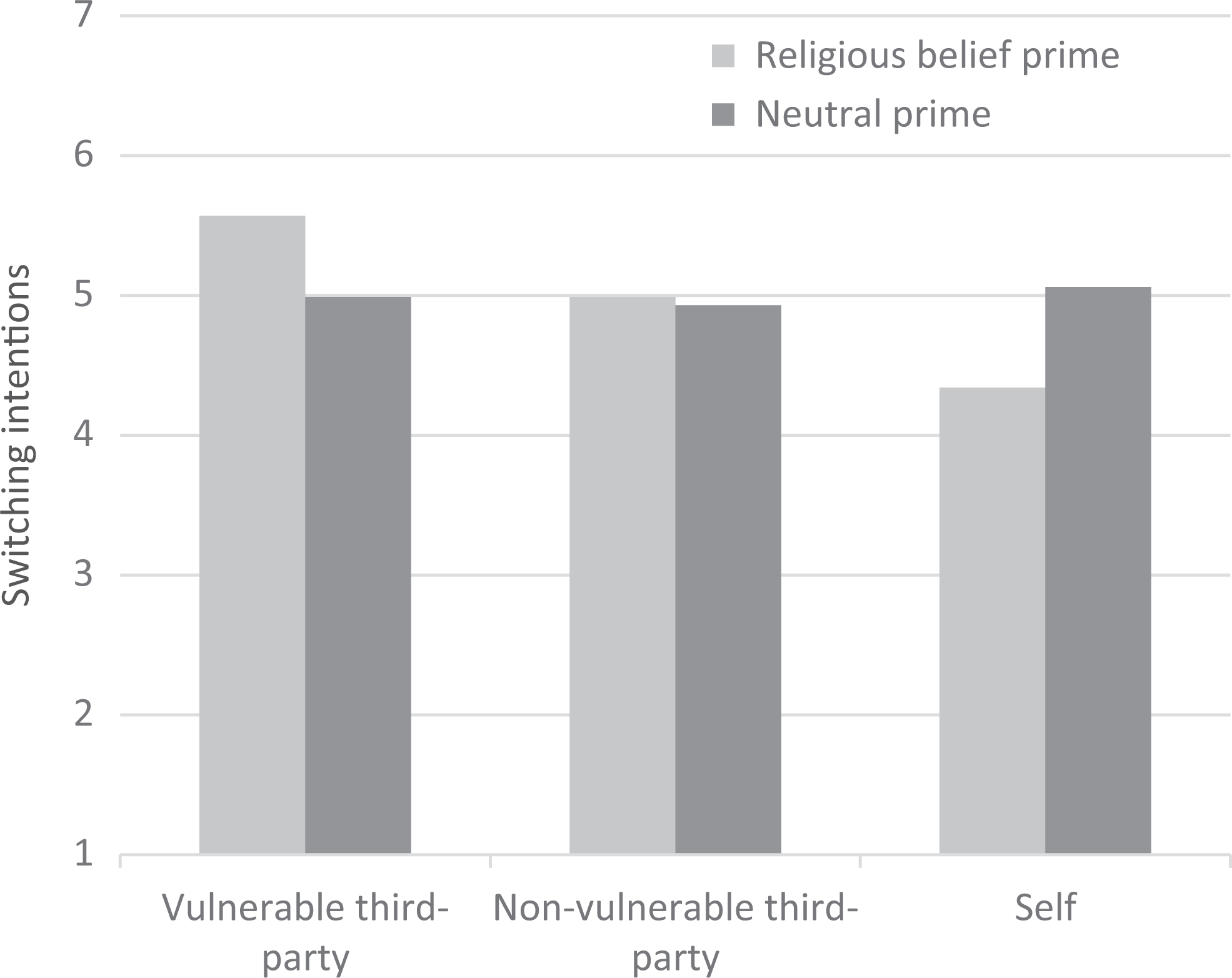
Switching intentions following the priming of religious beliefs via Christmas decorations (Study 5).
General Discussion
The influence of religious belief priming on service evaluations following service failure was examined across seven studies. Study 1a demonstrated that evaluations of a service failure encounter were softened following exposure to Christmas cues, and this effect was replicated in Study 1b using a generic religious belief prime. Forgiveness was identified as the mechanism underpinning this softening of service evaluations (Study 2), although this effect was isolated to those with a religious upbringing (Study 2) and to instances of service failure as opposed to neutral service (Study 3). However, exposure to a religious belief prime hardened service evaluations when service failure was observed (rather than experienced directly) and when the recipient of that failure was a vulnerable third party (Study 4a), a reversal that arose through perceptions of social injustice (Study 4b). Finally, the effect of religious belief priming on postservice failure outcomes was not just restricted to service dissatisfaction; warning and switching intentions were also influenced (Study 5). Theoretical and managerial implications emerging from these studies are discussed in turn.
Theoretical Implications
Religion, if it is examined in the consumer behavior literature at all, is typically treated as a dispositional factor (Mathras et al. 2016), placing it beyond the control of managers and service workers alike. Our findings upend this view. As we found, contextual exposure to visual or aural symbols associated with a religious festival activated notions of forgiveness, reducing (if not completely overcoming) postservice failure dissatisfaction. This effect was only observed among those with a Christian upbringing, however, suggesting that cognitive structures linking religious festival symbols to religiously infused beliefs must be present before these symbols will influence service failure evaluations. These findings transform our understanding of how religion influences postservice failure outcomes; rather than simply exerting a static, dispositional influence, our findings suggest that religiously infused beliefs can also be deliberately activated through the strategic use and placement of religious festival symbols. Managerial implications arising from these findings are covered in the following section.
The notion that religion exerts a largely dispositional influence on service evaluations was not the only one to be overturned by our findings. An implicit assumption in the study designs and analytical frameworks of previous studies, for example, has been that religion has a largely unidimensional influence on service evaluations. Illustrative of this assumption is the fact that research has tended to examine only the ameliorative effects of religiosity on service failure evaluations (e.g., Cowart, Ramierz, and Brady 2014; Tsarenko and Tojib 2012). While instrumental in highlighting the potential for religion to inform how services are evaluated, this unidimensional perspective ignores the complexity of religious belief systems and, by extension, the possibility that the same religious belief system can give rise to divergent influences on service evaluations. Our study steps beyond this perspective by demonstrating how subtle changes in a service failure encounter can motivate those with the same religious background to evaluate that encounter in divergent ways. That is, after the priming of religious beliefs, a service failure encounter directed toward the self (a vulnerable third party) can activate forgiveness (perceptions of social injustice), softening (hardening) evaluations of that encounter. The multifaceted nature of religious belief systems and the potential for subtle variations in service encounters to activate different religious beliefs should consequently be accounted for in future conceptual frameworks exploring the role of religion on service evaluations.
Our findings also shed light on the potential for third-party service failure encounters to influence personal service evaluations. Specifically, while past research has demonstrated the potential for customers’ service evaluations to become more negative if a third party is seen to experience service failure (Casidy and Shin 2015; Mattila, Hanks, and Wang 2014), whether seemingly incidental features of the servicescape can influence the emergence of these effects has not previously been evaluated. Our study consequently contributes to this body of literature by demonstrating how symbols associated with religious festivals interact with the perceived vulnerability of a third party to influence service evaluations. This study was also the first to link the perceived vulnerability of a third party with subsequent service evaluations, adding another component to the list of third-party attributes that can influence how customers evaluate observed service failures (see Casidy and Shin 2015; Mattila, Hanks, and Wang 2014). Together, these findings highlight two previously unexplored factors that can subtly influence the emergence of third-party effects and, by extension, the direction of service evaluations.
Managerial Implications
Christmas decorations and other symbols associated with religious festivals may be displayed in retail and service environments for a range of managerially relevant reasons such as to sacralize consumption (Belk 1989). What our findings highlighted was that less obvious secondary effects, such as reduced postservice failure dissatisfaction, switching intentions, and warning intentions, may also occur in the presence of such symbols. Religious festival symbols can therefore be added to the long list of other decorative or seemingly incidental features of the servicescape that can influence how consumers evaluate service encounters such as background music (Morin, Dubé, and Chebat 2007), scent (Mattila and Wirtz 2001), and store ambience more generally (Bitner 1990; Sharma and Stafford 2000). Incorporating religious festival symbols into the servicescape is not a panacea for reducing the severity of postservice failure outcomes, however. As we also found, when the quality of a service encounter is neutral, the presence of a religious festival symbol has no effect on service satisfaction. Of even greater import, witnessing a service failure directed toward a vulnerable third party increases service dissatisfaction as well as switching intentions and warning intentions. Symbols associated with religious festivals consequently represent a double-edged sword for managers; depending upon the beliefs implicated by a service failure encounter, these symbols may either increase or decrease the severity of postservice failure outcomes. This insight suggests that managers should approach with caution any decision about whether to incorporate symbols associated with religious festivals into the servicescape.
Although religious symbols represent a potential double-edged sword, there may be contexts where managers wish to deliberately activate managerially relevant religious beliefs through the display of religious festival symbols. For example, contexts where there are few opportunities to observe the service experiences of vulnerable third parties, such as in online retailing or for professional services that largely take place in private settings, would reduce the likelihood for religious festival symbols to increase the severity of postservice failure outcomes. In such contexts, the strategic placement of symbols associated with religious festivals could represent a low cost and passive means for reducing the magnitude of service dissatisfaction, switching intentions, and warning intentions, at least when compared to formal service recovery efforts, which tend to be costly and require active management. Moreover, 85.6% of the U.S. population report being raised in a Christian household (Pew Research Center 2015), suggesting that the use of Christmas symbols in particular would have widespread efficacy in activating religious beliefs. Future research could consequently explore the specific service settings where the presence of religious festival symbols is likely to have net beneficial, as opposed to harmful, effects on postservice failure outcomes.
Limitations and Areas for Future Research
This study, like all research, has a number of limitations that should be considered when evaluating the generalizability of the study findings. For example, while MTurk-administered scenarios provide an expeditious means for manipulating service failure encounters, they may also limit emotional reactance due to the hypothetical nature of those scenarios. Future research could consequently seek to replicate the study findings in contexts where service failure encounters have been directly experienced. On an associated note, meta-analytic evidence suggests that the prosocial outcomes that emerge following the priming of religion tend to be weakest among studies that assessed these outcomes via MTurk (Shariff et al. 2016). That the findings reported in this study were nevertheless consistently identified across seven studies attests to the robustness of the underlying effect.
A second limitation is that we restricted our focus to religious festival symbols associated with Christianity, both to minimize unwanted heterogeneity and because such symbols are routinely observed in servicescapes throughout the English-speaking world. On the basis of our underlying reasoning, however, symbols associated with the festivals of other religious faiths should generate similar effects vis-à-vis postservice failure outcomes. Future research could consequently test this contention and determine whether the mediators identified in our study generalize to other religious faiths.
A third limitation is that we assumed homogeneity in the cognitive associations held by those who shared a similar religious upbringing. Such homogeneity cannot always be assumed, however. As Unnever, Cullen, and Applegate (2005) found, views of a deity can vary substantially among those with the same religious belief system, and these views can inform whether an individual will gravitate toward a punitive or forgiving stance when responding to offenders. Examining sectarian variations in religious beliefs would consequently add further nuance to models aimed at explaining how religious festival symbols influence postservice failure outcomes. In a similar vein, given that each religious faith prescribes numerous beliefs, the explanatory mechanisms examined in this study (i.e., forgiveness, perceptions of social injustice) are unlikely to provide an exhaustive account of the ways in which religious festival symbols could influence postservice failure outcomes. Future research could therefore explore complementary mediating pathways, such as perceptions of store motives (Joireman et al. 2013) or prescriptions about judging others (Moses 2002), so as to provide a more exhaustive list of the various ways in which religious festival symbols may increase or decrease the severity of postservice failure outcomes.
Supplemental Material
Supplemental Material, Executive_summary - Deck the Halls With Boughs of Holly to Soften Evaluations of Service Failure
Supplemental Material, Executive_summary for Deck the Halls With Boughs of Holly to Soften Evaluations of Service Failure by Joshua D. Newton, Jimmy Wong, and Riza Casidy in Journal of Service Research
Supplemental Material
Online_appendix - Deck the Halls With Boughs of Holly to Soften Evaluations of Service Failure
Online_appendix for Deck the Halls With Boughs of Holly to Soften Evaluations of Service Failure by Joshua D. Newton, Jimmy Wong, and Riza Casidy in Journal of Service Research
Footnotes
Acknowledgments
The authors gratefully acknowledge the feedback of Fiona Newton, Nichola Robertson, and Adam Duhachek on earlier drafts of this article. The authors would also like to thank the three anonymous reviewers as well as the associate editor and editor in chief for their most helpful comments and feedback throughout the review process.
Declaration of Conflicting Interests
The author(s) declared no potential conflicts of interest with respect to the research, authorship, and/or publication of this article.
Funding
The author(s) received no financial support for the research, authorship, and/or publication of this article.

Supplemental Material
Supplemental material for this article is available online.
Notes
References
Supplementary Material
Please find the following supplemental material available below.
For Open Access articles published under a Creative Commons License, all supplemental material carries the same license as the article it is associated with.
For non-Open Access articles published, all supplemental material carries a non-exclusive license, and permission requests for re-use of supplemental material or any part of supplemental material shall be sent directly to the copyright owner as specified in the copyright notice associated with the article.
