






Abstract
Artificial intelligence (AI)-powered chatbots offer a cost-effective solution for customer service, but often fall short in delivering personalized or complex interactions. In response, many merchants invest in AI training and explore human–AI collaboration to leverage the strengths of both automation and human touch. However, this introduces a strategic tradeoff between service quality and operational efficiency. Using a game-theoretic framework, this study examines how merchants can optimally choose service strategies with AI involvement. Our analysis reveals a critical collaboration trap. Contrary to the prevailing belief that increased collaboration consistently enhances service, consumers’ sensitivity to the identity of the service agent erodes profitability, and greater collaboration will worsen this effect by accelerating task delegation to AI, thereby amplifying negative consumer perceptions. Furthermore, the study shows that a moderate-cost collaboration trap emerges: human–AI collaboration underperforms compared to human-only service when labor costs are at intermediate levels. Collaboration yields benefits only when labor costs are either very low or prohibitively high. In competitive markets, merchants can gain a strategic advantage not by enhancing their own service quality, but by capitalizing on rivals’ inefficient AI deployment. These findings challenge the assumption that more human–AI collaboration is always better and provide actionable insights for managing hybrid service strategies and optimizing AI investments.

Keywords
Introduction
Artificial intelligence (AI) is reshaping service industries by reducing reliance on human labor, with reported cost savings reaching up to 30% for merchants (Fortune 2025). In online retail, the adoption of AI-driven real-time chat solutions has accelerated to enhance customer experience and facilitate transactions (Sun, Chen, and Fan 2021). These technologies have enabled efficient handling of high interaction volumes, streamlined buyer–seller communications, and significantly lowered operational costs (Xiao and Kumar 2019).
Despite these advantages, integrating AI into customer service presents strategic challenges. Merchants must weigh the trade-offs between full automation and hybrid human–AI collaborations, balancing cost efficiency with the need for personalized, emotionally responsive engagement (Raisch and Krakowski 2021). While AI is effective for routine tasks, it often underperforms in handling complex or emotionally charged situations, sometimes resulting in incomplete or dissatisfying resolutions (Raval 2025). To address these limitations, companies have adopted a spectrum of service configurations—from fully human-operated to entirely AI-driven and hybrid formats (Mortati and Viana Mundstock Freitas 2025). However, practices diverge considerably in reality. For example, Nordstrom prioritizes human-led service for personalization, while JD.com and Taobao implement hybrid strategies. On JD.com, Adidas uses a tiered mode where AI addresses initial queries and escalates complex issues to human representatives.
This variation in service design underscores the strategic importance of selecting an appropriate service mode. Scaling AI capabilities while ensuring adequate handling of nuanced interactions presents a significant operational challenge (Yu, Xiong, and Shen 2024). Meanwhile, consumers’ preferences for human representatives versus AI chatbots are heterogeneous and context-dependent (Castelo et al. 2023; Luo et al. 2019). Although prior studies have focused extensively on consumer responses to AI chatbots (Bagozzi, Brady, and Huang 2022; Longoni and Cian 2020; Mende et al. 2019; Pantano and Scarpi 2022), less attention has been devoted to the strategic considerations of merchants and the broader competitive implications of AI integration (Brock and von Wangenheim 2019). The current study aims to address this gap by analyzing strategic choices in AI adoption and identifying the conditions under which human–AI collaboration yields optimal outcomes.
The research makes several contributions to the understanding of AI integration in service contexts. First, decision boundaries are delineated across service strategies involving pure AI, human-only, and hybrid human-AI formats. A key insight is the emergence of a moderate-cost collaboration trap, where hybrid collaboration is dominated by either extreme. While collaboration proves effective when labor costs are very low or very high, it performs poorly at intermediate cost levels due to coordination burdens and task-switching inefficiencies. This finding builds on the AI automation-augmentation continuum (Raisch and Krakowski 2021) and responds to calls for a more nuanced understanding of human–AI integration (Blaurock, Büttgen, and Schepers 2024; Huang and Rust 2022).
Second, our analysis reveals that greater human–AI collaboration may produce counterproductive outcomes. When consumers are sensitive to the identity of service agents, profitability declines—especially when collaboration increases the share of tasks handled by AI, thus worsening perceptions. Under moderate consumer sensitivity, inconsistent task delegation can fragment the service experience, lowering consumer satisfaction and firm performance. These findings underscore the need to carefully calibrate collaboration intensity and contribute to the ongoing discussions about the potential drawbacks of excessive AI augmentation (Raisch and Krakowski 2021).
Third, increasing AI service quality does not always yield proportional improvements in outcomes. In hybrid settings, enhancing AI capabilities may gradually displace human input, sometimes degrading the overall service experience. These results emphasize the importance of aligning AI investments with the underlying collaboration structure, adding to the literature on strategic AI deployment and resource allocation (Hou et al. 2024).
Finally, our findings suggest that competitive advantage stems not from internal service upgrades alone but from capitalizing on rivals’ inefficient AI deployment, extending AI-enabled service to competitive environments (Huang and Rust 2018). For instance, when competitors rely solely on AI, merchants that emphasize human-delivered service may differentiate more effectively. Similarly, when rivals adopt hybrid strategies, the advantage lies in identifying and responding to flaws in their collaboration intensity or service quality. These insights offer strategic guidance for merchants navigating AI-driven competition and contribute to the broader understanding of AI-enabled service differentiation.
The remainder of the article is organized as follows. The Research Background section presents the theoretical framework. The Model Setup section introduces the model. The subsequent section analyzes AI service quality and investment decisions. The next two sections examine service strategies under monopoly and competition, respectively. Finally, the Conclusion and Implications section summarizes the findings, discusses the limitations, and outlines directions for future research.
Research Background
This study draws from several research streams, particularly customer service operations, where effectively managing consumer experiences through cost-effective online interactions has become vital to competitive advantage (Gallino, Karacaoglu, and Moreno 2023; Mousavi, Johar, and Mookerjee 2020). Real-time chat systems have emerged as interactive and scalable tools for addressing customer inquiries (Han, Deng, and Fan 2023; Schanke, Burtch, and Ray 2021). Within these systems, service quality and speed consistently rank among top consumer priorities (Chen et al. 2021; Hu, Allon, and Bassamboo 2022). While operational improvements—such as queue design—can help reduce service times, the productivity of human representatives remains inherently limited (Gallino, Karacaoglu, and Moreno 2023; Long, Tezcan, and Zhang 2014). Despite the increasing integration of AI technologies, limited research has examined how this shift reshapes service delivery strategies, particularly the choice among pure AI, human-AI collaboration, and traditional human-only modes.
This work also intersects with the growing literature on consumer–AI interactions (Bagozzi, Brady, and Huang 2022; Mortati and Viana Mundstock Freitas 2025; Pantano and Scarpi 2022; Wirtz and Stock-Homburg 2025). AI chatbots have become key tools for real-time engagement and reducing transaction-related uncertainty. However, consumer attitudes toward AI chatbots remain mixed or even polarized (Filieri et al. 2022; Turel and Kalhan 2023). Many consumers continue to prefer human representatives, especially in emotionally complex or high-stakes service scenarios (Castelo et al. 2023). Such preferences are shaped by individual traits (Han, Deng, and Fan 2023), task complexity (Castelo, Bos, and Lehmann 2019), and consumers’ underlying goals (Longoni and Cian 2020). While prior research explores factors such as self-disclosure in AI interactions (Kim et al. 2022) or the impact of message format (Gnewuch et al. 2024), there remains a significant gap in understanding how merchants can strategically invest in and deploy AI service capabilities.
Another relevant stream concerns the rise of human–AI collaboration (Brynjolfsson and Mitchell 2017; Fügener et al. 2022; Hou et al. 2024; Huang and Rust 2022). AI technologies have demonstrated the potential to augment human performance across various domains, enhancing creativity (Jia et al. 2024), productivity (Bell et al. 2024), decision-making (Allen and Choudhury 2022), and pricing strategies (Boyacı, Canyakmaz, and de Véricourt 2023). However, a study finds that human-AI teams may suffer from reduced personalization and underuse of AI capabilities (Dai and Singh 2025), while others point to heterogeneous effects depending on user characteristics (Wang, Gao, and Agarwal 2024). Though existing research examines joint task completion between humans and AI (Blaurock, Büttgen, and Schepers 2024; Huang and Rust 2022; Le et al. 2024), most of it focuses on the benefits of collaboration without adequately addressing its limitations.
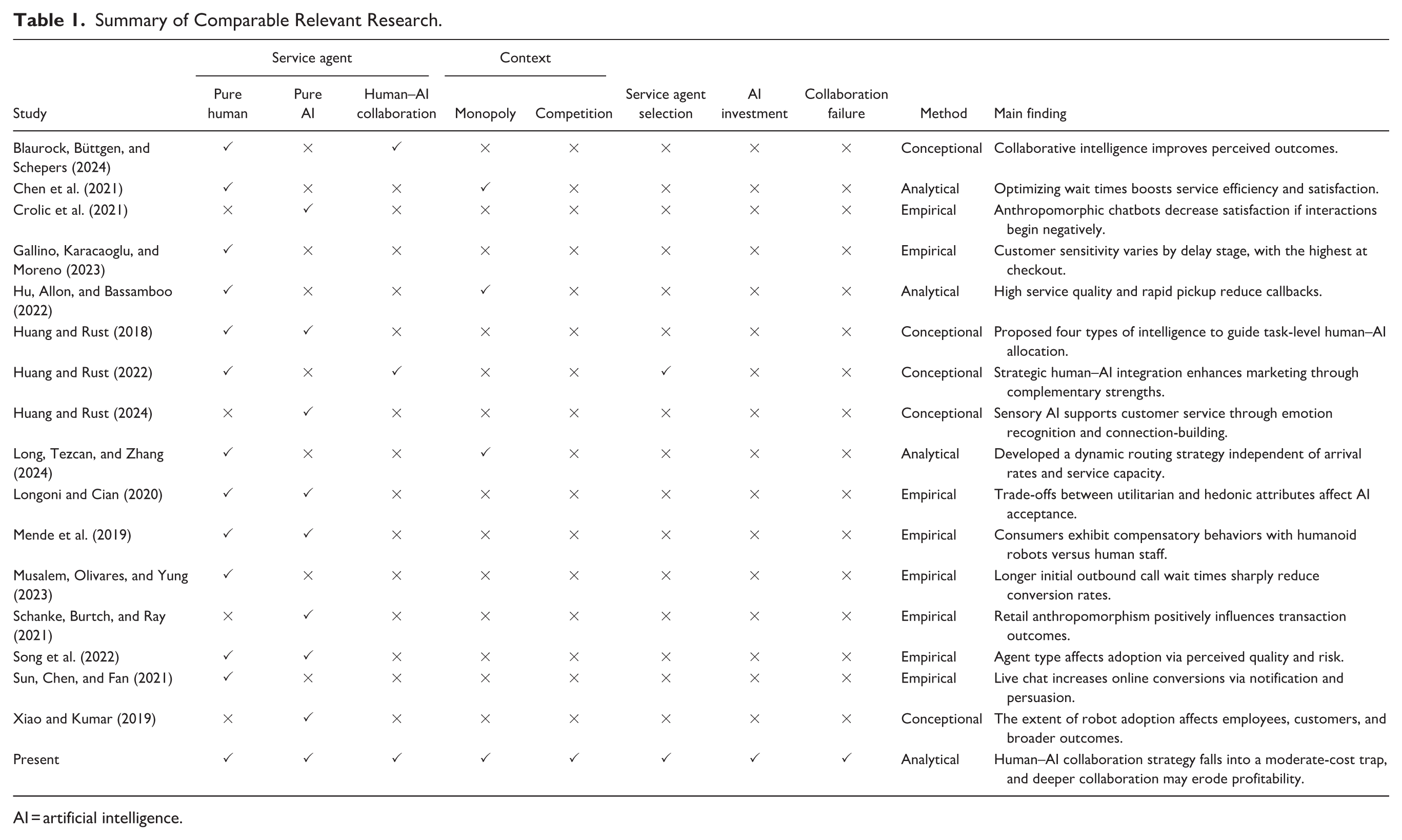
In particular, key dynamics—such as levels of AI involvement and task distribution—remain underexplored. Despite the widespread adoption of hybrid service modes, little is known about when and why these modes succeed or fail for both consumers and merchants. This study aims to address these gaps by identifying optimal AI involvement strategies and examining the boundary conditions under which hybrid service modes are most effective. A summary of relevant literature is provided in Table 1.
Summary of Comparable Relevant Research.
AI = artificial intelligence.
Model Setup
Consumers
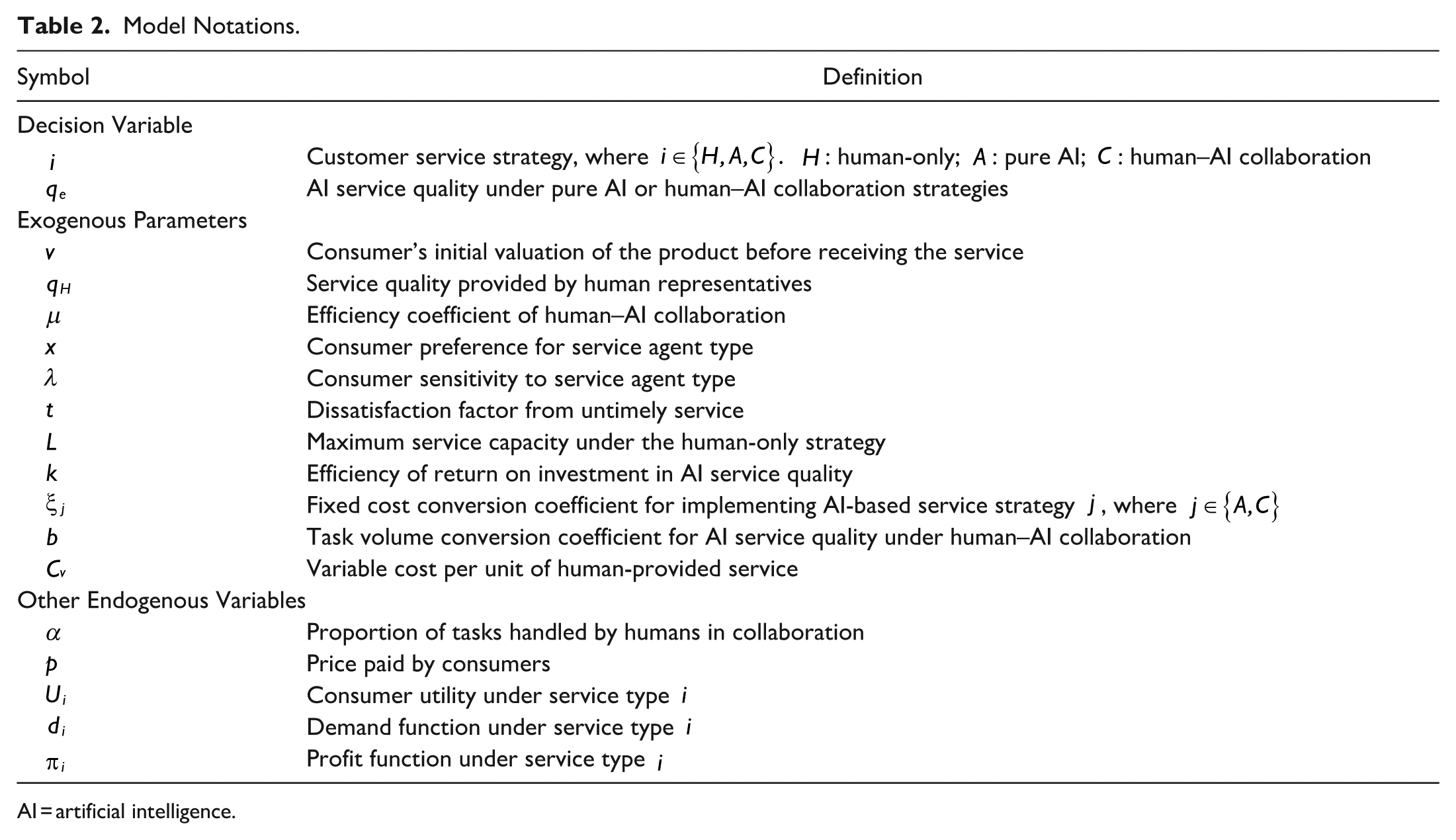
An e-commerce retailer employs real-time chat for customer service to convert online traffic into sales. Consumers utilize this service to gather product information and make buying decisions (Schanke, Burtch, and Ray 2021; Sun, Chen, and Fan 2021). Their engagement in these services follows stages of service waiting, interaction, and exit, with the interaction phase characterized by consecutive customer–agent exchanges (Ilk and Shang 2022; Long, Tezcan, and Zhang 2014). Table 2 summarizes the notations used in modeling.
Model Notations.
AI = artificial intelligence.
Each consumer has a preservice product valuation, denoted by
Consumer Preference
Consumers respond differently to services provided by humans versus AI agents, with preferences varying by context (Castelo et al. 2023; Turel and Kalhan 2023). In persuasive settings, the credibility of the message source plays a key role in influencing effectiveness (Touré-Tillery and McGill 2015). Consumer preferences are influenced by factors such as information-seeking motives (Longoni and Cian 2020), personality traits (Han, Deng, and Fan 2023), and task types (Castelo, Bos, and Lehmann 2019).
In this study, consumer preferences for service agents are modeled as a nonquality-based preference, denoted by

Consumer service preference distribution.
Service Accessibility
Service accessibility refers to consumers’ ability to receive timely responses, a key factor influencing service evaluation. Unlike AI chatbots, human representatives face capacity limitations (Benjamin 2024). Let
The probability of dissatisfaction due to delayed service is given by
Research suggests that customers are willing to wait longer for preferred service channels (Bae, Chen, and Yao 2022). Approximately 30% to 50% report a willingness to wait longer for human interaction (Raval 2025). This implies that stronger preferences for human service, dented by
In contrast, AI-based services offer consistently high accessibility, responding rapidly and continuously without capacity constraints (Huang and Rust 2021; Luo et al. 2019). Thus, the issue of limited service access is assumed to solely affect the human-only service. In human–AI collaboration, initial service reception is handled by AI, significantly improving responsiveness and mitigating the problem of delay.
Service Quality
High-quality service must meet not only functional needs but also provide emotional support (Bai et al. 2024). To capture the distinct capabilities of AI chatbots and human representatives, their respective service quality levels are denoted as
Recent studies suggest that AI chatbots are well suited to standardized, routine tasks, whereas human representatives play a critical role in contexts requiring judgment, emotional recognition, and personalized problem-solving (Mitchell and Krakauer 2023; Patpatia 2023; Leggatt and Riva 2023). In practice, many e-commerce platforms employ a hybrid approach in which AI chatbots handle routine inquiries and human representatives address more complex interactions—balancing operational efficiency with service quality.
In the analytic model, the service quality of human representatives (
Within this framework, consumer utility comprises: (i) product valuation, (ii) service quality, (iii) preference for service agent type, (iv) service accessibility, and (v) product price. Accordingly, utility functions are defined as
Human–AI collaboration involves joint task execution, with either chatbots initiating and escalating to human representatives or human representatives supported by chatbots. This hybrid approach influences both service quality and cost structures (Hathaway, Kagan, and Dada 2023).
To reflect the diverse outcomes of collaboration, a generalized framework is adopted. While collaborative service often outperforms standalone AI or human services (Fügener et al. 2022; Jia et al. 2024), its effectiveness varies. Several factors affect collaboration success, including employees’ skills (Brynjolfsson, Li, and Raymond 2025; Jia et al. 2024), prior experience (Wang, Gao, and Agarwal 2024), and AI’s role in stimulating reflective thinking (Lu and Zhang 2025). To model this, the coefficient
The effective service quality perceived by consumers in collaborative settings is determined by the higher service quality
Consumers’ perception of the service agent is influenced by the proportion of tasks completed by each entity (Huang and Rust 2022). In collaborative services, both agents engage in multiround interactions (Long, Tezcan, and Zhang 2014; Hightower 2025). Let
This proportion depends on AI quality. Let the AI-handled volume be
Merchant
The e-commerce retailer employs real-time chat to convert online traffic into sales. Human representatives, however, can only serve a limited number of consumers simultaneously. When relying on human representatives, the merchant’s costs closely track consumer demand, increasing as more consumers require assistance. Service capability refers to the merchant’s ability to provide immediate and satisfactory service, with the total cost determined by overall market demand. Although all customer needs are ultimately met, satisfaction may decline due to wait times during peak periods (Bae, Chen, and Yao 2022).
Thus, the cost of human services depends on total consumer demand. The rise in cost stems from the fact that human representatives must individually attend to each consumer, incurring a variable cost per consumer, denoted as
When the merchant adopts a pure AI strategy, the incremental cost per consumer is assumed to be zero, reflecting AI’s cost-saving advantage. However, deploying an AI system entails fixed setup and operational costs, denoted as
Merchants can further enhance AI personalization through continuous data training, involving the collection of consultation records and customer queries to refine AI services (Marshall 2025). For instance, on JD.com, AI trainers are regularly deployed to retail sites for system updates, including parameter tuning, model training, and dialogue optimization (JD.com 2024; SecuritiesDaily 2022). The associated investment in AI service quality is modeled as
When adopting a human–AI collaboration strategy, the merchant incurs both AI infrastructure costs and quality enhancement expenses. The fixed AI setup cost is denoted as
The decision process unfolds in three stages. First, the merchant selects the customer service strategy, choosing between pure AI and human–AI collaboration. Second, the merchant determines the optimal level of investment in AI service quality. Finally, consumers interact with the service and make purchasing decisions based on their experiences.
AI Service Quality and Investment Decisions
Using backward induction to solve sequential games, the first step involves analyzing the consumer’s decisions. Faced with a given service strategy, consumers decide whether to buy or not to buy based on their utility
Lemma 1. For the pure-AI strategy, the optimal AI service quality
While it may seem intuitive that enhancing service quality directly strengthens market competitiveness, our findings suggest a more nuanced reality. Beyond a certain point, the additional costs of improving quality outweigh the corresponding benefits, making further investment inefficient. Interestingly, the optimal AI service quality decreases as consumer sensitivity to service agent type,
Integrating human participation into AI-driven services not only complements but also may enhance the AI component itself, resulting in an AI performance superior to scenarios where AI functions independently. When the level of human–AI collaboration is high, the optimized standalone AI service quality, without human integration, achieved under the collaboration strategy, surpasses that of pure AI. Efficient synergy implies that the added value produced by human–AI collaboration is high, maximizing the benefits of AI service quality and making investments in enhancing AI service quality more valuable.
The finding underscores that improving AI service quality is not solely about technological advancement but also depends on the effective integration of human contributions. Under the pure AI strategy, the focus of optimization might be on enhancing the AI’s independent service capability, whereas in the human–AI collaboration strategy, the focus might shift toward how to effectively integrate the strengths of both humans and AI to elevate the overall service level.
Proposition 1. Under a human–AI collaboration strategy, higher collaboration levels lead to AI handling a greater share of tasks.
The findings reveal a pattern: as collaboration efficiency increases, AI progressively takes on a larger share of service tasks (see Figure 2). Enhanced coordination mechanisms allow AI to absorb more algorithm-driven responsibilities, even though initial expectations might suggest that task allocation should remain independent of collaboration efficiency. This shift, where greater collaboration results in increased AI task allocation, is a novel insight that challenges conventional assumptions. It suggests that as merchants refine human–AI interactions, AI evolves from merely a supportive role to the primary executor of tasks.
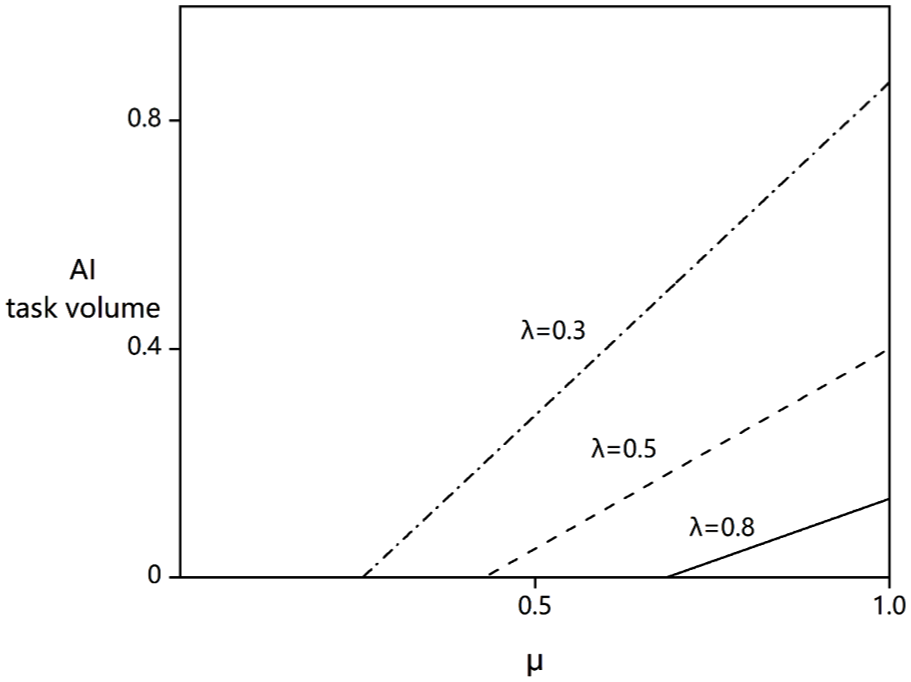
AI task share under human–AI collaboration.
Investing in deeper human–AI collaboration not only improves synergy but also necessitates rethinking task allocation frameworks (Fügener et al. 2022). Merchants must recognize that as collaboration strengthens, traditional labor divisions are reshaped, creating strategic opportunities through more efficient resource deployment. While greater collaboration might initially seem to demand more human involvement, the long-term effect is a gradual transfer of routine tasks to AI. To remain competitive, merchants must prioritize developing employees’ advanced cognitive and creative skills, ensuring human contributions effectively complement AI strengths.
Lemma 2. The greater the consumer sensitivity to service entities, the lower the profit that can be obtained by the merchant.
Consumer sensitivity refers not to a specific preference for a human or AI agent but to the heightened awareness of who is delivering the service. When consumers focus on who delivers the service rather than on the service quality itself, any perceived difference, even if the quality of human and AI services is comparable, diminishes their overall satisfaction. This sensitivity contributes to reduced profitability for a single product. The merchant may achieve a better outcome by designing services that obscure this distinction. Such a strategy transforms a potential liability into a strategic advantage, ensuring that customers remain focused on the service rather than on whether it is delivered by a human or an AI.
Proposition 2. In human–AI collaboration services, enhancing the level of collaboration exacerbates the negative impact of consumer sensitivity to service agent identity on profitability:
In human–AI collaboration services, simply increasing the level of collaboration can paradoxically intensify the negative effects of consumer sensitivity on profitability. Although deeper integration between human and AI services is often assumed to improve operational outcomes, this reveals a counterintuitive dynamic: when consumers are particularly sensitive to the type of service agent, greater collaboration can erode profitability (see Figure 3).
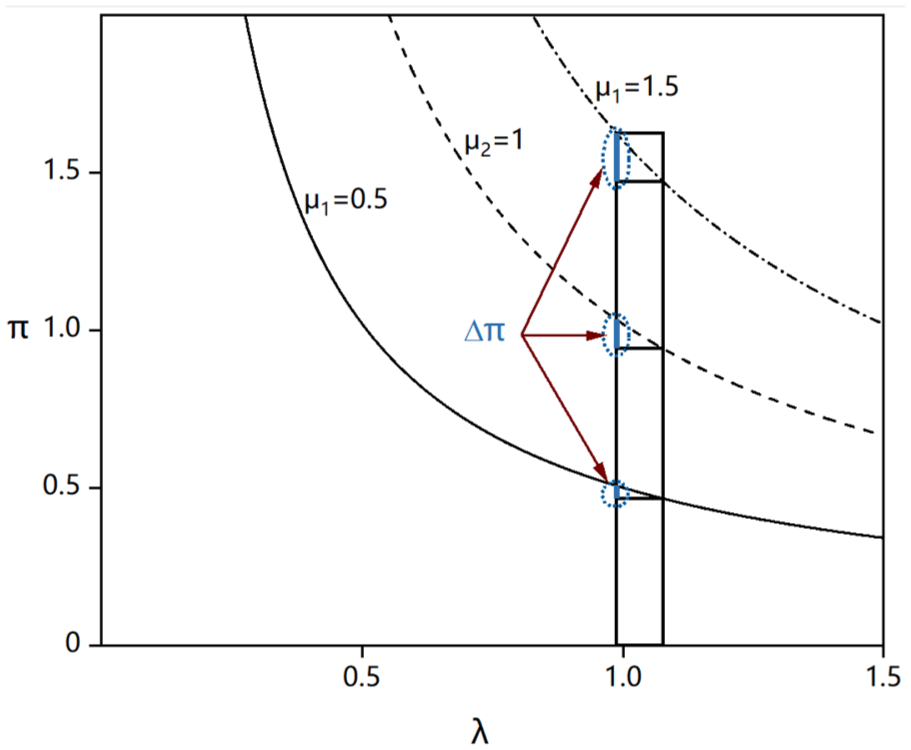
Interaction between human–AI collaboration level and consumer sensitivity.
Building on Proposition 1, which shows that a higher collaboration level reallocates more tasks to AI, Proposition 2 demonstrates that this shift can backfire if consumers hold strong expectations about interacting with a particular type of agent. While higher collaboration improves operational efficiency, it alters the perceived service structure. For consumers expecting consistent human interaction, the increased AI presence introduces a disconnect between expectations and actual experiences. The misalignment can heighten dissatisfaction, reducing purchase intent and overall profitability.
For example, consider an e-commerce platform where customers are highly sensitive to service agent identity during presale consultations. As the platform enhances its human-AI collaboration, customers may perceive a predominance of AI interactions. This heightened visibility of AI service can disappoint those expecting human engagement, leading to weakened customer satisfaction and decreased conversion rates.
Thus, merchants should not assume that increasing human-AI collaboration automatically results in improved financial performance. Under high consumer sensitivity, intensified collaboration can inadvertently magnify identity discrepancies, worsening consumer perceptions. To mitigate this risk, merchants should refine service designs, such as embedding human-like features into AI interactions, to blur identity distinctions and better align service experiences with consumer expectations.
In summary, although greater human–AI collaboration improves operational efficiency, it introduces risks. Merchants must carefully balance the operational benefits of collaboration against the potential for heightened consumer dissatisfaction, strategically designing service interactions to close the gap between preference and experience.
Optimal Strategy: Choosing The Right Mix
Proposition 3. If human service quality falls below a threshold (
The analysis reveals a counterintuitive insight: human–AI collaboration is not universally beneficial. Under certain conditions, it can be suboptimal—challenging the prevailing assumption that collaboration naturally leverages the best of both human representatives and AI chatbots. When human service quality is low, AI’s superior performance makes a pure AI strategy more effective. As human service quality improves, the optimal strategy becomes increasingly nuanced (see Figure 4).

Optimal service strategy.
When human service costs are moderate, a human-only strategy often provides the most favorable balance between cost and quality. However, when human service costs are either extremely low (
This framework highlights specific scenarios where human–AI collaboration is prone to failure. When human service quality is low, coordination frictions between AI chatbots and human representatives may exacerbate customer dissatisfaction, undermining overall service value. Even when service quality is high, collaboration may be inefficient in moderate-cost environments due to integration complexity and diluted accountability. For example, consider a retail bank service employing a hybrid mode: AI chatbots handle routine inquiries (e.g., balance checks, transaction history), while human representatives address complex issues (e.g., loan approvals, fraud cases). While this configuration appears efficient, moderate-cost settings can lead to fragmented interactions or a loss of service continuity—ultimately harming customer satisfaction.
The overarching implication is that human–AI collaboration is not a one-size-fits-all solution. Strategy selection must account for coordination risks and cost structures. While collaboration proves effective under extreme cost conditions, it can falter in moderate zones unless carefully managed. This results in a moderate-cost collaboration trap, where the relationship between service quality and strategy optimality becomes nonlinear.
Proposition 4. When consumers’ sensitivity to service agent identity is moderate and human service capacity is abundant, a human-only strategy is optimal. When consumer sensitivity is either very low or very high, human–AI collaboration is preferred.
Service strategy selection is further influenced by consumer sensitivity to the identity of the service agent. When human service capacity is ample and consumer sensitivity falls within a moderate range (
In contrast, when consumer sensitivity is either very low (
Consider an online tech support platform for consumer electronics. In a low-sensitivity context, AI chatbots can effectively manage routine issues, improving speed and freeing human representatives for more complex tasks. In a high-sensitivity context, even minor inconsistencies in human-only service may lead to significant dissatisfaction. A collaborative mode that divides responsibilities between AI chatbots and human representatives can reduce exposure to such risks while maintaining service continuity.
In both extremes, human–AI collaboration proves advantageous—either by enhancing efficiency or by distributing service risk. However, in moderate-sensitivity environments, the additional complexity introduced by collaboration may not justify its costs, making human-only service more prudent.
Strategic Decision-Making in a Competitive Market
We analyze merchant strategy choices in a competitive market where two merchants, selling homogeneous products, adopt different service strategies. We identify three competitive scenarios: (1) pure AI versus human–AI collaboration, (2) pure AI versus human-only, and (3) human–AI collaboration versus human-only. In each scenario, consumers choose between the two merchants based on utility maximization (
Lemma 3. When a competitor employs a human–AI collaboration strategy, the optimal quality of AI service that a pure AI merchant can achieve is always equal to or higher than the quality attainable when competing against a human-only merchant.
When a pure AI merchant faces a competitor using a collaborative strategy, the opponent’s dual advantage, differentiation through human service and efficiency through AI, forces the pure AI merchant to boost its own AI service quality to narrow the competitive gap. On the other hand, when competing against a human-only service provider, the inherent efficiency of AI is already prominent, so a dramatic quality improvement is not as crucial, leading to lower optimization outcomes. In other words, the improvement in pure AI service quality is not entirely a proactive strategic choice; rather, it emerges as a reactive measure compelled by competitive pressure from merchants employing human–AI collaboration.
This finding implies that the presence of a collaborative competitor in the market can drive an overall enhancement in AI service quality. While it might be expected that competition from high-quality human-only services would force improvements in pure AI services, our analysis shows that pure AI merchants face less pressure to upgrade when competing against human-only services. Instead, it is the human–AI collaboration mode that exerts greater pressure, requiring pure AI merchants to substantially enhance their service quality to secure both differentiation and efficiency advantages.
Proposition 5. (a) Competitor uses pure AI: With moderate human service quality, the merchant should adopt human–AI collaboration. With very high or very low human service quality, the merchant should adopt human-only service. (b) Competitor uses human-only: With moderate human service quality, the merchant should adopt pure AI. With very high or very low human service quality, the merchant should adopt human–AI collaboration. (c) Competitor uses human-AI collaboration: If both human service quality and collaboration level are either high or low, the merchant should adopt pure AI. If they are mismatched (e.g., one high, one low), the merchant should adopt human-only service.
The analysis of the competitive decision-making process (see Figure 5) reveals that when the competitor’s human service quality is not poor, a pure AI strategy should generally be avoided. Optimal strategy selection is not achieved by simply amplifying existing strengths; rather, it hinges on exploiting imbalances and weaknesses in the competitor’s service approach to create a more attractive differentiation for consumers.

Competitive decision-making process.
When a competitor employs a pure AI strategy, consumers’ desire for human interaction becomes more salient. In such cases, if the merchant’s human service quality is moderate, adopting a human-AI collaboration strategy leverages both human differentiation and AI efficiency, creating a competitive appeal. However, if human service quality is very high or very low, the differentiation effect becomes either too extreme or too weak. In these cases, the risks associated with collaboration, such as coordination failure, outweigh the benefits, making a human-only service preferable.
Conversely, when the competitor relies on human-only service, the competition centers on efficiency and differentiation. With moderate human service quality, the superior operational efficiency of AI can dominate, favoring a pure AI strategy. When human service quality is extremely high or extremely low; however, pure AI may lack the necessary differentiation or consumer appeal, making human-AI collaboration strategy the preferred choice.
When competing against a human–AI collaboration strategy, internal inconsistencies become critical. If both the competitor’s human service quality and collaboration level are either consistently high or low, the merchant should pursue a pure AI strategy to differentiate on efficiency and consistency. If the competitor exhibits a mismatch (e.g., strong human service but weak collaboration integration), adopting a human-only strategy effectively targets their weaknesses by offering a more stable and coherent service experience.
The key insights are twofold. First, merchants should focus on exploiting competitor weaknesses rather than simply enhancing their own strengths. Careful analysis of the competitor’s service design can reveal vulnerabilities: when facing a competitor using pure AI, emphasizing human touch strengthens differentiation, while against the human-only strategy, adopting a collaboration strategy that balances efficiency and personalization is optimal. Second, it is critical to understand the limits of collaborative services. When the competitor employs a human-AI collaboration strategy, any internal misalignment, such as a mismatch between human service quality and the extent of collaboration, can offer a valuable competitive opening. Recognizing and leveraging these inconsistencies is often more effective than simply investing in improving one’s own technological capabilities.
In summary, when AI enters service competition, flexibility and strategic targeting of competitor weaknesses matter more than raw improvements in human or AI capabilities. Higher human service quality or greater AI efficiency alone does not guarantee a competitive advantage. Instead, superior market performance comes from nuanced, context-dependent responses to competitor vulnerabilities.
Conclusion and Implications
This study investigates how merchants can strategically deploy AI in customer service by choosing among pure AI, human-only, and human–AI collaboration strategies. Through a game-theoretical framework, the analysis reveals the collaboration trap, highlights the dynamic reallocation of service tasks between human representatives and AI chatbots, and underscores that competitive advantage stems not simply from internal capabilities but from targeting competitors’ strategic vulnerabilities. Contrary to the common assumption, greater human–AI collaboration does not always improve service outcomes and could reduce profitability. These insights contribute both theoretically and practically to human–AI hybrid service.
Theoretical Implications
First, the findings reveal that deeper human–AI collaboration does not invariably confer service advantages. In fact, greater collaboration often shifts more frontline responsibilities to chatbots (Figure 2), which can inadvertently increase consumer dissatisfaction and erode profitability (Figure 3). While collaboration remains effective under conditions of extreme consumer sensitivity, moderate sensitivity levels make human-only strategies more desirable. This insight advances prior literature on consumer preferences for humans versus AI (Castelo et al. 2023; Mende et al. 2019; Song et al. 2022) by demonstrating how consumer sensitivity dynamically influences strategic decisions.
Second, our findings challenge the widely held belief that human–AI collaboration is inherently superior to singular service modes. Extending research on optimizing human-AI collaboration timing and design (Blaurock, Büttgen, and Schepers 2024; Huang and Rust 2022), the analysis identifies a moderate-cost collaboration trap (Figure 4): collaboration is optimal only under extreme human service cost conditions—either very low, where high-quality human input is affordable, or very high, where chatbot-driven automation compensates for cost inefficiencies. At moderate cost levels, however, coordination issues and task-switching frictions diminish the effectiveness of hybrid modes. This contrasts with prior work that often assumes additive benefits from combining human and AI service capabilities (Crolic et al. 2021; Raisch and Krakowski 2021).
Third, the study contributes to the AI investment literature by highlighting a nonlinear relationship between AI chatbot capability and service performance outcomes (Hou et al. 2024). Contrary to the belief that continuous improvement in AI quality enhances competitiveness, results show that excessive investment in AI can be counterproductive in hybrid systems where human-chatbot coordination remains suboptimal. Optimal AI deployment depends not only on technical sophistication but also on how effectively chatbot functions are integrated with human service operations.
Finally, the study broadens understanding of competitive dynamics in AI-augmented service markets (Huang and Rust 2018). Rather than simply reinforcing internal service quality, strategic advantage emerges from exploiting misalignments in competitors’ service configurations (Figure 5). For instance, when competing against a pure AI service strategy, emphasizing human differentiation proves most effective. Against human-only competitors, combining chatbot-driven efficiency with human personalization through a collaboration strategy proves a superior response. By mapping these boundary conditions, the study expands ongoing research on AI-driven competitive differentiation (Gallino, Karacaoglu, and Moreno 2023).
Managerial Implications
This study offers actionable insights for managers designing AI-enabled customer service systems. Supplemental Material Web Appendix-C provides a detailed mapping of conditions to operational benchmarks, supporting the practical application of the findings.
First, while human–AI collaboration appears attractive, it can fail under specific conditions. Aggressive deployment of chatbots may raise coordination costs and introduce inefficiencies. For instance, merchants on JD.com that use AI chatbots for routine queries while reserving human representatives for complex tasks should establish cost-based thresholds and early-warning indicators to dynamically adjust between human-only and collaboration modes.
Second, managers should avoid assuming that increasing AI service involvement automatically improves financial outcomes. Heightened collaboration often creates internal competition between AI chatbots and human representatives. Excessive task switching can frustrate customers, leading to disjointed experiences and diminished loyalty. For example, in retail banking service, if customers are repeatedly transferred between a chatbot and a human representative without a seamless handoff, overall satisfaction declines. Minimizing agent-switching friction, clarifying role boundaries, and monitoring feedback loops are essential for maintaining service quality.
Third, AI investment decisions should prioritize effective integration over technical escalation. While chatbots are advancing rapidly (Han, Deng, and Fan 2023; Schanke, Burtch, and Ray 2021; Xiao and Kumar 2019), over-investing in AI capabilities without appropriate task alignment or human oversight can produce diminishing returns. Merchants should regularly assess the allocation balance between AI and human agents, focusing on intelligent task orchestration rather than maximal automation.
Finally, competitive positioning should be grounded in exploiting gaps in rivals’ strategies. The current market includes firms operating hybrid service modes, each with inherent strengths and weaknesses. For instance, Nordstrom’s emphasis on human-led service offers strong emotional engagement but creates efficiency vulnerabilities. Competing against such a mode, merchants can differentiate by deploying AI chatbots that handle routine tasks while amplifying the human touch in high-value interactions. Conversely, when rivals use hybrid strategies, merchants should identify misalignments, such as over-reliance on chatbots despite low human service quality, and adapt accordingly. Continuous monitoring and responsive strategic adjustment remain critical to sustaining advantage.
Limitations and Future Research
Several limitations hold and thus offer new directions for future research. First, the model does not account for personalized service scheduling or dynamic handoffs. Exploring optimal timing for AI-to-human transitions could refine strategic guidance. Second, the study excludes mutual learning mechanisms within human–AI collaboration. Future research could examine how human representatives improve through AI-generated suggestions and how chatbots adapt based on human feedback—creating a feedback loop that enhances long-term service quality. Third, incorporating the joint optimization of endogenous pricing and AI-generated service strategy could shed light on how pricing can interact effectively with human–AI collaboration intensity and competitive positioning. Lastly, the combination of multiagent simulations and experimental designs may offer richer insights into behavioral mechanisms driving service outcomes in hybrid service modes.
Supplemental Material
sj-docx-1-jsr-10.1177_10946705251384692 – Supplemental material for Harmonizing Human Touch and AI Precision in Customer Service
Supplemental material, sj-docx-1-jsr-10.1177_10946705251384692 for Harmonizing Human Touch and AI Precision in Customer Service by Zhenbin Ding, Yali Zhang, Jun Sun, Mark Goh and Zhaojun Yang in Journal of Service Research
Footnotes
Acknowledgements
We sincerely thank the Co-Editor, Associate Editor, and anonymous reviewers for their constructive feedback and insightful suggestions that greatly improved this manuscript.
Declaration of Conflicting Interests
The authors declared no potential conflicts of interest with respect to the research, authorship, and/or publication of this article.
Funding
The authors disclosed receipt of the following financial support for the research, authorship, and/or publication of this article: This work was supported by the National Natural Science Foundation of China [grant number 72572129].

Supplemental Material
Supplemental material for this article is available online.
Author Biographies
References
Supplementary Material
Please find the following supplemental material available below.
For Open Access articles published under a Creative Commons License, all supplemental material carries the same license as the article it is associated with.
For non-Open Access articles published, all supplemental material carries a non-exclusive license, and permission requests for re-use of supplemental material or any part of supplemental material shall be sent directly to the copyright owner as specified in the copyright notice associated with the article.
