







Abstract
Increasing concerns have been raised in academic literature regarding the impact of social media on teenagers’ well-being. While online social media has become an integral part of our daily life, it has also been linked to a rise in mental health issues among adolescents. This study addresses this concern by systematically reviewing the literature from 2005 to 2023 using the Scopus database. This study employed bibliometric and content analyses to map the existing literature to shed light on new areas of origin, trends, and future research directions. It also addresses critical gaps in the literature by proposing directions for future research. Notably, the analysis revealed that several key themes have dominated the research landscape on social media’s impact on teenagers. These include suicide, education, school children, quality of life, attitude toward health, social media, anxiety, teenagers’ behavior, risk assessment, online social networking, deep learning, and emotions.
The landscape of communication and interaction has undergone a radical transformation due to the pervasive influence of social media (McFarland and Ployhart 2015). Social media refers to online platforms and tools that facilitate group communication, information dissemination, and collaboration (Buzeta et al. 2024). The pervasive adoption of social media has profoundly altered how people interact with one another and with the digital world (Mazerant et al. 2022; Zhang et al. 2023). The profound influence of social media on teenagers has sparked a wave of scholarly interest, highlighting the need for a thorough and structured examination through an integrative review (Rakhmawati et al. 2021; Vlachopoulou and Boutsouki 2014). Furthermore, the commercial aspects of the media should be recognized. Advertising strategies aimed at teenagers are carefully considered and frequently draw on psychological concepts to appeal to their fears and needs.
With the advent of digital media, advertising has become increasingly immersive and ingrained in content, making it more difficult for teenagers and adults to distinguish between authentic material and sales pitches (Benvenuti, Scarpi, and Zarantonello 2023). Montgomery, Chester, and Milosevic (2017) question the morality of taking advantage of psychological weaknesses for financial gain, and examine the ethical ramifications of digital marketing strategies targeted at teenagers.
Based on the findings of a 2021 study of children and parents’ media use and attitudes, which OfCom issued in the United Kingdom, 44% of children age 8–11 and 87% of adolescents age 12–15 engage with social media applications and websites (OfCom 2022). This shift emphasizes the need for a thorough study of the impact of social media on teenagers, not only from a social perspective, but also from a marketing standpoint. This exemplifies the impact of social networking sites on society, surpassing email as a critical communication channel among young people (Cardon and Marshall 2015; Raggiotto et al. 2023). The proliferation of false information, instances of internet harassment, concerns regarding data privacy, and the increasing prevalence of social media addiction highlight the complexities of the digital age (Maepa and Wheeler 2022; Mosteller and Poddar 2017). Owing to the dual nature of its positive and negative effects, the impact of social media on teenagers must be studied in depth. As ardent social media consumers, teenagers are exposed to various interactions and encounters that can significantly influence their behavior, mental health, social competencies, and well-being (Apoorva et al. 2022; Lapresta-Romero et al. 2024; Sharp and Gerrard 2022).
Utilizing social media late at night can interrupt sleep patterns, and protracted exposure to curated online life can cause anxiety, depression, and isolation (Raggiotto et al. 2023). Additionally, the potential of social media to hinder interpersonal social skills and empathy emphasizes the need for a balance between online and offline interactions (Marwick and Boyd 2014; Zhao, Inaba, and Monroy-Hernández 2022). Alves, Fernandes, and Raposo (2016) indicate that most of the examined research concentrates on consumers’ viewpoints concerning social media usage, sharing, and their impact on consumer perceptions and decisions. They also examine the firm’s perspective, encompassing the utilization of social media platforms (VanMeter, Grisaffe, and Chonko 2015) and the execution, enhancement, and evaluation of outcomes. The persistent societal expectation of maintaining a carefully constructed public persona can contribute to diminished self-worth and negative body perception (Yoon et al. 2022). Utilizing electronic devices in late hours has a detrimental impact on both the quality of sleep and general well-being of individuals (Stiglic and Viner 2019; Twenge, Martin, and Campbell 2018). The emission of blue light from screens can potentially disturb sleep patterns, resulting in sleep deprivation and the associated health complications (Twenge and Campbell 2019).
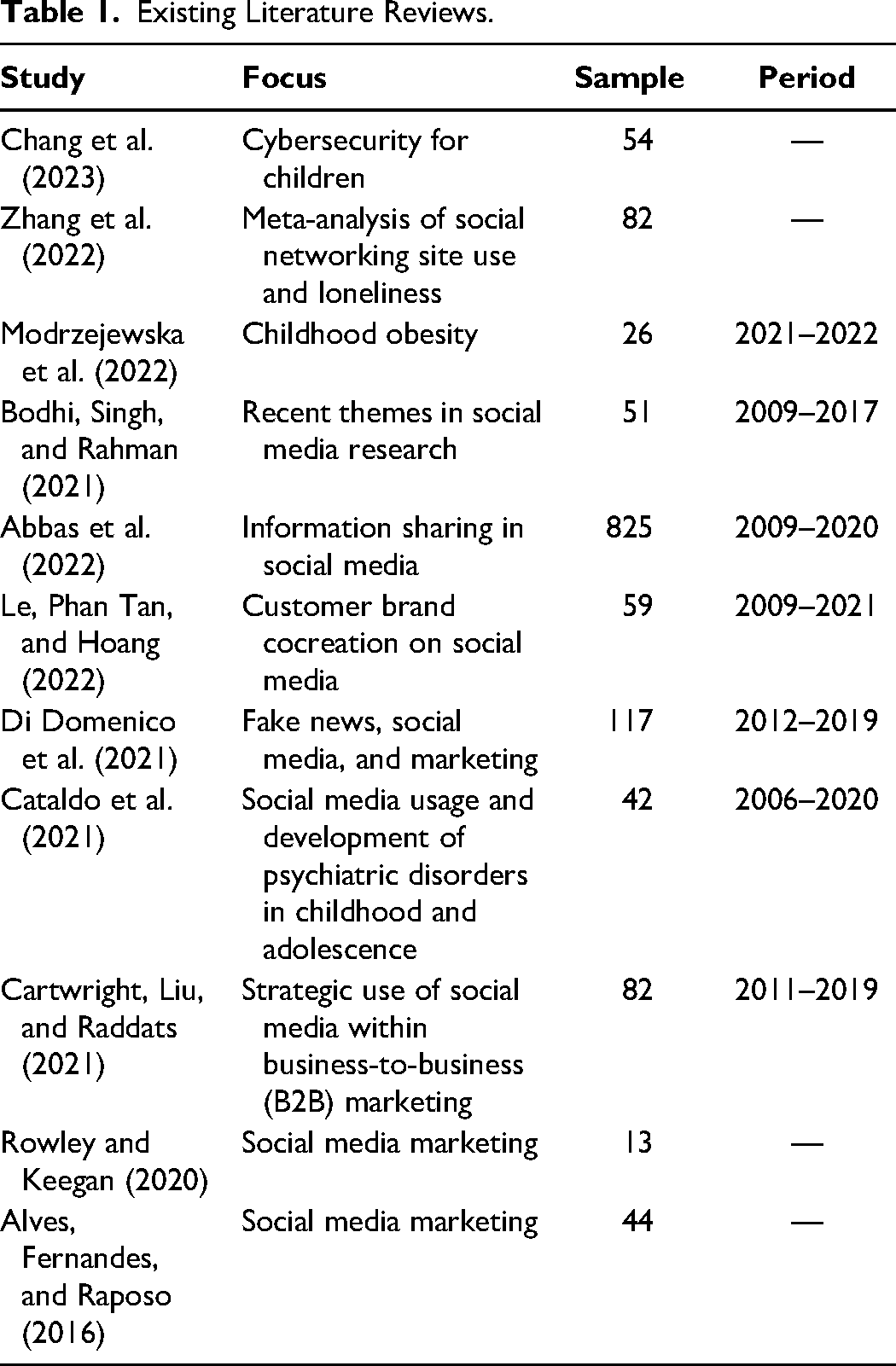
This study presents an existing literature review of numerous empirical and review studies (Table 1) that have demonstrated links between the utilization of social media and adverse consequences (Apoorva et al. 2022; Modrzejewska et al. 2022; Zhang et al. 2023). It focuses on the effect of social media on teenagers from a marketing perspective, and proposes relevant strands for future research. However, research examining the effects of social media platforms on teenagers is lacking, indicating a clear research gap concerning image-based, text-based, and online interactions including cyberbullying and positive reinforcement.
Existing Literature Reviews.
This study used an integrated review approach with bibliometric and content analyses to investigate the complex relationship between social media and teenagers. This study aimed to achieve the following research objectives:
The remainder of this article is organized as follows. The next section describes the methods of analysis and data search. The following section covers the most influential authors, highly cited articles, and prominent countries. Subsequent sections present a cocitation analysis, keyword analysis, and thematic map, followed by the SOR framework. Far from being a linear model, this framework encapsulates a web of exogenous and endogenous variables and explores the intricate interactions between external stimuli, internal cognitive states, emotional valence, and subsequent behavioral actions. The framework is a robust theoretical apparatus that does more than dissect the experience into isolated components of “stimulus,” “organism,” and “response.” The final section suggests future research avenues and answers to RO4.
Research Methodology
Following the PRISMA guidelines, we briefly shortlisted the articles, as shown in Figure 1 (Moher et al. 2015; Page et al. 2021). The crux of this study lies in scrutinizing the effects of social media on teenagers using bibliometric techniques and content analysis, resulting in an integrative review (Mukherjee et al. 2022).
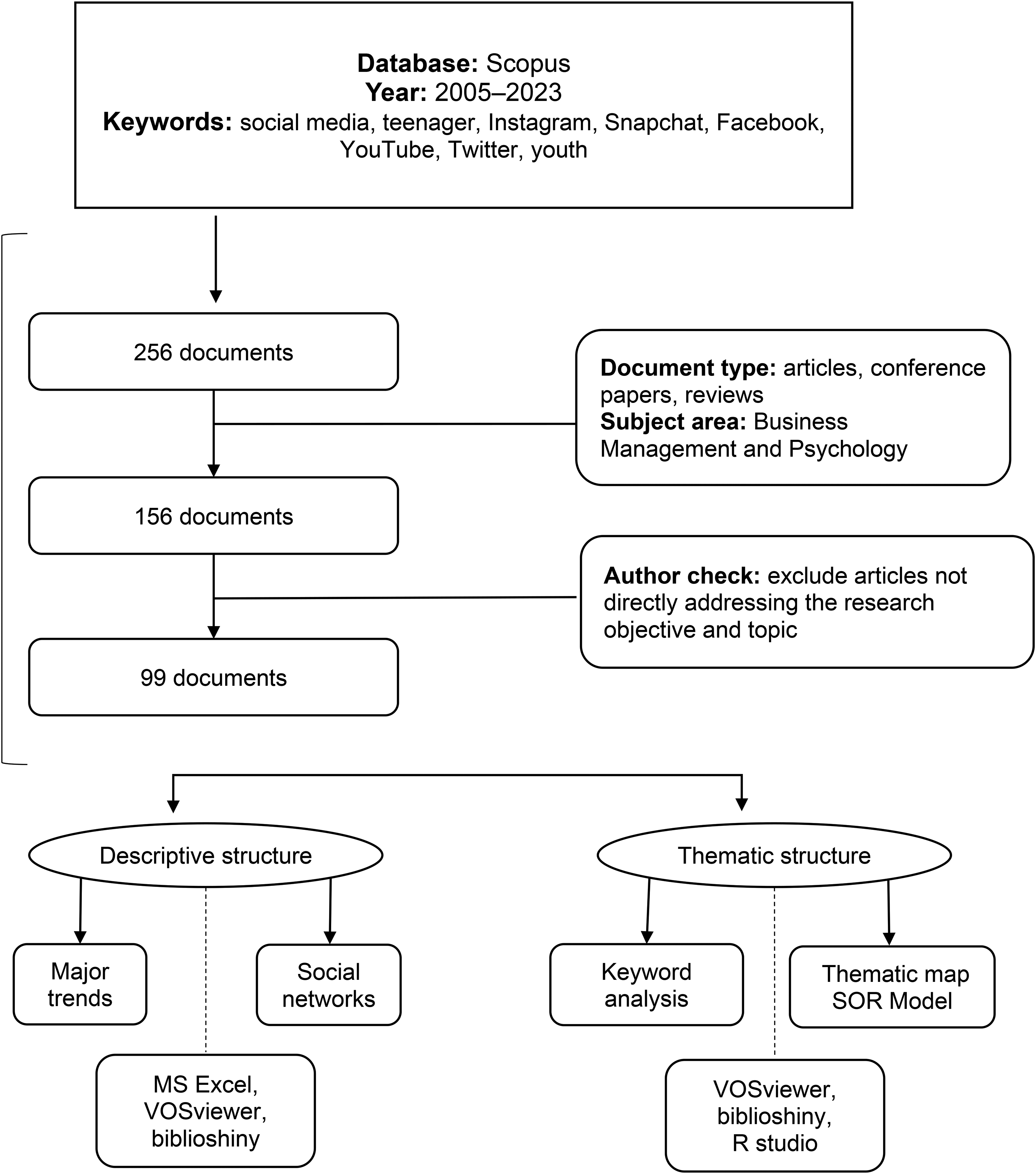
Structure of Shortlisted Sample Studies.
Scope of the Study
The primary objective of this study was to provide a comprehensive overview of the bibliometric technique, content analysis, and SOR model of the existing body of literature focused on the impact of social media on teenagers. The bibliometric technique encompasses the output of publications, whereas content analysis relates to the primary themes and research issues within the field of study. The scope of this study is extensive as it encompasses several research areas. This will enhance previous reviews of research that emphasize a context-specific approach and aid in providing explicit knowledge of improvements in the literature on social media’s impact on teenagers, as outlined by the guiding research objectives (RO1–RO4).
Technique for Analysis
In this study, we combined bibliometric techniques and content analysis to trace the evolutionary arc of the impact of social media on teenagers. We use productivity and impact metrics, including influential authors, countries, and articles, to form the foundation of our performance analysis. We deployed cocitation and keyword co-occurrence analyses to enrich the analysis further. We used a thematic map to unpack the science mapping of the related topics. These insights provided a rigorous content analysis of the selected articles.
Inclusion/Exclusion Criteria
The Scopus database was searched for the following keywords related to the impact of social media on teenagers (Mihalache and Mihalache 2016) in the article, title, and abstract: “social media,” “teenager,” “youth”, “Instagram,” “Snapchat,” “Facebook,” “YouTube,” “Twitter.” The search was conducted in July 2023 and yielded 256 articles. Our search parameters included document type (articles, conference papers, and reviews), source type (journal and conference), language (English), and publication time frame from 2005 to 2023. Next, we filtered the studies based on their subject area (Business Management and Psychology), yielding 156 documents. We further evaluated the titles and abstracts of the 156 papers. We retained 99 articles that covered the scope of the research objectives.
Reporting the Findings
For the analytics in this study, we harnessed the capabilities of two specialized software tools: VOSviewer software (Van Eck and Waltman 2014) and the bibliometrix package in R software (Aria and Cuccurullo 2017). VOSviewer is a software tool that facilitates the construction and visualization of bibliometric networks, including various elements, such as articles, authors, nations, and organizations (Kraus et al. 2022). In contrast, the bibliometrix R package offers specialized tools for executing rigorous analyses for performance analysis (productivity, impact) and science mapping (keyword co-occurrence of themes and topics). By employing this dual-software approach, we aim to mitigate interpretation bias, a well-documented pitfall in qualitative reviews (Donthu et al. 2021; MacCoun 1998). We are well-positioned to comprehensively address our research questions using these analytical tools.
Performance Analysis
RO1 pertains to the most productive authors, nations, and country collaborations in this area of research.
Most Productive Authors
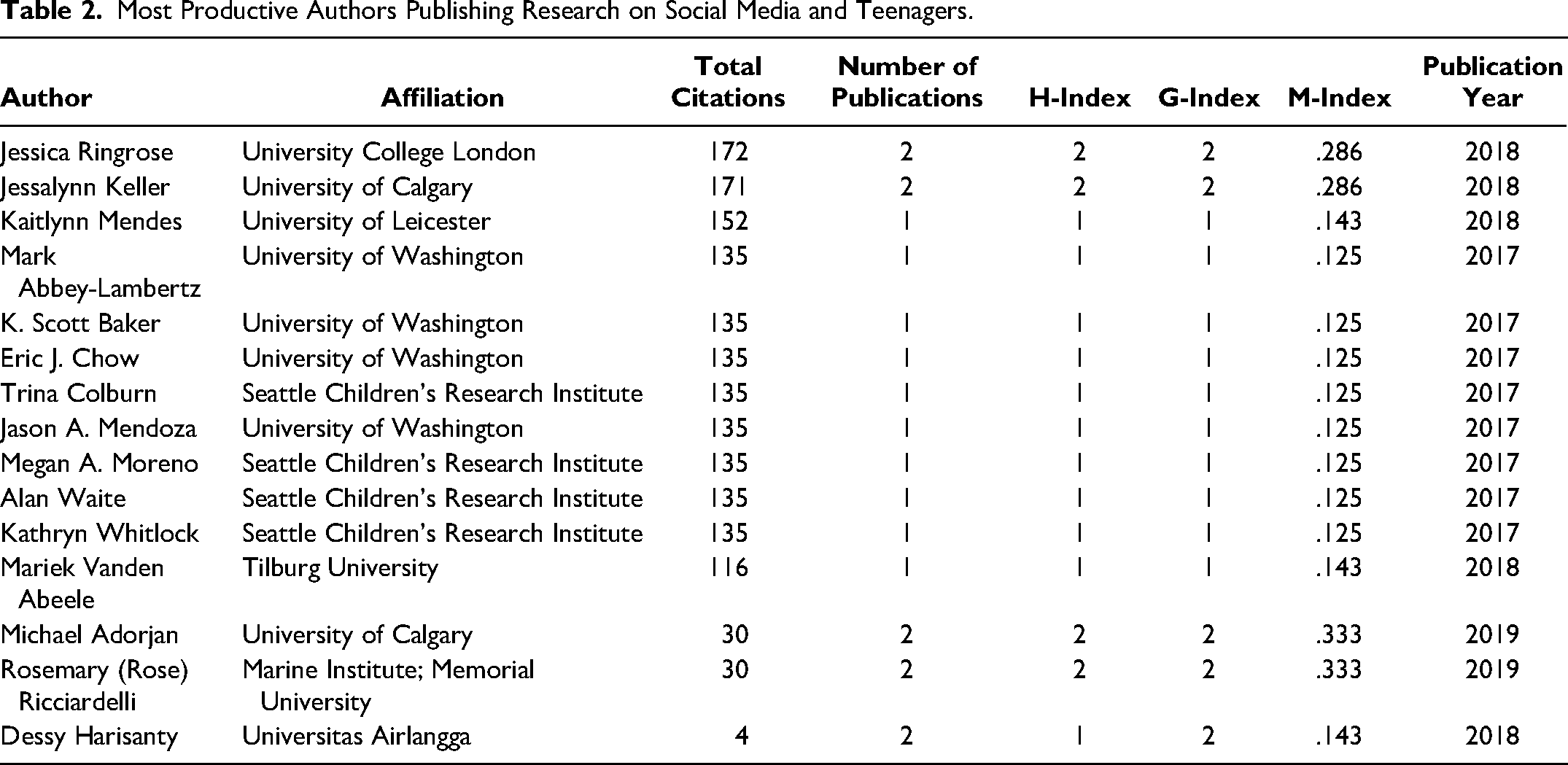
Table 2 presents the top 15 authors according to the number of citations and publications of research on the impact of social media on teenagers. We observed that the authors with the most publications were Jessica Ringrose (University College London), Jessalynn Keller (University of Calgary), Michael Adorjan (University of Calgary), Rosemary (Rose) Ricciardelli (Marine Institute; Memorial University), and Dessy Harisanty (Universitas Airlangga), who all possess two publications each. The top-ranked author, Jessica Ringrose, has worked on feminism-based studies (Keller, Mendes, and Ringrose 2018; Kim and Ringrose 2018). The second author, Jessalynn Keller, has also published in feminism-based literature (Keller 2019). Further, authors Michael Adorjan and Rosemary (Rose) Ricciardelli have authored studies related to privacy and social media addiction (Adorjan and Ricciardelli 2019, 2021). The author Dessy Harisanty has contributed studies broadly based on social media (Harisanty 2018, 2019) as well. We also found that Kaitlynn Mendes, from the University of Leicester, was the third most influential author with 152 citations. However, the authors Mark Abbey-Lambertz, K. Scott Baker, Eric J. Chow, Trina Colburn, Jason A. Mendoza, Megan A. Moreno, Alan Waite, and Kathryn Whitlock have similar ranks (owing to the same metrics), as they are coauthors of a single study related to improving health (Mendoza et al. 2017).
Most Productive Authors Publishing Research on Social Media and Teenagers.
Top Corresponding Nations for Research on Social Media and Teenagers
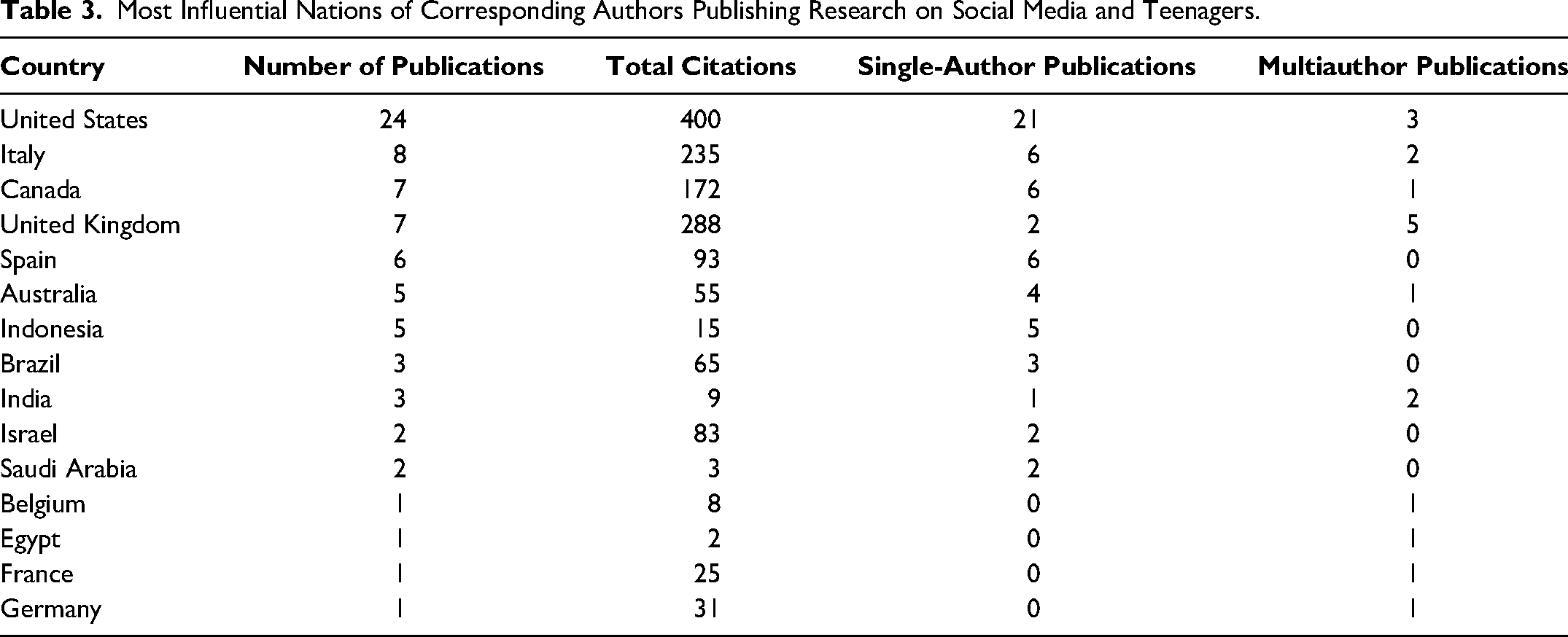
Research on the effects of social media on teenagers is international and can be found worldwide (Table 3). These nations are listed according to their corresponding authors’ publications on social media and teenage research. The United States is, by far, the most prolific in terms of total publications and citations, with 24 publications and 400 citations. Italy stands second with eight publications and 235 citations. However, a visualization of international coauthorship (as shown in Figure 2) aids in understanding that while the participation of many countries is visible in scholarship, the collaborations are comparatively within the nation itself. The only prominent collaborative partnership is between the United States and United Kingdom. The highest number of multiauthored publications was in the United States, at three.
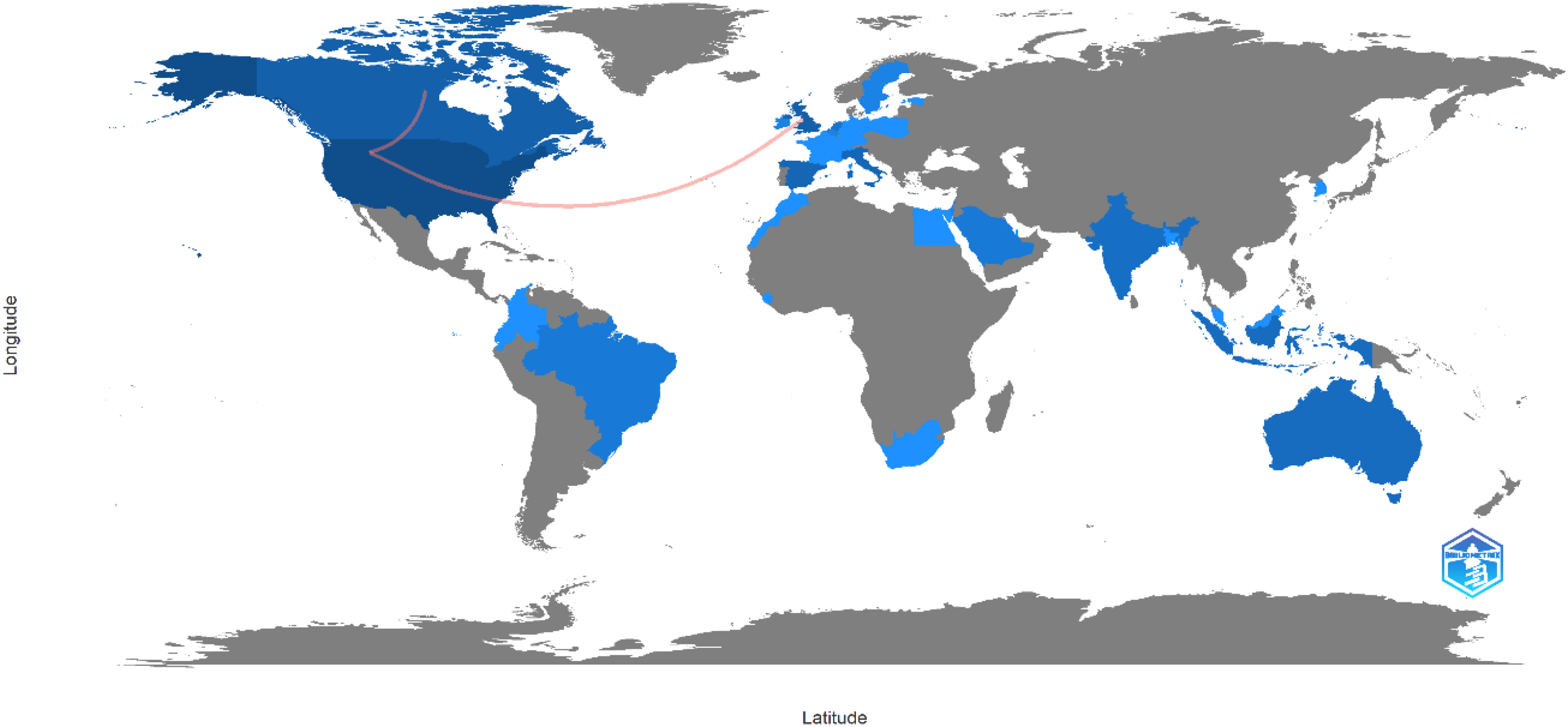
Country Collaboration Map.
Most Influential Nations of Corresponding Authors Publishing Research on Social Media and Teenagers.
Most Cited Publications
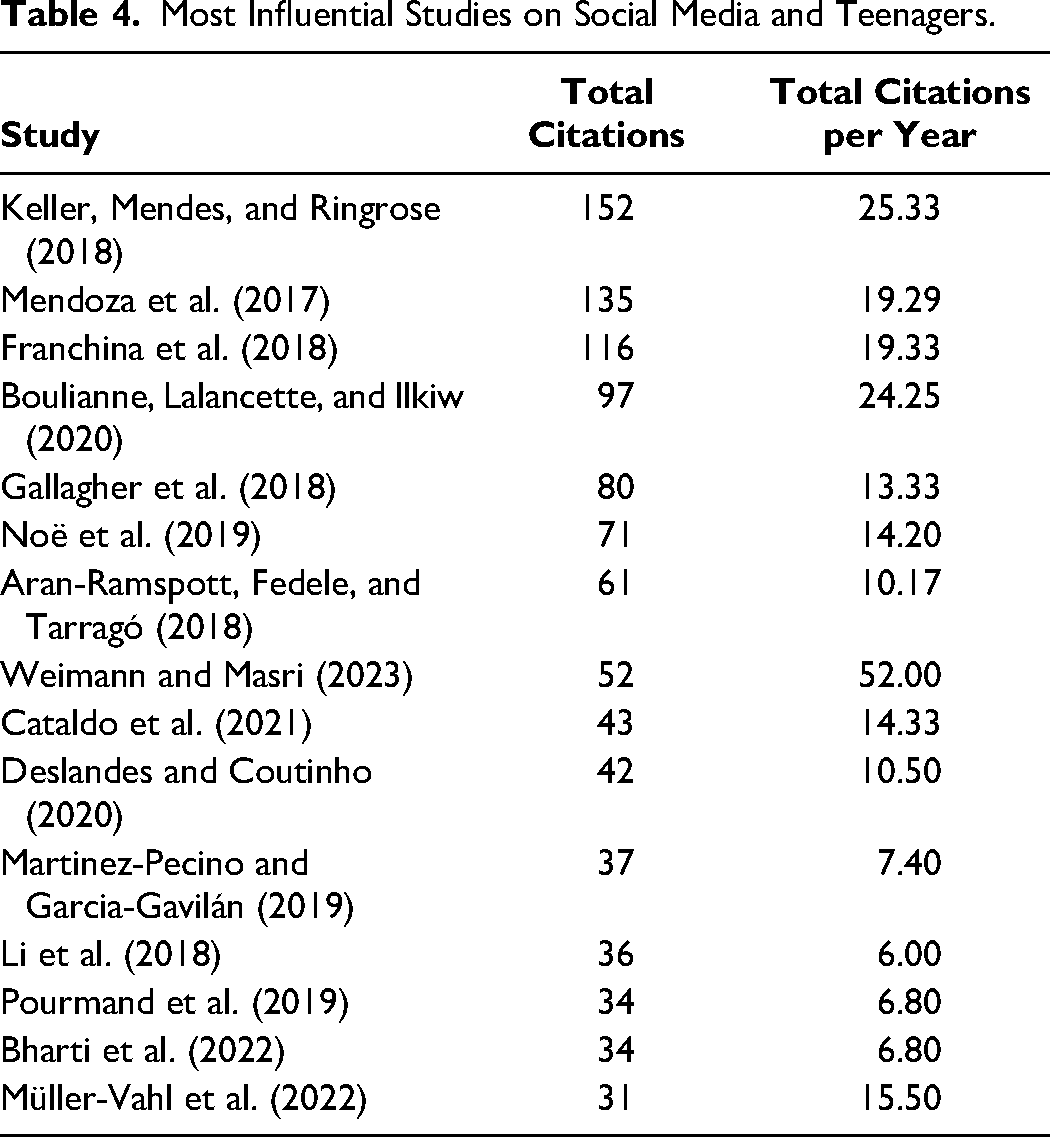
The scholarship by Keller, Mendes, and Ringrose (2018) published in the Journal of Gender Studies, titled “Speaking ‘Unspeakable Things’: Documenting Digital Feminist Responses to Rape Culture,” has been the most cited publication in this research niche so far. Although it was published in 2018, the article had 152 citations, with approximately 25.33 citations each year. The article titled “Fear of Missing Out as a Predictor of Problematic Social Media Use and Phubbing Behavior Among Flemish Adolescents” (Franchina et al. 2018) has 116 citations. Studying prominent works in this area allows us to observe that while the subject may seem limited, many nuances exist. The study patterns prominently showcase mental health perspectives, online discourse, and teenagers’ participation in online conversation. The highest number of total citations per year (52) belongs to “Research Note: Spreading Hate on TikTok,” 1 by Weimann and Masri (2023). A detailed tabular visualization is presented in Table 4.
Most Influential Studies on Social Media and Teenagers.
Science Mapping
To answer RO2, we provide cocitation network analysis, keyword analysis, clustering, and themes. The authors’ keywords represent the themes of the research publications (Comerio and Strozzi 2019). A co-occurrence network analysis is often derived from “author keywords” 2 (Donthu et al. 2021).
Cocitation Network Analysis
When analyzing a research niche, a cocitation network enables the visualization of research areas within a broader idea. Such visualization is beneficial when the area of research is multifaceted and multidimensional and requires nuance in understanding, as it shows us the existing works in the scholarship cited in tandem with one another (Zupic and Čater 2015). Cocitation analysis also uncovers the relationships among cited publications (foundational knowledge), wherein cited publications converge into clusters to represent common themes (Mukherjee et al. 2022). These themes represent critical focus areas within the research niche, and focus on foundational knowledge and seminal works that have influenced subsequent research. Figure 3 shows the cocitation network of the research niche, for which the walk trap clustering algorithm with a minimum of two edges was used.
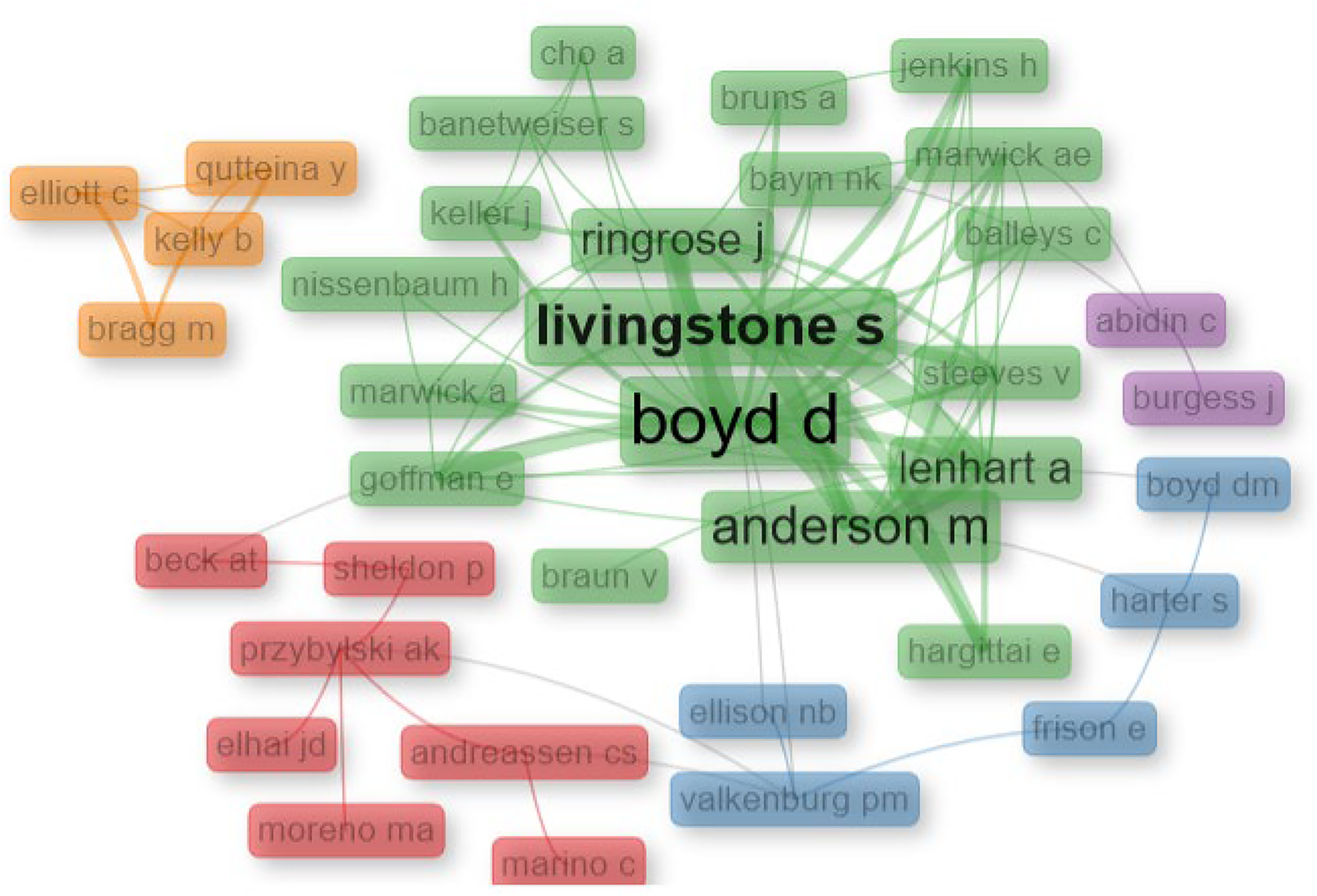
Cocitation Analysis.
Keyword Co-Occurrence Network Analysis
Keyword co-occurrence network analysis allowed us to capture the perspectives offered in a publication using three to five words, highlighting key themes (Figure 4 and Figure 5). When aggregated, analysis of the keywords in a research niche enables the formation of a network of similar themes that may run throughout the niche. An analysis of such a network can be figuratively observed as clusters with linkages between themes presented together (Zupic and Čater 2015). In Figure 4, the red data points (20 keywords) represent Cluster 1: the impact of social media on mental health. The green data points (12 keywords) represent Cluster 2: the psychological influence of internet use on quality of life. In the research area under consideration, it is evident that the central point that would remain consistent in most publications is “social media,” which is then connected to the keywords “human beings” and “teenagers.” The “human” aspect of the research follows the key demographic characteristics, such as “female,” “male,” “child,” and “young adult,” which are shown in green. Social media impacts are linked to central keywords (shown in red), including “depression,” “anxiety,” “attitude,” “addiction,” and “privacy,” as well as key contexts of study, such as Instagram and Facebook. Network analysis of density-dependent co-occurrence of keywords discerns connections between keywords within a given text by examining their frequencies and proximity. It generates a network in which the edges and keywords representing co-occurrences are represented by the nodes. Density quantifies the degree of interconnection between these nodes, thereby revealing noteworthy associations in text. The strength of each keyword in the network can be better visualized on a heatmap (using VOSviewer), where brighter colors depict more popular keywords (Figure 5).
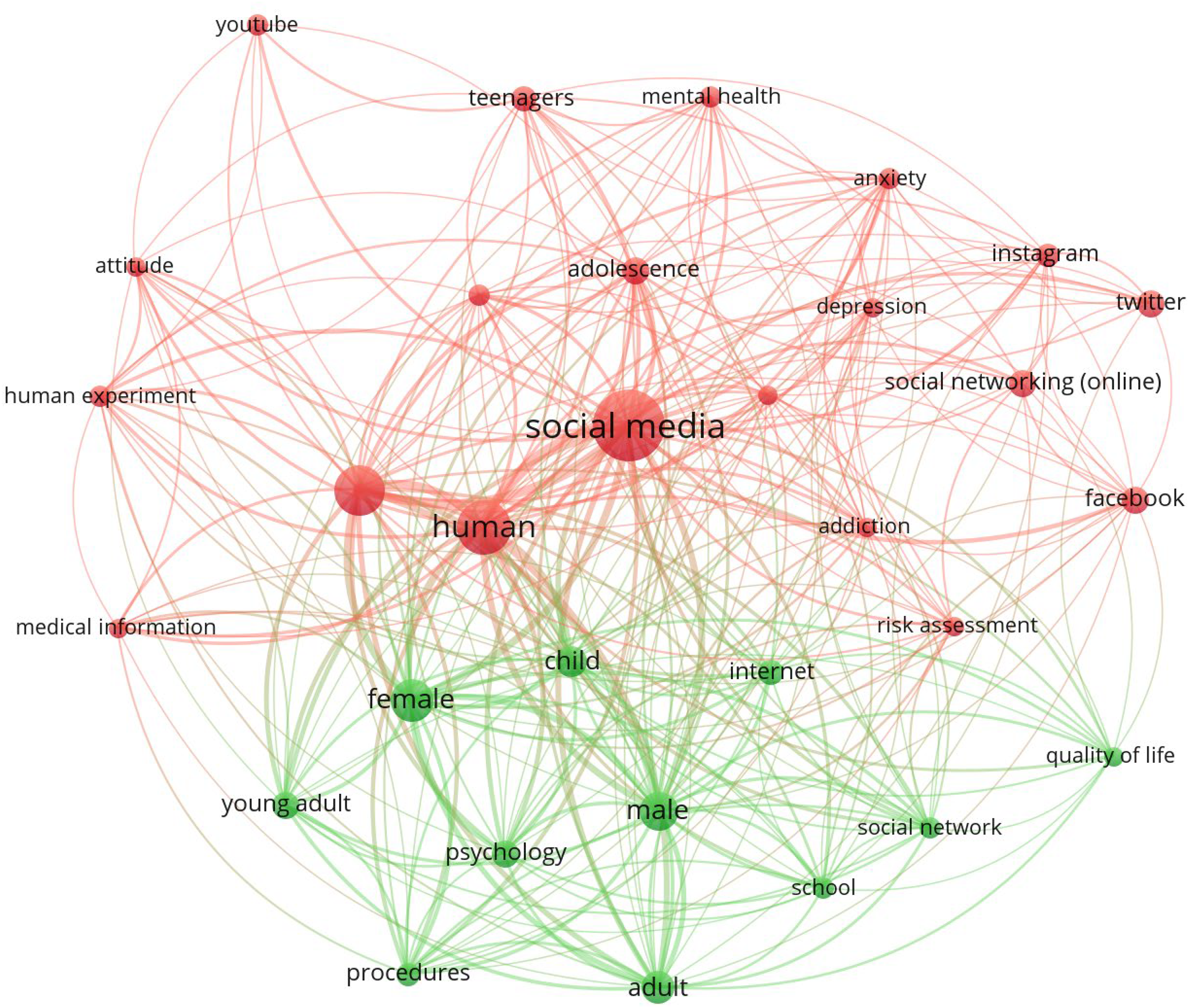
Keyword Co-Occurrence Network Analysis.
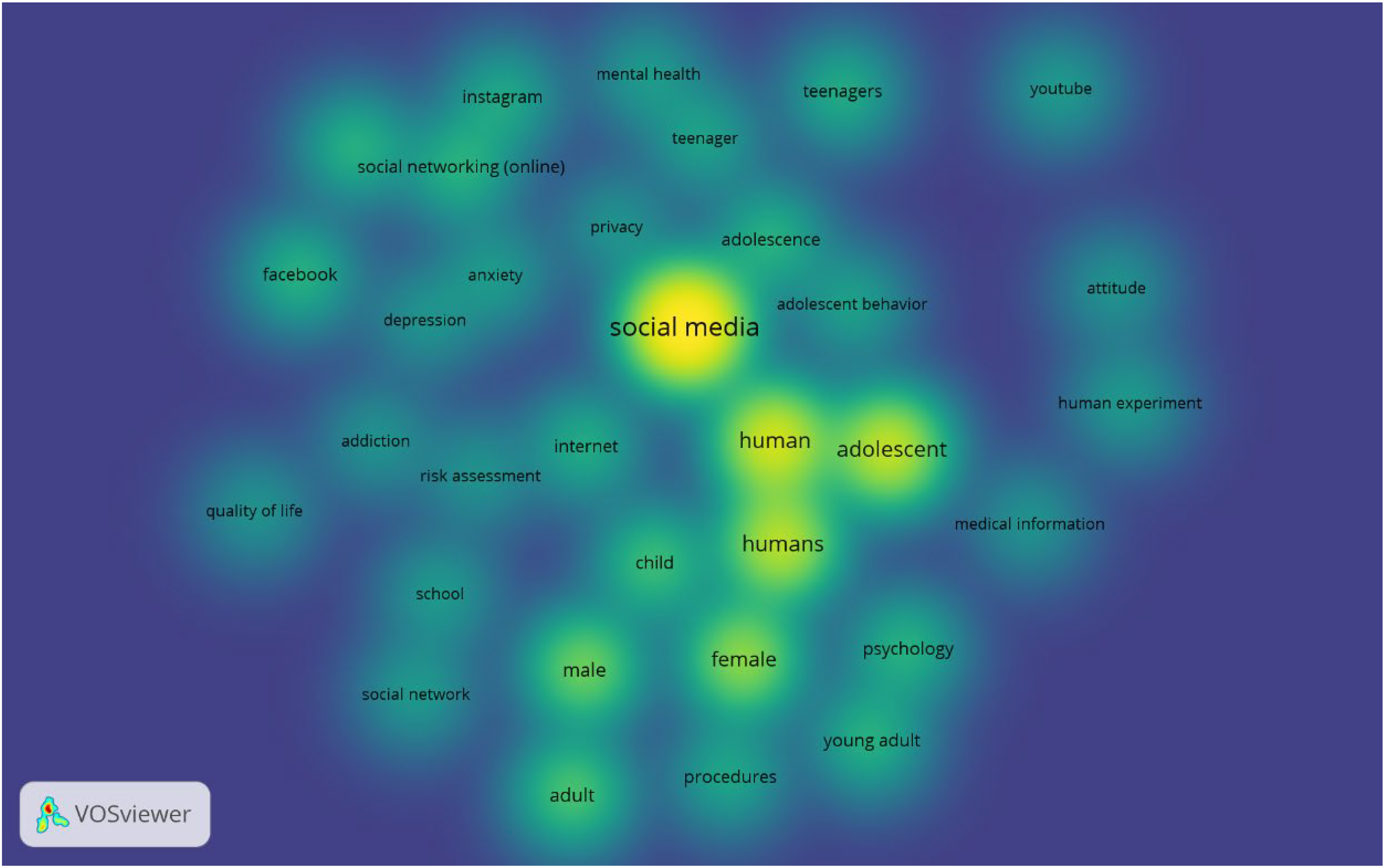
Density-Based Keyword Co-Occurrence Network Analysis.
According to Wang et al. (2014), keyword analysis identifies themes that occur more frequently in each cluster, suggesting the field’s current hot topics, such as social media and teenagers. Keywords are thought to indicate knowledge domain themes, and their presence in a document suggests linkages across document topics (Bamel et al. 2022). The keywords were compiled using VOS Viewer, and 32 keywords from 99 research publications were developed and sorted into two categories. Topic clustering aims to help readers become acquainted with the subject or theme being explored (Delecroix and Epstein 2004). Each article had at least five keywords that aided the description of the main idea. Their coexistence reveals how this research field has grown and progressed. The more frequent the occurrence, the larger the nodes. Line co-occurrence was demonstrated via the connection of these nodes (Figure 4). “Social media,” “human,” “teenagers,” “depression,” “social networking,” and “internet” were the most often used terms, relating to research highlighting the impact of social media on humans, particularly teenagers. Color coding was employed to identify map clusters (Van Nunen et al. 2018). Cluster 1 (red, 20 keywords) and Cluster 2 (green, 12 keywords) were depicted in the keyword network analysis map.
Cluster 1: Impact of social media on mental health
This cluster contains articles on social media and mental health, a subject of great interest in marketing, especially when comprehending consumer behavior and welfare. The most commonly used keywords are “social media,” “Instagram,” “teenagers,” “anxiety,” “depression,” “Facebook,” “YouTube,” and “social networking (online).” The literature in this cluster explored the impact of social networking platforms, such as Facebook, Instagram, and YouTube, on human mental health. According to Apoorva et al. (2022), social media use is a poor predictor of mental health issues. Therefore, concerns about social media causing mental health crises may be unjustified. The sole instance of this was “vague booking,” which indicated isolation and thoughts of committing suicide. Specific manifestations of social media usage may function as a means for those grappling with mental health challenges to express pleas for assistance or support. According to Oyieke, Dick, and Bothma (2013), individuals who utilize free social networking platforms, such as Facebook and Instagram, can maintain connections with friends and access relevant material. However, this may compromise a significant degree of sensitivity and privacy. Anxiety is a prominent psychological concern in contemporary societies. According to Bashir and Bhat (2017), benefits of social media for teenagers’ mental health include socializing, more significant interactions, academic possibilities, and accessibility to medical information. Adverse effects include sexting, depressive symptoms, online harassment, bullying, exhaustion, stress, emotional suppression, and reduced cognitive capacity. Nearly everyone in the modern world age 11–93 years is connected to social media. Strickland (2014) finds that young adults are the most active age group. Marketing professionals can utilize these findings to create advanced tactics that prioritize user well-being, while taking advantage of the beneficial components of social media, such as social interaction and information accessibility.
Cluster 2: Psychological influence of internet use on quality of life
Cluster 2 contained articles related to the psychological influence of internet use on the quality of life, providing valuable perspectives for marketers seeking to improve consumer satisfaction and overall welfare. “Quality of life” is a broad term that describes a person’s overall psychological happiness and contentment with life, concerning objectives, requirements, standards, worries, culture, and value systems (McCall 1980; Uysal et al. 2016). New metrics for measuring well-being, happiness, and quality of life are now accessible owing to developments in communication and information technology. Social media is one of the primary data sources for identifying public sentiments, feelings, and behavior. In light of this, Bellet and Frijters (2020) state: “Claims that social media platforms can predict our well-being extremely accurately thus should not come as shocking for that is usually the point of social media” (p. 185). According to Skogen et al. (2021), a greater focus on self-presentation on social media has been connected to higher psychological disorders and a lower quality of life; it also defines the degree to which depressive symptoms and a lower quality of life are associated. According to the recommended guidelines on the size of the effect (Skogen et al. 2021), the strength of the correlations with the signs of anxiety and depressive disorders was considerable. Boys and girls showed a comparable correlation with signs of anxiety in gender-stratified analyses. The relationship between depressive symptoms and quality of life is stronger in girls than in boys (Skogen et al. 2021). Marketing professionals can use these insights to create campaigns and programs that encourage genuine expression and constructive online interactions, thereby enhancing the quality of life of their target audience.
Thematic Map
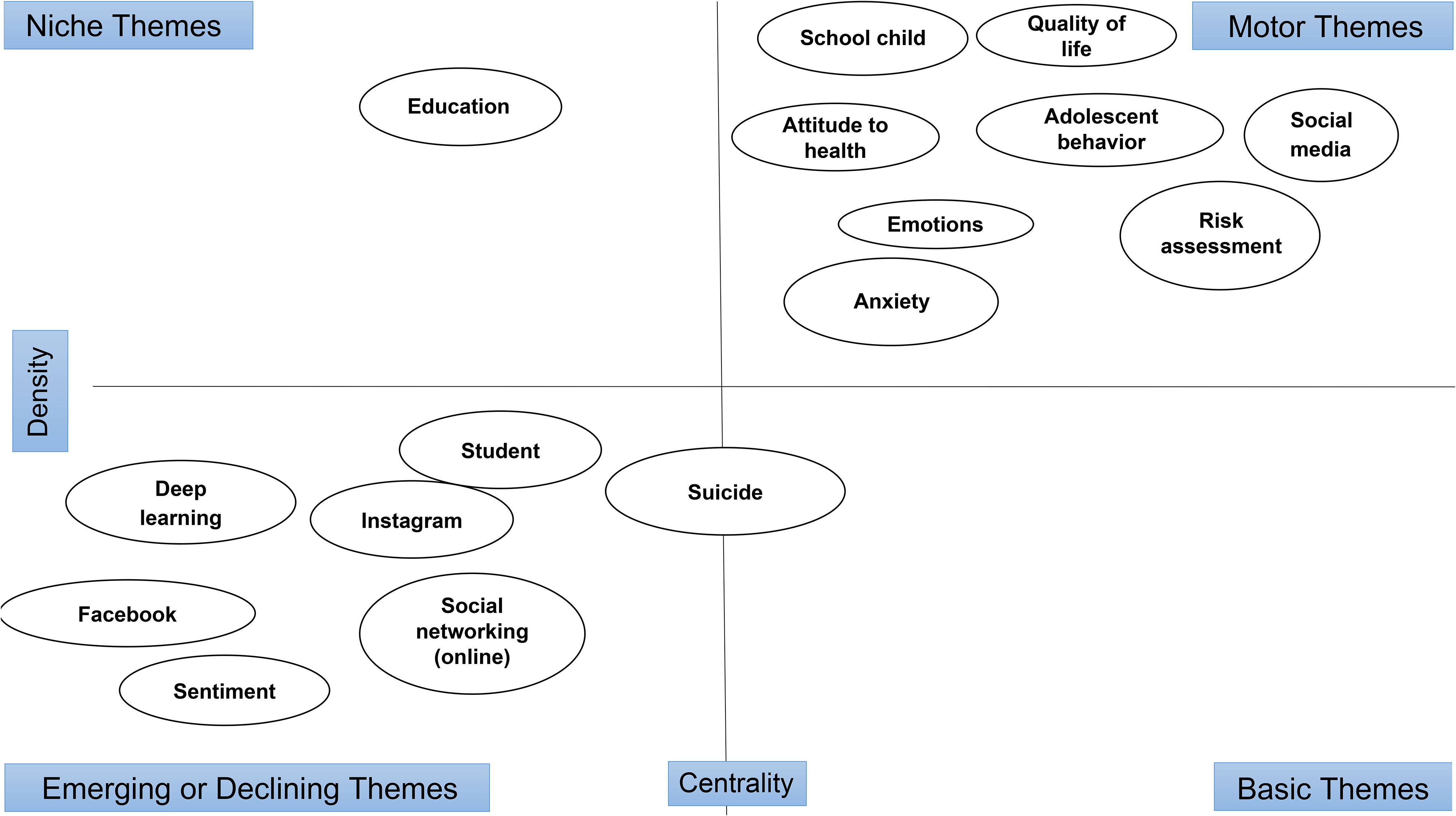
The thematic map enabled us to visualize the evolution of themes in the research area in a snapshot (Figure 6). Through this visualization, we can observe that in the case of the impact of social media on teenagers, mainstream research that has been central to the inception of the field and thus its foundation has been an understanding of existing social media (such as Facebook and Instagram) and attempts to evaluate their impacts on students and sentiments therein. These themes are more likely to decline. Observing the evolution of social networking conversations, discourse, and the nuances therein has also been an integral part of foundational research (Bonetti, Campbell, and Gilmore 2010). Developments in deep learning and neural networks will enable a more nuanced understanding of this area, which is an emerging topic (Joshi et al. 2023). The themes that are at the mainstream of conversation remain the possibilities of reaching adolescents via social media and may involve teenage behavior. The prominent concerns mentioned in the research were health attitudes, risk assessments, emotions, anxiety, and overall quality of life. These themes portray the underlying concern of the dimensions through which social media may impact teenagers’ lives, which has remained consistent as long as social media has existed on the internet. Interestingly, its impact on marketing education remains visually isolated while being developed through scholarship. Social media platforms have become critical tools for guiding marketing principles, enabling immediate interactions, providing industry knowledge, and fostering networking opportunities. Integrating social media into the curriculum has allowed educators to stay up-to-date with industry trends and cultivate students’ digital marketing abilities, offering significant contextual value (Al-Qaysi et al. 2023).
Thematic Map.
The thematic map was divided into four quadrants based on vertical and horizontal axes, as shown in Figure 6. The formulation is centered on centrality and density. The four theme quadrants are motor (well-developed, upper right quadrant), niche (marginally significant, upper left quadrant), declining or emerging (weakly developed, lower left quadrant), and basic (important but underdeveloped, lower right quadrant) (Chen et al. 2019).
The basic theme quadrant covers only “suicide,” which comes from the centrality between the primary and emerging themes. Online and social networking sites can encourage and reinforce undesirable attitudes and behaviors. The correlation between Instagram comments and increased self-harm severity suggests that social media may promote harmful conduct (Macrynikola et al. 2021). Computational linguistics has witnessed significant growth in the study of social media and related platforms for resolving mental health concerns. The establishment provides a conducive research milieu that facilitates the progression of technological advancements (Muninger, Hammedi, and Mahr 2019) and approaches that can provide originality for suicide risk assessment and prevention (Marks, De Foe, and Collett 2020).
Education was discovered in the niche themes. Higher education institutions were obliged to switch from classroom instruction to online learning because of the global COVID-19 pandemic, with schools and educators formally using WhatsApp and YouTube as platforms to engage with their pupils. Academic institutions have encouraged faculty members to utilize official pages and groups on social networking sites, such as Facebook, and communication on WhatsApp to engage with their students. Social media has emerged as a powerful instrument for facilitating student engagement within the contemporary context of remote education, fostering meaningful relationships among students, instructors, and peers, and perhaps enhancing learning experiences.
Several studies have focused on the benefits of social media in higher education (Manca, De Marco, and Venneri 2020; Yildiz Durak and Saritepeci 2019). Such studies have demonstrated the benefits of social media technologies in connecting people, creating communities, fostering trust and contentment, and fostering students’ relationships with others. Studies have also demonstrated the importance of using social media to engage students and to positively impact their learning. This study validated the usefulness of social media platforms for informal intellectual communication (Sobaih, Hasanein, and Elnasr 2020). This theme offers prospects for enhancing marketing education theories beyond the immediate influence of social media. Consumer behavior, market research techniques, and efficient communication strategies are addressed in marketing education. Alves, Fernandes, and Raposo (2016) state that studies in marketing education frequently examine the firm’s and consumer’s perspectives on social media usage, covering the use, implementation, improvement, and assessment of social media platforms.
The motor themes provide a fascinating discovery as this quadrant includes “school child,” “quality of life,” “attitude to health,” “social media,” “emotions,” “anxiety,” “adolescent behavior,” and “risk assessment.” Motor themes are well-developed but essential themes. Social media can also be used as a “risk assessment” tool for reducing suicide attempts. Suicide is currently the third leading cause of death, and it can be prevented globally. When assessing patients for dangerous behaviors and suicidality, social media can supplement the existing information and provide crucial missing data. This can help avoid suicide and provide information necessary to treat patients who have attempted suicide (Pourmand et al. 2019). It is possible to see social media as a “double-edged sword.” Studies have demonstrated the advantages of allowing people to communicate their thoughts and feelings and receive social support (Deters and Mehl 2013). Additionally, studies have shown a connection between online social networking and mental health problems (McCrae, Gettings, and Purssell 2017). Owing to the concurrent rise in mental health issues, understanding how social media affects teenagers’ well-being has become critical.
Teenagers are more likely to experience mental health disorders, because they have lower levels of self-control and are more susceptible to peer pressure. This is because they may need help to avoid the potentially negative impact of social media use (Muninger, Mahr, and Hammedi 2022). Research on how social media affects teenagers’ psychological development is still in its early stages of development. To date, most studies have focused on early teenage children and college or university students (Keles, McCrae, and Grealish 2020). “Social networking (online), “deep learning,” “Facebook,” “Instagram,” “student,” and “sentiment” were pertinent clusters seen in the quadrant concerning emerging themes. In today’s communication environment, social media has become crucial to people’s lives, especially students’ lives. Particularly in the post pandemic age, characterized by a significant transition in educational institutions, the use of social media is increasing more than ever (Greenhow and Chapman 2020). Social media offers advantages for student engagement, community building, and engagement in society, which can help reduce the distance students feel from their peers, educators, and the community as schools continue to use online forms of teaching and learning (Lim and Rasul 2022). Although these advantages present new difficulties that must be overcome, they also provide a way to overcome the hurdles in technology integration mentioned previously.
Lenses on the Effect of Social Media on Teenagers
This section discusses the theories and clarifies the SOR framework. These theories serve as functional glasses, providing a variety of perspectives for explaining, evaluating, and appreciating the intricacies of social media. These ideas provide practical frameworks for comprehending the complex relationships between children and social media platforms. The SOR framework is a cornerstone in the scholarly domains of consumer behavior and psychology, providing illuminative insights into the complex dynamics among various contributing factors.
Theories Employed in Literature
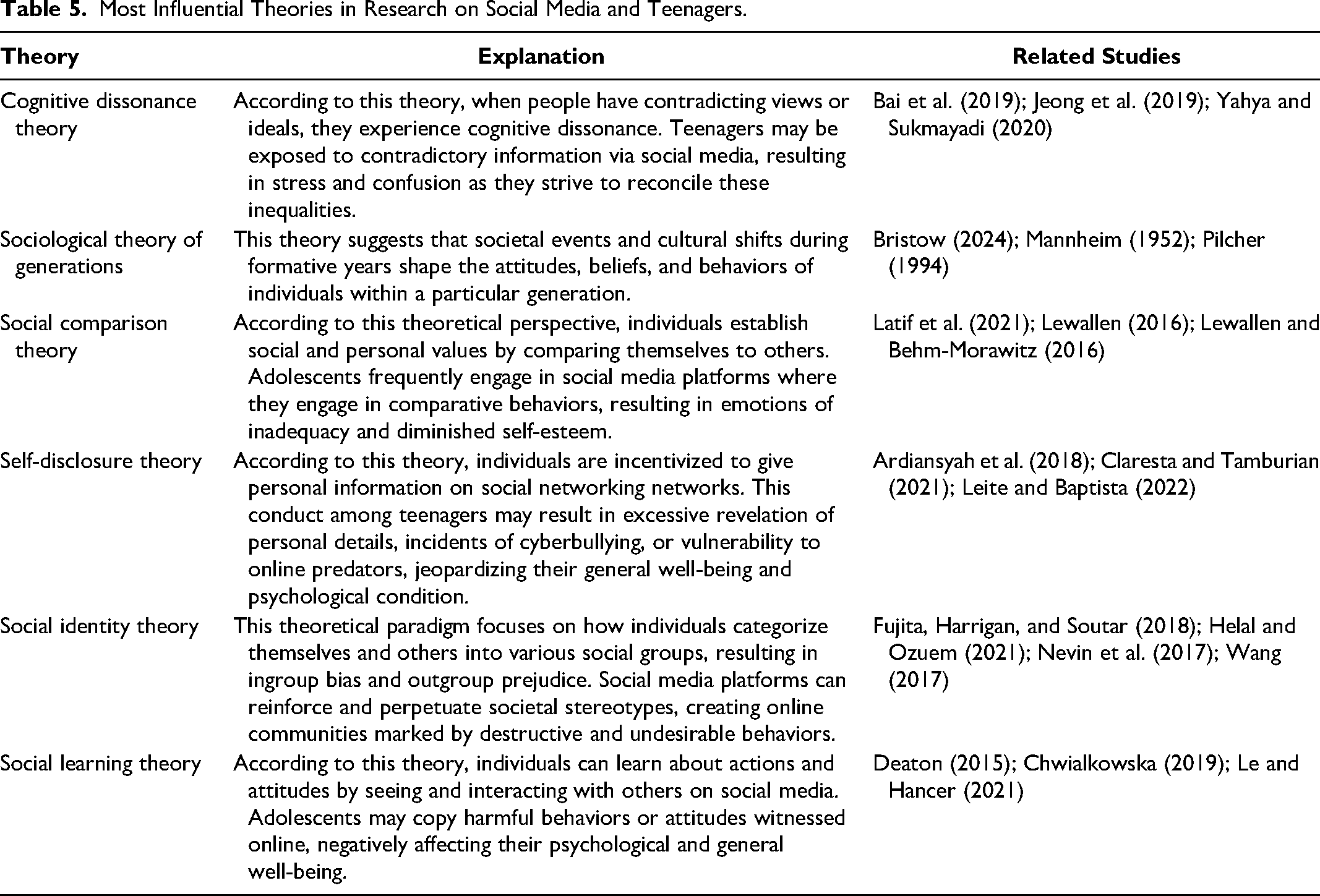
Critical theories have emerged as cornerstones in the literature for providing a comprehensive understanding of intellectual landscapes. These theories serve as foundational lenses, offering diverse perspectives for explaining, analyzing, and interpreting the complexities of social media. The theories are presented in Table 5. The influence of social media on teenagers is an essential field of study, and numerous theories have been developed to better comprehend its negative impacts. Several theories have investigated the influence of social media on teenagers. These theories provide helpful frameworks for understanding the complicated link between social media and teenagers and provide insights into negative consequences and potential mitigation techniques.
Most Influential Theories in Research on Social Media and Teenagers.
SOR Framework
The SOR paradigm presents a valuable approach for examining the influence of social media on adolescents (Amarnath and Jaidev 2021). The efficacy of the SOR framework has been examined in several research projects across various domains. For instance, Erogul, Machleit, and Davis (2003) study the fashion business, and Vazquez, Dennis, and Zhang (2017) explore the framework in the context of mobile brand message communications. Xiang et al. (2016) investigate the applicability of the framework for understanding impulsive purchase behavior among consumers in the context of social commerce (Vazquez, Dennis, and Zhang 2017). The S-O-R framework (Figure 7) is a robust theoretical apparatus that does more than dissect the experience into isolated components of “stimulus,” “organism,” and “response.” Instead, it is a theoretical scaffold on which researchers can rigorously explore the intricate interactions between external stimuli, internal cognitive states, emotional valence, and subsequent behavioral actions (Zhu et al. 2020).
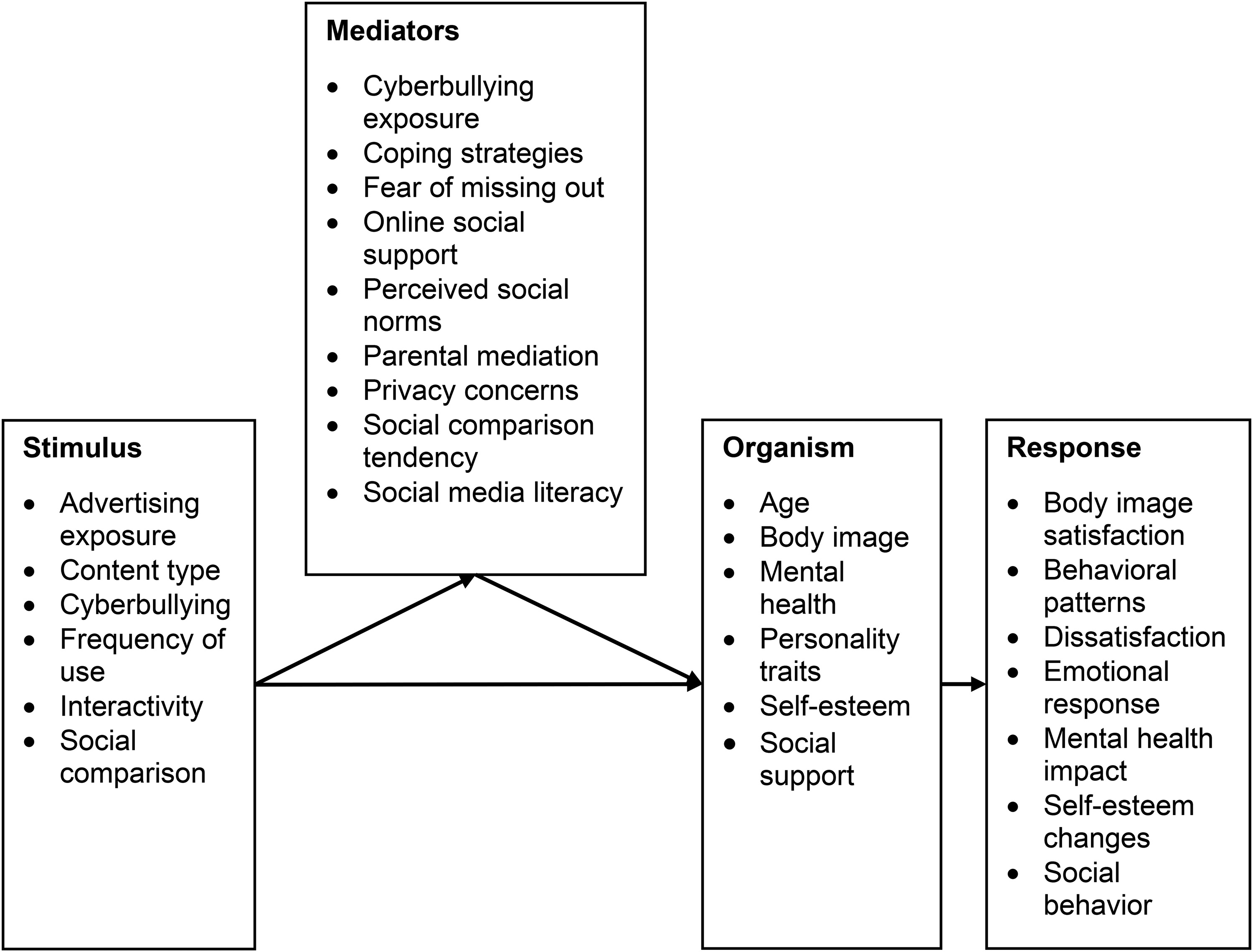
S-O-R Framework.
Stimulus
Information seen on social media sites encompasses several formats, including textual messages, photographs, videos, and promotional materials. Frequency of utilization refers to the regularity with which adolescents engage on social media sites on a given day or week. Interactivity refers to the degree of interaction users exhibit through commenting, liking, and sharing posts (Daems et al. 2019). Social comparison refers to individuals’ evaluations of themselves, primarily by examining social media information. This process contributes to the intricate interaction of identity creation in digital contexts by influencing views of one’s values, social standing, and personal accomplishments. Cyberbullying refers to online harassment or bullying incidents on various social media platforms (Dredge, Gleeson, and De la Piedad Garcia 2014). Understanding the mechanics of cyberbullying is essential for reducing its negative impacts and creating safer online environments for teenagers. This study investigated the level of advertising exposure among adolescents regarding advertisements and sponsored content encountered on social media platforms.
Organism
Adolescents’ age can affect their cognitive and emotional responses to social media materials, including individual characteristics such as self-esteem, self-confidence, and emotional stability (Lajnef 2023). Adolescents’ self-esteem assesses their values and perceptions of themselves, which directly affects their resilience and self-assurance when interacting with others on social media. Body image pertains to how adolescents view their physical appearance, a perception that may be shaped significantly by the presentation of beauty standards on social media. Idealized pictures and lifestyles portrayed on digital platforms can significantly influence adolescents’ impressions of their physical appearances. This could result in body dissatisfaction and self-esteem (Sharp and Gerrard 2022). Social support refers to the extent of assistance and encouragement from those inside the family, friendships, and internet networks. Positive social support can enhance adolescents’ resilience and mental health by balancing the detrimental effects of social media. Mental health refers to the psychological state of adolescents, encompassing several aspects such as anxiety, sadness, and stress (Popat and Tarrant 2023). Understanding these variables is vital for formulating focused approaches that promote teenagers’ responsible social media usage, while averting possible detrimental effects on their mental and emotional growth.
Response
Emotional reactions, which include a variety of affective states, such as happiness, grief, fury, and envy, are produced in individuals because of exposure to materials on social media platforms (Abi-Jaoude, Naylor, and Pignatiello 2020). Self-esteem and self-worth can shift owing to interactions and comparisons on social media platforms. Body image satisfaction and dissatisfaction refer to the subjective assessment of one's physical appearance, which is heavily influenced by the pervasive influence of social media (Lajnef 2023). Internet connections affect social behavior offline, as well as in the digital sphere. The complex relationship between digital involvement and psychological well-being is highlighted by the association between social media use and mental health disorders, particularly anxiety and depression. Examining these impacts offers important insights into how social media affects people’s emotional stability and mental health (Ferchaud et al. 2018; Lapresta-Romero et al. 2024). Additionally, shifts in how people behave, such as spending more time on social media or interacting with others less in person, indicate the changing nature of social interactions in the digital age. Comprehending these changes is crucial for understanding the broader consequences of social media usage on people’s lives and social standards (Lajnef 2023).
Mediator
Teenagers’ tendency to compare themselves with others on social media mediates the link between stimuli (social media content) and emotional reactions or self-esteem alterations (Abi-Jaoude, Naylor, and Pignatiello 2020). The support and affirmation that teens receive from their online social networks mediates the effects of social media stimuli on their mental health and emotional well-being. Teens worry when they think others are experiencing rewarding experiences that they are missing, which might modulate the stimulus–emotion response connection (social media) and mediate the relationship between portrayals of social media body image and body image satisfaction or dissatisfaction (Cheng and Mallinckrodt 2009). Teens’ understanding of social media norms affects how social media stimuli affect their behavior and responses, mediating the effects of online harassment on their emotions, self-esteem, and social behavior. Teenagers’ social media privacy and security concerns may affect their online activities and mental well-being. Teens’ comprehension and awareness of social media help mediate the interaction between social media stimuli and their reactions, including emotional well-being and conduct (Lajnef 2023). How parents guide and supervise teenagers’ social media use can mitigate the effects of social media stimuli on their mental health and social conduct. Teenage coping methods buffer emotional and behavioral responses to encounters with bad social media.
Directions for Future Research Agendas
The following research directions were derived using clusters and thematic areas. To answer RO4, our study suggests six research directions, which are subsequently explained in detail.
Based on descriptive findings, the integrative review (bibliometric techniques and content analysis) of the impact of social media on teenagers provides valuable insights into the evolving landscape of social-platform research. Universities such as the University of Washington, University College London, and the University of Calgary demonstrate the most significant amount of work and offer avenues for additional studies, as shown in Table 2. The United Kingdom and India are amenable to prospective collaboration, whereas the United States has fewer opportunities.
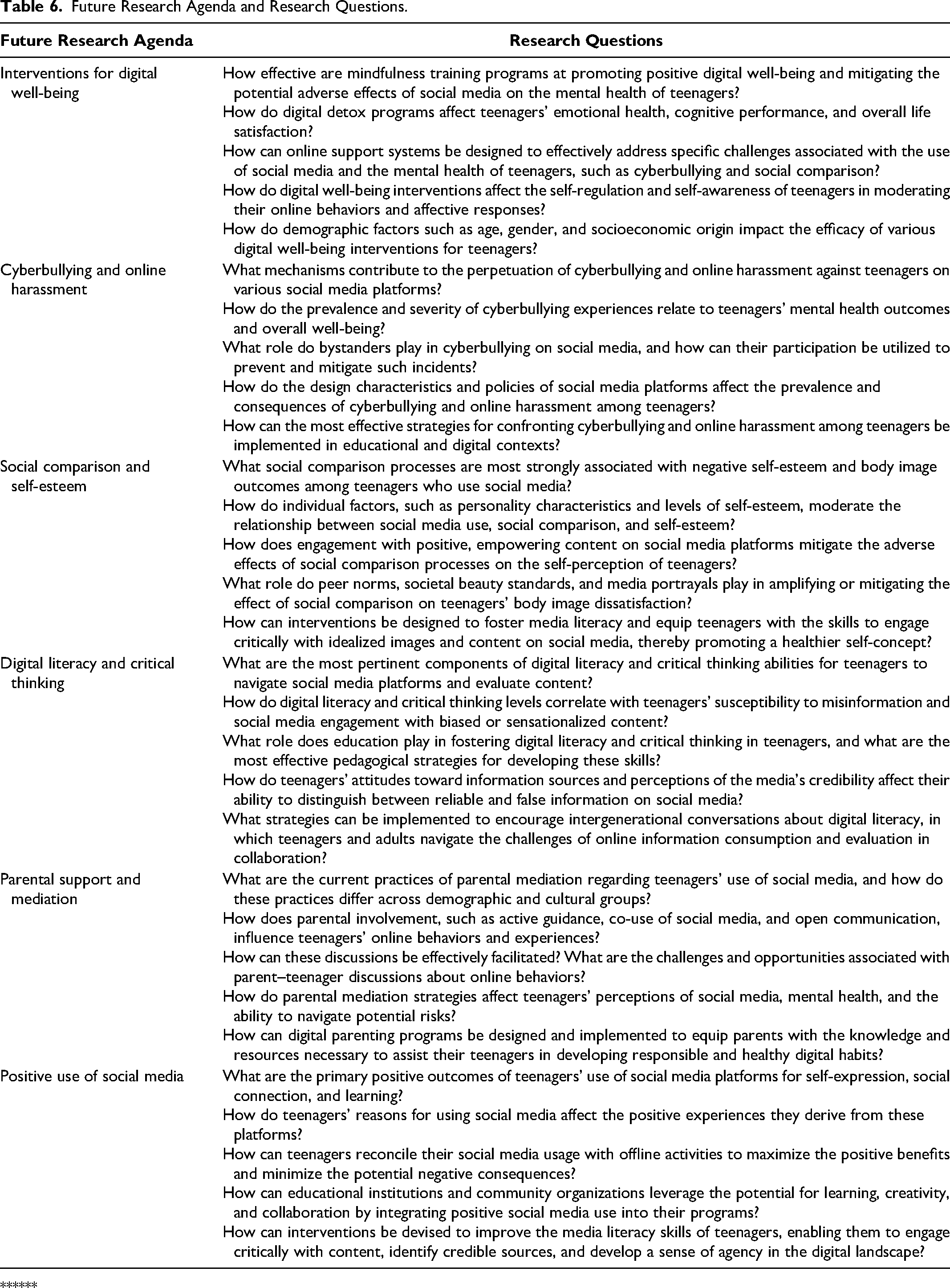
Drawing on the thematic structure identified in this research, this section presents future research recommendations based on keyword co-occurrence network analysis and the thematic map given in the thematic structure. Each research strategy focuses on essential facets of the intricate relationship between youth and social media. A list of the research questions under each of these research agendas is presented in Table 6. Through research in these areas, academics may further their knowledge of social media’s difficulties and possibilities for teenagers, eventually improving their well-being and enabling them to navigate the digital world successfully.
Future Research Agenda and Research Questions.
******
Research Agenda 1: Interventions for Digital Well-Being
In an age dominated by digital technology, it is crucial to understand and improve teenagers’ digital well-being. Meta-analytical research found that “problematic” internet use (Çikrıkci 2016) and “social media addiction” (Duradoni, Innocenti, and Guazzini 2020) were negatively associated with well-being. An investigation of U.S.-based teenagers revealed the concurrent occurrence of positive (affirmation and amusement) and adverse effects (loneliness and envy) on social media and teenagers (Weinstein 2018). Golf-Papez and Veer (2022) use the actor-network theory to examine groups of people and things that do not exist in the real world that allow and support online trolling. This study used a practice-focused, multisite ethnographic research method to show that online trolling is often an unintended result of interactions between people and nonhuman entities that behave in a trolling manner. According to Labrecque et al. (2022), social media enables brands to strengthen their personalities and connect well with their customers. Social media has many positive aspects for brands, but also has detrimental effects, such as people posting mean comments for the purpose of hurting brands (value destruction). However, what if these attempts to destroy the value backfire and make a company more valuable?
Therefore, this research agenda focuses on developing interventions based on empirical evidence to promote positive digital well-being among teenagers. Studies could include mindfulness training, digital detox programs, and online support systems. After carefully evaluating the efficacy of these interventions, researchers can identify the most effective strategies to mitigate the potential adverse effects of social media on teenagers’ mental health (Büchi 2024). The findings of this study will contribute to the development of tailored interventions that promote healthier and more balanced digital behaviors among teenagers, ultimately enhancing their well-being in the digital age. Therefore, we propose the following:
How can mindfulness training, digital detox programs, and online support systems effectively be evaluated to promote positive digital well-being among teenagers?
Research Agenda 2: Cyberbullying and Online Harassment
The rise of cyberbullying and online harassment—individual instances of name calling or threats—poses grave risks to teenagers’ mental and emotional health. Instances of online harassment encompass several forms, such as disputes arising between acquaintances over electronic mail or instant messaging, and online comments intended to be humorous, yet offending the targeted individual (Bacile et al. 2025). The rise of cyberbullying and online harassment primarily stems from the pervasive integration of electronic communication and the internet into the lives of young individuals. Ybarra and Mitchell (2004) conducted telephone interviews with 1,501 individuals age 10–17. They aimed to investigate internet harassment, a deliberate and explicit act of hostility directed toward another individual online, and found that 3% of both aggressors and victims, as well as 12% of aggressors, belonged to the demographics of young individuals who often utilized the internet and had encountered incidents of online harassment in the previous year. Bacile et al. (2018) suggest that when consumers are rude to one another, some consumers hold the company responsible for addressing rude conversations on a communication platform managed by the company. This study evaluates how bad online arrogance impacts service recovery outcomes (firm–consumer justice) when a company decides to (or does not) respond to the attitude. Bacile (2020) show that online incivility has a detrimental impact on customer impressions of a firm's service climate but only when it leads to consumer-to-consumer injustice. Similarly, Dineva et al. (2020) discuss how consumer-to-consumer conflicts, which are rude interactions between consumers, make people less likely to connect with social media fan pages. According to Hinduja and Patchin (2007), victims of online harassment experience frustration at a rate of over 42%, anger at a rate of over 40%, and sadness at a rate of over 27%. The negative impact of online victimization extends beyond the boundaries of the internet. According to the respondents, 31.9% and 26.5% said that they were severely affected at school and at home, respectively. This study examined the prevalence, underlying mechanisms, and impacts of negative online experiences among teenagers. It also explored how social media platforms may contribute to or help prevent instances of cyberbullying and online harassment, as discussed by Hinduja and Patchin. Building on this foundation, the current research agenda emphasizes the development of targeted interventions to address these pressing issues effectively. Future researchers can contribute to safer online environments and safeguard teenagers from the detrimental effects of digital harassment by combining an understanding of the dynamics of online aggression with strategies for its prevention and intervention. Hence, we ask:
How does understanding the prevalence and mechanisms of cyberbullying contribute to developing interventions that address this issue among teenagers?
Research Agenda 3: Social Comparison and Self-Esteem
The prevalence of social media has garnered significant attention because of its impact on adolescents’ self-esteem and body image. Previous research suggests that individuals are inclined to assess their social standing and abilities through comparative analysis. Previous studies have indicated a negative correlation between Facebook use and individual well-being, highlighting the possible negative consequences of extended social media use (Kalpidou, Costin, and Morris 2011; Mehdizadeh 2010). Additionally, individuals who engage in social comparison on social media platforms tend to exhibit elevated levels of depressive symptoms, which measure the psychological damage caused by continuous comparison. People’s self-perceptions and self-evaluations tend to worsen after exposure to the beautiful profiles of others on social networking sites. According to a 2024 Pew Research Center survey, 95% of teens have access to a smartphone, and nearly half say they are “almost constantly” online. In the United States, YouTube is the most popular social media platform with 90% of 13 to 17-year-olds saying they have used it, 63% report having used TikTok, 61% use Instagram, 55% use Snapchat, and just 32% use Facebook. In addition to YouTube, Instagram, Snapchat, and Facebook, there are many other social media sites that some young people choose to use, including LinkedIn, Twitter, WhatsApp, Discord, Reddit, and Pinterest. Social media, along with gaming sites and instant messaging, allow teens to have 24/7 access to peer networks through cell phones and other mobile devices. That allows teens to extend the time they spend with people they already know and sometimes with those they don’t. (Dworkin 2025)
An important focus is the investigation of the factors that may mitigate or exacerbate the deleterious effects of social comparison processes. Thus, researchers can design interventions that empower teenagers to develop and maintain positive self-perception and body image despite social media pressure. This research has the potential to cultivate resilience and encourage teenagers’ mental health (Apoorva et al. 2022). Hence, we question:
What factors can mitigate or exacerbate the adverse effects of social media–driven social comparison on adolescents’ self-esteem, and how can interventions be designed based on these insights?
Research Agenda 4: Digital Literacy and Critical Thinking
The existing body of literature defines digital literacy as the requisite ability and competency to effectively navigate a complex and fragmented information landscape effectively (Apoorva et al. 2022). This challenge poses a significant barrier to the integration of technology into academic curricula. Development of digital literacy and critical thinking abilities is a definite requirement when there is an overabundance of information spread through social media platforms. This agenda focuses on the vital functions of these cognitive abilities in successfully mitigating the harmful effects of social media on susceptible teenagers.
As per Tinmaz et al. (2022), digital inequalities include disparities in access, usage, skills, and self-perceptions. These disparities have the “potential to shape life chances in multiple ways” (Tinmaz et al. 2022, p. 1), and therefore they must be effectively addressed. The core of this research agenda is a thorough investigation of the complex processes underlying teenagers’ acquisition, use, and judgment of internet information. By probing the subtleties of how teenagers consume, process, and judge the reliability of digital information, researchers have made significant contributions to the development of effective treatment and educational programs (Tinmaz et al. 2022).
This research agenda seeks to provide teenagers with the essential skills needed to navigate the digital environment effectively. These skills include distinguishing credible sources from unreliable ones, identifying misinformation, and efficiently managing interactions within the complex digital ecosystem (Weinstein 2018). Giving teenagers these essential skills results in a generation that is more capable of making wise decisions and using digital platforms responsibly, thereby reducing the risks associated with unrestricted digital exposure. The implications of this research agenda extend beyond theoretical contributions, paying the way for practical interventions and educational programs that enhance teenagers’ cognitive resilience in real-world settings (Büchi 2024). Ultimately, this helps strengthen their capacity to use digital platforms for their development and improvement while protecting them from the dangers of online disinformation and manipulative content (Ybarra and Mitchell 2004). Therefore, we posit:
How can research on teenagers’ acquisition and judgment of internet information contribute to developing effective treatments and educational programs for digital literacy and critical thinking?
Research Agenda 5: Parental Support and Mediation
Parental responsibility for supervising children’s online activities and cultivating positive digital behavior is paramount. Previous research has demonstrated that parental mediation significantly reduces the time children spend viewing television and the internet (Livingstone and Helsper 2008; Schooler, Kim, and Sorsoli 2006). This, in turn, contributes to a decrease in children's susceptibility to the negative consequences of media exposure, such as increased materialism, lower self-esteem, and distorted body image perceptions (Schooler, Kim, and Sorsoli 2006).
This agenda examines the efficacy of familial mediation strategies. It discusses the various strategies that parents can employ to regulate and mitigate the adverse effects of social media on teenagers. Parental supervision of their children and/or teenagers’ social media use frequently attempts to lower the hazards that might arise from the activity, such as the possibility of exposure to age-inappropriate content, vulnerability to cyberbullying, and/or invasion of privacy (Krcmar and Cingel 2016). Future researchers could investigate the dynamics between parents and teenagers in the context of social media use and communication. By identifying practical parental guidance and support strategies, researchers can provide valuable recommendations for promoting healthier online behaviors, strengthening parent–teenager relationships, and improving teenagers’ digital well-being (Livingstone and Helsper 2008). Hence, we ask:
What are the practical recommendations for parental guidance on social media use, strengthening relationships, and improving teenagers’ digital well-being?
Research Agenda 6: Positive Use of Social Media
In addition to potential dangers, social media provide opportunities for positive engagement among teenagers. According to Bonetti, Campbell, and Gilmore (2010), online communication may persuade socially awkward and lonely teenagers to disclose personal information to their friends, thereby enhancing their sense of social connection. The study also found that lonely adolescents were more likely to acknowledge using online communication to make new friends and feel like part of a group than nonlonely students. Moreover, these students reported feeling less self-conscious and more comfortable communicating conversing online than in face-to-face interactions. These findings underscore the potential benefits of internet-based communication for socially isolated teenagers. According to Laghi et al. (2013), social media offers several positive aspects and potential benefits for teenagers. It is particularly important to examine how adolescents engage with features such as self-expression, building social connections, and accessing learning opportunities through these platforms. Researchers can identify strategies to leverage social media for personal development, skill enhancement, and cultivation of meaningful relationships. (Bonetti, Campbell, and Gilmore 2010). This research can assist teenagers, parents, and educators in cultivating responsible digital engagement by highlighting the positive potential of social media while mitigating its adverse effects (Laghi et al. 2013). Hence, we question:
What strategies can leverage social media for positive outcomes, emphasizing personal development, skill enhancement, and meaningful relationships among teenagers?
Conclusions, Implications, and Limitations
Conclusions
A comprehensive examination of the literature on the impact of social media on teenagers reveals a dynamic and complex environment. Essential insights into the dynamics of this topic can be gained by examining significant sources, successful writers, significant nations, cited publications, cocitation networks, and theme clusters. Authors such as Jessalynn Keller and Michael Adorjan have emerged as significant contributors to this study. Research has appeared in publications such as the International Journal of Environmental Research and Public Health. Focusing on mental health, social networking, and teenagers’ behavior, the United States stands out as a prolific contributor to the field. For researchers to better understand the structure of scholarly discourse, cocitation network analysis emphasizes groups of academics close to influential authors. The thematic map also shows how different themes developed over time, from basic research on social media sites to in-depth analysis of psychological effects and educational implications. The discovery of new fields of study, including digital literacy, cyberbullying prevention, and treatment for digital well-being, highlights the growing complexity of this subject.
Future research agendas based on descriptive data and theme analyses suggest essential directions for further research. These goals include fostering parental support and mediation, combating cyberbullying, addressing self-esteem and body image concerns, boosting digital literacy and critical thinking, and identifying the advantages of social media. Together, these study trajectories can help us gain a comprehensive picture of how social media affects teens and can help us develop plans to ensure their positive participation in the digital world. Researchers are well-positioned to influence discourse and support beneficial outcomes for young people navigating the dynamic world of social media as the area of research continues to develop.
Implications
Policy implications
The findings of this study have substantial policy implications for educational institutions, parents, and regulators. Digital literacy and critical thinking programs should be incorporated into the curricula of academic institutions to equip teenagers with the skills necessary for navigating the online world. Parents and guardians should be encouraged to engage in open conversation with their children about their online activities, offering guidance and support while advocating positive digital behaviors. Furthermore, regulatory authorities should not only support research initiatives exploring the impact of social media on teenagers’ mental health but also implement policies aimed at curbing cyberbullying and safeguarding young users from harmful or inappropriate online content.
Theoretical implications
Thematic analysis and keyword co-occurrence networks have shed light on the evolving theoretical perspectives in this research field. The identification of clusters and trends serves as a foundation for theoretical investigation. The implications for theory include the need for models that account for the complex interactions among social media, individual characteristics, and contextual factors in determining teenagers’ well-being. The tenacity of teenagers to uphold a carefully created public identity demonstrates the applicability of branding and reputation-management theories. Subsequent investigations could explore the influence of social media on teenagers’ perceptions of their brands by integrating concepts from marketing education to improve the theoretical models. Marketing education consists of various facets such as theories, principles, and frameworks that elucidate consumer behavior, brand management, and marketing techniques. These facets include brand equity, consumer decision-making processes, brand personality, brand loyalty, and the significance of emotions in branding. Future researchers can create robust theoretical models by incorporating these concepts into studies of teenagers’ perceptions of brands and social media. Additionally, emerging themes suggest that researchers should adopt interdisciplinary approaches, including psychology, communication studies, sociology, and digital media studies, to better comprehend the multifaceted effects of social media on teenagers.
Social media platforms incentivize users to portray themselves favorably (Qualman 2012). This phenomenon can result in an altered understanding of reality, as individuals tend to selectively disclose the most positive aspects of their lives, exacerbating feelings of seclusion and melancholy in teenagers who regard their experiences as comparatively less accomplished (Appel et al. 2020). Marketing research has extensively investigated self-presentation and brand management in digital contexts. For instance, many studies (Schwinn et al. 2016) have examined how individuals carefully manage their online personas to match their preferred self-image and brand impressions. Marketing experts should investigate how adolescents manage the disparity between their online personas and actual identities. This may entail examining how adolescents view and engage with companies that endorse idealized lives on social media and the consequences of these interactions on their self-esteem and overall well-being. Teenagers may encounter cognitive dissonance when there is a discrepancy between their digital identity and real-life characteristics (Oliveira and Fernandes 2022). This study mentions cyberbullying as a serious issue. Integrating marketing methods such as communication and brand advocacy to reduce cyberbullying could enhance the theoretical framework. This strategy aligns with the goal of marketing education to develop a positive online community.
The focus on striking a balance between online and offline connections helps create theoretical frameworks that address the requirements for peaceful coexistence. Incorporating marketing education can provide valuable perspectives for developing theoretical frameworks to assist children in leading well-rounded lives in the digital age. The tensions mentioned previously have the potential to lead to mental health concerns, as individuals grapple with the challenge of reconciling these two contradictory identities. Pervasive compulsion to often check for messages or updates can diminish face-to-face contact and impede mental well-being. Misinterpretations have the potential to give rise to misunderstandings and disputes, thereby influencing emotional well-being. The promotion of digital literacy, instruction in appropriate online conduct, cultivation of critical thinking skills, and facilitation of open conversations can assist teenagers in effectively navigating the digital world, while preserving their mental and emotional well-being. Comprehending these theoretical consequences can provide a framework for designing treatments and tactics to mitigate the adverse effects of social media on teenagers.
While the SOR model is widely recognized in consumer behavior studies, our research extends its application by integrating it with social media marketing, particularly focusing on teenagers. This study contributes to a deeper understanding of how digital stimuli from social media uniquely influence teenagers’ psychological states (organisms) and subsequent behaviors (responses). We also bridge the gap between social media marketing and its psychological impact by incorporating concepts such as digital addiction, online identity formation, and digital civility into the SOR model. This interdisciplinary approach enriches marketing theory by providing a more holistic understanding of how marketing strategies and digital interactions affect young consumers’ well-being and behavior. Through this integrative review, we have identified critical gaps in the literature, particularly in the understanding of the long-term effects of social media marketing on teenagers. This gap highlights the need for future theoretical developments and empirical marketing testing to address these emerging issues.
Practical implications
These findings offer valuable insights for marketers, educators, caregivers, mental health professionals, and social media platform developers by providing a comprehensive perspective on digital engagement and its implication for marketing. By acknowledging the outcomes of this study, marketers can develop strategies for mitigating the adverse effects of social media on teenagers. For instance, marketing campaigns that encourage offline interactions, promote digital well-being, or appeal to online communities may improve brand perception and appeal to consumers who value social responsibility. To build trust and credibility among adolescent audiences, marketers must adopt strategies that actively address and alleviate the adverse effects of social media. In adolescent social networks, such efforts may lead to increased brand loyalty and positive word-of-mouth recommendations. This study presents innovative strategies for social media engagement emphasizing the need for marketers to develop alternative ways for teenagers to consume content and engage with people, prioritizing mental health and well-being. Recommended strategies include starting meaningful discussions, encouraging introspection, and organizing offline events or activities.
Educators can utilize the benefits of social media to improve the learning experience and engagement. They can also build interactive learning environments by infusing marketing techniques into their content to make it appealing to teenagers (Manu et al. 2021). Considering the potential risks posed by excessive social media use, mental health professionals should design marketing-focused interventions targeting teenagers’ mental health.
Parents can use the findings to have informed conversations about responsible online behavior with their children. They can promote a well-rounded and balanced lifestyle by restricting screen time, advocating device-free spaces, and scheduling social media use. This study fosters an inclusive atmosphere that integrates marketing concepts to encourage open discussions among teenagers regarding online experiences, anxieties, and issues. This strategy, similar to feedback loops in market research, enables the early identification and reduction of negative impacts and fosters a positive online culture. This includes several ways to handle negative encounters and self-comparisons.
Educational institutions and parents must teach teenagers about cyberbullying, its effects, and how to report and prevent it (Joosten 2012). Therefore, it is crucial to establish polite and respectful online culture and to encourage teenagers to join online organizations and communities that match their interests and values to reduce social isolation. Teenagers should participate in physical activities, hobbies, and face-to-face social interactions to minimize the negative impact of screen time and improve their overall health. To reduce the adverse effects of social media use, apps and technology should promote mindfulness, self-esteem, and appropriate digital behavior, echoing marketing strategies that prioritize positive user experiences (Acar et al. 2022). These practical implications can help teens form healthier social media relationships, thereby reducing the adverse effects on their mental, emotional, and physical health. Social media platform developers can use these insights to incorporate features, while aligning with marketing principles, promoting positive interactions, and mitigating the harmful effects of their platforms.
Limitations
Despite this comprehensive analysis, this study has several limitations. The bibliometric analysis relies solely on data from the Scopus database, potentially excluding studies indexed in other sources. Moreover, the analysis was constrained by the availability and quality of keywords and metadata within the database. Another limitation is the lack of investigation into potential cultural differences in the effects of social media, which could enhance the generalizability of the findings. While the cocitation network analysis offers a snapshot of influential authors, it does not capture ongoing developments or emerging trends in the research landscape.
Most existing studies focus primarily on the immediate or short-term impacts of social media use. To gain a deeper understanding of its long-term effects on mental health, interpersonal relationships, and overall well-being, it is imperative to conduct longitudinal studies to track teenagers over extended periods. Furthermore, this study focused exclusively on social media platforms such as Instagram, Snapchat, Facebook, YouTube, and Twitter while omitting TikTok. This decision was influenced by recent political actions taken by countries including the United States, India, Australia, and the United Kingdom to ban or restrict TikTok due to security concerns. Such developments may have impacted the platform’s relevance and suitability for inclusion in this study.
Numerous studies have established associations between social media use and various adverse outcomes. However, determining causality between these variables remains a significant challenge. Further experimental studies are required to determine the direct causal links between social media use and specific negative consequences. Additionally, future research should explore potential mediating factors that either exacerbate or mitigate these adverse effects. These factors include coping techniques, social support, and parental supervision. Although there are existing therapies, further studies are necessary to ascertain the efficacy of different tactics in alleviating the adverse effects of social media on teenagers’ mental well-being. By addressing these research gaps, a more thorough understanding of the impact of social media on teenagers can be achieved, thereby informing the development of successful measures to promote their well-being in the digital era.
Footnotes
Editor
Sonja Gensler
Declaration of Conflicting Interests
The author(s) declared no potential conflicts of interest with respect to the research, authorship, and/or publication of this article.
Funding
The author(s) received no financial support for the research, authorship, and/or publication of this article.
