







Abstract
AI-based voice assistants (VAs), such as Amazon Alexa, are emerging as powerful mediators of AI-assisted shopping processes, yet their influence on consumer decision autonomy remains underexplored. To examine whether and how consumers delegate decisions to AI-powered assistants within an efficiency–autonomy trade-off, this study employed a single-session online experiment (n = 484) using a custom Alexa shopping app. To account for the role of the first recommended option, the brand (private label vs. national) and price (cheap vs. premium) were varied. Contrary to other shopping environments, when purchasing low-involvement and utilitarian products through VA-assisted shopping, evaluating fewer alternatives (indicative of greater efficiency) is associated with higher decision satisfaction and a greater intention to cede decision autonomy to the VA. The findings reveal that the number of alternatives evaluated is negatively associated with consumers’ intentions to delegate tasks to the VA and trust its product recommendations, both directly and indirectly, through decision satisfaction. Notably, the effect of streamlined choice persists across brand types and price levels. The results highlight consumers’ willingness to trade autonomy for efficiency in AI-assisted voice shopping, which has strategic implications for national brands operating in voice commerce environments.
Keywords
Artificial intelligence (AI) shopping assistance is reshaping every stage of consumer decision-making (Hoyer et al. 2020). AI-based voice assistants (VAs), such as Amazon Alexa, which is used by 68% of U.S. smart speaker owners (Capital One Shopping 2025), support informed purchasing through increasingly accurate voice-based recommendations (Dellaert et al. 2020; Snyder, Sundar, and Lee 2025). Perceived as autonomous (Lucia-Palacios and Pérez-López 2021) and competent (Pitardi and Marriott 2021), VAs enhance decision efficiency, especially in low-involvement shopping contexts where consumers face extensive alternatives and information overload (Tassiello, Tillotson, and Rome 2021). With nearly half of U.S. consumers using voice search to find products (Statista 2022), voice commerce was expected to reach $164 billion by 2025 (Technavio 2025).
A key driver of this growth is Amazon Alexa, which typically recommends a default product labeled as “Top search result,” a suggestion that is accepted unless the user actively requests an alternative (Thaler and Sunstein 2009). Evaluating additional alternatives requires rejecting the prompt, “Do you want me to order this?” Unlike text-based interfaces that display multiple options simultaneously, voice-based recommendations are sequential and unfold over time, placing greater demands on users’ short-term memory capacity. Munz and Morwitz (2019) find that, combined with limited contextual cues and the difficulty of comparing options, the sequential nature of voice-based interactions results in fewer alternatives evaluated by the consumer. Therefore, decision-making in verbal dialogues with VAs may render consumers more susceptible to defaults (Dellaert et al. 2020). Yet, the implications of this idiosyncratic bias on consumer decision-making outcomes remain underexplored.
The popularity of Alexa as a shopping channel is reinforced by its integration with the Amazon website, enabling Amazon to deliberately influence consumer choices through its dual role as both platform owner and retailer (Rabassa, Sabri, and Spaletta 2022). This integration strengthens the position of Amazon's private labels, such as Amazon Basics and Amazon Essentials, which directly compete with national brands (Fuduric et al. 2022). In low-involvement categories with minimal quality variation, such as batteries, where consumers often prefer private labels (Kumar and Steenkamp 2007), Amazon Basics quickly captured nearly one-third of the online market, surpassing Duracell sales on Amazon (Creswell 2018). Evidence suggests that when users search by product category (as opposed to a specific brand), Alexa recommends Amazon's private labels more often than national brands, raising concerns about exclusionary practices for other brands (European Commission 2021). This dynamic may create significant entry barriers for challenger brands (lock-in effect) and may heighten managerial worries over biased recommendations (Dawar and Bendle 2019; Klaus and Zaichkowsky 2020; Mari and Algesheimer 2021).
Understanding consumer search and choice behaviors is crucial for managers seeking to ensure their brand's inclusion among the alternatives evaluated (Beatty and Smith 1987; Nedungadi 1990). Heitmann, Lehmann, and Herrmann (2007) find that in traditional shopping a limited number of options can negatively impact consumer satisfaction with the decision process, although the overall experience is strongly shaped by the choice architecture. Building on this, research shows that the marginal benefits of adding alternatives decline more rapidly when consumers use interactive recommender agents (Häubl and Trifts 2000). Unlike traditional e-commerce, in which consumers retain a greater degree of decision-making authority, holding a dialogue with a VA may entail a different trade-off between efficiency and autonomy, favoring efficiency at the expense of autonomy (Dellaert et al. 2020). Because this mechanism remains empirically untested in voice commerce, managers worry that consumers, drawn to the efficiency of evaluating fewer options, may place greater trust in product recommendations and delegate shopping decisions to the VA (Dawar and Bendle 2019; Mari, Mandelli, and Algesheimer 2020, 2024a; Rabassa, Sabri, and Spaletta 2022).
Adhering to the efficiency–autonomy hypothesis (Dellaert et al. 2020), this study addresses that gap by examining how the number of alternatives evaluated by consumers (a measure of efficiency) is associated with their decision satisfaction and intention to cede decision autonomy to the VA. This inquiry offers insight into how default nudging in voice commerce can impact brand performance.
In a single-session online experiment (n = 484), participants used an Alexa retailing app to purchase low-involvement, utilitarian products. The custom app (an Alexa Skill) varied the brand type (private label vs. national brand) and price point (cheap vs. premium) of the first recommended option. Our contribution to the literature is threefold. First, we extend prior research suggesting that voice shoppers find it more difficult to differentiate among alternatives and often accept the first recommendation as readily as they lightly browse additional options (Munz and Morwitz 2019). Building on this, we reveal that the number of alternatives evaluated is negatively related to consumers’ future behavioral intentions, specifically, their willingness to delegate shopping tasks to the VA and trust its product recommendations. These findings enrich the growing body of research on consumer behavior in voice-based shopping contexts (Munz and Morwitz 2019; Snyder, Sundar, and Lee 2025). Second, we show that in low-involvement shopping contexts, efficiency—operationalized as the number of alternatives evaluated—is correlated with decision satisfaction. Contrary to the findings of Heitmann, Lehmann, and Herrmann (2007), our findings suggest that evaluating fewer alternatives is associated with higher decision satisfaction in the voice commerce context. Specifically, deviating from the first recommendation tends to correspond with lower satisfaction with the decision process, adding nuance to prior research on recommender agents (Häubl and Trifts 2000; Heitmann, Lehmann, and Herrmann 2007). Third, our mediation model indicates that when fewer alternatives are evaluated and decision satisfaction is higher, consumers tend to show a greater willingness to delegate future decisions to the VA and to trust its product recommendations. Model patterns are robust across scenarios featuring variations in brand type and price point, suggesting that brand and price play a negligible role in shaping the default choice. By examining how evaluating fewer or more low-involvement alternatives relates to decision satisfaction and subsequent behavioral intentions, we contribute to research on consumer decision-making in AI-mediated environments and acceptance of VA-generated recommendations (Dellaert et al. 2020; Lucia-Palacios and Pérez-López 2021).
The following section outlines our theorizing concerning the nature of VAs and clarifies the role of the number of alternatives evaluated by consumers within this framework. We then offer empirical evidence from the experiment designed to examine the key predictions derived from this theorizing. The research settings center on consumer shopping by category for a utilitarian product (batteries) using the default voice retailer (Amazon), adhering to Alexa's standard system-wide characteristics. The article concludes with a discussion of how consumer response to VAs may affect national brands’ performance.
Decision Delegation in Voice Modality and Architecture
A growing number of consumer choices involve AI-powered conversational agents that demonstrate real-time language production abilities, enabling them to partake in unstructured dialogues with reciprocal responses. The process of decision-making through interactive dialogue with a VA may entail a trade-off for consumers between decision efficiency and decision autonomy (André et al. 2018; Komiak and Benbasat 2006). While searching for information on VAs, consumers face the decision of whether to maintain autonomy (control) over product search and evaluation or instead delegate some decisions to the VA to gain efficiency (Lucia-Palacios and Pérez-López 2021). The efficiency–autonomy trade-off (Dellaert et al. 2020; Puntiroli et al. 2025) becomes particularly salient in decision environments in which the uncertainty escalates due to challenges in comparing alternatives (Payne, Johnson, and Bettman 1993), as observed in dialogues with VAs (Malodia et al. 2022). By introducing a distinctive modality and a choice architecture based on single-option recommendations, voice shopping makes exploring additional information more effortful than in screen-based environments, thereby increasing the perceived efficiency of choosing the first recommendation (Munz and Morwitz 2019). This occurs for three main reasons (see Table 1).
Comparing Consumer Behavior in VAs and Traditional Recommender Agents.
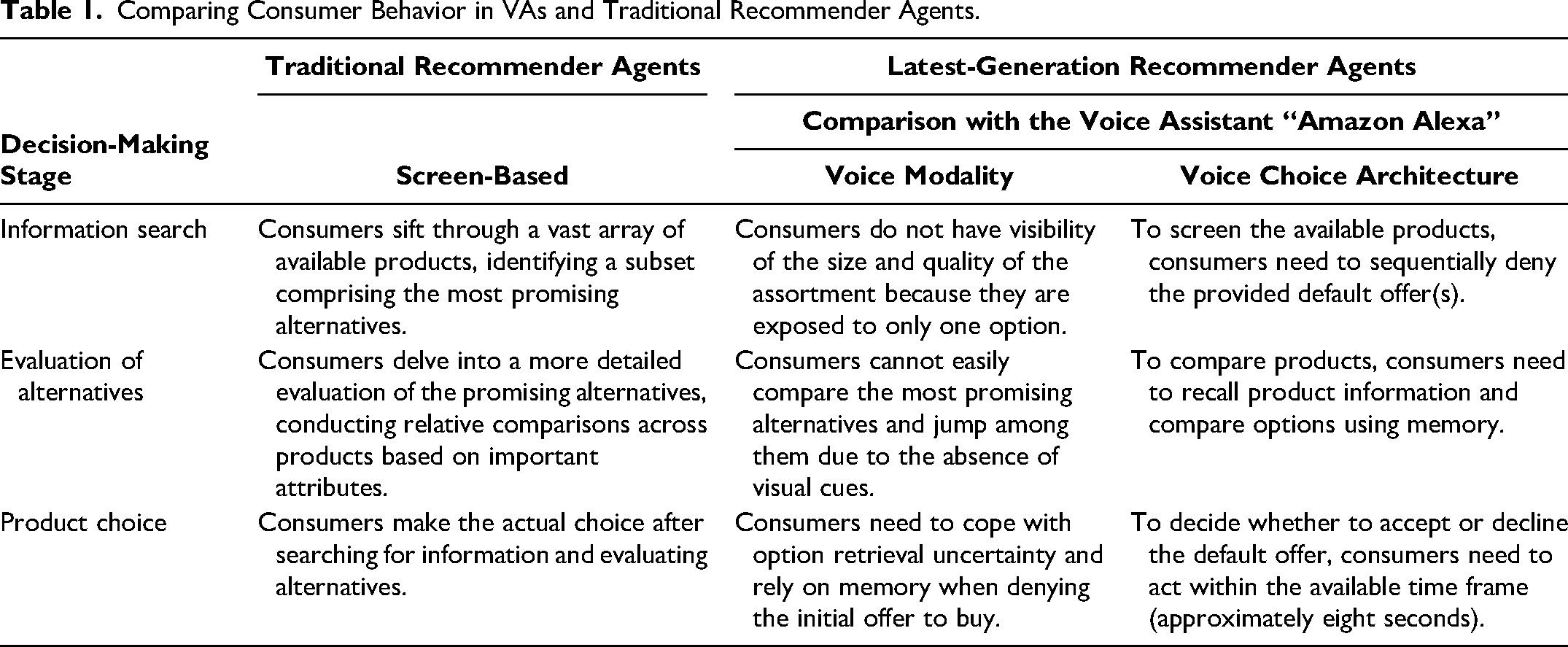
First, whereas e-commerce websites typically display the entire product assortment or clearly indicate its size, VAs provide no reference to the size or quality of the product assortment, as recommendations are delivered sequentially, one at a time. Although little is known about the effect of incomplete assortment visibility on decision-making, it is reasonable to assume that moving away from the first available option increases (rather than decreases) the cognitive effort involved (Dellaert et al. 2020). Second, the lack of differentiation between auditory choice options increases the difficulty in evaluating alternatives, in turn leading to greater acceptance of the recommendations provided by the VA compared with options presented visually (Munz and Morwitz 2019). Third, without a clear understanding of available voice commands, voice-based navigation rules, and the risk of possible mistakes, consumers are likely to experience a higher cognitive load than in traditional e-commerce environments (McLean and Osei-Frimpong 2019). Additionally, VAs require users to respond within a standard answer window (approximately eight seconds), pressuring decision-makers to react quickly (Pieters and Warlop 1999).
In summary, VAs’ unique features heighten decision difficulty and may alter the consumer decision-making process (Lieberman and Schroeder 2020).
Consumer Decision-Making During VA-Assisted Shopping
Acting as choice architects, online retailers like Amazon shape the general context in which people formulate decisions (Smith and Levin 1996). By altering the decision environment, they aim to enhance the probability of a specific option being chosen without necessarily changing incentives or prices (Thaler and Sunstein 2009). For instance, choice architects can frame choice by varying the order in which choice alternatives are presented and how many products are simultaneously displayed (Johnson, Bellman, and Lohse 2002). Within the domain of voice commerce, the voice dialogue begins with an active decision by the user, who needs to determine whether to search for a specific brand, such as Pringles, or the product category, in this case, chips. In all search paths, Alexa activates its default voice retailer (Amazon), and the recommendation process concludes when the user either agrees to purchase the suggested item or halts the shopping process (Mari and Algesheimer 2021). As a result, the consumer decision process is characterized by trial and error and sequential order architecture (Jannach et al. 2010). This design resembles a prechecked box, because Amazon structures choices on Alexa in a way that requires the decision-maker to deliberately deselect an item if it is not desired.
The term “default effect” refers to the human tendency to favor the status quo over equally appealing decision alternatives, even when randomly assigned (Thaler and Sunstein 2009). Default effects have been studied in contexts in which individuals make a single choice (Park, Jun, and MacInnis 2000) or engage in a sequence of interconnected choices, such as car configurator and flight booking (Donkers et al. 2020). Empirical research has found that consumers tend to choose the default option if they possess limited information (Muthukrishnan 1995) and encounter challenging trade-offs (Luce 1998). Distinct from both single-choice and sequential-choice defaults, VA retailers present unrelated default options sequentially and individually, which requires users to then actively decline the default to access subsequent options.
Scholars generally agree that such choice architecture may amplify the VA retailers’ influence over consumers, yielding both positive and negative consequences for their welfare. On the positive side, the sequential presentation of preselected options may facilitate the consumer decision process by offering advantages such as heightened satisfaction with product selection due to the increased convenience (Fernandes and Oliveira 2021), particularly in the contexts of overload (Iyengar and Lepper 2000), low product expertise (Schweitzer et al. 2019), and low task identification (Leung, Paolacci, and Puntoni 2018). Concurrently, they may feel less responsible for the decision shared with another entity (Schroeder and Epley 2016). On the downside, relying on VAs entails a near-complete delegation of choice and accepting assistance in simplifying market offers. The access to a limited number of alternatives, potentially excluding more preferred ones, may result in diminished decision autonomy (André et al. 2018; Nedungadi 1990). Ultimately, higher reliance on the first option could potentially reduce consumers’ inclination for exploratory behavior when using VAs. In summary, the impact of voice-specific choice architecture on consumer decision-making remains unexplored, with contradicting hypotheses from marketing scholars.
This study extends the focus from default choice to the number of alternatives evaluated by the consumer, defined as the final number of products considered at the moment of choice. In the realm of voice shopping, this value is equal to the total number of recommendations provided by the VA. The number of alternatives evaluated serves as an indicator of the efficiency of the decision-making process. This conceptualization is enabled by Alexa's standardized session length for product recommendations and its fixed time window for decisions (buy or not buy). Consequently, receiving one more recommendation and reacting to it produces approximately equal inefficiency in terms of task time and information processing requirements. In online shopping settings, a larger variety of assortments is normal and may be perceived as advantageous for reducing the uncertainties inherent in online purchases. Nevertheless, a larger number of alternatives imposes greater cognitive demands on consumers as compared with a smaller number of alternatives, reducing decision efficiency due to the additional need to evaluate options (Boyd and Bahn 2009). It is also worth noting that the difficulty in determining the best alternative due to option similarity may increase, especially when a recommender agent presents equally attractive alternatives at the top of a recommended list (Tsekouras et al. 2020). At the same time, the scarcity of options may give rise to context-specific preferences, wherein the presence or absence of a single item affects the final choice (Iyengar and Lepper 2000). This can be especially true when consumers opt for a generic product category search compared with those with expressed preferences (Johnson and Goldstein 2003), particularly when shopping for low-involvement consumer goods with a utilitarian nature (Brown and Krishna 2004; Tassiello, Tillotson, and Rome 2021). Thus, this investigation focuses on the scenario of new utilitarian product category purchases by a generic category search.
Hypothesis Development
Grounded in the efficiency–autonomy decision trade-off, the subsequent sections formulate hypotheses delineating the sequential relationships between decision efficiency, decision satisfaction, and decision autonomy.
Efficiency–Autonomy Hypothesis
VAs are developed with the promise that they will free up time for users to carry out more meaningful tasks. Consequently, a VA is considered helpful for shopping decisions provided that it helps alleviate consumers’ load by gathering, sorting, and evaluating a vast amount of product information in increasingly complex marketplaces. In particular, when product involvement is low, consumers are expected to rate the VA more or less helpful depending on how efficiently they can reach a decision (Dawar and Bendle 2019). Thus, a customer engaging in voice shopping develops behavioral responses toward the VA, manifested in the intention to delegate future shopping tasks to the VA and trust its subsequent product recommendations (Dellaert et al. 2020). In a relevant study, Komiak and Benbasat (2006) defined the extent to which consumers allow a recommender agent to decide which products to purchase on their behalf. This process of delegation of tasks to the VA introduces several risks associated with the uncertain quality of information, thereby exposing consumers to erroneous decisions. In this context, users must accept the recommended products without thoroughly scrutinizing alternative options and the rationales behind these suggestions, thus ultimately relying on the VA for decision-making. Additionally, users exhibit varying levels of perceived safety, comfort, and confidence when relying on a VA for product recommendations on what to buy. This process of trusting the VA recommendations is conceptualized as the feeling the trustor holds toward having to rely on the trustee for future suggestions (Komiak and Benbasat 2004). Therefore, it reflects a social-emotional evaluation of the VA's attributes (Mari, Mandelli, and Algesheimer 2024b). These behavioral evaluations of a functional and social-emotional nature can jointly explain the intention to cede decision control to the VA (Munz and Morwitz 2019).
When preferences are constructed in the moment, consumers may adapt their decision strategy in such a way as to pursue the least effortful strategy that will provide an acceptable solution (Beach and Mitchell 1978). Consumers may infer that, because VAs are autonomous entities capable of interacting through voice, they have the ability to swiftly find the ideal product for them, thus increasing their decision efficiency. Therefore, consumer autonomy diminishes as consumers cede some independence of choice to the VA for the benefit of efficiency (Smith, Goldstein, and Johnson 2013). Thus, we propose the following hypothesis:
Efficiency–Satisfaction–Autonomy Hypothesis
Prior research suggests that the number of alternatives evaluated can affect satisfaction (Diehl and Poynor 2010; Iyengar and Lepper 2000). Although most studies in marketing concentrate on consumption satisfaction (Fitzsimons, Greenleaf, and Lehmann 1997), research shows that consumers experience satisfaction and dissatisfaction not only with the selected product but also with the purchase decision itself (Westbrook, Newman, and Taylor 1978). Accordingly, satisfaction can be associated with the process of a consumer arriving at a particular purchase decision. “Decision satisfaction” refers to the level of satisfaction with the chosen or rejected alternatives and in relation to the decision process (Fitzsimons, Greenleaf, and Lehmann 1997; Zhang and Fitzsimons 1999). Thus, this can be viewed as a good measure of the consumer's belief that the decision was relatively accurate (Fitzsimons, Greenleaf, and Lehmann 1997).
In the online environment, the number of alternatives evaluated was found to have a negative effect on satisfaction when users check facts on search engines from a shorter list of results rather than a longer one (6 vs. 24, respectively) (Oulasvirta, Hukkinen, and Schwartz 2009). A similar dynamic was found in an online dating pool, with users reporting lower satisfaction when presented with a large set of potential partners vis-à-vis a smaller pool (D’Angelo and Toma 2017). Such a relationship is stronger under time constraints; thus, when evaluating a large and cognitively demanding set of alternatives, consumers can experience dissatisfaction and negative emotions (Scheibehenne, Greifeneder, and Todd 2010). In times of product and information overload, individuals may benefit from choice constraints and limited options (Iyengar and Lepper 2000; Schwartz 2004). These studies typically manipulated choice set size, such as offering 5 options rather than 20 options. In contrast, this study focuses on the consumer's self-selected number of evaluated alternatives rather than the total number of options available. This focus reflects the autonomous nature of VAs and their unique choice architecture.
While a reduced number of options can negatively impact decision satisfaction in traditional shopping settings (Heitmann, Lehmann, and Herrmann 2007), its effect in AI-assisted shopping remains unexplored. Following Häubl and Trifts (2000), who suggest that the marginal benefits of adding options tend to decline more rapidly with the use of interactive recommender agents and in line with choice paradox theory (Schwartz 2004), we posit that lower efficiency in product selection, measured by the actual number of alternatives evaluated at the time of choice, corresponds with reduced decision satisfaction. Thus, we propose that:
Distinct from conventional self-service technologies, AI-assisted shopping involves relinquishing control to another entity at either the whole or partial level (De Bellis and Johar 2020). Furthermore, in contrast to traditional recommender agents, which are characterized by their impersonal nature, lack of conversational elements, and reliance on text-based interactions, VAs provide a multifaceted experience including functional, social-emotional, and relational benefits (Mari, Mandelli, and Algesheimer 2024b). As VAs evolve from mere technological entities to more human-like exchange partners, their influence grows substantially when consumers exhibit confidence in their suggestions and the underlying processes that generate them (McLean and Osei-Frimpong 2019; Pitardi and Marriott 2021). In such a context, consumers satisfied with the decision process may develop positive behavioral responses toward the VA, resulting in their intention to delegate future shopping tasks to the VA and trust its subsequent product recommendations (Dellaert et al. 2020). We therefore argue that higher decision satisfaction scores result in higher intention to give up decision autonomy, hypothesizing that:
Responding to the call to study the influence mechanisms of VAs with autonomous nature and distinct choice architecture (Dawar and Bendle 2019; Dellaert et al. 2020), this research examines the interplay between decision efficiency and the satisfaction of the resulting decision in connection to decision autonomy (Figure 1). The number of alternatives evaluated serves as an indicator of the efficiency of the decision-making process, and the subsequent intention to delegate tasks to the VA and to trust its recommendation rather than maintaining decision autonomy.
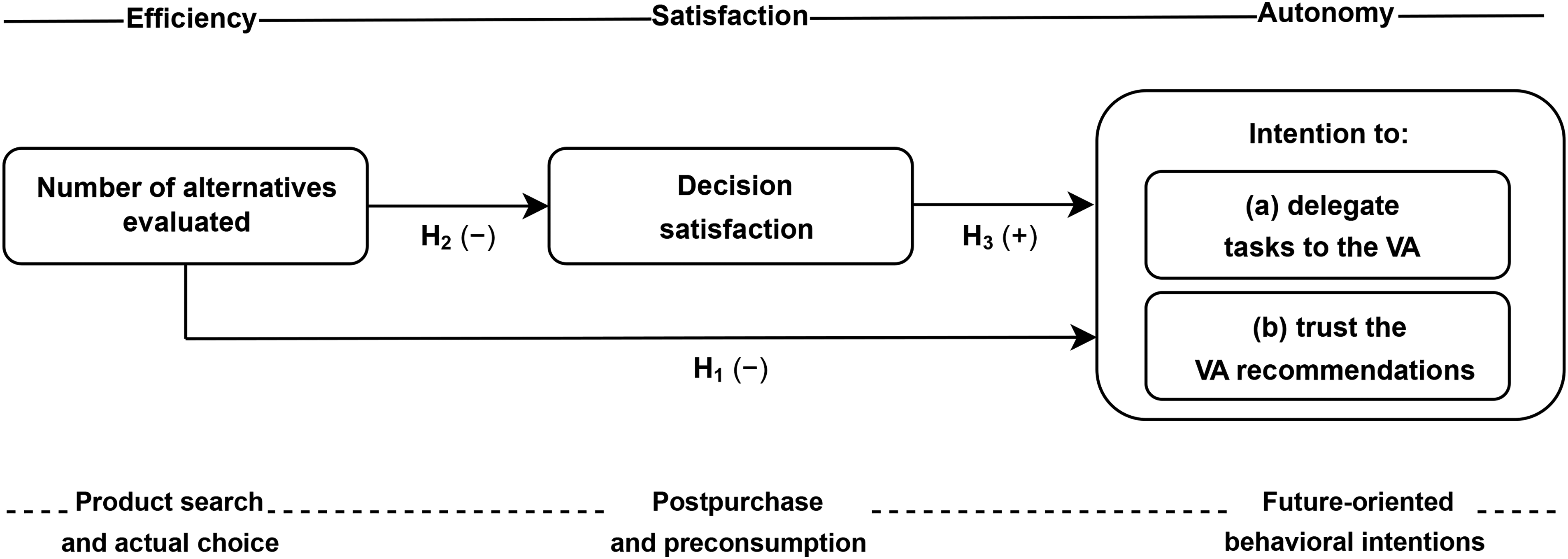
Conceptual Model.
The three primary constructs of the model were operationalized from existing scales and adapted to suit the voice commerce context. All items in these constructs were randomized and measured on a seven-point Likert scale (1 = “strongly disagree,” and 7 = “strongly agree”). Decision satisfaction was measured using a six-item scale (Fitzsimons, Greenleaf, and Lehmann 1997). Behavioral intentions to delegate tasks to the VA (two items) and trust its recommendations (three items) were adapted from Komiak and Benbasat (2006). Using a different approach, we validated the log data related to number of alternatives evaluated, with each product recommendation utterance representing one unit. Consequently, acceptance of the first option equaled one, and a low number of alternatives evaluated represents a tendency toward the default effect. Brand awareness of the chosen brand was instead measured as a binary choice (aware or not aware). In addition, participants’ personality traits, trusting beliefs in Alexa and Amazon, and propensity to trust technology were surveyed. Demographic information and control measures such as VA usage, perceived authenticity, and product category knowledge were also collected.
Methodology
In a manner different from past studies, which used fictitious shopping scenarios and not autonomous interfaces as research objects (Mariani, Hashemi, and Wirtz 2023), we developed a specific ad hoc retailing app for Alexa named “Voice Shopping” that replicated Amazon’s native voice shopping process. Voice Shopping was developed from systematic observations of VA behavior. Given the novelty of the technology, Alexa users do not generally distinguish third-party apps from Amazon-supported services (Sabir, Lafontaine, and Das 2022). Therefore, Voice Shopping gives users the feeling of dealing directly and only with Alexa because the dialogues follow the same utterances, interaction flow, and voice characteristics (see Appendix A). A tailor-made app offers the potential to enhance ecological validity and examine the role of choice architecture within a controlled yet realistic purchasing environment (Mari, Mandelli, and Algesheimer 2024b).
Utilizing the Alexa Skill Kit and integration with Amazon DynamoDB for log data storage, Voice Shopping was programmed to recommend preselected options in terms of brand type and price point according to the study manipulation.
Experimental Design
To address the gap in both academic literature and managerial practice regarding the operation of default effects in realistic shopping contexts (Dawar and Bendle 2019; European Commission 2021), we manipulated two key attributes of the default option: brand and price. To enhance the ecological validity and examine how these factors relate to the number of alternatives evaluated and downstream behavioral outcomes, we implemented a 2 (default brand: private label vs. national brand) × 2 (default price: cheap vs. premium) between-subjects experimental design. Participants were instructed to purchase batteries using a VA after being randomly assigned to one of the four experimental conditions. We set the default brand to be a private label (Amazon Basics) or a national brand (Duracell) with a default price of either cheap (CHF 4.95) or premium (CHF 6.95). Duracell was selected as the global leader in high-performance alkaline batteries and the most trusted brand worldwide (Duracell 2025), as well as the primary competitor to Amazon Basics, which currently leads the online battery market. All product alternatives after the first option were randomized by both brand (35 alternatives) and price (5 points). Therefore, they had the same chance to be recommended to the user.
Sampling
Across more than 500 individual 30-minute Zoom video calls, the single-session experiments utilized the second-generation Amazon Echo, which is the predominant VA in Western countries and the market leader in voice commerce (Capital One Shopping 2025). A total of 512 English-fluent participants were recruited through the research services of two major universities in Switzerland. A prescreening survey assessed participants’ intention to purchase batteries from a pool of products within the next 12 months. All participants were required to be in a quiet environment and use a computer equipped with a camera and a microphone. Participants were intentionally selected without regard to their current use of VAs and voice commerce to reflect real-world in-market usage. Including both users and nonusers was consistent with the relatively early stage of adoption and enabled us to capture a broad spectrum of familiarity (a variable we controlled for) while also ensuring a larger sample size. The use of student samples is well-established in e-commerce research (Komiak and Benbasat 2006) and is particularly appropriate here because students align with the demographic profile of early adopters—the primary user group for emerging technologies such as voice commerce (Lacoma 2025).
Sample Characteristics
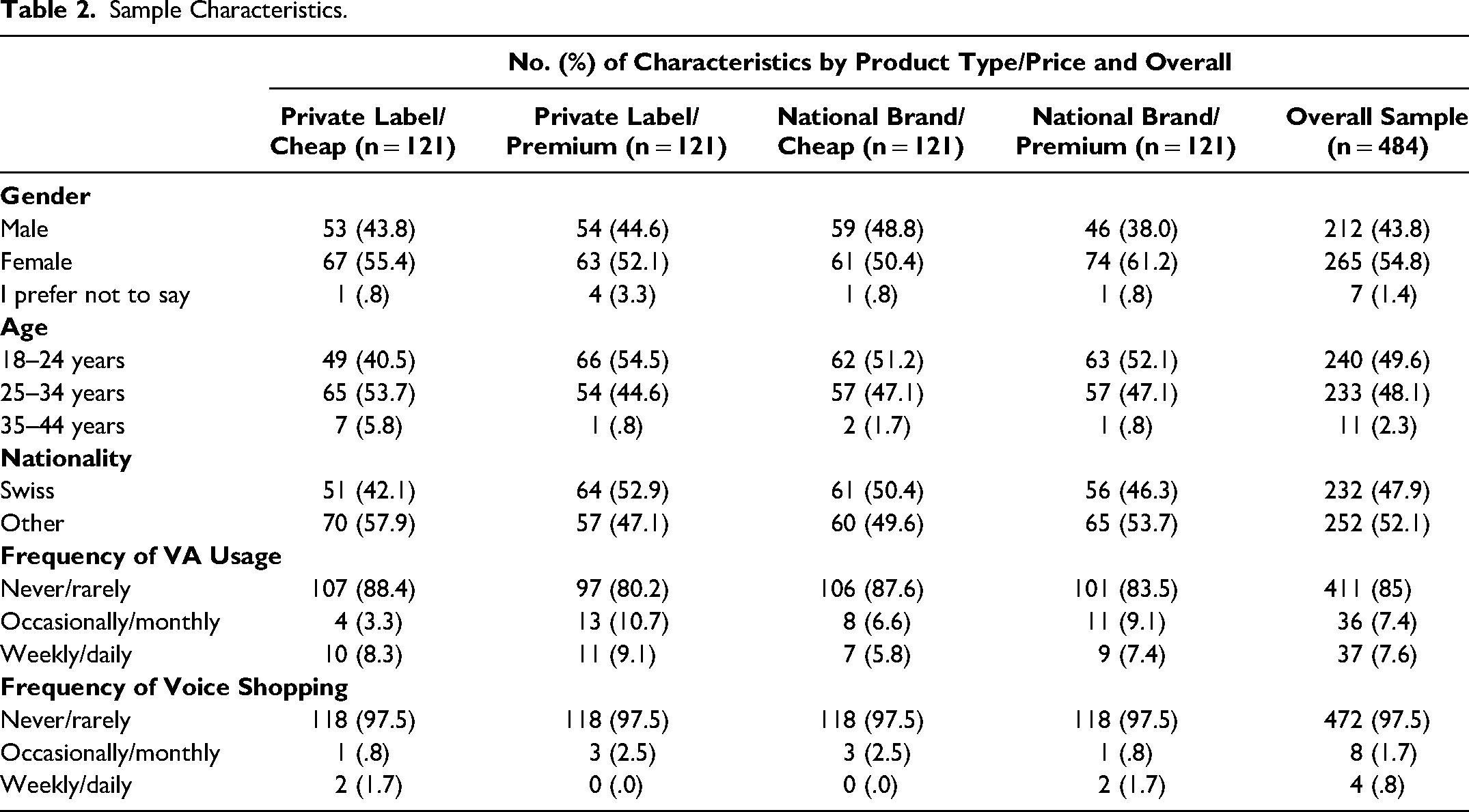
Of the 512 participants randomly assigned to one of the four experimental conditions, defined by default brand (private label vs. national brand) and price (cheap vs. premium), 484 were included in the analysis. Each of the four groups consisted of 121 participants. Respondents (Mage = 25 years) were nearly evenly distributed in terms of gender (55% female, 54% male, 1% prefer not to say), nationality (48% Swiss vs. 52% from the rest of the world), and experience with VAs. In particular, 85% (n = 411) of participants had never or rarely used in-home VAs, while 8% (n = 37) used them weekly or more often than that. In terms of shopping behavior, 92% (n = 445) had previously purchased AA batteries on at least one of the channels. Only 2.5% of respondents (n = 12) claimed to have purchased via VAs (see Table 2). The study was completed in an average of 19 minutes, 31 seconds.
Sample Characteristics.
Summary of Measures.
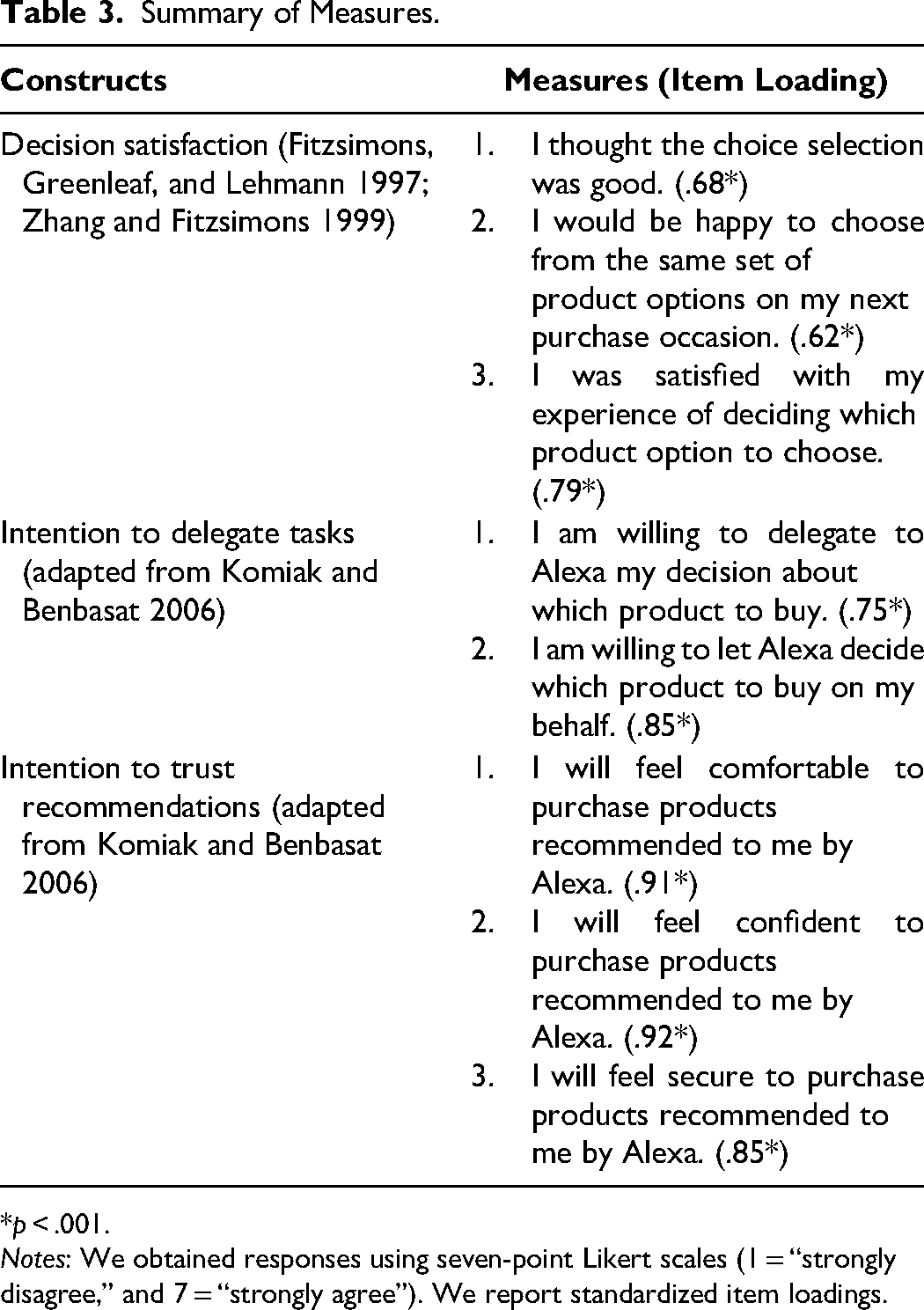
*p < .001.
Notes: We obtained responses using seven-point Likert scales (1 = “strongly disagree,” and 7 = “strongly agree”). We report standardized item loadings.
Procedure
Upon entry into the virtual Zoom room, the researcher ensured participants met all technical prerequisites. The session comprised several sequential stages (see Appendix B). The initial stage involved introducing the study, at which time the researcher familiarized participants with Alexa through a demonstration. Following the introduction, participants received a link to the informed consent form and detailed study instructions. The researcher then relocated to an adjacent room to unobtrusively monitor the session. To minimize potential social desirability bias, participants were explicitly informed that (1) no one would be present or able to overhear their interaction, and (2) the only means of communication with the researcher during the task would be through the Zoom chat function. The researcher then visibly exited the room and closed the door behind him to reinforce the perception of privacy. In the second stage, participants were asked to buy one product on Amazon Alexa. The third stage comprised an online survey filled out by all study participants. Finally, a follow-up email clarified that Voice Shopping is a third-party app that is not commercially available. In this email, a link to a personalized questionnaire was provided, with the questionnaire designed to collect further information about awareness of the recommended brands prior to the study and the reasons for choosing the first option, if applicable. Purchasing data were gathered via Amazon DynamoDB, while survey data were collected using Qualtrics.
Task
Participants purchased one pack of four AA batteries on Alexa. These batteries are suitable for electronic devices such as TV remote controls, clocks, and wireless mice. This product category, deemed relevant for voice commerce by marketing experts (Galloway 2017; Sterne 2017), is readily available in both online and offline retail outlets. To initiate the shopping capability, individuals uttered, “Alexa, open Voice Shopping,” then entered a code and searched for the desired product category. To advance the shopping process, participants had to enter a code provided in the task instructions, which served as an attention check. Participants were guided to search by product category rather than brand name and were instructed to respond “yes” to proceed with the purchase or “no” if they wanted to hear more options (see Appendix C).
To enhance the applicability of our findings to real shopping decisions, we used established brands instead of fictitious ones in our experiment. Voice Shopping featured 35 brands, representing the most popular selections of “AA,” “alkaline,” and “single-use” batteries available on Amazon. Five price points ranging from the cheapest (CHF 4.95) to the premium (CHF 6.95) were determined by analyzing both online and brick-and-mortar Swiss retailers. Participants self-selected the number of alternative products to evaluate; accordingly, Alexa did not present a fixed set of options but provided additional alternatives upon request. This design reflects the typical functionality of autonomous VAs. To control for quality and quantity variations, the items recommended by Alexa shared identical product descriptions and quantities. Thus, brand name and price constituted the sole variable factors among the available options. Each participant received a standard compensation of CHF 15.00 in cash, and they were also offered the choice to retain the purchased products.
Results
The psychometric properties of the multi-item constructs were assessed through confirmatory factor analysis conducted in Mplus version 8 (Muthén and Muthén 2017). The model exhibited satisfactory fit indices (χ2(17) = 40.44, p < .001; comparative fit index = .98; Tucker–Lewis index = .98; root mean square error of approximation = .05). Convergent validity measures surpassed commonly accepted thresholds, and Fornell and Larcker's (1981) criterion affirmed discriminant validity. Consequently, we computed the average score of the multi-item scales in our analysis. The final summary of constructs, along with measurement items and standardized item loading, is presented in Table 3, while Table 4 summarizes the construct measures’ means, standard deviations, reliabilities, and internal consistency statistics.
Summary of Statistics for Construct Measures.

A preliminary analysis examining brand awareness (aware, not aware) in connection to choosing the first option (yes, no) showed that 68.1% of individuals opting for the first option were aware of the brand they purchased (Amazon Basics or Duracell), compared with 31.9% among those who did not choose the first evaluated alternative. Therefore, the proportion of subjects reporting brand awareness differs by default choice (yes or no), χ2(1, n = 483) = 69.478, p < .001. Consequently, we incorporated brand awareness as a confounding variable in the model.
Hypothesis Tests
Two simple mediation analyses using the PROCESS macro for SPSS (mediation: Model 4) were conducted to estimate and test hypotheses about the relationships between the number of alternatives evaluated and consumers’ intention to (1) delegate tasks to the VA, and (2) trust its recommendations, as shown in Figure 2. The effects were computed using nonparametric bootstrapping with 5,000 samples, and the HC4 function was applied to address homoskedasticity concerns (Hayes 2017). Subsequently, the analysis was validated within a unified model using Mplus, yielding consistent results.
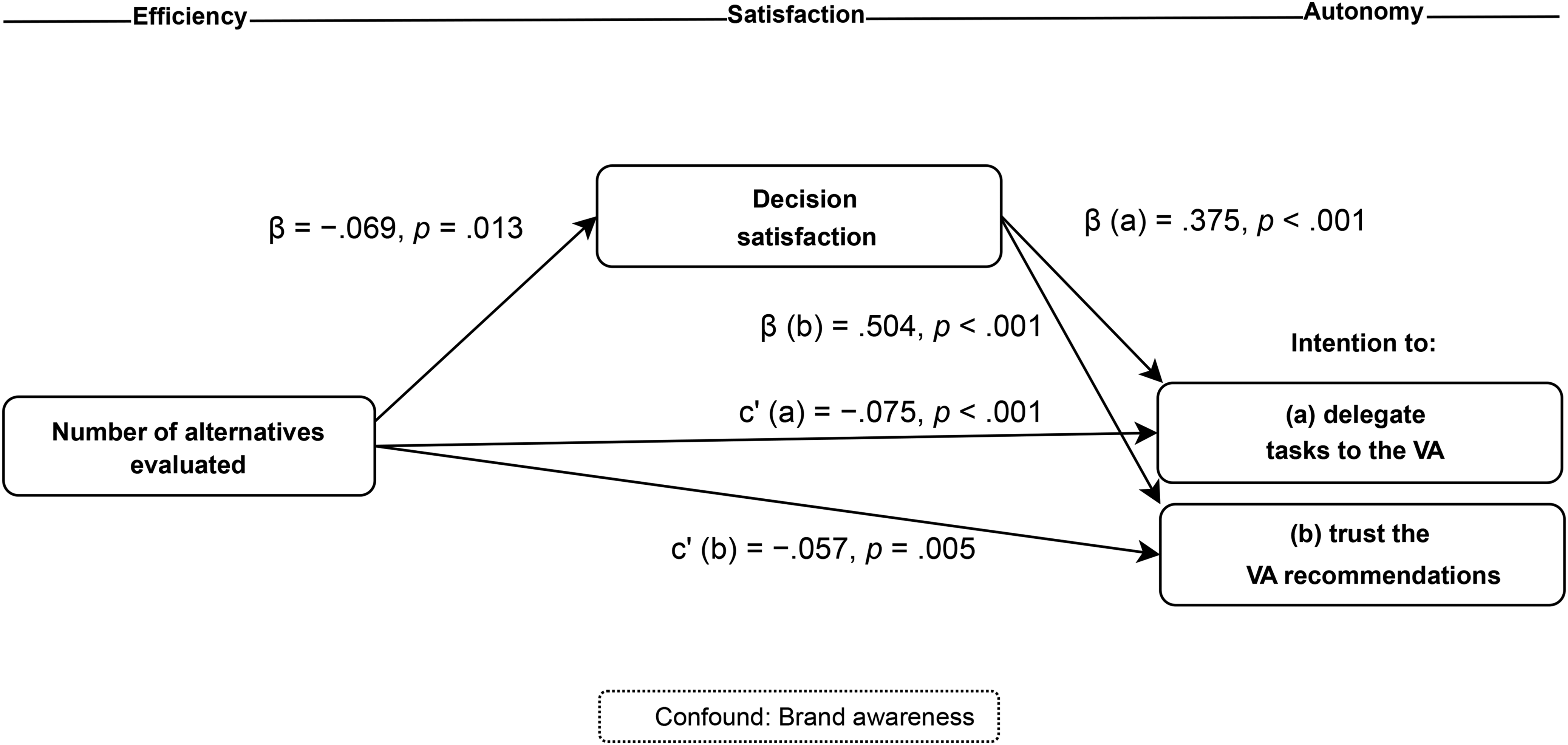
Results of Mediation Analysis.
First, as hypothesized in H1, there was a negative and significant relationship between the number of alternatives evaluated and the intention to delegate tasks to the VA, controlling for decision satisfaction (path c′ (a)) (β = −.075, t(483) = −3.90, and p < .001). In practical terms, each additional alternative evaluated was linked to a .75-point lower score for intention to delegate tasks (measured on a 7-point Likert scale), offering substantiating evidence for H1a. Furthermore, the relationship between the number of alternatives evaluated and intention to trust VA recommendations, while controlling for decision satisfaction (path c′ (b)), was negative and significant (β = −.057, t(483) = −2.84, p = .005). Thus, each additional alternative evaluated was associated with a .57-point lower intention to trust recommendations (on a 7-point scale), providing support for hypothesis H1b. Second, the relationship between the number of alternatives evaluated and decision satisfaction was negative and significant (β = −.07, t(483) = 35.04, p < .001). In line with H2, individuals reviewing fewer options tended to report greater satisfaction with the shopping decision than those reviewing more options. In other words, reducing the number of evaluated options by one was linked to a .07-point increase in decision satisfaction on a 7-point scale. Third, the relationship between the mediator and intention to delegate tasks to the VA was positive and significant (β = .37, t(483) = 7.47, p < .001), indicating that participants who reported greater satisfaction with the decision process also tended to express stronger future intentions to delegate tasks to the VA. Thus, on a 7-point scale, each one-point increase in decision satisfaction corresponded to an average .13-point higher intention to delegate tasks, supporting H3a. Regarding the intention to trust the VA's recommendations, the relationship with decision satisfaction was positive and significant (β = .50, t(483) = 10.90, p < .001), indicating that participants who reported greater satisfaction with the decision process also tended to express stronger intentions to use the VA as a trusted product recommender. On a 7-point scale, each one-point increase in decision satisfaction corresponded to an average .50-point higher intention to trust recommendations, providing support for H3b. The results also revealed a statistically significant indirect relationship between the number of alternatives evaluated and intention to delegate tasks, operating through decision satisfaction (indirect effect [IE] = −.026, 95% CI = [−.05, −.01]). Decision satisfaction accounted for 2.6% of the total effect. Similarly, there was a statistically significant indirect relationship between the number of alternatives evaluated and intention to trust VA recommendations via decision satisfaction (IE = −.035, 95% CI = [−.06, −.01]), with decision satisfaction accounting for 3.5% of the total effect.
To address the potential for a nonlinear relationship between the number of alternatives evaluated and decision satisfaction, we conducted additional analyses. Participants who accepted the first option reported significantly higher decision satisfaction and a greater intention to delegate decisions to the VA than those who requested two or more alternatives, suggesting that nonlinear patterns were not present. Importantly, these relationships remained statistically significant after controlling for VA usage frequency, indicating that the relationship between the number of alternatives evaluated, satisfaction, and delegation was not moderated by prior experience with the VA. Further analyses were conducted to validate the findings and explore mechanisms that were not readily evident in the initial tests.
Purchased Brand, Price, and Ranking
A chi-square test of independence was performed to evaluate the relationship between the default brand and the purchased brand (Table 5).
Purchased Brand, Price, and Ranking Across Conditions.
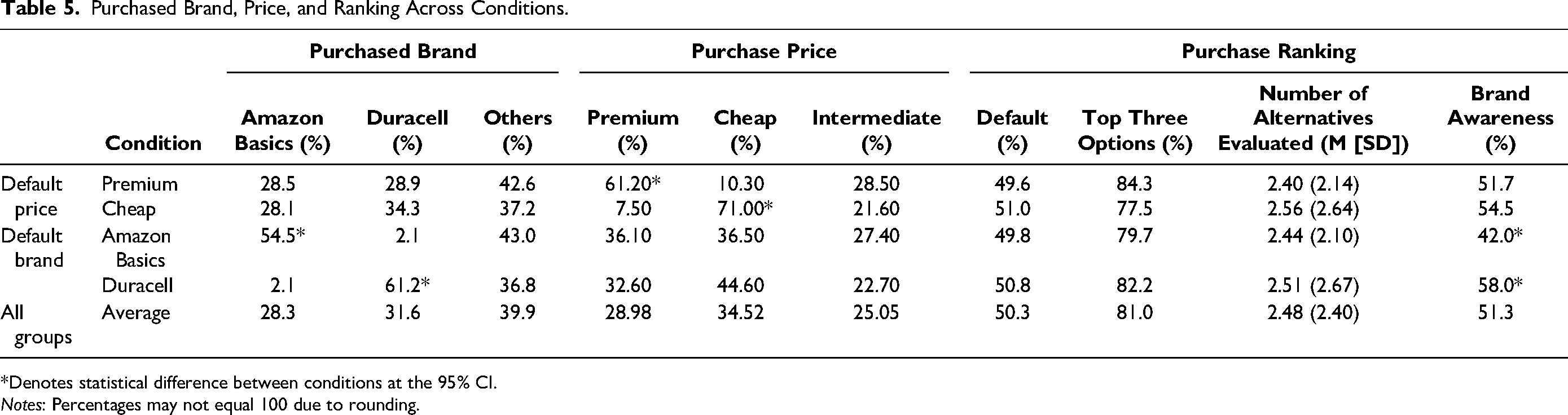
*Denotes statistical difference between conditions at the 95% CI.
Notes: Percentages may not equal 100 due to rounding.
The relationship between these variables was significant, χ2(2, n = 483) = 452.548, p > .001. The group that was recommended the default brand Amazon Basics displayed a higher likelihood of choosing it over other brands, a pattern observed in the group that was recommended Duracell as the default brand. Similarly, a chi-square test of independence was conducted to examine the relationship between the default price and the actual price paid, revealing a significant relationship, χ2(2, n = 483) = 212.950, p > .001. The group that was recommended the default premium price demonstrated a higher likelihood of choosing it over the low and average prices, mirroring the trend observed in the group that was recommended the default low price. These analyses underscore a prevailing default effect, where the actual purchase is disproportionately aligned with the recommended default option.
When considering only those buyers who accepted the default option (50%, n = 243), the analysis through the PROCESS macro (Model 4) showed that the brand type, whether Amazon Basics (coded as 0) or Duracell (coded as 1), was not significantly related to intention to delegate tasks to the VA, either directly (β = −.041, p = .833) or indirectly via decision satisfaction (IE = .096, 95% CI = [−.04, .24]). Likewise, brand type was not significantly related to intention to trust the VA recommendations, either directly (β = −.056, p = .743) or indirectly (IE = .117, 95% CI = [−.04, .29]). The same process for price point indicated no significant relationship between price points, whether cheap (CHF 4.95) or premium (CHF 6.95), and intention to delegate tasks to the VA, either directly (β = −.088, p = .651) or indirectly (IE = −.019, 95% CI = [−.15, .12]). Similarly, no significant direct (β = .150, p = .833) or indirect relationship emerged for the intention to trust VA recommendations (IE = −.024, 95% CI = [−.19, .13]).
These analyses suggest that the purchased brand and price played little role in shaping decision autonomy. A moderation analysis (Model 1) further indicated that neither actual brand nor price moderated any of the model's paths. Overall, the findings highlight the number of alternatives evaluated as the key variable linked to decision satisfaction and autonomy.
Furthermore, upon closer examination of the final price paid, it is evident that while the average recommended price by Alexa is CHF 5.95 for both Duracell and Amazon Basics, consumers paid a higher final price (CHF 5.92) when Amazon Basics was the default brand compared with Duracell (CHF 5.81). Consequently, the voice retailer generated CHF .11 higher revenue per product by placing Amazon Basics as the default option. In addition to robustness checks, other analyses revealed noteworthy results.
Interaction of Conditions with Decision Autonomy
After conducting the necessary assumption tests, a two-way ANOVA revealed a statistically significant interaction between the effects of default brand and default price on intention to delegate tasks to the VA (F(1, 483) = 6.66, p = .010), indicating that users who were recommended Duracell have a greater intention to delegate shopping decisions to the VA when the price is premium (Figure 3). The opposite mechanism is true for Amazon Basics, where the intention to delegate tasks is higher when the default price is low. Simple main effects analysis showed nonsignificant effects of the default brand (MAmazonBasics = 2.67, MDuracell = 2.74; F(1, 483) = .02, p = .653) and the default price (Mcheap = 2.71, Mpremium = 2.70; F(1, 483) = .00, p = .928).
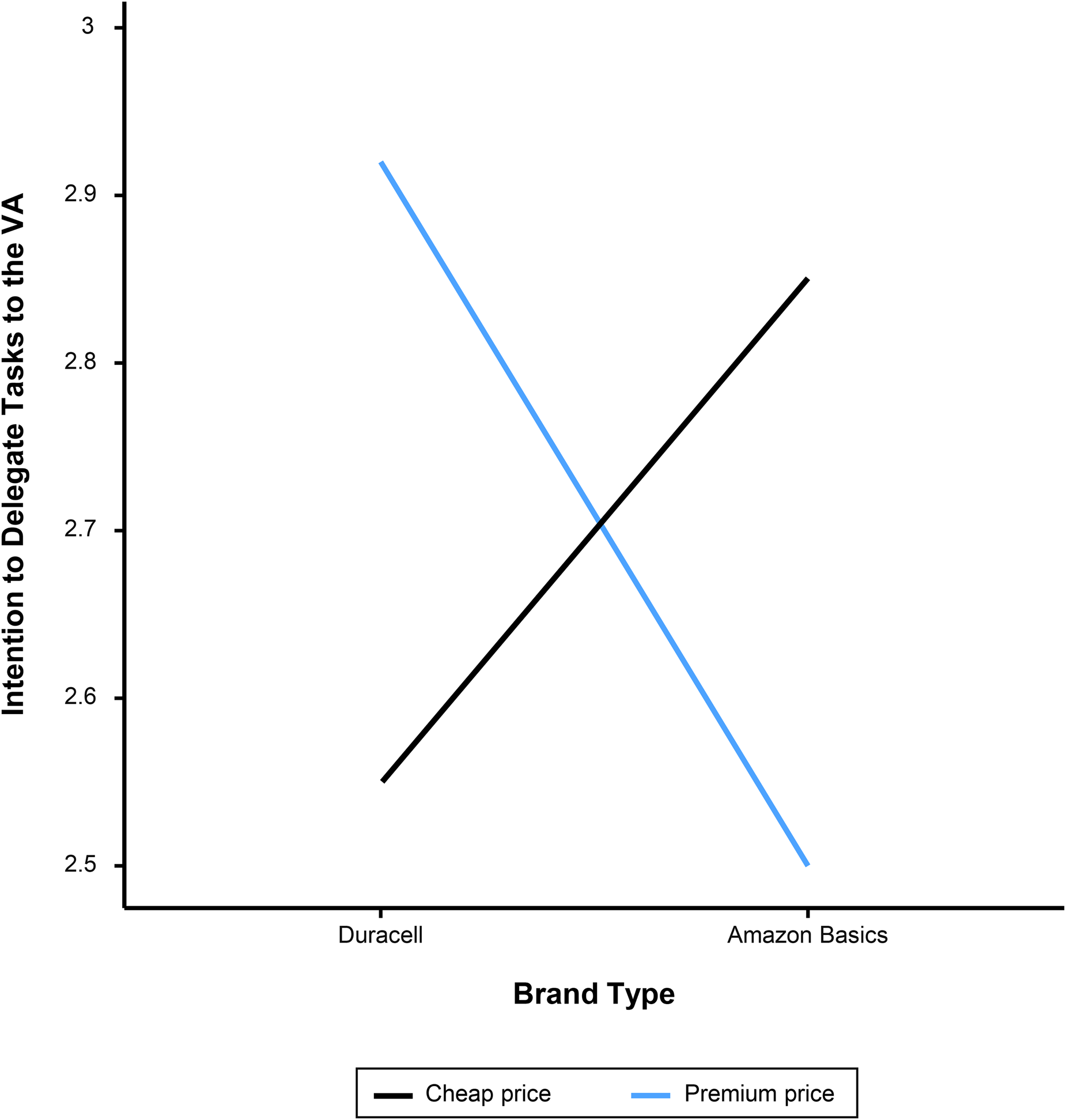
Interaction Effect of Moderators on Intent to Delegate Tasks.
A 2 × 2 ANOVA on the remaining model variables does not present any significant interaction between the effects of the experimental conditions. Concurrently, we refrain from reporting the interaction results.
Discussion and Implications
AI-based VAs are poised to facilitate a growing number of shopping decisions, while the voice modality and its sequential choice architecture tend to compress consumers’ optimal search process under constraints of limited information and memory. Although the changes are expected to contribute to heightened consumer decision difficulty and may alter the decision-making process, their implication for decision-making outcomes remain largely unexplored. Consequently, it is unclear whether managerial concerns about the rise of voice retailers find empirical support. This research examines how the number of alternatives evaluated (a measure of efficiency) in the realm of voice commerce relates to downstream decision outcomes, specifically in the context of low-involvement and utilitarian products.
Four important boundary conditions should be made explicit when discussing the findings. First, this research focuses on the goal-directed behavior that consumers exhibit within a voice shopping environment as opposed to investigating exploratory search behavior. Second, because buyers are first-time users of voice commerce, the first option provided by the VA is not based on the consumer's purchasing history or preferences. Third, this study focuses on the most popular commercially available VA (Alexa) and retailer (Amazon), which present unrelated options sequentially and individually—a structure only partially replicated by other VA manufacturers. Lastly, this study did not include a non-VA shopping condition for comparison, such as a humanoid robot providing voice recommendations. Thus, the observed relationships should not be interpreted as unique to in-home VAs such as Alexa.
Efficiency–Autonomy Trade-Offs
Holding a dialogue with a VA involves efficiency–autonomy trade-offs. Although prior literature documents that the number of alternatives evaluated influences consumer decision-making, our study offers novel insights by examining how this mechanism operates in voice-based AI environments (Dellaert et al. 2020). Specifically, our findings show that the number of alternatives evaluated by consumers corresponds with lower intention to delegate tasks to the VA and trust its recommendations. The autonomous nature of VAs, combined with the peculiarity of voice-based choice architecture, can contribute to a frictionless decision-making process, alleviating efficiency–autonomy trade-offs. This trade-off is evident in voice commerce because the buyer is required to place greater reliance on working memory capacity than when simply engaging in visual skimming of options. Compared with written interactions, when voice-based dialogues are involved the execution of the decision may be more difficult to track and monitor over time, thus placing more emphasis on these trade-offs. Consequently, consumers may experience behavioral and environmental uncertainty during initial shopping attempts. With experience, however, consumers may become more familiar with the important decision-making rules and consequences of product selection. Therefore, familiarity with the interaction process and technological infrastructure influences consumers’ future choices, resulting in them being more inclined to explore available options (Fernandes and Oliveira 2021). An opposite perspective, which currently lacks evidence, may see the rapid habit formation in delegating decisions to the VA as a repetitive path to obviate the need for extensive product searching and evaluation (Dawar and Bendle 2019).
While the efficiency–autonomy trade-off positions satisfaction as central to consumer choice, our results suggest that decision satisfaction may be bypassed on the fast path to delegating choices to AI assistants. In the voice commerce context, the number of alternatives evaluated serves as an indicator of whether consumers prioritize efficiency over autonomy and, thus, whether they are willing to take risks by moving away from the first available option. In other words, the more efficient voice shopping appears, the more consumers tend to rely on the VA retailer to reduce the effort of screening and comparing products. Consumers seem to infer that VAs operating autonomously and interacting through voice dialogues possess the ability to swiftly narrow down the assortment to provide the optimal product recommendation. Accordingly, when conducting product searches by category, consumers cede some decision autonomy to the VA almost instantly, especially in low-involvement shopping contexts.
Efficiency–Satisfaction–Autonomy Path
This study found that lower efficiency in decision-making, which becomes evident in the higher number of alternatives evaluated, was linked to lower perceptions of decision satisfaction in the context of low-involvement, utilitarian purchases. Relatedly, when the consumer moved beyond the first available option, their satisfaction with the decision process tended to be lower. Thus, even a minimal search beyond the first option did not provide a satisfaction boost, in line with the original assumption of a monotonic effect. An average of 50% of buyers selected the first available option, underscoring the prevailing default effect in AI-assisted shopping. In voice commerce, the efficiency gained by evaluating fewer alternatives appears to outweigh the potential drawbacks of reduced choice, upending the usual assumption that more choice is better for satisfaction up to a point. Overall, the findings suggest that this pattern operates, at least in part, through decision satisfaction.
In terms of decision satisfaction, the most favorable outcome occurred when consumers selected the first available option without engaging in further search. This aligns with Moorthy, Ratchford, and Talukdar (1997), who propose that for exploration to occur, consumers must believe that the utility of the next alternative will exceed their reservation utility. In voice commerce, however, limited visibility into the whole assortment reduces the likelihood of such exploration. In other words, seeking one more alternative in voice shopping may reflect lingering doubt, whereas accepting the first option can yield satisfaction without extra effort.
At the same time, when consumers process information in a relatively instinctive and rapid fashion rather than an effortful and systemic manner, they may be subject to a “yeah, whatever” heuristic, characterizing low involvement and utilitarian types of product choice (Thaler and Sunstein 2009). Thus, relying on instinct and rapid processing may increase the effect of consumer decision biases on VAs. This might be explained by the notion that, in contrast to motor movements, verbal expression is less prone to evoke mechanisms of self-control (Klesse, Levav, and Goukens 2015). Therefore, the marginal benefits of evaluating additional options appear to diminish quickly in voice commerce.
This study establishes a novel link between decision satisfaction and delegation behavior in the emerging context of AI-assisted shopping. Delegating decisions to a VA represents a relatively new form of consumer behavior, and while the notion that satisfaction fosters loyalty is well established in other domains, showing that decision satisfaction corresponds with willingness to cede future decision autonomy to an autonomous VA is meaningful. One might expect factors such as technophobia or a desire for control to override decision satisfaction when it comes to delegating tasks to VAs. However, our findings suggest that greater satisfaction with a low-involvement shopping decision is associated with stronger future intentions to cede decision autonomy to the VA by delegating tasks and trusting product recommendations. Even in the voice commerce context, decision satisfaction thus emerges as an essential correlate of adoption-related behaviors.
Theoretical and Methodological Implications
This study contributes to the literature in several ways. First, the voice-specific choice architecture shapes the search and selection strategies adopted by consumers. Extending the work by Munz and Morwitz (2019), we show that the number of alternatives evaluated is consistently associated with future behavioral intentions, precisely, consumers’ intention to delegate shopping tasks to the VA and their trust in VA-generated product recommendations. In this way, voice commerce appears not only to alter the two-stage decision process (Payne, Johnson, and Bettman 1993) but also to be linked to downstream decision outcomes. These findings offer new theoretical insights into consumer decision-making with AI and contribute to the growing body of research on consumer behavior in voice-based shopping contexts (Munz and Morwitz 2019; Snyder, Sundar, and Lee 2025).
Second, in a manner that differs from what Heitmann, Lehmann, and Herrmann (2007) initially postulated, those individuals who settle early in the process for imperfect accuracy in favor of an efficient decision process perceive higher satisfaction. With the basic mechanisms of search strategy being disrupted, perceived efficiency tends to decline with every decision to reject a new alternative. This is the first study to empirically demonstrate that the number of alternatives evaluated is negatively associated with consumer perceptions of decision satisfaction in this context. Concurrently, the results also suggest that satisfaction can sometimes be bypassed in the fast path to decision delegation, with consumers ceding decision autonomy to the VA almost instantaneously. These insights contribute to the research stream on choice architecture and recommender agents, particularly in AI-assisted shopping environments (Häubl and Trifts 2000; Heitmann, Lehmann, and Herrmann 2007).
Lastly, extant research has concluded that product choice is contingent upon the goals that consumers have in relation to maximizing decision efficiency, maximizing decision satisfaction, and minimizing decision autonomy, or some combination thereof (Bettman, Luce, and Payne 1998). The current study provides empirical evidence on the interplay between these goals, showing that consumers are more likely to delegate shopping tasks when they perceive a favorable balance between decision efficiency and decision satisfaction in relation to decision autonomy. Thus, in the voice shopping context, consumers may be willing to sacrifice decision autonomy in exchange for efficiency, a phenomenon not observed in traditional settings. The efficiency–satisfaction–autonomy model path remained robust across scenarios featuring variations in brand type and price point. Thus, this contribution extends the efficiency–autonomy framework to human–VA interactions by incorporating decision satisfaction (Dellaert et al. 2020; Puntiroli et al. 2025).
Methodologically, this is the first study to examine the role of the number of alternatives evaluated in voice commerce using a uniquely developed voice-based retailing app. Specifically, we synergistically integrated the retailer perspective, focusing on investigating choice architecture and a consumer perspective centered on the actual choice of utilitarian products. While using a controlled but realistic purchase environment, this research overcomes the limits of past studies that utilized fictitious and nonautonomous interfaces as research objects. In pursuit of heightened ecological validity, we isolated the first option to control for the impact of brand and price through a popular commercially available VA—Alexa—through which study participants made actual purchases. Concurrently, these online experiments used individual video calls in which study participants were asked to interact with an autonomous device. While several advantages and disadvantages should be considered in adopting a similar methodological approach (Mari, Mandelli, and Algesheimer 2024b), the opportunity to observe voice modality and choice architecture in action represents a valuable step forward for marketing researchers.
Managerial Implications
In addition to advancing the understanding of the interplay between the number of alternatives evaluated and decision-making trade-offs, this research has important practical implications for managers engaging in AI-assisted shopping. Assuming the role of a voice retailer able to orchestrate what product is presented to shoppers, we factorially varied the default brand to test whether people are less likely to accept the first option when it is Amazon's own brand versus a well-known national brand. Similarly, we varied the default price to examine whether a higher-priced default might prompt more extensive search behavior. Interestingly, even a low-priced Amazon Basics first option did not drastically alter consumer decision-making compared with a high-priced Duracell first option.
Overall, consumers appear to be less price-sensitive when the default brand is a private label rather than the category market leader. On average, the final price paid was CHF .11 higher when Amazon Basics was the default brand compared with Duracell. Consequently, the reliance on the first option did not translate into cost savings for consumers, contrary to what prior research has suggested (De Bellis and Johar 2020). The voice retailer, however, generated higher revenue when presenting its private label (vs. national brand) as the default option and when the subsequent options were lesser-known brands. Specifically, consumers attribute a higher value to Duracell, with a 45% purchase likelihood compared with 36% for Amazon Basics when both were offered at a low price (CHF 4.95). Relatedly, the fairly lower awareness of Amazon Basics (42%) compared with Duracell (58%) has, in all likelihood, led consumers to refuse the default private-label brand and pursue better alternatives. In the following phase, presented with lesser-known brands (32% on average) compared with the combined Duracell and Amazon Basics awareness (68%), consumers applied a “whatever” heuristic, selecting the first “good enough” option. The difficulty in comparing and navigating options may have accelerated choice and reduced attention to price, thereby lowering price sensitivity.
In contrast to what some industry experts have suggested, the national brand is still preferred (61%) over the private label (54%) when the VA retailer suggests it as the first option. This suggests that brand equity remains a significant factor in consumer purchasing decisions. However, among the variables considered, the number of alternatives evaluated emerged as the strongest correlate of consumers’ decision satisfaction and of their intention to delegate tasks and trust product recommendations. Simultaneously, when voice shopping for low-involvement and utilitarian products, brand and price did not show significant associations with consumers’ satisfaction or their willingness to cede decision autonomy. However, consideration needs to be made when evaluating the consequences of brand and price in voice commerce. Users who were recommended the national brand (vs. private label) expressed stronger intention to delegate shopping decisions to the VA when the price was premium (vs. cheap). Thus, when consumers encountered a national brand at an above-average price or a private label at a below-average price, their future behavioral intentions to let the VA decide on their behalf were higher. This counterintuitive result suggests that to encourage consumers’ willingness to rely on the voice retailer's recommendations, these recommendations should align with the brand–price value perceptions consumers have formed in traditional shopping channels. When consumers perceive a mismatch, such as high prices for private labels and low prices for national brands, they may interpret it as suspicious or unfair, prompting them to retain a greater degree of decision autonomy.
These findings may relax some of the national brand's concerns about the retailer's low-end pricing strategies, which could impact the brand's margins. The results suggest that pricing well-established national brands too low may actually weaken user reliance on voice retailers. Correspondingly, the constraints introduced by the novel choice architecture appeared to benefit VA retailers, because they were associated with higher consumer satisfaction as well as greater acceptance of the first option. By showing that brand and price played only a limited role in determining acceptance of the first option's choice, this research underscores the implications of voice commerce for national brands (Klaus and Zaichkowsky 2020; Rabassa, Sabri, and Spaletta 2022).
Limitations and Future Research
Several theoretical limitations of this study should be recognized. First, our study was conducted entirely within a VA context, offering nuanced insights into variations of voice-based recommendations. However, with the growing prominence of multimodal AI shopping assistants, such as Amazon Rufus, future work should compare voice, visual, and hybrid interfaces, because differences in sequential presentation and memory load may produce distinct outcomes. Researchers could also explore potential nonlinear patterns by designing experiments that systematically vary the number of alternatives (e.g., one vs. two vs. five) to test for curvilinear relationships with decision satisfaction and delegation. Although our data did not reveal such nonlinearity, we cannot rule out its presence in other decision contexts.
Second, this research was conducted primarily within the context of first-time VA and voice commerce usage. As a result, it was not possible to consider how the number of alternatives evaluated evolves as the individual human–VA relationship develops over time. For instance, it is yet to be determined whether the generally strong influence of defaults fades or grows when consumers gain familiarity with the voice-specific choice architecture. Although our results were consistent regardless of participants’ prior experience with VAs, indicating that even experienced users displayed the predicted behavior, surveying a more VA-experienced sample would strengthen the generalizability of these findings. In fact, 85% of our participants had never or rarely used VAs before the study, so the results largely reflect the behavior of novice VA users. Accordingly, future empirical investigations that intersect the areas of voice commerce and decision-making could employ a longitudinal design to explore the evolutionary dynamics of the number of evaluated options and their consequences (Dellaert et al. 2020). In addition, recruiting participants with a differential level of voice commerce usage would allow researchers to assess how familiarity with VA retailers influences choice (Rabassa, Sabri, and Spaletta 2022).
Third, the recommendations from the VA retailer were not personalized, because buyers are first-time users of voice commerce. Therefore, the first option recommended was not based on consumers’ purchasing history or preferences. The perception of high-quality recommendation personalization may influence reliance on the first choice. Service providers have long struggled to address the tensions inherent in the efficiency versus personalization dilemma (Solomon et al. 1985). This trade-off may become particularly relevant in the voice commerce context, given the increasing personalization capabilities of VAs. Future research could therefore investigate how personalization of the first option shapes consumers’ intention to delegate tasks to the VA (Lucia-Palacios and Pérez-López 2021; Snyder, Sundar, and Lee 2025).
Lastly, this study centers on consumers’ task-oriented shopping conduct within a voice shopping setting, excluding the examination of exploratory search behaviors. Because participants were not allowed to shop by brand name, future research could incorporate brand-specific searches to compare decision-making processes in scenarios in which preferences are formed in the moment versus when they are rooted in preexisting preferences (Flavián, Akdim, and Casaló 2023). In this context, combining observational and experimental methods would strengthen the generalizability of future findings.
In addition to the theoretical limitations, there were also experimental design limitations. First, participants were asked to purchase a low-involvement product, where efficiency often takes precedence over extensive search. In contrast, high-involvement purchases typically prompt more deliberate search and evaluation processes before a choice is made. In such cases, offering fewer alternatives may reduce satisfaction, because the current voice-based choice architecture is inherently limited in supporting complex decision-making. Thus, the constraints of voice choice architecture may play a different role in shaping consumer decisions in high-involvement product categories, where the efficiency–autonomy trade-off is likely to be less salient. Future research should extend these findings to other product types, including high-involvement and hedonic purchases, in order to explore the boundary conditions of the efficiency–autonomy mechanisms. Second, we artificially defined the product category for sale on Voice Shopping. Besides limiting the generalizability of the findings, imposing the type of product to purchase on the participants may have influenced their motivation and emotional state. Future studies could address this by allowing users to purchase from a broader assortment and make decisions based on their immediate shopping needs.
The findings should be interpreted not as definitive conclusions but as preliminary evidence that invites further research exploring similar perspectives across a wider set of scenarios and contexts.
Footnotes
Appendix
Authorship Contribution Statement/CRediT
Coeditor
Beth Fossen
Associate Editor
Alexander Bleier
Consent to Participate
All participants were recruited voluntarily and provided informed consent prior to taking part in the study.
Data Availability Statement

Declaration of Conflicting Interests
The authors declared no potential conflicts of interest with respect to the research, authorship, and/or publication of this article.
Funding
The authors disclosed receipt of the following financial support for the research, authorship, and/or publication of this article: This work was supported by the University Research Priority Program (URPP) Social Networks of the University of Zurich (Switzerland).
Ethical Considerations
This research has received authorization (OEC IRB # 2020-007) from the Human Subjects Committee at the University of Zurich. Approval document available here: https://www.dropbox.com/scl/fi/zko1ryb92rsox6z4vne73/OEC_IRB_2020-007_Mari_MM_exempt.pdf?rlkey=smop57tdw07xjwo2n6aqmruyr&st=yw81xciz&dl=0.