






Abstract

In Mrs. Jones’ classroom, she lets the children choose the centers in which they would like to play. Kevin, a 3-year-old in the classroom, always chooses the blocks. He spends a lot of time building elaborate structures. Often, no one else plays in the block area with him. Most of the children choose to play in the play-dough or water table areas, both of which are on the other side of the room from the blocks. In fact, the block area is separated from the entire room by bookshelves and the circle time area. Thus, Kevin usually plays by himself for the duration of center time. One day, Polly came to play in the block area and pretended the blocks were cars. Kevin watched her play for a little while and then took the block she was playing with and started to move it like it was a car. Polly cried and ran to get the teacher.
Social skill acquisition is an essential step in young children’s development with lasting implications for the quality of social experiences throughout life (Denham & Weissberg, 2004; Duncan et al., 2007; Feldman & Eidelman, 2009; Hemmeter, Ostrosky, & Santos, 2003; Raver, et al., 2008). Interaction with peers establishes positive social communication exchanges that will shape a young child’s experiences with the social world throughout their lifetime. In the vignette, we find Kevin, a child with a disability in Mrs. Jones’ classroom, having more difficulty learning and using his social skills than his peers (Ladd, 2005; Odom, McConnell, & Brown, 2008).
Difficulties with social skill acquisition may be related to delays in physical development, communication methods, and/or social awareness that limit one’s ability to progress along a typical social developmental trajectory (Odom et al., 2008). These limitations may contribute to social delays that lead young children with disabilities to fall behind their typically developing peers beginning as early as birth. Interactions with parents or caregivers may be affected by issues such as communication impediments, attention issues, poor attachment, or difficulty identifying others as social partners (Grusec & Hastings, 2007; Repetti, Taylor, & Saxbe, 2007). These obstacles then compound over time as the lack of early social communication attempts and interaction behaviors prevent the growth of more complex social engagement. Thus, by their early childhood years, children with disabilities may not have the foundational skills required to participate in the peer-based play activities that are essential to more advanced social development (Craig-Unkefer & Kaiser, 2003; Guralnick, Hammond, Connor, & Neville, 2006).
“By performing specific tasks in the classroom that influence joint attention and proximity among peers, ECSE teachers can directly influence the complexity of play in their students. ”
Teaching social skills to young children with disabilities as early as possible may help to develop a foundation on which appropriate social behaviors can develop. Researchers suggest that social skills can be taught through systematic interventions (e.g., Stanton-Chapman, Jamison, & Denning, 2008). In fact, Guralnick and colleagues suggest that young children with developmental disabilities need systematic interventions and time devoted to peer play to learn the behaviors necessary for participation in social situations (Guralnick, Hammond, & Connor, 2006). Early intervention can lead to early and long-lasting positive changes in developmental trajectories in young children with disabilities (e.g., Brown, Odom, & Conroy, 2001; Craig-Unkefer & Kaiser, 2002; National Research Council, 2001). In addition, early social skills interventions can positively affect children’s academic and social experiences as they progress through the education system (Bergen, 2002; Denham & Weissberg, 2004). Early childhood special education (ECSE) classrooms provide a natural environment for implementing effective social skill interventions. Whether ECSE classrooms include typically developing children, opportunities for social interaction are abundant. In this article, we introduce intervention strategies for increasing social competence in young children enrolled in ECSE classrooms.
Social Competence
Social competence in early childhood involves at least three facets of behaviors: (a) the ability to express interest, understanding, and emotion with peers and adults through interactions; (b) the ability to join the play of others through interactions; and (c) the ability to participate in goal-oriented activities with peers (Halberstadt, Denham, & Dunsmore, 2001; Lillvist, Sandberg, Björck-Åkesson, & Granlund, 2009; Van Hecke et al., 2007). We suggest that the components of this complex definition are influenced by a set of two foundational characteristics, proximity and joint attention, which in turn promote a third major component of social competence, hierarchical play skills. By performing specific tasks in the classroom that influence joint attention and proximity among peers, ECSE teachers can directly influence the complexity of play in their students, which may lead to increased later social competence (Jamison, 2010). Furthermore, teacher focus on these components may help increase social skill development and create a more social environment in ECSE classrooms.
Hierarchical Play
Hierarchical play is represented by increasingly complex play patterns among children. Parten (1932) and others (e.g., Didow & Eckerman, 2001; Scarlett, Naudeau, Salonius-Pasternak, & Ponte, 2005; Turnbull & Jenvey, 2006) found that the degree of participation in social interactions increases with children’s age. Hierarchical play is established when a young child moves from a less complex, singular type of play (solitary play) to a more involved, partner-dependent type of play (parallel play, associative play, or cooperative play; see Table 1 for definitions; Scarlett et al., 2005).
Hierarchical Play Stages
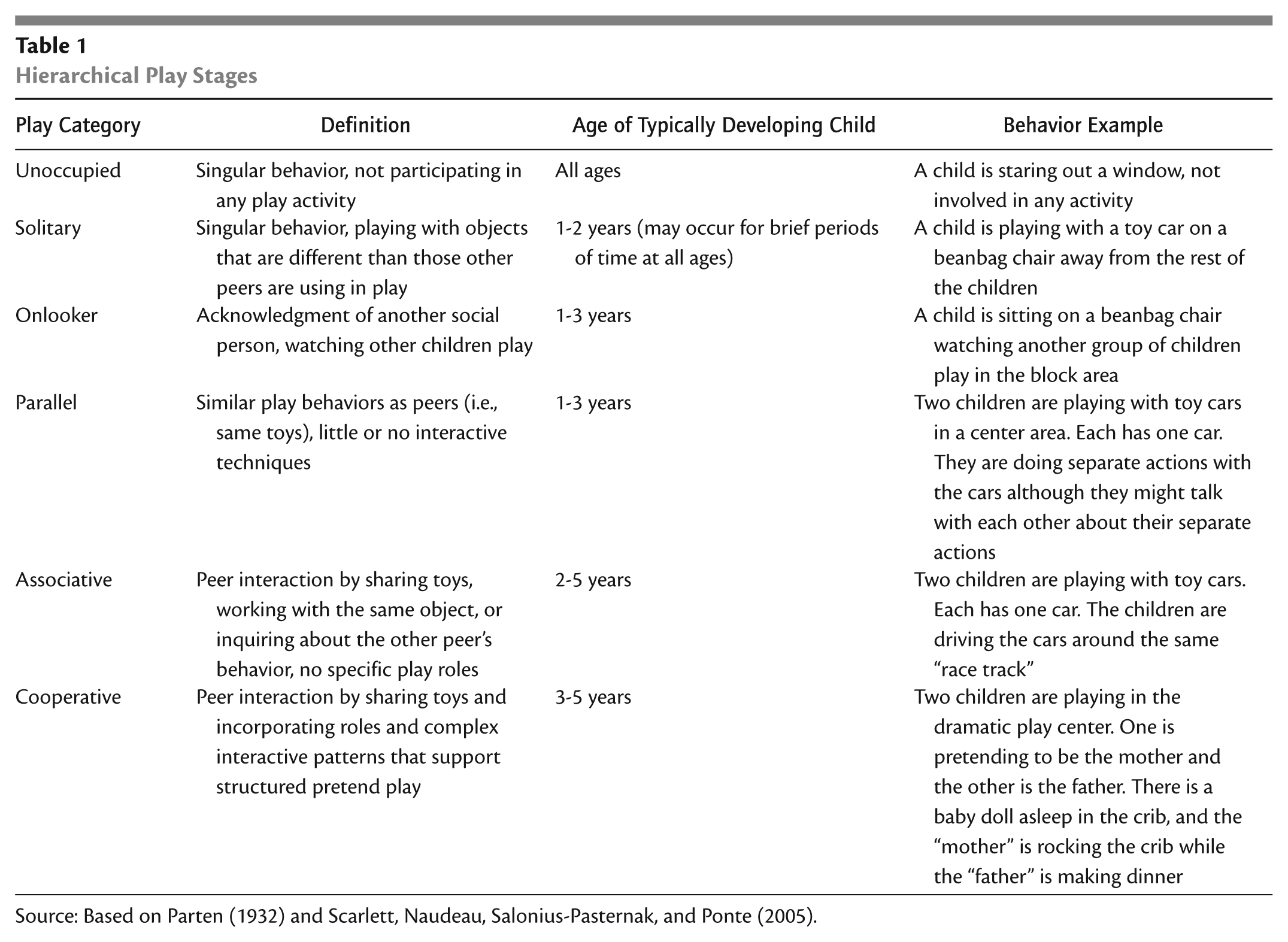
Children with disabilities may refrain from attempting more complex levels of play due to verbal, cognitive, or physical delays that may prevent access to other children’s play activities (Sigafoos, Roberts-Pennell, & Graves, 1999). Furthermore, the progression from simple to complex play is made more difficult when early stages of peer interaction are not adequately developed. Whereas typically developing children are able to progress from simple to more complex types of play without teacher instruction, young children with disabilities often need specific interventions to assist in social learning associated with play (Craig-Unkefer & Kaiser, 2003; Guralnick, Hammond, Connor & Neville, 2006). Children who have difficulty successfully engaging other children in higher levels of play may compensate by using challenging behaviors to engage peers (Howes & Phillipsen, 1998). This reactive behavior may disrupt potential relationships with peers by creating an unsafe or uncomfortable environment.
“Higher levels of play may occur more readily when children are in social proximity to others and when joint attention is established.”
Young children with disabilities who have trouble engaging their peers in group play tend to participate in solitary play (Guralnick, Hammond, & Connor, 2006; Holmes & Willoughby, 2005), which is often defined as a type of play that involves only one person and objects separate from those with which other peers in the room are playing. An example of this is seen in the vignette where Kevin plays in the block section alone while a group of peers play across the room with a set of cars. Parallel play is defined by two or more children playing with the same types of objects in the same vicinity with little or no interaction. For example, if another child joined Kevin in the block section but began to build a separate structure, Kevin and the peer would be considered participating in parallel play. Associative play is more complex than solitary or parallel play and involves interactive play. For example, if Kevin and his peer playing in the block section merged their structures and began working together to build the same creation, the two children would be considered participating in associative play. Associative play in early childhood is important to a young child’s sense of awareness of a social partner. Associative play represents an exchange of meaning in play and allows early forms of cooperative interaction to occur (Scarlett et al., 2005). It indicates a level of joint understanding among young children and is essential to successfully interact (Didow & Eckerman, 2001). Cooperative play is a more advanced form of interactive engagement that includes role-play and structured peer interactions. For example, if Kevin and his peer decided that their merged block structure was an airport, Kevin might pretend to be a pilot in one of the planes and the peer would pretend to be in the tower telling the plane when to land. This interaction is advanced in that each has a defined role in play and remains within the pretend play structure for a distinct period of time. Each peer must participate in an exchange of meaning and joint understanding to remain in this pretend scenario (Didow & Eckerman, 2001). These increasingly complex levels of play, based on repeated successful social interactions with peers, establish early social competence in young children (Howes & Phillipsen, 1998; Scarlett et al., 2005).
Components of Hierarchical Play and Strategies for Implementation
Emerging evidence suggests that increases in proximity and joint attention may lead to more complex types of play among children with disabilities (Copple & Bredekamp, 2009; Garfinkle & Schwartz, 2002; Jamison, 2010). Thus, teachers may be effective in increasing social competence in young children with disabilities by focusing on classroom activities that include proximity and joint attention among peers. We suggest that higher levels of play may occur more readily when children are in social proximity to others (parallel, associative, and cooperative play) and when joint attention is established (associative and cooperative play). Below, we describe joint attention and proximity from an empirical basis and provide strategies for integrating these components into the ECSE classroom. We then provide general strategies for encouraging participation in various play situations throughout the classroom, including individual adaptations for certain child characteristics.
Proximity
Proximity plays a key role in allowing social behaviors and more complex levels of play to develop. When a young child identifies another peer as a social partner, he or she moves closer to that peer to observe his or her behavior (Parten, 1932), imitate his or her behavior (Moore, 2007), and/or interact with the partner (Brownell, Ramani, & Zerwas, 2006). Social proximity is necessary for exposure to social stimuli and interaction opportunities that may help young children with disabilities to engage in social play. In fact, the closer in proximity peers are with each other and the longer this proximity lasts during play, the more likely cooperative play opportunities are to develop between peers (Brownell et al., 2006).
It may seem obvious that young children and their peers must be in proximity to interact with one another. However, certain characteristics of developmental delays combined with pull-out services, classroom organization, and child interests may consistently discourage close play. Furthermore, social proximity requires sensory and gross motor skills that might prove difficult for children with disabilities (Odom et al., 2008). For example, children with disabilities that affect movement may have difficulty positioning themselves in a location where the sharing of toys and identification of facial expressions and communicative efforts can easily occur. In addition, as the vignette demonstrates, children with developmental delays may enjoy working with one set of toys and rarely attempt to explore other areas of the classroom during free-play times. In both of these examples, it is essential for the classroom teacher to create and encourage play situations in which children can be physically close to their peers.
Strategies for Increasing Social Proximity
Structuring the day
Teachers can increase the time children spend in proximity with peers by structuring the day in ways that promote interaction. One way teachers can promote peer play between young children is by introducing a “buddy system.” Similar to the kindergarten buddy system presented in Laushey and Heflin (2000), ECSE teachers could arrange a buddy system with young children. Strategies for implementing this system are highlighted in Table 2.
Guidelines for Implementing the Buddy System in an ECSE Classroom
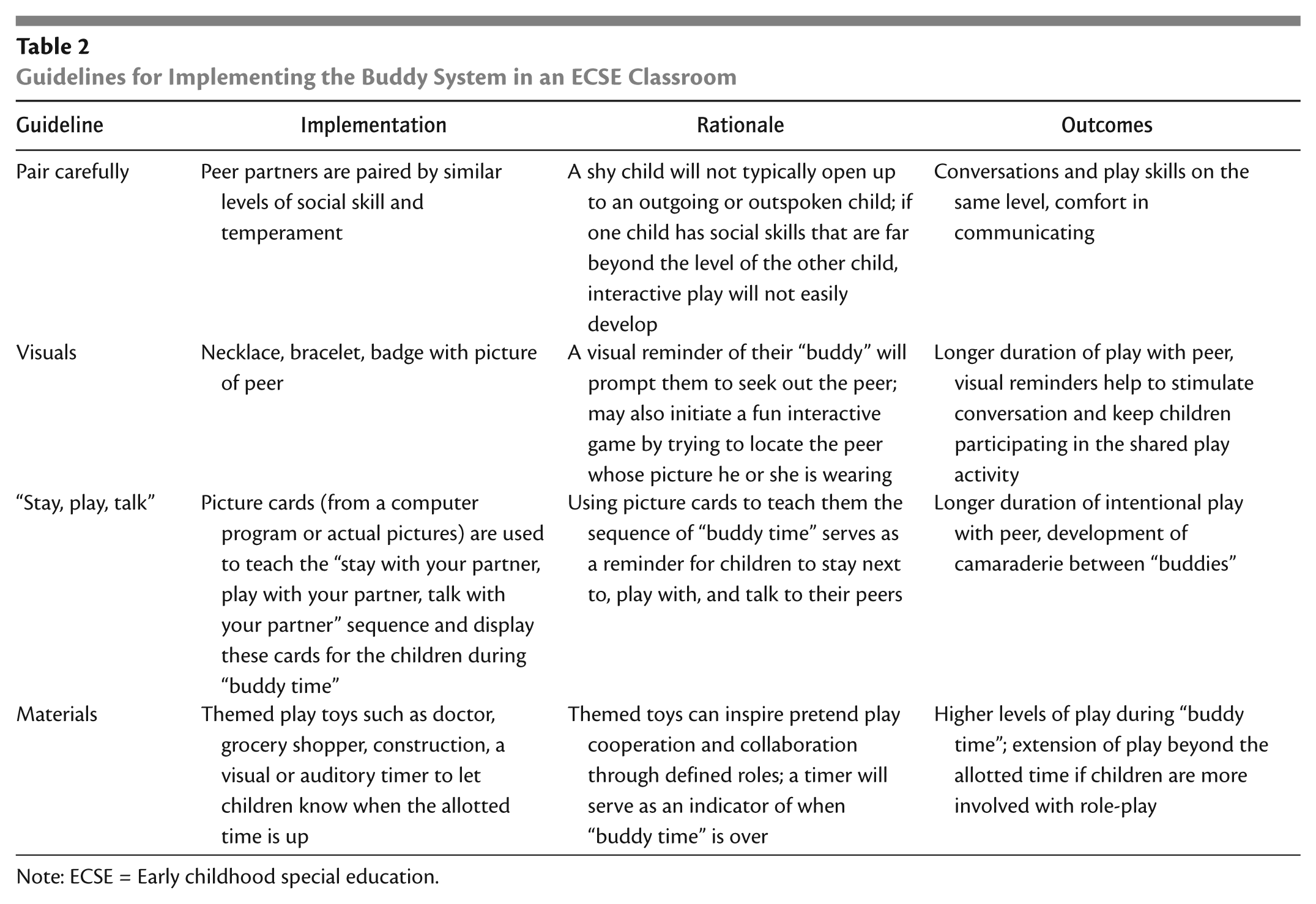
Note: ECSE = Early childhood special education.
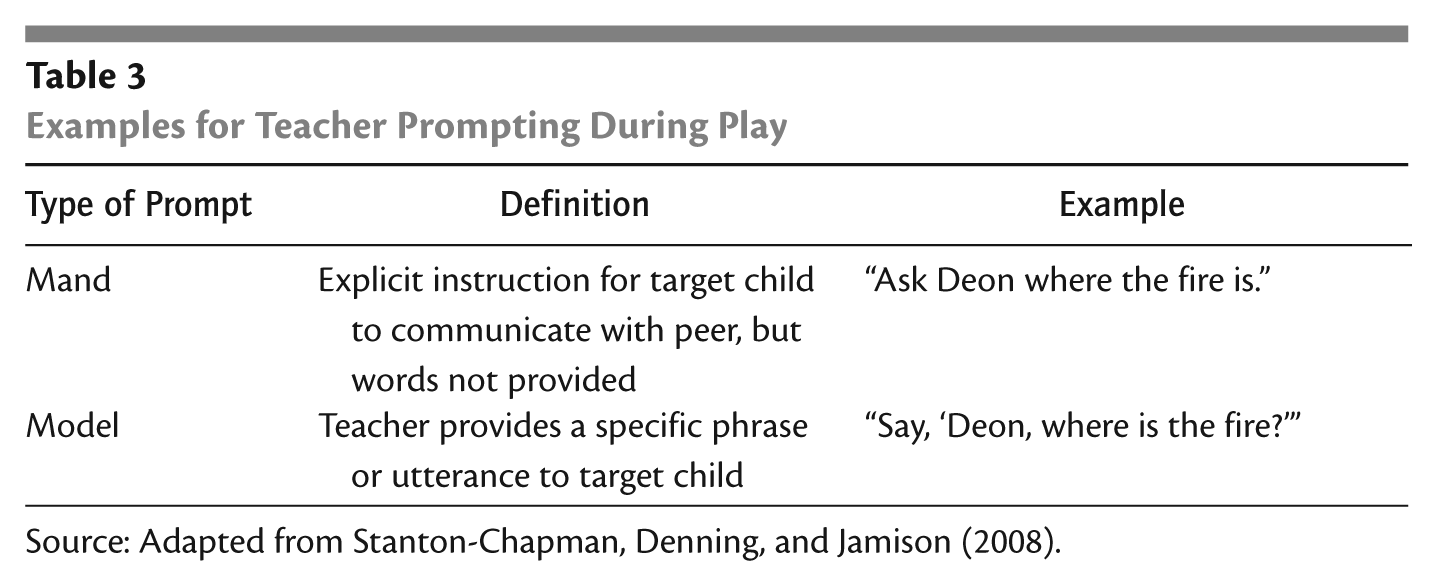
Teachers could make necklaces or bracelets by using yarn and a photo of a peer. The target child would be given a necklace or bracelet that has a photo of a peer, and the peer would be given a necklace or bracelet that has a photo of the target child. Both children would be instructed to play with his or her buddy for 10 min (or whatever amount of time is appropriate based on the children’s age and ability). The teacher can teach the children three phrases: (a) Stay with your buddy—The children are instructed to stay in the same center, (b) Play with your buddy—The children are instructed to play with the same toys, and (c) Talk to your buddy—The children are instructed to talk to his or her peer. If the children are very young, the teacher may feel it necessary to provide support in the form of prompting to start the play interaction or keep the play interaction going. Teachers can use mand prompts, an explicit play directive, or model prompts, a verbatim phrase to help the child initiate play. These types of prompts are described with examples in Table 3.
Examples for Teacher Prompting During Play
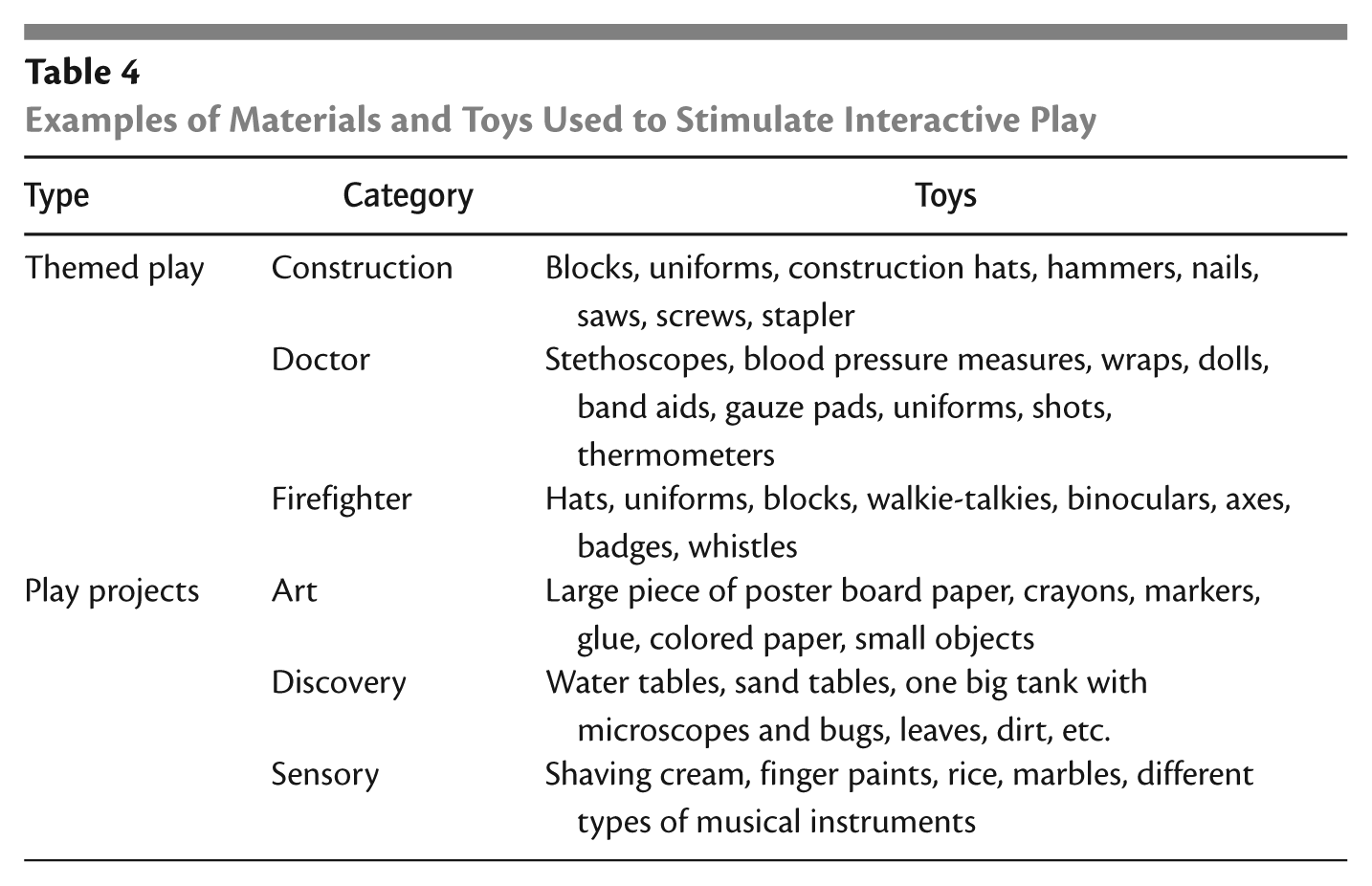
The teacher may also provide interaction-inducing play ideas. One example of this is themed, creative play (Copple & Bredekamp, 2009; Stanton-Chapman, Denning, & Jamison, 2008; Stanton-Chapman, Jamison, et al., 2008). The teacher could encourage the children to pretend to work in a restaurant or go on a car trip together. This would create a scenario where the children are expected to be in close proximity to one another while developing higher level play skills. This type of support can increase the time children spend in proximity with their peers as well as foster creativity and communication between the children in new ways. Additional examples of themes and toys that can be used to encourage peer play are presented in Table 4.
Examples of Materials and Toys Used to Stimulate Interactive Play
Teachers can also encourage children to choose centers based on the number of children already in a center (e.g., Schweinhart, 2006). For example, opening only two or three centers during center time will compel children to choose centers with other children and therefore increase the time spent next to other children.
This strategy can be used to prevent consistent solitary play. To encourage proximity and peer interaction, teachers can close some of the other centers for the day and invite more children to play in new areas. Furthermore, teachers can occasionally bring toys traditionally set up in one center to other centers to stimulate proximity and creativity. This merging of social spaces can create proximal play among children and may increase the amount of social interaction children with developmental disabilities have with their peers. It is important to note that centers should be large enough to accommodate multiple children at a time to prevent overcrowding.
Mrs. Jones closed the water table during morning center time and has brought some of the boats that were floating in the water table to the block area. Four children, including Kevin and Polly, choose to play in the block area and are surprised and happy to see these toys in the “wrong” place. Mrs. Jones watches the children play and notices Kevin building a bridge for one of the boats to go under. She asks him about his elaborate structure, and the other children begin asking questions as well. Soon, all four children in the block area are moving the boats around in a “big lake” that is full of “bridges” and “rocks.”
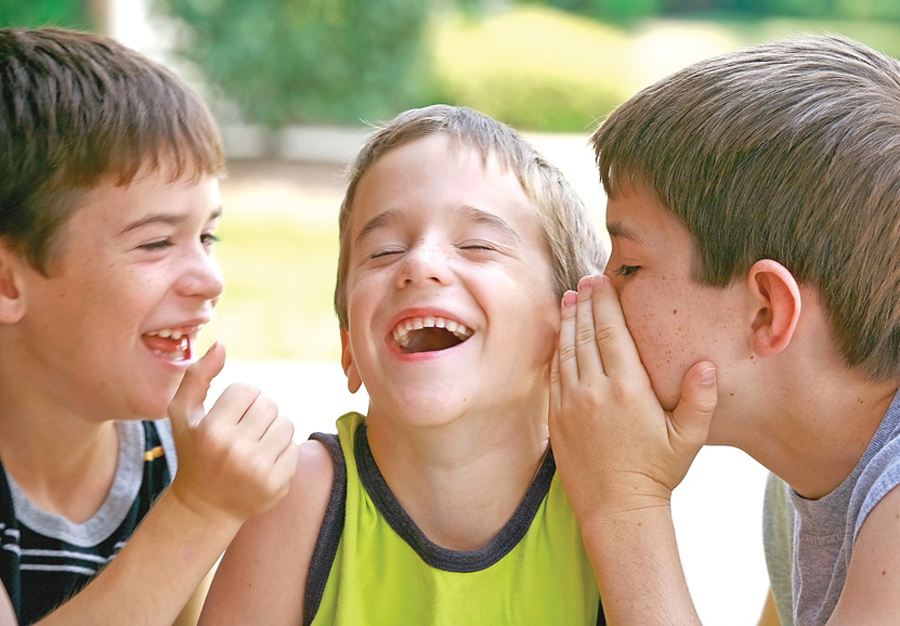
Teachers can also create opportunities for social interaction during the regular classroom day (Hirsh-Pasek, Golinkoff, Berk, & Singer, 2009). Perfect opportunities for social interaction include meal times (e.g., breakfast, lunch, or snack), transitions (e.g., arrival, departure, clean up), and outside time. For each of these examples, children could be paired with a peer to encourage social interaction. At meal times, children may be asked to sit next to a peer and then requested to talk to that friend. During transitions, the children could be partnered and asked to complete the transition together. For example, Cody and Ana are paired together when they enter the classroom in the morning and are requested to help their partner put their belongings in their “cubbies.” A communication board with common conversational words and pictures (“Hello,” “May I have one,” etc.) may assist the children in starting conversations. Children could also be assigned a play partner for a short period of time on the playground. This can be accomplished by setting up cooperative games such as a beanbag toss or a game of tag. These games would encourage play interactions to take place. Teacher support may be needed for these interactions to be successful.
Planning services
Many ECSE teachers must coordinate their schedule with many service providers who may either pull children out of the classroom or provide services in the classroom to individual children. As a teacher, it may be difficult or impossible to influence the service provider’s schedule. However, it is possible for teachers to encourage the specialists to include other children in their therapy. For example, a speech and language pathologist may focus on one child’s speech while sitting with a group of children as they play at the water table. By discouraging individualized therapy sessions (either in a pull-out setting or a singular session within the classroom) during free-play periods, classroom teachers can increase the amount of time children spend in proximity with other children. If the service provider is unwilling to work with a specific child while he or she is involved with other peers, the teacher can suggest a different time of day (other than center or free-play time) to work with the child. This will prevent the child from consistently missing opportunities to play with or next to other children, a key step in increasing social skill development.
Joint attention
Joint attention is the ability to coordinate visual attention with another child (Carpenter & Tomasello, 2000; Mundy & Stella, 2000). It indicates an awareness of another child’s mutual interest (Schertz & Odom, 2004, 2007) and establishes shared focus that can lead to higher levels of communication and play. Attempts to participate in joint attention can be verbal (i.e., the child vocalizes to get a peer’s attention while looking at an object), physical (i.e., the child holds an object up or points to an object), or visual (i.e., the peer looks at an object while the child alternates between looking at the peer and the object; Carpenter, Pennington, & Rogers, 2002; Leekam, López, & Moore, 2000). Joint attention behaviors are thought to increase in complexity with age (Didow & Eckerman, 2001).
Developmental disorders may affect a child’s ability to participate in joint attention. Children with autism spectrum disorders (ASD) often have difficulty establishing and maintaining joint attention (Bruinsma, Koegel, & Koegel, 2004). The importance of making eye contact with a social partner during joint attention periods (i.e., both children actively looking at each other or the same object) may contribute to the lack of observed joint attention attempts in children with autism (Volkmar, Lord, Bailey, Schultz, & Klin, 2004). For example, children who have difficulty making and keeping eye contact with other children and adults may be more likely to be diagnosed with autism at a later date (Werner & Dawson, 2005).
While difficulties with joint attention are most common in young children with ASD, children with other developmental disabilities may also have difficulty maintaining joint attention with their peers. For example, young children with language delays or impairments tend to have more difficulty verbally engaging their peers in joint attention than their typically developing peers and may, therefore, become discouraged from making joint attention attempts in the future (Mundy, Fox, & Card, 2003). Children with Down syndrome were also found to be less likely than their peers to engage peers in joint attention activities (Adamson, Bakeman, Deckner, & Romski, 2009). Despite the difficulty shown by some children with disabilities in establishing joint attention, there are several steps teachers can take to increase the frequency of, and the amount of time spent in, joint attention.
Strategies for Increasing Joint Attention
Increasing novel play activities
Young children often enthusiastically participate in activities that are new or novel. When toys or activities in the classroom become familiar, young children tend to become bored or fall into repetitive play patterns that often do not include sharing information with peers. Teachers can change this pattern by including novel activities and toys in the classroom on a regular basis and giving commonly used toys a “rest.” To produce even more joint attention opportunities, the teacher can introduce objects that are of specific interest to one or more of the children in the classroom (i.e., Dodge, Colker, & Heroman, 2002). As described in the vignette, Mrs. Jones increases interest and novel play experiences in the block area by including new objects (i.e., boats). The blocks that Kevin likes playing with remain in the block area. However, adding new objects creates opportunities for social interaction by playing toward other children’s interests, while allowing Kevin to remain in a comfortable space. Introducing novel toys to the classroom on a regular basis will increase opportunities for children to share interest and information with one another. See Table 4 for additional materials that can be introduced to stimulate interactive play.
Creating a single-focus activity
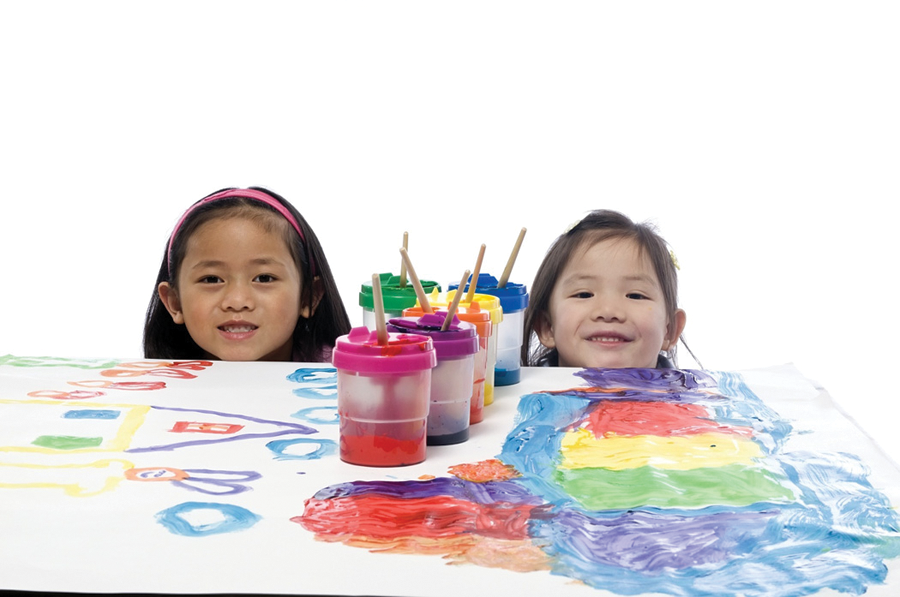
Creating joint attention opportunities can be as easy as opening up one large center that can accommodate up to four children (any more than that can become overwhelming to the young children with disabilities and their teachers; see Katz & Chard, 2000). A water or sand table complete with objects that the children find outside during recess can provide ample joint attention opportunities. Children will be located in positions that invite joint attention. Teacher support may be necessary to promote joint attention (e.g., “Look what Avery is holding”). Another single-focus activity is creating a large mural. The teacher can roll out a large piece of craft paper and set out a variety of art objects including markers, crayons, construction paper, precut objects, and/or small tangibles such as pipe cleaners or felt circles. This activity is particularly well suited for children with multiple disabilities who can be positioned where the paper can easily be reached and where construction paper or other objects can be added to the mural with teacher assistance. In both of these activities, the single focus is created by the children centered around one large object, and it invites opportunities for joint attention much more than standard center-time activities.
It is important to note that novel play activities and single-focus toys do not always need to be purchased. A large cardboard box found at a grocery store can become the most valued ECSE classroom object. With some paint, glue, paper plates, and construction paper, a large cardboard box can become a boat, a car, or a spaceship! This low-cost object will become a single-focus project in which children at all types of developmental levels can participate.
Create “peer help” opportunities
Teachers can create opportunities for joint attention by suggesting that children help each other. This strategy greatly depends on the cognitive, language, and physical abilities of the children in the class. The teacher can prompt a child to first ask a peer when he or she has simple questions. For example, if a child is having trouble locating a toy car in a particular center, the teacher can invite social acknowledgment and proximity by saying, “Hmm. I don’t know but Susan might. Say ‘Susan, where is the car?’ She may know.” This deflection, and initiation of joint attention, may spark a conversation or positive interaction between the two children that would not have occurred if the teacher found the object herself. Another example can be seen when a disagreement between two children occurs. For example, to engage the children in positive turn-taking behavior, a teacher may prompt a child to say, “May I have a turn?” instead of insisting the teacher remove the object from the peer. By giving children the tools to independently seek help, the teacher creates an environment where the children feel comfortable engaging in joint attention-based interactions. This type of behavior may help the children feel confident in initiating play and participating in more complex types of play. It may also be a welcome reprieve for teachers to defer some questions and comments to other children.
After several days playing in the block area with other friends, Kevin has grown more comfortable being around and interacting with his peers. Mrs. Jones sits nearby and watches as Kevin builds a tall tower. Deon is sitting next to Kevin driving a toy fire truck around his tower. Mrs. Jones asks Deon where his fire truck is going. Kevin says “my house!” and gives a big smile as Deon swerves his fire truck next to Kevin’s tower. Deon says, “Here I am!” and pretends to put out the fire.
Following the child’s lead in play
ECSE teachers can positively influence the joint attention of their students by becoming involved in play activities (Schweinhart, 2006). When the teacher participates in center-time activities and shapes interactive experiences, children can be encouraged to make successful interaction attempts with their peers. For example, a teacher can encourage children to play at the same center or table with the same materials. When the children are in the same area playing with the same toys, the teacher can prompt each child to show his or her peers what they are playing with or making. By ensuring that children are in proximity with each other and aware of each other’s play materials, the teacher is increasing opportunities for higher levels of play to emerge. An example of this was when Mrs. Jones prompted Deon to talk about his play, which sparks a dialog that leads to an associative play situation. In this situation, without the teacher prompting, the two children may have been oblivious to the other’s play and the opportunity for joint attention, and, therefore, hierarchical play would have been missed.
Teacher involvement is a valuable tool in increasing the joint attention and complexity of play among peers; however, too much involvement may have an adverse effect. It is important to remain aware of the child’s social abilities when prompting him or her to play with a peer. It may be that a child needs assistance only in initiating a play interaction (i.e., saying “Do you want to play with me”) and once the play begins, he or she is capable of continuing the shared experience. In this circumstance, a teacher who continues to prompt and remain physically involved might stifle any efforts of peer joint engagement that may develop on their own between the two children.
Alternatively, too little teacher involvement may have negative effects. For example, if the teacher prompts a child to invite a peer to play and then walks away assuming the two will continue to play on their own, the child may become frustrated with the play and react with aggression or withdraw. In this situation, had the teacher remained in the vicinity, she could have prompted the child with the necessary words to keep the child engaged in the play (i.e., “Say, ‘I’d like a turn, please’”). These examples demonstrate the need for teachers to observe each play situation and determine the delicate balance of teacher involvement in prompting for joint attention.
Individual Adaptations
In addition to increasing complex play opportunities by encouraging proximity and joint attention, specific social skill instruction should be used to aid children with specific social needs. These needs may be based on current level of social skills, cultural conventions, and temperament considerations.
Individual cultural considerations are influential to play behavior and social competence development in young children. While shaping young children’s play in ECSE classrooms, teachers should keep in mind that cultural norms and interests may have significant influences on the type of play in which peers participate or the extent to which they participate in play with peers. For example, some cultures might find direct questions that can be useful in initiating play rude and unwelcome. Thus, children who have been raised in this cultural model might participate in solitary play or parallel play because they need help finding more subtle methods of incorporating interactions with others in play.
Child temperament may also play a role in the play styles of young children (Luckey & Fabes, 2005). Children who are overly shy or quiet may require different methods of intervention than more outgoing children to initiate more complex levels of play. Teachers may find it necessary to match their level of prompting and encouragement to each child’s personality to ensure that the child will participate in peer play. For example, if a child is extremely shy, the teacher may be more likely to facilitate peer play by encouraging the child first to feel comfortable playing in the same center as other children, then sitting closer to the other children, and eventually interacting in meaningful ways. This “one-step-at-a-time” approach would most likely match the temperament of a shy child.
Individual characteristics play a role in social play patterns and social competence development. Thus, it is important for teachers to consider cultural and individual characteristics when implementing social intervention strategies in ECSE classrooms.
“Increasing peer proximity and joint attention opportunities will prepare young children with disabilities for successful interactions with peers.”
Conclusion
With the number of children requiring special education services growing steadily in recent years due in part to improvements in earlier diagnoses and legislation emphasizing early intervention (National Research Council and Institute of Medicine, 2000), the number of children enrolled in ECSE classrooms has increased (National Center for Education Statistics, 2002). Play skills that encourage interactions between peers are recommended as part of the National Association of the Education of Young Children’s Developmentally Appropriate Practices (Copple & Bredekamp, 2009), and interventions targeting these play skills have been shown to influence social skill development and later social success in children with disabilities (Craig-Unkefer & Kaiser, 2002; Odom et al., 2008). Thus, ECSE classrooms would benefit from including activities and classroom routines that promote peer interaction in their daily routines.
The strategies presented in this article are designed to create comprehensive tools for increasing hierarchical play in the ECSE classroom. Whichever strategies teachers choose to implement, it is important that they make them a daily part of the classroom experience and keep track of the progress their students are making. This way, the children can learn the routines of playing with a partner at recess, talking with peers during lunch and snack, and having peer buddies at center time in a natural environment and should be more successful at interacting with their peers. By taking note of each child’s progress during the course of using these strategies to teach social skills, the teacher will be able to adequately pull back on prompting and involvement based on the child’s success. This can be accomplished by jotting down quick notes based on verbalizations overheard from the child or making note of the approximate time spent in collaborative, interactive play.
Increasing peer proximity and joint attention opportunities will prepare young children with disabilities for successful interactions with peers and therefore build the social skills and confidence needed to participate in more complex play behaviors. Young children with disabilities need systematic interventions for increasing peer play opportunities (Guralnick, Hammond, & Connor, 2006), and these strategies help teachers accommodate this need through daily classroom routines. These small changes can lead to changes in social competence that may last a lifetime.
Footnotes
You may reach Kristen R. Jamison by e-mail at