






Abstract
I really like that everything is matter of fact. The fact that my son doesn’t talk as well as other kids—The other kids don’t even really pay attention. It may be a little harder for them to understand him sometimes but [he’s] just their friend. And that’s the beauty of inclusion too. That it’s dual-fold. The child in need has a model, which he desperately needed, but in turn the other children become tolerant and accepting of differences and don’t see them as different. That’s just the way [he] is. (Mother of a preschooler with disabilities.)
This parent’s voice echoes ideas that have long been articulated by families, professionals, and researchers regarding the numerous benefits of inclusive education for young children (Buysse, 1993; Erwin, Soodak, Winton, & Turnbull, 2001). There are many resources that describe high-quality inclusive practices in early education (Division for Early Childhood/National Association for the Education of Young Children, 2009; National Professional Development Center on Inclusion, 2009) as well as the necessary competencies for early-childhood practitioners working in inclusive settings (National Professional Development Center on Inclusion, 2011). Yet, despite important initiatives in the field, a discrepancy between research and practice remains (Bruder, 2010; Odom, 2009; Soodak et al., 2002).
In an effort to narrow this research-to-practice gap in understanding effective inclusive practices, we began conversations with a variety of stakeholders, including families, practitioners, researchers, graduate students, and administrators, at an inclusive university-based, early-childhood center. Although the stakeholders represented many perspectives, they shared the same interest in and commitment to conducting research that was accessible and applicable to improving daily lives within the school community.
We identified a participatory action research (PAR) approach as a way of minimizing the disparity between what we learn through research and how we can use this information to produce positive outcomes in immediate and meaningful ways. A PAR approach actively involves the intended beneficiaries (individuals who will directly benefit from it) in all stages of the research process from beginning to end (Turnbull, Freisen, & Ramirez, 1998). We selected this research approach so that families, practitioners, administrators, and researchers play an equally important role and share ownership in the conceptualization, design, and implementation of the investigation. In this article, we describe how we implemented PAR to help deepen our understanding of community and diversity. One of the key questions that guided our investigation was, “What does it mean to be fully inclusive across all aspects of diversity?” We discuss the lessons learned and implications for how we can approach services for children with disabilities and their families.
Our PAR Process
This (PAR) study was conceptualized and carried out by a team of researchers that consisted of stakeholders, including families, practitioners, administrators, as well as university researchers and graduate students. We utilized a PAR approach because it is a collaborative way of conducting research in which practitioners and researchers work closely together to identify and address critical issues. Our approach reflected a key PAR premise that people who are the object of research are experts about their lives, and are best able to identify key issues and resolutions that lead to meaningful action (Ditrano & Silverstein, 2006; Ho, 2002; McIntyre, 2000; Savin-Baden & Wimpenny, 2007).
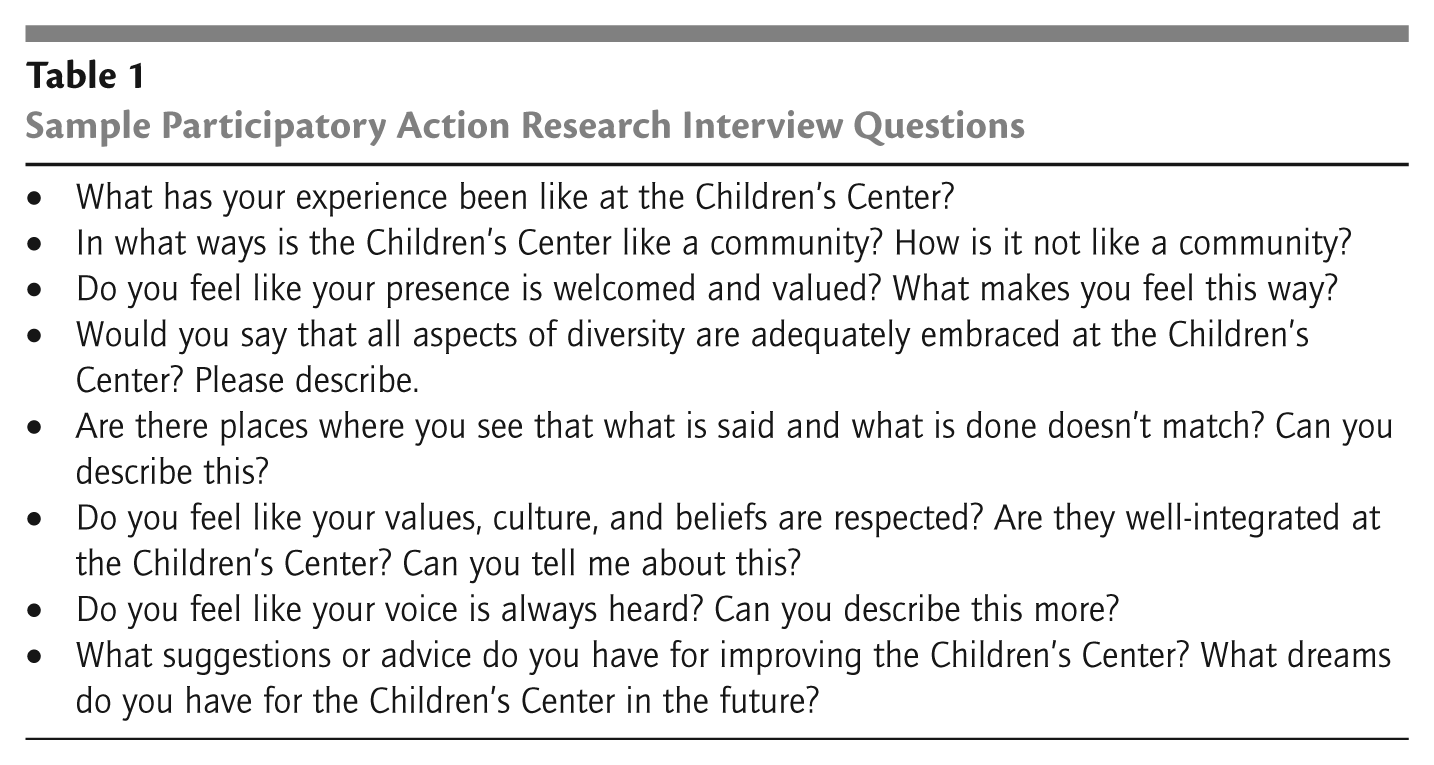
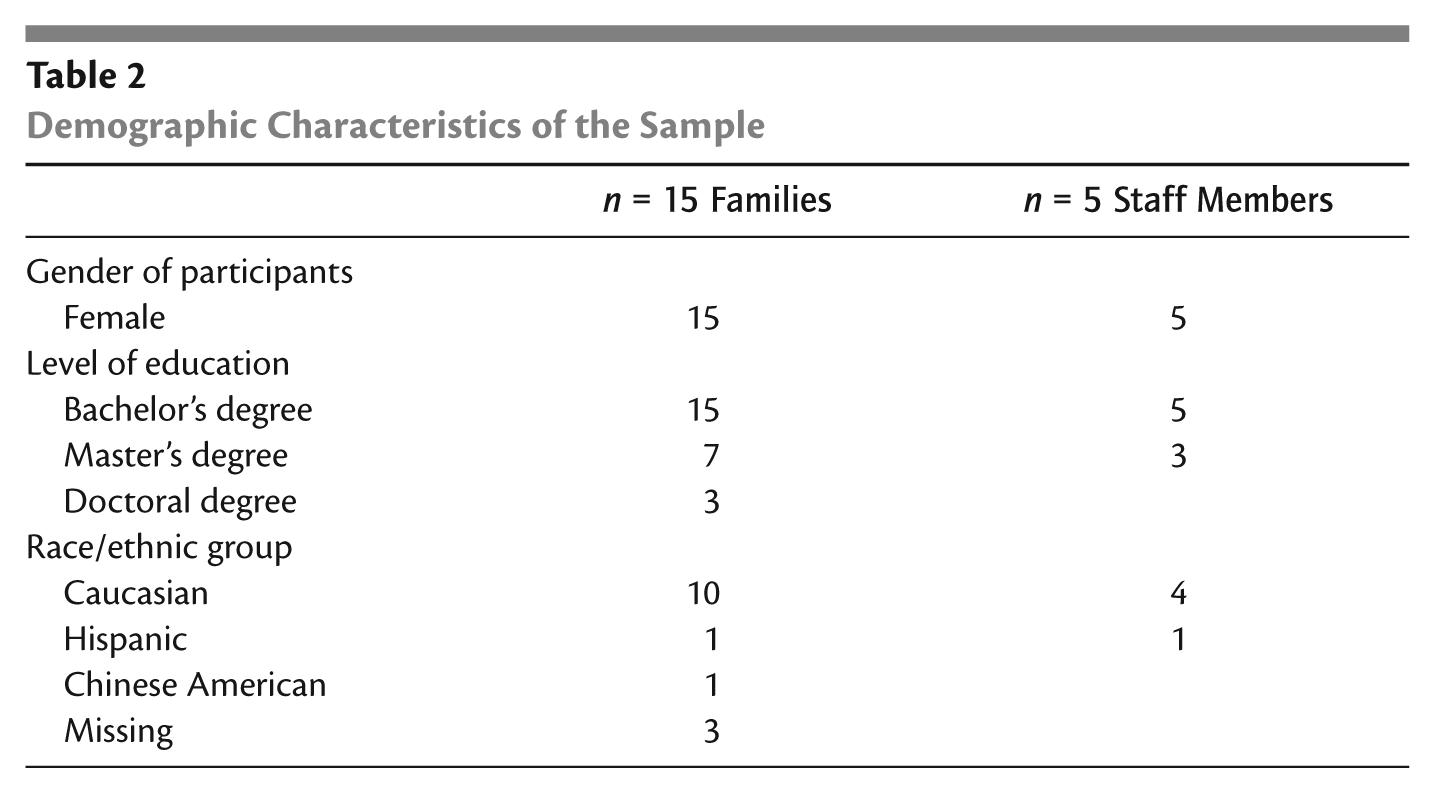
We selected semi-structured personal interviews as the method of gathering data. Sample interview questions can be found in Table 1. We selected 15 families and 5 staff members who reflect a balance of characteristics and diverse viewpoints to take part in the project based the center’s proportion of families to staff members. Table 2 provides a summary of the 20 family and staff study participants.
Sample Participatory Action Research Interview Questions
Demographic Characteristics of the Sample
We analyzed the data by reading each interview transcript to help us identify patterns, themes, codes, and questions that emerged from the data. The research team held discussions about how to make sense of all these findings and how they relate to one another. We created a visual model to illustrate the many factors that influenced community and how all the factors were connected (Erwin, Puig, Evenson, & Beresford, 2011). For the purposes of this article, we are focusing on one set of findings related specifically to the meaning of community within an inclusive early-childhood environment.
What We Learned
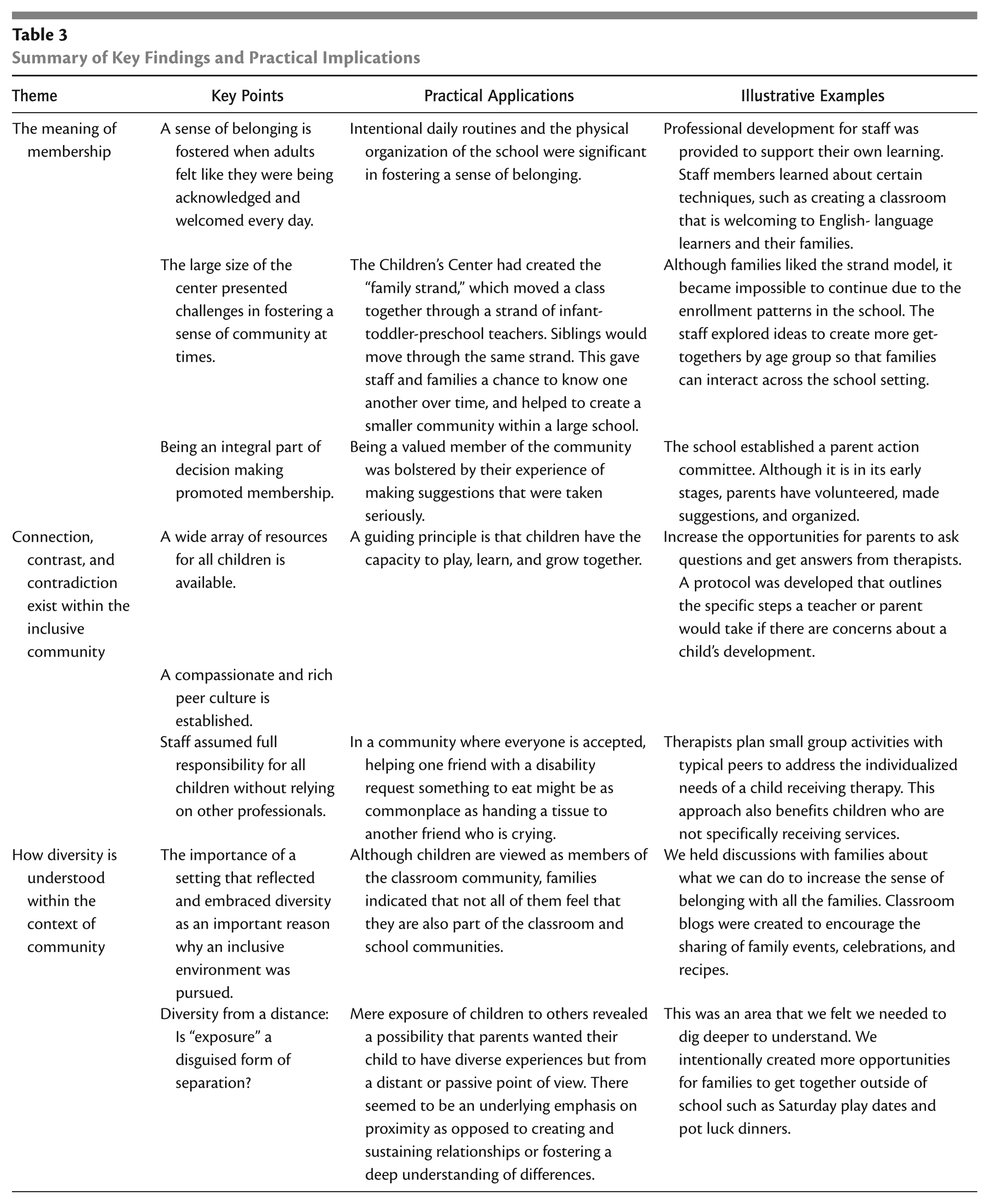
Just as the process of linking research to practice informed the development of our study, our reporting and application of results mirrors the same intention. We share key findings of our investigation in Table 3. In an effort to bridge the research-to-practice gap, we present the findings combined with the practical applications and illustrative examples.
Summary of Key Findings and Practical Implications
We have also translated highlights from the findings into key recommendations for others who want to create stronger and more meaningful linkages between research and practice in inclusive early-childhood environments. The following recommendations that emerged from the data are from our stakeholders to other stakeholders in the field about lessons learned.
The Meaning of Membership
We learned that many factors contribute to how families and staff experienced a sense of belonging, including the idea of feeling connected to one another. One parent explained it this way, “You walk in and everyone’s like ‘good morning.’ The kids come running up to the teachers and the teachers are so loving. They ask about how our weekend was.” Similarly, the parent at the beginning of this article notes the acceptance between children as just a natural part of the way things are.
Researchers suggests that belonging and a solid connection to “community” is at the heart of inclusive practices (Erwin & Guintini, 2000; Odom, Buysse, & Soukakou, 2011; Wolfberg et al., 1999). We found several ways to foster membership across the larger school and within each classroom community.
Establish intentional rituals and routines each day
Specific and purposeful rituals and routines can provide a welcoming sense right from the very beginning of the day as noted in the parent’s comment above about the arrival routine. There are several ways to incorporate these routines and rituals within a typical day. Within the classroom as well as the larger school community, the beginning and conclusion to each day should be met with the greeting of children and families by name from center staff (i.e., receptionist, social worker). Classroom rituals and routines should be created to incorporate greeting and closure activities with children and their families, and to support transitions. For example, children can place belongings in personal cubbies and put food items away, and children and teachers can greet each other by name and sign in an “attendance book.”
Make the time to connect
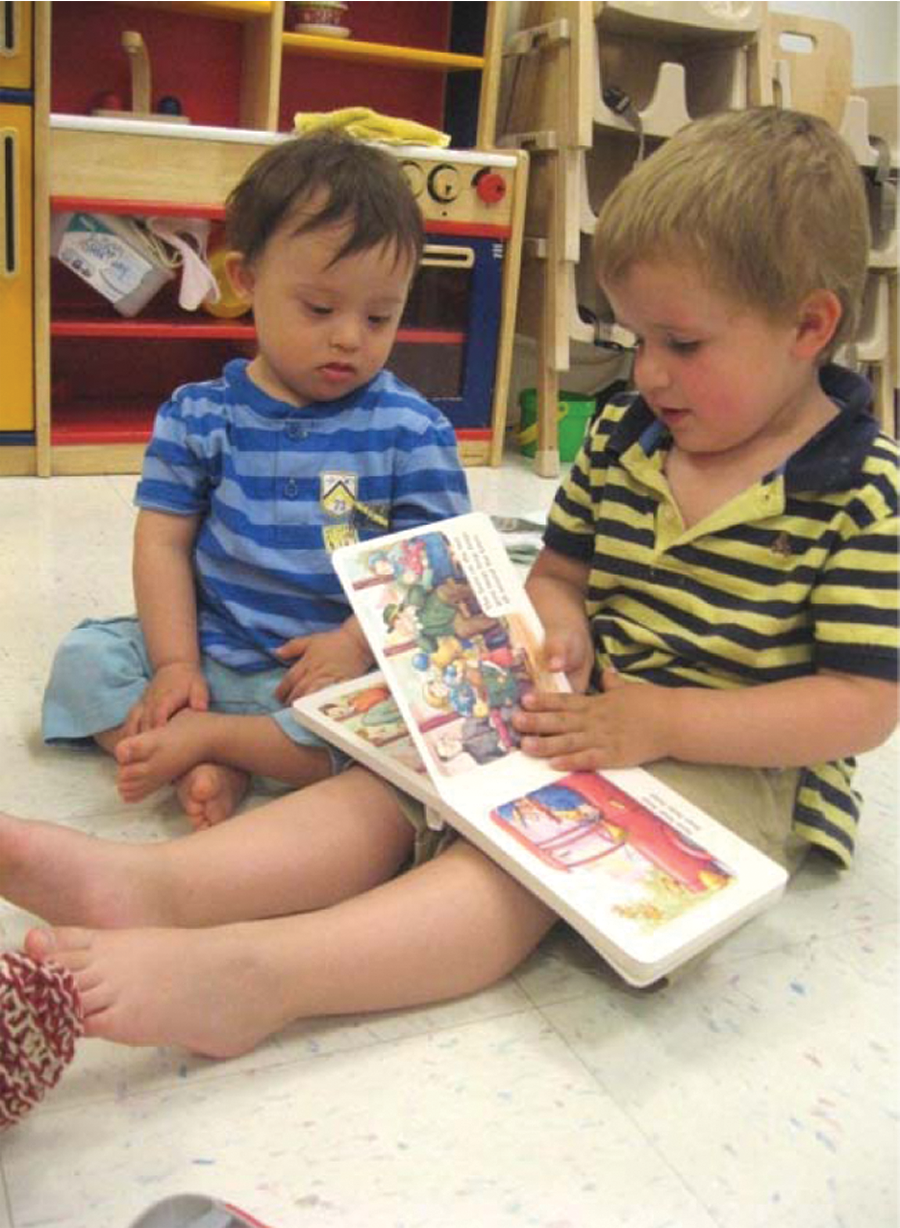
Making a visible commitment to promote belonging and connection can happen in a variety of ways. Siblings can be encouraged to visit each other during the day to join in an activity, help at lunchtime, provide support when a sibling is having a difficult time, or facilitate transitions. This can support relationships within families, and also provide an opportunity for children and families to become familiar with each other’s siblings and families. In this way, relationships within and between families are strengthened. On-location and online bulletin boards can be created and maintained where families can share news and resources. Classroom blogs and school Listservs can serve as a great way to facilitate frequent communication between school staff and families as well as among families. Same-age classrooms can be combined for specific activities (e.g., the toddler teddy bear picnic, the preschool visit with the dentist). Same-age classrooms can also meet together for back-to-school night or other events that can address similar interests. In addition, a forum can be established for brainstorming and addressing topics identified in individual family surveys. This is a great way to support shared decision making within the community of family members, practitioners, staff, and administrators.
Be intentional and consistent about creating opportunities to connect
The imaginative and resourceful use of space as well as personnel is another feature that can promote membership among children and adults alike. The use of communal school spaces, including hallways, for gross motor activities could enhance a sense of connection and increased social opportunities. For example, using common spaces in small groups is one way of carrying out physical or occupational therapy activities such as the use of roller skates, ride-on-toys, tunnel play, and obstacle courses.
Enjoying common areas also creates opportunities for children and staff to interact with children and adults from other classrooms. Promoting shared playground and gym times also encourages interactions between children and staff from different classrooms. The use of regular “floaters” on staff to cover for practitioners and assistants who are absent due to illness or professional responsibilities outside of the classroom (e.g., Individualized Education Plan (IEP) meetings, conferences) supports the continuity of care, and establishes or strengthens trust among practitioners, families, and children.
“That’s one of the side benefits of an inclusive environment—there are all these extra staff that have incredible expertise that normally you would never get in a regular day care setting.”
The Essence of Collaboration
We learned that collaboration was a clear underlying value at the center. High-quality inclusive education can only occur with shared responsibility and skillful collaboration (DeVore, Miolo, & Hadar, 2011; Friend & Cook, 2010; Sandall, Hemmeter, Smith, & McLean, 2005; Snell & Janney, 2000). In our investigation, stakeholders acknowledged and appreciated the easy access and wide availability of resources that supported collaborative teaming.
One parent noted, “That’s one of the side benefits of an inclusive environment—All these extra staff have incredible expertise that normally you would never get in a regular day care setting.” As with any resource, it is important to have systematic plans and procedures in place to foster collaboration and continuity across and within the community. We describe some ways to do just that.
Establish written protocols to successfully support all children
The use of written protocols fosters the collaboration process by assuring that all stakeholders are involved and systematically documenting key steps. It provides a public record of how to facilitate certain practices or procedures. The consistent use of written protocols with all stakeholders (i.e., families, practitioners, staff, and administrators) can provide clarity and clear expectations that lead to increased trust and collaboration. A weekly planning protocol can be created to facilitate the process between practitioners to share ideas, concerns, insights, and strategies regarding individual children. The development and use of protocols can outline specific ways to facilitate a range of essential activities. These activities might include child observations, identification of classroom issues, conflict resolution, and progress monitoring.
Schedule adequate time to plan and reflect
Just as the parent noted at the beginning of this section, there is a wide range of skills and knowledge from many different practitioners. Therefore, ensuring that there is sufficient and prearranged time for transdisciplinary planning, exchanging ideas, and reflecting on practice is nonnegotiable. The systematic scheduling of frequent and built-in time for formal meetings as well as informal interactions is indispensable.
Regular common planning time provides the necessary avenue for teachers and related-service providers to achieve a smooth and consistent flow of strategies and information across classroom and other school environments. The appropriate amount of meeting time is also critical to plan, implement, and reflect on individual progress and whole-group activities, among other important activities. Having sufficient time to exchange important information reinforces the therapists’ role as a valuable resource to all the children in the class and also provides an informal forum of reciprocal professional development between practitioners.
Ensure diverse perspectives at meetings
Invite individuals who can provide a critical lens for understanding a question or problem. This is one way of engaging in the spirit of inquiry and collaboration. Family voices provide a unique and necessary perspective regarding their own child as well as the overall functioning of the center. Creating forums that promote an exchange of critical information and value families’ insights should be intentionally embedded into program schedules and protocols. For example, part of the back-to-school night agenda might include families discussing specific topics that the center is working on. This allows families to share their ideas and to hear each other’s perspectives.
Related-service providers should attend age-specific group meetings with other practitioners so that they can share their areas of expertise in regard to children of specific age groups. Regular forums throughout the year could be organized where stakeholders collectively examine that the guiding values of the center are closely aligned with the policies and practices.
Understanding of Difference Within the Context of Community
Attention to cultural diversity and important implications in the implementation of educating of children with disabilities continues to grow (Harry, 2008; Santelli, Markey, Johnson, Turnbull, & Turnbull, 2001). We learned that many factors exist when it comes to what diversity means and how it is understood. The idea of exposure to diversity, as this parent and others articulated, prompted us to think about diversity in ways we hadn’t considered before:
[My daughter] had a kid last year who was in her class who was African American who was an adopted child who had two white, gay men as his fathers. I think the more exposure my kids can have to that, the better off they’re going to be in life.
We suggest that deep and thoughtful learning (as opposed to mere exposure) of different and new experiences strengthens a sense of community.
Put into action a solid commitment to foster deep learning about differences—not just mere exposure to them
Although our center is inclusive and dedicated to embracing diversity, we decided to discover new ways to know and challenge existing paradigms and reframe any current assumptions or biases. The parent quote above reminds us that presence alone or close proximity to children who have perceived differences are not enough to foster deep and meaningful understanding of differences.
Making intentional connections across the curriculum, literature, personal experiences, naturally occurring events, and social relationships can provide an important context for ideas that are investigated within individual classroom communities. This is a perfect opportunity to identify, compare, contrast, and explore similarities and differences for children and adults. Safe and interactive environments can be maintained in class and outside of the classroom that support an open discussion of challenging topics. For example, staff may want professional development to foster effective team practices, so that difficult topics can be addressed and resolved in a timely and collaborative manner.
Reaffirm the beauty and significance of all forms of diversity
It is critical to revisit often the commitment to community and diversity as a natural and routine part of the school climate. One of the best ways to do this is to ensure that open and clear communication remains a top priority, particularly when issues and questions arise. This requires sharing the program mission and vision from the first meeting with families and staff as one way of maintaining a safe and welcoming environment for everyone. The school mission can be generated by family and staff members so a collective voice across stakeholders is assured. Another idea to emphasize the commitment to diversity is to maintain a clear and deliberate intention when designing and decorating spaces within the environment. For example, a vibrant and rich representation of art, music, literature, posters, photography, toys, and other artifacts makes a bold statement about to what extent diversity is valued. An antibias, inquiry-driven, and equity-based agenda is one way we demonstrate the value we place on diversity in the classroom. Embracing uniqueness in an inclusive environment extends far beyond just (dis)ability, and must include social class, race, ethnicity, language, sexual identity, religion, nationality, and so on.
Create smooth transitions when children move from one classroom to another
These critical times of change present children and families alike with new (and diverse) experiences, routines, and people. We determined that preparation and a clearly articulated process for transition would demystify this experience and support a smooth flow. Create a formal intake process that offers each new teacher a time to meet with families and collect information from them.
Provide multiple opportunities for children to visit new classrooms and to get a sense of the new environment, routines, and practitioners. Invite families to visit the new classroom as another way to alleviate any anxiety about the upcoming transition. Before the start of the year, each classroom staff could host an ice cream social or other event so that new families and children can meet each other before the 1st day. Arrange for teachers and related-service providers to visit classrooms that have children who are scheduled to transition to their classrooms. Create transitions so that they occur at one specified time during the year so that familiar peers from the same classroom can transition together.
We return to the insightful words of the parent of a child with a disability featured at the beginning of this article who described how being in a diverse, inclusive environment provided valuable benefits for children with and without disabilities. We acknowledge that these benefits extend far beyond the children to create a vibrant community for adults too.
Final Thoughts
Our intention with this study was to bridge the gap between research and practice by conducting a qualitative investigation to deepen our understanding of diversity and community. During this process, we also broadened our knowledge about PAR. We would encourage others to pursue a similar approach for examining critical issues and questions from a collective perspective as a way to produce immediate and meaningful benefits for stakeholders.
We have shared many outcomes and recommendations about what we learned regarding the meaning of community and diversity. In our concluding thoughts, we propose helpful tips to stakeholders who are considering using a PAR or similar type of process to address key issues from a diverse and broad perspective. Many of these tips have been identified based on the limitations of this investigation or challenges faced during our research process.
First, identifying a PAR research team that fully represents the various stakeholders is critical but will be challenging if members are not fully invested in participating. Those leading the research investigation will want to clearly define the responsibilities and time commitment as much as possible at the beginning of the process.
With regard to carrying out the research agenda, it would be helpful to identify a funding source and to hire an “outsider” to actually conduct the interviews. It might also be possible to find graduate students or volunteers who would be willing to do this so that the anonymity of the study participants could be maintained. An administrator can be involved in developing the research questions. However, confidentiality and integrity during the research process would be strengthened by waiting until after the data have been collected and coded to read through the findings.
The PAR process can be a lengthy and time-consuming investment. Therefore, we would suggest linking the research process to other ongoing initiatives at the center. For instance, if family and staff surveys are conducted each year, it would be beneficial to coordinate and reflect on the PAR findings with the results of these surveys. Finally, it is important to identify specific ways for communicating research findings with stakeholders within the center as well as across the larger early-childhood community. Developing and implementing a set of data-driven practical recommendations can be one way of narrowing the research-to-practice gap as well as giving voice to those who have a direct and vested interest in the outcomes.
There are many changes we would have made to the PAR process, but one thing is clear. We gained a deeper understanding of the myriad of factors that are involved in building and sustaining community within an early-childhood setting. Our appreciation for and knowledge of the research to practice link have improved our practices not only for children but also for all the stakeholders who are part of our evolving school community.
Footnotes
Acknowledgements
The authors would like to thank all the individuals from the Children’s Center who participated in this research process. They also gratefully acknowledge the assistance of Elisa Toturgul and Rita Jamai who helped in the preparation of this manuscript.
Authors’ Note
You may reach Elizabeth J. Erwin by e-mail at