






Abstract

Zoey is an engaging, 2.6-year-old, late-talking toddler who presents with significant expressive language delays in the absence of cognitive, receptive language, or social skill delays. Zoey and her mother attend TOTalk, a university-based, caregiver–child language stimulation group (six caregiver–child pairs), which meets weekly for 90 min over 14 weeks. In addition, Zoey receives home-based speech-language therapy biweekly through the Department of Health’s Early Intervention Program.
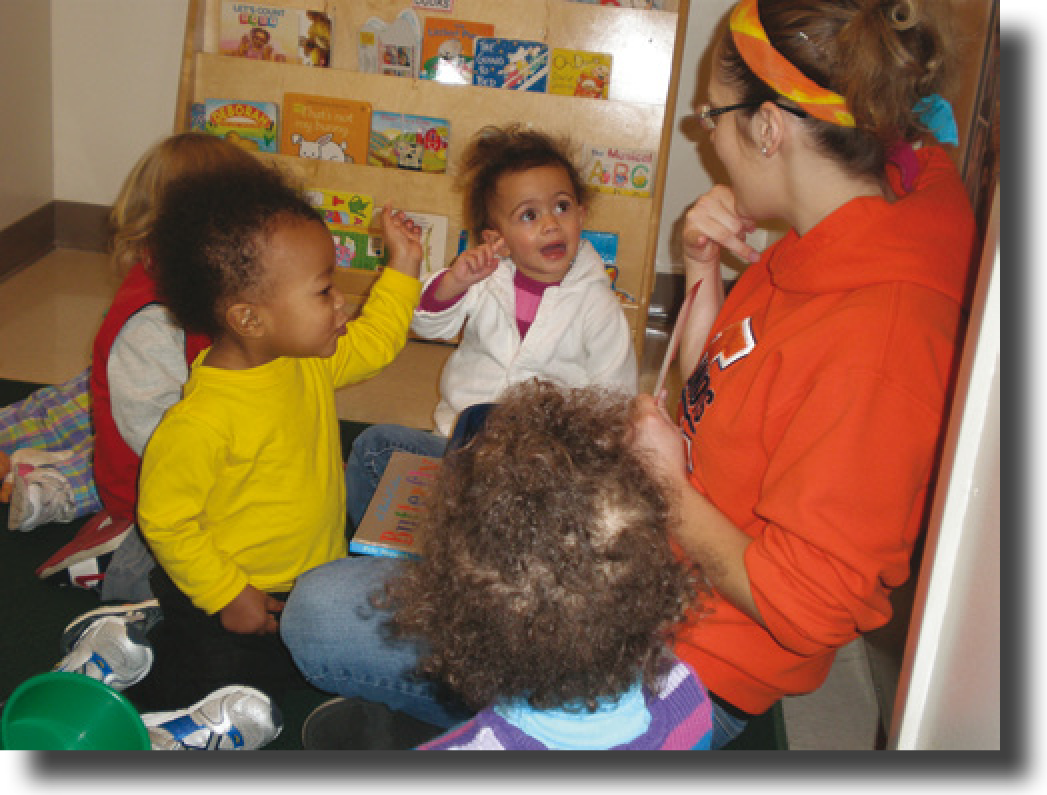
Expressively, Zoey began TOTalk with approximately 16 single words as identified by her mother on the Language Development Survey, a parent-report instrument (LDS; Rescorla, 1989) and observed during the first 2 weeks of the group. As expected from her testing, Zoey participates enthusiastically in all TOTalk activities (i.e., low-structured play including pretend play, circle time greeting and finger-play songs, gross motor dancing, sensory activities, snack time, and shared book reading), communicating using her single words and natural gestures such as pointing and showing.
For children developing language typically, exposure to language through the natural, general language stimulation provided by families, siblings, and others is sufficient enough to facilitate language learning (Bloom & Lahey, 1978; Nelson, 1973; Owens, 2008). Sometime between 10 and 16 months, these children begin to speak their first words (Bloom & Lahey, 1978; Fenson et al., 1994; Nelson, 1973; Owens, 2008). With the acquisition of approximately 50 words, between 18 and 24 months, typically developing children begin to produce two-word combinations (Bloom & Lahey, 1978; Nelson, 1973; Owens, 2008). By 2 years, these children have a vocabulary of 200 to 300 words (Fenson et al., 1994). They create short sentences that may include articles or prepositions (e.g., “I want a cookie”; “Dolly go in there”) and begin to use grammatical markers such as plurals (e.g., “blocks”) and present progressives (e.g., “eating”; Bloom & Lahey, 1978; Brown, 1973). However, children with language delays (even those who are receptively and cognitively intact) might not speak their first words until 18 to 24 months, or even later, and may be slow to acquire new words compared with the rate of lexical acquisition in typical peers (Fenson et al., 1994; Rescorla, Alley, & Christine, 2001). As a result, successive language milestones are also delayed.
It has been hypothesized that children with language delays do not learn language from general language stimulation due to various factors including compromised information processing systems and reduced caregiver–child interactions (Ellis Weismer & Robertson, 2006). Information processing theorists suggest that the language delay is caused by deficits in the child’s cognitive processing abilities, that is, the ability to attend, discriminate, organize, store, and/or retrieve information (e.g., Just & Carpenter, 1992). Deficits in any one of these areas will compromise the ability of the whole system to function. For example, it has been demonstrated that children with language delays have working memory deficits (Montgomery, Magimairaj, & Finney, 2010). Without the ability to retain new words in working memory, the brain cannot properly process or store the new lexical information. Thus, new words presented naturally by caregivers and others may not be learned.
A second etiological concern arises from social learning models of language acquisition (e.g., Bruner, 1983; Vygotsky, 1978). Social learning theorists suggest that children learn language through observing, listening, and interacting with more skilled others who simplify their own language and expand the children’s utterances. Furthermore, the reciprocal interaction between caregiver and child is a key component to language learning (Warren et al., 2006). Language initiations and responses are ongoing and mutually reinforcing. When the child with a language delay does not respond or responds infrequently, input from the adult (simplifications and expansions) dwindles due to lack of reinforcement; less language stimulation by the adult results in fewer language learning opportunities for the child (Rice, 1993).
These information processing and social learning theory models of language delay have guided the creation and validation of more carefully engineered, yet natural, evidence-based therapy approaches. Specifically, an approach that provides frequent repetition of a limited set of target words, called focused stimulation, is recommended (Ellis Weismer & Robertson, 2006). Repetition is a critical component in language therapy. From an information processing perspective, it increases the number of opportunities children have to listen to a small set of target words, thereby increasing the potential for working memory to retain, process, store, and retrieve them. From a social learning perspective, fewer and more concentrated targets modeled by adults increase the child’s success in producing words, which in turn, reinforces the caregiver who is motivated to provide new models (Warren et al., 2006).
Repetition of a target word within an activity alone is not sufficient to facilitate its production. Understanding the concept each target vocabulary word expresses must be facilitated through multiple means of representation (Division for Early Childhood of the Council for Exceptional Children [DEC], 2007). The child must hear the word, experience the object or action it represents, view a picture, and so on. In addition, to help children gain mastery of the targets, these multiple repetitions provided by focused stimulation, combined with conceptual teaching, must be embedded across activities and settings including home, school, and the community. Multiple opportunities to listen and respond support generalization of learned targets (Noh, Allen, & Squires, 2009).
“Selection of specific target words is based on many factors including typical development; child interest; family wishes; cultural considerations; and opportunities to practice the targets in therapy, school, and at home.”
These essential language intervention concepts, as outlined in a technical report published by the American Speech-Language-Hearing Association (ASHA, 2008) titled, “Roles and responsibilities in early intervention,” are aligned with fundamental curriculum design principles, as outlined by the National Association for the Education of Young Children (NAEYC, 2009) and the DEC (2007). Specifically, key language intervention/curriculum design principles include (a) choosing a small set of developmentally appropriate, individualized goals; (b) employing universally designed teaching strategies which provide for multiple modes of representation, engagement, and expression; (c) embedding learning objectives (ELOs) within and across activities and settings; (d) collaborating with families; and (e) assessing progress and setting new goals.
The purpose of this article is to integrate best practices in early language intervention with best practices in curriculum design to provide practical strategies using repetition to facilitate production of early single words. Specifically, topics covered will include how to (a) select a small set of target expressive language vocabulary words for children learning to talk, (b) utilize a focused stimulation approach within activities, (c) embed frequent learning opportunities across the curriculum, (d) work with families to incorporate focused stimulation at home across daily routines, and (e) assess progress and set new goals. Zoey’s story will be used to illustrate these practices.
Choosing Developmentally Appropriate, Individualized Goals
The first principle that guides best practice in language intervention/curriculum design is choosing a small set of developmentally appropriate, individualized goals. For young children with language delays, early expressive language goals typically begin with the production of single words from different semantic categories such as nouns, verbs, prepositions, and adjectives to express different ideas. Nouns are considered “substantive words,” as they specify particular objects (e.g., soup, ball). All non-nouns, such as verbs, prepositions, or adjectives are considered “relational words” as they express a relationship with a noun (e.g., give me soup, in the soup, hot soup; Lahey, 1988).
Speech-Language Pathologists (SLPs) typically choose a combination of substantive and relational word targets to expand a child’s ability to express a variety of thoughts, communicate different pragmatic intents (e.g., comment, protest, request, greet), and help the child prepare for the transition to syntax (i.e., two-word utterances; Lahey, 1988). Selection of specific target words is based on many factors including typical lexical development; child interest; family wishes; cultural considerations; and opportunities to practice the targets in therapy, school, and at home (Lahey, 1988). As relational words are not object-specific, there are many more opportunities to practice these words in different contexts. Relational words are also less child-specific than names of favorite toys or foods. For these two reasons, relational words are especially well suited as targets in group settings.
Relational words express a variety of meanings. One popular taxonomy used for sorting relational word samples was developed by Bloom and Lahey (1978). They identified eight different categories of relational words, that is, action (e.g., doing verbs such as “eat,” “wash,” “open,” and “drink”), attribution (e.g., adjectives such as “hot,” “wet,” and “dirty”), locative action (e.g., prepositions such as “up,” “down,” and “in”), recurrence (e.g., words that express the reappearance of an object or repetition of an event such as “more” or “again”), rejection (e.g., “no” in response to “Do you want a bath?”), denial (e.g., “no” in response to “Is that your toy?”), nonexistence/disappearance (e.g., “all done,” “no more,” “all gone”), and possession (e.g., “mine”).
SLPs typically choose one or more targets from each of these relational categories, along with some nouns, with the total number of targets individually determined but usually not more than 10 to 12 (Girolametto, Pearce, & Weitzman, 1996; Lederer, 2002, 2011). By limiting the number of targets, the child is exposed to fewer words more frequently thus reducing the demands on the information processing system. Additional instructions for how to choose first targets and pools from which to choose them can be found in the literature (Fenson et al., 1994; Girolametto et al., 1996; Lederer, 2002, 2011).
Action words may be especially important to target based on their role in the transition to syntax. A first vocabulary repertoire filled with nouns does not provide for this important milestone. It has been argued that verbs are more difficult to acquire than nouns (Conti-Ramsden & Jones, 1997; Hadley, 1998). Perhaps this is because inherently, verbs are syntactical. “Eat” implies either agent-action (i.e., someone eats) or action-object (i.e., eats something). Researchers have argued children with language delays need many more presentations of verbs than children developing typically to learn them (Conti-Ramsden & Jones, 1997; Hadley, 1998). Therefore, it is important to include verbs in a first lexicon.
“More” is a popular early target selected by SLPs because it can be used to request different objects (e.g., cookies, bubbles) or events (e.g., kisses, tickles). In addition, it is a self-reinforcing target from a behavioral perspective. When a child requests “more,” the natural response by the caregiver is to give “more,” which further motivates the child to again request “more.”
“The target is presented in short, but natural phrases/sentences to help build the concept linguistically…pictures, signs, or demonstrations also are used.”
An analysis of Zoey’s 16 single words revealed production of 11 substantive nouns (e.g., “mommy,” “daddy,” “cookie”), as well as productions from the relational categories of locative action (“up,” “down”), rejection (“no”), possession (“mine”), and the pragmatic intent of greeting (“bye-bye”). There was no evidence of action, recurrence, attribution, or nonexistence. Guided by developmental lexical data from typically developing toddlers (Fenson et al., 1994), recommended pools of target words (Lederer, 2002, 2011), curricular opportunities and the needs of Zoey’s group-mates, and home opportunities and family cultural and other considerations, the SLP chose the following eight relational targets: action (“eat,” “wash,” “drink,” “open”), recurrence (“more”), nonexistence (“done”), attribution (“wet”), and locative action (“in”). An additional four new nouns were targeted for a total of 12 new words.
Employing Universally Designed Teaching Strategies
Reducing the number of target words to which a child is exposed is not sufficient enough to facilitate vocabulary learning. According to the second language intervention/curriculum design principle, Universal Design for Learning (Individuals With Disabilities Education Improvement Act [IDEA], 2004), families and professionals also must provide children with multiple representations of concepts being taught and multiple modalities for expressing what is being learned (DEC, 2007). For children with language delays, new concepts can be facilitated and expressed using verbal language, pictures, natural gestures or sign language, facial expressions, and demonstrations (ASHA, 2008).
Regarding specific language therapy techniques, naturalistic, but planned, instructional approaches are favored for children with language delays (ASHA, 2008). Given the benefits of repetition, focused stimulation is an especially well-suited language facilitation strategy for this population. In focused stimulation, a target word is modeled 5 to 10 times before modeling another target. The target is presented in short, but natural phrases/sentences to help develop the concept linguistically. Other modes of representation to build the concept, such as pictures, signs, or demonstrations also are used. For example, to build the concept and vocabulary word “eat,” the facilitator may demonstrate eating soup with a doll while verbalizing, “Let’s ‘eat’ cookies. I ‘eat’ cookies. You ‘eat’ cookies. The baby ‘eats’ cookies. Yum! We all ‘eat’ cookies.” No production is expected or overtly elicited from the child in classic focused stimulation. Exposure alone has been proven sufficient to facilitate learning (Ellis Weismer & Robertson, 2006). However, most SLPs will follow up the focused stimulation with elicitation (e.g., “What does the baby do?”).
Focused stimulation is based on the social learning theories of Vygotsky (1978), Bruner (1983), and others, as well as information processing models of language disorders (Ellis Weismer & Robertson, 2006). Efficacy of this treatment when provided by either professionals (Lederer, 2001; Wolfe & Heilmann, 2010) or families has been documented (Girolametto et al., 1996).
“While focused stimulation provides multiple opportunities to listen and learn within activities, it is necessary to provide children with language delays multiple opportunities to practice their language targets across activities.”
For Zoey, activities were carefully selected to enable the use of focused stimulation. Examples for snack, transitions, and shared book reading are provided as illustrations.
Snack activity—target word “open”: We showed Zoey the closed water bottle and tried to pour water with the cap still on. “Uh-oh, we need to ‘open’ the water. Let’s ‘open’ the water. Oh man, it’s stuck. Zoey can you help me ‘open’ it? ‘Open.’ Wow! Zoey ‘opens’ the water. Thanks for helping me ‘open’ it.” Although classic focused stimulation does not require eliciting a production from the child, we typically follow up with a question, such as “What did we do?” or a request for production, “Tell me ‘open’.” (Note: In this activity, all of the other target words also can be facilitated.)
Transition song (sung to “The Farmer in the Dell”)—target word “done”: “Playing is ‘done.’ Playing is ‘done.’ Hi Ho the derry-o. Playing is ‘done.’”[repeat]
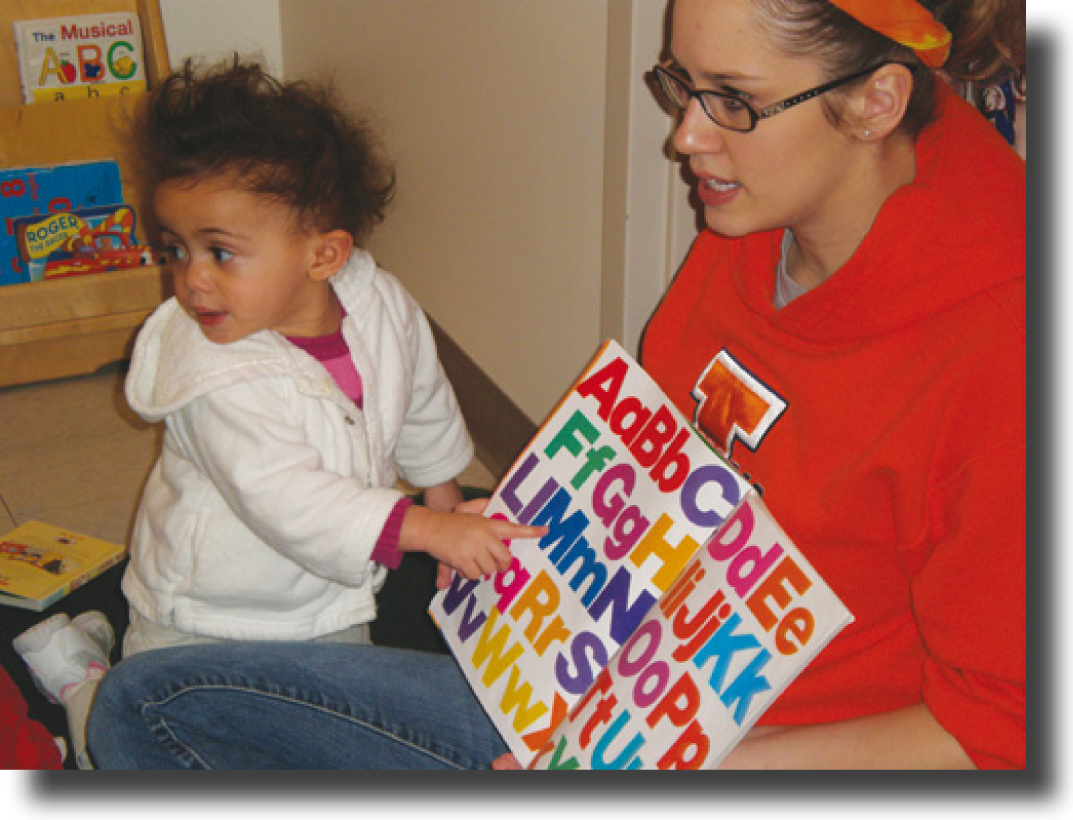
Shared book reading—target word “eat”: Books are carefully selected with focused stimulation of the selected target(s) in mind. To facilitate “eat,” “I Can Do That” by Dr. Suzy Lederer (Lederer, 2008) was selected. “This is a boy. A boy loves to ‘eat.’ Let’s pretend to ‘eat’ a treat. ‘Eat. Eat. Eat’ . . . A girl loves to drink. A boy loves to ‘eat’. Let’s drink. Let’s ‘eat’. Wow! You did that. Neat.” To further encourage participation, gestures are also used. Zoey initially used an “eat” gesture and later began pairing the word and gesture. (Note: In this book, “drink” also is encouraged.)
ELOs Across the Curriculum
While focused stimulation provides multiple opportunities to listen and learn within activities, it is necessary to provide children with language delays multiple opportunities to practice their language targets across activities. Embedding goals across the curriculum and among settings (e.g., home, school, community) is considered the third-best practice principle in language intervention/curriculum design according to a systematic review of the literature commissioned by the DEC (Sandall, Hemmeter, Smith, & McLean, 2005). Language, emergent literacy, and social skill goals all benefit from this practice (Horn & Banerjee, 2009). Embedding is defined as “a process of addressing children’s target goals during daily activities and events in a manner that expands, modifies, or is integral to the activity or event in a meaningful way” (Pretti-Frontczak & Bricker, 2004, p. 40). “Daily activities or events” are identified as routine (e.g., bedtime, transition routines), planned (preselected toys or activities by teacher or parent), or child-initiated activities (e.g., self-selected toys).
Embedding is an efficient intervention strategy because (a) it does not require changing the classroom routines or teacher responsibilities, (b) families, peers, and therapists all can be involved, (c) practicing goals across activities provides opportunities to generalize the skill, (d) embedding is applicable to all curricular models, and (e) learning within child-centered contexts is assumed to motivate learning (as summarized by Noh et al., 2009). Regarding teacher practices in embedding, Noh et al. (2009) found that student teachers trained to embed goals were most successful in increasing the frequency of learning opportunities within daily routines, such as transitions, toileting, and circle time. They were less effective in embedding goals during free play and snack. Furthermore, the language goal they most often embedded was “following directions” but infrequently embedded social-communication goals such as using word combinations to inform others. Horn, Lieber, Shouming, and Sandall (2000) reported that teachers had more difficulty embedding goals within group activities (see also Pretti-Frontczak & Bricker, 2001), but this finding was not corroborated by Noh and colleagues.
TOTalk does not use themes to create curriculum as themes can lead to a focus on noun vocabulary. Instead, the targeted relational vocabulary and children’s interests, as well as family cultural and other considerations guide the selection of toys, activities, and routines. Each meeting of Zoey’s TOTalk group was structured as follows: low-structured play (including pretend play); opening circle time with greeting, finger-play, and gross motor songs; a clinician-directed sensory activity; snack; shared book reading; and closing circle time.
Activities and routines were engineered to ensure embedding of target words across the session. For example, during play, dolls and small plastic animals were available to pretend to “eat” and “drink,” as well as “wash” with “wet” water. Food went “in” pots and “in” mouths. Mouths “open” to feed the baby “more” and “more,” as do cabinet doors and the refrigerator. Each pretend play scheme had an ending (“‘eating’ is ‘done’”) as did playtime overall (“playing is ‘done’”).
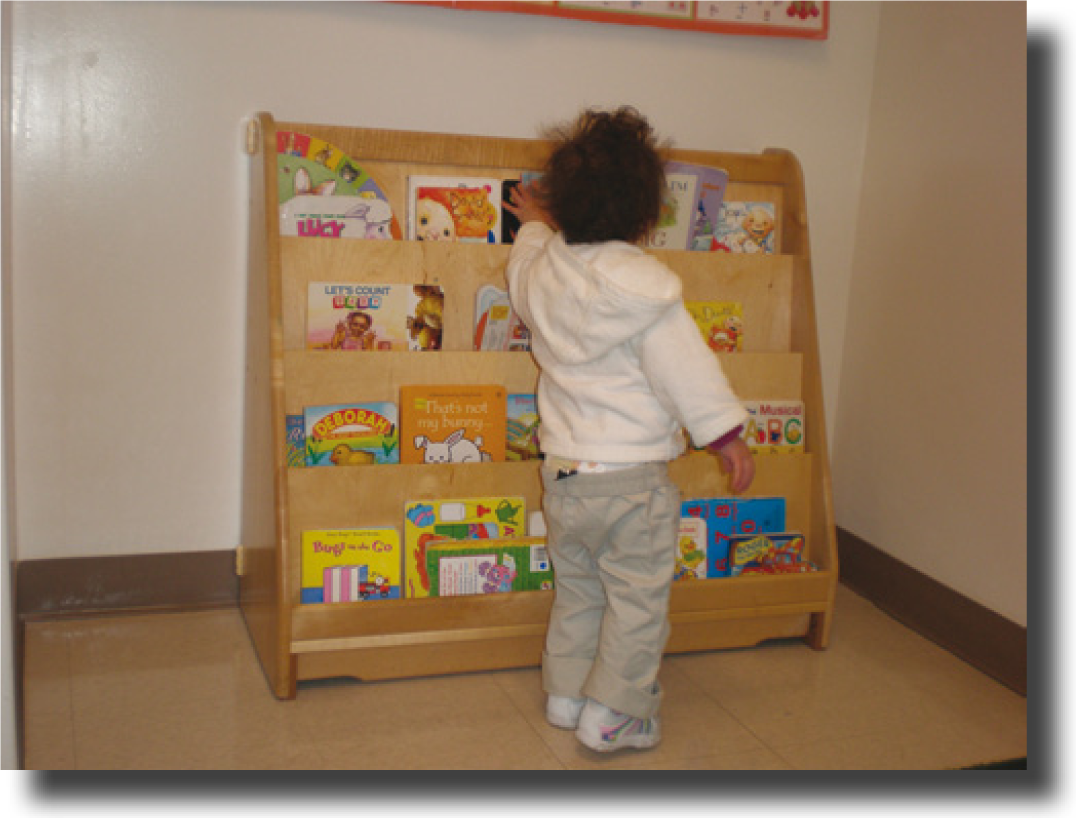
To continue embedding these targets across the curriculum, songs, books, and clinician-directed activities were carefully selected based on their opportunities to focus on target words. Songs included “The Goldfish Song (Track 12)” (to target “wash”; Berkner, 2001b) and “Fruit Salad Salsa (Track 15)” (to target “in”; Berkner, 2001a). Activities included blowing “more” and “more” bubbles (after “opening” the bottle and putting the stick “in”), playing with playdough (making pretend play foods to “eat,” putting cookie cutters “in” the dough, and “washing” hands and table with “wet” water after we were “done”), and cooking (targeting “in,” “eat,” “open,” “done,” and “more”). We read “Mrs. Wishy-Washy” (to target “wash” and “in”; Cowley, 1999) and the lift-the-flap book, “Open the Barn Door” (to facilitate “open”; Santoro, 1993).
As described earlier, a transition routine was established using an agenda board to practice announcing the conclusion of each activity (e.g., “Playing is ‘done,’” “’Eating’ is ‘done’”). “‘Eating’ time” was chosen instead of the more commonly used “snack time” to provide additional stimulation of this verb target. In general, verbs were used instead of nouns for all activities to provide more exposure to this difficult to acquire category of words (e.g., “Singing is done,” “Reading is done”).
Creating Reciprocal Relationships With Families
The fourth principle of language intervention/curriculum design involves family-centered practices. According to Woods, Wilcox, Friedman, and Murch (2011) and Wilcox and Woods (2011), participating in family-centered activities and routines supports language growth. ASHA (2008), NAEYC (2009), and DEC (2007) concur. All three position statements acknowledge that communication skills are shaped by the dynamic interaction among the child’s cognitive capabilities, the environment, and the people within that environment. As the ultimate goal for children with language delays is communication in the natural environment, intervention must be conducted therein. By establishing mutually respectful partnerships with families, natural learning opportunities can be enhanced (Campbell, 2004; McWilliam, 2010).
Each of the key language facilitation/curriculum design principles can be used in home practice. First, recall that the list of target words was generated with family input. This list is provided to families and they are encouraged to post it in a prominent place, such as the refrigerator. Second, families can be taught to use focused stimulation successfully (Girolametto et al., 1996). Third, families and professionals should together identify possible routines and motivating activities throughout the day when the targets can be facilitated using focused stimulation. Families also can be encouraged to read the same book or sing the same songs as in school or choose new ones to create additional planned embedded learning opportunities.
The TOTalk clinicians reviewed the list of Zoey’s target words with mom. Together, we identified opportunities within daily activities and routines where mom and dad could use focused stimulation to provide multiple models of appropriate targets. For example, mom identified bath-time and meal-time as perfect opportunities to facilitate the targets. We provided families with two lists of the targets to post on the refrigerator and in the bathroom. In addition to rereading the book from school, additional book ideas were also generated, such as “Where Is Maisy?” to target “in” and “open” (Cousins, 1999) and “Crunch Munch” to target “eat” (London, 2001). Singing throughout the day, to the tune of “This is the way we . . .” (e.g., “wash the table”) was also recommended. We collaborated with the home-based SLP who created opportunities in her therapy sessions to facilitate the same vocabulary words.
Linking Assessments to Goals
The final principle of language intervention/curriculum design is linking assessments to goals. For children learning single words, collecting data includes ongoing documentation of imitated and spontaneous productions of target words in therapy or classroom and at home using parent diaries. When vocabulary growth is suggested by the aforementioned informal measures (e.g., monthly, at the end of a semester or Individualized Family Service Plan period), formal testing using parent-report instruments such as the LDS (Rescorla, 1989) or Communication Development Index (CDI; Fenson et al., 1993) is warranted. Typically, a target word is considered productive when the child has produced it at least three times independently in three different contexts (Lahey, 1988). As targets are acquired, new words can be selected using the principles described earlier.
By the middle of the semester, Zoey was signing “more” spontaneously and producing other target words with clinician support. Given there were seven more relational targets, no additional words were added. By the end of the semester, Zoey was producing “done,” “eat,” and “open” spontaneously. All of the other relational targets were produced only with clinician support. “In” was signed with hand-over-hand assistance. In addition, we readministered the LDS. Mom reported that Zoey now was using approximately 35 different words at home spontaneously. After a 5-week break between semesters, Zoey’s mom was thrilled to report that Zoey had produced her first word combination, “more cookie.”
Summary
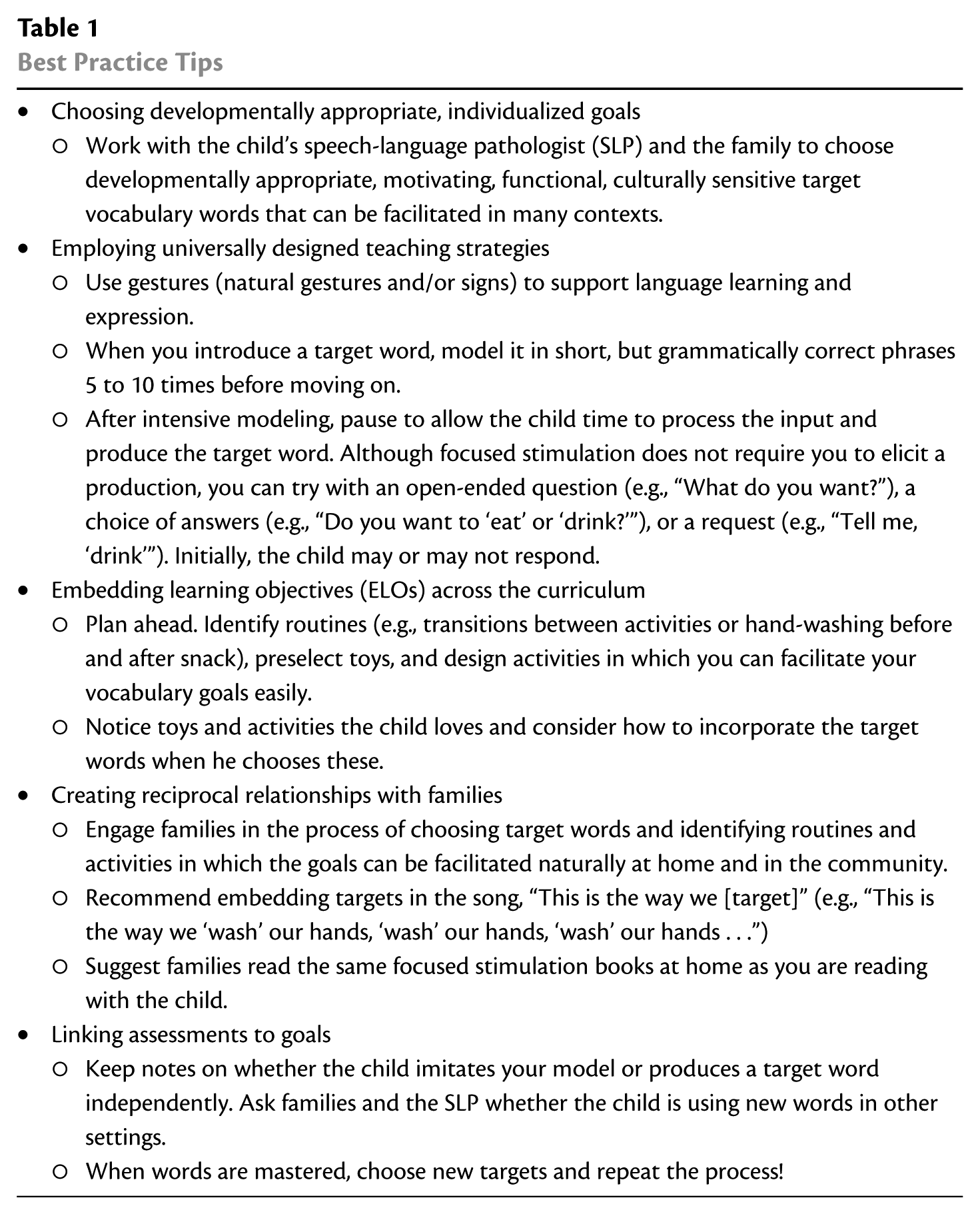
To facilitate production of early single words, an integration of best practices in language therapy and curriculum design provides five key principles. First, work with the child’s SLP to select a small pool of target words. Second, embrace universal design principles to help teach concepts and use focused stimulation to help children learn to express the concepts with words and/or signs. Third and fourth, identify and create multiple opportunities to facilitate the target words across routines, planned activities, and child-directed pursuits in school and at home. Finally, as targets are mastered, add new targets. Table 1 provides some best practice tips.
Best Practice Tips
Given the information processing limitations and social learning concerns in children with language delays, the repetition of targets within and across activities and settings will support them in learning selected vocabulary. As children master new words, they will be better able to communicate their desires and ideas, engage others in communication thereby eliciting new language models, and prepare for the transition to two-word utterances.
Footnotes
Author’s Note
You may reach Susan Hendler Lederer by e-mail at