






Abstract

Another busy morning begins in Miss Emily’s inclusive kindergarten classroom. The 5- and 6-year-old children in the class have diverse learning needs; some have speech and hearing impairments. Children are sitting in a circle with nametags in front of them, eagerly waiting for circle time to begin. As part of the morning welcome, Miss Emily holds up corresponding nametags for identifying initial letter sounds in children’s names. “Here’s Ryan’s name. It starts with the sound /r/. Ryan, can you point to the letter /r/ in your name?” Ryan looks at the nametag and then turns to his friend sitting next to him. Billy takes Ryan’s hand and points to the /r/ in his name. Ryan makes the /r/ sound in his name for Miss Emily. Billy smiles at Ryan and Miss Emily says, “The R makes the /r/ sound at the beginning of Ryan’s name. Great job, Ryan!”
One of early childhood teachers’ first questions of parents with regard to school readiness is whether the child knows the ABCs (Hyson & Tomlinson, 2014). Development of early literacy skills has been a prominent concern among educators, administrators, and families (Bennett-Armistead, Duke, & Moses, 2005; Cook, Klein, & Tessier, 2008; Dickinson & Tabors, 2001). Crucial pre-reading and writing skills, such as oral language, phonological awareness, print awareness, and alphabet letter recognition, are important to children’s cognitive development and, therefore, are a main focus for early childhood educators (Dickinson & Tabors, 2001; Neuman, 2006). Knowing how to quickly recognize and visually discriminate letters plays a direct role in a child’s ability to acquire the basic literacy skills necessary for academic success (Shidler & Harrigan, 2010). This article addresses the importance of alphabet knowledge in early literacy development and suggests peer-mediated intervention (PMI) as an evidence-based intervention strategy helping educators to promote alphabet knowledge and social skills among young children with disabilities.
Importance of Alphabet Knowledge Skill Development
Alphabet knowledge, or the alphabetic principle, is the ability to identify letters and understand that “letters of the alphabet are a special category of visual graphics that can be individually named” (Head Start, 2003, p. 23), along with a recognition of the systematic relationship between letters and sounds (Epstein, 2014). Knowing the alphabet includes several executive functioning skills such as memory, attention, thinking skills, problem solving, and learning strategies (Hyson & Tomlinson, 2014). Alphabet knowledge is considered the single best predictor of subsequent reading success for young children (Neal & Ehlert, 2007). Teachers must remember that, although learning the alphabet is important in itself, it is primarily a means, not an end (Jones, Clark, & Reutzel, 2013); the purpose of alphabet knowledge is to enable reading and writing. Each word has a certain structure made up of individual sounds and sound patterns or groupings, which are represented by letters. Thus, alphabet knowledge includes not only visual recognition but also knowledge of the letter names, which give children insight into the sounds that the letters represent (Bear, Invernizzi, Templeton, & Johnson, 2008).
“Learning the alphabet involves more than teaching letter identification. Children must also come to understand the alphabet as a system and learn how alphabet letters function in written language.”
Alphabet knowledge is critical in early literacy for several reasons (Epstein, 2014). First, it allows children to begin making connections between letters and sounds. Doing this through daily classroom routines and activities introduces children to the alphabetic principle. For example, learning to recognize and produce children’s names is a good initial activity for learning the alphabet. Miss Emily introduces the alphabetic principle each morning during circle time by identifying initial letter sounds in children’s names. In addition, Miss Emily displays the first and last names of each child on desks, lockers, place mats for snacks, and bulletin board for attendance and classroom helpers. Second, knowing the letters of the alphabet helps children understand the language that classroom teachers use on a daily basis (Pinnell & Fountas, 2003). For example, during a picture walk with a picture book or read aloud, Miss Emily commonly uses the letters of the alphabet to do so. By doing this, children in the class are “early literacy detectives” by looking very closely at the print. Studies indicate that effective readers look very quickly but carefully at each letter in a word (Cunningham, 2004). The third reason for learning the alphabet is that children who display confident phonemic skills (i.e., blending, segmenting sounds in a word) have a solid knowledge of the alphabet (Stahl & Murray, 1997). Given the importance of successfully acquiring alphabet knowledge, our instruction of this skill should be sensitive to the needs and abilities of all young children.
Although most young children experience little difficulty in developing this skill, for children with disabilities the process of learning to read may become a complicated obstacle with numerous subtasks (Neal & Ehlert, 2007). More than one third of children experience significant difficulty in learning to read (Justice & Kaderavek, 2008), and there is a correlation between the skills with which young children enter school and their later academic performance. Learning the alphabet involves more than teaching letter identification. Children must also come to understand the alphabet as a system and learn how alphabet letters function in written language. To teach these abilities, early childhood teachers must possess an in-depth understanding of the skills involved and make important instructional decisions on the appropriate strategies for teaching a variety of diverse learners (Johnson et al., 2008). Effective early intervention is one way to promote development of key indicators of early literacy and to prevent the adverse effects of social deprivation on children’s reading progress in early childhood inclusive classrooms (Justice & Pullen, 2003; Nancollis, Lawrie, & Dodd, 2005).
Social Interactions and Peer Involvement
A considerable amount of research has addressed the value of peer involvement in promoting social and academic participation by their classmates with disabilities (Bellini, Peters, Brianner, & Hopf, 2007; Grauvogel-MacAleese & Wallace, 2010). Lack of adequate social skills has been increasingly recognized as a serious problem requiring effective intervention strategies (Odom, Zercher, Marquart, & Sandall, 2006). As a result, researchers have recommended development of peer-related social competence as a central focus of early intervention programs for young children with disabilities (Carter, Sisco, & Chung, 2012). Participation in social interaction with peers is a critical developmental milestone for young children (Kohler, Greteman, Raschke, & Highnam, 2007; Lee, Odom, & Loftin, 2007). Interactions and relationships with peers can make important contributions to a child’s development, influence engagement in school, and affect the child’s well-being and overall quality of life (Carter, Cushing, Clark, & Kennedy, 2005). Social integration among young children, one of the goals of inclusion, goes beyond simply increasing the number of social interactions to encompass the development of meaningful relationships between children with and without disabilities (Guralnick, 2001).
In early childhood, kindergarten, and the early elementary years, both children with and without disabilities often lack key social skills necessary for success as readers (Calhoon, Otaiba, Greenberg, King, & Avalos, 2006; Stanton-Chapman & Hadden, 2011). Professionals serving young children with disabilities are recognizing that full participation in daily activities and routines may require the use of specific instructional strategies and supports (Sandall & Schwartz, 2002). Studies have indicated the need for an effective intervention strategy designed to increase positive social interactions in early childhood inclusive classrooms (Rheams & Bain, 2005). Without early identification of these problems and effective intervention, poorer educational outcomes may result in all areas of the curriculum, including early literacy; thus, providing young children with additional support throughout their school experience can have considerable long-term benefits (Bovey & Strain, 2007). One particular instructional strategy promoting social skills for children with disabilities is PMI. In the next section, we examine the value of PMI in helping early childhood special educators to teach alphabet knowledge to their students.
“Teachable moments among peers materialize when teachers are committed to using PMI as an instructional intervention to foster social interaction and alphabet knowledge.” “PMI builds a community of learners by encouraging participation, friendships, and collaboration through the establishment of a peer culture characterized by respect and caring.” “PMI’s main goal is to enable children to learn from each other.”
PMI
PMI supports teachers with an instructional intervention strategy to prompt, initiate, and reinforce successful social and communication interactions between typically developing peers and children with disabilities (Jackson & Campbell, 2009). PMI’s main goal is to enable children to learn from each other. PMI creates developmentally appropriate opportunities for peers who are typically developing, or who have a particular set of competencies that another child may be working on, to take an instructional role in promoting learning, especially in the areas of social and language development (Harris, Pretti-Frontczak, & Brown, 2009). For example, PMI can create individualized and targeted learning opportunities in early literacy regarding the names of letters and letter-sound matches and can support children with disabilities in becoming active and engaged learners. In addition, utilizing PMI builds a community of learners by encouraging participation, friendships, and collaboration through the establishment of a peer culture characterized by respect and caring.
The main advantage of PMI strategies is to increase the positive social behaviors of children with disabilities by teaching peers to (a) initiate interaction with children with disabilities at an increased rate, thus providing them with additional opportunities to respond (Odom, Hoyson, Jamieson, & Strain, 1985), and (b) respond to the positive social behaviors of children with disabilities, thus reinforcing their desired behaviors so that they become more functional (McEvoy, Odom, & McConnell, 1992). For example, a peer participating in PMI may prompt a child with a disability in using early literacy materials (e.g., alphabet blocks, alphabet puzzles, or an alphabet book) that promote identification of specific letters of the alphabet. In other instances, peers may provide support, guidance, and care for children with disabilities by being close in proximity. While sitting next to a child needing help with cutting letters to make a letter collage, a peer can assist the child by cutting and pasting pictures that start with the letter /h/. Teachable moments among peers materialize when teachers are committed to using PMI as an instructional intervention to foster social interaction and alphabet knowledge. Every child in the class becomes actively involved and has the opportunity to participate and learn letters of the alphabet in a proactive and positive manner, regardless of individual differences or background. Furthermore, the peer helpers benefit from participating, interacting with, and supporting children with disabilities.
Benefits of PMI
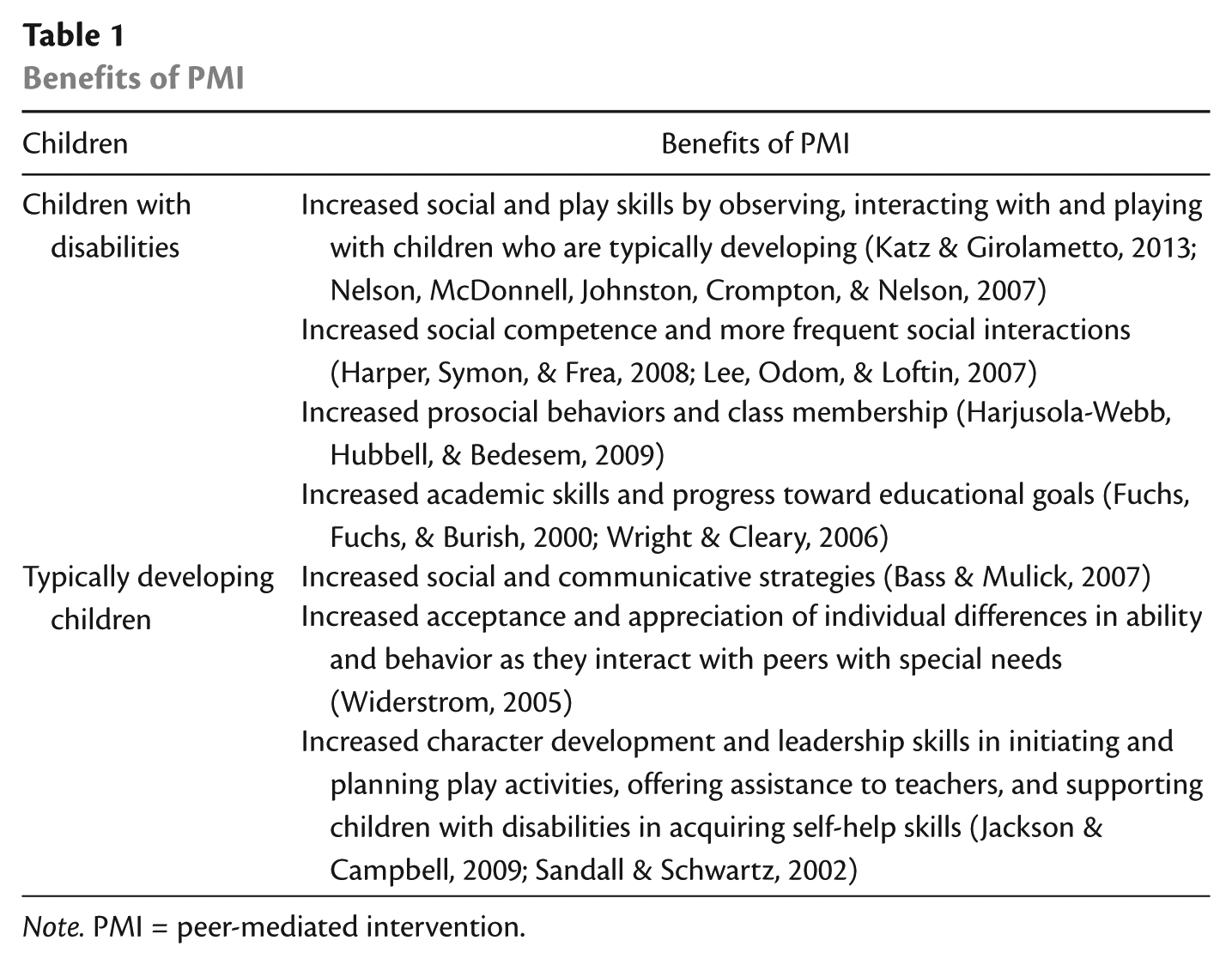
Research has shown that peers can empower children with disabilities and serve as effective intervention agents offering support, motivation, and encouragement (Carter, Cushing, & Kennedy, 2009). All children benefit from the reciprocal social relationships that develop during the intervention process. Maheady, Mallette, and Harper (2001), in a review article, indicated that studies of reading and spelling performance by children without and with disabilities demonstrated significant improvements attributable to PMI. PMI is an evidence-based strategy that empowers both peers and children with disabilities with an inner feeling of acceptance and confidence. Table 1 discusses the benefits of PMI, which generally offers four positive features: (a) addressing a comprehensive set of target skills across classroom activities and routines, (b) providing a sufficient number of learning opportunities, (c) being practical for teachers, and (d) increasing a child’s active participation in daily activities.
Benefits of PMI
Note. PMI = peer-mediated intervention.
Types of PMI
The three conventional types of PMI are peer proximity, peer initiation, and peer prompting and reinforcement (Odom & Strain, 1984). Peer proximity ensures that a socially competent peer remains close to a child with a disability as the latter child attempts a particular literacy skill or participates in shared activities. For example, during reading time in Miss Emily’s class, Billy sits close to Ryan and the two work together in printing uppercase and lowercase forms of a letter on a whiteboard as the class recites the alphabet. The opportunity for both to learn the alphabet and to form new friendships occurs as Billy says the name of the letter and associated picture, such as “A-apple,” “B-baby,” “C-cat,” and Ryan responds.
Peer initiation is used to promote social and conversational skills. In this form of PMI, peers have the opportunity to initiate and carefully plan activities (Widerstrom, 2005). For example, during another literacy lesson, children in Miss Emily’s class Ryan and Billy are making alphabet letter books with pictures of objects beginning with the letter /r/ on each page to help Ryan recognize and reinforce the first letter in his name. In advance, Miss Emily gathered materials such as letter stamps, stickers, and pictures cut from magazines for the alphabet book. When the activity begins, Billy approaches Ryan and together they walk over to the literacy center and begin making an alphabet book together. During the literacy activity, Billy looks through pictures to match the letter /r/ of the alphabet with Ryan and models how to use the letter stamps and where to place the pictures on each page.
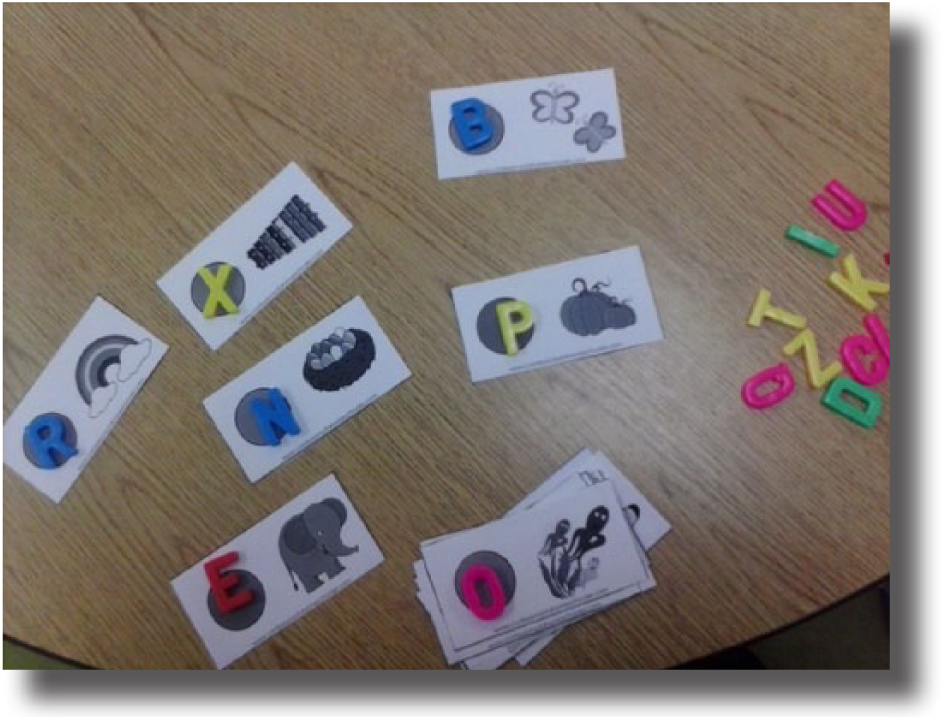
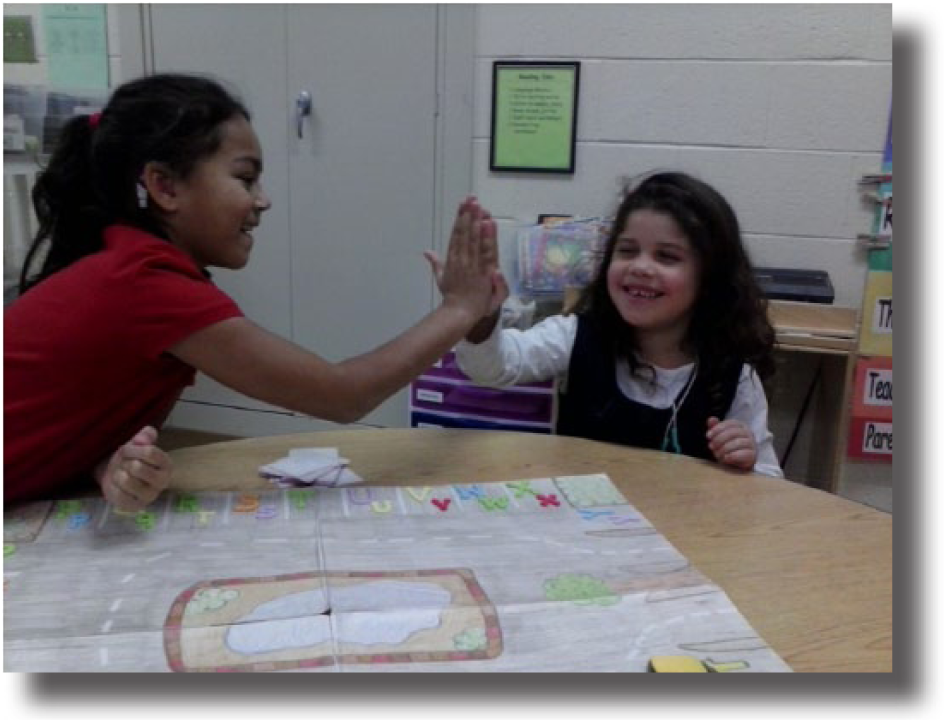
The third type of PMI involves teaching peers to prompt and reinforce a desired response by the child with a disability. As children say the alphabet during circle time with Miss Emily, Billy points to each letter and picture on an alphabet chart to assist Ryan. When Ryan responds with the correct letter, Billy confirms his response with a high-five and “smiley face” sign. On another day, Billy assists Ryan as a class helper in selecting the correct letter of the day and placing it on the calendar. There are several early literacy activities teachers can use for promoting alphabet knowledge with peers during PMI.
Using PMI to Promote Alphabet Knowledge
Teachers considering PMI as a teaching strategy for alphabet knowledge should first take time to observe, document, and reflect on the peer culture of their classroom. Teachers need to be intentional when using PMI; that is, they should have a specific goal in mind and a plan for accomplishing it. An intentional teacher aims at clearly identifying learning objectives for children, uses instructional strategies likely to support children in achieving the learning objectives, continually monitors and assesses progress, and adjusts the strategies based on that assessment (Epstein, 2014). After thorough classroom observations and documentation of data from assessments, teachers should collaborate with family members and colleagues to identify the alphabet knowledge skill and align the skill to at least one of the child’s Individualized Education Program (IEP) goals.
Selecting the perfect peer for a child with a disability may take time and careful observation. Look for children in the class who have mastered the target alphabet knowledge skill. In addition, look for peers having strong leadership and social skills (i.e., motivated to play with others, follows directions, proficient with turn taking) who can teach PMI to the child. Teachers should possess confidence to select peers who will support children whose alphabet skills are developing at a rate slower than that of others and are most in need of interaction. In addition, consider selecting more than one peer. Counting on only one peer continuously can lead to fatigue or lack of interest.
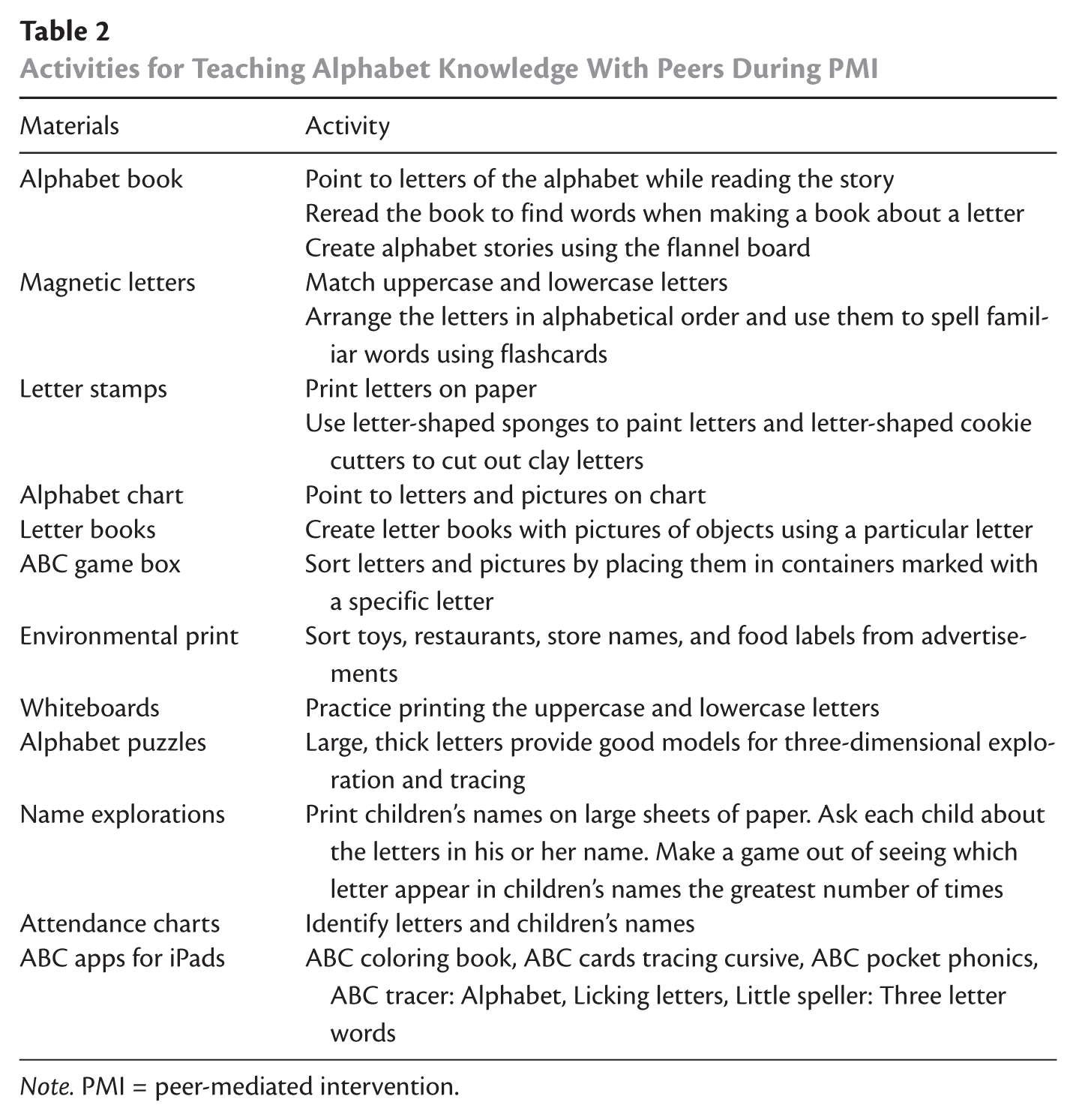
Teaching the peer each component of PMI takes time, commitment, and patience. It is important for teachers to set aside time, in advance, for training peers. This may take planning during class time to train peers. Effective sessions using PMI require engaging toys and materials, directly connecting to the interests and strengths of children. When children are paired based on mutual interests, successful PMI is more likely to occur (DiCarlo & Vagianos, 2009; Prendeville et al., 2006). During the training process, teachers should be enthusiastic with a positive attitude when teaching the peer(s) to prompt, initiate, assist, or reinforce the child with a disability to practice the alphabet knowledge skill (e.g., making a request for a letter sound, providing a word with a particular letter sound, pointing to a particular letter in a word). The teacher may begin with explaining to a peer that a friend in the class is having a hard time with recognizing and sounding out alphabet letter sounds and his or her job is to help a friend with learning more about alphabet letters. Next, list daily early literacy activities during which a peer can use PMI to teach an alphabet knowledge skill. Table 2 lists a variety of materials with ideas for hands-on early literacy activities.
Activities for Teaching Alphabet Knowledge With Peers During PMI
Note. PMI = peer-mediated intervention.
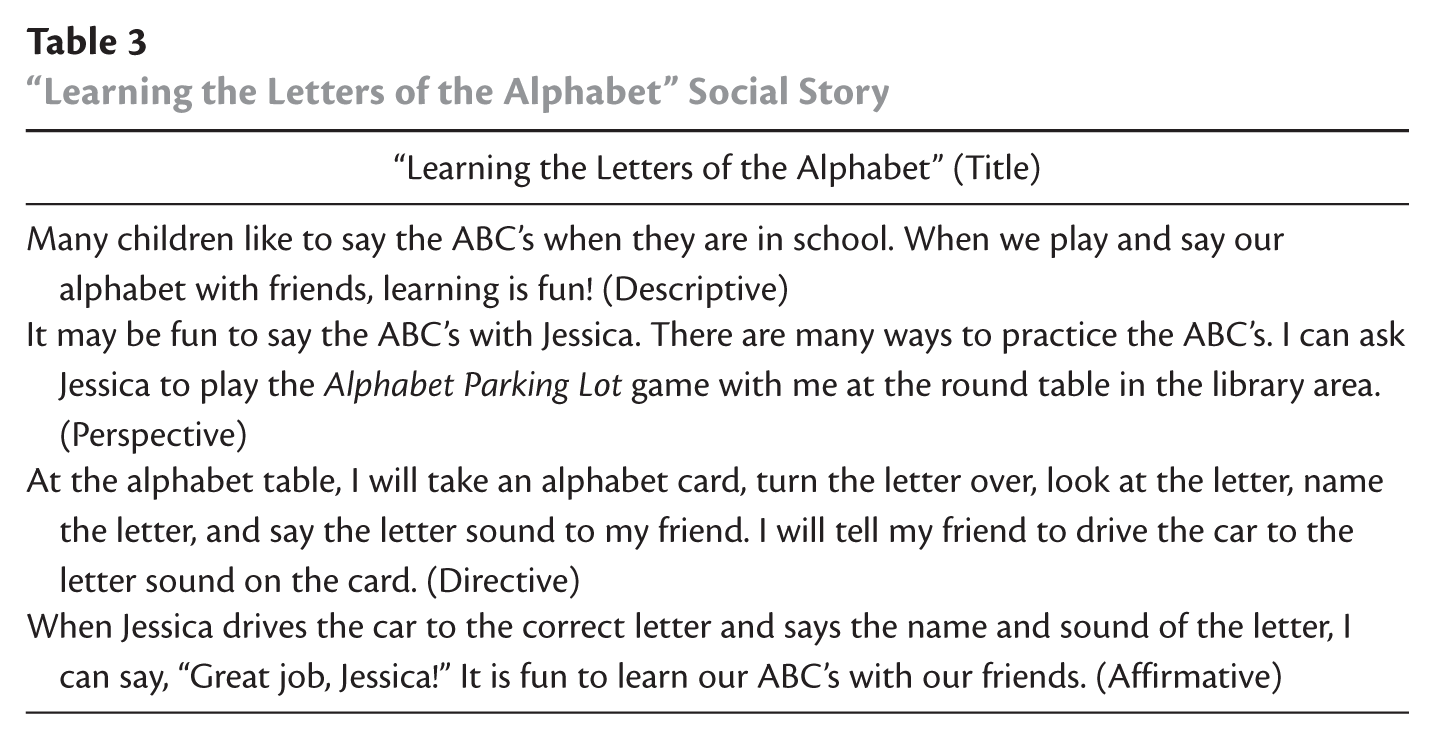
A supporting tool for teaching PMI is social stories. Social stories are child-specific, personalized short narratives that are used to address the needs of a particular child. Social stories are unique in that they can identify a concern and develop a story that supports a desired outcome, also allowing differing perspectives to be addressed (Gray, 2000). In addition, social stories provide visual support for children who may benefit from additional cues. Social stories are often designed with a specific sentence structure with defining characteristics using four basic sentence types including (a) descriptive, (b) perspective, (c) directive, and (d) affirmative. Because many children are drawn to technology, social stories can be displayed on devices such as iPads, Smart boards, and even DVDs for television viewing. There are numerous variations of social stories. Teachers should consider using the one that fits your needs the best. Table 3 describes the text of a social story.
“Learning the Letters of the Alphabet” Social Story
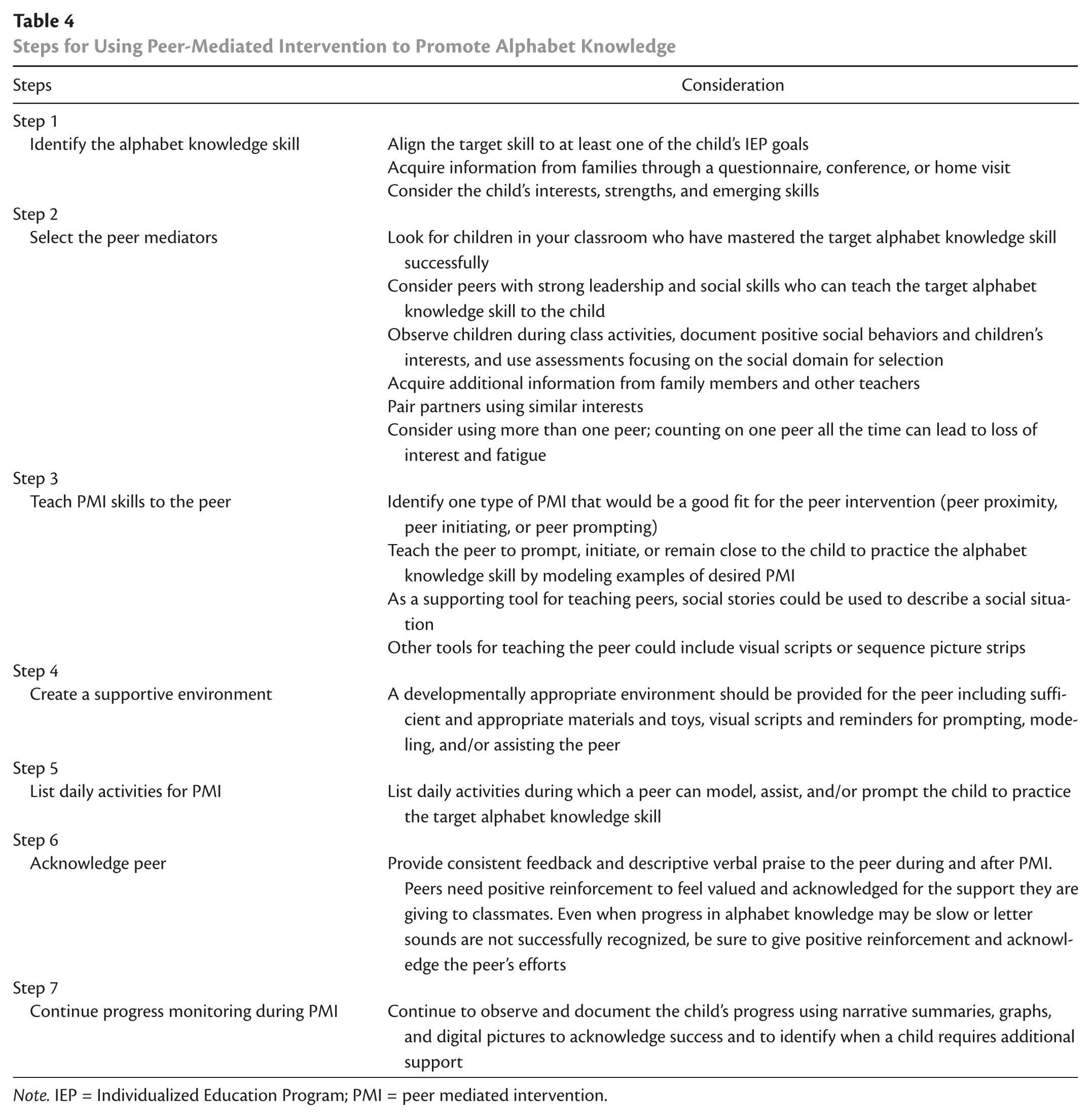
The classroom for PMI should be in the natural environment for the child and peer mediator(s). The learning environment should be designed according to children’s preferences to enhance engaging opportunities for alphabet knowledge with peers. Centers used should incorporate a variety of the children’s interests in terms of activities and materials. During the peer-mediator training, the teacher will introduce and read the social story and model specific examples of desired PMI. The peer will read the social story out loud with the teacher and practice the desired type of PMI as well as giving feedback with the teacher. Throughout the training, the teacher provides consistent positive feedback to the peer. Once the peer has demonstrated accurate skills and understands PMI (i.e., prompting or initiating the alphabet knowledge skill), the teacher is ready to use PMI with the pair. Table 4 provides steps for using PMI to promote alphabet knowledge in early childhood inclusive classrooms.
Steps for Using Peer-Mediated Intervention to Promote Alphabet Knowledge
Note. IEP = Individualized Education Program; PMI = peer mediated intervention.
Conclusion
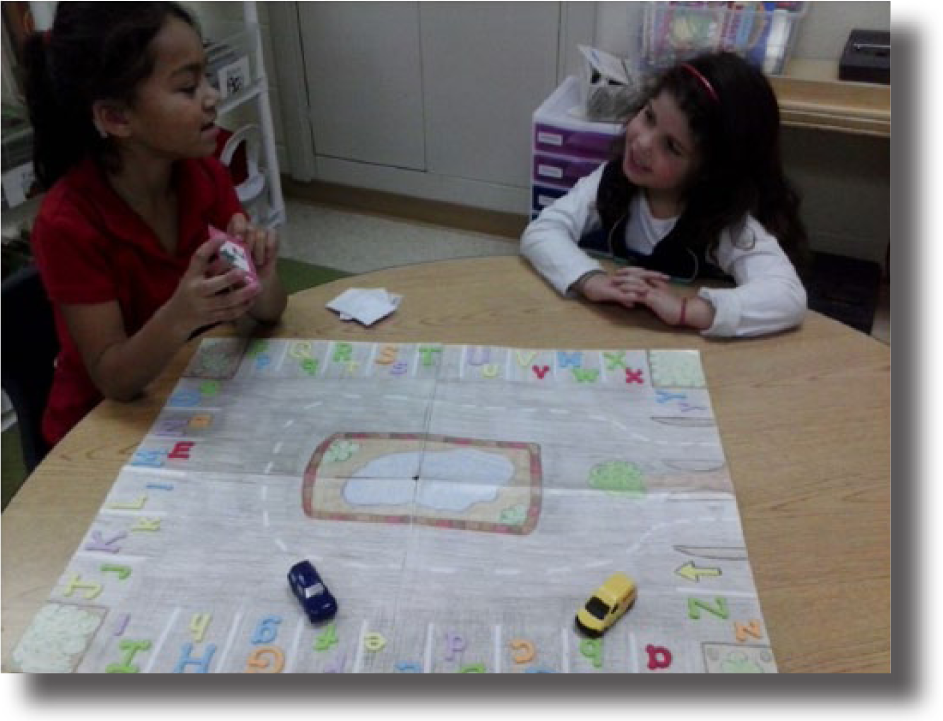
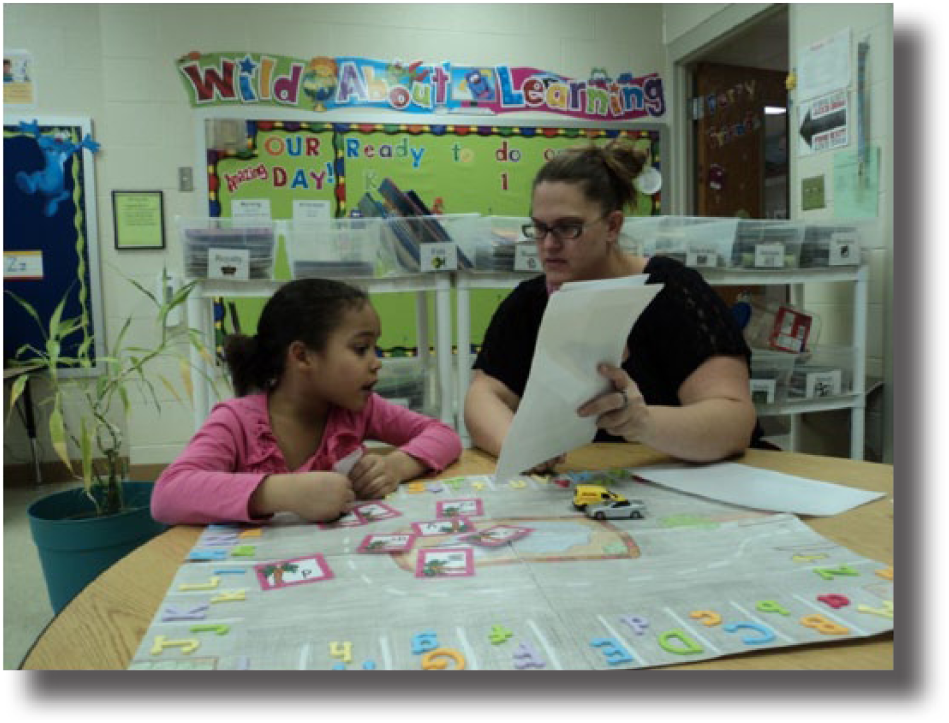
Miss Emily is smiling as she observes children playing with the alphabet games she developed for the class. Near the classroom library, Ryan is sitting next to Billy guiding and showing him how to sort letters of the alphabet with pictures of dinosaurs and placing them in containers marked with a specific alphabet letter. Ryan talks to Billy about the different dinosaurs and prompts Billy to say the beginning letter sound for each dinosaur by pointing to an alphabet letter. At the alphabet table, Cherise is playing the “Alphabet Parking Lot” game with Jessica. The board game includes both lowercase and uppercase alphabet letter cards along with small matchbox cars. Cherise takes an alphabet card and after naming the letter and saying the letter sound, she prompts Jessica to drive a car to the correct letter on the board game, name the letter, and pronounce the correct letter sound. As Jessica finds the correct letter, Cherise claps and says, “You did it, Jessica! Great job! Let’s park another car on the alphabet lot.”
The development of early literacy evolves through both social and cognitive processes beginning at birth (Cook et al., 2008). Literacy is not just a group of specific skills related to reading and writing, but gradually involves interaction with materials, peers, and adults who are using print. Just as print plays an important role in society, it can play an integral role in early childhood settings.
Alphabet knowledge is one critical component of early literacy that contributes to a young child’s success in reading (Adams, 1990). Learning alphabet knowledge is beneficial for all young children (Wasik, 2001). To promote awareness of alphabet knowledge and support children with disabilities, PMI, an evidence-based strategy, can be deployed in inclusive early childhood classroom settings. The benefits of PMI include focusing on children’s abilities, strengths, and interests. PMI is a practical tool that can assist teachers in accelerating early literacy skill development in young children with disabilities. Using PMI increases students’ confidence in their social behaviors and their motivation to succeed as emergent readers, because every child is seen as having a voice. In addition, PMI addresses a comprehensive set of target early literacy skills across classroom activities and routines that support alphabet knowledge development.
Young children in learning environments that promote early literacy skills have the potential to understand how to solve problems, seek solutions, communicate effectively, and construct meaning. If a child is struggling in literacy, it is critical to provide appropriate intervention as soon as possible (Dorn & Soffos, 2012). PMI is one instructional strategy with high potential to ensure positive outcomes for children with disabilities (Harris et al., 2009). PMI and alphabet knowledge are a winning and dynamic duo for all young children, creating synergy and confidence among our youngest readers.
Footnotes
Authors’ Note
You may reach Kathleen I. Harris by email at