






Abstract

In this article, four early childhood teacher educators share a few ways in which they work to prepare early childhood teachers committed to equity and inclusion within the context of a graduate-level preservice program in a large urban center. Diverse in terms of race, ethnicity, gender, language repertoires, and experiences, they all engage in teaching that explores issues of equity and inclusion as imperatives for teaching and learning. Specifically, the authors engage preservice teachers in critically analyzing and transforming the materials they employ and their classroom environments for teaching equitably and inclusively. Through examples, they unveil how they work to make the concepts of equity and inclusion real for preservice teachers, critically reading and rewriting the stories of inclusion and exclusion that classrooms (and their materials) tell. They do so in hopes that such experiences will allow preservice teachers to move from talking about to engaging in equity and inclusion in and through their teaching.
Understanding Equity and Equality: A Window Into the Preservice Classroom
“Okay. Take your shoes off and place them in a pile in the middle of the classroom,” Mariana, an early childhood teacher educator, directs her preservice teachers in a university-based teacher education program. Initially, the students do not move. “Is she serious?” one of them asks a peer. Mariana answers: “Yes” and takes off her own shoes, demonstrating what she expects them to do. Slowly, the students move toward Mariana’s shoes, making a pile of their shoes. She then proceeds to randomly give each student the same number of shoes they put in the pile, telling them to “put them on and move around the classroom.” Some of them have two left shoes. Others have mismatched shoes—in terms of size and style. One of them ends up with a size nine running shoe and a size six stiletto. “These hurt my feet,” one of them declares in the midst of laughter, which diffuses some of the discomfort and tension. Some refuse to move. Others move slowly. Yet others never put the shoes on, refusing to follow directions.
After closely observing the preservice teachers moving for about three minutes (a time period, which may appear short but lasts very long when one is attempting to move with mismatched, often ill-fitting shoes), Mariana stops them and engages in a discussion. She makes visible some of their behaviors (disengagement, muttered complaints, frustration, etc.). She then connects this exercise to the concepts of equity and equality. Specifically, she explains that although they each had the same number of shoes (thus, experiencing equality), some of them were starting to experience pain and discomfort. Together, they proceed to explore the materials, sizes, styles, and prices of shoes, noting their differences.
Mariana then asks if it is fair that some shoes cost multiple times the price of others and how these factors relate to the concepts of equality and equity. “Yeah, I guess some shoes cost a lot more than others, but it’s not really about the cost, you know? It’s about how they allow each of us to walk,” one of them comments. Another adds, “I know, right? I wouldn’t trade my beat up kicks for the professor’s high heels or I wouldn’t make it through the day.” Extending and building on preservice teachers’ comments, Mariana explains that while equality means same conditions, equity means an equality of (possible) outcomes, which may demand different conditions, supporting the individuality of human beings and the diversity of humanity. “And all this time I was thinking about fairness as giving all students the same thing,” a preservice teacher comments. She then asks: “What does it mean to foster equity in the early childhood classroom?” Preservice teachers then start reflecting: “What does it mean? It means committing to talking to young children about how we are all different and may not need the same things to feel safe, to learn, and to eat.”
As the activity continues, Mariana relates equity to inclusion, explaining that it entails supporting the learning of each and every student, going on to underscore how it also entails (but is not restricted to) addressing the needs of students with identified disabilities, coherent with the explanation offered by Artiles and Kozleski (2007), “Inclusive education . . . promises to enhance access, participation, and outcomes for all students” (p. 357).
Through dialogue, Mariana and her preservice students critically discuss how they experienced the activity. “Having shoes that didn’t fit my feet impacted my ability to move,” one of them commented. “I quickly developed an attitude. I thought, ‘this ain’t right’” another offered, adding “I was mad.” This activity helps preservice teachers develop an understanding that although the prices and sizes of their shoes may be different, the pairs of shoes preservice teachers started with are more likely to enable them to reach an equality of outcomes—moving around the classroom without getting hurt. Although imperfect, this activity makes the concepts of equity and inclusion real and tangible.
“Inclusive classrooms are not predicated on the equality of conditions or tools, but on equity, on having the tools, strategies, and approaches to support children’s development in ways that afford an equality of outcomes.”
Albeit brief, learnings from the shoe swapping activity undergird preservice teachers’ understandings of the importance of a variety of tools and conditions to foster equity. Preservice teachers develop the understanding that inclusive classrooms are not predicated on the equality of conditions or tools, but on equity, on having the tools, strategies, and approaches to support children’s development in ways that afford an equality of outcomes. As a preservice teacher reflected in a program exit interview, I will never forget the shoe activity . . . Having the right shoes, shoes that fit me were so important to my participation. Students cannot experience success if they do not have the tools which allow them to have equal access. Do my students have the tools they need to participate in learning? To succeed? These questions will always guide my teaching.
Furthermore, this activity inspires preservice teachers to talk about these concepts with young children (in preschool through second grade) and with early childhood teachers with whom they may be working (in settings serving children from infancy). As a graduate from the program explains, I did the same activity with my second graders and then we talked about how we may need different tools to learn because we are different. They totally got it and throughout the year, not once did I hear, “But this child has an iPad or a pencil grip and I don’t.” Not once.
After engaging in this exercise, preservice teachers are invited to examine their own biases and prejudices. Mariana poses a key question: “Do I understand that equity requires eliminating disparities of access to opportunities and resources—what some might call fairness or justice? And, sometimes—when I offer equality (giving everyone the same thing)—I fail to meet this requirement?” (Souto-Manning, 2013, p. 13). Together, they carefully consider the questions in Table 1.
Understanding Equity
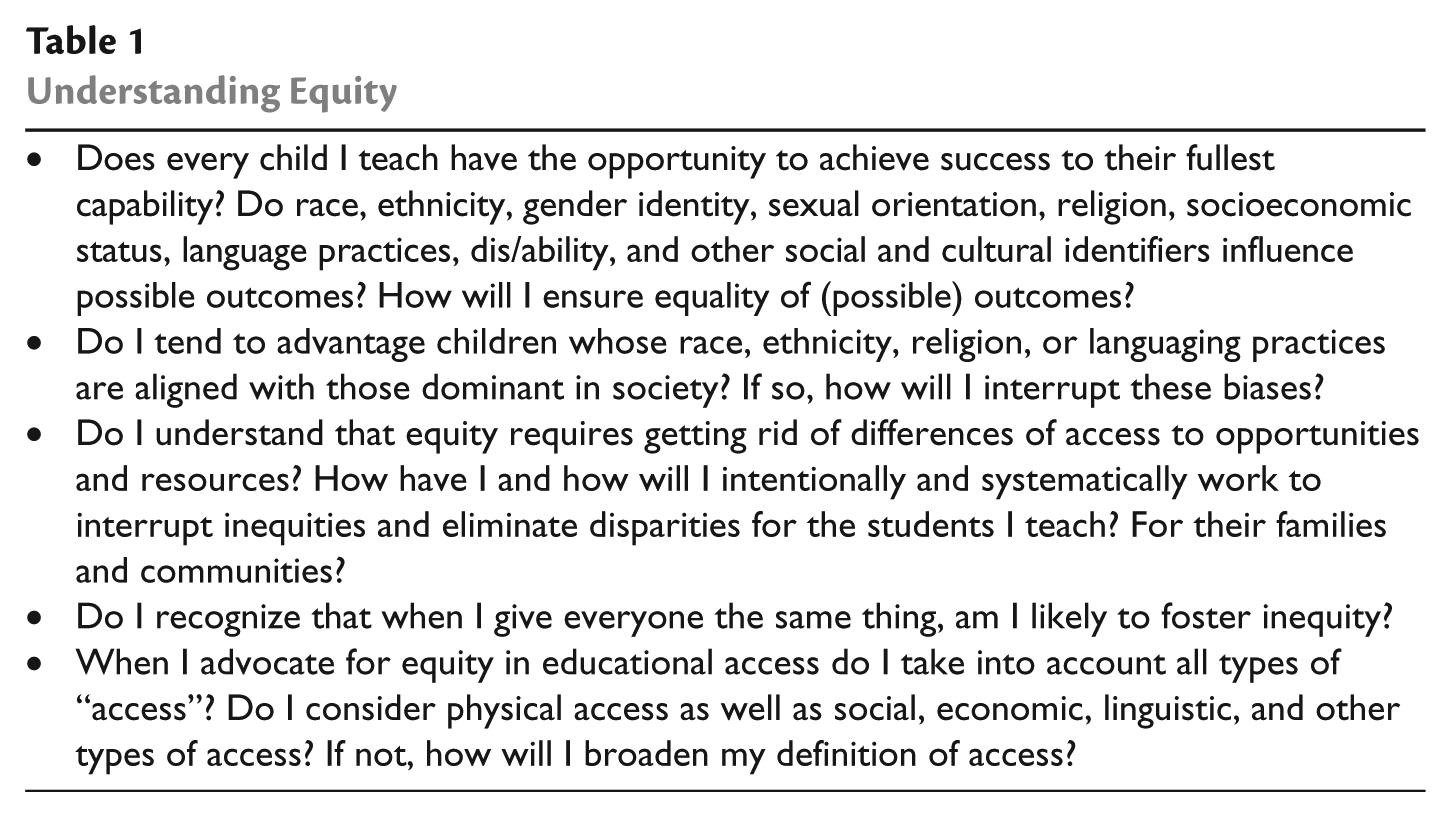
Through the examination of these (and other) questions, preservice teachers start to see how inequitable and exclusionary practices are fostered in the name of equality. These questions also capture how the field of early childhood education has a long history of regarding children of color with and without identified disabilities by their perceived inferiority and/or deficits (Goodwin, Cheruvu, & Genishi, 2008).
Understanding Inclusion
Throughout history, ideas informing the field of early childhood education have positioned minoritized children, many of whom are children of color, in particular ways. Minoritized children are those who although not always the numeric minority are treated as such. They are “socially, economically, and politically marginalized within the” context of schools and society (McCarty, 2002, p. xv). Historically, minoritized children have been positioned as biologically inferior, deficient (when compared with White, middle-class, ableist ways of being and behaving—ways “that uncritically assert that it is better for a child to walk than roll, speak than sign, read print than read Braille” [Hehir, 2002, p. 1]), or different from the dominant norm (Goodwin et al., 2008). All of these persistently position them as problems to be fixed. This “fix” came in many forms, depending on the dominant idea at the time.
For example, when children of color were believed to be biologically inferior (an idea propagated by notable anthropologist Samuel Norton and his flawed study of the size of human skulls sorted by race), moral and spiritual salvation were deemed to be the solutions (Bloch, 1987; Kendi, 2016; Nourot, 2005). Then, when children of color were seen according to their cultural deficits, “the purpose of schooling was not to liberate but to sort and classify, not to intellectually expand but to standardize, not to transform but to conform” (Goodwin et al., 2008, p. 4). Although ideas of children being culturally different notably moved away from difference as deviance, a cultural difference conceptualization of children of color still attached them to the margins of what was deemed “normal.” Thus, while these conceptualizations shifted over time, they have not supported the understanding of inclusion as equity.
Influenced by ideas of the raceless (read: White), monocultural, and monolingual child as “normal,” one of the chief obstacles we—university-based teacher educators—have seen in our work with preservice teachers seeking to foster inclusive classrooms is their conflation of equality and equity. Pledging allegiance to the premises of equality, meaning that everyone must have the same thing, new teachers often find it difficult to justify accommodations and modifications, regardless of whether they are part of a 504 plan, of an Individualized Family Service Plan (IFSP), or of an Individualized Education Plan (IEP). This focus on equality often results in accommodations and modifications not being discussed with children because teachers may perceive such accommodations and modifications as compromising equality, thus constructing them as being unfair.
As we work with preservice teachers, we see equality being (problematically) offered as a solution to inequities in schools and schooling. Understanding equality as the pathway to inclusion is likely to lead to further stigma and to the marginalization of children who need nondominant tools to reach similar outcomes. For example, children who have a specific learning disability in writing and may need an iPad with word prediction software to author a narrative, as opposed to the traditionally used paper and pencil, may not have access to such assistive technology tools. In this case, understanding inclusion as equality may serve as an obstacle to addressing the following Division for Early Childhood of the Council for Exceptional Children (2014) recommended practice: “Practitioners work with families and other adults to identify each child’s needs for assistive technology to promote access to and participation in learning experiences” (p. 9).
“Rejecting equality as a pathway to foster inclusive classrooms, we are committed to preparing early childhood teachers to understand inclusion as educational equity.”
Thus, rejecting equality as a pathway to foster inclusive classrooms, we are committed to preparing early childhood teachers to understand inclusion as educational equity. After all, it is equity that is grounded on fairness and predicated on educational opportunities which foster success for all. As early childhood teacher educators preparing teachers who will be certified to teach the growing majority of children of color with and without identified disabilities, we are committed to teaching in ways that help them see how schooling (curriculum and teaching) can be transformed. This entails “[p]ractitioners work[ing] with the family and other adults to modify and adapt the physical, social, and temporal environments to promote each child’s access to and participation in learning experiences” (Division for Early Childhood of the Council for Exceptional Children, 2014, p. 9) in ways that center children, families, and communities who have historically been marginalized in society and rendered invisible in curricula. Below we offer two examples of how we work to prepare early childhood teachers to cultivate equitable and inclusive classrooms. One of them involves classroom materials and arrangements; the other, children’s books.
What Stories Do My Classroom and Its Materials Tell?
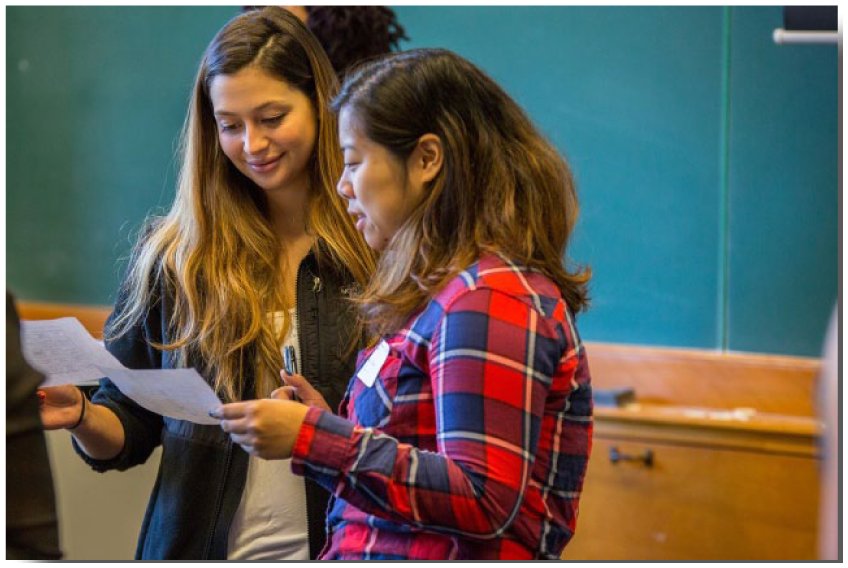
As we seek to prepare teachers to engage in equitable and inclusive practices, we privilege (or favor) the practices of critically reading and rereading curriculum and teaching (Freire, 1985), naming and addressing the inequities enacted by materials. This is grounded on our belief that representation matters and that when children do not see themselves in their classroom and its materials, they may feel that they do not belong. Conversely, when students are overrepresented in classroom materials, they might develop an overinflated impression of who they are and of the importance of their experiences, values, beliefs, and perspectives.
“When children do not see themselves in their classroom and its materials, they may feel that they do not belong.”
Thus, approaching representation as a matter of equity and inclusion and with the understanding that curricula, materials, and approaches need to be analyzed for accuracy and completeness, we ask preservice teachers to examine their classroom materials (e.g., books, lesson plans, posters). As they examine classroom materials, they engage in asking questions such as those included in Table 2.
Examining Classroom Materials
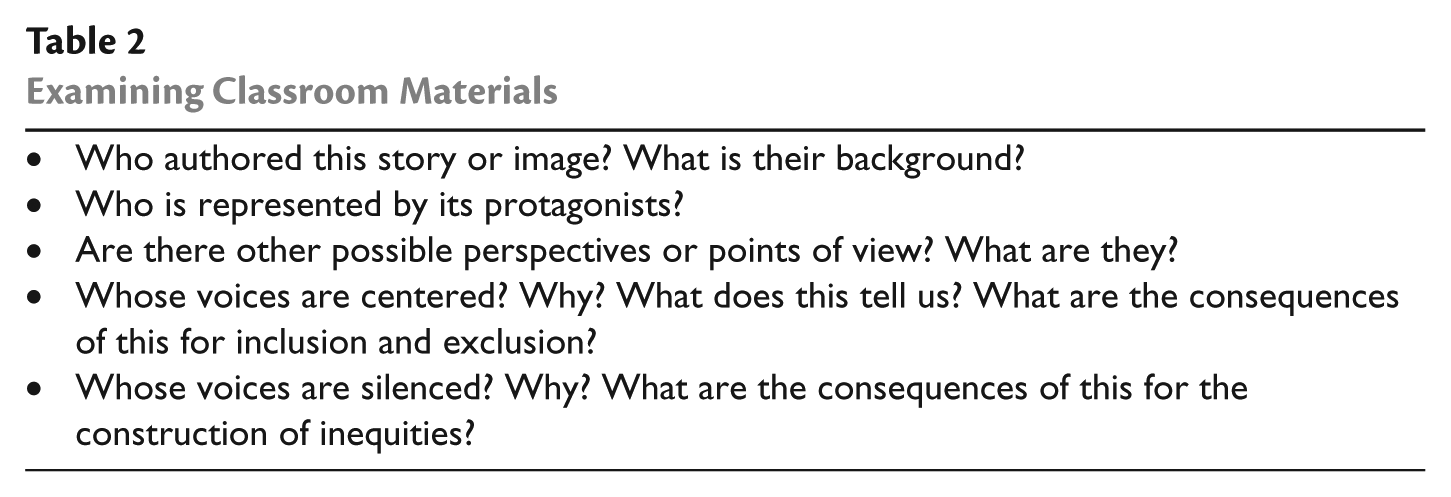
After engaging in the critical reading of materials in the classroom, we ask preservice teachers to engage in an audit of their classroom (regardless of whether they are assistant teachers, lead teachers, or student teachers), documenting the stories their classrooms tell (e.g., posters, images, materials, stories read aloud, language/s employed in communication to families, classroom set up, kinds of talk valued), analyzing such stories for completeness and representation. We base our audit on the questions above and utilize resources offered in Souto-Manning and Martell (2016). Preservice teachers’ audits are shared as infographics, visually representing the demographics represented in the classroom materials and environment as compared to the demographics of the classroom, school, and larger community. For example, one preservice teacher created an infographic representing how in a particular New York City public school classroom 2% of books available in the classroom library were about Latinxs compared with 44% of the classroom, 35% of the school, and 27.5% of New York demographics.
“Many times, teachers perceive their classrooms and its materials to be more diverse than they are; this is especially the case when teachers see themselves and their own experiences (over) represented.”
These audits are necessary because many times, teachers perceive their classrooms and its materials to be more diverse than they are; this is especially the case when teachers see themselves and their own experiences (over)represented. Because of this potential for misperception, we believe that to advance equity and inclusion, it is essential that our preservice teachers document the walls and materials in their classrooms. After all, when teachers perceive classrooms as already being diverse, they are less likely to take actions aimed at making them more representative and inclusive.
We use the following prompt: Look around your classroom. What do you see? What do the walls, the children you teach, the materials, the interactions reveal? Who is visible? Who is made invisible? . . . If you are getting started, consider planning a classroom that is inclusive and honors diversities. But what exactly does this mean? It means that when children enter your classroom they see inclusiveness and diversities portrayed in the materials and arrangements, in the schedule and tasks. (Souto-Manning & Martell, 2016, p. 40)
Being aware that nothing is “neutral” and that any decision pertaining to curriculum and teaching is political (being motivated by a person’s beliefs and/or furthering the interests of specific groups), we ask preservice teachers to compare findings from their audits with the demographic makeup of the schools and the larger community in which the pre/schools are located (in terms of race, ethnicity, language practices, ability, etc.). This aims to help them read their curriculum and teaching more critically, developing an understanding of how the dominant curriculum often (over)privileges dominant practices, experiences, and communities.
In addition to auditing their classrooms, recognizing that classroom materials often do not reflect the language practices, cultures, and identities of the children who comprise the classroom community or broader community, we engage preservice teachers in critically reviewing “less than ideal” materials. Upon identifying such materials (books, toys, posters, lesson plans), we ask preservice teachers to consider how each of these materials may be used (a) to support children whose cultures, languages, and identities are most greatly reflected in classrooms as well as (b) to benefit children who may not understand or relate to the cultures, languages, and identities most greatly reflected. After this analysis, we support preservice teachers to plan for teaching in ways that critically employ these materials to foster culturally relevant (Ladson-Billings, 1995), inclusive, and equitable teaching practices. That is, we help preservice teachers understand how teaching practices that foster high expectations, entail robust support, and purposefully cultivate the development of cultural competence and critical consciousness (problematizing inequities in schooling and society) are not contingent on the availability of certain materials.
Interrupting Injustice: Engaging with Children’s Books to Interrupt Labels
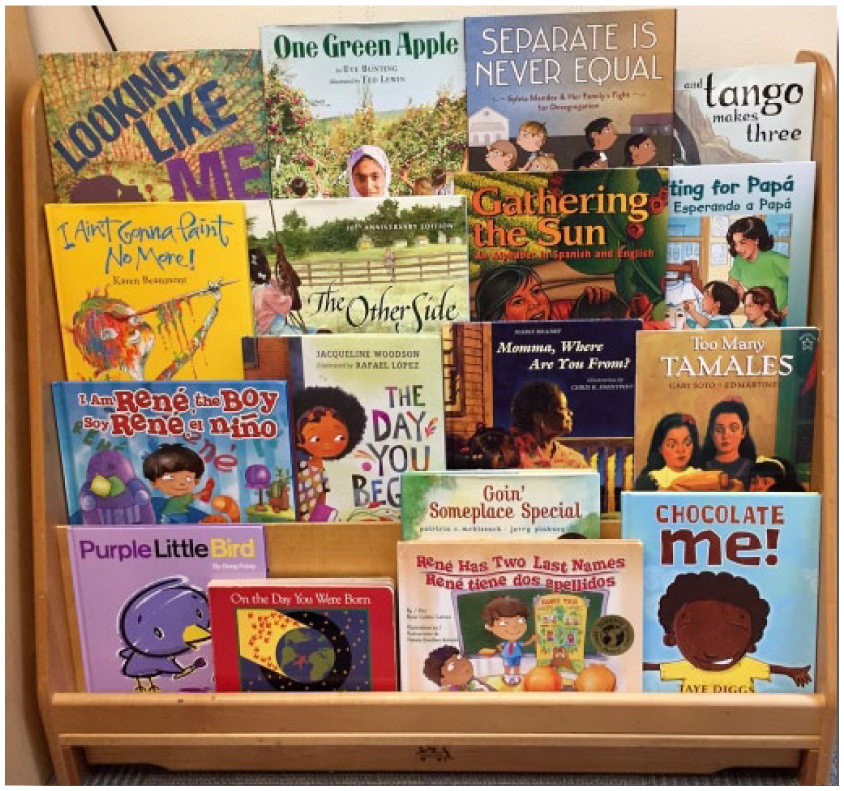
We use children’s literature as key materials in the education of preservice teachers. Children’s books encode themes of inequity and injustice and allow for collective ownership of and investment in addressing portrayed issues. According to Bishop (1990), “Books are sometimes windows, offering views of worlds that may be real or imaginary, familiar or strange” (p. ix). As such, they offer transformative potential. Our use of children’s literature also allows preservice teachers to consider how they might use picture books to engage their own students in advancing equity and inclusion.
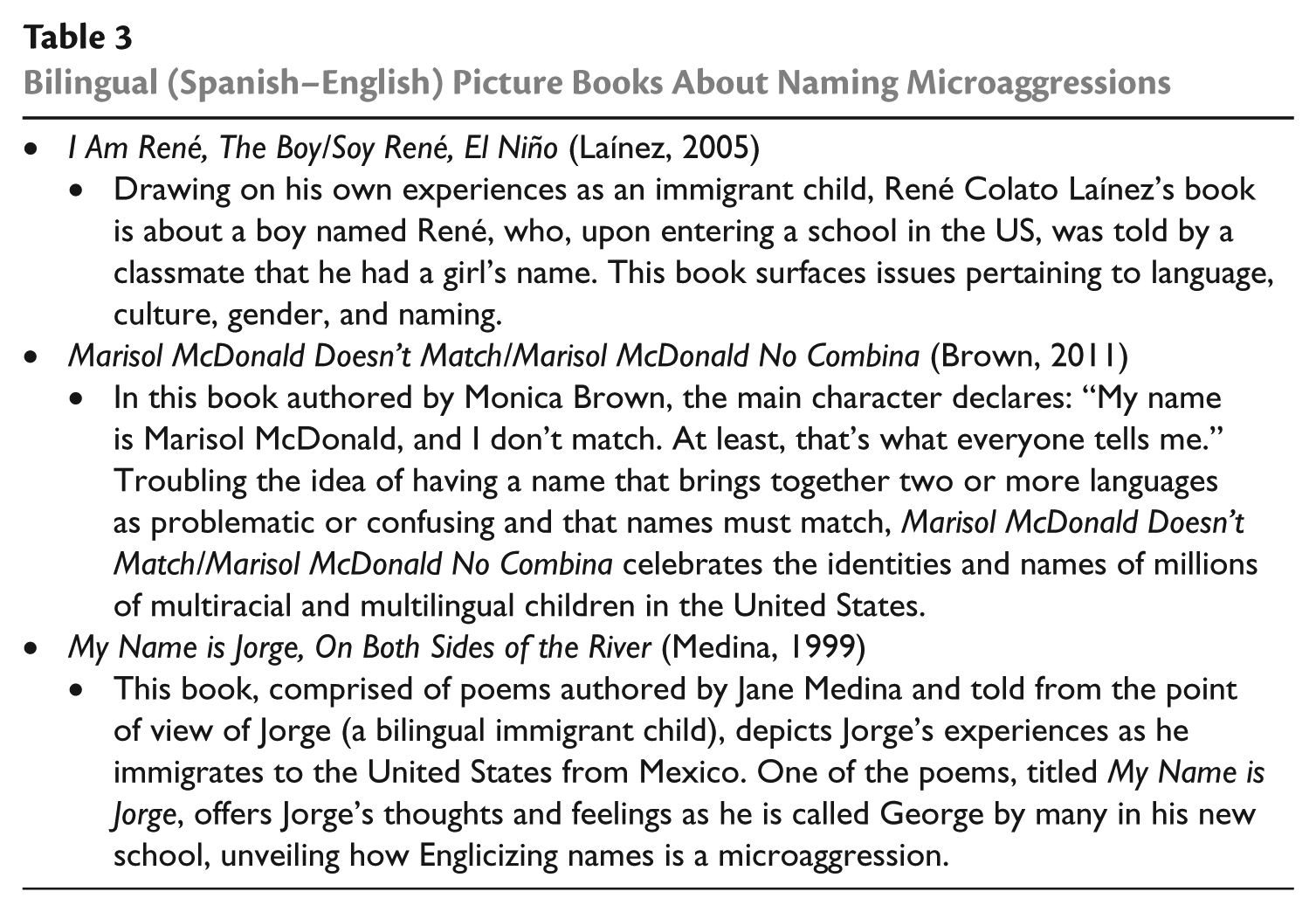
Often, we read books that could be used by preservice teachers to engage young children in culturally relevant ways, upholding high expectations, fostering cultural competence, and developing a critical consciousness, questioning injustices (Ladson-Billings, 1995). The books we select and read tend to address common microaggressions. According to Wing Sue and colleagues (2007), “Microaggressions are brief and commonplace daily verbal, behavioral, or environmental indignities, whether intentional or unintentional, that communicate hostile, derogatory, or negative racial slights and insults toward people of color” (p. 271). An example of a microaggression is the mispronunciation of a child’s name. After reading the picture books listed in Table 3, we ask preservice teachers to learn about (from family members) and write about the history and meaning of their own names. Many of them, after graduation, contact us to recount not only their use of the picture books we introduced in our classes in their own teaching, but also how they engaged their own young students in interviewing family members, learning and writing about the histories of their names.
Bilingual (Spanish–English) Picture Books About Naming Microaggressions
Another common microaggression is to ask a person of color the question: Where are you from? Repurposing the question “Where are you from?” which often serves to exclude and marginalize, we read Momma, Where Are You From? (Bradby, 2000) and ask preservice teachers to write “I Am From” poems, which are then compiled into a class book titled Where We Are From. In doing so, we show them how to make classroom materials that are reflective of the lives, images, and stories of the children they teach, thereby preparing them to engage in building “trusting and respectful partnerships with the family through interactions that are sensitive and responsive to cultural, linguistic, and socio-economic diversity” (Division for Early Childhood of the Council for Exceptional Children, 2014, p. 10). As they have reported to us, these learning experiences pertaining to common microaggressions have inspired preservice teachers to take up these pedagogical practices in their own classrooms once they started teaching. This signals how their teaching (re)positioned their students capably to co-generate knowledge and co-create materials.
In addition, seeking to interrupt a culture of labeling in classrooms and schools, we read the book Looking Like Me by Walter Dean Myers and Christopher Myers (2014). The book starts by asking the reader what they see when they look in the mirror. Then, it goes on to explore the many labels a child named Jeremy is conferred by different people in his life (a little brother, a son, a dancer, an artist, a runner). Following a read aloud of the book, we ask preservice teachers to draw their own portrait and to assign labels (words written on sticky labels) to the portrait: on one side, labels that have been attributed to them throughout their lives, and on the other side, labels or descriptors which capture the essence of who they are. Invariably, the labels are sorted into deficits versus assets. We then discuss how those labels make them feel and what the implications are for how they see the children they teach. This shows them the importance of moving beyond labels. Following this experience, teachers have engaged children in the primary grades (their own students) in a similar process, thus challenging the prevalence of labels and interrupting the damage caused by their use.
So What?
Schooling in the United States has the potential to promote change and uphold society’s democratic principles. Yet, it often ends up serving as grounds for the reproduction of inequities. This is especially the case in light of the racial disproportionality of early childhood teachers and students in today’s classrooms; whereas most children are of color, the overwhelming majority of teachers is White (U.S. Bureau of Labor Statistics, 2014; U.S. Census Bureau, 2010). As “we teach what we value” (Ladson-Billings, 2017), White teachers are more likely to overprivilege their own experiences and perspectives in their teaching (Milner, Pearman, & McGee, 2013) and thus marginalize or exclude children of color. Notwithstanding is the fact that their experiences and perspectives are already overvalued in schools and in society (Delpit, 1995).
“Schooling in the United States has the potential to promote change and uphold society’s democratic principles. Yet, it often ends up serving as grounds for the reproduction of inequities.”
Preparing teachers who will be certified to teach the growing majority of children of color with and without identified disabilities means fostering a transformative shift in perspective (Berry, 2010; Boutte, 2010; Goodwin et al., 2008; Ray, Bowman, & Robbins, 2006; Ryan & Grieshaber, 2005; Souto-Manning, 2013; Souto-Manning & Martell, 2016). This shift entails deliberately rejecting framing children of color, their families, or communities as inferior, deficient, or different, and issuing interventions. In addition, it entails transforming curriculum and teaching in ways that center voices historically silenced and perspectives historically marginalized.
“We seek to prepare teachers who can and do learn from and with the children, families, and communities they serve, honoring their knowledges, values, and voices in and through teaching.”
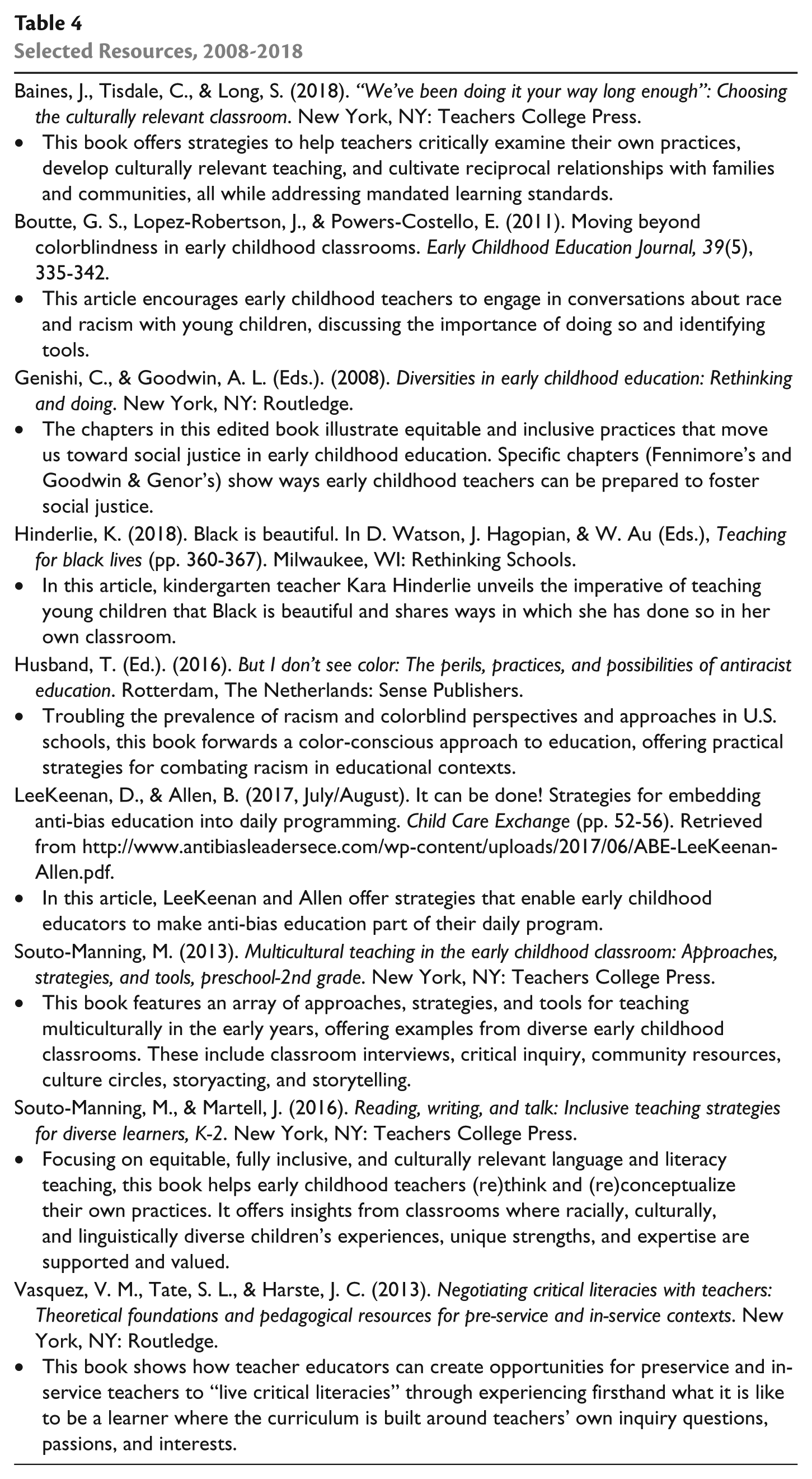
As early childhood teacher educators committed to inclusion as equity, in our preservice teacher education classes we aim to prepare teachers to undertake similar commitments. That is, we seek to prepare teachers who can and do learn from and with the children, families, and communities they serve, honoring their knowledges, values, and voices in and through teaching. We understand that this is a complex and situated process. In sharing a few of our strategies, tools, and approaches with you in this article, our hope is not to provide simplistic solutions. After all, we do not believe in simplistic solutions to complex issues. Instead, we intend to offer situated examples in hopes of inspiring stakeholders, those working in teacher education, to (re)commit to the development of teachers who are poised to interrupt injustices and foster justice in and through their teaching. Table 4 offers a number of resources.
Selected Resources, 2008-2018
We sincerely hope that the insights, examples, and resources provided in this article will inspire teacher educators to engage preservice teachers in understanding equity, critically reading and revising the tools and materials they use, and creating opportunities for learning that can foster liberation—from labels, from the Eurocentric nature of curriculum, and from teaching practices that perpetuate inequity and exclusion. Only then can the full potential of inclusive and equitable education be realized.
