






Abstract

Ms. Cami is a teacher in an inclusive preschool classroom. She carefully plans developmentally appropriate activities to meet her state’s early learning standards and to embed instruction on children’s individualized goals. She has recently realized that she does not provide many activities in her classroom related to science. She wonders how she can provide high-quality science experiences in her classroom and include all children in these activities.
Like many teachers, Ms. Cami wants to provide meaningful science activities and instruction in her classroom that benefit all young children. This is consistent with the increasing focus on enhancing science experiences and instruction in preschool classrooms.
Recommendations for how to engage in early childhood science activities are available, as are science curricula and instruction for preschool-aged children (e.g., Chaillé & Britain, 2003; Charlesworth & Lind, 2010; DeVries & Sales, 2011; Gelman, Brenneman, MacDonald, & Román, 2010; Stone-MacDonald, Wendell, Douglass, Love, & Hyson, 2015; Worth & Grollman, 2003). In addition, within the science, technology, engineering, and math (STEM) field, there is an effort to encourage the provision of high-quality STEM education to preschoolers (Donegan-Ritter, 2017; U.S. Department of Education, Office of Innovation and Improvement, 2016). Despite this effort to promote science instruction, researchers have found that preschool teachers and children often do not engage in science activities, even when science-related materials are in the environment (Nayfield, Brenneman, & Gelman, 2011; Tu, 2006).
There is limited research on the efficacy of science instruction, particularly inquiry-based instruction. However, there is some research to suggest that science concepts can be taught to preschool-aged children (3- to 5-year-olds). For example, storybook reading and retelling activities can increase young children’s science vocabulary (Leung, 2008); teachers’ use of explanatory language within the context of an inquiry-based curriculum can positively impact children’s language related to science concepts (Peterson & French, 2008); and posted visuals of questions related to science process skills can be effective for increasing teachers’ use of science instruction in the classroom, with additional positive effects on children’s engagement in science concepts (Ramsey & Fowler, 2004). Although there is need for further research in science instruction for preschoolers (Greenfield, 2015; Greenfield et al., 2009), there is sufficient theory and research to support the provision of science instruction to young children. There is also evidence that using a variety of instructional strategies, including explicit instruction, is effective in helping preschool children acquire science knowledge (Hong & Diamond, 2012).
This article builds on Donegan-Ritter’s (2017) recommendations for planning accessible science activities for children with disabilities by (a) explaining why science instruction is desirable for preschool children, (b) briefly describing inquiry-based learning, (c) presenting a rationale for how young children with disabilities can benefit from inclusion in science activities and instruction, and (d) providing guidance around the design of inclusive science activities in which instruction for Individualized Education Program (IEP) objectives can be embedded. This article reflects multiple Recommended Practices (Division for Early Childhood [DEC], 2014) (see environment: E1, E2, E3, and instruction: INS1, INS2, INS4, INS5, INS6). Throughout the article, we revisit Ms. Cami’s classroom to illustrate the ideas discussed.
Why Focus on Science?
There are many reasons to focus on science with preschool-aged children. First, participating in early science activities helps children develop positive approaches to learning, such as motivation to learn, persistence, and flexibility (Charlesworth & Lind, 2010). Second, science instruction can help children develop thinking processes such as problem solving that may apply to all domains of development (Bosse, Jacobs, & Anderson, 2009). Third, science instruction can build on children’s curiosity and interest in the world (Gelman et al., 2010) and use children’s interest as a springboard to develop complex skills and knowledge. Fourth, young children have the ability to learn science content and engage in scientific reasoning through appropriate experiences and support (Gelman et al., 2010).
“Being intentional allows teachers to avoid “pushing down” expectations for older children, and instead, promote knowledge and process skills in ways that are consistent with children’s developmental levels and include necessary adaptations and modifications.”
Although all young children can benefit from science content and process skills, young children with disabilities can further benefit from being included in classroom-wide science activities (U.S. Department of Education, Office of Innovation and Improvement, 2016). First, through science instruction, teachers can provide multiple opportunities for children to access the general education curriculum. Research shows that students with disabilities, when included in curricular and classroom activities, are more likely to feel and be viewed as valued members of the classroom community (Meyer & Ostrosky, 2016) and can learn academic content (Courtade, Browder, Spooner, & DiBiase, 2010; Cushing, Clark, Carter, & Kennedy, 2005). Second, in the context of early childhood science activities, teachers can provide children with disabilities multiple opportunities to interact with peers and scaffold friendship-building (Meyer & Ostrosky, 2016). Third, including young children with disabilities in science activities can provide a context for addressing individual learning objectives. When early childhood science activities are designed appropriately, they provide an ideal context for providing embedded instruction to young children with disabilities. Let us return to Ms. Cami as she reflects on how to design meaningful activities for all children in her classroom: Ms. Cami’s preschool classroom has 16 children, including some with disabilities. One of these children, Maya, is 4 years old and has significant disabilities. She is nonverbal and is unable to walk and be in some positions due to her disabilities and contractures. She communicates her wants and needs by crying, smiling, pointing, and pushing things away. She can also communicate by pointing to or choosing pictures. She has limited fine motor abilities, but enjoys trying to manipulate objects with her hands, including writing utensils. Her limited communication and mobility make it difficult for her to demonstrate her cognitive skills. Maya’s fine motor IEP goal is that she will perform fine motor tasks using both hands, and her social goal is that she will interact socially with her peers. Ms. Cami wants to design science activities that address her state’s early learning standards and will benefit all children. She also wants to embed instruction on children’s IEP objectives in these activities.
Classroom Considerations for Designing Inclusive Science Activities
Designing science instruction for all young children requires intentional planning. Science instruction should be engaging, hands-on, and developmentally appropriate (Copple & Bredekamp, 2009). Being intentional allows teachers to avoid “pushing down” expectations for older children, and instead, promote knowledge and process skills in ways that are consistent with children’s developmental levels and include necessary adaptations and modifications (Gelman et al., 2010).
“The social, political, and cultural context should also be considered carefully when designing activities. For example, if the classroom was in a community where water scarcity is an issue, an activity which requires the use of water might not be appropriate.”
When designing and implementing inclusive science activities, teachers should intentionally consider (a) using children’s interests and backgrounds, (b) addressing early learning standards, (c) utilizing hands-on exploration, (d) focusing on inquiry, (e) selecting activities and materials, (f) choosing tiered instructional strategies, and (g) embedding instruction on IEP objectives (DEC, 2014). This planning process is illustrated in Figure 1, and each consideration is discussed below.
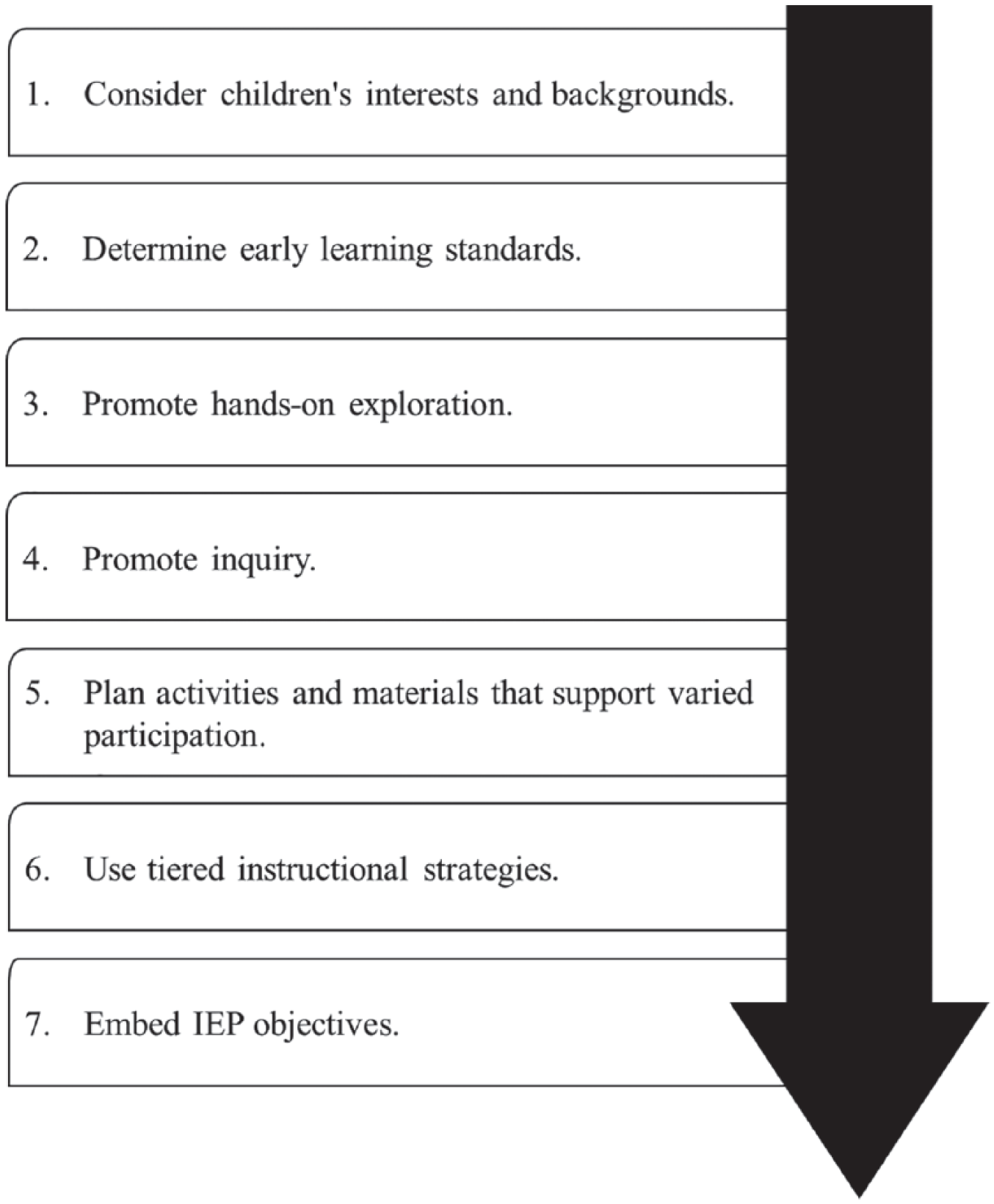
Process for designing inclusive science activities
Children’s Interests and Backgrounds
Children’s interests and backgrounds should be used to inform activity design and planning (Helm & Katz, 2011). This practice embraces the child’s family and culture and is essential in engaging children (see DEC Recommended Practice INS1: Practitioners, with the family, identify each child’s strengths, preferences, and interests to engage the child in active learning).
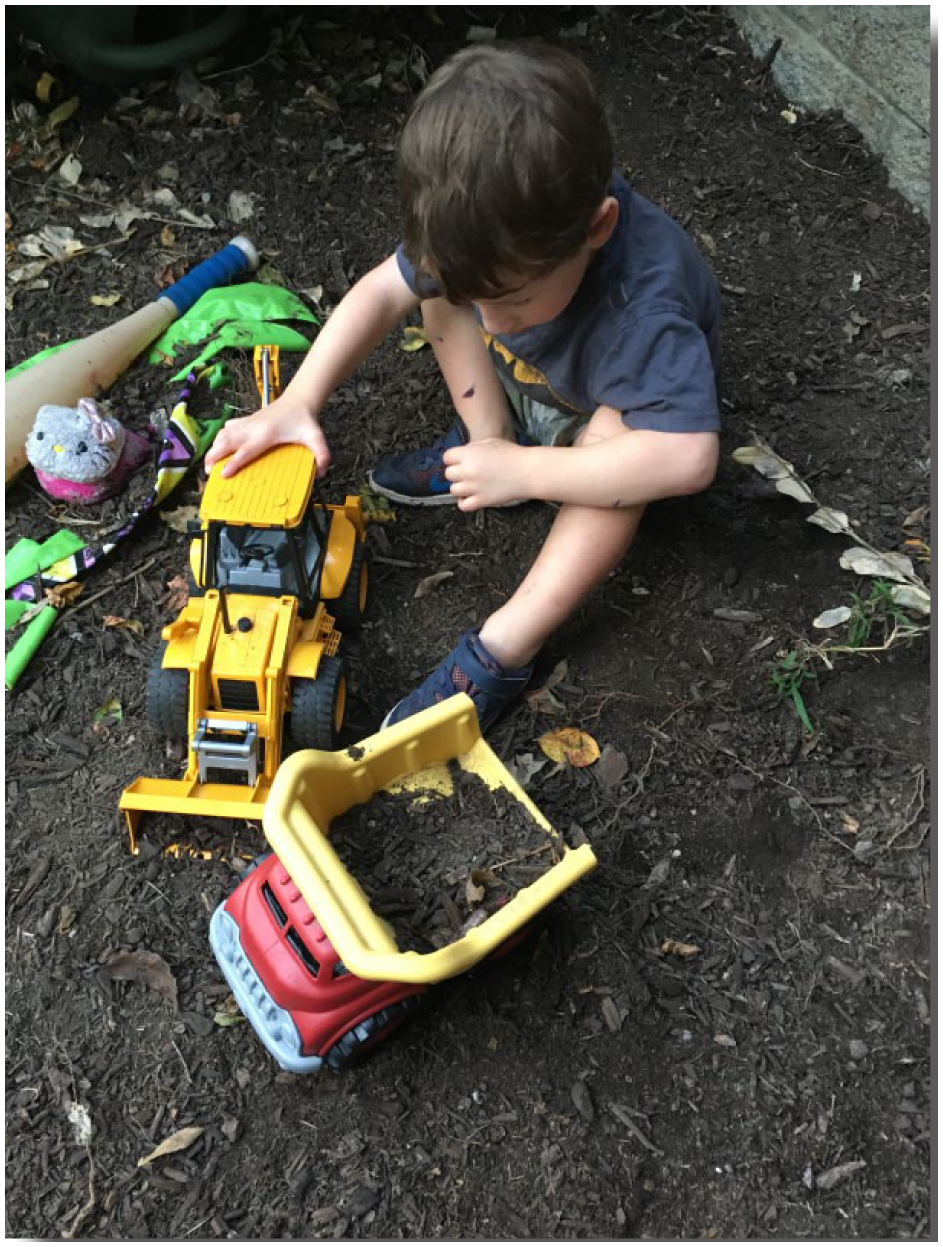
Construction site equipment near a classroom, for example, could spur children’s interest in exploring simple tools. If a child in the classroom has a parent who works in a recycling plant, this could elicit excitement in learning more about recycling. The backgrounds of the children and the social, political, and cultural context of the classroom could also provide a wealth of ideas for exploring science. For example, if teaching children from a culture that emphasizes connection with nature, many culturally relevant activities could be planned that reflects this belief (see Roehrig, Dubosarsky, Mason, Carlson, & Murphy, 2011). The social, political, and cultural context should also be considered carefully when designing activities. For example, if the classroom was in a community where water scarcity is an issue, an activity which requires the use of water might not be appropriate.
“Hands-on exploration promotes children’s engagement, and it also is how children can best begin to understand science content and use science process skills.”
Early Learning Standards
The second consideration in designing inclusive science activities is to consider the early learning standards that will be addressed (Dorsey, Danner, & Laumann, 2014). It is important to plan activities with the goal of addressing early learning standards, rather than planning activities simply because they are cute or engaging. For example, a teacher might have the goal of addressing early learning standards around (a) using senses to observe and gather information and (b) observing and describing living things. With these standards in mind, the teacher might then plan an activity to teach children how a plant grows. Examples of early learning standards can be found in the Head Start Early Learning Outcomes Framework: Ages Birth to Five (Office of Head Start, 2015), as well as in the early learning standards developed by individual states. Early learning standards in science often encompass the following areas: Observing and documenting, engaging in inquiry, the scientific method, physical science, life science, and earth and space science (Charlesworth & Lind, 2010; Gronlund, 2014; Office of Head Start, 2015).
Hands-On Exploration
The third consideration in designing inclusive science activities is to plan activities that involve hands-on exploration. Hands-on exploration promotes children’s engagement, and it also is how children can best begin to understand science content and use science process skills (National Research Council, 1996). For example, consider an activity that teaches children about how plants grow. The teacher could plan an activity in which she tells them how plants grow from seeds and then have them color the different stages a plant goes through as it grows. An alternate, hands-on activity might involve the children planting their own seeds and documenting plant growth over time. The latter activity engages children and helps them understand a plant’s growth.
Inquiry
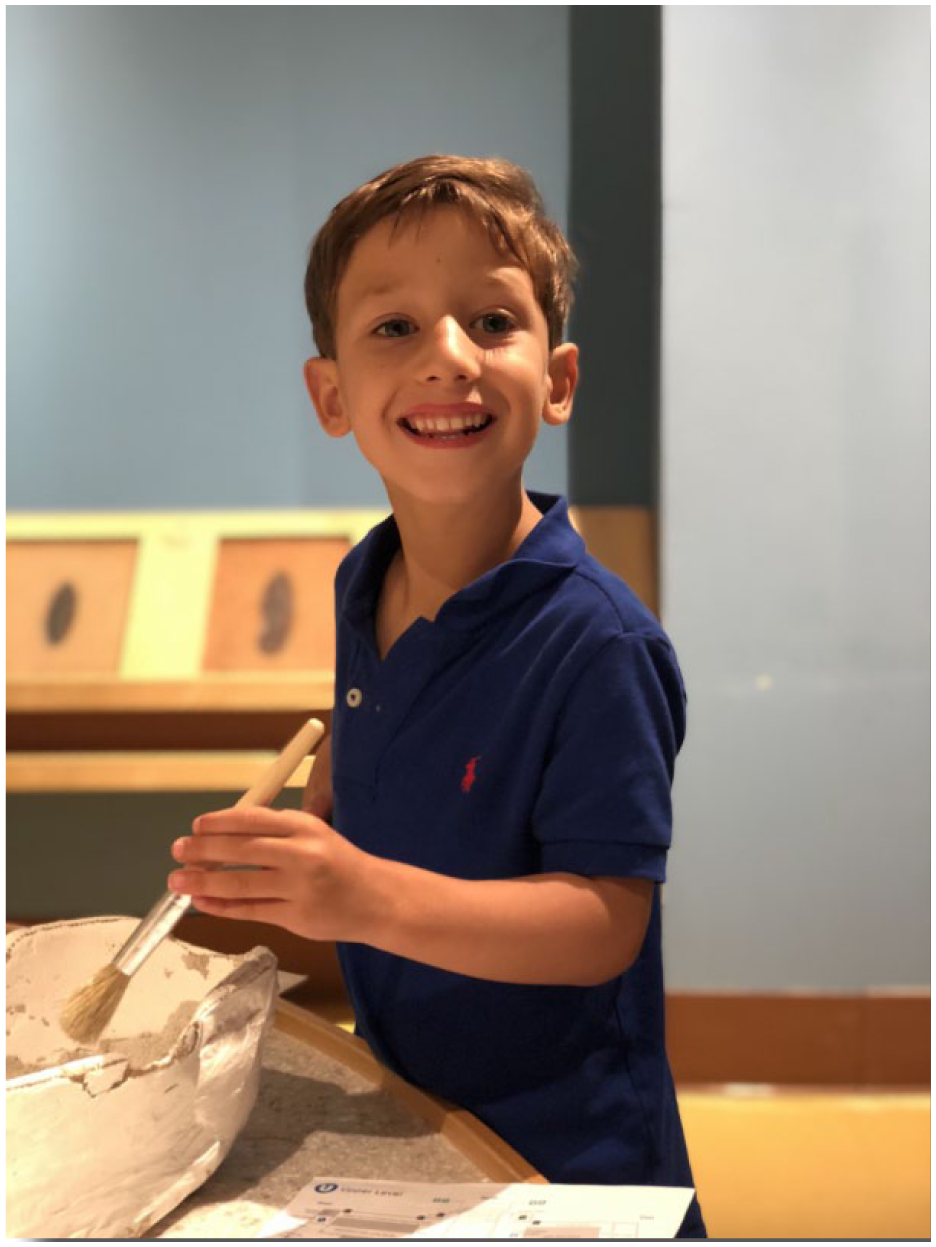
In addition to being “hands-on,” science activities also should engage children in inquiry (National Research Council, 1996). Inquiry has been defined as involving multiple components, including observing, asking questions, conducting research, planning investigations, gathering and analyzing data, and summarizing and communicating results (National Research Council, 1996, p. 23). For example, consider an activity in which children are making single-portion muffins (Zan, Edmiaston, & Sales, 2002). This is a hands-on activity, but it is not necessarily one that engages children in inquiry—this depends on the teacher’s behavior. For example, the teacher could require children to follow an exact recipe, disallowing variations to the recipe. Alternately, the teacher could encourage children to explore how adding different amounts of the ingredients impacts the muffins, discuss the resulting differences in their muffins, and generate drawings or words to represent the differences. In the latter example, the children are engaging in scientific inquiry by experimenting with variables, analyzing the results, and documenting their findings. Inquiry can be supported in other ways as well, depending on the context and children.
Activities and Materials That Support Varied Participation
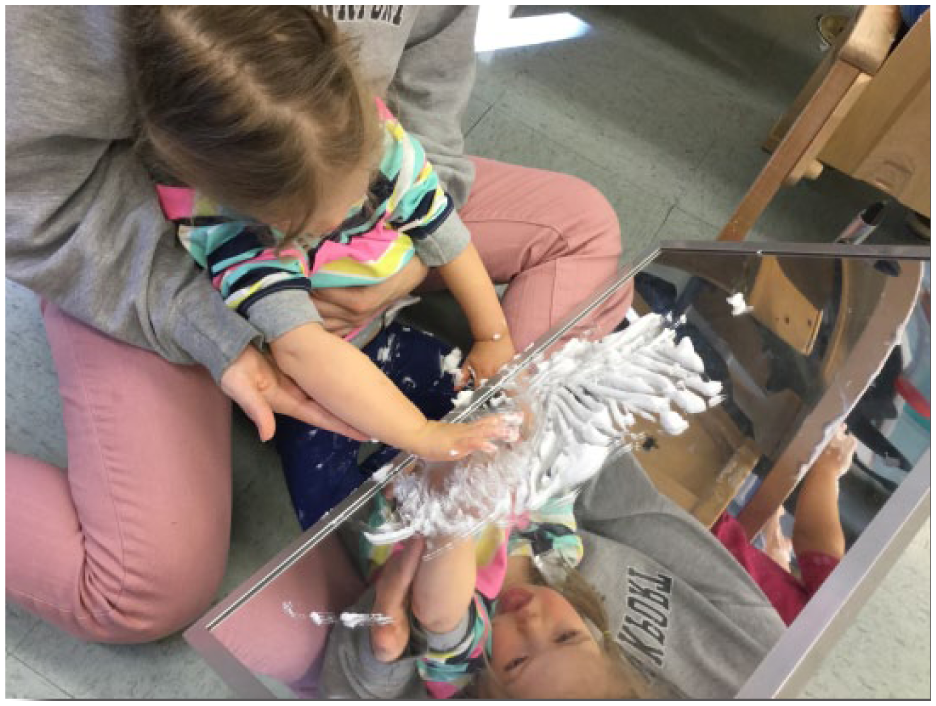
A fifth consideration in designing inclusive science activities is to plan activities that allow the teacher to meet the needs of all children within the context of a single activity. This is consistent with DEC Recommended Practice INS4: Practitioners plan for and provide the level of support, accommodations, and adaptations needed for the child to access, participate, and learn within and across activities and routines (DEC, 2014). This consideration involves planning activities that (a) allow children to participate in different ways, (b) are neither too hard nor too easy for children, and (c) allow for meaningful child choice and expression (Rock, Gregg, Ellis, & Gable, 2008). For example, a teacher might plan an activity to teach children about volume by experimenting with water. The teacher might plan to have water in the sensory table, with different vessels for holding and pouring water. Children can participate in an activity like this in a variety of different ways, and there are numerous opportunities for child choice. For example, children can scoop and pour water using different vessels, pour water from one vessel into another, make holes in plastic cups and observe how water drains, and direct the movement of water from one vessel to another using plastic tubing.
Tiered Instructional Strategies
The sixth consideration is to plan instructional strategies that will help children access science content. Instructional strategies can be categorized as universal instruction, targeted intensive, individualized, and intentional instruction (Grisham-Brown et al., 2014; Grisham-Brown & Pretti-Frontczak, 2013). For example, in the volume activity above, the teacher could use all three types of strategies. A universal strategy might be “I wonder what happens when you keep filling that big container with water.” A targeted strategy with some children might be “How many cups does it take to fill up the big container? Count them as you pour.” An individualized and intensive strategy could be used with an individual child by providing hand-over-hand assistance as the child pours water into a cup and prompting the child to count as the child pours. In each of these examples, the children are being given an opportunity to access and explore science concepts.
Embedding IEP Objectives
The seventh consideration in designing inclusive science activities is to determine which IEP objectives can be embedded in the activity. Embedding objectives in classroom activities and routines is a recommended, evidence-based practice (DEC, 2014; Macy & Bricker, 2006). It can be done most easily through the use of an activity matrix, which is used to help plan how IEP objectives will be addressed throughout the day in a classroom (Grisham-Brown & Hemmeter, 1998; Sandall, Schwartz, & Gauvreau, 2016). An activity matrix consists of a table with the typical activities of the classroom written in the left column and the objectives that need to be met written in the top row. In each box in the table, the teacher writes how the specific objective will be addressed in the activity type. See Table 1 for a partial example using Maya’s IEP objectives. In addition to using an activity matrix, the teacher must determine how IEP objectives will be embedded in specific activities.
IEP Objectives and Sample Activity Matrix for Maya
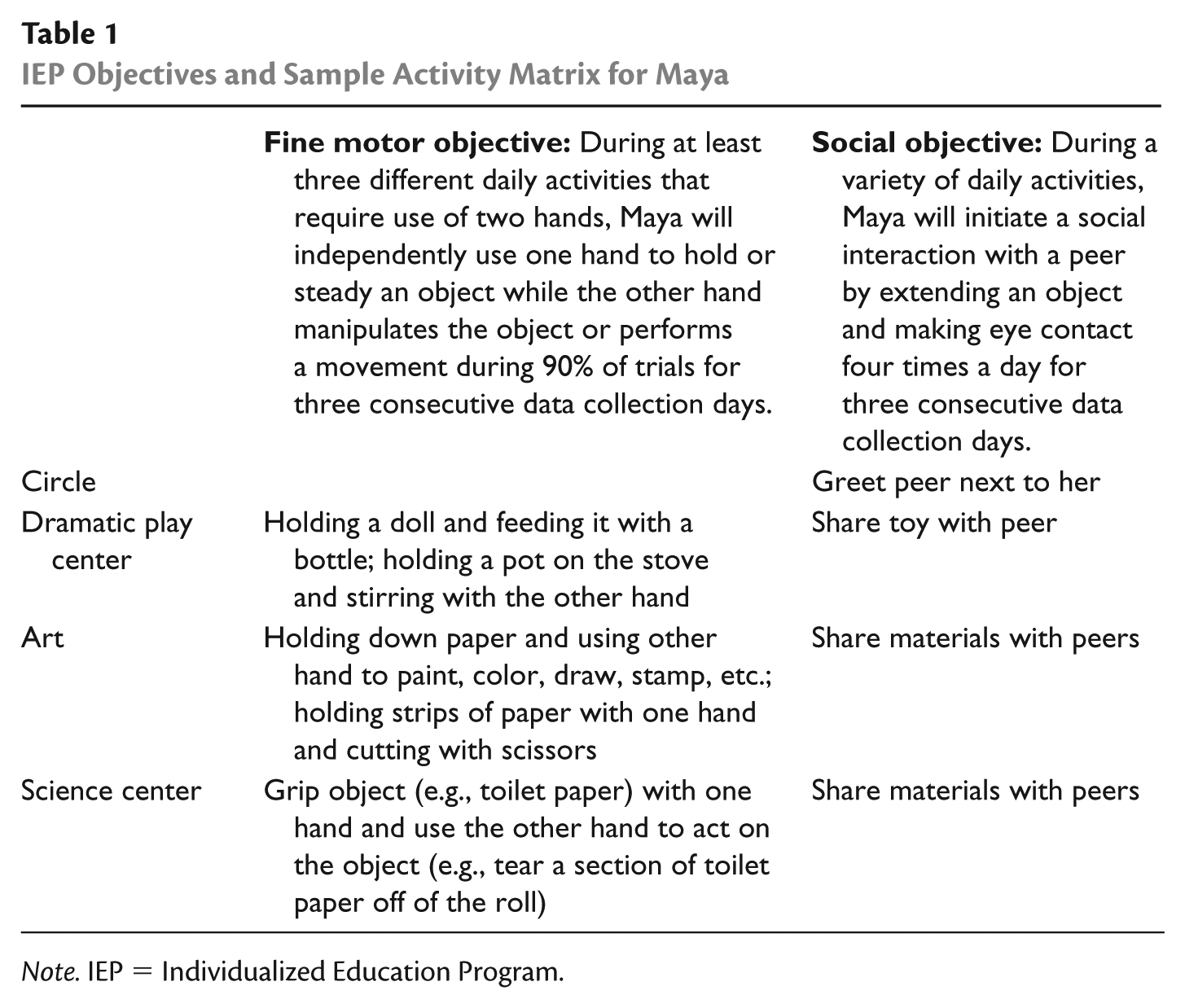
Note. IEP = Individualized Education Program.
Inclusive Science Activities in Practice
In Table 2, a science activity is described, adapted from Chaillé and Britain (2003). We describe how Ms. Cami could implement this activity in her diverse preschool classroom using the framework outlined above. We include examples of how to differentiate instruction within this activity, using universal, targeted, and intensive, individualized, and intentional instruction. We also discuss how one of Maya’s IEP objectives might be addressed in the context of the classroom activity. Additional activity examples are available from the first author upon request.
Planning Process Illustration
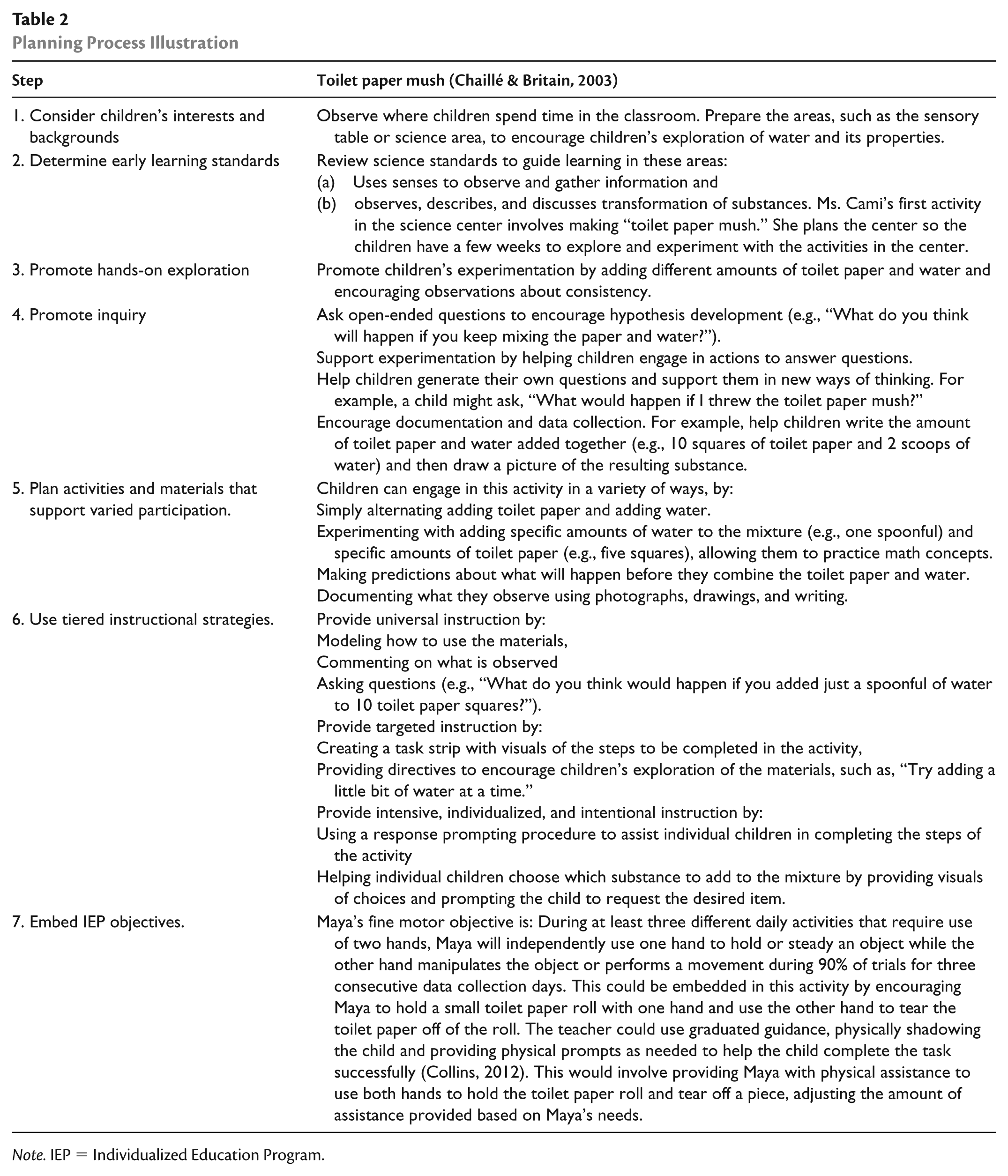
Note. IEP = Individualized Education Program.
By crafting activities to address specific early learning standards, Ms. Cami is ensuring that her activities are purposeful and designed to enhance all children’s learning. In addition, by embedding IEP objectives in this activity, the teacher provides Maya with the opportunity to engage in science learning, make progress on IEP objectives, and interact with peers.
Conclusion
Young children have been described as “scientists-in-waiting” (Gelman et al., 2010, p. 2). It is important that teachers are prepared to nurture young children’s interest and capacity to engage in science. Teachers can do this by providing high-quality science activities that support children in engaging in exploration and inquiry. Activities such as those described above should be designed to be reflective of the interests, needs, and abilities of the children in a given classroom. In addition, with thoughtful planning, high-quality science activities can be a natural and ideal context for embedding instruction on children’s individualized goals and objectives. Instruction must be tailored to fit each unique classroom context, as well as children’s individual needs. Providing science activities to all children has the added benefit of giving children opportunities to access the general education curriculum, develop friendships with peers, and learn science content and process skills. It is incumbent on early childhood educators to ensure that developmentally appropriate and recommended practices are followed when providing inclusive science activities and instruction. Furthermore, additional research is needed to support the provision of science education for young children with and without disabilities, to gather evidence of its efficacy and establish guidelines for its use.