I have had the pleasure of serving as a member-at-large for the DEC Executive Board since the summer of 2020. I have been a long-time member of DEC while serving in the field as a preschool teacher, a consultant in homes and at schools, and eventually as an associate professor in higher education. While in each of these roles, DEC served as a guide by providing recommended practices and sharing position statements which helped better inform my teaching, consultation, and research. And now, as part of the board, I have the amazing opportunity of further participating with and observing all the teams of people who work diligently to sift through all the educational information continually made available to us in print, online, and in related public forums.
Part of this review and dissemination process involves translating research-to-practice so that each of us has a better understanding of the state of the field and the ongoing needs that require continued attention. When translating research-to-practice, we must consider key pieces of information as we decide our plan of action for serving all young children and families.
We do this by answering the following questions:
What works? As we decide how to best support and improve the lives of all young children and their families, we must identify interventions and related teaching practices that have adequate support in rigorous research studies. Within each study, we look at the “how to” portion, or the Method, which tells us exactly how an intervention was implemented and any modifications that were needed to fully support each participant’s growth. Detailed descriptions of interventions and practices help us better understand how to implement each in practice, as appropriate.
For whom? Another important consideration is identifying who participated in studies. For example, it is important to know if an intervention has been evaluated with young children with autism spectrum disorder, children with speech delays, or with a variety of young children with or at-risk for developmental delays. Such information tells us the extent to which we can apply interventions and supports with children and families. Relatedly, a thorough review of research helps us better understand the extent to which there is appropriate representation of all children and families.
For which behaviors or skills? As we review what works and for whom, we also consider for which behaviors an intervention or practice was applied and how behaviors were measured. For example, common early childhood domains include social-emotional development, prerequisites for school success, play and leisure, and so on, and each domain includes specific behaviors that can be targeted in practice. We must determine the intended purpose for specifically selecting and measuring a behavior. Relatedly, when reviewing behaviors or skills within studies, we must consider if we need to assess prerequisite skills, such as vocal or motor imitation.
Under what conditions? Finally, the extent to which an intervention or practice is feasible is dependent on the similarities or lack thereof of the study setting versus an applied setting. For example, there may be difficulties translating an intervention evaluated in a resource-rich environment to a setting with limited materials or fewer adults. Instead of the similarities of contexts being considered an “all or none” decision, we assess this along a continuum of similarity and dissimilarity.
Each of these components are integral to developing a better picture of what we know and answering, “What’s next?” In addition, we must go further to ensure that any recommendations are vetted through an antiracist lens.
The DEC Executive Board and committees, such as the Recommended Practices committee, work tirelessly to translate research to practice for all members of DEC, with the goal of identifying what works, for whom, for which behaviors or skills, and under what conditions. I am thankful that DEC is comprised of diverse members, viewpoints, and backgrounds. Translating research-to-practice is and will continue to be a team effort from all involved parties in our community.
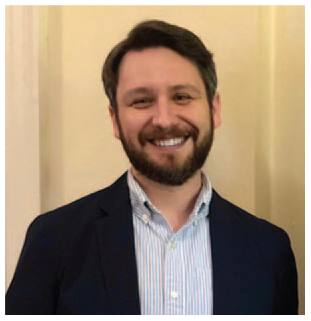
Justin D. Lane, PhD, BCBA-D DEC Executive Board, Member-at-LargeUniversity of Kentucky







