







Abstract
“For families who are more likely to be impoverished and/or of non-White racial identity, finding this specialized care can be nearly impossible given the existing options.”
The phrase child care crisis has become increasingly common since most families returned to work and school buildings following the pandemic. With the end of the American Rescue Plan funding come and gone, funding for early education programs has been top of mind for much of the country. These funds have provided support for a variety of child care settings across the early care and education landscape, reaching millions of families. However, there exists a huge chasm between child care options available to families whose children are typically developing and those whose children have identified disabilities or developmental delays. And the percentage of children with disabilities continues to increase; between 2009 and 2017, about one in six children were diagnosed with one or more developmental disabilities and continues to increase exponentially (Zablotsky et al., 2019). Families of color are disproportionately represented in these statistics as well. According to the most recent United States Census data, American Indian and Alaska Native children have the highest rate of disability (5.9%), followed by children of more than one race (5.2%) and Black children (5.1%). In addition, the census data found that 6.5% of children living in poverty have an identified disability, compared to 3.8% of children above the poverty threshold (U.S. Census Bureau, 2021).
The intersecting identities of race, disability status, and socioeconomic status compound to make the current child care options inadequate to meet the needs of children and families. To grossly oversimplify the current crisis, it is important to understand the following: child care is expensive, in high demand, and not adequately resourced across settings. In addition, care for a child with disabilities is more specialized, requiring different levels of staffing, child/teacher ratios, and/or equipment. For families who are more likely to be impoverished and/or of non-White racial identity (as noted above) finding this specialized care can be nearly impossible given the existing options. While progress has been made toward inclusive community settings, the following critiques of each setting point to a wide gap that needs to be filled for families.
Head Start/Early Head Start, State-Funded Pre-K (Part C) Funded Programs
Head Start and Early Head Start programs alone served more than 756,000 enrolled children and families during the 2020–2021 school year, 76% of whom identify as Black, Hispanic, Asian or Pacific Islander, or otherwise non-White. Head Start and Early Head Start programs serve a greater proportion of children with disabilities found in the population as a whole, totaling 13% of their enrollment (Early Childhood Learning and Knowledge Center: Head Start and Early Head Start, 2022). While this may seem like a great option for the children and families who most need care, the realities of what is made available to families is less than picturesque. From my own experience, I know that families are offered part-day, partial week (T/Th or similar combinations), or other “creative” placements for their children who have support needs outside of the norm. None of these service times are sufficient to meet the child care needs of working families, and may even cause further burden on families to piece together care and transportation plans to cover a typical 40 hour workweek. Practitioners know exactly why this is; not only do we have a lack of “slots” for children in existing programs that seem to fill up faster every year, there is also an increasing lack of teaching and therapy staff. Pew Research found that during the 2020–2021 school year, 40% of schools surveyed with a special education teacher vacancy reported it was either very difficult or impossible to fill the role (Schaeffer, 2023). Frankly, there are not enough teachers, enough hours, or enough classrooms to provide placements for all children who qualify. With existing Part C programs already offering “creative” solutions to follow federal mandates, the most educated prediction to make is that service times will only get shorter and less sustainable for families. These programs provide vital services for children with identified disabilities, but they are not designed to meet the child care needs of most working families.
Private, Community-Based Child Care Facilities
As required by the Americans with Disabilities Act (ADA, 1990), if privately funded child care programs provide “reasonable accommodations” to children and families who need extra support, they may proceed to exclude them on the basis of challenging behaviors or other increased support needs. Giordano et al. (2022) found that 72.5% of child care centers surveyed reported they did not have the resources to support children with “severe challenging behavior.” In addition, 62.6% of their respondents indicated they did not have the resources to support children with disabilities. This means that families are kicked out of programs or not offered spots in classrooms; in an already overwhelmed child care landscape, this exclusion contributes to the financial strain for families whose children often require specialized services or equipment. While the reasoning behind exclusion of these children can be rationalized in a variety of ways, it does not negate the need for community child care options to evolve and become more inclusive. While some high-quality child care programs have moved in this direction independently, Sullivan et al. (2018) found that child care subsidy use was significantly lower for families of children with disabilities compared to other low-income families. Discussion on this finding included the difficulty of families finding child care providers “willing and equipped to provide care, education and intervention” for children with special needs (Sullivan et al., 2018). Overall, there is a need for funding, expansion, and diversification of community-based child care options for working families.
Clinic-Based ABA Therapy as Full-Time Child Care/Preschool Placement
A well-documented increase in the number of children identified with Autism has lent itself to an increasingly common third “child care” option. More and more often, young children are enrolling in clinic-based therapy programs, mostly tied to Applied Behavioral Analysis, which is increasingly questioned in terms of efficacy and ethics by Autistic adults. Sandoval-Nortan et al. (2019) assert that there is little to no evidence of the efficacy of this treatment for a large portion of participants, and growing evidence for unintended negative consequences. Because of a family’s need for child care so that they may continue gainful employment, some children are enrolled in both early childhood special education (ECSE) programs as well as applied behavioral analysis (ABA) therapy placements with long required hours. This may mean, for example, 4- and 5-year-old children getting on the school bus to their ECSE classroom at 7:30 am, to finish out their therapy hours at 6:30 pm. This setting’s increase in prevalence may also be tied to the decreased subsidy use by families; ABA therapy is covered by Medicaid and other health insurance rather than requiring families to pay out of pocket for care. Although this may be the best option for some families, it may seem like the only affordable and safe one for others, forcing participation because they simply have no other options that provide the number of hours necessary for them to continue gainful employment.
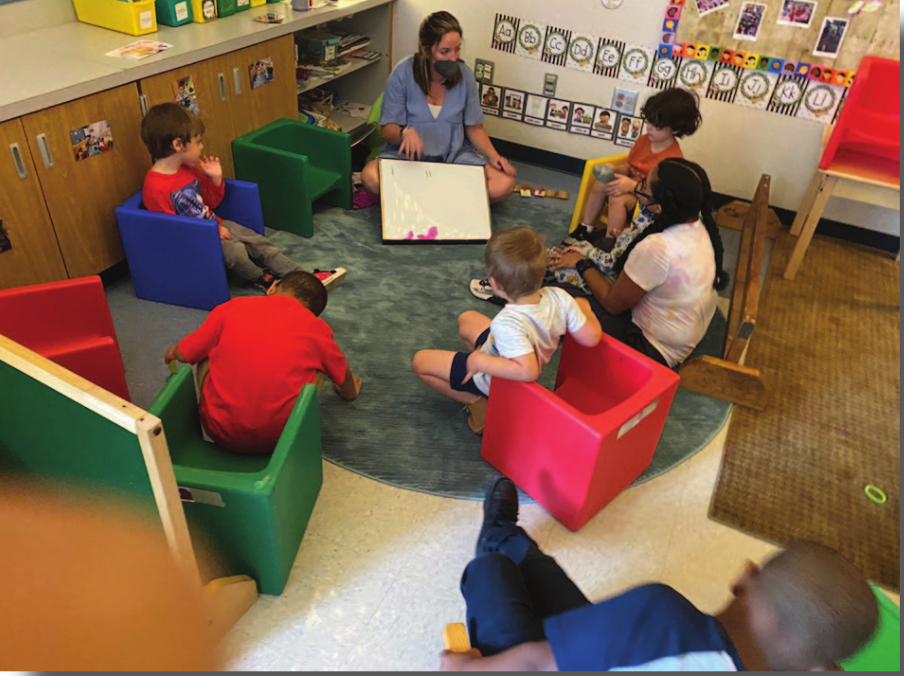
While there may not be a one size fits all solution to the child care crisis as a whole, some ideas laid out by Kashen et al. (2022) have a particular focus on the intersections between race, poverty, and disability within child care spaces. Their recommendations include increased subsidies to meet specialized needs, including community stakeholders in decision-making, and ensuring that child care providers have access to training and education on how to best meet the needs of all children in their care (Kashen et al., 2022). Families need, and deserve, more options. More places where their children are welcomed and cared for by staff prepared to keep them safe. More affordable and child friendly options than choosing between partial schedule classroom placement or intensive full-time clinic enrollment. Funding for alternative caregivers, like respite care or hourly payment for family caregivers, for children who are not successful in traditional community child care centers but deserve to receive care in the least restrictive natural environment. And more of us, as practitioners, who are willing to speak up and fight for equitable access to care as well as educational opportunities for all families.
