






Abstract
In the context of ethnic dining services, authenticity is the key ingredient. This study aims to investigate the impact of servicescape dimensions on consumers’ prepurchase authenticity perceptions and patronage intentions to ethnic restaurants. The authors propose that three key dimensions of the servicescape—the physical setting, service providers, and other customers—provide ethnic-associated cues for consumers to assess authenticity in the preconsumption stage. Empirical results from a between-subject experimental design suggest that servicescape dimensions can induce preconsumption authenticity perceptions of ethnic restaurants and that the dimensional cues interplay to affect authenticity assessments. Furthermore, a customer’s ethnicity (referent ethnic vs. mainstream) affects how she/he interprets servicescape cues and, therefore, his/her authenticity assessment. The perceived authenticity, together with a consumer’s trait of cosmopolitanism and his/her familiarity with such ethnic restaurants, consequently affect consumers’ patronage intentions. These findings contribute to hospitality research on consumers’ authenticity assessments of ethnic restaurants. Furthermore, managerial implications for ethnic restaurants in terms of marketing strategies will be discussed.
Keywords
Today’s globalization and movement of human capital have resulted in multiethnic societies, in particular, in the Western world. For example, nearly one third of the population in the United States is minority, with Hispanics/Latinos accounting for 16%, Black/African Americans for 13%, and Asians for 5% (U.S. Census Bureau, 2011). The growth in ethnic minorities provides commercial opportunities for entrepreneurs to meet the special needs and preferences of ethnic consumers (Pires, Stanton, & Stanton, 2011). More and more service companies, in particular, dining establishments, market their services with ethnic themes. A recent survey by the National Restaurant Association (NRA) in 2010 showed that ethnic cuisines are becoming a trend for consumers’ dining choices. Hence, ethnic-oriented dining services do not only attract customers from the referent ethnic group but also those outside the referent ethnic customer group, the so-called “ethnic crossover” effect (Grier, Brumbaugh, & Thornton, 2006).
In the context of ethnic dining services, authenticity is the key ingredient to succeed (NRA, 2010). The notion of authenticity, typically used to describe something considered to be genuine, real, or true (Berger, 1973; Taylor, 1991), plays an important role in a wide array of situations relevant to daily consumption (Berger, 1973; Leigh, Peters, & Shelton, 2006; Lowenthal, 1992; MacCannell, 1973; Rose & Wood, 2005). For example, authenticity can refer to a place that has historical meanings and/or represents certain cultures (Grayson & Martinec, 2004; MacCannell, 1973), a brand that presents ideal production standards and prestige (Brown, Kozinets, & Sherry, 2003; Leigh et al., 2006), or an experience that enables people to find their true selves (Kolar & Zabkar, 2010; Wang, 1999). In this study, we focus on “type authenticity,” which can be defined as “a product or service offering that is true to its type, genre, or category” (Carroll & Wheaton, 2009). In the context of ethnic dining services, the restaurant should be considered genuine by its referent ethnicity and it should reflect the cultural experiences of that ethnic minority group (e.g., a Mexican restaurant that offers true Mexican food or fare). Hence, perceived authenticity is one of the main drivers of customer satisfaction with ethnic dining (Jang, Liu, & Yang, 2011; Liu & Jang, 2009; Tsai & Liu, 2012). Despite its importance, our theoretical understanding of how consumers assess authenticity is limited (Grayson & Martinec, 2004).
The authenticity assessment starts at the prepurchase stage. Yet most services, including restaurants, are high in experience qualities and offer customers a very limited amount of information that can be used to assess service attributes prior to consumption (Mattila & Wirtz, 2001b). However, the servicescape, or the environment where the service exchange occurs, often offers easily interpretable cues regarding service characteristics. The servicescape is composed of a man-made physical environment (e.g., Bitner, 1992; Lin, 2004; Namasivayam & Mattila, 2007) and social elements such as service providers and other customers (Baker, 1987; Tombs & McColl-Kennedy, 2003; Turley & Milliman, 2000). Previous research shows that the servicescape has a strong impact on consumer inferences about service characteristics (e.g., Baker, 1987; Baker, Grewal, & Parasuraman, 1994; Bitner, 1992; Ezeh & Harris, 2007; Lin, 2004; Reimer & Kuehn, 2005; Spielmann, Laroche, & Borges, 2012). This study proposes that three key dimensions of the servicescape—the physical setting, service providers, and other customers—can be used as cues to assess the authenticity of ethnic-oriented dining services.
The broad goal of this study is to contribute to the hospitality literature by investigating the impact of servicescape dimensions on consumers’ authenticity perceptions. In particular, scholars have commonly approached the topic of authenticity perceptions through a conceptual lens or qualitative approach (e.g., Beverland & Farrelly, 2010; Beverland, Lindgreen, & Vink, 2008; Hughes, 1995; Lu & Fine, 1995; Mkono, 2012; Wang, 1999), or survey methodologies (e.g., Jang et al., 2011; Sukalakamala & Boyce, 2007; Tsai & Lu, 2012). In this study, we apply an experimental design that is able to investigate the quantitative properties of authenticity assessments and differentiate the impact of various factors on authenticity perceptions. An experimental design will also allow us to examine potential interaction effects. Second, previous studies limit their discussions of authenticity to the consumption and experience stage, whereas the present study focuses on the prepurchase stage. Furthermore, with the increasing ethnic crossover effect in the contemporary society, we contrast consumer responses from the mainstream (the majority in the society) and the referent ethnic group’s perspective (the ethnic group of customers for whom the service was originally designed). In addition to theoretical contributions, this study provides managerial implications to hospitality practitioners offering ethnic-oriented or ethnic-themed services and experiences, in particular, with regard to positioning and marketing communication strategies.
Theoretical Background and Hypotheses
Nature of Authenticity Assessments
Authenticity is a multifaceted construct that contains various ontological assumptions, perspectives, and typologies. The authenticity of an object or experience can be evaluated using absolute, objective criteria to conclude its degree of originality without controversies (Boorstin, 1964; Leigh et al., 2006; Stewart, 1993). Nevertheless, a more common view states that authenticity is not an inherent attribute but rather is constructed and better understood as an assessment made by a particular evaluator in a particular context (Bruner, 1994; Cohen, 1988; DeLyser, 1999; Lu & Fine, 1995; Mkono, 2012). Recent studies have acknowledged the coexistence of the objective and subjective natures of authenticity assessments (e.g., Beverland et al., 2008; Grayson & Martinec, 2004). A product or service cue may simultaneously provide evidence about its authenticity and stimulate feelings of authenticity. From the postmodernist perspective, however, meanings of authenticity refer to a state of being true to one’s self (Neumann, 1992; Wang, 1999). The true self tends to be experienced through services that induce flow (the unity between thought and action), intense joy, and active customer participation such as adventurous activities and cultural tourism (Arnould & Price, 2000). This study addresses the perceived authenticity of ethnic dining services prior to actual consumption and thus the notion of experiencing the true self is beyond the scope of this investigation.
Authenticity assessments of market offerings generally refer to type authenticity, which indicates that something is true to its type (or genre or category; Carroll & Wheaton, 2009). The notion of “true-to-type” authenticity is very broad, encompassing advanced knowledge, skills, and materials used in a craft; “craft authenticity” (Carroll & Wheaton, 2009); artistic integrity and merit; “creativity authenticity” (Jones & Smith, 2005); and commitments to traditions and places of origin (Beverland et al., 2008). This study focuses on the consumers’ perceptions of the type authenticity of ethnic dining prior to actual consumption. Business owners of ethnic dining typically claim that their services belong to a specific ethnic group either through explicit marketing messages (e.g., we are a Japanese restaurant) or through the choice of menu (e.g., sushi, sashimi, or teriyaki, or a Japanese restaurant). Nevertheless, an assessment of authenticity is a complex perceptual process in which consumers use selective cues to make inferences. Consumers rely on different cues to assess authenticity, which will lead to different perceived benefits (Beverland et al., 2008; Beverland & Farrelly, 2010; Grayson & Martinec, 2004; Leigh et al., 2006). Therefore, an understanding of which attributes drive the evaluation process is needed.
Servicescape and Authenticity Assessment of Ethnic Dining
Although food is acknowledged to be an important factor contributing to authenticity perceptions about ethnic restaurants (Lu & Fine, 1995; Munoz & Wood, 2009; Sukalakamala & Boyce, 2007; Tsai & Lu, 2012), customers may not have the knowledge to determine whether the cuisine is authentic or simply look for something beyond the meal prior to their patronage. This study examines the impact of three key servicescape elements—the physical setting, service providers, and other customers—on consumers’ authenticity assessments. These three dimensions, representing both the physical and social servicescape, are present in most dining service contexts and thus provide a consolidated theoretical framework for discussing authenticity assessments.
Scholarly discussion tends to focus on how authenticity can be created from the reality engineering of a themed environment, a process in which stereotypical design components are integrated to convey a feeling of ethnic culture (Beardsworth & Bryman, 1999; Lego, Wodo, McFee, & Soloman, 2002; Solomon & Englis, 1994). Several studies have been conducted on how companies construct environments that they hope will be perceived as authentic (e.g., Lego et al., 2002; Lu & Fine, 1995) and on consumers’ picturing of an authentic restaurant and cultural dining experience (e.g., Ebster & Guist, 2004; Mkono, 2012; Munoz & Wood, 2009; Munoz, Wood, & Solomon, 2006). Jang et al. (2011) find that authentic atmospherics in Chinese restaurants in the United States influenced consumers’ positive emotions. A commonly held perspective from these studies is that service firms can strategically use various elements in the physical servicescape such as lighting, colors, symbols, and artifacts to associate the service environment with the stereotypes associated with the culture the organization wishes to evoke. Hence, ethnically themed service settings will have a positive impact on consumers’ authenticity assessments.
In addition to the physical servicescape, the presence of referent ethnic service providers and customers are cues on which customers base their authenticity assessments. The ethnic appearance of the service providers is an element of the social servicescape (Baker, Grewal, & Levy, 1992; Baker et al., 1994; Ezeh & Harris, 2007; Turley & Milliman, 2000) and confers on him/her the right to represent the group (Grana, 1989). Consumers perceive products and experiences to be authentic or inauthentic depending on whether those products/experiences are made or enacted by local people (Cohen, 1988; Littrell, Anderson, & Brown, 1993; MacCannell, 1976; McIntosh, 2004). In a similar vein, the ethnic appearance of chefs and waiters is crucial to customers’ evaluation of the authenticity in ethnic restaurants (Lu & Fine, 1995). Therefore, the referent ethnic appearance of the service providers can have a positive impact on consumers’ evaluations of the authenticity of a service offering.
Although both the ethnically themed physical servicescape and the presence of ethnic service providers can have a positive impact on consumers’ authenticity perceptions, consumers may view these two dimensions in a holistic way. Previous research has shown that consumers follow the Gestalt notion of environmental perception, and incongruent cues in the servicescape have a negative impact on their consumption experiences (e.g., Baker et al., 1992; Eroglu, Machleit, & Barr, 2005; Ezeh & Harris, 2007; Mattila & Wirtz, 2001a; Lin, 2004). Hence, we propose that the ethnically themed servicescape and the ethnic appearance of the service provider have a joint effect on customers’ authenticity assessments. Confined by their conceptual framework or methodology, prior studies (e.g., Jang et al., 2011; Lu & Fine, 1995; Sukalakamala & Boyce, 2007; Tsai & Lu, 2012) have failed to address the combined effect of the physical setting and the service provider on customers’ authenticity evaluations. We propose that the ethnically themed physical servicescape has a stronger positive influence on consumers’ authenticity assessments when the ethnicity of service providers is congruent with the themed environment, and vice versa. Hypothesis 1: The ethnically themed physical servicescape and ethnic appearance of the service provider will have a joint impact on customers’ authenticity assessments of ethnic dining services; the positive effect of either element is stronger when the cues are congruent rather than incongruent with each other.
The ethnic background of other customers in the service setting is beyond the service organization’s control but nevertheless contributes to consumers’ assessment of authenticity. The presence of referent ethnic customers in the service setting makes customers feel more connected with that culture such that they may perceive their experience in this context as authentic. Taylor (2001) stated that local people can be positioned as signifiers of past events, epochs, or ways of life. Weiermair (2000) claimed that when travelers seek authentic local services, the appearance of local people can represent the “exotic other” and illustrate service quality. Even without direct interactions, travelers can feel a sense a self-validation due to the presence of local customers. Munoz et al. (2006) argued that a truly authentic pub is not just about the design, cultural artifacts, and music—it is about the people who work in and patronize it. The presence of other referent ethnic customers suggests a service firm’s ethnic authenticity inasmuch as the firm draws referent ethnic customers. Therefore, we propose that the patronage of other referent ethnic customers will increase authenticity assessments: Hypothesis 2: The patronage of other referent ethnic customers will have a positive impact on customers’ authenticity assessments of ethnic dining services.
Patronage Intentions to Authentic Ethnic Restaurants
Authenticity is a potential resource through which a service firm can attract customers and differentiate itself from competitors (Beverland, 2005; Lu & Fine, 1995; Rose & Wood, 2005). Authenticity can also be considered an important value, motive, or interest that plays a mediating role in behavior intentions (Kolar & Zabkar, 2010). The theorized benefits of authenticity have been subjected to very little empirical testing. Cognitively, an authentic market offering does create some perceived benefits for consumers. Grayson and Martinec (2004) claimed that tourism sites perceived to be authentic result in perceived evidence and connections to the past. Featherman, Valacich, and Wells (2006) found that perceived authenticity is associated with lower risk perceptions of the service usage. Beverland and Farrelly’s (2010) in-depth interviews with 21 informants suggest that feeling in control, connected, and virtuous are perceived relevant benefits of authentic brands, which reflect the consumer desire to respond to dominant sociocultural norms.
Other studies have tested the association between perceived authenticity and consumer evaluations and behavior. Chhabra, Healy, and Sills (2003) observed that the perceived authenticity of a Scottish festival has a significant correlation with expenditures. Yu and Littrell’s (2003) survey of tourists showed that when they perceived a craft object as authentic, they were more likely to purchase it than when they did not consider the object to be authentic. In a similar vein, Kolar and Zabar (2010) suggest that the perceived authenticity of tourist offerings is positively related to loyalty intentions. Furthermore, perceived authenticity might contribute more to loyalty intentions than satisfaction, as illustrated in studies by Gallarza and Gil Saura (2006) and Chi and Qu (2008). Bonn, Joseph-Mathews, Dai, Hayes, and Cave’s (2007) visitor survey conducted in Tampa, Florida, showed that the ambiance, design, and layout of the service environment are related to positive attraction and intentions to revisit. Finally, the perceived food authenticity and environmental authenticity of Chinese restaurants in the United States are related to customer satisfaction (Liu & Jang, 2009; Tsai & Lu, 2012). Studies by Jang et al. (2011) and Tsai and Lu (2012) further discovered that experienced, authentic dining experience is associated with repurchase intentions.
Nevertheless, whether perceived authenticity prior to actual consumption can drive patronage intentions to ethnic dining remains unclear. Based on attitude–intention–behavior models (Ajzen & Fishbein, 1980), which are frequently used to understand consumption intentions and behaviors across a variety of domains (e.g., Kozup, Creyer, & Burton, 2003; Martin & Stewart, 2001; Sheppard, Hartwick, & Warshaw, 1988), the authenticity assessment of ethnic dining services prior to actual consumption may contribute to patronage intentions. Furthermore, we propose that the perceived authenticity and patronage intention linkage is moderated by individual traits of cosmopolitanism and level of familiarity with particular types of ethnic restaurants. Cosmopolitanism refers to individuals’ willingness to engage with cultures other than their own, and to consume cultural differences, coupled with personal competence toward other cultures (Cleveland & Laroche, 2007; Thompson & Tambyah, 1999). Therefore, we hypothesize that consumers who are cosmopolitan are more likely to patronize authentic ethnic restaurants than are those who are not cosmopolitan. We consider the consumer’s familiarity with ethnic restaurants to be another moderator for the relationship between perceived authenticity and patronage intention. Grier et al. (2006) found that familiarity has a favorable impact on attitude toward ethnic-oriented products, for both ethnic and mainstream consumers. Hence, we propose the following: Hypothesis 3: Authenticity assessments of ethnic restaurants based on social and physical servicescape elements have a positive impact on patronage intentions, especially for consumers high in cosmopolitanism. Hypothesis 4: Authenticity assessments of ethnic restaurants based on social and physical servicescape elements have a positive impact on patronage intentions, especially for consumers who are familiar with such ethnic dining services.
The conceptual framework of this study is visualized in Figure 1.
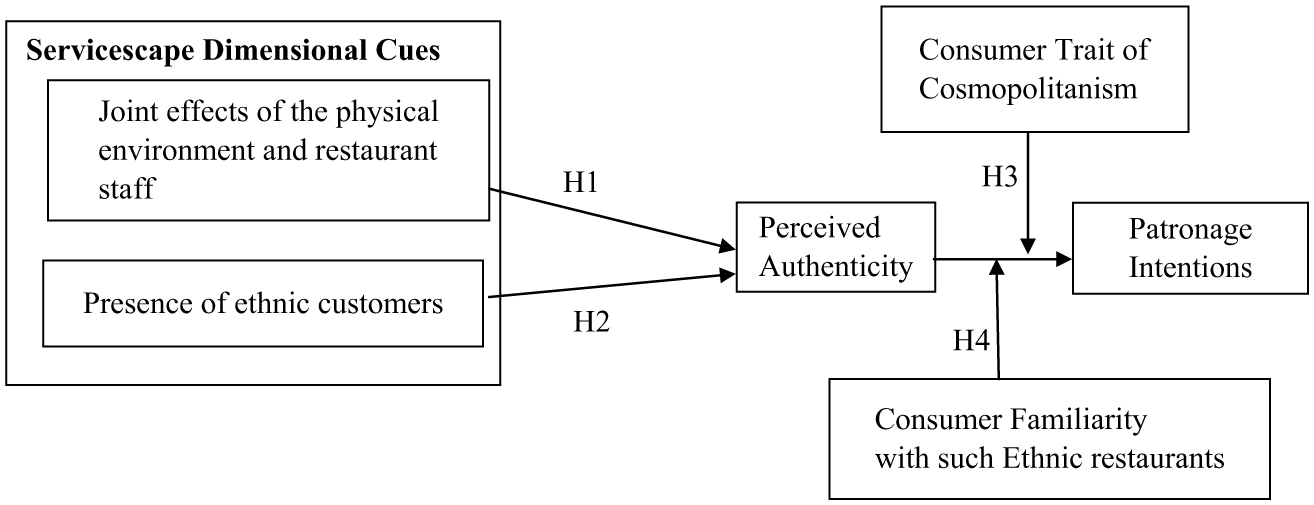
Conceptual Framework of Servicescape Cues and Consumer Prepurchase Responses to Ethnic Restaurants
Research Method
Overview
This study examines the effects of three key servicescape elements on consumers’ authenticity assessments of ethnic-oriented services. We manipulated the level of ethnic theme in the physical setting (low vs. high), the ethnic appearance of service providers (mainstream vs. ethnic), and the ethnic appearance of other customers (mainstream vs. ethnic), resulting in a total of eight different scenarios about ethnic cues in the servicescape. The experimental design offered a high level of control and the ability to manipulate variables individually and, hence, uncover the casual effects of a specific servicescape dimension on consumers’ authenticity assessments.
A full-service Chinese restaurant was chosen as the research context for ethnic-oriented services for the following reasons. First, Chinese restaurants are pervasive in the United States, appealing to both ethnic and mainstream customers (Lu & Fine, 1995; NRA, 2010). Second, the dining context has been used extensively by hospitality researchers to examine the impact of the servicescape (e.g., Ha & Jang, 2010; Jang et al., 2011; Lin & Mattila, 2010; Namasivayam & Mattila, 2007; Spielmann et al., 2012). Third, the notion of type authenticity (the extent to which something is true to its type or category) has gained importance in the restaurant industry during the past decade (Carroll & Wheaton, 2009). To increase external validity and generalize our findings, we will collect responses from both Chinese (referent ethnic group) and American (mainstream) customers.
Experimental Stimuli
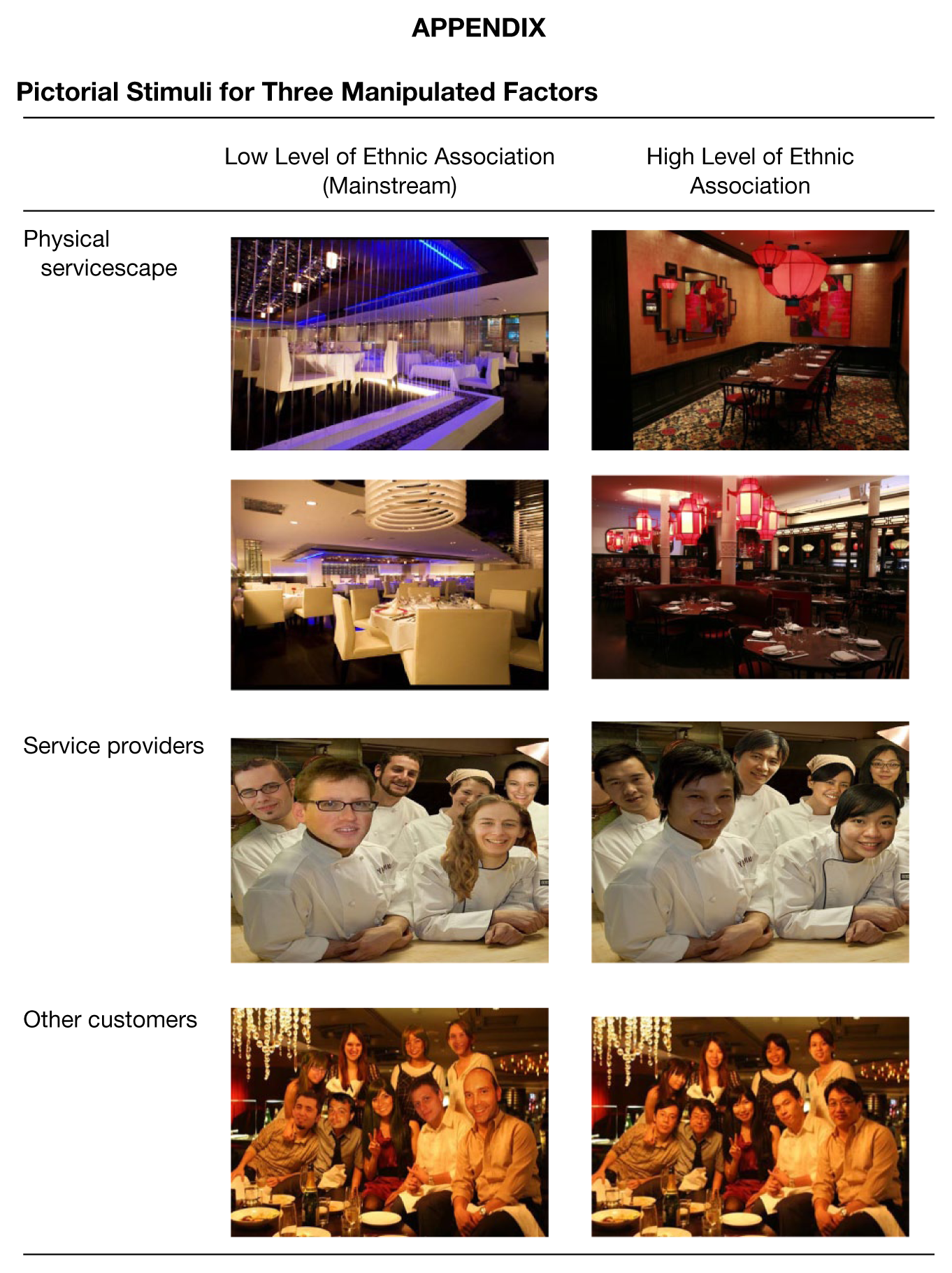
To develop the experimental stimuli, a set of photographs addressing the physical setting, the service team, and other customers was developed. Photographs are appropriate to be integrated into experimental design to investigate the impact of the visual images (Pullman & Robson, 2007) and have been commonly employed to examine consumers’ reactions to service settings (e.g., Bitner, 1990; Eroglu & Machleit, 1990; Hui & Bateson, 1991). The experimental stimuli first introduced the scenario of a newly opened restaurant. To manipulate the ethnic association of the three servicescape cues, photographs from the Internet were edited after having received permission to do so from three Chinese restaurants in the northeastern region of the United States. The pictures of Restaurant A were chosen to represent a high-level Chinese theme, as the restaurant used the shades of red liberally and included bold elements such as lanterns, round wooden tables, and regal-looking columns. The pictures of Restaurant B were chosen to represent a low-level Chinese ethnic theme, as the restaurant used shades of white coupled with blue neon lights and did not include any artifacts depicting Chinese culture.
For the manipulation of the service team’s ethnicity, a prototype photo from Restaurant C was edited to create two versions: (a) a service team of Chinese ethnicity and (b) a service team of mainstream ethnicity. The manipulation of the ethnicity of the customers in the photograph was also achieved through editing (Chinese-origin vs. mainstream customers). These photographs created static perceptual simulations of the servicescape and were intended to portray as clearly as possible the manipulated factors. A picture showing Chinese dishes with menu pricing (entrée prices from $9 to $20) was displayed across all conditions to imply the ethnic orientation of the restaurant and to control for price effects. The pictorial stimuli of the three manipulated factors are shown in the appendix.
Pilot Study
The purpose of the pilot study was to check for the ethnic salience of the three manipulated servicescape elements. Furthermore, the authenticity assessment scale for the ethnic dining services was developed and tested in the pilot study. Participants in the pilot study were 127 Chinese and 118 American undergraduate and graduate students enrolled in a university in the northeast region of the United States. The sample was recruited from various classes at the university and participation was voluntary. Chinese students were also recruited from the Chinese student association at the same institution. Of the 245 participants, 35% were male (n = 85) and 65% were female (n = 160). Males accounted for 30% of the mainstream samples and for 40% of the Chinese sample. Participants were randomly assigned to one of the eight scenarios. After reading a two-page introduction to a newly opened restaurant and viewing photographs with textual descriptions about the restaurant’s interior settings, service team, and patronizing customers, participants responded to a series of questions. On completion of the survey, participants were asked for their feedback concerning the experimental stimuli. No concerns about realism and design were reported.
Manipulation Checks
The effectiveness of the manipulation of each of servicescape dimension was measured on a 7-point scale (the interior of the restaurant reflects Chinese culture; the restaurant hires servers of Chinese background; the other customers are mainly Chinese [1 = not at all and 7 = very much]). As expected, the participants who were shown the picture reflecting the highly thematized Chinese restaurant in terms of its interior design rated the item “Chinese culture reflected in the interior design” higher than did those shown the restaurant that was less thematized (Mlow level ethnic theme = 2.68 vs. Mhigh level ethnic theme = 4.96; t[242] = 12.15, p < .001). Similarly, participants shown the photograph of the Chinese service staff rated the item “Staff mostly from Chinese background” higher than did those shown the photograph of the mainstream service staff (MMainstream staff = 2.11 vs. MChinese staff = 5.39; t[243] = 17.57, p < .001). Finally, participants who were shown the photograph of other Chinese customers rated the item “The restaurant hosts mostly Chinese customers” higher than did those shown the photo of mainstream customers (MMainstream customers = 2.73 vs. MChinese customers = 4.87; t[243] = 11.14, p < .001). Taken together, these results indicate that the manipulation of ethnic association of each of the three servicescape cues was successful.
Authenticity Assessment Scales
There is no extant scale to measure authenticity assessments of ethnic-oriented dining services. Therefore, scales from Grayson and Martinec’s (2004) study of authenticity assessments of tourism sites and Zhou, Yang, and Hui’s (2010) study of perceived brand foreignness were adapted for this purpose. Subjective authenticity, which reflects sensory experience, was measured via responses to these propositions: “This restaurant makes me feel connected to Chinese culture,” “The appeal of this restaurant matches my impression of Chinese culture,” and “This restaurant looks very Chinese to me.” A summary measure “This is an authentic Chinese restaurant” was also used. All measurement items were on a 7-point Likert-type scale, asking participants to express the degree to which they agreed with each statement (1 = strongly disagree and 7 = strongly agree). An exploratory factor analysis indicated that all 4 items converged into one factor (Eigenvalue = 3.20, 80% variance extracted) and the factor loading of each item is larger than .7. The scale reliability reached a Cronbach alpha of .92. These analyses indicate this 4-item authenticity assessment scale is valid and reliable. Hence, we adopted this scale in our main study and used the average of four items to represent the construct of consumers’ authenticity assessments.
Main Study
Design and Participants
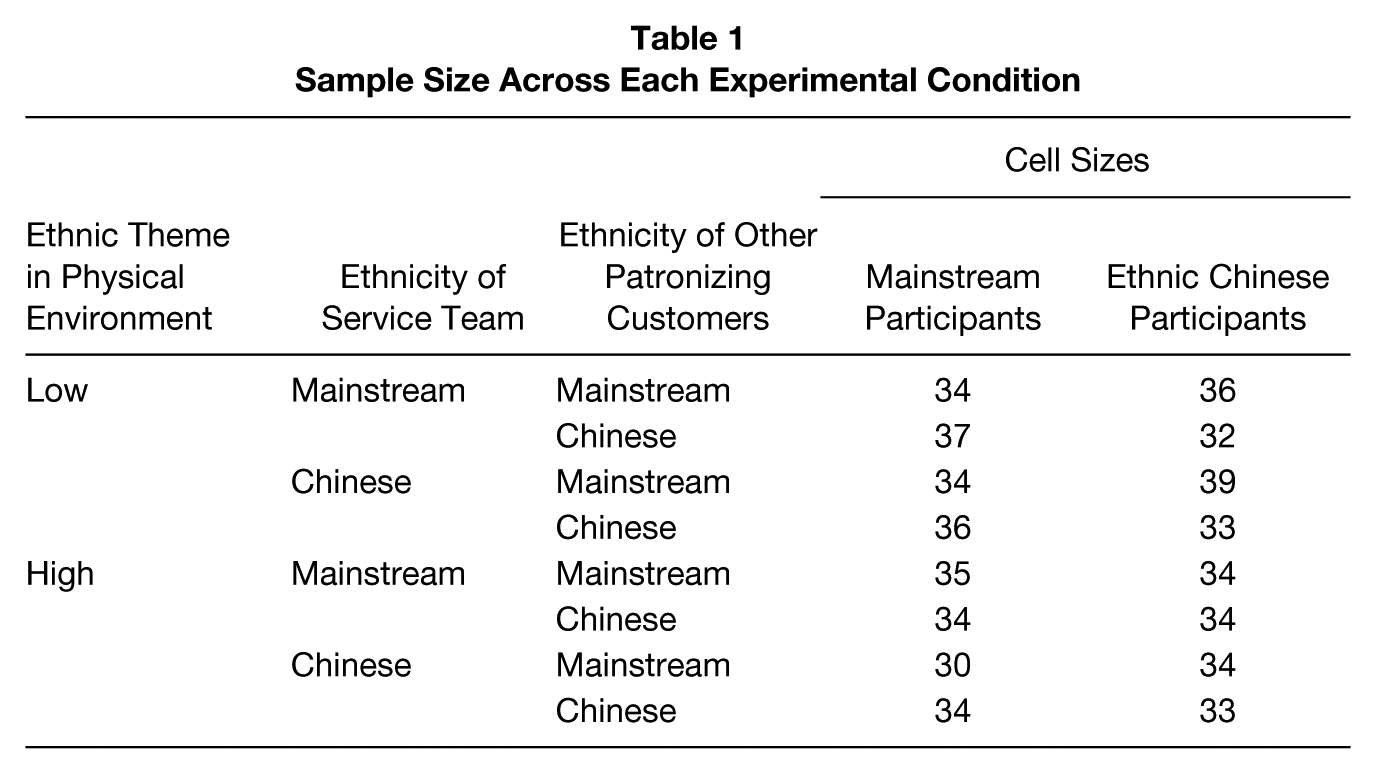
The study design was a 2 (ethnic theme in the physical setting) × 2 (ethnic appearance of service providers) × 2 (ethnic appearance of other customers) experimental design. Table 1 shows the number of valid observations in each cell. The sample consisted of 274 participants from the mainstream American segment and 275 participants from the ethnic Chinese segment. Participants were working professionals interested in dining (e.g., dining out at least once a week) and were recruited through university newswire and marketing research panels. On their agreement to participate in the study, individuals were instructed to visit an online survey in Qualtrics. Participants were randomly assigned to one of eight scenarios. The recruitment of participants and online data collection were approved by the institutional review board.
Sample Size Across Each Experimental Condition
Males accounted for 37% of the mainstream sample and for 38% of the ethnic Chinese sample. Descriptive analysis shows that the average age of the mainstream sample was 42.1 years (SD = 10.8) and that of the ethnic Chinese sample was 34.3 years (SD = 11.1). Two groups’ sociodemographic compositions were comparable with regard to income; 23% of referent ethnic participants and 24% of mainstream participants earned $50,000 or less annually; 46% of referent ethnic participants and 40% of mainstream participants earned between $50,001 and $100,000; and 20% of both referent ethnic and mainstream participants earned $100,001 or more. The ethnic Chinese segment had a larger percentage of participants who had received some postgraduate education (44%) than did the mainstream segment (26%), which was expected as first-generation Chinese people tend to come to the United States to pursue a postgraduate education before finding employment.
Measures
We used the same 3-item manipulation checks and the 4-item authenticity assessments (Cronbach’s α = .91) as in the pilot study. Although we screened out the participant’s ethnicity during the recruiting process and asked them to indicate their ethnicity in the survey, five questions testing Chinese cultural knowledge were used to confirm whether the participant belonged to the referent ethnic segment or the mainstream segment. An independent sample t test showed that the ethnic Chinese group obtained a significantly higher score (number of correct answers) than did the mainstream group (MChinese = 3.77 vs. Mmainstream = 1.08, t[547] = 27.52, p < .001). Participants were asked to indicate their degree of familiarity with dining at Chinese restaurants in the United States with anchor points: 1 = not at all and 9 = extremely familiar. Cosmopolitanism was measured via an 11-item, 7-point Likert-type scale developed by Cleveland and Laroche (2007; Cronbach’s α = .96). A two-item scale from Thakor et al. (2008) was adapted to measure patronage intentions. The two items were “How interested are you in dining at this restaurant?” (1 = not at all and 9 = extremely) and “How likely are you to eat at this restaurant?” (1 = very unlikely and 9 = very likely). The Pearson correlation between these two items was .89 (p < .001).
Data Analysis
Manipulation Checks
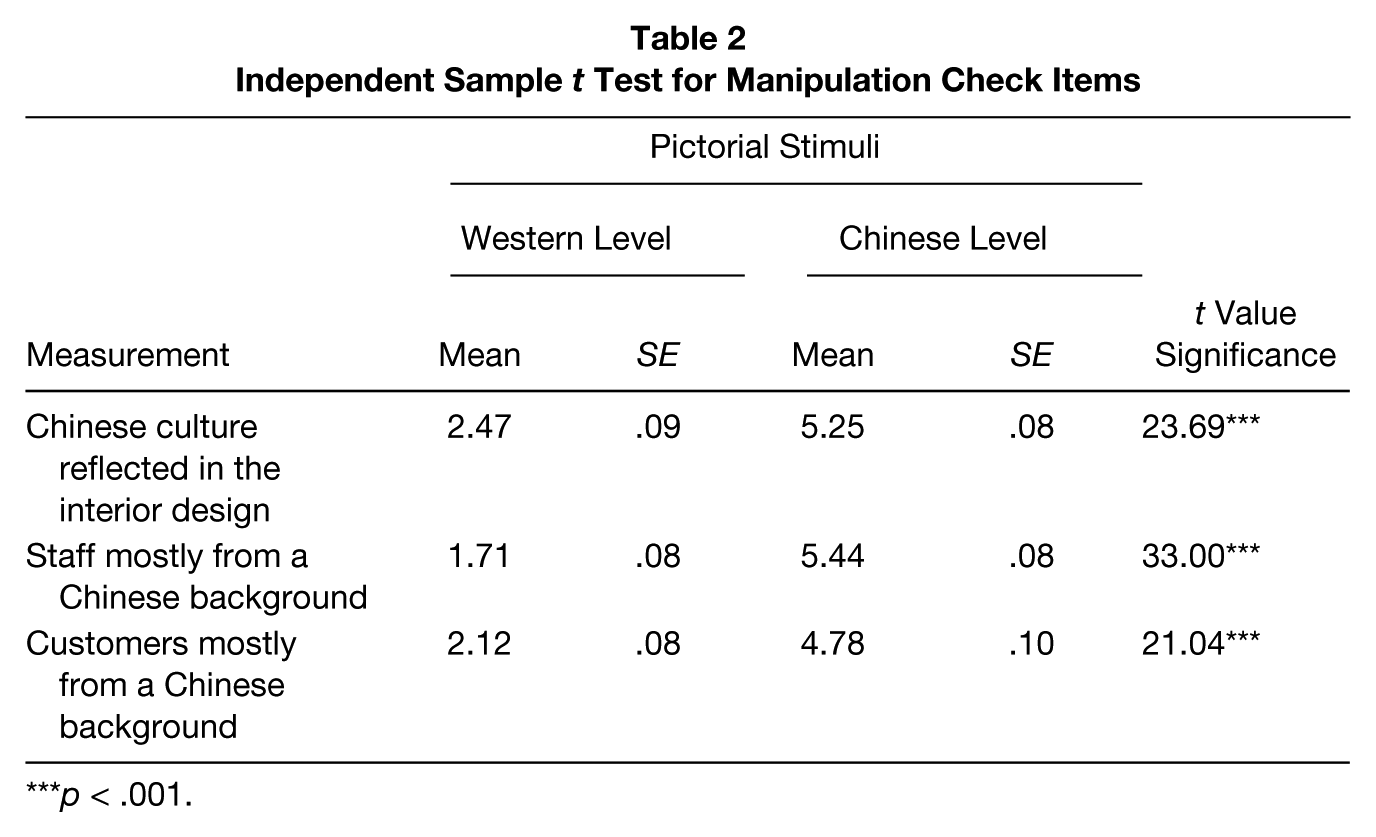
In accordance with the results from the pilot study, the manipulation of the ethnic association of each of the three servicescape cues in the main study was successful. A series of independent sample t tests show that respondents perceived the pictorial stimuli the same way as our manipulations intended to be. As demonstrated in Table 2, participants who were shown pictures reflecting a highly Chinese-themed physical environment rated the item “Chinese culture reflected in the interior design” higher than did those who looked at the pictures of a physical environment that was not as highly themed. Similarly, participants who were shown the photograph of Chinese staff and/or the photograph of Chinese customers rated the corresponding items higher than did those shown the photograph of mainstream figures.
Independent Sample t Test for Manipulation Check Items
p < .001.
Servicescape Elements on Authenticity Assessment
This study proposes that three servicescape elements—the physical environment, the service providers, and other customers—influence consumers’ authenticity assessments of ethnic-oriented services. To test these hypotheses, a three-factor ANOVA model was performed on the perceived authenticity, which was the average of four measurement items about subjective authenticity (Cronbach’s α = .91). The ANOVA model was performed within the referent ethnic (Chinese) and mainstream (American) respondent group, respectively, as we would like to see if the results can be generalized. Table 3 lists the mean of authenticity assessment ratings by experimental condition from both groups of respondents.
Means and Standard Errors of Authenticity Assessments Across Experimental Conditions
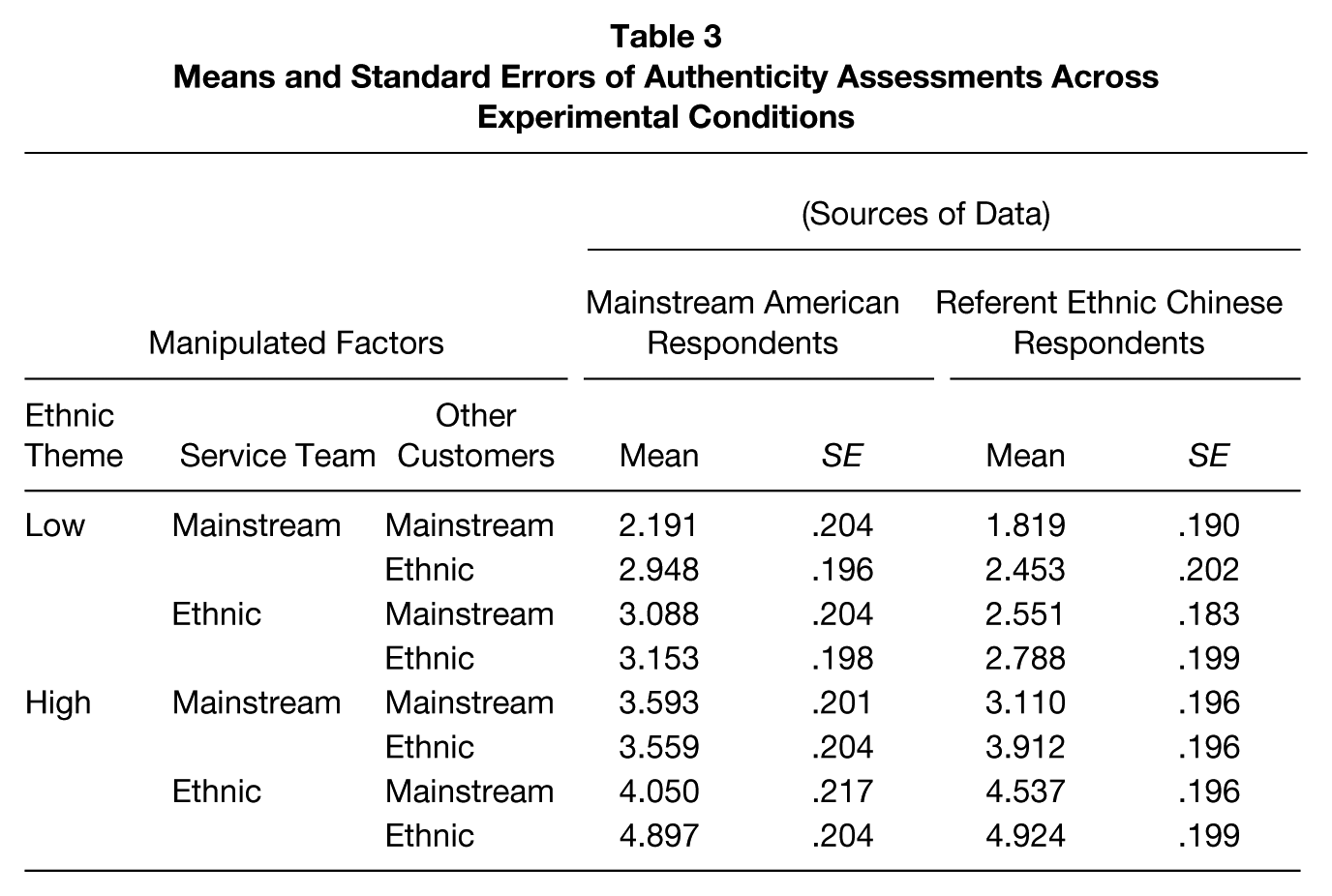
The three-way ANOVA model for the ethnic Chinese sample indicated a two-way interaction between the ethnic theme and the service team (F[1, 267] = 6.18, p < .05). Figure 2 displays the interaction between the level of ethnic themes and the ethnicity of the service team on the authenticity assessments given by the Chinese participants. The simple main effect analysis shows that the ethnicity of the service team led to differences in perceived authenticity under the low ethnic theme conditions (MLow ethnic theme and mainstream service team = 2.14 vs. MLow ethnic theme and ethnic service team = 2.67; F[1, 267] = 7.58, p < .01). Nevertheless, the difference in perceived authenticity as a result of the ethnicity of the service team was larger under high ethnic theme conditions (MHigh ethnic theme and mainstream service team = 3.51 vs. MHigh ethnic theme and ethnic service team = 4.73, F[1, 267] = 38.42, p < .001). In other words, the presence of an ethnic service team could increase authenticity perceptions to a higher level in the ethnically themed service setting than settings that are not highly decorated using an ethnic theme. The ethnicity of the other customers, however, demonstrated a main effect on Chinese respondents’ authenticity assessment (MOther Chinese customers = 3.52 vs. MOther mainstream customers = 3.00, F[1, 267] = 13.90, p < .001). Therefore, Hypotheses 1 and 2 are supported by Chinese respondents.
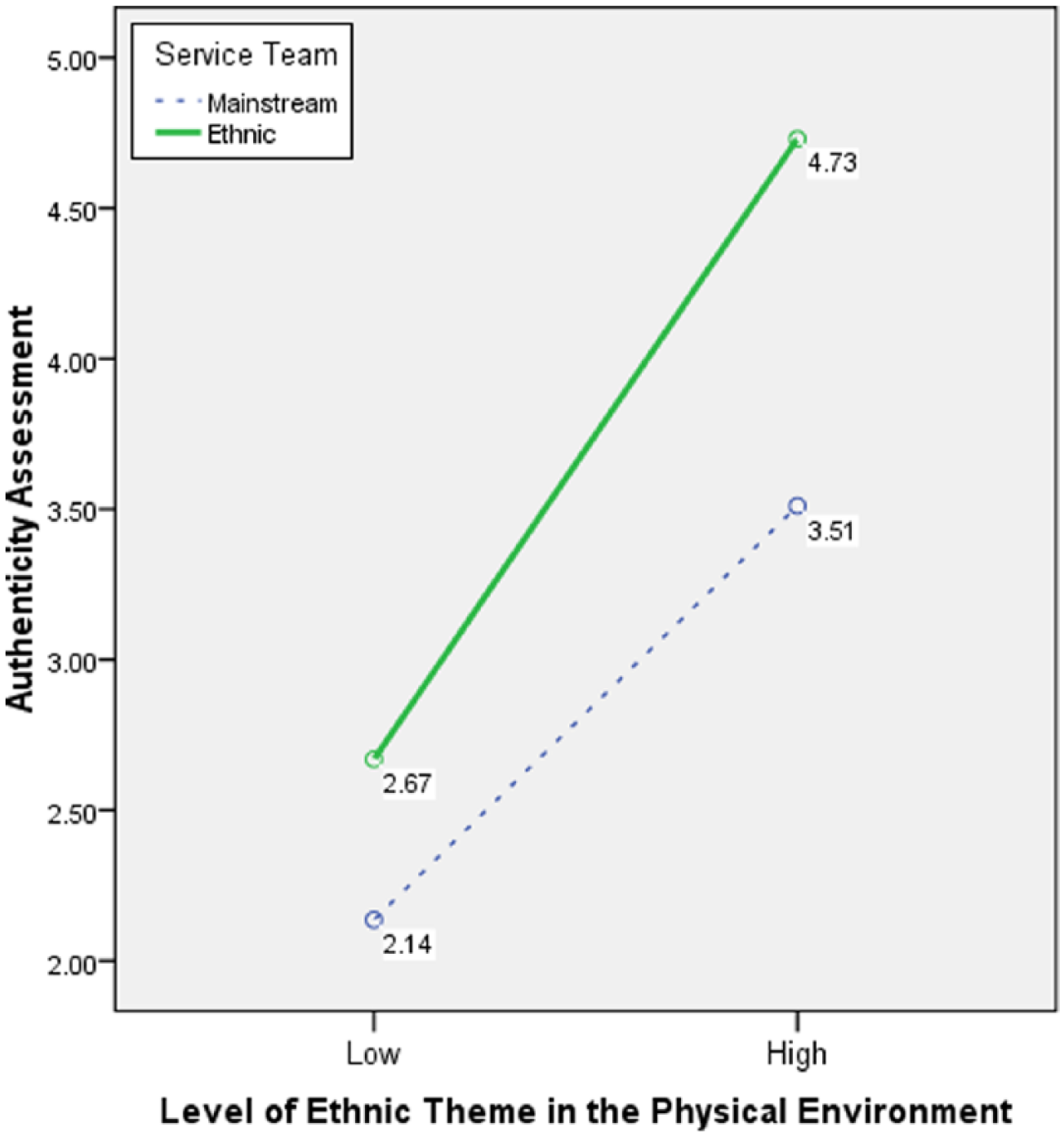
Interaction Effect of Servicescape Cues on Authenticity Assessment (Ethnic Chinese Respondents)
On the other hand, the three-way ANOVA model for the mainstream/American sample demonstrates a more complex pattern as a significant three-way interaction was found (F[1, 266] = 7.45, p < .01). Figure 3 provides a visual illustration of the three-way interaction. We performed the follow-up simple main effects analyses to interpret the three-way interaction. When other customers were ethnic Chinese, the ethnicity of the service team resulted in a significant difference in perceived authenticity when there was a high level of ethnic themes in the physical environment (MHigh ethnic theme and mainstream service team = 3.56 vs. MHigh ethnic theme and ethnic service team = 4.90, F[1, 266] =21.48, p < .001); however, this resulted in similar levels of perceived authenticity when there was a low level of ethnic themes in the physical environment (MLow ethnic theme and mainstream service team = 2.95 vs. MLow ethnic theme and ethnic service team = 3.15, F[1, 266] = .54, n.s.). That is, the presence of the ethnic Chinese service team was important for authenticity assessments when the service setting was simultaneously highly ethnically themed. This finding is consistent with the one collected from Chinese sample. However, when other customers were mainstream, the ethnicity of the service team (mainstream vs. Chinese) caused a difference in the perceived authenticity given the low level of ethnic themes in the physical environment (MLow ethnic theme and mainstream service team = 2.20 vs. MLow ethnic theme and ethnic service team = 3.01, F[1, 266] = 9.65, p < .01), but not under the high level of ethnic themes in the physical environment (MHigh ethnic theme and mainstream service team = 3.59 vs. MHigh ethnic theme and ethnic service team = 4.05, F[1, 266] = 2.38, n.s.). The presence of the ethnic Chinese service team was important for authenticity assessments when the service setting was not ethnically themed. Taken together, Hypothesis 1 is supported by data from American respondents as the physical servicescape and the service providers are still perceived jointly. Hypothesis 2, however, was not supported. The presence of other customers does not serve as an independent piece of information but affects how the other two servicescape elements are perceived instead.
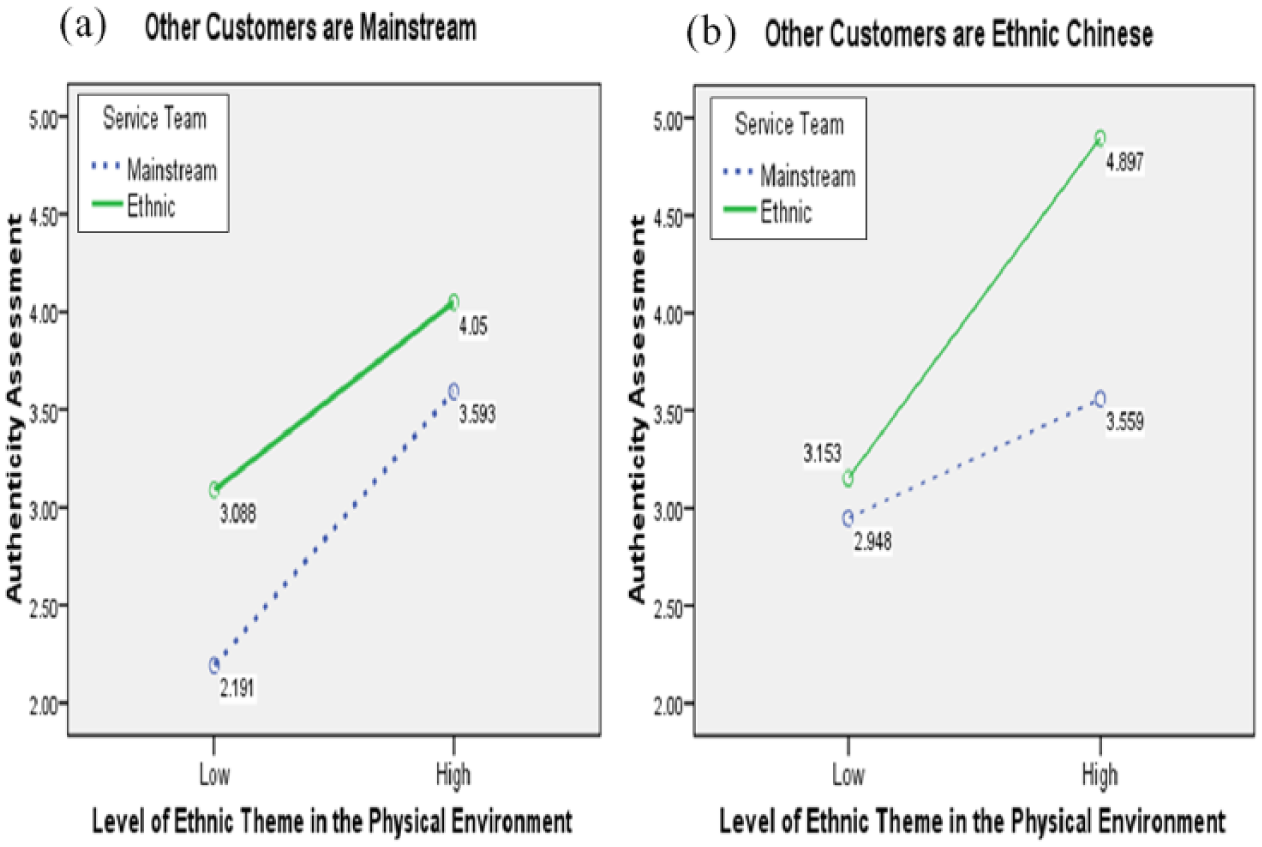
Interaction Effect of Servicescape Cues on Authenticity Assessments (Mainstream American Respondents)
Patronage Intentions of Perceived Authentic Ethnic Dining
The preceding section reports how the participants assessed the authenticity of the ethnic dining services prior to actual consumption based on three key servicescape elements. Moreover, perceived authenticity is hypothesized to have a positive impact on patronage intentions. To investigate the effects of perceived authenticity on patronage intentions, multiple regression analyses were conducted. In multiple regression models, the patronage intentions were regressed on individual levels of cosmopolitanism, familiarity with Chinese restaurants in the United States, authenticity assessments, and the interaction term of authenticity × cosmopolitanism and authenticity × familiarity. To correct for multicollinearity, interaction terms are entered using deviations from the mean. Table 4 shows the output of the regression from American and Chinese respondents. The results indicated that perceived authenticity was positively associated with customers’ patronage intentions toward the Chinese restaurant described in the scenario (B = .51 for Chinese sample and B = .14 for American sample, both with p < .001). However, Hypothesis 3 was not supported as cosmopolitanism has an independent effect on patronage intention (B = .24 for Chinese sample and B = .31 for American sample, both with p < .001). Hypothesis 4 was supported in the American sample only. To ease the interpretation of the interaction effect, simple slope tests suggested by Aiken and West (1991) were conducted. The procedures involved computing, plotting, and testing separate regression lines for individuals that are one standard deviation below, at the mean, and one standard deviation above the predictor. As Figure 4 shows, perceived authenticity was positively related to patronage intentions among participants who were relatively more familiar (+1 SD) with Chinese restaurants in the United States (B = .29, p < .001), but not among participants who were relatively less familiar (−1 SD) with Chinese restaurants in the United States (B = −.03, p >.70).
Results of Regression Analyses on Patronage Intentions
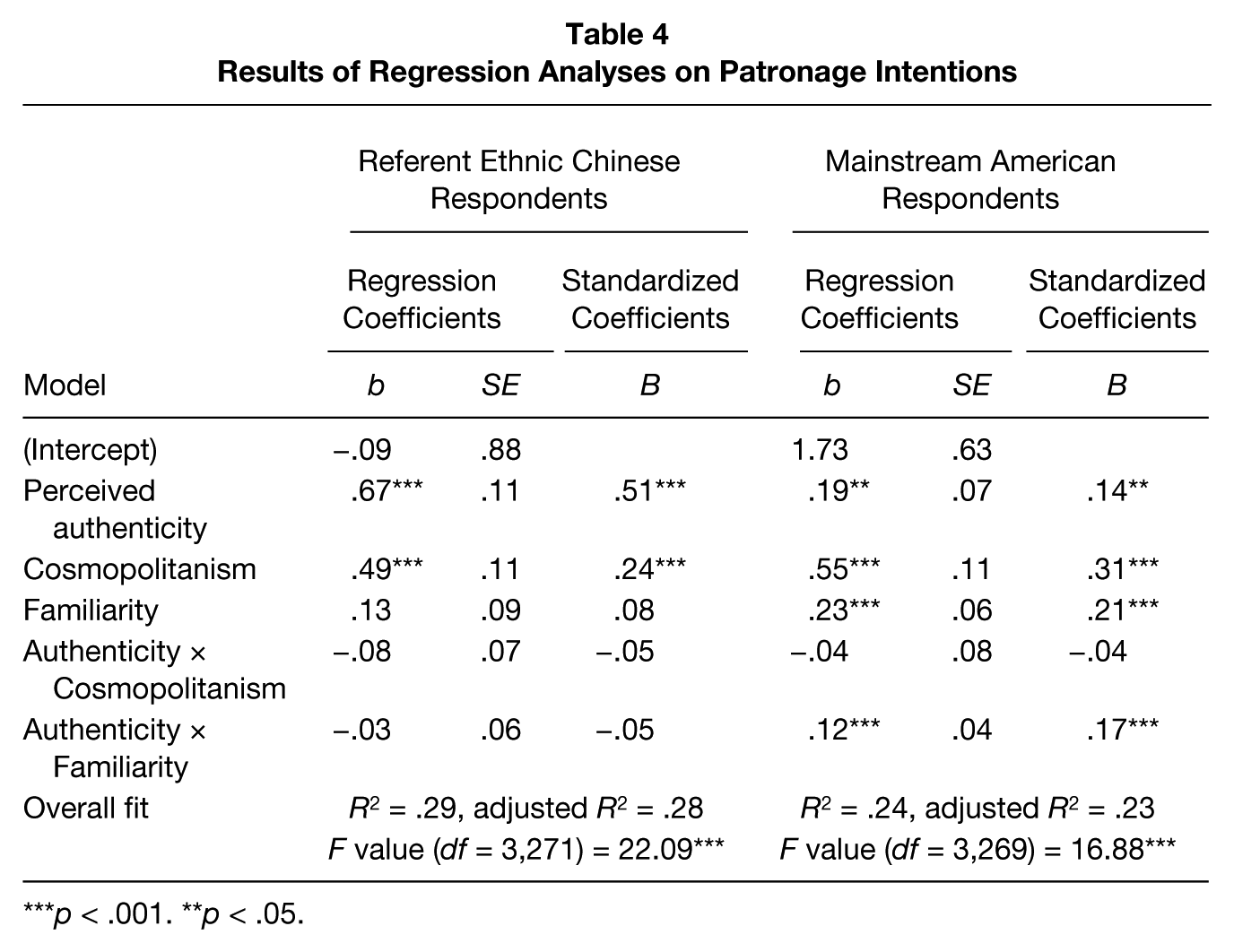
p < .001. **p < .05.
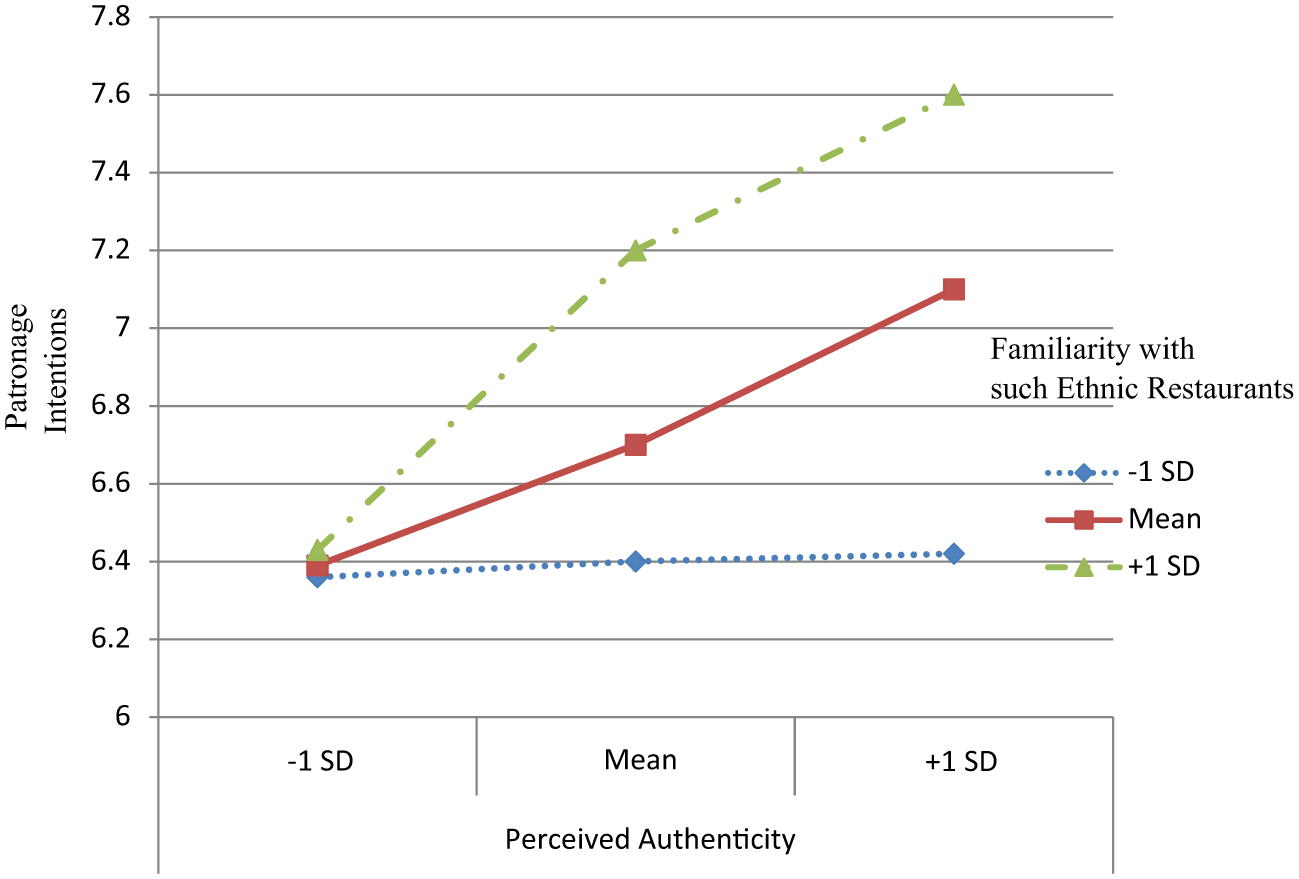
Interaction Effect of Perceived Authenticity and Familiarity on Patronage Intentions (Mainstream Participants)
Discussion
The results of this study indicate that the ethnic association of each of the three servicescape elements can increase perceived authenticity of ethnic dining. Prior research has isolated the importance of the physical environment and the social servicescape in influencing consumers’ authenticity assessments and yet rarely investigated the joint and interactive effects of different cues in the service environment (e.g., Ebster & Guist, 2004; Grayson & Martinec, 2004; Jang et al., 2011; Kolar & Zabkar, 2010; Lu & Fine, 1995; Munoz et al., 2006; Taylor, 2001). According to Gestalt perceptions of environmental psychology, people respond to their environments based on the total configuration of stimuli, rather than individual, discrete stimuli (e.g., Kofka, 1935; Kohler, 1929; Lin, 2004, Mattila & Wirtz, 2001a). This study is one of very few to examine how consumers assess authenticity through quantitative and experimental methods. Such an attempt helps discover how different servicescape elements interact and thereby contribute to our theoretical understanding about authenticity in the context of dining services.
This study uncovered that consumers, regardless of their cultural background, evaluated the company-constructed servicescape (the ethnic theme in the physical environment and the ethnic appearance of the service team) holistically when assessing authenticity. The positive influence of the ethnic service team on perceived authenticity was stronger when the service environment was also ethnically themed. When the service environment was not ethnically themed, the presence of the ethnic service team had only a small level of positive increments on authenticity assessments. The results suggest the importance of ethnic congruency among the ethnicity of the service offering, the physical environment, and the service providers. Incongruent environmental cues tend to result in lower perceived unity or less coherent ensemble effects (Bell, Holbrook, & Soloman, 1991). In other words, without the matching ethnic association in the other servicescape dimension neither the ethnically themed servicescape nor the ethnic service team could stimulate perceived authenticity. Servicescape research has shown the positive impact of congruent servicescape attributes on consumer perception and behavioral intentions, such as the congruence between scent and music (Mattila & Wirtz, 2001a; Spangenberg, Grohmann, & Sprott, 2005) and congruence between color and lighting (Babin, Hardesty, & Suter, 2003; Spies, Hasse, & Loesch, 1997). Such studies demonstrate the congruence between attributes within the same ambient factor, whereas this study suggests a higher level of congruency between the overall physical servicescape and the constructed social servicescape—the presence of service providers.
Previous research has shown that consumers are active creators of authenticity and have different criteria for authenticity depending on their personal experience, expertise, expectations, and/or goals (Beverland & Farrelly, 2010; Bruner, 1994; Chhabra, 2005). In the context of ethnic dining, a customer’s ethnic group could be a primary factor in explaining individual differences in authenticity assessments. This study shows that referent ethnic and mainstream customers differed in their treatment of information regarding the ethnic appearance of other customers. Ethnic participants considered the ethnic presence of other customers to be an independent piece of information, whereas mainstream customers applied the information about other customers to their authenticity assessments based on the company-constructed servicescape. These differences in information processing between ethnic and mainstream participants could be explained by their varying levels of expertise about the service offerings. Our cultural knowledge test (mentioned in the Method section) suggests that mainstream and referent ethnic customers differed in their knowledge level about the referent culture and experience with the ethnic dining.
Consumer psychology literature has shown that a consumer’s prior knowledge influences information processing of stimulus-based cues and consequent product evaluations and preferences (Brucks, 1985; Lynch, Marmorstein, & Weigold, 1988). Cues used to judge products can be intrinsic or extrinsic; intrinsic cues are physical attributes associated with the product itself, and extrinsic attributes are market-determined and can change without altering the physical make-up of the product (Cordell, 1997; Olson, 1977; Olson & Jacoby, 1972). Research has shown that low-expertise consumers are more likely to use extrinsic or contextual cues to infer product quality than expert consumers, as a lower level of knowledge hinders efforts to judge products based simply on intrinsic attributes (Marks & Olson, 1981; Mattila & Wirtz, 2001b; Shimp & Beardon, 1982). In this study, the presence of other customers is an extrinsic cue, and the company-constructed servicescape is an intrinsic cue. Mainstream customers’ relatively low level of expertise of Chinese restaurants as compared with the referent ethnic customers’ high level of expertise resulted in different information processing—information processing whereby the mainstream customers used extrinsic cues (the presence of other customers) to adjust their service evaluations of intrinsic cues (the company-constructed physical and social servicescape).
Another important finding is that the perceived authenticity, stimulated by the three servicescape dimensions, influences consumers’ patronage intentions with regard to ethnic dining. Scholars have stated that authenticity can serve as a competitive advantage for firms and a product appeal to consumers and thus be capable of driving consumers’ behavioral intentions (e.g., Beverland, 2005; Kolar & Zabkar, 2010; Lu & Fine, 1995; Rose & Wood, 2005). However, there have been few empirical investigations into the relationship between consumers’ authenticity perceptions and behavioral intentions, and the preconsumption stage has been particularly neglected. The findings of the present study indicate that perceived authenticity of ethnic dining can be a driving force for consumer patronage, especially for referent ethnic customers. For mainstream customers, cosmopolitanism, a willingness to consume culturally oriented products and to engage with different cultures (Cleveland & Laroche, 2007), and their past experience with ethnic dining play more important role in patronage intentions than perceived authenticity. As Lu and Fine (1995) proposed, for clients outside the ethnic group, culinary traditions must appear to be both exotic and familiar.
Managerial Implications
This research has several important managerial implications for the hospitality industry, particularly cultural entrepreneurs interested in designing services targeting specific ethnic groups or in using the ethnic orientation as the selling point for their services. First, this study demonstrates that key servicescape elements—the physical environment, appearance of the service team, and appearance of other customers—can provide ethnic cues based on which customers assess the authenticity of the dining service. Yet what is perceived as authentic must conform to consumers’ mental frames of how things should be (Grayson & Martinec, 2004). This study suggests an ethnically themed physical environment, ethnic service providers, and ethnic customers are all helpful in creating the sense that a dining experience is authentic. In addition, it is valuable to know that authenticity cues work fairly similarly on referent ethnic and mainstream customers.
Moreover, the findings of this study indicate that both the referent ethnic customers and mainstream consumers judge the company-constructed servicescape (the physical environment and the presence of service providers) in a holistic way. When the two servicescape elements are not ethnically congruent (e.g., low ethnic theme in the physical environment and ethnic service providers, or a high ethnic theme in the physical environment and mainstream service providers), it will have a negative effect on consumers’ perceived authenticity. If ethnic restaurants cannot achieve such ethnic congruency in the company-constructed servicescape, using authenticity as a selling point might be ineffective. In such situations, restaurant operators might want to position the restaurant as ethnic-inspired or fusion style.
The presence of other referent ethnic customers also has a positive effect on perceived authenticity. Mainstream customers, in particular, rely on the ethnic presence of other customers in evaluating the company-constructed servicescape. Restaurant operators might thus want to be more proactive in recruiting ethnic customers by targeted communication strategies and promotional offers. Once the restaurant has established its popularity among ethnic consumers, it can then deliver this message through marketing efforts. For example, a restaurant can use testimonials from ethnic customers and photographs showing ethnic consumers on the company’s website and other promotional materials.
Finally, our findings indicate that consumers high in cosmopolitanism might be particularly willing to patronize ethnic restaurants. In addition, authenticity can be a strong driving force to patronize for referent ethnic consumers, but for the mainstream consumers, authenticity will be appreciated only when they have been relative familiar with the ethnic dining. Ethnic restaurants need to consider these individual differences when designing marketing communication strategies.
Limitations and Future Research
This study presents a series of limitations and possibilities for future research. First, to ensure internal validity, this study may have compromised its external validity by developing photograph-based stimuli and a hypothetical scenario that focuses on one industry type—full-service ethnic-oriented dining services. The impact of servicescape cues on perceived authenticity needs to be replicated in a field setting. Second, this study investigated consumer responses to ethnic-oriented services for the mainstream and referent ethnic customer segments. Consumer responses from nonreferent ethnic customers (ethnic minorities that the ethnic-services are not targeting) were not empirically tested. Further research in this area is warranted. Third, we chose Chinese restaurants in the United States as a research context. Future research is needed to examine whether the results from this study are generalizable to other types of restaurants (e.g., Mexican or Japanese restaurants) and to other countries (e.g., ethnic restaurants in Asia or Europe). Fourth, we focused on subjective perception of “type authenticity”—whether service offerings belong to the ethnic group as it claims. Consequently, other theoretical perspectives such as existential authenticity—relating the self to the consumption experience (Wang, 1999)—were ignored in the present study. Future research could extend the notion of authenticity into the experience itself.
In addition to perceived authenticity, researchers could investigate other responses to ethnic-oriented hospitality services, including discrete emotional responses and cognitive evaluations. Jang et al. (2011) investigated consumers’ overall positive affects toward authentic atmospherics in Chinese restaurants in the United States. Future studies could investigate other customer responses such as their discrete emotions and overall impressions. Furthermore, future research could examine the mediating process between servicescape characteristics and consumers’ authenticity assessments. This study uses low- versus high-level expertise to explain the differences between the authenticity assessment patterns of the referent ethnic and those of the mainstream customers. This explanation is plausible given the support from literature about information processing and the discovered significant differences in knowledge about Chinese culture between two groups of participants. Yet more direct mediating processes could exist and merit further investigation.
Footnotes
Appendix
Pictorial Stimuli for Three Manipulated Factors
| Low Level of Ethnic Association (Mainstream) | High Level of Ethnic Association | |
|---|---|---|
| Physical servicescape | ||
| Service providers | ||
| Other customers |