





Abstract
The main objective of this research was to develop a scale for measuring destination personality of India. A list of human personality traits was generated from previous personality scales, and in-depth interviews were conducted among foreigners visiting India. A two-phase study was conducted to reduce the personality traits and to identify the underlying factor structure. The results indicate that destination personality of India is a multidimensional construct composed of six main dimensions: courteousness, vibrancy, conformity, liveliness, viciousness, and tranquility. In the first phase, a survey was conducted among a sample of 177 foreigners. In the second phase, a sample of 152 foreigners was collected to further refine the scale. A reduced scale with 23 items having the same psychometric properties and stability as the full 35-item scale was proposed. The article discusses the marketing applications of the scale for positioning destinations and estimating the relative impact of the personality dimensions on attitudes toward product-destination attitudes, and travel-destination attitude, and overall destination attitude.
Introduction
Every destination has images and personality either cultivated deliberately or developed over the ages. In today’s intensely competitive world, the nation’s image significantly affects their ability to compete against each other for the share of mind, share of income, and share of talent (Anholt, 2004). For a destination to achieve the competitive edge, there is a need for systematic branding, which can be understood as a sincere and deliberate effort to enhance the brand image of the destination (Tasci, Gartner & Cavusgil, 2007). The efforts for systematic branding of a destination started in mid-1990s, as a result of the ushering of globalization of economies (Anholt, 2002). The destination branding has been considered as a proxy for positioning (Gilmore & Pine, 2002), and for measuring behavioral intentions (Usakli & Baloglu, 2011) of the consumers. Consequently, destination branding has become a necessary marketing tool for analyzing the competitive advantage of any destination due to increase in competition and substitutability of destinations. The destination marketing organizations have focused more on the functional or utilitarian attributes of the destinations (e.g., landscapes, services, and infrastructure). However, because of increase in competition and substitutability of the destinations, the destination managers are shifting their focus toward symbolic attributes of the destinations. Aaker (1997) has proposed that consumers have the tendency to link human personality traits to the product, services, and companies, which they generally prefer. Consumers would show more attachment to those brands, which are more congruent with their personalities (Orth, Limon, & Rose, 2010). Hence, human personality traits can be used to enhance the brand equity (Aaker, 1997). In destination branding context, Ekinci and Hosany (2006) have proposed that the destination personality can act as a viable metaphor for creating a better destination brand and for understanding tourist behavioral intentions, and thereby, leading to the gradual development of unique identity for the destination. Later on, d’Astous and Boujbel (2007) explained in their study how a nation can be examined in terms of human personality traits? They also found that personality of a country has a significant effect in building peoples’ attitudes toward it. Rojas-Méndez, Murphy, and Papadopoulos (2013) explored in their study the U.S. brand personality in China, and the findings of the study revealed three facets of U.S. brand personality, namely amicableness, resourcefulness, and self-centeredness. Consequently, the human personality traits, which have been associated with the product, can be further extended to the destinations (Ekinci & Hosany, 2006). However, to the best of our knowledge, no study has yet been done that has attempted to explore the destination personality of India. India is a country, which is eminent for its unity in diversity. This diversity is not only because of the difference in religion, language, or caste but also because India offers a variety of destinations that may fulfill both the functional and symbolic needs of the visitors. The variety of destinations in India is popular because of the presence of innumerous number of temples, heritage monuments, rivers, mountains, beaches, and forests. This country offers diverse experience of culture, pilgrimage, medical, adventure, and ecotourism to the travelers. In the past 5 years, India as a tourist destination has grown enormously with an average annual growth rate of 7% (World Travel & Tourism Council, 2013). Furthermore, the tourism industry of India is expected to contribute INR 4306.6 billion to the GDP (gross domestic product) by 2023 (World Travel & Tourism Council, 2013). Hence, by studying the attitudes and perceptions of the foreigners about India as a tourist destination is of fundamental importance to the tourism industry. To achieve this, India requires a different instrument rather than the existing scales due to several reasons. First, India being a country of diversity requires a destination personality scale (DPS), which includes the context-specific personality traits. Second, most of the previous brand personality scales (BPSs) relied on retrospective studies, whereas a comprehensive research requires the responses of in situ tourists to build a valid and reliable scale (Hosany & Prayag, 2013). Thirdly, the tourism industry requires to meet the expectations of the tourists by positioning India favorably in the mind of the travelers, but for doing this, a valid and reliable instrument is required.
This scale will help the tourism managers and researchers determine the personality traits that the foreign tourists associate with India, and consequently, will help them position India on the basis of those traits. To be precise, this scale will help the practitioners to match the personality of foreigners to the personality of visiting destination. Furthermore, consistent with Pike’s (2010) incitement for more studies on destination branding, this research is an attempt in better understanding a destination as a brand, and the development of a DPS that can be used in positioning the destinations of India favorably among the foreigners.
Literature Review
Concept Of Personality In Marketing
From the perspective of marketing, personality has been linked with brands, services, countries, and destinations by different researchers (Aaker, 1997; d’Astous & Boujbel, 2007; Ekinci & Hosany, 2006). Personality trait theory suggests that various human traits can influence human behavior and intentions in different situations. Hence, from the point of view of doing research on the ground of psychology, the researchers’ associate human behavior to various sets of dispositions that are unique for individuals (Wee, 2004). The best known Big-Five models comprising personality traits have been developed by several authors over the years. The theory based on the factors that influence the “Big-Five” models is called the Five Factor Model (Costa, 1991). This model has five dimensions, which include openness, neuroticism, extraversion, agreeableness, and conscientiousness. In a pioneering research, Goldberg (1990) validated the comprehensive five-factor structure of Big-Five models and suggested the utilization of 339 personality traits that are stable across different situations in different studies carried out in the future with relation to personality construct.
The intensifying competition and reduction in differentiation on the basis of the functional value of products have engendered the emphasis on the significance of symbolic attributes that can be associated with human traits. Consequently, this has led to researchers’ attention to “Big-Five” in branding and strategy to study consumer behavior and behavioral intentions with the motive of making the destination more enticing to the travelers. Aaker (1997) proposed a BPS based on the amalgamation of “Big-Five” and few other scales from the field of marketing and psychology. In her study, she has described brand personality as a set of human characteristics that are linked to a brand by consumers themselves though unknowingly. Later on, the personality construct has been associated with stores to define store personality (d’Astous & Lévesque, 2003). Gradually, the scope of personality construct in marketing got extended, and more objects like country, services, and, most recently, destination have been linked to it (d’Astous & Lévesque, 2003; Ekinci & Hosany, 2006; Lee, Back, & Kim, 2009; Siguaw, Mattila, & Austin, 1999). Researchers have attempted to examine the role of destination personality in branding a destination in association with different cultures and settings to which a destination can be connected (Li & Kaplanidou, 2013; Opoku, 2009; Prayag, 2007). Li and Kaplanidou (2013) investigated the impact of 2008 Beijing Olympic games on destination personality of China and found that the perceptions of American travelers have not changed substantially before and after the games. Prayag (2007) explored the relationship between destination image and destination personality within the context of Africa. The findings of his study revealed that Cape Town brand is perceived as “young” and more “adventurous” than South Africa brand. Accordingly, based on these studies, it is argued that personality construct can be associated with objects like country, services, and destinations, and in consequence to this, all the objects that can be linked with personality construct are pertinent for strategic positioning and to get a competitive advantage.
Destination Personality
Destination personality refers to the application of brand personality in the context of tourism literature. Brand personality can be described as a set of human traits, which are linked to a brand. Aaker (1997), in her pioneering study, has conceptualized this construct with the help of five dimensions, which include sincerity, excitement, ruggedness, sophistication, and competence. By adopting Aaker’s (1997) brand personality framework, Ekinci and Hosany (2006) have applied this concept of destination personality for the first time in the tourism literature, and suggested that the concept of brand personality can be extended to tourism destinations. In their study, they found three dimensions of destination personality, which are known as sincerity, excitement, and conviviality, and also demonstrated that tourists ascribe different personality traits to the destinations. Since then, a few studies have empirically supported the notion that tourists ascribe personality traits to the destinations (Murphy, Benckendorff, & Moscardo, 2007a; Usakli & Baloglu, 2011). Murphy, Moscardo, and Benckendorff (2007) studied two destinations in Australia and found that tourists ascribe different personality traits to different tourism destinations. Sahin and Baloglu (2009) examined the brand personality of Istanbul and found that tourists perceive Istanbul’s brand personality to be composed of the following personality traits: “sincerity,” “originality and vibrancy,” “cool and trendy,” “competence and modernity,” and “conviviality.” Similarly, Usakli and Baloglu (2011) investigated the perceived destination personality of Las Vegas, and they have delineated the fact that tourists ascribe personality traits to tourism destinations. The study also suggested that destination personality is significant predictor of destination loyalty.
The review of recent tourism literature reveals that numerous researchers have explored the role of destination personality in evaluating tourists’ behavioral intentions (Chen & Phou, 2013; De Moya & Jain, 2013; Papadimitriou, Apostolopoulou, & Kaplanidou, 2014) and have found it to be a significant tool for destination branding (Pike & Page, 2014; Qu, Hyunjung Kim, & Hyunjung Im, 2011). Chen and Phou (2013) examined the relationship between destination image and destination personality, and also found that both have positive effects on tourist–destination relationship. Papadimitriou et al. (2014) conducted a study that consisted of 361 urban tourists in Athens and demonstrated that destination personality positively influences the tourists’ behavioral intentions. Some researchers have also investigated the role of tourism websites for promoting a distinct and unique destination personality of different places, countries, or states (De Moya & Jain, 2013; Kim & Lehto, 2013; Opoku, 2009). These studies have exercised the contents of tourism websites, and using the content analysis, personality traits based on Aaker’s BPS have been found. Furthermore, researchers in their research on destination personality have shown that DP construct can be exercised to differentiate the destinations (Murphy et al., 2007; Pitt, Opoku, Hultman, Abratt, & Spyropoulou, 2007). The studies that are related to destination personality measurement till date have been presented in Table 1.
Destination Personality Measurement Methodologies
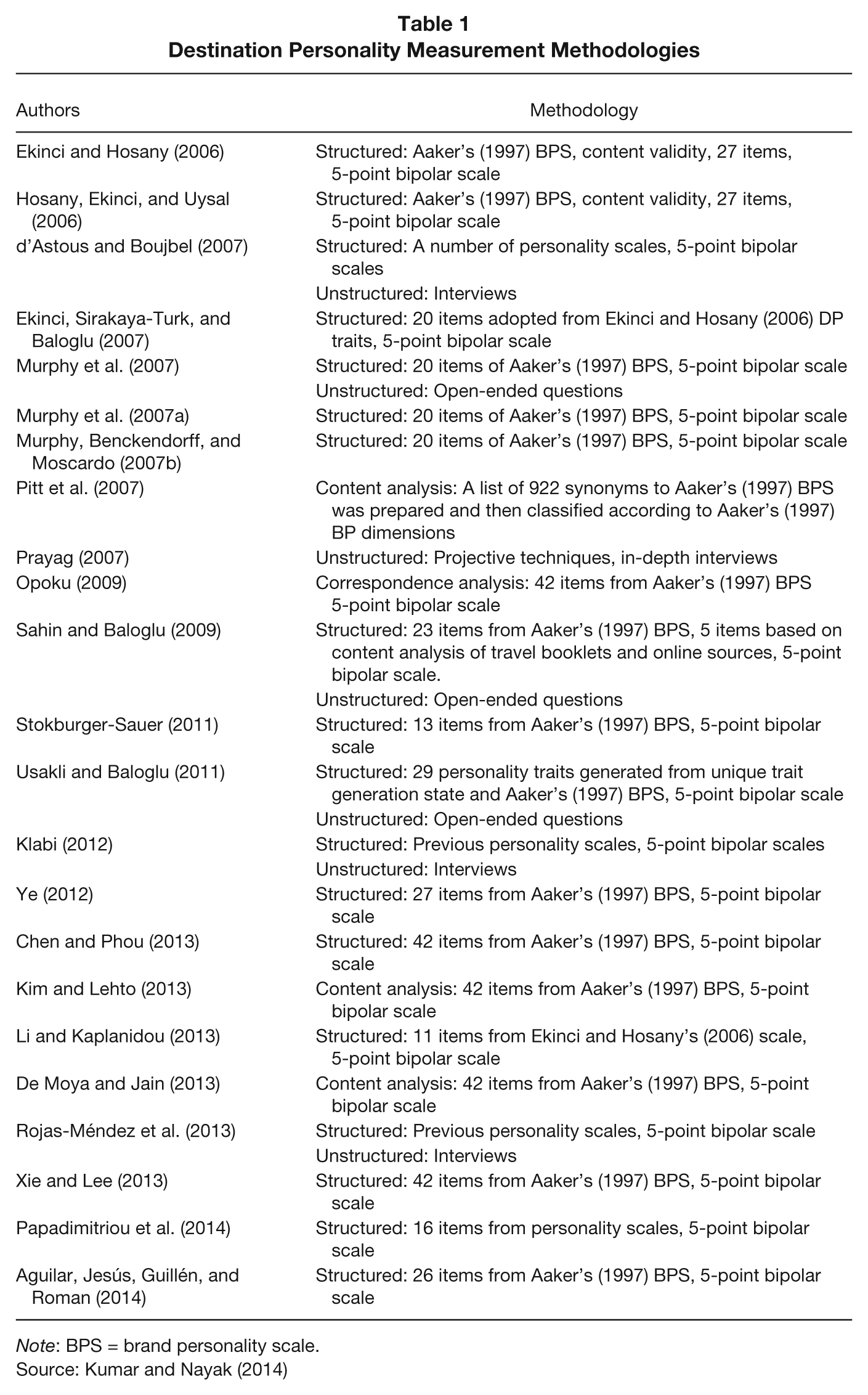
Note: BPS = brand personality scale.
Source: Kumar and Nayak (2014)
Till now, the personality construct in destination branding has been operationalized mostly through the BPS proposed by Aaker (1997) (e.g., Klabi, 2012; Opoku, 2009; Pitt et al., 2007; Ye, 2012). In some instances, authors have used exploratory studies (Prayag, 2007) as well as mixed approach to find out the unique traits that are associated with the specific locations and cultures (Usakli & Baloglu, 2011). However, Aaker’s (1997) BPShas been developed keeping in mind the brands in association with human characteristics, hence, it may not be appropriate for destination branding, as some traits pertinent to the destination may not be included in it.
Extending the contribution to the tourism literature, d’Astous and Boujbel (2007) constructed a scale for measuring the personality of a country and explored six dimensions of a country’s personality labeled as wickedness, assiduousness, agreeableness, conformity, unobtrusiveness, and snobbism. In contrast to Aaker’s (1997) BPS, d’Astous and Boujbel (2007) have also included the negative personality traits to define a country’s personality. However, the scope and domain coverage of this scale is limited as argued by researchers of this field. Both the scales are applicable to cross cultures, but they may not cover the specific aspects of a culture, location, or country. Aaker (1997) has argued that there are certain culture’s specific traits as well as few aspects that are associated with countries and communities, need to be included to increase the generalizibilty and validity of BPS. So, we can argue that there is a need of a destination-specific scale to incorporate the entire personality traits of a particular destination. In the context of this study, we have considered destination personality as a multidimensional construct and have defined it as a set of positive and negative human traits, which are associated by the tourists to a destination on the basis of their prior experiences and perceptions with that particular destination.
Scale Development
For the purpose of developing a more comprehensive scale, both the exploratory (qualitative) and the descriptive (quantitative) studies have been considered. The measures and procedure recommended by Churchill (1979) for the development and validation of a scale have been followed in the study. The steps, which are involved in the construction and development of the scale, are discussed in the next section and are depicted in Figure 1.
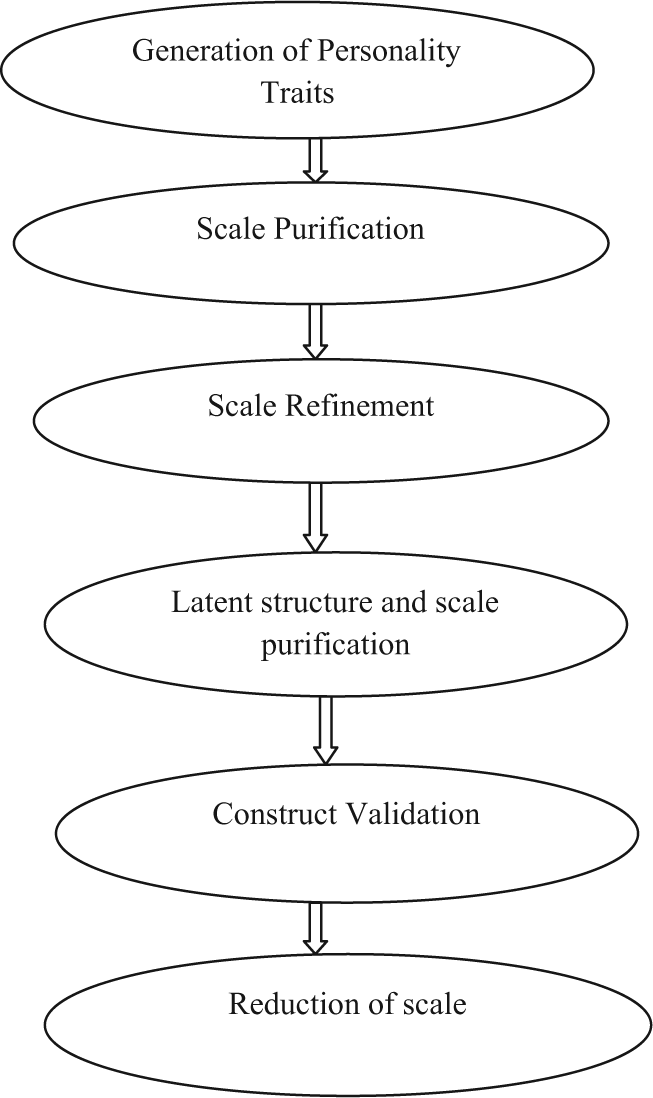
Major steps involved in the development of the destination personality scale
Generation of Personality Traits
For the generation of traits, a list of adjectives, which can be used to define the personality of a destination, was prepared. To achieve this objective, 12 English-speaking foreign tourists, 6 male and 6 female, aged between 22 and 47 years, were interviewed. Out of the 12 respondents, 5 respondents belong to the United Kingdom, 4 to the United States, and 3 to Australia. These respondents were selected on the basis of three criteria: (1) duration of stay, (2) number of visits to different destinations, and (3) familiarity with the different destinations of India. The respondents must have a stay of at least 30 days and must have visited different destinations of India a minimum of 10 times. To assess the familiarity with the destinations, they were asked some questions on subjects like geographical location, language, and significance of the destination (e.g., famous landscapes, places, etc.). Subsequently, they were asked to imagine different destinations of India, as if they were a person, and to associate human traits to them. As an example, they were told that a destination can be welcoming, diverse, or calm. A total of 22 diverse destinations of India were included to increase the representativeness and scope of the study. In total, two main criteria guided the selection of destinations, first, the number of foreigners visiting the destination, and second, the different types of tourists, who are attracted to the destination. The tourists found the interviews quite interesting, and spontaneously came up with some unique traits. This process elicited 42 unique traits to Indian personality. This was followed by the task of finding out the sources of inferences. With the help of a questionnaire, the participants were asked to rate their familiarity with above-listed destinations on a bipolar scale with end points not at all familiar/totally familiar and to tell the sources of inferences of the traits. The main sources of destination personality inferences were the media, friends, family, and personal experiences.
To increase the number of traits, some other scales, developed by researchers in this field, were included. Aaker’s (1997) BPS (42 items) and d’Astous and Boujbel’s (2007) country personality scale items (29 items) were added to the 42 items generated in the exploratory study. After eliminating the repetitions, a list of 96 traits was prepared. Aaker’s (1997) BPS has been used in this study because the scale is the most comprehensive instrument for measuring brand personality and has been widely used in destination personality context. Furthermore, d’Astous and Boujbel’s (2007) scale was adopted because it also includes the negative personality traits, which are essential for defining a destination or location. In a pilot study, 22 foreign tourists (12 female, 10 male) were asked to rate the probability of using each adjectives in the list for defining the personality of different destinations of India. Of the 22 respondents, 8 were from United Kingdom, 6 from the United States, 5 from France, and 3 from Germany. The ratings were obtained on a 5-point bipolar scale with end points improbable/probable. The adjectives with a score of 3 or more were retained. This process resulted in the elimination of 26 traits. Thus, a comprehensive list of 70 adjectives was obtained.
Scale Purification
The objective of this stage was to find out the factor structure of the adjectives and to purify the scale. To achieve this, a survey was conducted in Agra city, which is famous for the Taj Mahal. In total, 343 questionnaires were distributed among the international tourists visiting the Taj Mahal. The sample was collected using self-administered questionnaire method. After intimidating the respondents about the significance of the study, majority of the respondents expressed willingness to participate in the study. A total of 212 usable questionnaires were collected, which exhibited a good response rate of 61.8%. The average age of the respondents was 40 years, and the sample included 44.64% males and 55.36% females. The respondents belong to following countries: United Kingdom (19%), United States (16%), Germany (13%), France (12%), Scotland (9%), and others (31%). In total, seven well-known destinations of India were used as stimuli: Agra (north India), Dharamsala (north India), Jaipur (west India), Goa (west India), Puri (east India), Khajuraho (central India), and Pondicherry (now called Puducherry; south India). To select the relevant sample for the study, only those foreigners were targeted who have either visited or have fair idea about the aforementioned destinations. To achieve this, the visitors were asked some questions regarding different aspects about the above-mentioned destinations (e.g., famous landscapes, places, etc.), geographical location, significance, and culture. The main sources of destination personality inferences were family, friends, media, travels, and products. The participants were asked to rate two destinations using 70 personality traits on a 5-point numerical bipolar scale with end points does not describe at all/describes perfectly. One of the destinations has systematically been Agra, whereas the other is any of the remaining destinations. So, six different versions of questionnaire were prepared. The order of destination (Agra) was reversed in half of the questionnaires.
The scale data were analyzed using principal component analysis (PCA). The varimax rotation method generated six-factor solution where the eigenvalues of each and every factor were more than one. All the synonyms and antonyms within each factor were identified with the help of Oxford dictionary, and the traits having factor loadings more than 0.50 were retained for further study. After this step 19 traits were eliminated from the study. Following this a subsequent PCA with varimax rotation was conducted on the remaining traits and an elimination of additional 16 traits was achieved by removing the traits having factor loadings less than 0.5. The six factors explained 52.56% of the total variance.
Thus, the six factors that emerged after these steps were labeled as follows: courteousness (10 items), vibrancy (7 items), conformity (4 items), creativity (5 items), viciousness (4 items), and tranquility (5 items). The factors with their items as well as the corresponding eigenvalues, explained variance, and the reliability values are shown in Table 2.
Factor Structure
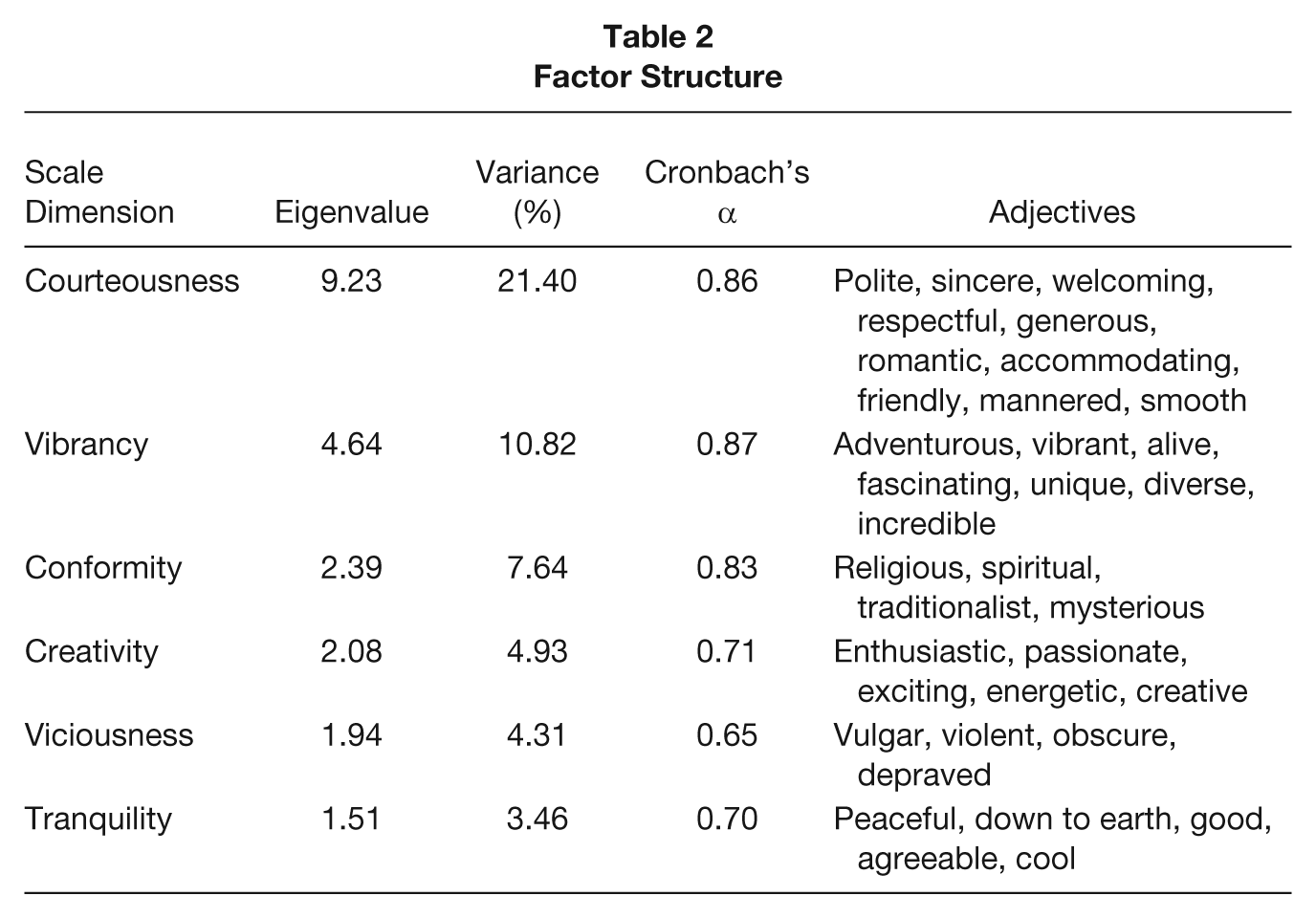
To check the stability of the factor structure, separate PCAs among male and female, and among respondents younger than 40 years and those older than 40 years were conducted. The results revealed that the factor structure was very stable across the gender and age group.
Scale Refinement
The main purpose of this phase was to confirm the factor structure of the DPS, to purify the scale, and to assess the stability and psychometric properties of the scale. To achieve this objective, another survey was conducted among foreign tourists in Agra. The respondents were approached at the Taj Mahal during their leisure time. The sample was collected using self-administered questionnaire method. The average time taken by the participants to fill the questionnaire was about 15 minutes. The study has attempted to achieve random sampling by randomly choosing weeks, days, and the locations over a period of 3 months from October to December 2013. The participants were told about the implications of the study, and appropriate instructions were given to them regarding the questionnaire. Most of the participants were anxious about the study, and hence, showed an interest to participate in the study. In total, 383 foreigners were targeted, and a sample of 264 respondents was collected. Out of the 264 questionnaires, 8 were found incomplete; thus, only 256 were retained for the next part of the study.
The questionnaire was divided into three parts. In the first part, three destinations of India had to be evaluated on the basis of 35 personality traits, using 5-point bipolar numerical scale with end points doesn’t describe the destination at all/describes the destination perfectly. One of the evaluated destinations was Agra, whereas the other two were selected from the following list: Shimla (north India), Banaras (also called Varanasi; north India), Dharamsala (north India), Jaipur (west India), Goa (west India), Puri (east India), Darjeeling (east India), Khajuraho (central India), Hyderabad (south India), and Pondicherry (south India). Three criteria were kept in mind while choosing the stimulus destinations: (1) economic and cultural diversity, (2) geographical diversity, and (3) familiarity. The grouping of three destinations in five groups resulted in the formation of five different versions of the questionnaire: Agra coupled with (1) Shimla and Hyderabad, (2) Dharamsala and Puri, (3) Goa and Khajuraho, (4) Jaipur and Pondicherry, and (5) Banaras and Darjeeling. These groups were structured so as to ensure some cultural, geographical, and economic diversity. We assume that this way of comparing different destinations will indulge the respondents to think about the destinations with different profile while filling the questionnaire.
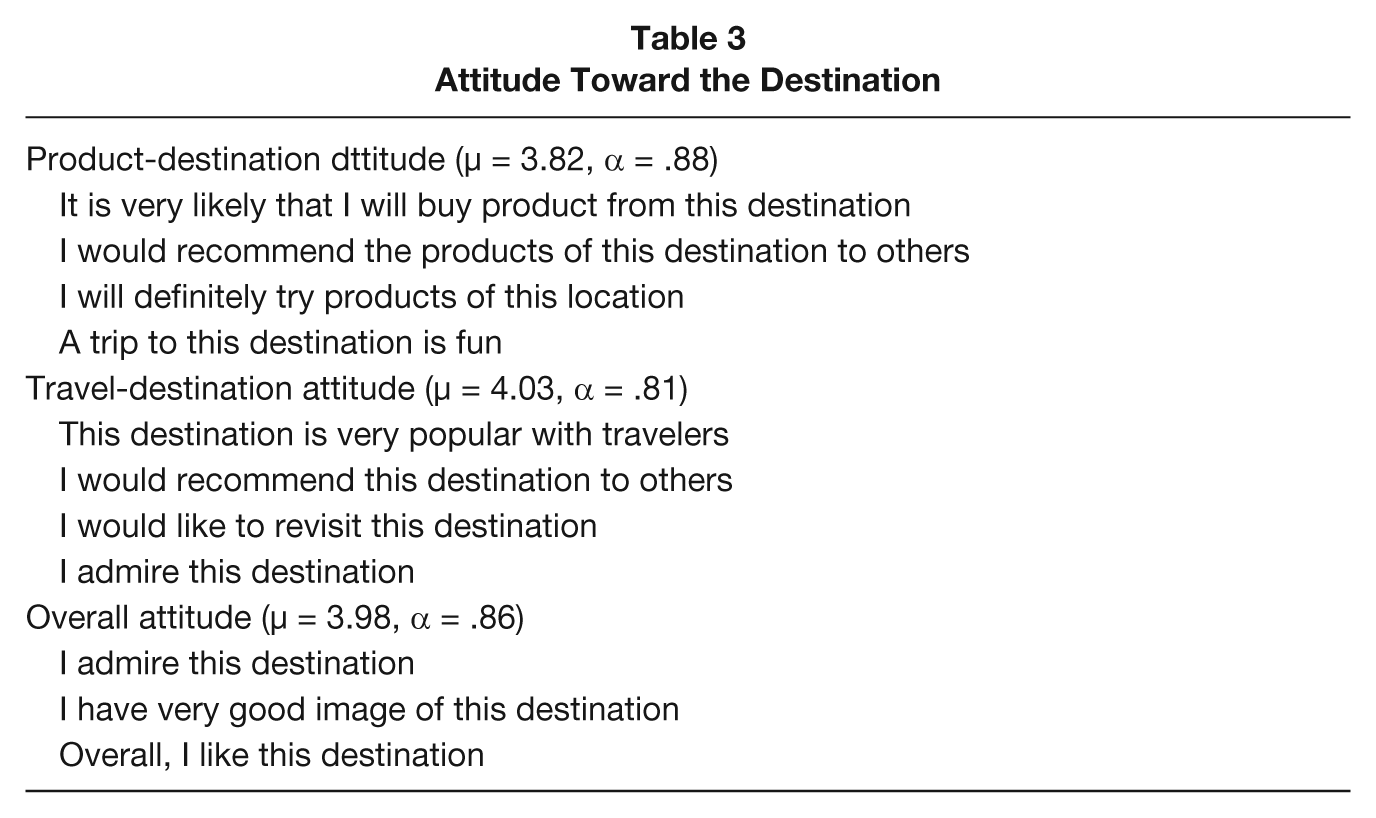
The questions in the second part of the questionnaire were used to assess tourists’ attitude toward the destinations’ products, evaluation as a travelling destination, and overall attitude toward the destination. The items used to measure these constructs have been borrowed from the work of Rojas-Méndez et al. (2013) and are shown in Table 3. This was followed by the destination assessment using the six dimensions of the DPS (e.g., “Agra is vibrant” 5-point not at all/totally bipolar scale). The respondents were also asked to position themselves on the same six dimensions (courteous/discourteous, vibrant/spiritless, conformist/open, creative/uncreative, vicious/right, and tranquil/agitated). The last part of the questionnaire was composed of sociodemographic questions (age, sex, occupation, home country, level of education, and total income). The results obtained at this stage have been discussed in the next section of the article.
Attitude Toward the Destination
Results
Sample Description
The proportion of male participants was slightly higher (53.7%) than the female participants. The average age of the sample was 35 years and it varied between 19 and 76 years. The participants’ level of education was fairly high as 54.6% among them were graduates and the remaining 36.7 % were either post graduates or had other professional degree. The total monthly household income of the participants varied from USD 3000 to USD 25000, and the average income was approximately USD 8400. The respondents were from following countries: the United Kingdom (22%), the United States (18%), Australia (16%), France (14%), Ireland (11%) and others (19%). So, overall the sample was a good mix of younger, more educated, and financially sound people.
Latent Structure and Scale Purification
The purpose of this phase of research was to find out the latent structure and to further purify the scale. To achieve this, several PCAs with varimax rotation were performed on the scale data. Exploratory factor analysis was preferred over confirmatory analysis because of the lack of strong theoretical justification for the destination personality dimensions (Hair, Anderson, Tatham, & Black, 1998). Three traits, smooth, mysterious, and spirited failed to load properly on the predetermined factors, and hence, were removed from further analysis. Subsequently, another PCA was performed on the reduced data (32 traits). The results displayed no issue of cross loading, and hence, a stable factor solution was obtained. The results are shown in Table 4. All the factors have eigenvalues more than 1, which explain a total variance of 67.12%. The reliability of the factors was measured using Cronbach’s alpha, and all the values have been found satisfactory.
Factor Structure of Destination Personality Scale
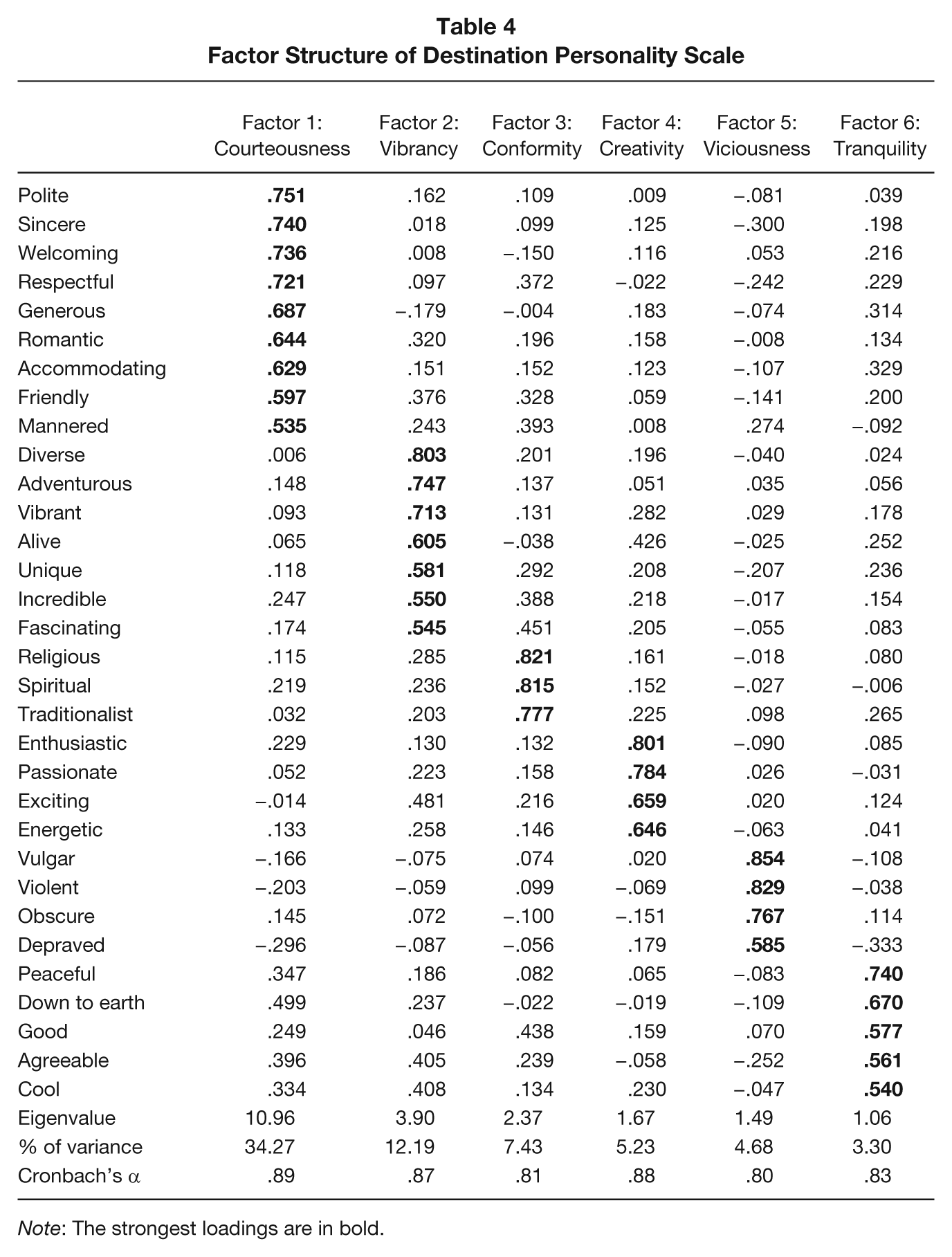
Note: The strongest loadings are in bold.
Stability Checks
To check the stability of the factor structure, a series of PCAs with varimax rotation were conducted among various subgroups in the sample: younger (<35 years) versus older participants, males versus females, less educated (undergraduates) versus higher educated participants. The factor structure changed a bit for male subgroups, as few items such as romantic and mannered shifted from “courteousness” factor to “vibrancy.” The factor solution of female subgroup was more consistent than the male subgroup. There were no major differences among the factor structures of age and level of education subgroups. The consistency of factor structure was further examined by running a randomly selected sample of 50% of respondents. As expected, the factor structure was very much consistent with the factor structure obtained using entire sample.
Construct Validation
The objective of this section was to assess the validity of the constructs. The validity of the scale’s construct can be assessed by examining whether it behaves as predicted by the widely accepted theoretical framework (Nunnally, 1978). To predict the scale’s construct validity, the self-image congruence theory has been selected as the theoretical framework due to its wide applications in the consumer behavior (see e.g., Hoyer & MacInnis, 2004; Solomon, Zaichkowsky, & Polegato, 2005). This theory states that people prefer objects whose psychological characteristics seem to be congruent with their self-image. This theory has been predicted in this research with the data collected from the participants in which they were asked to rate the destination and themselves on various personality dimensions. The PCA with varimax rotation was performed on the scale items related to the product-destination attitudes, travel-destination attitudes, and overall attitudes toward the destination. The resulting three factor structure was consistent with the expected factor structure, which includes product-destination attitude (four items, mean factor loading = 0.85; α = .88), travel-destination attitude (four items, mean factor loading = 0.87; α = .81), and overall destination attitude (three items, mean factor loading = 0.82; α = .86; refer Table 4).
The absolute distance between the mean score of destination personality dimension and respondent’s self-assessment on the corresponding dimensions was calculated and averaged across all the six dimensions. These scores corresponding to self-image/destination incongruence were correlated with the mean of product-destination attitude, travel-destination attitude, and overall destination attitude items. Self-image/destination incongruence refers to the mismatch between the tourists’ self-image and destination personality. The results of the analysis followed the self-image congruence theory as all the correlations were negative and statistically significant. The correlation values for different attitudes toward destination were product-destination attitude (r = −.15, p = −.05), travel-destination attitude (r = −.22, p = −.05), overall destination attitude (r = −.18, p = −.05). These negative correlations signify that greater the mismatch between tourists’ self-image and destination personality, lower the probability that tourists would develop a positive attitude toward the destination for its products, as a travelling destination and overall image of the destination. Hence, these results have proved empirically the construct validity of the proposed DPS.
Assessment of Reduced Scale
The DPS developed in this study may be relevant to position the personality of one or more destinations, but the burden on the respondents will increase as the number of destination stimuli increases. Hence, it becomes relevant to check the feasibility of constructing a DPS with lesser number of items.
We have proposed 23-item scale by selecting four traits from each personality construct, except the conformity construct that has only three traits. The traits were selected based on two criteria: (1) factor loadings value (preferred higher value) and (2) mean correlation value of each item with other factors (preferred lower value). Subsequently, a PCA was run on reduced scale data, and a six-factor structure was obtained with the expected factor loadings. All the six factors contributed to 72.6% of the total variance. The results are presented in Table 5 along with the reliability estimates for each dimension of destination scale. It can be seen that even after eliminating 12 traits from the scale, the reliability values of the scale were comparable to the original scale. A series of stability checks were performed, and results revealed that the factor structure of reduced scale was more stable than that of the original scale. In sum, the 23-item scale proved to be a better scale than the 35-item scale based on the stability results and its smaller size.
Final Factor Structure and Reliability Results of 23-Item Destination Personality Scale
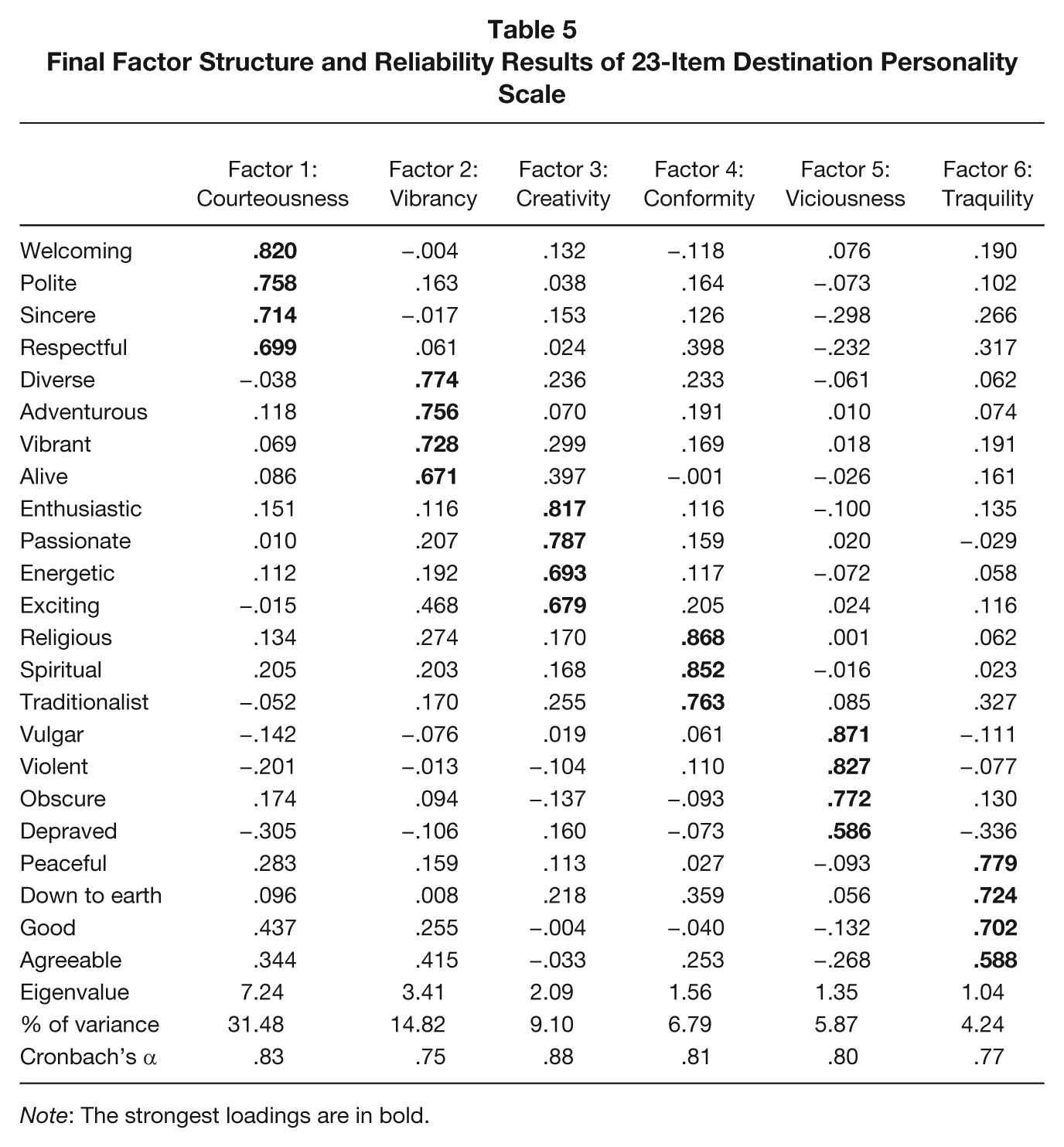
Note: The strongest loadings are in bold.
Destinations Positioning on the Destination Personality Scale
All the destinations covered in this research to explore the destination personality of India were positioned at 23-item DPS, and the results are shown in Table 6. The destinations with extreme values on each dimension are given in boldface. The results show that Dharamsala is perceived as the most courteous destination of India, as Dharamsala is the place where most of the residents are the followers of Buddha religion, and hence, are very humble and accommodating by nature. In the vibrancy dimension, Jaipur topped the list, and it is not at all surprising, as Jaipur also known as the pink city, is full of diversity and joy. Khajuraho has got the highest rating in creativity dimension. It is well understood as the place is known for its ancient temples and erotic sculptures. Jaipur and Banaras also have been ranked high on creativity dimension. It is not surprising that Banaras has been ranked highest on the conformity dimension since this place offers religious and spiritual experience to visitors. Some other destinations such as Puri and Dharamsala are also well positioned on this dimension. The most vicious destination that has been revealed in the study is Agra. It may be because of the fact that data were collected at a time when a significant number of cases of misconduct with foreigners were reported in the media. The most tranquil destination revealed in the study is Khajuraho followed by Dharamsala, Pondicherry, and Darjeeling. The results presented in Table 6 should be understood with care as the sample size used in the calculation of personality means ranges between 38 and 47 (except Agra, which has been evaluated by every respondent). Higher sample size may change the value of mean scores of different personality dimensions obtained by the various destinations, and hence, it may have different managerial and theoretical implications.
Destination Positioning on 23-Item Destination Personality Scale
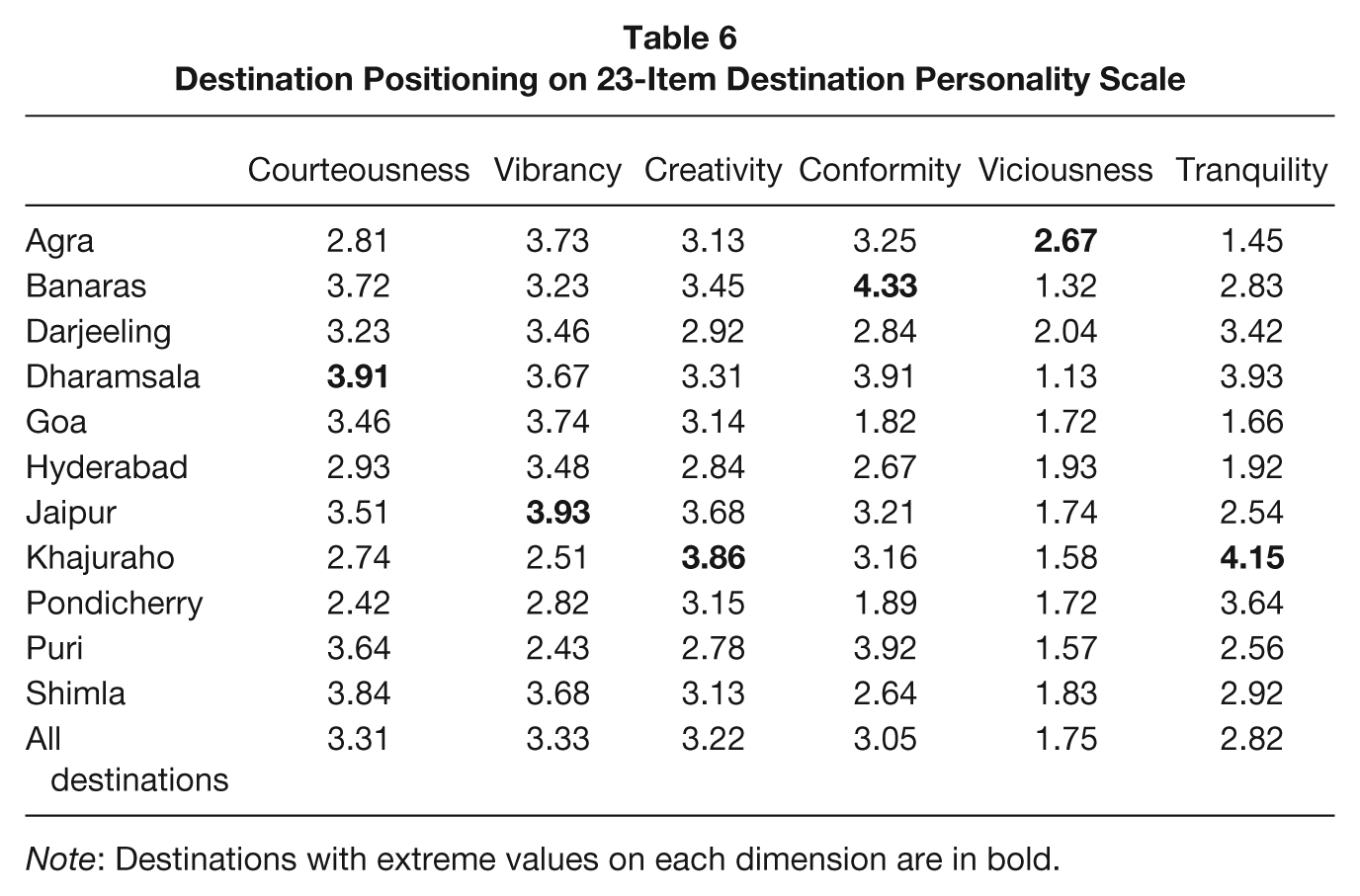
Note: Destinations with extreme values on each dimension are in bold.
Predictive Validity
To test the predictive validity of the proposed DPS, the three constructs that comprised the product-destination attitude, travel-destination attitude, and overall destination attitude have been considered. The number of items used to measure each of the construct means and the corresponding Cronbach’s alpha values are given in Table 3. In total, three structural equation modeling analyses were performed, each using one of the three constructs as the dependent variable and the destination personality dimensions as the independent variables. The results of these analyses are shown in Table 7. As can be seen, all the dimensions have explained a significant portion of variance ranging from 0.41 to 0.51 with acceptable fit indices for each analysis.
SEM Analyses: Verifying the Predictive Validity of the Scale
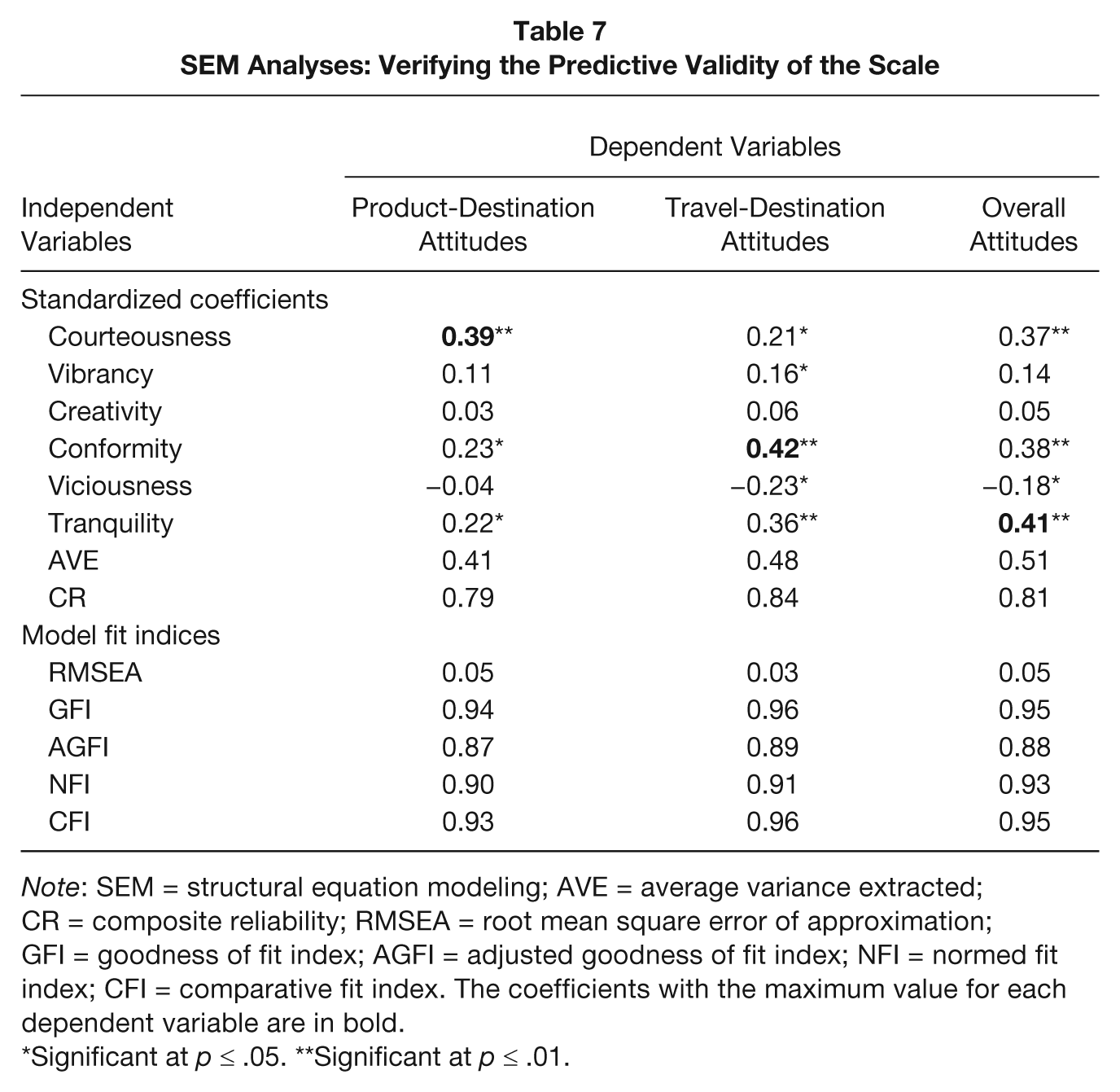
Note: SEM = structural equation modeling; AVE = average variance extracted; CR = composite reliability; RMSEA = root mean square error of approximation; GFI = goodness of fit index; AGFI = adjusted goodness of fit index; NFI = normed fit index; CFI = comparative fit index. The coefficients with the maximum value for each dependent variable are in bold.
Significant at p ≤ .05. **Significant at p ≤ .01.
All the dimensions of the proposed scale except creativity are the important predictors of the respondent’s attitude with conformity and tranquility being two strong predictors in all cases. The results reveal that 12 out of the 18 relationships, which have been tested, are significant. Hence, we can propose that the results are logical and strongly support the predictive validity of the proposed scale. The results obtained in this research were compared with available work by Rojas-Méndez et al. (2013) and d’Astous and Boujbel (2007). Only the study by Rojas-Méndez et al. (2013) is directly comparable to our study because they have used structural equation modeling analyses to test the predictive validity. In their study, they have reported the variance explained as 0.32 for “product purchase attitude,” 0.56 for “intention to travel,” and 0.57 for “overall attitude.” The respective equivalents in our study are an explained variance of 0.41 for “product purchase attitude,” 0.48 for “intention to travel,” and 0.51 for “overall attitude.”
Discussion And Implications
The Destination Personality Scale
The importance of destinations has abruptly increased in the lives of people because of different means like social media, products, and travel experiences. Thus, it can be expected that people could form organized mental representations of destinations. The research covered in this study explores how these mental representations are connected with human traits as in the case of brands (Aaker, 1997) and stores (d’Astous & Levesque, 2003). In this research, we have applied the personality metaphor to understand the effect of destination images on consumption behavior. The DPS was developed in two phases in this study. The first phase consisted of exploratory part, during which the base list of destination traits was generated, whereas in the second phase, the same list was applied to a sample of foreigners visiting different destinations in India.
As shown in the study, the DPS can have both positive and negative traits. The scale was tested for reliability, construct validity, as well as for the prediction of respondent’s intentions to purchase products from, travel to, and overall attitudes toward the target destination. As expected, the scale dimensions have significantly predicted the respondent’s attitudes, but the magnitudes were different. Interestingly, all the dimensions of the scale were significant in explaining the attitudes. The results of reduced scale indicate that the highest variance is explained by Courteousness dimension (31.48%) followed by Vibrancy (14.82%) and Creativity dimension (9.10). The remaining three dimensions, that is, Conformity, Viciousness, and Tranquility, collectively explain 16.9% of the variance. Overall, these results reveal that the foreigners view the brand personality of India to be excelling only on the dimensions that are related to the value system, lifestyle, and beliefs prevalent in the nation. Although the positive dimensions are the most dominant traits, the overall personality of India also includes one negative trait, that is, Viciousness. It is not an unexpected finding, since some of the foreigners view certain parts of the country hostile and discourteous due to the increase in numbers of immoral incidents with them. Indeed, this is the dimension of India’s personality that foreigners find distasteful. The results of this research can be compared with a number of destination personality measurement studies that have been performed in different contexts and cultures (d’Astous & Boujbel, 2007; Ekinci & Hosany, 2006; Rojas-Méndez et al., 2013; Sahin & Baloglu, 2009; Usakli & Baloglu, 2011). Ekinci and Hosany (2006) have adopted Aaker’s (1997) scale to measure the destination personality of a number of destinations in a European city and proposed three dimensions: sincerity, excitement, and conviviality. One of the limitations of this study includes the negligence of exploratory study necessary for the generation of unique traits relevant to the European destinations. Later on, d’Astous and Boujbel (2007) proposed a country BPS with six dimensions: agreeableness, wickedness, snobbism, assiduousness, conformity, and unobtrusiveness. This study has made a great effort in building a comprehensive country personality scale, but proved to be less significant in predicting travel-destination attitude. Similarly, Rojas-Méndez et al. (2013) explored the U.S. brand personality in China and found three facets of the U.S. nation’s brand personality: amicableness, resourcefulness, and self-centeredness. This study only focused on the respondents who had either not visited or had no prior experience with the United States to find their behavioral intentions and attitudes. Several researchers have replicated Aaker’s (1997) BPS (Ekinci & Hosany, 2006; Opoku, 2009; Chen & Phou, 2013), and some have used slightly modified scales (e.g., Sahin & Baloglu, 2009; Usakli & Baloglu, 2011) often without assessing extensive validity and reliability of those scales. This study presents a comprehensive solution to all such issues by extensively examining the validity and reliability of the proposed scale. Moreover, this research differs from the above-mentioned studies in different aspects, such as inclusion of “in situ” tourists to capture more holistic view of the personality traits of the destinations. Another aspect which differentiates the findings comprehensively is the diverse sociodemographics of the respondents.
A summary view shows that the foreigners attribute a “bipolar” personality type to India. One aspect of the personality of India consists of the positive dimensions like courteousness, vibrancy, creativity and conformity, and tranquility, whereas the negative dimension viciousness comprises the other aspect. Therefore, the picture that evolves from the personality metaphor may be somewhat multifaceted, and the host’s cultural values may be playing a large role in how people of one nation describe the brand personality of another. Fundamentally, this study proposes that when the respondents are provided with a sufficient number of destinations-relevant descriptors (personality traits), they face little difficulty in providing a rich personality profile of the target destination that offers a number of useful insights for both research and practice. The findings of this research contribute to the existing knowledge of destination branding literature by developing a more reliable and comprehensive DPS for India. The results of this research should be generalized in accordance with Indian context only because the DPS that has been developed is context and culture specific.
Managerial Implications
Destination images and personalities of most of the destinations of India are underexploited. Hence, it may lead to an obstacle for the destination marketers to promote the distinctive attributes of the destinations for the development of a successful destination brand. The results of this research have a number of implications for positioning the different destinations of India and affecting the intentions and attitudes of foreigners toward its overall personality, products, and as a travelling destination. A significant theoretical contribution of this research is the development of context-specific DPS dimensions of India, and how India as a brand develops among the foreigners. Understanding how these dimensions affect the perceptions and attitudes of foreigners visiting India is of great interest to the practitioners. The results reveal that the courteousness, conformity, and tranquility are the major factors influencing foreigner’s intentions and attitudes. As a part of the Indian personality profile, the conformity dimension reflects the stereotypical “Incredible India,” where spiritualism, traditions, and cultural diversity are seen as a way of living a virtuous life. The courteous dimension reflects the generous and welcoming nature of India as a host. On the other hand, tranquility that has positively influenced the attitudes of people, reflect the positive aspects of personality of India such as down to earth and peaceful nature.
The results also reveal that the positioning of a DPS should consider the context- (destination-) specific values and cultural attributes while targeting specific population segments. Hence, the destination marketing organizations should position the destinations keeping in mind the target tourist’s profile. The findings also suggest that various destinations have scored differently on all the six dimensions of DPS. Therefore, it is recommended that different destinations have distinctive way of attracting tourists, thus the destination marketers should emphasize only on the high scoring personality dimensions to project unique and attractive personality of the destination. For example, Agra should be projected as a vibrant and conform destination, and efforts should be made to hide the vicious (-ve) dimension. Interestingly, the respondents were also willing to share such intuitive evaluations (even if negative, e.g., depraved) so freely in a culture that places so much value on the importance of face. However, the actual task for practitioners is to accept the brand personality of the entire country and focus on promoting products, services, and tourism, accordingly. Hence, positioning strategies should be well directed in accentuating the positive dimensions of the foreigners’ perceptions, and in understanding that, these positive perceptions harmoniously coexist with negative destination perceptions in describing what India as a whole means to the foreigners. Thus, in positioning strategies projecting a sense of courteousness, vibrancy, creativity, and conformity is likely to boost the image of India among the foreigners.
In a nutshell, this DPS could be a valuable tool to evaluate destinations’ image on human personality traits from a foreigner’s perspective. It can be used to orient marketing strategies aimed at changing product-destination attitudes, overall destination attitudes, as well as travel-destination attitudes.
Limitations and Future Research Areas
The results of this research should be evaluated in light of some limitations, which propose a number of potential opportunities for future research. First, the sample has been collected from a single cross-sectional study. The use of longitudinal studies could complement this research on DPS. Second, this study has been carried out only in one country. So, it would be interesting to carry out such studies in different country destinations using more representative samples and a larger number of destination stimuli. Third, the sample was collected at a single location. More locations need to be involved in order to enhance the scope and generalizability of the results. The DPS is an attractive instrument for making multidestinations comparisons. Fourth, the personality items included in this study are relevant to Indian destinations only, hence to apply this scale in other cultures or locations requires further refining of the scale by including the items related to that particular location or culture. Furthermore, it should be acknowledged that a single language scale is not a viable option as destinations are the stimuli that have worldwide relevance. This study would assist future research in measuring the destination personality of different destinations of India. This research has contributed in the development of a scale, which represents a way to look at the destination personality, and it should be considered as a complement rather than as a substitute to the existing instruments available for measuring destination personality in the literature. In future, the appropriateness of the DPS can be tested across different cultures.