






Abstract
Over the past decade, customer engagement has attracted significant interest from academics and practitioners. This article reviews and synthesizes customer engagement research published in seven leading hospitality and tourism journals between 2009 and 2019. It systematically analyzes publication outlets and trajectories, study sectors, methodological approaches, analytical techniques, conceptualizations of customer engagement, classifications of antecedents and consequences, and key mediators and moderators. This article also presents a model summarizing extant customer engagement research and identifies critical avenues for future scholarly inquiry into customer engagement. The comprehensive review and analysis offered in this article contribute to the literature by detailing the status of customer engagement research and the evolution of relevant literature over the past 11 years.
Introduction
Customer management has evolved over time (Harmeling, Moffett, Arnold, & Carlson, 2017; Pansari & Kumar, 2017). Prior to the 1990s, the primary focus was on customer transactions: firms strove to achieve past customer value, share of wallet, recency, frequency, and monetary value. The transition to relationship marketing began in the late 1990s and early 2000s (Morgan & Hunt, 1994), when the core objective of marketing was to develop and maintain positive relationships with customers and drive customer satisfaction and loyalty via superior products and services (Pansari & Kumar, 2017). Evolving market conditions and changing consumer environments have shown marketing scholars and firms that simply focusing on traditional marketing metrics (e.g., quality, satisfaction, value, and trust) may be insufficient in securing a competitive advantage within the contemporary marketing landscape. Empirical evidence suggests that quality alone cannot engender customer loyalty (Aydin & Özer, 2005); satisfied customers have also exhibited a tendency to switch to competitors (Mittal & Lassar, 1998). More recently, marketing researchers have argued that “profitable loyalty and satisfaction need to be evolved to a higher level, a level of desired differentiation and of sustainable competitive advantage” (Pansari & Kumar, 2017, p. 294).
In light of these strategic challenges, along with a shift toward a new marketing era characterized by increasingly dynamic and interactive business environments (Hollebeek, Srivastava, & Chen, 2019; Kumar & Pansari, 2016; X. Li & Petrick, 2008), organizational objectives have evolved from merely building relationships with customers to actively engaging customers as fully as possible (Pansari & Kumar, 2017; So, King, Sparks, 2014; So, King, Sparks, & Wang, 2016). Such customer immersion extends beyond transactions or service encounters, highlighting customer engagement (CE) as a buzzword in recent discussions among marketing academics (e.g., Beckers, Van Doorn, & Verhoef, 2018; Kumar, Rajan, Gupta, & Dalla Pozza, 2019) and industry practitioners (e.g., Econsultancy, 2018; Solomon, 2015).
In a business context, the term “engagement” first emerged relative to employee engagement (e.g., Kahn, 1990; Schaufeli, Salanova, González-Romá, & Bakker, 2002). Organizational behavior scholars have defined employee engagement in various ways, including as follows: “the simultaneous employment and expression of a person’s preferred self in task behaviors” (Kahn, 1990, p. 700); a motivational construct comprising attention and absorption (Rothbard, 2001); a construct characterized by energy, involvement, and efficacy (Maslach, Schaufeli, & Leiter, 2001); “a positive, fulfilling, work-related state of mind that is characterized by vigor, dedication and absorption” (Schaufeli et al., 2002, p. 74); or a persistent and pervasive affective-cognitive state (Schaufeli & Bakker, 2004). Notably, all aforementioned definitions concern psychological aspects.
Engagement first garnered substantial attention from a marketing standpoint during the third Thought Leadership Conference on Customer Management held in Montabaur, Germany in September 2009; more than 40 prominent marketing scholars discussed fundamental research agendas involving CE. The conference then inspired a special issue addressing this highly relevant, yet relatively nascent, marketing concept published in the Journal of Service Research (e.g., Van Doorn et al., 2010; Verhoef, Reinartz, & Krafft, 2010). Papers in the special issue offered new perspectives for managers struggling to build and manage CE (Verhoef et al., 2010). The issue also spurred a stream of academic investigation in the marketing literature. In 2010, the Marketing Science Institute (MSI; 2010) prioritized CE as a topic in greatest need of study, calling for more research in this area. The inclusion of CE in the Marketing Science Institute’s 2014-2016 and 2016-2018 Research Priorities is a testament to the topic’s growing importance (MSI, 2014, 2016). Special issues addressing CE have also appeared in leading journals, including Journal of Service Research in 2010 and 2011, Journal of Marketing Management in 2016, Journal of the Academy of Marketing Science in 2017, Journal of Service Theory and Practice in 2017, and Journal of Services Marketing in 2018.
The early marketing literature emphasized CE’s behavioral focus, describing the concept as “customers’ behavioral manifestation toward a brand or firm beyond purchase, which results from motivational drivers including: WOM activity, recommendations, customer-to-customer interactions, blogging, writing reviews, and other similar activities” (MSI, 2010, p. 4). CE occurs when “customers [are] making voluntary resource contributions that have a brand or firm focus but go beyond what is fundamental to transactions” (Jaakkola & Alexander, 2014, p. 248); this notion is consistent with other CE literature (e.g., Bijmolt et al., 2010; Verhoef et al., 2010). Recognizing the limitations of a unidimensional perspective on CE, scholars have since suggested that CE should be conceptualized on the basis of both psychological and behavioral dimensions (e.g., Brodie, Hollebeek, Jurić, & Ilić, 2011; Hollebeek, 2009, 2011a; Patterson, Yu, & De Ruyter, 2006; So et al., 2014; Vivek, 2009; Vivek, Beatty, & Morgan, 2012). Researchers have offered several multidimensional operationalizations of CE (i.e., cognitive, emotional, and behavioral connections with a specific brand; Brodie, Ilic, Juric, & Hollebeek, 2013; Hollebeek, 2011b; So et al., 2014; Van Doorn et al., 2010). To date, arguably the most comprehensive definition frames CE as . . . a psychological state that occurs by virtue of interactive, cocreative customer experiences with a focal agent/object (e.g., a brand) in focal service relationships. It occurs under a specific set of context dependent conditions generating differing CE levels; and exists as a dynamic, iterative process within service relationships that cocreate value. CE plays a central role in a nomological network governing service relationships in which other relational concepts (e.g., involvement, loyalty) are antecedents and/or consequences in iterative CE processes. It is a multidimensional concept subject to a context- and/or stakeholder-specific expression of relevant cognitive, emotional and/or behavioral dimensions. (Brodie et al., 2011, p. 260)
Within the hospitality and tourism domain, one of the earliest definitions of CE posits that CE is a customers’ personal connection to a brand as manifested in cognitive, affective, and behavioral responses outside of the purchase situation. (So et al., 2014, p. 310; see also So et al., 2016)
Despite the conceptual significance and popularity of CE among scholars and practitioners, hospitality and tourism scholarship lacks systematic literature reviews that elucidate the present status of CE inquiry and pave the way for future research (Islam & Rahman, 2016). A review is therefore needed to summarize what is and is not known about CE (Briner, Denyer, & Rousseau, 2009), to develop a research blueprint for CE, and to generate guidelines for subsequent CE studies in hospitality and tourism. Accordingly, our work takes a step toward drafting this blueprint by presenting a systematic review of CE research in seven leading hospitality and tourism journals. In addition to critically synthesizing CE research in this field, we also suggest valuable avenues for future exploration.
Methodology
To identify prevailing ideas while gaining insight into knowledge development, we restricted our CE review period to 11 years (2009-2019). We chose the year 2009 as our starting point because the third Thought Leadership Conference on Customer Management in the same year was widely considered a milestone event that initiated CE-related marketing research. Our review of CE studies in hospitality and tourism focused on four top-tier hospitality journals (International Journal of Hospitality Management [IJHM], Journal of Hospitality & Tourism Research [JHTR], Cornell Hospitality Quarterly [CQ], and International Journal of Contemporary Hospitality Management [IJCHM]) and three top-tier tourism journals (Journal of Travel Research [JTR], Annals of Tourism Research [Annals], and Tourism Management [TM]). These journals were chosen under the assumption that highly ranked journals tend to set trends and exemplify rigor for various topical research programs in the discipline.
The first step of our review involved identifying databases for data retrieval. We refereed to articles published between January 2009 and July 2019 via Emerald, ScienceDirect, SAGE Journals, and Google Scholar, the four largest and most popular online academic databases/search engines. Second, data-screening keywords were identified; the terms “customer engagement,” “consumer engagement,” “engagement,” and “tourist engagement” were used to search article titles, abstracts, and keywords to comprehensively identify CE-related articles published in the seven aforementioned scholarly journals.
In the third step, of the refereed papers collected in Step 2, 37 articles published between 2009 and 2019 were deemed relevant to this study after three rounds of data retrieval and screening. During this identification process, the abstract and keywords of each publication were first analyzed to determine the source’s eligibility. We then reviewed all articles that passed the selection process. Each step of our data review was undertaken carefully to ensure objectivity throughout the process. Furthermore, during the review process and when drafting our results, members of the research team discussed all findings until we reached a consensus to minimize bias (Law, Leung, Au, & Lee, 2013). Table 1 lists the number of CE publications in the chosen journals, cross-referenced since 2009. Of the 7 journals selected, TM published 15 of the 37 articles analyzed (40.5%), followed by IJHM (9 articles; 24.3%), IJCHM (6 articles; 16.2%), Annals (3 articles; 8.1%), and JHTR and JTR (2 articles each; 5.4%, respectively). No CE articles appeared in CQ during the period under study. In terms of the timeline, our review showed that the number of articles published in the seven leading hospitality and tourism journals had an increasing trajectory, reaching a peak in 2019 (see Figure 1). This trend has highlighted the growing popularity of CE research in hospitality and tourism.
Number of Publications by Journal and Year
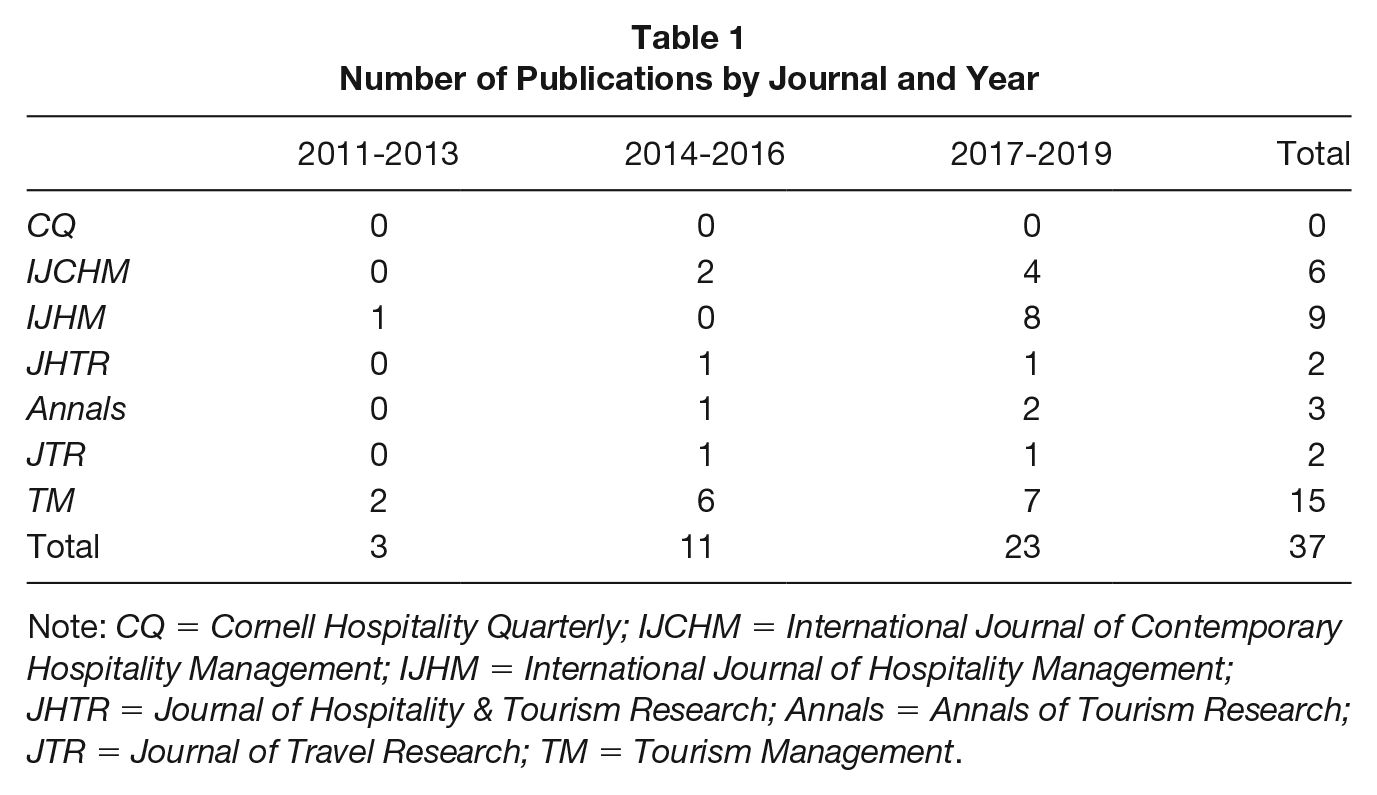
Note: CQ = Cornell Hospitality Quarterly; IJCHM = International Journal of Contemporary Hospitality Management; IJHM = International Journal of Hospitality Management; JHTR = Journal of Hospitality & Tourism Research; Annals = Annals of Tourism Research; JTR = Journal of Travel Research; TM = Tourism Management.
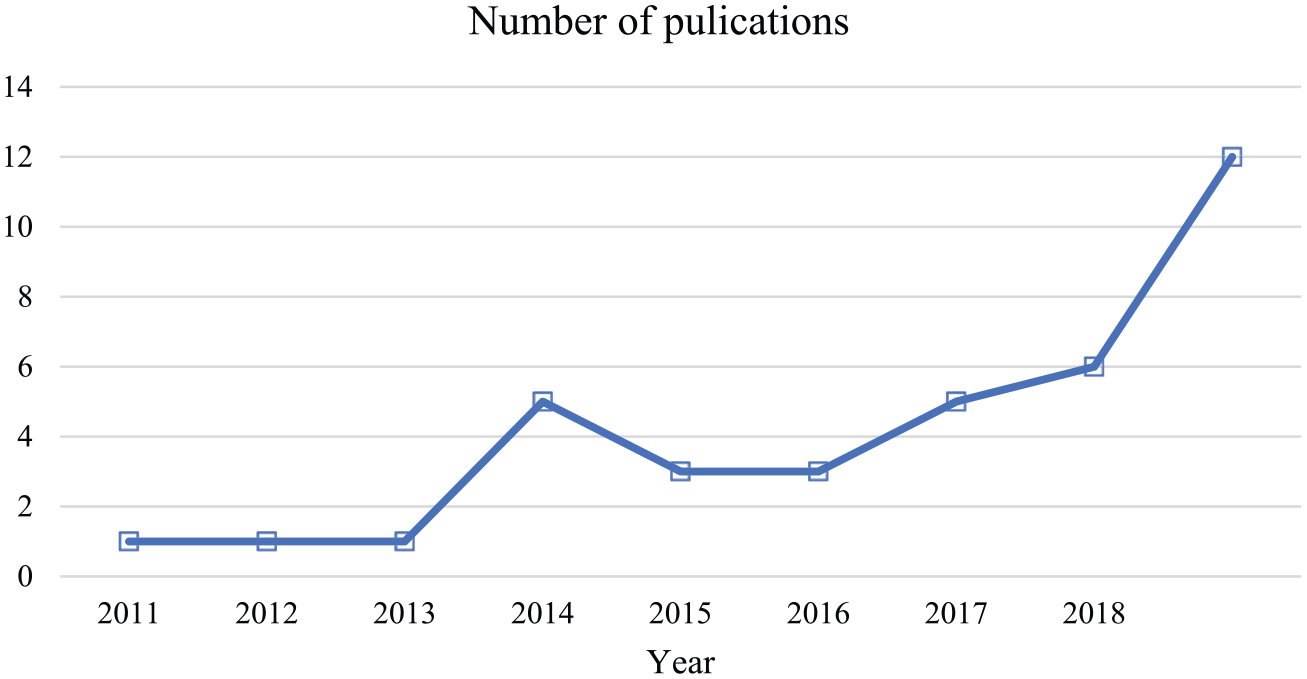
Trends of Related Publications in Hospitality and Tourism Journals
Next, we identified the research context(s) (e.g., target sector[s] or setting[s]) and methodological and analytical approaches applied in the selected studies. Whenever we classified studies differently during the grouping process, we reached a consensus through in-depth discussion and analysis. The benefits of considering each study’s context were twofold: (a) we could better understand the types of industries in which researchers were interested and (b) we could more accurately pinpoint flourishing sectors in CE research. Table 2 lists the sectors that have attracted scholarly attention; in this case, a sector refers to the segment of the hospitality and tourism industry to which a study’s major implications apply (Line & Runyan, 2012). Based on the 32 empirical articles in our sample, the two most extensively studied sectors were the hotel/lodging industry (37.5%) and destination/destination marketing organizations (DMOs; 34.4%). Some studies combined multiple settings (9.4%), including airline + hotel settings (6.3%) and hotel + restaurant settings (3.1%); others examined the restaurant/foodservice sector (6.3%). The “Other” category (12.5%) included conferences, gaming, online platforms, food festivals, and study abroad.
Analysis of Industry Sectors

Note: DMO = destination marketing organization.
Table 3 presents an overview of methodological approaches and analytical techniques adopted in the CE studies included in this review. In terms of study type, 86.5% of the chosen articles were empirical studies, and 13.5% were classified as conceptual/review research. Of the empirical sources, 62.5% adopted a quantitative approach, while 9.4% were qualitative and 28.1% involved a mixed-method design. Our findings suggest that CE research in hospitality and tourism has been largely quantitative. In terms of data collection, within the 32 empirical papers, survey methods were most prevalent (43.8%), followed by mixed methods (28.1%), user-generated content/big data (12.5%), interviews/focus groups (9.4%), and experiments (6.3%). Some articles included multiple statistical techniques; therefore, we focused on each category’s frequency count. Covariance-based structural equation modeling (SEM; count = 12) appeared most frequently, followed by multivariate techniques (count = 9; e.g., regression, multivariate analysis of covariance, and exploratory factor analysis) and bivariate techniques (count = 8; e.g., analysis of variance [ANOVA], t-test, and chi-square). Other studies used qualitative content analysis (count = 5), variance-based SEM (count = 5), and other techniques including big data analysis (count = 3). Still other studies used mixed statistical techniques (count = 3); examples include combining qualitative content analysis and multivariate ANOVA, incorporating qualitative content analysis and partial least squares, and integrating qualitative content analysis and ANOVA.
Summary of Methodological Approaches and Analytical Techniques
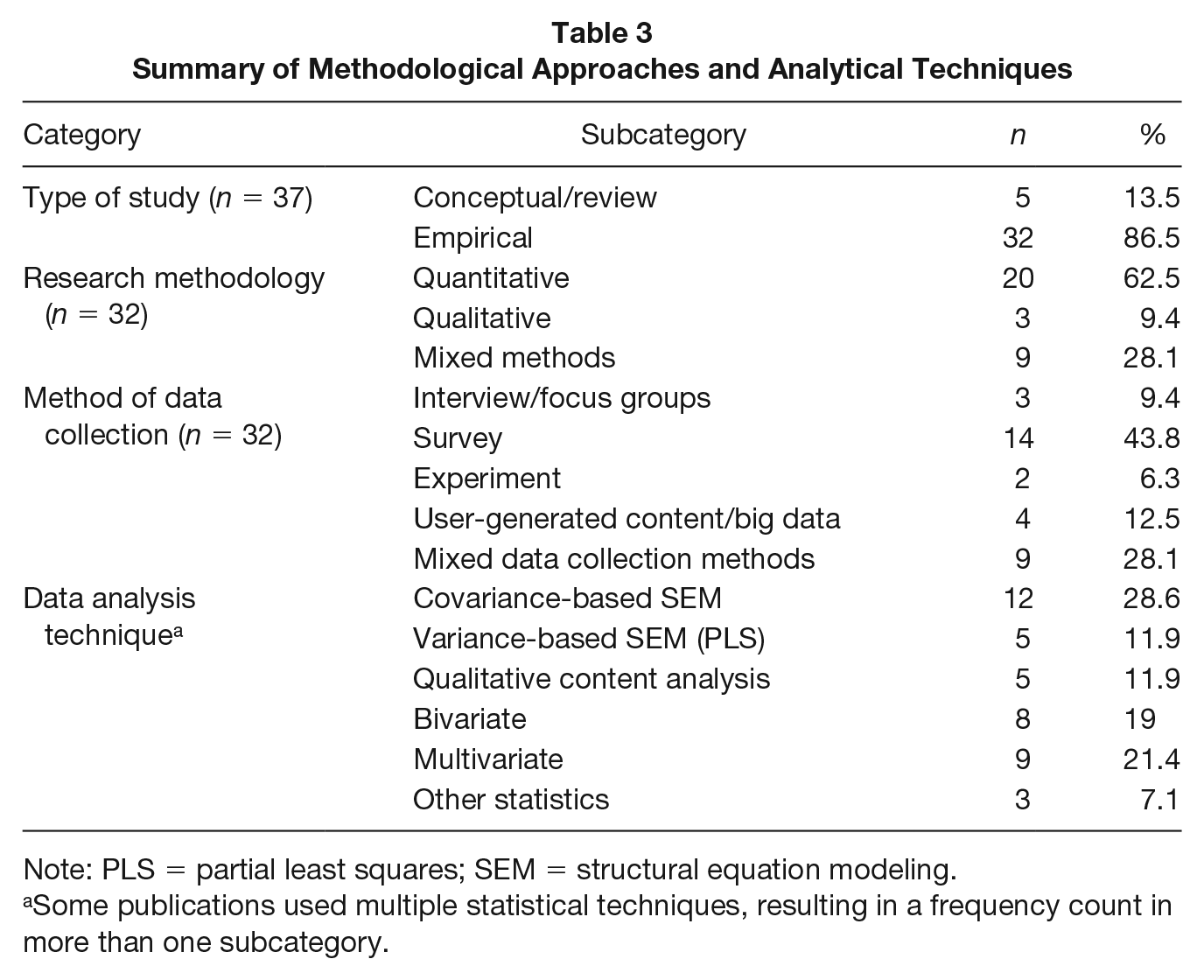
Note: PLS = partial least squares; SEM = structural equation modeling.
Some publications used multiple statistical techniques, resulting in a frequency count in more than one subcategory.
Conceptualizations and/or operationalizations of CE
CE has been conceptualized and/or operationalized in numerous ways, most often through either a unidimensional (primarily behavioral) or multidimensional lens.
Unidimensional Engagement
From a unidimensional perspective, the behavioral dimension has perhaps received the most attention (Van Doorn et al., 2010). Strictly behavioral conceptualizations have focused on various customer behaviors including positive and negative word of mouth (WOM; Ahmad & Sun, 2018; Choi & Kandampully, 2019; Wei, Hua, Fu, & Guchait, 2017), eWOM (Liu, Jayawardhena, Dibb, & Ranaweera, 2019), willingness to suggest (Choi & Kandampully, 2019), destination engagement intention (Zhang, Gordon, Buhalis, & Ding, 2018), and food engagement (e.g., tasting, talking, and learning; Organ, Koenig-Lewis, Palmer, & Probert, 2015). CE has also been measured using revenue-related indicators such as loyalty card swipes and discounts offered at concessions (Aluri, Price, & McIntyre, 2019).
Multidimensional Engagement
From a multidimensional view, CE has been conceptualized as comprising identification, attention, absorption, enthusiasm, and interaction (Harrigan, Evers, Miles, & Daly, 2017; So et al., 2014; So et al., 2016; Tu, Neuhofer, & Viglia, 2018). Ahn and Back (2018) took a similar approach by investigating CE on the basis of cognitive, affective, and behavioral engagement. Ye, Ying, Zhou, and Wang (2019) used the terms “hedonic engagement” and “utilitarian engagement” as synonyms for “perceived enjoyment” and “perceived usefulness,” respectively. Ballantyne, Packer, and Falk (2011) and Ballantyne, Hughes, Lee, Packer, & Sneddon (2018) classified engagement into experiential and reflective dimensions, while Behnke, Seo, and Miller (2014) examined passive and active engagement vis-à-vis study abroad experiences. Acknowledging that CE includes customers’ nontransactional (relational) and transactional interactions, Itani, Kassar, and Loureiro. (2019) considered customers’ purchases, referrals, social interaction, and knowledge sharing as CE dimensions. Finally, C. Li, Cui, and Peng (2017) considered CE relative to review volume, review helpfulness (as measured by votes), average review valence, and popularity ranking.
Antecedents to CE
After identifying definitions of CE, we extracted CE antecedents from the reviewed articles and categorized these antecedents into six groups: motivational drivers, relational drivers, organizational drivers, situational drivers, pursuit of special interest, and barriers.
Motivational Drivers
Individuals’ desire, prior knowledge, experiences, and subjective assessments or perceptions may drive engagement. These factors can be collectively considered motivational drivers, which constitute one of the most commonly studied CE antecedents. Research has shown that one’s motivation to learn influences reflective and experiential engagement in wildlife tourism settings (Ballantyne et al., 2011). Similarly, parents’ motivations around children’s experimental learning have been found to affect engagement at world heritage sites (Yang & Lau, 2019). Cultural motivation can also shape visitor engagement at heritage sites and the consumption of indigenous culture (Bryce et al., 2015). Another motivational driver behind engagement is recreational motivation, which affects CE through service offerings (Taheri, Jafari, & O’Gorman, 2014).
Marketing scholars have proposed that CE represents consumers’ psychological states, which arise from interactive and co-creative experiences with a brand (Brodie et al., 2011). Several hospitality and tourism studies have thus investigated experience-related factors behind CE, such as customers’ brand experiences (Ahn & Back, 2018), emotional destination experiences (Zhang et al., 2018), and prior knowledge (Taheri et al., 2014). Relatedly, visitors’ experiences with objective-based authenticity can influence their engagement at heritage sites (Bryce et al., 2015).
Subjective assessments or perceptions of a brand or destination can also motivate consumers to engage with a given brand or destination beyond purchases. Researchers have noted that customers’ perceived value is assessed on the basis of their perceptions (Itani et al., 2019). For instance, zoo/aquarium visitors’ personal values appear pivotal to their engagement with on-site conservation messages and education experiences, which in turn shape postvisit adoption of environmentally sustainable behavior (Ballantyne et al., 2018). Perceived ease of use has also been found to influence utilitarian engagement in peer-to-peer accommodations (Ye et al., 2019).
Relational Drivers
Numerous studies have examined relational drivers, or factors informing customers’ relationships with a brand/destination; one relevant aspect is relationship quality, which consists of trust, satisfaction, and commitment (Itani et al., 2019). Each of these dimensions can determine CE. For example, consumer trust has long been a primary driver of CE (Wei et al., 2017). Research suggests that when consumers have a commitment-based connection to a firm, they become engaged with that firm (Itani et al., 2019). In addition, consumers who are more satisfied with their service recovery experiences tend to exhibit CE behavior, such as providing feedback and spreading eWOM (Liu et al., 2019). Other relational drivers examined in the chosen studies include the degree of co-creation (Tu et al., 2018), level of involvement (Organ et al., 2015), self-connection with a brand (Bryce et al., 2015), and perceived cohesion and perceived intimacy (Liu et al., 2019). Ye et al. (2019) found that social interaction and social presence evoke enjoyable feelings, thereby enhancing hedonic engagement. Additionally, increased social presence can boost a peer-to-peer platform’s task performance, including its utilitarian engagement (Ye et al., 2019).
Organizational Drivers
Given that consumers can interact easily with firms and other customers through new media and social networks, organizations’ attempts to facilitate nontransactional consumer behavior are vital (Verhoef et al., 2010). Scholars have discovered that companies’ efforts to nurture consumer connection and retention can cultivate a sense of belonging and community among customers, thus facilitating value co-creation (Sashi, Brynildsen, & Bilgihan, 2019). Wei et al. (2017) identified the effects of an error management culture on consumer engagement. Similarly, management responses on websites such as TripAdvisor and Yelp have become pervasive as firms seek to influence WOM proactively and ethically (Li et al., 2017). Related service recovery efforts also affect consumers’ eWOM engagement (Liu et al., 2019).
Pursuit of Special Interests
The pursuit of individual interests is important in establishing CE. For example, research has indicated that environmental advocacy can promote CE, such as conversing with others about the importance of the environment or participating in a public land or water clean-up (Ballantyne et al., 2011). Scholars have also found that personally relevant tourism experiences positively influence CE, such as serious leisure pursuits (i.e., pursuits into which consumers invest time, effort, and often money) and heritage-related behaviors, which tend to be intangible and highly personal (Bryce et al., 2015).
Situational Drivers
Villamediana-Pedrosa, Vila-Lopez, and Küster-Boluda (2019) found that situational features, such as the time frame (e.g., posting time and posting day) and seasonality of tourism demand, influenced positive or negative engagement on a DMO’s Facebook page.
Organizational Barriers
Previous categories of antecedent concentrated primarily on factors that motivate, trigger, or lead to CE. Rather than focusing on drivers, Chathoth et al. (2014) investigated four barriers to CE: consumers, technology, strategy, and management structure and culture, which affect CE.
Consequences of CE
We examined all dependent variables of CE and placed them into four categories by conceptual meaning; namely, cognitive evaluative outcomes, affective evaluative outcomes, behavioral/intentional outcomes, and economic outcomes.
Cognitive Evaluative Outcomes
Several cognitive evaluative outcome variables have been examined as consequences of CE. For example, CE enhances customers’ service brand evaluations and brand trust (So et al., 2016). Utilitarian engagement (i.e., usefulness and ease of use) and hedonic engagement (i.e., enjoyment) were found to evoke customers’ trust on a peer-to-peer platform (Ye et al., 2019). CE also increases cognitive satisfaction at festivals (Organ et al., 2015). Reflective engagement has been shown to exert a positive impact on learning outcomes (Ballantyne et al., 2018) and serves as a strong predictor of short-term learning (Ballantyne et al., 2011).
Affective Evaluative Outcomes
Tourist engagement positively affects visitors’ satisfaction with tourism experiences (Lin et al., 2019). Similarly, student engagement can significantly influence students’ satisfaction with their study abroad experiences (Behnke et al., 2014). Engagement at a festival has also been shown to be related to visitors’ positive and negative emotions (Organ et al., 2015).
Behavioral/Intentional Outcomes
Behavioral outcomes arising from CE include advocacy (Sashi et al., 2019), customer/brand loyalty (Aluri et al., 2019; Bryce et al., 2015; Kandampully, Zhang, & Bilgihan, 2015; So et al., 2014; So et al., 2016), revisit intention (Wei et al., 2017), behavioral intention (Ahn & Back, 2018; Organ et al., 2015), actual future behavior (Organ et al., 2015), willingness to pay (Kandampully et al., 2015), and environmental behavior outcomes (Ballantyne et al., 2018).
Economic Outcomes
Scarce research has examined the economic outcomes of CE, with the exception of Kandampully et al. (2015) who proposed that customer loyalty could lead to greater firm profitability. Specifically, improving customers’ share of wallet can produce 10 times more value for a company than focusing on customer retention alone.
Key Mediators of CE
Generally, any variable playing a substantive role in relationships between independent and dependent variables can be either a mediator or a moderator (Baron & Kenny, 1986; Hayes, 2017). The reviewed studies and models tended to involve mediating variables connecting independent and dependent variable(s). Multiple intervening variables may exist in a model, rendering the relational structures more complicated even if these variables help explain relationships between independent and dependent variables. In the context of this article, mediators can either mediate relationships between CE antecedent(s) and CE, or between CE and CE consequence(s). Surprisingly, only four mediators (i.e., perceived cohesion, perceived intimacy, relationship quality, and destination emotional experiences) were considered among all reviewed empirical articles, and all four mediated the relationships between CE antecedent(s) and CE, and none of them examined mediators between CE and CE consequence(s). For example, scholars have examined the mediating effects of perceived cohesion and perceived intimacy in the relationship between self-disclosure and tourist engagement (Lin et al., 2019). Others tested the mediating effect of relationship quality in the relationship between customers’ perceived value and CE (Itani et al., 2019). Additionally, destination emotional experiences appear to mediate the relationship between tourists’ online platform experiences and destination engagement intentions (Zhang et al., 2018).
Key Moderators of CE
The selected hospitality and tourism studies examining CE involved moderators much less frequently than mediators. As moderators are often introduced to explain how relationships between independent and dependent variables change under certain conditions, moderation propositions can be difficult to conceptualize. Once empirically supported, moderations tend to define the boundaries of a proposed theory. Moderation research is therefore highly desirable from a practical and conceptual standpoint.
Among researchers who have explicitly tested for moderation effects, many have focused on consumer-/individual-level factors. For instance, Wei et al. (2017) investigated how perceived controllability and consumers’ perceived error controllability moderated the effect of error management culture on CE behaviors. Itani et al. (2019) studied the moderating effect of customers’ value consciousness on the relationship between consumers’ perceived value and CE. In addition, Yang and Lau (2019) examined how brand awareness and Generation (X, Y) moderated the effect of motivation in children’s experiential learning on engagement. Other researchers have tested the moderating effects of frequency of stay on the linkage between co-creation and CE (Tu et al., 2018). Still others have explored the effects of data breach locality on error management and customers’ attitudes and engagement behaviors (Zhang et al., 2018) or the influence of signaling on management response and CE (Li et al., 2017). The preceding review on CE, its antecedents, consequences, and key mediators and moderators is depicted in Figure 2.
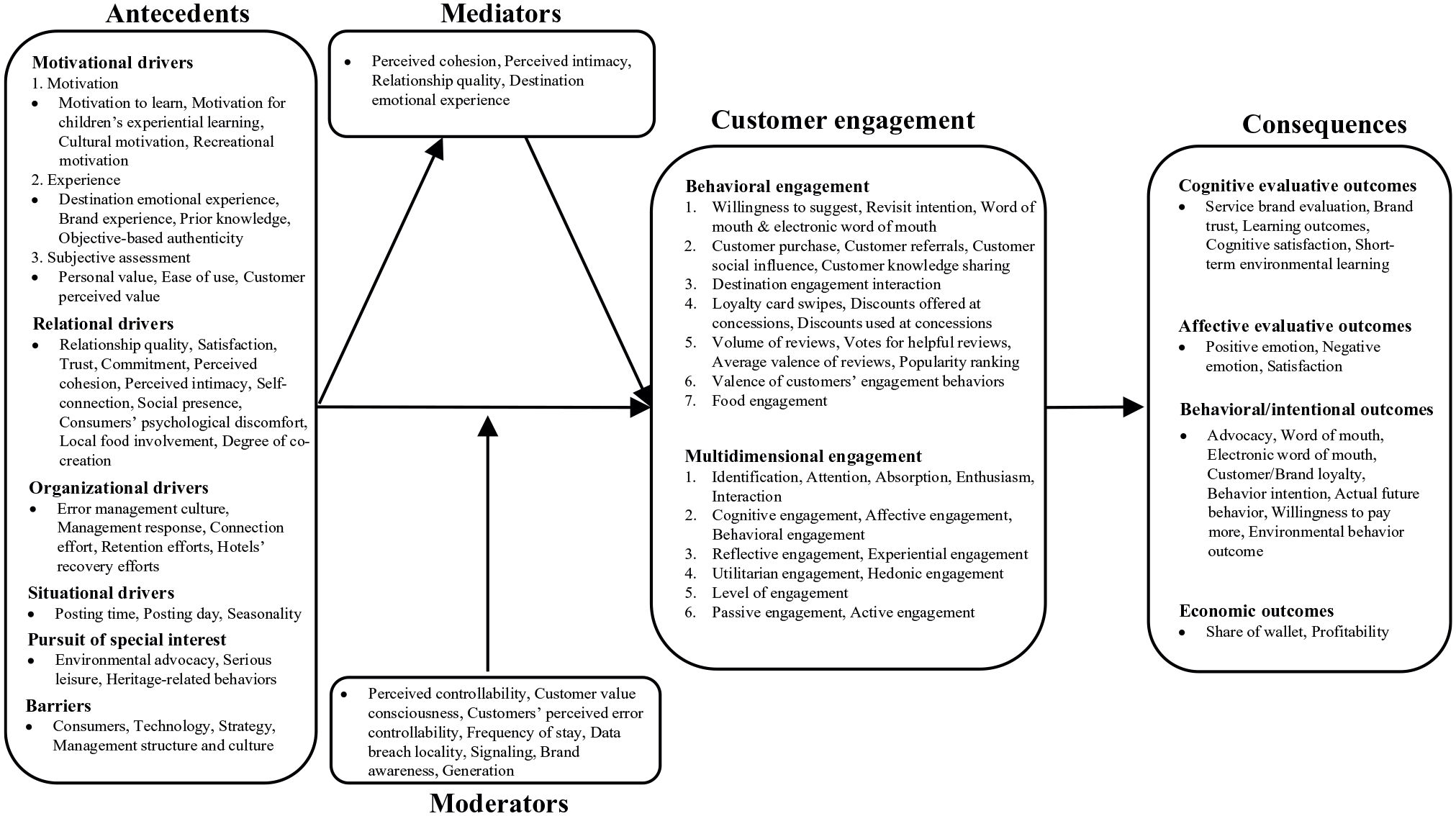
Summary Model of CE Research
Discussion
In line with the increasing attention on CE among industry practitioners and the mainstream marketing literature, the hospitality and tourism field has underscored CE as a worthy research topic. The foregoing review has synthesized select CE studies in leading hospitality and tourism journals. The ensuing discussion addresses three noteworthy areas: challenges to conceptualization, relevant theorizing attempts, and methodological developments.
Definitional Challenges
The diverse or even lack of consensus in conceptualizations of CE in hospitality and tourism raise three pertinent points. First, similar to in mainstream marketing, hospitality and tourism scholars have expressed disparate understandings of the term, leading to numerous definitions and operationalizations of the construct. In the general marketing literature, the most fervent debate around CE’s definition entails whether the concept is exclusively behavioral or both behavioral and psychological (Harmeling et al., 2017). The behavioral lens frames CE as customers’ behavioral manifestations or responses to a brand or firm (e.g., Van Doorn et al., 2010), whereas the behavioral–psychological conceptualization encompasses relevant cognitive, emotional, and/or behavioral dimensions (e.g., Brodie et al., 2011).
Although CE conceptualizations adopted in the reviewed studies can be broadly classified into the two aforementioned categories, specific measures within each category were rather inconclusive. For example, as Figure 2 indicates, hospitality and tourism researchers used 18 different measures/dimensions to gauge behavioral engagement, while six approaches to conceptualizing and operationalizing multidimensional CE were identified. Such obvious disagreements may result in conceptual challenges in advancing CE research as a more unified area of study. Irrespective of the approach to which scholars subscribe, researchers can generally agree that CE extends beyond the point of purchase. Note, Pansari and Kumar (2017) indeed defined CE more comprehensively than most by explicitly incorporating a purchase and beyond: they operationalized CE as “the mechanics of a customer’s value addition to the firm, either through direct or/and indirect contribution” (p. 295). Certain aspects of Pansari and Kumar’s (2017) definition remain debatable, such as whether CE should include buying activities as “direct contributions” or only “behaviors . . . [that] go beyond what is fundamental to the transaction” (Jaakkola & Alexander, 2014, p. 248); therefore, although their broader definition effectively expands the conceptual domain of CE, it may also potentially create more confusion. A more uniform perspective regarding what CE is, what it represents, and how it should be measured remains crucial for effective theory building and advancement.
Second, the nomological network of CE in hospitality and tourism should be clarified. Ambiguity persists not only around what constitutes CE per se but also what its antecedents and consequences are. Of particular interest are the distinctions and connections characterizing CE and related constructs, such as customers’ involvement, satisfaction, and loyalty related to with brands/firms. Third, marketing-related CE research has extended beyond consumers to consider firm-based or organizational strategies (Harmeling et al., 2017). Yet hospitality and tourism researchers continue to frame CE as customer responses in most cases. Although a customer focus may reduce confusion, a consumer-centric lens can inadvertently neglect the perspectives of corporations, organizations, and the supply side of hospitality and tourism at large. For instance, Harmeling et al. (2017) identified many approaches to designing and delivering engagement initiatives along with engagement tools marketers can use. Moreover, Brodie, Fehrer, Jaakkola, and Conduit (2019) called for a broader conceptual domain of CE “from the focal subject of customers/customers to a general actor-to-actor perspective . . . from the firm-customer dyad to relationships among multiple actors in service ecosystems” (p. 173). However, few studies have considered how to craft such initiatives and leverage accompanying tools in the hospitality and tourism context. Our study sample also revealed a dearth of studies examining engagement within more dynamic network structures. If the ultimate objective of CE is to contribute to organizations’ performance, then hospitality and tourism researchers should strive to bridge CE with strategic initiatives and organizational performance measures. Scholars should also turn their attention to various actors within business systems and networks.
Theorizing Efforts
Our systematic review of CE research indicates that hospitality and tourism scholars have conceptualized CE as stemming from various motivational, relational, organizational, and situational drivers (along with the pursuit of special interest and barriers). CE could further lead to one or more types of cognitive evaluative, affective evaluative, behavioral, and economic outcomes. Although these theorizing efforts remain largely piecemeal, they represent laudable progress toward a more comprehensive understanding of the process of CE formation and influence. Such attempts also echo mainstream marketing researchers’ efforts to construct a theory of either CE or CE marketing (Harmeling et al., 2017; Pansari & Kumar, 2017, 2018).
A closer look at CE studies in hospitality and tourism unveils a relatively limited research agenda. One area warranting more attention involves the contextual characteristics, if any, of hospitality and tourism CE studies; that is, to avoid producing purely venue-based research with limited value-added contributions, scholars must articulate why the hospitality and tourism context deserves special consideration. Doing so is particularly critical in an applied field that tends to focus on developing middle-range theories (X. Li, 2016; Merton, 2012; Merton & Merton, 1968) and offering insight into a substantive domain (Janiszewski, 2009). For instance, travel consumption is often high-involvement, high-value, and highly hedonic, emotional, and visual; as such, the topic lends itself well to online and social media discussion (Liu et al., 2019). The supply structure of travel operates such that a trip usually involves multiple service providers, some of whom are public or quasipublic entities who follow operation models distinct from for-profit businesses. Furthermore, destinations have limited control over their service offerings and tourists’ satisfaction; visitors frequently resort to other tourists’ knowledge stores and creativity (Harmeling et al., 2017) while traveling. These features can make the travel context unique in terms of cultivating CE and engaging in CE marketing. Accordingly, before borrowing conceptualizations from mainstream marketing, hospitality and tourism scholars should carefully ponder the boundaries and contextual sensitivity of these ideas. Researchers in our field must also specify how the hospitality and tourism context can inspire revisions to the operationalization of CE (So et al., 2014; So et al., 2016).
Methodological Developments
Most hospitality and tourism studies reviewed in this article used onetime, self-reported customer surveys together with SEM and related multivariate analyses. Although many authors seem to agree that CE is inherently behavioral (or involves a behavioral element), most studies only incorporated attitudinal or perceptual constructs; firm-based/aggregated economic outcomes are mostly lacking, as are field experiments using in-market customer response data (Hughes, Swaminathan, & Brooks, 2019). Other methodological lacunae include longitudinal research, experimental studies, multilevel investigations, advanced qualitative studies beyond in-depth interviews, and alternative data collection approaches such as neural and behavioral techniques. Most notably, although the wide attention to CE has arguably been fueled by technological and media developments, few CE studies featuring advanced data analytics have appeared in the hospitality and tourism literature thus far (Aluri et al., 2019).
Most research in our field has focused on micro-level relationships (e.g., individual customers’ responses and relationships with organizations or brands). Meso-level (e.g., aggregated social collectives and individual customers) and macro-level (e.g., platforms and organizations) examinations outside the individual firm/brand dyad could imbue this line of work with new insights (Brodie et al., 2019). This so-called “actor engagement” perspective implies that future CE research could include a larger group of stakeholders, including in terms of engagement among employees (Saks, 2006) and the public (Kang, 2014). Methodologically, such work would entail diverse units of analysis, different sampling approaches, and statistical methods addressing network data.
Recommendations
We would like to conclude this review with some recommendations. Given our observations, we believe that future CE research in hospitality and tourism may benefit from investigation in any of the following areas.
Attention to Context
As noted, we believe hospitality and tourism scholars should capitalize on our familiarity with contextual and substantive domains to make value-added theoretical contributions (Janiszewski, 2009). We thus propose four context-related suggestions. First, in addition to destinations, hotels, and restaurants, scholars should expand CE research to investigate other hospitality and tourism sectors such as cruises, theme parks, and airlines. Second, future CE research should be extended to explore business-to-business contexts in hospitality and tourism (e.g., event planning, conferences and conventions, and incentive travel). Particular attention should be paid to whether the nature and dynamics of CE differ among research settings. Third, cultural and economic developments can greatly influence CE (Gupta, Pansari, & Kumar, 2018); as such, a promising area for future research involves cultural differences in how (a) CE drivers affect consumers and (b) consumers exhibit CE behaviors across countries, cultures, and media environments. Other pertinent questions include the following: (a) Do consumers engage with brands/firms in a homogenous or heterogeneous manner? (b) Can variability across customers be captured by country, continent, culture, or environmental differences? Fourth, CE can occur through multiple channels and platforms within hospitality and tourism firms; conceptual research has suggested that CE “occurs under a specific set of context dependent conditions generating differing CE levels” (Brodie et al., 2011, p. 260). Accordingly, another intriguing avenue for investigation is whether channel/platform differences exist in terms of CE and the specific characteristics likely to generate such differences (Hughes et al., 2019). These questions remain relatively underexplored and therefore deserve further attention.
The Role of Customer Co-Creation and Technology
Much CE research in our field has taken technology as a backdrop, including identifying technological developments as an impetus for motivating and tracking customers’ contributions to firms’ marketing performance. We believe more remains to be discovered about the role of technology in promoting interactive, prevalent CE and true customer value co-creation. Potential research directions include deciphering how technology can empower consumers or alter their relationships with brands. Similarly, technological advances (e.g., AI, service robots, and 5G network technology) and the transformative impacts of social media on our society have made the virtual world a central focus of marketing activities geared toward cultivating or triggering CE. As such, an important managerial question concerns how to design effective engagement platforms and engagement initiatives to motivate and attract customers to participate in customer-to-customer and customer-to-company interactions. The “dark side” of CE also deserves exploration, including firm-related consequences following from CE (e.g., firm vulnerability or other unintended consequences) and how new CE platforms and initiatives may encourage customers to participate in negative WOM (Harmeling et al., 2017).
Casting a Wider Net
We believe there is value for future CE research to move beyond the current focus on dyadic interactions/relationships (i.e., customer–company) to a service ecosystem perspective, where a network of actors interact and of which dyadic relations are merely one component (Vargo & Lusch, 2017). Multiple actors exist within the tourism ecosystem (e.g., the government, DMOs, hotels, transportation providers, restaurants, residents, and tourists); in terms of the travel experience, value is co-created through multiple actors’ engagement. For instance, residents represent key stakeholders in promoting tourism, and resident attitude has been one of the most widely examined topics in the tourism literature. Early research in this vein generally framed residents as passive recipients of and respondents to tourism impacts. Residents in host destinations have since been enabled by technology and new media channels; today, they are also facing pressure due to over tourism and other tourism impacts. Such developments have compelled residents to engage in tourism development in new and more proactive ways. Their participation could certainly inspire a new line of resident engagement research. Similarly, how do other industry and government actors engage with each other (and with tourists) to co-create value within the broader tourism ecosystem?
Linking CE to Economic/Financial Outcomes
As indicated in our review, prior research has been overwhelmingly concentrated on cognitive, affective, and behavioral/intentional responses as consequences of CE. While the findings of such studies have remained fundamental in enhancing our understanding of CE, more research could examine linkages between CE and firm-level economic/financial outcomes such as occupancy, revenue, and profitability. The conceptualization of CE has also transitioned from a unidimensional to a multidimensional framework. Therefore, more psychological and behavioral CE aspects have been incorporated into relevant research. Although we support a more comprehensive understanding of CE, we believe a unique feature of CE research involves its emphasis on and evaluation of customer behavior. Such behavior will become increasingly important if CE is to be associated with marketing productivity, financial performance, and more accountable marketing strategies (Denizci & Li, 2009; Rust et al., 2004).
Conclusions
In conclusion, this study makes a number of unique and valuable contributions to the CE literature in particular and the hospitality and tourism domain in general. This study provides a systematic review of 11 years of CE research in hospitality and tourism and proposes useful guidelines for future scholarship. The results of our comprehensive analysis of 37 articles published in seven leading hospitality and tourism journals between 2009 and 2019 suggest that hospitality and tourism scholars have displayed divergent understandings, as evidenced by the numerous operationalizations of the CE construct; therefore, definitional and conceptual challenges have ensued. Along with unearthing several potential methodological developments (e.g., the use of longitudinal research, experimental studies, multilevel investigations, advanced qualitative studies, data analytics, and alternative data collection approaches), our findings indicate that CE studies in hospitality and tourism have demonstrated a relatively limited research agenda to this point. Future research requires new (or more in-depth) consideration of the unique contextual characteristics of hospitality and tourism experiences. The changing role and rapid development of technology also oblige hospitality and tourism researchers and practitioners to gain insight into which platforms and/or initiatives may effectively engage customers/actors. Finally, to advance the CE literature, future research could connect CE with various outcome variables at higher levels of aggregation, such as firm-level financial outcomes, while expanding the focus on dyadic interactions to encompass a broader perspective on the service/tourism ecosystem.
