







Abstract
Given the increasing global population, the world cannot support the current food production techniques and their detrimental effects on land use, water use, greenhouse gas emissions, and long-term sustainability issues. A key answer lies in the nature-based solution (NBS) of edible insects. Therefore, the objectives of this study are to explore the effects of regulator trust, perceived risk, and benefits on purchase activism and intent with relation to a new NBS to the food and sustainability crisis: edible insect foods. This research is grounded in the legitimacy process model. Results support the legitimacy process model and that customers use both risk and benefits in their analysis of supporting novel food products and purchase activism. The results of the study provide important theoretical support and managerial implications to this important NBS affecting the global population.
Keywords
Introduction
With the global human population expected to reach over 9 billion by 2050, food security and environmental issues related to food production and consumption are a key priority for global sustainability and policy makers. The United Nations projects that approximately 870 million people will suffer from malnutrition because of a lack of food (Baker et al., 2016; van Huis et al., 2013). This projection is even more startling when combined with projections of decreasing arable lands and increasing protein demands. According to World Bank (2019), the world arable land per capita has been continuously decreasing since the 1960s, from 0.37 ha/per capita to 0.19 ha/per capita. In addition, Speedy (2017) finds that animal-based protein consumption will increase from 233 million tons to 300 million tons by 2020. However, given the livestock industry’s impact on the environment including land use, greenhouse gas emissions, and water pollution, increasing production is not a sustainable solution for the future demand in protein to feed the increasing human population (Marberg et al., 2017).
To combat these issues, policy makers and scholars propose nature-based solutions (NBS). NBS use nature and living solutions to combat challenges in society. These solutions are adaptable to be more resource efficient and provide benefits to the environment, to economies, and to social groups (Maes & Jacobs, 2017). In adopting NBS approaches, the United Nations urges the need for exploring alternate sources of protein such as edible insects and shifting the animal-based farming practices to insect farming (van Huis et al., 2013). This is because converting animal to insect farming contributes to food security, given their high nutritional value. For examples, Chapulines have 35 to 48 g/100 g protein content compared with raw beef (19-26 g/100 g) and raw fish (tilapia; 16-19 g/100 g) (van Huis et al., 2013). Mealworm and cricket farming also have almost zero greenhouse gas emissions while beef cattle is close to 3000 g/kg mass gain (Halloran et al., 2014; van Huis et al., 2013). Furthermore, benefits can increase environmental and economic efficiencies by dual production systems such as the mulberry silkworms in Kenya (DeFoliart, 1997; van Huis et al., 2013). Simply put, the benefits of global edible insect consumption provide environmental, economic, health, and social benefits across the world, and through foodservice and tourism industries.
Unfortunately, despite their noble goals, the NBS of edible insects is not well received by customers as they view them as disgusting and inedible. Therefore, when a new sustainability strategy is introduced, it is critical to understand how all stakeholders respond to achieve greater success (Shin et al., 2018). In the entomophagy literature, customers’ mixed attitude of interest and disgust toward edible insects adds a layer of complexity to customer acceptance of insects as food (Tan et al., 2016). Therefore, it is not enough to examine attitude or intent to purchase alone, but it is critical to examine the legitimization of the NBS to the food security problem. While food scientists have successfully developed edible insect foods, research examining entomophagy, especially related to customer acceptance, business adoption, and legitimization process is considerably lacking (Baker et al., 2016; Han et al., 2017). Thus, this study grounds its argument within the legitimacy judgment model and posits: When a new NBS is proposed, what psychological process do customers go through to legitimize the new concept in an attempt to increase acceptance? Specifically, regulator trust is a key, and underresearched variable that may explain customers risk–benefit analysis to the NBS of edible insects. We first consider what are the consequences of risk–benefit analysis and how can policy makers, businesses, marketers, and educational organizations increase the customer acceptance and adoption of edible insect consumption to solve this environmental, economic, and health issue? Second, it is fundamental not only to examine both purchase intent but also purchase activism, which is a unique variable that explains customers’ heightened motivation to express their views and have an impact in the marketplace through their purchases (Paharia et al., 2014).
Based on the gaps surrounding edible insects as a NBS (Baker et al., 2016, 2018), the need to examine the legitimacy process (Bitektine & Haack, 2015) of the NBS, and the critical and underresearched variables of regulator trust and purchase activism, this research contributes both theoretically and managerially. Theoretically, by incorporating risk, benefit, regulator trust, purchase activism and intent, this study provides a more concrete avenue for the newly proposed legitimacy judgment model, which has been accepted conceptually but has received little empirical testing (Tost, 2011). Second, by proposing regulator trust as a new antecedent to risk–benefit analysis, this study extends the previous literature that focused on the attitudinal and behavioral consequences. Specifically, by examining sequential mediation effects, this study explains the link between trust on regulators and purchase intention through the underlying psychological mechanism of risk–benefit analysis and purchase activism.
This information is important for both academics and industry practitioners because it shows that strong benefit information dissemination that can overcome risk perceptions can form strong purchase activism among customers. Managerially, given the importance alternative foods such as edible insects have on sustainability and food security, research examining customers’ attitudes toward entomophagy have implications across the globe (Verbeke, 2015) such as those for food producers, food destinations, foodservice outlets, and public policy makers. The research builds on this vital food sustainability issue and contributes to the food innovation, sustainability, NBS, consumer behavior, and hospitality/tourism management literature. The results also contribute to the managerial implications that foodservice firms, restaurants, tourism sites, and marketer’s knowledge of how to increase the legitimacy and acceptance of this sustainable food solution and initiative.
Literature Review
Edible Insects as a Nature-based Food Solution
NBS highlight the intertwined fate of humans and nature. Specifically, NBS seek to manage sustainably, protect, and restore natural environments and ecosystems. These unique nature-based ecosystems can then provide benefits to current worldwide biodiversity challenges or improve aspects of human and worldwide well-being (International Union for Conservation of Nature, 2019). Challenging animal-based farming systems and transferring the current farming practices to insect-based was suggested by the United Nations with the urgency in finding innovative and alternative food sources that can create a paradigm shift in human food consumption. Edible insect farming is critical for sustainability because of land clearing and intensive farming practices (DeFoliart, 1997) as well as greenhouse gas emissions, environmental damages, and population growth (Baker et al., 2016). Given the unsustainable animal-based protein consumption of global societies (especially Western), it is imperative to incorporate edible insects into customer’s diets for both short- and long-term sustainability. The challenge, however, is to persuade consumers who think insects are disgusting into consumers who recognize edible insects as a legitimate source of food, protein, and nutrition.
This represents a critical area of research from a management perspective in understanding how customers view edible insects as a NBS and increasing their acceptance and adoption to the environmental issues currently faced in the world (Baker et al., 2016). Unlike other NBS, despite the positive motive behind it, transferring animal farming to edible insect farming is difficult due to the entomophobia and neophobia (Baker et al., 2016; Han et al., 2017). Significant entrepreneurial efforts were made since 2011, but many businesses still experience obstacles due to the lack of customer acceptance. Han et al.’s (2017) case study on edible insect food entrepreneurship highlights the importance of the stakeholder’s approach to successfully implement a paradigm shift in current customers’ food consumption to a less environmentally damaging option. Without such endeavors, NBS, even with noble motives, will fail due to the low end-user acceptance. Therefore, it is essential to understand how end-users (e.g., customers) legitimize the newly introduce and radical NBS to their day-to-day decisions.
Edible Insect Consumption Benefits
To gain greater acceptance to entomophagy, a key strategy would stress the consumption benefits (van Huis et al., 2013). However, limited research currently investigates this empirically, especially in terms of marketing and psychology (Baker et al., 2016). Moving the foodservice industry to include insect-based protein can provide the market with numerous benefits. One major benefit is that edible insects use less land compared with livestock, which occupies more than 70% of land given for agriculture. Furthermore, livestock account for 18% of the global greenhouse gas emissions including methane and nitrous oxide (Steinfeld et al., 2006). Next, insect-based protein possesses a more efficient feed conversion ratio (van Huis et al., 2013). For example, in a typical U.S. production system, beef requires 10 kg of feed to produce 1 kg of meat, pork requires 5 kg to produce 1 kg of pork, and chicken requires 2.5 kg (Smil, 2002). Insects are the most efficient as they only require 1.7 kg of feed to convert to 1 kg of insect weight (Collavo et al., 2005). Moreover, insects are nutritious and are particularly rich in high-quality protein (van Huis et al., 2013) and comparable to conventional animal protein sources such as beef and fish (Halloran et al., 2014). A review of 236 edible insects show superior nutritional and health benefits (e.g., contains high level of protein, amino acid, and micronutrients such as iron, magnesium; Rumpold & Schlüter, 2013).
Additionally, the edible insect–based food industry’s restructuring can bring economic benefits to local communities as insect farming is more cost effective than animal farming, benefiting traditionally disadvantaged groups by creating more local jobs (Han et al., 2017). In other words, there are significant economic benefits to food producers and food distributors, such as foodservice organizations and hospitality and tourism sites related to edible insects (Shin et al., 2018). With greater acceptance, the economic benefits and can become even more economically valuable. The very fact that insect rearing can address environmental, socioeconomic, and health concerns simultaneously makes insect food production for food and feed an attractive timely option in the search for a more sustainable global food supply (Halloran et al., 2014).
Edible Insect Consumption Perceived Risks
Despite the numerous benefits identified, foodservice entrepreneurs and establishments encounter customer rejections due to the disgust factor (Han et al., 2017). Western consumers, especially view insects as disgusting as this is embedded in the psychological culture (Baker et al., 2016). Second, a major risk factor relates to perceptions that eating novel foods is dangerous. This is because humans instinctively avoid unknown or harmful foods. This specifically affects Western consumers as it is not part of their culture to consume insects and therefore there are unknowns that equate to perceived risks. It is therefore critical to reduce perceptions of risk to gain higher acceptance (Baker et al., 2016).
Legitimacy Judgment Process
To understand more holistically how a new NBS can be judged, evaluated, and supported among customers, this study applies the legitimacy judgment process model as an overarching theoretical framework (Tost, 2011). Legitimacy originates from institutional theory and is defined as a social fit with a society’s shared norms (Kates, 2004). For hospitality and tourism organizations, fostering legitimacy provides justifications for social systems to survive and increase members’ loyalty (Tost, 2011). Legitimacy is based in the beliefs and values of a system, where an entity’s actions are appropriate and desirable (Suchman, 1995). Legitimacy, however, consists of individuals’ “generalized” subjective judgment, thus the judgment is based on sensemaking of multiple contributing actors (Bitektine & Haack, 2015). Understanding the legitimacy judgment process at an individual level and its intertwined nature with other actors provides a greater depth in understanding how changes in social entities influence individuals’ outcome behaviors and how one perceives the changes as acceptable for the system they are bounded within (Tost, 2011).
The legitimacy judgment process model’s theoretical tenets are developed in conjunction with individual and group level discussions. Tost (2011) asserts that legitimacy judgment formation is the first phase that is critical to develop generalized legitimacy. Generalized legitimacy is an outcome of the simultaneous evaluations of validity cues (one perceives that new changes are good for the existing societal system), instrumental evaluations (changes help individuals to reach self-defined or internalized goals), relational evaluations (changes affirm self-worth, social identity), and moral evaluations (changes help achieve prosocial motivations, ethical, and moral values). Once the general legitimacy judgment formation is established, these factors are reevaluated based on the strict cost-benefit analysis and form supporting or rejecting behaviors toward new changes (Tost, 2011).
In the context of this study, understanding customers’ legitimacy judgment process is particularly important because the current market is divided into two groups; supporting and rejecting customers (Han et al., 2017). Although some understand the environmental, health, and economic benefits of using edible insect protein, others still battle against the “disgust” factor (Baker et al., 2016). Therefore, to facilitate greater environmental impacts of using edible insects as an alternative food source, understanding how pro-edible insect food customers legitimize the innovative changes in the food system and connect their judgments to advocating and purchasing actions is pivotal. However, as is evident in sales revenue of meat substitute markets (Megido et al., 2016), rejecting customers have a propensity to nullify the United Nations’ attempts by arguing that such changes are not legitimate, especially, when their national food system currently provides abundant animal-based protein options. Exploring how and why these customers cannot legitimize the new changes in the food system can shed light into the future persuasion and marketing endeavors of entrepreneurs, local, and national governments.
Food Regulator Trust and Risk–Benefit Perceptions
The first step of legitimacy judgment formation process is to simultaneously evaluate the changes made to the present system (Tost, 2011). It is therefore theoretically important to consider the existing societal system’s components and their contributions to the individuals’ legitimacy judgment formation process. With regard to adoptions of a new food source, one of the major agents involved is food regulators. Regulator trust is defined as the willingness to rely on an exchange partner with whom one has confidence (Morgan & Hunt, 1994). Earlier scholars assert that when introducing new and complex food items, one’s judgment of risk and benefit perceptions is largely influenced by the trust and the knowledge they have for the responsible person or agency (Hansen et al., 2003). Here, risk perception refers to subjective expectation of losses and overall benefit perception refers to the opposite—subjective expectation of gains. This relationship is supported in Bearth et al. (2014) study showing negative effects of trust in food regulators on risk perception and positive effects on benefit perceptions. Therefore, we hypothesize the following:
Customers’ Motivational and Behavioral Outcomes of Risk–Benefit Perceptions
Customers’ analyses of risks and benefits are important in determining changes to the existing system such as purchase activism and purchase intention. While purchase intention is a key variable for numerous studies (Baker et al., 2014), it is even more critical to examine not only intent but also purchase activism. Purchase activism explains customers’ heightened motivation to express their views and have an impact in the marketplace through their purchases (Paharia et al., 2014). The importance of public opinion and perception in obtaining legitimacy for new technologies or genetically modified foods has been studied (Marberg et al., 2017). However, novel innovations with food, food production, and food consumption are more difficult.
In the support of edible insect foods, customers view this movement as a necessary change for the well-being of human beings’ future (van Huis et al., 2013) and can lead to the reinforcement of one’s motivation and support. Previous research examines the consequences of risk–benefit analysis and finds that individuals legitimize the process (Gardner et al., 1982). This is correlated with social activism, especially in situations where individuals see the need for advocating. For example, many customers purchase eco-friendly products as it aligns with their proenvironmental behavior (Baker et al., 2014). This is because risk–benefit based judgment influences the legitimacy of the existing system and motivates people to be more strongly engaged in such movements if they perceive more benefits from it—resulting in behavioral changes (Gardner et al., 1982). Thus, we hypothesize the following:
While purchase activism explains the mediating process between risk–benefit perceptions and behavioral outcomes, purchase intention demonstrates individuals’ final actions of purchasing edible insect food products. Research finds that risks and benefits have separate roles, albeit simultaneous evaluations, in explaining customers’ acceptance, motivation to support the new movement, and purchase intention (Costa-Font & Mossialos, 2007). Hansen et al. (2003) explain that risk perceptions originate from the uncertainty involved in the decision-making process and have a direct negative influence on purchase intention. In addition, risk perceptions significantly affect intention to purchase, especially with unknown food products (Baker et al., 2016). On the other hand, benefit perceptions have an opposite effect on purchase intention as individuals see more reasons to promote the new products by purchasing those (Bearth et al., 2014). Based on the established justification between risk–benefit perception and purchase intention, this study hypothesizes the following:
Purchase Activism and Intention
When customers believe that the changes in the existing system are legitimate, they are more engaged in purchase activism, a motivational state to exercise their purchasing power for a cause one supports, leading to greater purchasing intentions (Paharia et al., 2014). In this vein, customers hope to make significant differences (Klein et al., 2004) because they view the current system as detrimental or not sustainable for the future. Purchase activism and purchase intention occur after the legitimacy judgment is made based on the risk–benefit analysis and motivational and behavioral consequences of those legitimacy judgment fuel one’s support of the change. In the edible insect consumption context, those who see the benefits of consuming insects as an alternative food source for the future, rather than risks, are more motivated to support the social movement, resulting in greater purchase intentions (Paharia et al., 2014). Therefore, this study hypothesizes the following:
Figure 1 presents the conceptual framework of this study.
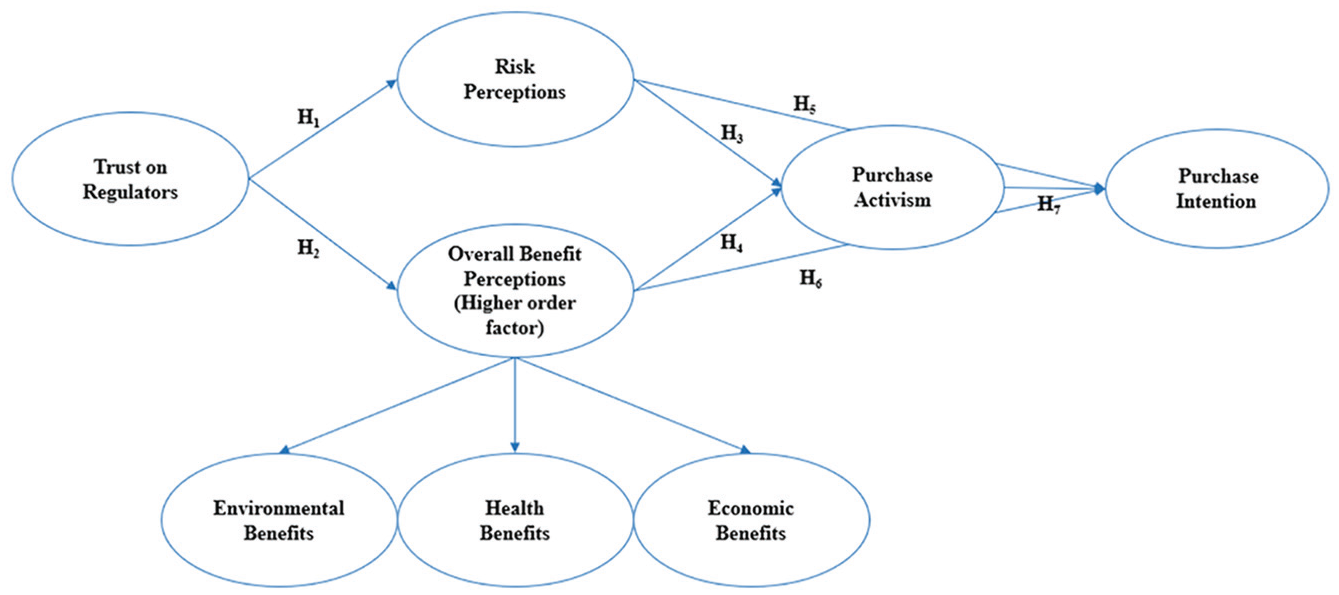
Conceptual Framework
Methodology
Data Collection
To test the proposed hypotheses, this study employs a self-administered, cross-sectional, online survey approach. A survey questionnaire was developed using the Qualtrics™ platform. The data were collected from a nationwide online marketing pool of respondents, but to control for cultural differences, this study sampled only U.S. customers. To ensure the quality of data, this study included qualification questions asking whether participants have made any types of food purchasing decisions either in retail stores (e.g., grocery stores) or foodservice units (e.g., restaurants) in the past 3 months. In addition, the survey was embedded with multiple attention check questions to screen out insincere responses (e.g., “please check “somewhat agree” or “number 2”; Y. S. Kim & Baker, 2019) resulting in a total of 423 responses.
Measurement
All constructs were measured with multiitem measurements that were validated by previous studies. Regulator trust (three items from Bearth et al., 2014), risk perception (four items; Chen & Dubinsky, 2003), purchase activism (five items; Paharia et al., 2014) and purchase intention (four items; Baker et al., 2016). The overall benefit perception was a higher order factor that consisted of three subdimensions, environmental (4 items; Lindeman & Väänänen, 2000), health (five items; Steptoe et al., 1995), and economic benefits (three items; Gursoy et al., 2004) of edible insect food products. All items were measured with a 7-point Likert-type scale that is anchored between 1 = strongly disagree and 7 = strongly agree and displayed in Table 1.
Results of the Descriptive Statistics and Measurement Model (N = 423)
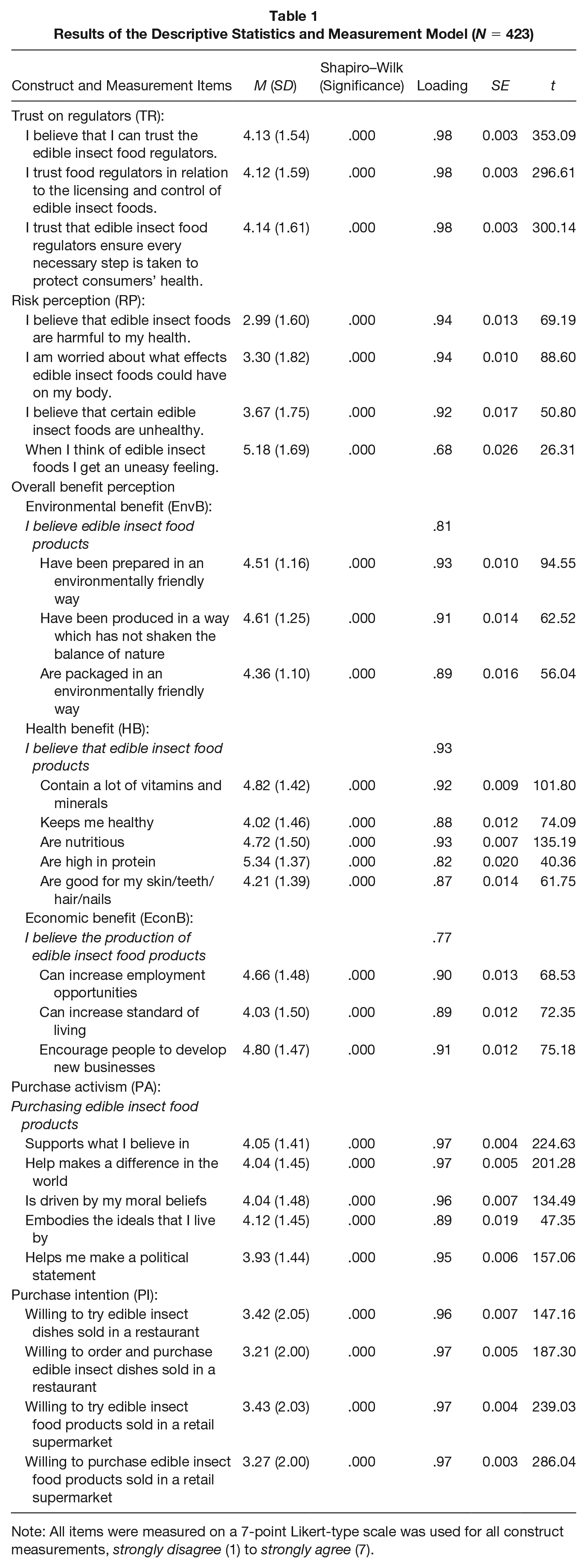
Note: All items were measured on a 7-point Likert-type scale was used for all construct measurements, strongly disagree (1) to strongly agree (7).
Analysis
To run statistical analysis on the proposed model, SPSS 25.0 and SmartPLS 3.2.7 were used. Descriptive statistics of each variable were examined as well as multicollinearity issues by checking bivariate correlations among the constructs included in the model. As suggested by do Valle and Assaker (2016), this study adopts a two-step approach and examines measurement (outer) and structural (inner) models in order. The model is tested with a partial least square structural equation modeling (PLS-SEM) method as PLS-SEM has superiority in conducting exploratory studies (Jeong & Oh, 2017), and it is commonly used in marketing, hospitality, and tourism studies (Ali et al., 2018). As the legitimacy judgment model is a recently proposed conceptual framework, albeit with a strong theoretical justification, it lacks empirical testing evidence. Thus, the exploratory approach to test the model help researchers investigate the soundness of the theoretical tenets. The study context of edible insect and complexity of the proposed model might not be completely free from data skewness and multivariate nonnormality. In this case, PLS-SEM has shown greater superiority in model testing than covariance-based SEM algorism (Hair et al., 2017).
Results
Profile of Respondents
A total of 423 responses were used for the analyses. To handle incomplete answers, this study used the most conservative approach, a listwise deletion method, to increase the data quality (Enders & Bandalos, 2001). The demographic information analysis shows that participants had almost the equal division of gender (male: 49.9%) and mean age was 40.94 (median: 37). Many of the participants indicated their marital status as single (42.3%) or married (35.5%). Household income level was predominantly between $25,000-$49,999 (34.8%) and $50,000-$99,999 (34.8%). Majority of participants completed either some college/technical, or vocation school (40.0%) or 4-year college (41.1%). In terms of their political orientations, participants’ mean was 4.59 when it was measured on a 7-point Likert-type scale anchoring between (1) extremely conservative and (7) extremely liberal.
Following J. H. Kim’s (2017) procedure, this study tested Shapiro-Wilk values to see whether the data were normally distributed. The results show significant p values in all items, indicating nonnormal distribution (p < .001). Thus, for this study, using a PLS-SEM algorism is more suitable than a covariance-based SEM method (see Table 1).
Measurement (Outer) Model Analysis
Given that all the constructs were measured reflectively, reliability, internal consistency, and average variance extracted (AVE) were examined in this phase (Ahrholdt et al., 2016). Individual items were loaded to each construct with high level of loading values ranging between .68 and .98 (see Table 1). In terms of reliability, Cronbach’s α was ranged between .88 and .98, and composite reliability was between .91 and .99, indicating that these values were higher than the recommended thresholds (Cronbach’s α and composite reliability ≥.7; (Hair et al., 2017). AVE values indicate that discriminant validity of each construct was higher than the threshold value of .5 (Hair et al., 2017; see Table 2). Additionally, this study examined the Heterotrait–monotrait ratio of correlations (HTMT) for discriminant validity assessment. The results showed that all between construct HTMT values were lower than 0.9, indicating that discriminant validity has been established among reflective constructs (Hair et al., 2017). To test for the common method variance, Harman’s single-factor model was used (Podsakoff et al., 2003; Taheri et al., 2018) and found that single factor variance extracted was 42.36% that was less than the minimum conservative threshold value of 50% (Zameer et al., 2019).
Correlation Matrix and Measurement Quality
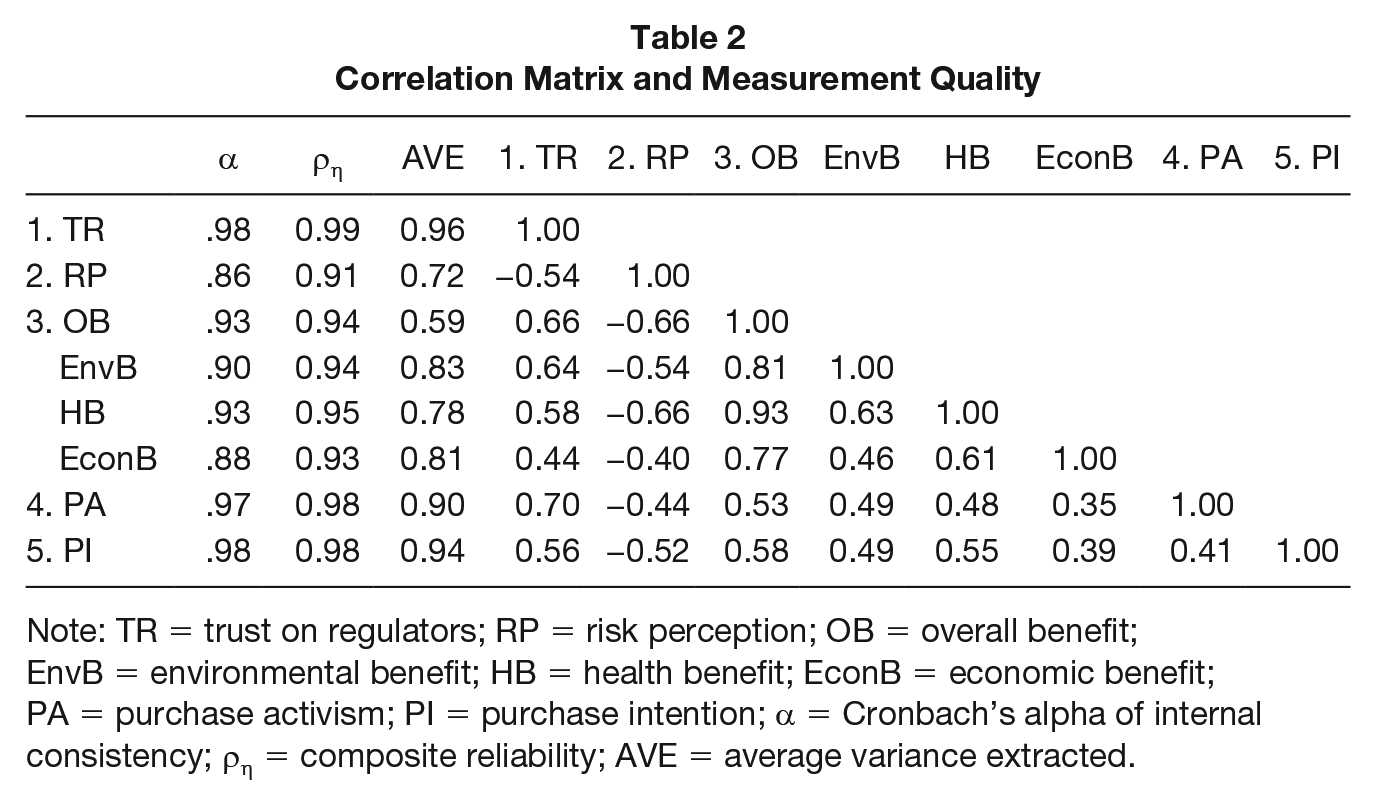
Note: TR = trust on regulators; RP = risk perception; OB = overall benefit; EnvB = environmental benefit; HB = health benefit; EconB = economic benefit; PA = purchase activism; PI = purchase intention; α = Cronbach’s alpha of internal consistency; ρη = composite reliability; AVE = average variance extracted.
Structural (Inner) Model Analysis
Prior to running the proposed path model, variance inflation factors (VIF) was examined between construct correlation coefficients to make sure that the data were free from multicollinearity issues. The results show that all between construct correlation coefficients were lower than .80 level and VIF factors were lower than 5.0 (Jeong & Oh, 2017; see Table 2). These indicate that the data are free from the multicollinearity concerns. Structural equation modeling results demonstrate the variance explained importance and significance of path coefficients together with effect sizes of each coefficients.
As a result, this study finds that risk perception and overall benefit perception explain 29% and 43% of variance respectively. Purchase activism and purchase intention R2 values were .29 and .37. The hypotheses testing results show that the established food regulator trust was negatively related to overall risk perceptions (β = −.54, t = 12.42; p < .001, ƒ2 = .41). However, regulator trust had a positive relationship with the overall benefit perceptions (β = .66, t = 20.04; p < .001, ƒ2 = .77). These results indicate support for Hypotheses 1A and 2A, rejecting Hypotheses 10 and 20. In PLS-SEM, effect sizes are demonstrated via ƒ2 and the sizes are considered as small (.005), medium (.01), and large (.025) (Kenny, 2016). Risk perception negatively affects purchase activism (β = −.17, t = 2.75; p < .01, ƒ2 = .02), whereas the overall benefit perception is positively related to purchase activism (β = .42, t = 6.56; p < .001, ƒ2 = .14), confirming Hypotheses 3A and 4A, rejecting Hypotheses 30 and 40. The direct path between risk perception and purchase intention also shows a negative relationship (β = −.24, t = 4.70; p < .001, ƒ2 = .05), yet, the overall benefit perception indicates a positive relationship with purchase intention (β = .36, t = 6.95; p < .001, ƒ2 = .11). These supported Hypotheses 5A and 6A and rejected Hypotheses 50 and 60. Finally, Hypothesis 7A is supported (rejected Hypothesis 70), given the path coefficient between purchase activism and purchase intention shows significance at .05 level (β = .11, t = 2.40; p < .05, ƒ2 = .01; see Table 3 and Figure 2).
Structural Equation Model Results
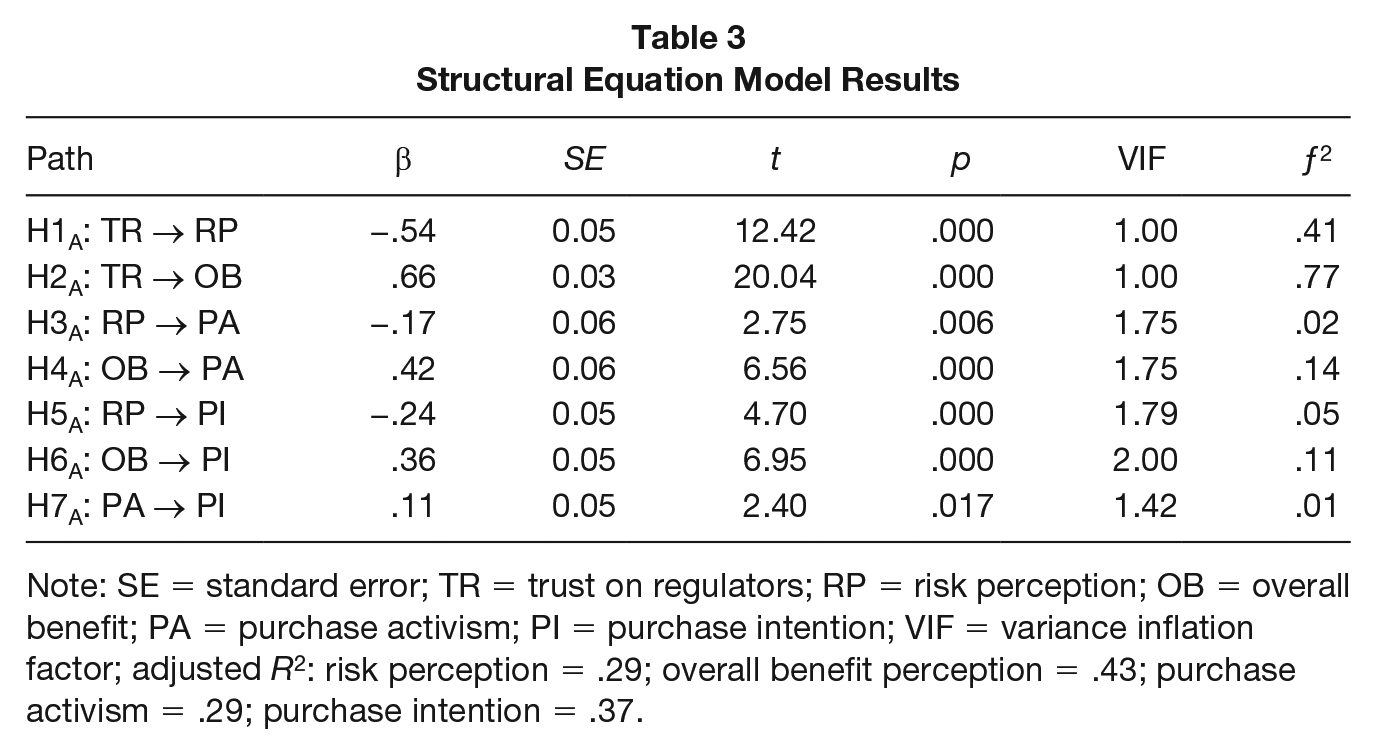
Note: SE = standard error; TR = trust on regulators; RP = risk perception; OB = overall benefit; PA = purchase activism; PI = purchase intention; VIF = variance inflation factor; adjusted R2: risk perception = .29; overall benefit perception = .43; purchase activism = .29; purchase intention = .37.
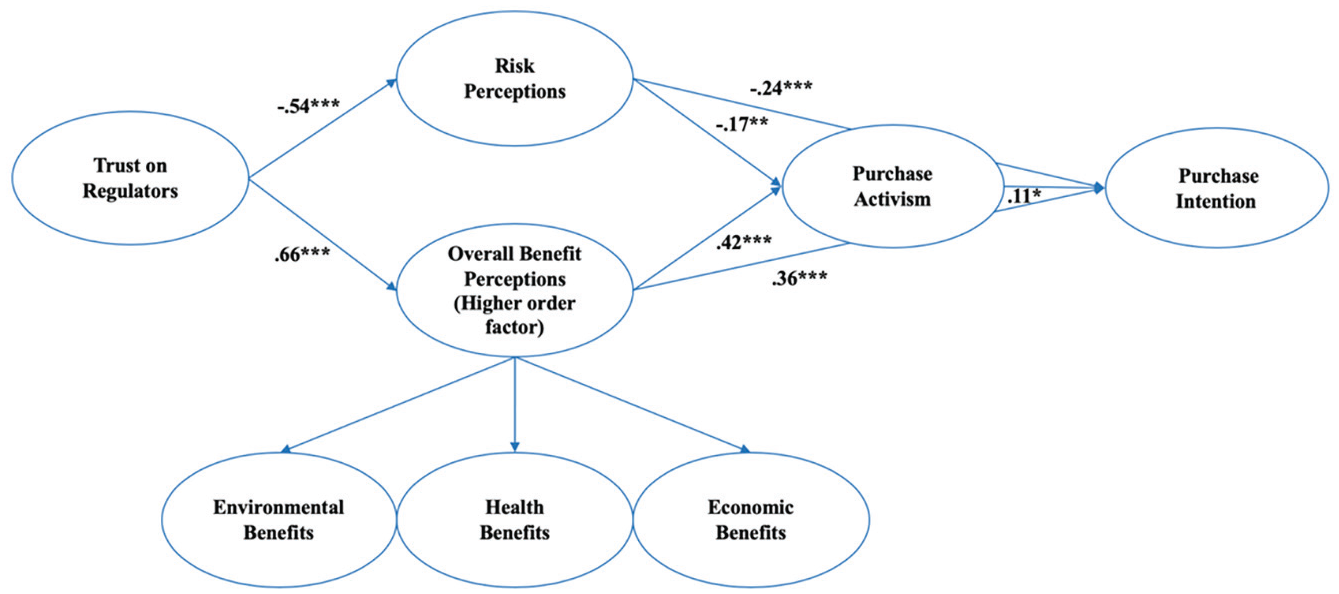
Hypotheses Testing Results
Mediation Testing
Although the mediation effects of risk–benefit perceptions and purchase activism were not hypothesized, testing the relationship can yield important theoretical findings, given the legitimacy judgment model lacks empirical evidence. Following approaches used in the previous studies (Jeong & Oh, 2017; Preacher & Hayes, 2008), this study uses the simultaneous mediation test to examine the complexity involved in the proposed model. The mediation analysis results show that risk (β = .09, t = 2.47; p < .05) and benefit perceptions (β = .28, t = 5.51; p < .001) significantly mediate the paths between regulator trust and purchase activism. Risk (β = .13, t = 4.18; p < .001) and benefit perceptions (β = .24, t = 4.18; p < .001) also act as mediators in the paths between regulator trust and purchase intention. The sequential mediation effects of risk/benefit perceptions and purchase activism on the relationship between regulator trust and purchase intention indicates that the sequential mediation effect is only made through the benefit perceptions (β = .03, t = 2.09; p < .05), rather than risk perceptions (β = .01, t = 1.65; n.s.; see Table 4).
Mediation Analysis Results
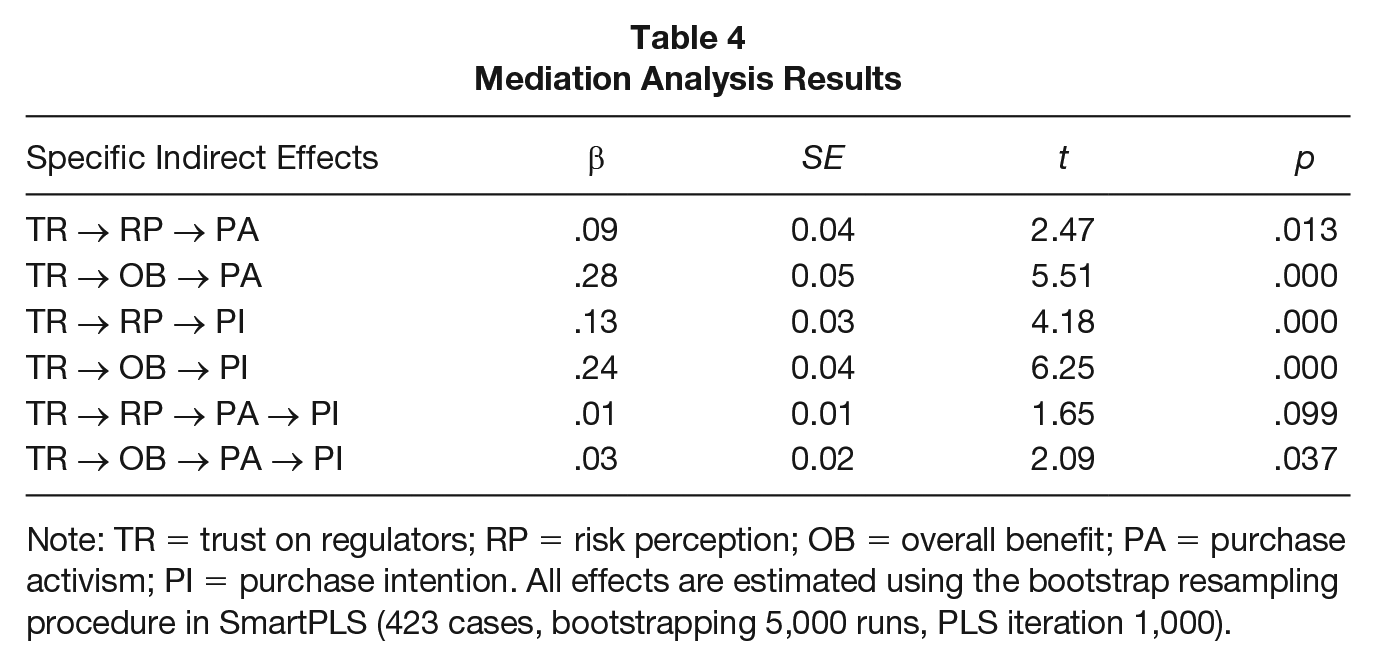
Note: TR = trust on regulators; RP = risk perception; OB = overall benefit; PA = purchase activism; PI = purchase intention. All effects are estimated using the bootstrap resampling procedure in SmartPLS (423 cases, bootstrapping 5,000 runs, PLS iteration 1,000).
Discussion
The goal of this study was to examine the application of customer legitimacy judgment process model and to assess how new and radical NBS are perceived, evaluated, internalized, and acted upon by customers. To be specific, this study explores the effects of perceived risk, benefits, purchase activism, and purchase intentions with relation to a new NBS, edible insects. The results reveal that the legitimacy judgment process model provides a suitable framework in explaining how individuals establish legitimacy judgment on new NBS and such process influences customers’ motivational and behavioral outcomes. Given that all of the hypotheses were supported and medium to large effect size of each path (ƒ2 = .01-.77) were recorded, this study supports that the legitimacy judgment process is critical in terms of understanding why and how customers support edible insect food products, an NBS that has low-customer acceptance. When edible insects for human consumption was first introduced to Western countries, customer acceptance was minimal due to individuals’ inability to separate harmful versus edible insects (Baker et al., 2016, 2018). From NBS perspectives, this is a major barrier, because NBS cannot be successfully implemented without entrepreneurial and customer support (Han et al., 2017). However, research endeavors often focus on customers’ acceptance only, rather than understanding how multiple actors in the society contribute to customers’ legitimization judgment of certain changes in the system. As shown in this study, food regulator trust significantly effects risk–benefit perceptions, indicating that the legitimacy judgment did not come naturally to customers’ minds in separation of what had been existed in the societal system (e.g., foodservice system).
Although previous studies specify that legitimacy judgment directly influences behavioral outcomes such as purchase intention (Bearth et al., 2014), this study also finds that risk–benefit analysis may stimulate an individual to be more motivated about a social movement, such as NBS, especially when they realize more benefits than risks. As Paharia et al. (2014) elaborate, purchase activism is situation and context specific. Thus, the results from this study support the strong positive effects of benefit perception on purchase activism and the negative effects of risk perception on purchase activism. It is important to note that this might not be universal across all contexts and societal ideologies (Klein et al., 2004). In our study context, however, this is particularly relevant because using edible insects as an alternative food source was initially proposed to offset environmental damages the current foodservice system is creating.
Finally, since the legitimacy judgment process model was proposed at a theoretical and conceptual level, although we did not hypothesize the mediation effects, this study also examines the sequential mediation effects of risk–benefit perceptions and purchase activism on the relationship between trust on regulators and purchase intentions. The results find that regulator trust influences purchase activism and purchase intention when risk–benefit analyses take place. These results show that risk–benefit analyses are important means to establish legitimacy judgment, especially toward the new changes such as edible insect food. The interesting finding was that risk perception did not sequentially mediate the proposed relationships; however, the relationships among constructs were mediated by benefit perceptions and purchase activism. This result contradicts some research outcomes where negative information is processed better than positive information). However, other researchers (Lei et al., 2008) explain that such results were due to the customers’ rare encounter with the negative product information in general, rather than the valence of information itself. Consequently, due to the rare nature of the information, conflicting results may occur. Therefore, the findings of this results add more rationale for the latter argument and explained that risk–benefit information were simultaneously evaluated (Tost, 2011) and overall benefit perceptions (more positive information) contributed better to the bridging of existing trust on the system (trust on regulators) and motivational (purchase activism) and behavioral outcomes (purchase intention).
Conclusion
Theoretical Implications
Using edible insects, a NBS that can dramatically reduce negative environmental effects (e.g., land clearing farming practices, reducing biodiversity), can supply a nutritious, high protein, sustainable alternative. Unfortunately, in order for the solution to be accepted, there is significant research and education that needs to occur. As a type of NBS, edible insects for human consumption will be a critical sustainable initiative for the global population and the environment surrounding them. Understanding how customers (especially Western societies), may be more likely to adopt entomophagy is the first key step in adoption of this vital NBS (Baker et al., 2016). Specifically, most research on edible insects is from a food science perspective, and there needs to be more research that examines consumer behavior, psychology, and business perspectives. As such, this research first contributes by examining edible insects from marketing and management perspective, specifically through the organizations that will serve customers, hospitality and tourism industries.
Second, previous studies identify that customers’ evaluations on risk and benefit of food are not accurate, due to heavy corporate food marketing activities on media (e.g., TV influence on fast food consumption; Russell & Buhrau, 2015). This leads to poor judgment of benefit and risk analysis on food (e.g., significant discrepancies about healthy food perception between American consumers and nutritionists; Quealy & Sanger-Katz, 2016). Thus, it is important to unravel what contributes to risk and benefit judgement on food, especially a radical food source. However, the previous literature is mainly concentrated on the consequences of risk–benefit evaluation. The findings of this study indicate that when introducing new and radical NBS food, trustworthiness of regulators play an important role that influences the analysis of risk and benefit of such food. Unfortunately, there is very little regulatory framework that exists in most Western countries regarding the production/consumption regulations (Baker et al., 2018). As implied in the legitimacy judgment process model, customers believe information from trusted sources, it is therefore critical to investigate the role of multiple participating actors such as existing trust on food regulators. This study finds that in order for a new food product to be legitimized, there needs to be support and trust from regulators, and not just from the specific restaurant or tourism destination that serves the food. This is consistent with the findings of Bearth et al. (2014). Additionally, trust has been typically used as an outcome variable, rather than an antecedent. This study highlights that trust can be used as a basis for risk–benefit analysis because of the nature of food consumption context—such that food can only be in the marketplace when it passes the regulatory inspections. For that reason, examining the trust level for regulators and how customers legitimize new source of food provides meaningful theoretical implications to the body of literature.
Third, this study applies the legitimacy judgment process model to the context of edible insect food consumption and provides more concrete avenue for model testing by providing operationalization of relevant variables in the model. Although Tost (2011) proposes some relevant variables to test the theoretical model, the legitimacy judgment model is introduced and developed at an abstract and theoretical level. Establishing literature for a theoretical model with more concrete level variables contribute to the development and increased predictability of a theory (Zikmund et al., 2013). Moreover, this study builds on theory by empirically testing the legitimacy judgment process model. Not all NBS are perceived positively. Achieving greater sustainability via NBS requires innovation and sometimes it is radical. Without convincing the stakeholders, especially customers, to be part, the NBS would not be effectively implemented (Han et al., 2017). The legitimacy judgment process model helps understand customers’ psychological mechanisms and predicts how customers accept the new change. Given that most human-food relationships are acquired, they can be altered both positively and negatively (Halloran et al., 2014). For hospitality/tourism organizations, fostering legitimacy provides justifications for social systems to increase interest and purchase intention. The importance of legitimizing new food technologies has been examined (Marberg et al., 2017), however, this has not been examined with novel food innovations and food production/consumption.
Last, by testing the sequential mediation effects of risk, benefit perceptions, along with purchase activism as mediators, this study results provide a better understanding of the trust on regulators and purchase intentions link. Although Bearth et al. (2014) find significant positive impact on food additive acceptance, this study does not suggest what underlying psychological mechanisms pertain to trigger positive attitudinal outcomes. The findings of this study build on Bearth et al. (2014) and Paharia et al. (2014) by explaining that trust on regulators works as a foundation for risk benefit analysis and only when benefit perception overrides risk perception, new source of food gains strong meanings and influence customers’ desire to exercise their purchasing power (activism) to promote new NBS trends. The vast majority of Western customers react with disgust toward the prospect of eating insects (Baker et al., 2018). In order to mitigate risk, marketers and product developers need to understand how customers form risk and benefit perceptions about new food products especially when the new NBS significantly helps with reducing environmental footage and increasing biodiversity. Therefore, this research contributes theoretically by finding that risk–benefit analysis not only affects purchase intention but also purchase activism, which has previously not been examined in the management, hospitality, and tourism literature.
Managerial Implications
The current NBS research is mainly occurring at a policy level, rather than firm and/or customer levels (Cohen-Shacham et al., 2016). Thus, providing a product legitimacy judgment framework for the firms that practice NBS can help the world achieve greater success with NBS. Hospitality and tourism industries, where the food production and consumption are vital parts of the industry, can benefit from this study results. Employing the framework used in this study can be helpful in investigating the legitimacy strategies implemented by firms in the emerging food sectors, especially related to novel foods and radical/innovative NBS. While there is significant work to be done in legitimizing perceptions toward human consumption of edible insects, there are foodservice establishments within the United States that are breaking down the boundaries with customers, creating food and tourism experiences that not only entice customers to try edible insects but gain repeat customers and increase positive word-of-mouth. These include upscale and quick service restaurants, food products such as Chapul Cricket Bars and Chirps Chips, and special events featuring edible insect products and educational initiatives (Baker et al., 2018).
From a managerial perspective, companies should focus on the benefits of edible insects, including health and sustainability. Eating insects contributes toward the goals of sustainable consumption by reducing the negative environmental impacts of food production on a global scale. As such, an important implication is to target environmentally conscious individuals as these customers are more likely to purchase products that align with their pro-environmental behavior (Baker et al., 2014). In another vein, an important managerial implication is to target customers who are health conscious as edible insects are a low cost, high protein, nutritious food source. One key strategy in motivating customers to substitute transitional meat with insect protein is to stress the low environmental impact. This result can be further applied to the food related NBS that tap into the novel food realm.
Third, entrepreneurs and hospitality and tourism businesses need to pursue strategies designed to acquire social acceptance and recognition for the emerging food-solution of which they are a part. One of the major barriers to food security to understand and evolve customers’ perceptions about food and food systems. This not only involves the customers but also the businesses themselves, regulators, marketers, educators, and management. In this vein, it is critical to build trust with not only the specific company but also with regulators in order for the novel food consumption to occur. Furthermore, firms should seek to use organizational strategies to gain trust including using language that appeals to stakeholders and more effectively communicating the benefits, specifically related to the sustainability and NBS. Legislation needs to include insects as food and feed to improve existing national policy, legal frameworks, and legitimization of this NBS.
Limitations and Further Research
This study has limitations and suggestions for future research. First, the research examines a key NBS as proposed by the United Nations, edible insects. Future research should continue to investigate other NBS. Furthermore, this research examines the legitimacy judgment process model with relation to risk, benefits, and purchasing. As this research finds, it is critical to minimize perceptions of risk and increase perceptions of benefits. Future research should also examine how and why sensory cues, such as food packaging, description, and marketing materials can be created to increase acceptance (Baker et al., 2018). Last, additional research should also examine the critical role of legislation, education, and knowledge on acceptance of novel food products.
Summary
With predictions of increased population growth, unsustainable food practices, and food scarcity facing the world, humans will need to reconsider our food choices and adapt to serving and consuming alternative food sources. The benefits of edible insects are known, products and foodservice establishments exist, but customers are reluctant to consume insects. This research uses the legitimacy process model to ground the examination how customers’ perceptions of regulator trust, risks, and benefits affect their purchase activism and purchase intent. Results support the legitimacy process model and that customers use both risk and benefits in their analysis of support of novel food products and purchase activism. The results of the study provide important theoretical support and managerial implications to this important NBS affecting the global population.
