







Abstract
The research aims to examine how positive review disconfirmation (i.e., a positive deviance between a hotel consumer’s poststay evaluation and the average review rating by prior consumers) affects subsequent consumers’ willingness to post online reviews and their own review ratings. By employing an experimental research method, this study reveals that positive review disconfirmation increases hotel guests’ willingness to post online reviews, and increases their online review ratings through the mechanism of concern for others, demonstrating an act of altruism. In addition, comparatively the positive review disconfirmation effects are stronger when the variance of prior review ratings is smaller. This study enhances the online review social influence literature, and the consumer’s altruistic motivation of posting online reviews.
Keywords
Introduction
As a source of word-of-mouth (WOM), online reviews have been found to play an important role in product sales (Ye et al., 2009). Increasingly emerging studies counter that consumers’ online review behavior could be socially influenced (Y. C. Ho et al., 2017; Y. J. Lee et al., 2015; H. Li et al., 2019; H. Li et al., 2021; H. Li, Meng, Jeong, et al., 2020; H. Li, Meng, & Pan, 2020; Wang et al., 2018). Consumers may be exposed to reviews written by previous customers when they intend to post their own reviews on a product review page after purchasing. For example, Moe and Schweidel (2012) reported consumers are likely to modify their own evaluations after checking prior consumers’ opinions. In addition, a few prior studies revealed that an individual’s online review behavior can also be affected by his or her production and consumption experience (Dellarocas et al., 2010; Y. C. Ho et al., 2017; H. Li, Xie, et al., 2020). Therefore, both an individual’s own product/service consumption experiences and others’ opinions of the same product/service may affect consumers’ online review behavior simultaneously.
Extant literature has suggested several research gaps related to consumers’ online review behavior. First, limited research has been conducted on the social influence of consumer online review behavior and the relevant factors which may interfere with the above influence, especially for tourism and hospitality products. Second, although previous studies suggest that consumers’ product experiences and other consumers’ prior reviews could both influence online review behavior, the interaction effects (i.e., disconfirmation between one’s own evaluation and prior average online review ratings) have rarely been mentioned. Third, nowadays online review manipulation becomes more and more prevalent (Luca & Zervas, 2016; Plotkina et al., 2020). It is unsurprising that many companies post fake and negative reviews for their competitors. For example, it is reported that approximately 10.3% of products have been subjected to online review manipulation (Hu et al., 2012). This phenomenon is also severe in the hospitality and tourism industry, as nearly 16% of restaurant reviews on Yelp have been deemed suspicious (Luca & Zervas, 2016), and around 1.4 million fake online reviews were submitted to Tripadvisor in 2018 (Tripadvisor, 2019). Therefore, hospitality and tourism businesses are possibly suffering from the attack of negative fake reviews, and correspondingly consumers may experience positive disconfirmation (i.e., a positive discrepancy between one’s product evaluation and average prior review ratings of the same product). Studies on review disconfirmation and its influences are still very limited in the existing literature; positive review disconfirmation are even scarcer and deserves more academic investigation, particularly under the current situation of increased review manipulation and negative fake reviews from competitors. It is unclear how positive review disconfirmation would influence consumers’ willingness to post online reviews and their review ratings, what motivates consumers to post online reviews under this condition, and how specific motivation influences consumers’ willingness to post online reviews when they have positive disconfirmation with the product/experience.
Therefore, the study aims to test the impact of positive review disconfirmation on hotel guests’ willingness to post online reviews and their ultimate review ratings. In particular, the following three research questions will be answered in this study: (1) Does positive review disconfirmation affect hotel guests’ willingness to post online reviews and their review ratings? (2) What is the hotel guest’s motivation to post online reviews when they encounter positive review disconfirmation? and (3) How does variance in prior review ratings moderate the influence of disconfirmation on hotel guests’ willingness to post online reviews and their ultimate review ratings?
Literature Review and Research Hypotheses
The Influence of Review Disconfirmation
In the current study, review disconfirmation refers to “the difference between a consumer’s own evaluation and the pre-purchase expectation set up by other consumers’ prior average review rating online” (Li, Meng, & Pan, 2020, p. 3686). Review confirmation, on the other hand, denotes that an individual’s evaluation is consistent with other consumers’ prior average review rating. Particularly, positive review disconfirmation in this study signifies that the consumer’s own evaluation is better than the average review rating of prior consumers of the same product/service.
According to the social influence theory, individuals may experience conformity pressure (Deutsch & Gerard, 1955), the need of uniqueness, and normative conflict (Fromkin, 1970; Packer, 2008) in a social group, with the dominating force contingent on situational characteristics. In terms of conformity needs, people tend to conform to social pressures coming from others (Darley & Latane, 1968). However, when individuals perceive that they are extreme homogeneous with others, they may be motivated by uniqueness-seeking and thus take measures to reclaim their uniqueness and reduce negative affect induced by a lack of differentiation (Cheema & Kaikati, 2010). Therefore, when a consumer’s product experience is consistent with the majority of other consumers’, he or she may sense excessive similarity and become increasingly motivated to make himself or herself distinct. Correspondingly, the consumer can possibly attain the objective of remaining unique in the online review community by choosing not to submit a product rating or review at all.
In addition, people are likely to show strong normative conflict under the following conditions: (1) they encounter a large disconfirmation from the group average; (2) they are certain about their judgments; and (3) they believe the group’s opinion is misleading and may be even harmful (Hornsey et al., 2002). For example, a consumer would experience normative conflict when a product failure occurs and the personal product experience simultaneously deviates to an extreme degree from that of most other group members (Sridhar & Srinivasan, 2012). In this case, the individual tends to overlook conformity pressure and instead behaves altruistically even if his or her actions deviate from the majority (Hornsey et al., 2002), especially when he or she believes that the actions will benefit the group (Louis et al., 2004). Packer (2008) pointed out that normative conflict induces greater dissenting behavior when people are given the chance to address the reason behind their deviation. In the current study, when a consumer’s product experience largely deviates from the majority, the consumer is expected to encounter a high degree of normative conflict. By providing a distinct online review rating (compared with the majority) based on his or her own personal product experience, the consumer reduces normative conflict and has a motive to correct seemingly inaccurate online ratings provided by other consumers (Sridhar & Srinivasan, 2012).
Moreover, in a study published in Science, Muchnik et al. (2013) designed a field experiment on a social news website and found that prior news ratings significantly influence subsequent rating behavior. Specifically, down-rated comments (i.e., those eliciting positive disconfirmation between prior reviewers’ evaluations and the perceived quality from the focal reviewer) were likely to be down-rated, but this was offset by a larger correction effect (i.e., a higher probability of being up-voted). This correction effect neutralized the social influence of down-rated comments. Similarly, correction to biased online ratings was also likely to occur when a consumer’s perceived product/service quality disconfirmed the average rating of existing online reviews. Specifically, to correct biased, misleading, or inaccurate online review ratings, a consumer is likely to rate a product above his/her perceived product quality when encountering positive disconfirmation or below his or her perceived product quality when encountering negative disconfirmation. In addition, Qazi et al.’s (2017) study showed that review disconfirmation positively influences individuals’ sentimental words use in their online reviews writing. By using a mixed method of experimental design and econometric modeling, H. Li, Meng, and Pan (2020) also demonstrated that review disconfirmation affects the use of emotional words in online reviews; in particular, individuals are more likely to use more positive emotional words with the increase of positive disconfirmation. On this basis, the following research hypotheses are proposed:
Moderating Effect of Prior Review Ratings’ Variance
In addition to the average review rating and the number of reviews, a large number of online review platforms and electronic commerce websites start to show the distribution of review ratings by all past consumers. The dispersion degree of review ratings’ distribution is measured by the ratings’ variance. A large rating variance is associated with a product that many consumers possess different or opposite attitudes and the quality of which is highly uncertain (X. Li, 2018; Sun, 2012).
Confidence refers to “a cognitive component that reflects the degree of conviction or certainty with which a belief or attitude is held” (Krishnan & Smith, 1998, p. 276). Therefore, it is reasonable to contend that consumers can hold the same attitude valence but may exhibit different levels of confidence of the attitude. In the online review context, a consumer’s level of confidence in his or her initial opinion of a product (i.e., the opinion coming from reviews posted by past consumers) can be measured by the dispersion (i.e., standard deviation) of other consumers’ prior review ratings (Yin et al., 2016). Review rating dispersion reflects the consensus among prior consumers, and a high degree of dispersion indicates low agreement among customers (Moe & Trusov, 2011). According to Petrocelli et al. (2007), lower agreement in evaluations leads consumers to be less confident in the validity of average review ratings, which in turn leads to less certainty in their initial product opinions coming from past consumers. Furthermore, based on the DVD online review data from Amazon, S. Lee et al. (2020) revealed that the average review ratings are perceived as more trustable when the review ratings’ dispersion is low. Guo and Zhou (2016) and H. Li, Meng, Jeong, et al. (2020) both found that a review rating is positively influenced by reviews ratings before this, however, this influence is weakened when prior review ratings’ variance is large.
In other words, consumers’ disconfirmation tends to be less pronounced when initial opinions from past consumers’ reviews are uncertain. As people become less confident in their initial beliefs, they tend to experience less psychological discomfort on encountering disconfirmation (Hart et al., 2009). Thus, higher confidence in the initial opinion renders disconfirmation more useful and diagnostic for judgments (Spreng & Page, 2001). Several studies have indicated that confidence can moderate the attitude–behavior relationship (Bennett & Harrell, 1975; Fazio & Zanna, 1978; Krishnan & Smith, 1998). These discussions inform the following hypotheses:
Concern for Others: Altruistic Motivation
The mechanism of disconfirmation effects on consumers’ willingness to post online reviews and their review ratings is associated with extant studies on why consumers engage in postpurchase eWOM. Although previous literature has comprehensively assessed eWOM motivations, consumers’ motivations when encountering review disconfirmation remain unknown.
Altruism is “the act of doing something for others without anticipating any reward in return” (Sundaram et al., 1998). Altruism (i.e., concern for the welfare of others) is an important antecedent of helping behavior in the marketplace. Previous literature also revealed that the need to be altruistic is one of the motivations driving consumers to participate in WOM in both offline context (J. Y. Ho & Dempsey, 2010; Phelps et al., 2004) and online context (Sundaram et al., 1998). Moreover, Sundaram et al. (1998) argued that the motivation of altruism exists in both positive- and negative-WOM, although all other motivations are different. Specifically, in positive-WOM, altruism motivates consumers to share their consumption positive experiences, in order to help others to make a successful and satisfying purchase. While in negative-WOM, altruism motivates consumers to share their negative experiences to warn others and to prevent others from having a bad experience.
It is well acknowledged that the motivation of concern for others is an act of altruism, with the objective of helping the WOM receiver (J. Y. Ho & Dempsey, 2010; Sundaram et al., 1998). Concern for others, as one of the major electronic word-of-mouth (eWOM) motivations, applies to both positive and negative experience (Hennig-Thurau et al., 2004). The motivation of concern for others refers to “the desire to help other customers with their positive purchase decisions, to save others from negative experiences, or both” (Hennig-Thurau et al., 2004, p.42). Engel et al. (1993) revealed five motivations for traditional WOM behavior, namely, concern for others, message intrigue, involvement, self-enhancement, and dissonance reduction. Despite its revelations, this study was criticized for lacking a typology. Hennig-Thurau et al. (2004) extended previous studies to an online context and proposed eight motivations for spreading eWOM. Among them, concern for other consumers, social benefits, economic incentives, and expressing positive feelings were deemed the primary motivations behind eWOM (Hennig-Thurau et al., 2004). Similar findings have been reported in hospitality and tourism literature. Yoo and Gretzel (2008) conducted an online survey of a TripAdvisor traveler panel and identified seven motivations of writing online travel reviews, in which concern for other consumers, enjoyment, and helping the company are the primary motivations. Later, Bronner and de Hoog (2011) reported that the motivations of vacationers who contribute to online review sites are self-directed motivation, social benefits, consumer empowerment, and helping the company; the most common motivation is concern for others. Similarly, Munar and Jacobsen (2014) found that altruistic motivation, such as concern for others, is most relevant when sharing tourism experiences through social media. Given the characteristics of service-oriented tourism and hospitality products in terms of intangibility and inseparability, concern for others or altruism is an important motivation for consumers to spread eWOM in the tourism and hospitality sectors (Jeong & Jang, 2011; Yoo & Gretzel, 2008).
When a consumer’s product experience significantly deviates from the majority others and she or he believes in his or her own judgement, tending to suggest that the online review rating is misleading and manipulated, the motivation of altruism becomes stronger and prominent. In the case of positive disconfirmation, consumers are likely to have a greater motivation to write online reviews to help others select the right product through demonstrating their own positive experiences. Thus the authors contend that the motivation of altruism or concern for other consumers, generated out of disconfirmation, may drive consumers to provide online reviews and review ratings that either higher or lower than their perceived quality with the purpose of correcting inaccurate online review ratings. On this basis, the following research hypotheses are proposed:
Based on the literature review and the above proposals, the following research framework is proposed (see Figure 1).
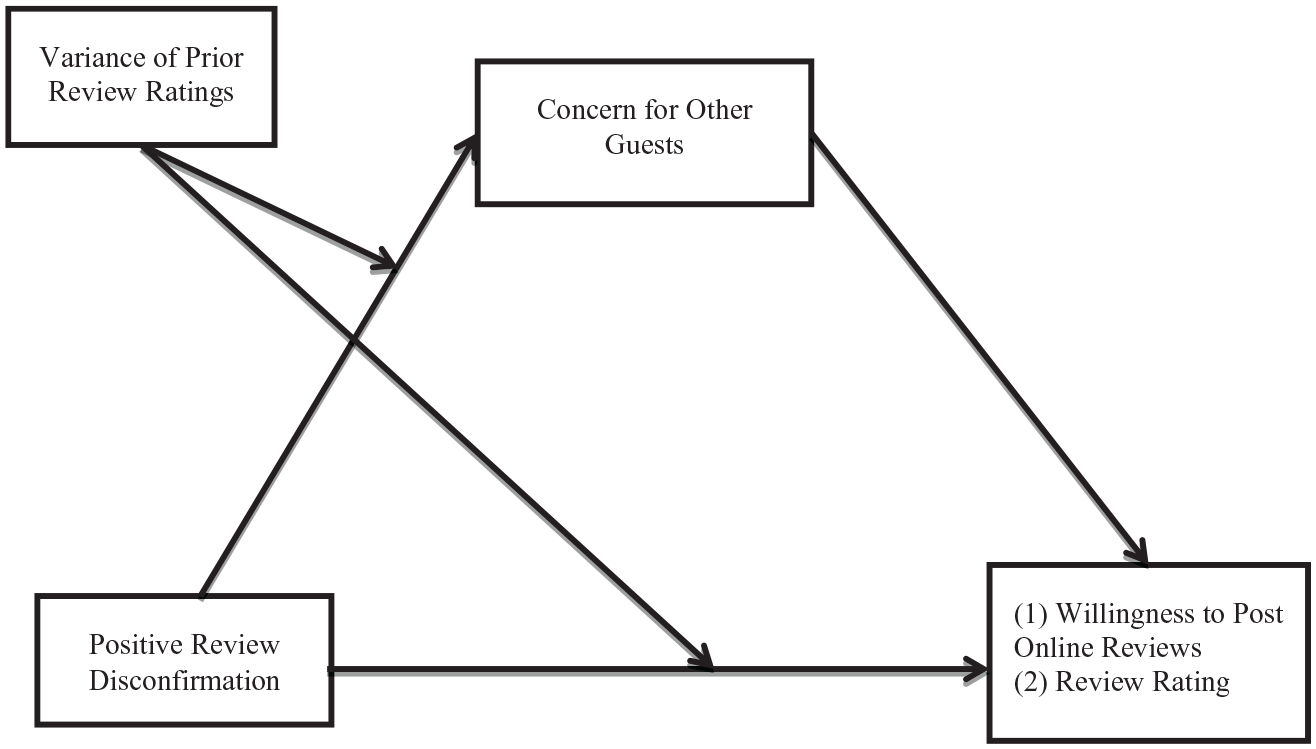
Research Framework
Experimental Design
Design and Participants
This study used a 2 (experience disconfirmation: confirmation vs. positive disconfirmation) × 2 (prior review ratings’ variance: low variance vs. high variance) between-subjects experiment. Hypotheses were tested in a hotel context.
Participants must pass the following screening questions: U.S. residents, native English speakers, and 18 years old or above. In addition, a few attention-check questions were used to screen out participants who did not answer the survey questions attentively. Finally, a sample of 274 participants were recruited from Qualtrics, LLC and randomly assigned to one of the above four experimental conditions using the survey set-up on Qualtrics. This sample size exceeded the criterion of 30 participants per cell to be considered as a large sample (Hogg & Tanis, 1977; Wu et al., 2017). The demographic analysis of the participants showed that 53.3% were male, and 54.4% had $40,000 or above annual household income. In terms of age, about one eighth of the participants (13.5%) were 19 to 29 years old, 16.4% were 30 to 39 years, 11.3% were 40 to 49 years, 17.9% were 50 to 59 years, 25.9% were 60 to 69 years, and 15% were 70 years or older. In terms of education, 20.4% had a high school degree or less, 36.1% had some college or an associate degree, 31% participants held a bachelor’s degree, and 12.4% possessed a master’s or doctoral degree. Caucasian was the primary ethnicity group in the sample (88.7%).
Stimuli and Procedures
To manipulate the positive review disconfirmation, participants were given a scenario that they stayed at Le Bleu hotel for a vacation recently. Participants were told they received “an above-average experience” and “a good value for the money” although the hotel could improve in some aspects. Then, participants were told that they checked the online review website “HotelsCombined” and found either a positive (7 out of 10 stars) or negative (4 out of 10 stars) average rating for Le Bleu (see Supplement Figures 1 and 2, available online). Afterward, participants were shown the dispersion of prior review ratings posted by past consumers. Participants were randomly assigned to either of the following two conditions: (1) high variance (variance = 10.9) for Le Bleu; or (2) low variance (variance = 0.9; see Supplement Figures 3 and 4, available online, adopted from He and Bond [2015]).
Following the above scenario, participants were asked questions related to online review posting motivation of concern for others along with questions related to their willingness to post online reviews. The motivation of concern for other guests was adopted from Hennig-Thurau et al. (2004), and was measured by three items using a 7-point Likert-type scale ranging from 1 (strongly disagree) to 7 (strongly agree). The questions are, “It will tell others that Le Bleu is not as the review claims,” “It will help others with my own positive experience,” and “It will give others the opportunity to book the right hotel.” The measurement of consumers’ willingness to post online reviews was adopted from Wu et al. (2017) by asking participants to answer, “Are you interested in saying something on the online review website ‘HotelsCombined’ about your own experience at the hotel?” using a 7-point Likert-type scale (1 = not interested at all, 7 = very interested) and “Are you willing to write a review on the online review website ‘HotelsCombined’ about your staying experience in the hotel?” using a 7-point Likert-type scale (1 = not at all willing, 7 = very much willing).
Participants were also asked to rate Le Bleu on a scale ranging from 1 star (extremely bad) to 10 stars (extremely good), as if they were posting the rating on “HotelsCombined.” Demographic information and participants’ prior review writing/posting experience were also collected.
Results for Willingness to Post Online Reviews
Manipulation Check
To check if our manipulation for positive review disconfirmation is effective, participants were asked the following questions: “In this scenario, my experience at Le Bleu hotel was similar to the prior reviews” and “In this scenario, my experience at Le Bleu hotel was overall good.” Only participants who correctly answer these above questions entered our next step data analysis. To verify the manipulation effectiveness of the variance in prior review ratings, participants were asked to answer the question, “Based on the above description of online reviews, to what extent do past consumers agree with each other in general?” on a 5-point Likert-type scale (1 = strongly disagree, 5 = strongly agree). Results indicate that participants perceived the stimuli as intended (Mean Low-variance = 4.23; Mean High-variance = 1.64; t = 47.261, p = .000).
Hotel Guests’ Willingness to Post Online Reviews
Hypothesis 1 proposed that a consumer’s willingness post online reviews is influenced by disconfirmation, and Hypothesis 3a presumed a two-way interaction effect between disconfirmation and prior review ratings’ variance on customers’ willingness to post online reviews. Model 1 in Hayes’s (2013) PROCESS procedure was applied to test these hypotheses. The estimation results (see Table 1) revealed a significant main effect of disconfirmation on consumers’ willingness to post online reviews at a 95% significance level (b = .9424, p < .01). However, the moderating effect of the variance in prior review ratings on the influence of disconfirmation was insignificant (bD xV = −.3118, p = .3328). In addition, the variance of prior review ratings showed a positive and significant impact on consumers’ willingness to post online reviews at a 95% significance level (b = .4530, p = .0396), suggesting that dissentious prior ratings encouraged consumers to post online reviews. Ultimately, Hypothesis 1 was supported and Hypothesis 3a was not.
Impact of Disconfirmation and Variance of Prior Review Ratings on Consumers’ Willingness to Post Online Reviews
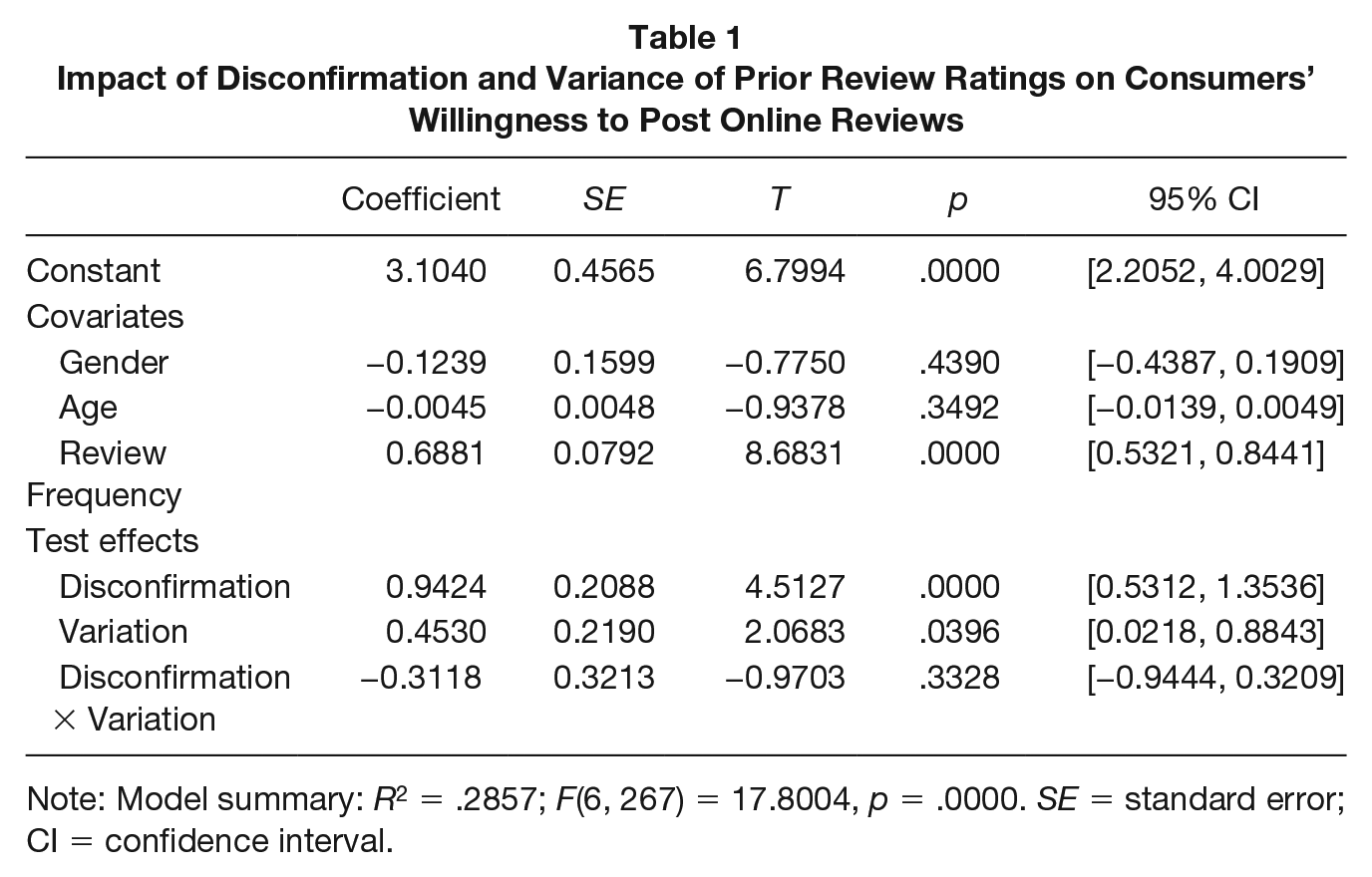
Note: Model summary: R2 = .2857; F(6, 267) = 17.8004, p = .0000. SE = standard error; CI = confidence interval.
Moderated Mediation Analysis
Model 8 in Hayes’s (2013) PROCESS procedure, the moderated mediation model, was applied to test the above research hypotheses, using positive disconfirmation as the independent variable, variance of prior review ratings as the moderator, concern for others as the mediator, and willingness to post an online review as the dependent variable. Based on 10,000 bootstrap samples, the bias-corrected bootstrapping technique was applied to examine the conditional indirect effect.
As shown in Figure 2, the conditional direct effect of positive review disconfirmation on participants’ willingness to post online reviews was insignificant when prior review ratings’ variance was low (b = .2012, p = .3535) and when prior review ratings’ variance was high (b = .1517, p = .5119). The test of equality of the conditional direct effects in the two groups showed no significant difference in the above direct effects between low- and high-variance groups (disconfirmation × variance = −0.0496, p = .8672).
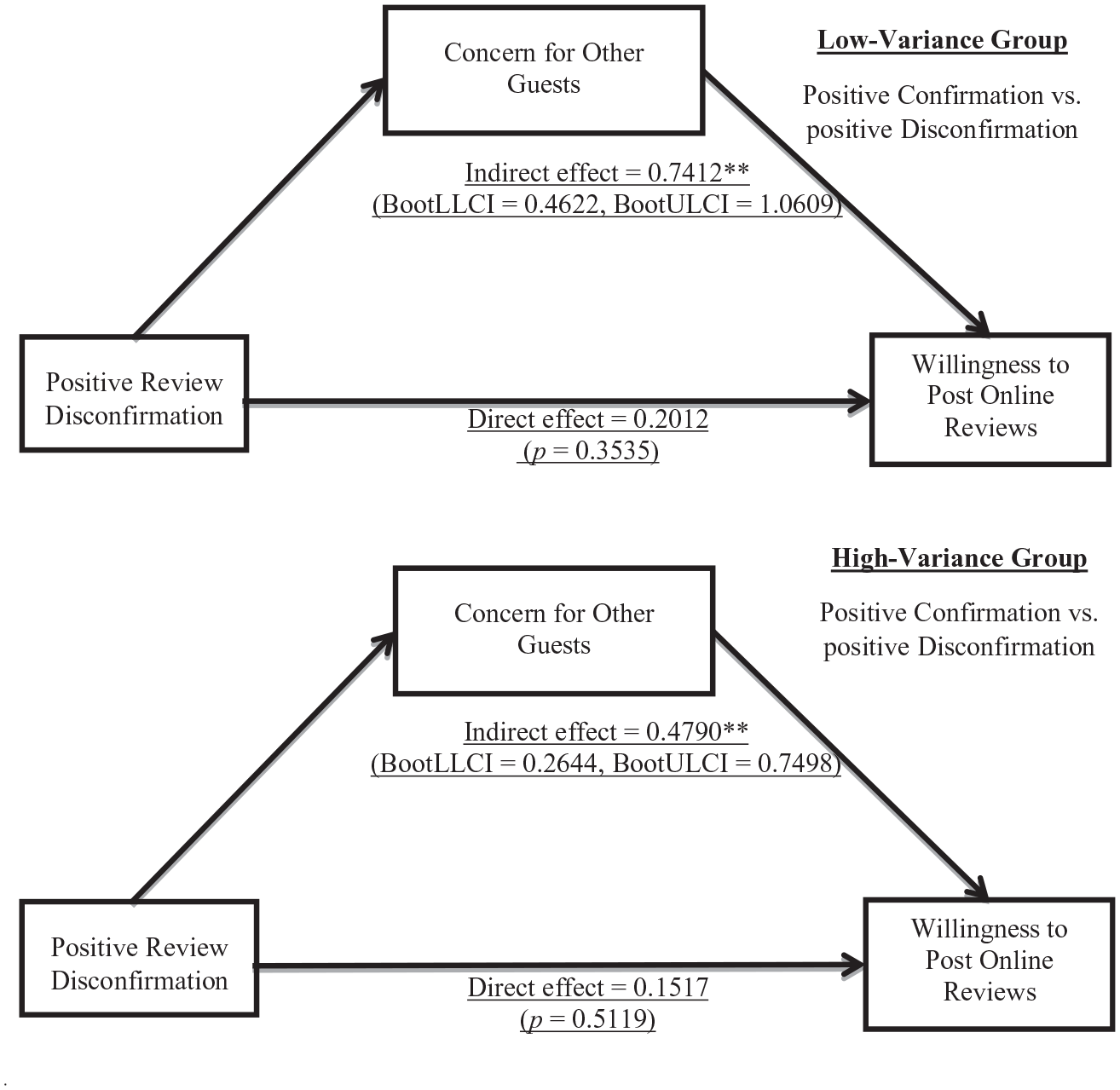
Results of Moderated Mediation Model for Willingness to Post Online Reviews
Moreover, the conditional indirect effect of positive review disconfirmation on participants’ willingness to post online reviews through concern for other guests was significant when the variance of prior review ratings was high (b = .4790, 95% bootstrap confidence interval [CI: 0.2644, 0.7498]). The effect was also significant and stronger for participants when the variance of prior review ratings was low (b = .7412, 95% bootstrap CI [0.4622, 1.0609]). The test of equality of the conditional indirect effects in the two groups demonstrated a significant difference in the above indirect effects between high- and low-variance groups (index of moderated mediation = −0.2622, 95% bootstrap CI [−0.5623, −0.0203]), substantiating the hypothesized conditional indirect effect through concern for other consumers; therefore, Hypothesis 4 (i.e., concern for others mediates the interaction effect of positive review disconfirmation and prior review ratings’ variance on subsequent hotel guests’ willingness to post online reviews) was supported. Specifically, the mediation effect of concern for others between positive review disconfirmation and consumers’ willingness to post online reviews was stronger when prior online review ratings had a small variance; this mediation effect was attenuated when consumers faced a large variance in prior online review ratings.
Results for Online Review Ratings
Hotel Guests’ Willingness to Post Online Reviews
Hypothesis 2 proposed that an individual’s review rating is affected by disconfirmation, and Hypothesis 3b posited a two-way interaction effect exists between disconfirmation and variance of prior review ratings on customers’ online review ratings. We employed Model 1 in Hayes’s (2013) PROCESS procedure to test these hypotheses. Estimation results are shown in Table 2, indicating a significant main effect of disconfirmation on consumers’ review rating decisions at a 95% significance level (b = .5726, p < .01). However, there was no significant interaction effect of disconfirmation and prior review ratings’ variance on participants’ online review ratings (bD xV = −.3571, p = .1802). The variance of prior review ratings demonstrated a positive and significant impact on consumers’ review ratings at a 95% significance level (b = .3710, p = .0415), implying that dissentious prior ratings compelled consumers with positive hotel experiences to post higher review ratings. In sum, Hypothesis 2 was supported and Hypothesis 3b was not.
Impact of Disconfirmation and Variance of Prior Review Ratings on Consumers’ Online Review Ratings
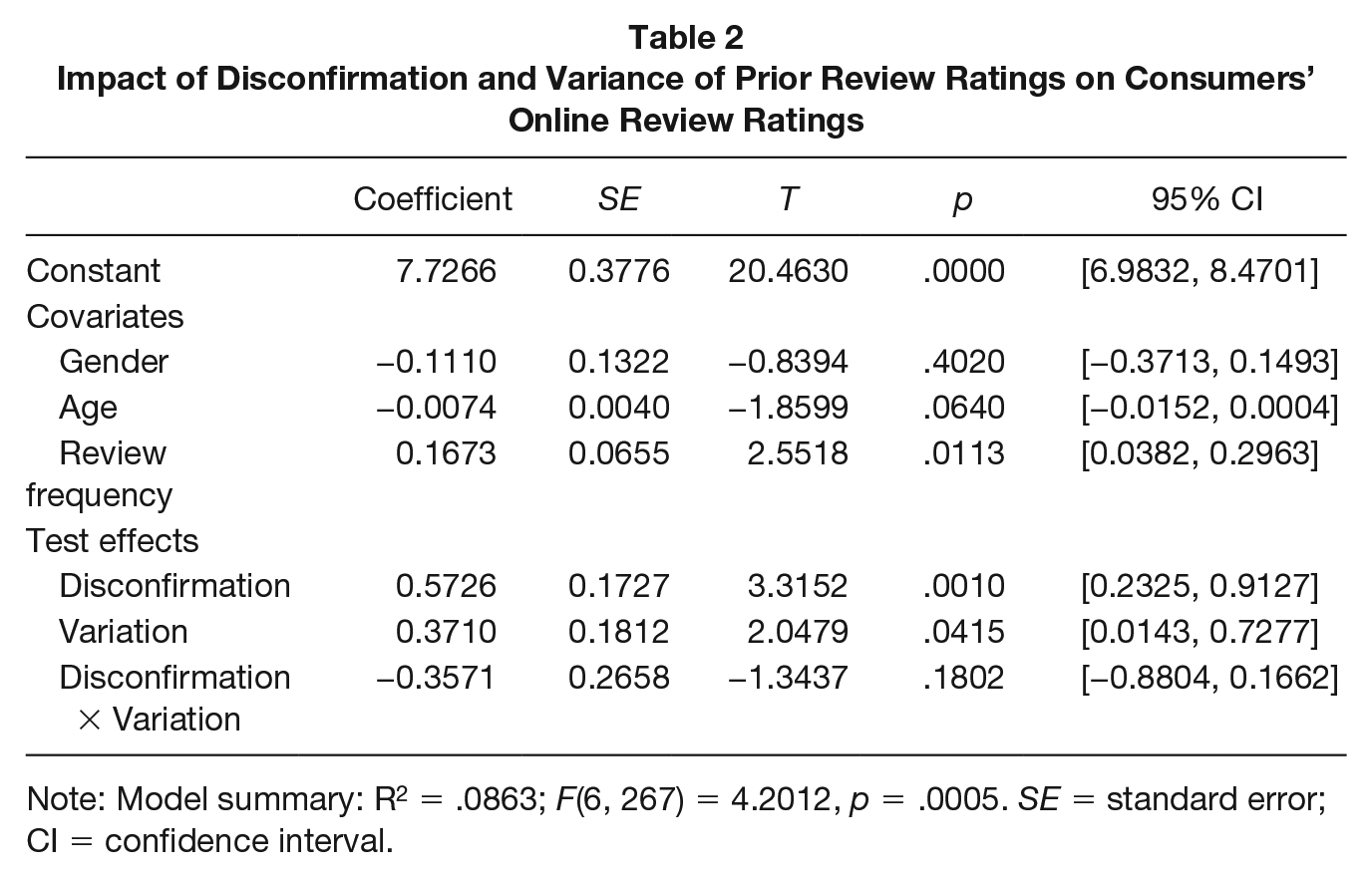
Note: Model summary: R2 = .0863; F(6, 267) = 4.2012, p = .0005. SE = standard error; CI = confidence interval.
Moderated Mediation Analysis
Model 8 in Hayes’s (2013) PROCESS procedure was conducted for a moderated mediation analysis to test proposed hypotheses with positive review disconfirmation as the independent variable, variance of prior review ratings as the moderator, concern for other guests as the mediator, and participants’ online review ratings as the dependent variable. Based on 10,000 bootstrap samples, the above conditional indirect effect was tested by using the bias-corrected bootstrapping technique.
As shown in Figure 3, the conditional direct effect of positive review disconfirmation on participants’ online review ratings was insignificant regardless of whether the variance of prior review ratings was low (b = .2012, p = .2907) or high (b = −.0245, p = .9037). The test of equality of the conditional direct effects in the two groups revealed no significant difference in the above direct effects between low- and high-variance groups (disconfirmation × variance = −.2257, p = .3860).
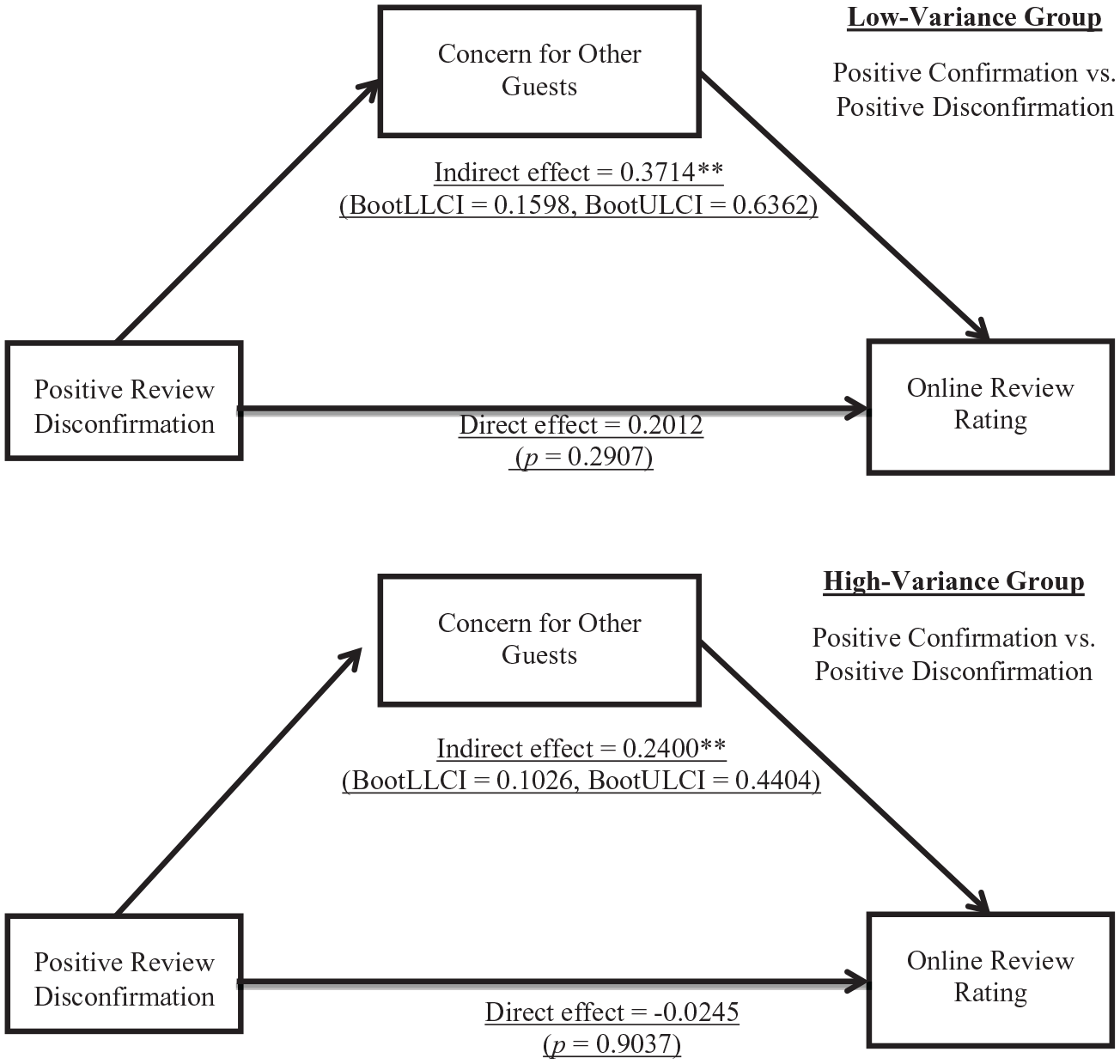
Results of Moderated Mediation Model for Online Review Rating
Figure 3 also demonstrates that the conditional indirect effect of positive review disconfirmation on participants’ online review ratings through concern for others was significant when the variance of prior review ratings was high (b = .2400, 95% bootstrap CI [0.1026, 0.4404]). The effect was significant and much stronger for participants when the variance of prior review ratings was low (b = .3714, 95% bootstrap CI [0.1598, 0.6362]). The test of equality of the conditional indirect effects in the two groups showed a significant difference in the above indirect effects between high- and low-variance groups (index of moderated mediation = −0.1314, 95% bootstrap CI [−0.3422, −0.0133]). These results support the hypothesized conditional indirect effect through concern for other guests; therefore, Hypothesis 5 (i.e., concern for others mediates the interaction effect of positive review disconfirmation and prior review ratings’ variance on subsequent hotel guests’ online review ratings) was supported. Specifically, the mediation effect of concern for other guests between positive review disconfirmation and consumers’ online review ratings was stronger when prior online review ratings had a small variance; this mediation effect was attenuated when consumers faced a large variance in prior online review ratings.
Discussion and Conclusion
General Conclusion
Based on an experiment research approach, this study empirically tested the effects of positive review disconfirmation on hotel guests’ willingness to post online reviews and review ratings in the hotel context. The empirical results show that positive review disconfirmation significantly increased consumers’ willingness to post online reviews and review ratings through the mechanism of concern for other guests, an act of altruism. Moreover, this study delineated the moderating effect of prior review ratings’ variance on disconfirmation effects. Supplement Figure 5 (available online) summarizes the hypotheses testing results. In particular, there are three findings warranting further attention.
First, positive review disconfirmation was only found to lead to increased willingness to post online reviews and to post higher review ratings through the increased motivation of concern for other consumers, which serves as a mediator in the relationships. When consumers experienced positive review disconfirmation, they tended to write online reviews to help others by describing a personally positive experience and to assist others in choosing the right restaurant. A hotel guest is very likely to post a rating above the prior average rating when he or she experiences positive disconfirmation. This result is consistent with Y. C. Ho et al.’s (2017) study, which reported that the disconfirmation between a person’s expectations and experienced product quality influences his or her willingness to post online review and rating decision. However, Y. C. Ho et al.’s (2017) study assumed that a consumer would read prior average review ratings before purchase, although they could not empirically verify this assumption. To address this limitation, the present study employed an experimental design to ensure participants were aware of disconfirmation by being exposed to the prior average review rating. The manipulation check was successful to ensure that participants acknowledged the positive disconfirmation/confirmation by comparing their experienced hotel quality with the prior average review rating.
Second, this study identified an important motivation (i.e., concern for other guests) that mediates the effects of positive review disconfirmation on consumers’ willingness to post online reviews and their review ratings. Findings provide better understanding of positive online review disconfirmation and its influences, and enhance the literature on the consumer’s altruistic motivation of posting online reviews. Previous literature (Engel et al., 1993; Hennig-Thurau et al., 2004) only revealed that “concern for others” is an important WOM and eWOM motivation. Similar findings have been reported in hospitality and tourism literature (Bronner & de Hoog, 2011; Munar & Jacobsen, 2014; Yoo & Gretzel, 2008). This internal psychological mechanism of the influence of review disconfirmation was not disclosed or tested in previous studies.
Third, the indirect effects of positive disconfirmation on hotel guests’ willingness to post online reviews and review ratings were stronger when prior review ratings have a lower variance than those with a higher variance. This finding implies that the variance of prior review ratings accentuates the disconfirmation effect, and it enriches the online review social influence literature, which contended that the earlier online reviews of the same product/service can influence the followers’ reviewing behavior (e.g., H. Li, Meng, Jeong, et al., 2020; Li, Meng & Pan, 2020; Moe & Schweidel, 2012). Furthermore, this finding is consistent with previous literature on expectation-disconfirmation theory. In the online review context, an individual’s confidence in his or her initial expectation of a product can be measured by the variance of prior review ratings from other consumers (Yin et al., 2016). Spreng and Page (2001) revealed that confidence in expectations moderates the disconfirmation’s effect on consumer satisfaction; higher confidence leads to a significant influence of disconfirmation on satisfaction, whereas lower confidence leads to an insignificant influence. Similar findings were reported in a family restaurant context: the influence of disconfirmation (between expectations and perceived performance) on satisfaction is stronger for customers holding greater expectation confidence than for those holding less (Yi & La, 2003). Consumers with high expectation confidence tend to judge expectancy-disconfirmation more accurately and thus treat disconfirmation as a prominent factor when evaluating satisfaction (Yi & La, 2003). Thus, this study enriches the understanding of online review disconfirmation and its influences.
Theoretical Implications
This study contributes to the literature in the following three different aspects. First, this study enhances the literature on social influence and online review-posting behavior. Most previous literature argued that prior posted reviews of the same product/service can influence the subsequent consumers’ online review behavior. However, the interaction effect between the earlier reviews and the following consumers’ experiences of the same product/service has been neglected. As one of the initial attempts, this study investigated their interaction effect, that is, the disconfirmation effect, on consumers’ willingness to post online reviews and review ratings behavior, as well as the moderating effect of prior review ratings’ variance. Research on the impact of review disconfirmation is even scarcer. The review disconfirmation effect for tourism and hospitality products (i.e., experience product) could be significantly different from manufacturing products (i.e., search products). According to previous literature (Jiménez & Mendoza, 2013), the perceptions and influences of online reviews for search products and experience products are significantly different. Therefore, our study also extends the understanding of review disconfirmation effect in the hotel context through empirical primary data analysis. The findings of this current study herein contribute to this emerging topic and indicate that consumers’ willingness to post online reviews and online review ratings are influenced by positive review disconfirmation.
Second, although prior literature has extensively studied the relationship between disconfirmation and satisfaction in the offline context (e.g., Alan, 2003; Bhattacherjee, 2001), scarce research examines the influence of disconfirmation on consumers’ postconsumption online review behavior. Y. C. Ho et al. (2017) is an exception, which tested the disconfirmation effect on an individual’s review intention and rating valence, using secondary data from an e-commerce website selling manufacturing products. However, their study did not (or cannot) indicate if individuals were aware of the review disconfirmation. Our study overcomes this limitation and advances the methodology by using an experimental design, and specifically examines the disconfirmation effect on consumers’ willingness to post online reviews and review ratings. Furthermore, the current study advances the understanding of the moderating role of consumer experience variance in the indirect influence of positive review disconfirmation on consumers’ willingness to post online reviews and review ratings. This study contributes to the research stream by introducing a new moderating variable and revealing a stronger effect of low prior reviews’ variance than high variance regarding the influence of review disconfirmation on consumers’ online review behavior through concern for others. Therefore, the findings of our study provide a better understanding of online review disconfirmation and its influence, which contributes to the literature on the relationship between disconfirmation and consumer online review behavior as a form of eWOM.
Third, this study advances the existing literature by examining the internal psychological mechanism of the influence of review disconfirmation on individuals’ willingness to post online reviews and review ratings. Cheung and Lee (2012) emphasized the need for additional studies regarding consumers’ eWOM motives. Our study is one of the few initial attempts to empirically investigate the underlying motivations behind the decision of online review behavior from a social influence angle. That is, when consumers’ experiences are positively deviant from prior average review rating posted by other consumers, they are more willing to post online reviews and post high review ratings due to the increased motivation of concern for others. This internal psychological mechanism of the influence of review disconfirmation was not disclosed or tested in previous studies. The findings contribute to the literature on factors influencing consumers’ voluntary engagement in eWOM.
Practical Implications
The research provides several practical implications to marketers and managers regarding online review management, as well as the issues surrounding online review manipulation which may cause review disconfirmation. First, this study presents important practical implications for online review system managers. Demonstrating true quality evaluations of products and services is a prime objective of online review platforms (Ma et al., 2013). By developing relevant algorithms, online review platforms could warn consumers if a review appears to be fake. Consumers would benefit from these practices by making better-informed purchase decisions. In addition, findings of our research provide meaningful insights for product marketers who may manipulate online reviews and ratings by writing negative fake reviews for their competitive products. For competitors who are plagued by fraudulent negative reviews and ratings, positively disconfirmed consumers are more willing to post positive online reviews, which can correct for unfairly diminished review ratings in the long term. Essentially, online review manipulation by posting fraudulent negative reviews to competitors does not work in the long term.
Limitations and Future Research
This study is not without limitations. First, this study only examined the influences of positive review disconfirmation on individuals’ willingness to post online reviews and their online review ratings in the context of a hotel. To fully reflect the actual phenomena of review manipulation and consumers’ review disconfirmation, future studies should extend this study by investigating the negative review disconfirmation effects on consumers’ online review behavior in other hospitality and tourism contexts for comparison purpose. Second, this study only tested the mediating effect of the eWOM motivation of concern for others on disconfirmation effects. Subsequent research could empirically test the mediation effects of other eWOM motivations for posting online reviews, such as helping the company (Hennig-Thurau et al., 2003), consumers’ need for uniqueness (Tian et al., 2001), and self-enhancement (Wu et al., 2017). Finally, this study only used hypothetical scenarios involving a single imagined hotel. To generalize these findings, future research should test the results of this study in a real-world context by collecting online secondary data.
Supplemental Material
sj-pdf-1-jht-10.1177_10963480211030313 – Supplemental material for Are hotel guests altruistic? How Positive Review Disconfirmation Affects Consumers’ Online Review Behavior
Supplemental material, sj-pdf-1-jht-10.1177_10963480211030313 for Are hotel guests altruistic? How Positive Review Disconfirmation Affects Consumers’ Online Review Behavior by Hengyun Li, Fang Meng and Simon Hudson in Journal of Hospitality & Tourism Research
Footnotes
Author’s Note:
The authors acknowledge the support of research funds from the National Natural Science Foundation of China (71902169), The Hong Kong Polytechnic University Start-up Fund (Project No. 1-BE1X), and University of South Carolina Provost Office Social Sciences Grant.

Supplemental Material
Supplemental material for this article is available online.
References
Supplementary Material
Please find the following supplemental material available below.
For Open Access articles published under a Creative Commons License, all supplemental material carries the same license as the article it is associated with.
For non-Open Access articles published, all supplemental material carries a non-exclusive license, and permission requests for re-use of supplemental material or any part of supplemental material shall be sent directly to the copyright owner as specified in the copyright notice associated with the article.
