






Abstract
Many restaurants believe that an aesthetically pleasing food presentation can help attract customers and elevate their evaluations. Yet the effectiveness of expressive aesthetics and the psychological processes associated with its use are not well understood in hospitality research. This study adopts a consumer behavior lens to explore how expressive aesthetics affects consumers’ decision making about organic versus conventional food in the restaurant setting. Findings reveal that the expressive aesthetics strategy is effective when marketing conventional, nonorganic food; however, such a strategy decreases consumers’ purchase intentions when the food is described as organic. Furthermore, an investigation of the underlying psychological mechanism indicates that anticipated pleasure and food temptation serially mediate the impacts of expressive aesthetics and food type on purchase intention.
Highlights
This study investigates a congruity effect of expressive aesthetics and food type in restaurants.
Expressive aesthetics is effective for marketing conventional food but not organic food.
Anticipated pleasure and food temptation serially mediate these effects.
Introduction
Food presentation involves processing, altering, or otherwise embellishing a plated dish to make it aesthetically pleasing (Strike, 2020). The idea of styling food dates back to ancient Rome and is universal across cultures, from a homemade Japanese bento in which food is molded into whimsical cartoon characters to a uniquely staged international cheeseboard at a banquet (Sweeney, 2017). The use of expressive aesthetics, which breaks the conventions of natural beauty while emphasizing the designer’s expressive power and human creativity (Hagen, 2021; Johnson, 1994; Lavie & Tractinsky, 2004), is ubiquitous in the hospitality industry. For example, landscape-style plating has become popular: the chef creates an edible garden on the plate through landscape techniques, such as styling the dish using vivid edible flowers made from red beets, to bring out ingredients’ aesthetics (“Landscape of Colour and Flavour,” 2020). While restaurants generally believe that a creative and aesthetic food presentation can attract customers and enhance diners’ restaurant evaluations (McCann, 2021), a complicated presentation may detract from the flavor and enjoyment of a meal—especially one featuring organic, natural food (Arcadian, 2014). Indeed, many restaurants that promote organic and sustainable eating (e.g., L’Arpège, De Librije, and Restaurant Sat Bains) tend to minimize unnecessary ingredient processing during food styling to ensure a simple but elegant presentation (Thorn, 2018; Zuhadmono, 2021).
Despite increasing interest around food presentation and aesthetics strategies in the restaurant context (Hagen, 2021; Hagtvedt & Patrick, 2008; F. Wu et al., 2017; Zellner et al., 2014), little research has shed light on the marketing effectiveness of expressive aesthetics for organic versus conventional food. Restaurants have recently begun to label food “organic” on menus to cater to consumers’ growing desire for such food (Poulston & Yiu, 2011; Shin & Mattila, 2019). For instance, quick-service chains (e.g., Chipotle, Elevation Burger, and Veggie Grill) highlight ingredients as “organic” on their menus to inspire consumers to select healthy options. Consumers often apply different schemas and standards when evaluating organic and conventional food (Loebnitz et al., 2015; Prada et al., 2017; Septianto et al., 2019). Taking schema congruity theory as an overarching framework (Aggarwal & McGill, 2007; Romero & Biswas, 2016; Sundar & Noseworthy, 2014), the present study extends the restaurant food marketing literature by investigating the influences of expressive aesthetics on consumers’ food perceptions and purchase intentions as a function of food type. More specifically, we aim to address the following questions: Will expressive aesthetics as a food presentation strategy lead to higher purchase intention? Does this strategy work for both organic and conventional, nonorganic food? What is the psychological mechanism driving the associated effects?
The expressive aesthetics of restaurant food presentation is likely to be regarded as a “naturalness reducer” and is linked to greater food waste and lower environmental sustainability (Betz et al., 2015; Filimonau et al., 2019; Hingston & Noseworthy, 2020; Rozin et al., 2004). Compared with conventional food, organic food is usually viewed as more natural, more environmentally friendly, fresher, safer, and healthier (Jeong & Jang, 2019; Soler et al., 2002). Applying expressive aesthetics to organic food thus counters the assumption that such food offers superior naturalness and environmental sustainability (Jeong & Jang, 2019; Soler et al., 2002). By contrast, when purchasing nonorganic food, consumers might be more drawn to an item’s hedonic and sensory qualities (Bourn & Prescott, 2002; Buder et al., 2014; Crowder et al., 2014) while assigning less weight to its naturalness or environmental sustainability (Bryla, 2016; Etale & Siegrist, 2018). For example, Buder et al. (2014) identified appearance and taste as the most important factors influencing the purchase of conventional food in Germany. Therefore, we predict that expressive aesthetics, as a form of visual appeal, will likely enhance consumers’ perceptions of and intentions to purchase conventional food.
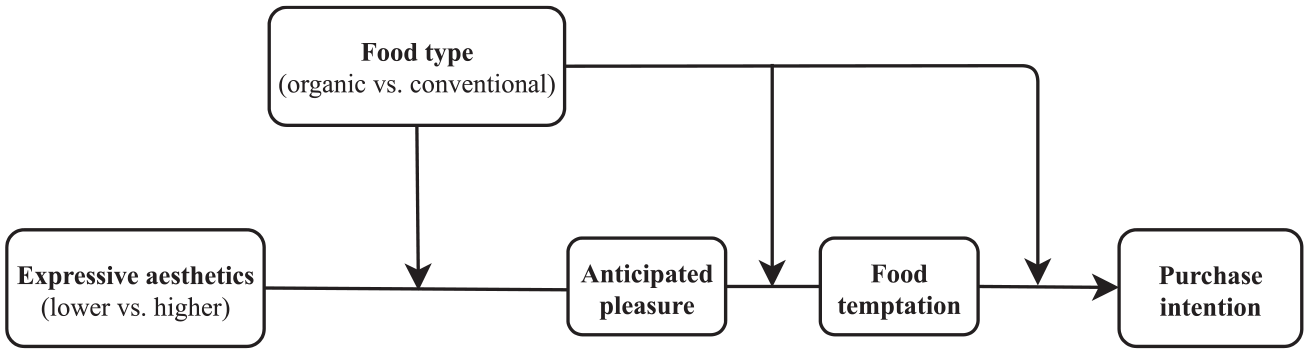
Building on this logic, we posit that expressive aesthetics will have opposing effects when marketing organic versus conventional food. Specifically, congruity should exist between expressive aesthetics and food type; that is, organic food should be better suited to a low level of expressive aesthetic presentation, whereas conventional food should align better with a high level of such presentation. Consumers often associate pleasure with eating (Rappoport et al., 1993; Scheibehenne et al., 2007); for instance, pleasure seeking represents a key driver of organic food consumption (Zanoli & Naspetti, 2002). Drawing on affect-as-information theory (Clore, 1992; Clore et al., 2001), we argue that the congruity between expressive aesthetics and food type will enhance consumers’ anticipated pleasure and food temptation and in turn boost their purchase intentions.
The findings of this research make several important contributions to the hospitality field. First, our work enriches the related literature on expressive aesthetics and food presentation by examining how consumers respond to food presented with low versus high expressive aesthetics in the restaurant setting. In addition, this study contributes to the growing stream of work on aesthetic design by unveiling the congruity effects between expressive aesthetics and food type. Results also expand knowledge of aesthetics and food presentation by uncovering the critical mediating roles of anticipated pleasure and food temptation as drivers behind consumers’ food-related decisions. Moreover, our findings offer important managerial implications for organic food marketers and those who are interested in using expressive aesthetics as a marketing strategy, as detailed in the Discussion section.
Conceptual Background
Expressive Aesthetics as a Marketing Strategy
Aesthetics refers to “a conception of what is artistically valid or beautiful” (Y. J. Wang et al., 2011, p. 46) and can be divided into two dimensions: classical aesthetics and expressive aesthetics (Lavie & Tractinsky, 2004). Classical aesthetics reflects traditional principles of beauty, which are defined by attributes such as order, balance, clarity, and symmetry; expressive aesthetics goes beyond classical notions of aesthetics to underline the designer’s expressive power and human creativity (Hagen, 2021; Johnson, 1994; Lavie & Tractinsky, 2004). Expressive aesthetics plays a key role in numerous visual design and marketing contexts, including product packaging, retail environments, and logo and website design (Gupta & Hagtvedt, 2021; Hagtvedt & Brasel, 2017; Krishna et al., 2017; Lavie & Tractinsky, 2004; S. Q. Liu et al., 2018). We focus on expressive aesthetics rather than classical aesthetics in this research, as restaurant food presentation emphasizes chefs’ novel and creative expression (Deroy et al., 2014).
The effects of visual aesthetics on consumer psychology have garnered close scholarly attention (Carins et al., 2020; Garber et al., 2000; Palmer et al., 2013; Suher et al., 2017). The aesthetics literature has addressed the food consumption environment, such as facility aesthetics (Carins et al., 2020; Horng et al., 2013; Ryu & Han, 2011), service employees’ aesthetic labor (Tsaur et al., 2015; L. Wu et al., 2020), and food aesthetics such as color and plating (Garber et al., 2000; Palmer et al., 2013). In the restaurant context, studies have shown that expressive aesthetics can positively influence consumers’ evaluations and behavioral intentions (Hagtvedt & Patrick, 2008; Horng et al., 2013; Michel et al., 2014; Ryu & Han, 2011). In particular, restaurants can express desirable attributes through the aesthetic design of their menu, amenities, or decor. S. Q. Liu et al. (2018) found that circular cues within the restaurant servicescape can enhance consumers’ perceived warmth of the service provider, whereas angular shape cues may amplify perceptions of the provider’s competence. Hagtvedt and Patrick (2008) demonstrated that infusing visual art in the restaurant setting (e.g., Van Gogh’s Café Terrace at Night printed on a silverware box; Claude Monet’s Palazzo da Mula printed on a soap dispenser) can boost consumers’ evaluations due to the general connotations of luxury associated with artwork. S. Q. Liu et al. (2019) suggested that restaurants whose branding is focused on healthy dining can use a handwritten typeface on their menus—which conveys that the restaurant’s offerings are symbolically imbued with a sense of human touch and love—to echo the brand’s positioning and enhance consumers’ brand evaluations. Furthermore, consumers may respond differently to aesthetic presentation in food consumption (Suher et al., 2017; F. Wu et al., 2017). Their reactions typically depend on the level of food processing, such that consumers largely prefer aesthetically perfect unprocessed food but favor aesthetically imperfect processed food (Suher et al., 2017).
In contributing to the knowledge base around the impacts of expressive aesthetic designs in restaurants, the current research offers insight into (a) how consumers respond to lower versus higher expressive aesthetic food presentations and (b) the psychological mechanism associated with consumers’ food-related decisions. Consumers constantly and unconsciously make automatic inferences about items’ symbolic meanings based on what they see (Hagtvedt & Patrick, 2008; S. Q. Liu et al., 2018; S. Q. Liu et al., 2019). Accordingly, the expressive aesthetics of food—an intervention displaying designers’ expressive power and creativity in food presentation (Deroy et al., 2014)—may induce product inferences that elicit favorable or unfavorable consumer evaluations. Michel et al. (2014) investigated the effects of the artistic visual presentation of food and noted that Kandinsky-style plating (i.e., an artistic, creative, and sophisticated arrangement) led to a heightened sensory experience compared with a neat, nonartistic arrangement. However, F. Wu et al. (2017) found that consumers may be reluctant to consume highly aesthetic food (e.g., a cupcake with rose-shaped frosting) and experience lower consumption enjoyment due to concerns over ruining the designers’ effort. Building on the idea that expressive aesthetics in food products signals human labor and intervention during production (F. Wu et al., 2017), we speculate that the expressive aesthetic power a designer wields over food might exert opposing effects depending on food type (organic vs. conventional). More precisely, we predict that consumers will display higher purchase intentions given a match between expressive aesthetics and food type (i.e., low aesthetics/organic food; high aesthetics/conventional food) versus a mismatch (high aesthetics/organic food; low aesthetics/conventional food), as described in the next section.
Congruity Effects of Expressive Aesthetics and Food Type
The present research attends to the congruity effects of expressive aesthetics and food type. Adopting schema congruity theory as an overall framework (Aggarwal & McGill, 2007; Romero & Biswas, 2016; Sundar & Noseworthy, 2014), we presume that organic food combined with low expressive aesthetics and conventional food combined with high expressive aesthetics can elevate consumers’ food perceptions and purchase intentions. A schema is an individual’s stored framework of cognitive knowledge that represents the attributes of an object, concept, or topic (Fiske & Linville, 1980). Interestingly, research indicates that consumers’ lay beliefs and intuitions about product or firm attributes are not always reliable; for instance, consumers usually assume that for-profit organizations are more competent than nonprofit organizations (Aaker et al., 2010) and that unhealthy food is more flavorful than healthy food (Raghunathan et al., 2006). In addition, the product design literature suggests that consumers may subconsciously associate meanings with a specific design factor (e.g., logo, typeface, and color), although such associations may not be directly accessed from one’s cognitive framework through an explicit question (S. Q. Liu et al., 2018; Sundar & Noseworthy, 2014; B. Wang et al., 2020). For example, a circular logo (angular logo) shape can activate softness (hardness) associations in consumers’ working memory (Jiang et al., 2016). Most important, consumers often rely on schema congruity as a basis for product judgment and evaluation. Congruity between product design and product schema is likely to positively influence consumers’ evaluations, whereas incongruity generally exerts a negative effect (Chae & Hoegg, 2013; Labroo et al., 2008; Sundar & Noseworthy, 2014).
In this research, we argue that the effectiveness of expressive aesthetic design depends on product type (i.e., whether the food is organic)—a theoretically and practically relevant moderating variable in the marketing literature (Y. Liu et al., 2017; Schnurr, 2019). Consumers may employ distinct schemas and norms to assess organic food versus conventional food. Organic food refers to “food produced using environmentally sound practices instead of using conventional pesticides or fertilizers made with synthetic ingredients and not processed using industrial solvents, irradiation, chemical food additives, or genetic engineering” (Jeong & Jang, 2019, p. 118). Organic food is somewhat known for its rugged look due to more natural production processes (Yue et al., 2009). Compared with conventional food, consumers may expect organic food to have a less flawless appearance given its greater “naturalness” (e.g., Loebnitz et al., 2015; Vega-Zamora et al., 2014; Xie et al., 2015). Naturalness and environmental sustainability are major determinants of consumers’ decisions to purchase organic food (Bonn et al., 2016; Bonti-Ankomah & Yiridoe, 2006; Padel & Foster, 2005) but are less often salient in conventional food purchases (Bryla, 2016; Crowder et al., 2014; Etale & Siegrist, 2018).
Expressive aesthetic design requires human intervention and processing of food ingredients. However, this process alters the original status of food and diminishes virtues such as naturalness (Dominici et al., 2019; Etale & Siegrist, 2018; Rozin et al., 2004). The expressive aesthetics of restaurant food presentation thus tends to function as a naturalness reducer. As mentioned, food aesthetics is also tied to greater food waste and lower environmental sustainability (Betz et al., 2015; Filimonau et al., 2019; Hingston & Noseworthy, 2020). Presenting organic food with higher expressive aesthetics is therefore incongruent with the schema that organic food should be superior in its naturalness and environmental sustainability (Jeong & Jang, 2019; Soler et al., 2002). In other words, a low level of expressive aesthetics should be more congruent with the schema consumers use to evaluate organic food. By contrast, consumers are less concerned about naturalness when purchasing conventional food (Bonn et al., 2016; Bonti-Ankomah & Yiridoe, 2006; Padel & Foster, 2005). They generally deem the environmental benefits of conventional food less important and are instead more driven by the food’s visual appeal (Bryla, 2016; Crowder et al., 2014; Etale & Siegrist, 2018). Moreover, conventional food with an aesthetic presentation can produce more favorable evaluations as consumers derive pleasure from processing food stimuli of higher visual complexity (Michel et al., 2014). In short, a high level of expressive aesthetics should be more congruent with the schema consumers use to assess conventional food.
We propose that expressive aesthetics will have opposing effects on marketing organic versus conventional food. More concretely, we expect to observe congruity effects of expressive aesthetics and food type: Organic food combined with low expressive aesthetics and conventional food combined with high expressive aesthetics should boost consumers’ purchase intentions as postulated below:
Mediating Roles of Anticipated Pleasure and Food Temptation
Ample evidence in the advertising literature shows that congruity enhances fluency (i.e., the ease with which information is processed) and positively affects consumers’ product evaluations (Chae & Hoegg, 2013; Labroo et al., 2008; A. Y. Lee & Aaker, 2004; Sundar & Noseworthy, 2014). Notably, research on “feelings as information” suggests that consumers may use incidental affective experiences, such as feelings of ease, as information sources when making judgments and decisions (Clore, 1992; Clore et al., 2001). Consumers are thus likely to consider incidental positive feelings of ease when processing advertising stimuli (as a result of congruity) to anticipate the degree of pleasure associated with the advertised product and make judgments consistent with their feelings: “If I feel good, the product must be good!”
We assume that consumers will expect greater pleasure due to the schema congruity between expressive aesthetics and food type. Pleasure is associated with feeling happy and delighted (Hur & Jang, 2015). Prior research has tied aesthetics to pleasure (Alba & Williams, 2013; Reimann et al., 2010). In addition, the visual shapes of food presentation may influence consumption pleasure (Michel et al., 2014). The food marketing literature indicates that consumers may anticipate pleasure from the sensory stimulation of consuming food (Hur & Jang, 2015; H.-J. Lee & Yun, 2015; Richins, 1997). Anticipated pleasure is also closely associated with food choices and is regarded as one of the most important factors driving food consumption (Rappoport et al., 1993; Scheibehenne et al., 2007). Drawing on earlier work on schema congruity effects (Aggarwal & McGill, 2007; Chae & Hoegg, 2013; Romero & Biswas, 2016; Sundar & Noseworthy, 2014), we theorize that consumers will exhibit greater anticipated pleasure due to schema congruity between expressive aesthetics and food type.
An increase in anticipated pleasure also renders food more appealing, leading to a rise in food temptation, which drives purchase intention. Food temptation refers to the extent to which food can attract consumers’ attention and ignite enduring and hard-to-resist desire (Deng & Srinivasan, 2013; Geyskens et al., 2008). Put simply, food temptation captures consumers’ ability to resist consuming the food. The anticipated pleasure of food consumption can make food seem more attractive and harder to resist (Maldoy et al., 2021). Given that food temptation guides food consumption and shapes consumers’ behavioral intentions (Geyskens et al., 2008; Moore, 2014; Van Dillen et al., 2013), we predict that consumers will exhibit stronger purchase intentions driven by food temptation. We essentially expect that the proposed congruity effects of expressive aesthetics and food type on consumers’ purchase intentions will be serially mediated through anticipated pleasure and food temptation. Stated formally:
Our conceptual framework is illustrated in Figure 1.
Conceptual Framework
Method
Study Design and Sample
One hundred fifty U.S. participants were recruited from Amazon’s Mechanical Turk (MTurk) consumer panel to participate in a 2 (expressive aesthetics: lower vs. higher) × 2 (food type: organic vs. conventional) between-subjects experiment. Experimental design is an efficient way to investigate causal relationships among variables (Shadish et al., 2002). A randomized, controlled, and scenario-based experimental design can provide high levels of internal validity and reliability (Kirk, 1982; Kuehl, 2000; Trochim & Donnelly, 2001). This approach is widely used in consumer behavior research to examine the interaction effects of one or more manipulated independent variables (Ladhari & Michaud, 2015). We used MTurk, an established online panel popular among hospitality researchers (Kim et al., 2019; Shin & Mattila, 2019; Yu et al., 2020), for participant recruitment. MTurk can offer reliable, high-quality data that are demographically diverse (Paolacci et al., 2010). To further ensure data quality, we applied participant eligibility criteria (e.g., location, task approval rate, and age), embedded multiple attention checks in the survey (e.g., recall questions, instructional questions, and self-report effort), and employed additional procedures to identify and eliminate instances of MTurk worker fraud (e.g., repeated IP addresses and amount of time spent on the survey) (Oppenheimer et al., 2009). Participants were 38.71 years old on average. Slightly more than half (52%) were men, 72.7% were Caucasian, 67.4% held a bachelor’s degree, and 67.3% earned an annual income of $40,000 or more.
Procedures and Stimuli
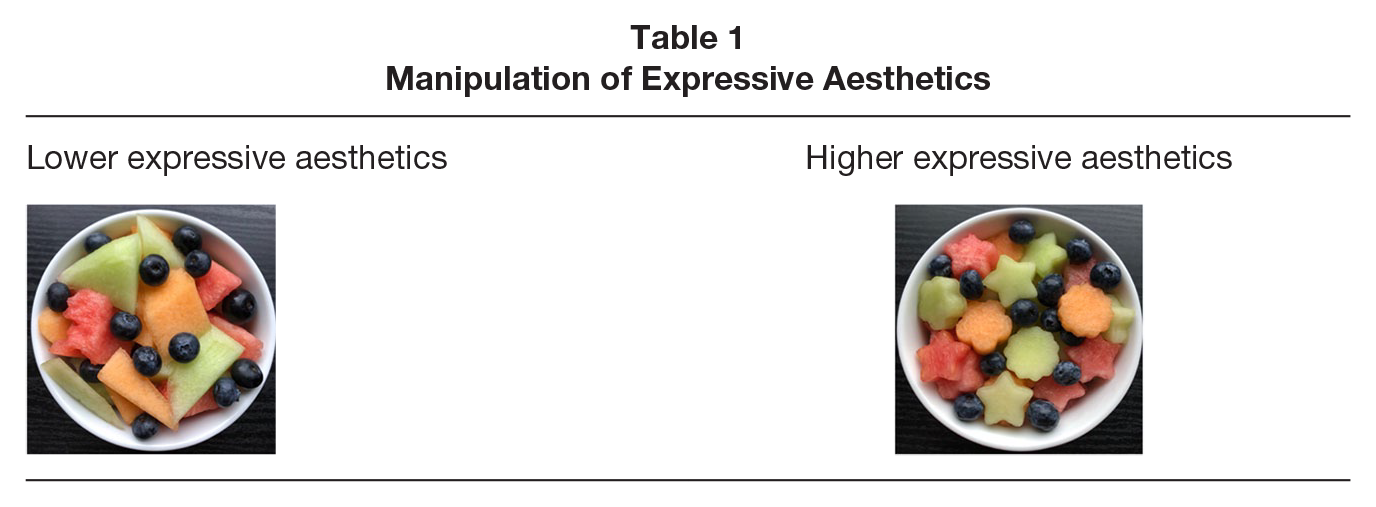
Participants were instructed to imagine they were at a restaurant where they noticed a fruit cup on the menu. A fruit cup was selected for the manipulation check because it is a simple, common dessert acceptable to most consumers; therefore, this choice can help mitigate bias induced by individual differences such as culture, gender, and age. Consumer researchers have often included fruit salad in their studies (Dhar & Simonson, 1992; Mukhopadhyay & Johar, 2009; Shiv & Fedorikhin, 1999). Simple items such as cupcakes have also appeared in food aesthetics research on consumers’ decision making (F. Wu et al., 2017). Each participant was randomly assigned to one of four experimental conditions that manipulated food type and expressive aesthetics. For the food type manipulation, in the organic food condition, participants were informed that the fruit cup was a nutritious mix of organic watermelon, organic blueberry, and organic melon. They were also told that the ingredients had been grown naturally without chemicals and pesticides. In the conventional food condition, participants were only informed that the fruit cup was a nutritious mix of watermelon, blueberry, and melon. For the expressive aesthetics manipulation, in the lower expressive aesthetics condition, participants viewed a photo of a regular fruit cup where the pieces were cut into typical shapes; in the higher expressive aesthetics condition, participants viewed a photo of an aesthetic fruit cup whose pieces were cut into aesthetically designed shapes (see Table 1).
Manipulation of Expressive Aesthetics
To measure purchase intention, participants were asked to rate their likelihood of ordering the described fruit cup on 7-point scales (1 = unlikely, 7 = likely; 1 = impossible, 7 = possible; 1 = improbable, 7 = probable; Cronbach’s α = .89) adapted from Sundar and Noseworthy (2016). Regarding anticipated pleasure, participants were instructed to rate their anticipated pleasure, happiness, and delight if they ate the fruit cup; these attributes were scored on a 7-point scale (1 = not at all, 7 = very much; Cronbach’s α = .89) adapted from Hur and Jang (2015). Food temptation was assessed via three items adapted from Deng and Srinivasan (2013): “This fruit cup keeps attracting my attention,” “I think of eating this fruit cup all the time,” and “It is difficult to resist eating this fruit cup” (1 = strongly disagree, 7 = strongly agree; Cronbach’s α = .77). We also assessed a series of control variables including hunger level (“How hungry are you now?”; 1 = not at all hungry, 7 = extremely hungry; Nenkov & Scott, 2014), enjoyment of fruit (“In general, how much do you like eating fruits?”; 1 = dislike extremely, 7 = like extremely; Nenkov & Scott, 2014), knowledge of organic food (“How do you rate your knowledge about organic food?”; 1 = very low, 7 = very high; Prada et al., 2017), and health consciousness (“I choose food carefully to ensure good health,” “I think of myself as a health-conscious consumer,” “I think often about health issues”; 1 = strongly disagree, 7 = strongly agree; Cronbach’s α = 0.76; Shin & Mattila, 2019). 1
As a manipulation check for food type, participants were asked to state whether the menu description labeled the fruit cup as organic (1 = definitely no, 7 = definitely yes), adapted from Shin and Mattila (2019). Similarly, as a manipulation check of expressive aesthetics, we asked participants to indicate to what extent the fruit cup was artistic (1 = not at all, 7 = very much) and whether the fruit pieces were cut into aesthetically designed shapes (1 = definitely no, 7 = definitely yes) (r = .67, p < .001); both items were adapted from F. Wu et al. (2017). For the realism check, we asked participants to evaluate how realistic the fruit cup was (1 = highly unrealistic, 7 = highly realistic).
Results
Manipulation Check
We ran a 2 (expressive aesthetics: lower vs. higher) × 2 (food type: organic vs. conventional) analysis of variance (ANOVA) on the aesthetics manipulation check scores. As intended, the results only yielded a main effect of expressive aesthetics, F(1, 146) = 29.37, p < .001; that is, participants in the lower expressive aesthetics condition reported lower perceived aesthetics (M = 4.99) than those in the higher expressive aesthetics condition (M = 6.18). We also conducted a 2 (expressive aesthetics: lower vs. higher) × 2 (food type: organic vs. conventional) ANOVA on the food type manipulation check scores. As expected, the results revealed a main effect of food type, F(1, 146) = 67.91, p < .001, suggesting a significant difference between the organic food condition (M = 6.34) and conventional food condition (M = 3.72). In addition, participants perceived our stimuli as highly realistic (M = 6.09; t = 21.742, p < .001 as compared with the scale midpoint). The experimental manipulations were thus successful.
Purchase Intention
We performed a two-way ANOVA on purchase intention. 2 As anticipated, we observed a significant two-way interaction between expressive aesthetics and food type, F(1, 146) = 9.78, p < .05; partial η2 = .063, presented in Supplement Table 1 (available online). The main effects of expressive aesthetics and food type were nonsignificant (p > .44). We then conducted a simple main effect analysis, displayed in Figure 2 Panel (a), to understand the significant two-way interaction. In the organic food condition, participants exhibited higher purchase intentions when the food’s expressive aesthetics was low (M = 6.06) versus high, M = 5.28, F(1, 146) = 5.12, p < .05, lending support to Hypothesis 1a. Conversely, in the conventional food condition, participants displayed higher purchase intentions when the food’s expressive aesthetics was higher (M = 5.84) rather than lower, M = 5.13, F(1, 146) = 4.67, p < .05, supporting Hypothesis 1b. The cell size, means, and standard deviations are listed in Supplement Table 2 (available online).
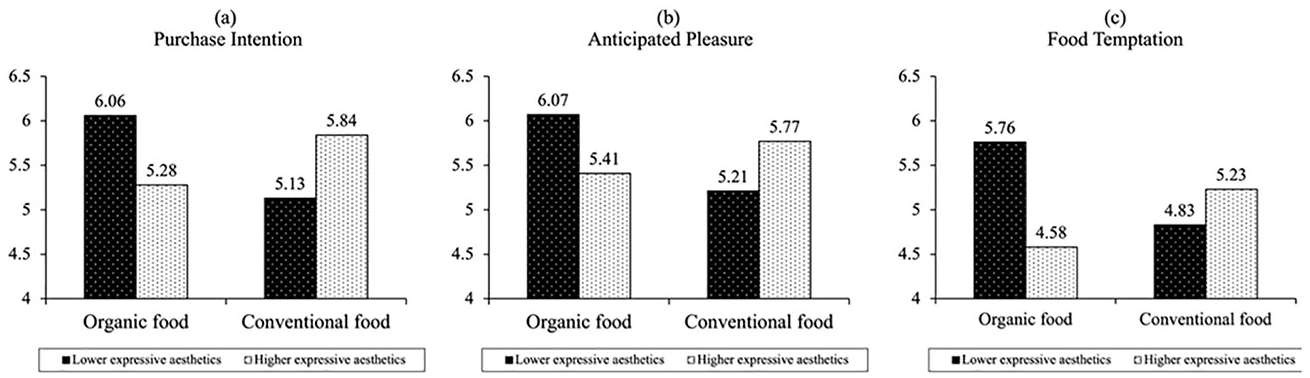
Effects of Expressive Aesthetics and Food Type on (a) Purchase Intention, (b) Anticipated Pleasure, and (c) Food Temptation
Anticipated Pleasure
We ran a two-way ANOVA on anticipated pleasure. As expected, the results showed a significant two-way interaction between expressive aesthetics and food type, F(1, 146) = 9.27, p < .05; partial η2 = .06. We then conducted a simple main effect analysis regarding the significant two-way interaction, depicted in Figure 2 Panel (b). Specifically, in the organic food condition, participants exhibited higher anticipated pleasure when the food’s expressive aesthetics was low (M = 6.07) versus high, M = 5.41, F(1, 146) = 5.14, p < .05. In the conventional food condition, consumers indicated higher anticipated pleasure when the food’s expressive aesthetics was higher (M = 5.77) rather than lower, M = 5.21, F(1, 146) = 4.15, p < .05.
Food Temptation
We next carried out a two-way ANOVA on food temptation. A significant two-way interaction emerged between expressive aesthetics and food type on food temptation, F(1, 146) = 11.66, p < .05; partial η2 = .07. We then conducted a simple main effect analysis to clarify the significant two-way interaction, presented in Figure 2 Panel (c). In particular, in the organic food condition, participants displayed higher food temptation when the food’s expressive aesthetics was low (M = 5.76) versus high, M = 4.58, F(1, 146) = 12.30, p < .05. However, in the conventional food condition, food temptation was unaffected by food expressive aesthetics, Mlower = 4.83, Mhigher = 5.23; F(1, 146) = 1.60, p = .21, ns.
Mediation Analysis
We ran a serial mediation analysis using the bootstrapping approach (PROCESS Model 85, 10,000 bootstrap samples; Hayes, 2017). In the serial mediation model, expressive aesthetics served as the independent variable, food type was the moderator, anticipated pleasure and food temptation were serial mediators, and purchase intention was the dependent variable (see Figure 3). The bootstrapping results indicated a significant moderated mediation through anticipated pleasure and food temptation (index = 0.1737; 95% confidence interval (CI [0.0577, 0.3358]). As expected, we identified a significant “expressive aesthetics → anticipated pleasure → food temptation → purchase intention” serial mediation process in the organic food condition (indirect effect = −0.0938; 95% CI [−0.2002, −0.0189]) as well as in the conventional food condition (indirect effect = 0.0799; 95% CI [0.0015, 0.1826]). Collectively, these results align with Hypothesis 2. The complete bootstrapping output is provided in the Supplement Table 3 (available online).
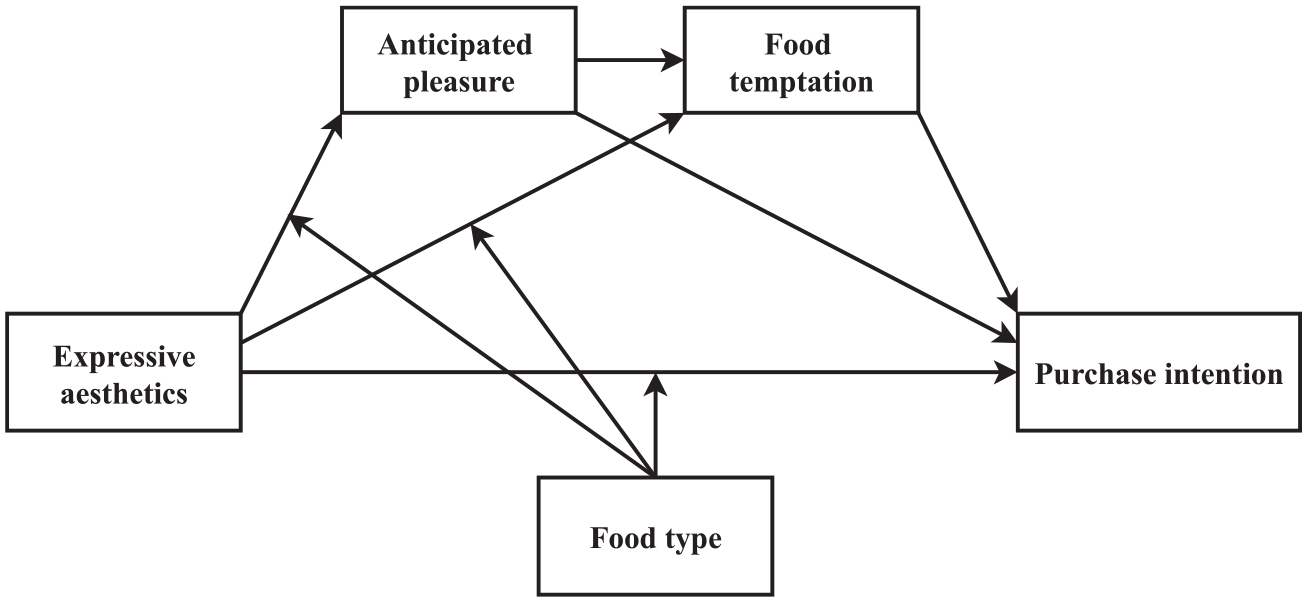
Serial Mediation Model
General Discussion
Many restaurants believe that the aesthetic presentation of food can help attract customers and enhance diners’ restaurant evaluations (“Beauty and the Bento Box,” 2009; Storey, 2009). Despite burgeoning interest in food presentation and aesthetics strategies in restaurants (Hagen, 2021; Hagtvedt & Patrick, 2008; F. Wu et al., 2017), limited research has explored the role of expressive aesthetics for different food types or the psychological processes associated with its use. Through a consumer behavior lens, we considered how expressive aesthetics affects consumers’ decisions regarding organic versus conventional food in the restaurant setting. Our findings suggest that an expressive aesthetics strategy is effective for marketing conventional, nonorganic food; however, such a strategy reduces consumers’ purchase intentions when the food is described as organic. Furthermore, an investigation into the underlying psychological mechanism demonstrated that anticipated pleasure and food temptation serially mediate the impacts of expressive aesthetics and food type on purchase intention.
Theoretical Implications
This research advances the aesthetics literature in terms of expressive aesthetics and food presentation. Consumers may respond differently to aesthetics in food consumption (Suher et al., 2017; F. Wu et al., 2017). Our findings enrich the understanding of such aesthetic cues by revealing that the effectiveness of an expressive aesthetics strategy depends on whether the marketed food is organic or conventional. Referring to schema congruity theory (Aggarwal & McGill, 2007; Chae & Hoegg, 2013; Romero & Biswas, 2016; Sundar & Noseworthy, 2014), we further identified opposing effects of expressive aesthetic food presentation in marketing organic food and conventional food. More precisely, consumers were found to display stronger purchase intentions when exposed to organic food with low expressive aesthetics and to conventional food with high expressive aesthetics. This study accordingly highlights expressive aesthetics as a “double-edged sword” in the restaurant setting; our work is among the first to disentangle positive aesthetic effects (Hagtvedt & Patrick, 2008) and negative aesthetic effects (Hoegg et al., 2010; F. Wu et al., 2017) based on the moderating role of food type.
Our insights also expand the hospitality literature on organic food by investigating the impact of aesthetic presentation on organic food decision making. Much of the work revolving around organic food has focused on intrinsic aspects (e.g., quality, health, and status signaling) (Lairon, 2010; Luomala et al., 2019). We assessed the extrinsic visual cues of organic food and discovered that consumers display greater intentions to purchase organic food with a lower expressive aesthetic presentation. These results are conceptually congruent with earlier findings regarding the visual cues of organic food, namely that consumers often believe organic food should have less attractive visual cues than conventional food (e.g., Loebnitz et al., 2015; Shin & Mattila, 2019; Vega-Zamora et al., 2014; Xie et al., 2015). Importantly, attributes such as naturalness, freshness, and environmental concerns play prominent roles in individuals’ decisions to consume organic produce (Bonn et al., 2016; Bonti-Ankomah & Yiridoe, 2006; Padel & Foster, 2005). Our work extends prior research by showcasing that consumers’ intentions to purchase organic food may decline because higher expressive aesthetics compromises the perceived naturalness, freshness, and environmental friendliness of such food. Therefore, the marketing of organic food should be distinct from that of conventional food.
Additionally, our findings illuminate the psychological mechanism behind the congruity between expressive aesthetics and food type on purchase intention. Scholars have adopted schema congruity theory to explain the process of how congruity positively influences consumers’ evaluations of production by enhancing fluency (i.e., one’s sense of ease) in information processing (Chae & Hoegg, 2013; Labroo et al., 2008; A. Y. Lee & Aaker, 2004; Sundar & Noseworthy, 2014). We noticed that consumers express higher anticipated pleasure due to schema congruity between expressive aesthetics and food type. Moreover, aesthetics-induced anticipated pleasure apparently spills over to food temptation, which then informs consumers’ behavioral intentions. These findings accord with the notion that customers are biased toward using their feelings as decision-making aids (Mellers & McGraw, 2001). We have hence introduced the feelings-as-information theory into the domains of organic food consumption and restaurant management.
Managerial Implications
Traditional aesthetic bias compels marketers to devote great effort to designing highly aesthetic products (F. Wu et al., 2017). Contrary to this assumption, our work suggests that restaurants and food retailing practitioners should carefully consider their use of expressive aesthetics based on the type of food being plated. On one hand, marketers should aim to present conventional food dishes aesthetically to attract consumers. Red Lobster, which specializes in serving conventional food, exemplifies this proposition: the chain adopted a vertical plating arrangement in which ingredients are creatively stacked to present more aesthetically pleasing dishes. This approach consequently improved consumers’ perceptions of Red Lobster’s food quality (Brody, 2014).
On the other hand, although artistic presentation is a suitable technique to increase consumers’ perceived food aesthetics (Michel et al., 2014), our results imply that organic food may be plated in a neat and less attractive way to reflect consumers’ environmental concerns. Nearly 70% of customers expect restaurants to provide organic food menus, and 65% are willing to pay an additional 10% to dine at a “green” restaurant (Chait, 2019). Consistent with the popularity of organic food, organic food marketers should minimize artificial ingredient alteration and instead maintain a rustic, authentic look to highlight products’ environmental benefits. For example, rather than providing shiny out-of-season fruits, organic food retailers may be better served by offering customers seasonal fruits with natural defects (TheFork, 2018). Meanwhile, common strategies such as the use of garnishes should be discouraged in organic restaurants; such approaches contradict the philosophy of environmental sustainability that these establishments strive to project. SOW Plated, an organic restaurant in Columbus, Ohio, emphasizes freshness, organic offerings, and wellness while aiming for zero food waste. Consistent with the concept of such restaurants, our findings indicate that unnecessary presentation or overstyling can lead to backfiring expressive aesthetic effects and reduce consumers’ intentions to purchase organic food. As such, rather than hiding food behind mountains of garnishes or swirls of sauce, organic marketers can remove unneeded decoration and underscore ingredients’ environmental benefits by serving organic food neatly and less attractively.
Appropriately designed food advertisements and restaurant menus are vital to attracting consumers. Our results show that the congruence between expressive aesthetics and food type informs consumers’ behavioral intentions. As such, the effectiveness of expressive aesthetics in advertising and menus will vary with the type of food being marketed. Takeout and delivery have recently become the most accessible and popular dining methods (Nierenberg, 2020). Displaying high-quality pictures on food delivery apps represents an impactful marketing strategy and can boost online order sales by as much as 30% (Nadareyshvili, 2019). To fully leverage online ordering and delivery services, we encourage practitioners to strategically post pictures intended to promote certain dishes to their respective customers. Organic food items may be better advertised through rustic-looking pictures with less expressive aesthetic appeal, thereby reducing consumers’ perceptions of food processing while highlighting the environmental benefits of organic ingredients. On the contrary, to promote conventional food items, elegant pictures with greater expressive aesthetic appeal should be displayed to spark customers’ cravings.
Limitations and Future Research
Several limitations of this research present fertile avenues for future work. First, we employed a scenario-based experimental design online; subsequent studies should examine consumers’ food-related decisions in a real restaurant or retailing context. Relatedly, our investigation of the underlying psychological mechanism was based on a single experimental design. Researchers should consider testing the basic effect in one study and then complicating it through multiple studies to examine the serial mediation process and to increase external/internal validity while ruling out potential alternative explanations. Second, we limited our experimental investigation to one type of food. Fruit cups may be a potential weakness of this work; replication studies with more distinct food categories could validate our findings. Consumers also often struggle with conflicting goals when making food consumption choices: utilitarian goals that revolve around health and functional values versus hedonic goals rooted in enjoyment and sensory stimulation (Ryu et al., 2010). Scholars can account for participants’ dining-related goals and examine the effects of expressive aesthetics on unhealthy or impulsive food choices. What’s more, visual product aesthetics vary from person to person (Bloch et al., 2003). Additional research can clarify the impacts of individual differences on aesthetic-related effects. For instance, consumers’ desire for self-affirmation can strengthen their intentions to purchase highly aesthetic products (Townsend & Sood, 2012). Related research may consider product types (e.g., healthy vs. unhealthy food) and assess the joint effects of individual differences in aesthetics (e.g., self-esteem or self-affirmation) and food type on behavioral intentions and aesthetic effects. Moreover, White and Dahl (2006) explored the roles of dissociative reference groups in individuals’ food choices and found that men were less inclined to order a steak named “ladies’ cut.” Subsequent work can explore the aesthetic effect of gendered food to determine how gender influences consumers’ perceptions of the aesthetics of feminine and masculine food. Last, we did not include a direct and explicit manipulation check regarding consumers’ perceived congruity (incongruity) of expressive aesthetics and food type combinations. Future empirical efforts could include the Implicit Association Test, a reaction-time measure widely used in consumer studies, to examine schema congruity in research labs with the assistance of computer programing (Greenwald et al., 2003; H. Lee et al., 2014; Noseworthy et al., 2014; Yan, 2016). Relevant results could empirically validate consumers’ perceived congruity (incongruity) of expressive aesthetics and food type combinations.
Supplemental Material
sj-docx-1-jad-10.1177_10963480211067275 – Supplemental material for Is Your Food Organic? Examining the Role of Food Aesthetics in Restaurant Marketing
Supplemental material, sj-docx-1-jad-10.1177_10963480211067275 for Is Your Food Organic? Examining the Role of Food Aesthetics in Restaurant Marketing by Xi Yu and Stephanie Q. Liu in Journal of Hospitality & Tourism Research
Footnotes

Supplemental Material
Supplemental material for this article is available online.
Notes
References
Supplementary Material
Please find the following supplemental material available below.
For Open Access articles published under a Creative Commons License, all supplemental material carries the same license as the article it is associated with.
For non-Open Access articles published, all supplemental material carries a non-exclusive license, and permission requests for re-use of supplemental material or any part of supplemental material shall be sent directly to the copyright owner as specified in the copyright notice associated with the article.
