







Abstract
Efficiently communicating sustainability initiatives is critical to generating positive attitudes and pro-environmental behavior in hotel consumers. However, research on the combined effect of various message factors to improve environmental message persuasiveness is scant. To fill this gap, two studies were conducted with a sample of onsite and online hotel guests to offer new insights into the combined effect of language design elements that identify connectives and prepositional phrases with message content as essential grounding components of persuasion. Our results demonstrate the effectiveness of restriction-based language design on booking intention through nuanced mechanisms involving perceived environmental performance, perceived greenwashing, and environmental concern. This study contributes to the growing literature on sustainability marketing by examining the design and integration of linguistic tools that hospitality managers can use in their sustainability communication campaigns. Additional practical and theoretical implications are provided.
Keywords
Highlights
Linguistic tools can be used to improve hotels’ sustainability communication.
Restriction-based language has a positive effect on booking intention (BI).
Restriction-based language reduces the effect of perceived greenwashing (PG).
Environmental concern does not improve the effect of PG on BI.
Introduction
The hotel industry consumes a substantial amount of nonrenewable resources and nondurable products during operational activities (Chan et al., 2014). Consequently, an increasing number of hotels advertise their engagement in environmentally friendly activities (e.g., reuse, recycle, reduce energy and water consumption) to increase awareness, meet consumer demands, and stimulate guests’ pro-environmental behavior (Tölkes, 2018). However, empirical evidence suggests that hotels’ efforts to drive prosocial behavior have been ineffective (Tölkes, 2018; Villarino & Font, 2015). Implementing sustainability strategies can give tourism businesses a competitive advantage (Bianco et al., 2023). Effectively communicating sustainability initiatives is therefore critical to generate positive attitudes and pro-environmental behaviors in the hotel industry, since investment in sustainability strategies will remain undetected if not transparently and persuasively communicated to guests (Kapoor et al., 2021).
While seminal advertising research emphasizes the value of unifying content and design features to stimulate engagement (Lohtia et al., 2003), previous hospitality research on sustainability marketing is limited to single cues and their influence on behavior (Giebelhausen & Chun, 2017), often with conflicting results. For example, Topcuoglu et al.’s (2022) study found that abstract message framing had a significant positive effect on brand image compared to concrete message framing. However, Grazzini et al. (2018) found that concrete messages positively influenced guests’ recycling behavior compared to abstract messages. Denizci Guillet et al. (2022) extended this, finding that consumers respond more favorably to concrete messages involving specific hotel room attributes compared to abstract messages.
Gao et al. (2020) responded to Lohtia et al.’s (2003) research gap on the need to unify content and design features to stimulate ad engagement. They explored message content with various design elements and found that self-benefit appeals are dependent on a combination of message content aspects (regulatory focus) and visual design aspects (cute vs. aggressive). Building on these perspectives, we employed cognitive linguistics theory to show that unifying message content with linguistic design features can amplify the persuasiveness of sustainability communication. This approach differs from previous studies in that the focus is on how language is expressed rather than what is being said (Nuyts, 2008, p. 555). In other words, the persuasive effects of rhetorical devices that make distinctions (e.g., but not, given that, specifically) or exaggerate claims (e.g., and, various, all) in a sustainability message (Pennebaker & King, 1999) are taken into consideration.
Considering the performative role of language (Cornelissen et al., 2015) and cognition in forming legitimacy judgments (Bitektine & Haack, 2015), we assessed the mediating role of perceived environmental performance (PEP) and perceived greenwashing (PG) and the moderating role of environmental concern (EC), specifically the moderating role of EC on the relationships between legitimacy judgment variables (PEP and PG) and booking intention (BI). This novel approach elucidates the indirect effect of sustainability communication on hotel consumer behavior. The extant literature suggests that firms legitimize their actions when consumers perceive they have performed their professed environmental activities (Seele & Lock, 2015) and damage their efforts when they engage in greenwashing (Lyon & Montgomery, 2015). These filters propose conditions that more accurately depict consumer responses to eco-friendly stimuli, since consumers with high levels of EC may still book an environmentally friendly hotel regardless of the sustainability communication presented (Han & Yoon, 2015).
Our study contributes to the sustainability marketing literature as the first to the best of our knowledge to extend the cognitive linguistics theoretical framework to the hotel context and empirically test Lockwood et al.’s (2019) conceptual framework on “how to do things with words” by linking the theorization of words to action outcomes. By introducing the mediating effects of two variables associated with legitimacy judgments, our study highlights specific contexts to further explain conditions that decrease or increase booking intention. Our findings provide hotel managers and marketers with significant insights for persuasively framing their sustainability communications to drive positive consumer perceptions and pro-environmental behavior. Given the rise of green consumerism, it is imperative to optimally frame messages to obtain favorable consumer responses.
Literature Review
Cognitive Linguistic Theory
Cognitive linguistic theory contends that language exists to convey meaning; grammatical symbols and constructions are meaningful elements (Fauconnier, 1994). The objective of linguistics is to reveal how linguistic expressions communicate meaning (Langacker, 1987). Language is a strategic communication tool used by organizations to appeal to audiences’ cognitive capabilities and needs (Rosenblatt et al., 1993) or increase ambiguity in their messages (Guo et al., 2017). The theory proposes that meaning is ascribed according to the language style used: A complex language style is theoretically better aligned to people’s cognitive capabilities and needs, while a simple or broad-based language style often leads to confusion due to the vagueness of the language structure that is affiliated with deceptive communication (Fauconnier, 1994; Langacker, 1987).
While research on the role of language has shown how firms decouple policy from practice in mainstream environmental management literature (Crilly & Ioannou, 2017; Tilcsik, 2010), its application to hospitality research is inadequate. Sustainability communication (also referred to as sustainability claims or green claims) consists of firms’ assertions about sustainable products and services to stimulate pro-sustainable purchases (Tölkes, 2018). Existing hospitality studies on sustainability communication have predominantly investigated message content appeals (Font et al., 2017; Tölkes, 2018) rather than the correspondence of sustainability communication to the encoded mental representations of language structure from which thought processes are developed (Crilly et al., 2016). The latter is critical in improving persuasion because it focuses on how language is expressed, rather than what is being said (Nuyts, 2008, p. 555), taking into consideration the persuasive effects of linguistic design features that further complement message content. Crilly et al. (2016) applied the cognitive linguistic perspective in a textual analysis of documents and interviews with 12 multinational corporations and their stakeholders and found that firms’ persuasive devices do not exist in their message content but in the linguistic properties affiliated with language structure.
Language structure involves the textual message style and coherence markers that refine the overall persuasiveness of message content. Textual message style describes “the persuasive impact of coherence markers in written messages” (Shen & Bigsby, 2013, p. 30). Coherence markers use grammatical tools such as lexical cue phrases (e.g., for this reason, as a result) and connectives (e.g., therefore, so, because) that enable the agent to explicitly connect evidence with a conclusion (Shen & Bigsby, 2013, p. 30). The use of connectives and prepositional phrases are critical elements because they link words in a manner that shows a clear understanding of a firm’s socially conscious activities (Fauconnier, 1994; Sanders & Spooren, 2007). Cognitive linguistics highlights the importance of conceptualization, going beyond language’s functional role of connecting words and informing how individuals understand their world (Crilly & Ioannou, 2017). Assessing the content of hotels’ environmental communication is therefore inadequate to advance knowledge on the effectiveness of sustainability communication to drive pro-environmental behavior. Instead, it is essential to contrast and compare complex expressions by examining messages’ linguistic design using broad-based/restriction-based language via cognitive linguistics theory (Fauconnier & Sweetser, 1996).
In mainstream linguistic studies, statements with restriction-based language are perceived as more honest and less deceptive than broad-based statements since they involve complex language structures with the use of words like but not, given that, if, only, or specifically that highlight the limitations of the ideas presented (Pennebaker & King, 1999). For example, the statement “Companies have to protect shareholder interests but not at the cost of the environment” is more complex than the statement “Companies have to protect shareholders interests and the environment” because it highlights a friction between the two cases (Conway et al., 2016). Conversely, statements that employ broad-based language are often perceived as less credible since they contain sweeping language with additive and vague words such as and, various, and all that contain no limits to what is presented (Pennebaker & King, 1999). Due to their effectiveness in capturing the cognition of top managers, restriction/grand language effects have already been studied regarding the extent to which companies practice what they preach (Crilly et al., 2016).
We argue that hotels’ use of restriction-based language in sustainability communication has a more positive persuasive effect on consumer perception since it uses words that are well considered and provide caveats and limitations to what sustainability communication can achieve. We further propose that broad-based language is less persuasive because its linguistic design exaggerates hotels’ environmental initiatives, thus providing no limits to what sustainability communication can achieve.
The Effect of Language Type on Booking Intention
Empirical evidence is mixed on the effectiveness of different types of sustainability communication on consumer perception and behavior. A number of studies argue that the level of persuasion depends on how consumers perceive and engage with the message content or information presented (Bulbul & Menon, 2010; Reich & Soule, 2016; Spack et al., 2012). These studies have used dual-processing theories to showcase how consumers apply various methods to evaluate message appeals (MacInnis & Jaworski, 1989). Among these, information processing theory suggests that individuals process marketing appeals through two different mental models: heuristically and systematically (Line et al., 2016). Heuristic processing requires less cognitive effort and involves using clues and known aspects based on the least cognitive effort; conversely, systematic processing refers to processing that is more comprehensive and detailed, thus requiring greater cognitive effort (Chaiken, 1980). Therefore, systematic processing is more effective since it involves detailed and complex messages with concrete appeals, whereas heuristic processing is less effective due to decreased cognitive effort and the use of generalized communication cues (Bulbul & Menon, 2010; Topcuoglu et al., 2022; Yang et al., 2015).
While the mental models from dual-process theories highlight differences between abstract versus concrete message framing based on message content, the cognitive linguistic approach goes beyond message content to focus on subtle, often subliminal grammar choices that influence how people interpret the world around them (Crilly et al., 2016). It has been proposed that restricted versus broad-based differences result from how units of content are structured and grounded in complex linguistic expressions that may evoke more positive responses than their less complex counterparts (Langacker, 1987). From this perspective, grammar reflects the “usually unconscious” (Fauconnier, 1996; p. 96) intention of the speaker to advance a particular way of thinking over another (Hart, 2014). Ireland and Pennebaker (2010) argued that, although companies can manipulate the content of their messages, they are less able to deliberately falsify or consciously manipulate how they express the content (Ireland & Pennebaker, 2010), thus making textual style and coherence markers useful tools for distinguishing truthful from deceptive communication (Crilly et al., 2016). That is, while the overall content of a sustainability message may remain the same, differences in message structure (e.g., using coherence markers) may evoke differences in how the message is interpreted and acted on. We thus argue that when a hotel’s sustainability communication is structured with restriction-based language, it will increase consumers’ BI since the language is rooted in complex linguistic expressions associated with positive expressions, in contrast to a simpler counterpart (e.g., broad-based language). Therefore,
H1: Restriction-based language has a more positive effect on booking intention than does broad-based language.
The Mediating Effect of Perceieved Greenwashing and Perceived Environmental Performance
Institutional theory posits that organizations and stakeholders use language strategically to persuade others and present themselves in the best possible light (Suddaby & Greenwood, 2005). As such, language is used deliberately to embellish corporate social responsibility to satisfy divergent stakeholder demands (e.g., investors vs. consumers; Van Leeuwen, 2008). To obtain legitimacy, sustainability communication requires sufficient credibility (Seele & Lock, 2015). However, recent literature suggests that not all sustainability messages signal credibility (Rahman et al., 2015) and that subtle differences in how messages are presented affect persuasion (Randle et al., 2019). Habermas’s (1984) communicative action theory suggests that communication should be based on validity claims accepted by all communicators to construct a common understanding as determined by strategic action and communicative action. Since consumer beliefs and perceptions are mechanisms that connect the theorization of words with action outcomes (Lockwood et al., 2019), including perceived greenwashing (negative or misleading environmental communication) and perceived environmental performance (credible environmental communication) as mediating variables, enables the role of stakeholder perception in the transition from communication to legitimacy to become decisive (Delmas & Burbano, 2011; Lyon & Montgomery, 2015).
In line with Habermas’s (1984) communication theory, it is proposed that greenwashing results from strategic communication that intends to mislead stakeholders about an organization’s environmental performance to obtain legitimacy. Legitimacy is achieved when stakeholders perceive that a message is credible. In hospitality research, several studies have indicated that consumers perceive messages that demonstrate commitment to sustainability (e.g., environmental certifications) as credible (Bernard & Nicolau, 2022; Han & Yoon, 2015; Prud’homme & Raymond, 2013) and are skeptical of sustainability messages that exaggerate their sustainability efforts without proof of action (greenwashing; Rahman et al., 2015). When consumer suspicion of greenwashing increases, confidence in a hotel’s sustainability communication decreases (Baker et al., 2014; H. Chen et al., 2019). Several hospitality studies have therefore cautioned against greenwashing, arguing that when consumers perceive greenwashing or a lack of credibility, their attitudes (Rahman et al., 2015) and behaviors (H. Chen et al., 2019) toward the hotel change negatively.
We anticipated that using restriction-based language would decrease perceptions of greenwashing, while the spillover effect from associating this language type with trustworthy communication practices (e.g., Newman et al., 2003) would increase consumers’ booking intention. The mediating effect of perceived greenwashing can also be explained through attribution theory (Kelley & Michela, 1980) which argues that ethical attributions influence consumers’ attitudes and behaviors. That is, sustainable communication grounded in linguistic expressions attributed to truthful communication (as evidenced in restriction-based language; Langacker, 2008) makes consumers more likely to attribute positive environmental motives to organizations and are thereby more motivated to take positive action (Davis, 1993). Therefore, we propose that
H2a,b: Restriction-based language decreases peceieved greenwashing, which further increases booking intention.
PEP is the extent to which a consumer believes that a firm (in this context, a hotel) is engaged in sustainability practices (Folse et al., 2013). Our study proposes that PEP mediates the relationship between language type and BI. This relationship is supported by several hospitality studies, including those applying the elaboration likelihood model (ELM; Petty & Cacioppo, 1986), which argues that sustainability messages can activate tourists’ cognitive processing of a hotel’s sustainability practices (Abaeian et al., 2019; Han et al., 2019; Rahman & Reynolds, 2016). In other words, the type of sustainability communication used may stimulate related cognitions pertaining to a hotel’s sustainability commitment (Han et al., 2019), which further improves the intention to stay at an eco-friendly hotel (Rahman & Reynolds, 2016).
Cause-related marketing studies have also found that consumers are willing to pay more for eco-friendly accommodations that demonstrate superior environmental performance (Aravind & Christmann, 2011). Han and Yoon (2015) found that consumers were willing to pay more for a green hotel if it demonstrated sustainability commitment (e.g., environmental awards). In other words, consumers’ pro-environmental perception and behavior are influenced by the extent to which a hotel signals that they have implemented various sustainability practices (Prud’homme & Raymond, 2013). Legitimacy theory argues that stakeholders will grant an organization a “license to operate” in society if it communicates credibly about its social and environmental commitment (Crane & Glozer, 2016). Thus, we proposed that restriction-based language would lead to positive perceptions regarding a hotel’s environmental performance, which would further influence consumers to take positive action by booking with the hotel. Therefore, we propose that
H3a,b: Restriction-based language increases perceived environmental performance, which further increases booking intention.
The Moderating Effect of EC
A sustainability communication evaluated as legitimate or illegitimate may pass through additional review and assessment by the receiver evaluating its legitimacy (Balluchi et al., 2020). These evaluations, described by Crilly et al. (2016), refer to “specialist stakeholders” who ground their evaluations in observed performance (p. 720) and have a deeper understanding of sustainability issues and nonnegotiable standards (i.e., what firms must not do; Crilly et al., 2016). In these cases, the role of moderators/amplifiers of perception is especially pertinent (Balluchi et al., 2020) since there is inadequate understanding in the literature on their link with guests’ eco-friendly attitudes and behaviors, specifically for hotels’ green initiatives (Baker et al., 2014; Randle et al., 2019). These particular consumers have specialized knowledge and opinions about various green issues (Zimmer et al., 1994) and are compelled to take actions that will truly benefit the environment, in contrast to the average consumer.
Consumers with high levels of EC often feel a sense of personal obligation toward the environment (Kaiser & Shimoda, 1999) and/or feel responsible for the negative consequences of not acting prosocially (De Groot & Steg, 2009). The link between legitimacy perceptions (PG and PEP) and behavior is critical because it provides an additional assessment to determine credibility judgments and a novel explanatory effect of environmental concern on hotel booking. Previous studies have indicated that consumers with high EC are willing to engage in environmental initiatives, even if they are skeptical about a sustainability message (Rahman et al, 2015), and that EC positively influences consumers’ attitudes toward green hotels directly (e.g., Eid et al., 2021; Paul et al., 2016) or indirectly through personal norms (Zhang et al., 2020) or social motivation (Park & Han, 2014).
Several studies have investigated the moderating role of EC in other contexts (e.g., Ar, 2012; De Groot & Steg, 2009; Han & Yoon, 2015) and found that travelers’ EC significantly moderated the strength of the relationship between affective and cognitive antecedents and eco-friendly intentions such that the relationships were stronger for participants who were highly concerned about environmental deterioration (Han & Yoon, 2015). In De Groot and Steg’s (2009) seminal research on the moderating effect of EC, they found that a strong moral obligation to act prosocially is associated with higher levels of prosocial intentions. The authors also noted that individuals with deep concern about various environmental problems are more likely to choose a product or service perceived as environmentally friendly. De Groot and Steg (2009) thus alluded to the amplifier effect of EC when evaluating the link between perception and behavior. Therefore, we propose
H4: Environmental concern increases the effect of perceived environmental performance on booking intention.
H5: Environmental concern increases the effect of perceived greenwashing on booking intention.
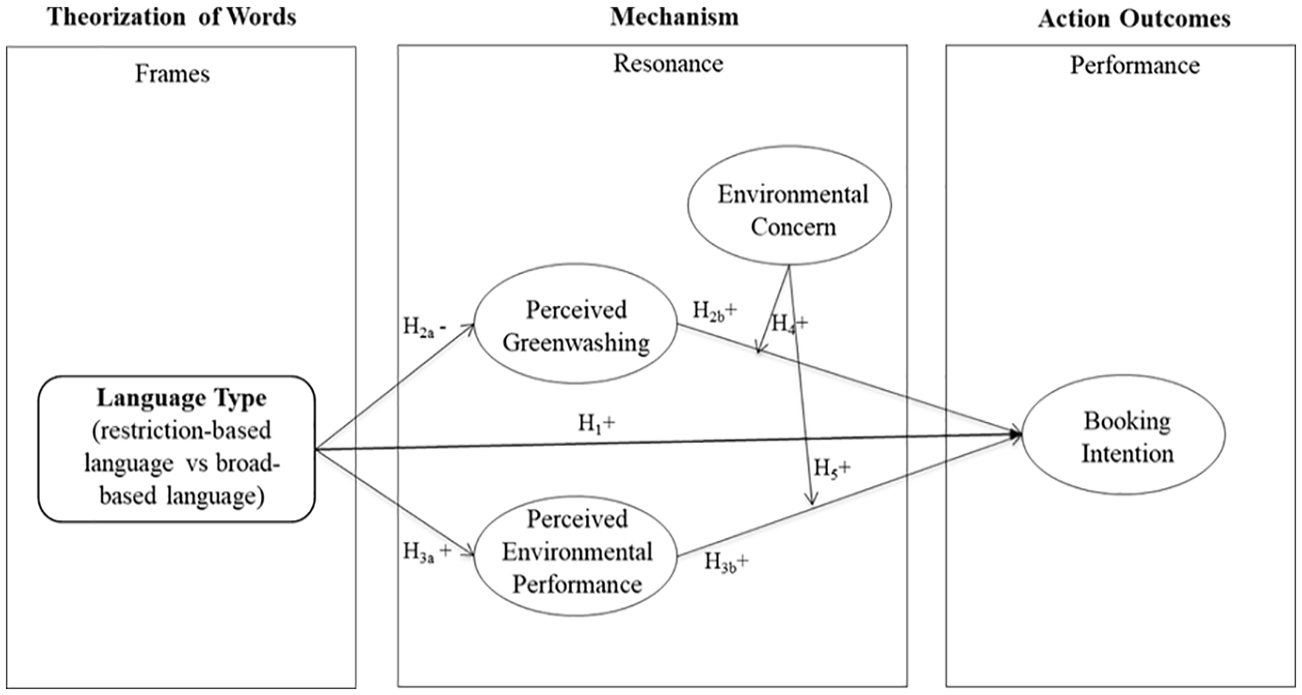
Conceptual model.
Methods
Study Pretest
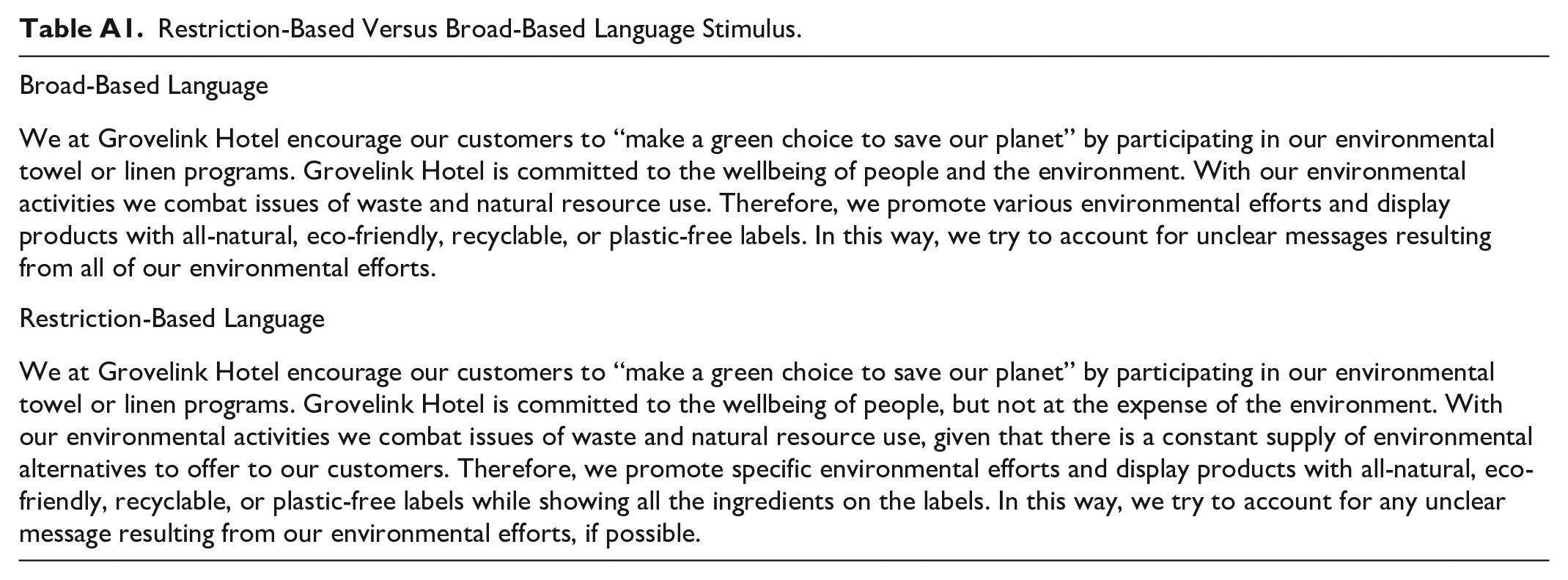
We conducted both onsite and online consumer experiments to examine the proposed hypotheses via a between-subjects design. For the pilot and main studies, participants were instructed to imagine that they were planning to book a hotel for their next vacation when they reviewed information about Grovelink Hotel (see Table A1 in Appendix 1). The hypothetical scenarios were developed based on actual hotel sustainability messages and were refined based on theoretical distinctions between the two language types (restriction-based vs. broad-based; e.g., Crilly et al., 2016; Pennebaker & King, 1999). Under both conditions, participants were asked to “make a green choice to save the planet by participating in the hotel’s environmental program.” The broad-based condition was primed with words that provided no limits to what the environmental claim could achieve (e.g., and, various, all) whereas the restriction-based condition featured words that provided limits regarding what the claim could achieve (e.g., but not, given that, specific, if possible; see Appendix 1). For the pilot study, 179 participants were recruited via the online consumer panel Amazon Mechanical Turk (MTurk) based in the United States, in exchange for minor monetary compensation (Mage = 36.73 years, 56% female). The mean score of the restriction-based stimuli was greater than the broad-based stimuli, Mrestricted = 3.69, Mbroad = 3.01, F(177) = 35.58, p < .001, thus indicating that the manipulation was successful.
Study 1—Hotel Guest Sample
Study 1 recruited participants from three midscale hotel properties located in southeastern destinations in the United States. Guests were handed a business card with an invitation to participate in the survey that could be accessed by either typing in the survey link in Google or scanning the survey QR code (see Appendix 2; Figure 3). Once participants entered the survey site, they were randomly assigned to one of the two scenarios (restriction-based vs. broad-based) by the Randomizer element in Qualtrics survey flow. After reading the scenario, participants answered manipulation check questions and questions pertaining to perceived environmental performance, perceived greenwashing, environmental concern, and booking intention, as well as demographic questions. To enhance the validity of responses for all studies, several attention check questions were included in the survey (e.g. “select strongly agree if you are reading attentively”). A total of 352 participants provided complete responses to the survey and passed the attention checks and manipulation. Among these respondents (Mage = 48 years), 49% were female, 63% were Caucasian, 90% were educated above a bachelor’s degree, 50% traveled for leisure purposes, and 39% traveled for business.
Measures
As previously performed in the pilot study, the manipulation for language type differences (broad vs. restricted) was assessed by having participants respond to five statements (Crilly et al., 2016; Pennebaker & King, 1999), including “Grovelink Hotel was detailed in their environmental policy” and “Grovelink Hotel clearly indicates the limits of what they are able to do in their environmental claim” (Cronbach’s α = .83). The mean score of the restriction-based stimuli was greater than that of the broad-based stimuli, Mrestricted = 3.33, Mbroad = 2.79, F(1, 349) = 25.56, p < .001, thus indicating that the manipulation was successful. Six items were adapted from Folse et al. (2013) to measure perceived environmental performance (e.g., “Grovelink hotel appears to be socially responsible,” “Grovelink hotel cares about the environment”). Four items were adapted from the literature and from Laufer (2003) to measure perceived greenwadhing (e.g., “Grovelink hotel exaggerated about the effects of its environmentally friendly practices,” “Grovelink hotel had an environmental claim that seems vague and seemingly unprovable”). Four items were adapted from Schlegelmilch et al. (1996) to measure booking intention (e.g., “I would choose Grovelink hotel regardless of the price,” “I would choose Grovelink regardless of the quality and service and/products”). Finally, four items were adapted from Lee (2009) to measure environmental concern (e.g., “I would say I am emotionally involved in protecting the environment,” “The green environment is a major concern”). All items were measured with a five-point Likert-type scale ranging from 1 = strongly disagree to 5 = strongly agree).
Results
Study 1: On-Site Sample
The reliability of the measurement scales was assessed using Cronbach’s alpha. The results show that the Cronbach’s alpha for each scale was greater than .70 (PG = .77; PEP = .91, EC = .86, BI = .71), thus indicating solid reliability (Nunnally, 1978). To examine Hypothesis 1, we conducted a univariate analysis with language type as the fixed factor and BI as the dependent variable. The results show a significant effect of language type, F(1, 348) = 2.88, p = .041, R2 = .012, on BI. Specifically, we found that restriction-based stimuli (M = 2.74, SD = .86) had a more positive effect on BI than did broad-based stimuli (M = 2.56, SD = .79), thus supporting Hypothesis 1.
To examine mediation effects (Hypotheses 2 and 3), previous research has recommended that researchers estimate the indirect effect of ab (X→M→Y; Hayes & Rockwood, 2016). Therefore, this study applied bootstrap confidence interval analysis with a default of 10,000 bias-corrected bootstrapping samples to test mediation effects in PROCESS Macro (Model 4). A claim of mediation is supported if the upper and lower bounds of the 95% confidence interval are above zero (Hayes & Rockwood, 2016). In this study, language type was entered as a dichotomous X variable (1 = restriction-based, 0 = broad-based), PG (M1) and PEP (M2) as continuous mediating variables, and BI as a continuous outcome variable (Y).
Results
The Parallel Mediation Model With the Two Mediators (PG and PEP) Showed Two Statistically
Significant indirect effects. While there was no direct effect of language type on booking intention (b = 0.17, t = 1.91, p = .06), the results supported the mediating role of perceived greenwashing, such that the restriction-based language type negatively affected perceived greenwashing (b = −.34, p < .001), which, in turn, positively affected booking intention (b = .22, p < .001). Furthermore, the bootstrap 95% confidence interval for the indirect effect does not include zero (indirect = −.076, SE = .03, Lower Level Confidence Interval (LLCI) = −.1325, Upper Level Confidence Interval (ULCI) = −.0275), thus supporting Hypotheses 2a and 2b. The results also supported the mediating role of perceived environmental performance, such that restriction-based language positively affected perceived environmental performance (b = .24, p < .01), which in turn positively affected booking intention (b = .56, p < .001). The bootstrap 95% confidence interval for the indirect effect does not include zero (indirect = .134, SE = .05, LLCI = .0340, ULCI = .2402), thus supporting Hypotheses 3a and 3b (see Table 1).
Unstandardized Path Coefficients and Indirect Effects for the Mediation Model.
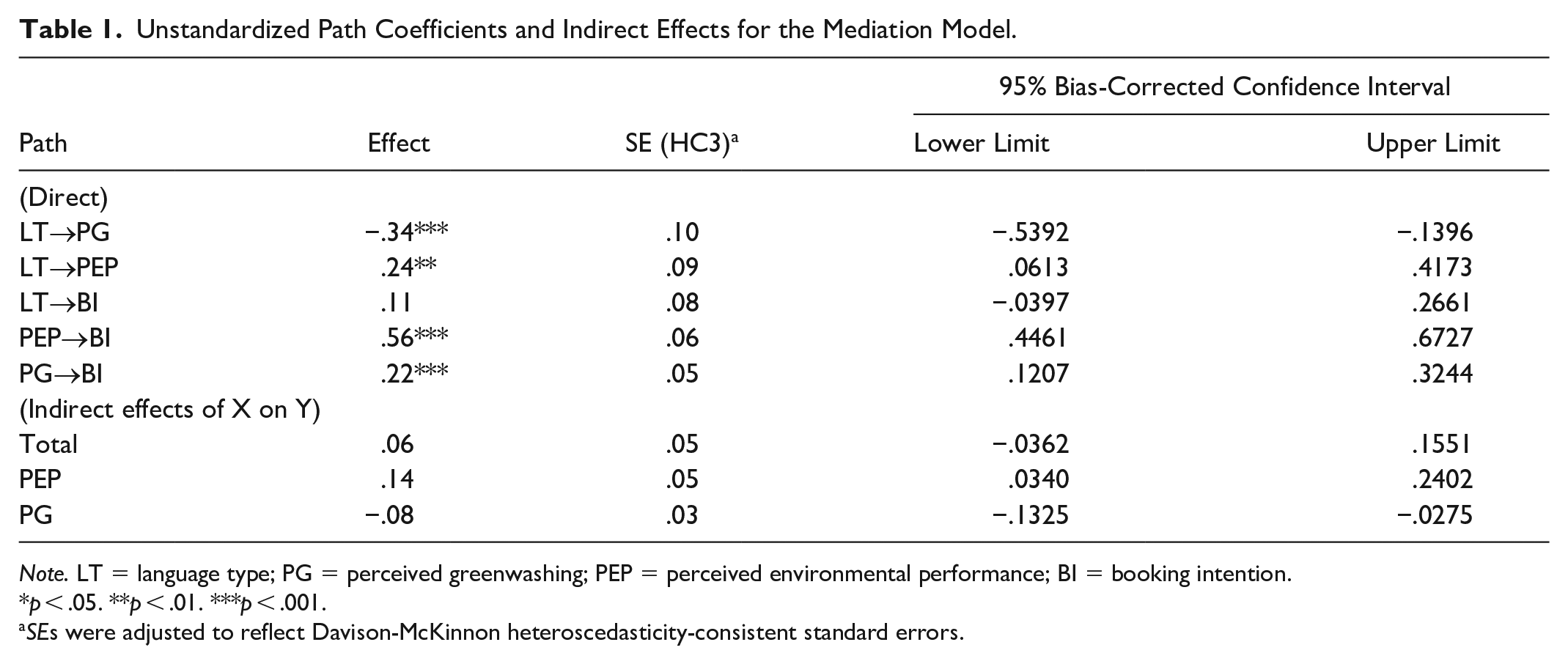
Note. LT = language type; PG = perceived greenwashing; PEP = perceived environmental performance; BI = booking intention.
p < .05. **p < .01. ***p < .001.
SEs were adjusted to reflect Davison-McKinnon heteroscedasticity-consistent standard errors.
Moderated Mediation Analysis
The literature highlights that effects can operate indirectly through mediators (as evidenced in the previous model) and that the size of this indirect effect can be contingent on another variable, which is referred to as “moderated mediation” (Hayes & Rockwood, 2016, p. 14). Previous work by Hayes and Preacher (2013) introduced conditional process analysis that allows researchers to interpret models with moderated mediation effects. This method examines “the contingencies of mechanisms and tests hypotheses about how processes can vary between people and contexts” (Hayes & Rockwood, 2016, p. 14). Accordingly, the PROCESS procedure (Model 14) was utilized due to its advantages in conditional process analysis and its suitability in consumer research (Hayes & Rockwood, 2016). The conditional process model used in this study analyzed the specific indirect effects of language type (X) on booking and stay intention (Y) through PG (M1) and PEP (M2), as moderated by EC (W). We followed the Hayes and Rockwood (2016) PROCESS procedure (Model 14) with recommended bias-corrected bootstrapping techniques (number of bootstrap samples = 10,000). Prior to the analysis, PEP, PG, and EC were mean-centered to prevent multicollinearity issues.
Hypothesis 4, which predicted that the indirect effect of language type (LT) on BI via PG depends on the level of EC, was not supported, as evidenced in the CI of the index of moderated mediation which contained zero (b = −.0125, 95% CI [−0.0637, 0.0141]). However, evidence exists to support Hypothesis 5, which predicted that the indirect effect of LT on BI via PG depends on the level of EC (b = .208, SEboot = .072, t = 2.88, p < .01). The overall moderated mediation model was also supported by the index of moderated mediation (b = .050, 95% CI [0.0116, 0.1060]). Since this CI is entirely above zero, the conclusion is that the indirect effect of LT on BI via PEP is positively moderated by EC. This interaction was further probed, and it was discovered that the conditional indirect effect was strongest in participants with high levels of EC (1 SD above the mean of EC; effect = .163, SEboot = .064, 95% CI [0.0382, 0.2860]) and weakest in participants with low levels of EC (1 SD below the mean of EC; effect = .088, SEboot = .038, 95% CI [0.0174, 0.1612]) Specifically, higher levels of EC resulted in higher BI, validating the moderated mediation for Hypothesis 5 (see Figure 2 and Table 2).
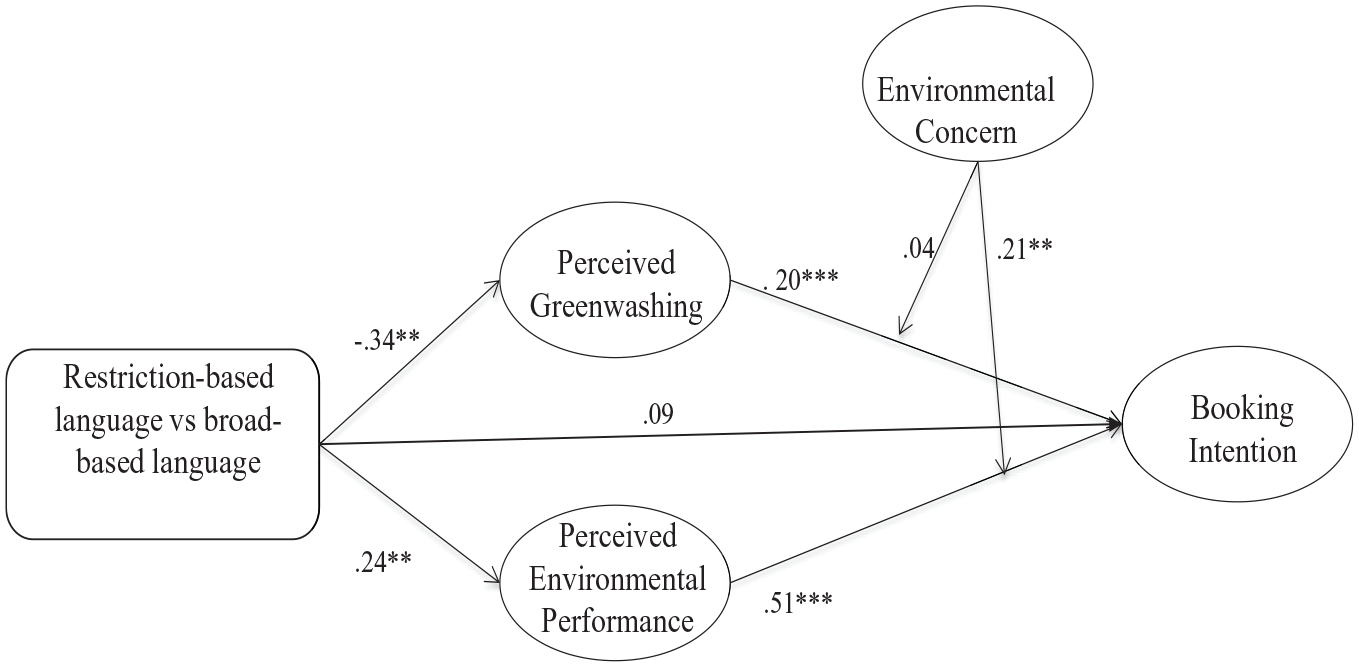
Moderated mediation model results.
Unstandardized Ordinary Least Squares Regression Coefficients With Confidence Intervals (errors in parentheses) Estimating the Mediation Effects of PG and PEP and the Moderated-Mediation Effect of EC.
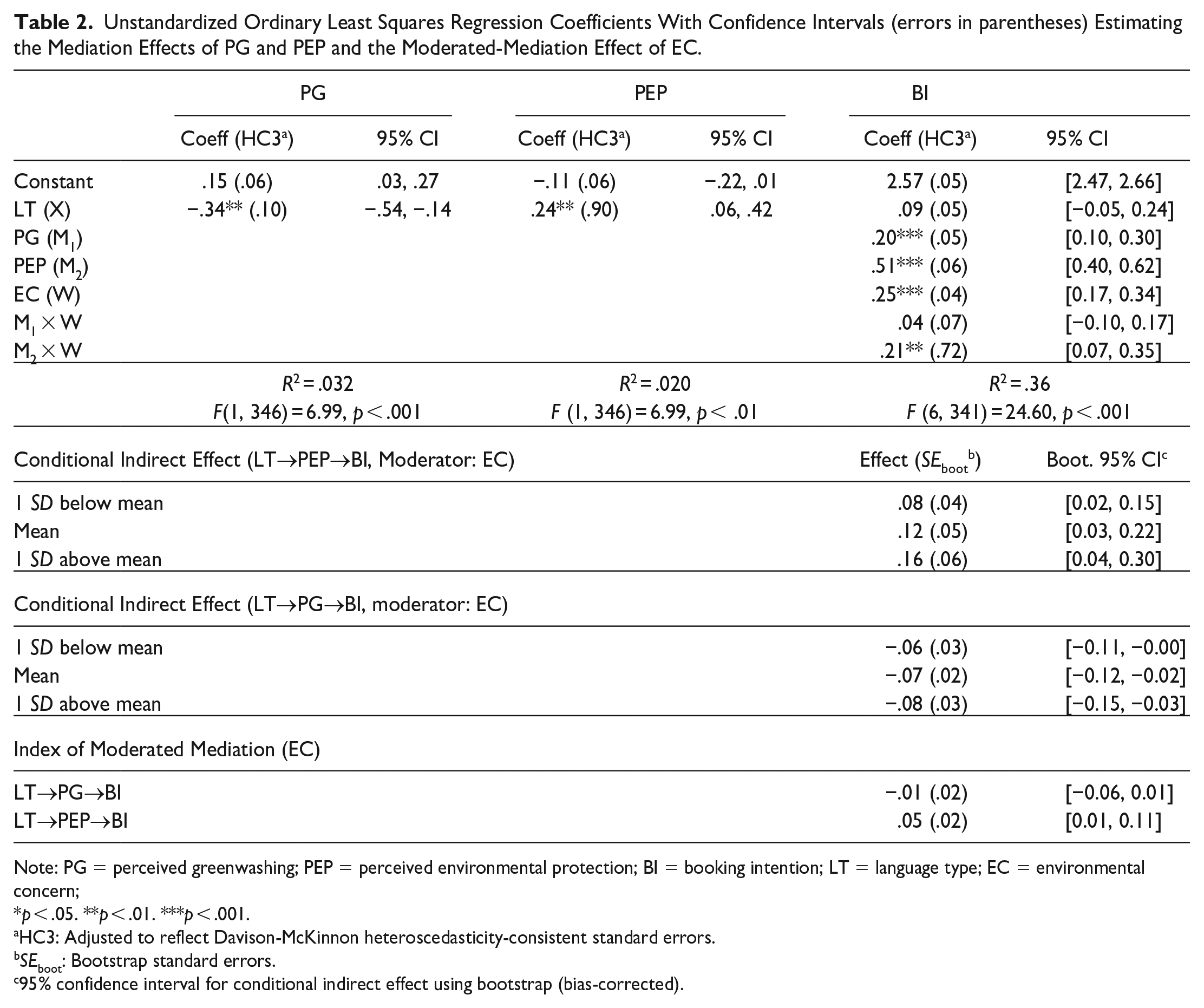
Note: PG = perceived greenwashing; PEP = perceived environmental protection; BI = booking intention; LT = language type; EC = environmental concern;
p < .05. **p < .01. ***p < .001.
HC3: Adjusted to reflect Davison-McKinnon heteroscedasticity-consistent standard errors.
SEboot: Bootstrap standard errors.
95% confidence interval for conditional indirect effect using bootstrap (bias-corrected).
Study 2: Online Sample
A second study was conducted to verify the findings from Study 1 in a different context by recruiting participants from MTurk based in the United States, in exchange for minor monetary compensation. Once participants entered the survey site, they were randomly assigned to one of the two scenarios (restriction-based vs. broad-based) by the Randomizer element in the Qualtrics survey flow. After reading the scenario, participants answered manipulation check questions and questions pertaining to PEP, PG, EC, and BI, as well as demographic questions. To enhance the validity of the responses for all studies, several attention check questions were included in the survey (e.g. “select strongly agree if you are reading attentively”). Of the 500 participants recruited, 437 provided complete responses to the survey and passed the attention checks and manipulation. Participants were eligible for the survey only if they had stayed in a hotel within the past 2 years (19.7%), 1 year (26.35), or 6 months (54%). Among these respondents (Mage = 42 years), 51% were female, 73% were Caucasian, 78% were educated above a bachelor’s degree, 56% traveled for leisure purposes, and 41% traveled for business. The data were checked for normality and nothing unusual was found.
Results
Similar to Study 1, univariate analysis was conducted to test Hypothesis 1 with language type as the fixed factor and BI as the dependent variable. The results did not show a significant effect of language type, F(1, 435) = 1.04, p = .865, on BI; thus, H1 was not supported. Nevertheless, the mean score of the restriction-based stimuli was greater than the broad-based stimuli, Mrestricted = 3.87, Mbroad = 3.37, F(403) = 35.58, p < .001, indicating that the manipulation was successful and warranted testing of the other hypotheses.
Hayes Process Model 4 was used to examine the mediation effects of PG and PEP on BI. Similar to Study 1, there was no direct effect of language type on BI (b = −.07, t = −4.48, p = .32). However, the results supported the mediating role of PG, such that the restriction-based language type negatively affected PG (b = −.48, p < .001), which, in turn, positively affected BI (b = .31, p < .001). Furthermore, the bootstrap 95% confidence interval for the indirect effect did not include zero (indirect = −.152, SEboot = .04, LLCI = −.2369, ULCI = −.0834), thus supporting Hypotheses 2a and 2b. The results also supported the mediating role of PEP, such that restriction-based language positively affected PEP (b = .23, p < .01), which, in turn, positively affected BI (b = .91, p < .001). The bootstrap 95% confidence interval for the indirect effect did not include zero (indirect = .210, SEboot = .06, LLCI = .0801, ULCI = .3375), thus supporting Hypotheses 3a and 3b.
To test if the conditional indirect effect of language type on BI via PEP and PG depended on the level of EC (Hypotheses 4 and 5), we estimated parameters for the regression models using the PROCESS Macro (Model 14) and the index of moderated mediation with recommended bias-corrected bootstrapping techniques (number of bootstrap samples = 10,000) to interpret the results (Hayes & Rockwood, 2016). Prior to the analysis, PEP, PG, and EC were mean-centered to prevent multicollinearity issues. Similar to Study 2, the overall model was significant, F(6, 430) = 71.949, p < .001, R2 = .475), along with one significant interaction between PEP and EC (b = .216, p < .0.01, 95% CI [0.0833, 0.3489]). The moderated mediation effect was also supported by the index of moderated mediation (b = .050, 95% CI [0.0097, 0.1000]). As this confidence interval was entirely above zero, the conclusion was that the indirect effect of LT on BI via PEP was positively moderated by EC, thus supporting Hypothesis 5. Hypothesis 4, which predicted that the indirect effect of LT on BI via PG depended on the level of EC, was not supported as evidenced in the CI of the index of moderated mediation, which contained zero (b = −.029, 95% CI [−0.0766, 0.028]). Table 3 shows the moderated-mediation results, and Table 4 shows a side-by-side comparison of the hypotheses results for Study 1 and Study 2.
Unstandardized Ordinary Least Squares Regression Coefficients With Confidence Intervals (errors in parentheses) Estimating the Mediation Effects of PG and PEP and the Moderated-Mediation Effect of EC.
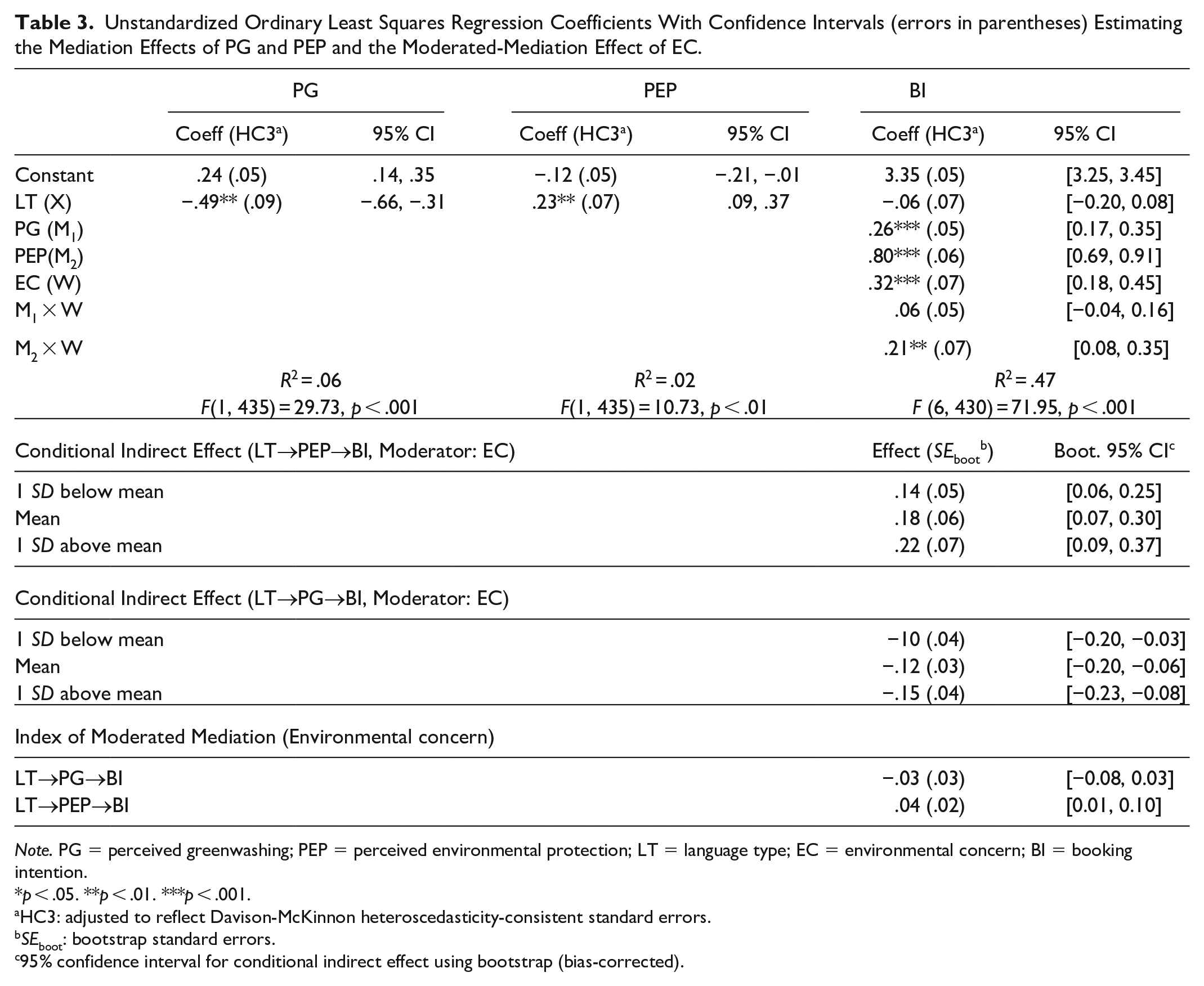
Note. PG = perceived greenwashing; PEP = perceived environmental protection; LT = language type; EC = environmental concern; BI = booking intention.
p < .05. **p < .01. ***p < .001.
HC3: adjusted to reflect Davison-McKinnon heteroscedasticity-consistent standard errors.
SEboot: bootstrap standard errors.
95% confidence interval for conditional indirect effect using bootstrap (bias-corrected).
Hypotheses and Causal Relationships for Study 1 and Study 2.
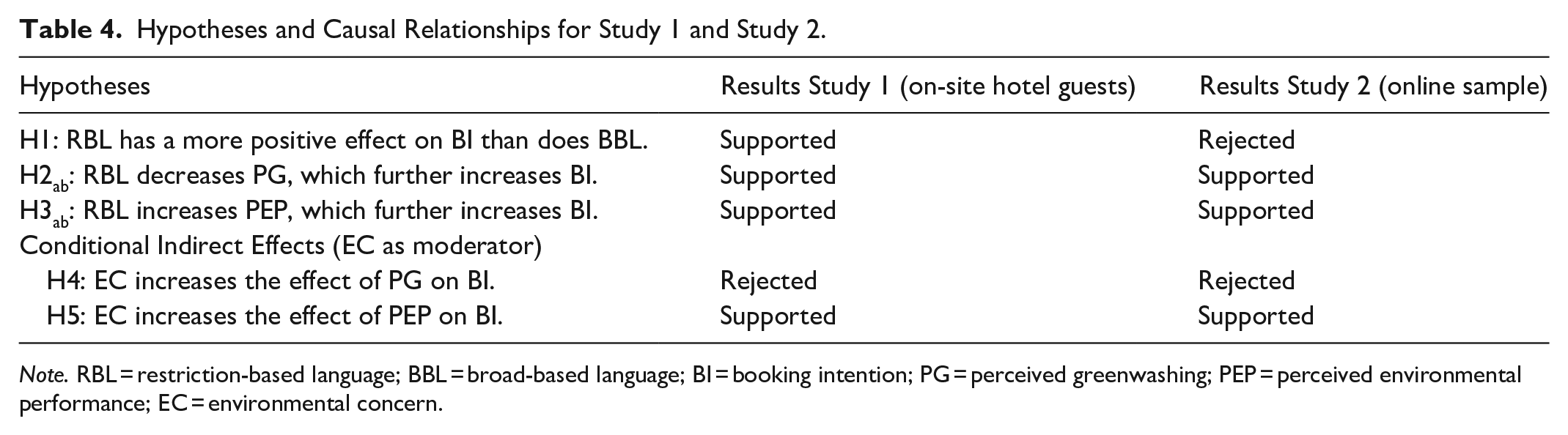
Note. RBL = restriction-based language; BBL = broad-based language; BI = booking intention; PG = perceived greenwashing; PEP = perceived environmental performance; EC = environmental concern.
Discussion and Implications
Drawing on cognitive linguistic theory (Cornelissen et al., 2015), this study proposed that the persuasiveness of a hotel’s sustainability communication can be improved when message content is aligned with language design components that identify connectives and prepositional phrases as essential grounding components of persuasion. Sustainable communication literature has often focused on the influence of message content, highlighting the persuasive effects of messages that are gain/positively framed (Blose et al., 2015; Grazzini et al., 2018) or elicit personal benefits (Hardeman et al., 2017). However, the combined effects of various message factors (e.g., content, structure, design) to improve message persuasion (e.g., Gao et al., 2020; Zhang et al., 2020) have rarely been explored. To fill this void, this study examined the joint effect of message content with linguistic design features (restriction-based vs. broad-based language) on consumer perceived environmental performance, perceived greenwashing, and booking intention and the moderating role of environmental concern. The findings were consistent across two studies except for Hypothesis 1, which predicted that restriction-based language would have a greater effect on booking intention compared to broad-based language. While this was marginally significant in Study 1 (p = .04, R2 = .012), there were no significant differences between the language types on booking intention in Study 2 (p = .87, R2 = .00). This finding can be explained through the time differences and contexts under which the data were collected. Study 1 data were collected on-site at hotel properties prior to the COVID-19 pandemic, while Study 2 data were collected from participants in an online setting after the most severe effects of the COVID-19 pandemic had been experienced. Nevertheless, the mediating effect of legitimacy variables (PEP and PG) and the conditional effect of environmental concern on booking intention were validated in Study 2.
Our findings suggest that the persuasiveness of a hotel’s sustainability communication depends on the language type used in the message (i.e., linguistic design). Specifically, the use of restriction-based language is more effective than broad-based language in driving booking intention through perceived environmental performance, while a reducing effect on booking intention was observed through perceived greenwashing. It was observed that perceived environmental performance increased when restriction-based language was used in a hotel’s sustainability communication and that this further increased booking intention. This finding supports previous studies that found that a hotel’s commitment to the environment influenced consumers’ willingness to pay more or visit that hotel property (H. Chen et al., 2019; Han & Yoon, 2015; Prud’homme & Raymond, 2013). From a social identity theoretical perspective, customers feel more identified with an organization that is perceived to act responsibly and are more engaged with the organization in the form of customer loyalty and advocacy (Tajfel & Turner, 2004). These traits are correlated with the use of restriction-based language that provides specific details and boundaries about a hotel’s environmental activities.
The study also found that when restriction-based language was used in the hotel’s sustainability communication, perceived greenwashing decreased, which in turn increased booking intention. This novel finding suggests that restriction-based language can be an effective tool in sustainability communication to reduce incidents of skepticism and percieved greenwashing, which previous literature has cited as barriers to hotel patronage (H. Chen et al., 2019; Rahman et al., 2015). Another explanation involves the positive halo effect of environmentally friendly goods or services. This effect occurs when an individual’s assessment of one characteristic of an item or service powerfully affects or slants the individual’s impression of the overall attributes of the same product or service (Lee et al., 2013). For example, several studies in the hospitality literature show that halo effects are common in cases with foods labeled as “natural” or “organic” such that consumers evaluate these products as being healthier and with lower risks, and have a more positive attitude toward the products and/or stronger purchase intention (Abrams et al., 2010; Devcich et al., 2007; Reynolds et al., 2018). In this context, the type of language used in the sustainability communication led to a positive halo effect that the hotel was engaging in activities that were good for the environment. The stimulus consisted of phrases that participants were familiar with from previous hotel visits such as “save the planet” and “towel and linen reuse.” These are commonly associated with popular environmental practices in hotels. Therefore, this may have elicited thought processes that the hotel was engaging in activities to protect the environment.
The study also found that environmental concern moderated the positive effect of perceived environmental performance on booking intention, but this was not the case for the effect of perceived greenwashing on booking intention. This finding corresponds to several studies in the literature that found that consumers with high levels of environmental concern were more likely to visit and pay more for a hotel’s green initiatives (Han et al., 2019; Kang et al., 2012). Today’s customers have greater concern for the environment due to increased knowledge and information about environmental issues and green products (Kwon et al., 2016). Therefore, they are compelled to take action, especially if they believe there is sufficient evidence that a hotel is authentic in its environmental initiatives. However, Milfont and Gouveia (2006) argued that environmental concern can also symbolize consumers’ emotional reactions such as uncertainties, dislikes, and compassion toward environmental issues. The findings suggest that consumers with high levels of environmental concern will not book a hotel (as observed through the nonsignificant effect from perceived greenwashing) if they are skeptical about a hotel’s environmental initiatives. This is a significant finding because it suggests that any form of greenwashing must be avoided since it can be equally detrimental to all consumers, including those with high levels of environmental concern. Therefore, hotels are advised to eradicate greenwashing due to its negative effects as shown in prior empirical studies. These findings provide important theoretical and managerial implications.
Theoretical Implications
Despite the growing interest in research on sustainability communication (Tölkes, 2018; Villarino & Font, 2015), limited research has examined the integration of various language design components to improve the persuasiveness of sustainability communication. Previous work has focused on single persuasive effects of message content that are gain/positive framed (Grazzini et al., 2018) or elicit personal benefits (Hardeman et al., 2017) in isolation. This study fills the research gaps related to hotel sustainability marketing by proposing the effective application of language design components that enhance the persuasiveness of sustainability communication. Building on cognitive linguistic theory (Cornelissen et al., 2015), we proposed and demonstrated that restriction-based language is more effective in driving perceived environmental performance and booking intention and decreasing perceived greenwashing. The findings further suggest that the advantages of restriction-based language disappear when perceived greenwashing interacts with environmental concern to influence booking intention. Accordingly, this study provides a more nuanced understanding of language appeal types by showing that the effectiveness of restriction-based language in sustainability communication that leads to booking intention depends on guests’ legitimacy (e.g., PEP) and illegitimacy (e.g., PG) perceptions. This is the first study, to the best of our knowledge, to evaluate these relationships.
Rhetorical theories from mainstream literature suggest that since language directs us to perceive things in a particular manner, meaning is ascribed according to the type of information that is emphasized, ignored, or not included (Font et al., 2017). The present study extends this academic discourse from theory to practice in a hospitality context by highlighting the performative role of language (Cornelissen et al., 2015) and cognition in forming legitimacy judgments (Bitektine & Haack, 2015) that further propel guests to take pro-environmental actions. We tested Lockwood et al.’s (2019) conceptual framework, which calls attention to the linguistic structure and performative role of words in organizations’ claims in order to bridge the gap between language and action. The findings from cognitive linguistics theory confirm that the interpretive processes used by social actors intentionally and unintentionally shape consumers’ cognitive judgments about legitimacy (e.g., PEP and PG; Hoefer & Green, 2016), which further influence action (BI).
Managerial Implications
The findings from the present study highlight the persuasive effects of designing sustainable communication with restriction-based language in order to activate positive differences in consumers’ perceptions and actions when compared to broad-based language. The findings suggest that hotel consumers are often very sophisticated travelers who can discern language differences in a hotel’s sustainable communication and act based on the combined effect of the message’s content and linguistic design. Therefore, hotels should temper their efforts to create social media buzz by accurately framing their environmental objectives. It is recommended that hoteliers and marketing managers audit the content and linguistic design of their environmental messages (whether written, graphic, or implied) prior to launch to ensure that they highlight the limitations and trade-offs of the hotels’ environmental initiatives and avoid sweeping statements. For example, when guests are invited to ‘save the planet’ by participating in an environmental initiative, hotels should follow up with details regarding the specific environmental or social problem the hotel aims to solve. The success of the Hilton Hotel chain’s targeted initiatives can serve as a guide for other chain hotels to emulate. Hilton allocates resources to local and minority-owned suppliers and invests in programs to help women and youth around the world to truly back up their “We care!” slogan. Likewise, estination Market Organizations (DMOs), hotel brands and travel companies can work together to make their communication efforts more consistent and synchronized to remove barriers and create a more inclusive marketing appeal to travelers (Bernard et al., 2022a).
In addition, hotels are encouraged to evaluate how their environmental efforts will affect hotel guests over the long term. Although some hotels begin with low-cost environmental initiatives such as towel reuse or energy-saving stickers, they can implement continuous improvement strategies whereby the tangible impacts of their efforts are evident in the environment and the community. Communicating specific sustainable initiatives can further improve transparency perceptions, such that guests will truly believe in the hotel’s environmental performance and not feel skepticism or perceive greenwashing.
Considering the goal of retaining hotel guests over the long term, hotels should assiduously avoid greenwashing practices. Our study shows that restriction-based language reduces perceived greenwashing; however, the greenwashing spillover effect is nullified by consumers with high environmental concern. Information today is readily available at customers’ fingertips and once a customer becomes aware of a hotel’s unscrupulous practices, they may boycott the property or spread negative word of mouth, as highlighted in previous literature. If hoteliers are uncertain about the message framing of their environmental initiatives, it is recommended that they partner with hospitality educators with an environmental management research focus or with environmentalists to improve the message content–structure design.
Indeed, we are encountering unprecedented times regarding travel; however, recent research by Booking.com in April 2021 revealed positive trends in travelers’ ambitions to make more sustainable travel decisions in the future. This finding suggests that how sustainability messages are communicated will continue to shape perception and behavior in the hotel industry context. Based on a recent survey by Shust (2020) on how the COVID-19 pandemic affected consumers’ travel routines, preferences, and expectations, it was found that travelers will become more deliberate and thoughtful. Specifically, the study showed that travelers will hold hotels and other accommodation providers to a much higher standard than previously; they will do more research prior to booking and will become more proactive in the information-gathering process (Bernard et al., 2022b). Consequently, the use of restriction-based language in sustainable communication will become even more relevant as travelers seek to build trust with service providers and purchase hospitality services.
Limitations and Future Research
Our study has several limitations which may serve to improve future lines of research. Despite the initial goal to collect a larger sample of data from guests staying onsite at hotel properties for both studies, only Study 1 achieved this goal. Furthermore, participants were asked about their perceptions and intentions based on a scenario-based stimulus that perhaps did not capture all the elements typically displayed in a hotel’s sustainability communication. Finally, the ability to test consumers’ responses to visual cues in sustainability communication was limited. Future studies could add these elements to conduct field research to test their combined effects. The effects of language type could also be tested on various guest interfaces including online hotel websites and social media platforms that mirror the real guest experience when booking a hotel.
Concluding Summary
Considering the competitive advantage for tourism businesses when implementing sustainability strategies (Bianco et al., 2023) and the growing number of consumers highlighting a lack of transparency in hotels’ environmental claims as a barrier to taking sustainable action (Tetrapak.com, 2021), efficiently communicating sustainability initiatives is critical to generating positive attitudes and pro-environmental behavior in hotel consumers, since investment in sustainability strategies will remain undetected if not transparently and persuasively communicated to guests (Kapoor et al., 2021). Drawing on cognitive linguistic theory (Cornelissen et al., 2015), this study offered new insights into the combined effect of language design elements that identify connectives and prepositional phrases with message content as essential grounding components of persuasion. Our results demonstrated the effectiveness of restriction-based language design on booking intention through nuanced mechanisms involving perceived environmental performance, perceived greenwashing, and environmental concern. We provided extensive theoretical and managerial implications that companies can employ to develop their sustainability communications.
Footnotes
Appendix 1
Restriction-Based Versus Broad-Based Language Stimulus.
| Broad-Based Language |
| We at Grovelink Hotel encourage our customers to “make a green choice to save our planet” by participating in our environmental towel or linen programs. Grovelink Hotel is committed to the wellbeing of people and the environment. With our environmental activities we combat issues of waste and natural resource use. Therefore, we promote various environmental efforts and display products with all-natural, eco-friendly, recyclable, or plastic-free labels. In this way, we try to account for unclear messages resulting from all of our environmental efforts. |
| Restriction-Based Language |
| We at Grovelink Hotel encourage our customers to “make a green choice to save our planet” by participating in our environmental towel or linen programs. Grovelink Hotel is committed to the wellbeing of people, but not at the expense of the environment. With our environmental activities we combat issues of waste and natural resource use, given that there is a constant supply of environmental alternatives to offer to our customers. Therefore, we promote specific environmental efforts and display products with all-natural, eco-friendly, recyclable, or plastic-free labels while showing all the ingredients on the labels. In this way, we try to account for any unclear message resulting from our environmental efforts, if possible. |
Appendix 2
Acknowledgements
We would like to thank the reviewers for their time and valuable feedback.
Declaration of Conflicting Interests
The author(s) declared no potential conflicts of interest with respect to the research, authorship, and/or publication of this article.
Funding
The author(s) disclosed receipt of the following financial support for the research, authorship, and/or publication of this article: Auburn University, college of human sciences
