






Abstract
Although location choice is fundamental in the hospitality industry, current research often overlooks the role of incumbent market structures in shaping these decisions. This study addresses this gap by examining how strategic entry barriers and brand loyalty influence new entrants’ market choices. Using data from 4,249 Texas hotels (2001–2023) and applying multi-level zero-inflated Poisson and hurdle gamma models, the analysis reveals that ownership consolidation limits the volume of entries and redirects potential entrants to nearby markets, while class heterogeneity surprisingly attracts more entrants. Moreover, strong brand loyalty deters independent hotels entirely and selectively discourages “loyalty beachheads,” although a higher concentration of parent companies may entice certain branded newcomers. These findings offer new insights into how incumbents can influence competitive dynamics and guide policymakers as they weigh the benefits of market consolidation against the need to foster a healthy, diverse hospitality sector.
Keywords
Highlights
The study focuses on investigate preemption and brand loyalty as strategic entry barriers.
The results show that ownership concentration deters new owners from entering the market.
Class Heterogeneity among incumbents attracts new competitors to the market.
Branded hotels’ proportion deters independent hotels and loyalty beachheads.
Parent company consolidation deters independents but attracts loyalty beachheads.
Introduction
In the hospitality industry’s competitive landscape, a hotel’s geographical positioning profoundly influences its performance and competitive advantage, making location choice a critical yet often irreversible decision (Yang et al., 2012). The concept of agglomeration, where hotels cluster in specific areas, plays a principal role in these choices (Fang et al., 2019; S. K. Lee & Jang, 2015). On one hand, agglomeration creates positive externalities that entice new entrants to favor these markets (Yang et al., 2014). On the other hand, it heightens incumbents’ exposure to fresh competition and the associated potential erosion of market share (Balaguer & Pernías, 2013).
Safeguarding a favorable market position is thus crucial for businesses striving to maintain a sustained competitive advantage (Cookson, 2018). In the tourism industry, marked by high fixed costs (O’Neill & Xiao, 2010) and limited relocation flexibility (Fang et al., 2019), incumbents may establish entry barriers through strategic measures and specific market conditions. Such barriers can discourage potential entrants or push them to consider alternative markets.
Although substantial research has examined location choice and its determinants—including agglomeration benefits (Fang et al., 2019, Song & Ko, 2017)—there remains a notable gap in understanding how the existing competitive landscape influences strategic location decisions. Furthermore, prior studies focus on the attributes of markets where hotels ultimately enter, overlooking the dynamics of nearby markets that also influence entry decisions.
These are important gaps because ignoring both the incumbent market structure and the conditions in adjacent competitive markets yields an incomplete picture of the hotel location-choice process. This study attempts to address these gaps by examining two types of entry barriers: strategic barriers, including ownership consolidation and class heterogeneity; and brand loyalty, measured by branded-hotel presence and parent company concentration. Specifically, this study poses the following question: How do strategic barriers and brand loyalty act as deterrents to new market entries?
To answer this question, this study applies a multi-level zero-inflated Poisson and a multi-level Hurdle Gamma regression to a dataset of 784,895 data points from 4,249 hotels operating in Texas from January 2001 to December 2023. The findings reveal that ownership consolidation creates a “fat-cat effect,” deterring substantial entry volumes into the market, while strong branded-hotel presence and the consolidation of parent companies notably discourage independent hotel entries. Conversely, a higher level of class heterogeneity tends to attract new hotels, and parent company consolidation creates attraction effects for “loyalty beachhead” hotels—those branded entrants attempting to establish a first foothold in a market with no prior parent-company representation. Additionally, higher ownership consolidation pushes many new entrants to choose neighboring markets instead, with similar results found for the proportion of branded hotels on new independent entrants. These results illustrate entry diversion and its significant implications for both focal and adjacent areas.
This study contributes to hospitality and tourism literature by examining entry barriers stemming from market structure dynamics, demonstrating how these barriers can divert or discourage new entrants, challenging conventional assumptions about market entry behavior. For practitioners, findings suggest strategies to protect existing market share and limit competition inflows, while also offering insights into how policy and regulatory factors might foster or constrain a more balanced competitive environment.
Literature Review
Location Choice
The mantra “location, location, location” has long underscored the critical role of geographical positioning in tourism and hospitality. Once made, location decisions are difficult to reverse, highlighting their strategic importance given the sunk costs involved (Cabral, 2012; Yang et al., 2014)
Hotel location choice research traditionally emphasizes accessibility factors (S. K. Lee & Jang, 2017), such as proximity to subway stations (Yang et al., 2012), highway exits (Mazzeo, 2002), and tourist attractions (Song & Ko, 2017). An equally important consideration is the degree of agglomeration, which reflects the density of competitors in the area. New entrants are often drawn to these clustered markets, hoping to benefit from positive externalities like demand spillovers and knowledge sharing (Bianco et al., 2025; Fang et al., 2019; Kalnins & Chung, 2004; S. K. Lee & Jang, 2015; Yang et al., 2012, 2014).
Yet, as new entrants move into these markets, incumbents inevitably face potential losses because they cannot alter their positioning ex post (O’Neill & Xiao, 2010). Indeed, a new entrant that strategically diversifies its offering or positions itself at the market’s lower end may reap spillovers and competitive advantage (Bianco et al., 2023; Canina et al., 2005; M. Kim et al., 2020). Conversely, if the newcomers’ offerings are highly similar to incumbents’, it intensifies overall market competition (Mazzeo, 2002) and places downward pressure on prices (Balaguer & Pernías, 2013). Consequently, new market entrants will likely affect incumbents’ performance, which would instead benefit from preventing new hotels from entering the market.
So far, however, current literature has not adequately examined how market structure, beyond basic agglomeration, influences location choice. While some hospitality and tourism studies do address entry barriers, such as increases in casino square footage to deter new entrants (Cookson, 2018) or the use of idle capacity in hotels (Conlin & Kadiyali, 2006; Lado-Sestayo et al., 2017), these works focus on particular tactics rather than a comprehensive view of incumbents’ organizational structure and the market power this can exert. Indeed, although agglomeration addresses the number and class of incumbent properties, the organizational structure of these incumbents may substantially shape new hotels’ entry decisions. Specifically, incumbents’ market organization can establish entry barriers, whether through deliberate defensive strategies or indirectly through competitive market dynamics, ultimately discouraging new hotels from entering those markets.
Entry Barriers
Entry barriers significantly influence market dynamics, helping to mitigate the disruptions often accompanying new market participants (Song & Ko, 2017). Such barriers are particularly prominent in industries with substantial fixed costs, sunk costs, and semi-fixed offerings (Porter, 1980). The hospitality sector exemplifies this scenario because of its high fixed costs leading to inefficiencies (Pérez-Rodríguez & Acosta-González, 2023) and the difficulty of altering key features such as class, location, or the number of rooms after market entry (O’Neill & Xiao, 2010). Moreover, the entrance of innovative startups into a historically less innovative industry intensifies incumbents’ need to strengthen their market positions (Bianco et al., 2024a).
Entry barriers can be classified as legal, technical, strategic, and brand loyalty-related types (McAfee et al., 2004). Legal barriers originate from government statutes, such as patents, licenses, permits, and regulations, that might outright prevent a firm from entering (Shapiro, 1989). Technical barriers arise from industry-specific factors such as significant start-up costs, sunk costs, economies of scale, or the presence of natural monopolies (Sutton, 1991). Strategic barriers refer to incumbents’ actions and specific investments that reshape the competitive environment, such as centralizing market control, preemptively occupying market niches, or signaling competitive intentions to possible entrants (McAfee et al., 2004). Finally, brand loyalty emerges as a formidable barrier when robust consumer allegiance to existing brands deters new competitors from attempting entry (Aaker, 2019; Katz & Shapiro, 1985).
In tourism, even though legal and technical barriers exist, they generally do not constitute insurmountable obstacles for new entrants. For instance, zoning regulations may restrict hotel development to particular areas yet rarely forbid the building of new hotels near incumbents (Suzuki, 2013; Yang et al., 2012). Likewise, while capital-intensive hotel projects involve substantial fixed and sunk costs, these tend to be manageable compared to industries such as manufacturing, where economies of scale play a larger role (Sutton, 1991). Consequently, this study focuses on strategic and brand loyalty barriers as the most relevant and influential factors shaping competition in the tourism sector.
Strategic barriers in the hotel industry can include incumbents’ investments in physical assets or manipulative service offerings intended to deter entrants (Yu & Cannella, 2007). By subtly reshaping competition, these barriers help incumbents to sustain market power and safeguard long-term investments, as they make market entry less appealing for would-be competitors (Conlin & Kadiyali, 2006). Often, such measures work because incumbents leverage their deep understanding of market dynamics to construct conditions that effectively deter new entrants.
Empirical studies within the hospitality and tourism industry underscore how firms undertake strategic asset investments or adjust service offerings to heighten entry risk and complexity for newcomers. Cookson (2018), for example, showed that casinos expand their physical capacity when threatened, signaling an oversupplied market that discourages entrants. Similarly, Conlin and Kadiyali (2006) and Lado-Sestayo et al. (2017) found that hotels created idle (unused) capacity as a deterrent measure. This idle capacity signals to potential entrants that existing firms are prepared to absorb demand fluctuations without significant price increases, reducing the profitability of new market entry. By keeping excess capacity available, incumbents create the perception that the market is already saturated and that any new entrant would struggle to secure a viable customer base.
Such types of strategic entry barriers, known as preemptive barriers, aim to secure a dominant market position via capital investments, which expand incumbents’ capacity, thus curbing demand opportunities for new entrants (Cookson, 2017). Essentially, these methods revolve around market saturation, achieved through market expansion (Conlin & Kadiyali, 2006; Cookson, 2018) or by differentiating product offerings to occupy all market segments (Batsakis et al., 2019; Porter, 1980; Ren et al., 2019).
Conversely, some entry barriers arise indirectly from incumbents’ competitive interactions. In these cases, the impediments are not deliberately created to block market entry but surface naturally from incumbents’ quest for market dominance (Koh & Rojas, 2022). A hotel owner, for instance, might expand the hotel’s portfolio within the same market to contrast with fierce rivals, boosting its own market power and, in turn, discouraging newcomers from entry.
Diversion
The decision to enter a market is a crucial one for hotels, primarily because it involves selecting an optimal location in an industry where location is a critical determinant of success (Fang et al., 2019; Vivel-Búa & Lado-Sestayo, 2023). Hotels make market entry decisions by evaluating the potential of the market to maximize their utility, balancing expected returns against the costs incurred to enter (Luo & Yang, 2016). This evaluation considers general market characteristics and the presence of incumbent firms in the market (M. Kim et al., 2020; Yang et al., 2014).
While the core literature on hotel location choice addresses how agglomeration, accessibility, and market attributes influence new entrants (Fang et al., 2019; Mazzeo, 2002; Yang et al., 2012), recent studies underscore an important yet unexplored phenomenon in tourism studies: entry diversion (Uzunca & Cassiman, 2023). Entry diversion occurs when high barriers or unattractive conditions in a focal market lead potential entrants to shift their investments to adjacent or nearby markets, effectively bypassing the saturated or heavily defended primary location. Salop (1979) initially theorized that strategic behavior by incumbents could force entrants into peripheral submarkets, reinforcing the concept of within-industry mobility investigated by Caves and Porter’s (1977) studies on mobility barriers. More recent work extends this perspective to geographic spillovers, showing how barriers in one location push new entrants to neighboring geographic areas (Uzunca & Cassiman, 2023).
When new entrants are diverted to nearby markets, incumbents benefit from reduced direct competition in their market, allowing them to maintain above-normal profits by keeping supply constant (Bischi et al., 2003). However, the diversion of new entrants to adjacent markets can increase competition in the broader region, impacting hotels that compete with similar quality establishments located further away (S. K. Lee, 2015), especially branded hotels (Kalnins, 2016; Li et al., 2018). Additionally, scholars have long recognized that the success of a market can generate indirect competition through externalities—often called spillovers—that shape competitive dynamics in areas outside the primary market, leading to cross-market competition (Kim et al., 2021; Yang & Fik, 2014).
These cross-market repercussions highlight that a complete understanding of entry barriers must look beyond a single focal market and account for how incumbents’ strategies may ripple out to influence nearby locations. In other words, deterring new entrants in one market can inadvertently catalyze competition in surrounding markets, an outcome that could reshape both local and regional lodging dynamics. In other words, focusing only on the focal market when investigating market-entry decisions can miss the broader competitive dynamics that unfold across a cluster of nearby markets. Incumbent strategies may successfully deter new entrants from one location, but those same entrants may instead flock to adjacent or neighboring locales, reshaping the competitive landscape more widely.
Entry Barriers Among Hotels
Strategic barriers
This section focuses on ownership consolidation and class heterogeneity—two major strategic barriers shaping new entrants’ location choices from a preemptive standpoint. Although incumbents can sometimes achieve market saturation through capacity expansions (Conlin & Kadiyali, 2006; Cookson, 2018), they need not fully occupy demand to discourage new entrants. Consolidation of hotel ownership or coverage of profitable market niches can suffice, aligning with a broader conceptual framework of strategic barriers in hospitality.
Ownership consolidation
Hotel owners can fortify their market position by building or acquiring additional properties, culminating in a high degree of ownership consolidation (i.e., fewer owners each controlling multiple hotels), which strongly influences the market’s competitive structure (Koh & Rojas, 2022), thus becoming more oligopolistic (Mazzeo, 2002). Even without saturating local capacity, incumbents with several co-owned hotels can coordinate pricing strategies, control room availability, and standardize service offerings to deter potential newcomers (Porter, 1980).
Second, hotels under common ownership in the same market can pool resources to gain competitive edge. For instance, these co-owned properties can exchange tacit knowledge on management best practices (Bianco et al., 2024b) or engage in strategic collusion to handle overbooking and group reservations collectively (Gan & Hernandez, 2013). Such cooperation strengthens incumbents’ ability to deter entrants by signaling superior operational control and unified decision-making, effectively increasing the difficulty newcomers face.
Third, markets characterized by high ownership consolidation frequently feature owners deeply integrated into the local stakeholder community, thus securing priority access to essential distribution channels, such as exclusive contracts with local firms or hosting community events and weddings (Almeida & Campos, 2022; Vrontis et al., 2022). By locking in these revenue streams, established owners constrain the profit margins newcomers might anticipate, further discouraging market entry. Hence,
H1a: The higher the degree of ownership consolidation, the lower the number of new hotels entering the market.
As firms are attracted by a specific market, it is unlikely that investments in physical assets (Conlin & Kadiyali, 2006; Cookson, 2018; Lado-Sestayo et al., 2017) will completely discourage them from opening a hotel altogether. Instead, asset investments that deter new entrants are likely to deter them to nearby, less consolidated markets instead, as demonstrated in other industries (Uzunca & Cassiman, 2023). Moreover, opening in nearby markets would allow new entrants to enjoy lower competitive pressures posed by a consolidated ownership in the target market (Almeida & Campos, 2022; Bianco et al., 2024b; Gan & Hernandez, 2013) while simultaneously being able to enact strategies, such as branding, to pose indirect competition to the target market (Kalnins, 2016; Li et al., 2018). Therefore,
H1b: The higher the degree of ownership consolidation compared to nearby markets, the higher the number of new hotels entering the nearby markets.
Class heterogeneity
Class heterogeneity reflects the extent to which hotel incumbents are diversified across multiple classes (e.g., budget, midscale, luxury). A market in which hotels are spread among different classes—rather than clustered around one or two—represents a high level of market diversification, previously cited as a strong barrier to entry (Batsakis et al., 2019; Porter, 1980). Indeed, in markets where incumbents have already filled the most rewarding classes, would-be entrants find fewer avenues for effective differentiation (Ren et al., 2019). This issue is particularly pronounced in the hospitality context, where class differentiation has been found to be a highly rewarding strategy for hotels (Bianco et al., 2023; M. Kim et al., 2020; Tan et al., 2022), and can confer additional agglomeration spillovers (Canina et al., 2005).
Second, when incumbents are spread among many classes, direct intra-segment competition is reduced because each incumbent targets a different market niche (Balaguer & Pernías, 2013; Mazzeo, 2002). Rather than intensifying price or service rivalry, this lower direct overlap can encourage cooperative strategies (Gan & Hernandez, 2013; Webb et al., 2021), including collective lobbying or political influence to create legal barriers (Wang, 2024; Yang et al., 2012). In effect, incumbents may protect their respective niches and coordinate to maintain a stable market structure that is less inviting for outsiders (Hochberg et al., 2010; Klein et al., 2020). New entrants, finding the market “carved up” by these cooperative incumbents, face constrained demand opportunities in each class segment.
Third, a highly diversified market can be more complex, which raises the overall performance risk of newcomers (M. Kim et al., 2020). Entrepreneurs looking for stable demand and predictable returns may be deterred by the intricate demands of multiple segments, each with its own service expectations and pricing structures. Hence,
H2a: The higher the degree of class heterogeneity, the lower the number of new hotels entering the market.
While class heterogeneity can constitute a barrier to entry into the focal market, previous research investigating long-distance competitors demonstrated that hotels can compete with competitors of similar class situated geographically far away (S. K. Lee, 2015), so new entrants could be diverted to nearby markets where they could partially compete with similar-class competitors located in the target market. Moreover, as market benefits spill over into nearby markets (Kim et al., 2021), and are distributed among competitors based on their class (Canina et al., 2005), new entrants could still partially exploit selected niches from nearby markets. Therefore:
H2b: The higher the degree of class heterogeneity compared to nearby markets, the higher the number of new hotels entering the nearby markets.
Brand loyalty
Brand loyalty has long been identified as a strong barrier to market entry, as it raises consumer retention for incumbent firms (Porter, 1980), and reinforces network effects that lock in users (Katz & Shapiro, 1985).
Brand loyalty in the hospitality and tourism field emerges from both tangible and intangible factors, ranging from functional benefits such as consistent service quality and unique innovative features (E. Kim, Nicolau, & Tang, 2021; So et al., 2016), to psychological rewards like status and emotional connection (Ko & Song, 2025; Koo et al., 2020). Researchers have highlighted how loyalty mechanisms frequently hinge on perceived authenticity (Mody & Hanks, 2020), or the sense that the brand genuinely delivers what it promises (Kandampully et al., 2015). When hoteliers successfully align brand identity with customer expectations, they enhance trust (S.-H. Kim, Kim, et al., 2021) and cultivate deeper customer–brand relationships (So et al., 2013), leading to more stable revenue streams, lower acquisition costs, and strong word-of-mouth referrals (So et al., 2016).
Hotel chains have capitalized on these loyalty drivers by implementing programs that encourage repeat business via a transactional element in the guest experience (Lo et al., 2017). Typically, these programs provide generous rewards or perks and operate cumulatively, prompting guests to accumulate points over time. This structure dissuades guests from considering other hotels, where they would begin with no accrued benefits, thus reinforcing loyalty to the incumbent (Koo et al., 2020).
It is worth noting, however, that brand loyalty and the accompanying switching costs in the hotel industry often arise at the parent company level, rather than just the brand level (Tanford et al., 2011; Xiao et al., 2012). For example, Marriott’s Bonvoy program spans every brand and class in the Marriott portfolio, enabling guests to earn or redeem points across all affiliated properties. This arrangement discourages guests from considering competitor hotels. Accordingly, the hospitality and tourism context offers a distinct example where incumbent loyalty, and its effects on within-market competition, link not only to the brand itself but also to the parent company behind it.
Investigating loyalty barriers, the brand level, previous studies in related fields (e.g., Aaker, 2019) investigated market brand loyalty as an effective way to create structural barriers to entry. In our context, this concerns the extent to which incumbent hotels belong to a well-known brand. A high proportion of branded properties indicates brand dominance, wherein loyalty programs can secure a large portion of customers through robust rewards (Koo et al., 2020). Under these circumstances, guests perceive elevated risks in choosing lesser-known hotels (Xie et al., 2015).
From a parent company standpoint, the competitive landscape is further shaped by whether the branded hotels in a market belong to many or a few parent companies. Indeed, hotels under one corporate umbrella can exercise market power by offering cross-brand benefits (Lo et al., 2017) and leveraging integrated marketing strategies that create synergies among multiple brands across an entire portfolio (Silva et al., 2017; Xiao et al., 2012). These hotels would also be more prone to cooperative actions such as cross-booking clients or events (Gan & Hernandezs, 2013). This collective market power constitutes a barrier for new entrants that lack access to the same loyalty resources, reducing their post-entry profitability.
In hospitality and tourism, however, brand loyalty does not necessarily deter every type of new entrant, but only those unable to leverage incumbent loyalty programs. These include independent hotels and branded hotels whose parent company is not yet operating in the market, termed here as “loyalty beachheads.”
Brand loyalty barriers on independent hotels
Independent hotels are unaffiliated with any brand or loyalty program (Enz et al., 2014). Since research shows that branded hotels can exert strong advantages via recognized quality signals and well-established loyalty programs (Koo et al., 2020; So et al., 2013), independents face steep challenges in markets where a high proportion of branded hotels leaves many customers tied to existing loyalty schemes (Xie et al., 2015). Moreover, branded power becomes even more pronounced when consolidated under a few large parent companies. These chains often exploit synergies across brands (Silva et al., 2017), rapidly adjust pricing and marketing efforts (Blengini & Heo, 2020), or enact joint strategies (Gan & Hernandezs, 2013).
Consequently, new independent hotels must not only match but often surpass incumbent offerings through deeper discounts, innovative services, or superior quality (Topcu & Duygun, 2015), each requiring significant, high-risk investments given incumbents’ loyalty advantages. These challenges also worsen existing disadvantages such as less flexible pricing (Blengini & Heo, 2020) and longer times to break even compared with branded hotels (Enz et al., 2014). Hence:
H3a: The higher the portion of branded hotels in the market, the lower the number of new independent hotels entering the market.
H3b: The higher the concentration of parent companies in the market, the lower the number of independent hotels entering the market.
From a regional perspective, a nearby market that is comparatively less saturated by branded hotels, or where parent companies have not consolidated local supply, may look more attractive to independents, effectively diverting them away from the focal market (Uzunca & Cassiman, 2023). Indeed, independent hotels can benefit from agglomeration spillovers created by branded peers (Chung & Kalnins, 2001), but only if they differentiate themselves (Yang & Mao, 2017). Therefore, choosing a nearby competitive market with lower loyalty-based pressure still grants independents an opening to differentiate, while capitalizing on cross-market agglomeration effects (Kim et al., 2021). Thus:
H3c: The higher the proportion of branded hotels compared to nearby markets, the higher the number of independent hotels entering the nearby markets.
H3d: The higher the degree of parent company consolidation compared to nearby markets, the higher the number of independent hotels entering the nearby markets.
Brand loyalty barriers on loyalty beachheads
This study refers to “loyalty beachheads” as branded hotels without current representation in the market. The term “beachhead,” drawn from military strategy and market-entry research, denotes a strategic first position in a new market (Mahon & Vachani, 1992). In loyalty terms, these hotels mark their parent company’s first establishment in a market dominated by competitors with entrenched customer bases. They therefore lack incumbents’ local loyalty channels, meaning they must form loyalty at the local-level, persuading existing brand-loyal customers to switch (Kandampully et al., 2015).
However, unlike independent hotels, loyalty beachheads can still tap into previously established loyalty programs (Xiao et al., 2012), potentially drawing new customers into the market. Indeed, research points to established loyalty programs as a factor that facilitates geographic expansion, given that they secure a solid customer base (Hua et al., 2018; J. Lee et al., 2014) and lower acquisition costs for new customers (Tanford et al., 2016). This advantage allows such hotels to achieve higher performance (J. Lee et al., 2014) in a shorter time (Enz et al., 2014).
A high proportion of branded hotels or a few large parent companies may thus produce an “attraction effect” rather than a barrier, since loyalty beachheads can leverage a global membership base and recognized brand identity to immediately reach high-value segments (So et al., 2014; Hua et al., 2018). Moreover, a strong corporate presence accustomed to brand-wide benefits and points can reduce psychological resistance for travelers switching from one brand to another (Tanford et al., 2016), especially if the brands are affiliated with the same loyalty program and customers are dissatisfied by the limited choice (Liu & Yang, 2009). As a result, a dense brand affiliation does not necessarily prevent a new chain’s entry; it can instead signal strong consumer acceptance of loyalty programs and motivate beachheads to enter an environment well primed for brand strategies. Hence:
H4a: The higher the portion of branded hotels in the market, the higher the number of new loyalty beachhead hotels entering the market.
H4b: The higher the concentration of parent companies in the market, the higher the number of loyalty beachhead hotels entering the market.
Accordingly, as the proportion of branded hotels and parent-company consolidation rise, loyalty beachheads become less inclined to locate in neighboring markets offering lower levels of those traits. Therefore:
H4c: The higher the proportion of branded hotels compared to nearby markets, the lower the number of loyalty beachhead hotels entering the nearby markets.
H4d: The higher the degree of parent company consolidation compared to nearby markets, the lower the number of loyalty beachhead hotels entering the nearby markets.
Methodology
Data
This study uses a large dataset comprising 784,895 monthly data points from 4,249 hotels in Texas between January 2001 and December 2023. Following previous research (Bianco et al., 2024b; Zervas et al., 2017), we integrated STR population data with records from the Texas Comptroller of Public Accounts.
STR supplied population data included publicly accessible hotel information such as geolocation (latitude and longitude), brand, parent company, opening date, and class. These were matched with financial and ownership records from the Texas Comptroller of Public Accounts, using geolocation as the primary identifier. The Comptroller’s database, recognized for tracking tax-related information on hotel establishments (Lin & Kim, 2020), contributed monthly revenue data, chain of ownership, and room counts over the observed period.
We relied on the STR population database as the primary dataset, given its extensive use in tourism research and established reliability. After cross-referencing latitude–longitude data, we used hotel names and addresses to resolve borderline cases with nearly identical coordinates. Through this matching process, we successfully linked 85.95% of STR-listed hotels to corresponding Comptroller records. In cases where a single STR hotel appeared under multiple tax records (e.g., due to ownership changes), we consolidated these entries into one record per hotel, noting each ownership change for the exact month and year.
Finally, we validated each variable to ensure it fell within expected bounds (e.g., number of rooms, monthly revenue). The room counts were always valid (i.e., no zeros or negative values), but some monthly revenue data appeared implausible—presumably from typographical mistakes. Since revenue serves solely as a cluster-level control variable rather than a primary outcome of interest, we winsorized the 5th and 95th percentile of revenue values to the average of the respective cluster. Winsorization was preferred over trimming to reduce the undue influence of extreme values while preserving the full dataset for analysis. This approach aligns with prior econometric research demonstrating that Winsorization effectively mitigates outlier impact in economic data without distorting statistical inference (Aguinis et al., 2013). Given that the current study operates at the cluster level, we subsequently aggregated data for each defined cluster.
The decision to use Texas as a sample is twofold. First, Texas has consistently served as a representative sample in various hotel-focused studies (Bianco et al., 2025; Kalnins & Chung, 2004; M. Kim et al., 2020; S. K. Lee & Jang, 2015), partly because its size and demographic diversity produce a broad assortment of hotel markets (e.g., urban, suburban, small cities etc.). Second, the public data available via the Texas Comptroller of Public Accounts is unique in the United States, providing property-level performance metrics and an ownership-change log, both essential for testing the hypotheses.
Measurements and Variables
A key aspect of this study is identifying competitive markets. The study does so by using a Hierarchical Density-Based Algorithm (HDBSCAN), which groups hotels based on their latitude and longitude (Campello et al., 2013). Previously used in hospitality research (Bianco et al., 2025), HDBSCAN permits the creation of differently-sized markets, reflecting the diverse nature of competition across the sample.
In contrast to older approaches that used MSAs (Canina et al., 2005) or fixed radii (Gan et al., 2013), HDBSCAN relies entirely on density calculations by measuring inter-point distances, more accurately mirroring real-world competition by distinguishing dense clusters from sparse noise. Concretely, the mutual distance between points i and j is defined as follows:
Where
For Hypotheses 1a and 2a, which examine the effect of strategic barriers (ownership consolidation and class heterogeneity) on new market entrants, the variable New_Entry measures the monthly count of new hotels whose legal owners did not previously operate in that market. In this study, a hotel owner is defined as the legal entity that owns the property, as recorded in the Texas Comptroller of Public Accounts. Ownership is determined at the property level, meaning that new market entries are identified when a hotel is registered under a legal entity that has not previously owned a hotel in that specific market. This approach allows us to clearly distinguish entries by new market participants from actions taken by owners already operating in the market to solidify their market position, which would represent a preemptive strategy rather than a new market entry (Cookson, 2018; Lado-Sestayo et al., 2017).
Moreover, for hypotheses investigating the effectiveness of strategic and brand loyalty barriers in deterring market entry to nearby competitive markets (diversion), the dependent variables are Competitors_New_Entry, Competitors_Independent_Entry, and Competitors_Loyalty_Beachheads_Entry, which represent the average rate for market entry for nearby competitive markets. In this study, nearby markets are the competitive markets whose centroids reside within a 20 km radius from the focal market.
The 20 km radius was selected as the minimum distance previously identified for defining long-distance competitors (S. K. Lee, 2015). Additional tests were conducted with radii exceeding 20 km, and the results, which involved comparisons of AIC and BIC values, varied between the Gamma and Hurdle components of the model (Appendix A). While the Gamma component suggested that a 40 km radius would be optimal, the Hurdle part indicated that 20 km offered a better fit. Based on alignment with prior literature (S. K. Lee, 2015), the relevance of the Hurdle component to the research objective (i.e., identifying entry diversion into nearby markets), and the weighted within-model measurements (mean AIC and BIC across both components; Feng, 2021), the final decision was to use the 20 km radius.
The study focuses on four main independent variables, each tied to one of two types of entry barriers. For strategic barriers, the degree of ownership consolidation and class heterogeneity are represented by the variables Ownership_consolidation and Class_Heterogeneity, respectively. Because both measure a form of market concentration, they are operationalized using the Herfindahl-Hirschman index (HHI), a common metric for gauging concentration (Gan & Hernandez, 2013). Note that Class_Heterogeneity is inverted such that a higher value corresponds to greater heterogeneity. For loyalty barriers, the study employs Branded_Proportion and Parent_Consolidation. Branded_Proportion reflects the ratio of branded to non-branded hotels in the market, ranging from 0 to 1, while Parent_Consolidation captures the degree to which branded hotels in a market belong to a small set of loyalty programs, also measured via the HHI index.
Additionally, several control variables are included: Mean_Class, denoting the mean class in the market, Mean_RevPAR, the average Revenue Per Available Room; and, Room_Number and Hotel_Number indicating the scale of incumbent competition in terms of total rooms and total hotels, respectively.
For hypotheses investigating whether entry barriers divert hotels to neighboring markets, all dependent and independent variables are computed as the difference between the focal market’s value and the mean value of nearby competitive markets. Hence, these variables are denoted with a “Difference_” prefix. For example, if “Ownership_consolidation” in the focal market is subtracted from the level of Ownership_consolidation in neighboring clusters, the final variable is named “Difference_Ownership_consolidation.”
Modeling Entry Decision
The aim of this study is to model market-entry decisions. Thus, explanatory variables must reflect a rational agent perspective, where new entrants weight the best available opportunities, and acknowledge that the decision to enter a market is taken long before the actual market entry occurs, given the lengthy time required to build a hotel. Even if the owner acquires an existing hotel, it must still conduct feasibility analyses, negotiate, secure financing, and finalize the purchase, which takes a considerable amount of time.
Moreover, the decision to enter a market does not rely solely on the markets’ status at the time of the decision to build, but on anticipated conditions at the opening date, using available data. For instance, if an owner chooses to open a new hotel, the required feasibility necessarily accounts for current projects under construction (although not yet operational). Any discrepancy between these early considerations and the market’s actual state at opening likely arises from construction delays or similar shifts that alter the expected conditions.
To properly represent this decision-making process, the model lags independent and control variables by averaging their values over the 6 months prior to market entry. The decision on the number of months to lag those variables was based on analyzing STR pipeline data, which show an average delay of about 5.8 months between the predicted and actual market entry date. Appendix B describes additional sensitivity tests with longer lag periods (9, 12, and 15 months), confirming that the main findings remain robust.
Appendix C presents descriptive statistics. The dependent variables exhibit marked skewness, with mean values near zero and maximum values relatively small in comparison, which suggests an excess presence of zeroes. This hypothesis is supported by the calculation of skewness for positive values only (Appendix D). Further, due to the substantial size differences among variables and the strong skewness in some control variables, numeric variables not expressed as percentages have been standardized.
Model Selection
The study investigates the effectiveness of preemptive and brand loyalty entry barriers in deterring new entrants and diverting them to nearby markets. To evaluate deterrence, the study utilizes a zero-inflated Poisson regression model. To examine entry diversion into nearby markets, a Hurdle Gamma Model was selected.
Given the idiosyncrasies of markets in terms of location and time trends—which heavily influence entry decisions and can lead to non-independence of observations—both models nest the observations within unique markets using random effects, while also incorporating time fixed-effects. Nesting observations mitigates the risk of inflated Type I error rates and improves model fit, as demonstrated in Appendix E, while allowing us to control for market-level sources of heterogeneity, such as hotel mean hotel occupancy, real estate prices, or specific attractions able to attract tourists. The inclusion of time fixed-effects, meanwhile, allows the models to account for temporal patterns such as seasonality or economic downturns that occurred during the 23-year observation period.
Recognizing the count nature of the dependent variables (New_Entry, New_Independent, and Loyalty_Beachheads), a Poisson regression model was chosen for its suitability in analyzing such data. The similarity between the mean and variance of the dependent variables (Appendix C) excludes overdispersion, a common issue that might otherwise necessitate a binomial regression. Furthermore, Poisson models are widely used in market-entry studies across hospitality and tourism (Fang et al., 2019), and in general management (Gielens & Dekimpe, 2007).
However, given the high frequency of zero entries, a standard Poisson model may not fully capture the underlying distribution (Dotzel et al., 2013). To address this, we follow prior research (Alderighi & Gaggero, 2019; Falk & Hagsten, 2018; Lado-Sestayo et al., 2017) and apply a Zero-Inflated Poisson (ZIP). This model incorporates a separate process for modeling the excessive presence of zeros, ensuring greater accuracy by accounting for the dual nature of the data—instances of zero entries and instances of positive counts—which will then be modeled separately.
To assess the potential for strategic and brand loyalty barriers in focal markets to divert entries to nearby markets, the analysis compares independent and control variables of focal markets with those of nearby markets. The differences are used to evaluate how these variations influence the average rate of entry in the nearby markets. Nearby markets are defined as the mean of the three closest markets whose centroids are within a 20 km radius of the focal market.
By averaging the rate of entries across nearby markets, the dependent variables—Competitors_New_Entry, Competitors_Independent_Entry, and Competitors_Loyalty_Beachheads_Entry—are transformed. While the original count variables for focal markets are now averaged across competitors, the transformed variables retain unique characteristics. On one hand, they become continuous, presenting decimal values, and thereby preventing the use of a Poisson model (Fang et al., 2019). On the other hand, their distributions exhibit strong discrete traits, as the number of entries per month per market is typically low (Appendix F).
Consequently, following recommendations of Chakraborty and Chakravarty (2012) and Bernini and Cracolici (2015), the model selection landed on a Hurdle model with a Gamma distribution, which effectively handles excessive zeroes while also accommodating continuous data with discrete distributional properties. The use of Hurdle models has been established in tourism research (Bernini & Cracolici, 2015; Boto-García et al., 2019), as has the applications of Gamma distribution models (Lado-Sestayo et al., 2017; Santos, 2016). However, their combined use in a single model is novel in hospitality research but has been successfully applied in related social science fields (Rich et al., 2023); indeed, their combined use in a single model is novel in hospitality research but has been successfully applied in related social science fields (Kassahun et al., 2014; Molas & Lesaffre, 2010).
Shared Model Characteristics and Key Differences
Both the zero-inflated Poisson model and the Hurdle Gamma Model share a foundational structure that separately addresses zero and positive outcomes. The part of the model analyzing positive outcomes (Poisson/Gamma) is expressed as follows:
Where
The zero-inflation/hurdle part of the model addresses the probability of observing zero entries (no entry). This probability is modeled through logistic regression, which captures the likelihood of zeroes being influenced by market conditions:
Where
The primary distinction between the hurdle gamma model and the zero-inflated Poisson regression lies in their treatment of zeros. The Zero-Inflated model estimates the likelihood that an observation falls into the zero category, whereas the hurdle model assesses the probability of observing a non-zero value (Feng, 2021). Consequently, their interpretations differ, as reflected in the reversed binary components of their likelihood functions. Thus, in the sections of the models that account for zero entries, the interpretation is reversed: a positive coefficient in the zero-inflation component of the ZIP model suggests an increased probability of zero market entries, while a positive coefficient in the hurdle component of the Hurdle Gamma model indicates a decreased likelihood of zero market entries.
For the zero-inflated Poisson model:
Where
For the Hurdle model:
Where
Results
Tables 2 and 3 present the results of the ZIP models. The zero-inflation component estimates the likelihood that an increase in a given predictor variable contributes to a scenario where no entries occur at all (i.e., structural zeros, indicating markets that remain closed to entry). A positive coefficient in this part of the model suggests that the probability of zero hotel competitors entering the market increases, meaning the factor in question strengthens market barriers.
Meanwhile, the Poisson component examines changes in the log count of entries, but only in markets where entry is feasible. In this case, a positive coefficient indicates that as the predictor variable increases, the expected number of hotel competitor entries rises. Consequently, the most effective entry barrier would exhibit a positive coefficient in the zero-inflation component (signaling a higher likelihood of complete entry deterrence) and a negative coefficient in the Poisson component (indicating that when entry does occur, it happens at a lower volume).
Table 1 shows the effect of ownership consolidation and class heterogeneity on new owners entering the market. The degree of ownership consolidation exhibits a consistent negative and significant effect in both the Poisson and zero-inflation components of the model. Thus, H1a, which hypothesizes that a higher degree of ownership consolidation reduces the number of new hotels entering the market, is partially supported.
Effect of Strategic Barriers on New Entries.

Note. *=p-value < .1, **=p-value < .05, ***=p-value < .01.
In contrast, class heterogeneity does not significantly preclude market entry according to the zero-inflation model. However, it is associated with a higher number of new entrants in markets that experience some entries, as indicated by the Poisson model. Consequently, H2a, which posits that increased class heterogeneity reduces the number of new market entries in incumbent markets, is not supported.
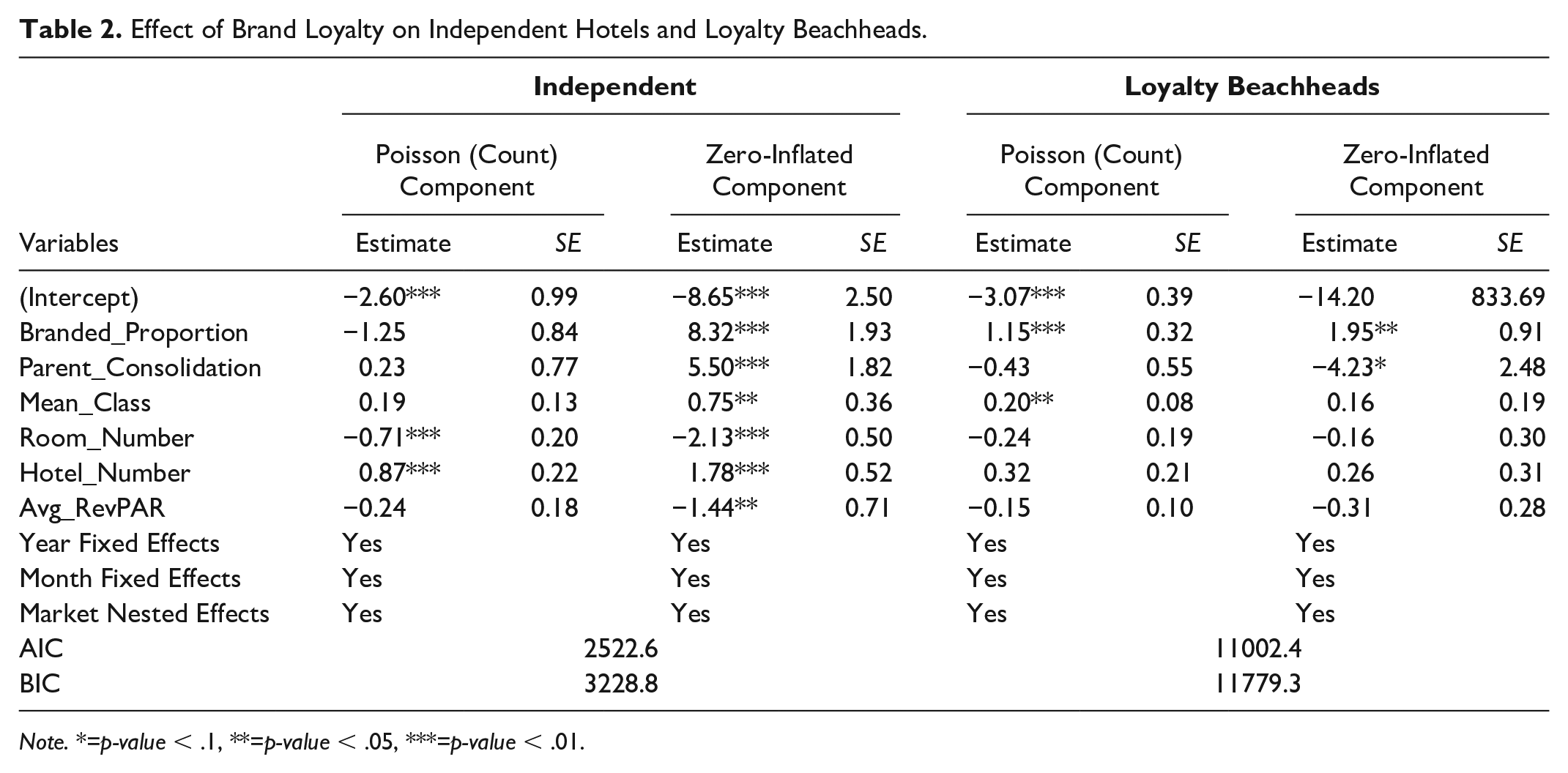
Table 2 examines the impact of branded hotel proportion and parent company consolidation on entries by independent hotels and loyalty beachheads. The proportion of branded hotels, as well as the concentration of parent companies, strongly deter independent hotel entries, supporting H3a and H3b.
Effect of Brand Loyalty on Independent Hotels and Loyalty Beachheads.
Note. *=p-value < .1, **=p-value < .05, ***=p-value < .01.
Loyalty beachheads, on the other hand, are deterred by an increased proportion of branded hotels in the market, but it also shows an increase in entries for markets that manage to attract them, thereby partially supporting H4a. Loyalty beachheads seems to be highly attracted by markets dominated by few parent companies, supporting H4b.
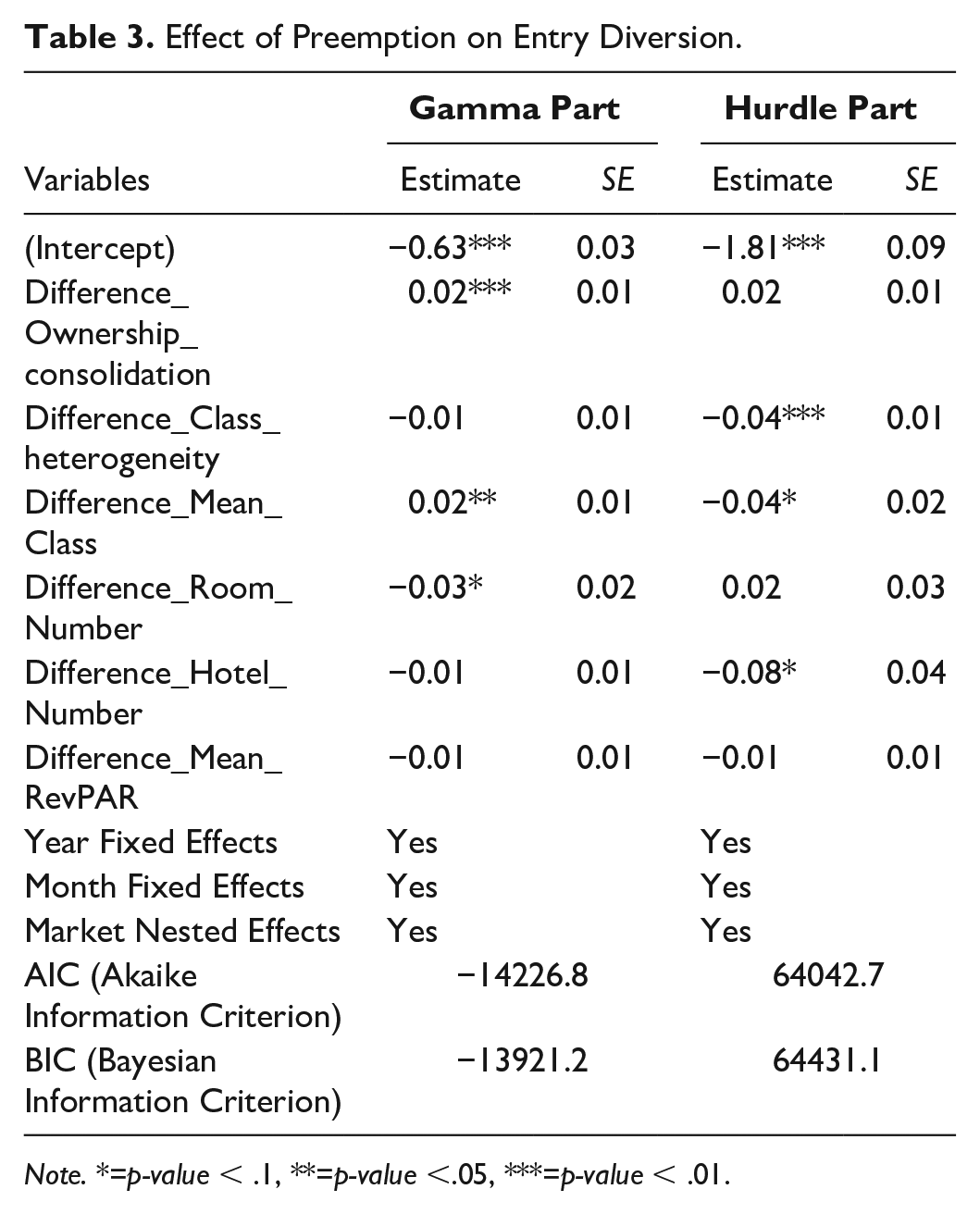
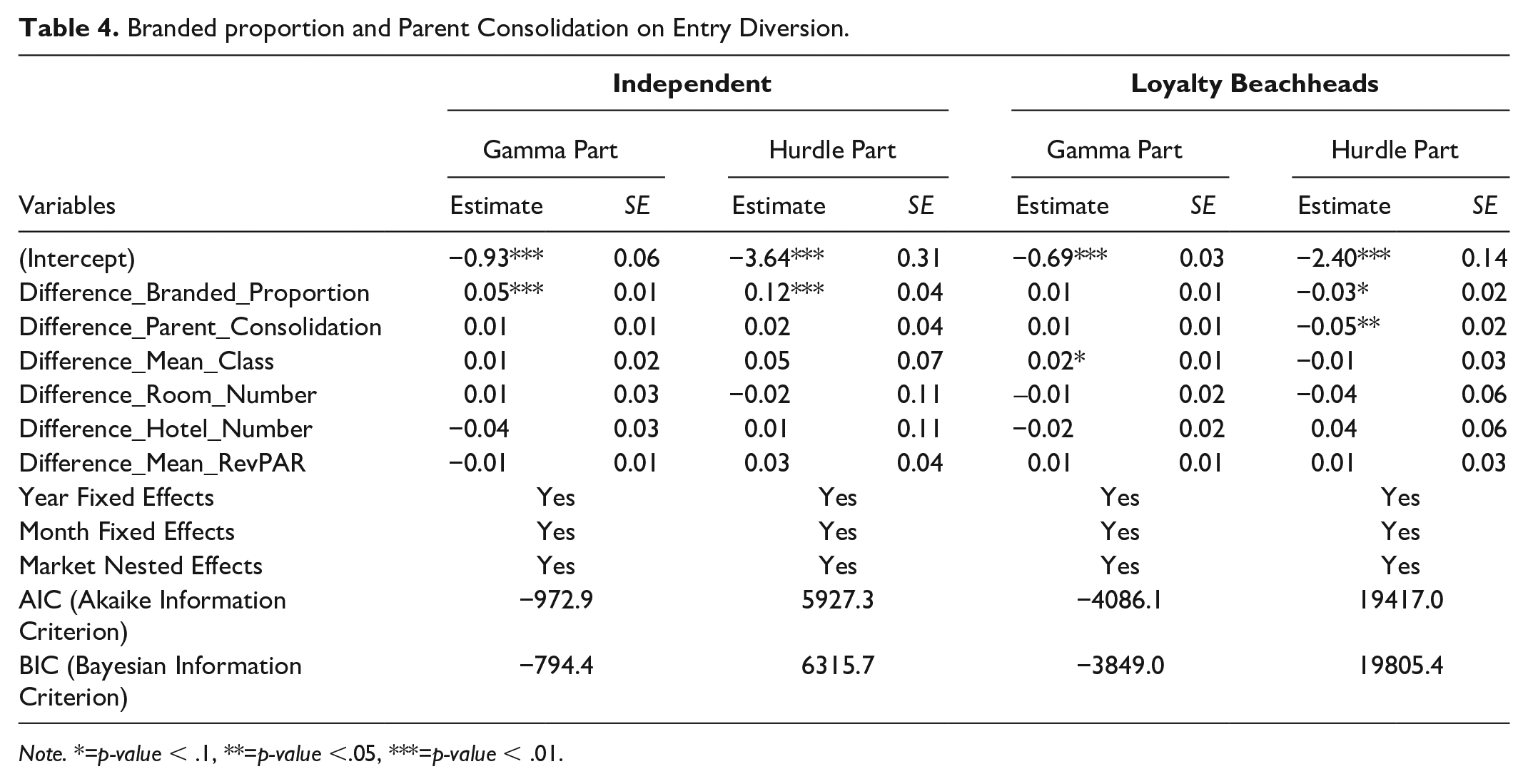
Tables 3 and 4 present the results from the Hurdle Gamma model, which differentiates between whether market entry occurs at all (hurdle component) and the rate of entry where it does occur (Gamma component). Unlike the ZIP model, the hurdle component estimates the probability that a market will receive at least one entry. Here, a positive coefficient indicates a higher likelihood of market entry, while a negative coefficient suggests a stronger deterrent effect. Similarly, the Gamma component evaluates entry intensity, measuring the expected rate of market entry among markets that receive new short-term leases. A positive coefficient in this part of the model indicates that an increase in the predictor variable corresponds to a higher entry rate, whereas a negative coefficient suggests that when entry occurs, it happens at a lower frequency.
Effect of Preemption on Entry Diversion.
Note. *=p-value < .1, **=p-value <.05, ***=p-value < .01.
Branded proportion and Parent Consolidation on Entry Diversion.
Note. *=p-value < .1, **=p-value <.05, ***=p-value < .01.
The effect of ownership consolidation and class heterogeneity compared to nearby markets on entry diversion is shown in Table 4. A higher degree of ownership consolidation in the focal market does not influence the likelihood of entries into nearby markets but is associated with a higher entry rate when entries occur. Hence, H1b is partially supported.
In contrast, a higher degree of class heterogeneity in the focal market compared to nearby markets reduces the likelihood of entries into those nearby markets, thereby not supporting H2b.
Table 4 explores the effect of branded proportion and parent company concentration on the diversion of entries to nearby markets. A higher branded proportion in the focal market diverts independent hotels to nearby markets, both in terms of likelihood and entry rate, supporting H3c. However, there is no significant effect connected to parent companies’ consolidation, so H3d is not supported.
Finally, a higher proportion of branded hotels or degree of ownership consolidation in the focal market compared to nearby markets will lower the likelihood of loyalty beachheads entering those nearby markets, thereby supporting both H4c and H4d.
Finally, Appendix G shows a breakdown of the hypotheses and whether they found empirical support
Discussion
The aim of this study was to evaluate how incumbent market structure—specifically preemptive entry barriers and brand loyalty barriers—affect the ability to deter new market entrants. The findings reveal both intriguing and somewhat unexpected results. First, although a higher degree of ownership concentration in incumbent markets increases the likelihood of new competitors entering, it also restricts the number of entries. Moreover, if a market has a higher degree of ownership concentration compared to its neighbors, new entries tend to divert to those neighboring markets.
This outcome suggests that ownership concentration draws in some new entrants who see differentiation opportunities (M. Kim et al., 2020). Yet, at the same time, the incumbents’ sharing of key resources (Bianco et al., 2024b), their augmented market power (Koh & Rojas, 2022), and deeper community integration (e.g., prioritized local distribution channels, as discussed by Almeida & Campos, 2022) enable these markets to manage entry volume, and funnel entrants to neighboring markets. Consequently, a market with concentrated ownership exemplifies the “fat-cat effect” (Fudenberg & Tirole, 1984), where incumbents permit limited entry but manipulate conditions to avoid a wave of newcomers, preserving strategic advantages and reducing the threat of significant new competition.
Contrary to expectations, the impact of class heterogeneity on market entry was linked to increased entry volume, while lowering the probability of entry into adjacent markets. This indicates that higher class heterogeneity functions less as a barrier and more as an attraction for new entrants. According to segmentation studies such as Line and Runyan (2012), modern tourism markets are increasingly segmented to meet specialized traveler demands. Thus, if a destination caters to only a few segments, and incumbent hotels already occupy them, entrants may see no niche to fill and opt for other locales. Conversely, if the market’s class offerings are diverse, new entrants might perceive multiple underexploited niches.
Regarding brand loyalty barriers, the findings supported the view that independent hotels are indeed deterred by entrenched market loyalty, both in terms of a high branded-hotel proportion and the consolidation of parent companies. This stems from independent hotels’ difficulties in competing against incumbent branded operators (Aaker, 2019; Koo et al., 2020; Xie et al., 2015), and from synergies or coordinated actions among hotels under the same parent firm (Gan et al., 2013; Silva et al., 2017; Xiao et al., 2012). However, independent hotels do seek out neighboring markets with fewer branded hotels, hoping that the weaker incumbent market power allows them to capitalize on diversification strategies and potential agglomeration spillovers (Yang & Mao, 2017).
These results highlight how brand loyalty constitutes a potent barrier against independent hotels. Despite prior research indicating that independent hotels can benefit from proximity to branded operators (Chung & Kalnins, 2001; Yang & Mao, 2017), such benefits are not sufficient to guide their market-entry strategies, especially when the number of branded hotels is higher or these are affiliated to the same loyalty program.
Furthermore, results on brand loyalty’s effect on loyalty beachheads produced different outcomes than initially expected. Specifically, an increased proportion of branded hotels in the market diminished the likelihood of loyalty beachheads entering—although in markets that do attract loyalty beachheads, the volume of entry is higher. Conversely, a higher proportion of branded hotels relative to nearby markets also deters loyalty beachheads from entering those markets.
These findings imply that an increased branded-hotel share is not always an appealing draw for loyalty beachheads, but can instead deter them, likely because they struggle to convert incumbent-loyal customers who are accustomed to significant loyalty perks (Koo et al., 2020; So et al., 2013). Nonetheless, loyalty beachheads may still find opportunities in selected markets where they see an opportunity to exploit a niche, making them willing to open several establishments to create network effects and synergies. Liu and Yang (2009) suggest that the strength of new entrants’ loyalty programs can be a determining factor in guiding market entry and niches exploitation, thereby offering an opportunity for future research on the matter.
In contrast, higher parent company consolidation in the focal market actually attracted loyalty beachheads, making that market more appealing than neighboring ones with lower parent-company density. This observation aligns with the “attraction effect” previously proposed: loyalty beachheads can harness existing customer bases (Hua et al., 2018; J. Lee et al., 2014) while taking advantage of a consumer environment already primed for brand-wide loyalty behavior, but eager for alternative brand choices (Liu & Yang, 2009; Tanford et al., 2016)
Finally, the analysis of control variables demonstrated several noteworthy determinants of market-entry decisions. New owners, for example, tend to be drawn to markets that have a larger number of hotels and a higher mean class. This preference confirms that new entrants often seek agglomeration benefits, commonly greater in markets with more hotels (Fang et al., 2019) or where incumbent class levels are higher (Bianco et al., 2023; Kalnins & Chung, 2004).
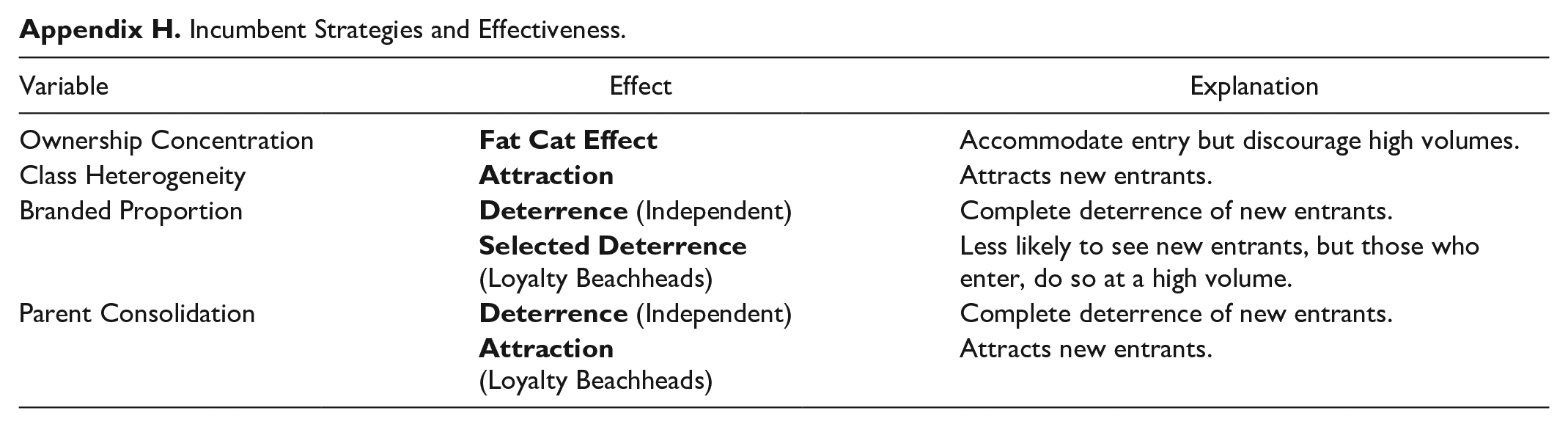
At the same time, both independent and loyalty beachhead hotels favor markets that have a high mean class, although independent ones shy away from markets crowded with numerous hotels. Interestingly, they still seem attracted by markets with a large overall room supply, implying that a robust travel or business environment can translate into additional revenue opportunities (Imrie & Fyall, 2000). Conversely, if the number of hotel operators is also large, competition intensifies—thus discouraging independent entrants. Appendix H summarizes the findings.
Limitations and Future Research
Despite the important contributions made by this study to the realm of strategy in hospitality research, it has a few limitations. First, this study does not specifically investigate the presence of short-term leases, but only controls for their main effects when grouping results under each market. Future research could delve deeper into the dynamics of short-term leases and their effects on market-entry strategies.
Second, the current study focuses on markets and their ability to deter new entrants. However, it does not explore heterogeneities among new entrants, such as the strength of their loyalty programs, who may have different rationales for market-entry decisions, nor does it consider heterogeneities among incumbents that influence how barriers are created. Future research could build on the findings of this study to investigate these heterogeneities more thoroughly.
Third, although the dataset from the Texas Comptroller of Public Accounts allows us to track ownership changes at the legal-entity level, it does not reveal whether two separate entities ultimately share the same underlying investors or controlling parties. Consequently, situations where real estate owners have structured each property under distinct legal LLCs or REITs remain undetected in the current analysis. Such arrangements may influence market-entry dynamics, and are therefore not accounted for in the current study’s ownership-consolidation variables. Future studies may investigate this issue further using a database that contains information regarding the controlling firm behind each legal entity.
Finally, the database did not include explicit measures of occupancy for incumbent markets. Although the nested modeling approach inherently accounts for market-level heterogeneity, including mean occupancy, a direct measure of occupancy may have yielded more precise assessments. Future research could build on this study by examining the deterrent effect of incumbent markets’ occupancy levels.
Conclusions
Theoretical Implications
This study aimed to examine how incumbent market structures (notably ownership consolidation and class heterogeneity, along with brand loyalty) create entry barriers in the tourism industry. The findings yield several key theoretical contributions: First, by integrating strategic barriers and brand loyalty barriers, this study pushes beyond prior hospitality research that typically focuses on single-issue factors (e.g., purely capacity expansion). This study offers a multi-layered framework showing how these different forms of entry deterrence interact with location choice decisions. Hence, we advance strategic management literature in hospitality and tourism by spotlighting entry barriers specifically tailored to service-dominated, high fixed-cost markets, an area so far underexplored.
Second, while location-choice literature in hospitality often highlights agglomeration and accessibility (e.g., highways, subway stations), results indicate that the loyalty can significantly shape entrants’ decisions. By introducing the term “loyalty beachheads,” we show that branded hotels with established loyalty infrastructures, but no prior presence in a market, behave differently to both independent hotels and general new owners. This brings new insight into how existing brand-wide loyalty programs can affect which markets entrants choose and why some brand expansions succeed faster.
Third, another contribution lies in integrating attributes of neighboring markets. Typically, location-choice studies concentrate on a focal market in isolation. This study demonstrates that nearby markets inevitably influence entrants’ decisions, particularly under high ownership consolidation or brand dominance. By empirically showing how entry diversion occurs, the study confirms that incumbents’ defensive strategies reverberate beyond a single destination, and entry decisions are taken by comparing attributes from multiple markets. This expands the location-choice and entry barrier literatures by underscoring regional or multi-market perspectives on hotel expansion.
Finally, previous agglomeration research suggests that independent hotels often benefit from proximity to branded hotels via demand spillovers (Chung & Kalnins, 2001; Yang & Mao, 2017). Findings refine this view: although independent hotels may reap certain spillover benefits, they actively avoid markets where too many branded hotels co-locate. Thus, this study reconciles resource-seeking agglomeration (where independents hope to gain from brand neighbors) with the reality that excess brand presence can become a barrier, prompting them to search for alternative markets, often neighboring ones where spillover benefits are lower, but so is the competitive pressures posed by branded hotels.
Practical Implications
The results of this study also offer significant insights for practitioners. For incumbent hotels, the findings highlight how managing market structure can help maintain market share and protect competitive advantage. Strategic ownership of multiple properties within the same market, combined with diversification under a select number of major parent companies, can help slow the influx of new competitors, as results show that these strategies are able to deter high volumes of entrants.
At the same time, although offering a diverse range of classes may initially capture multiple market segments, it can also invite new entrants who perceive under-filled niches in that variety. If incumbents intend to limit competition, they should consider how many distinct classes they occupy in a given market. Overextending class diversity might create openings for specialized newcomers to differentiate or target unaddressed sub-segments. On the other hand, incumbents could intentionally maintain a more cohesive brand or class profile, thus sending fewer “signals” of open niches.
For policymakers, these results present a nuanced set of considerations. On one hand, there is a need to foster healthy competition and encourage innovation, which can lead to a more dynamic and diverse tourism sector. Lax regulations, however, may allow dominant incumbents to strengthen their position, potentially discouraging new entrants and limiting consumer choice. On the other hand, regulations that are too restrictive can lead to excessive market fragmentation, diminishing the value of local resources, discouraging significant investments, and making the market less attractive to well-capitalized businesses.
A key policy implication involves refining antitrust and fair-competition guidelines in the local tourism market. Policymakers may consider measures that prevent excessive ownership concentration or limit the influence of loyalty programs, helping to maintain a competitive environment without substantially eroding the economic benefits brought by established incumbents. Additional incentives such as tax breaks, grants, or targeted infrastructure improvements could encourage a broader range of hotel types—particularly mid-range or boutique properties—to enter the market, thus fostering greater diversity and resilience of the touristic accommodation offering.
Footnotes
Appendices
Incumbent Strategies and Effectiveness.
| Variable | Effect | Explanation |
|---|---|---|
| Ownership Concentration |
|
Accommodate entry but discourage high volumes. |
| Class Heterogeneity |
|
Attracts new entrants. |
| Branded Proportion | Complete deterrence of new entrants. | |
| Less likely to see new entrants, but those who enter, do so at a high volume. | ||
| Parent Consolidation | Complete deterrence of new entrants. | |
(Loyalty Beachheads) |
Attracts new entrants. |
Declaration of Conflicting Interests
The author declared no potential conflicts of interest with respect to the research, authorship, and/or publication of this article.
Funding
The authors disclosed receipt of the following financial support for the research, authorship, and/or publication of this article: This work was supported by The Hong Kong Polytechnic University (Grant ID: P0048892).
