







Abstract
This research explores the evolving dynamics of consumer interactions with artificial intelligence (AI) travel influencers through the lens of trans-parasocial relationships. By integrating Louvain clustering with an interpretative qualitative approach, this study examines the Instagram accounts of two pioneering AI travel influencers: Sena Zaro and Emma. It identifies distinct thematic clusters and analyses the nature of interactions based on user comments. The findings reveal a complex landscape of engagement characterized by admiration, curiosity, and skepticism towards AI travel entities. It also highlights interactions typically reserved for human relationships, and showcases AI influencers as active participants in users’ digital journeys. Overall, this research contributes to a broader understanding of generative AI’s impact on tourism marketing and offers insights into human-AI influencer interactions.
Keywords
Highlights
This study explores trans-parasocial dynamics with AI travel influencers.
This study integrates Louvain clustering with interpretative qualitative analysis.
This study showcase bidirectional user-AI engagement in digital tourism marketing.
Introduction
With the rapid advancement of technology, artificial intelligence (AI) has become a pervasive element in contemporary communication landscapes (Bulchand-Gidumal et al., 2023; H. Kim et al., 2025). More recently, generative AI has dramatically reshaped various domains, such as marketing (Kshetri et al., 2023), entertainment (J. Yu & Meng, 2025), and tourism (Dogru et al., 2025; H. Kim et al., 2025). This innovation quickly expanded into retail, exemplified by AI virtual influencers like Miquela, who seamlessly align with luxury and fashion brands (Drenten & Brooks, 2020). Existing research has explored AI virtual influencers from multiple angles, including emotional engagement (J. Yu et al., 2024), digital personalities (Mrad et al., 2022), and consumer interaction (Akhtar et al., 2024).
While generative AI is evolving, at present there are two pioneering AI virtual influencers managed in a systematic and structured manner (Surbano, 2024) in the tourism context (Dogru et al., 2025; Zhu et al., 2024). A recent example can be seen from the German tourism board collaborating with an AI travel influencer (German National Tourist Board, 2025). This practice marks a distinct shift from earlier virtual influencers that primarily targeted retail and tangible goods contexts (Drenten & Brooks, 2020). The uniqueness of AI travel influencers lies in their ability to craft storytelling and portray ideal tourism experiences (Marti-Ochoa et al., 2025), which offers a fresh perspective on digital engagement in tourism. This development underscores the importance of understanding AI as social actors (Marti-Ochoa et al., 2025).
Conventionally, influencer-consumer relationships emphasize the role of parasociality in shaping these interactions (Santateresa-Bernat et al., 2023). However, recognizing that parasocial relation focuses on one-sided interactions, a newer yet less-discussed concept relevant in tourism is trans-parasocial relationships (Lou, 2022). This notion explores the collective interactions between digital entity and users, which underlines bidirectional communication and mutual influence, contrasting with the passive model of engagement in parasocial interaction (Wellman, 2021). In particular, trans-parasocial interactions acknowledge the evolving nature of digital platforms (Lou, 2022), where AI influencers can actively engage with users and foster a sense of dialogue and deeper connection (Marti-Ochoa et al., 2025).
Despite the growing presence of AI virtual influencers, existing research on consumer interaction often centre on surface metrics (e.g., user engagement) through likes and comments (Marti-Ochoa et al., 2025; J. Yu et al., 2024). While these metrics offer quantitative indicators of content popularity, they overlook the emotional and cognitive processes that underlie how users react to AI influencers (J. Yu et al., 2024). As Aramendia-Muneta et al. (2020) highlight, surface metrics do not adequately capture the depth of interaction or the development of meaningful connections. This oversight is significant, especially in the era of generative AI, where interactions transcend traditional boundaries and merge digital and human experiences (J. Yu et al., 2024). Yet, considering the evolving dynamics of human-technology relations, existing literature on AI influencers predominantly focuses on parasocial relationships (Polat et al., 2024; T. Yu et al., 2025), which are insufficient to explain the emerging complex and dialogic interactions. Evidence of such interactive dynamics is prevalent among human influencers, where users not only actively respond to content but often receive reactions from the influencer (Looi & Kahlor, 2024). This implies a discrepancy: although humanized digital agents are increasingly perceived as social actors (Gambino et al., 2020; J. Yu et al., 2024), the theoretical lens has yet to evolve to fully address these reciprocal engagements in the context of AI influencers.
Therefore, to advance the understanding of AI influencers’ potential to shape social and emotional landscapes in digital tourism, this research investigates user reactions with AI travel influencers by qualitatively examining associated comments as a proxy for interaction. By classifying travel imagery to identify distinct tourism scenarios, this study seeks to uncover how users respond to and interact with AI travel influencers within varied visual contexts in tourism (e.g., natural landscapes, urban environments, luxury settings, and cultural activities). By drawing from interdisciplinary fields of digital and media marketing, data analytics, and psychology, this study unwraps the intricacies of the trans-parasocial relationships. The contribution to knowledge is multifaceted. Essentially, this study expands the theoretical concept of trans-parasocial interaction (Lou, 2022; Wellman, 2021) by incorporating AI travel influencers as social actors. By providing insights into the evolving dynamics of influencer marketing (Santateresa-Bernat et al., 2023) and generative AI (Akhtar et al., 2024; Marti-Ochoa et al., 2025), this research offers practical implications for tourism marketers and content designers, guiding them in designing AI travel avatars to create meaningful interactions.
Literature Review
Generative AI in Tourism
AI has evolved significantly, with generative AI emerging as a major breakthrough (Dogru et al., 2025; Zhu et al., 2024). Specifically, generative AI algorithms, such as generative adversarial networks and variational autoencoders, create novel content by learning patterns from input data (J. Yu & Meng, 2025). This innovation transcends merely mimicking human-like tasks and ventures into creating artifacts across various domains (Kshetri et al., 2023; Wahid et al., 2023). Initially, text-based models like ChatGPT reshaped industries such as education, healthcare, and finance (J. Yu & Meng, 2025) by generating sophisticated written outputs (Gursoy et al., 2023). Especially for content creation and digital communication, they provide unprecedented support in drafting articles, generating code, and interacting with users through chatbots (Ma & Huo, 2023), which effectively reshape how textual content is created and disseminated (Wahid et al., 2023).
The realm of text-to-image tools saw early pioneers in Midjourney, which employs advanced algorithms to convert textual descriptions into visually compelling images (Wahid et al., 2023) for marketing and storytelling (Miao & Yang, 2023; J. Yu & Meng, 2025). Subsequent research has delved into the potential of image generative AI (J. Yu & Meng, 2025) by demonstrating its broad applicability in the digital landscape (Hartmann et al., 2024; Wahid et al., 2023). In addition to its personalization capabilities (Mariani & Dwivedi, 2024), image generative AI assists marketers and designers in creating visuals that might be challenging to capture or portray ideally (J. Yu & Meng, 2025).
In tourism, generative AI has emerged as a powerful tool for enhancing visitor experiences and streamlining operations (Miao & Yang, 2023). By creating realistic depictions of destinations, generative AI helps potential tourists imagine their travel experiences, thereby influencing their decision-making process (Wang et al., 2025). Potentially, these tools can also create immersive virtual tours that allow users to explore locations and attractions remotely (Wang et al., 2025). Recent research highlights the transformative impact of image generative AI in tourism marketing (J. Yu & Meng, 2025). By automating content creation, tourism businesses can maintain an active online presence with reduced effort and cost (Marti-Ochoa et al., 2025). As generative AI continues to evolve, its applications will likely expand, offering even more innovative strategies across various sectors (Dogru et al., 2025; Mariani & Dwivedi, 2024).
AI Virtual Influencer on Social Media
In recent years, AI entities, such as avatars (Miao & Yang, 2023) and humanoid chatbots (Bulchand-Gidumal et al., 2023), have gained prominence in digital communication. These AI-driven personas can influence consumer decision-making, brand evaluation, and user online experiences (Ahn et al., 2022; Da Silva Oliveira & Chimenti, 2021; Mrad et al., 2022). AI virtual influencers (computer-generated influencers) combine vivid and human-like design (Marti-Ochoa et al., 2025) with freedom from physical and temporal constraints (Looi & Kahlor, 2024). This enables them to showcase destinations in innovative ways (Marti-Ochoa et al., 2025), such as through hyper-realistic and imaginative representations. Despite initial criticisms regarding their human-likeness (Looi & Kahlor, 2024), the advancements in technology have led to a more widespread acceptance of these trends (Akhtar et al., 2024; Zhang et al., 2025).
Major brands such as Dior have already collaborated with them (Sands et al., 2022), and the tourism industry is beginning to follow (T. Yu et al., 2025). AI travel influencers have been shown to bridge informational gaps by presenting destinations in a data-rich and aesthetically appealing manner to motivate travel interest (Marti-Ochoa et al., 2025). This moves beyond traditional human influencers who might be constrained by subjective biases, personal experiences, limited capacity to update content at scale, and logistical challenges (Looi & Kahlor, 2024). In tourism, the first AI travel influencer, Sena Zaro, serves as a pioneer (Surbano, 2024) that has the potential to impact tourism marketing and communications (Marti-Ochoa et al., 2025).
These virtual personas offer personalized recommendations (Cheung et al., 2022), showcase destinations (Marti-Ochoa et al., 2025), and engage with potential consumers through enhanced interaction (Akhtar et al., 2024). Research suggests that AI influencers are particularly appealing to younger generations on social media platforms like Instagram, where visual content plays a dominant role (Miao et al., 2022). The theoretical implications of this trend suggest a redefining of marketing dynamics (J. Yu et al., 2024), where virtual influencers not only enhance efficiency but also foster deeper engagement and interactive experiences (Sorosrungruang et al., 2024). As tourism businesses begin to embrace this technology (T. Yu et al., 2025), its use is anticipated to expand significantly (Marti-Ochoa et al., 2025).
From Parasocial to Trans-Parasocial Relationships in Digital Media
When interacting with computers or digital agents, humans, upon perceiving cues such as facial expressions, vocal tones, and gestures, often respond in socially appropriate ways (J. Yu et al., 2024). This aligns with the paradigm that computers are social actors (Gambino et al., 2020), which is particularly evident in interactions with digital influencers (Looi & Kahlor, 2024), chatbots, virtual assistants, and humanoid robots (Xu et al., 2022). Such interactions are often referred to as parasocial relationships (Horton & Richard Wohl, 1956; Hwang & Zhang, 2018). Originally coined to describe the one-sided interactions that audiences form with media (J. Kim et al., 2022), foundational knowledge in this tradition focus on reciprocity, perceived intimacy (Xu et al., 2023), and sustained involvement (Rubin & Perse, 1987). Subsequent work on social presence (e.g., Biocca et al., 2003) has extended the framework to recognize that two-way cues (e.g., timely responses) can amplify the sense of being with a figure. Recently, the concept has been extended to include interactions with digital entities (Lou, 2022; T. Yu et al., 2025). In these relationships, users feel a sense of friendship or emotional connection (Hwang & Zhang, 2018), despite the interaction being essentially one-sided (Wellman, 2021). On social media and livestreaming platforms, parasocial interaction with influencers provide a rich area of study (Labrecque, 2014; Lim et al., 2020). Influencers, often perceived as accessible and relatable (Sorosrungruang et al., 2024), can foster strong parasocial bonds with their audiences (Hwang & Zhang, 2018). These relationships can then be translated into significant influence over follower behavior (Wellman, 2021).
Yet, to understand the evolving contemporary human interactions between virtual influencers and consumers (J. Yu et al., 2024), the traditional parasocial concept (T. Yu et al., 2025) is no longer fully adequate. This is primarily due to the real-time nature of AI-driven entities (Liao et al., 2025), both now and moving forward. As a result, the relationship between consumers and virtual influencers can be more dynamic and reciprocal, which challenges the one-sided nature of classic parasocial interactions (Polat et al., 2024). Consequently, trans-parasocial relations have been proposed to capture the collectively reciprocal, asynchronously interactive, and co-created nature of these relationships (Wellman, 2021). This updated notion acknowledges the bidirectional communication that is possible in digital media environments (Lou, 2022).
Trans-parasociality also recognizes the psychological mechanisms that contribute to followers’ appreciation of influencer content (J. Kim et al., 2022), such as increased feelings of social presence and trust. These mechanisms enhance followers’ sense of involvement by providing a more meaningful and immersive experience compared to traditional parasocial relationships (Lou, 2022). Furthermore, users are actively reacting to AI influencers by commenting on their posts (Marti-Ochoa et al., 2025), which can serve as a proxy for relationship-building. Comments and direct messages function as channels for followers to voice their opinions (Looi & Kahlor, 2024), which, in turn, generate a loop of interaction that solidifies relational bonds (J. E. Lee & Watkins, 2016).
Although AI entities cannot yet engage in fully spontaneous conversations, their programmed interactions create a perception of mutual exchange (Lou, 2022). With the increasing perceived intimacy and trust (Gambino et al., 2020), followers may develop relational attachments that mirror those formed with human influencers. This signals a transformative shift in how social media users relate to mediated figures (J. Kim et al., 2022). Nevertheless, while AI influencers facilitate such relationships, research on trans-parasocial dynamics in this context remains limited (J. Kim et al., 2022). When it comes to virtual influencers, existing studies often remain focused on parasocial interaction (Polat et al., 2024; T. Yu et al., 2025). Exploring these interactions further could provide valuable insights into how influencers’ cross-media strategies can effectively foster engagement and perception among their audiences (Lou, 2022; Wellman, 2021).
To delineate the theoretical boundaries, it should be emphasized that trans-parasocial relationships differ in two respects. First, unlike classic parasocial interaction that entails one-sided attachment (Santateresa-Bernat et al., 2023), or the paradigm of computers as social actors that assumes any human-computer social cue triggers social response (Gambino et al., 2020), trans-parasociality requires evidence of perceived reciprocity or co-construction. Second, while social presence theory highlights the intensity of “being with” a mediated figure (Biocca et al., 2003), it does not itself require dialogic initiation. Hence, trans-parasocial interaction can be falsified when no cues of dialogue, mutual reference, or imagined co-presence are present. In such cases, the observed behavior would fall under parasocial or responses of computers are social actors rather than trans-parasociality.
Methodology
To investigate the nature of user interactions with AI travel influencers across diverse tourism scenarios, this research utilizes user comments and AI-generated travel photographs as primary data sources. By employing a combination of computational and interpretative methods, the study follows a two-step methodological approach. First, tourism images were classified using image clustering to capture the diverse contexts of tourism experiences within different scenarios. Simultaneously, corresponding user comments were analyzed to uncover patterns in relational dynamics. The detailed procedures are presented in the sections below.
Data Selection and Extraction
To explore trans-parasocial interactions in the tourism context, this research focuses on Sena Zaro and Emma, the two emerging AI travel influencers on Instagram as of April 2025. Specifically, Sena Zaro (@sena.zaro) is an AI travel and hospitality influencer (Marti-Ochoa et al., 2025), dedicated to inspiring exploration by sharing travel spots, must-visit locations, and travel tips. Emma (@emmatravelsgermany), based in Berlin, acts as an AI travel companion for the German National Tourist Board (German National Tourist Board, 2025). As pioneering AI travel influencers, their selection is illuminating for trans-parasocial study because they embody contrasting yet complementary modes of AI-mediated engagement. Sena Zaro exemplifies a hyper-realistic and aspirational aesthetic that invites viewers into idealized travel scenarios. In contrast, Emma adopts a culturally embedded and conversational approach that emphasizes emotional warmth and destination-specific storytelling. Despite their nascent presence in the AI travel influencer ecosystem, these distinct representational strategies allow for the examination of how different AI persona designs shape the emergence, depth, and emotional tenor of trans-parasocial relationships in tourism.
All available posts from these official Instagram accounts were extracted in March 2025 using Apify. The collected data included post captions, dates, image URLs, video URLs, post URLs, and the number of likes and comments. All images were subsequently downloaded using the extracted links. When multiple images were included in a post, the first image was used as the reference point. Videos were also considered, with the first frame serving as a reference image. This process resulted in a dataset of 299 posts (@sena.zaro = 260; @emmatravelsgermany = 39), with the earliest dated April 2024. Notably, although Sena Zaro accounts for the majority of available posts, Emma was included to provide diversity in governance context and audience expectations. Additionally, to explore interactions between AI influencers and potential tourists, all comments were extracted, totaling 2,395 comments in the dataset.
Image Captioning
Acknowledging the diversity of contexts in conveying experiences to users, the extracted posts were further classified based on their visual content. Initially, images were annotated using BLIP-2 (Salesforce/blip2-opt-2.7b) image captioning in Python (Rotstein et al., 2024), which provides detailed descriptions in statement form rather than just labels so as to offer a richer understanding of the images. Inference was run with the default image-to-text pipeline, max_new_tokens set to 50, temperature=0.7, and no prompt engineering beyond the default captioning behavior. To ensure the accuracy of the AI-generated captions, a manual verification process was conducted. Two coders independently reviewed a random subsample of 60 images to assess whether the captions accurately reflected key elements (e.g., environment, people, activities). In most cases, captions captured essential features, which aligned well with the visual data (see Table 1 for illustration). No human-in-the-loop adjustments were conducted.
Examples of BLIP Image Captioning Results and Anonymized Comments
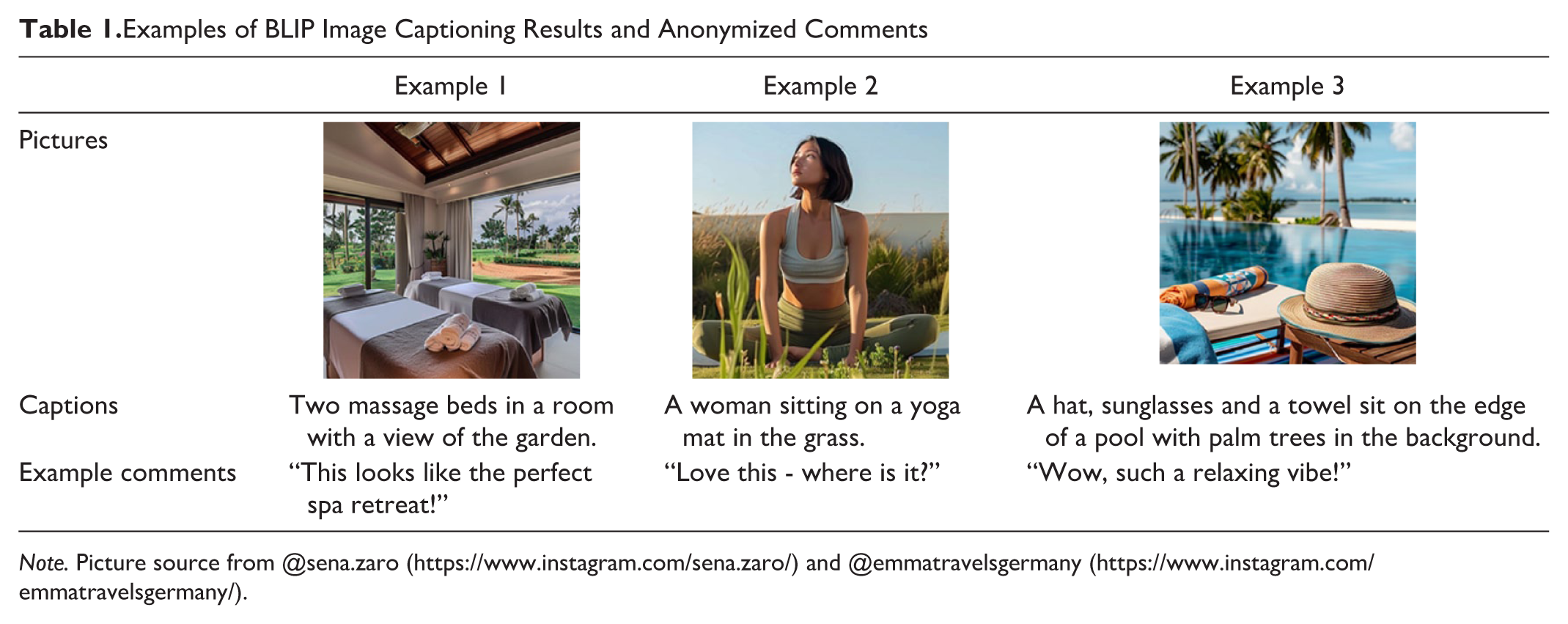
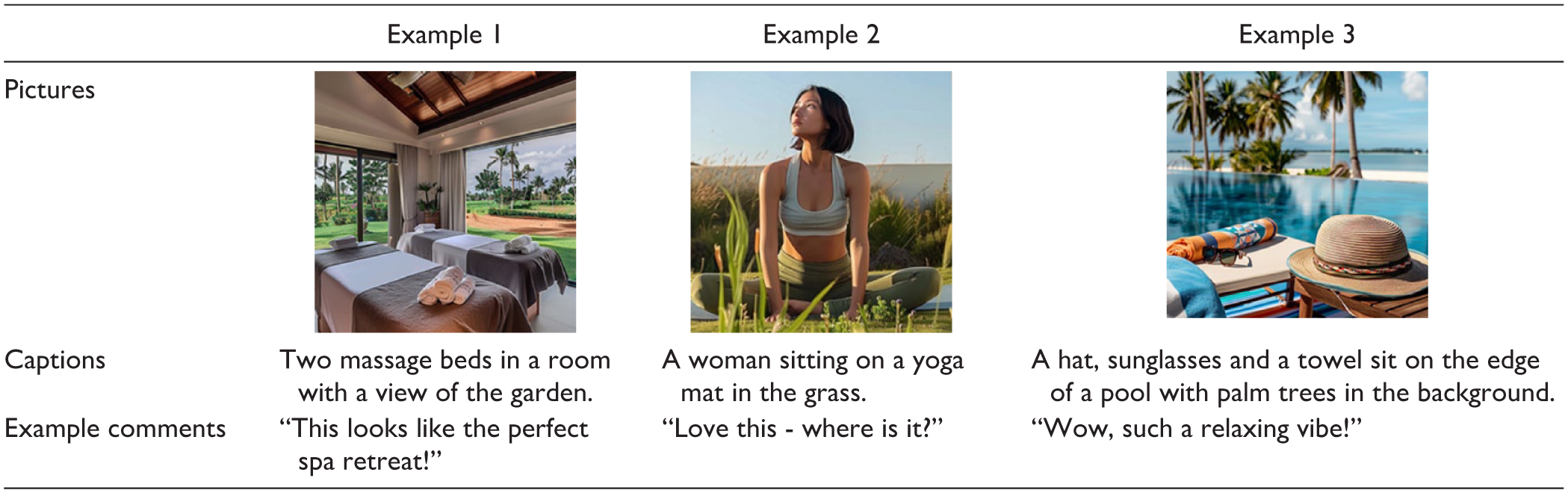
Note. Picture source from @sena.zaro (https://www.instagram.com/sena.zaro/) and @emmatravelsgermany (https://www.instagram.com/emmatravelsgermany/).
Notably, data from the two selected AI travel influencers were merged because both influencers serve as representatives of AI-generated content in tourism and share a focus on marketing destinations through highly visual content. Methodologically, since Emma contributed a relatively small sample, separate topic networks may underpower clustering. Also, this combination allows for a more comprehensive exploration of shared themes in the portrayal of tourism scenarios, rather than on idiosyncratic variations of a single persona. Moreover, this approach enhances the robustness of the clustering process by increasing the size of datasets.
Classification of AI Visual Context and Viewer Interaction With the Content
To prepare the data for clustering, the process began with the removal of stopwords, which were common words (e.g., “and” and “the”) with little meaning in text analysis. This was followed by stemming, a technique that reduced words to their root forms (e.g., “running” to “run”), and lemmatisation, which refined this process by ensuring that words were converted to their dictionary base forms. The processed text was then tokenized into smaller units for analysis. Term frequency-inverse document frequency (TF-IDF) was utilized to weigh the importance of each term within the dataset. The TF-IDF matrix was then converted into a similarity graph using cosine similarity, in which each node represented an image and edge weights corresponded to similarity scores. The graphs were constructed as weighted and undirected, with low-weight edges below the threshold removed to reduce noise. Edges with weights below 0.15 were removed to reduce noise. The Louvain algorithm was applied to this weighted graph using a resolution parameter of 1.0 and the modularity optimizer. A fixed random seed of 42 ensured reproducibility. All computations were conducted in Python using scikit-learn 1.3.2 for TF-IDF vectorization and cosine similarity, and the python-louvain package for community detection.
Louvain clustering, a modularity-based community detection algorithm, was applied to classify the images by grouping similar ones based on their descriptive annotations (Nguyen et al., 2018). This unsupervised machine learning technique is widely used for detecting communities in large-scale networks, as it efficiently identifies densely connected groups by maximizing modularity (Kumar et al., 2020). Meanwhile, the Louvain method is particularly effective for identifying patterns and relationships within social networks, enabling the categorization of images into distinct thematic clusters (J. Yu & Egger, 2021).
Thereafter, to explore the trans-parasocial relationship between AI travel influencers and potential tourists, the subsequent procedure involved detecting topics commonly discussed by users based on the extracted comments. Similar to the previous step, the Louvain algorithm was employed for topic clustering. For comments, the TF-IDF matrix of pre-processed text was transformed into a weighted and undirected similarity graph using cosine similarity. A threshold of 0.10 was applied to retain only meaningful edges, and weights were preserved to reflect term similarity strength. Louvain clustering was performed with a resolution parameter of 1.0, the same optimizer settings as in the image clustering, and random seed 42 for replication. Due to the interpretive nature of this study rather than algorithmic optimization, thresholds and parameters were not varied systematically. The same software environment was used as for the clustering process.
The resulting clusters were then subjected to qualitative content analysis. This interpretative approach allowed for a richer understanding of the underlying themes by integrating computational pattern detection with human-led interpretation (Neuhofer et al., 2021). The dataset first underwent pre-processing. Prior to removal of emojis, they were converted into descriptive text using the emoji 2.8.0 package to preserve affective content for potential interpretation, after which the text form was removed to ensure compatibility with TF-IDF vectorization. Meanwhile, usernames (denoted by “@”) were removed via regex matching. Language detection was conducted using the langdetect Python library to filter out non-English comments. Non-English comments were not translated since translation risked altering colloquialisms central to identifying trans-parasocial cues. A comment was retained if its predicted language was English with a confidence score ≥ 0.90. Duplicate comments (exact string matches after lowercasing and punctuation normalization) were dropped. Lastly, comments flagged as potential spam, identified by a combination of excessive hashtags (> 10) or URL counts (> 1), were excluded from the dataset. This reduced the risk of artificial inflation in topic clustering, thereby minimizing the need for additional sensitivity checks. The final corpus contained 2,048 unique and predominantly English-language comments suitable for analysis.
To enhance consistency and clarity in the interpretation of trans-parasocial interaction, a set of behavioral-linguistic indicators was established based on prior literature (e.g., Lou, 2022; J. Kim et al., 2022; Wellman, 2021) and used during the coding process. Comments were interpreted as evidencing trans-parasocial engagement when they displayed at least one of the following: (1) direct address to the AI influencer by name or in a conversational tone (e.g., “Hi Emma, come to Spain!”); (2) expressions of emotional attachment or admiration that suggested more than aesthetic appreciation (e.g., “You’re my favourite travel buddy now”); (3) efforts to initiate dialogue, such as questions or invitations (“Shall we meet for a coffee?”); or (4) references to shared experiences or imagined co-presence (“I’ve been there too, such a beautiful place!”). These features imply a co-constructed relationship that differentiates trans-parasocial interaction from traditional one-sided admiration. In contrast, interactions were treated as not trans-parasocial if they lacked the following features. For example, generic praise (“nice photo”), surface-level admiration (“beautiful beach”), or neutral remarks without dialogic intent. This falsifiable boundary ensures that only interactions containing markers of reciprocity or imagined co-presence were categorized as trans-parasocial. Ultimately, it is important to note that this study investigated perceived reciprocity rather than actual two-way exchanges. In this sense, trans-parasociality is operationalized as the perception of reciprocity evident in follower language, not the literal exchange of turns.
Ethics Statement
In line with established ethical guidance for social media research, this study exclusively analyzed publicly available Instagram content. No attempts were made to access private information. Data collection via Apify complied with Instagram’s publicly accessible content and its Terms of Service at the time of extraction. Usernames and any other direct identifiers were removed during preprocessing to anonymize the dataset. Comments were stored in encrypted, access-restricted institutional drives, and all intermediate datasets containing identifiers were deleted after anonymization. Risk mitigation included removing usernames to prevent identification, excluding any sensitive personal information from analysis, and reporting aggregated results only.
As comments were generated voluntarily in a public forum, the study involved no intervention with human participants. Hence, formal Institutional Review Board review was not required under the authors’ institutional policies. Given the focus on trans-parasocial cues, it is important to note that any responses from the AI influencer accounts were either pre-programmed or manually posted by account handlers, and the study did not alter these behaviors. Any potential effects of such programmed replies on follower behavior are interpreted as part of the naturally occurring engagement environment on the platform. Such design minimized the potential for harm while enabling the study of emergent human–AI interaction patterns in tourism marketing contexts.
Results and Discussion
Image Classification of AI Travel Influencers’ Posts
The Louvain clustering identified seven distinct clusters from the AI travel influencers’ posts (see Table 2). For an overview, Figure 1 illustrates the number of posts and its corresponding comments by influencers. Yet, preliminary checks showed broadly consistent clustering patterns across both accounts; therefore, the analysis pooled the data at the influencer level to highlight broader patterns of AI-mediated engagement rather than idiosyncrasies of a single persona. Moreover, to enable replication of the caption-cluster mapping, a sample table is provided containing de-identified BLIP captions in the designated clusters in Table 2. The naming procedure was guided by terms with higher TF-IDF values generated through the Louvain clustering algorithm and further informed by the visual content. To ensure consistency and validate the alignment between human interpretation and machine-generated results (J. Yu & Egger, 2021), 10 images were randomly selected from each cluster and independently re-coded by two coders, with nine misclassifications occurring primarily between visually similar clusters such as “outdoor and mountains” and “nature and beach impressions.” This issue was resolved through discussion among the researchers. Cohen’s kappa was calculated to assess interrater agreement, yielding a value of 0.87 (95% CI [0.76, 0.98]), which indicated excellent agreement (Landis & Koch, 1977).
Overview of the Louvain Clustering Results
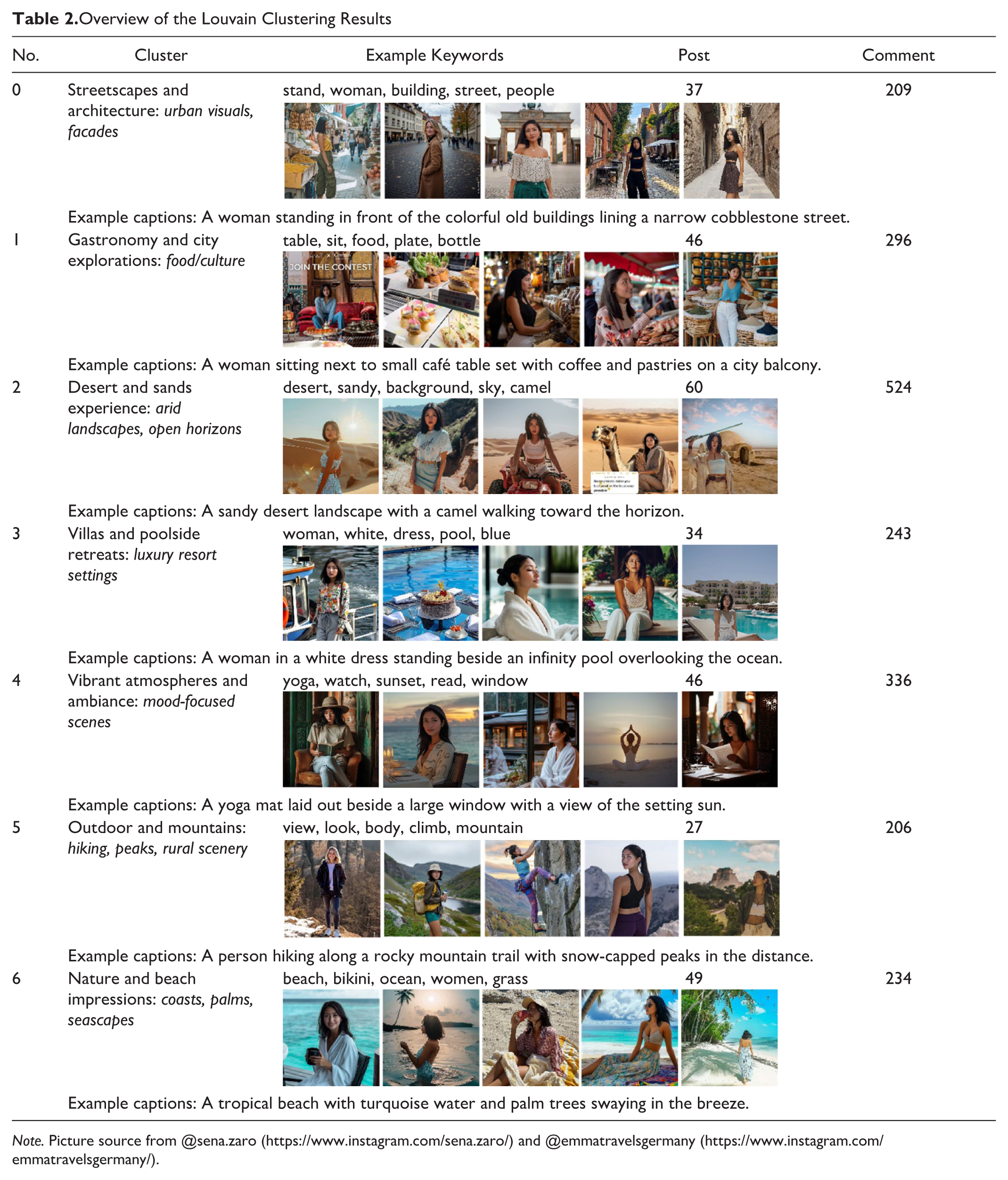
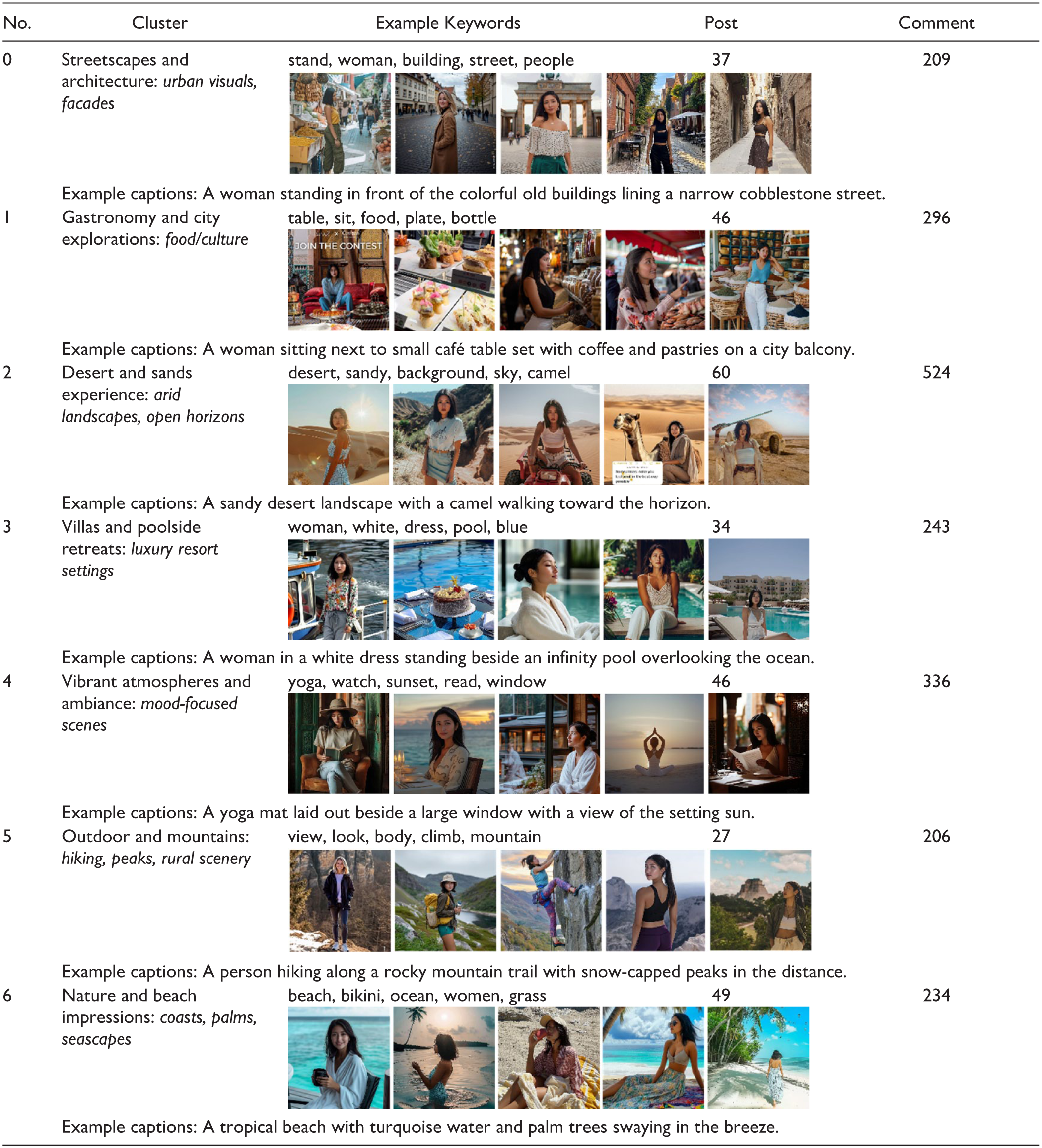
Note. Picture source from @sena.zaro (https://www.instagram.com/sena.zaro/) and @emmatravelsgermany (https://www.instagram.com/emmatravelsgermany/).
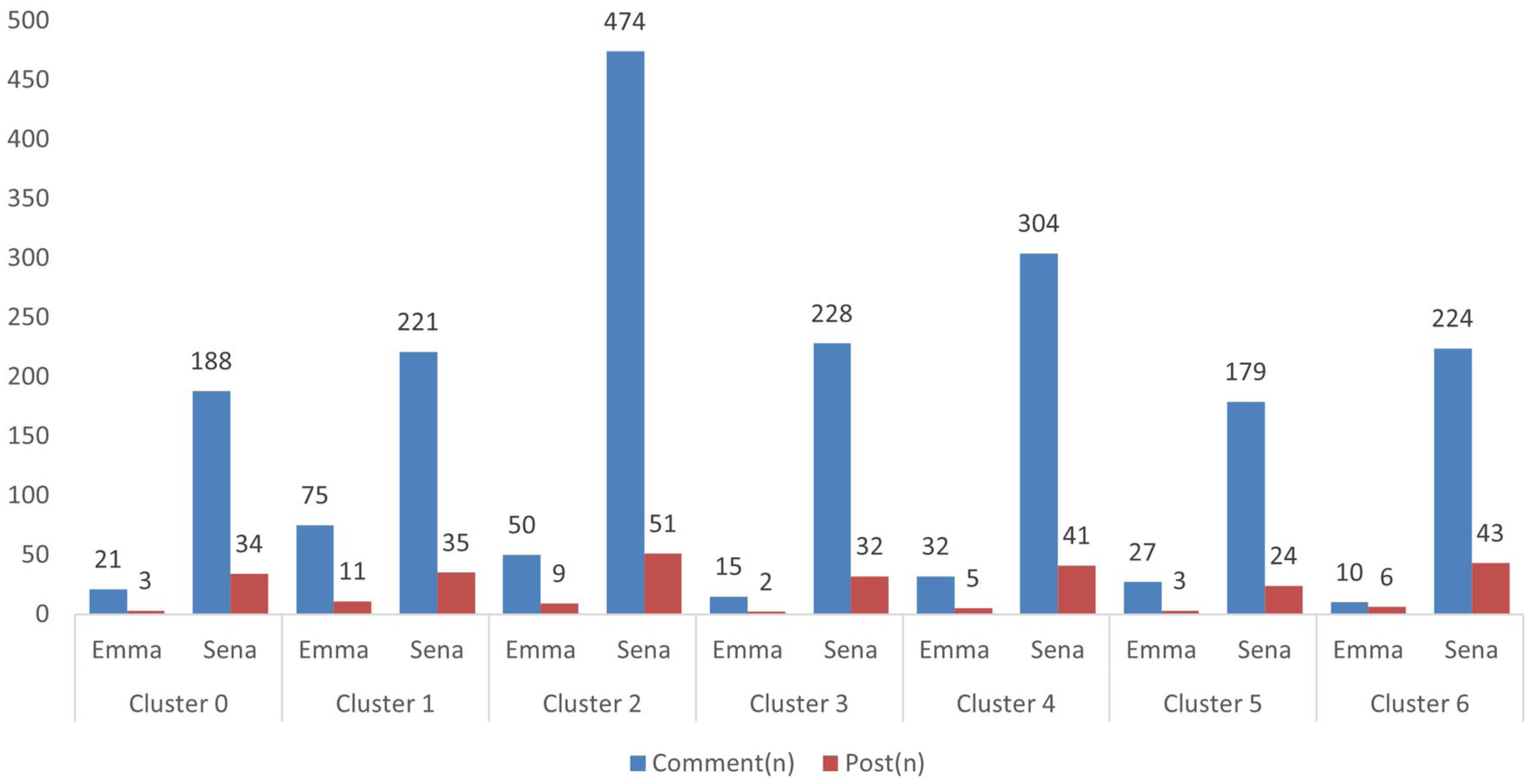
Number of Posts and Comments
In this study, clusters related to outdoor and nature themes, such as “Outdoor and mountains” and “Nature and beach impressions,” emerged as prominent topics. This aligns with existing visual analysis research (Picazo & Moreno-Gil, 2019), which frequently identifies nature experiences as popular themes on social media (J. Yu & Egger, 2021). The allure of natural landscapes often resonates with audiences due to their aesthetic appeal (Conti & Lexhagen, 2020), which is frequently highlighted in virtual influencer-follower interactions (Sorosrungruang et al., 2024). Interestingly, the findings also reveal that AI travel influencers frequently feature “Villas and poolside retreats,” which suggests an intention to craft a luxurious lifestyle that viewers might admire (J. Yu et al., 2024). Yet, in fact, the focus on luxury aligns with the aspirational nature of social media (Koivisto & Mattila, 2020), where users may be drawn to content that offers a glimpse into a more opulent way of life (Gurzki et al., 2019).
Surprisingly, the “Desert and sands experience” cluster highlights a less commonly explored theme in the existing tourism visual analysis studies. Under the umbrella of astronomy tourism, traveling in deserts can serve as a niche attraction for tourists unfamiliar with such environments (Tarek et al., 2023). This aligns with the mindset of open-minded users who are drawn to AI, as they often seek unique and unconventional experiences (Wang et al., 2025). Moreover, clusters featuring “Streetscapes and architecture” and “Gastronomy and city explorations” further reflect the multifaceted nature of tourism experiences. These elements are integral to virtual cultural tourism (J. Lee, Jung, ), where the exploration of local cuisine and architecture provides a deeper understanding of a destination’s heritage (Lai et al., 2018; Willson & McIntosh, 2010). Additionally, the inclusion of “Vibrant atmospheres and ambiance,” showcasing leisure activities like reading and yoga, reflects an effort by AI influencers to convey a vibe that resonates with a focus on well-being (Mrad et al., 2022).
Classification of Viewer Interaction Based on User Comments
Distinct from recent research that focuses on influencer-user interaction through engagement rates (Arsenyan & Mirowska, 2021; Looi & Kahlor, 2024; J. Yu et al., 2024), this study continued delving into the comments associated AI travel influencers. User comments, often reflecting personal anecdotes or expressions of admiration, demonstrate a shift from passive consumption of content to active participation in a perceived dialogic exchange (Looi & Kahlor, 2024; Marti-Ochoa et al., 2025). Unlike traditional parasocial relationships, where users form one-sided attachments to influencers, trans-parasocial relationships involve a perceived reciprocation fostered by the AI’s programmed content presentation (Lou, 2022). Moreover, the comments often reveal users’ attempts to attribute human-like qualities to these digital entities, which serve as hallmarks of trans-parasocial relationships.
Five topics were identified by the Louvain algorithm (Table 3): namely (1) beauty and appreciation, (2) communications and interaction, (3) recognition and perception, (4) curiosity towards AI, and (5) skepticism and criticism. Similar to the procedures described above, the naming of these topics was guided by TF-IDF values generated during the clustering process. To ensure consistency, likewise, 10 comments were randomly selected from each cluster and independently re-coded by two coders, with seven disagreements mostly between the “beauty and appreciation” and “recognition and perception” clusters due to overlapping affective language. Misclassification was resolved by discussion among the researchers. The interrater reliability for human–machine classification was calculated, achieving a Cohen’s kappa value of 0.79 (95% CI [0.63, 0.95]), which indicated substantial agreement (Landis & Koch, 1977). To explore these topics further, an interpretative qualitative approach was employed (Neuhofer et al., 2021) to analyze the detailed comments. From an epistemological standpoint, it is important to note that interpreting these findings requires a researcher to possess expertise in the subject area (Hannigan et al., 2019).
Topic Proportions in Comments by Influencer
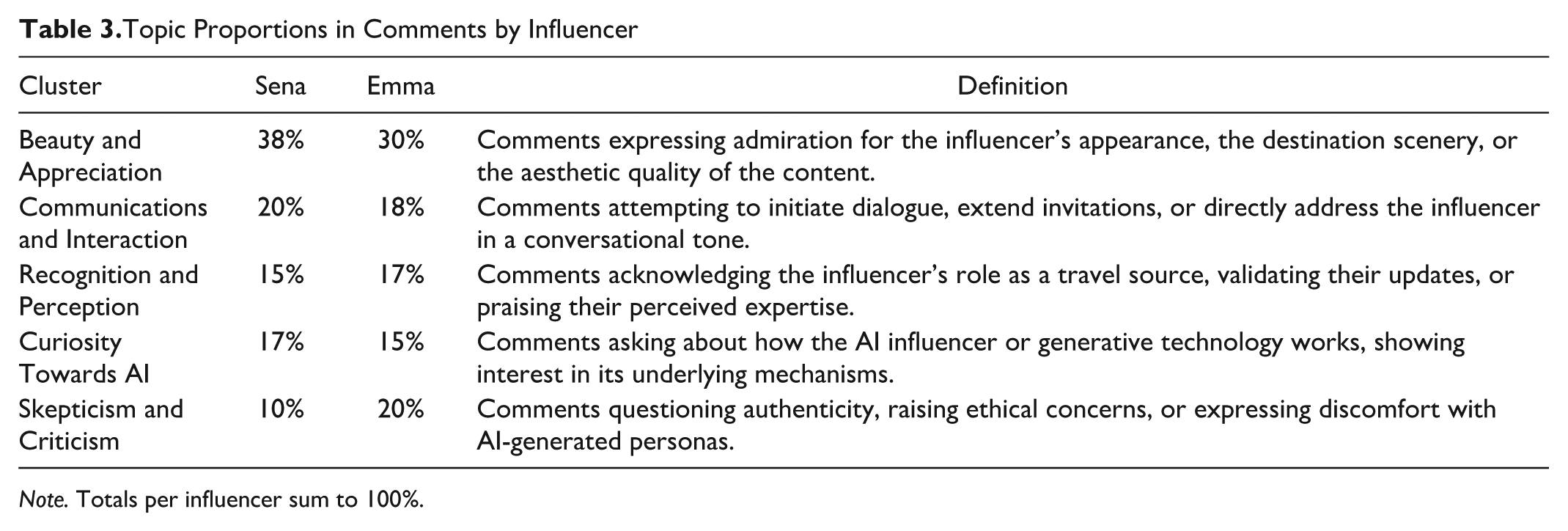
Note. Totals per influencer sum to 100%.
A notable phenomenon is the optimistic language used across clusters, with key terms having higher TF-IDF values such as “beautiful,” “wow,” “nice,” “amazing,” and “love.” Although it is not possible to infer from comments alone that the uncanny valley effect has been mitigated (J. Yu et al., 2024), such expressions may suggest increasing comfort with AI-generated personas. Nevertheless, acknowledging that Instagram is perceived to have a positivity bias is crucial; readers should interpret comments conservatively as indicative of momentary engagement rather than definitive evidence of broad acceptance. In addition to comments praising the beauty of the attractions depicted in the images (e.g., “the colour of the sea is beautiful, it has made me want to go there”), many users also appreciate the appearance of AI travel influencers. This observation aligns with a recent study on how the appearance of AI influencers influences user engagement (Marti-Ochoa et al., 2025). By attributing human-like traits to AI influencers, users showcase a deeper psychological connection, which transcends traditional one-way parasocial dynamics and moves toward dialogic engagement (Lou, 2022). Examples include comments like “You are looking very cute, innocent, and beautiful” and “This looks like a beautiful place, and you are standing in front of it.”
Interestingly, admiration for AI influencers often prompts users to seek more information about the locations featured. For instance, comments such as “With you it looks so beautiful. Can I learn or see more about the Baltic Sea?” indicate a deeper engagement and curiosity sparked by the influencers’ presentations. This behavior underscores the formation of trans-parasocial relationships, where users demonstrate a willingness to engage in reciprocal exchanges, fueled by the perceived trustworthiness and relatability of the digital entity (J. Kim et al., 2022). By seeking further information and expressing curiosity, users treat the AI influencer not merely as a digital construct, but as a reliable source of information and inspiration, thereby deepening their sense of connection.
Another theme that emerged is the desire for interaction and communication with AI travel influencers, which exemplifies the emergence of trans-parasocial relationships. Users often leave comments that suggest a personal connection (Cheung et al., 2022), such as “Sena, there is also a spice shop where I work, it looks very good” and “Dear Emma, let’s meet there for a Glühwein?” These comments echo the concept that computers are perceived as social actors (Gambino et al., 2020), indicating that users interact with AI influencers as if they were real individuals. Other comments like “Hi Emma, want a Striezel please?” and “Come to Spain Sena!” reflect users’ eagerness to interact with the digital entities. This suggests that AI influencers effectively foster community and dialogue (Sorosrungruang et al., 2024). Essentially, these behaviors extend the emotional and cognitive bonds traditionally associated with parasocial interactions into the realm of perceived bidirectional communication (J. Kim et al., 2022; Wellman, 2021).
Another prevalent theme is the sense of recognition associated with AI influencers. Comments such as “Good afternoon, Sena. Very interesting & nice update from Berlin. Also, as usual, what an elegant look!” highlight how users appreciate the presentation and content delivery. Another comment, “I find it kind of fascinating to see how Emma can evolve to your go-to person if it comes to travelling to Germany” underscores the innovative nature of AI influencers and their potential role as authoritative sources in tourism (Marti-Ochoa et al., 2025). This validation of AI as a source of travel insights demonstrate the evolving nature of trans-parasocial interactions (J. Kim et al., 2022), where AI entities are not only followed but also respected and valued for their contributions.
However, not all comments are positive. Users also express skepticism and criticism towards AI influencers. Comments like “Nice place, but too much AI” and “AI freaks me out” reflect a discomfort with AI’s growing presence (Shao, 2024). Others, such as “Just go take photos in Germany, why do we need an AI art account to show these places?” question the necessity and authenticity of AI-generated content (Looi & Kahlor, 2024). This skepticism is further echoed in comments like “How about a real influencer who promotes Germany all the time?” and “Pay real humans please and thank you.” These highlight an ongoing debate about authenticity and the value of human influencers (H. Lee, Shin et al., 2024; Sorosrungruang et al., 2024) in creating genuine connections with audiences. Yet, these interactions also reveal users’ active engagement with the concept of AI influencers (Looi & Kahlor, 2024; J. Yu et al., 2024) through navigating their roles and legitimacy in digital spaces. On a different note, a further concern relates to governance differences between the two influencers (Emma as an NTO-managed account vs. Sena as an independently managed AI influencer). Whether an influencer carries the institutional backing of a tourism board may play a role in shaping trust, practices, and perceived authenticity.
Finally, a theme of curiosity about generative AI itself is evident (Wang et al., 2025). Users ask questions like: “How do you draw the same person?”; “Do you assign to AI a character name, so it remembers?”; and “Are there more AI-generated videos to come?” These inquiries indicate a fascination with the technology behind AI influencers and a desire to understand its capabilities. This curiosity suggests that while users may have reservations (Arsenyan & Mirowska, 2021), they are also intrigued by the potential and innovation AI brings to the table. Such findings further blur the lines between human and AI connections (H. Lee, Shin et al., 2024). Overall, the comments reveal a complex landscape of perceptions and interactions with AI travel influencers in shaping modern tourism narratives (Marti-Ochoa et al., 2025). While they effectively engage and intrigue audiences, they also face challenges related to authenticity and acceptance.
Balancing Algorithmic Clustering and Human Interpretation
While the integration of computational algorithms enhances analytical rigor, thoughtful consideration of methodological dynamics is essential, particularly researcher subjectivity and the affordances of the digital platforms where these interactions unfold. In terms of clustering results, it is important to acknowledge that slight overlap between clusters may occur due to the inherent limitations of clustering algorithms, especially when processing multi-dimensional or overlapping features (Hannigan et al., 2019). For instance, visual elements such as mountains and water impressions often coexist in tourism imagery. This emphasizes the critical role of human interpretation in refining and contextualizing clustering results (J. Yu & Egger, 2021). This approach aligns with a constructivist-interpretivist epistemology, which recognizes that while computational techniques provide a systematic foundation, human judgment remains essential to interpret emergent themes (Neuhofer et al., 2021).
In the thematic development process, reflexivity was maintained by critically reflecting on potential biases in both automated processing and human validation to ensure trustworthiness. As authors with interdisciplinary backgrounds in tourism studies, digital technology, and data analytics, the interpretations were informed by both scholarly knowledge and familiarity with platform cultures. During analysis, the authors of this study actively reflected on how our assumptions, such as what constitutes admiration, skepticism, or engagement, may have influenced coding decisions. In cases of ambiguity (e.g., mixed affect or vague praise), the wider visual context of the post was revisited, and we compared interrater reliability to avoid over-interpretation. Discrepancies were resolved through iterative discussion, with an emphasis on maintaining transparency and coherence between the computational clustering and qualitative theme construction.
As a final note, it is salient to keep in mind that Instagram’s platform architecture plays a pivotal role in shaping user interactions by prioritizing visually driven content and leveraging algorithms tailored to individual preferences. An illustration juxtaposing parasocial versus trans-parasocial under computers are social actors, with Instagram affordances as moderators, is presented in Figure 2. Although the design features foster frequent but brief interactions (e.g., likes or quick comments) that can enhance the perception of trans-parasocial relationships by creating a sense of immediacy, they inherently limit the depth of engagement. The emphasis on brevity and aesthetic appeal may constrain opportunities for more meaningful and nuanced exchanges. Beyond this, the structural and algorithmic affordances of Instagram also shape the nature of trans-parasocial interactions. For example, the lack of threaded replies makes it harder to sustain back-and-forth exchanges between users and AI influencers. The ephemerality of features introduces time-bound visibility (Vázquez-Herrero et al., 2019), which may limit long-term engagement. By extending “computers are social actors” from human influencers to AI influencers in tourism, these features collectively mediate how relationship is constructed and how platform affordances influence the shift from one-sided to bidirectional perception.
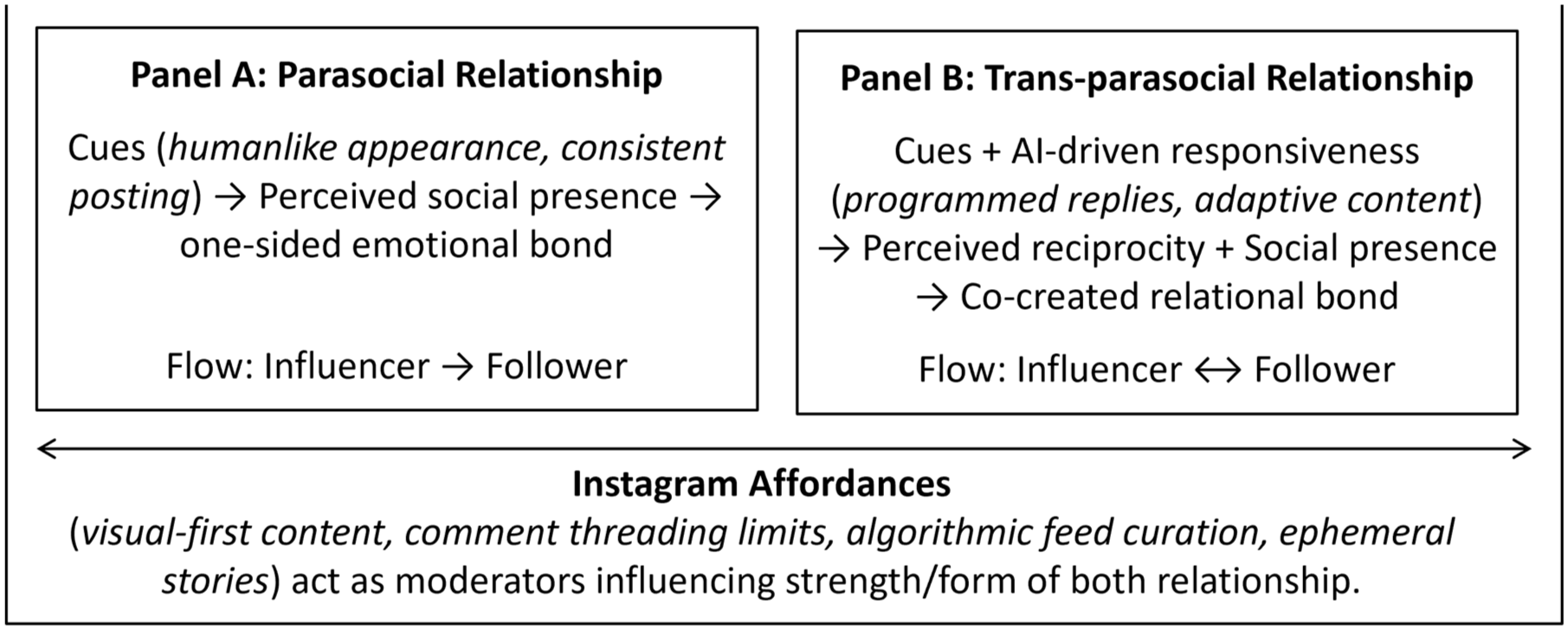
Parasocial Versus Trans-Parasocial Relationships, Moderated by Social Media Affordances.
Conclusion
Theoretical Contributions
Overall, this research contributes to the understanding of tourist interactions with AI travel influencers (Marti-Ochoa et al., 2025) through the lens of trans-parasocial relationships (J. Kim et al., 2022; Lou, 2022). Distinct from the state-of-the-art knowledge that predominantly focuses on parasocial relationships (Polat et al., 2024; T. Yu et al., 2025), this research broadens the theoretical lens in digital and media marketing by providing insights into the unique ways algorithmically designed personas engage and influence audiences within tourism-specific contexts. This differs from knowledge within prior social presence research in two key respects: (1) the reciprocal cues originate from algorithmic or scripted processes rather than authentic interpersonal agency, and (2) the resulting relational experience is co-created in appearance but asymmetrical in underlying mechanics. In this sense, trans-parasocial captures a novel threshold between traditional one-sided parasocial bonds and genuinely mutual interpersonal relationships, offering explanatory power for human–AI engagement. By questioning the theoretical inconsistency that positions humanized digital agents as social actors (Gambino et al., 2020) but limits trans-parasocial interaction frameworks to human influencers (J. Kim et al., 2022; Lou, 2022), this study provides a necessary rethinking of the conceptual boundaries of the theory. Shifting from the conventional notion of parasocial relationships focusing on one-sided interactions (Hwang & Zhang, 2018), the findings highlight reciprocal communication and emotional investment in AI influencers.
In the tourism context, where affective experiences are crucial (J. Yu & Egger, 2021), potential tourists view AI entities not just as passive content creators but as active participants in their digital lives. This paper reveals a rich tapestry of responses that extends beyond mere admiration or criticism. It demonstrates that AI influencers are not merely content generators but shape social dynamics that were once exclusive to human agents. By expressing personal connections and seeking interactions typically reserved for human relationships (H. Lee, Shin et al., 2024), this study indicates a fundamental shift in how consumers relate to digital entities, thereby enriching the discourse on human–AI interactions (Akhtar et al., 2024; Shao, 2024; J. Yu & Meng, 2025). From a psychological standpoint, this research introduces a novel application of trans-parasocial relationships (J. Kim et al., 2022; Lou, 2022). By situating AI influencers as social actors capable of eliciting engagement and fostering perceived reciprocity, this advances the theoretical understanding of how digital agents can evoke emotional connections (J. Yu et al., 2024). It challenges the conventional marketing assumption that human influencers are essential for emotional resonance. The findings underscore the role of AI influencers in fostering engagement through emotional landscapes—such as awe or curiosity—derived from thematic clustering of user comments. This interpretation moves beyond surface-level metrics (e.g., engagement rates; Marti-Ochoa et al., 2025) to explore the ways AI influencers actively shape the dynamics of human–computer interaction.
Furthermore, this research contributes to the broader fields on the role of generative AI in transforming marketing and communication strategies within the tourism context (Dogru et al., 2025; J. Yu & Meng, 2025). By situating AI travel influencers within evolving digital landscapes, the study highlights how these digital entities are reshaping conventional marketing paradigms (Mrad et al., 2022; Sorosrungruang et al., 2024) in tourism (Marti-Ochoa et al., 2025). As AI travel influencers gain traction, it also opens new discussions surrounding authenticity, transparency, and consumer trust in AI-driven tourism campaigns (J. Lee, Jung, et al., 2024; Marti-Ochoa et al., 2025). By reinforcing the implications of AI’s growing presence in tourism marketing (Marti-Ochoa et al., 2025), this research underpins the continuing efforts in investigating ethical considerations and societal impacts of AI-generated content (Dogru et al., 2025). Such findings lay the groundwork for further studies exploring the evolving interplay between AI personas and consumer behavior in various cultural and linguistic contexts. This research informs both the theoretical refinement of trans-parasociality and the design of ethical and emotionally intelligent AI systems in tourism marketing.
Practical Implications
Overall, the findings of this study provide valuable insights for tourism marketers and content designers. A key implication is the ability of AI travel influencers to evoke emotional engagement and curiosity among users. To capitalize on this, marketers should design AI influencer content that visually emphasizes awe-inspiring natural landscapes, immersive cultural elements, and aspirational lifestyles. For instance, destinations known for luxury experiences can collaborate with AI influencers to generate imagery that reflects exclusivity, such as villas, poolside settings, or scenic retreats, found in this study. By utilizing AI-generated visuals that highlight the aesthetic appeal of destinations, marketers can create campaigns that emotionally resonate with potential tourists to inspire further travel exploration. For example, destination marketers can collaborate with AI influencers to post images and videos highlighting breathtaking landscapes or cultural landmarks, accompanied by captions that evoke emotions such as wonder and joy.
Meanwhile, tourism bureaus can use AI travel influencers to spotlight hidden spots, supported by storytelling captions that invite followers to explore. AI travel influencers also have the capacity to foster community and dialogue, as users interact with them as if they were real individuals. They can be programmed to respond to specific keywords in comment sections, hosting question and answer (Q&A) sessions on Instagram Stories or live video formats to create the illusion of two-way communication. Marketers can also program AI influencers to “learn” from prior interactions and tailor content to reflect perceived continuity (e.g., referencing previous trips or reappearing destinations), which can deepen the user’s sense of familiarity and attachment.
However, despite the innovative opportunities offered by AI travel influencers, the study reveals some skepticism regarding authenticity. Tourism marketers can address this by ensuring transparency in their AI-driven campaigns. Clear disclosures (e.g., “AI-generated influencer” or “virtual partner of XYZ tourism board”) should accompany AI content to manage user expectations and maintain trust. Additionally, pairing AI-generated visuals with real user testimonials or behind-the-scenes footage of real locations can bridge the gap between AI fantasy and real-world experience. Moreover, the curiosity about AI technology presents an opportunity for destination marketers to engage and educate tourists. Collaborations with travel-tech companies or co-branded educational content (e.g., “How AI sees our city”) can build credibility while appealing to tech-savvy audiences.
Nonetheless, in light of the emotionally suggestive interactions between consumers and AI-generated personas, it is essential to consider the ethical implications of these engagements. Followers may form attachments to AI influencers, often under the impression of genuine human-like reciprocity, which raises concerns about transparency and informed consent. To address these issues, marketers should adopt ethical practices by including clearly labelling content as AI-generated and ensuring transparency in the design and operation of virtual influencers. As the use of AI influencers expands, such measures are critical to maintaining ethical integrity while leveraging these tools for effective tourism marketing.
Building on the practical suggestions above, the following checklist offers a quick reference for ensuring responsible deployment of AI-generated influencer content in tourism marketing: (1) label AI-generated content clearly by including visual or textual indicators; (2) pair with authentic human endorsements; (3) maintain factual accuracy to avoid misleading representations; (4) use only self-generated content inputs, and ensure no personal data from identifiable individuals is embedded in AI outputs; and (5) provide followers avenues for feedback.
Limitations and Recommendations
This research is not without its limitations. First, it focuses on AI travel influencers, a relatively new phenomenon with limited posts and interactions, which constrains the breadth of dataset and may impact the generalizability of the findings. Meanwhile, despite that interpretative qualitative approaches are valuable for examining social media content (Neuhofer et al., 2021), it is important to acknowledge that text interpretation is inherently subjective. From a consumer perspective, users engaging with AI travel influencers are often assumed to be young and tech-savvy, reflecting the broader demographic characteristics of Instagram users. However, such assumptions must also account for cultural and linguistic nuances that can influence interpretation. Notably, while this study treated user comments as a collective dataset, it did not differentiate responses based on the perceived identity cues of the AI influencers (e.g., gender-coded features or cultural aesthetics). For instance, the hyper-feminine appearance of Sena Zaro or the culturally specific setting of Emma’s content in Germany may elicit different reactions among diverse follower groups.
Moreover, the dataset in this study skews towards individuals who speak or understand English, although this has not been definitively confirmed. Incorporating an analysis of follower demographics and their engagement patterns could provide deeper insights into how identity dynamics mediate human–AI interactions. Future research is encouraged to further explore cross-cultural interactions, potentially through experimental designs using biosensors, to deepen understanding and contribute to the growing field of AI-mediated tourism. Furthermore, scholars are also suggested to explore how these findings compare across platforms such as TikTok, which features short-form video, or YouTube, known for its long-form, narrative-driven content, to further understand the role of platform architecture in shaping AI-mediated interactions in the tourism context.
As an early exploration of this emerging concept, the study may not fully account for rapid technological changes and shifts in user perceptions. Meanwhile, the coding procedures did not focus on whether AI influencers (or their handlers) replied. This underscores that the findings concern perceived exchange rather than verified two-way exchange. Future research could build on this by triangulating follower bids with influencer replies to assess how conversational dynamics unfold in practice. As AI and virtual influencers evolve, consumer attitudes and interactions may change significantly. While this study offers a foundational qualitative analysis of how users engage with AI travel influencers, it serves as an exploratory step rather than a conclusive examination. Future research should build upon these findings by conducting large-scale quantitative studies to test emerging patterns across wider populations. Furthermore, future studies with more balanced samples could explore governance-driven differences more systematically, particularly between AI personas managed by national tourism organizations and those operating as independent travel brands. Additionally, scholars are recommended to adopt a longitudinal approach to track changes in user interactions of AI travel influencers over time. Comparing interactions with AI travel influencers to those with human influencers in similar contexts could further provide insights into the unique aspects of these relationships and their implications for marketing strategies. Finally, since the BLIP-2 audit was limited to 60 images (~ 20%), scholars could extend this audit to larger and stratified samples to better assess captioning accuracy and its downstream effects on clustering. Despite the advancement of BLIP, future research could benefit from combining multiple image-captioning models or integrating human-in-the-loop verification for increased robustness.
Footnotes
Declaration of Conflicting Interests
The authors declared no potential conflicts of interest with respect to the research, authorship, and/or publication of this article.
Funding
The authors received no financial support for the research, authorship, and/or publication of this article.
