







Abstract
We investigate a novel bias in online rating systems, “memory bias,” arising from the temporal gap between consumption and review publication. Through an analysis of 753,806 hotel reviews and a randomized experiment, we find: (1) Memory bias has a greater spillover effect on perceived performance than on expectations, boosting ratings. (2) The marginal influence of memory bias on online reviews demonstrates a U-shaped relationship with time. (3) Over time, the variability in memory bias gradually diminishes. (4) Memory bias in online reviews arises from individuals accessing different types of knowledge over time, mediated by the level of concreteness in the accessed information. These insights deepen our understanding of memory bias and provide valuable implications for stakeholders in tourism and hospitality.
Keywords
Highlights
Memory bias boosts performance more than expectations.
The marginal impact of memory bias exhibits a U-shaped trend.
Rating variability gradually diminishes over time.
Time delay shifts reliance from episodic to semantic memory.
Introduction
Online ratings and reviews have emerged as potent influencers of tourist purchasing decisions (Lei et al., 2022). Approximately two-thirds of tourists consistently or frequently consult online reviews before making buying choices, with nearly 80% placing trust in these reviews on par with personal recommendations. These online ratings and textual assessments serve as conduits for conveying perceptions of product quality (X. Li et al., 2025), fostering trust, shaping attitudes toward product providers (Y. Wang & Li, 2024), and influencing future purchasing intentions (Park & Lee, 2025). Therefore, for businesses within the tourism and hospitality industry, maintaining a positive online reputation and high-quality reviews is crucial, which requires a thorough understanding of tourists’ behavior in posting reviews.
Existing research indicates that the creation of online reviews is influenced by various endogenous and exogenous factors (Zhang et al., 2022), including self-selection (Brandes et al., 2022; Karaman, 2021), social identity (Pu et al., 2020), social norm (Shalev et al., 2025; Wijenayake & Goncalves, 2025), prior ratings (L. Li et al., 2022), the reviewer and product popularity (Jameei Osgouei et al., 2025), and location (Kokkodis & Lappas, 2020). Despite the abundant achievements in the field of online review research, an interesting factor related to online reviews has been underestimated in existing studies: the time interval between consumption and review publication. In today’s mobile digital age, tourists can choose to post reviews reflecting their consumption experiences anytime and anywhere. For example, tourists may post their reviews on-site immediately after consumption, or several weeks or months after consumption. These different possibilities make us wonder: Does the time interval between consumption and review creation trigger distinct memory mechanisms during the evaluation process? If so, how does this mechanism reshape the resulting online ratings and textual content?
To address these inquiries, our study draws upon the Accessibility Model of Emotional Self-Report (Robinson & Clore, 2002) to systematically examine the impact of memory bias on online reviews. This theory posits that individuals employ distinct memory systems when assessing experiences over varying time spans. Specifically, shorter time frames tend to evoke episodic knowledge, characterized by the recall of specific event details—for instance, a tourist might vividly remember “the loud noise from the hallway at 3 am” or “the friendly smile of the front desk staff” shortly after the stay. Conversely, longer time frames tend to activate semantic knowledge, characterized by generalized cognitions—for instance, months later, the same tourist might retain only abstract evaluations such as “a comfortable stay” or “generally good service.”
This distinction is theoretically pivotal, as the two knowledge types are systematically linked to differing experience attributes (Eyal et al., 2004). Specifically, negative experiences often originate from concrete, context-specific service failures (e.g., “no hot water”), which are primarily encoded as episodic memory (Trope & Liberman, 2010). Conversely, positive experiences tend to be associated with holistic, abstract evaluations (e.g., “the hotel was comfortable”), and are thus predominantly integrated into semantic memory (Eyal et al., 2008). Crucially, the decay rates for these memory systems differ significantly: while vivid but unstable episodic knowledge (laden with negative details) fades rapidly, stable and structured semantic knowledge (carrying positive generalizations) proves more durable (Conway, 2009; Tulving, 1985).
Consequently, this asymmetry precipitates a “memory filtering” process—aligned with Fading Affect Bias—wherein specific negative information is disproportionately forgotten while abstract positive generalizations are retained (Walker et al., 2003). This mechanism renders the memory trace underlying a delayed review systematically more positive, generating a positive spillover on both perceived performance and expectations. Yet, under Expectation Confirmation Theory, final satisfaction is a function of the discrepancy between these two constructs. This raises a central empirical question: What is the relative magnitude of these two positive spillover effects? The resulting net effect dictates the direction of memory bias: if the performance spillover dominates, the bias is positive; if the expectation spillover prevails, it is negative.
This study aims to achieve three objectives: (1) to disentangle the asymmetric impact of memory bias on perceived performance versus expectations, thereby determining the net effect on satisfaction; (2) to delineate the dynamic characteristics of the marginal impact of memory bias over time; and (3) to explore the evolution of memory bias volatility. By achieving these goals, we aspire to construct a comprehensive theoretical framework connecting temporal distance, memory mechanisms, and evaluation behavior.
This study makes three core theoretical contributions. First, we identify and validate a “cognitive meta-bias” that serves as an antecedent to conventional behavioral biases (e.g., self-selection or social influence). We reveal that the mental representation of an experience undergoes systematic reconstruction due to the passage of time before a consumer even decides whether or how to report it. This finding shifts the analytical lens from behavioral economics to cognitive psychology, completing the “first link” in the chain of rating distortion. Second, we construct a dynamic theoretical framework that transcends static “binary” or “linear” views of temporal effects. By decoding the mechanism of the “episodic–semantic” cognitive shift, we elucidate how time indirectly shapes evaluations through a dual-path mechanism that asymmetrically “beautifies” performance and expectations, theoretically resolving long-standing inconsistencies regarding the direction of delay effects. Finally, by bridging the psychological Accessibility Model with marketing Expectation Confirmation Theory, we establish an interdisciplinary “temporal–cognitive” research paradigm. This paradigm expands the explanatory power of classic theories in dynamic contexts by modeling perceived performance and expectations as time-evolving variables.
In terms of practical value, our findings offer targeted guidance for the online review ecosystem. For rating system designers, we underscore the need for “time-sensitive” algorithmic governance, advocating for the visualization of the “experience-to-posting” time-lag to mitigate bias at the source. For service providers, we transform passive review tracking into active “strategic solicitation management,” guiding managers to precisely trade off between “rating valence” (maximizing scores) and “informational granularity” (acquiring details). For tourists, we provide a tool for digital media literacy, establishing the “time interval” as a key heuristic to help rationally discern the objectivity of information.
Background and Theoretical Foundations
Biases in Online Ratings
Online ratings serve as significant reference points for tourist purchase decisions, yet these numerical ratings are susceptible to cognitive biases (Kontalexi et al., 2025). Here, we provide a brief overview of the biases in online ratings.
Self-selection and reporting bias
This refers to the non-randomness of review samples, primarily manifesting as “extremity bias,” in which extremely positive or negative reviewers are overrepresented, while moderately-experienced users remain systematically silent (Brandes et al., 2022; Karaman, 2021). This bias stems from several mechanisms: “differential utility,” where extreme-experience users gain higher psychological rewards from expression (N. Chen et al., 2021); “differential attrition,” where moderate users are more likely to exit the reviewer pool over time (Brandes et al., 2022); and “base rate” mechanisms, where the initial consumer population is already skewed (e.g., tourists vs. locals; Xu et al., 2025). These biases collectively lead to systemic distortion in rating distributions and can mislead consumer decisions (Xie et al., 2024).
Social-influence bias
This refers to the phenomenon where individual ratings and judgments are systematically influenced by the opinions of others, leading to conformity and convergence (Kontalexi et al., 2025; Wijenayake & Goncalves, 2025). Its mechanisms include: “informational influence,” where users rely on others’ ratings as a quality signal amid uncertainty (Jameei Osgouei et al., 2025); “normative influence,” where users align with the mainstream to gain social approval (Shalev et al., 2025); and “dynamic feedback” mechanisms, where early ratings and rankings create a cumulative “lock-in” effect (Komiyama & Noda, 2024). This bias not only causes content convergence (Kontalexi et al., 2025) but also amplifies early ratings, causing new or niche opinions to be overlooked (Jameei Osgouei et al., 2025).
Regardless of whether it is self-selection bias or social-influence bias, existing research shares an implicit common assumption: that consumers can accurately retrieve their true product or service experiences. Self-selection bias focuses on whether this “true experience” is reported, while social-influence bias examines whether this “true experience” is distorted by the opinions of others. However, these studies collectively overlook a more fundamental question that precedes both processes: In the time delay between consumption and review, is the consumer’s memory of the “true experience” itself reliable?
The Impact of Memory on Electronic Word-of-Mouth
Memory’s interplay with electronic word-of-mouth (eWOM) has emerged as a pivotal area of inquiry in consumer behavior and network marketing. Existing research indicates that online reviews are not objective reproductions of consumer experience; rather, they are dynamic reconstructions rooted in cognitive memory processes. This cognitive property profoundly influences the generation mechanisms, content characteristics, and evolutionary pathways of eWOM.
Memory bias is evident at the initial stage of eWOM formation. Lin (2025) demonstrated that retrospective judgments of tourism experiences are significantly governed by the Peak–End Rule, whereby the most intense and final moments of an experience exert disproportionate influence on overall evaluations. This finding reveals memory’s selective retention mechanism, indicating that the mnemonic material underlying eWOM is inherently biased from the encoding stage onward.
As time progresses, this memory bias evolves across two dimensions: content and affect. On the content dimension, the Accessibility Model of Emotional Self-Report (Robinson & Clore, 2002) provides a conceptual framework for understanding this transformation. Shortly after consumption, reviewers rely heavily on episodic memory, which preserves vivid contextual details and sensory information. Consequently, early reviews tend to contain rich descriptive language and specific situational cues (Kronrod et al., 2023), reflecting the influence of autobiographical memory that drives authentic WOM transmission (Moliner-Tena et al., 2023). However, as temporal distance increases and episodic memory accessibility declines, consumers increasingly depend on semantic memory, resulting in a linguistic shift from concrete depictions to abstract and generalized judgments (Kronrod et al., 2023).
On the affective dimension, this memory evolution exhibits a pronounced asymmetry. According to the Fading Affect Bias (J. H. Kim & Jang, 2014), negative emotions decay more rapidly than positive ones. This asymmetric decay has been repeatedly validated in eWOM contexts. Yang et al. (2018) found that temporal delay significantly reduces review extremity, an effect driven primarily by negative experiences. Similarly, H. Li et al. (2021) confirmed that temporal delay asymmetrically “softens” the ratings of negative experiences. This asymmetric affective fading produces a systematic positive shift in delayed ratings, forming a critical psychological basis for positivity bias in eWOM.
In the interaction phase, memory bias operates jointly with social influence mechanisms rather than independently. H. Li et al. (2019) reveals that when reviewers’ episodic memories become blurred due to temporal delay, they exhibit greater cognitive uncertainty and thus rely more heavily on prior reviews as a judgment anchor. This finding demonstrates that memory decay creates the conditions for social influence bias to intervene, forming a synergistic effect between cognitive and social conformity in shaping eWOM.
Despite these advancements, the current body of research reveals several unresolved theoretical and methodological issues. First, existing studies remain largely black-boxed: they document inconsistent net effects of temporal distance on ratings (e.g., Bendall-Lyon & Powers, 2002; Stamolampros & Korfiatis, 2018) without unpacking the underlying Expectation–Disconfirmation mechanism. Specifically, it has not explored the competing, asymmetrical effects of memory bias on the core constructs of perceived performance (P) and post-hoc expectations (E).
Second, the temporal characterization of memory effects remains overly static and reductive. Most studies simplify time as either a binary condition (immediate vs. delayed) or a linear variable (Yang et al., 2018), overlooking the inherently nonlinear dynamics of memory decay and retrieval efficiency. This oversimplification obscures how the marginal contribution (i.e., changing effect size) and volatility (i.e., variance convergence) of memory bias evolve over time, thus limiting our understanding of rating trajectories across temporal horizons.
Finally, methodological constraints have further hindered theoretical advancement. Research relies on single paradigms: observational data (high external validity) cannot unpack the “black-box” (missing P and E), while experiments (high internal validity) lack external validity for non-linear dynamics (Kronrod et al., 2023; H. Li et al., 2021). A mixed-method design integrating both is conspicuously absent.
Theory and Hypothesis Development
This study integrates the accessibility model of emotional memory with expectation-confirmation theory to examine how the temporal gap between consumption and review submission affects tourists’ expectations, perceived performance, and the resulting satisfaction bias. In the absence of a delay, tourists provide an unbiased satisfaction assessment based on a direct comparison of perceived performance and expectations at the time of consumption. However, when there is a delay in posting reviews, both perceived performance and expectations are influenced by memory accessibility effects, leading to spillovers. Depending on which dominates—performance spillover or expectation spillover—the reported satisfaction may be positively or negatively biased, a phenomenon we define as “memory bias.” In the following sections, we introduce the relevant theories, explain our conceptual model, and propose our hypotheses.
Accessibility Model of Emotional Self-Report
Self-reports are essential for understanding subjective experiences, encompassing both current and non-current feelings. Current feelings, or online emotional self-reports, involve reporting immediate emotional states in response to stimuli, activities, or interviews, reflecting “in-the-moment” emotions. Non-current feelings include retrospective, prospective, and hypothetical self-reports, each shaped by variations in accessed knowledge.
Figure 1 systematically visualizes the Accessibility Model of Emotional Self-Report. When reporting emotions, individuals rely on two primary categories of knowledge sources: The first category, Event-based sources (i.e., Episodic Knowledge), is event-specific, contextualized, and prone to forgetting. It comprises two specific forms: (a) Experiential knowledge: Derived from immediate experience, providing direct, memory-independent data (e.g., “I feel frustrated now because the Wi-Fi is slow”; Barrett et al., 2007); (b) Episodic memory: Involves reconstructing past emotions through the detailed recollection of specific past events (e.g., “recalling the specific moment a receptionist was rude”). The second category, Belief-based sources (i.e., Semantic Knowledge), is characterized by broad generalization, de-contextualization, and resistance to interference. This also includes two forms: (a) Situation-specific beliefs: Beliefs regarding typical emotional reactions in specific contexts (e.g., “how one generally feels in a hotel”); (b) Identity-related beliefs: General emotional tendencies assessed through personal traits and stereotypes (e.g., “I am a critical person”; Y. Kim et al., 2022).
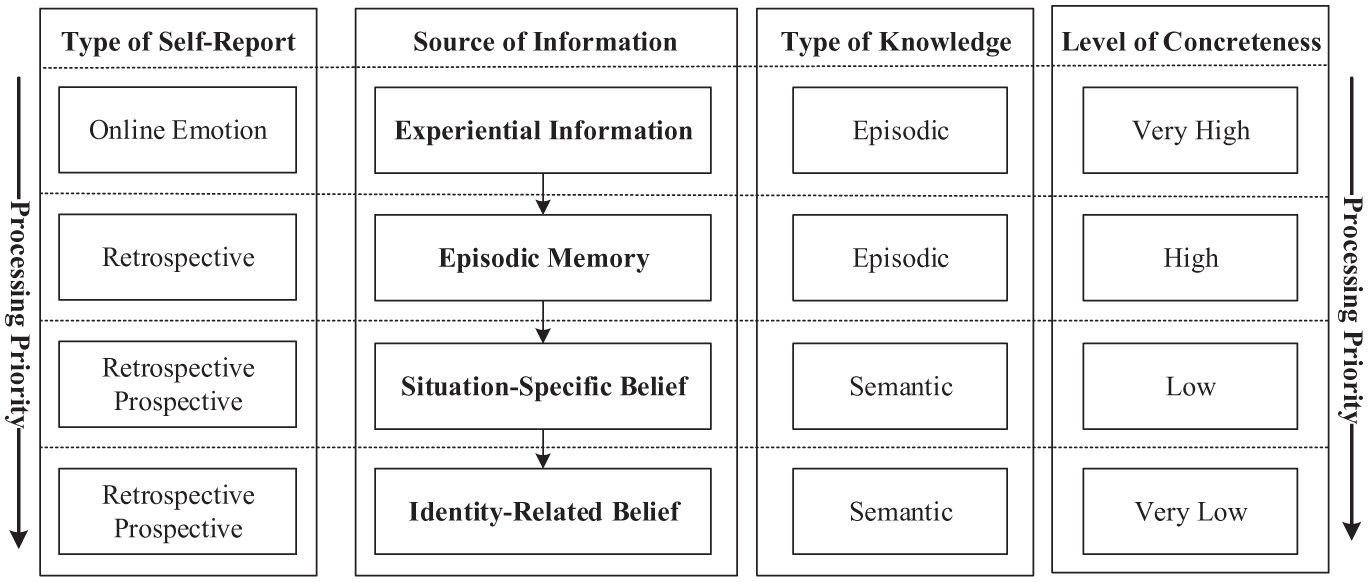
Hierarchy of information sources in emotion self-report.
As illustrated by the top-down hierarchy in Figure 1, the accessibility of these sources dictates the generation mechanism of emotion reports and undergoes a systematic shift over time. Individuals prioritize the most concrete source available: relying on experiential knowledge for immediate reports, and initially attempting to retrieve episodic memory for retrospective reports (e.g., online reviews). However, as time progresses and specific memories fade, individuals are forced to shift reliance toward more abstract situation-specific beliefs, and ultimately to the most generalized identity-related beliefs. This trajectory reflects the principle that the concreteness of information in emotion reports progressively declines over time (Robinson & clore, 2002).
In summary, Figure 1 constitutes the core theoretical foundation for understanding the dynamic process of memory bias in this study. It reveals how the basis of evaluation systematically migrates from “concrete, contextualized, and idiosyncratic details” to “abstract, generalized, and homogeneous beliefs” over time. This cognitive transition from an “event-driven” to a “belief-driven” basis not only elucidates the intrinsic mechanism of the “rosy view” effect but also establishes the theoretical groundwork for interpreting the memory bias phenomena observed in our findings.
Expectation-Confirmation Theory
Expectation-Confirmation Theory (Oliver, 1980) is foundational to understanding consumer satisfaction, positing that final satisfaction (i.e., online ratings) stems from the discrepancy between perceived performance and expectations (Anderson & Sullivan, 1993). While immediate reviews offer relatively unbiased assessments based on direct comparisons, delayed reviews are subject to the memory filtering mechanisms described in our accessibility model. This mechanism induces a “beautification” of both recalled performance and expectations—a phenomenon we term “spillover effects.” Specifically, the performance spillover arises from the rapid decay of negative details and the persistence of positive generalizations, whereas the expectation spillover results from a temporal shift toward ideal “original intentions” over realistic constraints.
Crucially, these two spillover effects are likely asymmetrical. Under Expectation-Confirmation Theory, final satisfaction relies on the gap between enhanced performance and elevated expectations. Consequently, the direction of memory bias is determined by the net magnitude of these opposing spillovers: a positive bias emerges if the performance spillover dominates, while a negative bias occurs if the expectation spillover prevails. Figure 2 illustrates this core logic, depicting how temporal distance—mediated by the shift from episodic to semantic memory—asymmetrically reshapes performance and expectations, ultimately governing tourist satisfaction. The following section explores these dynamics to derive our core hypotheses.
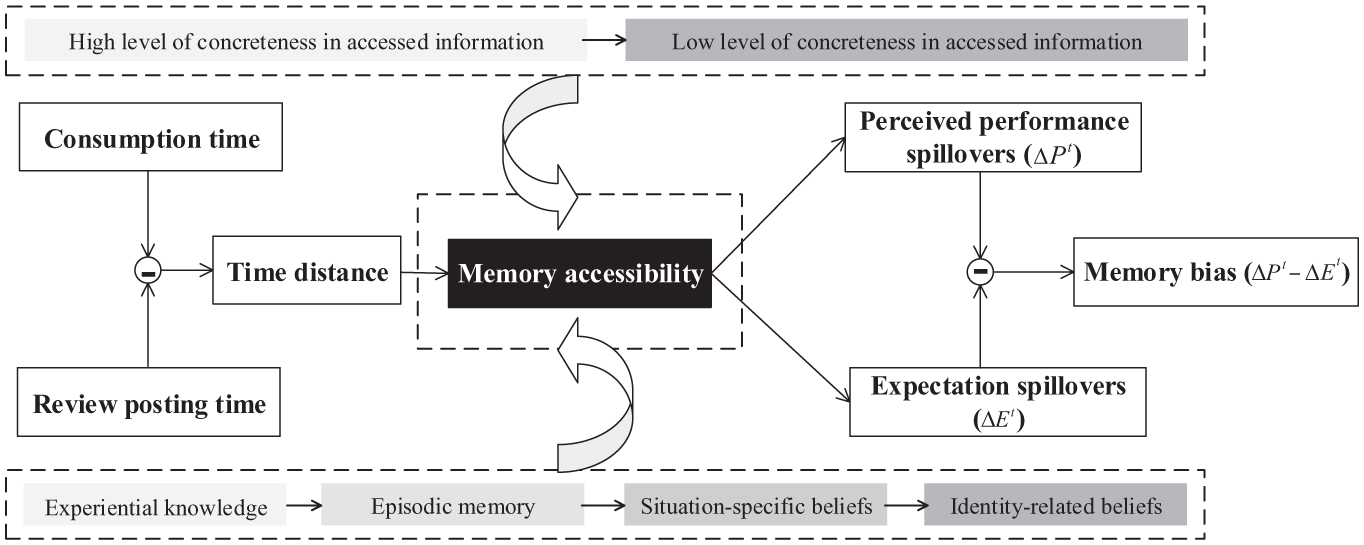
Conceptual model.
Hypotheses Development
The emergence of memory bias
Tourists’ online ratings can be conceptualized within the framework of emotional self-report. Ratings submitted immediately after consumption (i.e., online reports) predominantly capture experiential knowledge, as individuals can directly access their current feelings. In contrast, delayed reviews (i.e., retrospective reports) must rely on retrospective memory, encompassing both episodic and semantic components. Crucially, since raw emotional experiences cannot be stored in memory but are instead reconstructed through beliefs (Clore et al., 2001), delayed ratings reflect tourists’ beliefs about their emotions rather than the emotions themselves. This cognitive shift from experiential knowledge to belief-based reconstruction serves as the theoretical foundation for memory bias.
Based on the expectancy-disconfirmation theory (Oliver, 1980), tourist satisfaction (i.e., online ratings) is a function of the difference between tourists’ perceptions of product performance and their expectations towards the product, that is,

where S ij denotes the satisfaction of tourist i for product j, P ij is the perceived performance of tourist i for product j, and E ij is the expectation of tourist i for product j, u ij captures exogenous and endogenous characteristics that may affect satisfaction.
In Equation 1, P
ij
and E
ij
are tourist-specific, as not all tourists are created equal. One factor influencing both P
ij
and E
ij
is the temporal distance between a tourist’s actual experience and their reported evaluation. Ratings given immediately or shortly after the experience reflect experiential knowledge and are closer to the true experience. Over time, as details fade, ratings may rely more on episodic memory, missing some specifics. With even more time, ratings may be based on beliefs about the situation, reflecting the tourist’s circumstances rather than the product itself. Thus, P
ij
and E
ij
include components that represent tourists’ actual experiences and memory biases. Specifically, the actual experience component includes tourists’ true perceptions of product performance (

Here,

In the context of online reviews, the temporal gap between a tourist’s experience and their review posting profoundly shapes their perceptions and evaluations. Time plays a critical role in emotional self-reporting (Liberman et al., 2007): immediately after an experience, details are vivid and accessible; yet, as time passes, memory becomes increasingly abstract and specific details fade (K. Kim et al., 2008). This process involves a systematic shift in the knowledge base used for evaluation—from concrete, context-dependent episodic knowledge toward more abstract and generalized semantic knowledge. This transition aligns with progression from low-level to high-level construals proposed by Construal Level Theory (Williams et al., 2014).
Simultaneously, this memory abstraction process exhibits an asymmetry regarding the retention of experiential attributes of different valences. Negative experiences (e.g., “no hot water in the shower”) often stem from specific, contextual service failures and are thus primarily encoded as episodic knowledge (Eyal et al., 2004, 2008). Conversely, positive experiences (e.g., “a comfortable stay”) are more easily generalized into abstract, de-contextualized overall evaluations, encoded primarily as semantic knowledge. Since episodic knowledge (carrying negative details) decays significantly faster than durable semantic knowledge (Conway, 2009; Tulving, 1985), the memory system disproportionately sheds negative details while retaining positive generalizations over time.
This “memory filtering” mechanism induces a systematic positive bias in both perceived performance and expectations, independent of actual product quality (Pizzi et al., 2015). For perceived performance, this asymmetry occurs regardless of the initial experience’s valence. Specific negative scenarios (e.g., “dirty carpet”) fade rapidly, whereas abstract positive or neutral generalizations (e.g., “convenient location”) persist. Consequently, the recollection of performance becomes more positive—or at least less negative—over time.
For expectations, temporal distance has a similar “rosy” effect. According to Construal Level Theory, abstract thinking (corresponding to distant events) emphasizes desirability (i.e., “why” participate) while downplaying feasibility (i.e., “how” to overcome difficulties). This means that as temporal distance increases, tourists recalling their expectations tend to focus on idealized motivations (e.g., “a romantic getaway”) while overlooking realistic constraints (e.g., “high prices”), thereby systematically inflating their recalled expectations.
Based on the discussion, perceived performance and expectations can be seen as functions of time distance (i.e., forgetting level). When accessible memory rapidly declines, the positive spillover effects of time distance on perceived performance and expectations will sharply increase; while as the rate of memory decay gradually slows down, the positive spillover effects of time distance on perceived performance and expectations will also slow down accordingly. To capture this time sensitivity, we introduce a normalization function f(t) to modulate the impact of time distance on perceived performance and expectations. The function graph of f(t) should be symmetric with respect to the horizontal axis (position-insensitive) and sign-preserving, in accordance with the forgetting curve (Ebbinghaus, 2013). Thus, the function f(t) determines the direction and shape of the effects, where

Equation 4 indicates that the direction (positive or negative) of the net memory bias (
H1a (Performance-Dominant): The positive spillover effect of temporal distance on perceived performance dominates the effect on expectations, resulting in a positive memory bias.
H1b (Expectation-Dominant): The positive spillover effect of temporal distance on expectations dominates the effect on perceived performance, resulting in a negative memory bias.
The marginal effect of time on memory bias
The second core objective of this study is to examine the marginal effect of memory bias—specifically, the magnitude of the rating increase associated with each incremental month of delay. Theoretical analysis suggests this marginal effect is primarily driven by dynamic changes in perceived performance rather than expectations. Expectations, being anchored in semantic memory, are characterized by abstraction and stability; consequently, they are posited to exhibit a steady, linear increase over time (e.g., a constant monthly elevation of ~0.05 stars). Conversely, the evolution of perceived performance is more complex, governed by the transition from episodic to semantic dominance. This shift generates three distinct phases in the marginal effect:
First, in the short-term stage (days to weeks post-experience), memory bias is driven by the rapid decay of episodic memory. Concrete negative details (e.g., “hair in the bathroom” or “long queues”) are swiftly forgotten, precipitating a steep initial rise in perceived performance. For instance, a rating might surge from 3.0 to 3.8 stars within the first month, demonstrating a robust positive marginal effect.
Second, in the medium-term stage, the cognitive system enters a transitional lull. The rapid decay of episodic memory attenuates, yet semantic memory has not fully established dominance. Lacking a potent driver, the growth of perceived performance decelerates significantly. During this interval, the rating might creep only from 3.8 to 3.9 stars, causing the marginal effect to reach its nadir.
Finally, in the long-term stage (e.g., after 6 months), specific episodic details are virtually exhausted, and evaluation becomes fully dominated by abstract, stable semantic memory (e.g., “a reliable hotel”). Here, tourists shift from passively “forgetting the negative” to actively “filling in” gaps with “rosy” semantic generalizations. As this abstract beautification intensifies, the elevation of perceived performance accelerates once more (e.g., rising from 3.9 to 4.2 stars), marking a resurgence in the marginal effect.
In summary, while the marginal impact of expectations remains constant, the marginal effect of perceived performance follows a “high-low-high” trajectory. Consequently, the overall marginal effect of memory bias exhibits a U-shaped pattern. Based on this, we propose:
H2: The marginal effect of temporal distance on memory bias follows a U-shaped trajectory, initially decreasing and subsequently increasing over time.
Volatility of memory bias
The third focal issue of this study concerns the volatility of memory bias, referring to the degree of variation among tourists’ ratings (statistically represented as variance). Specifically, we seek to determine whether tourist ratings tend toward polarization (i.e., high variance, with greater disagreement) or consensus (i.e., low variance, with growing consensus) over time. We posit that this volatility gradually diminishes as the temporal interval increases. The fundamental mechanism driving this reduction is the transition in the cognitive basis of evaluation: shifting from “hot,” idiosyncratic episodic memory to “cold,” generalized semantic memory (Loewenstein, 2000).
In the immediate post-consumption phase, evaluations rely heavily on vivid, concrete, and highly individualized episodic memories. Recall is emotionally charged and tethered to incidental details, breeding significant heterogeneity. For instance, one tourist may assign a 1-star rating due to a specific grievance like “slow Wi-Fi,” while another awards 5 stars based on a distinct delight such as “friendly staff.” Because these emotionally triggered details are stochastic and unique to each individual, early-stage ratings exhibit high polarization and variance.
As time progresses (e.g., several months later), such distinctive, emotionally salient details gradually fade, and tourists’ recollections increasingly depend on similar, abstract, and generalized semantic memory. This shared reliance on abstract knowledge naturally shifts ratings from initial divergence toward greater convergence. Returning to the previous example, neither Tourist A nor Tourist B retains the specific details regarding the Wi-Fi or the staff. Instead, they both rely on a holistic, abstract impression of the hotel, such as “acceptable” or “good value for money.” This transition from specific differences to abstract similarity leads to a convergence of evaluations and a substantial reduction in variance.
In summary, the expansion of the temporal interval shifts the evaluative basis from diverse, emotional episodic details (leading to high variance) to convergent, rational semantic generalizations (leading to low variance). Accordingly, we propose the following hypothesis:
H3: As the temporal interval increases, the variance of memory bias diminishes, indicating a convergence in tourist evaluations.
Research Setting
Data
Our empirical analysis is grounded in data from TripAdvisor.com. We collected this data using a custom web crawler, obtaining information at the hotel, review, and reviewer levels for all New York City hotels. We selected New York City as our research context due to its distinct advantages in data representativeness and methodological control. As a premier global tourist destination, New York City provides a large-scale and highly heterogeneous visitor sample, offering a robust empirical basis for capturing the dynamic and non-linear characteristics of “memory bias.” Furthermore, focusing on a single, top-tier tourist city effectively mitigates potential confounding variables stemming from regional economic, cultural, or institutional differences. This methodological choice thereby prioritizes the internal validity of our study and enhances the precision of its theoretical inferences.
Our data collection spanned from January 1, 2011 to December 31, 2021. Following dataset cleansing and the removal of incomplete comments, we obtained a total of 753,806 online reviews from 639,641 tourists for 544 hotels. Our sample comprises 71,462 repeat reviewers who contributed at least two reviews.
Variables
The key variables are as follows.
(1) Dependent variables. Our dependent variables include tourist satisfaction, the variance of tourist satisfaction, and the marginal effect of memory bias. In this study, we measure tourist satisfaction using the tourist’s star rating (Star_rating) where Star_rating can be directly obtained from the tourist’s reviews. Additionally, the variance of tourist satisfaction and the marginal effect of memory bias are derived from calculations based on tourist satisfaction, and the specific calculation methods are elucidated in Section 4.4.
(2) Focal variables. The independent variables of interest include the temporal interval between the time of consumption and the time of review publication, as well as the normalized function f(t) accounting for forgetfulness.
(3) Control variables. To isolate the net effect of temporal distance on memory bias, we systematically controlled for potential confounding factors across three dimensions: review-level, reviewer-level, and hotel-level characteristics, following established protocols in the tourism literature.
At the review level, we controlled for posting device, rating granularity (i.e., inclusion of sub-ratings), and posting timing (weekend vs. weekday). These contextual features can significantly shape rating behavior. For instance, mobile submissions often yield shorter, more emotionally charged content (Han & Jun, 2021; Zhu et al., 2020), while weekend posts may reflect distinct emotional states due to leisure contexts (Bayerl et al., 2025; Du et al., 2024). Additionally, the presence of multi-dimensional ratings can systematically alter overall scores by encouraging a more structured evaluation framework (P. Y. Chen et al., 2018; Schneider et al., 2021).
At the reviewer level, we utilized the total review count as a proxy for platform experience. Controlling for reviewer heterogeneity is critical, as veteran reviewers often differ systematically from novices in their rating standards, consistency, and propensity for bias (Deng et al., 2022; X. Li et al., 2025). This control helps rule out interference from experience-related factors.
At the hotel level, we accounted for hotel reputation and popularity by including overall average ratings, attribute-level ratings, and cumulative review counts. Prior literature suggests that existing reviews can shape subsequent ratings through social influence mechanisms, such as herding effects (Rohde et al., 2022). Therefore, controlling for these metrics is methodologically rigorous for identifying the independent effect of temporal distance.
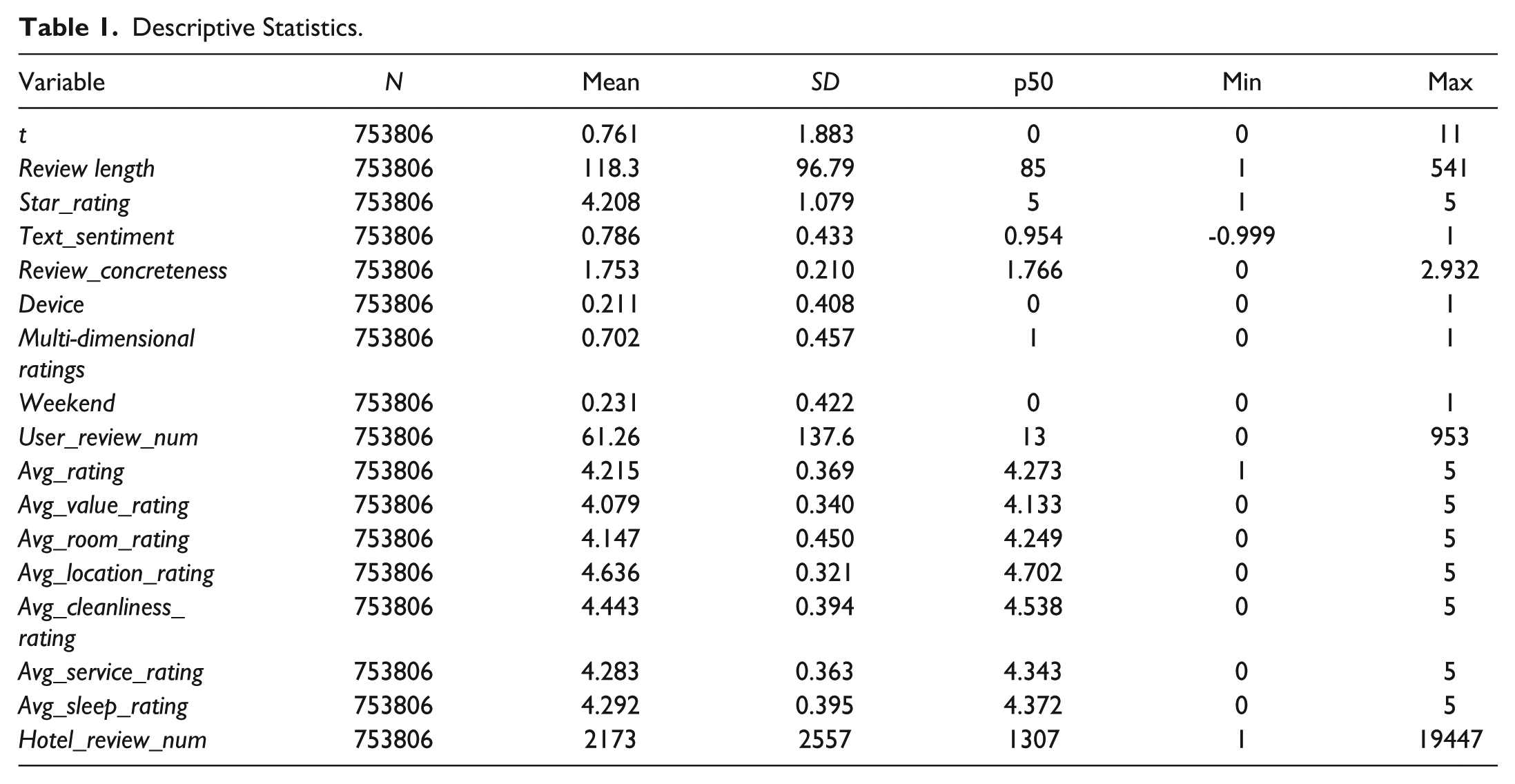
By employing this multi-level control structure, we effectively mitigate omitted variable bias, ensuring a robust estimation of the causal relationship between temporal distance and memory bias. Table 1 presents the descriptive statistics for these main variables.
Descriptive Statistics.
Operationalization of Normalization Function f(t)
Grounded in the foundational tenets of our theoretical framework, we formally posit that the functional form of the normalization function, denoted as
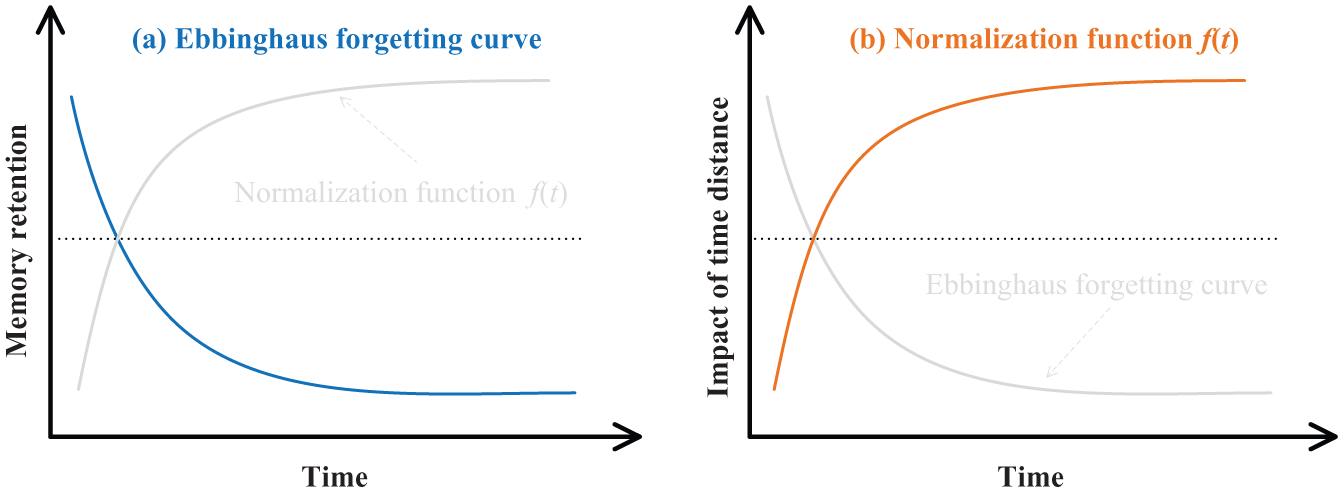
The schematic representation of Ebbinghaus’ forgetting curve and the normalization function f (t).
To derive the specific functional form of
Finally, we applied standard curve-fitting techniques, using the “time interval (t)” as the independent variable and the transformed “memory forgetting proxy” as the dependent variable. As detailed in Appendix Table B1 (see the online supplemental material), the exponential function provided the best statistical goodness-of-fit (R2 = 0.98). Therefore, we selected this exponential function as the normalization function, with the specific form:

To validate our normalization function, we followed Rubin and Wenzel’s (1996) methodology. They used retention functions with (a) memory quantity and time as variables, (b) five or more time points, and (c) at least one bivariate function with a correlation of 0.90 or higher. These criteria ensure the function is well-defined, has enough data points, and produces smooth curves. Our function meets these standards, using average review length as a proxy for memory quantity (Q. Wang et al., 2000) and time between consumption and review posting to reflect interference. With 12 time points and two out of three function forms showing a goodness of fit above 0.90. Thus, we are confident in our normalization function.
Empirical Framework
Memory bias: Test of H1a and H1b
Based on the discussion in Section 3.1, we constructed the following model to capture the spillover effect of memory bias on tourist satisfaction.

where i denotes the reviewer, j represents the hotel, and t indexes the time interval between the review posting and the actual check-in time. Sijt denotes the satisfaction of reviewer i towards hotel j after a time interval of t has elapsed since the actual stay. As described in Section 4.4, we employ Star_rating and Text_sentiment as indicators of reviewer satisfaction.
The variable of interest is the
The marginal effect of time on memory bias: Test of Hypothesis 2
As described above, the memory bias accumulates over time, and for hotel j, there is no memory bias in tourist satisfaction that are posted without delay (i.e., bj0 = 0). The memory bias for tourist satisfaction posted with a delay of t months is

The independent variable of interest is the
Volatility of memory bias: Test of Hypothesis 3
The variance of hotel j’s tourist satisfactions that are posted with a time delay t (

where t remains the variable of our interest, with the coefficient
Model Assumptions
Our empirical analysis relies on several key assumptions ranging from econometric identification to construct operationalization, ensuring the reliability of our research conclusions.
Econometric identification assumptions
These assumptions ensure the statistical validity of our parameter estimates:
(1) Conditional Exogeneity: After controlling for all fixed effects (hotel, time, travel type) and covariates, we assume that the core explanatory variables (e.g., f(t), t, t2) are uncorrelated with the model error term uijt. We have tested and mitigated the risk of this assumption being violated by using Instrumental Variable (IV) methods and Propensity Score Matching (PSM).
(2) Error Term Structure: Acknowledging that the error term uijt may exhibit serial correlation and heteroskedasticity within the same hotel, we employ robust standard errors clustered at the hotel level for all statistical inferences.
Theoretical and operationalization assumptions
These assumptions bridge our theoretical framework with the empirical models:
(1) Proxy Validity
Satisfaction proxies
Following common practice in the field (e.g., Ananthakrishnan et al., 2023; Hu et al., 2025; Neumann et al., 2023), we assume that “star ratings” and “text sentiment” are valid measures of tourist satisfaction.
Memory proxies
Following prior research (e.g., Han et al., 1998; Q. Wang et al., 2000), we assume that “review length” is a reasonable proxy for the quantity of memory retained.
(2) Functional Form of f(t): We assume that the exponential function—derived from the Ebbinghaus forgetting curve and related psychological literature (e.g., Rubin & Wenzel, 1996)—effectively captures the non-linear dynamics of memory bias over time. To verify robustness, we compare these results with alternative functional forms (e.g., logarithmic and power functions) in Appendix B.
(3) Independence of Variance Decomposition (for H3): In Model (8), we assume that the variance of memory bias is independent of the variance in baseline service quality and tourist heterogeneity (i.e., their covariance is zero). This assumption permits the additive decomposition of total variance, allowing us to isolate and examine the temporal evolution of memory bias volatility.
Empirical Results
Results: Memory Bias (H1)
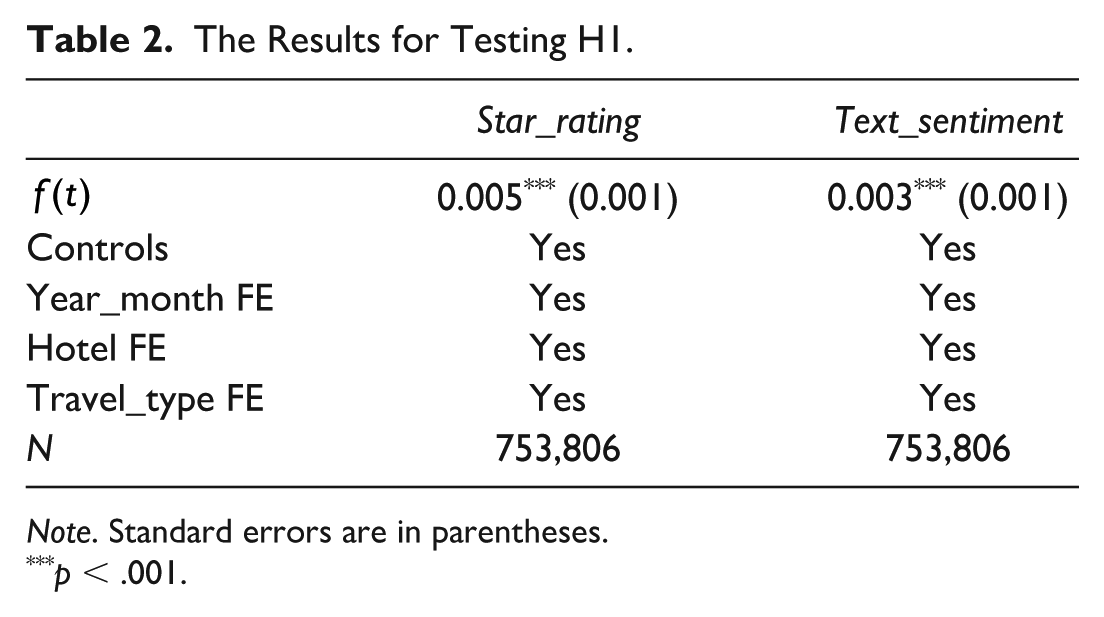
Table 2 presents the results for testing H1. The coefficients of interest are all positive and statistically significant (P < .01), providing support for H1a, which asserts that performance dominates: the spillover effect of forgetting on perceived performance will exceed that on expectations (
The Results for Testing H1.
Note. Standard errors are in parentheses.
p < .001.
While the estimated coefficient (
More critically, in terms of platform competitiveness, ranking algorithms exhibit high sensitivity to even marginal rating fluctuations. Small gains can significantly enhance visibility and traffic by propelling a property past competitors. Our analysis of the ranking structure of 376 hotels (August 2022 window) reveals a densely clustered market, where the average rating gap between adjacent competitors is merely 0.0095 points, with 95% of gaps falling below 0.0241 points. Consequently, the 0.025-point enhancement driven by memory bias is robust enough to facilitate a ranking advancement in over 95% of competitive scenarios. The resulting “Visibility Dividend” from such sustained ranking elevation likely yields commercial value far exceeding the direct revenue effect.
Results: Marginal Effects of Time on Memory Bias (H2)
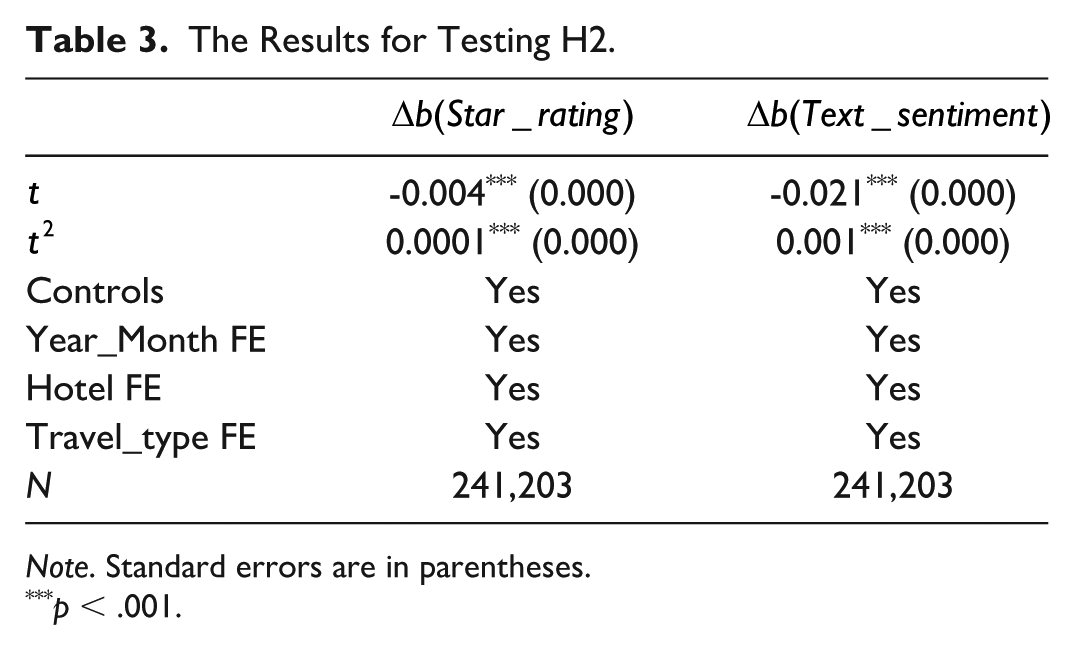
Table 3 presents the results for testing H2. The coefficient of the squared term (
The Results for Testing H2.
Note. Standard errors are in parentheses.
p < .001.
To enhance interpretability, Figure 4 visualizes the evolutionary trajectory of the marginal effect, explicitly marking the inflection point where the bias transitions from decreasing to increasing. We further corroborated this finding with formal statistical tests (Lind & Mehlum, 2010), the full results of which are reported in Appendix A. Consequently, H2 is fully supported, suggesting that the marginal effect of memory bias initially diminishes before rebounding over time.
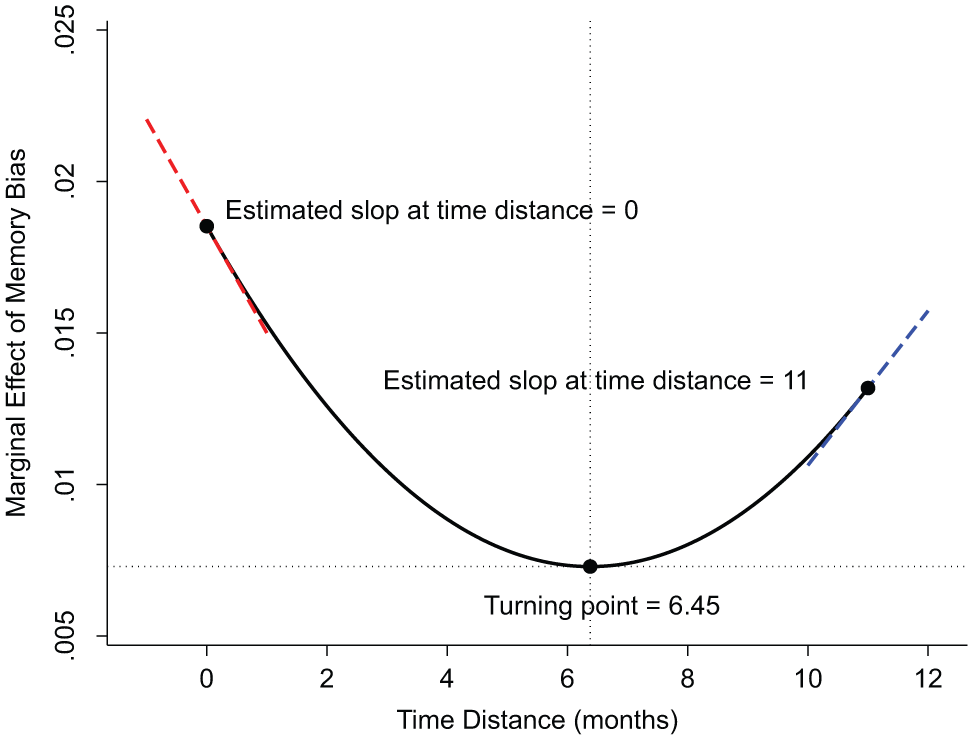
U-shaped marginal effect of time distance on memory bias.
Results: Volatility of Memory Bias (H3)
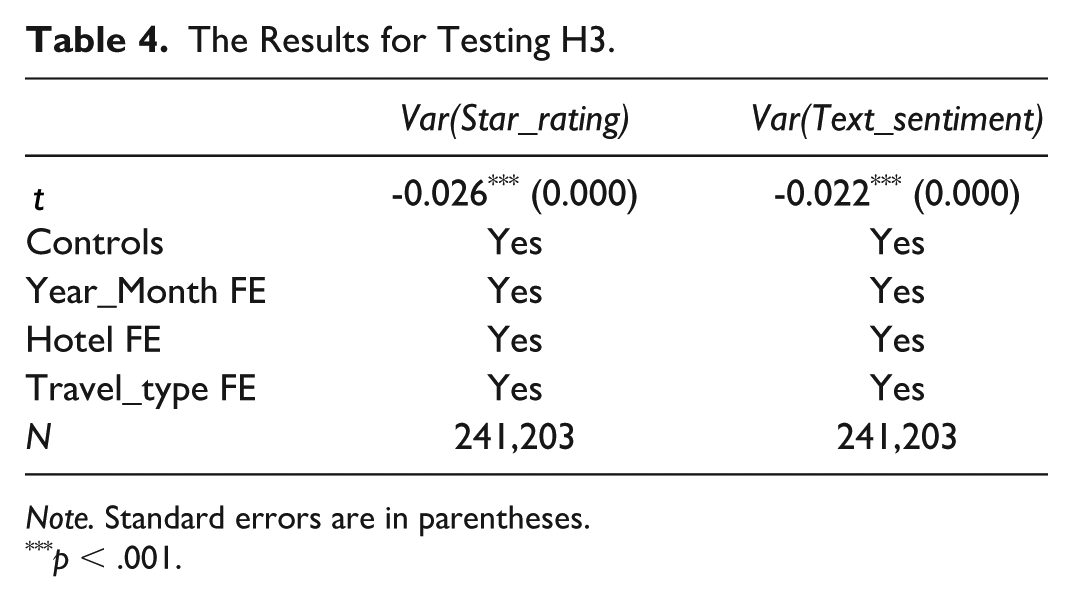
Table 4 presents the results of the analysis conducted to test H3. Across all model specifications, the coefficients pertaining to our variables of interest consistently exhibit negative values and statistical significance (p < .001). These findings strongly support H3, indicating that as the time interval expands, the variability in memory bias diminishes gradually.
The Results for Testing H3.
Note. Standard errors are in parentheses.
p < .001.
Uncovering the Mechanisms
We posit that temporal distance influences online ratings by shifting the accessible knowledge base from concrete, episodic details to abstract, generalized beliefs. This increase in abstraction serves as a mediator, as abstract construals tend to emphasize positive attributes and de-emphasize feasibility constraints (Eyal et al., 2008).
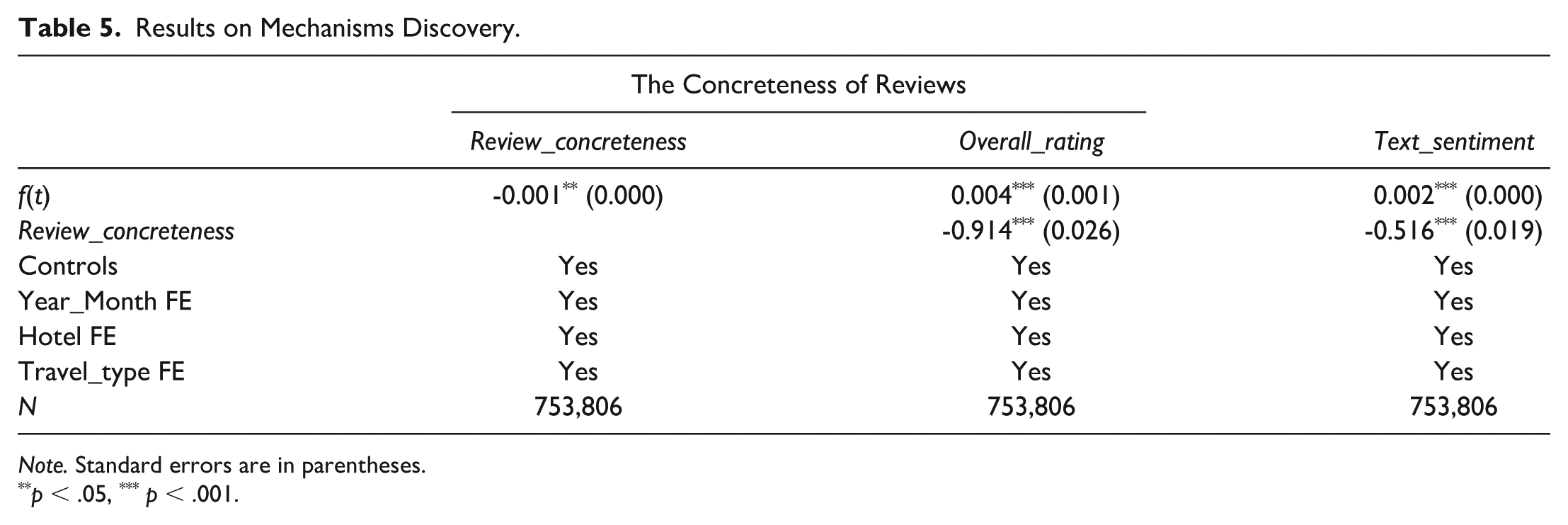
We employed the concreteness of these reviews (Review_concreteness) to gauge the abstract-concrete level of information retrieval. We assessed the concreteness of the review text using the dictionary compiled by Brysbaert et al. (2014). This involved computing the average concreteness level of all words in each review. The dictionary contains a comprehensive collection of 40,000 lemmas and their corresponding concreteness values.
We employ the following model to validate the aforementioned mechanisms.


where Equation 9 is used to test the relationship between time distance and text review concreteness, while Equation 10 verifies the relationship between concreteness and satisfactions.
Table 5 presents the regression results. The coefficients for
Results on Mechanisms Discovery.
Note. Standard errors are in parentheses.
p < .05, *** p < .001.
Furthermore, the coefficients for
Robust Check
Addressing the Endogeneity of Temporal Distance Using Instrumental Variables
To address potential endogeneity in the temporal distance of online reviews, we implemented a two-stage least squares (2SLS) instrumental variable (IV) approach. Specifically, the IV was constructed as the average temporal distance of a reviewer’s past reviews, excluding the focal review. Theoretically, this instrument reflects inherent posting tendencies while remaining orthogonal to the focal review’s unobserved disturbances. Empirically, standard diagnostics confirmed the instrument’s strong relevance, with a Kleibergen-Paap rk Wald F-statistic of 2,947.38 and a Kleibergen-Paap rk LM statistic of 135.92 (p < .001), both well exceeding critical thresholds. The 2SLS re-estimation yielded results consistent with our initial findings. We thus attribute the observed effects to variations in temporal distance, affirming their robustness against unobserved time-varying endogeneity biases such as omitted variables, reverse causality, and self-selection bias. Further details are provided in Appendix C.
Addressing the Self-Selection Bias
To mitigate potential self-selection bias, we utilized exact matching and propensity score matching to preprocess the sample. To ensure the validity of this approach, we conducted rigorous diagnostic checks. Specifically, the common support assumption was satisfied with observations falling well within the range of [0.23, 0.92]. Furthermore, balance tests indicated that all covariate differences between the treatment and control groups became statistically insignificant after matching (all p > .10), confirming the effective elimination of systematic biases. Re-estimations using the matched dataset closely aligned with the full-sample results, reinforcing the robustness of our findings. Detailed diagnostic results, including balance check tables and propensity score distribution plots, are provided in Appendix D.
Alternative Functions
As mentioned earlier, we had three options for the normalization function: exponential, logarithmic, and power functions. In our primary analysis, we selected the exponential function due to its superior fit. To assess the robustness of our results concerning the choice of function, we also conducted estimations using logarithmic and power functions. The results, presented in Table B2 in Appendix B, were in line with our primary analysis. This consistency further bolsters our confidence in the reliability of our findings.
Using Daily-Level Booking.com Data
To address the precision limitations of TripAdvisor’s monthly-level data, we collected a supplementary daily-level dataset from Booking.com (N = 987,896 NYC reviews, 2021–2024). Re-estimating our core models on this high-granularity dataset yielded results highly consistent with our primary findings for all hypotheses. Furthermore, this daily-level data enabled a more precise capture of short-term memory dynamics, robustly confirming the U-shaped relationship and its inflection point as proposed in H2. Full details of this supplementary analysis are provided in Appendix E.
Randomized Experiment
Our econometric analysis suggests that increasing temporal distance leads tourists to rely more on semantic memory when posting reviews, elevating perceived performance and expectations, and subsequently boosting reported satisfaction. While observational data showed robust external validity, limitations included potential unobserved confounders and the inability to directly measure cognitive processes.
To address these, we conducted a controlled between-subjects experiment. We recruited 190 participants via Credamo and randomly assigned them to one of four groups: a control group (T0, immediate review) or one of three time-delay groups (T1: 3 days; T2: 7 days; T3: 10 days). The task required participants to first read scenario materials and then, after their assigned delay, complete a questionnaire where they wrote a review and reported perceived expectations, performance, and knowledge reliance.
After accounting for attrition, we collected 127 valid samples. Experimental results aligned with observational findings, confirming that temporal distance enhances perceived expectations and performance, with the latter playing a dominant role in increasing satisfaction. Furthermore, the experiment validated the mediating role of dynamic shifts in tourists’ reliance on episodic and semantic knowledge. For complete details on materials, procedures, and measures, see Appendices F and G.
Discussions
Key Findings
Combining TripAdvisor hotel reviews with a randomized experiment, this study systematically examines the temporal dynamics of memory bias. First, delayed reviews exhibit a significant positive bias driven by the asymmetric impact of memory on perceived performance versus expectations. Specifically, as time passes, the rapid fading of negative details and the persistence of positive traits lead to an “idealized” reconstruction of both the consumption experience and expectations. Crucially, the mnemonic enhancement of perceived performance significantly exceeds that of expectations. Within the Expectation Confirmation Theory framework, satisfaction depends on the gap between performance and expectation. Consequently, this asymmetric spillover effect expands positive disconfirmation, thereby elevating overall satisfaction in both numerical ratings and textual reviews.
Further analysis reveals that the impact of memory bias follows a distinct U-shaped trajectory, primarily driven by perceived performance rather than expectations. Expectations, constructed from abstract and stable semantic memory, remain relatively constant over time. In contrast, perceived performance undergoes a dynamic shift from episodic to semantic memory, producing marked stage-specific marginal effects. In the short term, rapid forgetting of concrete negative details boosts perceived performance substantially. During the intermediate stage, as episodic memory fades and semantic memory has not yet fully taken over, the influence of memory bias reaches a low point. In the long term, abstract semantic memory—akin to a “rosy reconstruction” effect—dominates, accelerating performance enhancement again. This “High-Low-High” evolution of perceived performance shapes the overall U-shaped trajectory of memory bias.
Third, individual differences in memory bias converge over time, revealing a shift from “heterogeneity” to “homogeneity” in evaluation standards. Initially, tourists rely on vivid, idiosyncratic episodic memories (e.g., unique emotions and specific service details), resulting in high rating dispersion. Over time, as specific details fade, reliance shifts toward abstract, consensus-based semantic knowledge. This cognitive transition—from personalized episodic memory to shared semantic frameworks—aligns evaluation standards, leading to a significant reduction in rating variance.
Collectively, these findings illustrate how the memory system dynamically reconstructs key elements of the consumption experience—perceived performance and expectations—to continuously shape satisfaction. This offers new insights into online rating mechanisms and extends the theoretical application of Expectation-Confirmation Theory in digital environments.
Theoretical Implications
This study makes several key contributions to the literature on online rating biases. Its primary contribution is the identification and validation of a fundamental “cognitive meta-bias” that is antecedent to conventional behavioral biases (e.g., self-selection or social influence). Prior research on rating bias has largely focused on motivational distortions (i.e., why consumers review) or informational distortions (i.e., how they are influenced), such as self-selection bias (Brandes et al., 2022; Karaman, 2021) and social influence bias (Kontalexi et al., 2025; Wijenayake & Goncalves, 2025). These perspectives implicitly assume that consumers can accurately retrieve their “true experience.” This study challenges this premise by demonstrating that before a consumer decides whether or what to report, their very mental representation of the experience has already undergone a systematic change due to the passage of time. This memory bias is not random noise but follows predictable psychological regularities, such as the forgetting curve and the transition from concrete memory to abstract knowledge. Consequently, this study deepens the root cause of rating bias from a behavioral economics level (e.g., incentives and sociality) to a cognitive psychology level (e.g., memory accessibility and reconstruction), adding a critical “first link” to the chain of rating distortion. Furthermore, we reveal that the impact of this bias is not fixed; its net effect, marginal intensity, and volatility all exhibit complex dynamic characteristics. This breaks through the limitations of prior research that has treated bias as a simple static problem, offering a more process-oriented and dynamic theoretical perspective for understanding rating biases.
Second, this study provides a comprehensive dynamic framework for the memory and eWOM literature, moving beyond the “binary” or “linear” understanding of temporal effects in prior research (e.g., Yang et al., 2018). Past research has largely focused on confirming whether time impacts ratings and in which direction, leaving the underlying mechanisms and evolutionary patterns under-explored. This study opens this “black box,” revealing, for the first time, that temporal distance does not impact overall satisfaction directly. Instead, it operates indirectly through a dual-path mechanism: asymmetrically “beautifying” both perceived performance and post-hoc expectations, with the relative strength of these two paths ultimately determining the direction of the rating bias. This mechanism model theoretically resolves the long-standing controversy in the literature regarding the direction of the delay effect (cf. Bendall-Lyon & Powers, 2002; Stamolampros & Korfiatis, 2018). Concurrently, our findings that the marginal effect of memory bias follows a U-shaped trajectory (H2) while its volatility converges over time (H3) precisely delineate the dynamic process of memory’s transition from concrete, idiosyncratic episodic details to abstract, shared semantic schemas. Together, these findings constitute a detailed model of how memory systematically “polishes” and “reshapes” consumer evaluations, representing a theoretical leap from whether ratings change to how they evolve.
Finally, this study contributes by successfully constructing and empirically testing an interdisciplinary framework that connects micro-level cognitive psychology with macro-level consumer behavior. We innovatively bridge the Accessibility Model of Emotional Self-Report (Robinson & Clore, 2002), a cognitive theory from psychology, with the classic Expectation-Confirmation Theory from marketing. This integration expands the boundaries of both theories: it endows Expectation-Confirmation Theory with a new capacity to handle dynamic cognitive processes—treating P and E as functions P(t) and E(t)—and it provides the Accessibility Model with robust external validity and quantifiable “economic consequences” within a real-world, complex economic decision-making context. Overall, this study not only bridges a theoretical gap between memory psychology and marketing science but also offers a replicable “temporal–cognitive paradigm” for future research to systematically analyze the temporal dynamics and cognitive evolution of consumer evaluations.
Practical Implications
Our findings offer targeted practical implications for various stakeholders within the online review ecosystem.
For rating system designers, drawing on the observed U-shaped evolution of memory bias and the convergence of rating variance over time, platforms should consider implementing reasonable submission windows (e.g., restricting reviews to within 6 months post-experience) to mitigate the influence of extreme memory bias at the source. Simultaneously, platforms should prominently display the “time-lag” (the interval between experience and posting) on the interface, utilizing visual cues such as color coding (e.g., flagging long-delayed reviews in red) to aid users in intuitively identifying potential biases. Furthermore, implementing sorting and filtering functions based on this time interval would enable users to prioritize recent reviews grounded in vivid memories, thereby enhancing the relevance and objectivity of information acquisition.
For service providers (e.g., hotels), the identified asymmetric spillover effect and the U-shaped trajectory offer novel perspectives for review management. Managers can formulate differentiated solicitation strategies, actively inviting reviews in the short term (e.g., within 1 month) to obtain feedback rich in specific details. Conversely, a second round of outreach can target customers with a delay of 3–6 months. At this stage, memory bias enters the rising phase of the U-shaped curve, making it easier to secure higher ratings. However, providers must balance rating enhancement with informational value. While long-delayed reviews contribute to overall score improvement, their content tends to be semantic and lacks specific details. Therefore, when concrete operational improvements are needed, priority should remain on soliciting feedback from recent customers.
For tourists, the results suggest the necessity of incorporating a “temporal dimension” into their decision-making process. When reading reviews, beyond considering ratings, length, and helpfulness votes, tourists should consciously integrate the “experience-to-posting interval” into their evaluation framework, recognizing that longer intervals increase the likelihood of systemic mnemonic idealization. It is advisable to prioritize reviews posted within 1–2 months of the experience when making purchase decisions, as these evaluations—based on vivid episodic memory—typically contain more specific and heterogeneous experiential information. In contrast, tourists should exercise caution regarding long-delayed, highly abstract positive reviews, cross-validating them with recent reviews and other information sources to ensure accuracy.
Limitations
Our study is subject to certain limitations, which simultaneously open avenues for further investigation. First, regarding generalizability, our empirical analysis is grounded exclusively in data from the hotel industry in New York City. While this single-destination focus offers advantages in controlling for regional confounding factors and enhancing internal validity, it inevitably constrains the external generalizability of our findings. Different destination types (e.g., leisure-oriented resorts or small-to-medium-sized cities) or service sectors (e.g., restaurants or airlines) may trigger distinct memory reconstruction mechanisms. Future research should extend our theoretical framework to more diverse geographical and industrial contexts to test the robustness and universality of the conclusions. Second, regarding measurement precision, we utilized review text length as a proxy for the degree of memory retention. Although we aggregated data at the monthly level to mitigate the noise from individual heterogeneity, text length is susceptible to influence by writing habits, submission devices, or linguistic preferences, and thus may not perfectly reflect the actual retention of memory. Future studies could employ more granular natural language processing techniques (such as semantic density analysis) or incorporate neuro-cognitive experiments to develop more precise metrics for assessing memory bias.
Supplemental Material
sj-docx-1-jht-10.1177_10963480251415550 – Supplemental material for The Impact of Temporal Distance on Online Ratings: Unveiling the Dynamics of Tourists’ Memory Bias
Supplemental material, sj-docx-1-jht-10.1177_10963480251415550 for The Impact of Temporal Distance on Online Ratings: Unveiling the Dynamics of Tourists’ Memory Bias by Zi-Han Wei, Jian-Wu Bi and Tian-Yu Han in Journal of Hospitality & Tourism Research
Footnotes
Declaration of Conflicting Interests
The authors declared no potential conflicts of interest with respect to the research, authorship, and/or publication of this article.
Funding
The authors disclosed receipt of the following financial support for the research, authorship, and/or publication of this article: This work was partially supported by the National Natural Science Foundation of China [Grant numbers 72471126 and 72101124]; Ministry of Education Major Research Projects in Philosophy and Social Sciences under [Grant Number 23JZD014]; One Hundred Talents Program of Nankai University [Grant Number 63233170].

Supplemental Material
Supplemental material for this article is available online.