







Abstract
Connell’s concept of hegemonic masculinities has been invaluable for prevention efforts that seek to promote a shift in hegemonic male norms driving the HIV epidemic. However, inadequate attention has been given to the internal processes of hegemony, which limits the comprehension of how to engage men in HIV prevention efforts. A narrative approach, which privileges the diversity in men’s lived experiences, could address such concerns. Fifty sexual history interviews were conducted with men sampled from three age categories: (eighteen to twenty-four, twenty-five to fifty-four and fifty-five plus), a range of cultural and racial backgrounds, and in urban and rural sites across five provinces in South Africa. For the purpose of this article, narrative analysis was conducted on three cases that provide a platform for understanding how men both conform to and resist gender norms that influence their sexual and reproductive health. Implications of the narratives for gender transformative HIV prevention efforts are discussed.
Introduction
The flourishing study of masculinities has brought a host of developments that deconstruct unitary or essentialist understandings of what it means to be a man. Feminist research in particular has contributed to this development for identifying gendered identities as nomadic (Braidotti 2011), plural (Aboim 2010), and/or performative (Butler 2004). In addition to the recognition of multiple masculinities (Morrell 2001), Connell’s (1995, 47) theory of hegemonic masculinity points to “a symbolic ideal-type of masculinity that imposes, on all other forms of masculinity (and femininities), meanings about their own position and identity.” The theory locates social and cultural norms and practices in a given context that are commonly used to ascertain one’s gender (Courtenay 2000). In this context, hegemonic masculinities are understood not only to legitimize the subordination of women, described by Connell (1987) as the “patriarchal dividend,” but also to maintain unequal relations between men as factors including race, class, age, sexuality, religion, and environment impact the feasibility of attaining the masculine ideal (Morrell 2001; Hearn 2004). Thus, performances of sexual identity that do not meet certain expectations may be subject to stigmatization and marginalization by both men and women (Kupers 2005).
In South Africa, the concept of hegemonic masculinities has enhanced the understanding of how normative male identities can legitimate violent and risky behaviors, misogynist attitudes, and poor health-seeking behaviors that function in driving the HIV epidemic (MacPhail and Campbell 2001; Pattman 2005; Peacock et al. 2009; Jewkes and Morrell 2010). For instance, society’s often routine depiction of men as invulnerable, and a general perception of sexual and reproductive health (SRH) clinics as being a woman’s domain, is believed to play a role in hindering men from acknowledging health risks and seeking SRH care, including testing for HIV (Peacock et al. 2009). African cultural norms typically dictate that men should provide for women financially; yet this provision of wealth has been found to, in some cases, contribute to men’s sense of entitlement to sex, and reduce women’s agency in sexual encounters including whether to use condoms (Jewkes et al. 2012). Campbell (2001) illustrated how the social identity of masculinity among men working in the mines, a dangerous and impoverished context, encouraged fearlessness and sexual risk-taking. Wood and Jewkes (2001) documented how the pursuit and sometimes aggressive control of women, was a central characteristic of manhood among young African men in an impoverished and violent township setting. Leclerc-Madlala (2009, 105) assessed how cultural scripts, which refers to “statements that prescribe recipes for living,” portray men as biologically programmed to need sex regularly and with more than one woman, justifying their engagement in multiple concurrent partnerships. A significant amount of research indicates that men who condone patriarchal norms are less likely to engage in health-promoting behaviors and take greater health risks than men who do not (Wade 2008). Case in point, Kauffman et al. (2008) found that an endorsement of traditional male roles, such as believing men have the final say in the home, was positively associated with HIV risk behavior. Similarly, men who equate masculinity with risk-taking and sexual dominance (Peacock et al. 2009) are more likely to have contracted a sexually transmitted infection (STI), have negative attitudes toward condoms, and use condoms inconsistently (Noar and Morrokoff 2002).
Yet, hegemonic masculinity has been criticized for often describing “male power at a structural level with no real understanding of how power is organized in terms of complicity at resistance at the individual level” (Coles 2009, 33). Much of the literature has arguably neglected the subjective experiences of men in dealing with the prescriptions of hegemony (Seidler 2006; Lindegger and Quale 2009). Moreover, the concept of hegemonic masculinity has been found to commonly hold the premise that men either concede with dominant norms or are marginalized by them and tends to “conceive of men as one category and to impute one (fixed) idea of what it means ‘to be a man’ to South Africans” (Morrell, Jewkes, and Lindegger 2012, 24). This portrayal of men conforming to a typology of hegemony is limited, as various studies suggest that men can hold multiple and even conflicting social identities simultaneously (Lindegger and Maxwell 2007), in a particular social context (Cornwall 2007), or among a certain group (Frosh, Phoenix, and Pattman 2002). Moreover, the limited consideration of the diversity of men’s sexual behaviors results in studies which tend to quantify male sexuality, such as measuring the percentage of men who used a condom at last sex (Kelly and Ntlabati 2002). Such an approach does not account for the complex social, cultural, and gender norms impacting on men’s sexual behaviors. In response to such concerns, Connell and Messerschmidt (2005) acknowledged that the concept of hegemonic masculinities needs to more sufficiently reveal the personal dynamics of hegemony and recognize internal contradictions, as men can both conform to and resist hegemonic norms.
Narrative research, which rests on the theory that the perspective of the interviewee is best revealed through their construction of their own life histories (Bauer and Gaskell 2000), is an appropriate tool to detect and have access to men’s engagements with the demands of hegemonic masculine norms. Through appreciating individual stories, sexual history narratives make it possible to “define a thousand and one variations of masculinity” (Connell and Messerschmidt 2005, 845). Listening to stories can lend to a rich understanding of hegemonic male norms which influence men’s sexual behaviors and attitudes, and recognize the social and cultural context in which gendered identities are constructed. According to Atkinson (1998), a life history refers to narration of one’s life experience whereby one highlights the most important aspects in relation to the domain of inquiry. A sexual history narrative approach can thus probe how men’s notions of manhood and their sexual practices are molded by their life experiences, and how men’s engagement with and expressions of masculinity change over time. Indeed, Connell and Messerschmidt (2005, 852) argue that “the careful analysis of life histories may detect contradictory commitments and institutional transitions that reflect different hegemonic masculinity and also hold seeds of change.”
Although the life history method is central to Connell’s (1995) insights into the complexities of masculinity construction, only a small percentage of the research on masculinities over the past two decades have rested on a narrative approach (Wedgewood 2009). Through the use of sexual history narrative interviews with men, this article seeks to answer the following questions: which processes of hegemonic masculinities do sexual history narratives uncover? By processes, we refer to how masculinity is something that can be owned, negotiated, and performed on an individual level (Morrell 2001), and also how this changes over time. In doing so, this article hopes to generate insights into how to more comprehensively engage men in HIV prevention efforts.
Method
Participants
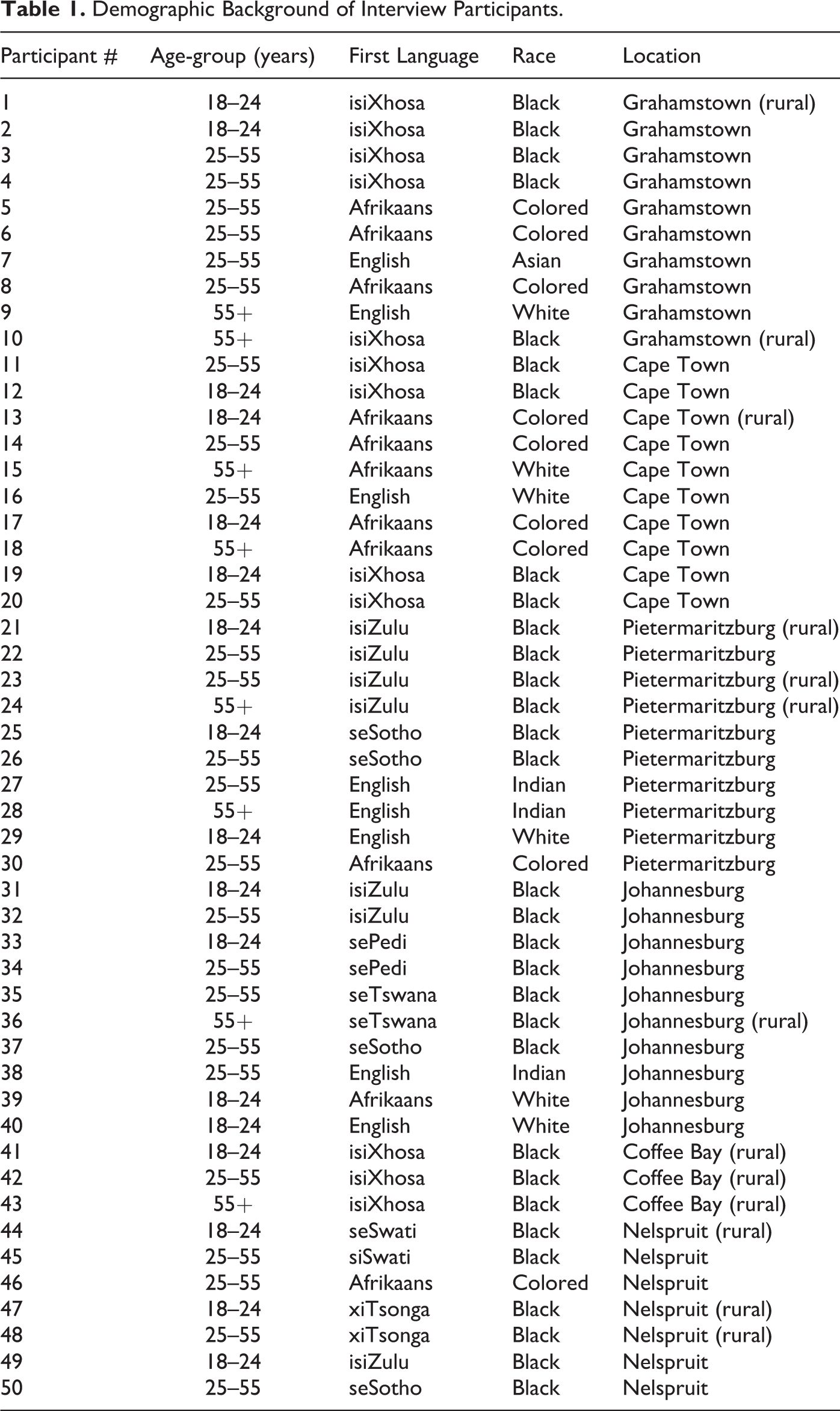
Sexual history narrative interviews were conducted with fifty men at six sites across five provinces in South Africa: Grahamstown and Coffee Bay, Eastern Cape; Cape Town, Western Cape; Pietermaritzburg, KwaZulu-Natal; Nelspruit, Mpumalanga; and Johannesburg, Gauteng. The study was ethically approved by the University of Cape Town, Human Research Ethics council, and the Human Sciences Research Council and interviews occurred between July 2010 and December 2011. Efforts were made to recruit men who self-identified as heterosexual and who were eighteen years and older, which was the only inclusion criteria to participate in the study. Heterosexual men were recruited in order to appreciate how norms of masculinity are constructed and produced in and through men’s sexual relationships with and attitudes toward women. At each site, men in three age categories—fifty-five years and above, twenty-five to fifty-four, and eighteen to twenty-four—from a diversity of racial and cultural groupings were interviewed. Participants included isiXhosa, isiZulu, seSotho, seTswana, xiTsonga, siSwati, sePedi, English, and Afrikaans speakers. Culturally, economically, and socially diverse sites were purposively selected to enhance the representation of participants and recognize how diverse factors including race, class, and environment intersect with gendered identities. Moreover, masculinities research in South Africa has focused mostly on black men, and as a result there is arguably limited understanding about the sexuality of colored, Indian, and white heterosexual men (Mfecane 2013; Ratele 2014). This study interviewed a range of participants from different racial, sociocultural, and geographical settings and Table 1 details the age, language, race, and residential demographics of the participants.
Demographic Background of Interview Participants.
Recruitment
An information sheet explaining the project’s purpose and the benefits and risks of participating was distributed by the first author to a community contact person who was well acquainted with each study site. Community contacts were developed through the nongovernmental organizations (NGOs) Centre of AIDS Development, Research and Evaluation (CADRE; in Western Cape, Eastern Cape, Gauteng, and KwaZulu-Natal), and Sonke Gender Justice (in Mpumalanga and Western Cape). Each community contact prepared a list of people who fit the selection criteria, in terms of the age, racial, and sexual orientation categories and randomly distributed the information sheet to those who fit the requirements. Those who were willing to participate were contacted by the first author to set up a suitable time and venue for conducting the interview. Each community contact was given R100 (˜US$10.00) per participant they recruited to reimburse them for the transport and communication costs associated with recruitment. Recruiting interviewees through community contacts allowed for some rapport with the participants, which was important given the sensitive and personal nature of the topic. To triangulate the purposeful sampling method, snowball sampling was also used to recruit further participants through respondents’ recommendations. An advantage of this sampling technique is that it enables the inclusion of otherwise hard-to-reach participants. It can also reduce the bias involved in relying on community contacts for purposefully recruiting participants.
Procedure
To ensure comfort of the participants, interviews were conducted by same-sex interviewers in the language preferred by each participant. The use of same-sex interviewers was meant to allow for an appreciation of the ways men may perform to male norms in and through their dialogue with other men. Interviewers were experienced researchers who underwent additional training in narrative interviewing skills. Interviews were conducted in various locations that provided quiet and secure environments. Interviewees were given R100 (˜US$10.00) as a token of appreciation and to cover any transport costs related to participation. On average, interviews lasted two hours, which was useful to build rapport between the interviewees and interviewers and to sufficiently probe the narratives. The interviews began with accounts of participants’ early knowledge of sex and sexual experimentation and explored the range of sexual relationships and experiences as well as reproductive health choices through adulthood. Risks of other STIs and HIV infection and management of SRH were also explored. Questions in the topic guide were purposely structured to elicit stories with the researcher saying relatively little and acting primarily as an attentive listener. Interview questions and probes were also designed to elicit narratives that would reveal men’s attitudes of and engagement with gender norms such as the question: “Do men and women have different thoughts about the connection between love and sex?” “What makes you say this?” and “Tell me stories that illustrate what you mean?” The interviewers listened for content and meaning and asked participants to explain or elaborate on responses to these questions. Notes of the interviewer’s impressions were taken immediately after each interview and used in the analysis. Interviews were audio recorded, transcribed verbatim, and where necessary, translated into English.
Data Analysis
The data were analyzed using a narratological approach which entails a focus on the order which respondents impose on their experiences to make sense of events and actions in their lives (Bauer and Gaskell 2000). A narrative analysis not only pays attention to the history of the narrative (i.e., the narrated events) and the plot (i.e., the order which respondents impose on the narrated events) but also to the act of the narration itself, with a particular focus on the use of discourse. Language inevitably reveals what people do not particularly intend to disclose. Language usage also exposes how people see themselves and others, and thus raises and can answer questions that researchers may not even think to ask (Smith 2000; Cornwall 2007). Narrative analysis was used to trace how a male identity is constructed as an ongoing negotiation with hegemonic norms and values of masculinity. The focus on men’s enunciation of their experiences enabled us to discern the relation between the construction of masculinity and stories of sexual debut and the development of sexual relationships. Particular attention was also paid to how men resist hegemonic norms and alternative understandings of masculine sexuality as narratives in themselves can challenge the hegemonic (Coles 2009). Narratives were constructed as a temporal sequence of events in three parts: early sexual awareness and debut experiences, management of sexual relationships, and management of SRH including HIV risk. We followed that sequence and identified shared concepts or themes within each narrative element. Sexual history narratives were also analyzed to track how processes of hegemonic masculinity can change over time. Analysis was extensively discussed between the authors for the sake of conceptual alignment on themes generated from the narratives, and in order to respond to the research questions.
Findings
The interviews revealed the complex and fluid nature of male sexuality. Most notably, the men’s stories suggested a marked change between their descriptions of a relatively innocent and vulnerable early sexuality and their eventual socialization into certain forms of masculine sexuality that often increased their risk of acquiring HIV. Norms of male sex that men reported feeling channeled into included competing with peers to have multiple or concurrent partners, and to emotionally detach oneself from sexual encounters. Men very early on learned the importance of sexual debut as a rite of passage to manhood, which was strongly tied to sexual performance ability. The men’s awareness of sexual norms came almost exclusively from their peers, and conforming to these norms often led to peer-group status and approval. As well as adapting to social ideas or expectations around sex, a strong trend within the narratives was to perform dialogically to such social constructions.
The participants’ narratives also provide evidence of a critical awareness of, and occasionally resistance to, hegemonic norms concerning men’s sexuality. Thus, the sexual history narratives reveal a number of footholds for understanding the ways that boys come to identify themselves as men and how individual men both conform to and resist gender norms that can be damaging to their SRH. Young men have been found to be particularly vulnerable to male peer group norms (Lindegger and Quale 2009). This article therefore focused on how three young men (thirty and under) negotiate hegemonic masculinity, as it has been extensively documented that norms of competitive and performative sexuality are particularly prominent among young men (Frosh, Phoenix, and Pattman 2002; Aboim 2010). Findings of a narrative analysis are also most appropriately presented in the form of case studies. The findings of this article are outlined through the exemplary sexual history narratives of three of the fifty men who participated in the study: Thando, a thirty-year-old Xhosa-speaking male from the Eastern Cape Province; Nial, a twenty-four-year-old English-speaking male from Pietermaritzburg; and Zuzumusi, a twenty-two-year-old Zulu-speaking male from Gauteng Province. For the purposes of confidentiality, all the names given are pseudonyms. While these stories were different in their individuality, they also reveal a striking similarity in the narrative structure (referred to earlier as the plot), which provide many common exemplary insights among these narratives, as well as among the fifty interviewed men in the overall study (for the latter, see also Stern and Buikema 2013).
Thando’s Story
Thando related experiences of love and infatuation with the first girl he was ever attracted to. He described a love letter he wrote to her: It talks about how beautiful the girl is and tells her she is the sun and so, which shows that I was not looking for just what is in-between her legs, but I was actually looking towards loving her, my future and hers would be so and so.
Thando’s early feelings towards sex were emotional and romantic which contrasted to the pressurizing attitudes of his peer group. During adolescence, he transitioned to feeling anxious and pressured to have sex with a girl, and recalled how he lied to his friends by saying he already had sex because of such pressure. He asserted that this pressure was the driving factor for his first sexual experience at the age of fourteen. Thando recalled a combination of sentiments toward his first sexual experience, especially anxiety and disappointment over his sexual performance as someone very inexperienced, how it made him “feel like a man,” and the importance of telling his friends about it afterward: I made mistakes, but eventually I ended up entering her, and she ended up taking over, but it did not last a very long time, it didn’t even last for three minutes you see, but after that I kinda felt like a man. For me, for me it was just so that I can go and tell my friends that I did it today.
However, once he realized his peers had lied about having had sex, he related being angry for being misled into having sex because of the assumption perpetuated by his peers that everyone has sex at a young age. He was also mocked by his friends for the girl he first had sex with, who was considered unintelligent, unattractive, and “loose”; indicative of disrespectful and discriminatory attitudes towards women and a double standard whereby women are not supposed to be sexually experienced: She was quite advanced about things you see in the bed sexually so amajita
1
were teasing me because since she was very good looking [laughs]. And in class you see, she was not very intelligent as well.
He described how he eventually competed to have sex with as many women as possible to prove he was “one of the guys.” He adopted a performative way of speaking about his sexual experiences during this time, as he boasted about the number of casual sexual partners he had: I was barking out loud, chasing after women like you wouldn’t believe, bra. I used to go home a lot [to Bisho
2
], a lot so as to get some shine from the area. Probably my self-esteem is boosted by whatever when I am there in Bisho, maybe there is no self-esteem in Port Elizabeth
3
, but in total, bra, I have had maybe 50 girls, or something, in total. So many that I should get a trophy or something!
At this stage, he noted how his perception of self-esteem was synonymous with having a large number of sexual partners. He stated that although he had a series of long-term relationships during this time, he was unable to commit to one woman; he described many episodes of casual and unprotected sex, often in the context of drinking alcohol: When we drank alcohol, we could for instance in December, you know, we have a schedule so that so we want to check who is going to f**k as many girls as possible. Some of the young guys went to boarding school, so we would say to them that we will come to their boarding school and that we want them to set us up with the hottest-looking girls at their school, just to prove a point to emajiteni [peer group] and that you-are-a-guy type of thing.
Thando described an encounter with HIV that changed his attitude towards sex and his sexual behaviors. When his girlfriend became pregnant, she was diagnosed HIV positive, and so Thando assumed he was also HIV positive. As a result, he became very depressed and lost weight. Eventually, he tested and discovered that he was HIV negative. As a result of this experience, he claimed to always use condoms, realizing how his multiple partners and often unprotected sex had put himself and his partners at risk of acquiring sexual diseases: Because now, I won’t be able to go around hurting other people, you see, the pain a girl will feel.… I know these things now, it’s not like before, because before I used to do everything so that when I was leaving that room of mine in the house, I would leave so that guys would say that ‘You see that guy’ did this…now I’m no longer interested in those things…I am now looking into the future and all those kind of things.
His statements reflected a shift in his thinking towards realizing that he could be responsible for two people’s sexual health. He further reported how he was currently in a committed relationship and was more concerned about the future of himself and his partner than the approval of his friends.
Nial’s Story
Recalling his sexual debut, Nial related how he waited for a year to first have sex with his girlfriend. He described his love for her and how he believed in an inherent connection between love and sex: I’d been waiting a whole year for her to say let’s have intercourse, because it [virginity] was hers to be broken. The concept of virginity didn’t mean anything to me. We loved each other. I thought they went hand in hand. You only had sex if you were in love.
His views on virginity conformed to certain gender stereotypes for only being significant to women. Nonetheless, his early attitudes around sex revealed patience and respect for his female partner. Nial additionally reported that sexual intercourse was something he feared because of the risks of pregnancy and STIs, and that his partner’s father might discover their sexual activity. Because of such concerns, he reported being content in subsequent relationships without having sex. His first sexual experience was disappointing in comparison to the expectations and related pressure to have sex generated by his peers: But it was kak! Jis bro, I thought it was the most overrated thing I had ever experienced. I expected there to be fireworks and lightning bolts…It was two okes having no idea what they are doing. One is going out, the other one is going in. It was like trying to dance with someone and you kept on standing on their feet…I was like is this what all the stories are about?…I’m like come on, it’s got to be more than this!
Nial eventually moved away from his efforts for commitment and responsibility in relationships and increasingly conformed to the behavioral norms promoted by his peers involving the pursuit of noncommittal and often unprotected sex. He reported objectifying women as a “game to be won,” displaying little concern for intimacy with his sexual partners: It was just the guys who were hanging around at the time, we were all bad for each other and we were all trying to outdo each other, or trying to see who could literally do the most unspeakable things with women. So it became a competition, which I unfortunately was going to lead for some time.
This highlights the significance of his peers’ influence on the development of his sexuality, whereby they were “all bad for each other.” He also indicated that he pursued sleeping with virgins for the perceived status this brought him assertiveness and detachment: Then I got a bit older, a bit more confident. Girls started to notice me more than they did in the earlier stages in my life. Then I went through a stage when I was a dog, where I wanted to break as many girls’ virginities as possible. So I would only sleep with a chick if she was a virgin. I had gotten nasty.… It was like, I can take something that means something to someone and not care about it.
This is in sharp contrast to his younger self when he had described his understanding of the narrative of sexual assertiveness and detachment connection between love and sex, and respected the significance of virginity for his partners. Yet, Nial’s statements also reveal that he did not accept his peer norms as a right kind of masculinity.
Nial discussed how his attitudes and values around sex transformed completely after reconnecting with his Christian beliefs, and reflecting on the damage he felt he had done to his female partners: that voice inside of my head and my conscience had changed, the way I view life changed, the way I looked at women had changed. My whole life, I was a totally different person.
Indicative of the critical position he took of his demeaning attitudes and treatment towards women, he wrote apology letters to many of the women he treated badly. He then described falling in love with a woman, and how this made sex feel more meaningful for being connected with love. While he reported to not be in a relationship at the time of the interview, he felt happier to not have casual sex and instead wait for sex in a committed relationship. He described how it was helpful to detach himself both physically and psychologically from his old peers as he associated himself with church peers who shared similar values.
Zusumuzi’s Story
Zusumuzi first recalled that he was known as the “good boy” by his guardians who did not expect him to have sex at an early age. His first encounter with sex was witnessing others engaged in sex, which he recalled feeling shocked and intimated by: I was 14 years old when I was exposed to sex when I saw adults doing it. I was visiting my friend and obviously I knocked and there was no response, so I just opened the door and then I saw people having sex. I was shocked. I saw two people naked and I didn’t know adults just got naked like that, a female and a male.… I closed the door and I ran away.
Zusumuzi’s initial shock and fear around sex later became overridden by peer pressure to debut sexually in order to become a man. As he described it, this occurred when he moved to a new school and acquired new friends who pressured him to have sex. Zusumuzi, like many other participants, recalled that his decision to have first sex was determined by such peer pressure: To be honest, it was because of pressure. At that time I was in boarding school, and when I was doing it, it was school holidays. I mean when you are talking to your friends and [they are] saying, ‘Okay, have you ever had sex?’ and all those things, at some point in time you will lie and say, yes, while you didn’t. So it was all pressure, and I felt like I was being left out since everyone had done it and I was the only one who had never had sex. It meant nothing to me. It was just because of pressure. There was no condom, there was nothing.
His story reflects the fact that peer pressure for sexual debut was often not accompanied by an encouragement to practice safer sex. Zusumuzi also talked about how he immediately told his friends about his sexual debut. Feeling the need to meet his peers’ expectations, the meaning of his first experience was closely tied to his sexual performance: Firstly, obviously you have to go back and say to your friends ‘I have done one, two, three. They were asking me did you ejaculate, and I didn’t know what that was about. I said yes, and then they said how many rounds? So I said four. I was answering questions about things I didn’t even know what they meant at that time, because obviously there are things called rounds, there are things called cum and ejaculation and all those things. I just answered the questions, but some of the guys could tell this is a lie.
Later in his sex life, his attitudes towards sex were said to reflect those of his peer group. He described his drive to have casual sex with as many women as possible, accompanied by slight regard for what he perceived to be a “female” desire for commitment or intimacy. He described how in his experience, women tend to confuse casual with more established relationships in terms of their expected level of affection: Our need is just to chow as many chicks as you can. It’s about having sex, because every conversation that we have is about sex. Can you call those chicks [from the Technicon], can you call those chicks from wherever, so that we can win. We will use our money, we will use our cars and everything, just to have sex. That’s all we want. Some people will say, ‘Was she satisfied, what did you ask her?’—because I mean after sex, you ask the person, ‘Are you leaving now or what?’—because, whatever. So, just after sex, I mean, a woman wants to sit down with you and hold you and everything, they forget that it was just a one-night stand.
He interjected that much of his anger was driven by the fact that his current girlfriend cheated on him in the past, which provides a subtext to his extremely aggressive attitudes towards women and sex. He often spoke as if on behalf of a general male peer group when he talked about his casual sex relationships. In this example, sex was about “winning” as many women as possible:
It’s all about winning. Remember, it’s a status how many girls you sleep with a day. It is status. You can ask any man, or you can ask me, I mean…it does boost your ego.
Okay, should it happen that you get this woman, she is tough, she doesn’t easily buy your story. Do you go after her?
You leave her. She is wasting your time. Remember, you are counting here. You might be the record-breaker, so if this person is wasting your time, I mean if you feel Northcliff is too big for her, you go to Soweto.
The use of slang here, with women equated to place names, suggests that this way of talking about casual encounters with women was typical in his peer group.
As the interview with Zusumuzi drew to a close, he reflected on his own and his peer’s reliance on the social status derived from having sex with as many women as possible. His attitude about the importance of men needing status does not suggest this can change: Personally, I know that it’s wrong, but I get those credits and then my ego goes up. It’s a good thing. It’s every boy’s dream. Not a man, a boy, because a boy is an immature person. It’s the dream of every boy. Remember, I will be chowing here. It’s a credit, it’s status. You will never change us. The reason why we want to be successful.
Yet, he also revealed a moment of critical reflection on his attitudes towards sex, supported by his peer-led norms. Throughout the interview, he described himself as a “good boy” led astray by his peers—such as when he moved to boarding school—and at the end of his interview he expressed greater preference for his original rural identity than for his urban (peer-influenced) identity: I am more confident with the rural person than the fake person I am currently. I have an identity with the rural person. I knew what I wanted and everything, now everything is just following the crowd. As much as I know it’s wrong, I will just do that. So I’m more comfortable with the rural-area boy.
Discussion
In contrast to hegemonic conceptions of men as sexually confident and in control, young men’s early sexuality was often intimate, insecure, and patient. The stories suggest that men’s sexuality is significantly reported as influenced by a dominant social identity that young men are pressured to perform to, often by their peers. This supports Seidler’s (2006) assertion that the pressure for men to confirm to traits such as toughness and dominance can obstruct men’s acknowledgment of emotional vulnerability and intimacy, which are understood to be signs of weakness. Men’s sexual debut experiences often happened before they were ready and as a result of severe peer pressure. This is in line with findings that while men’s debut is more likely to be self-willed than that of young girls, there is likely to be great social pressure involved (Barker 2005). Moreover, there seemed to be little/no communication around sex from sources other than one’s peer group, which may explain their critical influence. While all members of society are influenced by norms of their social groups, this is especially true of young men and has been well documented in the literature (Holland et al. 1994; MacPhail 2003; Simpson 2005).
The prevailing hegemonic discourse that men reported learning entailed that men objectify and compete for women sexually and to frame intimacy and emotion around sex as female, leading to a competitive and high-risk stage of sexuality in order to be recognized and celebrated among one’s peer group. This is in congruence with the literature that one particularly powerful indicator of hegemonic masculinity is through heterosexuality including sexual conquest, an uncontrollable sex drive, and the ability to have a large number of sexual partners (Barker 2005; Simpson 2005; Wood and Jewkes 2001; Hunter 2005). A strong trend for men was to perform to peer-led norms using at times competitive and aggressive language when speaking about women, which was often also the language of the social group, for example, the desire to “chow” or “win” women. The way in which such language was often used as the principal form of expression of self, desire, and need when it comes to sex suggests that this attitude could dominate participants’ understandings of their sexuality.
While these men’s stories illustrate how men often comply with dominant ideologies, it is also apparent that young men faced a number of difficulties in enacting their sexuality and there were moments of criticism and occasional resistance to such hegemonic norms. Participants recalled with the criticism that hindsight allows that they were influenced into having sex by their peers before they were ready and that their sexual debut experiences rarely met their peer-generated expectations as a result of misunderstandings around and insecurities at first sex. There was some discussion of having mistreated their sexual partners and criticism of seeking status through sexual competition and peer approval as coming from a place of insecurity or immaturity. MacPhail’s (2003) focus group discussions with young men and women in a township in Gauteng province also found that many of the dominant norms at sexual debut, such as negative attitudes toward condoms and exercising power over female partners, regularly clashed with the actual preferences of young men. In the overall study, many men questioned the assumption that they should have power over women, were against the use of force in sexual relationships, and were willing to have protected sex. The sexual history narratives in this study revealed how men transitioned from damaging hegemonic social norms, often acquired at sexual debut, towards healthier SRH behaviors, and more gender-equitable relationships. Such transition was necessarily accompanied by a rejection of the importance of peer-group status and achieving critical distance from the norms and expectations of their peer group. Various mediators seemed to support this transition such as the examples mentioned in these cases: belief in certain religious values and an encounter with HIV. Associating oneself with different peers, family, or a partner who shared more similar values also appeared to be useful. Mfecane (2011) also found that the shock and fear from being diagnosed with HIV could contribute to change in concepts of hegemonic masculinity among men including their sexual behaviors. Yet, such changes should not be understood in a linear or distinct way, as these shifts did not necessarily result in sustained change in masculine beliefs and practices or the abandonment of all previously higher-risk behaviors (Mfecane 2011; Dworkin et al. 2013).
Implications
A sexual history approach offers insights that can be applied to established programs that seek to address the gendered aspects of HIV prevention among men. Connell (2006) argued that one of the main obstacles to change men is the belief that they cannot be, as they are predisposed to certain behaviors by genetics, self-interest, socialization, and so forth. The narratives reveal the salience of men’s identity including the struggle to form dominant gendered identities, together with their occasional tendency to resist and criticize these hegemonic sexualities. This represents a window of opportunity to promote safer sexual behaviors and gender-equitable attitudes. Given the prominence of the male peer group as a reference point for men’s social norms around sexuality, it is essential to work within peer groups to challenge constructions of masculinity that drive sexual risk-taking behavior. Peer workshops can provide a platform to discuss the harmful aspects of certain masculine norms to generate alternative forms of male sexual identity (Campbell and Jovchelovitch 2000; MacPhail 2003). Men who challenge stereotypical norms and attitudes should themselves be involved in HIV peer prevention programs (MacPhail and Campbell 2001). The need for peer-group status seemed to be particularly strong for young men who had deep-seated insecurities and emotional vulnerabilities. Young men should be provided with counseling and support when rejected or pressured sexually, as this can fuel low self-esteem and reliance on peer approval. Men could also be encouraged to achieve critical distance from the norms and expectations of their peer group and skills to resist peer pressure, as those who do seem to make more independent choices about their sex lives that end up resulting in safer sexual relations. Continued research to better understand factors that enhance men’s vulnerability to peer pressure as well as factors that facilitate the overturning of rigid gender norms is warranted.
Since conforming to the male hegemonic norms around sexuality appears to start at a very young age (twelve to fifteen) this study highlights the need to target young men, who are a vulnerable and malleable group, with adequate and relevant sexual health education. Education programs should take into account the societal realities around young people’s sexuality, such as the severe pressure men experience to have sex to be accepted by their peers. The young men in this study often seemed to be unaware of what they were doing sexually, including how to have safer sex, and reflected on their early sexual experiences with feelings of inadequacy, misunderstandings, and unreadiness. They discussed learning about sex primarily from their peers, in congruence with a variety of studies which have noted that peers are the primary source of information about sex and HIV for young people in South Africa. This is problematic since peer-led knowledge is often misguided and uninformed (MacPhail and Campbell 2001; Gevers et al. 2012). Although Life Orientation was introduced in all South African schools in the 1990s to provide SRH information, evaluations of the curriculum have found it is often not well implemented, the focus is often on the Abstinence of the Abstain, be faithful, and condomize (ABC) to the neglect of other parts of sexuality, and that it has had little effect on young people’s sexual behaviors (Gallant and Maticka-Tyndale 2004; Visser 2005; McLaughlin et al. 2012). Various factors including large and overcrowded school classes, “AIDS fatigue,” minimal training for teachers, and hostile community reactions to children being taught about sex have hindered the curriculum’s effectiveness (Visser 2005; McLaughlin et al. 2012). Moreover, there is still much stigma around young people’s sexuality, and consequently many teachers do not feel comfortable or equipped to address it (Wood and Jewkes 2006).
Without being prompted, many participants showed intrinsic interest in the interview topics and expressed a spontaneous sense of the importance of discussions about their SRH issues in their sexual relationships. As one interviewee said: I would have to say I was hungry for a interview like this one. Just to get a chance to express myself, to get something out, because I didn’t know this was part of what I am carrying all the years, so just to get something out made me feel much better. (Elroy, Cape Town Male [CPT M] colored Afrikaans-speaking, 18–25)
The process of articulating and structuring one’s sexual history, in a neutral space without pressure to accommodate one’s peer group, provided an opportunity for critical reflection, negotiation, and sometimes redefining one’s sexual practices and attitudes. It also provided a space for men to discuss their feelings of threats, frustrations, and vulnerabilities in the face of the discourse of hegemonic masculinities. According to Hubbard (2001), such private and anonymous spaces can be a means to achieve individualism, enable individuals to make uncoerced choices, and provide an avenue for pluralism and tolerance. In this way, the sexual history narratives represent not only research but also a potential form of sexual health intervention. Venues that can provide safe opportunities for men to reflect on and discuss their vulnerability, pressures and limiting gender scripts which place them and their sexual partners at possible risk for STIs including HIV, such as in Voluntary and Counselling Testing centres (VCT), educational awareness events, sporting events, and peer workshops should be explored.
Recently, in South Africa, there has been increasing communication work that mobilizes a shift in hegemonic masculine norms that can be damaging to men and women’s sexual health (Ratele, Shefer, and Botha 2011). Johns Hopkins Health and Education South Africa’s (JHHESA) Brothers for Life Campaign seeks to tackle norms that can be damaging to men’s health, and establish a male identity that is linked to a responsible, nonviolent, and more gender equitable father, brother, and sexual partner. The campaign draws upon concept of brotherhood and in doing so, recognizes that men’s decisions are influenced by their communities, and broader political and societal environment. Sonke Gender Justice Network (2012), an NGO formed in 2008, aims to “strengthen government, civil society and citizen capacity to support men and boys to take action: to promote gender equality; prevent domestic and sexual violence; and reduce the spread and impact of HIV and AIDS.” Their chief communication project, The One Man Can Campaign, uses billboards, popular television, and other avenues including the use of well-known figures, to target HIV/AIDS, gender-based violence, and patriarchal attitudes. The Campaign promotes among other things, men’s involvement as fathers, men engaging in healthy SRH behaviors and standing against sexual violence, and frames masculinity as constructed, fluid and negotiated in local contexts (Dworkin et al. 2011). Both of these campaigns make salient the physical and emotional health costs of existing hegemonic norms, such as the risks of masculinity being tied to having multiple sexual partners, and articulate the benefit of new norms such as the advantages of committed and equal relationships. Importantly, such campaigns also portray men as capable of playing a positive role in the health and well-being of their partners, families, and communities, which can be more strategic than only dismantling existing norms (Shefer et al. 2007). In doing so, such campaigns seek to undermine the notion that masculinity is essentialized or unchanging.
Interventions such as these should be critically evaluated to understand not only their impact on SRH, HIV/AIDS, and gender equality, but if and how they have led to a significant change at the level of gender transformation. A 2007 World Health Organization (WHO) review of fifty-seven interventions that work with men in areas of SRH, maternal and child health, gender-based violence, fatherhood, and HIV/AIDS found that programs that were gender transformative, meaning that they promoted a shift in gender norms and more gender equitable relationships between the sexes, were more likely to be effective than programs that were gender sensitive or gender neutral (Peacock and Barker 2012). If men become aware that in their personal lives they are already behaving alternatively in various settings or groups (Cornwall 2007), that all men fail to completely conform to the hegemonic (Butler 2004), it may be easier to promote gender transformation without men’s identities feeling threatened. Indeed, as Giddens (1991) notes, any divergence between normative regulations and real life, even if unintentional, can produce uncertainty and change. Interrogating men’s narratives, which reveal the complexity, contradictions, and nuances of a “male identity” and provides a more contextual analysis of masculinities, could be an effective tool for campaigns to promote gender transformation. Narratives also appreciate the need for campaigns to not only target a specific moment in men’s lives or a particular risk behavior but also to provide a space to formulate alternative narratives about hegemonic masculinities and the ways in which certain hegemonic norms can be detrimental to men’s SRH, sexuality and relationships.
Limitations
Reports of sexual history are, of necessity, retrospective and subject to problems of recall and faulty memory, which may have affected the reliability and validity of the narratives, although this is not a particular disadvantage to this approach only. As noted in the literature on masculinities, men’s dialogues about their sexual behavior may be more performative than a reflection of reality, and contrast between a macho persona and a more anxious and insecure self (Connell 1995; Frosh, Phoenix, and Pattman 2002). Yet, the ways in which men perform to hegemonic gender norms is insightful for the study objective. This study may also be limited from only capturing participant’s narratives at one point in time. Through a series of sexual narratives with the same Vietnamese young men more than once, Martin (2010) found that respondents modified their narratives and rejected aspects of previous narratives. If participants were interviewed on more than one occasion for this study, shifting narratives may have also been uncovered. The fact that the interviews were sometimes gathered in participant’s first languages and then translated into English may mean that some amount of translator bias limited the accuracy of the transcripts. The authors were aware of their identities as white, middle-class, urban, and non-South African females exploring the experiences of South African men from a variety of racial, cultural, economic, and geographic backgrounds. Yet, all the authors have extensive research and work experience in the areas of gender and HIV in South Africa, which enabled a level of insight and familiarity with the issues at hand. To minimize a biased interpretation of the findings, the authors also opened the analysis process to inspection and verification by the South African researchers who conducted the interviews. Additionally, the authors aimed to be sensitive about the presentation of their findings and to be self-critically aware and reflexive of their positionality. This is particularly important given the inevitable power relations and dynamics in representing sexual narratives of different demographic and social profiles, and since some research in the area of HIV and masculinities has tended to pathologize African sexualities and be ignorant or disdainful of African cultures (Morrell, Jewkes, and Lindegger 2012; Ratele 2014).
Conclusion
The narratives analyzed here reveal the different stages in the development of male sexuality, the tensions, ambiguities, and interplay between male subjectivity and societal norms in the creation of a gendered identity. While this reported tension can be a platform for hegemony to operate, it can also be an entrance point for transformation and resistance to certain dominant norms. Ultimately, the study draws attention to the value of narratives in more deeply understanding men’s vulnerabilities, sexual risks and agency, and the social structures, meaning and experience that underlie it. Such insights are useful to support and evaluate gender transformative HIV prevention efforts.
Footnotes
Declaration of Conflicting Interests
The author(s) declared no potential conflicts of interest with respect to the research, authorship, and/or publication of this article.
Funding
The author(s) disclosed receipt of the following financial support for the research, authorship, and/or publication of this article: This study was made possible with funding from USAID, Johns Hopkins Health and Education South Africa (JHHESA), Die Deutsche Gesellschaft fürInternationale Zusammenarbeit GmbH and the University of Cape Town Research Associateship. The Centre of AIDS Development, Research and Evaluation (CADRE) facilitated the initial phase of this study.