







Abstract
Mothers still do more childcare per week than fathers. We call this the caregiving gap, a persistent source of gender inequality. Meanwhile, men’s involvement in care boasts wide-ranging benefits for women, men, and children. Here, we focus on one important, understudied cultural dimension that shapes men’s time spent in care: confidence. We apply unique data from The American Social Survey (n = 1061) to weigh two theoretical arguments—gender socialization and self-efficacy theory—and assess how perceived competence in caring for children of different ages varies by gender and parental status. Our results indicate a dynamic interaction of socialization and exposure to caregiving in boosting confidence in caregiving. Caregiving confidence is lowest for men without children and highest among mothers, but the gender gap in caregiving confidence narrows among those who are parents across all of our three measurements: being a parent, number of children, and co-residing with a child 5 or under or 6 to 12. Cultural shifts and policy changes are necessary to support men’s equal participation in care.
In the United States, both fathers and mothers have increased their time spent in childcare, even as family size has declined, and mothers have increased the time they devote to paid work (Sayer 2016). Still, mothers in the United States perform substantially more daily hours of childcare than do fathers (U.S. Bureau of Labor Statistics 2025). This disparity, which we call the caregiving gap, is a persistent source of gender inequality (Churchill et al. 2023). For instance, mothers’ disproportionate caregiving hinders their ability to participate equally in the paid labor force, not only limiting their potential earnings, but lowering their ability to save for the future, earn promotions, and fulfill personal aspirations. The intense time demands of caring for young children and the high price of childcare weakens mothers’ labor force attachment, in part, by intensifying conflict between work and family, leading to mothers’ employment reductions and attrition (Blair-Loy 2003; Byker 2016; Cooklin et al. 2014; Jones 2012; Landivar 2017; Landivar et al. 2023; Ruppanner 2020; Webber and Williams 2008).
Mitigating this inequality will require fathers’ greater involvement in childrearing. We already know that fathers’ increased childcare contributions lead to a host of positive outcomes for mothers (deMontigny et al. 2020; Don et al. 2013; del Carmen Huerta et al. 2013) and children (Diniz et al. 2021; Lamb 2004). Fathers benefit, too. In spending more time with their children, men report greater happiness and stronger feelings of connectedness (Nelson-Coffey et al. 2019), greater satisfaction with parenting (Haas and Hwang 2008), greater life satisfaction and fulfillment (Milkie and Denny 2014), and better communication with family members (Fogarty and Evans 1999). These positive findings have spurred public health campaigns to encourage fathers’ involvement in childcare from birth (e.g., Department of Health and Human Services’ Fatherhood FIRE Program, California’s Supporting Father Involvement programs, and the U.S. Administration for Children and Families’ DADS program discussed in Randles 2020).
Despite the desire for and importance of fathers’ involvement in children’s lives, caregiving gaps remain between demographic groups, over time, and across generations (Churchill et al. 2023; Sayer 2016). Scholars have proposed several mechanisms to explain these gaps, ranging from gendered cultural norms and early experiences with children (e.g., with siblings or babysitting) (Besen-Cassino 2017); occupational gender segregation, with women disproportionately represented in caregiving occupations (Foster et al. 2020); inadequate policy support (e.g., limited paternity leave; see Blum and Dobrotić 2021; Galtry and Callister 2005; Koslowski 2021); intensified breadwinning expectations for men after becoming fathers (Blair-Loy and Williams 2017; Eerola 2014; Steinbring et al. 2023); and hostile work environments in which men are discouraged from caregiving (Hill 2005; Petts et al. 2022; Rudman and Mescher 2013; Stone 2007; Vandello et al. 2013). Across these literatures, there is one common thread: women are encouraged to care for children, while men are discouraged from doing so.
In this study, we focus on one important but understudied cultural dimension that we expect shapes the time men spend caring for children: men’s confidence. Emphasizing the structural rather than solely individual underpinnings of this emotion, we define confidence as a socially induced feeling of self-assurance arising from an appreciation of one’s own abilities. Psychological studies of men’s confidence in caregiving typically consider it synonymous with parenting self-efficacy: “the degree to which a parent believes he/she is able to care for the child’s emotional and physical needs” (Jacobs and Kelley 2006, 25). Men’s confidence and involvement in caregiving is shaped by personal perceptions and experiences, but we underscore here that broader structural and institutional forces like culture, politics, and history also shape men’s confidence (Wright et al. 2022)—thus our inclusion of the phrase “socially induced” in our definition. Men’s greater confidence in caregiving is associated with more time in primary care of children (Connor and Stolz 2022; Jacobs and Kelley 2006; Kwok et al. 2013; Liu et al. 2022; Uzun et al. 2024). Yet, research shows that fathers exhibit lower levels of parenting confidence than mothers (Hudson et al. 2001; Salo et al. 2022). As such, increasing men’s confidence in providing childcare has potentially large ramifications for closing the gender gap in caregiving and enabling mothers’ more equal participation in the paid labor force (Ladge and Humberd 2022). Men who are confident caring for children are more likely to initiate and sustain a greater commitment to childrearing than those who lack confidence, which is critical to closing the caregiving gap. Adopting a sociological definition of confidence more attentive to structure and power helps point to structural rather than individual solutions for positive social change, as we discuss in the conclusion.
As we assess people’s confidence in caring for children of varying ages, we weigh two theoretical arguments—gender socialization and self-efficacy theory—to understand how perceived competence in caring for children of different ages varies by gender and parental status. In this endeavor, we apply unique data from the The American Social Survey (TASS; n = 1061) that captures a representative sample of the U.S. population to test gender differences in respondents’ confidence in caring for children at three age ranges. We document whether gender differences emerge in confidence levels in caring for children aged under 2 years, 2–4 years, and 5 to 12 years—specifically, whether women express greater confidence in caregiving than men. We then measure whether exposure to primary caregiving, specifically through parenthood, erodes some of these gendered confidence gaps net of a range of sociodemographic characteristics. We test this through three measures: whether or not the respondent is a parent; whether they have one, two, or three children; and the age of children currently in the home. Across these measures, our results indicate that a dynamic interaction of socialization and exposure-driven self-efficacy in caregiving shapes people’s confidence in caring for children.
Literature Review: The Caregiving Gap
We theorize that confidence in caregiving is driven by two mechanisms: gender socialization and a sense of self-efficacy developed through exposure to caregiving as a parent. Gender socialization helps us understand how men’s confidence in caring for children can be undermined by biologically determinist cultural attitudes that suggest men are inadequate caregivers and women as inherently better at care (in part, due to sex differences by which women give birth, nurse infants, etc.). Yet, self-efficacy theory posits that exposure to primary childcare—engaging in the everyday acts of feeding, soothing, and playing with kids as a parent (Bandura 1997; Pinto et al. 2016)—is a clear mechanism that increases men’s confidence in caring for children of all ages. Thus, we expect these theories to be complementary.
Gender Socialization, Parenting, and Biological Determinism
Historically, a key explanation for gender differences in parenting time and confidence has been biological determinism (Lamb et al. 2017). This theory posits that fathers cannot replicate the biological bond that mothers have with their children through pregnancy, birth, and breastfeeding, so a father’s involvement in care is naturally diminished compared to a mother’s (Höfner et al. 2011). In this way, parenting is assumed to have gender essentialist properties. This argument undergirds rational choice explanations that women hold a biological advantage in childrearing, which increases their efficiency compared to men, thus guiding different-gender couples’ rational allocation of labor (Becker 1991). Central to these biological-essentialist arguments is the idea that cis-gendered men are less competent at caring for children than cis-women because of biological differences (e.g., their inability to carry, birth, or breastfeed babies), which then gets reinforced through gender socialization: men are afforded fewer opportunities to practice parenting skills at the earliest ages, placing cis-men at a competitive disadvantage to cis-women.
Feminist scholars have long critiqued rational choice arguments for their lack of grounding in the realities of gender socialization processes (Anderson 2018; Chafetz 1997; Cudd 2018; England 1989; England and Kilbourne 1990). They argue, for instance, that women’s higher responsibility for domestic labor is at least partly the consequence of socialization rather than any biological propensity. Yet, these cultural beliefs persist. For example, notions that women are naturally better caregivers than men are often depicted in popular culture and media representations of families (Dillaway and Paré 2008). In practice, biological arguments and the cultural norms they underpin may undermine notions of men as equally competent caregivers and reduce men’s confidence in caring for children, especially among men who have not yet had the direct experience of parenthood.
Again, as feminist scholars have long noted, we must contextualize biological-essentialist arguments through the lens of gender socialization theory (Callahan 2000; Garry et al. 2017). Sociologists underscore that gender structures our social world, and men and women are socialized from birth into the gender binary with different cultural expectations about how to “do gender” (West and Zimmerman 1987). We draw upon this theoretical framework to suggest that men’s confidence in caring for children—especially very young children—is structured, in part, through cultural messages about men’s inherent incompetence and biological disadvantage in this care. Traditional norms regarding fatherhood emphasize their value as breadwinners at the expense of, and often in competition with, their competence as caregivers (Höfner et al. 2011). By contrast, mothers are assumed to have inherent “maternal instincts” (Nicholson 1999).
Of course, men have always been involved in childcare to various extents—especially in racial/ethnic minority families and working-class families, in which different cultural discourses about masculinity and family tend to circulate (Dow 2019; Umaña-Taylor and Hill 2020; Williams 2020). Further, biological determinist arguments that fathers cannot bond with their children like mothers do because they cannot breastfeed rest on the false assumption that all babies are breastfed. They are not. Only about one-quarter of U.S. babies are breastfed exclusively at 6 months (Centers for Disease Control and Prevention 2022). Men may certainly bond with babies when bottle-feeding breastmilk or formula. Despite these realities, dominant cultural ideologies that rest on whiteness, class privilege, and men’s domination remain, valorizing men as breadwinners and women as caregivers (Thistle 2006).
These cultural norms continue to encourage women to prioritize unpaid caring labor within the family and men to prioritize paid work outside the home (Bittman et al. 2003; Coltrane 1996; Gerson 1993; Tichenor 2005; Townsend 2002). These messages are reinforced in the socialization processes that sort “gender-appropriate” behaviors into a false binary of “men’s behavior” and “women’s behavior” when they become parents. Here, it becomes clear how gender attitudes and behaviors are mutually reinforcing. We expect that the consequence of this normative socialization is that men, regardless of parental status, will feel less confident in caring for children than will women. Given the established association between parenting confidence and childcare contributions (Connor and Stolz 2022; Jacobs and Kelley 2006; Liu et al. 2022), fathers’ lower levels of confidence are a key factor contributing to their withdrawal from caring labor and gender gaps in time spent on childcare. Examining multiple individual- and couple-level predictors of fathers’ involvement, Trahan (2018) finds that confidence and self-efficacy have the largest effects on increasing childcare involvement that operate independent from levels of partner support. Similarly, Connor and Stolz (2022) find that paternal self-efficacy predicts greater self-perceptions of childcare knowledge, which drive fathers’ increased participation in caregiving childcare tasks—activities where gender gaps are most pronounced between mothers and fathers (Hook and Wolfe 2012).
Notably, although there is some evidence that traditional gender norms sustaining gender gaps in childcare are weakening (Brooks and Bolzendahl 2004; Lomazzi and Seddig 2020; Meagher and Shu 2019; Phillips et al. 2018), other research shows that there is considerable backlash against egalitarian attitudes in certain U.S. regions and following periods of economic disruption, such as the 2008 recession and the COVID-19 pandemic (Mize et al. 2021; Scarborough et al. 2019). In other words, gender norms of fathers’ breadwinning and mothers’ caregiving are not yet obsolete, and they hold greater potency in some U.S. regions and times than in others. Expecting that these social norms are detrimental to men’s confidence in parenting care, we propose our first hypothesis:
Building Confidence Through Exposure: Does Parenting Shrink Gender Gaps in Confidence?
Although socialization shapes beliefs about who is “good” at caring for children, experiences throughout the life course may alter these views. We expect that becoming a parent will lead to greater confidence in caregiving abilities which, for men, attenuate the impact of gender socialization. To test this relationship, we draw upon self-efficacy theory, which shows that direct exposure to parenting increases feelings of self-efficacy in the role (Pinto et al. 2016). The birth of a child is critical to shifting adults’ identities and gendered practices (Höfner et al. 2011; Katz-Wise et al. 2010; Rehel 2014). Indeed, prior research has shown that parents’ confidence increases after the birth of a child (Salonen et al. 2009; Zheng and Gao 2023), yet few studies have explored variation in mothers’ and fathers’ levels of parenting confidence when children age beyond infancy and through pre-adolescence. Here, we test whether exposure to the needs and care of a child from birth through age 12 is associated with greater confidence in caring and a rejection of the notion that fathers lack adequate skills to be good caregivers.
The exposure process for parents unfolds over the life course and is driven by internal and external changes (Pinto et al. 2016). Internal changes alter the way people understand and feel about themselves and their surroundings (Knoester and Eggebeen 2006), while external changes compel people to reconsider their skills to adjust to new responsibilities and relationships (Knoester et al. 2007). Confidence is a central component of self-efficacy: Pinto and colleagues (2016) measure fathers’ reports of self-efficacy by their confidence in their ability to execute a task. They find that the main influence on a father’s sense of self-efficacy as a parent is time. From the first trimester of pregnancy to 6 months postpartum, the self-efficacy of the fathers who participated in their study increased substantially. These results suggest that when transitioning into parenthood, fathers who spend more time with children become more confident. Other research documents that the transition into parenthood boosts fathers’ confidence in their abilities to successfully carry out various parenting tasks (Vance and Brandon 2017) and contributes to more engaged parenting practices (Wade et al. 2022). Relatedly, Barry et al. (2011) found that fathers’ involvement in the transition to parenthood is positively related to perceived skill. In their meta-analysis, Fang et al. (2021) report no effect of fathers’ involvement in parenting self-efficacy, but they did find that parenting stress, depression, and limited perceived social support are negatively associated with self-efficacy. Wittowski et al. (2017) found in a systematic literature review that higher parental self-efficacy (PSE) is associated with positive parenting practices and improved child outcomes. However, they highlighted inconsistencies in the terminology, theoretical frameworks, and application of self-report measures used to assess PSE. Among the 34 PSE measures reviewed, the tools varied significantly in quality, necessitating further refinement of existing tools. Through their experimental study, Kadiroğlu and Tüfekci (2022) find that infant care education works to support maternal bonding, which is positively related to self-efficacy and self-confidence. This suggests that enhanced support for maternal bonding can increase confidence and self-efficacy.
Collectively, prior studies indicate the importance of self-efficacy across a range of parenting outcomes. However, research has not yet explored the relationship between parenting confidence and experience with older children. In examining the relationship between parenting experience and self-efficacy, scholars have focused almost exclusively on the transition to parenthood (Hudson et al. 2001; Salonen et al. 2009; Vance and Brandon 2017; Zheng and Gao 2023). We know less about how the experience of parenting older children relates to self-efficacy and confidence. Given the unique forms of experience gained through parenting beyond infancy, both in providing for the different needs of children and the prolonged duration of parenting among mothers and fathers who have cared for children since birth, we explore this detailed layer of exposure as an additional factor shaping confidence levels. On average, mothers perform far more direct caregiving than fathers—tasks that predominate during infancy—whereas fathers’ childcare is concentrated in play, activities undertaken as children age beyond infancy and into adolescence (Hook and Wolfe 2012). Junttila et al. (2015) found that Finnish fathers perceived themselves as less competent than mothers in most domains of parenting except for playing with a child where levels of parental self-efficacy were similar for both parents.
Gender differences in confidence by children’s age may be largest during infancy when caregiving tasks are greatest, and smaller as children age and play becomes more common. Rehel (2014) shows that fathers who take parental leave of more than 3 weeks around the birth of their babies are better able to develop the skills needed to effectively co-parent and have a greater understanding of the physical and emotional needs required in caring for an infant. Yet most fathers in the U.S. are back at work by 3 weeks (Herr et al. 2020)—a structural impediment to men’s developing confidence. Indeed, gender differences in leave-taking to care for children are large surrounding the birth of a child, with mothers taking three times as much leave as fathers (Herr et al. 2020); this may reduce fathers’ participation and therefore, confidence, particularly in caring for infants. Further, in the initial weeks after birth, the presence of other family members also prevents regular routines from developing and can reduce fathers’ involvement (Rehel 2014), limiting their experience in caring for infants. Wright et al. (2022) contend that such findings likely reflect how gender expectations and traditional masculine norms continue to influence paternal confidence. Collectively, this research suggests that exposure to fatherhood will increase confidence in parenting, but gender gaps may remain, and those gaps may be especially large among those caring for infants.
Here, we build upon existing scholarship to explore gender gaps in confidence caring for children in routine tasks across a range of ages. Most research in this area only assesses fathers’ confidence surrounding the transition to parenthood; we extend this research by examining fathers’ confidence in caring for children up to age 12. We use data from a nationally representative sample of U.S. parents and non-parents to identify whether reports of self-confidence are patterned across three dimensions: (1) the experience of being a parent compared to those who are not; (2) repeated exposure to new and different ways to care for children through the birth of multiple children; and (3) having direct experience parenting young children at the current moment in time. Through these analyses, we expand upon existing research showing that greater contact with children increases feelings of self-efficacy by testing these associations for a large sample of parents and non-parents.
We formally test these relationships with our final hypotheses:
Methods
Data
We use primary data from a U.S. sample collected by The American Social Survey (TASS) through [Center Name, University]. TASS uses a nationally representative sample by race/ethnicity, education, gender, and region (benchmarked against the American Community Survey) to run triannual surveys each year (November, March, and July), drawing a fresh sample of at least 1000 respondents per cycle from the AmeriSpeak panel administered by the National Opinion Research Center (NORC) at the University of Chicago.
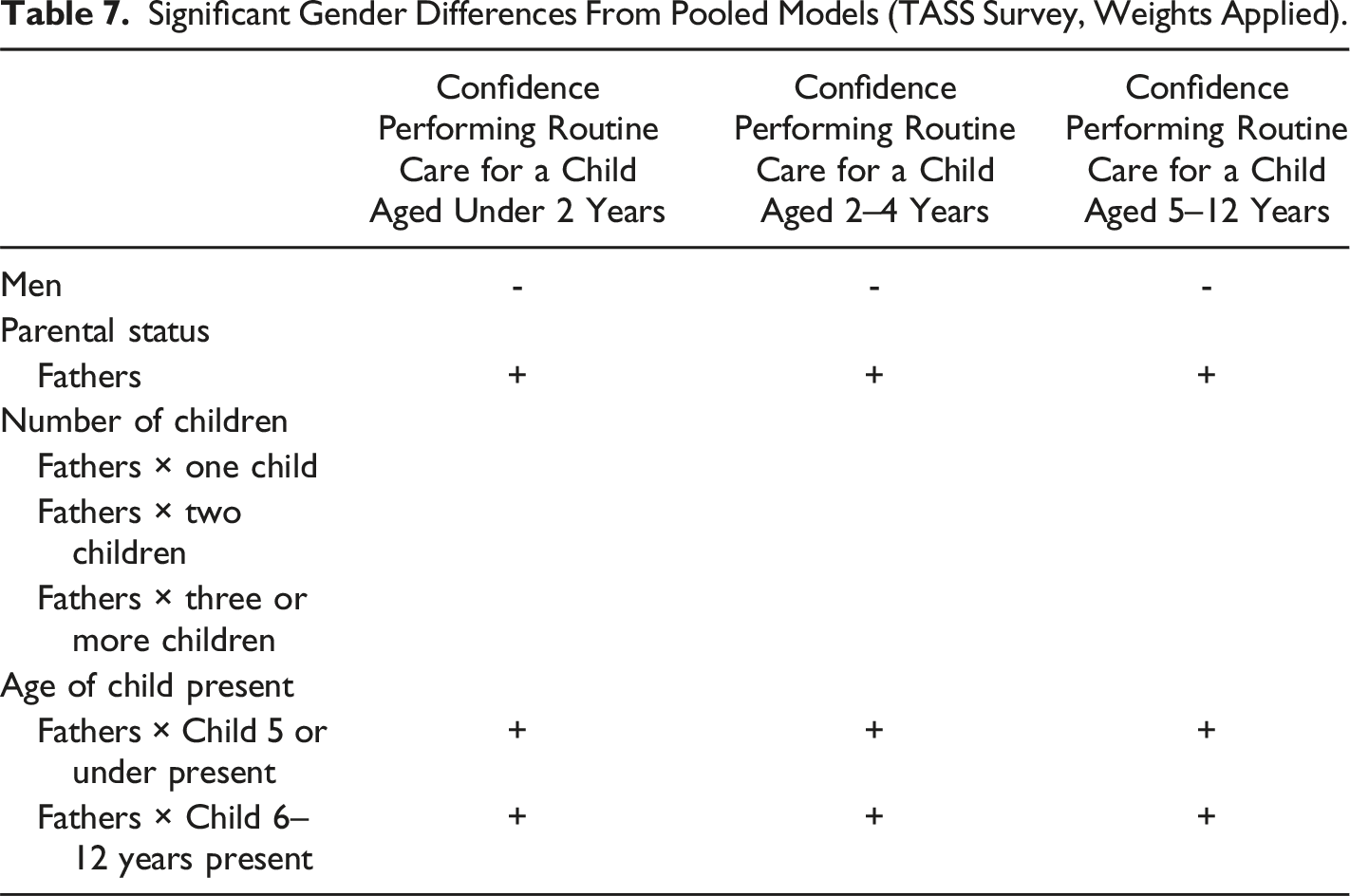
We were able to include a battery of questions about respondents’ confidence caring for children of different ages in the November 2020 wave. This round captured a sample of 1061 total respondents (462 men and 599 women; 297 fathers and 447 mothers). We estimated the models using ordinal logistic and OLS regression models; the results are substantively equivalent, thus we present the OLS regression models for ease. We present the results to test for gender differences differently by table. The first table presents the pooled results to identify the total gender gap in confidence for children across ages. After establishing this gap, we then disaggregate the regression models by gender to show how different measurements of being a parent are associated with confidence. Finally, we document significant gender differences in our key independent variables derived from the fully interacted models in separate table. Note that all models apply survey design weights.
Dependent Variables
To understand how confident our respondents were in caring for children of varying ages, we asked respondents to state their confidence in performing these necessary tasks involved in caring for children: (1) performing routine care for an infant, age 0 to under 2 years—for example, changing diapers, feeding, bathing, and comforting them; (2) performing routine care for a toddler or preschool-aged child, age 2–4 years—for example, feeding, playing with, bathing, and comforting them; and (3) performing routine care for a school-aged child, age 5-12 years—for example, feeding, playing with, supervising, and comforting them. Responses are on a four-point scale ranging from 1 = not at all confident to 4 = very confident, with higher values capturing stronger confidence.
We excluded those who reported “I don’t know” or were missing on these response items: 27 for confidence with infants, 9 for confidence with young children, and 6 for confidence with school-aged children.
Key Independent Variables
We hypothesized that parents would report more confidence in caring for children. Thus, parental status serves as a key independent variable, measured as those who have ever had a child (value = 1). We also expected men to express less confidence in caring for children, but for fathers to report more confidence than men without children. Thus, we include gender (men = 1) and its interaction to parenthood (men x parent = 1) as a key independent variable. Given our interest in exposure as a driver of self-efficacy, we also include a measure of one’s own children through two additional items. The first captures the respondent’s number of children ever had (including adult children) which is dichotomously coded for those with one child (value = 1), two children (value = 1), and three or more children (top coded; value = 1) who we compare against those without children (value = 0). We also expect that having a young child of ages corresponding to our survey questions living in the home may increase self-efficacy, and, thus, confidence. We do not have a full household registry with ages of each child. Rather, we apply the only measures available that measure co-presence of children ages 5 or under (value = 1) and 6 to 12 in the home (value = 1) compared to those without children these ages in the home (value = 0). By using multiple measures, we document nuance in how parenting may structure confidence in caring for children across ages.
Sociodemographic Controls
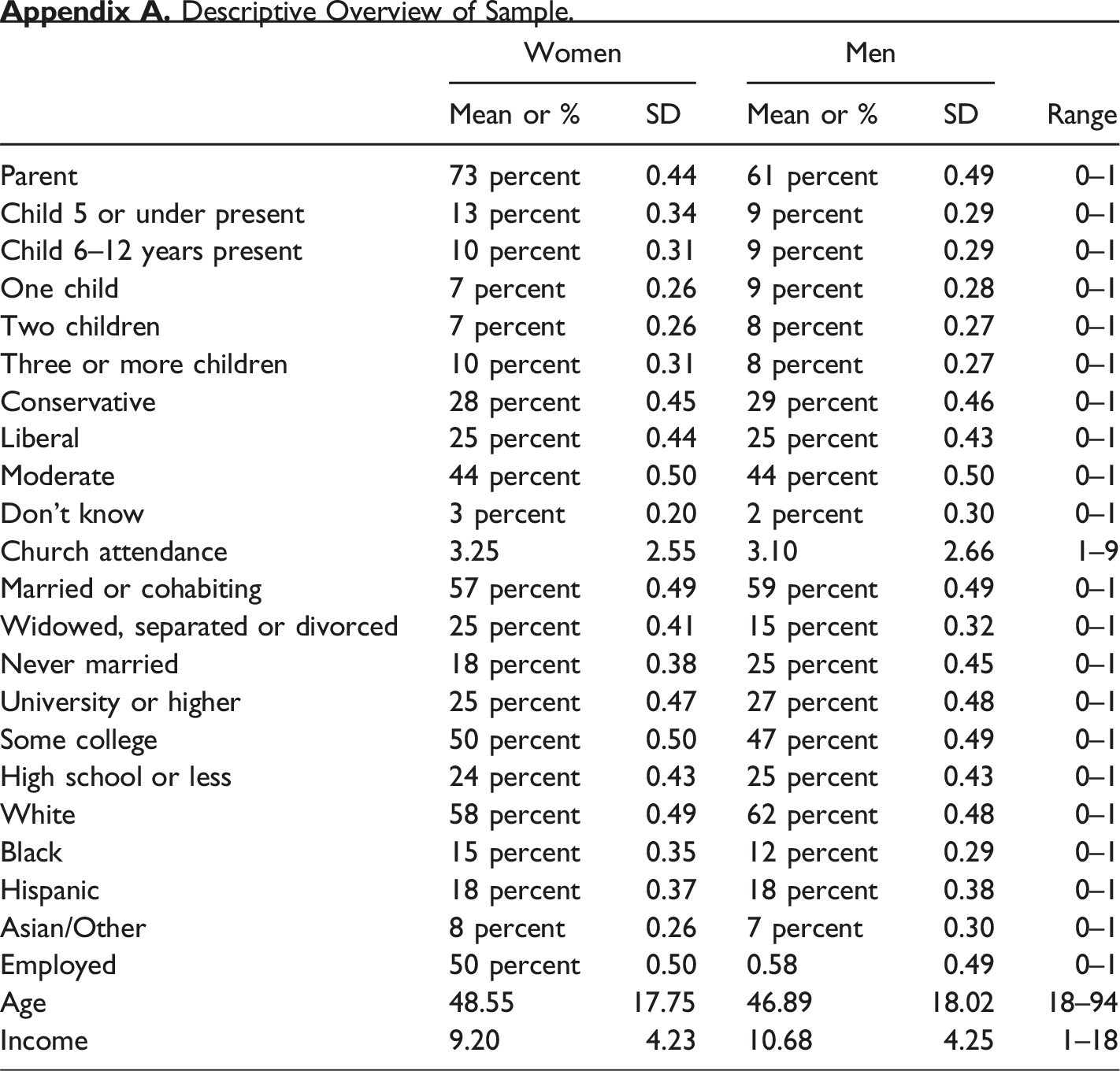
We include a series of sociodemographic controls. We compare those who are never married (value = 1) or divorced, widowed, or separated (value = 1) to those who are married (value = 0). Education is measured comparing those with a bachelor’s degree or higher (value = 1) to those with less than a bachelor’s degree (value = 0). Self-reported race is estimated through a series of dummy variables: Black (value = 1); Hispanic (value = 1); Asian/multi/Other Race (value = 1); non-Hispanic white (value = 0). 1 We compare those who are currently employed (value = 1) to those who are not employed (value = 0). Age is included as a continuous measure and self-reported annual income is measured categorically (18-point scale), ranging from less than $5000 to $200,000 or more. Religiosity is measured on an 8-point scale capturing church attendance, ranging from never to multiple times a week, with higher values indicating more frequent religious attendance. We coded political ideology dichotomously to capture those who identify as conservative (value = 1) versus those who identify as moderate or liberal (value = 0). We present a descriptive overview of our sample and its sociodemographic properties in Appendix A.
Results
Descriptive Statistics
Descriptive Overview of Confidence Caring for Children.
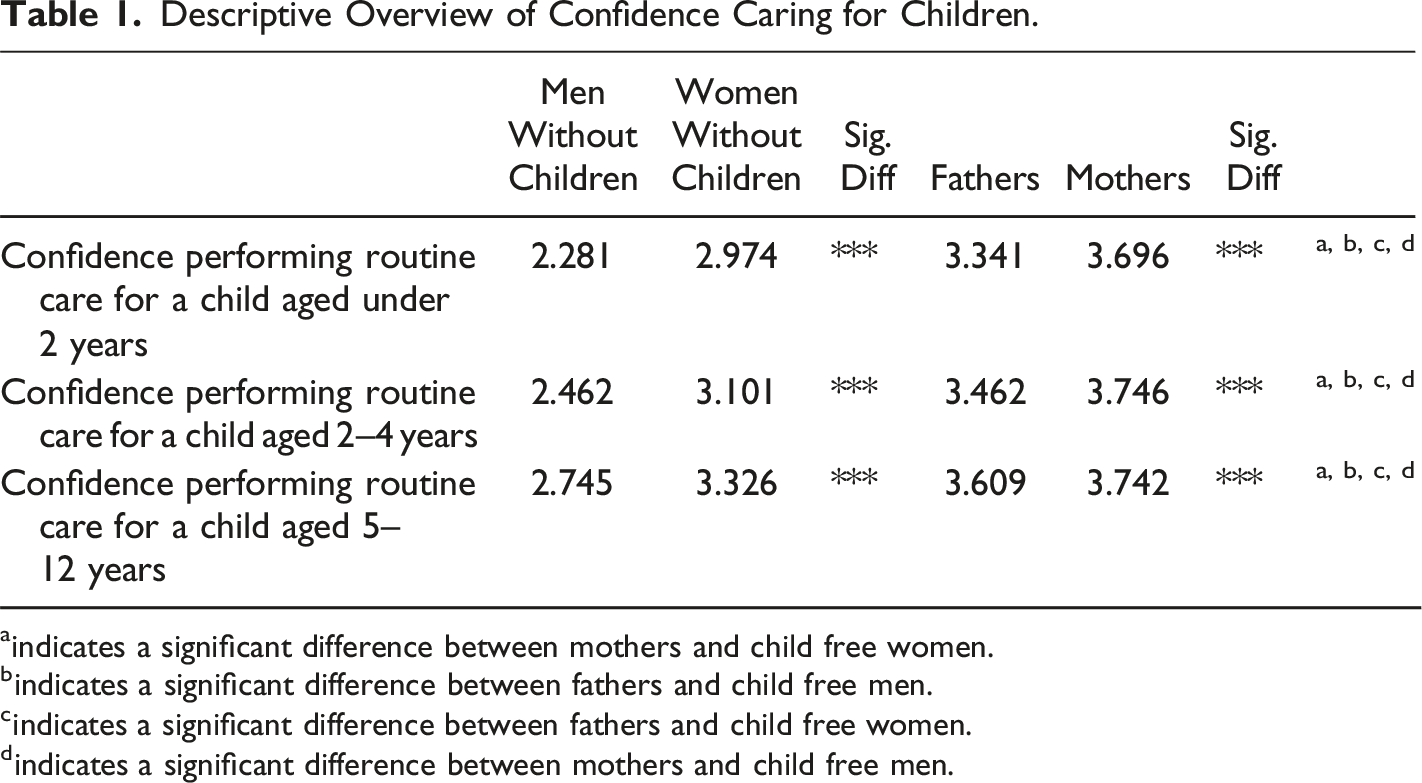
aindicates a significant difference between mothers and child free women.
bindicates a significant difference between fathers and child free men.
cindicates a significant difference between fathers and child free women.
dindicates a significant difference between mothers and child free men.
OLS Regression Results
OLS Regression Results for Confidence in Caring for Children (TASS Survey, Weights Applied).
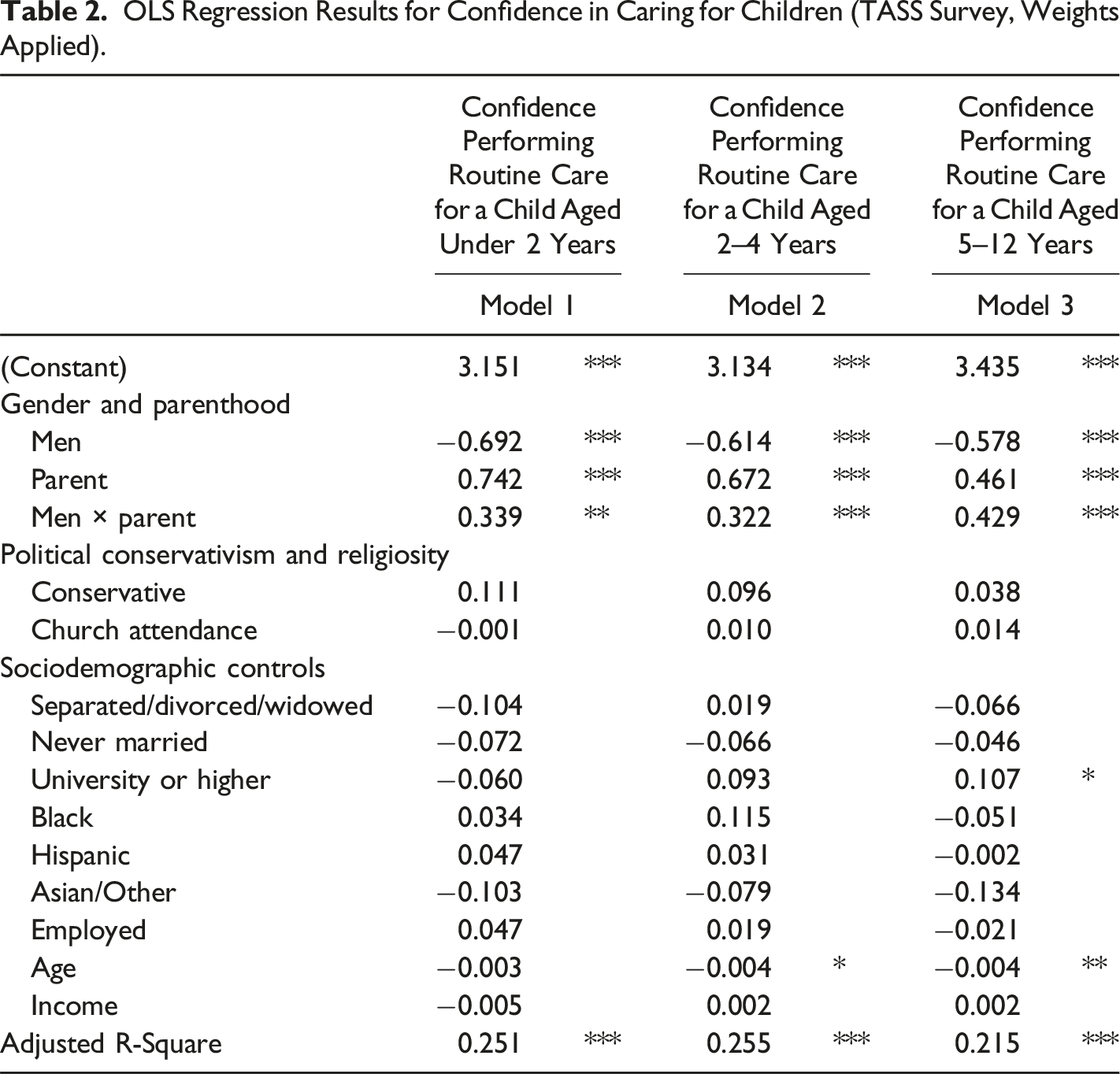
As Table 2 indicates, we find limited evidence of the role of sociodemographic characteristics. For confidence caring for infants (model 1), none of the other sociodemographic controls are significant, indicating that gender and parental status are the central drivers of group differences in confidence in caring for children in the youngest group. When asked about older children, we find only two measures are significant across these models: (1) a negative association for age for toddler/preschool and school-aged children, and (2) a positive association between college education and confidence caring for school-aged children. The lack of significant associations in our sample is notable, suggesting that gender and parental status are key predictors of confidence in caring for children across ages.
OLS Regression Results for Women’s Confidence in Caring for Children (TASS Survey, Weights Applied).
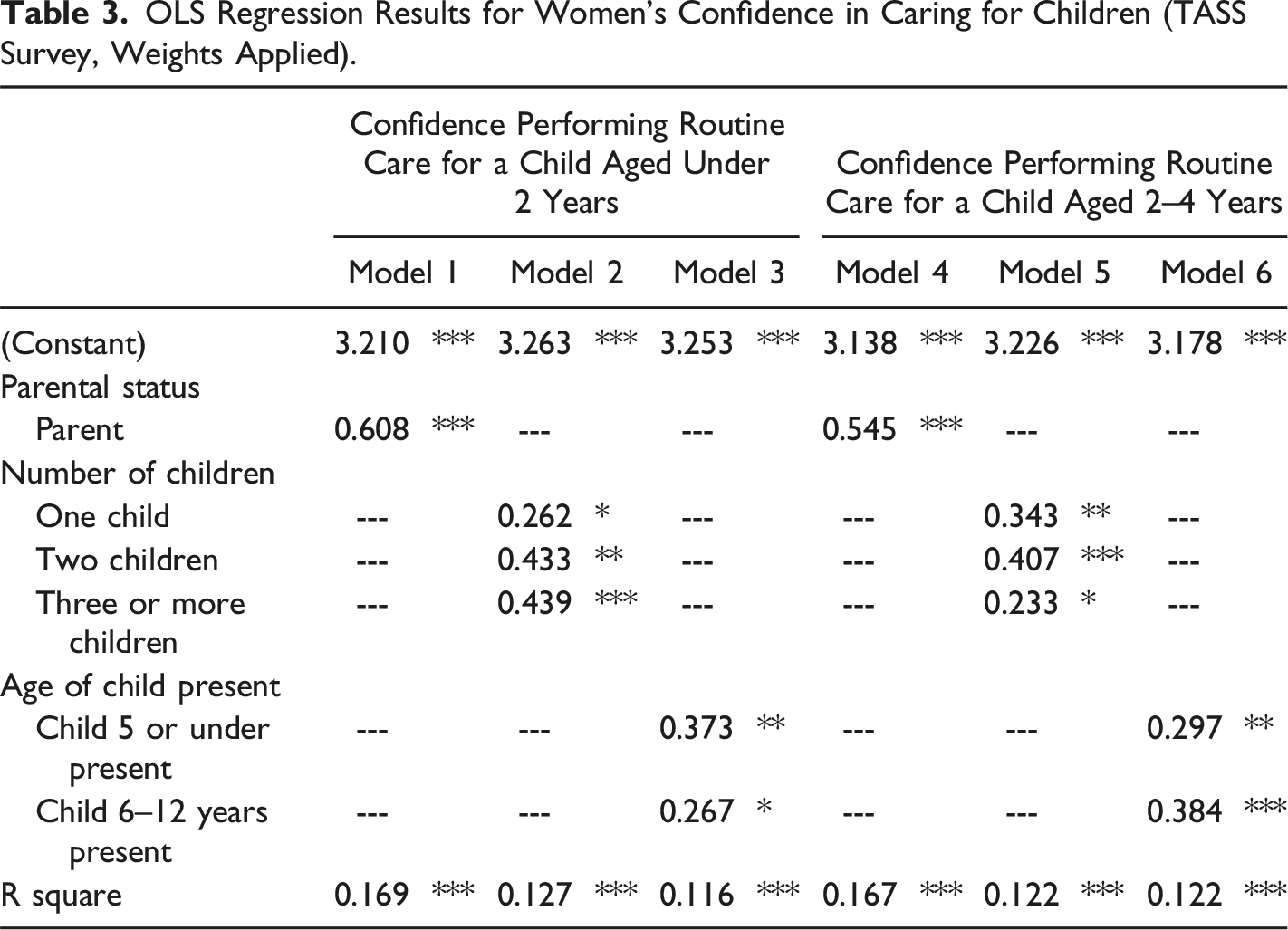
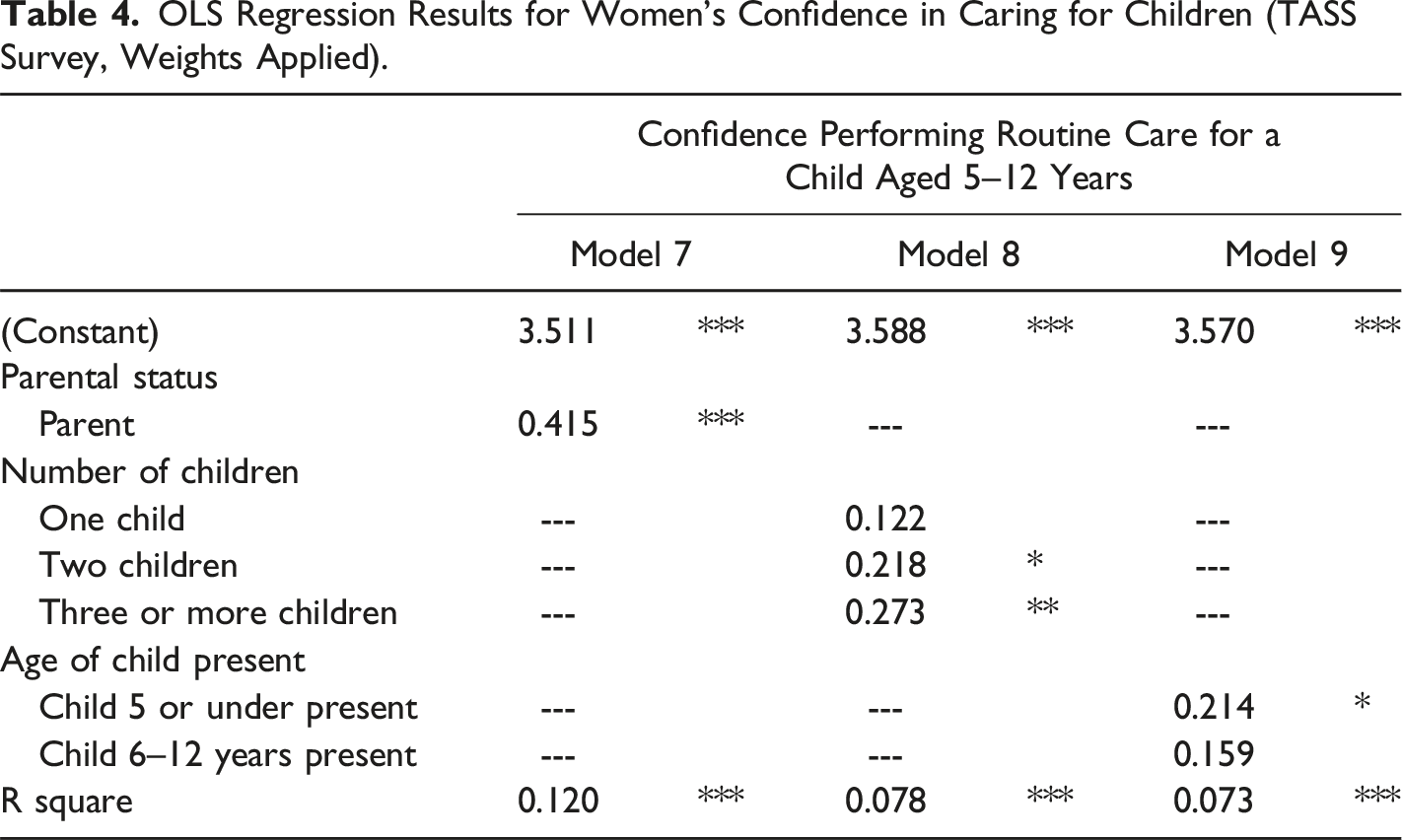
OLS Regression Results for Women’s Confidence in Caring for Children (TASS Survey, Weights Applied).
OLS Regression Results for Men’s Confidence in Caring for Children (TASS Survey, Weights Applied).
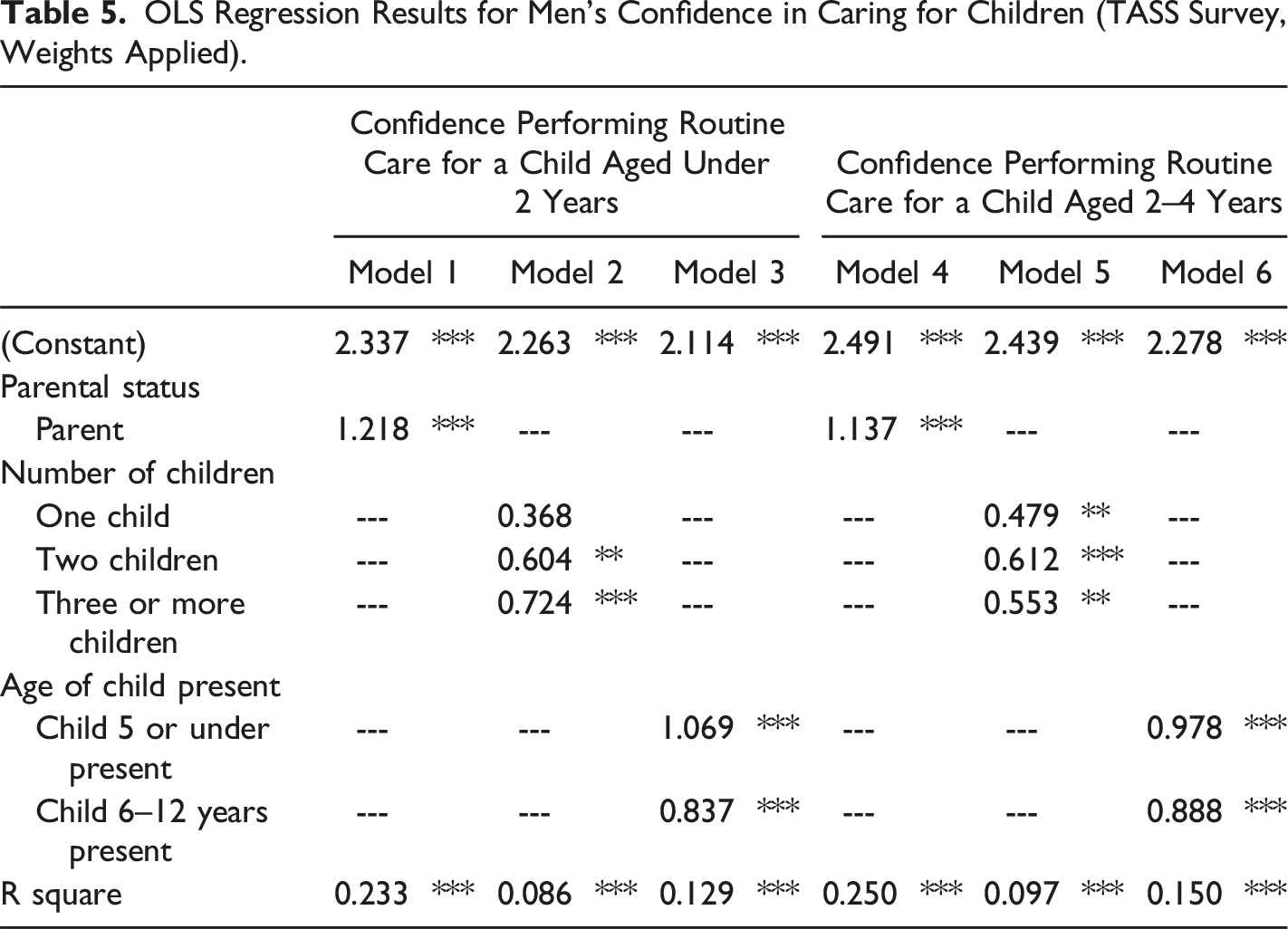
OLS Regression Results for Men’s Confidence in Caring for Children (TASS Survey, Weights Applied).
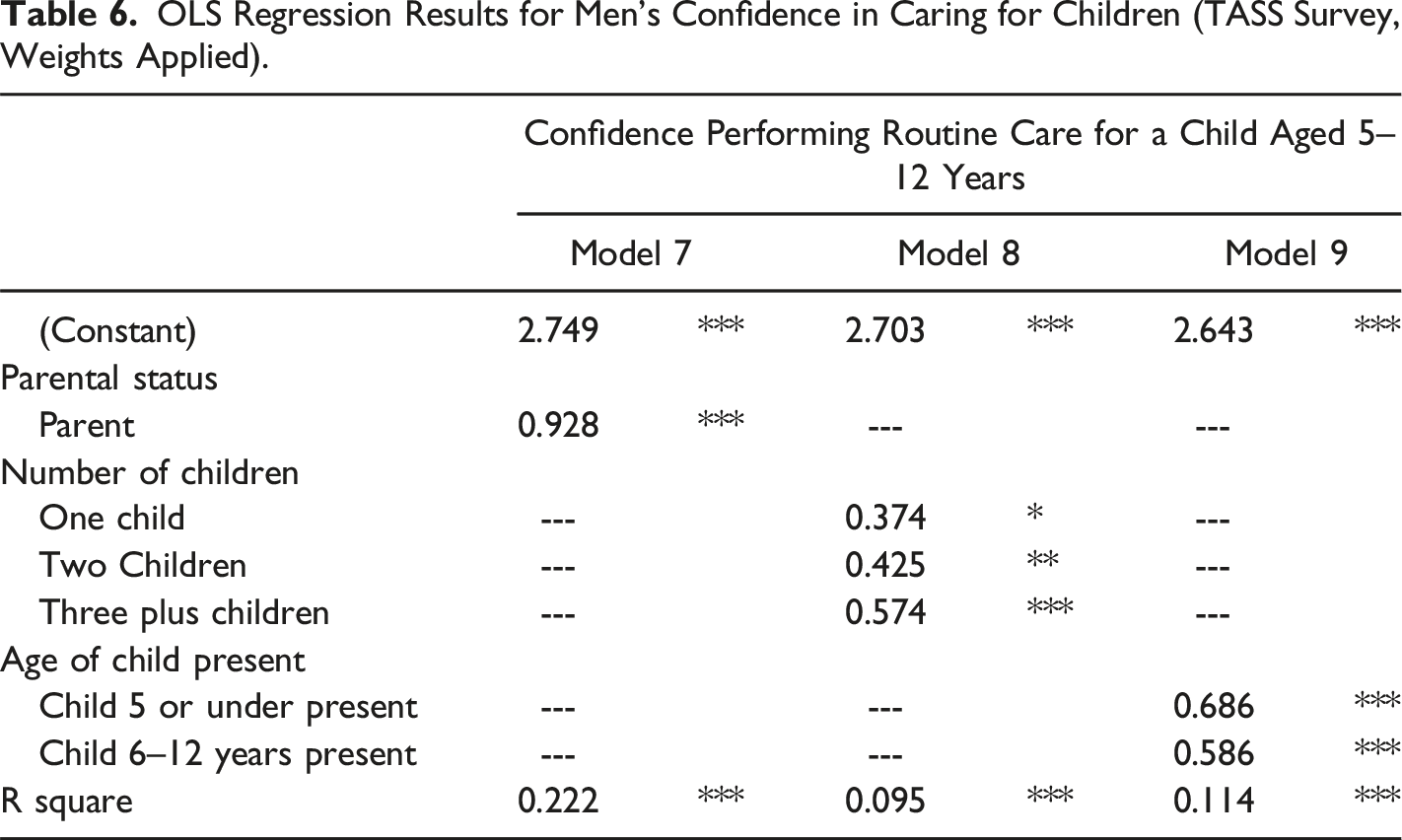
What is notable across Tables 3–6 is the size difference in coefficients by gender. For example, the constant in model 1 in Table 5 which captures men without children is a value of 2.3, which substantively maps onto reporting “a little confident” in caring for a baby. Yet, if they have been a father, the coefficient size is large—1.2 points—which increases their report to 3.5, or “moderately confident” in their abilities to care for children. The size of the coefficient is similarly large for having a child 5 or under in the home, again suggesting that direct exposure to the care of young children has a sizable impact on men’s confidence. When we reflect on these patterns against those of women, we see that women’s baseline confidence level is significantly higher than men’s, with most starting at a value of 3 (see coefficients in Tables 3 and 4), or being “moderately confident” in caring for children. Mothers, therefore, have more moderate coefficients associated with their status as parents, but these map onto moving between “moderate” and “very” confident levels. Thus, the effect sizes for mothers are significantly smaller than those for fathers, indicating that direct experience with parenting has a larger impact on fathers’ confidence (support for H2) given that they are starting from a lower baseline than women.
Significant Gender Differences From Pooled Models (TASS Survey, Weights Applied).
Discussion
This study applies novel data to test two theoretical arguments—gender socialization and self-efficacy theory—to identify how gender and parental status structure confidence in caring for children. Prior research has shown that a major factor behind fathers’ involvement in childcare is their level of parental confidence (Jacobs and Kelley 2006; Liu et al. 2022; Trahan 2018). Fathers who are less confident in their caregiving ability perform less childcare, independent of their personal expectations or characteristics of their spouse (Trahan 2018). Hence, confidence is a key mechanism sustaining contemporary gender gaps in childcare. Here, we find that women without children already have more confidence than similar men, creating a foundation for disparities before children are even in the picture. Yet, expanding on research showing the role of exposure to men’s self-efficacy in care (Pinto et al. 2016), we also highlight how the experience of parenting attenuates this gap—fathers exhibit increased confidence for caring for children of all ages. Despite these gains, fathers exhibit lower levels of confidence than mothers, suggesting ample opportunity for improvements in men’s parenting confidence which may further reduce gender disparities in childcare investments.
Underlying these gender differences in parenting confidence are social structural factors originating early in life and continuing through divergent experiences. Girls receive social messaging about their “natural” suitability for caregiving early in life. As Besen-Cassino (2017) shows in her study of the teenage workforce, young women often take on babysitting jobs as early teens, which helps them develop skills in nurturing, caregiving, and emotion work. This experience positions women for employment in caregiving jobs as adults—for example, teaching, childcare, social work, and nursing—that reinforce their status as caregivers (Besen-Cassino 2017). The same patterns are not evident for young men, who are more often clustered in “physical” jobs from young ages (Besen-Cassino 2017), a fact that may further reinforce caregiving confidence gaps into adulthood. Girls also spend more time at home caring for siblings than do boys growing up, a pattern that continues as they age into young adulthood (Gager et al. 1999). This means that many young girls have multiple exposure points to childrearing—as siblings, teenage workers, and later, as adult employees—in ways that are different from boys and their eventual job paths. Strong patterns of occupational gender segregation reflect social beliefs that certain jobs “belong” to women and men (Bielby 1986; England 2010; Foster et al. 2020). This, too, may impact the confidence gap in caring for children of different ages that we document in this study of adults.
Our results indicate that confidence in caring for children is lower amongst men who are not fathers, especially when they are asked about their levels of confidence caring for very young children (under 2 years). We find that women without children are also less confident in caring for infants but report higher levels of confidence across all these measures than men without children, indicating that gender and parental status shape these attitudes. Thus, we cannot universally reject the impact of gender socialization as a driver of caregiving gaps. Socialization into gender norms about women’s greater “inherent” competence in caring for young children and, by extension, men’s “inferior” skills are reflected amongst our respondents without children.
Our results for parents, by contrast, demonstrate the importance of exposure to parenting as a caregiving confidence builder—an intuitive, useful finding. Although mothers report the greatest confidence across all age groups of children, we find that fathers’ confidence increases substantially compared to men without children. Gender gaps between mothers’ and fathers’ confidence thus narrow. Exposure to parenting serves to strengthen confidence in caring for children of all ages regardless of how we measured it. Our results speak to arguments that fathers’ reduced time with children, including at the youngest ages, is at least in part a consequence of a lack of confidence. The fact that any exposure—being a parent, having multiple children, and co-residence with elementary school aged or younger children—increases fathers’ and mothers’ confidence documents a key mechanism through which confidence in care can be built. Further, the experience of being a parent had a larger impact on fathers than mothers in increasing their confidence in care. Thus, exposing men to more opportunities to provide care may have a significant impact.
We note a number of study limitations. We rely on a single conceptual measure (confidence in caring for children) to understand potential barriers to men’s equal participation in caregiving. We find that our respondents are more confident as exposure occurs. But men and women may view the quality of care differently depending on whether a man or woman provides it. Thus, additional research should assess confidence and quality measures simultaneously to better understand these barriers. Future studies may also provide greater detail on measuring parenting exposure and experience. We use parenting status as a broad measure of experience with children, but detailed analysis capturing variation in parents’ interactions and engagement with children could provide new insight on the relationship between experience and confidence. We also lack information on other types of caregiving experiences that could increase exposure to children, for example, through prior work with children (e.g., babysitting, tutoring, taking care of younger siblings, teaching); as documented, such caregiving experiences may influence gendered confidence in caring for young children. We also lack a measure of gender attitudes, which would provide deeper understanding of gender socialization into traditional parental expectations. We do control for a range of confounders that capture some of this variation, notably, political affiliation and church attendance. However, a direct measure of gender role attitudes and, better yet, a longitudinal and experimental project that captures attitudes and caregiving exposure simultaneously, would be ideal. Further, we do not have daily time engaged in caregiving or the duration in years. Thus, a key corollary measure could be time engaged in care of children from a range of ages. Including these measures is a clear direction for future research. Yet, we find that our multiple measures of parenthood produce the same results: increased confidence in caring for children across ages.
We offer a sociological definition of confidence—a socially induced feeling of self-assurance arising from an appreciation of one’s own abilities—to underscore that cultural ideologies shape gendered ideas of caregiving for individuals, yet these ideologies are subject to change. If prevailing ideologies can socially induce a lack of confidence among men, shifting such ideologies has the potential to increase men’s confidence, bringing about positive attitudinal and behavioral change with regard to caregiving.
Our results provide support for policy efforts aimed at building men’s confidence in caregiving. Intuitively, the more time men spend exposed to and involved in caregiving, the more self-assured they become in their abilities. Thus, we will need to change cultural norms that silo boys from being involved in care as siblings, babysitters, and young adults working in caring occupations if we are to raise men’s caregiving confidence. One key change would involve raising the wages for jobs involving care (nursing, teaching, social work), which may increase men’s participation in these occupations. Once men become parents, the positive feedback loop between exposure to and confidence in caregiving can be reinforced with policies that provide equal parental leave allotments and “use it or lose it” paid paternity leave aimed specifically at men, as is the norm in several wealthy western nations (Collins 2019). Ultimately, men and fathers may be hesitant to support the major caregiving challenges that many industrialized nations like the U.S. are facing—namely the double-pronged issues of inadequate childcare solutions and aging populations—unless they understand their responsibility to engage in carework, too.
Again, this research suggests that confidence in individual capacity to care for children is lower amongst men and, to a lesser extent, women without children. Better integrating both groups into caregiving may be useful to increase their confidence and equalize care contributions, each of which is critical to sending the message that men’s involvement in care is not secondary or peripheral to women’s. The findings here also provide a more direct proposal for intervention to increase men’s participation in caregiving beyond broad policy reforms like expanding paid parental leave to all fathers. Better policy supports are key for parents, but policy circles rarely engage with the idea of fathers’ greater involvement in childcare at home, a matter assumed to be one negotiated privately within families. Yet, this research demonstrates the importance of building men’s confidence in caring for children at an early age to prepare them for greater involvement in caregiving. Our research points to a gendered confidence gap that might provide key stakeholders with a direction forward in closing the caregiving gap.
Footnotes
Authors’ Note
We thank Jacob Montgomery and the Weidenbaum Center on the Economy, Government, and Public Policy at Washington University in St. Louis for generous support of this research.
Declaration of Conflicting Interests
The authors declared no potential conflicts of interest with respect to the research, authorship, and/or publication of this article.
Funding
The authors disclosed receipt of the following financial support for the research, authorship, and/or publication of this article: This work was supported by the Weidenbaum Center on the Economy, Government, and Public Policy (Washington University in St. Louis).

Note
Appendix
Women
Men
Mean or %
SD
Mean or %
SD
Range
Parent
73 percent
0.44
61 percent
0.49
0–1
Child 5 or under present
13 percent
0.34
9 percent
0.29
0–1
Child 6–12 years present
10 percent
0.31
9 percent
0.29
0–1
One child
7 percent
0.26
9 percent
0.28
0–1
Two children
7 percent
0.26
8 percent
0.27
0–1
Three or more children
10 percent
0.31
8 percent
0.27
0–1
Conservative
28 percent
0.45
29 percent
0.46
0–1
Liberal
25 percent
0.44
25 percent
0.43
0–1
Moderate
44 percent
0.50
44 percent
0.50
0–1
Don’t know
3 percent
0.20
2 percent
0.30
0–1
Church attendance
3.25
2.55
3.10
2.66
1–9
Married or cohabiting
57 percent
0.49
59 percent
0.49
0–1
Widowed, separated or divorced
25 percent
0.41
15 percent
0.32
0–1
Never married
18 percent
0.38
25 percent
0.45
0–1
University or higher
25 percent
0.47
27 percent
0.48
0–1
Some college
50 percent
0.50
47 percent
0.49
0–1
High school or less
24 percent
0.43
25 percent
0.43
0–1
White
58 percent
0.49
62 percent
0.48
0–1
Black
15 percent
0.35
12 percent
0.29
0–1
Hispanic
18 percent
0.37
18 percent
0.38
0–1
Asian/Other
8 percent
0.26
7 percent
0.30
0–1
Employed
50 percent
0.50
0.58
0.49
0–1
Age
48.55
17.75
46.89
18.02
18–94
Income
9.20
4.23
10.68
4.25
1–18