






Abstract
Baladna is a dairy company in Qatar. It has thrived despite an ongoing political and economic blockade, helping the country to become self-sufficient in terms of its dairy needs. In a short time and with substantial investment, the brand became a market leader. Baladna’s growth plan banks on globalization, but the marketing director and the VP of marketing disagree on the strategy: one argues for standardization and the other for adaptation. The case study discusses brand name issues as well as brand identity approaches in the context of a multicultural environment.
Introduction
Unsure about an important decision to be made before meeting with the Chief Executive Officer (CEO), Eva Johnson, the Vice President (VP) of marketing of Baladna Diary Food in Qatar, spent the week thinking about the company’s growth plan. Despite a political and economic blockade, Baladna thrived, helping Qatar become self-sufficient in terms of its dairy needs. However, the local market is small, and Baladna’s growth plan banks on globalization. Eva was torn between two scenarios for Baladna’s international product line: maintaining a standardized branding strategy, the position that she is most comfortable with, or developing a new strategy, which Baladna’s Marketing Director, Elias Ghossoub, continually advocates. What will Eva decide to ensure a successful transition toward globalization and a new growth phase for Baladna? Will she choose standardization or adaptation?
In the summer of 2017, Qatar Airways flew 4,000 Holsteins from the Netherlands and Germany in cargo aircraft redesigned to carry these special passengers. The cows were imported by Baladna Food Industry to ease the country’s shortage of dairy products caused by a political embargo and to build a self-sufficiency program. More cows have since been imported from the US and Australia, and within 2 years the herd has grown to 18,000. After the cows landed safely, they were transferred to a two-million square-meter, high-tech, air-cooled accommodation, the Baladna’s farm. An industry had been born from a political and economic embargo led by the Kingdom of Saudi Arabia, the United Arab Emirates, Bahrain, and Egypt as a result of diplomatic hostilities (Figure 1—Map of the Arabian Gulf). Map of the GCC countries. Copyright: Reproduced from Wikimedia Commons with permission to reproduce.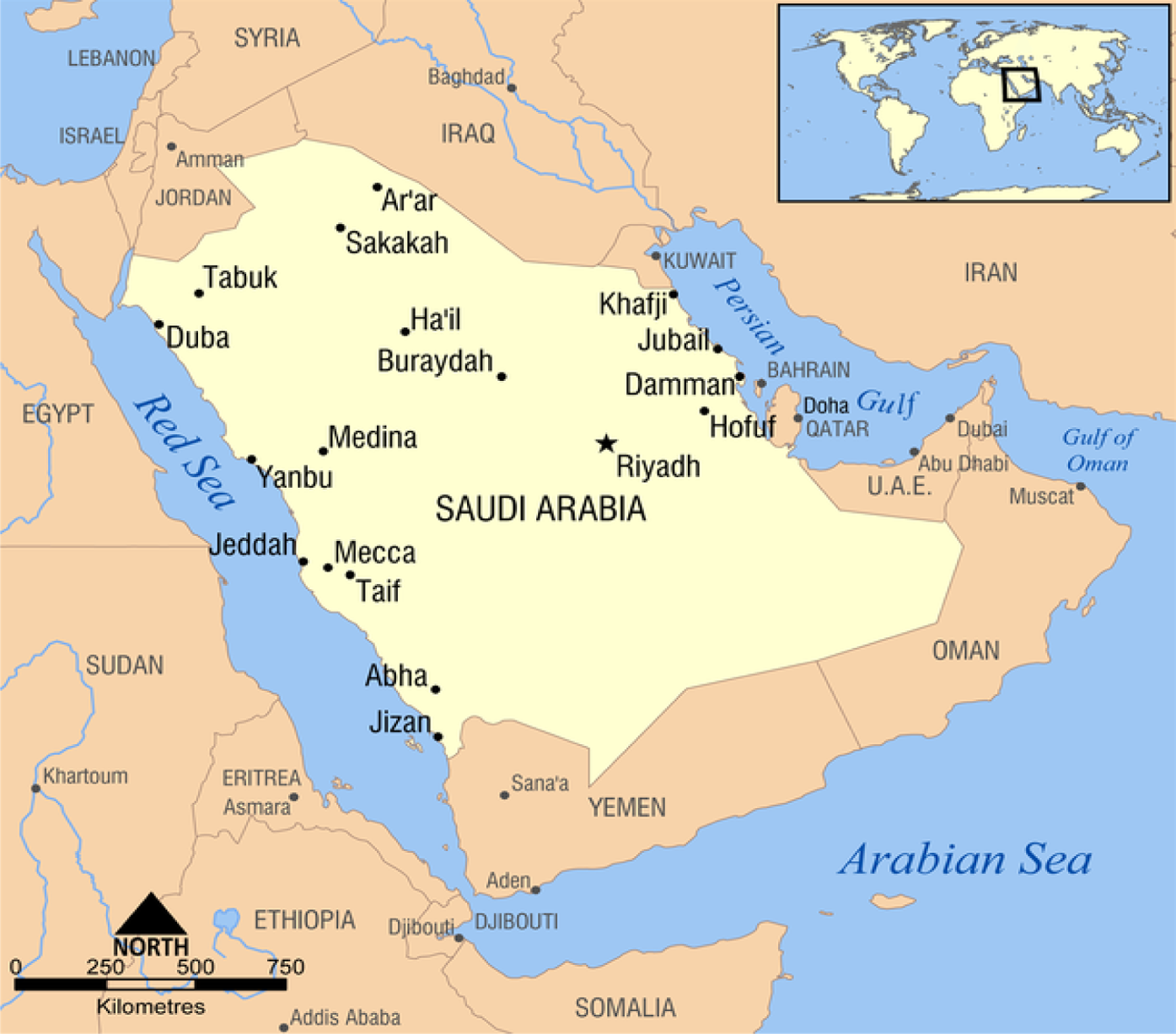
The embargo affected the food and beverage industry, as Qatar was reliant on a GCC (Gulf Cooperation Council) open-trade agreement that facilitated the circulation of 80% of Qatar’s imports of products and services through Saudi Arabia’s land borders. When the embargo was enacted on June 5, 2017, scarcely any dairy products were available for consumers in Qatar. Baladna, founded in 2014, was initially a marginal player in the dairy business in Qatar. It seized the opportunity to restructure with a development strategy in response to the country’s need for dairy products, with the objective to make Qatar self-sufficient in the consumer dairy category. Thanks to funding availability, Baladna relaunched and became a market leader in only a short time; however, it was faced with a market size limitation, which triggered it to go international.
Baladna’s identity was built around a patriotic theme, which would resonate little in foreign markets. The executive team was divided. The VP of Marketing, Eva Johnson (an old friend of the CEO, Hamdan Al-Thani, a Qatari national proud of what the company had achieved in a short time) believed that maintaining the brand name and identity for the export products was the best strategy for the present. The Lebanese Marketing Director, Elias Ghossoub, argued that the Baladna name (tr. our country 1 ) would not resonate abroad and recommended an identity redesign for the product lines intended for international markets.
Such questions are at the core of international branding and advertising strategies. In fact, when going international, organizations consider two options: either a standardization of their advertising efforts, which means the utilization of similar or common advertising messaging for international markets, justified by the assumption that global markets have become homogeneous (Wang & Yang, 2011), or an adaptation strategy that recognizes differences among countries, their economic conditions, legal statuses, or their cultures. Cultural and taste differences combined with variations in regulation and distribution systems have attracted marketers and advertisers to adaptation strategies, although financial considerations continue to attract global marketers to standardization (Sinclair, 2019). Nevertheless, when going international, marketers increasingly use a combination of adaptation and standardization strategies: for instance, advertisers use standardized advertising strategies but adapt their creative executions to the specifics of the local market (Ford et al., 2011). To a large extent, marketers adapt their international strategies based on the environments and other factors, which include the branding and the image of the country where the products originated (Wang & Yang, 2011).
Both brand personality and country of origin significantly influence consumer decision-making (Wang & Yang, 2011). Global brands may adopt one identity, communicated through a brand name, logo, and marketing mix: McDonald’s and Coca-Cola are examples of multinationals adopting a global branding strategy. At times, global brands may not use the same brand name throughout their international markets for different political, legal, and cultural reasons. Unilever is an example, using different brand names for its ice cream lines but maintaining consistency with a unique logo across countries (de Mooij, 2010).
Baladna’s Marketing Director believed that there were enough reasons to adopt a brand name other than Baladna and a differentiated advertising strategy for those products going global, while the VP of Marketing believed that it was important to maintain standardization and consistency across markets.
How does a company navigate its global branding? Does it extend its identity and brand name across markets or adapt them for new-entry market strategies?
Background
In its less than 5,000 square miles, Qatar has less than three million habitants (as of 2020). The population is highly diversified, with the majority being South Asian workers (about 70%), mainly from India, Bangladesh, and Nepal (about 20%, 12%, and 12%, respectively). Of the non-laborer population, less than 15% are Qatari nationals, followed by about 10% of Egyptians (Snoj, 2019). Islam is the main religion practiced in Qatar, followed by Christianity. Arabic is the official language, but English is not only commonly used but has also become the main language for business due to the high number of expatriates. The literacy rate is above 90%, with a highly educated female population. With its modern infrastructure and developing hospitality facilities, the country is experiencing rapid social change. In their quotidian, Qataris are influenced by traditions and cultural heritage through the language spoken (dialect) as well as through their clothing, rituals, and celebrations.
Qatar extends about 160 km along the Persian Gulf, and inland it has a unique 80 km border with the Kingdom of Saudi Arabia (KSA). Thus, all land transportation occurs through the KSA borders. The GCC customs union is a trade liberalization agreement between the GCC countries (Bahrain, KSA, Kuwait, Oman, Qatar, and the UAE). Goods are free to circulate between those countries, and a unified external tariff is applied at the main maritime entry point to the region, the Dubai port. For years, Qatari imports have landed in the UAE first, circuiting through KSA and then arriving in Qatar. If manufactured in the neighboring GCC countries, products similarly arrive in Qatar through the unique KSA land border.
By 2017, political tensions had intensified between the KSA, the UAE, and Qatar as a result of allegations that included supporting the Muslim Brotherhood in Egypt and using the Al Jazeera channel for soft diplomacy (Wintour, 2017). One of the blockading countries’ requests was to shut down the Al Jazeera channel, a demand that was vehemently refused by Qatar. The land and air blockade imposed on Qatar resulted in some food shortages. Although Qatar made new agreements with partners including Iran and Turkey, it remained vulnerable with regard to food sufficiency. Prior to the blockade, 85% of the dairy products available in the country had been imported through KSA (Built from scratch, 2019): 400 tons of milk and yogurt were transported daily through KSA borders (Anadolu Agency, 2018). At the time, the three other dairy companies that served the Qatari market were the Dandy Company Limited, founded in 1973, Al-Maha, founded in 1979, and the Arab Qatari Company for Dairy Production, known as Ghadeer, founded in 1986. The companies prided themselves on serving the country and keeping up with the demand for dairy products when the blockade hit the country on June 5, 2017. They have also imported more cows since the blockade began, although Baladna became the leading dairy brand in the country. Dandy chose to focus on flavored milk and laban (fermented milk), defining its purpose as “bringing people together through sharing of food.” For its positioning, Al-Maha opted for product quality and freshness of its products. Ghadeer, a family company that builds its communication material on its long-standing connection with Qatari families, positions its brand as “Qatar’s naturally trusted dairy.” Its most recent advertising campaign builds on the brand’s connection and long relationship with customers, using the tagline “From our family to yours over 30 years” (see Ghadeer commercial here 2 ).
By August 2019, Baladna had achieved a 91.3% share of the fresh milk market, compared with 8.4% for Ghadeer and 0.4% for the others. Baladna had over 80% of the market share for UHT milk, over 50% for fresh laban, and over 40% in the fresh yogurt category (see Figure 2). In the juice products category, Baladna had about 30% of the market share.
3
The company had launched two restaurants in the main shopping centers in Doha (Qatar’s capital city) in addition to its open-to-the-public restaurant at the farm, attracting everyone. In fact, Baladna targets families, youths, and adults. Because women are key in household purchase decisions—Arab women are involved in 93% of food and beverage purchase decisions (Al-Salhi, 2019)—Baladna targets women of all ages: mothers, housewives, or working females. Baladna market (2019) share in the main dairy categories of milk, laban, and yogurt. (Source: https://baladna.com/wp-content/uploads/2019/10/Prospectus_English_web.pdf)
People in Qatar consume less milk than those in Western countries. The average per capita dairy consumption among people in Qatar was about 50 L per year compared to an average of 75 L per year in Western countries.
4
Despite local diversification efforts in concomitant categories (e.g., cheese and restaurants), significant growth was unlikely to occur. Thus, the company started developing a strategy to penetrate the international market, first targeting neighboring countries (e.g., Iran and Yemen) but with a bigger plan to do business in Kuwait, Oman, Syria, and Iraq (Figure 3). Going international not only drives growth; it also benefits the brand in terms of perceived brand globalness (PBG) (Archpru & Alden, 2010), which positively affects the brand’s image and success by adding attributes like superior quality and prestige (Steenkamp et al., 2003). Profiles of Baladna’s targeted countries (in alphabetical order).
How Important is a Country’s Image for a Global Strategy?
Enjoying some fresh tabouleh salad at the Baladna farm restaurant on an unusually cool day in May, when the average daily temperature reaches 110F, Elias Ghossoub, the Lebanese Marketing Director, debated, yet again, rebranding Baladna for the international market with the VP of Marketing, Eva Johnson, who was against rebranding. “Yes, Eva, I know. Baladna developed with the embargo—and indeed, I agree that the overwhelming response from the customers derives from an emotional connection; but this connection has no relevance for consumers overseas,” he argued. “The branding that Baladna has been using revolves around nationalism, and a call to consume local—a sort of ‘we can do it ourselves and we don’t need the UAE or KSA to be fed’. It works perfectly and in synergy with the initiative ‘Made in Qatar,’ a labelling that suits the political and diplomatic circumstances meant to defy the blockading countries and prove that Qatar is a sustainable food self-sufficient country; and actually, you may recall that we have used this line in the recent ads,” he added.
Elias was referring to the 2018 and 2019 advertising campaigns (Figures 4–6) that endorsed the patriotic initiative “made in Qatar,” which emerged to boost the adoption of local products. The ads used a demonstration approach and placed the product at the center of the visuals. Simultaneously, the references to the nation, Qatar, are not only made visible but exaggerated: the print ad uses the word “Qatar” twice, once in the top left and again in the bottom left of the ad. The red ribbon, “First time made in Qatar,” suggests a celebration and elicits the desired image of an innovative fresh milk producer and brand, supported by the background image of the modern facilities and cows, delightfully placed in the farm. On the opposite side of the print ad, at the bottom, is the call to action “Buy local, made in Qatar,” endorsing the patriotic movement to protect and encourage the local economy, especially during the economic blockade. The Facebook ad (Figure 6) adopts a more dramatic tone with the addition of the national flag as a background, and its copy suggests that Qatar became stronger after the blockade. Typically, and considering the composition of the population, ads in Qatar use a combination of Arabic and English. English is the lingua franca, but Arabic is the country’s official language. Only when commercials run on Arabic national broadcast channels or are published in Arabic print media, they are exclusively published in the Arabic language. Baladna print advertisement. Half page ad in Gulf Times newspaper. March 10, 2019, p. 4. Baladna. Indoor mall advertisement. March 2019. Facebook post/image with a nationalist narrative.


Elias argued that the target markets in the selected countries care little about Qatar politics. The inference behind the word “Baladna” (meaning our country) is meaningless to audiences in other countries. Moreover, Qatar had not yet built its name and reputation as a food-exporting country. Consequently, it requires strong branding and an aggressive advertising strategy to compel customers to buy. As Elias noted, “A brand name that suggests benefits like a health benefit would be more relevant, and more powerful.” He referred to a food healthfulness survey (American Heart Association, 2019) that found that 48% of consumers look at brands or company names when making decisions about healthy food. He also mentioned a study (Chovanova et al., 2015) that proves that the brand name has an impact on the customer’s purchasing decision-making process. He continued, “Eva, Baladna builds on togetherness, our country. During the blockade it resonated strongly with Qatari consumers whom we engaged with the video ads that revolved either around the farm, cows, and nature, or the products themselves 5 (see this example of Baladna commercial here). 6 However, such national and patriotic references embedded in the name would be meaningless in Oman or other countries, and considering the semantics of the word Baladna, it could even be confusing if consumers in the new Arab market took the brand for a local one.”
Eva had a different perspective. First, she agreed that the origin of the product is important to form a connection with customers, providing some assurance about quality and helping create a distinct personality of the brand. Actually, she saw an opportunity in this branding to tell a nice corporate story. “Imagine an advertising campaign with this slogan, ‘From Baladna (our country) to Baladkom (your country),” she said, “wouldn’t it be wonderful? We keep the core brand name Baladna and the logo, and we create room to personalize the advertising material for each country, as our budget allows.” She added, “look, Baladna needs a consistent, standardized brand image, internal and external, supported by the advertisements. The brand comes with a nice story to tell, and this story in itself is a strong component of its identity. Now, think about these lines—we can share them with the local media if we decided to send press releases: ‘Baladna, a brand that flourishes out of a crisis, goes international!’ Isn’t this, in itself, a seal of success and a sign of a strong brand?” She continued, “Why one would miss such an opportunity to tell a compelling corporate story, and instead reshapes a branding that is working well! Also, thinking from a financial perspective, it would cost millions to change the visual identity of the brand: new logo, new packaging, new distribution and new advertising material, while we can draw on what we already have for the new markets; it would be a big stretch to our financials!” Elias felt that their conversation was not going anywhere. When he had made a presentation to Eva and the marketing team a few days earlier, Eva was as unreceptive to considering an adaptation strategy as she was now. He agreed with some of Eva’s points, but he still believed that Qatar had not yet built enough of an established image as a strong dairy-producing country to create an impact on the brand equity (Aaker, 1991). He wondered if this was an ego problem—to which he could only respond by conducting research.
Eva was speaking out of confidence; not only because her argument had good grounds, she believed, but also because she had the support of the CEO. Eva and Hamdan had met years ago, when they were still students at a business school in London. After they graduated, Hamdan returned to Doha to serve in his family business, while Eva joined the BritAV Airways marketing department, where her career prospered in only a short time. She was behind the 2014 brand-lifting and revamping campaign of BritAV Airways that connected with the consumer through the theme of heritage and the core business of flying people. Hamdan and Eva met again after 10 years, on a BritAV Airways flight to Chicago. Having been close when students, they were easily able to reconnect and revive their friendship. A few years later, immediately after the blockade crisis started and at the time of the relaunch of Baladna, Hamdan offered Eva a job at Baladna. “It’s a nice challenge for you,” he said jokingly before closing the hour-long phone call. “Finally, you will actually develop a business and use some of those marketing skills you learned in school.” Grudgingly, Eva had to agree that business had been slow for BritAV Airways recently. The offer had come at the right time, and it did not take her long to accept.
What is Behind a Brand?
When she first joined Baladna, and as the business restructured, Eva’s concern was about reshaping the image of the brand. It is common to audit brand identity when undertaking major business transformations, like those initiated by Baladna. At the time, Eva and the executive team agreed upon the following brand parameters 7 :
Purpose: To deliver sustainable, self-sufficient food security in Qatar.
Mission: To ensure consumers’ wellness by providing natural, nutritious, and tasty foods and beverages while maintaining the most rigorous food safety and biosecurity protocols.
Vision: To be the most trusted brand of nutritional foods and healthy beverages in Qatar and to expand to new markets.
Requirements: Build on brand association with healthy products and active living/lifestyle, helping to positively support the health of the nation.
Insights: Demand for locally produced goods is growing, and supporting local businesses by buying locally sourced products is an emerging trend.
At the time, Eva and her team capitalized on the value proposition, with branding and advertising strategies built around natural, healthy, and fresh because it is locally grown. Thus, it was only intuitive to maintain the brand name and visual identity. Two additional factors supported Eva’s decision. First, large investments had been made in the herd, farms, and machinery, which made any marketing investment unlikely from the board’s perspective. Second, and most importantly, she had commissioned primary research to understand the brand positioning of Baladna in the market and learned that more than 45% of Qatari nationals knew the brand name, about 60% knew that it was a Qatari brand, and the majority perceived it as a leader in the fresh milk subcategory compared with other national brands. Other findings showed that 30% of nationals intended to buy Baladna, 50% said they planned to buy whatever brand was available, and 20% said they would buy from others, which included brand names both local and imported. Eva’s decision proved correct, as Baladna became a brand leader, and its name became the top-of-mind in the dairy category for 70% of consumers in Qatar. Yet, there is more to a brand than the name.
The American Marketing Association defines a brand as “a name, term, design, symbol or any other feature that identifies one seller’s goods or service as distinct from those of other sellers.” 8 A brand is an amalgam of tangible and intangible elements, visual and non-visual, including the name, logo, retail outlets, packaging, labels on the products, as well as the beliefs and values carried through the mission and policies and the company’s relations with customers and employees. Brands driven by clear and meaningful purposes can entertain strong and positive relationships with consumers who value transparency and with whom they bond through advocacy for common causes, adoption of certain lifestyles, or through the sharing of cultural roots and origins. In some countries, including the GCCs, the country of origin is an important component of brand perception. According to a 2016 Nielsen survey (Carufel, 2016), respondents in Africa and the Middle East are more likely to say that a brand’s origin is more important than other factors, such as the quality or price (PR Newswire, 2016). In a 2015 ASDA’A Burson-Marsteller Arab youth survey (Arabian Business, 2015), 53% of GCC respondents said that brand origin matters to them compared to 39% of non-GCC respondents. Among the GCC respondents who said it matters, 78% were from the UAE, 58% from Oman, and 56% from Qatar.
For Baladna, early research commissioned by Eva showed that, while the majority of respondents associated Baladna with Qatar, only 10% were able to identify the specific products of Baladna accurately. The majority recalled fresh milk only, yet Baladna specializes in a variety of dairy products and, to a lesser extent, juices; one can say that Baladna currently maintains a limited product diversity (see Figure 7). Typically, for brands that lack product diversity, companies that decide to go international choose a corporate-dominant structure, while companies with multiple local and multinational brands choose either product-dominant or a hybrid structure of corporate- and product-dominant structures (De Kluyver, 2010). A corporate branding approach (Chan & Lin, 2010) that focuses on corporate structure emphasizes the organization’s name, which evokes identified brand strengths, including reliability, quality, history, or uniqueness. Baladna product portfolio (Source: https://baladna.com/wp-content/uploads/2020/05/Baladna-Investor-Presentation-Q1-Performance.pdf).
The logo is one identifier of brand personality, in addition to the name, brand voice, and tone. Baladna’s logo is simple. The word Baladna is written in both Arabic and English on a rectangular maroon background bordered with a goldish color. At the center of the logo is a Sidra tree, the iconic symbol of Qatar’s heritage (see Figure 8). The Sidra tree has been used by other brands in Qatar, such as Qatar’s flag education project, the Qatar Foundation. The structure’s architect, Isozaki, explained why he used the Sidra tree as the face of the Qatar convention center: In the Qatari culture, the Sidra tree is the iconic symbol of the country’s heritage. The Sidra has grown in the desert of Qatar for generations with roots that reach deep into the earth. With fruit and flowers that nourish and leaves that heal, the Sidra became a beacon of comfort in the harsh desert environment. The Sidra also provide shade and shelter to travelers and scholars, who would escape the desert heat, gather together and share knowledge. Over time, the Sidra came to represent nourishment, strength and courage, as well as learning and growth. In the hearts and the minds of the people of Qatar, the Sidra tree exemplifies perseverance, solidarity, and determination.
9
Baladna logo.
The Sidra tree also appears in one of the Quranic verses, which makes it a valuable and recognized icon among Muslims in the Middle East and beyond Qatar’s borders.
Baladna’s slogan, “Made by nature,” evokes freshness and authenticity. The word nature itself embodies a reference to healthy product content but also to nature as a locale or a place. Both references, healthy and place, align with a new and trendy lifestyle in the GCC that calls for consuming fresh, healthy, and even local products, with the most recent trend being products from local farms, as a seal of quality. Torba Farmers Market for example, a food, vegetable, and beverage producer, used similar branding that revolved around freshness and nature; the word torba means soil in Arabic, and the brand’s image revolves around good quality, with locally grown items from Qatari farms.
Conclusion
Three years later, Eva understood that cutting costs was still the primary concern for Baladna’s executive board, as the company kept investing significantly in importing cows, infrastructure development, plant, machinery, and quality control. In 2019, while the revenues grew to QR185 m (compared to QR95 m in 2018), the costs had similarly jumped to QR235 m compared to QR155 m in 2018, generating a gross loss of about QR50 m. 10 The marketing revenue projections for the next 3 years were steady since the market size is stable, and Baladna held the lion’s share. In 2019, Baladna spent QR13 m on advertising and promotion expenses, approximately a twofold increase compared to the amount it spent in 2018 (QR7m). As for product diversification, for example, in cheese, the market was limited because people in the GCC in general consume little cheese: the average growth rate for diary consumption over the last 3 years (2016–2018) was only 1.4%. The team agreed that there is no significant growth possible from within the market.
As Elias kept making a case about adopting a new brand name for the lines of products destined for the international market, Eva realized that his arguments had merit and that her resistance might be skewed toward managerial rather than marketing reasons. She began to wonder if the resistance she anticipated from Hamdan and the rest of the board members—considering the financial results—was muddying her thinking and was the real motive behind her own resistance. Eva was set to meet with Hamdan on Sunday, the first day of the working week in Qatar. She only had the weekend to make up her mind about the branding strategy for Baladna’s international product lines, and she was torn between a standardized or adapted strategy.
Teaching Note
Case Overview
This decision-based case discusses branding strategies, and more specifically it deals with questions relating to brand adaptation and standardization in the context of global marketing.
Baladna became a brand leader in the Qatari dairy market after a diplomatic and economic blockade hit Qatar and suspended the 85% dairy imports to the country. Baladna restructured and developed to support the country in becoming self-sufficient in the dairy category (which was achieved) but realized that the market size inhibited further development. For its international marketing strategy, Baladna Marketing Director, Elias Ghossoub, argued for a differentiated brand name, one that would resonate well with consumers in foreign markets. Meanwhile, the VP of Marketing, Eva Johnson, was not convinced that a change in brand identity would make a difference. Rather, she saw the potential value in penetrating new markets with the same brand name, Baladna, which she believed carried a meaningful corporate story. Reluctantly, because of some apprehension about the CEO’s reaction toward further investments in marketing operations, Eva recognized the merit of the arguments made by the Marketing Director. Thus, she was faced with the decision of whether to accept Elias’s arguments and present the CEO with a rebranding strategy for the product lines destined for the international market or to prioritize consistency and standardization, a well-grounded strategy for Baladna.
Who would you support: Eva, who favored a consistent brand strategy for international product lines, or Elias, who proposed a differentiated brand name? What do you think Eva’s decision would be after thinking about this branding dilemma over the weekend?
Research Method
This disguised case is based on a real company, Baladna Food Industries, operating in the dairy sector in Qatar. The case combines real facts (i.e., political context, company information and transformations, company results made available on Baladna website, and announcement to go international) and fictional facts and characters.
The case uses secondary sources as well as primary data collected between spring 2018 and summer 2020. The primary data derive from interviews and exploratory surveys distributed in February 2019 in the context of an Introduction to Strategic Communication course. A total of 200 surveys were distributed online and conducted in mall intercepts by undergraduate students to explore consumers’ perceptions and awareness about the brand. The objective of the research is to understand Baladna’s positioning and the image consumers have of the brand. Additionally, the aim is to explore the brand association and the impact of the patriotic theme on consumer buying behavior. Only selected findings are included in the case. The data were analyzed using Qualtrics, a web-based survey platform.
The secondary research includes insights collected from financial reports and other corporate documents available in the financial section of Baladna’s website. Baladna, being a public company, is required to make available and publish all of its financial reports and other legal documents to its shareholders and other stakeholders. Additional resources include industry reports, competitors’ websites, social media platforms, news releases, and other publicly available online documents.
Learning Outcomes (LO)
The target group of this case is mainly undergraduate students in a Marketing, Integrated Marketing Communication, or Strategic Communication program and that include Introduction to marketing, Integrated marketing communication, Advertising Fundamentals, Advertising, and Branding classes.
After completing this case, students will be able to 1. define a brand and list the tangible and intangible components of brands; 2. explain the difference between quantitative and qualitative research for audience and market analysis; 3. understand the components pertaining to brand identity and discuss what brand elements to consider when going global, particularly the issue of a brand name in relation to its environment; 4. appreciate the difference between standardization and adaptation as global marketing strategies, including the difference between standardized and adapted advertising; 5. analyze a range of marketing issues (brand identity, impact of the environment and particularly politics on branding decisions, global branding, marketing department structures and dynamics, etc.) and managerial issues (dynamics of power within organizations, decision-making process, etc.) from a practical perspective; 6. argue for decision-making based on the students’ evaluation of the situation, considering a qualitative approach to solving a multicultural marketing problem; 7. evaluate the role of research in the decision-making process and formulate an assessment about what information is missing for well-informed decisions; and 8. create advertisements for international advertising strategies, standardization, and/or adaptation.
Discussion Questions
1. Describe Baladna’s brand identity. What are the tangible and intangible elements of the brand? 2. If Eva and Elias needed audience insights and were to conduct research in the new markets to decide about the brand name, what kind of research would they do? Write examples of research questions for both approaches, qualitative and quantitative. 3. Design a brand identity prism for Baladna using Kapferer’s (1992) model. 4. How different is Elias’ approach from Eva’s with regard to branding the product lines for the international market? In what ways are they similar? 5. What additional elements could Eva consider to help make a sound decision? Would you recommend the hiring of an advertising agency? Why? 6. Name one (or more) branding theories (or advertising approaches) that support Eva’s and/or Elias’ decision(s)? 7. Who would you support, Eva and her preference for a consistent brand strategy for the international product lines or Elias and his proposal for a differentiated brand name? What do you think Eva would decide after thinking about the dilemma over the weekend? 8. Design an advertisement (or a series of ads) that supports your decision for either a standardization approach or an adaptation approach for Baladna’s new international product line. 9. Choose a targeted country for Baladna’s international strategy and conduct a market analysis to decide on an adaptation or standardization strategy. Design an advertisement for the market and the strategy you chose.
Answers to Discussion Questions
1. The American Marketing Association defines a brand as “a name, term, design, symbol or any other feature that identifies one seller’s goods or service as distinct from those of other sellers.”
14
Aaker (1996), meanwhile, defines a brand as “a unique set of brand associations that the brand strategist aspires to create or maintain. These associations represent what the brand stands for and imply a promise to customers from the organization members.” Scholars agree that there is no consensus on the definition of a brand; however, there is an agreement on the tangible versus intangible elements of the brand. Tangible elements include its name, packaging, logo, stores, employees, and goods, while its intangible elements include corporate identity through its values, beliefs, and brand purpose as well as its corporate culture, policies, country location, etc. 2. For this question, students will practice writing market research questions. Students can be divided between qualitative and quantitative research teams. Some groups may work on survey questions, others on focus group questions, and then compare the approaches and understand how qualitative and quantitative complement, each other. Students will realize that, while the same question can be addressed by either method, their objectives and outcomes are different. Qualitative research involves collecting deep insights, including an understanding of the meaning of the brand and what the brand name evokes to consumers, while quantitative research aims to gain representative insights about memorability, brand perceptions, brand attributes, etc. 3. Kapferer’s brand identity prism is built as a six-sized prism with the following elements: personality, culture, self-image, reflection, relationship, and physique. Instructors can distribute the prism handout, which is available in the Appendix (p. 19).

Baladna brand identity prism based on Kapferer’s model 4. Students can think about these two perspectives: Elias is using a market-based approach that involves a behavioral analysis (consumer behavior, intent to buy, consumer decision-making process, etc.), while Eva uses a corporate approach based on historic and financial arguments (what worked in the past, budget allocation, management interaction and personal relationships, brand experience, etc.). Here, the discussion can touch upon the theory of corporate branding, based on which the company or corporate name leads the branding through its values and constituencies across all its products or services. An extension of the conversation can include concepts of brand equity, which build on factors including the company’s reputation, positioning, and differentiation from the competition. In this case, both Eva and Elias use an emotional rather than a rational approach in their thinking. Brands built on a rational approach would use arguments that include price, quality, outlets, features, and merchandising. On the other hand, brands using an emotional approach would use associations, experience, or personality of the brand. 5. The point about the CEO’s relationship with Eva is to integrate a broader conversation about organizational decision-making and the challenges in-house services may face. While the case does not bring up the possibility of an advertising agency to advise the managers, students may bring this up, or the instructor may want to guide the conversation toward the advantages and disadvantages of in-house services. The conflicting perspectives between Eva and Elias could be addressed if an external consultant, objective and not involved in management relationships, took the account and studied the profitability of each scenario: maintaining or changing the brand name. The case offers a subtle hint to this conversation by pointing to a budget and investments spent on marketing communication services. Of course, Eva’s relationship with the CEO is not a good foundation for discussing the branding perspectives: some students may argue that she knows about the financial limitations and is practical in her decision-making. Other students might disagree. International organizational culture can be an additional point to discuss in addressing this question. The ways of doing business in some countries may be different; for example, they may be more hierarchical in some countries than in others. Here, the instructor can bring up some theories of culture. For instance, Hofstede’s (1980, 2018) dimensions of culture can inform the structures of power. As an example, Hofstede says that the power distance is more rigid and defined in Arab countries than in non-Arab countries. This means it is more likely to see organizations led by levels of hierarchies and structures of power in Arab countries. As VP of Marketing, Eva should work with her team to evaluate the commercial potential and impact of both scenarios. In addition to qualitative and quantitative assessment, Eva and Elias should consider additional sources of information, commission research, and bring into the conversation the sale representatives and product line managers in the targeted markets. 6. This question provides flexibility to instructors, based on how theory-oriented their courses are, the area of specialization, discipline, etc. For instance, instructors can distribute Holt’s (2004) work on the principles of cultural branding and then use these concepts to discuss the case. Alternatively, some instructors may want to divide the class into two groups, supporting either Elias’ or Eva’s perspective. Each group will have to think about at least one supporting theory. For instance, Eva’s supporters can discuss the concept of Perceived Brand Globalness (PBG) (Johansson & Ronkainen, 2005; Steenkamp et al., 2003). They can argue that going global with the corporate brand name provides an effect and perception of quality and luxury. The professor may point out that this country is only emerging, as Qatar does not have precedents in the diary milk business, and it is not recognized as an exporter country, except for gas. Additionally, the discussion may touch upon market differences and how, for emerging countries, the benefit of PBG depends on the retailer and specific conditions (Swoboda et al., 2012). As brought up in the case, this point can be used by Elias’ supporters to argue against Eva’s supporters. 7. In addressing this question, the class can have an interesting conversation about the available options as well as the advantages and challenges each scenario brings. While the students can use the same arguments presented in the case (if they felt strong rationales behind either one), it is important to discuss the role of market and consumer insights in helping to make a well-informed decision. One alternative to either position is to advise Eva to commission research (which could open up another conversation about who will conduct the research—internal or a research firm. Students may opt for outsourced research to avoid internal bias). Eva’s position is supported by normative behavior but also by her proximity to the board. She knows the financials well enough to recognize that any stretching of the budget is impractical at this point. Eva is also familiar with Hassan and the pride that the board members have in their achievements with Baladna. Baladna became a national source of pride, supported by His Highness the Emir and citizens. The brand name contains a good and compelling corporate story that traveled beyond Qatar. There is strong emotional capital associated with the brand, which represents an important component of the brand equity. Baladna could be the first Qatari brand to go global and help position the emerging country with a seal of quality and positive associations that could also reflect well on future national retailers planning to go global. 8. Students’ answers will vary. For those students who opt for a standardized strategy, the brand name will remain Baladna, and the advertisements will be similar to those used in Qatar. However, they may question the relevance of keeping or withdrawing the “made in Qatar” tagline. Those who argue for adaptation will provide a new brand name and a theme or big idea that is more in line with the health, quality, and freshness benefits. Additionally, the instructor can highlight that adaptation can be applied to the advertising strategy while continuing with a consistent brand name (Baladna). Several brands use the same brand name consistently across countries but change the creative approach and executions of the advertisements depending on the markets. 9. Students answers will vary depending on the market of entry.
Handouts
1. A series of videos and advertising materials are available in the Media Gallery on the Baladna website, and they can be used to discuss the advertising strategies. Please visit https://baladna.com/media/gallery/https://www.youtube.com/watch?v=DaAUTx61jSo. 2. Kapferer’s Brand Identity Prism handout.

Physique: Visual elements of the brand (logo, colors, etc.)
Personality: What human traits does the brand embrace? (typically tone of voice, persona, character, etc.)
Culture: Values and beliefs that the brand has to establish its behavior through communications. Values that the brand shares with its customers or the community.
Self-Image: How do customers see themselves? By using the brand, how do customers want to be seen? This reflects the benefits and associations of using the brand.
Reflection: Bigger picture of what the target groups or communities that engage with the brand portray.
Relationships: How does the brand express its relationship with its customers?
General Discussion
How can a locally powerful and successful brand be taken to global markets? How do marketers approach brand identity and decide on a brand name that would appeal to consumers in the new markets as well as the local market, despite cultural differences?
This case study guides students to reflect about brand components, brand identity, and brand equity from an international perspective. There is more to an organization than the marketing department; the students have an opportunity with this case to think about context, inter-organizational relations, and culture as part of the marketing decision-making process.
The core discussion revolves around brand elements; although the case pays particular attention to the brand name, the class discussion can deal equally with brand attributes and brand equity. To what extent did the history and the political context help the brand succeed? Here is a brand launched in 2014, a marginal player in the market until a diplomatic and economic blockade hit the country, which caused it to restructure, grow, and become a market leader, with a plan to become global. The discussion may include the following points: Baladna’s strategy is to drive growth by quality. Its commitment to quality is streamlined by its herd acquisitions, high-tech and sustainable facilities, high-quality product certification, and innovation. This strategy became a promise, and it is both consistent and visible in the promotional material. Baladna’s messaging has been consistent. The company carried the brand name after the restructure and proudly speaks about its role in helping the country become self-sufficient in terms of its dairy needs. Consumers are invited to visit the farm and see the accommodation facilities of the herd, school visits are organized, and Baladna restaurants are established in malls. These strategies offer proximity and value to consumers with whom the brand aims to build bonding and attachment. Baladna’s identity, image, and reputation: Consumers connect with a brand, but in the end they buy a product. If they do not like the product or are disappointed by its low quality, they cannot bond with the brand. Baladna ensures the high quality of its products, communicated consistently in its messaging. Thus, based on consumers’ experiences, it has built a good reputation. The reputation is the result of an image that the company builds (quality, availability, innovation, etc.) and its identity (refer to the prism for supported discussion). Baladna’s brand equity: Consumers see a set of characteristics and values that make the brand unique. Students can discuss what they see as unique and valuable, enabling Baladna to be differentiated (unique selling proposition). History is one aspect, but there are a set of other characteristics, including transparency and proximity with consumers (they made friendly ads about flying cows, invited consumers to visit the farm, etc.; see handout material). Brand equity is measured by financial results combined with stock market value, revenue premium, and consumer value. Brand loyalty: In this case, are the consumers loyal to the brand because they really like it or because they have no other choice? Baladna became leader, and its products are the most available in the country; it has a quasi-monopoly. The government limited importing milk to support the local market and build its self-sufficiency program. Right after the blockade, and before Baladna was ready to satisfy the country’s needs, imported brands were available from Turkey, France, and several other countries. How would Baladna have dealt with the competition, had it been available? Avenues of discussion can include emotions built toward the brand, value presented, consumption habits, quality–price value, and previous consumer experience. International strategy: The name Baladna is not the only consideration when going international. Yes, it tells a compelling corporate story, but other elements should be considered. For example, the positioning of the brand against other dairy products in the new markets and the image it intends to build in the minds of consumers in other markets who cannot see or visit the farm are also important. Baladna built its image on proximity: how consistently can the proximity value be applied in foreign markets? Audience and market insights: The conversation about research is left open here to invite the students to think about and design their own research tools. Depending on the class, the case provides an opportunity to discuss market and audience research at different levels and from different perspectives: What role would research have in this case? Who conducts the research (internally vs. commissioned)? In the same way, the class can discuss the role of an agency as the external consultant: Should Eva recruit an advertising or marketing communication agency to make recommendations about the branding for the global product lines (agency services vs. in-house services)? Adaptation versus standardization: A core discussion is about the approaches to globalization. The standardized strategy is certainly the most cost-effective because the brand uses its name, and eventually its promotional materials, across all countries. Meanwhile, an adaptation strategy requires local branding, packaging, and consequently an adapted advertising and promotional campaign.
Additional Pedagogy Material
The class can be organized in teams of four to five students that will each choose one side, either going for a consistent standardization strategy (VP of Marketing position) or an adaptation strategy (Marketing Director position). The professor should ask each team to reflect on the arguments presented for each position and then support their decisions and discuss ways to achieve a sound outcome. As case studies are meant to stimulate thinking about and consideration of several alternatives, students may opt for no position and instead suggest conducting further research or hiring and collaborating with an advertising agency.
Previous Class Experience
This case has been tested and worked very well with students of two different undergraduate levels, sophomores and seniors. The case has offered a good learning experience for students, who found the case both interesting and stimulating. In the Introduction to Strategic Communication course, the sophomores were provided with more guidance to answer the questions than those at the senior level, who are accustomed to the case method. For instance, having questions to answer helped the sophomores move smoothly through the case, from question to question, while in the senior class, the students were left with the overall question that the case posits and were asked to reflect on what to do. Both classes were conducted online due to the COVID-19 pandemic. In the sophomore class, the students joined the breakout rooms pre-identified as supporting Eva or Elias and reflected on the questions in groups. Meanwhile, the seniors’ teams were automatically assigned by the breakout rooms system, which means that the students could have different opinions toward standardization or adaptation, but they would have to discuss and agree to an approach for a solution. The students in the upper-level class identified the need for more information, that is, what kind of information for what type of decisions. Additionally, the seniors discussed integrated strategies, including public relations and digital strategies, while with the sophomores’ conversations revolved around the brand name, advertising strategy, and its execution. The Integrated Marketing Communication approach was discussed in relation to Eva’s point on distributing press releases, which complement advertising through public relations and digital strategies.
The sophomores were very influenced by the advertisements already used by Baladna, and they wanted to continue with the same theme. Moreover, some students defended an advertising approach that emphasized the health benefits of the product.
The hiring of an advertising agency provides an external perspective. The roles and functions of specialized and full-service advertising agencies versus in-house agencies were discussed with the sophomores, which was appreciated by the students who were in the intro class and unfamiliar with the profession of marketing communication. Practical examples enhanced the conversation. In the seniors’ class, the students spontaneously brought up the consultancy role of agencies and the opportunity to hire marketing consultants in addition to conducting primary research.
Epilogue
This case study draws on a real brand in Qatar, Baladna, which developed in a context of crisis—a diplomatic and economic blockade—and succeeded not only in gaining consumers’ trust with regard to product quality but also in becoming the market leader in Qatar’s dairy market. Although the case characters and issues are fictional, Baladna’s growth plan involves indeed penetrating new markets, initially based on proximity (Perumal, 2019). Going forward, the brand name “Baladna” is unlikely to change. Baladna has already started exporting products like long-life milk to Oman and Yemen under the brand name Baladna.
However, in Qatar, Baladna has recently introduced a new brand name for milk and cheese products, Awafi, which means good health in Arabic (Awafi is the plural of Afia, a word used in different contexts referring to good wishes and good health). Awafi is meant to target a specific segment (Pathak, 2020). As this is a recent decision, Baladna communication strategy for this new brand line is unclear and not available at this point. The instructor may want to update the students and explain that there is also a good argument for Elias’ rationale about a meaningful brand name, such as Awafi.
Footnotes
Declaration of Conflicting Interests
The author(s) declared no potential conflicts of interest with respect to the research, authorship, and/or publication of this article.
Funding
The author(s) received no financial support for the research, authorship, and/or publication of this article.