







Abstract
Rapid qualitative methodology has gained popularity among education evaluators, given increasing pressure to develop and disseminate actionable recommendations. To better understand its relative utility, our study compared rapid qualitative analysis versus thematic analysis, assessing time spent and themes derived. The comparison was conducted within the context of a mixed-method evaluation of a clinical training program for school-based mental health clinicians (N = 22). As part of the evaluation, clinicians participated in semi-structured interviews exploring their experience with training and implementation in schools. Interview data were analyzed twice, comparing rapid qualitative analysis with thematic analysis guided by the Consolidated Framework for Implementation Research. Our results showed that rapid qualitative analysis was 2.1 times faster than thematic analysis (54 hours vs. 114 hours), and there was an 85.7% overlap in themes. These findings demonstrate the potential utility of rapid qualitative analysis, which can be used to guide the dissemination and implementation of evidence-based practices.
Keywords
Qualitative research methods are often used in school settings to evaluate implementation efforts and guide continuous improvements to ensure intervention effectiveness (Adjei-Boateng, 2021). However, traditional qualitative approaches such as thematic analysis are resource-intensive, requiring a significant amount of time to manage, interpret data, and deliver findings (Guest et al., 2012). As such, evaluators are under increasing pressure to develop, analyze, and disseminate actionable recommendations to support large-scale program implementation (Vindrola-Padros & Johnson, 2020). In response to the challenges of constrained timelines and budgeting, rapid approaches such as rapid qualitative analysis have been developed. Rapid qualitative analysis is an applied method used to capture complex phenomena and deliver targeted and actionable recommendations to stakeholders on a shorter timeline than more traditional qualitative methods (Gale et al., 2019; Vindrola-Padros & Johnson, 2020).
Considerations for the use of rapid qualitative analytic techniques have been detailed throughout the literature with descriptions of the various benefits and utility (Brown-Johnson et al., 2019; Hamilton & Finley, 2019; Lewinski et al., 2021; Taylor et al., 2018). Multiple approaches have been developed, including Rapid Qualitative Inquiry (RQI; Beebe, 2014), Hamilton's Rapid Qualitative Analysis (RQA; Hamilton & Finley, 2019), Rigorous and Accelerated Data Reduction (RADaR; Watkins, 2017), and Rapid Identification of Themes From Audio (RITA; Neal et al., 2015), to enhance the iterative process of qualitative data analysis. According to a recent literature review outlining rapid qualitative techniques, there are six primary reasons to adopt rapid analysis, including reducing the study timeline, reducing costs, increasing the amount of data collected, improving the efficiency and accuracy of research results, and obtaining a closer approximation to the narrated realities of research participants (Vindrola-Padros & Johnson, 2020). Often, these time-saving approaches involved bypassing the creation of verbatim transcriptions by directly coding data from an audio or visual source (Eaton et al., 2019; Neal et al., 2015).
As Vindrola-Padros and Johnson (2020) suggest additional research is needed as few studies have sought to compare rapid qualitative approaches against more traditional qualitative methods like thematic analysis. Among the two examples identified (Nevedal et al., 2021; Taylor et al., 2018), Taylor et al. (2018) found a modest amount of time saved using rapid analysis versus traditional qualitative analysis (100 versus 126.5 hours, respectively); however, thematic analysis findings only overlapped with 63% of rapid analysis findings. Nevedal and colleagues ran a similar comparative analysis (2021), finding that rapid analysis led to less resource use without compromising rigor and prioritized the use of a guided framework for relevant studies such as the Consolidated Framework for Implementation Research (CFIR; CFIR Research Team, 2025a; Damschroder et al., 2009). Nevedal et al. (2021) note that CFIR serves as a deductive framework that structures data collection and enables timely comparative analyses through the use of well-defined constructs, a feature particularly relevant for evaluation research.
Current Study
The current study compares rapid qualitative analysis and thematic analysis to evaluate the implementation of Trauma-focused Cognitive Behavioral Therapy (TF-CBT) by school-based clinicians. TF-CBT is a brief evidence-based therapeutic model delivered across 12 to 16 sessions with youth who have experienced trauma (Ramirez de Arellano et al., 2014). In TF-CBT sessions, students are taught skills and strategies for coping with their past trauma. The model is most often implemented in clinical settings, but as school-based mental health services have increased over the past decade, more school-based clinicians are implementing TF-CBT with students. Little is known about how well TF-CBT translates from a clinical to a school setting, so it is important to learn about implementation challenges from clinicians (Ramirez de Arellano et al., 2014).
To assess the utility of rapid qualitative analysis within a school-based setting, we used Hamilton's rapid qualitative analysis (Hamilton, 2013; Hamilton & Finley, 2019) and applied CFIR. Hamilton's method allows for the timely identification of themes where key points throughout the interviews are summarized and plotted into a matrix for data analysis. Given the evaluative nature of the study, the Consolidated Framework for Implementation Research was also used to guide theme identification using a deductive approach. The benefits of using a guided framework such as CFIR with rapid analysis have been previously supported, with Nevedal et al. (2021) recommending this approach when there is sufficient expertise in qualitative methods, the research is on an abbreviated timeline, and comparative results are explored across multiple qualitative methods. Our final comparative analyses aimed to explore whether rapid qualitative analysis is more time-efficient than thematic analysis and assess any overlap in theme identification within a school setting.
Method
As part of the wider evaluation work, we conducted semi-structured interviews online evaluating TF-CBT among school-based clinicians in a Southeastern state in May 2024. As part of the TF-CBT training, each clinician participated in a 5-day training and monthly group conference calls and supervision of their use of TF-CBT with three students. The aim of the interviews was to inform a broader understanding of the barriers, facilitators, and impact of implementing TF-CBT in schools. The clinicians consented to participation in the interviews, and this study was approved by the authors’ university institutional review board (IRB).
Participants
Participants included (N = 22) school-based mental health clinicians with a range of 1 to 26 years of experience (mean = 10.8 years; median = 6.8 years) from 15 school districts throughout the state. Each participant was trained in TF-CBT and had spent the previous year implementing TF-CBT with at least three students in their schools.
TF-CBT Intervention
Anchored in cognitive behavioral therapy and exposure-based principles, the TF-CBT model aims to reduce symptoms related to post-traumatic stress disorder and improve outcomes of depression and behavioral difficulties among children who have had previous exposure to trauma (Cohen et al., 2004). TF-CBT also incorporates conjoint parent-child sessions and parenting skills to address parental support and overall parenting practices. Each clinician was trained on the intervention prior to the beginning of the school year using core components of the model remembered via the acronym PRACTICE. PRACTICE represents a phased framework consisting of Psychoeducation and Parenting Skills, Relaxation Skills, Affective regulation skills, Cognitive coping skills, Trauma narrative and the cognitive processing of traumatic events, in vivo mastery of trauma reminders, Conjoint parent-child sessions, and Enhancing safety and future development (Cohen et al., 2012). TF-CBT has been recognized as a particularly feasible and effective evidence-based practice that can be used to address the treatment gap in child mental health services (Murray et al., 2013).
Measures
The semi-structured interviews included 25 questions evaluating each school-based clinician's TF-CBT training experience and the implementation of TF-CBT with students in their schools (interview protocol available upon request). Questions were divided into categories including three opening questions about the participants’ experiences as school-based mental health clinicians (e.g., How long have you been working as a clinician in schools? What is one thing you really enjoy about working as a school-based mental health clinician?), eight questions on the strengths of implementing TF-CBT with students in the past year (e.g., What did you like about the TF-CBT model? What components of the TF-CBT model did students appear to respond well to?), eight questions about student fit for TF-CBT (e.g., What impact did you see on students that you felt was attributed to them receiving TF-CBT from you this year? What type of student is a good fit for TF-CBT? Not a good fit?), three questions on the challenges of TF-CBT (e.g., What were some of the challenges with implementing TF-CBT this year; if you could have changed the way TF-CBT was implemented, what changes would you make?), and three closing questions including any additional feedback and recommendations for future clinicians who may participate in the training (e.g., What recommendations would you make to future clinicians who were going to be trained to implement TF-CBT? If TF-CBT training were to be offered again in the future, what recommendations would you make to us regarding the training or implementation?).
Data Collection and Analysis
Toward the end of the 2023–2024 school year in May, each school-based clinician was asked to take part in an evaluation interview to better understand their TF-CBT training experience and the implementation of TF-CBT with students in their schools. Following consent, participants were scheduled for a half-hour one-on-one interview via Zoom with authors NB and LW. Although the interview protocol included 25 questions, many were brief prompts or follow-up probes rather than standalone long-form questions. Interviews were intentionally limited to approximately 30 min to accommodate clinicians’ schedules near the end of the school year. Interviewers prioritized questions related to implementation strengths, challenges, and student fit when time constraints arose, though most interviews addressed the full protocol due to the semi-structured and flexible nature of the interview guide. Each interview was recorded using Zoom software, which generated an initial automated transcript. Prior to thematic analysis, two members of the analytic team reviewed each transcript alongside the audio recordings and corrected errors to produce cleaned verbatim transcripts for analysis. Data were depersonalized by removing any identifiable information, and all recordings and resulting transcriptions were stored securely in line with the IRB specifications of the authors’ university.
Following familiarization with the data, a codebook was created informed by the Consolidated Framework for Implementation Research (CFIR), a meta-theoretical framework that provides a variety of constructs across five domains to guide the systematic assessment of potential barriers and facilitators of implementation (CFIR Research Team, 2025a; Damschroder et al., 2009). CFIR was selected due to its flexibility and adaptability in identifying key stakeholders’ perspectives on implementation. We chose constructs from four out of the five CFIR domains including: innovation domain, inner setting, outer setting, and implementation process domain. Codebook creation was completed with CFIR domain and relevant construct definitions, information guiding coding inclusions and exclusions and potential interview questions of relevance, and example quotes utilizing the publicly available CFIR qualitative codebook template provided on their website (CFIR Research Team, 2025b). Data were then categorized into broad themes of barriers and facilitators of TF-CBT training and implementation, each of which was then divided into sub-themes using deductive CFIR constructs. Following the creation of the deductive themes, project-specific inductive themes were created to capture important aspects of the interviews relevant for evaluation that were not identified within the CFIR framework.
The analytic team included members with varying levels of qualitative research experience, including one team member who was newly trained in rapid qualitative analysis and thematic coding and worked closely with more experienced qualitative researchers throughout the analytic process. Codebook creation and all analyses were completed by the two team members who directed the interviews (NB and LW) with oversight by the primary investigator (EG). UE provided additional support in creating the rapid qualitative analysis summaries and their resulting report for dissemination.
To compare analytic efficiency across methods, team members documented the estimated time spent during each phase of analysis, including preparation, transcription or note-taking, coding or matrix development, and reporting activities. Meeting durations were tracked using calendar records, while individual analytic activities were estimated and logged by team members throughout the project. The time spent completing both rapid qualitative analysis and thematic analysis was recorded by dividing each analysis into four stages: (1) preparation, (2) transcription or note-taking, (3) coding or matrix creation, and (4) report writing.
Rapid Qualitative Analysis
Rapid qualitative analysis was completed first using Hamilton's method (Hamilton, 2013; Hamilton & Finley, 2019) to assess barriers to and facilitators of TF-CBT training and implementation in schools. The rapid qualitative analysis portion of the analysis began upon completion of the school-based mental health clinician interviews. Interviews were attended by an interviewer and a note taker, where the designated note taker typed comments for each question and briefly noted potential key themes following each interview.
The research team approached the analysis by incorporating the CFIR domains with Hamilton's rapid qualitative analysis using a series of steps. First, each interview question was assigned a domain name, representing the information gained from the question with additional space for exemplar quotes and notes if necessary. A summary template was then created using Excel, where each of the domain names was listed per column with rows for each participant (see Figure 1). The summary template was then tested by three members of the research team, independently summarizing using the interview notes and recordings. This test was followed by a group meeting to gain consensus on the ease and accessibility of template use. Any revisions were incorporated, and upon consensus, all recordings were divided among the analytic team for summarization across participants. The final product included a summary matrix where each participant's answer to each question was summarized. Figure 1 provides an example of the type of summary template used. The first few rows include participant ID, the date, and the time of the interview. The remaining domain names listed in the top row capture aspects of the questions asked. When summarizing interviewees' responses, Hamilton recommends brief bullet points that capture the main aspects relevant to your study (Hamilton, 2013; Hamilton & Finley, 2019).
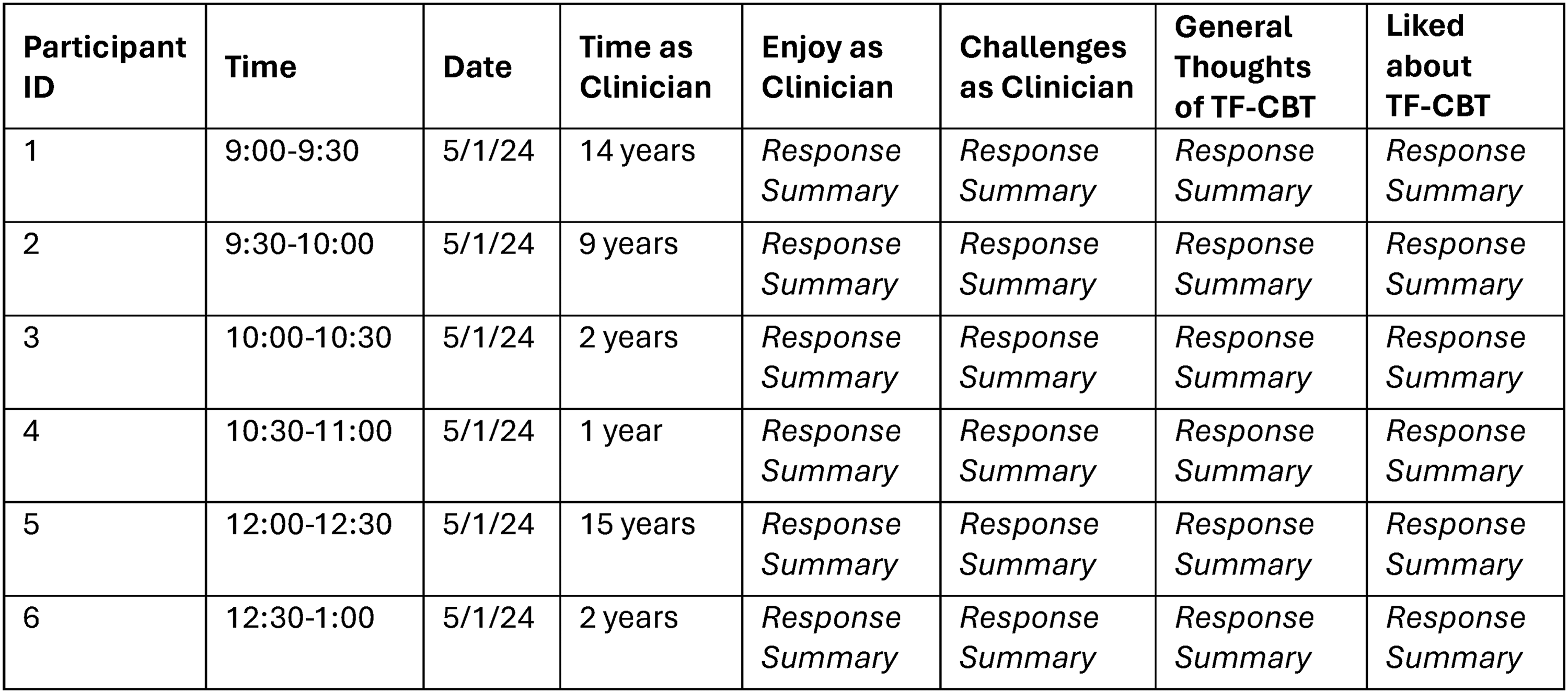
Illustrative extract of the rapid qualitative analysis summary template.
Following the matrix creation, an iterative process was used to identify key themes across all participants. Example quotes were identified from the recordings, and key themes were pulled and classified according to the CFIR domains and constructs defined within the codebook. Key themes were revisited and refined following team meetings as new insights emerged, and a document was created listing all emergent themes and quotes.
Thematic Analysis
Thematic analysis was conducted following rapid qualitative analysis according to Boyatzis’ Framework (Boyatzis, 1998) for thematic analysis. Two members of the analytic team reviewed and cleaned the Zoom-generated transcripts using the interview recordings to ensure transcript accuracy and verbatim representation prior to coding in NVivo. These interviews were then copied into NVivo qualitative software. Codes and subcodes were based on the CFIR domains and constructs according to the codebook. An initial team meeting was held to train on NVivo software and demonstrate the coding process. To validate the coding process, all codes were then tested by two members of the analytic team, where the same five transcripts were independently coded and compared, and discrepancies were resolved by consensus over a series of meetings. Each coded passage was reviewed and discussed, and when necessary, the codebook was revised, and additional details or modifications were added. Percent agreement was calculated at 78% between the two coders, taking the number of words coded in agreement divided by the total number of words coded within a given interview (Feng, 2015). The remaining transcripts were then divided between two members of the team and coded with team members working closely to resolve any issues. All codes were then collated to identify significant broader patterns of meaning; themes were derived, counted, and reviewed, and example quotes were pulled to define each theme according to the CFIR framework. The themes were then aggregated, compiling the data and quotes into a Word document.
Results
Comparison of Time
Table 1 outlines the time spent completing each rapid qualitative analysis and thematic analysis activity divided across four stages: (1) preparation, (2) transcription or note-taking, (3) coding or matrix creation, and (4) report writing.
Outline of Rapid Qualitative Analysis and Thematic Analysis Estimated Time Spent per Activity.
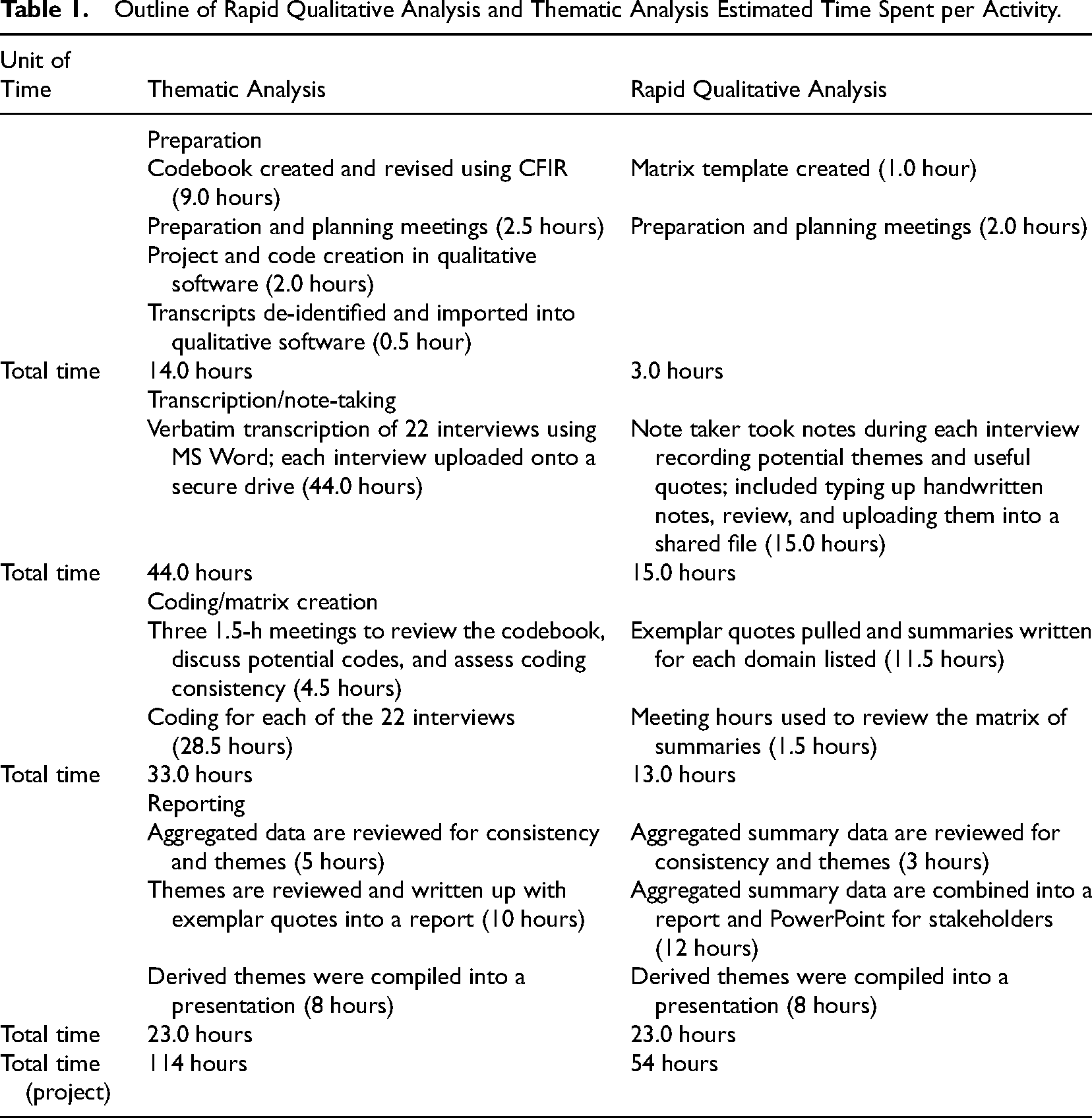
For rapid qualitative analysis, time spent in the preparation stage was 3 hours for matrix template creation and preparation meetings. Time spent note-taking included 15 hours, in which 1 researcher took notes for each 30-min interview and spent a few minutes after each interview summarizing potential themes, pulling quotes, and uploading the notes onto a secure drive. Time spent on matrix creation was 13 hours, which included summarizing each participant's answer, pulling exemplar quotes, and meeting time for discussion and consensus. The same number of hours (23 hours) was spent on report writing across rapid qualitative analysis and thematic analysis, where aggregated summaries were reviewed for themes, summarized, and compiled into reports and presentations.
For thematic analysis, time spent in the preparation stage was 14 hours, the majority of which was spent on codebook creation, preparation meetings, and establishing the project in qualitative software. Time spent transcribing was 44 hours as interviews were transcribed verbatim at about 2 hours per interview, and each interview was uploaded onto a secure drive. Time spent coding was 33 hours, which included meetings and coding 22 interviews, each of which was completed in about 1.3 hours per interview. Time spent reporting was 23 hours, including aggregating data, reviewing themes, and compiling the data into a presentation. The total time spent completing the thematic analysis was 114 hours.
Figure 2 illustrates the time taken at each stage of the analyses. As demonstrated by these results, rapid qualitative analysis was 2.1 times quicker than thematic analysis. The rapid qualitative analysis preparation, note-taking, and matrix stages took around a third of the time when compared with thematic analysis (31 versus 91 hours, respectively). A large portion of the time saved was due to direct coding from audio recordings (rapid qualitative analysis) when compared with verbatim transcription (thematic analysis). Within the rapid qualitative analysis, reporting took the largest amount of time consisting of aggregating summarized data, reviewing for theme consistency across researchers, and compiling the derived themes into reports and presentations for stakeholders. Within the thematic analysis, the transcription process took the largest amount of time consisting of verbatim transcription and uploading each transcription onto a secure drive. The same amount of time was spent on report writing.
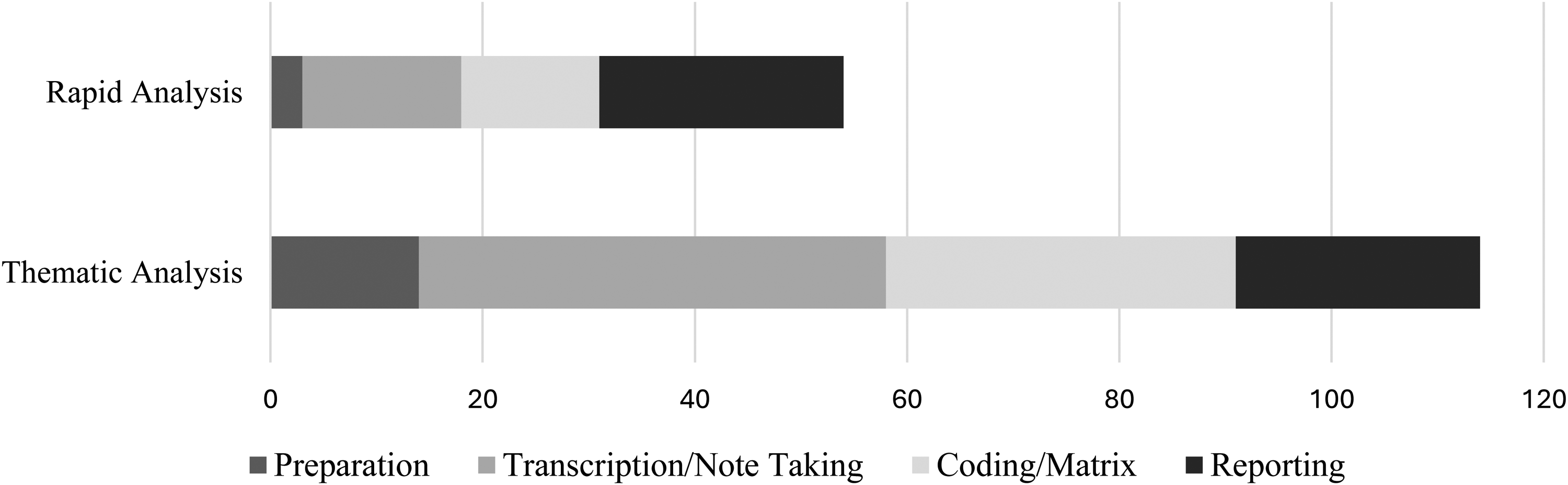
Time comparison of rapid qualitative analysis and thematic analysis activities in hours.
Comparison of Themes
Themes were derived using rapid qualitative analysis and thematic analysis following the evaluation of each school-based clinician's TF-CBT training experiences and the implementation of TF-CBT with students in their schools. Using the CFIR as an overarching framework, themes were broadly characterized into barriers and facilitators of experiences with TF-CBT training and implementation. Following both analyses, theme overlap was calculated, in which 18 out of 21 themes were identified using both rapid qualitative analysis and thematic analysis, resulting in a thematic overlap of 85.7%.
Rapid qualitative analysis theme identification by CFIR domain
Themes Identified Using Thematic Analysis and Rapid Qualitative Analysis.
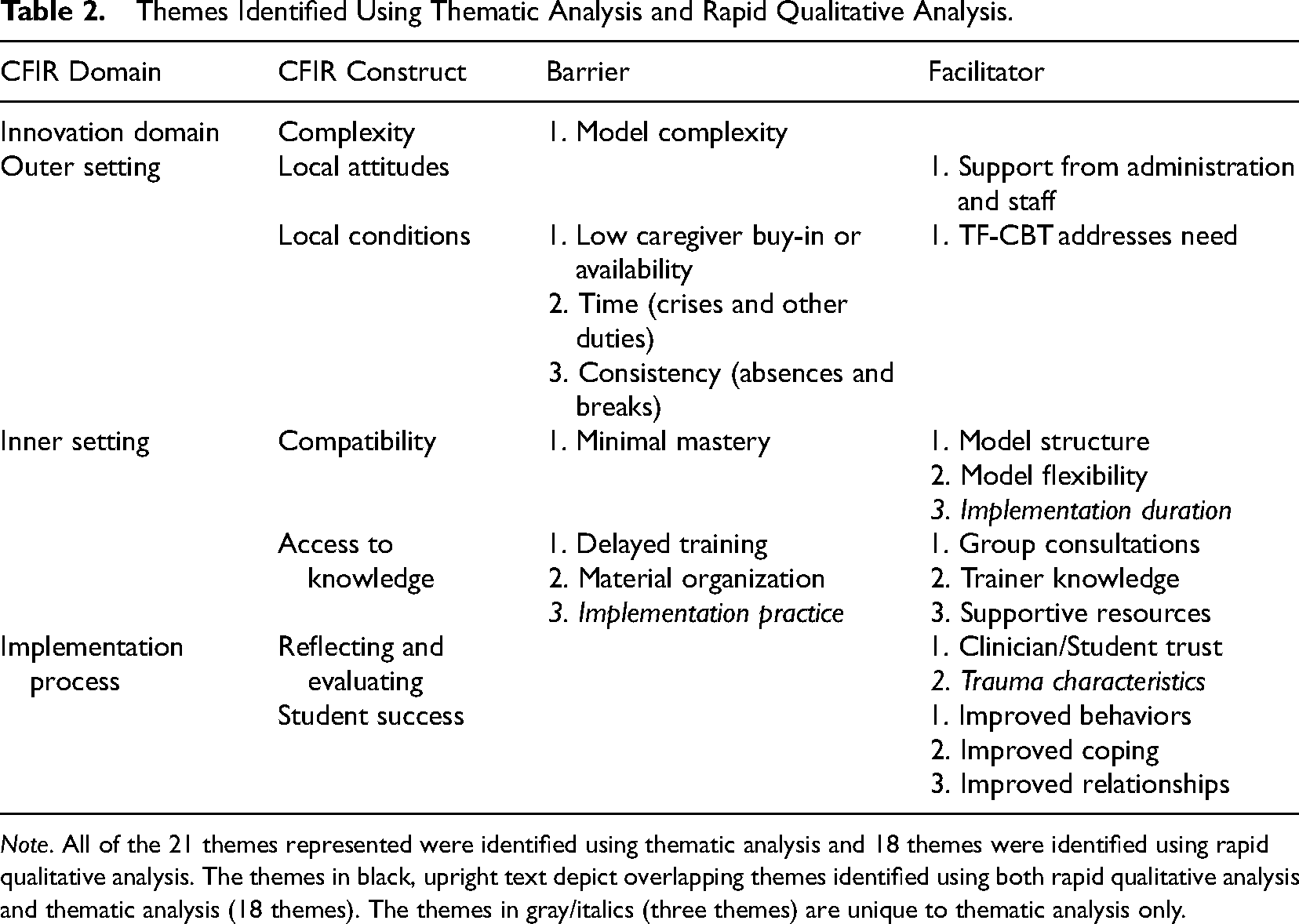
Note. All of the 21 themes represented were identified using thematic analysis and 18 themes were identified using rapid qualitative analysis. The themes in black, upright text depict overlapping themes identified using both rapid qualitative analysis and thematic analysis (18 themes). The themes in gray/italics (three themes) are unique to thematic analysis only.
The second CFIR construct within the “Inner Setting” was “Access to Knowledge,” which included barriers and facilitators related to TF-CBT training. The first barrier included a delayed start to training, whereby an unforeseen emergency delayed TF-CBT training until later in the summer, leaving less time for practice prior to school start-up. Clinicians also felt inundated and sought for ways to organize all the resources recommended throughout their training, suggesting that, “when you’re actually in the midst of [TF-CBT student sessions], you don't always remember those tools to use.” Further, clinicians identified facilitators related to “Access to Knowledge,” namely that the majority of resources were incredibly useful for student and parent sessions, their TF-CBT trainer was knowledgeable and laid out the TF-CBT model and its function with skill, and the monthly group consultation calls between their clinician peers and instructor “were the best because you really get a chance to ask, you know, to ask questions, to see the model in progress. And that helped us tremendously to just be able to come together as a group to support each other, to ask questions.”
Thematic analysis theme identification by CFIR domain
Thematic analysis theme identification included the same 18 themes identified in rapid qualitative analysis, along with three additional themes in italics (see Table 2). The three themes unique to thematic analysis spanned the CFIR domains of “Inner Setting” and “Implementation Process.”
Discussion
This study provides a methodological comparison between rapid qualitative analysis and thematic analysis using the CFIR framework to guide an evaluation of TF-CBT among school-based mental health clinicians. Our goals were to describe the time efficiency of rapid qualitative analysis and explore the potential thematic overlap between the two qualitative methods. Our findings support the utility of rapid qualitative analysis in school-based mental health intervention evaluation given the pressing need for the actionable and timely dissemination of evidence-based practices. Following both analyses, rapid qualitative analysis was 2.1 times quicker than thematic analysis (54 vs. 114 hours, respectively), and there was a thematic overlap of 85.7%, where 18 out of 21 themes were identified using rapid qualitative analysis. Utilizing the CFIR framework, themes were identified using four out of the five CFIR domains, including the innovation domain, inner setting, outer setting, and implementation process domain, for both qualitative methods.
Given our comparative methodological processes, our team was able to determine the relative advantages of utilizing rapid qualitative analysis within school-based intervention evaluation. The primary advantage included a decreased turnaround time for real-time insights and dissemination of actionable results to stakeholders, including school administrators and TF-CBT trainers, allowing us to improve intervention effectiveness for future iterations of school-based mental health clinicians and address time-sensitive student and clinician concerns about the intervention. This aspect of utilizing rapid qualitative methodology has been previously supported within the literature, with other studies suggesting rapid qualitative methods can be anywhere from 1.3 (Taylor et al., 2018) to 1.7 (Nevedal et al., 2021) times quicker depending on the scope of the data and the qualitative processes used. Our study found that the decreased turnaround time for rapid analysis was due in part to directly coding from audio recordings, bypassing lengthy transcription and coding procedures.
The comparative process also supported reliable and rigorous summaries where most themes were replicated across rapid and thematic analyses. 18 out of the 21 themes identified were confirmed across both methods, allowing confidence in the dependability and credibility of the rapid qualitative methods used. It should be noted that while rapid qualitative analysis can support a quicker turnaround, the in-depth nature of thematic analysis facilitated the identification of three additional themes. We found that working from transcripts (thematic analysis) rather than summaries created from recordings allowed us to identify minor themes in a way that our rapid qualitative analysis framework did not. Researchers should weigh these relative advantages and disadvantages according to their research goals. In line with a previous comparative study, our findings further suggest that lower training efforts were needed to employ rapid qualitative analysis (Gale et al., 2019). Within the thematic analysis portion of our study, multiple training sessions were held to increase the skills needed for verbatim transcription, NVivo familiarity, and coding, requiring a substantial up-front investment in time. Less rigorous training was required for the rapid qualitative analysis as this process mainly relied on Excel and spreadsheets, facilitating its use among those with less experience in more traditional long-form qualitative methodologies. Overall, rapid qualitative analysis offered a rich contextual understanding of the results, amplifying the voices of the participating school-based mental health clinicians and their students to inform tailored intervention design.
Limitations
Our findings should be considered in light of the study's limitations. First, while CFIR offered a guided and adaptable approach allowing for a more comprehensive exploration into the potential determinants that inductive analysis may overlook (Nevedal et al., 2021), special training and familiarity with the framework were needed to fully apply the model given its many domains and constructs. It is likely that each research team will need to evaluate the effectiveness of CFIR and its application to their research goals. Within the confines of our evaluation, CFIR facilitated flexible adaptation, which can be applied to multiple interventions across schools and school-based mental health interventions.
Concurrent interviewing also posed a potential limitation in that we did not assess for saturation during the interview process. However, saturation was reached within the coding process. Likewise, qualitative researchers differ in their perspectives regarding the role of statistical indicators of intercoder agreement versus collaborative consensus approaches in qualitative analysis. In the current study, coding consistency was supported through collaborative review, consensus discussions, and percent agreement calculations between coders, approaches that have been used in applied qualitative and evaluation research (Coleman et al., 2024; Hemmler et al., 2022). Moreover, it is important to note that it was not always feasible to report the exact time spent per activity across multiple team members. While we are confident in the estimates reported, future research attempting similar analyses should find reliable ways to report these figures such as daily time charts. Due to limitations in time and staff qualitative expertise, the same team members were used across comparative analyses, potentially introducing bias. While using the same team members ensured familiarity with the data and allowed for a closely replicated procedure across data sets, it is suggested that future comparative analyses employ different team members to explore each qualitative method separately. Finally, one team member was newly trained in rapid qualitative analysis and thematic analysis qualitative coding which may have biased the time estimates. While this team member was paired with an advanced qualitative researcher, future efforts may seek to evaluate methodological comparisons using team members of similar expertise.
Conclusion
Rapid qualitative analysis should be considered alongside each study's priorities, balancing such conditions as team expertise in qualitative methodologies, the time frame for dissemination, and resources available, such as funding for transcription or similar costs. When taking these factors into consideration, our comparative findings suggest that rapid qualitative analysis is a viable approach to qualitative data collection and analysis in educational research. The combined approach of mapping CFIR constructs onto rapid qualitative analysis results provided a structured yet adaptable foundation to inform future implementation and ensure a less resource-intensive and quicker turnaround of evaluation data to stakeholders, facilitating timely decision-making and program adjustments. Given the ongoing pressures and time demands necessary for accurate and rigorous findings, rapid qualitative analysis provides a potential solution, allowing for the rich and contextual thematic analysis (Holdsworth et al., 2020) needed for real-time feedback on an accelerated timeline.
Footnotes
Declaration of Conflicting Interests
The authors declared no potential conflicts of interest with respect to the research, authorship, and/or publication of this article.
Funding
The authors received no financial support for the research, authorship, and/or publication of this article.
IRB Approval
The Institutional Review Board at Rutgers University approved our interviews (approval: Pro2024000122) on March 1, 2024. Respondents gave verbal consent for review prior to the interviews and received copies of the consent forms.
Informed Consent Statements
Informed consent was obtained verbally before participation. The consent was audio-recorded in the presence of an independent witness prior to interview participation. All participants received consent forms.
