






Abstract
Evaluator education is an important site for paradigm development, reproduction, and socialization of evaluators. Despite its importance for shaping the future of the evaluation field, research on university-based evaluator education in Africa remains underexplored. Using a mixed-methods design that draws on document analysis and 14 expert interviews with program leaders across Africa, this paper examines the integration of the Made in Africa Evaluation principles into evaluator education programs at African universities. The study makes a meaningful empirical contribution to ongoing conversations in evaluation related to decolonization, epistemic justice, and the preparation of future evaluators. The findings indicate that evaluator education in Africa is characterized by a continuum of indigenization, with Western-dominated curricula coexisting alongside hybrid, relational, and emerging Indigenous approaches. The study offers key insight into how evaluation paradigms are negotiated within higher education systems influenced by donor expectations, global knowledge hierarchies, and institutional constraints.
Keywords
Introduction
… the necessity for decolonization was brought upon us in the first place by the historical superimposition of foreign categories of thought on African thought systems through colonialism. (Wiredu, 1997)
The Sustainable Development Goal 4 beckons all countries to “ensure inclusive and equitable quality education and promote lifelong learning opportunities for all” (Chidozie et al., 2025; Erin & Bamigboye, 2022). At the core of this goal are relevance, quality, and contextual appropriateness of education systems, including professional and higher education. Over the last four decades, African countries have invested in building evaluation capacity through universities, professional programs, and development partner initiatives in response to the growth in demand for evaluation (Fraser & Morkel, 2020; Morkel & Mangwiro, 2019). However, evaluation in Africa remains mainly shaped by epistemologies, curricula, and professional norms developed outside of the continent (Morkel & Sibanda, 2022; Ndhlovu et al., 2019; Porter & Goldman, 2013). For instance, a 2019 systematic review of 338 evaluation reports (2005–2015) extracted from the African Evaluation Database found that 75% of evaluations were conducted in Africa by international institutions using Western frameworks (Ndlhovu et al., 2019, p. 130). Recent studies also highlight the limitations of Western frameworks, prompting the search for new approaches that incorporate African values, cultures, history, philosophies, governance, and knowledge systems (Asante & Archibald, 2023; Chilisa, 2024a; Jordan & Hall, 2023; Ouédraogo et al., 2025).
The increasing calls to decolonize evaluation practice in Africa raise important questions about how evaluation knowledge is taught and transmitted through formal education systems. While the Made in Africa Evaluation initiative has generated significant scholarly debate and advocacy for decolonizing evaluation knowledge production, relatively little attention has been paid to how these principles are reflected in university-based evaluator education programs (EEPs) that prepare future evaluators in Africa (Abraham et al., 2022; Chilisa, 2015).
This paper examines the challenges and opportunities for decolonizing evaluator education in Africa and explores pathways for integrating the Made in Africa Evaluation into higher education curricula. This study is part of the author's examination of the state of evaluation as a discipline in Africa to strengthen and substantiate, with systematic evidence from public and private institutions across Africa, what we know through anecdotal evidence and minimal data (Keney, 2025). This research's contribution lies in moving beyond the conceptual debates on decolonization to examine how these issues manifest within EEPs and their implications for the quality and relevance of evaluation practice in Africa.
The study answers the central question: How are the Made in Africa Evaluation principles integrated and negotiated within EEP curricula in African universities? This study specifically focuses on the integration of Made in Africa Evaluation (MAE) principles within African EEP curricula, including pedagogical orientations, epistemological positioning, and curriculum content. The following section examines the evolution of African-centered evaluation principles, curriculum transformation, and the current landscape of evaluator education in Africa.
Literature Review
Decolonization, Indigenization, and MAE Approaches
The central idea of MAE is to restructure power relations in the construction of evaluation knowledge to develop a uniquely African approach to evaluation practice on the continent. To grasp the concept of MAE, it is important to distinguish two frequently mixed-up ideas in the literature: decolonization and indigenization. Decolonization scholars have often criticized development theory and practice for being primarily shaped by Western scholarship and practices (Dighe, 2023; Khumalo, 2022). Thus, decolonization involves identifying and removing the dominance of Western structures, mindsets, and power imbalances that often misinterpret local realities and marginalize indigenous frameworks (Asante & Archibald, 2023; Sibanda et al., 2023). The first form of decolonization involves the attainment of political independence by former African colonies from their European masters and the adoption of new constitutions and national symbols as sovereign nation-states. The second meaning of decolonization in Africa, as relevant to this paper, involves dismantling various forms of unjust colonial practices, legacies, influences, and institutions across Africa's economic, social, political, and cultural spheres. Chilisa (2015) argued that decolonizing evaluation in Africa involves resisting unfair power relations in the knowledge construction and production process and a broad-based, systems approach: A decolonized MAE approach is thus African people-centered, values culturally relevant and indigenised evaluation processes and methodologies … and articulates African resistance to blind borrowing of Western values and standards to evaluate programs in Africa … The decolonisation process can include the setting up of evaluation review boards, evaluation policies and evaluation ethics that valorise African values and the use of African local languages to recover, revitalise and validate indigenous knowledge and cultures that communicate African lived experiences and realities. (p. 14)
While decolonization asks, “What needs to go?” and indigenization asks, “What must we grow?” they both aim to restore African agency by dismantling Western intellectual dominance and enhancing the cultural validity of evaluation. In the next section, we discuss the evolution of the Made in Africa Evaluation, Africa's project to decolonize and indigenize evaluation practice across the continent.
Evolution of the Made in Africa Evaluation
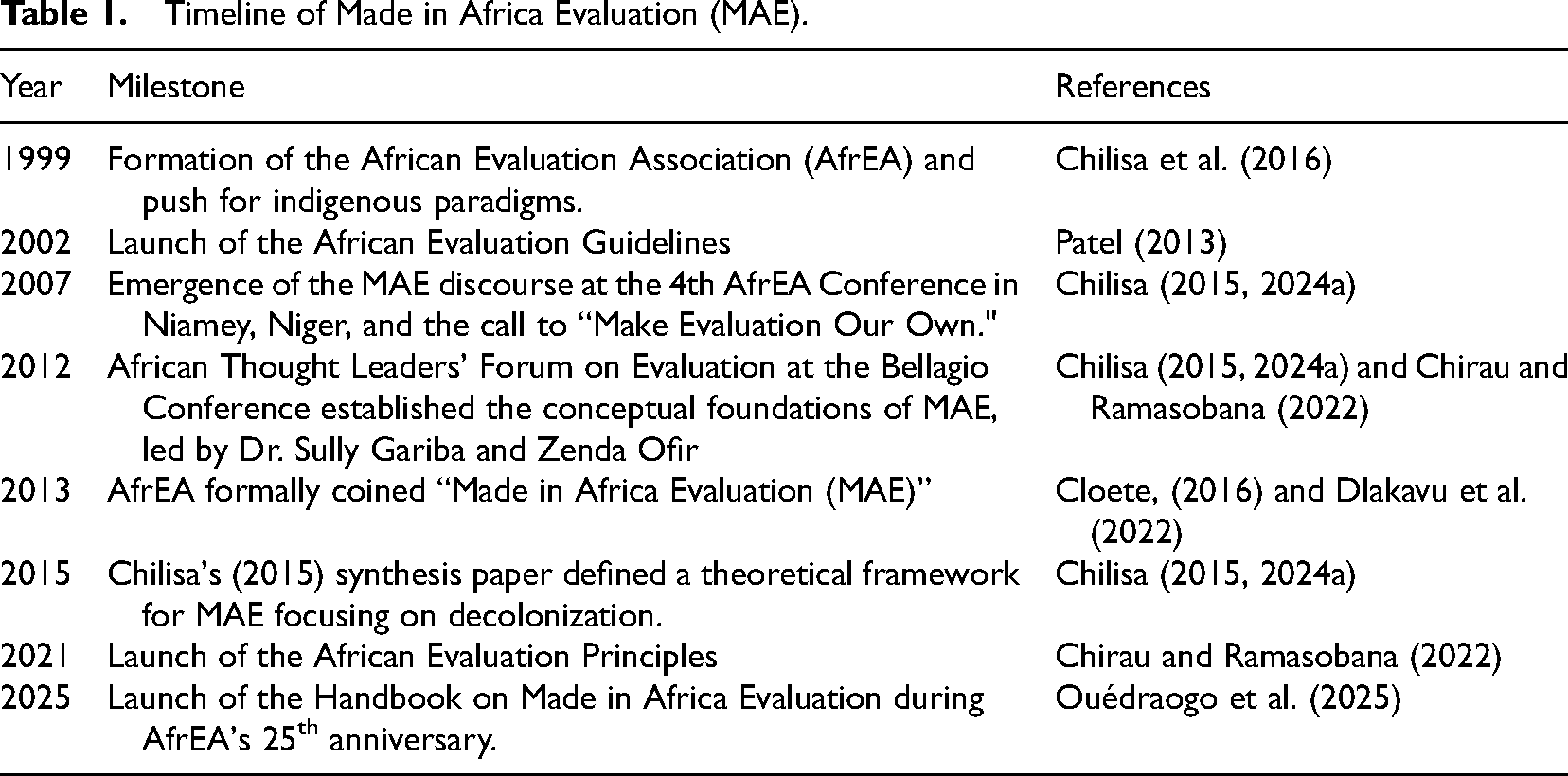
To understand the intellectual foundations of Made in Africa Evaluation, we examine the African Evaluation Association’s (AfrEA's) efforts to develop African-centered evaluation principles and practices across the continent. Since its formation in 1999, the AfrEA has been advancing African-centered evaluation principles and promoting evaluation capacity across the continent (Abrahams, 2023; Ouédraogo et al., 2025). Table 1 summarizes significant initiatives implemented by AfrEA toward achieving this goal, particularly, the African Evaluation Guidelines (AEGs), the African Evaluation Principles (AEPs), and Made in Africa Evaluation (MAE).
Timeline of Made in Africa Evaluation (MAE).
Late 1990s–Early 2000s: Origins and AEGs
While the Made in Africa Evaluation gained prominence in the mid-2000s, the foundations of MAE can be traced to the earlier institutional and normative developments within the African evaluation community following the establishment of the AfrEA in 1999 (Table 1). Since its formation, AfrEA has played a critical role in fostering a collective identity and advancing calls for locally driven evaluation practice. The 2002 launch of the AEGs and later updates in 2004 and 2006/2007 further institutionalized these aspirations. The AEGs outline 30 standards adapted from the Program Evaluation Standards (PESs) from the Joint Committee on Standards for Educational Evaluation (Yarbrough & Joint Committee on Standards for Educational Evaluation, 2011) to assess and improve the quality of evaluations across the continent (Mapitsa & Ngwato, 2020; Patel, 2013). Though the AEGs maintained the PESs’ structural framework and are organized around four key principles (i.e., utility, feasibility, propriety, and accuracy), the AEGs reflect early aspirations to articulate principles that support culturally responsive evaluation (CRE) in Africa. They provided practical guidance on ethics, methodological choices, stakeholder engagement, and use. Although evidence of early applications of the AEGs included use as a reference tool for training, professional development, and organizational practice (Ndhlovu et al., 2019; Sibanda et al., 2023), they retained Western-centric standards. Several scholars also noted that inconsistent institutional support, prevalence of donor-driven evaluation frameworks, limited scholarship, and difficulty operationalizing the guidelines weakened adoption of the AEGs (Frehiwot, 2022; Mapitsa & Ngwato, 2020; Seehawer, 2018). Although not explicitly framed as MAE, these developments signaled early commitments to the indigenization of evaluation practice in Africa.
2001–2010s: Academic Growth and Institutionalization of MAE
Building on these early foundations, the 2007 4th AfrEA Conference in Niamey, Niger, initiated formal discourse on MAE and crystallization of earlier efforts to “Make Evaluation Our Own.” Subsequent events, particularly the 2012 Bellagio Conference, marked a transition from rhetorical positioning to conceptual consolidation of the MAE foundational principles articulated by African thought leaders, including Dr. Sulley Gariba and Zenda Ofir (Chilisa, 2024a; Chirau & Ramasobana, 2022; Ofir, 2021). In 2013, AfrEA formally coined the term “MAE” as a framework and embedded it within AfrEA's 2017–2021 strategic agenda. This phase of institutionalization transitioned MAE from a discursive movement into a shared intellectual identity and consolidated prior efforts toward epistemic pluralism.
The period between 2015 and 2020 saw academic growth and sustained institutional commitment to MAE. During this period, intellectual advocacy among African scholars to promote and adopt MAE increased (Chirau & Ramasobana, 2022; Cloete, 2016). Importantly, the 2015 synthesis paper by Professor Bagele Chilisa titled “A Synthesis Paper on the Made in Africa Evaluation Concept” and subsequent AfrEA Conferences in 2017 and 2019 further reinforced MAE as a central theme within the African evaluation community. These contributions positioned MAE as an emerging paradigm and increased African agency in defining valid knowledge and evaluative practice.
2021–Present: Operationalization and the AEPs
The development of MAE further advanced with the launch of the AEPs in 2021, which replaced the AEGs. The principles operationalized MAE's philosophical foundations into actionable guidance for evaluators toward a fully indigenized evaluation practice that reflects African priorities and worldviews across the continent (African Evaluation Association, 2021; Sibanda et al., 2023). The AEPs were anchored on five core principles (evaluation that empowers Africans; technically robust; ethically sound; and rooted in Africa yet open to the world) to address the growing demand for frameworks rooted in African knowledge systems, values, and culture rather than international standards. The principles share some common grounds with international evaluation standards, such as the American Evaluation Association's Guiding Principles (American Evaluation Association, 2018) and the United Nations Evaluation Group's norms (United Nations Evaluation Group, 2020), particularly regarding technical robustness, ethical behaviors, and high-quality evaluations. However, these international evaluation standards do not emphasize African values or indigenous epistemologies to the same extent. The AEPs offer a transformative framework toward integrating indigenous African philosophies, including Ubuntu, relational accountability, local knowledge systems, collective responsibility, and communal ethics over purely technical or individualistic metrics to ensure that evaluation truly benefits the African people (Ofir, 2021). Research on national evaluation systems in South Africa, Ghana, Uganda, and Benin supports increasing interest in approaches that align with the intent of the AEPs, including prioritizing participatory approaches, use, learning, and stakeholder engagement in ways that support local decision-making (Fish, 2022; Fraser & Morkel, 2020; Goldman et al., 2018).
Although the AEPs were developed to address critical systemic failures in how evaluations were being conducted in Africa, they faced an uphill battle in addressing epistemic injustice and power asymmetries due to inconsistent operationalization of the principles across the continent (Frehiwot, 2022; Ofir, 2021). In practice, we do not yet understand how the AEPs lead to improvements in evaluation quality, utilization, or stakeholder empowerment (Abrahams, 2023; Morkel & Sibanda, 2022; Sibanda et al., 2023). While both the AEGs and the AEPs provided important normative guidance for evaluation practice in Africa, scholars and practitioners increasingly recognize the need for a broader epistemological shift that explicitly centers African worldviews and knowledge systems. However, the problem was not the absence of such information but the systemic failure across the evaluation lifecycle and ecosystem to use both the AEGs and the AEPs (Frehiwot, 2022; Sibanda et al., 2023).
Made in Africa Principles and Philosophical Foundations
More recently, the publication of the MAE Handbook in 2025 strengthened MAE's legitimacy as a distinct epistemic resource and as a credible paradigm within global evaluation scholarship. The handbook provided theoretical clarity by consolidating previously fragmented MAE knowledge into a practical and accessible pedagogical resource and opened new directions for future scholarly inquiry and methodological innovation into MAE (Ouédraogo et al., 2025).
Unlike the AEGs and AEPs, the Made in Africa Evaluation is not codified into a fixed framework that prescribes formal ethical and professional expectations for evaluators in Africa. Rather, MAE is conceptualized as a normative and epistemic reorientation of evaluation practice in Africa. Omosa et al. (2021, p. 93) defined MAE as “evaluation conducted based on AfrEA standards, using localized methods or approaches, with the aim of aligning the evaluation to the lifestyle and needs of African people and also promoting African values.” Here, MAE aims to develop an African-rooted approach to evaluating logic, questions, methods, and standards that reflect African priorities for development and social well-being.
MAE is rooted in a broad range of indigenous African paradigms articulated through relational ontology, epistemology, and axiology. Relational ontology is expressed through the Ubuntu understanding of being (Ouédraogo et al., 2025; Tirivanhu & Blaser Mapitsa, 2019). Reality is constituted through relationships among people, their environment, and ancestors, and the spiritual realm. This ontological orientation challenges the objectivist and individualistic assumptions embedded in the dominant foreign traditions. With relational epistemology, knowledge is socially constructed, expressed, validated, and transferred through oral, symbolic, and narrative forms. Tools such as storytelling, proverbs and folktales, words, dance, song, and ritual are legitimate epistemic resources rather than supplementary elements (Chilisa, 2015; Frehiwot, 2022; Ouédraogo et al., 2025).
Axiologically, MAE emphasizes ethical commitments to humanness, reciprocity, collective responsibility, interdependence, accountability, justice, and social transformation. Evaluation is framed as a moral practice with obligations to advance dignity, well-being, and communal flourishing. A key manifestation of epistemic injustice is the marginalization of indigenous knowledge systems in conventional evaluation practice and training (Asante & Archibald, 2023; Frehiwot, 2022). MAE challenges dominant historical patterns and advances a transformative pathway to evaluation theory and practice that emphasizes African worldviews and contextually grounded practices (Frehiwot, 2022).
Made in Africa Evaluation Application and Challenges
Central to MAE is the development of contextually relevant evaluation strategies in Africa. However, the literature highlights several gaps in African evaluation that MAE aims to fill. Imported models dominate evaluation practice on the continent, resulting in limited relevance and applicability for local stakeholders (Chilisa, 2024b). Second, African epistemologies and ontologies lack international recognition and are underrepresented in evaluation theory and education, leading to dependence on imported frameworks (Frehiwot, 2022; Pophiwa & Saidi, 2022). The exclusion of African epistemologies as “legitimate” evaluation methods stems from inherent epistemic injustice in global knowledge production. Such injustice affects evaluation curricula, methods, and tools. Decolonizing evaluation practices is essential to the growth of African evaluation frameworks, helping them flourish and be recognized as essential contributors to the field. Meanwhile, decolonization and Africanization are not just about adding local tools to existing systems; they require addressing epistemic injustice, Eurocentric curriculum, recognizing how foreign funding influences agendas, and perpetuating unequal power relations.
MAE responds to these by (1) promoting the development of African-centered evaluation strategies that recognize the African cultural context, linguistic, religious, and historical diversity; (2) addressing the extractive nature of evaluation practices by ensuring communities gain meaningful benefits from these processes instead of being merely marginalized; (3) improving the accuracy and integrity of evaluation findings so that reported results reflect lived realities rather than distorted narratives; and (4) elevate and legitimize African knowledge and data-collection methods such as storytelling, folklore, music, oral traditions, and linguistics (Frehiwot, 2022; Ouédraogo et al., 2025). Scholars, including Basheka and Byamugisha (2015) and Mazigo et al. (2024) have persistently argued for the formal recognition of MAE as a valid methodology and evaluative approach. However, persistent concerns about the operationalization and application of MAE in practice.
Although MAE is not officially codified as a fixed framework, its applications are recognizable by their unique features. A MAE-informed evaluation prioritizes relational evaluation design and implementation, accountability, community ownership, and outcomes that reflect the collective well-being of the community rather than solely relying on externally defined performance indicators. In the context of evaluator education, an MAE-informed curriculum would extend beyond mere inclusion of African case studies to intentionally centering Indigenous knowledge systems and relational ways of knowledge as authoritative sources of knowledge. It would also involve training to engage with communities as knowledge holders and coevaluators rather than as subjects of evaluation. Without this distinction, MAE risks being seen as just participatory or CRE in Africa.
The increasing visibility of the MAE raised questions within the evaluation community, and scholars began to examine its relationship with other evaluation traditions that emphasize participation, cultural relevance, and social justice (Asante & Archibald, 2023; Jordan & Hall, 2023; Montrosse-Moorhead et al., 2024). Understanding these relationships is important for clarifying what distinguishes MAE from other evaluation approaches that share similar commitments to inclusion and responsiveness.
MAE and Other Participation-Oriented Evaluation Approaches
What makes a program or method distinctly MAE, as opposed to simply participatory or culturally responsive? While there are conceptual adjacencies in the literature, there are also key departures that distinguish MAE from related social justice traditions, such as participatory evaluation (PE) and CRE (Montrosse-Moorhead et al., 2024; Morkel & Sibanda, 2022). For instance, both CRE and PE emphasize the importance of incorporating and balancing diverse perspectives, stakeholder values, and democratic dialogue in the evaluation process (Alkin & Christie, 2023). Hopson (2009) describes CRE as a “theoretical, conceptual and inherently political position that includes the centrality of and attunedness to culture in the theory and practice of evaluation.” Similarly, PE responds to a critique of conventional social science theory and practice. The PE approach emphasizes democratizing knowledge production and challenging the question of whose knowledge counts by redistributing power dynamics in the evaluation process (Jordan & Hall, 2023; Morkel & Sibanda, 2022).
MAE, CRE, and PE all emphasize inclusion, context, stakeholder engagement, and responsiveness to marginalized voices (Montrosse-Moorhead et al., 2024). While PE and CRE principles are also explicitly acknowledged as relevant methodological resources in some MAE literature (Chirau & Ramasobana, 2022; Dlakavu et al., 2022), MAE departs from these approaches at the philosophical, ethical, and political levels. MAE offers a paradigmatic depth where PE and CRE often operate at the method and process levels. While PE and CRE emphasize stakeholder involvement in decision-making processes, MAE places epistemic justice at the core and explicitly situates participation within a broader African-relational paradigm that redefines how knowledge is constructed: whose knowledge is privileged or marginalized; and how African knowledge systems are validated, documented, and transmitted. Participation in the context of MAE is only meaningful when grounded in African relational ontologies and epistemologies (Montrosse-Moorhead et al., 2024; Ouédraogo et al., 2025).
Another point of departure is that while CRE foregrounds cultural context and equity, MAE extends contexts and asserts African agency and epistemological sovereignty. For instance, while CRE and PE retain Western assumptions about knowledge and value, MAE explicitly challenges political dimensions of power. MAE situates evaluation within broader histories of coloniality, including how colonial legacies shape evaluation practice and curricula, donor dominance, and knowledge hierarchies. Even when CRE and PE are used, colonial power relations can persist if African knowledge systems remain secondary to externally defined theories, methods, and frameworks (Abraham et al., 2022; Khumalo, 2022; Tirivanhu & Blaser Mapitsa, 2019).
While MAE has become increasingly recognized among Voluntary Organizations for Professional Evaluation (VOPEs), scholars, and evaluators across the continent, tensions persist that diminish MAE's effectiveness as a method and theory and further marginalize it as a viable approach that can stand on its own without the support of the Western evaluation canon. Frehiwot (2022) notes that MAE is treated as an add-on to formal evaluation practice due to unequal power relations and the dominance of Western commissioners in Africa, thus shrouding the visibility of MAE. Chilisa (2015) identified both a lack of consensus and confusion among key stakeholders regarding the purpose of MAE. Another primary reason for the marginalization of African epistemologies and ontologies is the underrepresentation of African scholars in global research and evaluation (Dlakavu et al., 2022). The growth of African scholars is further impeded by constraints on financing, access to resources, and training opportunities (Chapman et al., 2026; Frehiwot, 2022; Morkel & Ramasobana, 2017). These limitations weaken MAE's ability to be fully integrated and adopted by evaluators, academics, and the evaluation community at large. Universities play a critical role in shaping the next generation of evaluators, making EEPs an important site for examining whether African-centered evaluation principles are being institutionalized within professional training.
Evaluator Education Landscape in Africa and the Role of Universities
Higher education institutions play a crucial role in development evaluation capacity by serving as key sites for training, knowledge production, and professional socialization of evaluators (Ayoo et al., 2026; LaVelle et al., 2023; Neubauer et al., 2025). As official trainers, universities shape the competencies and epistemological orientations of future evaluators through influencing how evaluation knowledge is conceptualized, taught, and applied (Agbodjan et al., 2023; Amani et al., 2023; King & Ayoo, 2020). University-based evaluation programs represent a key pathway into the profession, although the appropriate entry point for evaluator education remains contested (LaVelle, 2011; Maikuri, 2022; Tirivanhu et al., 2018). Although interest in evaluation careers is growing, dedicated degree programs remain limited globally (Joppert, 2023; Keney, 2025; Tirivanhu et al., 2018).
Despite growing expansion in program offerings across Africa, the availability of formal evaluation training programs remains limited and unevenly distributed across the continent (Table 2). Several studies highlight both the gradual expansion of EEPs and the persistent regional imbalances in their distribution across the continent (Basheka & Byamugisha, 2015; Keney, 2025; Tirivanhu et al., 2018; Wildschut & Silubonde, 2020). For instance, though the total number of documented EEPs rose from 4 in 2010 (Mouton & Mouton, 2010) to 32 in 2023 (Joppert, 2023), the number of master's programs increased significantly relative to other training pathways. At the country and regional levels, Basheka and Byamugisha (2015) revealed regional disparities in their review of 20 EEPs across five countries in West and Southern Africa, while the Global Directory of Academic Programs in Evaluation (Global Evaluation Initiative, & Claremont Graduate University, n.d.) identified 32 university-based programs across 10 countries.
Trends in Evaluator Education Programs in Africa (2010 to 2025).
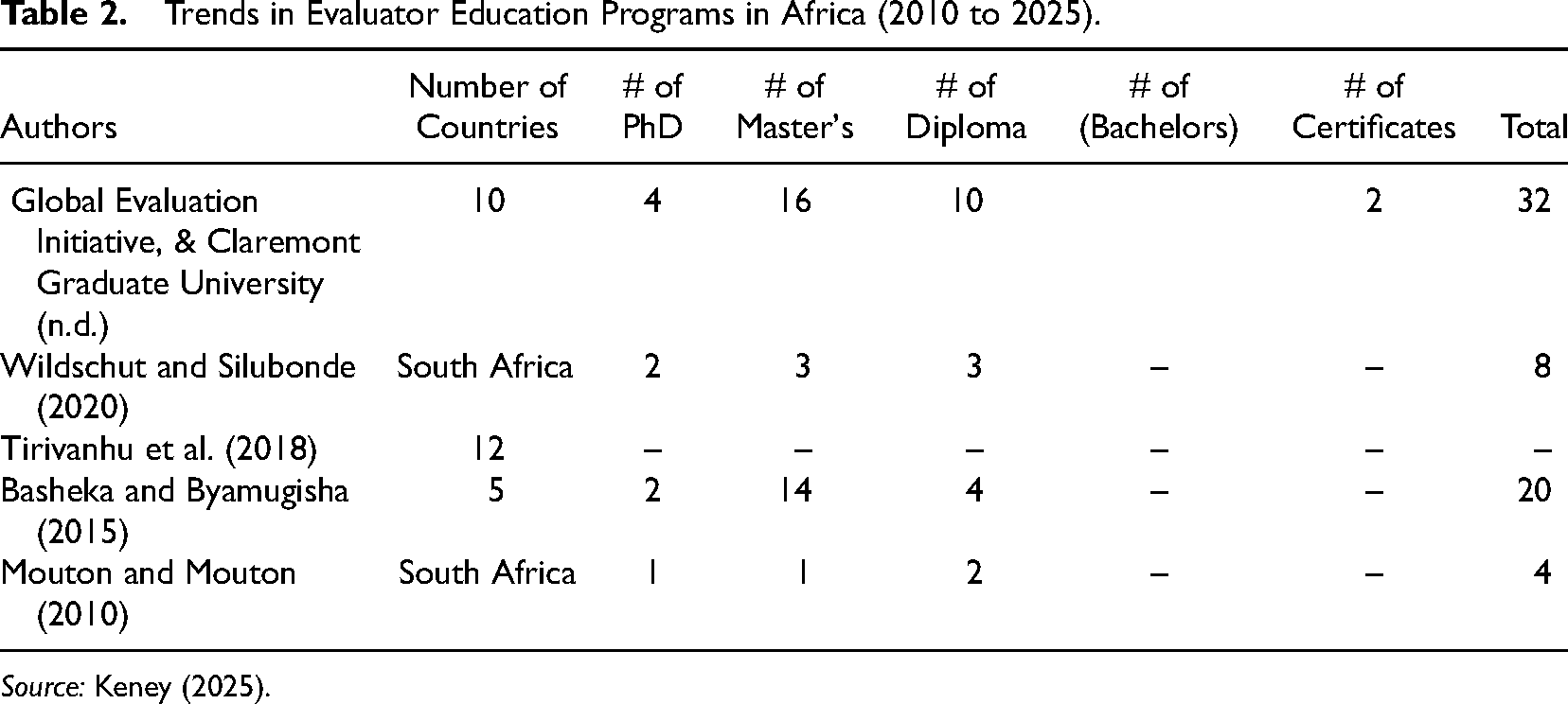
Source: Keney (2025).
However, existing research (Basheka & Byamugisha, 2015; Joppert, 2023; Mouton & Mouton, 2010; Tirivanhu et al., 2018) largely focused on the distribution and characteristics of African EEPs and insights into the philosophical foundations of MAE (Asante & Archibald, 2023; Chilisa et al., 2016; Chirau & Ramasobana, 2022; Khumalo, 2022). However, limited guidance exists on assessing content or on how evaluation educators interpret and integrate emerging paradigms, such as the MAE, into their curriculum. This has implications for how evaluators are trained and shapes the professionalization of evaluation in Africa. To systematically analyze this variation, this study draws on Chilisa's continuum of indigenization as an analytical framework (Chilisa, 2015).
Conceptual Framework
We employed Chilisa's (2015) continuum of indigenization as a conceptual framework to guide the analysis and interpretation of the findings. This framework provides an analytical lens for classifying varying degrees of epistemic authority and integration of African knowledge systems. She described four approaches along a continuum ranging from minimally indigenized to more transformative development evaluation methods. They include the least indigenized approach; adaptation evaluation; African-relational evaluation (ARE), and development evaluation approaches (Chilisa, 2015; Khumalo, 2022).
The
Supporters of
The
The
Put together, decolonizing and indigenizing evaluation knowledge production and practices promote inclusivity (Tirivanhu & Blaser Mapitsa, 2019), minimize epistemic injustice (Frehiwot, 2022), and lead to more CRE practices (Tchombe & Wirdze, 2023). It challenges and disrupts dominant Western paradigms, creating a more equitable evaluation process (Frehiwot, 2022). Scholars (Dlakavu et al., 2022; Khumalo, 2022; Seehawer, 2018) argued that incorporating African-rooted epistemologies and ontologies into evaluation enhances understanding of the cultural contexts and values of the communities being evaluated, resulting in more respectful and inclusive evaluations that reflect African realities.
Guided by the continuum of indigenization, the following section describes the research design used to examine how African university-based EEPs integrate the Made in Africa Evaluation principles within their curricula and teaching practices.
Methods
This study draws from a larger concurrent mixed-methods study (Keney, 2025) to generate both breadth and depth in understanding evaluator education in Africa. While the document review provides a systematic overview of program characteristics, the qualitative interviews offer insight into how educators interpret and operationalize evaluation curricula. The integration of these methods allows for a more comprehensive analysis of both structural patterns and lived experiences within EEPs (Keney, 2025). This paper examines the challenges, opportunities, and pathways to integrating MAE into African evaluation curricula.
Data Collection
We defined evaluator education as prolonged and structured formal training in evaluation at a higher education institution (Keney, 2025). Thus, we recruited 14 expert participants, including department chairs and faculty members from EEP-offering institutions across different regions of Africa, using purposive and convenience sampling techniques through direct email from their contact information provided on the program's website and the AfrEA listserv. This sampling technique is appropriate for exploratory and context-specific inquiry (Creswell & Clark, 2018; Ndhlovu et al., 2019). Data collection occurred from August 6, 2024, to October 24, 2024. We treated our respondents as experienced subject-matter experts who are familiar with the research context, given their direct involvement in program design, coordination, and instruction, to ensure that their perspectives reflected both administrative and pedagogical lived experiences. Furthermore, interview-based studies on evaluator education are not uncommon (Joppert, 2023; Keney, 2025; Maikuri, 2022). They foster greater participant expression and flexibility in gathering in-depth insights into the reasons and processes behind behaviors, which are often absent from survey data (Creswell & Clark, 2018).
The interview protocol consisted of three main sections: an introductory section to understand the participant's background, a second section focused on identifying the key characteristics of EEPs, and a third section on the extent to which the Made in Africa Evaluation is integrated into the current program curriculum. During the interviews, we referenced information from the program's website to cross-validate the data. The semistructured interviews lasted from 45 to 60 minutes. Interview transcripts were manually cleaned using the verbatim technique, member-checked, and de-identified for analysis. We manually coded the interview transcripts in Atlas.TI and applied an inductive analysis technique to identify specific statements that relate to themes (Creswell & Clark, 2018).
The sample size of 14 was determined based on the principle of data saturation. The sample size was sufficient to capture regional, institutional, and disciplinary diversity. The participants were from public (n = 8, 57.1%) and private (n = 6, 42.9%) universities in East, West, North, and South Africa. The majority (64.3%, n = 9) held doctoral degrees, while the remaining possessed advanced postgraduate qualifications across disciplines, including development studies, education, and program evaluation. While the sample is not representative of evaluator education offering institutions across Africa, the purpose of this study was not to generalize the findings, but rather to offer rich insight into the current state of evaluator education in Africa. Additionally, gender identity was not a criterion for participation in the study; therefore, the resulting distribution reflects only the gender of individual participants. The combination of purposive sampling, saturation-based sampling, cross-regional representation, and gender diversity enhanced the credibility and contextual relevance of the findings (Table 3).
Interview Participant Characteristics.
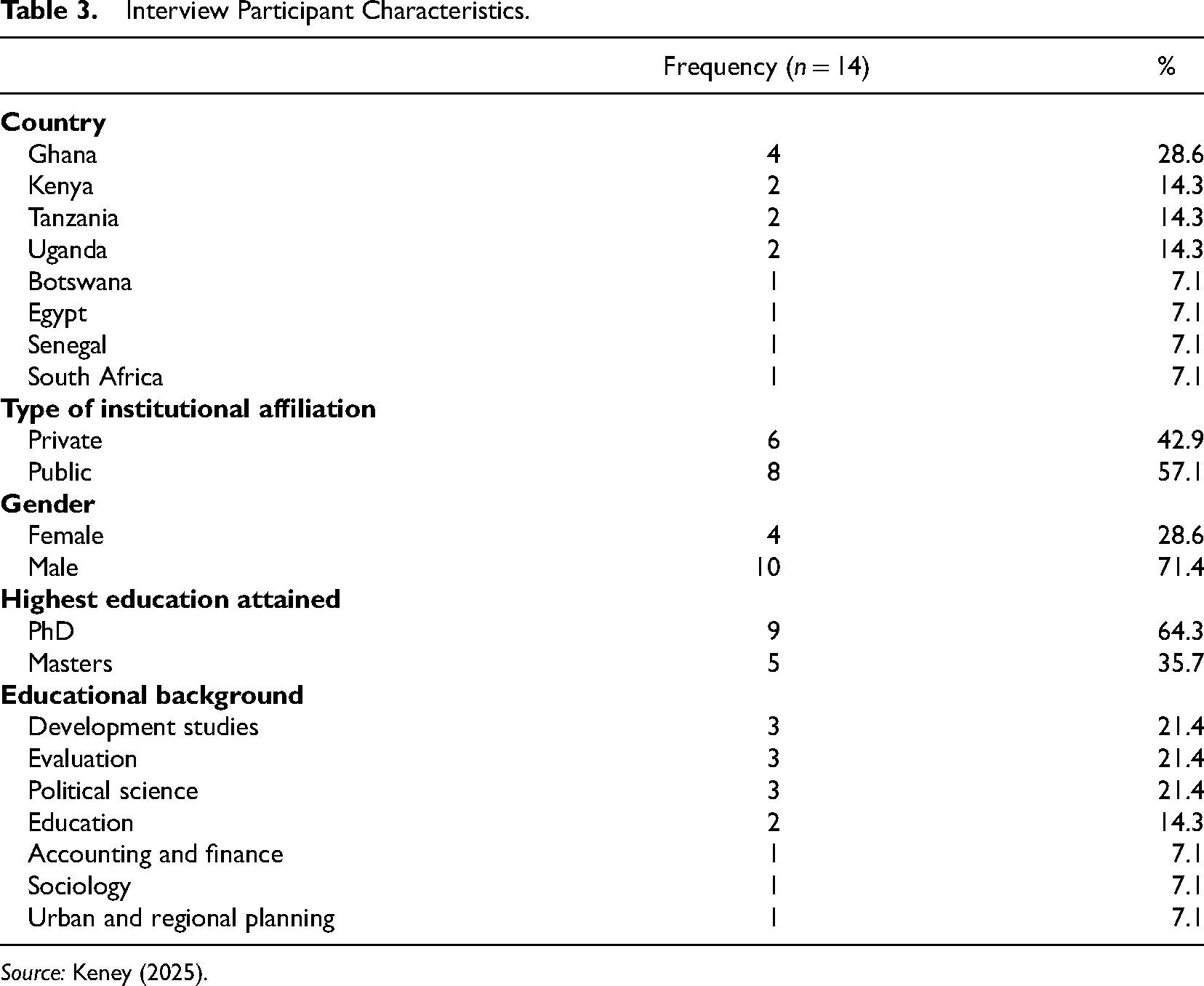
Source: Keney (2025).
Findings
The findings are organized according to Chilisa's continuum of indigenization. First, we describe the structural characteristics of African EEPs to provide context for understanding curricula choices. Next, we examine four patterns of epistemic positioning within these programs: least indigenized approaches, adaptation and contextual adjustment, ARE practices, and emerging and developing approaches grounded in African worldviews.
Characteristics of EEPs in Africa
We analyzed 110 EEPs across 66 public and private higher education institutions in 18 African countries (Keney, 2025) from publicly available data. Despite this growth, the findings (Figure 1) revealed persistent regional disparities in the distribution of evaluator education, with more than 50% of programs concentrated in East and Southern Africa (Basheka & Byamugisha, 2015; Joppert, 2023). EEPs in Africa primarily use single admission cycles (Keney, 2025, pp. 123–124) with significant variations in program size, degree type, and mode of delivery. Programs primarily focus on master's (55%, n = 60) and are embedded within broader disciplines such as education, psychology, and health. This dominance confirms earlier research that evaluator education is primarily positioned as a specialization rather than a foundational discipline to address high-need developmental demands (Tirivanhu et al., 2018).
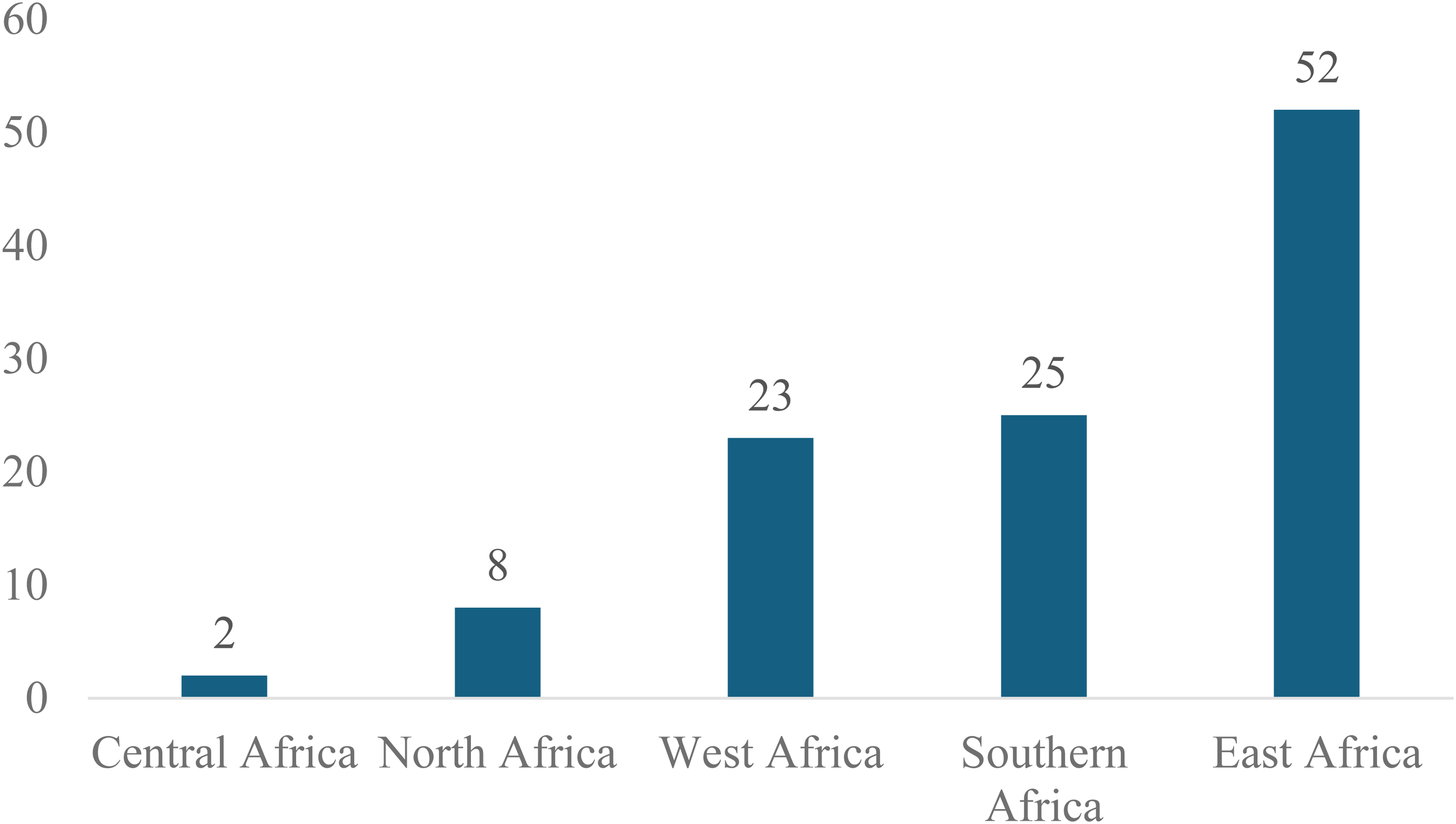
Regional distribution of EEPs in Africa.
The delivery model is primarily in-person, though institutions are increasingly adopting hybrid and online learning models to expand access and flexibility. Enrollments of typically fewer than 20 students were common in doctoral programs, compared with large intakes of 40 to 200 in master's degree programs. Programs with intakes exceeding 40 students often offer a distance education model via satellite campuses and hybrid offerings to expand participation among students seeking flexible, nonresidential study options due to professional work, family, and geographic constraints (Keney, 2025).
Least Indigenized Evaluation Education: Western Epistemic Dominance in Curriculum
The findings indicate that most EEPs remain structurally anchored in Eurocentric epistemologies. Donor requirements, Western frameworks, and resource availability primarily shape their curriculum design, pedagogical approaches, and methodological preferences. As a result, there is minimal institutional integration of Made in Africa Evaluation in the current curriculum.
Of the 14 program representatives interviewed, only four universities explicitly indicated that they incorporate the Made in Africa Evaluation into their current EEP curriculum. These respondents identified as active researchers on evaluation in Africa who also advocate for MAE in their professional practice and teaching. They incorporate their scholarly publications on the decolonization and indigenization of evaluation and research methodologies into their teaching of research methods. One program representative from a public university in Botswana explained how their knowledge of the research and evaluation landscape in Africa influenced their research and evaluation pedagogy: We have a renowned professor in our unit who strongly advocates for the Made in Africa Evaluation. She's written quite a lot on indigenizing evaluation. We realized that evaluation practices are influenced by Western methodologies and African methodologies are not given much recognition within the research and evaluation space. So, we use the articles that we produce on decolonization and indigenization in our teaching of research methodologies.
Another reason MAE is least integrated into the curriculum is resource and language dependencies. A lack of African-centered evaluation materials and English-only instruction reinforced inequities and epistemic injustice. In North Africa, a respondent from Egypt highlighted how English-language-only instructional materials perpetuate inequities and restrict access to educational opportunities for students with lower English proficiency, noting that “All resources are in English; we don't have them in Arabic or in an African-centered evaluation format.” In East Africa, a program representative in Uganda emphasized how resource scarcity reinforced Western dominance in evaluator education curricula and epistemic uncertainty about MAE, even when programs recognize the need for more contextually relevant approaches: We may mention them, but we don’t have materials on Made in Africa Evaluation yet. We use the traditional methodologies. We have incorporated community evaluators in the program, but “Made in Africa” and the “African Evaluation Principles” are not yet very clear to us.
While the significant dependence on Global North resources raises concerns about the contextual relevance and power dynamics in EEP design and implementation, the findings highlight a paradox in which several African EEPs ostensibly advocate for the decolonization and indigenization of the curriculum while simultaneously aligning it with donor frameworks and expectations. Despite this structural dominance, several programs are currently navigating a more pragmatic middle ground.
Adaptation and Hybridized Approaches to Decolonizing the EEP Curriculum
While some programs remain firmly anchored in Western epistemologies, many institutions are experimenting with pragmatic strategies to enhance the contextual relevance of their curricula without fully abandoning established evaluation traditions. These approaches involve adapting Western evaluation frameworks to African contexts while selectively incorporating African epistemologies into existing curricula rather than pursuing a complete epistemic shift. In practice, these hybridized curriculum strategies attempt to balance contextual relevance with global professional legitimacy.
In practice, this hybrid model was exemplified by a public university in Uganda, where Western frameworks were adapted to incorporate African epistemologies within a course module. According to the participants, this approach was introduced to produce graduates who are both internationally competitive and contextually grounded: We adapt Western evaluation modules to the African context by incorporating elements like the Made in Africa Evaluation, the African Evaluation Principles, and decolonization in the Monitoring and Evaluation Principles and Perspectives (PRINC) module. We borrow much of our knowledge from advanced countries and tailor it to solve our problems. In the curriculum development process, we incorporated our local context to ensure we own the solution we provide to address a particular problem.
Participants also highlighted the importance of strengthening local scholarship alongside government commitment and enabling legal and policy frameworks to legitimize African epistemologies within evaluation education. The conditions support the development of innovative teaching and learning materials, case studies, and frameworks rooted in African sociocultural, political, and historical contexts. As one faculty member at a private university in Kenya emphasized: The government must buy into the decolonization of evaluations within Africa. We must have policies that embrace and advocate sustainable development in a decolonized manner. We must have lawyers who are ready to unpack our constitutions within Africa to anchor evaluations using African epistemology. We can’t simply undo the systems that currently exist. We can indigenize the conventional ones to make them fit for purpose in the African context whilst remaining innovative. The future is indigenizing the conventional ones.
However, while curriculum relevance is negotiated through pragmatic localization, epistemic authority remains largely retained in Western models and practices rather than fostering epistemic transformation. In many programs, the Made in Africa Evaluation and related African knowledge systems continue to occupy a peripheral position, with African contexts often treated as sites of application rather than sources of evaluative knowledge. As a result, hybridization represents an intermediate stage of transformation rather than a fully indigenized evaluation curriculum.
The next section describes emerging efforts to move beyond adaptation toward deeper integration of African relational philosophies and community-centered evaluation practices within evaluator education curricula.
African Relational Evaluation Practices
The findings reveal a growing trend toward ARE practices. These are expressed through community-centered pedagogies and participatory approaches that emphasize relationships, local meanings, and collective sensemaking, even when “Made in Africa Evaluation” is not explicitly mentioned. Even when MAE was not explicitly named in the curriculum, we observed an emerging community-centered evaluation philosophy where evaluation is shaped by the people and communities it serves. Respondents underscored the importance of involving local communities in the evaluation process, including the development of tools, data collection, and interpretation of findings. This approach not only enhances the relevance of evaluation but also ensures that outcomes are responsive and reflective of the needs and aspirations of local populations. A respondent from Ghana stated, “The evaluation should start with the people. We are moving away from an evaluator-centered approach toward a more community- and people-centered approach. The people should be part of developing these [tools], collecting data, and analyzing this data.”
Central to the shift toward integrative, community-centered approaches is the growing emphasis on embedding participatory models within curricula. In Ghana, specific courses on participatory monitoring and evaluation provide students with practical opportunities to work directly with district assemblies and local communities to participate in the evaluation process: There's a course in the program called participatory monitoring and evaluation, where students learn how to involve stakeholders in the evaluation process, understand their cultural backgrounds, and integrate their issues into the evaluation. They collaborate with the district assemblies to talk with people in the communities to ask their views about programs.
Development Evaluation Grounded in African Worldviews
The findings indicate emerging aspirations for development evaluation, characterized by calls for African-owned methodologies, the legitimization of Indigenous knowledge systems, and an understanding of evaluation as a tool for justice and transformative development. Interviewees explicitly emphasized the need to incorporate Indigenous knowledge systems and practices into EEP curricula and practice, to decolonize evaluation practices and create a more CRE landscape in Africa, as noted by a respondent from Ghana: As Indigenous African people, we need to develop our own frameworks, methods, and tools to ensure that evaluation responds to the needs of people on the ground. That is what is missing in the program, because what is currently taught are methodologies, tools, and frameworks developed in the West. So, what is missing are methodologies, frameworks, and tools developed on this side of the world [Africa].
Respondents stressed a holistic, technically sound, and culturally sensitive evaluation approach to empower marginalized groups, ensure justice, and promote “good development.” They called for transformative leaders and evaluators who are responsive and understand African cultural, socioeconomic, and political realities for decolonization and indigenization to succeed. This ensures that evaluations are aligned with African problem-solving approaches, and that students learn not only global methodologies but also local, culturally relevant ways of knowing and doing. A coordinator at a private university in Senegal stated, “We need leaders who are very sensitive to the African issue and the African way to resolve issues and to be inclusive, leaders who are committed to improving people's lives.” These perspectives reflect a growing aspiration among evaluation educators to advance African-rooted evaluation approaches.
Discussions and Implications
While prior research has highlighted the need to decolonize evaluation and promote African-centered approaches, this shows that evaluator education in Africa operates within a constrained epistemic landscape where Western frameworks remain dominant while efforts to integrate African-centered approaches are negotiated through hybrid and relational practices. Rather than reflecting a linear transition toward decolonization, the findings reveal a continuum of indigenization shaped by competing epistemologies, institutional inertia, and external funding pressures. The findings provide evidence of early forms of MAE operationalization within evaluation curricula, even when MAE is not explicitly named.
Another key contribution of this study is the identification of a continuum of indigenization within EEPs. Rather than a binary distinction between Western and African approaches, programs occupy varying positions along a spectrum ranging from Western-dominated curricula to emerging Indigenous and rational practices. Within this continuum, hybridization emerged as the dominant strategy through which institutions negotiate and balance contextual relevance with global professional legitimacy. This finding offers a more nuanced understanding of how evaluation paradigms evolve in practice, particularly in contexts shaped by asymmetrical power relations.
The findings extend evaluation scholarship by demonstrating how epistemological dominance is reproduced through evaluator education. This has implications for evaluation training and practice. This study revealed that the Made in Africa Evaluation principles have not yet been incorporated into the majority of African evaluator evaluation curricula due to resource constraints, limited faculty expertise in African methodologies, the prevalence of donor influences, and a lack of clarity about MAE (Chirau & Ramasobana, 2022). When curricula are anchored in externally driven frameworks, they socialize students into dominant technical competencies and epistemological orientations. If evaluator education continues to prioritize externally driven methodologies without sufficient local contexts, future evaluators may be well-equipped to meet donor requirements but less prepared to design evaluations that are meaningful and useful within local contexts. This disconnect risks producing evaluations that fail to capture culturally relevant outcomes, limit stakeholder engagement, and utilization of findings in local decision-making processes (Dighe, 2023; Jordan & Hall, 2023; Seehawer, 2018). This is where incorporating relational and Indigenous approaches introduces alternative epistemologies that reframe evaluation as a culturally grounded and community-centered practice.
The findings also revealed that where MAE has been successful in higher education curricula, it is largely driven by a few faculty members who actively research and advocate for decolonial and Indigenous evaluation approaches. This bottom-up curriculum evolution suggests that institutional change is occurring organically and can be sustained and scaled if faculty are empowered and supported in their research and practice. Consequently, supporting and investing in faculty development and research in these areas will be key to embedding MAE principles more systematically across African higher education institutions. Curriculum reforms must therefore be aligned with faculty development priorities to produce graduates who can champion Made in Africa evaluation approaches and foster culturally relevant and contextually appropriate methodological innovations (Chilisa, 2015, 2024a; Cloete, 2016).
This study also showed that paradigm stability is sustained through a transformative mindset in formal training systems that shape how evaluators define evidence, select methods, and interpret results. MAE remains a developing initiative that has struggled to translate rhetoric into actual educational practice and remains on the margins of university-based EEPs across Africa. The issue is not about merely questioning the novelty of MAE; rather, it signals exposure gaps, institutional inertia, and inconsistent integration into African evaluation curricula. It is also not that there are not enough African scholars; rather, the need is for African scholars who can escape the Western mindset. These findings suggest that efforts to transform evaluation practice must engage not only with methodological innovation but also with the institutional structures that govern knowledge transmission.
To understand these dynamics, one must examine the political economy of evaluation. A significant proportion of evaluations conducted in Africa is funded by external partners who require adherence to frameworks and accountability metrics rooted in Western epistemologies (Jordan & Hall, 2023; Ndhlovu et al., 2019). These funding models provide strong incentives for universities to tailor their curricula according to externally set expectations. These dynamics reinforce broader patterns of epistemic inequity in global knowledge production, in which Indigenous knowledge systems remain underrecognized and underresourced relative to dominant frameworks. The limited integration of MAE within EEP curricula is not solely a matter of awareness or capability; rather, it reflects more profound structural constraints that define what is recognized as legitimate evaluation knowledge and practice.
Universities can play a more transformative role by integrating Indigenous epistemologies into curriculum design and expanding community-engaged learning opportunities, along with contextually grounded teaching materials. While our findings indicate strong support for participatory approaches and localized processes, these have been part of conventional and Western evaluations since the 1980s, although their success has varied across contexts. Strengthening MAE has to go beyond simply “engaging local communities” for developing tools, collecting data, and interpreting findings (Asante & Archibald, 2023; Frehiwot, 2022). Furthermore, meaningful decolonization of EEP in Africa requires developing pedagogical resources that operationalize MAE principles, investing in African scholarship, and restructuring funding relationships (Chilisa, 2024a; Dighe, 2023; Jordan & Hall, 2023). Therefore, advancing MAE within evaluator education is both a necessary pedagogical concern and a critical step toward improving the quality, relevance, and transformative potential of evaluation practice in Africa.
Ultimately, this study demonstrates that decolonization of evaluator education in Africa is not a linear or uniform process, but a negotiated transformation shaped by competing epistemologies, institutional constraints, and global power dynamics. While hybrid approaches dominate, emerging relational and Indigenous practices reflect important shifts toward more contextually grounded evaluation. These insights highlight evaluator education as a critical site for the socialization, reproduction, and transformation of evaluation paradigms, with implications that extend beyond the African context to global efforts to build more inclusive and contextually relevant evaluation systems.
Directions for Future Research
We designed this study as an exploratory inquiry to examine how the Made in Africa Evaluation principles are incorporated into EEPs across African universities. The findings, therefore, provide analytical insights into current patterns, challenges, and pathways rather than statistical generalizations. Secondly, while the sample size of 14 expert interviews reflects multiple institutional and geographical representations, it does not capture the full diversity of EEPs across the continent. Additionally, although the study included participants from multiple African countries, a relatively higher proportion of interview participants (n = 4) were based in Ghana. As a result, some findings may reflect perspectives and experiences that are more strongly shaped by the Ghanaian evaluator's education and the Anglophone West Africa context. The findings, therefore, represent a snapshot in time and should be interpreted in light of ongoing curriculum and emerging scholarship as the Made in Africa Evaluation, related African-centered approaches, and EEPs continue to evolve across the continent. Future research could strengthen the comparative understanding by incorporating a more regionally balanced sample to examine what EEPs should do differently at a larger scale; what competencies emerge from MAE-informed training, and how hybrid paradigms can be operationalized in practice.
Conclusion
This study is relevant for advancing evaluator education globally, including in Western academic and professional contexts. One of the most significant findings is the way African EEPs pursue hybrid epistemological models that integrate African and Western perspectives in a continuum of indigenization, in which Western-dominated curricula coexist with relational and emerging Indigenous approaches rather than replacing one with the other. This has broader implications. Western EEPs can learn from how African educators critically engage with Western paradigms rather than treating them as universal defaults; how they design curricula that surface issues of power, history, and positionality; and how hybrid models can be deliberately structured to help students navigate multiple paradigms. The findings invite Western evaluator educators to reconsider competency frameworks that implicitly privilege Western epistemologies and to think more intentionally about global responsiveness and epistemic plurality.
Evaluator education plays a central role in shaping how evaluation is conceptualized and practiced, whose knowledge is valued, and how findings are interpreted and used. When evaluation training programs alienate local realities and overlook culturally relevant indicators of success, they risk marginalizing Indigenous knowledge systems, reinforcing external priorities, existing power asymmetries, and preparing evaluators who are well-equipped to meet external requirements rather than supporting locally defined development goals.
Although this study focused on evaluator education in Africa, its implications extend to a broader evaluation scholarship and practice globally. Similar tensions between dominant external and Indigenous epistemologies and funding structures are evident in evaluation systems across the Global South and in Indigenous contexts worldwide. The continuum of indigenization and the promise of hybrid approaches identified in this study offer a useful analytical lens for understanding how evaluation systems negotiate challenges in diverse contexts.
An MAE-informed approach to evaluator education would require a paradigm shift in curriculum, pedagogy, and instructional practices. Advancing MAE also requires addressing structural constraints within the evaluation ecosystem. Universities alone cannot drive this transformation if funding and commissioning practices continue to privilege externally defined frameworks. Restructuring donor relationships to support methodological flexibility and local scholarship and innovation is critical to meaningful decolonization efforts. Advancing MAE is also not simply about adding new content to existing curricula; it's about rethinking how evaluation is produced, taught, and applied, and inclusive systems that recognize the value of multiple ways of knowing and supporting more meaningful engagement with the community's evaluation is intended to serve. Ultimately, the paper demonstrates that evaluator education may serve as an important site for advancing more contextually grounded and pluralistic forms of evaluation practice within structurally constrained environments.
Footnotes
Declaration of Conflicting Interests
The authors declared no potential conflicts of interest with respect to the research, authorship, and/or publication of this article.
Funding
The authors received no financial support for the research, authorship, and/or publication of this article.
