







Abstract
Coaching is necessary for the successful implementation of individualized behavior support in the classroom. However, the way in which school teams engage in coaching to facilitate the implementation of individualized behavior supports has not been well described. This large-scale exploratory survey examined current coaching practices of elementary school educators implementing individualized behavior supports. Respondents described their coaching experiences with respect to frequency, type of coaching activities, type of feedback, method of feedback, tools to support coaching implementation, perceived coaching effectiveness, and obstacles to effective coaching. Results indicate wide variability in coaching practices for those receiving coaching, in addition to a disparity between ideal coaching as described in the literature and actual coaching practices in schools.
School-wide positive behavior interventions and supports (SWPBIS) is a multitiered framework for delivering behavior supports and building positive school social culture to improve behavioral and academic outcomes for all students (Horner et al., 2014; Sugai & Horner, 2002) adopted by over 29,000 schools in the United States (McIntosh, 2021). Although evidence suggests some elementary schools reach consistent implementation of SWPBIS at the universal level relatively quickly (Nese et al., 2019), fidelity across all levels remains a challenge (Kittleman et al., 2018). Fortunately, implementation research provides guidance for addressing common access barriers, exploring ways schools might achieve better adoption of individualized supports in classrooms (Fixsen et al., 2015). Several studies show the effectiveness of coaching, specifically, for successful implementation of classroom-based practices in school settings (e.g., Reinke et al., 2013, 2014). In addition to studies that confirm coaching as essential to high implementation fidelity, recent literature also highlights the role of ongoing coaching in the sustained fidelity of implementation (Coffey & Horner, 2012; Mathews et al., 2014). It is clear that effective coaching is critical for implementing classroom-level evidence-based practices (EBP) and sustaining SWPBIS implementation at all levels.
Coaching Practices
Coaching is the “non-evaluative, ongoing process (e.g., occurring over a period of time), in which one individual observes and provides feedback to another individual targeting an intervention, supports, or other variables the individual wants to increase in the classroom” (Stormont et al., 2015, p. 70). At least three major practices contribute to coaching effectiveness: (a) planning or goal setting, (b) observation, and (c) performance feedback (Artman-Meeker et al., 2015; Kretlow & Bartholomew, 2010; Snyder et al., 2015; Stormont et al., 2015). The important role of these practices is supported by well-established models that include peer-based coaching (Joyce & Showers, 2002), practice-based coaching (Snyder et al., 2015), and behavioral skills training (Parsons et al., 2012).
Action planning and goal setting, the first of the key coaching practices, refers to creating a plan for how the coaching process will unfold (Artman-Meeker et al., 2015; Snyder et al., 2015). Action planning may include initial assessment of a teacher’s needs, shared goal setting, coach provision of written or verbal instructions on how to perform the practice, modeling or role-play, or the creation of relevant materials for a teacher to reference when the coach is not present (e.g., written description of the goal, visual cues to serve as a goal reminder) (Artman-Meeker et al., 2015; Kretlow & Bartholomew, 2010; Parsons et al., 2012; Snyder et al., 2015). Planning meetings provide coaches with the opportunity to ensure educators are confident and competent performing the teaching practices targeted for coaching. Effective coaching also includes observation of the teacher’s practice based on action plan content and provides the coach an opportunity to identify strengths and barriers to successful implementation (Artman-Meeker et al., 2015; Kretlow & Bartholomew, 2010; Snyder et al., 2015; Stormont et al., 2015). Performance feedback—the most well-researched practice (Fallon et al., 2015)—is delivered during or after an observation. It typically includes supportive and suggestive guidance about implementation (Fallon et al., 2015) and allows for teacher reflection (Barton et al., 2011; Snyder et al., 2015). These three critical coaching practices form an ongoing cycle to support teachers’ implementation of EBPs.
A Research-to-Practice Gap?
There is evidence for the effectiveness of these coaching practices for individualized, classroom-based coaching within the context of formal study conditions (Stormont et al., 2015); however, it is less clear whether coaching as described by researchers mirrors the naturally occurring practices within schools, districts, and programs. Shannon and colleagues (2021) suggested that carefully controlled studies using “expert” coaches (i.e., university-based coaches) may provide inaccurate information to school leaders and administrators about the feasibility of coaching. Frequent coaching is established as an EBP (Sugai & Horner, 2006), but less is known about the required dosage (i.e., number of ongoing coaching cycles or coach–teacher interactions) or frequency (Kraft et al., 2018; Shannon et al., 2021) of coaching in actual practice. The literature reflects a positive association between feedback and teacher implementation of effective strategies (Fallon et al., 2015), but the effectiveness of various delivery methods (e.g., email, in-person, verbal, visual) is mixed (e.g., Barton et al., 2011, 2013). There is limited knowledge about which types of coaching activities (e.g., modeling, role-play, reflection, discussion) best promote teachers’ adoption of new practices or teachers’ positive perceptions of coaching activities, an important variable for influencing teacher buy-in (Stormont et al., 2015). Finally, a recent survey of Tier 1 team members indicated a lack of correspondence between their perceptions of important coaching activities and actual evidence-based coaching practices (e.g., attendance at team meetings, performance feedback; Bastable et al., 2020). In sum, how often coaching actually occurs in classrooms and the perceived value of the coaching practices that may influence subsequent teacher buy-in to the coaching process is not yet fully described.
Additional examination of coaching in practice would provide a better understanding of how coaching is implemented by school-based coaches in educational settings, and recent studies have begun to examine the application of coaching practices in schools and early childhood programs. Shannon et al. (2021) used video-based direct observations to describe the verbal behavior of coaches during feedback sessions. Pas et al. (2016) conducted a study with data from 146 teachers who received coaching in schools, finding that about half of a coaches’ time is spent collecting data (e.g., observations). Bethune (2017) found that individualized coaching in general education settings in elementary schools led to positive ratings from coaches and teachers regarding the effectiveness of coaching on teacher practice and student performance. These studies provide initial descriptions of coaching practices in schools, but more data describing the actual practices of coaching that facilitates individualized behavior support implementation might provide two things: (a) clarification of barriers to implementation fidelity and scaling up, and (b) guidance to schools and researchers should there be a lack of correspondence between research (best-practice) and actual practice.
The purpose of this article is to describe teachers’ experiences with receiving coaching to guide their implementation of individualized behavior supports (Tier 3) in elementary schools. Specifically, we asked teachers about their coaching experiences and perceptions of coaching effectiveness. Our survey was guided by the following research questions:
Method
Participants and Setting
Five hundred eighty-one teachers completed an online survey asking them about their experiences receiving coaching to implement individualized behavior supports. The majority of teachers identified as female (86.4%) and White (83%). Most teachers also reported earning a master’s degree or higher (63.8%) and had 10 or fewer years of teaching experience (51.3%). See Table 1 for all demographic information. Notably, the pattern of gender, race/ethnicity, education, and years of experience of our sample closely aligned with that of all elementary school teachers in Washington State (Office of the Superintendent of Public Instruction [OSPI], 2017) and in the United States (Institute for Educational Science, National Center for Educational Statistics, 2018), suggesting our survey respondents were representative of teachers beyond our sample.
Demographic Characteristics of Survey Sample Compared With Washington State and U.S. Elementary School Teachers (N = 581).
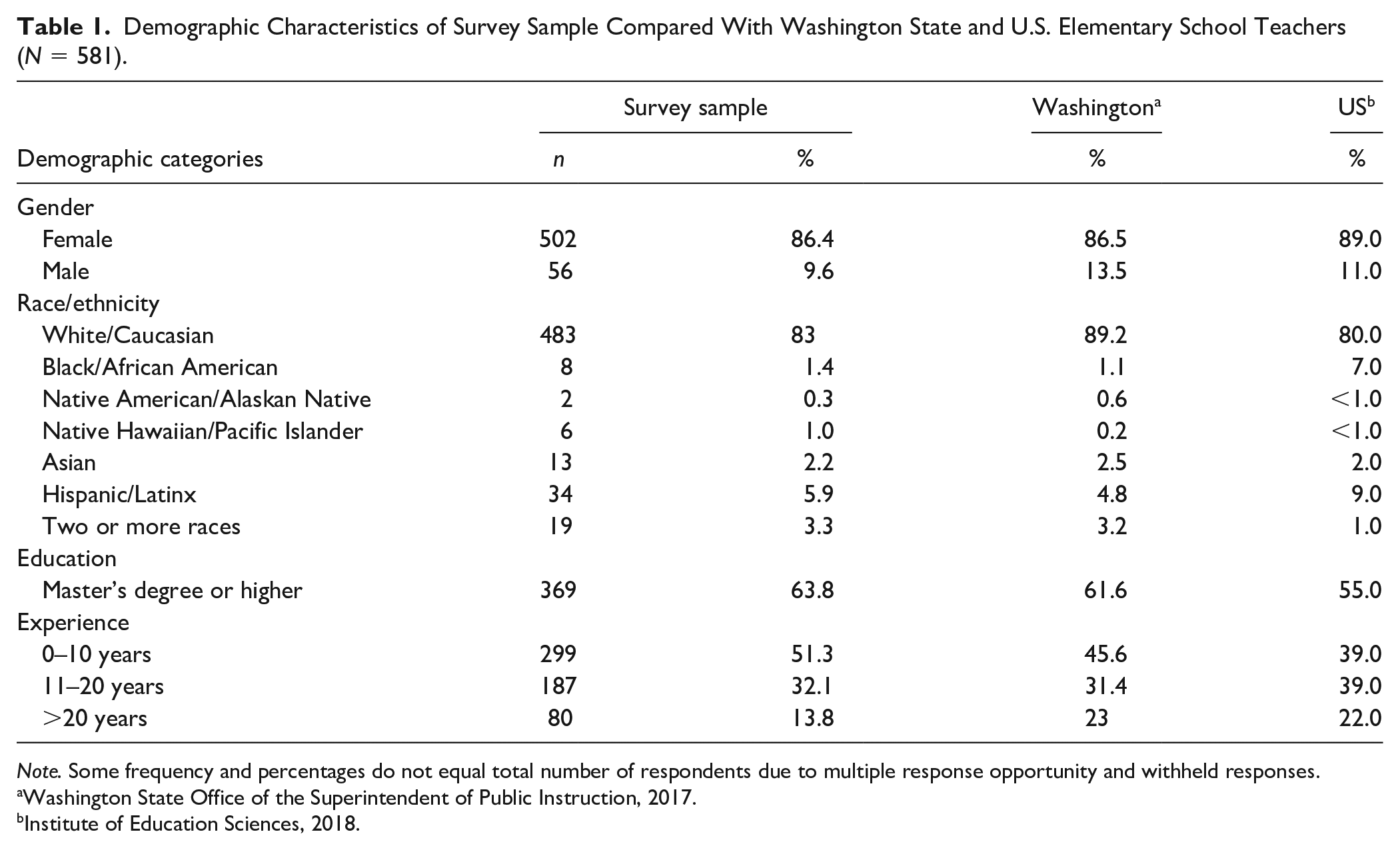
Note. Some frequency and percentages do not equal total number of respondents due to multiple response opportunity and withheld responses.
Washington State Office of the Superintendent of Public Instruction, 2017.
Institute of Education Sciences, 2018.
Recruitment
Our first step in identifying individual participants was to identify schools in Washington State implementing SWPBIS. We worked with a PBIS state coordinator to identify Washington schools reporting SWPBIS data to the state. Schools were included if they (a) were in Washington State, (b) implemented SWPBIS, (c) included two or more grades between kindergarten and sixth grade, and (d) were listed as “currently operational” by the Washington State Office of the Superintendent of Public Instruction (OSPI). In total, 531 schools across 103 school districts in 77% of counties in Washington State were identified for inclusion in Spring 2018.
After identifying 531 schools for inclusion, our second step was to train three undergraduate research assistants (RAs) to collect individual participant contact information from publicly available school websites. We trained RAs in Spring 2018 using behavior skills training by providing a combination of written and verbal instructions, modeling, practice, and feedback until RAs met pre-specified criteria. Research assistants only independently collected contact information after scoring 80% or better on a procedural fidelity checklist. Research assistants collected contact information for 15,454 potential respondents from 531 school websites with a job title consistent with those commonly involved in the implementation of SWPBIS (e.g., teacher, counselor, psychologist, administrator, behavior specialist; Cressey et al., 2015). Our final step was to recruit survey participants via email. We sent email invitations to potential participants in Fall 2018. Of the 15,454 initial invitations sent, 1,719 (11.1%) were undeliverable. As a result, 13,735 surveys were distributed, and 2,153 surveys were completed for a response rate of 16%. This resulted in 764 completed surveys from teachers (76%), paraeducators/instructional assistants (18%), or other school personnel (6%) who received coaching in elementary school settings. For this article, the results only include recipients of peer coaching who identified as special education or general education teachers (n = 581).
Instrumentation
Our survey was designed to gather information on the coaching practices used for individualized behavior support implementation in Washington State elementary school settings, based on the tailored survey design method (Dillman et al., 2009). We developed survey items within five different content areas based on a review of the current PBIS coaching literature (e.g., Bethune, 2017; Bradshaw et al., 2012; Mathews et al., 2014) and professional judgment. The survey contained six items in the area of basic coaching information and practices, three items in the area of coaching effectiveness, two items in the area of coaching feedback, four items in the area of coaching tools, and six items in the area of demographic information. Respondents were given the choice to skip questions they preferred not to answer in all content areas.
After the initial survey development phase, three cognitive interviews were conducted with teachers to establish survey validity. Based on data collected during cognitive interviews, the survey was revised and distributed to a pilot group representing 7% of the total survey sample. No changes were made to the survey based on pilot data; thus, pilot data were included with the remaining responses for final analysis. The survey is available on the Journal of Positive Behavior Interventions website with the online version of this article.
Procedures and Analysis
An invitation was sent via email to potential respondents with a link to participate via Qualtrics, a web-based survey tool. The email message (a) explained the purpose of the survey, (b) provided a time estimate for completing the survey (approximately 10 min), (c) provided definitions of key terms such as “behavior support strategy” and “coaching,” (d) assured confidentiality, and (e) provided information about compensation offered for survey completion. We provided all respondents with the opportunity to enter a lottery to win 1 of 20, $50 gift cards upon survey completion. Two follow-up reminders were delivered to non-respondents approximately 2 and 3 weeks after initial survey distribution. We closed the survey after 4 weeks. Survey results were analyzed using descriptive statistics by calculating frequencies, percentages, means, and standard deviations in SPSS 25.
Results
Coaching Practices, Frequency, and Feedback
Survey results provided information about coaching practices, frequency, feedback, and perceived effectiveness from teachers receiving coaching in elementary school settings to implement individualized behavior supports. Teachers indicated they engaged in various coaching practices during coaching sessions (see Table 2). When asked which coaching practices they engaged in, less than half (47%) reported engaging in pre-observation discussion, 61% of teachers received one or more observations, and 48% reported participating in a post-observation discussion with their coach. Twenty-seven percent of teachers reported receiving modeling (22%) or role-play (5%) as the behavioral strategy, and 11% of teachers reported that none of these coaching practices were used during their coaching session.
Teacher-Reported Coaching Interactions and Practices.
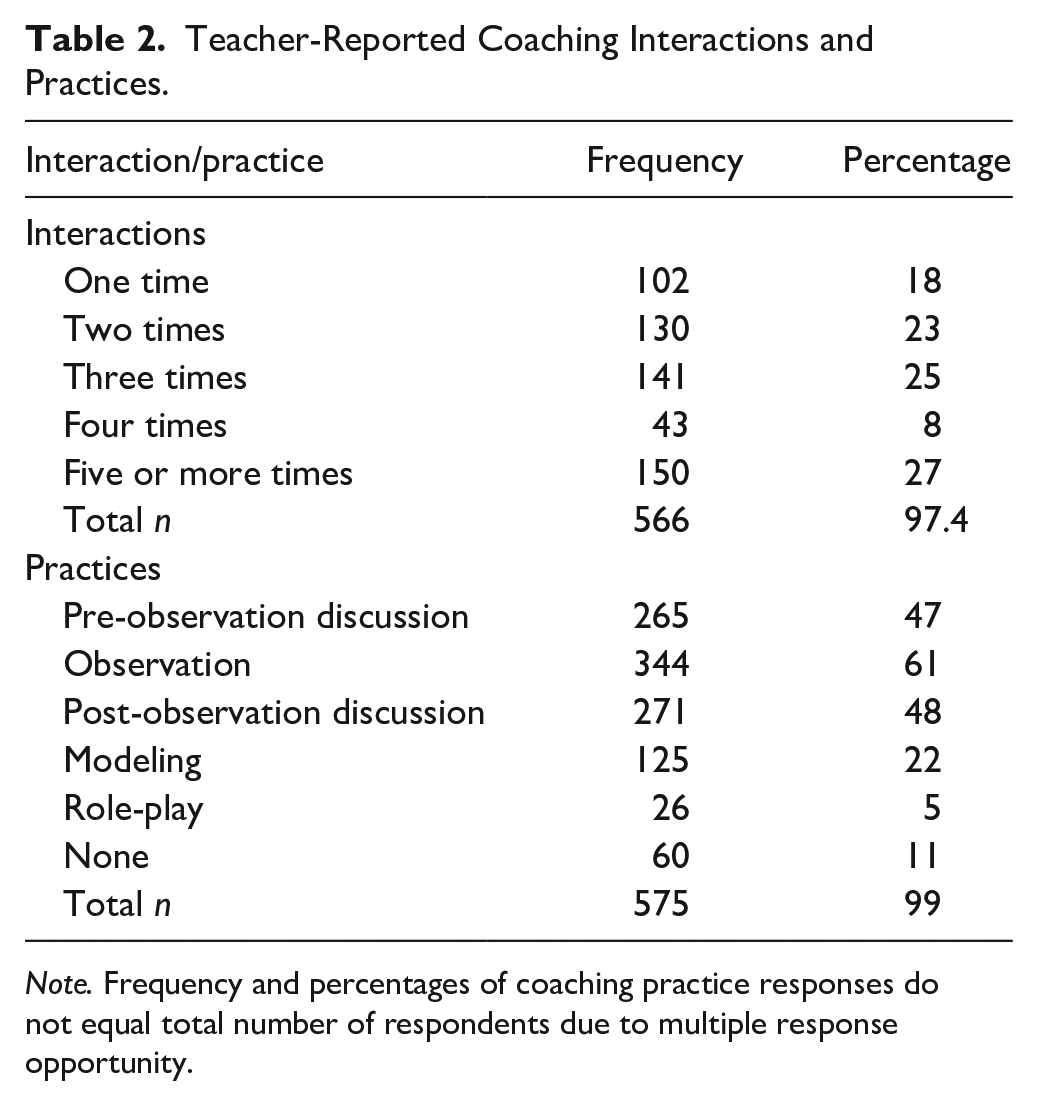
Note. Frequency and percentages of coaching practice responses do not equal total number of respondents due to multiple response opportunity.
Teachers reported a range of frequencies related to coaching interactions between themselves and their coach to guide implementation of a single behavior support strategy for a single student. Respondents reported they received, on average, four or more interactions (35%), three interactions (25%), two interactions (23%), and one interaction (18%) between themselves and their coach to guide implementation of a behavior support strategy (see Table 2).
Teachers also responded to questions about types and methods of coaching feedback. Type of coaching feedback refers to the content of the feedback (e.g., positive, corrective) while method refers to the way in which the feedback was delivered (e.g., written, verbal). Teachers reported receiving feedback through one or more methods: email (36%), written notes (17%), visuals (e.g., picture cards; 9%), and verbal comments (84%). Most teachers reported varying types of performance feedback: corrective feedback (45%) and positive feedback (73%). Approximately one-fifth (19%) of teachers reported receiving no feedback from their coach after implementing the behavior strategy on which they were coached (see Table 3).
Teacher-Reported Coaching Feedback Delivery Method and Type.
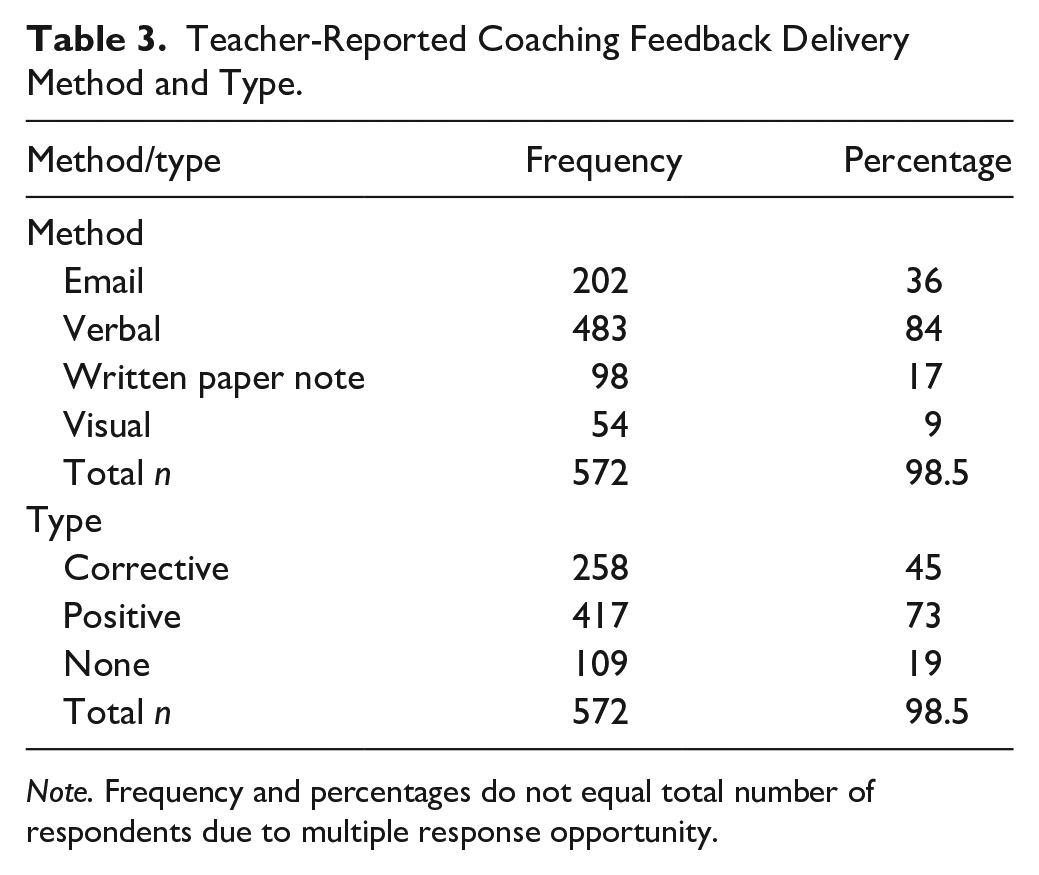
Note. Frequency and percentages do not equal total number of respondents due to multiple response opportunity.
Coaching Resources
Teachers responded to questions about the resources they received from coaches to guide their implementation of individualized behavior support strategies and track student progress (i.e., tools for coaching). A little over a third (37%) of teachers reported receiving a written plan from their coach, while 63% indicated they did not receive a written plan for the behavior strategy they were asked to implement. A slightly higher number of teachers reported receiving a plan or other resources from their coach to track student progress (42%). Fifty-eight percent of teachers did not receive coach-provided resources to track student behavior progress. When asked how effectively teachers tracked behavior support progress using a 5-point Likert rating scale from extremely effective (5) to not effective at all (1), the majority reported they tracked progress moderately or slightly effectively (M = 2.92, SD = .970; see Table 4).
Teacher Ratings of Tracking Behavior Support Progress and Progress Monitoring Resources Provided by Coaches.
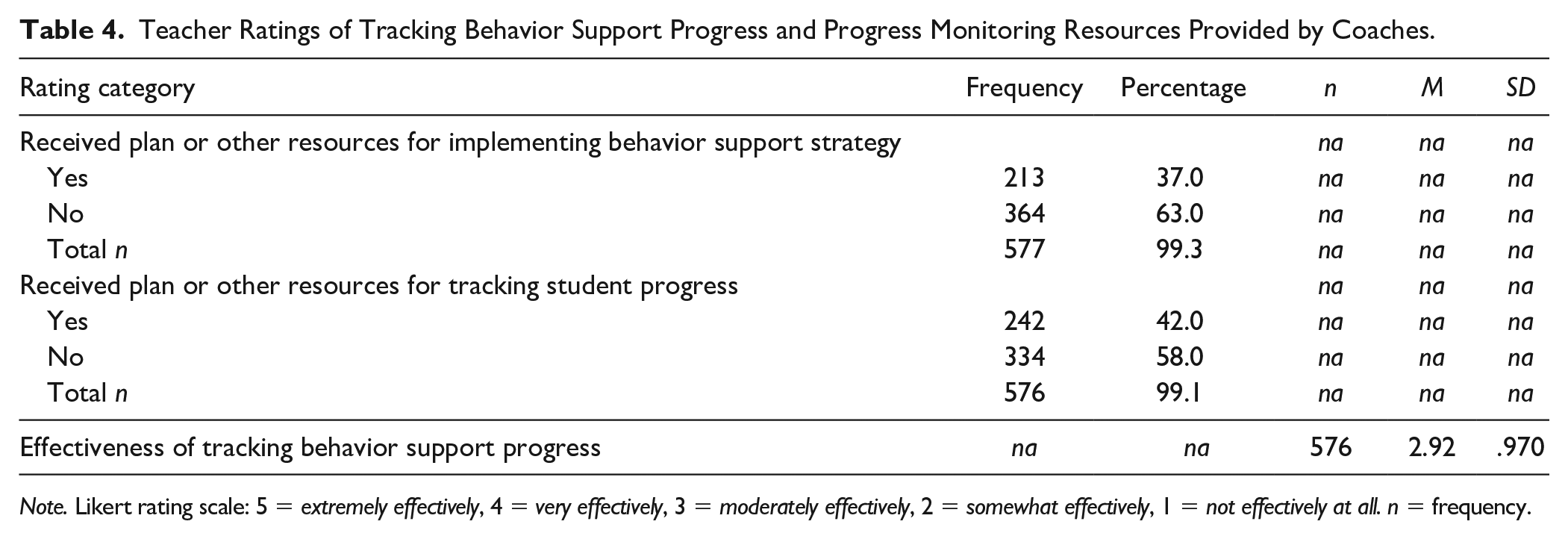
Note. Likert rating scale: 5 = extremely effectively, 4 = very effectively, 3 = moderately effectively, 2 = somewhat effectively, 1 = not effectively at all. n = frequency.
Coaching Effectiveness
Teachers were asked about the perceived effectiveness of the coaching they received related to their willingness, confidence, actual use, maintenance, and generalization of individualized behavior supports. Coaching effectiveness was measured using a 5-point Likert rating scale from extremely effective (5) to not effective at all (1). Most teachers reported coaching as moderately effective across all items: increasing their willingness to use a specific behavior strategy (M = 3.62, SD = 1.015), confidence in using the behavior strategy (M = 3.51, SD = 1.020), actual use of the behavior strategy (M = 3.64, SD = .969), maintaining use of the behavior strategy after coaching ended (M = 3.55, SD = .994), and generalizing the behavior strategy to other students (M = 3.74, SD = 1.000; see Table 5).
Teacher-Reported Effectiveness of Coaching.
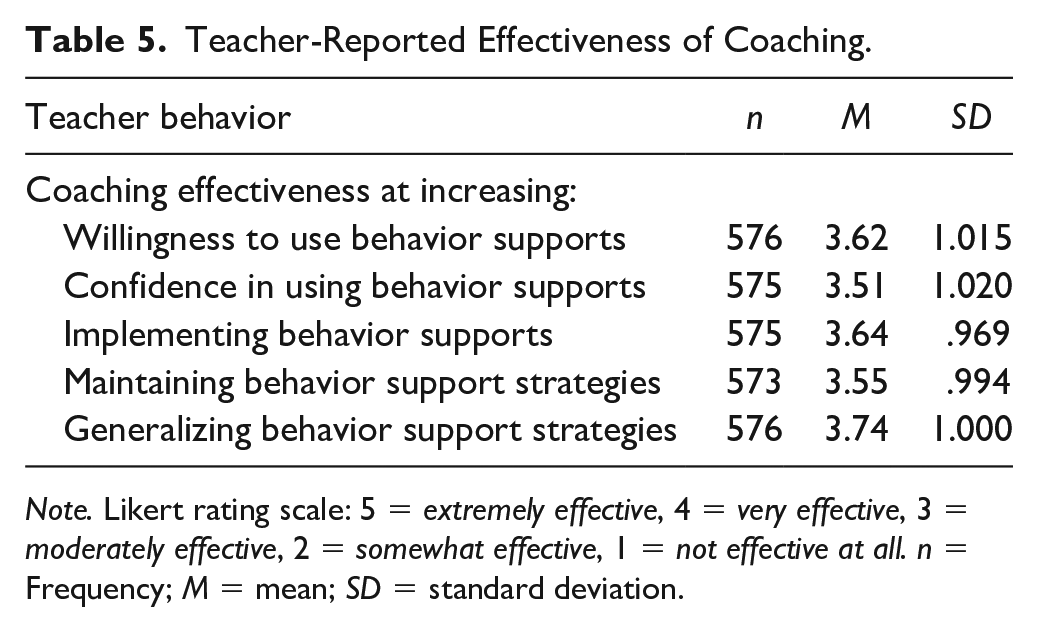
Note. Likert rating scale: 5 = extremely effective, 4 = very effective, 3 = moderately effective, 2 = somewhat effective, 1 = not effective at all. n = Frequency; M = mean; SD = standard deviation.
Coaching Obstacles
Finally, teachers identified several obstacles to effective coaching. Teachers identified lack of time as the most common obstacle to effective coaching (65%). The second most common obstacle reported was a lack of resources, such as staffing coverage to allow teachers to meet with their coach outside of their classroom during school hours (59%). Teachers also identified a lack of coaching interactions (36%), a lack of school or district support of coaching (33%), and coaches’ lack of behavioral expertise (13%) as obstacles to effective coaching (see Table 6). Teachers identified several strategies and tools to increase coaching effectiveness. These included additional time to meet with the coach (73%), a tool for measuring student behavior progress (49%), a tool for measuring implementation fidelity (34%), additional feedback from the coach (28%), supplemental coaching materials such as videos or handouts (32%), and a simple tool for scheduling coaching sessions and feedback (25%; see Table 6).
Teacher-Reported Obstacles to Effective Coaching and Resources for Increasing Effectiveness.
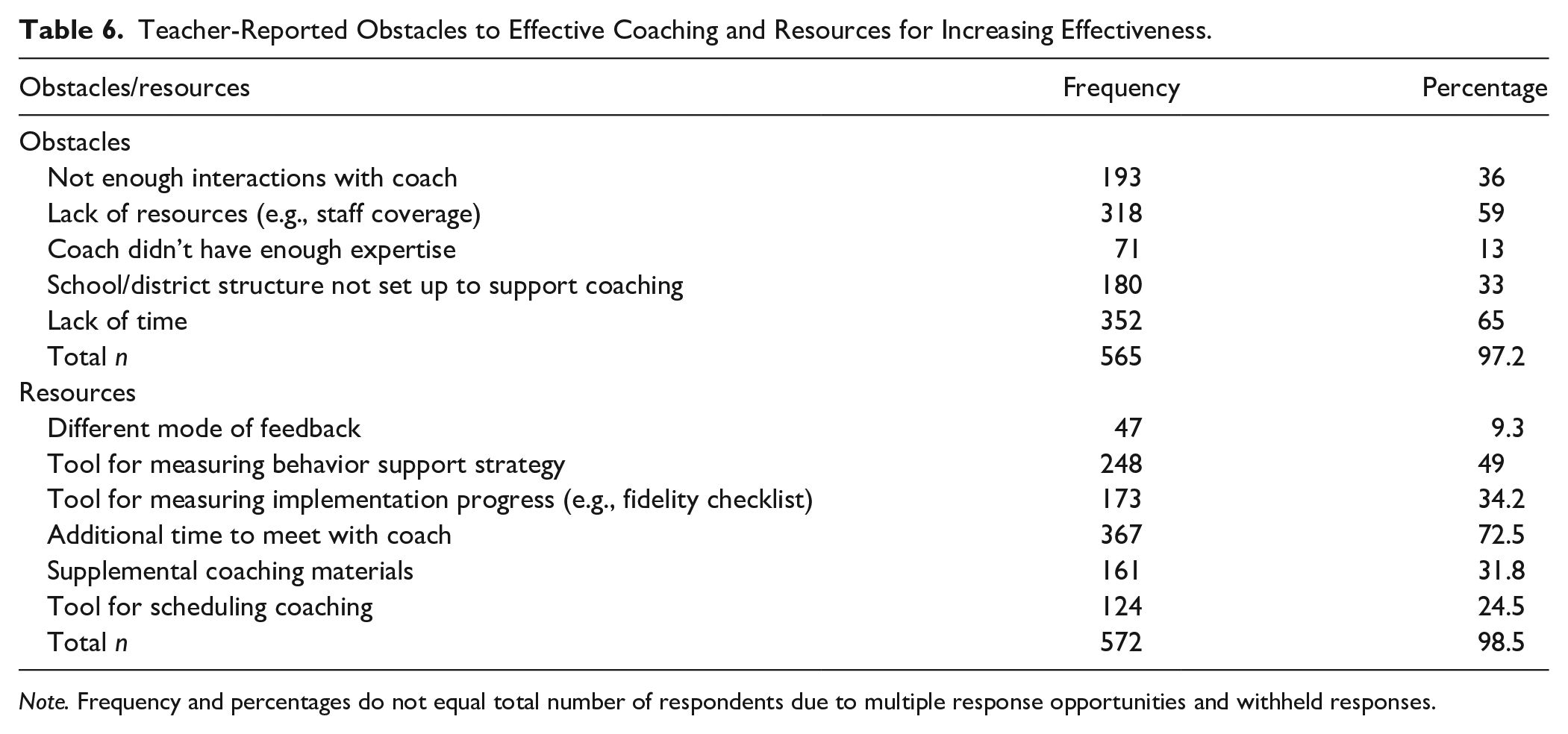
Note. Frequency and percentages do not equal total number of respondents due to multiple response opportunities and withheld responses.
Discussion
The purpose of this survey was to describe (a) how teachers experience coaching and (b) the perceived effectiveness of coaching related to individual student behavior support implementation in elementary school settings. This description complements existing research that describes coaching practices for teachers implementing behavior supports (e.g., Bradshaw et al., 2012; Stormont et al., 2015). Traditional professional development via workshop alone is insufficient for sustained implementation of EBPs (Joyce & Showers, 2002), and the addition of coaching can help close the divide between learning the core concepts of SWPBIS and implementation of effective SWPBIS practices at all levels (Bethune, 2017). However, many of the findings that link coaching to implementation of effective practices in classrooms are based on outcomes from studies with relatively defined parameters, mostly delivered by expert coaches (Artman-Meeker et al., 2015). Although crucial to understanding best practices, an overreliance on literature describing prescriptive school-based coaching may establish a “false understanding” of the resources necessary to support effective coaching practices in natural contexts (Artman-Meeker et al., 2015; Shannon et al., 2021). In addition, coaching conceptualizations based solely on prescriptive best practices, absent school contextual variables, may overestimate the capacity teachers and coaches have for engaging in coaching activities. This study suggests ways to narrow the gap between research-based coaching and in-class practice by describing teachers’ reports of their own coaching experiences and its perceived effectiveness.
Coaching Practices
The findings from our survey suggest many of the coaching practices we know to be effective may not, in fact, be happening in the elementary schools where our survey respondents teach. Furthermore, given the positive correlations between our survey sample, Washington State, and the United States for elementary school teacher demographic characteristics (see Table 1), it is reasonable to hypothesize that implementation of effective coaching for individual student behavior support is a much broader concern that may generalize beyond our sample. Although it appears most teachers experience observation as part of the coaching process (61%), less than 50% of teachers were included in the pre-observation planning and post-observation discussions considered important to effective coaching (Reinke et al., 2013; Snyder et al., 2015). It may not be surprising that “observation” was reported more often than either of the other two practices, even though all three are considered essential to an ongoing coaching cycle, as being observed may be a more salient event for teachers. However, it is possible that a pre-observation meeting, which includes goal setting, and the post-observation feedback might sometimes occur during casual conversations—possibly a less noticeable, “explicit event” than someone entering a classroom. Nevertheless, it is surprising that one-fifth of teachers reported not receiving any type of feedback, given that performance feedback is a well-established EBP and critical coaching practice (Fallon et al., 2015). In addition, it is worth noting that relatively few teachers reported experiencing modeling (22%) and role-play (5%), coaching activities that may be folded into planning, observation, and feedback and that are important to teacher practice implementation (Artman-Meeker et al., 2015). This may be due to the field’s overall lack of consensus around necessary coaching practices (Shannon et al., 2021). Given the limited time and resources (e.g., staff coverage) educators have during the school day, identifying the specific coaching activities that lead to the greatest gains in effective implementation may help produce better outcomes for teachers and students.
Teachers’ Perceptions of Effectiveness
In general, most of our survey respondents perceived coaching as only moderately effective at increasing a teacher’s willingness and confidence in implementing, maintaining, and generalizing effective behavior support practices in the classroom. Although we did not solicit information about why they rated coaching as moderately effective at increasing their willingness and confidence, the literature can direct us to several hypotheses. We know that teacher self-efficacy (Cook et al., 2017; Zee & Koomen, 2016) and stress (Larson et al., 2018) can influence a teacher’s willingness to implement effective practices. If teachers have limited access to effective coaching activities, resources, data-based decision making, and frequency of coaching (as suggested by our survey respondents), they may perceive coaching as less effective in general. Our results indicate teachers did not consistently receive access to the common coaching practices (i.e., modeling, role-play, planning, feedback) that could have (a) directly supported successful implementation of behavior support strategies and (b) increased their confidence or willingness to implement those strategies (Han & Weiss, 2005; Reinke et al., 2013). Moreover, access to resources or other materials to support implementation might have influenced their perceptions of coaching effectiveness. In addition, ratings of effectiveness could have been influenced by the feedback they received: approximately one-fifth of teachers reported receiving no corrective or positive feedback about their implementation of practices. Furthermore, about half of our respondents indicated a lack of specific, written guidance for implementing practices that support student prosocial behavior, and little direction in how to collect and use data to make decisions (Han & Weiss, 2005).
Frequency of coaching is also likely to influence teachers’ perceptions of coaching effectiveness. Our data raise the possibility that few teachers receive enough of these coaching interactions across each behavior support strategy to result in meaningful change. Whereas only 27% of teachers reported receiving five or more interactions with a coach, nearly one-fifth reported receiving a single interaction around a particular intervention strategy for a student. Even assuming a high quality of each coaching interaction, the dosage necessary for changing teacher practice and maintaining it over time may be insufficient (Kraft et al., 2018). Given teachers’ lack of preservice training to manage students’ challenging behavior (Westling, 2010), these findings are concerning. Teachers may not only be underprepared to provide behavior support to students due to insufficient teacher preparation training, but ongoing professional development to improve these skills may also be insufficient.
Teachers need in-service professional development that includes effective coaching practices to implement behavior supports successfully (Joyce & Showers, 2002). Unfortunately, the results of this survey suggest teachers may not receive the kinds of systematic coaching processes necessary to ensure the successful implementation of behavior strategies. When coaches do not use empirically supported coaching practices, the fidelity of the coaching process and the implementation fidelity of the behavior support strategies are at risk. Administrators and coaches who ask teachers to implement new and difficult strategies must rely on high-quality coaching or risk teacher dissatisfaction, burn out, and poor student outcomes. Upon first reflection, the implications from these findings may seem disheartening. However, they provide a rich opportunity for researchers and school staff by establishing a potential baseline from which professional development strategies can build, narrowing the research-to-practice gap.
Practice Implications
Coaching is a critical part of implementing and sustaining individualized behavior support practices. As noted by Reinke et al. (2013), meeting the needs of students by providing safe, stable educational environments through positive behavior support practices will likely reduce disruptive student behaviors and increase student prosocial behavior and teacher retention. Schools or districts that can retain teachers will be able to redirect resources spent on recruiting new teachers toward providing ongoing, in-service professional development such as coaching. Our findings suggest several considerations for school administrators responsible for implementing systematic coaching processes as a part of a comprehensive professional development plan. School administrators should provide all coaches with systematic training on using the critical coaching practices linked to effective coaching. Applying what we know about implementing and sustaining practices, coaches will need ongoing support as they develop their skills as coaches and periodic fidelity checks to sustain their coaching practices (Kretlow & Bartholomew, 2010; Stormont et al., 2015).
Teachers suggested several ways to increase coaching effectiveness including more time and resources to access more coaching opportunities aligned with previous research (Bambara et al., 2009). Interestingly, teachers reported that access to tools for measuring their own fidelity and tracking student progress could increase coaching effectiveness. Providing teachers with a fidelity checklist would help them understand if they are implementing a practice correctly. Helping teachers set up easy student progress monitoring would help them link high fidelity implementation with student progress. Graphing and examining student data, an evidence-based strategy for increasing practice implementation (Han & Weiss, 2005), might foster teacher acceptance of effective coaching. Coaches who use such tools during the coaching process may be more likely to increase teachers’ use and maintenance of behavior strategies effectively and efficiently.
There is a need for the field to continue conducting research on the active ingredients of coaching (Shannon et al., 2021; Stormont et al., 2015). Consensus within the field about the necessary practices of coaching will help districts train coaches, resulting in teachers’ increased understanding of coaching benefits. Beyond identifying the practices necessary to effect a change in teacher practices, it would be helpful to have information about dosage recommendations (something not included in our survey). Although a one-size-fits-all approach to coaching is not appropriate for all schools, guidelines about the amount of time allocated to coaching may help school leaders to direct resources in ways that increase effective implementation of behavior supports.
Limitations and Implications for Future Research
Study results should be interpreted with respect to several limitations. In general, results from surveys with higher response rates are considered more valid than those with fewer responses. The response rate for our survey was 16%, raising the possibility of a non-response bias within our sample (i.e., it is unknown whether significant differences existed between survey responders and non-responders) and suggesting limits to the generalizability of our findings. However, research on non-response error is in fact somewhat equivocal with respect to validity of low response rates (Davern et al., 2010; Groves, 2006), suggesting that sample representativeness is more important to the validity of survey results than response rate alone (Cook et al., 2000). Given the similarity between our survey respondents and the demographic state and U.S. data (see Table 1), generalization of our results to larger populations seems appropriate, rendering any potential non-response bias less likely. Of note, we did not solicit specific school information from respondents and thus cannot extrapolate comparisons of school representation to broader populations. Another consideration is that our sample frame only included elementary school teachers within a single U.S. state, raising the possibility that coaching practices may not be representative of educators in other states or regions of the country. Follow-up studies that systematically survey other states and regions in the United States or enlist more sustained recruitment might lead to broader data sets.
The use of the author-developed survey instrument in lieu of existing, validated tools to measure coaching experiences could have led to unintentional bias. We developed our own survey because no validated tool specific to our research questions existed at the time of this study. A related limitation is that the survey items were designed to answer descriptive questions, thereby restricting more complex statistical analyses. This intentional decision, however, was tied to the exploratory nature of the study. Finally, it is important to note that results from this study are, by design, limited to teacher perceptions of the coaching they received. Although an essential mode of assessment, the inherent subjectivity associated with self-report should not be discounted; however, the goal of the study was to add teacher perspectives of their coaching experiences to the larger body of the coaching literature.
The survey design did not identify several key factors about the coaches—those individuals who provided the support described by our teacher respondents, such as their level of expertise, the specific behaviors or tools the coaches used to give feedback, and the skills the coaches used to engage the teachers. In addition, our survey did not ask about specific student behaviors targeted by teacher practices, which might be useful for understanding more about dosage required for different individual behavior strategies. Gathering such information from the teachers might have provided additional context. Future research should survey both coaches and teachers working together in the classroom to provide more complete data about coaching practices.
The variability in coaching activities reported here could be the result of a lack of consensus about who qualifies and serves as a “coach.” Within education, from early childhood to K–12 contexts, coaches vary across roles (e.g., instructional coaches, peer coaches, behavior coaches), occupation (e.g., psychologist, administrator, behavior specialist), organizational affiliation (e.g., external contractor, peer-based coach), and expertise. There is a need for coaching models (Stormont et al., 2015) that provide clarity about the organizational structures and systems within which coaching occurs, critical coaching practices, and a distinction from other training and professional development. Future research should extend the findings reported here by examining relations among variables such as the types and methods of coaching feedback, the effectiveness of coaching on implementation of behavior supports in schools, and the organizational and contextual limitations faced by teachers.
Conclusion
The present study was intended to better understand how coaching is used to support teacher implementation of behavior strategies in elementary schools. As more schools adopt the SWPBIS framework for preventing student challenging behavior, there is a growing need for teachers and administrators to identify effective and efficient implementation strategies using existing school resources. Coaching is an effective strategy for increasing teachers’ use of EBPs (Kretlow & Bartholomew, 2010) and contextually fit coaching implemented with high fidelity could serve as a sustainable model for building capacity within existing school and district resources.
Supplemental Material
sj-pdf-1-pbi-10.1177_10983007221120253 – Supplemental material for The Role of Coaching on the Implementation of Individualized Behavior Supports in Elementary Schools
Supplemental material, sj-pdf-1-pbi-10.1177_10983007221120253 for The Role of Coaching on the Implementation of Individualized Behavior Supports in Elementary Schools by Elizabeth M. Kelly, Scott A. Spaulding and Carol A. Davis in Journal of Positive Behavior Interventions
Footnotes
Declaration of Conflicting Interests
The author(s) declared no potential conflicts of interest with respect to the research, authorship, and/or publication of this article.
Funding
This research was supported in part by a grant from the U.S. Department of Education, Office of Special Education Programs, H327S130008.

Supplemental Material
Supplemental material for this article is available on the Journal of Positive Behavior Interventions website with the online version of this article.
References
Supplementary Material
Please find the following supplemental material available below.
For Open Access articles published under a Creative Commons License, all supplemental material carries the same license as the article it is associated with.
For non-Open Access articles published, all supplemental material carries a non-exclusive license, and permission requests for re-use of supplemental material or any part of supplemental material shall be sent directly to the copyright owner as specified in the copyright notice associated with the article.
