







Abstract
People who file complaints against the police tend to experience objectively unfavorable outcomes, for most complaints are not sustained. But features of citizen oversight might be expected to enhance the procedural justice of the complaint review process and, hence, provide positive subjective experience despite the outcomes. Using data collected through interviews with complainants about their experience with complaint review in a city that provides for citizen oversight, we examine the factors associated with complainants’ subjective experiences. We find that complainants’ subjective experiences are shaped mainly by outcomes, while features of the process that might be expected to enhance its procedural fairness have little or no effect on complainants’ judgments.
Introduction
Citizen oversight is commonly prescribed as a remedy for police misconduct. Citizen involvement in the review of complaints against the police is expected to better hold miscreant officers accountable for their actions, and hence to deter police misconduct. In addition, citizen oversight is supposed to better meet the expectations of complainants not only by substantiating the allegations that they make but also by ensuring that the complaint review process is, and appears to be, fair. Research suggests that the parties to disputes may be satisfied with procedures that they regard as fair even when the outcomes are not favorable to them (e.g., Donner, Maskaly, Fridell, & Jennings, 2015; Kerstetter, 1996; Lind & Tayler, 1988). Due to the “procedural justice” that civilian involvement imparts to complaint review systems, then, the subjective experiences of complainants should tend to be positive even when the objective outcomes are unfavorable for them.
Unfortunately, the evidence that has accumulated on the operation and impacts of citizen oversight is quite thin. Recounting the hypothesized effects of citizen oversight on complaint review, the National Research Council’s Committee to Review Research on Police Policies and Practice concluded that “little empirical evidence has been produced about the extent to which citizen review meets these expectations” (2004, p. 203) and that “the popularity of citizen review and optimism about its benefits far outstrip the empirical evidence that citizen review has salutary effects” (2004, p. 204). More recently, the President’s Task Force on 21st Century Policing observed that “there are important arguments for having civilian oversight even though we lack strong research evidence that it works” (2015, p. 26). The Task Force went on to “urge action on further research, based on the guiding principle of procedural justice, to find evidence-based practices to implement successful civilian oversight mechanisms” (2015, p. 26).
We examine the subjective experiences of complainants in one city that provides for a form of citizen oversight. We analyze data collected through interviews with complainants to estimate the effects of structural and case-specific factors on complainants’ procedural justice judgments about the complaint review process and their satisfaction with it. We find that complainants’ subjective experiences are shaped mainly by outcomes, while features of the process have little or no effect on complainants’ judgments.
Citizen Oversight and Procedural Justice
Procedural justice consists of how authority is exercised. Social research has identified several dimensions of “procedural fairness” (National Research Council, 2004, p. 304)
1
:
Participation: “People are more satisfied with procedures that allow them to participate by explaining their situation and communicating their views about situations to authorities.” Neutrality: “People think that unbiased authorities that use objective indicators to make decisions, as opposed to personal views, act more fairly.” Dignity and respect: “The quality of interpersonal treatment is consistently found to be a distinct element of fairness, separate from the quality of the decision-making process.” Trustworthiness: [P]eople feel that procedures are fairer when they trust the motives of decision makers … .Authorities can encourage people to view them as trustworthy by explaining their decisions and accounting for their conduct in ways that make clear their concern about giving attention to people’s needs.
These four dimensions are sometimes subsumed under two categories of judgments: the quality of treatment and the quality of decision-making. Participation (voice) and neutrality speak to the quality of decision-making while dignity/respect and trustworthiness speak to the quality of treatment.
In the context of citizen oversight, procedural justice is presumably of critical importance as the outcomes are seldom favorable for complainants; only a small fraction of citizen complaints eventuate in findings against the police. For example, in their review of citizen complaints in New York City, Sviridoff and McElroy (1989) found that the vast majority of complaints that were investigated were not substantiated. Walker (2005) estimated that “[b]oth internal and external complaint procedures sustain about 10-13% of all complaints” (p. 144). Most complaints are not sustained because, oftentimes, judgments must be based on the conflicting claims of a citizen and an officer, with little additional evidence to support either side (Kerstetter, 1996). Jerome Skolnick and James Fyfe (1993) explain it this way: … regardless of the intensity of the investigation, most citizens’ allegations cannot be definitively resolved one way or the other. In most cases three bits of information are available to those who must review citizens’ complaints against police. The first is the citizen’s allegation that he or she was “done wrong” by an officer. The second is the officer’s denial of the charge. The third is the investigator’s conclusion that little or no objective evidence exists to support or refute the citizen’s charge. (pp. 229–230)
No form or degree of citizen involvement in complaint review can eliminate these evidentiary limitations. 2 However, if the process by which a decision is reached is perceived as fair, even those who are unsuccessful will have a more favorable attitude about the outcome (Kerstetter, 1996; Lind & Tayler, 1988). 3
Citizen oversight may incorporate into complaint review a number of features that could be expected to enhance procedural justice. First, it promises greater neutrality and trustworthiness. Citizens may presume that police investigations of complaints against police will not be investigated thoroughly, such that internal investigations will fall short even of the low evidentiary ceiling established by the nature of many complaints. Kerstetter (1985, pp. 174–175) characterizes “internal” investigations of police by police as “inherently incredible” to the public, and Skolnick and Fyfe assert that “when citizens ask for review of police conduct by civilians, they do so because they don’t trust the police to investigate themselves” (1993, p. 224). External oversight might push complaint investigations nearer the evidentiary limits and might be seen by citizens as doing so, making the process more balanced on its face.
Second, if a key element of procedural justice is that citizens have some part in the decision-making process (Thibaut & Walker, 1975; Tyler, Rasinski, & Spodick, 1985), then even modest participation in complaint review may improve community attitudes regarding investigation of complaints (Kerstetter & Rasinski, 1994). The enhanced voice, neutrality, and fairness imparted to complaint review by citizen oversight are commonly thought to improve the satisfaction of complainants (Barton, 1970; Gellhorn, 1966; Landau, 1996; Smith, 2004). Kerstetter (1996) notes that allowing those who are affected by the eventual outcome to have some degree of control over the procedures, especially when they are governed by a third party, is important (Lind & Tayler, 1988; Thibaut & Walker, 1975). Further, providing a complainant with the opportunity to present information he or she believes is relevant to the decision-maker, and ensuring that the complainant perceives that the information presented has been considered, is key to the impression that the oversight procedure is fair (Tyler, 1987, 1990).
Transparency is also important; a process that is entirely internal to the police organization leaves decision-making opaque to complainants (and others), and it thus invites unflattering inferences. Complainants may form negative attitudes regarding review processes because they feel that it lets police off too easily (Finn, 2001), because they feel that their complaints are not taken seriously (de Guzman, 2008; Perez, 1994), or because they receive little information on the disposition of the complaint (McDevitt, Farrell, & Andresen, 2005). Ultimately, if what is at stake for individuals in dispute resolution is a sense of being valued by the social order, what is at stake for the social order is its acceptance as appropriate and trustworthy – in short, its legitimacy in the eyes of its members. (Kerstetter, 1996, p. 240)
Forms of Citizen Review
Citizen involvement in complaint review can take any of a number of different forms, and one can find many structural variations on the theme of citizen oversight in cities across the United States and the world. Some efforts have been made to reduce this complexity to describe the main features of citizen review. Walker (2001, pp. 61–63) describes four “classes” of citizen review: (I) external investigations of complaints with recommendations about disposition made to the chief executive; (II) internal investigations of complaints with external monitoring; (III) external appellate review for citizens dissatisfied with internal handling of complaints; and (IV) external review of investigations, including review of internal policies and procedures and making recommendations for change. Kerstetter (1985) describes three “models”: civilian review; civilian input; and civilian monitor. The Police Assessment Resource Center (2005) describes three “groupings” of oversight models: review and appellate models; investigative and quality assurance models; and evaluative and performance-based models. One common thread in taxonomies of citizen oversight is the distinction between oversight authorities that review police (or internal) investigations of complaints and those that conduct their own (external) investigations. If citizens are skeptical about wholly internal complaint review processes, it might follow that the more independent of the police the investigation process is, the more fair it will appear to the citizenry, as citizens draw inferences from the structural properties of complaint review. Independence is a matter of degree. But it is also clear that many dimensions of variation exist, and two, three, or four categories of oversight agencies do not suffice to represent the variation in their potential for achieving procedural justice and complainant satisfaction; hypotheses about the effects of structural factors must be rooted in specific features of complaint review.
Complainants’ Satisfaction With Complaint Review
Although citizen oversight is expected to result in higher levels of satisfaction among complainants, such satisfaction has rarely been achieved in documented form. Indeed, complainant dissatisfaction is, so far as previous research can tell us, the rule rather than the exception, regardless of the form of complaint review. Research on complainant satisfaction is limited, but reports from Denver’s Office of the Independent Monitor (OIM) and the City of Portland’s Independent Police Review (IPR) Division concluded that few complainants (10% for OIM and 34% for IPR) were satisfied with the outcome of their cases (De Angelis, 2008; Independent Police Review Division, 2007). Those who believed they had been treated fairly was similarly low—17% for OIM and 32% for IPR (De Angelis, 2008; Independent Police Review Division, 2007). By comparison, the Office of the Police Ombudsman for Northern Ireland, which opened in 2000, has its own team of investigators and represents the first completely independent police complaints organization in the world. The most recent survey of complainants revealed that 50% of complainants were satisfied with the service they received from the Ombudsman’s office, 59% of complainants felt that they had been treated fairly, and 60% said that they would use the complaint system again (Police Ombudsman for Northern Ireland, 2015).
Research in the United States and other countries has demonstrated that outcomes are correlated with satisfaction with the complaint process (Hill, Cooper, Young, & Holye, 2003; Perez, 1994; Prenzler, 2004; Sviridoff & McElroy, 1989; Waters & Brown, 2000). Indeed, one assumption about citizen oversight and complainant satisfaction is that satisfaction is low because oversight, no matter what the form, has a limited effect on the rates at which complaint allegations are sustained (De Angelis, 2009; Sviridoff & McElroy, 1989). However, as indicated earlier, it may be that the greater the independence of the system, the greater the procedural justice, and the more satisfied complainants are with both outcome and process. Indeed, partial support for these propositions was found in one study. De Angelis (2009), analyzing complainant satisfaction both before and after one city made citizen oversight more structurally independent, found that the new system was associated with greater procedural justice in complainants’ eyes due to a higher quality of communication (e.g., information on how the process works, and on the status of the complaint) and greater satisfaction with the thoroughness and timeliness with which complaints were processed. He also found that these aspects of procedural justice were associated with complainants’ overall satisfaction with the process and with the fairness of the outcome. Even so, De Angelis could detect no increase in complainant satisfaction that could be directly attributed to the new, more independent complaint review system.
Complainants’ Expectations for Complaint Review
The objectives or expectations that a citizen brings to the process are also important, however, as dissatisfaction occurs when the goals of the complainant are not met. The goals of complainants may be broader than “winning” or ensuring that an officer is punished. Many complainants are more interested in having their complaint documented, receiving an apology, or having a chance to confront the officer in a face-to-face encounter (De Angelis, 2009; Maguire & Corbett, 1991; Prenzler & Ronken, 2001; Walker, 1997; Walker & Archbold, 2001). One study found that those who had the most punitive objectives at filing (e.g., serious punishment, justice) were unlikely to express satisfaction, and the milder a complainant’s objectives, the more likely the complainant would be satisfied with the complaint review experience (Sviridoff & McElroy, 1989). Thus, insofar as a complaint review process concentrates on adjudication, punishment, and deterrence of misconduct, it is structurally incompatible with many complainants’ goals.
Complainants’ Subjective Experiences
Elements of the process of complaint review may also contribute to complainants’ dissatisfaction. Sviridoff and McElroy (1989) note that dissatisfaction occurs when complainants report that they received little communication during case processing and following case disposition (Black, 1976; Chevigny, 1969; Curran, 1987; Goldstein, 1967; Kerstetter, 1985). In their study, the majority of respondents whose complaints had been investigated did not agree that they had been well informed about the status of their complaint, nor did they agree they had received an adequate explanation of the disposition of their case. Indeed, less than half of the complainants were able to identify correctly the disposition of their complaint (Sviridoff & McElroy, 1989). An assessment of the complaint review process in Boston determined that complainants felt that the communication they received about the investigative process was inadequate. Further, some focus group members disclosed that they felt that their complaints had “disappeared into a black hole” (McDevitt et al., 2005, p. 10). Such experiences detract from procedural justice insofar as they signify a lack of respect and concern for the complainant. The celerity of the process also appears to be important, as lengthier timeframes from intake to outcome can lead to greater dissatisfaction (Maguire & Corbett, 1991; Sviridoff & McElroy, 1989). In fact, the majority of respondents in the New York City study agreed that the review process had taken too long, and those who expressed concerns about the timeframe also expressed less satisfaction in the process (Sviridoff & McElroy, 1989).
Findings regarding minority status and satisfaction with the complaint review process are limited. Some research found no significant relationships between complainant demographics and the extent of satisfaction (Sviridoff & McElroy, 1989), while others have determined that minorities are less willing to believe that the police department investigation is thorough and impartial (Kerstetter & Rasinski, 1994). De Angelis (2009) noted that African-Americans are significantly less likely to report satisfaction with the quality of the process, but he also urged caution in applying much weight to the finding because of the small number of cases involving African-American members in his sample.
Overall, the most important conclusion that we can draw from extant research is that the empirical evidence is limited. Beyond that, it appears that outcomes matter very much, but other elements of the process also may have a bearing on complainants’ subjective experiences with complaint review. Complainants’ objectives are likely to shape how they evaluate their experience. The quality of their treatment in the process—the degree to which complainants are kept informed, and the timeliness with which their cases are resolved—may be important dimensions of procedural fairness. And we might suppose that complainants’ experiences are influenced by the quality of decision-making, which presumably turns on its transparency and comprehensibility. Thus, we posit, as De Angelis (2009) did, that the structure of complaint review affects complainants’ judgments about procedural justice, which in turn affect complainants’ satisfaction.
From extant research, then, several generic hypotheses can be distilled:
Structural features of oversight that provide for greater quality of decision-making or quality of treatment (e.g., being able to participate in a meeting) will result in more positive judgments of procedural justice and greater satisfaction. Complainants with a favorable complaint outcome will have more positive judgments of procedural justice and greater satisfaction. Complainants lodging a more serious complaint will have more negative judgments of procedural justice and lower satisfaction. Complainants with a more punitive objective for filing a complaint will have more negative judgements of procedural justice and lower satisfaction. Complainants who are minorities will have more negative judgements of procedural justice and lower satisfaction. Complainants who have filed previous complaints will have more negative judgements of procedural justice and lower satisfaction. Complainants with more positive judgments of procedural justice will report greater satisfaction with complaint handling and outcomes.
Ashton’s Citizens’ Review Board
The pseudonymous City of Ashton established its Citizens’ Review Board (CRB) in October 2000, and the CRB became operational in May 2001. “Ashton” is a city with a population of approximately 100,000, located in the northeastern United States. According to the 2000 Census, Ashton’s population was approximately 60% White, one quarter Black, and 5% Hispanic, and its median income was slightly over $30,000. Uniform Crime Report figures for 2001 yield a violent crime rate of nearly 1,400 per 100,000 population, well above the average even for the largest U.S. cities.
According to the CRB’s home page, the Board was established to improve communication between the police and members of the community, to increase police accountability, and to “create a complaint review process that is free from bias and informed of actual police practice.” The nine civilian members of the Board, who are appointed by the mayor and the city council, review completed police investigations of complaints of alleged misconduct made by citizens, and they also have the authority to make recommendations to the city council and the mayor regarding police policy and practice. If the CRB is dissatisfied with the quality of an investigation, the Board may send the complaint back to internal affairs for further investigation. Ashton’s CRB would thus appear to fit into Walker’s (2001) class IV, providing for a high degree—but not the highest degree—of independence from the police in the review of citizens’ complaints. The Board reaches its own findings in public meetings, and complainants may attend and address the Board. In cases where excessive force or other civil rights violations are alleged, the Board appoints a civilian monitor. Monitors are trained in investigations and may accompany internal affairs investigators as well as review physical, documentary, and other evidence, and when the Board takes up the complaint for a decision, the monitor reports to the Board on the quality of the investigation.
Data and Measures
We collected information from CRB files, and we conducted a survey of complainants, which was administered during two timeframes. From 2001 through September of 2004, we surveyed CRB complainants on a rolling basis, contacting complainants shortly after their cases were disposed by the CRB. We made efforts to contact every complainant, and not only a sample. We provided mainly for a phone interview with each complainant, but in a small number of cases (i.e., when we learned that the complainant was lodged at the Ashton County Correctional Facility), we conducted face-to-face interviews with complainants. During this period, 125 disposed complaints were filed by 111 complainants. 4 We interviewed 49 (44.1%) of those complainants, who were responsible for 54 of the complaints. Very few (four) complainants refused to participate, but we were unable to contact the remainder. We would note that the response rate was fairly high compared with those of other surveys of complainants. 5
In November of 2009, we resumed the complainant survey, making efforts to contact every complainant whose complaint had been disposed by the CRB since the discontinuation of surveying in 2004. We provided again for phone interviews, using an interview schedule that closely resembled the schedule that we used previously; thus, the survey data collected across the two periods are quite comparable. From among 226 complaints filed by 205 complainants, we interviewed 61 (29.8%) complainants, who were responsible for 68 of the complaints. It should come as no surprise that the response rate was substantially lower in this second round of surveying, given the lapse of time between the disposition of complaints and the administration of the survey. Only five complainants refused to participate. We were unable to contact 138, for a number of whom we lacked any contact information; for most of those—more than two thirds—the phone number was incorrect or out of date, and others (for whom the phone number appeared to be valid), we were unable to reach even after six calls. Thus, we have interview data on 110 complainants, of the 316 whose complaints were recorded over this period. 6
Complaint Type and Outcome
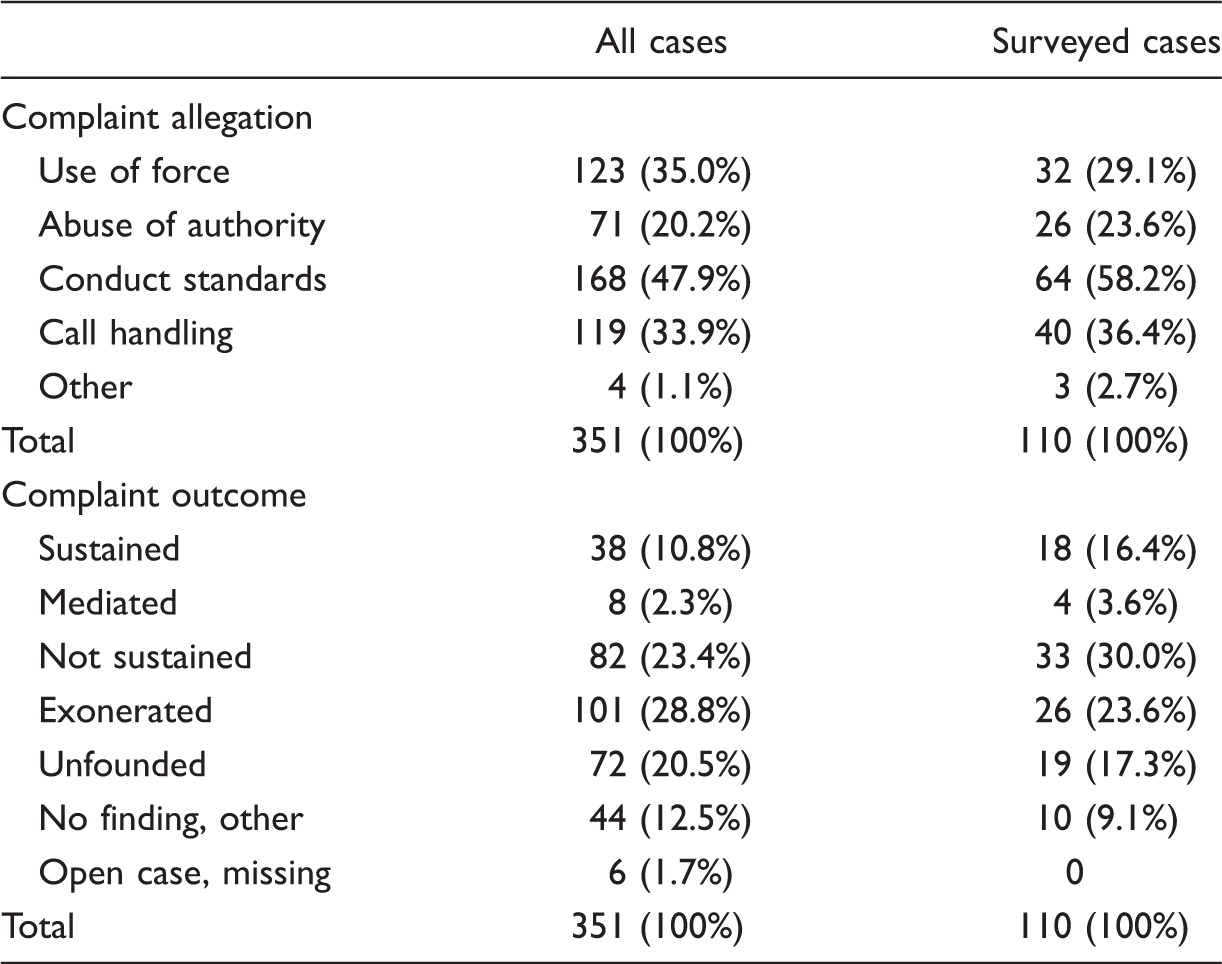
Nearly half of all complaints filed between 2001 and 2009 included more than one allegation of misconduct. Using the CRB’s classification system, 35% involved the use of force, an additional 20% involved the abuse of some other form of police authority (mainly to arrest or search), nearly half involved “conduct standards,” and one third involved “call handling.” The nature of the allegations in surveyed cases was roughly comparable. 7
Complaint Allegations and Outcomes.
Structural Factors
Two structural features of the CRB process could be expected to contribute to an image (and perhaps a reality) of procedural fairness: the appointment of monitors, and the opportunities for complainants to attend and speak at the CRB meetings at which their complaints are disposed.
Monitor
We might expect that the involvement of a monitor—someone independent of the police department—in the investigation would enhance complainants’ confidence in the integrity and thoroughness of investigations, and hence make complainants more satisfied with the process. In effect, the appointment of a monitor contributes neutrality to the quality of decision-making. CRB records indicate that monitors were appointed in 64 (58%) of the 110 cases that we analyze here. However, the appointment of monitors was not uniformly understood by complainants. It appears that only about one third of complainants to whose cases monitors were assigned were aware that monitors had been assigned; more than half believed that no monitor had been assigned, while about one in eight simply did not know. Misunderstanding went the other way as well: one fifth of the complainants mistakenly believed that a monitor had been assigned when, in fact, no monitor had been appointed. Overall, 25 complainants believed that a monitor was assigned to their case. We measure and analyze both the actual appointment of a monitor, based on CRB records, and complainants’ perceptions of the involvement of a monitor, based on interview responses.
CRB meeting
We might also expect that the opportunity that CRB meetings afford to complainants to hear the discussion about their complaints, lending to the process a high degree of transparency, would contribute to complainants’ sense of the fairness of the process in terms of decision-making. Thirty-nine complainants (36%) reportedly attended the CRB meeting at which their complaints were discussed. Nearly half of those who attended the CRB meeting took the opportunity to speak.
Time to disposition
We might also expect the celerity of the process to be related to perceived quality of justice. The median time from complaint receipt to CRB decision is 25 weeks, with a wide range, from a few weeks to a few years.
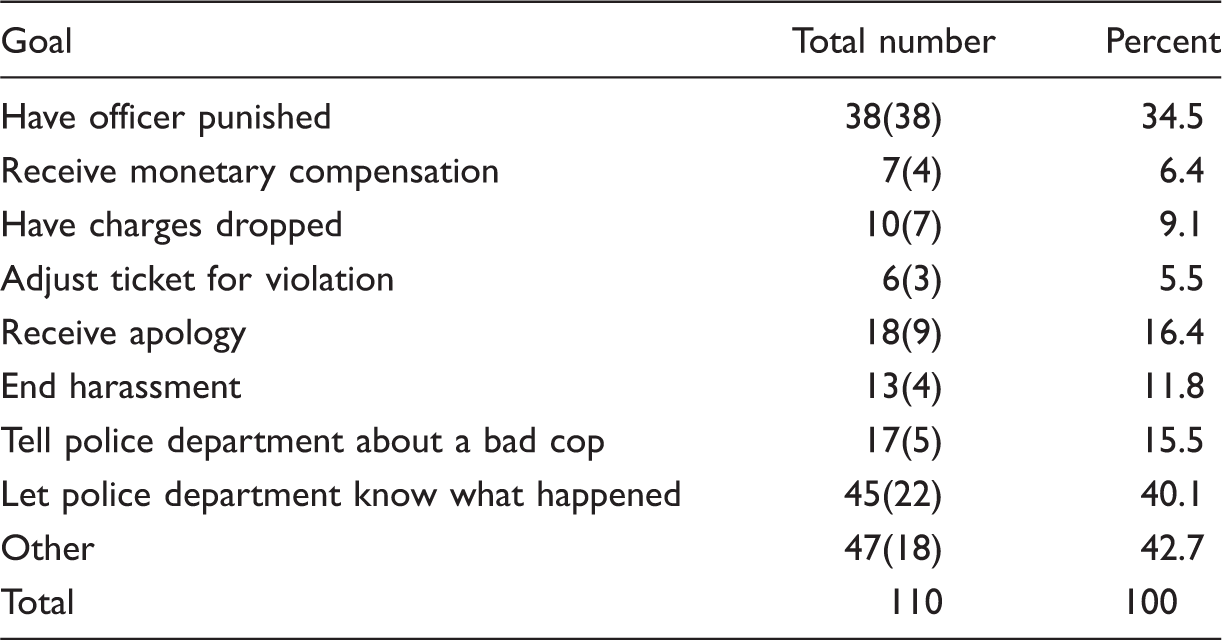
Complainants’ Objectives
Complainants’ Objectives.
Procedural Justice Judgments
Procedural Justice Judgments.

Response categories: Agree strongly = 2; Agree somewhat = 1; Disagree somewhat = −1; Disagree strongly = −2.
Complaint filing
Complainants reported that, for the most part, they encountered little or no difficulty in filing their complaints. Of those who expressed an opinion (N=91), 82% agreed that it was easy to understand what had to be done to file a complaint. The same fraction reported that they did not find it difficult to file their complaint. On the index formed by these two items (which has an alpha of .69), nearly 70% of the complainants had a score in the favorable range. The ease with which complaints are filed could reflect on the receptivity of the complaint review process to complainants’ participation or “voice” (quality of decision-making) or its consideration of complainants’ needs and hence the trustworthiness of its motives (quality of treatment).
Complaint intake
Those who had contact with officers at intake (N = 71) report more positive than negative experiences. Officers were, according to complainants, polite (80%), understanding (61%), helpful (56%), and did not try to dissuade the complainant from filing a complaint (74%). On the index formed by these four items (which has an alpha of .87), nearly two thirds of the complainants had a score in the favorable range. A positive experience at complaint intake may reflect on the quality of treatment (being treated with dignity and respect) and the quality of decision-making (neutrality).
Investigation
Complainants’ experiences with investigators, when they had what they recognized as an experience with investigators, were mixed. 11 Three-quarters felt that they had a chance to tell their side of the story, but only half thought that the investigator listened to them, and only 60% felt that the investigator understood the complainant’s version of the incident. On the index formed by these three items (which has an alpha of .86), nearly two thirds of the complainants had a score in the favorable range.
Most (86%) complainants who knowingly interacted with investigators considered them to have been polite, but only about half thought that their complaint was taken seriously, that the investigator showed concern for their rights, or that the investigator was interested in finding out the truth. About one third thought that the investigator kept them adequately informed. On the index formed by these five items (which has an alpha of .85), 54% of the complainants had a score in the favorable range.
Timeliness
Complainants’ estimates of the time from the filing of their complaints to disposition are largely congruent with CRB records, and complainants tend to think that the process takes too long. Nearly two thirds agreed with the statement, “It took too long to reach an outcome,” and an additional 10% said that they did not know. The time to disposition may reflect the perceived trustworthiness of decision-makers in terms of the care and attention given to the complainants’ needs.
Kept informed
Most complainants report that they were not adequately informed during the complaint process. Asked to agree or disagree with the statement, “I felt that I was adequately informed during the complaint process,” 57% strongly disagreed, and an additional 13% disagreed somewhat. Less than one third of the complainants felt adequately informed.
Outcome explained
Most complainants believe that they did not receive an adequate explanation of the outcomes of their complaints. Asked to agree or disagree with the statement, “I received an adequate explanation of the outcome of my complaint,” 56% strongly disagreed, and an additional 16% disagreed somewhat. Only 27% indicated that they considered the explanation adequate. Keeping complainants informed and explaining the outcome of complaints demonstrate trustworthy motives as well as the neutrality and evenhandedness of decision-making.
Thoroughness
Complainants were also skeptical that outcomes were based on a thorough review of the evidence, reflecting distrust of the neutrality of the process, at least to the extent that objective facts were considered. Nearly two thirds of the complainants disagreed strongly that the outcome of their individual complaint was based on a thorough review of evidence, and an additional 9% disagreed somewhat; 9 complainants said that they did not know.
Biased process
Most complainants believed that the complaint review process was biased in favor of the officer, though 12 complainants did not believe that the process was biased toward police, and 13 professed not to know. Correspondingly, hardly any of the complainants believed that the process was biased in their favor. Perceptions of bias indicate a lack of trust in the process and indicate that complainants do not perceive complaint review as neutral.
Complainant Satisfaction
Complainant Satisfaction With Complaint Process.
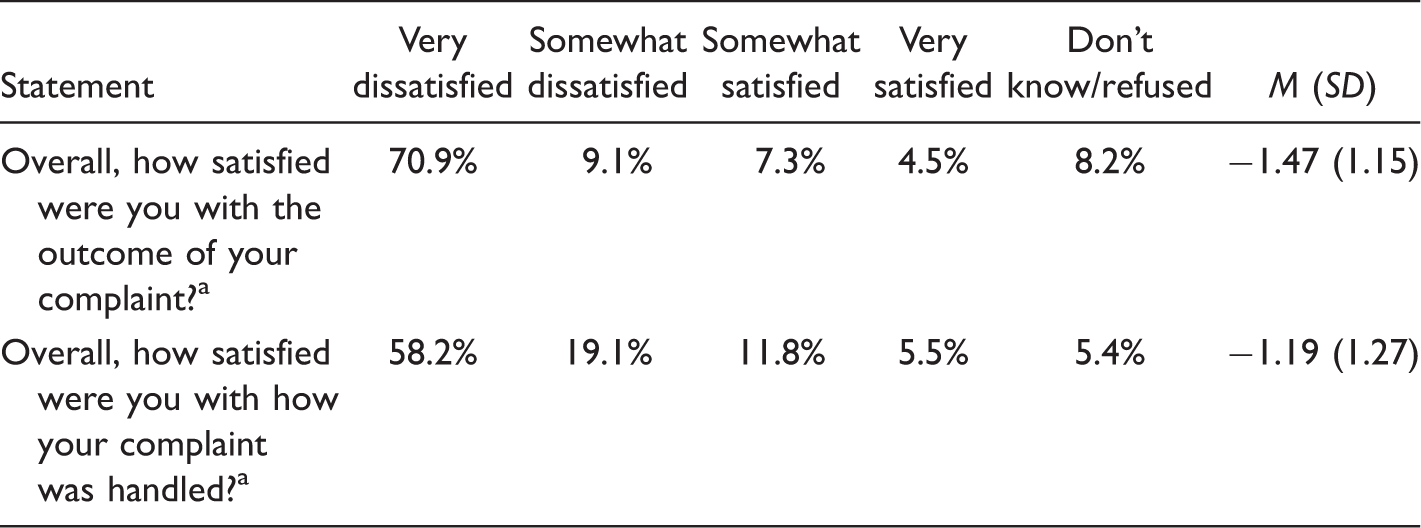
Response categories: Very satisfied = 2; Somewhat satisfied = 1; Somewhat dissatisfied = −1; Very dissatisfied = −2.
Dissatisfaction with the handling of complaints was only slightly less prevalent, as somewhat more than three-quarters of the complainants—82% of those who expressed an opinion—were very or somewhat dissatisfied with how their complaints were handled. But one can detect a difference in levels of satisfaction with the process and that with outcomes, in that complainants report a more moderate degree of dissatisfaction with the process, as 19% were only somewhat dissatisfied, while 58% were very dissatisfied. Still, only 18% of the complainants were at least somewhat satisfied with how their complaints were handled.
Complainant Characteristics
We include in our analysis complainants’ race/ethnicity, educational achievement, and reported history of complaints against the police. Slightly more than half (53%) of the complainants were Black and 10% were Hispanic. Educational background ranged from no high school diploma (10%) to advanced degrees (18%). The modal and median level of education was some college, but less than a bachelor’s degree (42%); 31% of complainants had at least a bachelor’s degree, while 18% had only a high school diploma. Nearly one quarter of complainants (22%) had previously filed complaints against police. We also collected information on household income from those respondents who agreed to answer questions about it. Some income information is available for all but nine respondents: 30 of 101 (30%) earned less than $20,000, while the remainder earned more. 12
Analysis
We treat as dependent variables each of the procedural justice judgments, casting as wide a net as possible for evidence of salutary effects. On each such variable, we estimate the effects of the nature of the complaint allegations, the complainants’ interest in having the officer punished, the outcome of the complaint, the structural features of the process,
13
and the characteristics of complainants. We also examine satisfaction—with complaint handling and with the outcome—as dependent variables, on which we estimate the effects of all of the foregoing variables. Figure 1 displays the hypothesized relationships in diagrammatic form. We rely primarily on OLS estimates of model coefficients.
Hypothesized relationships.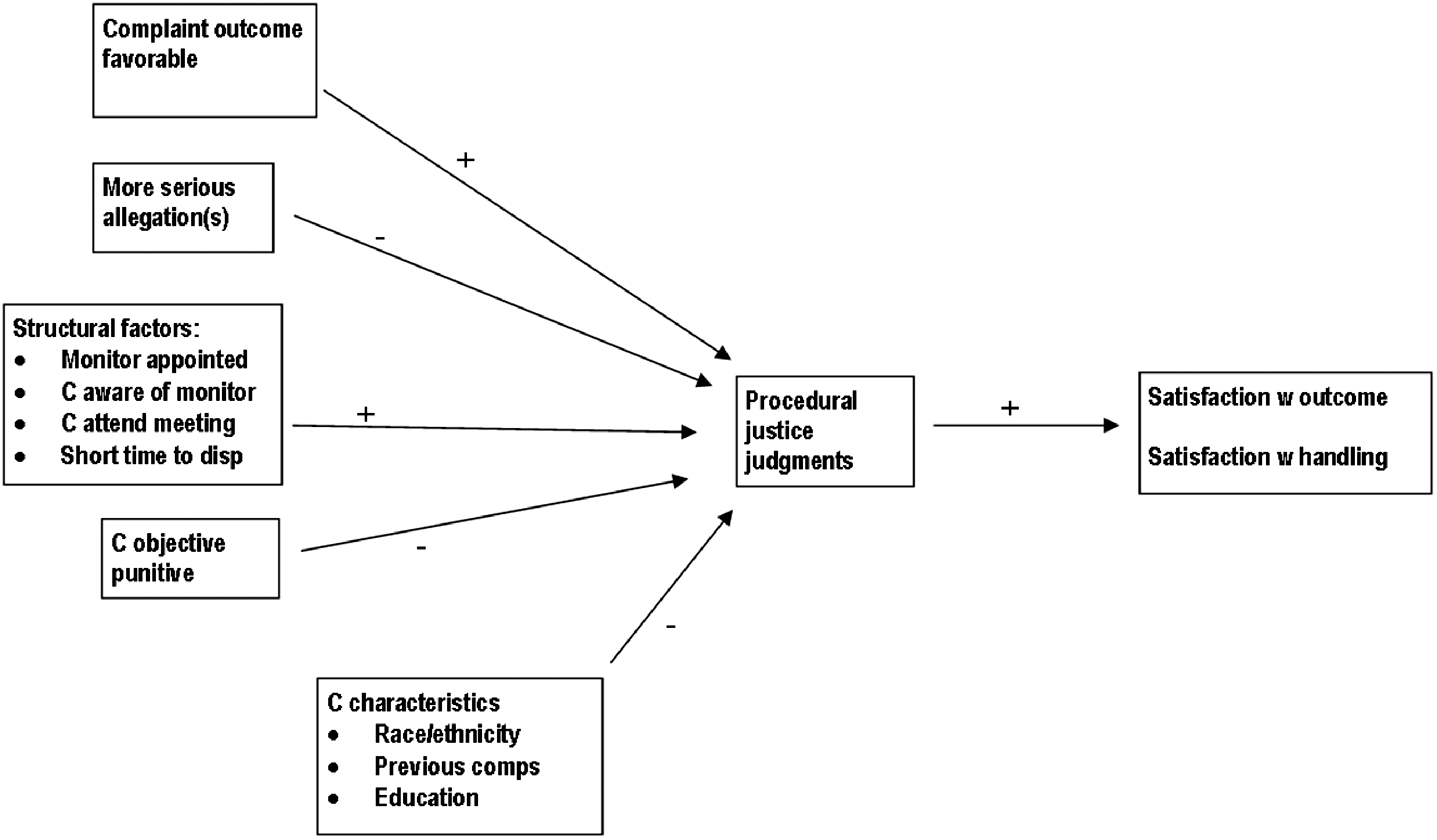
We did not sample from among complainants, but rather sought to survey the population; due to nonresponse, we have a nonrandom sample that is representative in terms that we can evaluate. We report tests of statistical significance, using significance levels of .05 and .10 in recognition of the statistical power afforded by the sample size. But our interpretation of regression coefficients turns mainly on substantive significance, including effect sizes as appropriate (see Cohen, 1994).
Findings
Procedural Justice
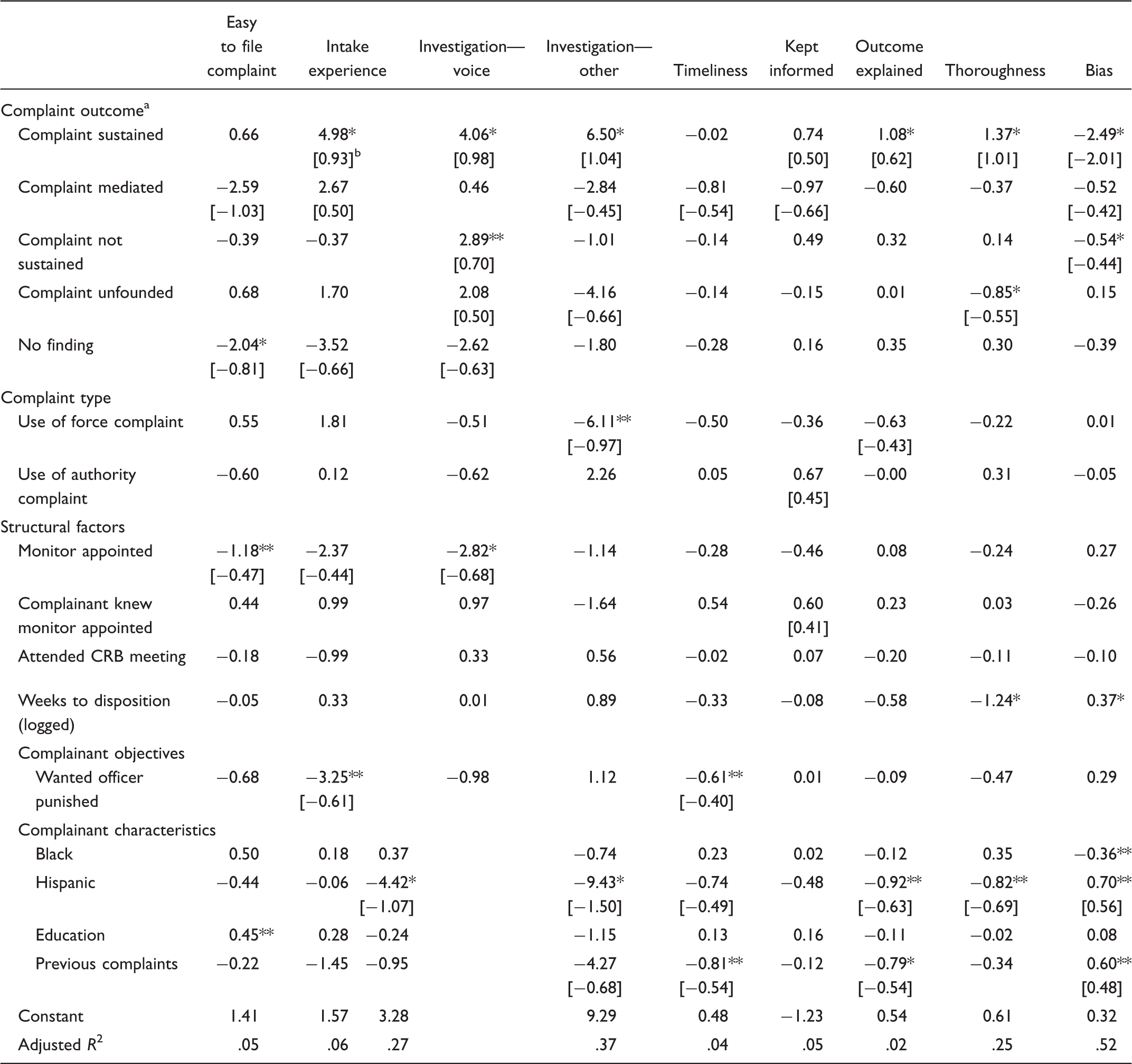
Regression Analyses of Complainants’ Procedural Justice Judgments.
Note. CRB = Citizens’ Review Board.
The dispositional reference category is exonerated.
Effect sizes greater than |0.4| in brackets.
p < .05. **p < .10.
Other dispositional outcomes were either unrelated to or exhibited inconsistent effects on complainants’ procedural justice judgments. Complainants whose complaints were mediated tended unexpectedly to be less favorable on several scores, though very few complaints were disposed in this way and the estimated effects were not so reliable as to achieve statistical significance. Complainants whose complaints concluded with no finding tended to be more negative only about the front end of the process—intake and investigation. Given that complainants do not entirely grasp the distinctions among the categories of disposition, this should not be surprising. Many complainants told us that they did not understand the disposition of their complaints; more than half of the complainants strongly agreed with the statement, “I did not understand why my complaint was [fill in outcome].” The differences among dispositions other than sustained—that is, unfounded, exonerated, not sustained, and so forth—appear to befuddle many complainants. Complainants did not understand the meaning of the outcomes and consequently did not understand how those outcomes were reached.
The CRB’s structural characteristics appear to have no or only weak beneficial effects on complainants’ procedural justice judgments. The appointment of a monitor is associated with less favorable judgments in some instances, particularly those that relate to earlier stages of the complaint review process, and is unrelated to others. 15 Complainants who believed (correctly or incorrectly) that a monitor was appointed in their cases were neither more nor less favorable about the procedural justice of their experience, with one possible exception: complainants who believed (correctly or incorrectly) that a monitor had been appointed in their cases tended to think better of the timeliness of the disposition. Complainants who attended the CRB meeting at which their complaints were disposed were not more positive about the process. The time that elapsed from filing to disposition affected only complainants’ perceptions of thoroughness and of bias, and both effects were unfavorable, though these effects were of only moderate magnitude; an additional delay of 8 weeks yielded, on average, a less favorable rating of 1 to 1.5 on the 5-point scale.
Neither does the type of the complaint—that is, the nature of the complainants’ allegations—appear to have substantial effects on complainants’ procedural justice judgments. The presumptively more serious allegations of excessive force or abuse of authority did not, for the most part, have independent effects on complainants’ judgments about procedural justice. The principal exception to this general rule is the estimated effect of excessive force allegations on complainants’ judgments about their experiences with investigations.
Complainants with punitive objectives were for the most part neither more nor less favorable about procedural justice—less favorable about complaint intake, and more negative about the timeliness with which complaints were resolved. But in the main, punitiveness had no detectable effects on procedural justice judgments. Hispanic complainants tended to be much less positive about their experiences, particularly beyond the filing stage, perhaps due to language barriers in communication (though all of them were able to complete our interview in English) or to cultural factors. But Black complainants’ judgments did not differ substantially from those of White complainants. Complainants who had previously filed complaints tended toward the more unfavorable judgments, especially with respect to the postfiling stages of complaint review, and in their more summary judgments about the thoroughness of the process and its bias toward police. 16
Complainant Satisfaction
The two outlooks on complaint review are strongly correlated. Of those who expressed an opinion about both their satisfaction with the outcome and their satisfaction with how their complaints were handled, 70% selected identical response categories (e.g., very satisfied, somewhat dissatisfied). Of those who were dissatisfied with outcomes, only 11% were somewhat satisfied with how their complaints were handled (none was very satisfied). Of those who were satisfied with the outcomes, only 17% were dissatisfied with the process (Table 4).
Satisfaction bears a strong relationship to outcomes. Half of those whose complaints were sustained were very or somewhat satisfied with the outcome. By contrast, only 9% of those whose complaints were not sustained or exonerated, along with 6% of those whose complaints were unfounded, were very or somewhat satisfied. All of the other complainants, with the exception of a few who did not express an opinion, were very or somewhat dissatisfied. Every person whose complaint was mediated was very dissatisfied, though we would note there were only four complainants in this category. The association between satisfaction and complaint outcomes might be stronger still but for the fact that complainants do not all comprehend the outcomes in which their complaints eventuated. Only about half of the complainants whose complaints were sustained realized that their complaints were (at least partially) sustained; the remainder either did not know what the outcome was in a way that they could describe it, or mistakenly believed that the allegations had been “dismissed” or something similar. 17
Satisfaction with complaint handling was only somewhat less strongly related to dispositions than satisfaction with outcomes was. Three in eight complainants whose complaints were sustained were very or somewhat satisfied with the process. Only 12% to 16% of those whose complaints were not sustained or exonerated were very or somewhat satisfied, and just one complainant whose complaint was unfounded was at least somewhat satisfied.
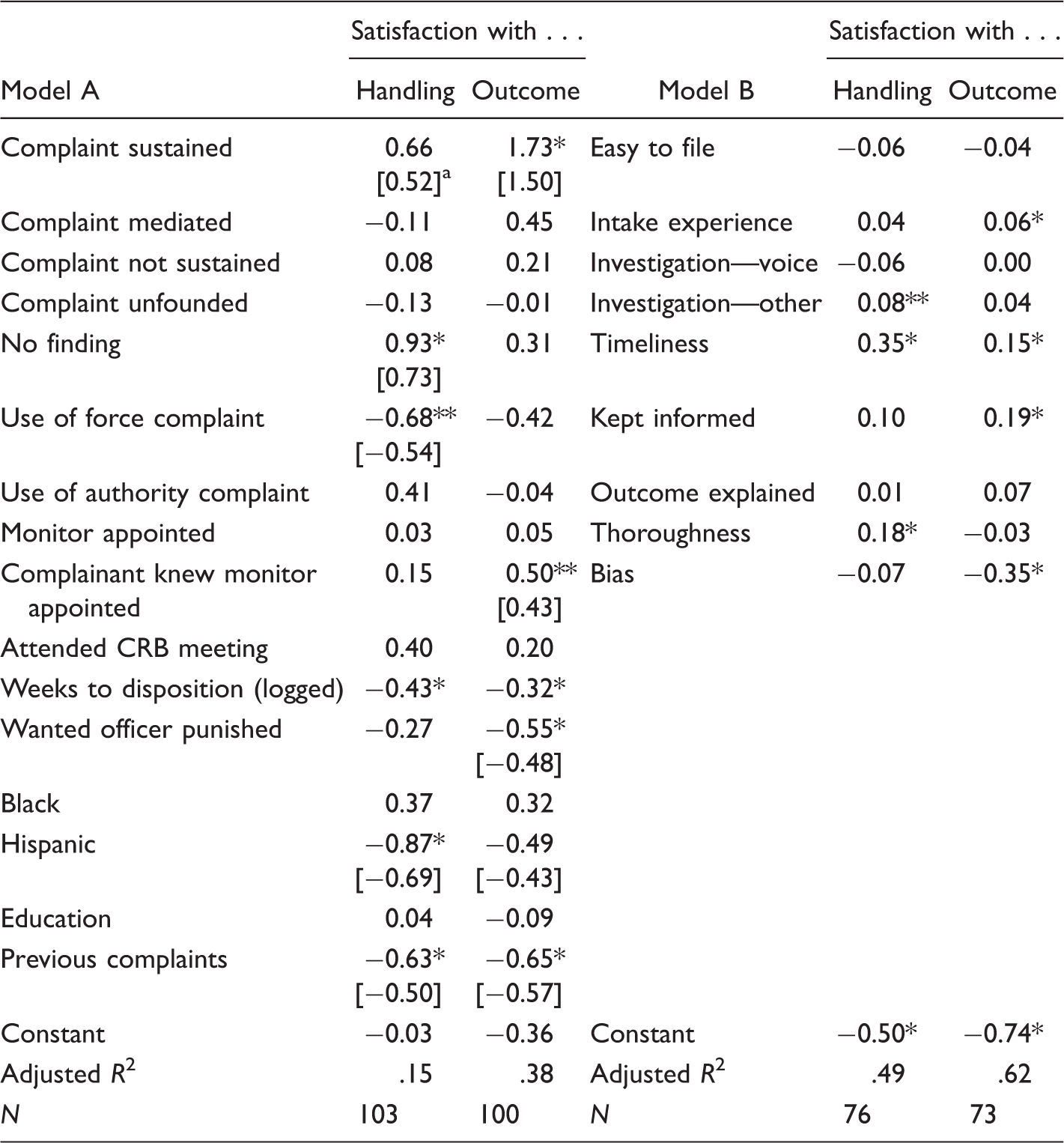
Regression Analyses of Complainants’ Satisfaction.
Note. CRB = Citizens’ Review Board.
Effect sizes greater than |0.4| in brackets.
p < .05. **p < .10.
In many respects, the pattern of influences on satisfaction in Model A parallel those on complainants’ procedural justice judgments: Complainants whose complaints were sustained are more satisfied, both with how their complaints were handled and with the outcomes; Hispanic complainants were markedly less satisfied; and complainants who previously filed complaints are less satisfied. Neither the appointment of monitors nor complainants’ attendance at CRB meetings had detectable effects on satisfaction.
Four differences emerge from this analysis. First, complainants whose allegations included the use of excessive force were less satisfied; use of force complaints were not, in general, associated with less favorable procedural justice judgments. Second, the elapsed time from filing to disposition affected both forms of satisfaction, even though it did not affect most procedural justice judgments. Third, complainants who were aware that monitors had been appointed to their complaints were more satisfied with the outcome (but not with handling). Finally, complainants who wanted the officer punished for the alleged misconduct were, not surprisingly, less satisfied with outcomes.
Complainants’ satisfaction with outcomes is not, in general, driven by the same procedural justice judgments that drive their satisfaction with how complaints were handled, as shown for Model B. Outcome satisfaction turns mainly on complainants’ perceptions of bias and, to a lesser extent, their experiences at complaint intake (as a difference of 8 points on the 16-point scale yields an increase in satisfaction of nearly 0.5 on the 5-point scale); perceived timeliness and a sense of having been informed have more modest (but statistically reliable) effects. Complainants’ satisfaction with how their complaints were handled—with the process—turns mainly on timeliness and their experiences with investigators.
Discussion
Most complainants whose complaints are processed by Ashton’s CRB are dissatisfied with both the outcomes of their complaints, a small fraction of which are sustained, and the process by which the outcomes are reached. Our analysis suggests that outcomes shape complainants’ perceptions of many aspects of the process, and extant research suggests that no alterations in how complaints are investigated and evaluated will yield substantially higher rates of sustained complaints. Any process that revolves around the adjudication of allegations of police misconduct will, our findings indicate, seldom meet complainants’ expectations in filing complaints. Those who seek to have officers sanctioned will seldom have reason to feel satisfied, for if their complaints are not sustained, then no punishment is applied. Further, the majority of complainants who do not seek to have officers punished are still less likely to have their expectations met. Even if they want merely to make the police department aware of the incident or of an officer who, in their opinion, performed poorly, the information that they provide is, in effect, discredited unless their complaints are sustained. As previous research has reported, formal resolutions of complaints against police tend to leave complainants dissatisfied (De Angelis, 2009; Sviridoff & McElroy, 1989).
Some cheer might stem from the finding that complainants are not nearly so negative in their procedural justice judgments as they are dissatisfied with the process and outcome of complaint review. In contrast with the prevailing dissatisfaction, complainants were more favorable than unfavorable in their assessments of the front end of the process: complaint intake and interactions with investigators, where many complainants felt that they had an opportunity to explain their views and thereby exercise “voice.” But in the end, those judgments have only modest influences on complainants’ more summary assessments of their experiences.
Moreover, structural features of the complaint review process that might be expected to contribute to complainants’ sense of procedural fairness have weak, if any, effects on their subjective experiences. The appointment of monitors had no positive effect on complainants’ judgments, perhaps because it was frequently misunderstood by complainants, but even when complainants were reportedly aware that monitors had been appointed, their assessments of procedural fairness were largely unaffected. Similarly, the opportunity for a complainant to attend the CRB meeting, listen to the deliberations about the evidence bearing on the complainant’s allegations, and even to address the Board prior to the rendering of its decision had no effect that we could detect. We might cautiously infer that whatever virtues these procedures might be seen to have are swamped by the overriding impact of complaint outcomes.
Expectations that a complaint review process structured to provide for greater procedural justice will in fact instill in complainants a greater sense of procedural fairness may be based on untenable assumptions. Procedural justice judgments and other elements of subjective experience are not simple functions of the transparency and objective neutrality of the process to which complainants are exposed. We might better assume that subjective experiences are subject to many influences, over a number of which neither police nor citizen oversight authorities have any control. One of those is the attitudes toward the police that citizens bring to their contacts with police, which influence their satisfaction with the contact, and which thus shape the population of complainants and the attitudes that complainants bring to the complaint review process. Research on complainants’ satisfaction has been unable to take account of the effects of complainants’ prior attitudes toward the police, which could have a very substantial bearing on their perceptions of and judgments about the complaint review process. Analyses of panel surveys have shown that citizens’ perceptions of their encounters with police are strongly shaped by their prior attitudes toward the police (e.g., Brandl, Frank, Worden, & Bynum, 1994; Rosenbaum, Schuck, Costello, Hawkins, & Ring, 2005); similar patterns hold for citizens’ procedural justice judgments (Tyler, 1990; Tyler & Fagan, 2008). Recent research found a weak connection between the procedural justice with which police officers act, on one hand, and the procedural justice judgments that citizens make, on the other hand (Worden & McLean, 2017). We should not presume too much about the strength of the connection between “objective” features of a citizen’s experience with the police—or with police complaint review—and the citizen’s subjective experience. Personal experience requires interpretation, and those interpretations are likely shaped by prior attitudes and expectations (see, e.g., Brandl et al., 1994). Moreover, it is likely that those who file complaints against the police are drawn predominantly from among people who have negative attitudes toward the police more generally. If complainants’ prior attitudes toward the police influence how they experience the complaint review process, then even an objectively fair process might not overcome the expectations with which complainants begin and the confirmation bias to which they may be susceptible.
It is not clear that these results contradict those of previous research on procedural fairness, which has found that the structural nature of a dispute resolution process affects participants’ judgments about the fairness of the process, their sense of influence over the outcomes, their sense of involvement in the process, and their judgments about the fairness of the third party. In addition to the results of laboratory experiments (see Lind & Tayler, 1988), the findings of field studies may be particularly instructive. Kitzmann and Emery (1993) compared the subjective experiences of parents whose child custody disputes were handled through either mediation or litigation. The outcomes of both procedures were very similar and favored the mothers, who were equally satisfied with both procedures; as Kitzmann and Emery point out, “in the case of good outcomes, disputants are satisfied regardless of the procedures used … ” (1993, p. 554). Fathers, however, were more satisfied in mediation. Similarly, Shapiro and Brett (1993) compared the subjective experiences of coal miners whose employment grievances were handled through either mediation or arbitration. They found that mediation was associated with more positive judgments about subjects’ control over outcomes, influence on the process, and third-party fairness.
Mediation of citizen complaints against the police, as a less formal method of dispute resolution, has been found to be more satisfying to complainants than traditional methods (Bartels & Silverman, 2005; Dobry, 2001; Hill et al., 2003; Schaible, De Angelis, Wolf, & Rosenthal, 2012; Walker, Archbold, & Herbst, 2002). Schaible et al. (2012) found that mediation increased satisfaction more for minorities than it did for White complainants, a finding that suggests that subgroups of complainants “may bring different concerns, which result in differential satisfaction across mechanisms” (p. 645).
Limitations
We must acknowledge that ours is a study of only one city’s oversight mechanism, and because it is a small- to medium-sized city, our analysis is based on a modest number of cases. The statistical analysis that the data support, given the N and given the distributions on some key variables, is not powerful. Conclusions must be drawn very cautiously. But this study adds to a small body of existing research, with which the findings reported here are consistent.
Implications
If these results are generalizable, then they may have implications for police executives, for those engaged (as professionals or as volunteers) in police oversight, and for researchers. First, many complainants were not well informed about the complaint review process: Many of those to whose cases a monitor had been appointed were not aware of that fact; many complainants did not understand the various outcomes in which a complaint could eventuate; many complainants did not know even in what outcome their complaints had eventuated. Whether more successful efforts could be made to inform complainants is hard to say with certainty. Ashton’s CRB is staffed by a local law school under a contract with the city such that communication with complainants is not left only to volunteers or to police investigators, and support staff are available during normal business hours. Many complainants are not residentially stable and so can be difficult to reach. Further efforts to inform complainants about the process may therefore need to be made at the point of intake, or shortly thereafter.
Second, many complaints appear to be based on citizens’ misunderstandings or misperceptions. When complaints are disposed as exonerated such that only the propriety of police action—rather than what actually transpired—is in question, we might infer that complainants misunderstand what police may, must, or must not do. It might be possible to better educate complainants about the content and rationale for police policy and procedure, though that may require civilian rather than sworn staff to perform this function. When complaints are disposed as unfounded, it may be that citizens simply misperceived what transpired. The proliferation of body-worn cameras might make it possible for a video/audio review by a complainant, guided by a sworn or civilian staff member, so that the complainant can see and hear what actually happened.
More generally, we should not look only at complainant satisfaction to assess the effects of citizen oversight on public trust and police legitimacy. Citizen oversight of the police may improve public trust not primarily (or at all) by shaping the experiences of those who complain, but rather by signaling to the broader audience of city residents a city’s commitment to police accountability. Citizen oversight may be especially important to police “sovereigns,” that is, officials who have formal authority over a police agency, and those who have influence over those officials. The very existence of citizen oversight may well enhance public trust in the police.
Citizen oversight might also increase trust in complaint review particularly, and it may thus affect, even if only at the margin, citizens’ decisions to complain or not when they believe that they have a reason to complain. We might infer that this accounts, at least in part, for the higher rate of complaints associated with “improved” complaint review (Worrall, 2002) and for increases in the number of complaints when citizen oversight is established (Walker, 2001, p. 123). We know very little about the forces that affect citizens’ choices to file complaints against the police (Walker & Graham, 1998). Filling these empirical gaps is a task for future research.
Footnotes
Declaration of Conflicting Interests
The authors declared no potential conflicts of interest with respect to the research, authorship, and/or publication of this article.
Funding
The authors disclosed receipt of the following financial support for the research, authorship, and/or publication of this article: This research was conducted under contracts with the Ashton Law School, 2001–2004 and 2009–2010, respectively. We gratefully acknowledge the support.