Abstract

ISFM Congress poster session A total of 17 clinical/research abstracts were accepted for presentation at the poster session held during the 2021 ISFM World Feline Congress, 25–27 June. The poster session continues to be available on demand until the end of the year. Visit: icatcare.org/events/isfmworld-feline-congress to register; or isfmworldfelinecongress.com/isfm2021, if already registered.


Kinetic Rehabilitation of a Tetraplegic Cat After Ventral Corpectomy of the Third (C3) Vertebra
Eirini Sarpekidou, Rania Baka, Michael Patsikas, George Kazakos
Companion Animal Clinic, School of Veterinary Medicine, Aristotle University of Thessaloniki, Greece
Email:
This report presents a case of ventral slot decompression for treatment of bone hyperplasia of the C3 vertebra of a cat suffering tetraparesis.
A 2-year-old intact male European domestic shorthair cat was presented to the Companion Animal Clinic of the Aristotle University of Thessaloniki with an 11-month history of progressive non-ambulatory tetraparesis. The neurological examination revealed cervical syndrome with a neurological severity of 4 (scale 0–5). Spastic non-ambulatory paralysis affecting all four limbs, with the presence of deep pain perception and absence of voluntary urination, was found. Radiographs, a myelogram and CT confirmed the presence of an osseous ventral compression of the spinal cord in the area of the body of the C3.
At first, a bone biopsy and culture of the area were performed at the owner’s request. A few days later, once the lesion was confirmed pathologically as being non-neoplastic tissue, a ventral slot with partial corpectomy of the C3 was performed to decompress the spinal cord. The slot extended only one-third of the vertebral body width and length. Histopathology reported bone remodelling in the absence of malignancy. Surgery and recovery were uneventful. The cat regained control of the bladder sphincter within 24 h of the spinal cord decompression. On re-examination 21 days postoperatively, the cat had regained complete mobility and radiographs were unremarkable.
In this case, ventral slot decompression contributed to kinetic rehabilitation of the cat. At the time of writing, 17 months after surgery, the cat maintained full locomotion.
Signs and Alleviation of Travel Anxiety in Cats: A Survey Among Cat Owners
Terttu J Lamminen, John C Aspegrén
Orion Corporation, Orion Pharma, Espoo, Finland
Email:
The aim of this study was to collect information on signs of travel anxiety in cats and the use of medications and other products to alleviate those signs.
Cat owners in the UK and USA were contacted via email and/or social media, and a questionnaire was shared via a public web link. The survey was produced using Webropol 3.0.
In total, 364 owners (UK: 261; USA: 103) completed the survey for 451 cats (UK: 326; USA: 125) with travel anxiety. The most common signs were vocalisation (80%), abnormal activity (40%) and panting (30%). Eighty percent had started showing signs at a young age, and the travel anxiety had either worsened or not changed over time. Many cats also showed similar signs in other situations, such as when placed in a carrier box (36%), visiting a veterinary clinic (35%) or when exposed to any new environment (15%).
Pheromones (14%) and other non-medicinal products (10%) were most frequently used to alleviate signs of anxiety during transportation, but were often assessed to have a poor (55%) or only some (35%) effect. Few owners (2%) had used off-label prescription medicines. However, most (61%) were interested in trying a registered prescription medicine for travel anxiety if there was one available for cats. An oral solution, gel or paste were preferred over a tablet formulation.
This survey increases the knowledge about the signs of travel anxiety in cats, and medications and other products currently used to manage the problem. It shows that there is a clear unmet need to effectively relieve cats’ anxiety during transportation.
Risk Factors and Survival Rates for Portuguese Cats Naturally Infected with Feline Panleukopenia Virus
Inês C Machado1,2, Miguel M Maximino3, Telmo P Nunes2,3, Luís M Tavares2,3, Virgílio S Almeida2,3, Solange A Gil1-3
1Biological Isolation and Containment Unit, Teaching Hospital, Faculty of Veterinary Medicine, University of Lisbon, Lisbon, Portugal
2CIISA – Centre for Interdisciplinary Research in Animal Health, Faculty of Veterinary Medicine, University of Lisbon, Lisbon, Portugal
3Faculty of Veterinary Medicine, University of Lisbon, Lisbon, Portugal
Email:
Feline panleukopenia virus (FPV) is responsible for serious systemic infection and is a major health and welfare concern among cat populations due to high morbidity and mortality rates.
The main objectives of this study were to characterise FPV cases, identify risk factors associated with infection and analyse the survival rates of patients hospitalised at the Biological Isolation and Containment Unit in the Teaching Hospital of the University of Lisbon, Portugal, during a 7-year period (2013–2020).
A case-control study was conducted using data from 64 panleukopenia virus-infected cats and matched controls. First, a simple regression analysis investigated eight potential risk factors: age, breed, sex, neuter status, number of cohabitants, lifestyle, vaccination status and the presence of concomitant disorders. Variables with a P value ≤ 0.20 were then included in a multiple regression model: neuter status, vaccination status, number of cohabitants, presence of concomitant disorders and age (≤ 1 year old vs ≥ 2 years old).
Absence of correct vaccination (odds ratio [OR] = 47.1; 95% confidence interval [CI] = 10.99–346.86), age ≤ 1 year old (OR = 13.2; 95% CI = 4.87–40.63) and absence of concomitant disorders (OR = 7.3; 95% CI = 2.88–19.83) were identified as risk factors (with P values <0.05).
The median hospitalisation stay was 6 days (1–15 days), with a discharge rate of 73.4%. This compares with a discharge rate of 43.8% in 2016, indicating the important role that specialised equipment and nursing care can play.
These results demonstrate that with specialised animal care, good survival rates can be achieved, even in critically ill, young, non-vaccinated kittens; however, prolonged hospital stays are necessary.
This work was supported by CIISA – Centra de Investigação Interdisciplinar em Sanidade Animal, Faculdade de Medicina Veterinária, Universidade de Lisboa, Lisboa, Portugal, Project UIDB/00276/2020 (funded by FCT).
Online Survey of Owners’ Experiences of Medicating their Cats at Home
Samantha Taylor1, Sarah Caney2, Claire Bessant1, Danièlle Gunn-Moore3
1International Cat Care, Tisbury, UK
2Vet Professionals, Pentlandfield, Roslin, UK
3Royal (Dick) School of Veterinary Science, University of Edinburgh, UK
Email:
Medicating cats can be challenging. Attempts to medicate can negatively affect the owner-cat relationship and result in owner injury, failure to complete medication courses and reluctance to seek veterinary care.
An online survey asked owners to consider their experience of medicating their cat and rate the difficulty of administering tablets and liquids using a 1–10 scale (1 being easy and 10 being impossible). Owners were also asked how they gave the medication, what their medication formulation preference was, if medicating their cat had affected their relationship and if their cat had shown negative behavioural responses to being medicated.
This abstract reports the results of 1356 complete survey responses from cat owners without veterinary/cat professional training obtained in the first 4 weeks of the survey. Regarding tablets, 44% of owners gave these in food or a treat (22% crushed and 22% whole) and 55% gave them directly into the mouth (43% by hand and 12% with a pill-giving device). Regarding liquids, 32% of owners gave these in food or a treat (9% liquid treat and 23% in food) and 67% gave them directly into the mouth. The table shows rating of ease of administration of tablets and liquids for those with experience of these formulations.
Ease of administration of tablets and liquids
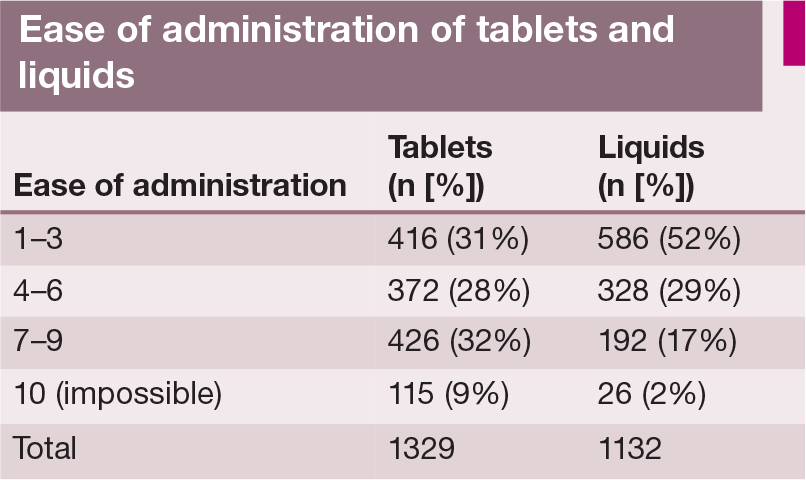
Given the choice of any medication formulation, 54% would opt for liquid and 29% would choose tablets. Thirty-two percent of owners felt medicating their cat had changed their relationship with their cat and 73% of cats showed negative behavioural responses to medicating (eg, running away from the owner, more wary of the owner).
2019 Cancer Registry of Feline Tumours in Portugal
Maria Soares1-3, Catia Marques1,2, José Catarino1,3,4, Mariana R Batista1,2, Joana Catita1,2, Pedro Faísca1,3,4 1Faculdade de Medicina Veterinária, Universidade Lusófona de Humanidade e Tecnologias, Lisboa, Portugal
2CIISA, Faculdade de Medicina Veterinária, Universidade de Lisboa, Lisboa, Portugal
3CBIOS, Research Center for Biosciences & Health Technologies, Lisboa, Portugal
4DNAtech, Lisboa, Portugal
Email:
Cancer is an important cause of death in cats, posing serious challenges to veterinarians and owners. Most cancers are multifactorial diseases and, therefore, the epidemiology may change geographically. Updated data are key to guiding research efforts and cancer therapeutic/ prophylactic strategies. The aim of this study was to characterise the current distribution of feline tumours in Portugal.
A total of 752 feline histopathology records obtained in 2019, at a nation-wide veterinary laboratory in Portugal, were included. Data regarding breed, sex, age, type of tumour, malignancy and metastasis were recorded. Statistical analysis was conducted to detect associations between variables using an alpha value of 0.05.
A total of 55.3% of cats (n = 416) was diagnosed with at least one tumour. The overall analysis included 475 tumours, of which 74.7% (n = 355/475) were malignant. Mammary tumours were the most common (43.7%, n = 207/475), including carcinoma (n = 158) and adenoma (n = 36) and, thus, were frequently malignant (79.2%, n = 164/207). Mammary tumours were followed in frequency by tumours of the soft/mesenchymal tissue (19.6%, n = 93/475) and epithelial skin (18.4%, n = 87/475), which differs from published data in other countries. Soft/mesenchymal tissue (64.5%, n = 60/93) and epithelial skin (63.2%, n = 55/87) tumours were also frequently malignant. Lipoma (18.3%, n = 17/93) and fibrosarcoma (17.2%, n = 16/93) were the most common soft/mesenchymal tissue tumours diagnosed in this study; nevertheless, other tumours were also frequent, such as mastocytoma, lymphoma and hemangiosarcoma. Finally, squamous cell carcinoma accounted for 48.3% (n = 42/87) of epithelial skin tumours.
Statistical analysis showed that tumour malignancy was associated with older cats (mean age of 10.9 years, P <0.001). Furthermore, sex was associated with tumour type, since all the mammary tumours were diagnosed in female cats.
To the best of our knowledge, this is the first retrospective study of this type conducted in Portugal. Given the high frequency of malignant tumours, early diagnosis and screening for nodules is of paramount importance, both at home and during veterinary consultations.
Soft Skin and Tissue Infection Caused by OXA-181-Producing Klebsiella Pneumoniae ST273 in Portugal
Joana C Moreira da Silva1, Juliana C Menezes1, Carla S Salas2, Cátia S Marques1, Sheila Teodoro2, Andreia F Amaral1, Constança F Pomba1,3
1CIISA – Centro de Investigação Interdisciplinar em Sanidade Animal, Faculty of Veterinary Medicine, University of Lisbon, Portugal
2Hospital Veterinário do Arco do Cego, Lisbon, Portugal
3Genevet, Veterinary Molecular Diagnostic Laboratory, Carnaxide, Portugal
Email:
A 13-year-old female cat was admitted to a primary clinic with cholangitis. Despite initial improvement with cefalexin and metronidazole antimicrobial therapy, the cat developed prostration, anorexia and vomiting. An oesophagostomy tube was inserted. Within 7 days, the cat was referred to the Hospital Veterinario Arco do Cego due to fever and prostration. Tumefaction was present at the tube insertion site, from where a swab was collected.
An extended-spectrum beta-lactamase (ESBL)/carbapenemase-producing Klebsiella pneumoniae ST273 lineage harbouring the blaOXA-181, blaCTX-M-15 and blaSHV-1 genes was isolated, and was only susceptible to amikacin and gentamicin (minimum inhibitory concentration [MIC] ≤ 8 mg/l and ≤ 2 mg/l, respectively). Considering the cat’s age, the use of aminoglycosides was not ideal. As a therapeutic approach, the oesophagostomy tube was removed, and the wound was surgically cleaned. Antimicrobial treatment included metronizadole (18 mg/kg), enrofloxacin (5 mg/kg) and amoxicillin–clavulanate (25 mg/kg q12h).
The rationale behind the antimicrobial treatment protocol chosen for this case was to aid the cat’s immune system by giving it time to respond to infection and avoid additional secondary infections. Furthermore, by removing the source of infection (oesophagostomy tube), and with the consequent removal of biofilm, a reduction in bacterial load was likely. On re-evaluation 12 days later, the cat’s appetite had returned and haemogram levels were normal, and it was discharged.
This case highlights the importance of adjuvant measures in treatment of infection associated with medical devices (eg, surgical cleaning) and how first/second-line antibiotics were enough to prevent using antimicrobials reserved for human use. This is particularly important in the treatment of biofilm-producing bacteria that are resistant to critically important antimicrobials such as carbapenems.
Chronic Pancreatitis Associated with a Pancreatic Cyst in a Cat
Ioana C Tudor
Leal Márquez Veterinary Center, Cáceres, Spain
Email:
Pancreatic cysts are generally considered benign incidental findings. Here, we report a case of chronic pancreatitis secondary to true pancreatic cysts.
A 7-year-old castrated male domestic shorthair cat presented with chronic vomiting, which had increased in frequency over the previous month. The patient was an indoor cat, feline leukaemia virus/feline infectious peritonitis negative and up to date on vaccinations. Clinical examination and basic blood tests were normal.
On ultrasound we identified several anechoic structures on both pancreatic lobes, with an increased size of the pancreatic body. Feline pancreatic lipase (fPLI) levels were 6.1 μg/l (reference interval <3.5 μg/l).
Surgical treatment was performed 1 month later, at which point fPLI levels had increased to 9.3 μg/l. The pancreas was exposed via a midline laparotomy and the fluid-filled structures on the pancreas were drained, opened and omentalised. Samples were collected for biochemical and microbiological study of the cystic liquid, as well as histopathological study of the cystic wall and a pancreatic biopsy.
Histopathology revealed benign nodular hyperplasia of the pancreas, with amyloid deposits, and an epithelial lining with secretory cells consistent with the final diagnosis of a true pancreatic cyst.
The patient recovered uneventfully from surgery and no further vomiting had been reported at the time of writing. Three months after surgery the fPLI value was 5.9 μg/dl. Long-term treatment involves S-adenosylmethionine and a low carbohydrate diet.
Serial ultrasound examinations have been scheduled to monitor for any relapse of the pancreatic cyst or chronic pancreatitis.
Euglycaemic Episode After Tramadol Administration in a Cat with Diabetic Ketoacidosis
Eirini Sarpekidou, Eirini Dimopoulou, George Kazakos
Companion Animal Clinic, School of Veterinary Medicine, Aristotle University of Thessaloniki, Greece
Email:
Tramadol is an analgesic agent that has been associated with hypoglycaemia in diabetic human and rat models. This report describes a euglycaemic episode after tramadol administration in a cat with diabetic ketoacidosis.
A 7-year-old intact male domestic shorthair diabetic cat was presented at the emergency department of the Companion Animal Clinic for the management of diabetic ketoacidosis. At presentation, after having been missing for 24 h, the cat was lethargic, hypotensive and had severe hypothermia; blood glucose was 485 mg/dl (reference interval [RI] 60–120) and blood ketones were 1.7 mmol/l (RI 0.86–1.03). A hard palate fracture was also revealed.
Imaging, complete blood count and routine laboratory (blood urea nitrogen, creatinine, alkaline phosphatase, alanine aminotransferase, albumin) and serology testing were unremarkable. The cat initially received two intravenous boluses, 10 mg/kg each, of sodium chloride 0.9% over 15 mins, 1 IU of crystalline insulin intramuscularly (IM) and cefazolin (20 mg/kg) intravenously (IV). The patient responded to resuscitation measures (systolic blood pressure 80 mmHg and improvement of mentation); active rewarming and maintenance fluid therapy were then instigated. Over the next hour, the cat’s temperature increased, glucose reached 410 mg/dl and hourly 0.1 IU of crystalline insulin IM was instituted in order to avoid sudden hypoglycemia. In addition, 2 mg/kg tramadol was administered IV for pain relief.
Four hours later, the glucose concentration was 80 mg/dl. Crystalline insulin was thus discontinued and a dextrose 5% infusion was started. Preparation for the transition to feeding and, when feasible, twice daily subcutaneous insulin administration was then initiated.
This abrupt glucose concentration decline was potentially contributed to by tramadol administration.
Whole Genome Sequencing of Klebsiella Pneumoniae ST348 from a Cat with Urinary Tract Infection
Cátia Marques1, João Perdigão2, Anton Spadar3, Jody Phelan3, Susana Campino3, Taane G Clark3, Aida Duarte4,5, Constança Pomba1
1CIISA – Centre of Interdisciplinary Research in Animal Health, Faculty of Veterinary Medicine, Universidade de Lisboa, Lisbon, Portugal
2iMed.Ulisboa – Research Institute for Medicines, Faculdade de Farmácia, Universidade de Lisboa, Lisbon, Portugal
3Faculty of Infectious and Tropical Diseases, London School of Hygiene and Tropical Medicine, London, UK
4Centro de Investigação Interdisciplinar Egas Moniz (CiiEM), Instituto Superior de Ciências da Saúde Egas Moniz, Caparica, Portugal
5Faculdade de Farmácia, Universidade de Lisboa, Lisbon, Portugal
Email:
Klebsiella pneumoniae ST348 is an emerging clonal lineage in human infections that is frequently associated with the dissemination of extended-spectrum beta-lactamases (ESBLs)/ carbapenemases. In a previous publication we detected, for the first time, to our knowledge, the ST348 clonal lineage in a cat. The aim of this study was to characterise this ST348 strain K pneumoniae in depth using whole genome sequencing (WGS).
The K pneumoniae ST348 strain was obtained from a cat with a urinary tract infection. WGS was conducted on an Illumina HiSeq 4K (2x151bp). De novo assembly was carried out from raw sequence reads and the genome assemblies characterised for its resistomic and virulence gene content.
The K pneumoniae ST348 under analysis had the KL62 (wzi94) capsular type. The WGS resistome analysis revealed the presence of several resistance genes to critically important antimicrobials (CIA); namely, beta-lactams (blaSHV-11, blaTEM-1), including third-generation cephalosporins (blaCMY-2), fluoroquinolones (qnrB1) and aminoglycosides [aph(3”)-Ib; aph(6)-Id]. Resistance determinants to sulfonamides (sul2) and fosfomycin (fosA) were also detected. Plasmid replicons were present (IncFIB(K)_1_Kpn3, ColRNAl_1, ColpVC_1, IncR_1). The virulence gene content included genes related to efflux pumps (acrA, acrB), siderophores (entA-entF, fepA-fepD, fepG, iroE) and fimbriae (fimA-fimK, mrkA-mrK), among others.
Cats are increasingly popular pets. Thus, the characterisation of emergent K pneumoniae clonal lineages harbouring antimicrobial-resistant mechanisms to CIA is crucial to understand the cat’s role in antimicrobial resistance dissemination from a One Health perspective.
Bacteriuria in Cats in the UK: Prevalence, Bacterial Isolates and Antimicrobial Susceptibilities
Clarisse PM D’Aout1, Samantha S Taylor1,2, Stefania Gelendi1, Carl Atkinson3, Pieter Defauw1
1Lumbry Park Veterinary Specialists, Alton, UK
2international Cat Care, Tisbury, UK
3Axiom Veterinary Laboratories, Newton Abbot, UK
Email:
Bacterial cystitis is one of the most important reasons for the use of antimicrobials in veterinary medicine. Prevalences and resistances show great geographical variation, and are not reported for the UK.
A retrospective analysis of feline urine samples collected by cystocentesis over a period of 2 years (2018–2019) was performed. A total of 2712 samples was obtained, of which 425 (from different cats) documented a positive culture (15.7%), with a total of 444 bacterial isolates. Escherichia coli (43.7%), miscellaneous Enterobacteriaceae (26.4%), Enterococcus species (14.9%) and Staphylococcus species (9.2%) were the most commonly isolated bacteria.
Antimicrobial susceptibilities and resistances were tested for all bacterial isolates. E coli most commonly showed resistance to amoxicillin (16.7%) and cephalexin (20.7%). All tested E coli were sensitive to pradofloxacin, enrofloxacin and doxycycline. Miscellaneous Enterobacteriaceae most commonly showed resistance to amoxicillin (64.1%), amoxicillin/clavulanic acid (39.1%), cephalexin (52.2%) and cefovecin (11.3%). Enterococcus species most commonly showed resistance to cephalexin (100%), pradofloxacin (24.4%), marbofloxacin (43.1%), cefovecin (85.9%), trimethoprim/sulfamethoxazole (94.3%), enrofloxacin (40%) and tetracycline (60%). All tested Enterococcus species were sensitive to amoxicillin/clavulanic acid and doxycycline. Staphylococcus species most commonly showed resistance to amoxicillin (20%), cephalexin (10.3%), pradofloxacin (14.3%), clindamycin (12.5%) and trimethoprim/sulfamethoxazole (14.5%). All tested Staphylococcus species were sensitive to enrofloxacin and tetracycline.
This study documented bacteria with significant resistance to frequently used antibiotics. Compared with other studies, Enterococcus species were much less susceptible to trimethoprim/sulfamethoxazole. Well-defined indications for antimicrobial use and well-justified choices of antimicrobials based on susceptibility testing are therefore mandatory to avoid the development of further resistant bacteria.
Comparison of Cat-Related Human Injury Rates in Isfm Cat Friendly Accredited Clinics and Non-Accredited Clinics
Jenny F Brown1, Samantha S Taylor2,3, Alexandra M Wilson4, Nathalie J Dowgray2
1Bracken Veterinary Centre, Bracknell, UK
2International Cat Care, Tisbury, UK
3Lumbry Park Veterinary Specialists, Alton, UK
4CVS Group, Diss, UK
Email:
The International Society of Feline Medicine Cat Friendly Clinic accreditation scheme grants veterinary practices Cat Friendly Clinic status based on the implementation of a number of measures aimed to reduce stress in cats while visiting the clinic. The objective of this study was to assess if there was a difference in reported frequency of cat-related injuries to staff in clinics accredited under this scheme compared with non-accredited practices.
The rate of cat-related injuries was retrospectively analysed in practices from the UK CVS Group. A report of all cat-related injuries per site over a 16-month period from 16 April 2019 to 13 August 2020 was generated from the online health and safety accident reporting system, and then the injury rate expressed per 1000 cat visits per year for each practice. During this period, 221/384 practices using the system recorded cat-related injuries, of which 82 practices were accredited with ISFM Cat Friendly Clinic status. Clinics with no reports were omitted from analysis, as we were unable to decipher whether this was due to no reporting or no actual injuries. The difference in injury rates between clinics that were ISFM Cat Friendly Clinic accredited and those that were not was investigated using a Wilcoxon rank sum test (see table).
Injury rates in ISFM-accredited and non-accredited clinics

ISFM-accredited Cat Friendly Clinics had a significantly lower (P = 0.023) rate of cat-related injury, suggesting that there is a potential benefit to staff safety in accrediting via this scheme.
This abstract won both the Scientific Committee Best Abstract Award and the Delegates’ Choice Best Poster Award.
Factors Associated with Remission in a Population of Swedish Cats with Diabetes Mellitus
Ninni Rothlin-Zachrisson1, Malin Öhlund2, Helena Röcklinsberg3, Bodil S Holst1
1Department of Clinical Sciences, Swedish University of Agricultural Sciences, Uppsala, Sweden
2Swedish Medical Products Agency, Uppsala, Sweden
3Department of Animal Environment and Health, Swedish University of Agricultural Sciences, Uppsala, Sweden
Email:
Treatments for feline diabetes mellitus (DM) have evolved over the past two decades and diabetic remission is nowadays considered a realistic treatment goal.
A questionnaire was sent to owners of cats treated for DM (n = 405). The questions concerned factors associated with the cat (eg, age and indoor/outdoor status), the owner and household (eg, age and place of residence), treatment and disease monitoring (eg, insulin and type of diet) and the impact of DM on the quality of life (QoL) of the cat. Data were analysed with multiple regression with diabetic remission as outcome, and odds ratios (ORs) were calculated with a 95% confidence interval (CI).
Nearly a third (n = 118, 29%) of the cats achieved remission, of which 38% experienced relapse. Cats fed predominantly a commercially available wet food (low carbohydrate diet) after diagnosis had an increased chance of achieving both remission (OR 2.5, CI 1.3–5.2, P = 0.008) and permanent remission (OR 9.2, CI 1.9–4.6, P = 0.02). In cats with a negative effect of DM on QoL, there was a negative association with remission (OR 0.15, CI 0.1–0.4, P = 0.00005) compared with cats with a QoL that had been improved since a DM diagnosis. Similarly, a deterioration in the cat’s QoL was associated with relapse from remission (OR 0.02, CI 0–0.14, P = 0.0012).
We show that feeding a commercial wet diet may be preferred to achieve and maintain remission in cats with DM. Further, the association between QoL and remission emphasises the significance of remission as a goal of treatment, and the importance of assessing QoL when evaluating treatment success.
Minoxidil Intoxication in a Cat
Reginaldo P Sousa-Filho, Gabriela G Carvalho, Keytyanne O Sampaio, Paola Ramires, Renata B Silva, Amanda B F Ribeiro, Daraiane R Vieira, Letícia C Siqueira, Robério G Olinda, Marina Gabriela MC Mori da Cunha
Catus – Medicina Felina, Fortaleza, Brazil
Email:
This abstract describes the clinical presentation and necropsy findings of a 4-year-old male mixed-breed cat that received topical administration of a 5% minoxidil spray solution, and which also had oral exposure to the solution via grooming. The solution had been applied on the thoracolumbar region. The first application was 48 h, and the second application 4 h, prior to presentation. Topical use of minoxidil had been prescribed due to severe alopecia.
Clinical examination revealed hypothermia (34.3°C), acute sialorrhea, dyspnea, tachypnea (70 breaths per min), tachycardia (220 beats per min), hypertension (160 mmHg), pulmonary edema, pleural effusion, cyanotic mucous membranes and 5% dehydration. Oxygen therapy, fluid therapy with lactated Ringer’s solution and furosemide were instituted as supportive treatment. In addition, 100 ml of yellowish liquid was drained by thoracocentesis and residues of the substance were washed out from the oral mucosa. A blood test revealed hyperglycemia and high levels of alanine aminotransferase. The cat experienced cardiopulmonary arrest 8 h after admission, with no response to cardiopulmonary resuscitation.
Necropsy revealed pulmonary congestion, with severe pulmonary edema, hepatomegaly, nephromegaly, hydropericardium and hemorrhagic areas in the heart. Histopathology revealed hepatocellular edema, as well as interstitial edema in cardiac myofibrils, fibrinoid necrosis of blood vessels, necrotic cardiomyocytes and mild lymphoplasmacytic myocarditis, suggestive of minoxidil intoxication. Moreover, severe acute tubular degeneration was observed in the kidneys.
Minoxidil is an antihypertensive drug that acts as a systemic vasodilator; its side effect of hypertrichosis in humans results in it also being prescribed for the treatment of hair loss. A few studies have reported oral toxicity in dogs and one study suggested toxicity in cats after topical exposure. Minoxidil toxicosis has an unfavorable clinical outcome and therefore minoxidil must not be applied directly to cats. In addition, cats should be prevented from having contact with the hair (or pillows) of owners who are being treated with minoxidil.
Effect of Cat Allergy on Pet Owner-Cat Interaction
Carolina A Queupán1, Cristián M Ugaz2, María P Iturriaga1
1Escuela de Medicina Veterinaria, Facultad de Medicina Veterinaria y Agronomía, Universidad de Las Américas, Santiago, Chile
2Núcleo de Investigaciones Aplicadas en Ciencias Veterinarias y Agronómicas, Escuela de Medicina Veterinaria, Facultad de Medicina Veterinaria y Agronomía, Universidad de Las Américas, Santiago, Chile
Email:
Cat allergy is a very common condition that can affect cat welfare owing to it causing the owner to decrease their interaction with their cat. Also, one of the top five reasons for cats being relinquished is their owners being allergic to them. The aim of this study was to determine the effect of cat allergy on owner-cat interaction.
An online survey of cat owners was carried out independently of whether they were allergic or not. In total, 710 people answered the survey. From the results, it was found that >98% of owners talk, pet and enjoy watching their cats, >94% hug and relax with their cats and ~84% kiss and play with their cats more than once a day. Of those surveyed, 25.1% were allergic to cats, 58% were not allergic and 16.9% were not sure. Of the owners with allergy, 55.6% were diagnosed by a doctor, and 34% were advised to give their cat(s) up for adoption, but 94.4% of those advised to give up their cats dismissed this suggestion. In order to avoid allergen exposure, 17.1% of allergic owners interacted less frequently with their cats. If there was an effective treatment for their condition, 55% of allergic owners believe that the relationship with their cat(s) would improve, because they could interact with them more often. When asked how their personal life would change, 42.1% answered that their social life would improve.
The majority of owners have a high interaction level with their cats irrespective of whether they are allergic or not to them, but in an important proportion (17.5%), the relationship was affected. An effective treatment for cat allergy would improve not only owner-cat interaction but, based on the results of this study, also the owner’s personal/social life.
Mycobacterium Lepraemurium Infection in a Cat from Madrid, Spain
Llibertat Real1, Alberto Barneto1, Iker Sevilla2, Elena Molina2
1Clinica Veterinaria Ayavet, Boadilla del Monte, Spain
2NEIKER, Derio (Bizkaia), Spain
Email:
Mycobacterium lepraemurium is one of the causative agents of feline leprosy. It has a worldwide distribution and cases have been described in Australia, New Zealand, Canada, France, New Caledonia and the Greek island of Kythira. This abstract describes, to the authors’ knowledge, the first case of PCR-confirmed M lepraemurium infection in a cat from Spain.
A stray male domestic shorthair cat that was positive for feline immunodeficiency virus was presented after being rescued in Collado Villalba, Madrid. The cat was in very poor body condition (body condition score 3/9). There was a fleshy mass on the medial canthus of the left eye’s corneal surface and also an ulcerated sublingual nodule. On cytology, negatively staining bacilli could be seen inside macrophages and scattered in the background. Histopathological examination of biopsy samples reported ulcerative pyogranulomatous keratitis and ulcerative pyogranulomatous necrotic glossitis. Ziehl–Neelsen staining was negative. Six weeks after presentation a subcutaneous nodule had appeared on the lateral side of the left tarsus. Cytological evaluation detected negatively staining bacilli. Histopathology of the nodule reported fibrotic pyogranulomatous dermatitis. Ziehl–Neelsen staining was negative. Mycobacterium avium complex and Mycobacterium tuberculosis PCR were negative. Specific mycobacterial culture was negative. M lepraemurium infection was suspected.
DNA was extracted from an ocular granuloma sample and submitted for PCR testing of the mycobacterial ITS region. The amplified product was sequenced using the same forward and reverse primers. The sequence obtained displayed 100% identity with that of M lepraemurium (strain Hawaii) in basic local alignment search tool (BLAST) analysis.
Pending the above results, the tarsal nodule became ulcerated. Empirical treatment with clarithromycin 62.5 mg q12h, rifampicin 75 mg q24h and marbofloxacin 10 mg q24h was administered PO. The cat responded very well. Fourteen months after initiating therapy all lesions had regressed completely. Treatment was discontinued. At the time of writing, 14 months after discontinuation of therapy, the cat remained free of disease.
Rising Trends on Extended-Spectrum Beta-Lactamase-Producing Enterobacterales Clinical Strains from Cats
Joana C Moreira da Silva1 Claúdia M Santos2, Sofia P Boavida2, Juliana C Menezes1, Laura P Fernandes2, Ana C Rodrigues2, Constança F Pomba1,2
1Antibiotic Resistance Laboratory, CIISA, Faculty of Veterinary Medicine, University of Lisbon, Portugal, 2Genevet, Veterinary Molecular Diagnostic Laboratory, Carnaxide, Portugal
Email:
The level of resistance to third/fourth generation cephalosporins in Enterobacterales is a well-established problem in human medicine. The aim of this retrospective study (performed between January 2017 and December 2020) was to assess prevalence and trends of extended-spectrum beta-lactamase (ESBL)-producing Enterobacterales (ESBL-E) causing infections in cats.
In total, 5606 samples were submitted for culture. Each sample was plated on standard media and ESBL-selective plates.
Of the submitted samples, 2058 were positive, of which 193 were positive for at least one ESBL-E (9.4%). In 2017, 12.4% samples were positive for ESBL-E. In 2019, this decreased to 7.6%, but in 2020 rose to 8.6% (Figure 1). Escherichia coli was the most prevalent species found (Figure 2), but only 17% of isolates were ESBL-producers. In contrast, 53% of Klebsiella species isolates were ESBL-producers.

Extended-spectrum beta-lactamase (ESBL)-producing Enterobacterales isolates per species
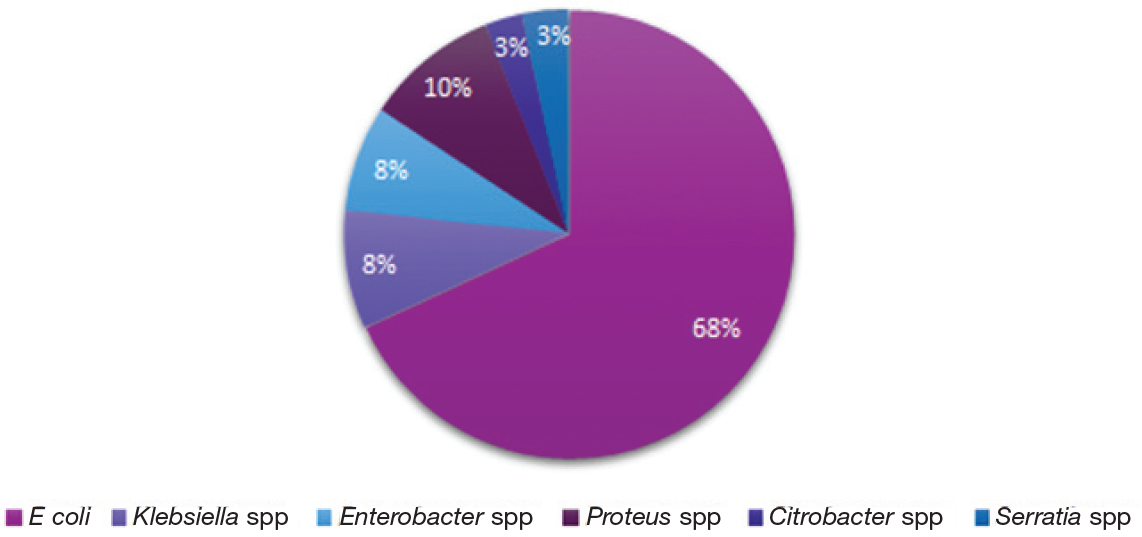
Enterobacterales clinical strains: species distribution
The rising number of ESBL-E in cats poses daily therapeutic dilemmas concerning the use of highest priority critically important antimicrobials for humans, and emphasises the need to consider cats in close contact with other cats/humans as a potential microbiological hazard for feline and human health.
This study was financed through CIISA and FCT project UIDB/00276/2020; JMS holds an FCT PhD grant 2020.06540.BD and JM holds an FCT PhD Grant 2020.07562.BD.
Serial Interferon-Gamma Release Assay Testing to Monitor Treatment Responses in Cases of Feline Mycobacteriosis
Jordan L Mitchell1, Conor O’Halloran1, Paul Stanley1, Kieran McDonald2, Paul Burr2, Jayne C Hope1, Danièlle A Gunn-Moore1
1Royal (Dick) School of Veterinary Studies and the Roslin Institute, University of Edinburgh, UK
2Biobest Laboratories, Milton Bridge, UK
Email:
The interferon-gamma release assay (IGRA) is used to diagnose cases of feline mycobacteriosis, but the use of serial IGRA testing to monitor the response to treatment has not been evaluated in this species.
Cats with mycobacterial disease were identified if they had a pretreatment and end of treatment IGRA performed. The number of cats that reverted to negative was assessed using a McNemar test. Antigen-specific optical density (OD) values for paired data were assessed using a Wilcoxon signed-rank test, and a Mann-Whitney test was performed to determine if cats that reverted to IGRA negativity had a lower pretreatment antigen-specific OD value. Factors to explain reversion to negativity and recurrence of disease post-treatment were explored using logistic regression.
Eighteen cats met the inclusion criteria for this study. All cats were positive on the pretreatment IGRA, with results suggestive of tuberculosis. Having achieved clinical resolution, only four cats (22%) reverted to IGRA negativity (P = 0.13). No statistically significant differences were identified between paired antigen-specific OD values (P >0.12), and cats that reverted to IGRA negativity did not have a lower pretreatment antigen-specific OD value (P = 0.68). Logistic regression identified no statistically significant factors predicting reversion to IGRA negativity (P >0.08), and remained positive at the end of treatment. IGRA was not associated with recurrence of mycobacterial disease post-treatment (P = 0.34).
Overall, these data suggest that IGRA testing at the point of apparent clinical resolution is of limited value. This is in line with human studies.
✜ Since being accepted for the ISFM 2021 World Feline Congress, this abstract has been published as a full paper in the journal Pathogens, in May 2021, under a CC BY 4.0 license.