






Abstract
This study presents the thermal buckling analysis of solid circular plate made of porous material bounded with piezoelectric sensor-actuator patches. The porous material properties vary through the thickness with specific function. The general mechanical nonlinear equilibrium and linear stability equations are derived using the variational formulations to obtain the governing equations of piezoelectric porous plate. Thermal buckling load is derived for solid circular plates under uniform temperature load for the clamped edge condition. In recent paper the effects of porous plate’s thickness, porosity, porous thermal expansion coefficient, piezoelectric thickness, piezoelectric thermal expansion coefficient, and feedback gain on thermal stability of the plate are investigated.
Introduction
The poro material structures, such as beams, plates, and shells, are widely used in structural design problems. Biot is the pioneer to study the field of poroelasticity interaction. In his landmark paper on poroelasticity, Biot introduced the following bulk dynamic and kinematic variables (in the current notation); the total stress tensor σij, the fluid pressure Pp, the solid strain tensor
During the last several years problem of deflection and buckling of the poro plates with varying properties has been developed by many authors. For example, buckling of porous beams with varying properties was described by Magnucki and Stasiewicz [2]. They used shear deformation theory for solving the critical buckling load. In this work, the effect of porosity on the strength and buckling load of the beam is investigated. Buckling of circular porous plate with varying properties and simply supported boundary conditions are described by Magnucka-Blandzi [3]. Dynamic stability of a metal foam circular plate with varying properties is described by Magnucka-Blandzi [4]. Zimmerman [5] studied on thermoelastic and poroelastic coupling parameters for a linear poroelastic saturated rock. He concluded that poroelastic coupling parameter has a stronger influence than thermoelastic one.
Buckling analysis of poro plates with functional properties has similarities with the FGM plates to some extent. Ma and Wang [6–8] investigated nonlinear bending and post-buckling of circular functionally graded plates subjected to mechanical and thermal loads based on the first-order and the third-order shear deformation theories. Zenkour and Sobhy [9] studied on thermal buckling of various types of FGM sandwich plates. They considered the shear deformation, the higher and first-order shear deformation theories, and classical plate theory (CPT) in their investigation. Wu [10] obtained the closed form solution for the thermal buckling of functionally graded rectangular simply supported plates subjected to two types of temperature fields; uniform temperature rise and gradient across the thickness of the plate, employing the first-order shear deformation theory. Woo and Meguid [11] derived an analytical solution expressed in terms of the Fourier series for large displacement of FG plates and shallow shells under both transverse mechanical loading and temperature rise fields. Ghiasian et al. [12] investigated on thermal buckling of shear deformable temperature-dependent circular/annular FGM plates. They find out general nonlinear equilibrium equations based on the first-order shear deformation plate theory. Thermoelastic buckling analysis of orthotropic solid circular plates based on first-order plate theory and the Sanders assumption is given by Najafizadeh and Heydari [13]. Javaheri and Eslami [14,15] presented the thermal buckling of rectangular FGM plates based on the first- and higher-order plate theories. The thermal buckling analysis of circular FGM plates based on first-order-theory is given by Najafizadeh and Eslami [16].
One of the techniques to increase the buckling load capacity is equipping a structure with the smart materials. Piezoelectric materials, as sensors and actuators, are one of the most common sub-group of smart materials and are used in solid structures to control the deformation, vibration, and buckling of structures. Among different types of piezoelectric materials, PZT has higher piezoelectric, dielectric, and elasticity coefficients. The active buckling control of smart functionally graded plates using sensor-actuator patches is studied by Viliani et al. [17]. Mirzavand and Eslami [18] obtained closed-form solutions for the critical temperatures of simply-supported piezoelectric FGM cylindrical shells based on the higher order displacement field. Their study includes three types of temperature loadings combined with constant applied voltage. Jabbari et al. [19] studied the buckling of porous circular plate with piezoelectric layers based on CPT. They investigated the effect of porosity and piezoelectric plate on stability of the plate under uniform compression load. Khorshidvand et al. [20] presented thermoelastic buckling analysis of functionally graded circular plates integrated with the piezoelectric layers based on the CPT. They also investigated on buckling analysis of porous plate with sensor actuator patches under uniform compression load [21]. Wang et al. [22] presented an analytical solution for free vibration analysis of a piezoelectric coupled circular plate with simply supported and clamped boundary conditions based on the CPT. They showed that the CPT cannot furnish a reliable solution for the vibration response when the plate thickness increases, where the reason is the neglect of transverse shear deformation and rotary inertia effects. Thermo-electro-mechanical buckling and post-buckling of FGM plates with piezoelectric actuators is reported by Shen [23–25] based on the singular perturbation method. Liew et al. [26] presented post-buckling of piezoelectric FGM plates subjected to the thermo-electro-mechanical loading. They used a semi-analytical iteration to determine the post-buckling response of the plate. Seifi et al. [27] investigated on critical buckling loads and modes of cross-ply laminated annular plates. They studied on buckling of composite annular plates under uniform internal and external radial edge loads by using energy method. Vosoughi et al. [28] investigated on thermal buckling and post-buckling of laminated composite beams with temperature-dependent properties. The governing equations are based on the first-order shear deformation beam theory (FSDT) and the geometrical nonlinearity is modelled using Green’s strain tensor in conjunction with the von Karman assumptions in their investigation. Padmanav [29] studied on buckling and post-buckling of laminated composite plates using higher order shear deformation theory associated with GreenLagrange nonlinear strain-displacement relationships.
The present paper provides an analysis to obtain the critical buckling temperature of porous circular plates integrated with piezoelectric sensor-actuator patches, subjected to uniform thermal load. The energy method, using calculus of variations, is employed to obtain the governing equations based on the CPT. Eigenvalue solution is carried out for the plates with clamped edge. Material properties of porous plate are assumed to vary by a power law distribution through the thickness of plate. The input voltage to the actuator is supplied with the output voltage of the sensor.
Derivation of the governing equations
Strain-displacement relations
The displacement field is based on classical laminated composite plate theory and is expressed as follows [30]
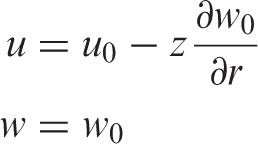
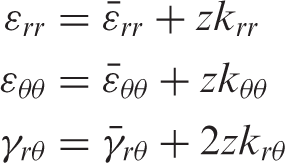
The plate is assumed to be comparatively thin, and according to the Love-Kirchhoff assumptions, planes normal to the median surface are assumed to remain plane after deformation. Thus, shear deformations normal to the plate are disregarded. Using the CPT, strain components at distance z from the middle plane are given in matrix form as Reddy [30] demonstrated
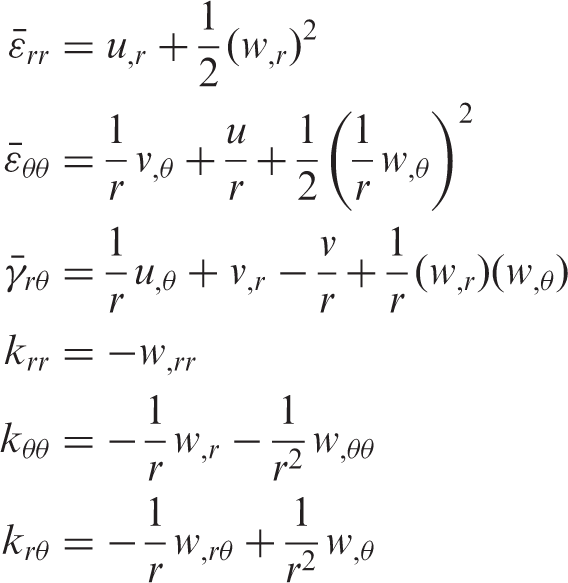
The relations between the middle plane strains and curvatures with the displacement components according to the Sanders assumption are obtained as Brush and Almorth [31] demonstrated
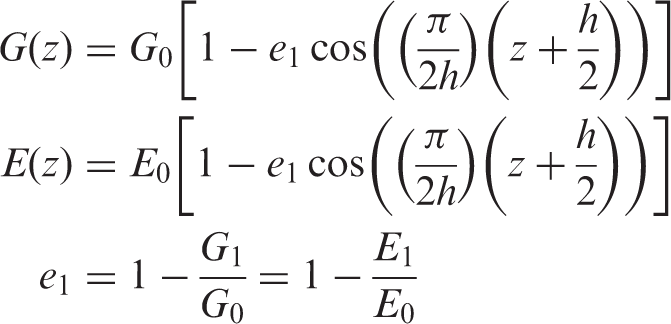
Consider a uniform thin circular plate made of porous material with radius a and thickness h in the middle with sensor-actuator patches with thicknesses ha bonded to its upper and lower surfaces, as shown in Figure 1. To derive the formulations, a cylindrical coordinates system is taken in the center of plate middle plane. The functional relationship between E, G, and z for poro plate are assumed as [3,4]
Geometry of a piezoelectric coupled porous circular plate.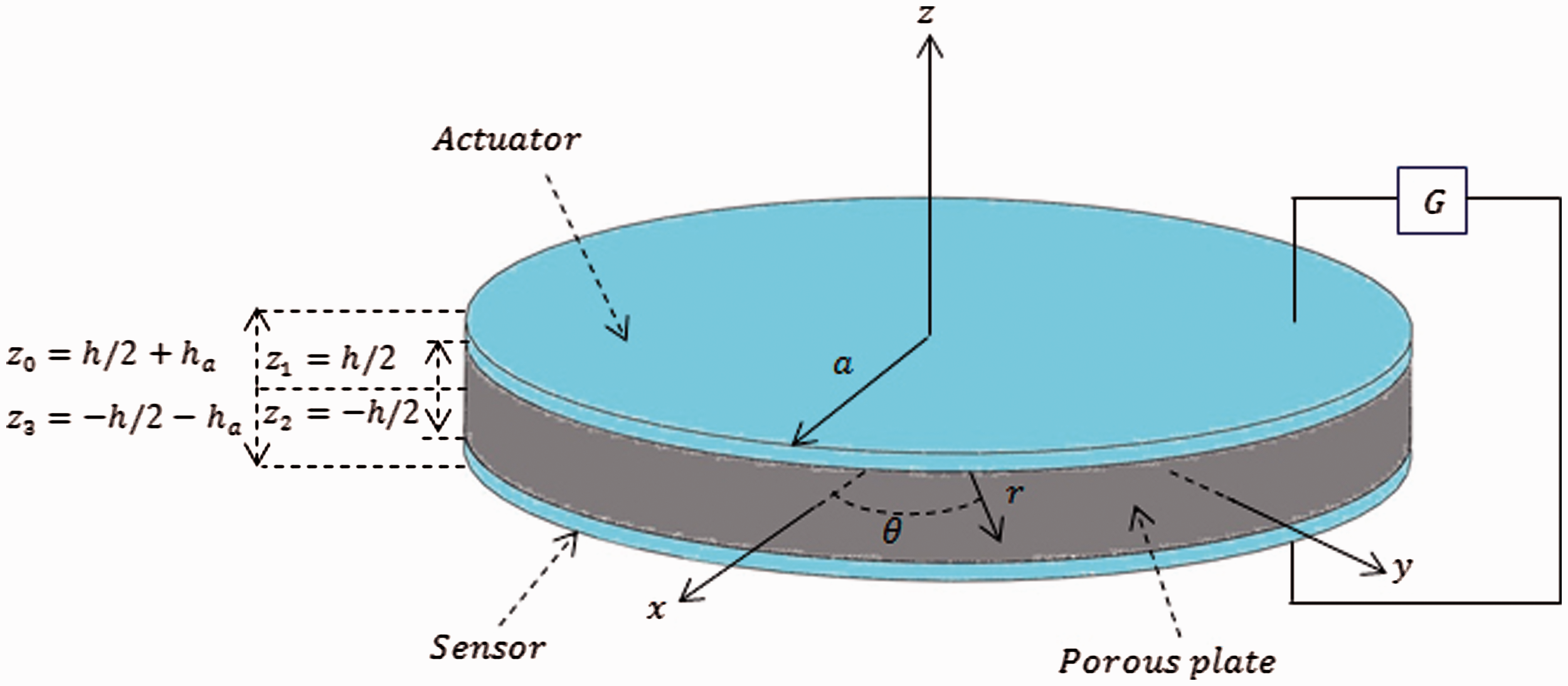
Stress–strain relation in porous plate
The linear poroelasticity theory of Biot has two features as Detournay and Cheng [1] presented:
An increase of pore pressure induces a dilation of pore. Compression of the pore causes a rise of pore pressure.
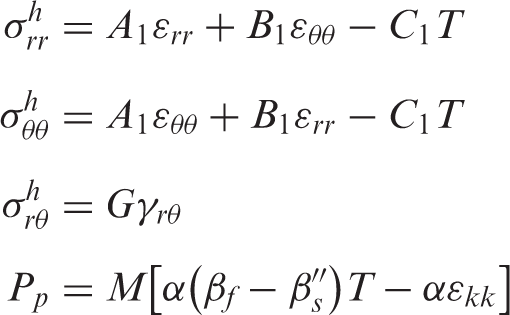
The stress–strain relations for porous material [32] and piezoelectric parts [33] of the plate are written as following


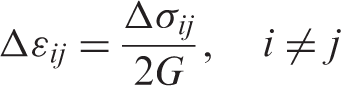

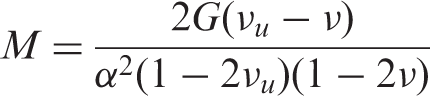
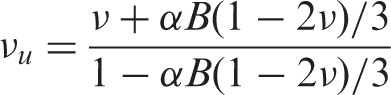
Here, the suffix h is used to denote the porous plate. Pp is pore fluid pressure, λ and G are Lame’s parameters, K is bulk modulus
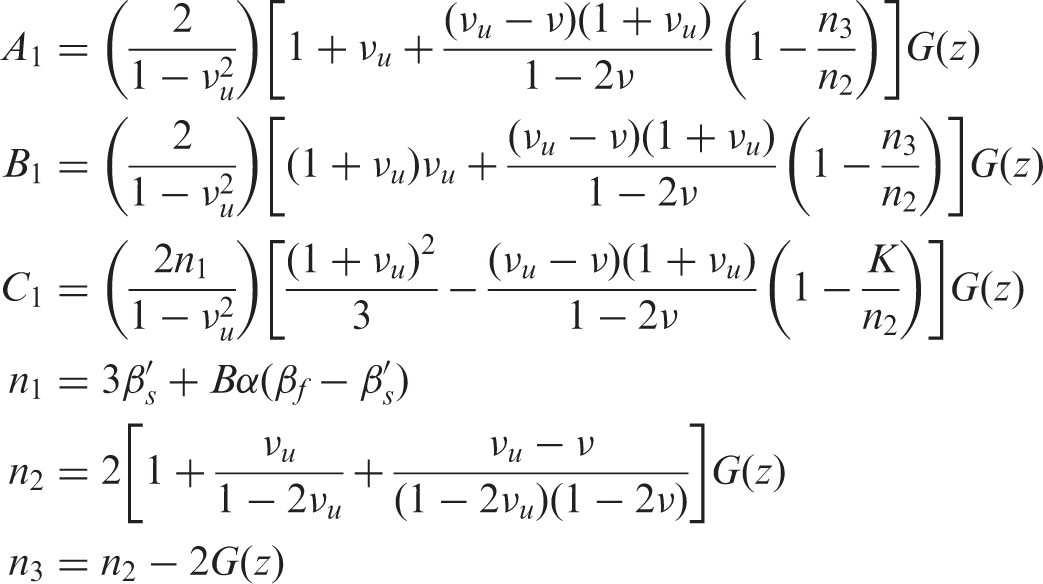
Taking n1, n2, n3, A1, B1, C1 as follows
Stress–strain relation in Piezoelectric plate
The stress–strain relations for attached piezoelectric patches are as follows that Lien et al. [34] presented


Here, the suffix p is used to denote the piezoelectric plate.
Actuator and sensor’s constitutive relations
Actuator’s constitutive relation
For a piezoelectric patch the Maxwell equations are as follows that being presented by Halliday et al. [35]

For thin piezoelectric plates the charge equation (15) reduces to

The electric potential inside the actuator patch is assumed as

Here, the suffix a is used to denote the actuator layer. To find

By substituting equation (17) into electric boundary condition we have
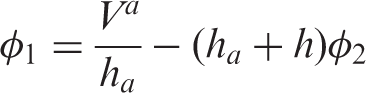
Substituting equation (19) into equation (17) gives

By substituting equation (14) into (16) and considering
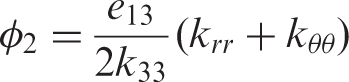
Thus

Then the electric field inside the actuator can be obtained as

Sensor’s constitutive relation
According to open circuit condition for sensor patch, the dielectric displacement is zero (Dz = 0). Then, the electric field in the sensor is as follows that is presented by Jalili [36]

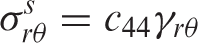
Here, the suffix s is used to denote the sensor layer. Substituting equation (24) into equation (13), the stress–strain relations for the sensor patch can be obtained as


The average sensor potential (the voltage that appears between sensor electrodes) is

The output voltage of sensor (Vs) is fed into the control algorithm and Va is obtained as follows

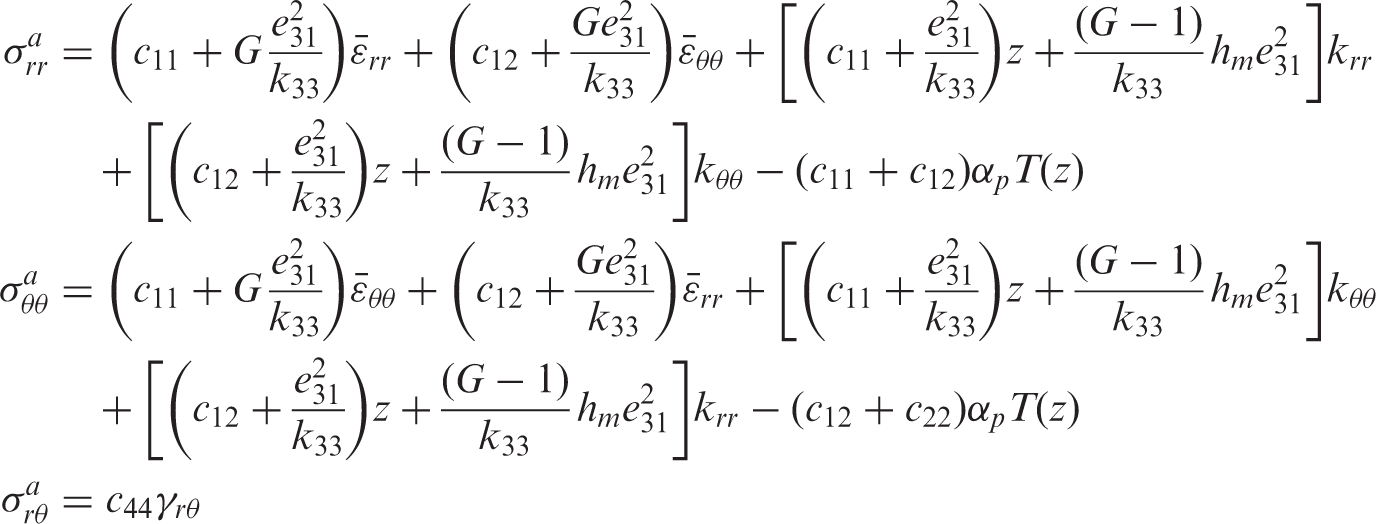
Here G is feedback gain of piezoelectric patch. Substituting equation (29) into equation (23), then substituting into equation (13), the stress–strain relations for the actuator patch can be obtained as
Variational formulation
The total potential energy for porous circular plate integrated with two piezoelectric layers can be written as follows

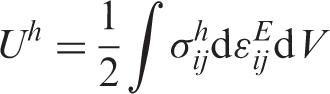
In which the potential energy for porous circular plate (Uh) is as

Here,



Substituting equations (11) into equation (36), the following expression for Uh is obtained



Substituting relations (37) and (39) into relation (31), it becomes
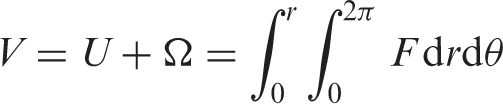

Applying the Euler equations for total functional of V in equation (41), we obtain
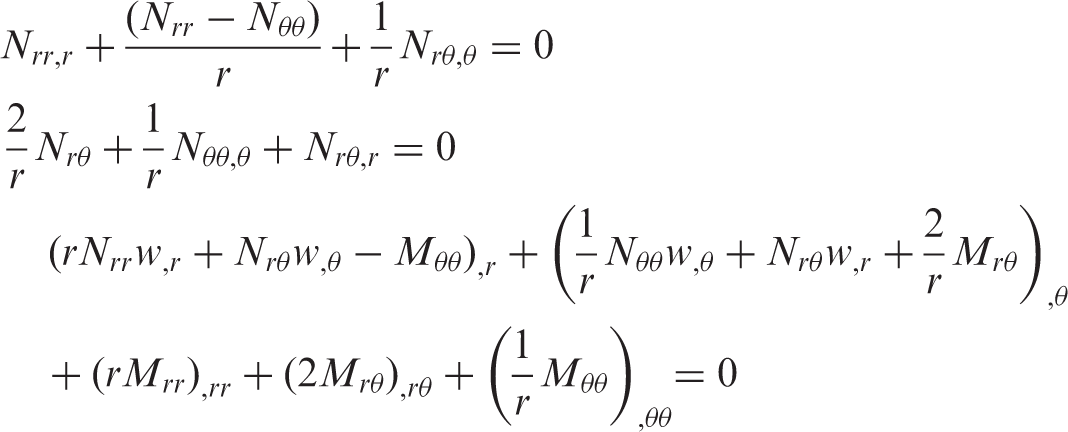
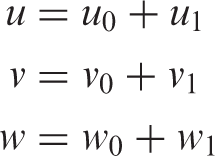
The stability equations of the circular plate are derived using the adjacent equilibrium criterion. We assume u0, v0, and w0 as the displacement components of the equilibrium state and u1, v1, and w1 as the virtual displacements corresponding to a neighboring state. The displacement components of the neighboring state are
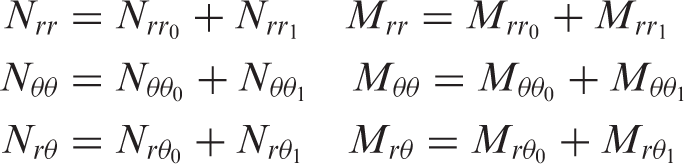
According to the adjacent equilibrium criterion in the neighboring state of equilibrium, the stability equations are found. Similar to equations (43), the stress and moment resultants are found to be the sum of those related to the equilibrium and neighboring states as
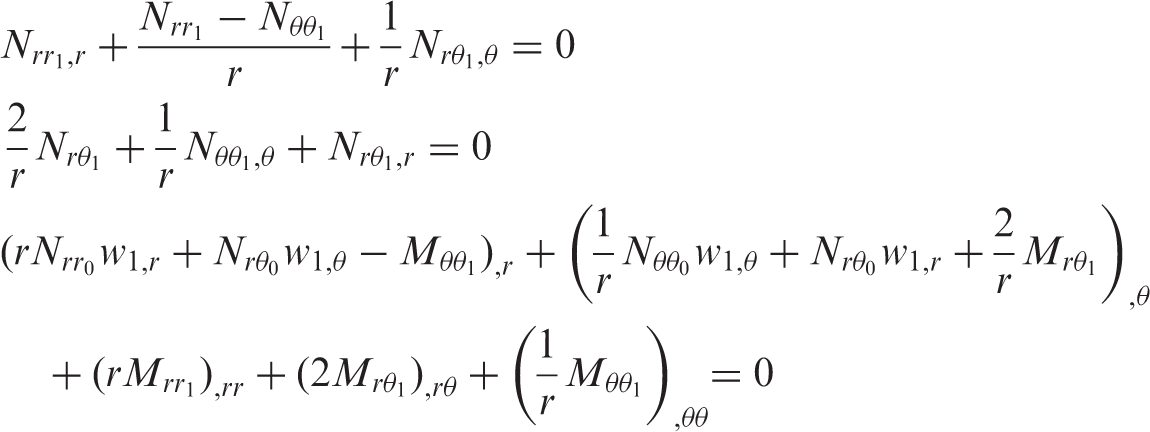
Substituting relations (43) and (44) in equations (42) and collecting the second-order terms, the stability equations are obtained as
The force and moment resultants of plate are expressed in terms of the stress components through the thickness as


The stress resultant can be simplified in the matrix form as
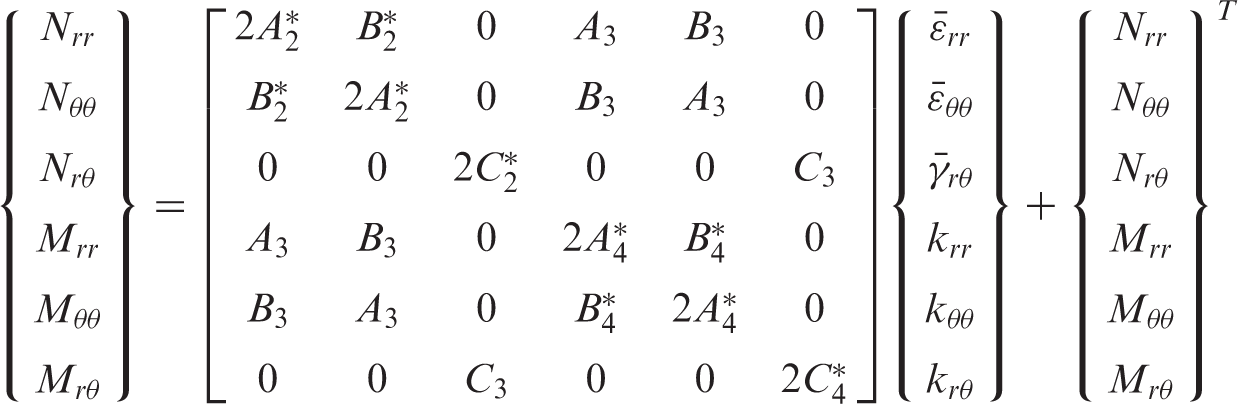
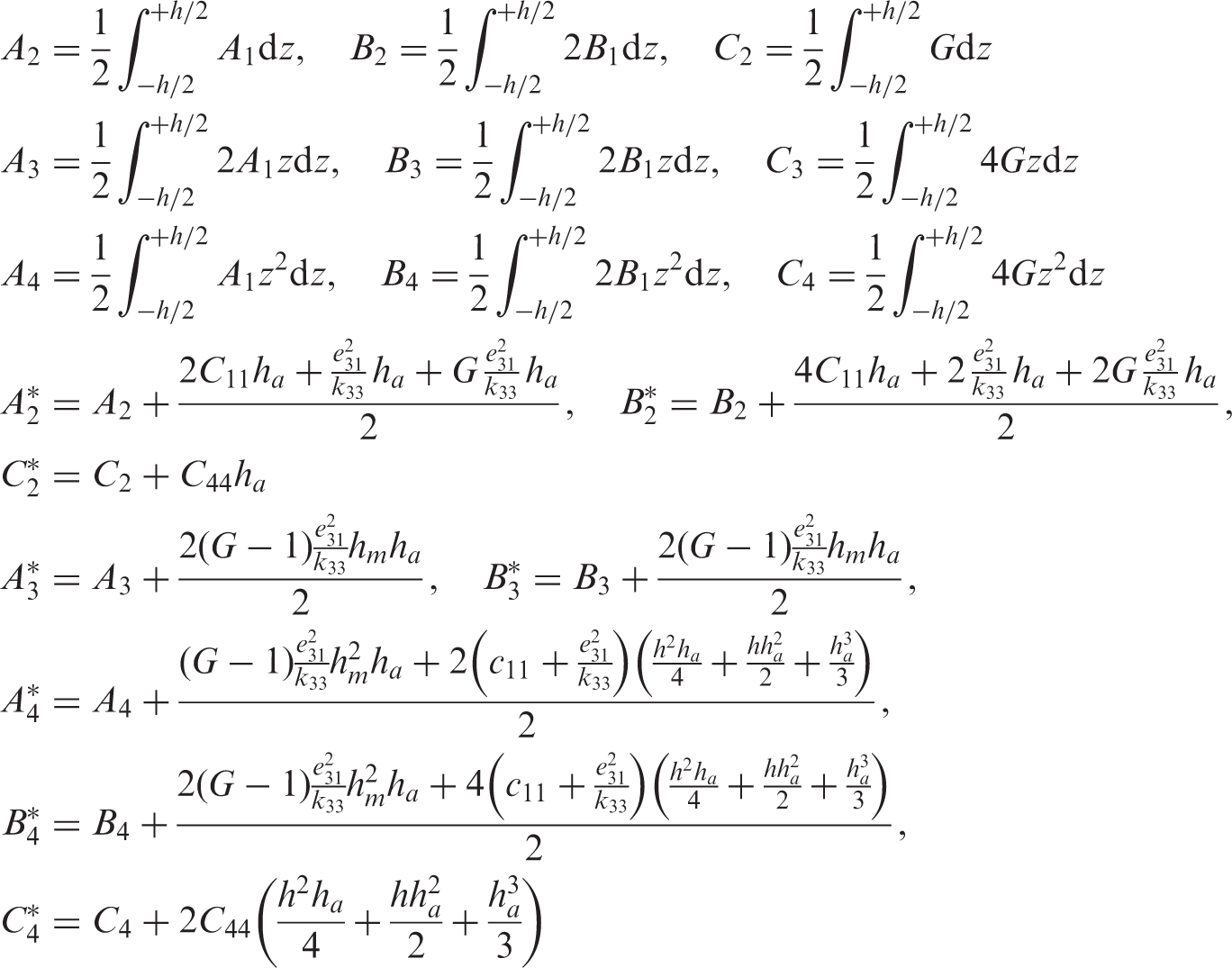
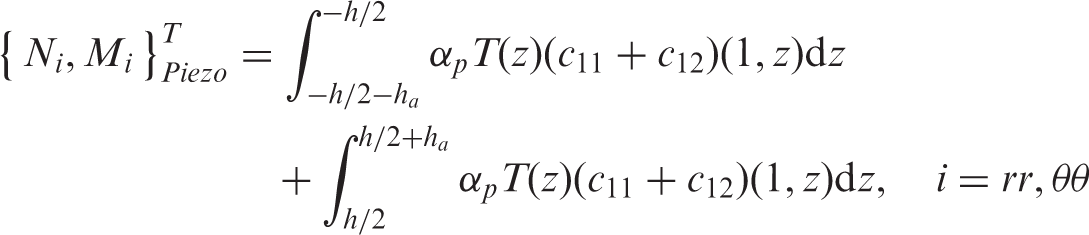
Here, the quantities N(
T
) and M(
T
) are the resultants due to the applied temperature on the plate, respectively, and they can be computed as


Thermal axisymmetric buckling analysis
Consider a circular plate subjected to a uniform Thermal load. Here, the polar symmetry condition is considered. Thus, for this case of discussion the second of stability equations will be satisfied and the first and third equations (45), based on the displacement components and change of variable as k = βr, lead to


The functions for displacements that satisfy governing equations and boundary conditions are


Substitution of equations (55) and (56) into equations (53) and (54) yield


For a nontrivial solution of these equations, the coefficients of functions must be set to zero

The second and third equations give relations between integration constants and combination of the first and fourth equations give

By setting the determinant equal to zero, yields

Equation (61) is the characteristic equation. Total pre-buckling force is

Consider porous and piezoelectric plates at reference temperature. In such a case, the uniform temperature may be raised with ΔT to such that the plates buckle. Introducing dimensionless form for Tcr as

Boundary condition
The continuous and symmetric conditions at the center of the plate (r = 0)

For the clamped boundary condition at the edge of plate (r = a) is expressed as

Substituting from equations (55) and (56) into equations (64) and (65) yields

The first zero of the Bessel function of first kind and order one yield

Substitution equation (67) into equation (63) yields

Results and discussion

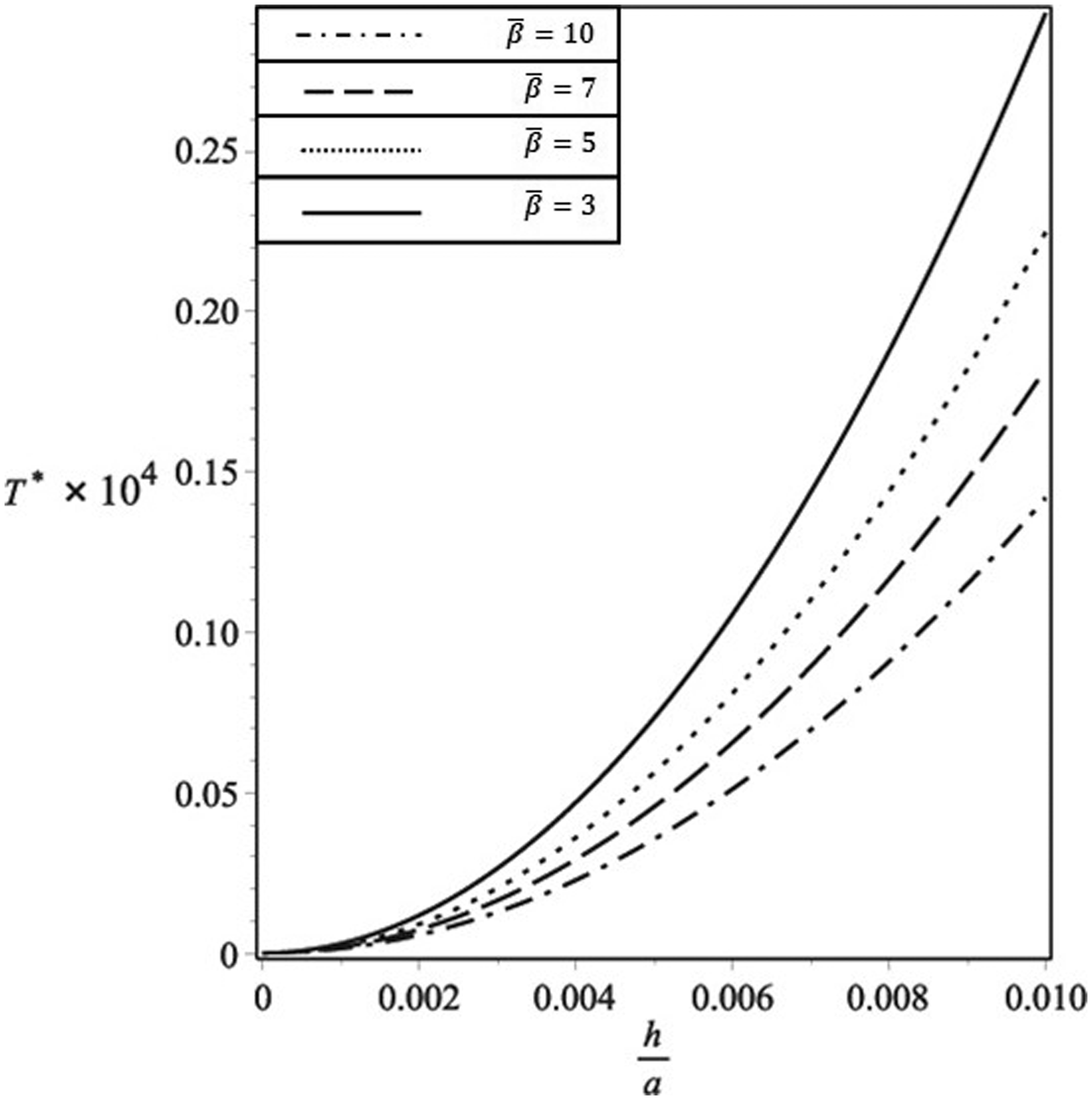
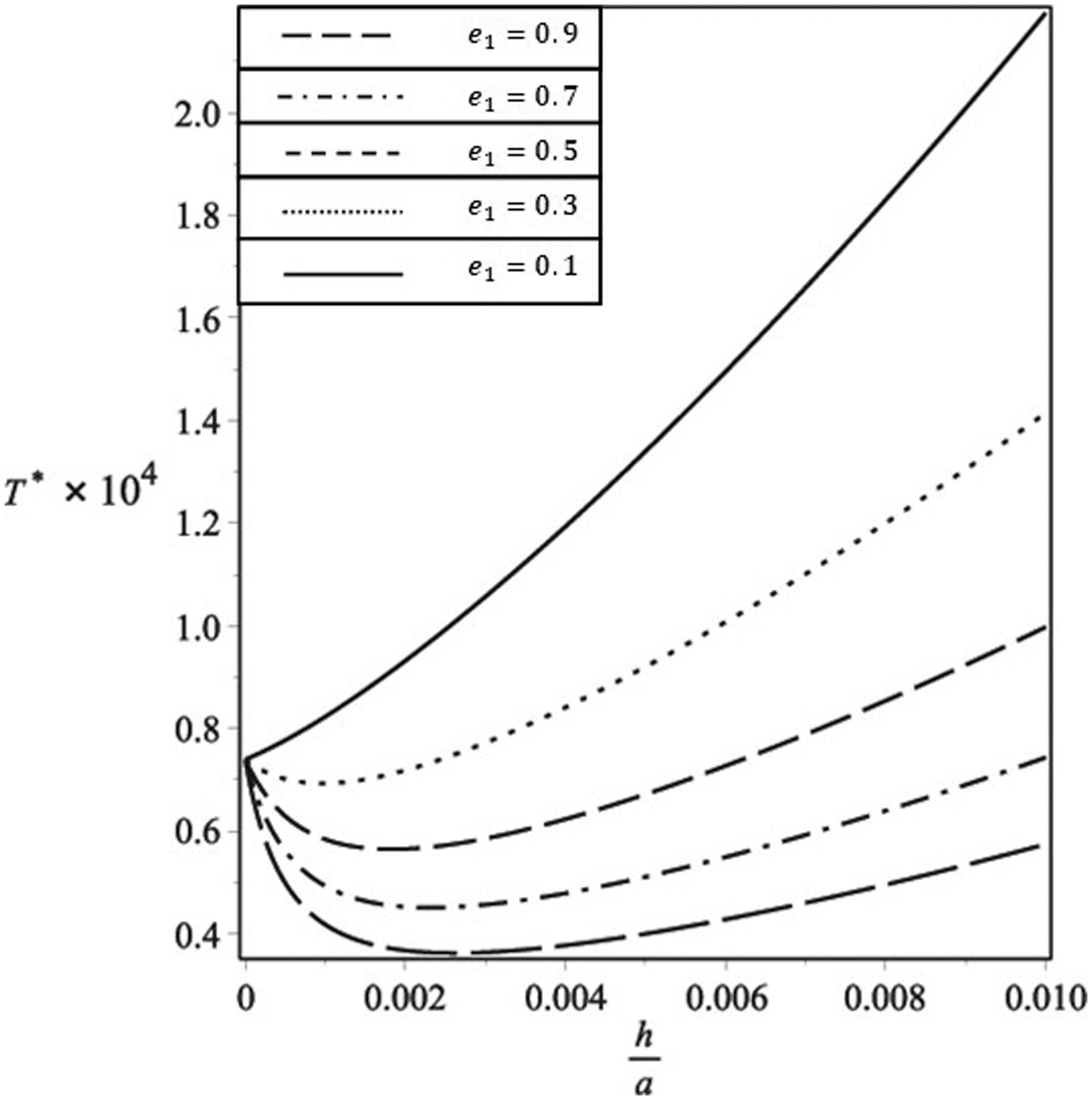
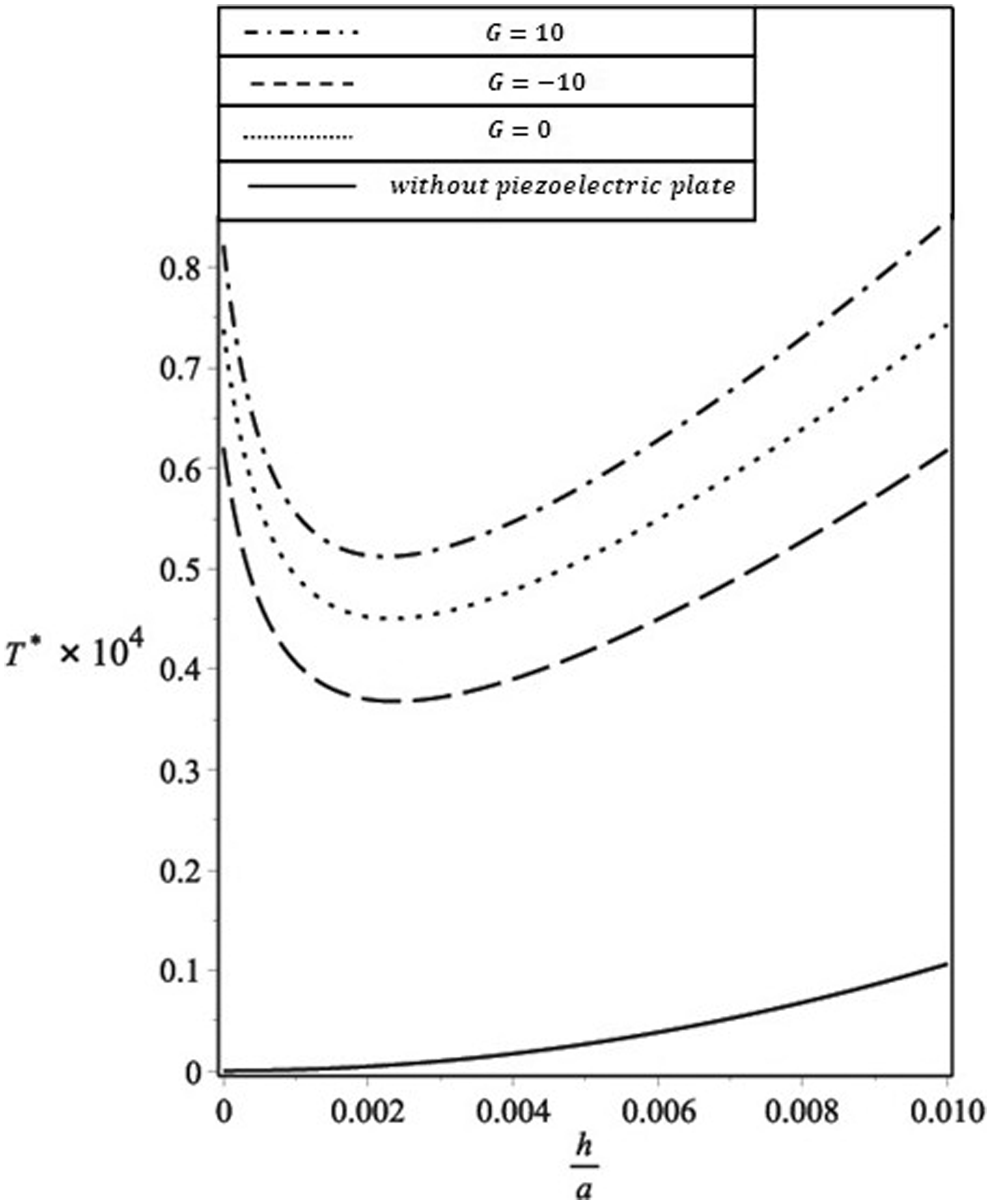
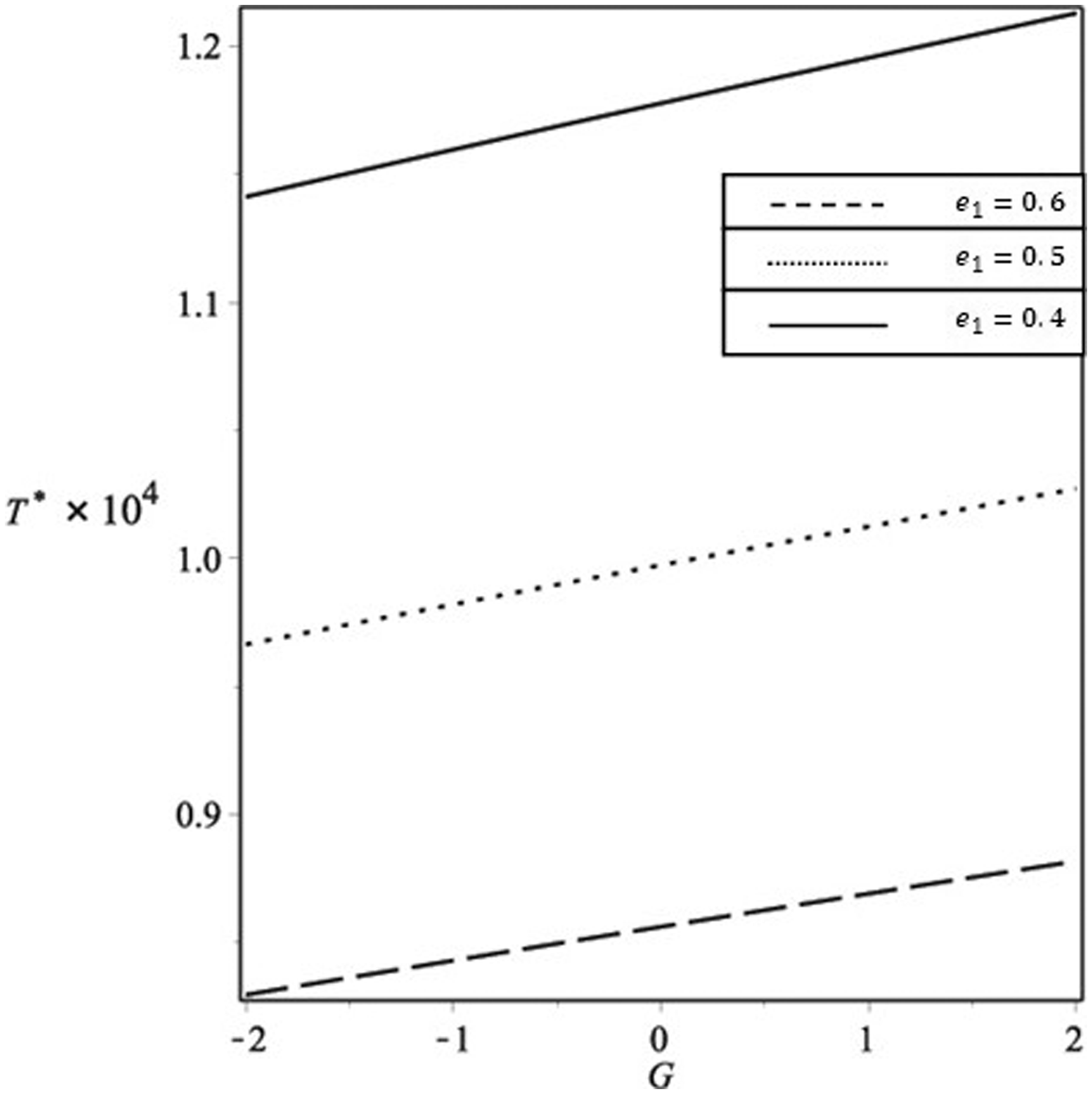
For this example the results for thermal buckling load are plotted in Figures 2–6. Figure 2 presents thermal buckling load for a porous plate without piezoelectric patches versus h/a for different values of porosity. It can be seen that by increasing the thickness of porous plate the plate tends to be stable. This stability decreases by increasing the porosity too. Figure 3 shows the thermal stability of porous plate versus h/a for different values of None dimensional thermal load vs. None dimensional thermal load vs. None dimensional thermal load vs. None dimensional thermal load vs. None dimensional thermal load vs. G, for clamped plate and for the cases [e1 = 0.4, 0.5, 0.6]. 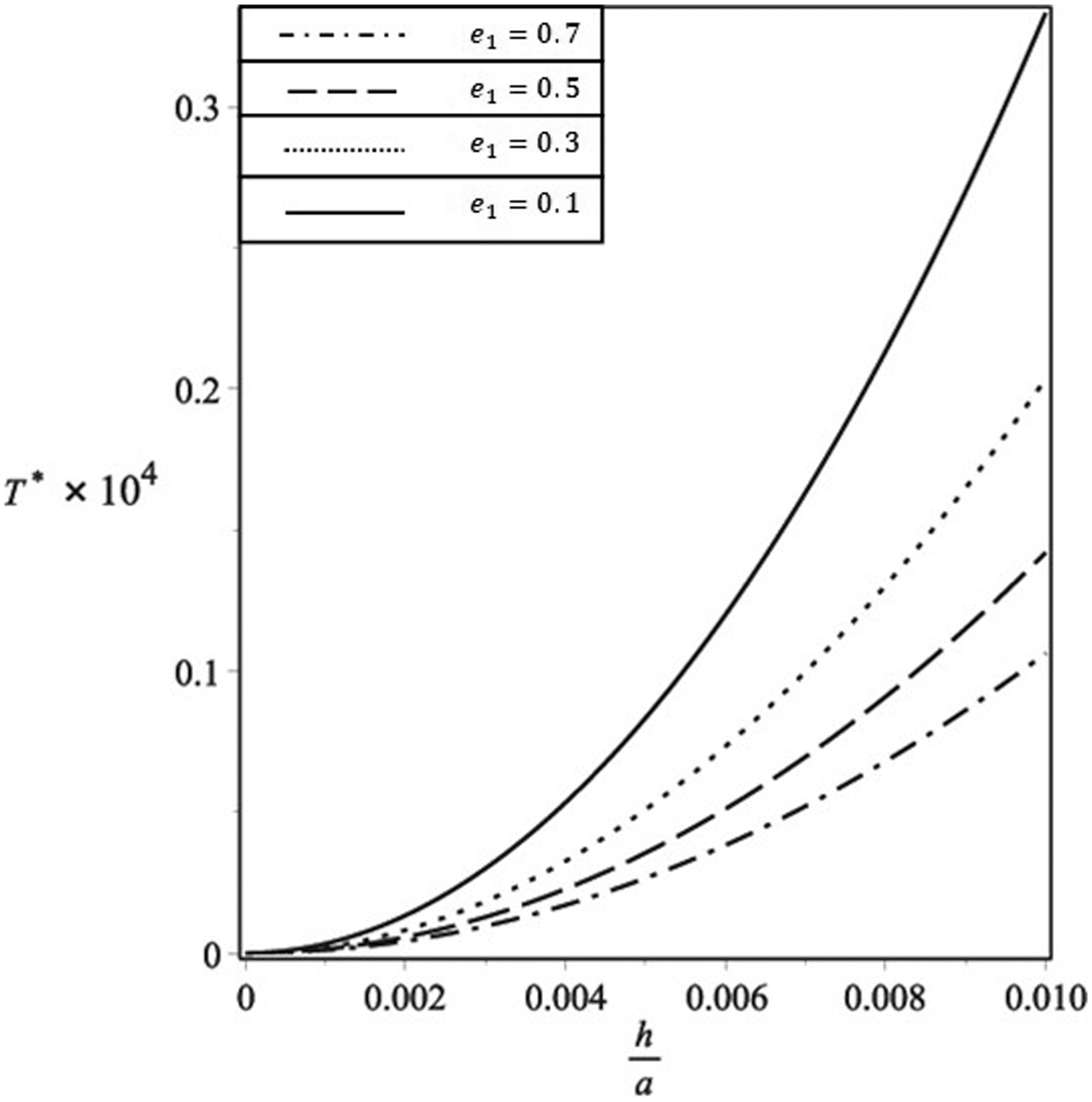
Conclusions
In the present article, the energy method is used for the thermal buckling analysis of plate and derivation is based on the CPT with the assumption that the porosity of the material changes as a specific function. The equilibrium and stability equations for a porous circular plate bonded with sensor-actuator patches are obtained. The boundary conditions of the plate are taken to be clamped. Plate is subjected to uniform thermal load. The effects of porosity and piezoelectric layers on thermal buckling capacity of circular plates as closed-form solution are presented. It is concluded that
The critical thermal load (T*) decreases and the plate will be unstable by increasing the porosity. For the porous plate without piezoelectric patches the critical thermal load (T*) will increase when the ratios h/a increase. The critical thermal load (T*) for circular plate with piezoelectric patches has different behavior with respect to the porous plate without piezoelectric patches. In analysis of porous plate with piezoelectric layers it can be seen that increases the porous plate thickness first increases the total thermal expansion and therefore decreases the stability of plate, then by increases more thickness the total thickness and therefore total stiffness of the plates increases and therefore plate tends to be more stable. The critical thermal load (T*) will increase by the positive feedback gain and will decrease by the negative ones.
Footnotes
Funding
This research is supported by Islamic Azad University, South Tehran Branch, Tehran, Iran.
Conflict of interest
None declared.