







Abstract
In this paper, an analytical process is proposed to investigate the size-dependent free vibration of orthotropic multi-viscoelastic microplate systems (OMVMPS) embedded in Kelvin–Voigt visco-Pasternak medium according to the modified strain gradient theory. Governing equations of motion in the partial form and the related boundary conditions are derived by utilizing the Kirchhoff plate theory and Hamilton’s variational principle. The two different sorts of “chain” boundary conditions like “clamped Chain” and “free chain” systems are considered for the ends of microplate system. Navier’s method, which convinces that the simply supported boundary conditions and trigonometric methods are applied to analytically investigate the size effect of the natural frequencies of OMVMPS. The numerical outcomes are offered to report the variation of OMVMPS natural frequencies with the numerous amounts of the microplate numbers, the length scale parameter, aspect ratio, visco-Pasternak foundation parameters, the thickness of microplate, and higher modes number. Several numerical outcomes of this research depict that when the number of microplates is low, there is a significant distinction between natural frequencies achieved for “clamped chain” and “free chain” systems. Also, it is demonstrated that by increasing the number of microplates, the effect of the visco-Pasternak substrate on the natural frequency of system vibration decreases.
Keywords
Introduction
Micro- and nanostructures have numerous engineering applications due to their mechanical and physical properties. Experiments have proved that the effect of small size becomes important at micro/nanoscale. So, the classic continuum theory will not be able to predict the mechanical behavior of micro/nanostructures properly [1–4]. Several atomistic methods and nonclassical continuation models have been proposed to capture the size effect at micro/nanoscale. Couple stress theory [5,6], strain gradient theory [7–9], Eringen nonlocal elasticity theory [10,11] are all the samples of nonclassical continuum models. These higher order theories contain internal length scale parameters that are inevitable for micro/nanostructures. During the past years, many studies have been conducted on the micro/nanostructures via the aforementioned theories.
Fleck and Hutchinson [8] improved one of the higher order continuum theories called the strain gradient theory (SGT) and proposed new form of SGT. Later, by eliminating dilatation gradient tensor and deviatoric stretch gradient tensor in SGT presented by Fleck and Hutchinson [8], a modified couple stress theory (MCST) in which, according to it, the influence of small size is a function of one independent internal length scale parameter is suggested by Yang et al. [12]. Modified strain gradient theory (MSGT) developed by Lam et al. [13] is one of the most popular continuum theories. This higher order continuum approach has three material length scale parameters relevant to deviatoric gradient, dilatation gradient and symmetric rotation gradient tensors. In the framework of this theory, various studies have been reported where size-dependent continuum models are developed. For example, Li and Hu [14] investigated the influence of small-scale on the wave propagation in fluid-conveying viscoelastic single walled carbon nanotubes. Wang et al. [15] developed a nonclassical Kirchhoff plate model via MSGT. Sahmani and Ansari [16] considered the free vibration behavior of microplates made of functionally graded materials using parabolic shear deformation plate theory in conjunction with MSGT. This model considers both the microstructural and shear deformation effects without the need to any shear correction factor. Also, Akgöz and Civalek [17] introduced a new size-dependent thick plate model based on MSGT and sinusoidal shear deformation plate theory. They investigated the static bending, buckling, and free vibration analysis of simply supported square microplates. Ghorbanpour Arani and Shokravi [18] discussed the magneto-vibration of coupled double-layered viscoelastic graphene sheet systems embedded on elastic foundation based on MSGT. Also, Jamalpoor and Hosseini [19] have demonstrated closed-form solutions for biaxial buckling analysis of double-orthotropic microplate-systems subjected to in-plane magnetic field via MSGT. Moreover, according to the third-order shear deformable plate assumption and MSGT, Zhang et al. [20] proposed a novel size-dependent model to investigate free vibration, bending and buckling behavior of circular/annular microplates. Recently, Hosseini et al. [21] analyzed the size effect on the biaxial buckling behavior of an orthotropic multi-microplate system via MSGT. Quan and Duc [22] applied Reddy’s third-order shear deformation shell theory to investigate the effect of thermal loads on the nonlinear vibration and dynamic response of imperfect FGM thick double-curved shallow shells resting on elastic foundations. Furthermore, there are a number of literatures regarding complex shapes of plates and shells [23–26].
Park and Gao [27] proposed a size-dependent Euler–Bernoulli beam model. They considered static response of beam under transverse loading. Lou et al. [28] analyzed the effect of the material length scale parameter to thickness ratio on the bending, buckling and free vibration behavior of functionally graded microplate using a unified higher order plate theory. According to MCST, Wang et al. [29] analyzed the nonlinear bending behavior of circular microbeam subjected to the uniformly distributed transverse loads. MCST is incorporated into the first-order shear deformation plate theory by Ansari et al. [30] to study the frequency response changes of FG microplate for different types of boundary conditions. Jung et al. [31] proposed a novel size-dependent model to capture size effect on sigmoid functionally graded material microplates using MCST. On the basis of MCST, MA et al. [32] developed a Timoshenko beam model to predict the size effect on the static bending and free vibration behavior of beam. By this model, Yin et al. [33] and Jomehzadeh et al. [34] investigated the free vibration of circular and rectangular microplates. Gupta et al. [35] applied MCST with the goal of numerically predict size effects on natural frequencies of cracked plate made of functionally graded materials. A size-dependent microplate model for the free vibration analysis of microplates is developed based on Mindlin plate theory and MCST by Ke et al. [36] to take into account the influences of transverse shear deformation, rotary inertia, and size effect. Li and Pan [37] studied static bending and vibration behavior of functionally graded piezoelectric microplate based on MCST and sinusoidal plate approach.
Viscoelastic substances present both viscous and elastic conducts when undergoing deformation. This sort of materials has many benefits such as isolating vibration, dampening noise, and absorbing shock. The elastic parts can be modeled as linear and shear springs and the viscous components can be modeled as dashpots. The Maxwell model, the Kelvin–Voigt model and the standard linear solid model are applied to forecast material’s response subjected to different loading conditions. According to the MSGT, Mohammadimehr et al. [38] carried out the free vibration of tapered viscoelastic microrod embedded on the Kelvin–Voigt visco-Pasternak foundation. Zenkour [39] accomplished the transient thermal analysis of single layer graphene sheet on viscoelastic substrate. Also, free transverse vibration analysis of coupled double viscoelastic graphene sheets by the visco-Pasternak medium is presented by Hashemi et al. [40]. On the basis of Reddy’s third-order shear deformation shell theory in conjunction with Sigmoid power law distribution for functionally graded materials, Duc [41] used the Galerkin method and Runge–Kutta approach for studying the nonlinear behavior of imperfect functionally graded circular cylindrical shells under thermal loading. Moreover, the influence of viscoelastic and elastic foundations on the plates and shells are reported by some researchers [42–46].
The surveying of the literatures revealed the free vibration analysis of viscoelastic microplates based on the MSGT, and it is concluded that no investigation has been conducted on the free vibration analysis of orthotropic multi-viscoelastic microplates embedded in visco-Pasternak medium so far. In this study, we obtain the exact solution for the free transverse vibration of an OMVMPS embedded within a visco-Pasternak medium in the framework of MSGT. The two different types of “chain” boundary conditions such as “clamped chain” and “free chain” are supposed for ends of microplates system. Analytical solutions of homogenous set of equations are justified with the numerical results extracted from the same set of equations. The influence of the higher modes, structural damping of the microplates, aspect ratio, visco-Pasternak foundation parameters, and length scale parameter on the natural frequencies of the system is examined.
Modeling of the problem and formulation
Geometrical configuration
In the current study, a schematic diagram of a set of orthotropic multi-viscoelastic microplates in the rectangular shape embedded within a visco-Pasternak foundation is shown in Figure 1(a). Visco-Pasternak medium is presented by transverse, shear stiffness, and dashpot coefficients, which are denoted by k, k1, and c, respectively. The assumed boundary conditions are simply supported in all four edges of each microplate. It is also assumed that geometrical and physical specifications comprising uniform thickness h, length a, width b, Poisson’s ratios Orthotropic multi-viscoelastic microplate system (OMVMPS): (a) the geometry of OMVMPS embedded in visco-Pasternak medium; (b) “clamped chain”; (c) “free chain”.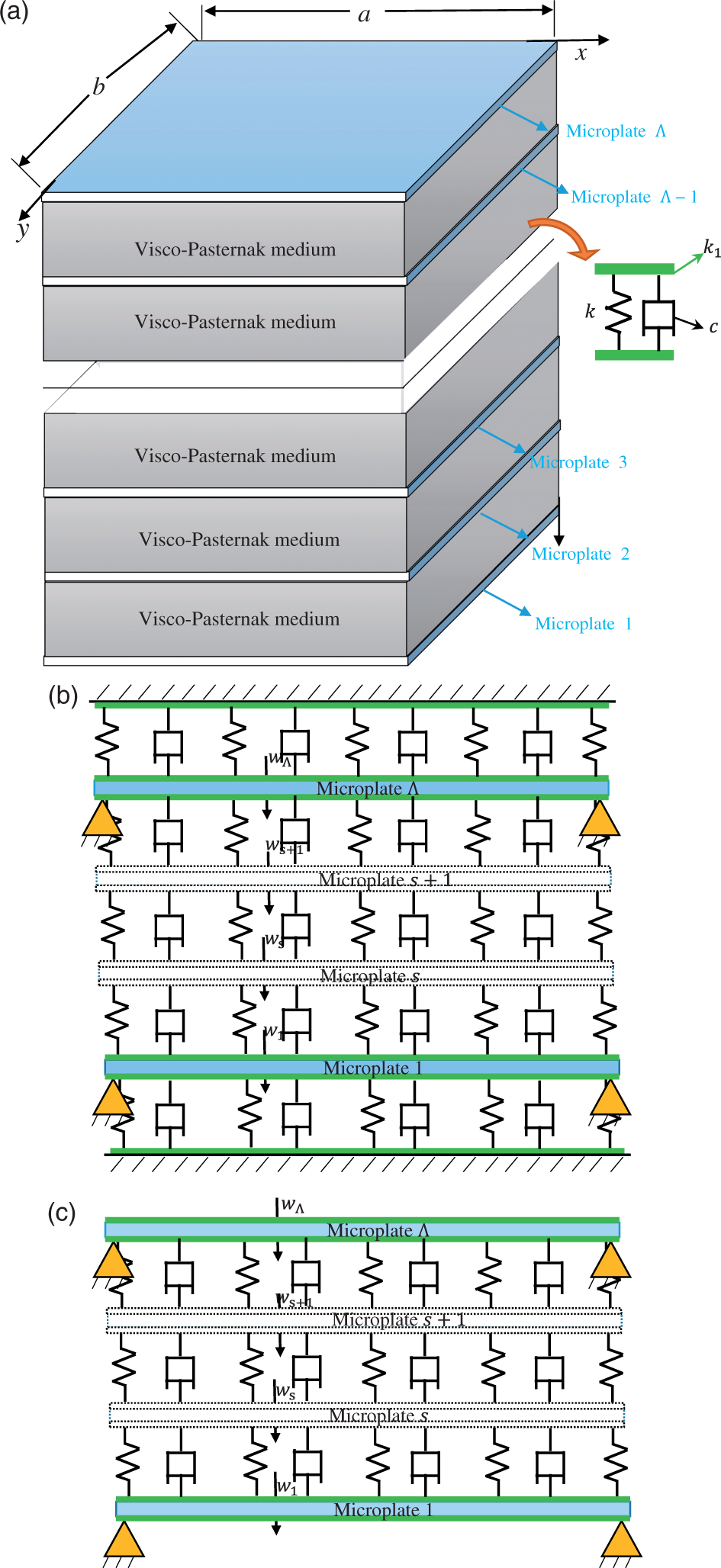
Constitutive relations for Kirchhoff orthotropic multi-microplate system
On the basis of the classical (Kirchhoff) plate theory, the displacement fields (




Based on the facts mentioned about MSGT, it must be noticed that to take into account the influence of the small scale on the mechanical behavior of plate, the three independent higher order inner length scale parameters

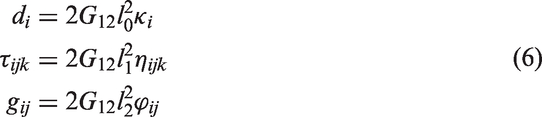
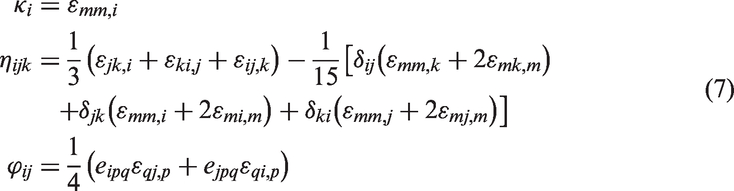
Here,
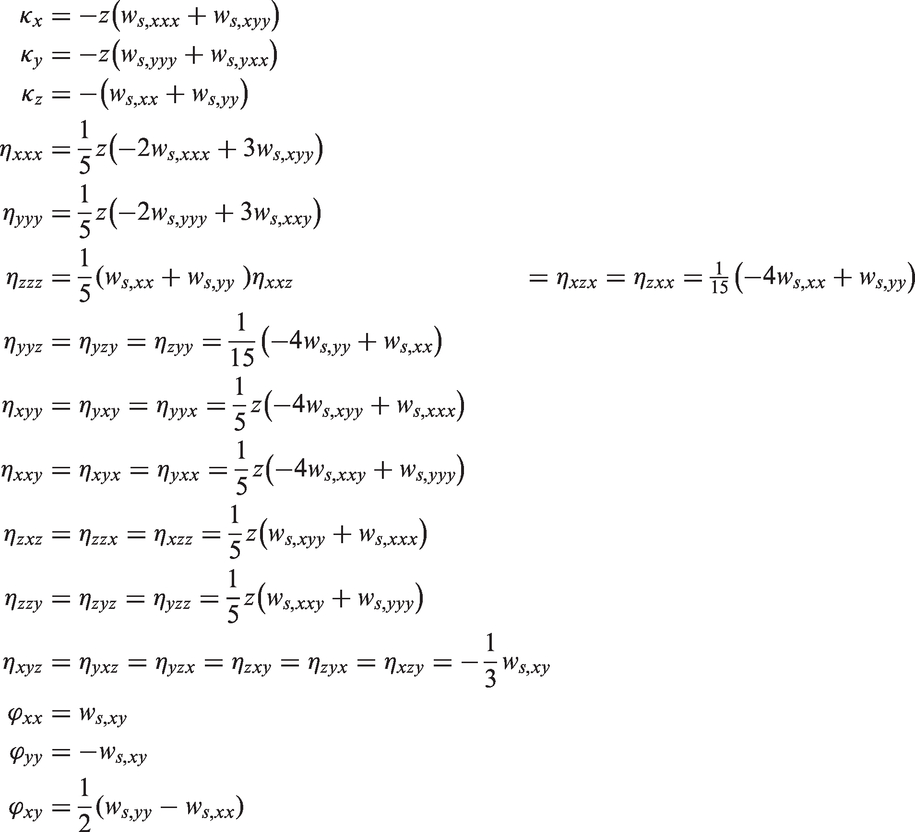
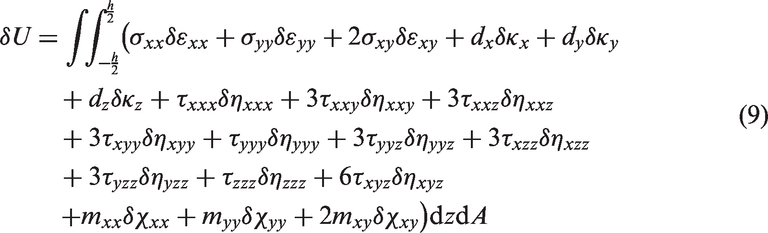
Based on the above-mentioned relations, the variation form of the total strain energy can be defined as
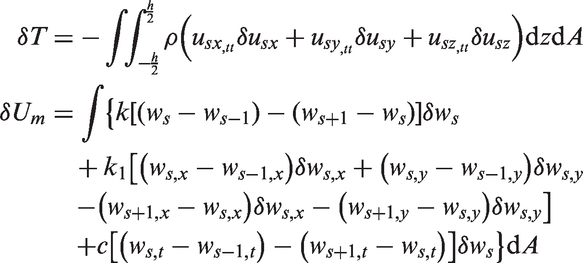
Furthermore, the other terms of Hamilton’s variational method can be expressed as
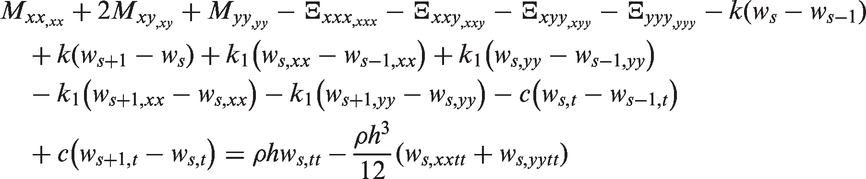
Finally, by inserting relations
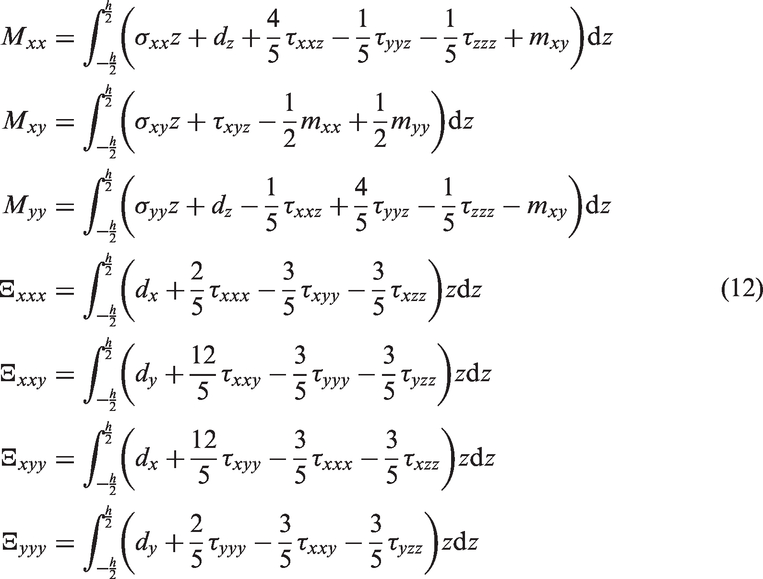
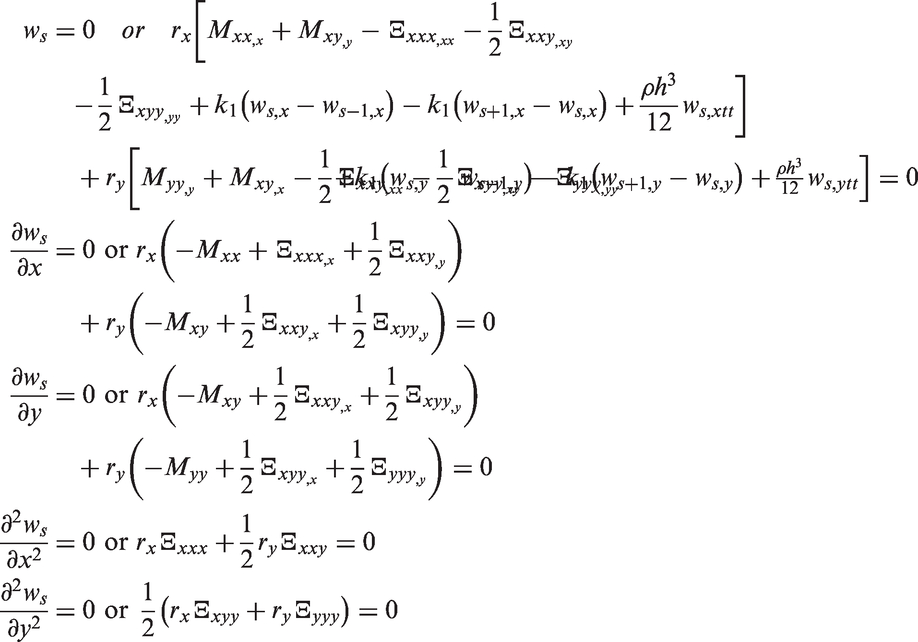
The boundary condition obtained from Hamilton’s method along x and y directions with normal vectors rx and ry for sth microplate are also resulted as
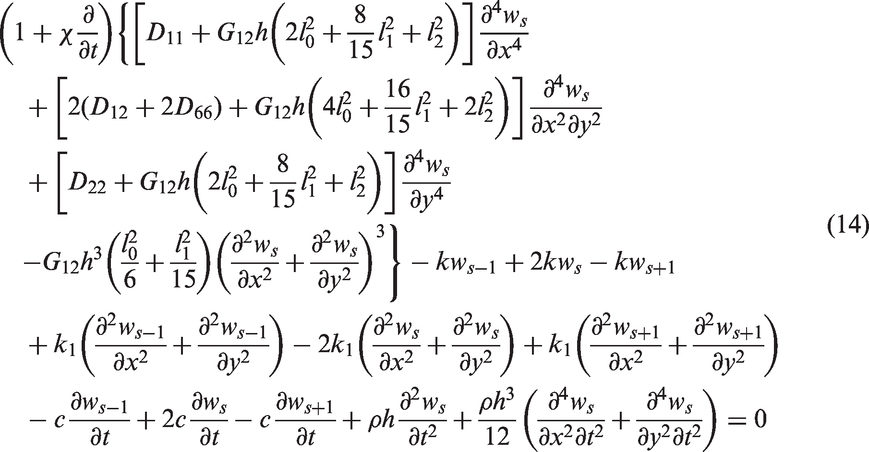
By substituting equation (12) into equation (11) and with respect to equations (2), (3), and (6) to (8), we can achieve a clear expression of the equation of motion for sth viscoelastic microplate in terms of lateral displacements as
Exact solutions of the free vibration
As mentioned in the previous sections, this study focuses on the simply supported boundary conditions for all edges of every plate, thus the deflection and moment conditions can be written as

It must be noticed that in addition to the classical boundary condition, nonclassical boundary condition on the basis of MSGT can be demonstrated as [21]

In order to analytically solve the partial differential equations of OMVMPS, Navier approach, which satisfies the simply supported boundary conditions, is utilized in the form of


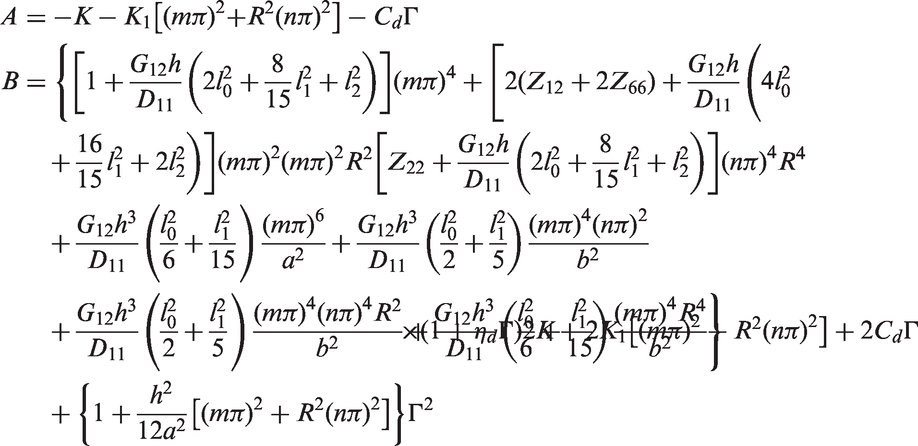
Here, dimensionless phrases employed in equation (19) are defined as follows

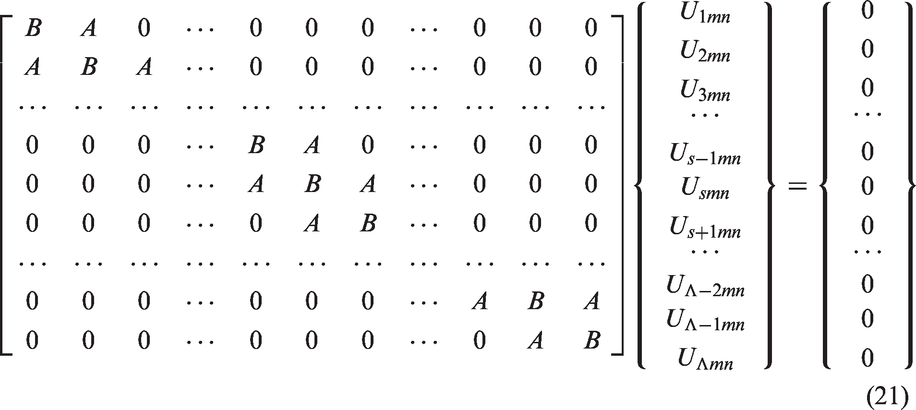
Clamped chain case
In this state, as shown in Figure 1(b), it is supposed that the first plate and the last plate in the system are linked on a fixed surface by visco-Pasternak foundation. Therefore, the following matrix shape of algebraic equation (18) is presented
In addition, in order to acquire a clear closed-form statement to forecast the influence of small scale on the natural frequency of our system, we apply trigonometric method introduced and developed by Raskovic [52,53], Stojanović et al. [54], and Karličić et al. [55]. With respect to this method, we consider following solution of amplitude of sth algebraic equation for OMVMPS as


Implementing a few trigonometric operations to equation (23) leads to following new forms

Due to the fact that in equation (24),

However, to determinate unknown parameter

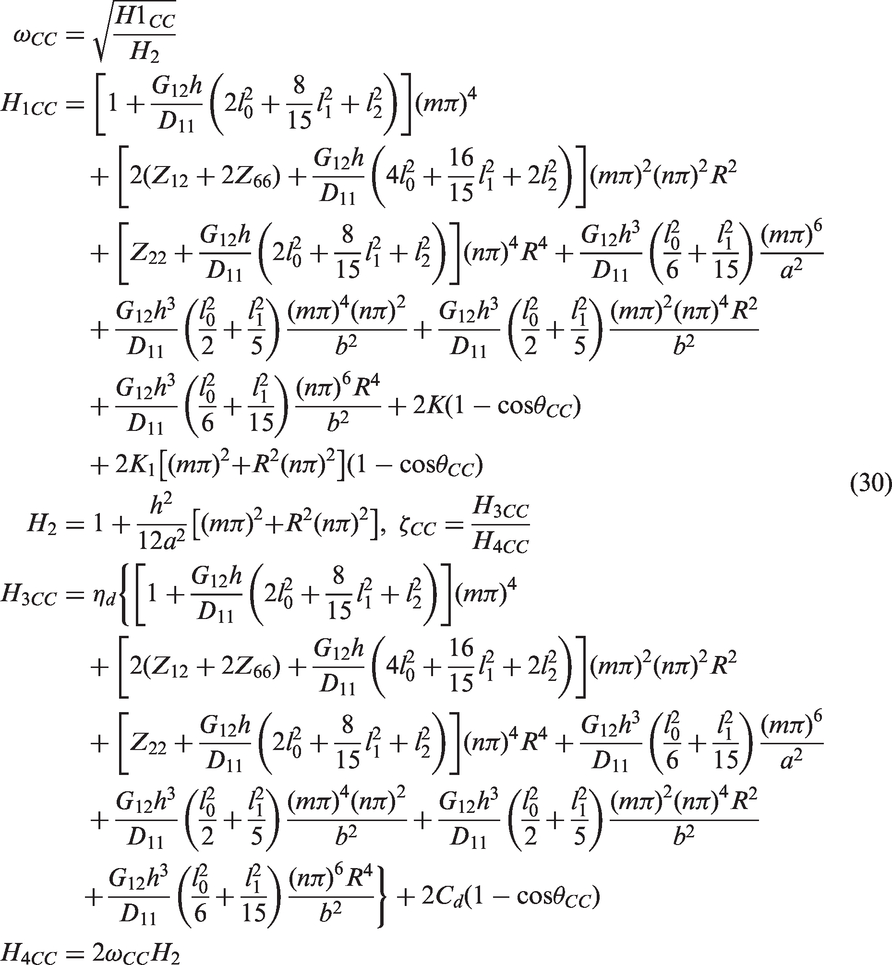
On the basis of the nontrivial solutions obtained from parameters Q and G of equation (26) and after some trigonometric activities, the trigonometric equation is presented in the form


Inserting

Free chain case
In the present case, it is assumed that the first microplate and the last microplate are not coupled with the fixed surface. Matrix form of algebraic equation (18) that is adaptable with the “free chain” system can be expressed in the following form
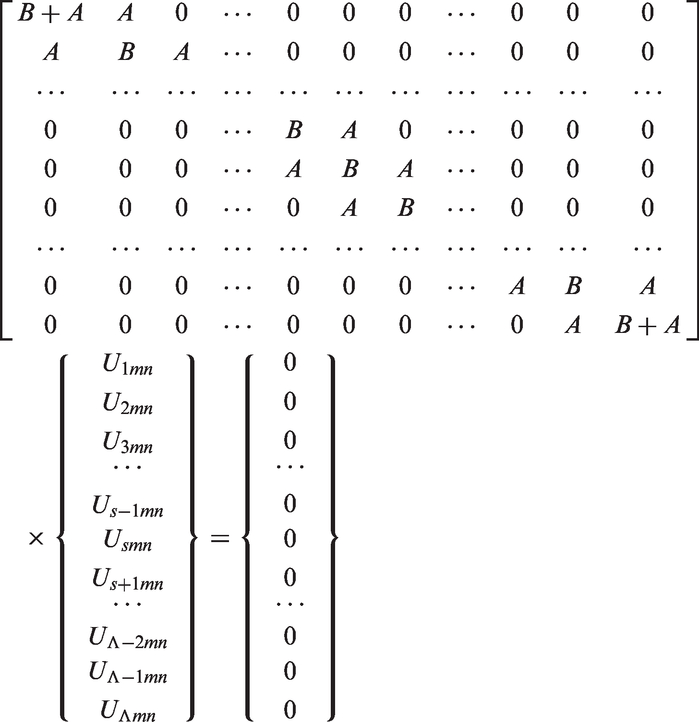
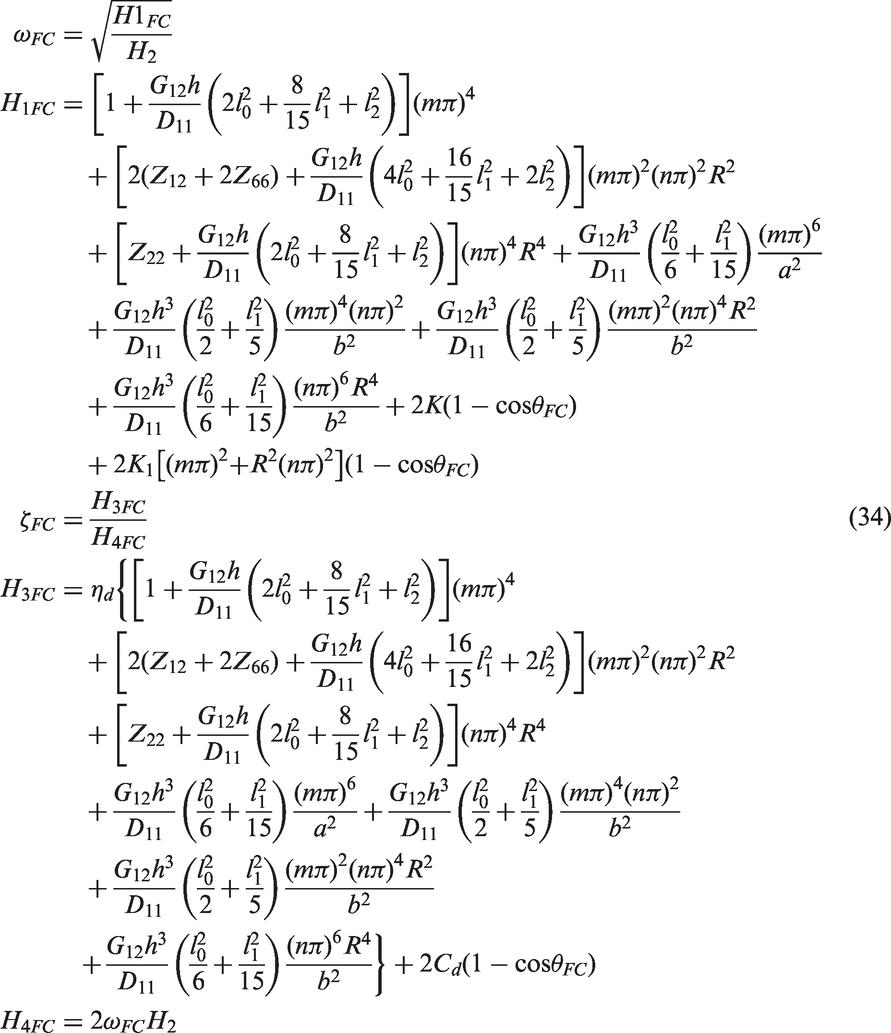
Following the steps performed in the previous sections to obtain the closed-form expression for natural frequencies of the system, inserting the assumed solution (22) into sth equation of (18), we obtain


Substituting equation (33) into equation (32), we achieve the closed-form statement for the natural frequencies of the system for “free chain” case as follows
Results and discussion
Comparison studies
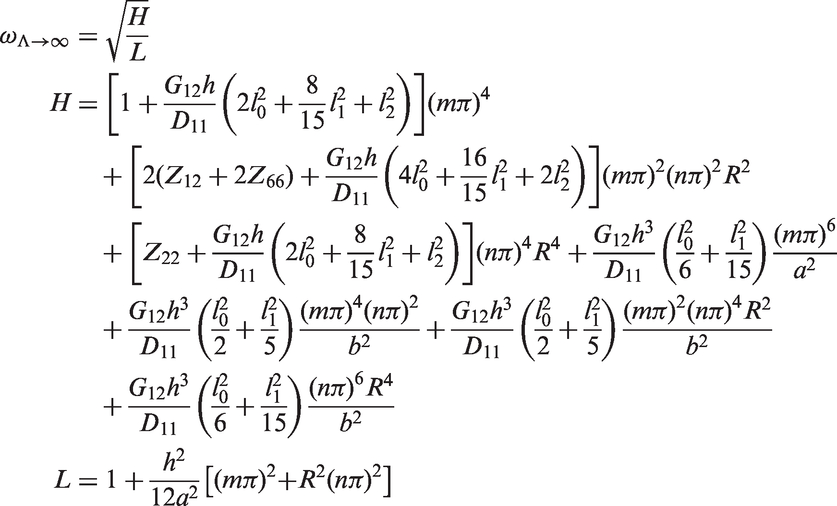
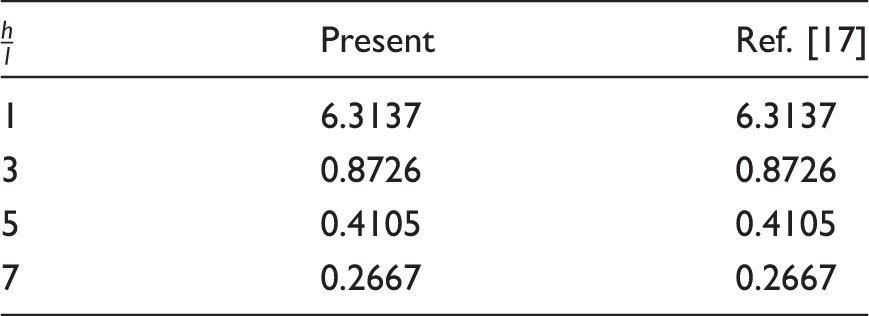
To confirm the results obtained with the presented formulation, some comparative studies are done. Firstly, it is considered that in equations (30) and (34) that the number of orthotropic microplate
Comparison of the critical natural frequencies of OMVMPS based on MSGT (m = 1, n = 1).
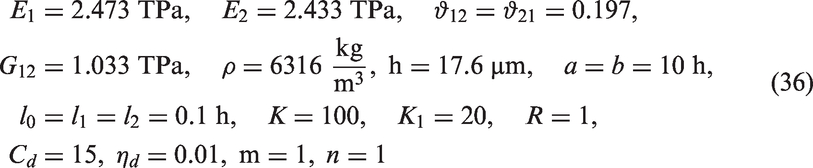
Comparison study of analytical and numerical solutions for eigenfrequencies of OMVMPS based on different chain systems.
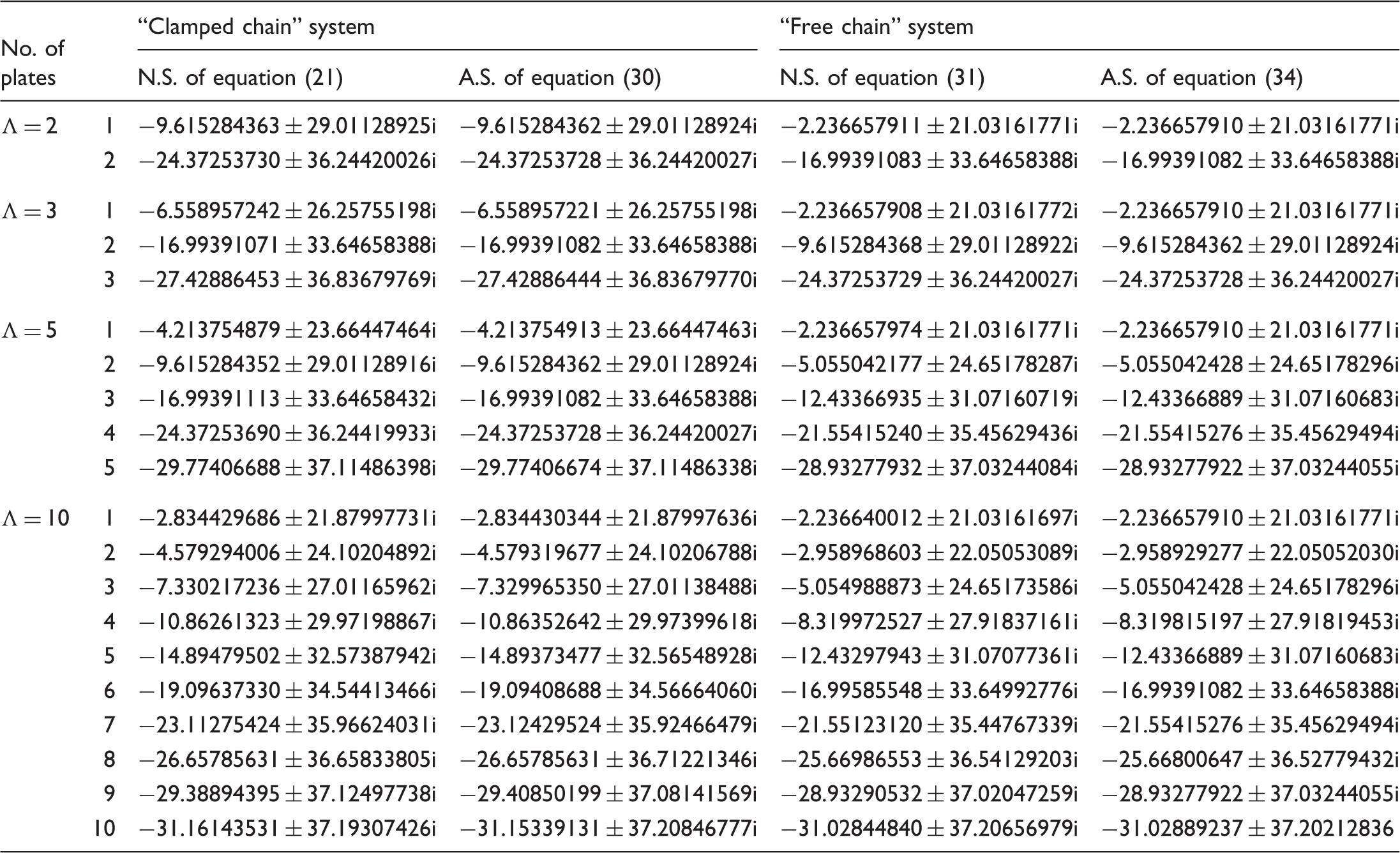
N.S.: numerical solutions; A.S.: analytical solutions.
Also the number of plates is taken
Benchmark results
Afterward, to comprehend the behavior of multi-microplate system, some figurative results are given in the following. The values of parameters for all examples are taken as mentioned earlier. This procedure is carried out through different examples for two chain boundary conditions namely “clamped chain” and “free chain” conditions. Also, we consider
Figure 2 shows the influence of the independent material length scale parameter on the variation of critical natural frequency (dimensional form of equation (35)) of OMVMPS for different values of microplate thickness. Here, we took Variations of the critical natural frequencies of OMVMPS as a function of plate thickness for various values of the independent material length scale parameters (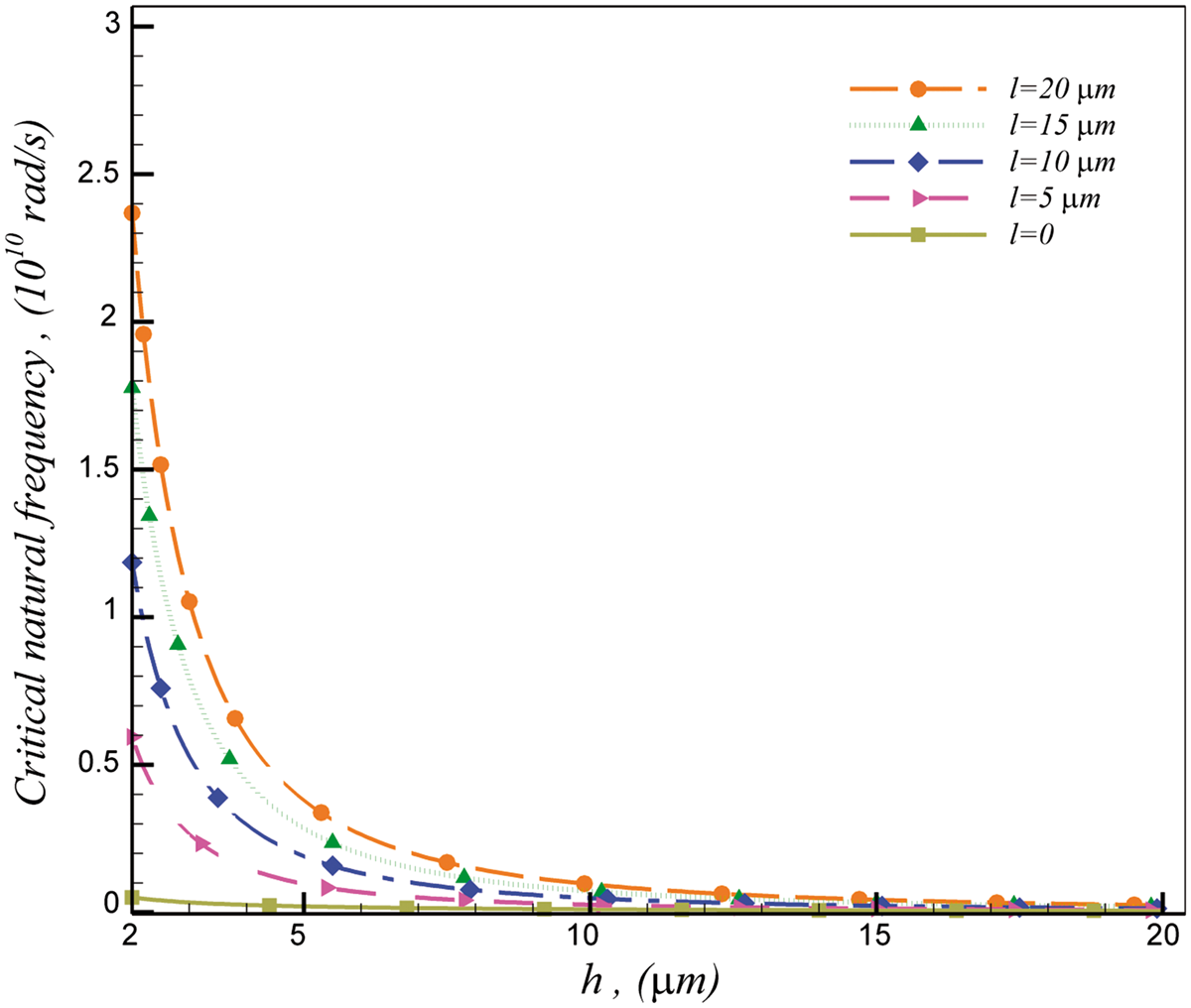
Figure 3(a) and (b) depicts the dimensionless natural frequencies of OMMPS forecasted by MSGT, MCST, and CT as a function of dimensionless length scale parameter. Here, we assumed Variations of the dimensionless frequencies of OMVMPS predicted by MSGT, MCST, and CT corresponding to various values of the nondimensional length scale parameter and different number of microplates (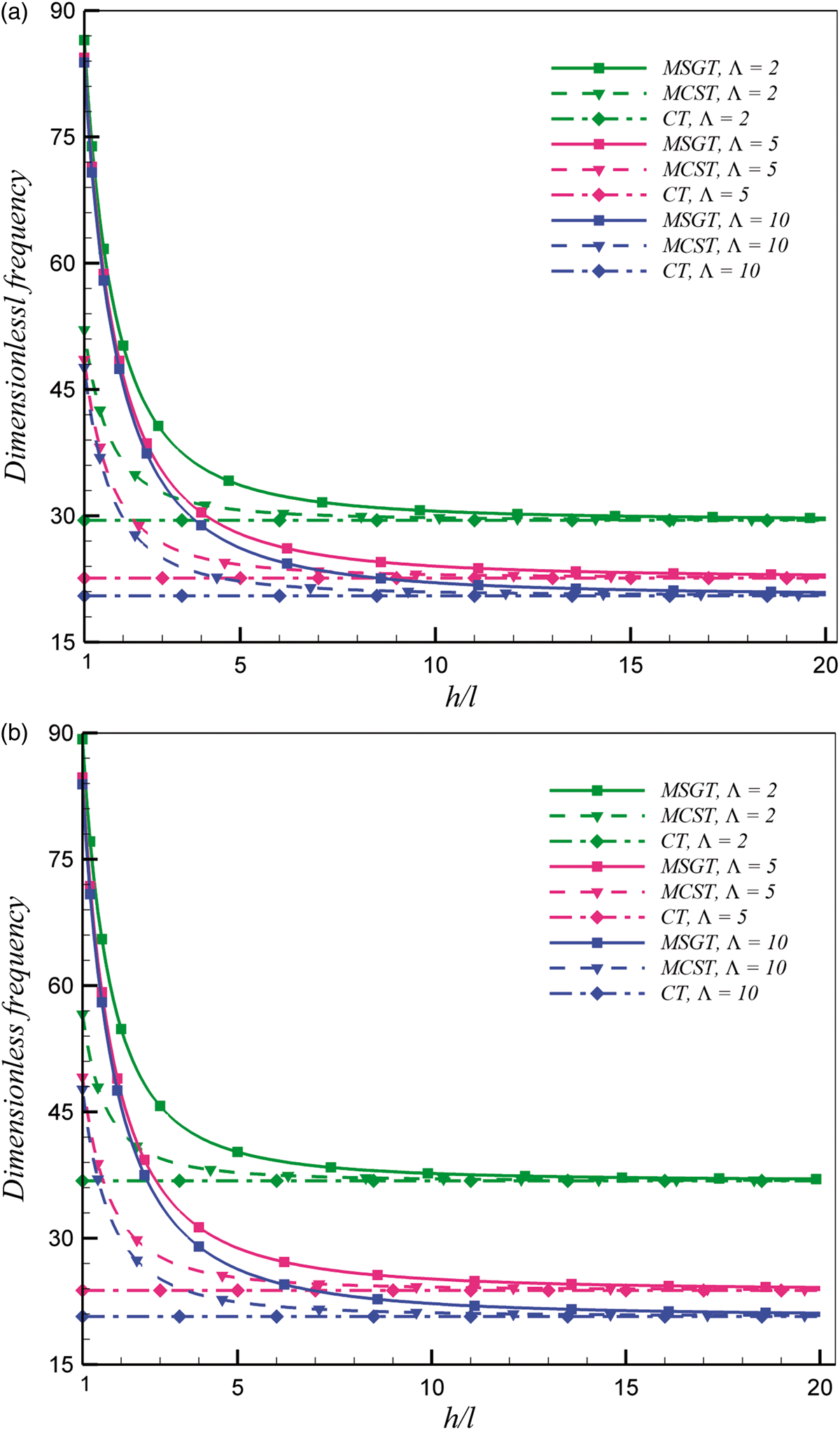
The variation of damping ratio versus damping coefficient of visco-Pasternak medium Cd for “clamped chain” and “free chain” conditions with different number of plates Variation of damping ratio with damping coefficient of visco-Pasternak medium corresponding to different values of number of microplates: (a) “clamped chain”; (b) “free chain”.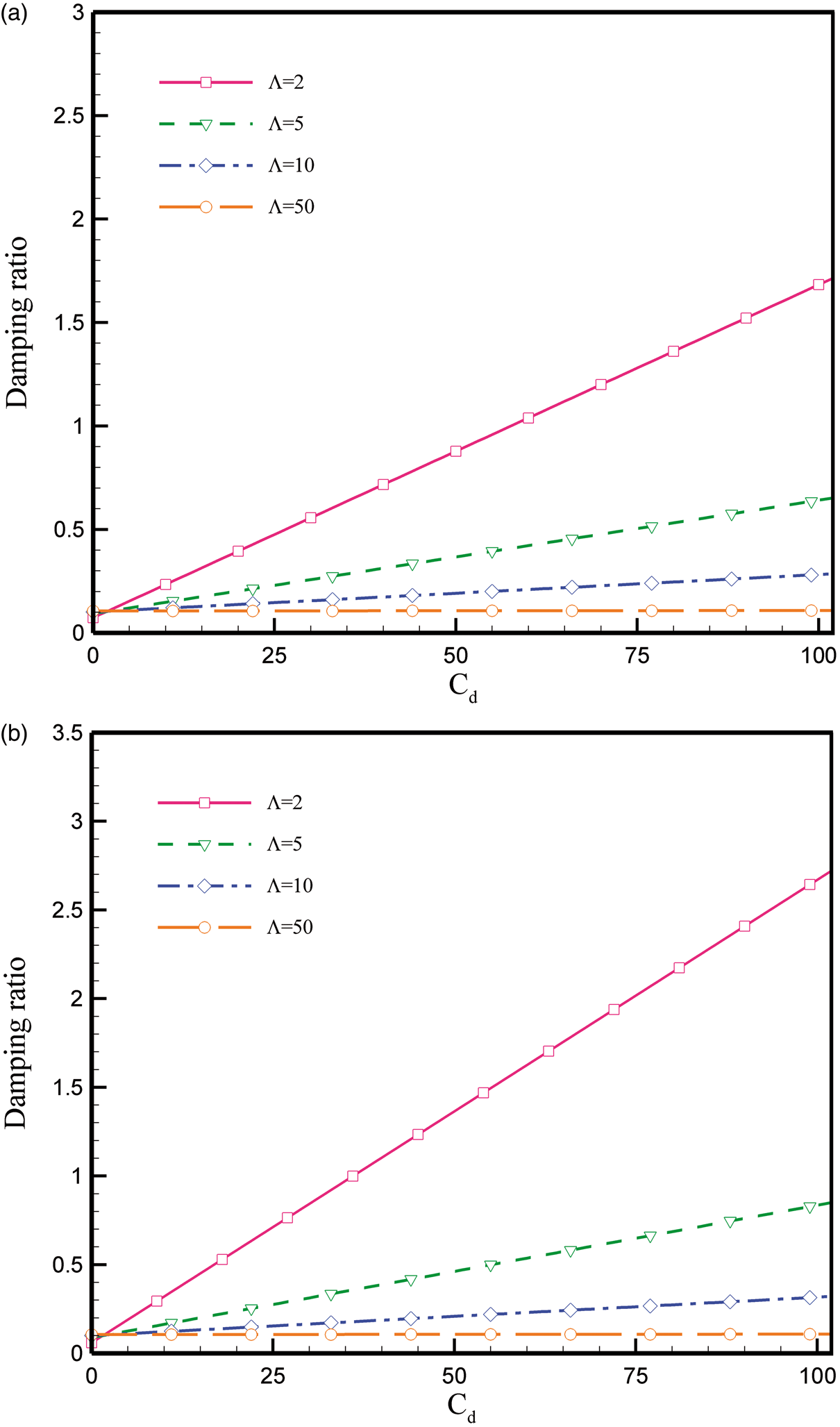
Plotted in Figure 5 are the imaginary part of eigenfrequency against damping coefficient of visco-Pasternak medium Cd for the two different chain systems and different number of plates Variation of imaginary part of eigenfrequency with damping coefficient of visco-Pasternak medium corresponding to different values of number of microplates: (a) “clamped chain”; (b) “free chain”.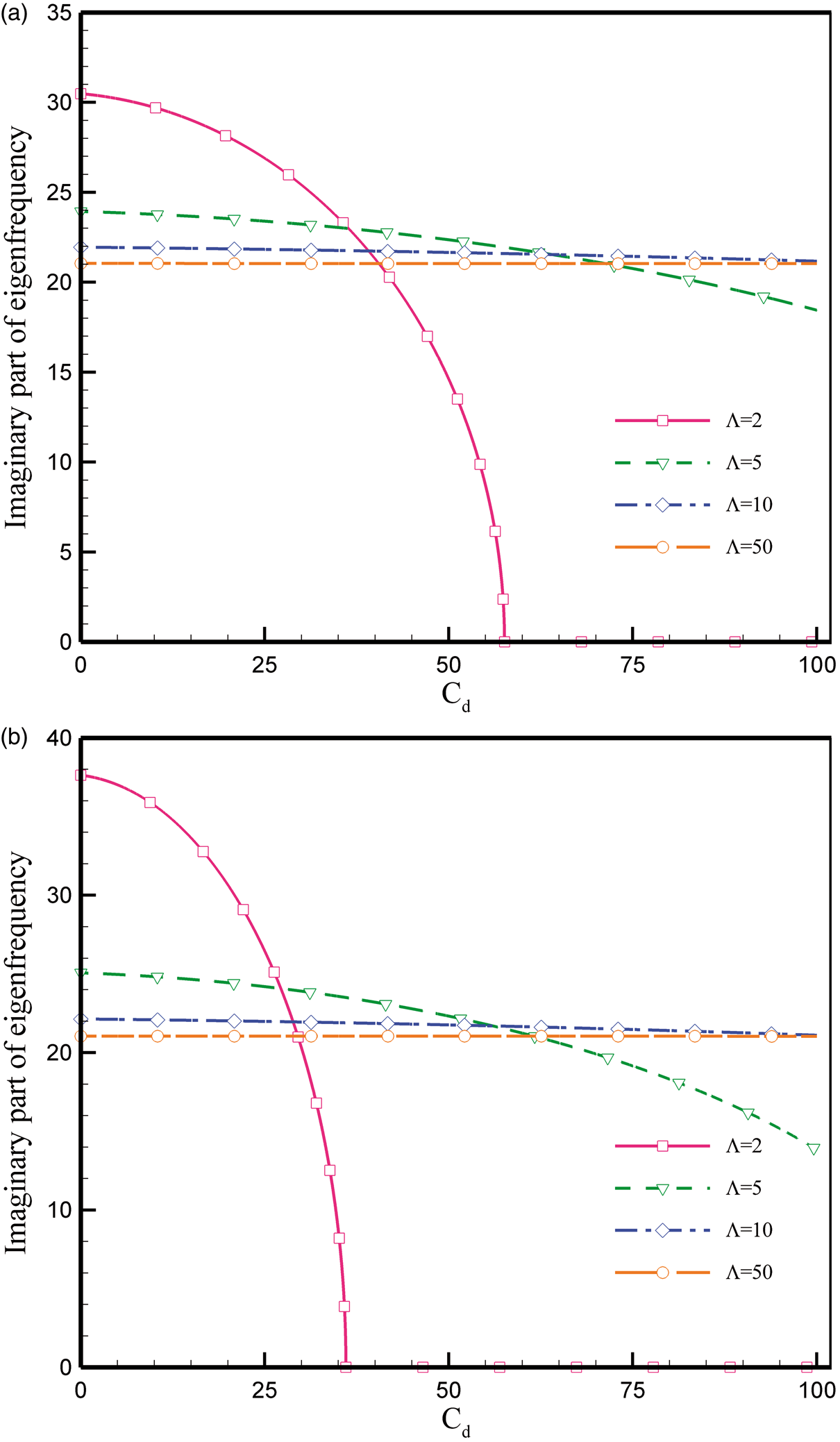
Figure 6 presents the influence of damping coefficient of visco-Pasternak Cd on the real part of eigenfrequency for Variation of real part of eigenfrequency with damping coefficient of visco-Pasternak medium corresponding to different values of number of microplates: (a) “clamped chain”; (b) “free chain”.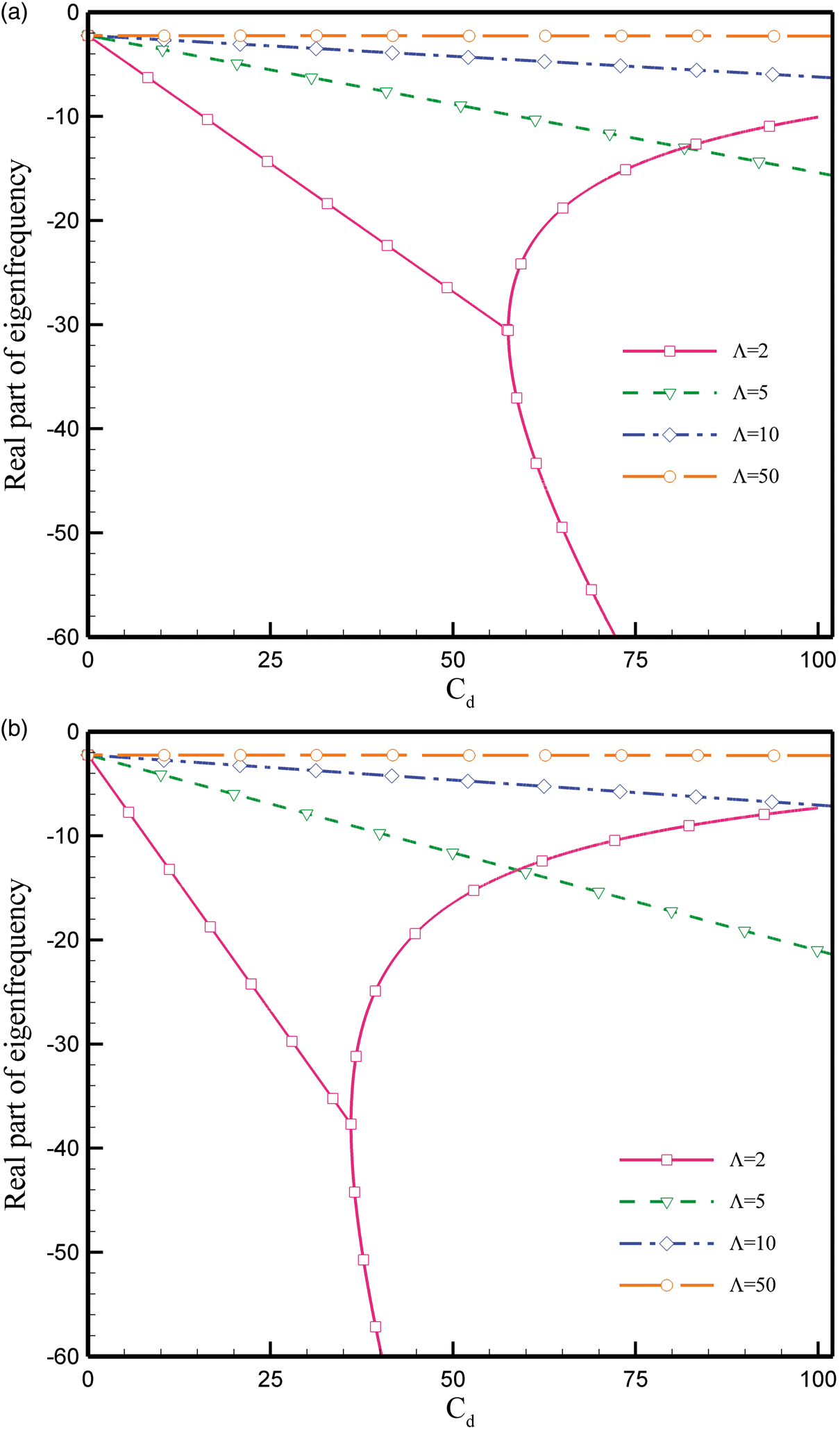
In order to show how material length scale parameters influence on the behavior of multi-microplate system, the imaginary part of eigenfrequency is plotted versus The effect of the independent internal length scale parameter on the damped frequencies vs different numbers of microplate: (a) “clamped chain”; (b) “free chain”.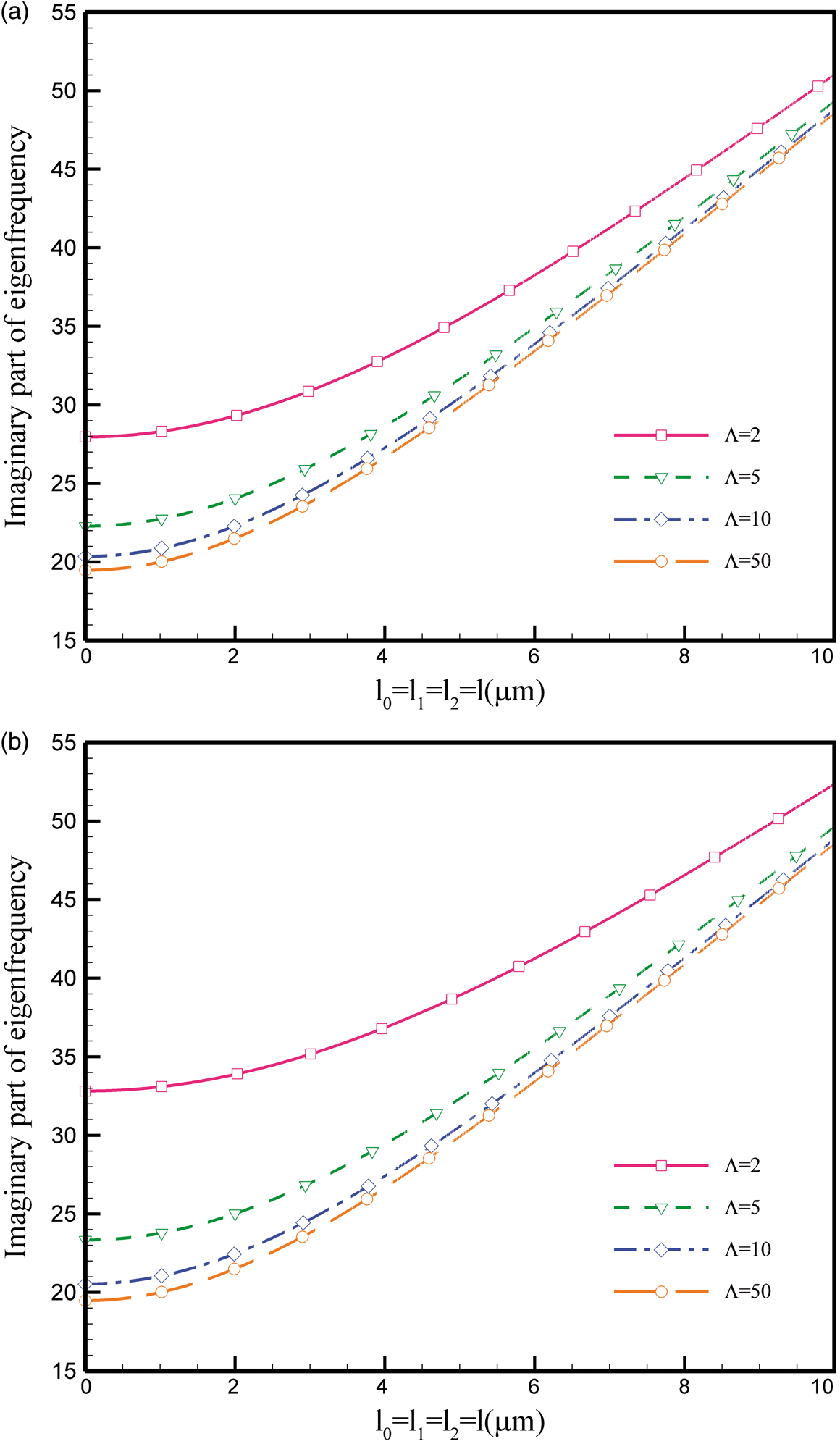
To assess the role of isotropic and orthotropic properties on frequencies of OMVMS, the imaginary part of eigenfrequency versus the nondimensional length scale parameter The separate influence of the orthotropic and isotropic materials on damped frequencies of OMVMPS vs nondimensional length scale parameter for different number of microplates: (a) “clamped chain”; (b) “free chain”.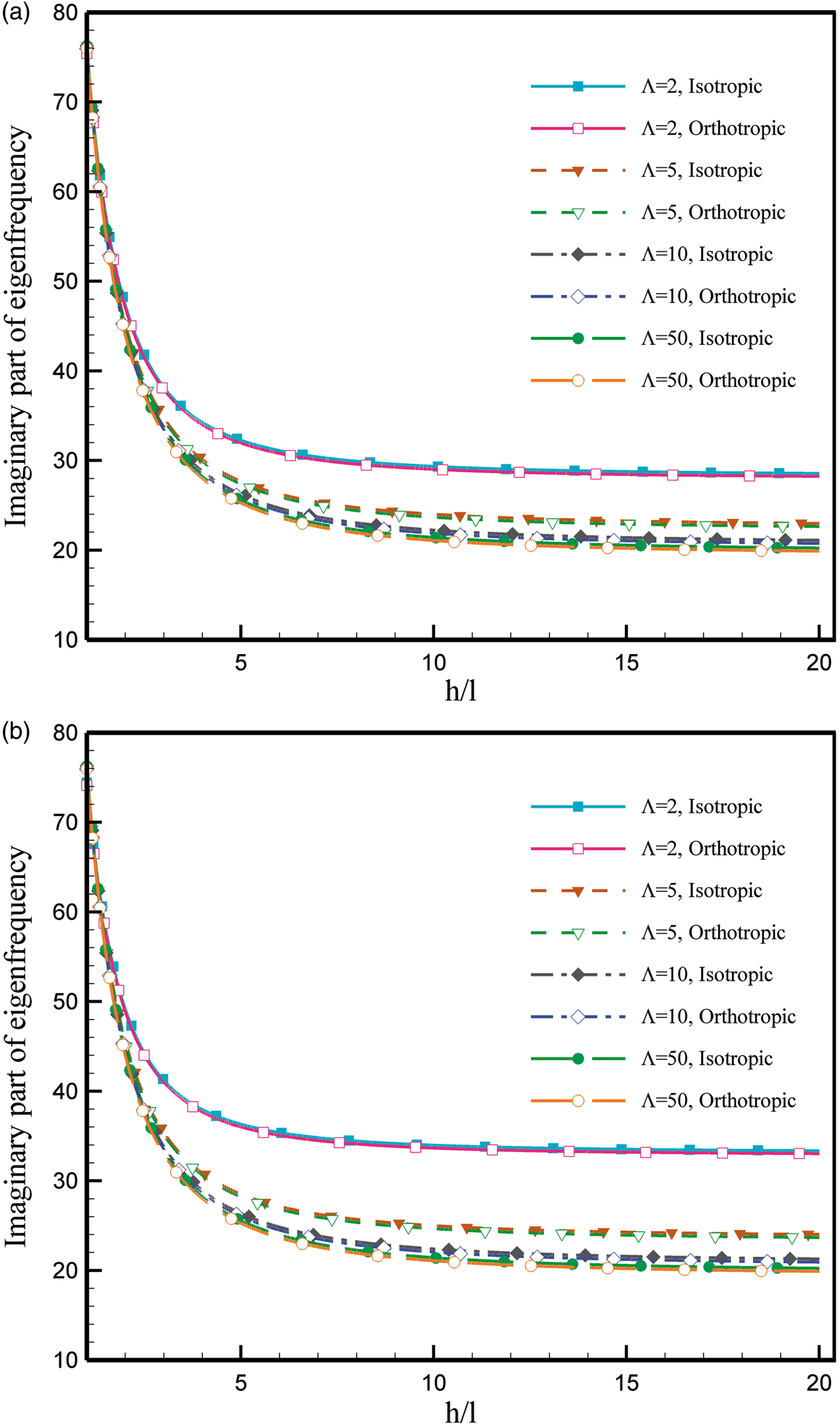
Depicted in Figure 9 are the imaginary part of eigenfrequency as a function of dimensionless length scale parameter Variations of the damped frequencies of OMVMPS against the nondimensional length scale parameter for different values of shear and transverse stiffness coefficients K1 and 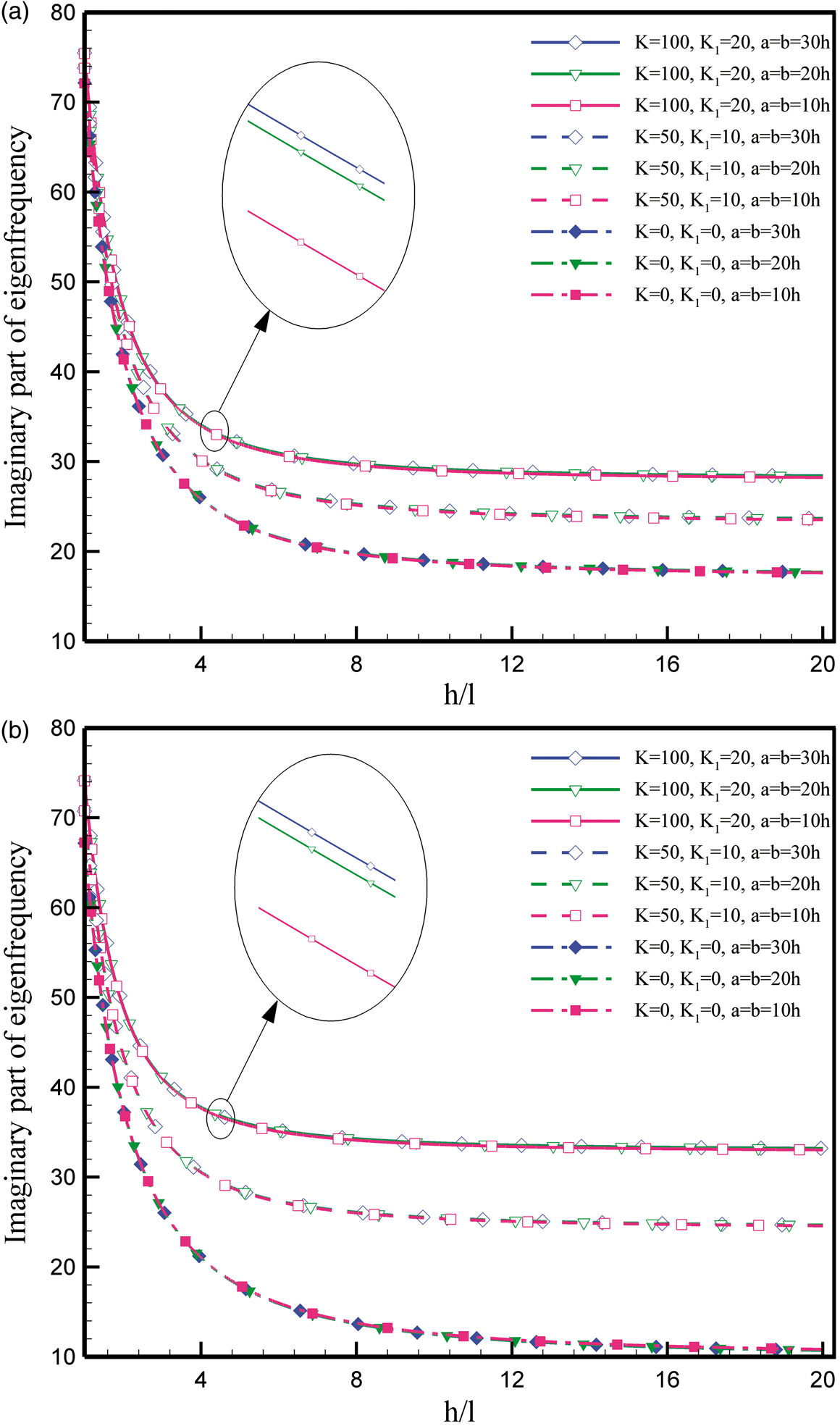
Figure 10 shows the imaginary part of eigenfrequency against aspect ratio with different values of nondimensional length scale parameter Variations of the damped frequency against the aspect ratio, nondimensional length scale parameter, and number of microplates: (a) “clamped chain”; (b) “free chain”.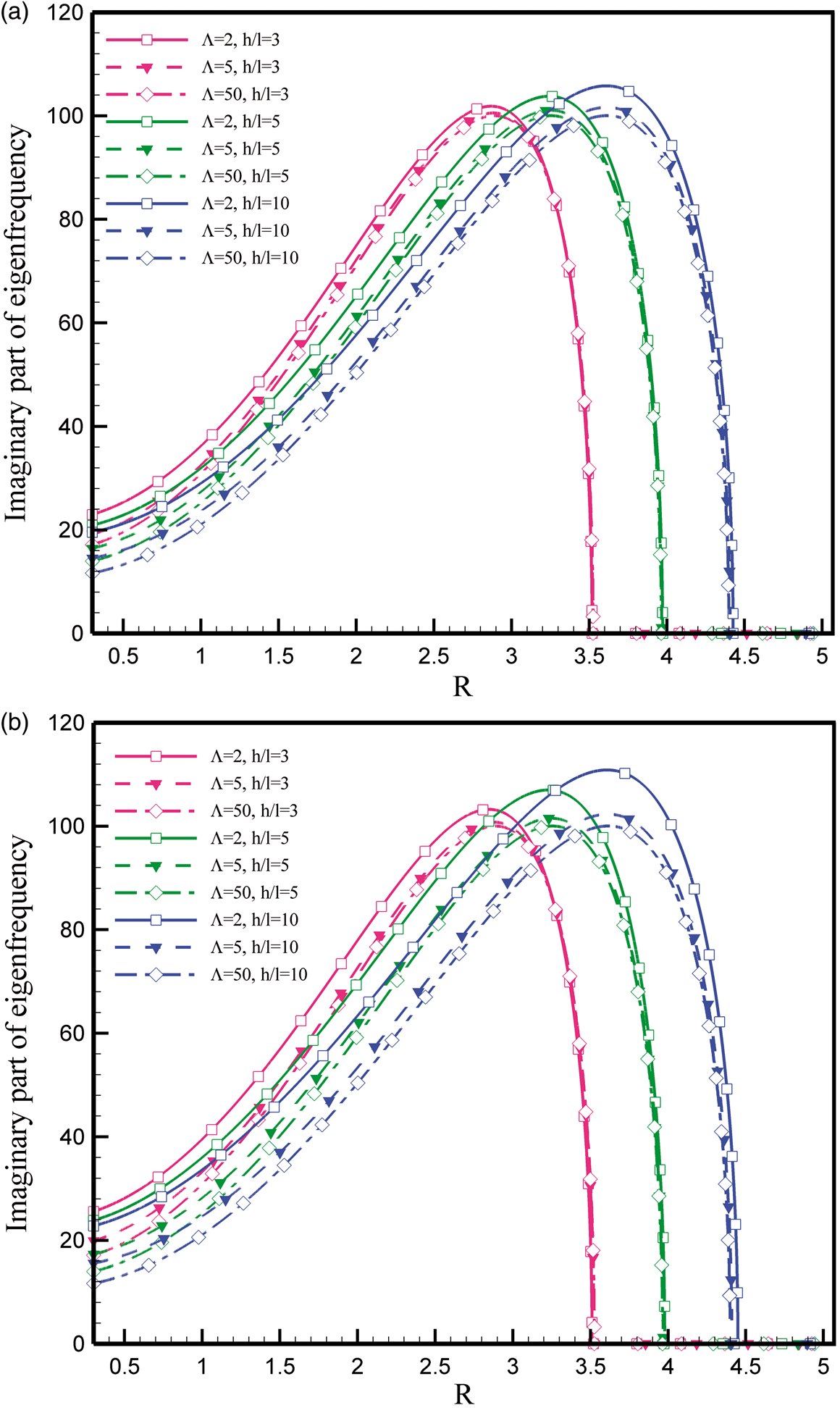
Figure 11 displays how frequency varies by changing aspect ratio when damping coefficient of visco-Pasternak medium and viscoelastic structural property are zero. Influences of number of microplates and nondimensional length scale parameter Variations of the undamped frequency against the aspect ratio, nondimensional length scale parameter, and number of microplates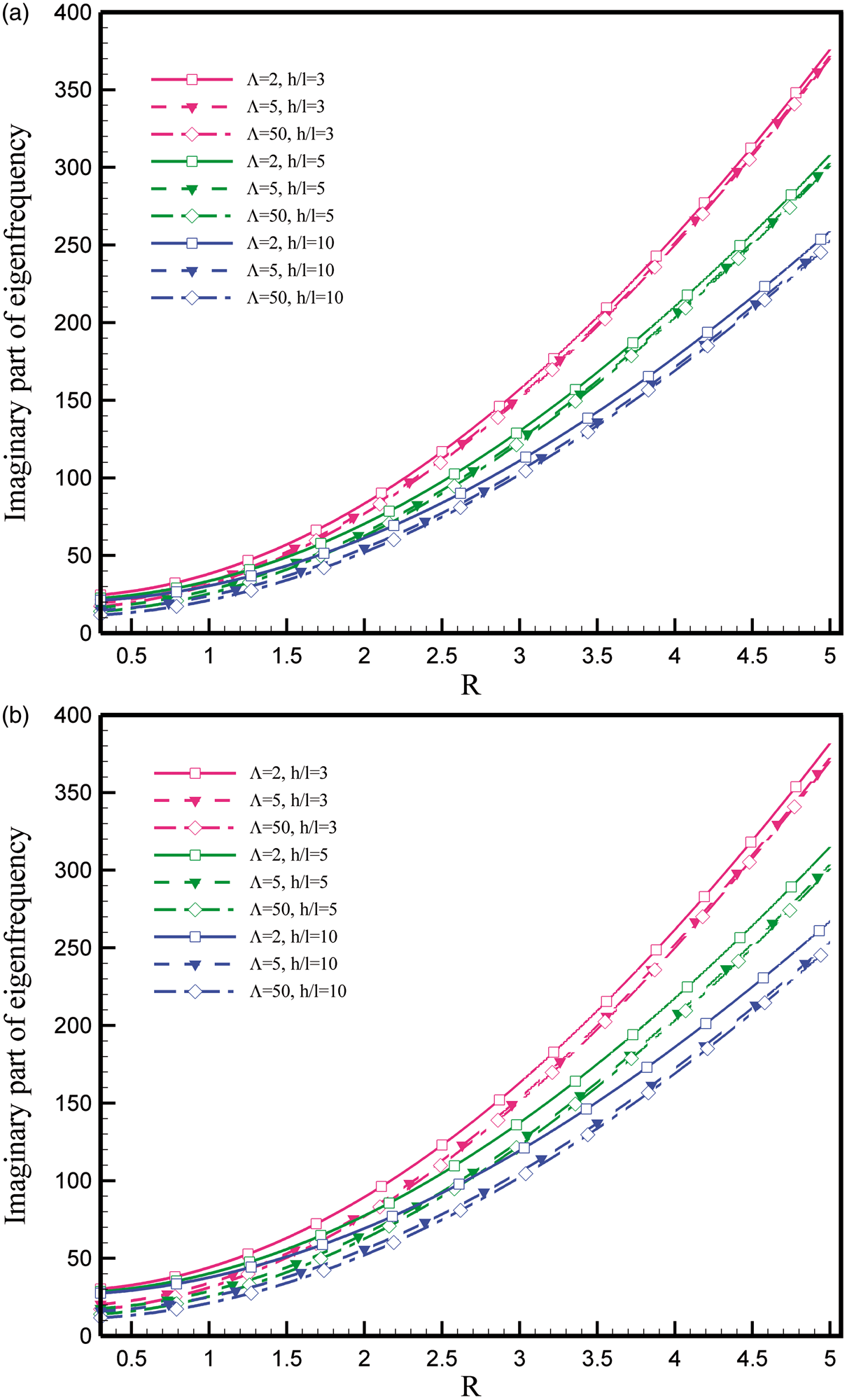
Figure 12 examines the vibration behavior of the system with respect to increase in the number of plates at higher modes as well as under various values of viscoelastic structural damping Coupled effect of the viscoelastic damping structural and higher modes on the damped frequency vs different number of microplates: (a) “clamped chain”; (b) “free chain”. An enlargement of Figure 12 for two cases of wave number (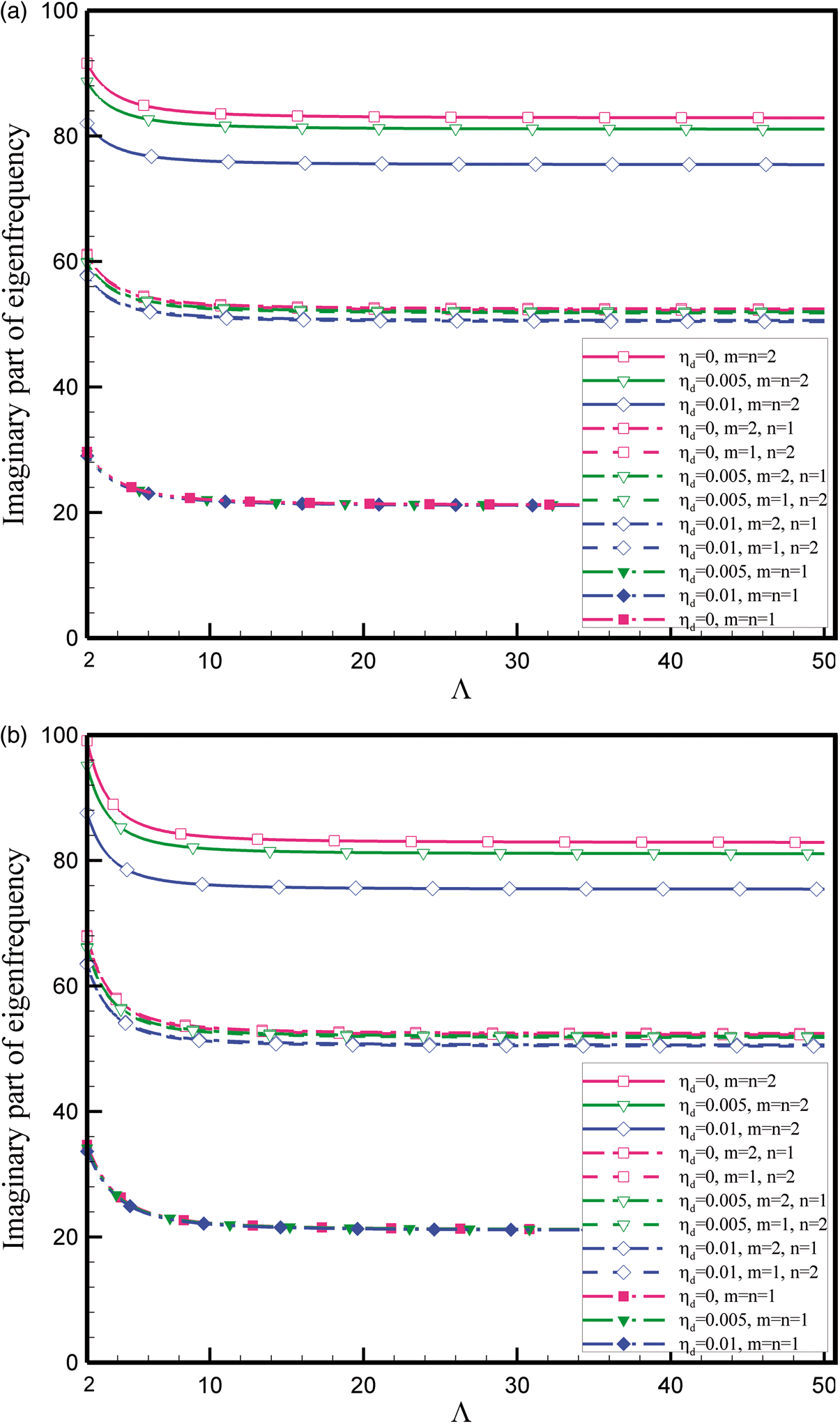
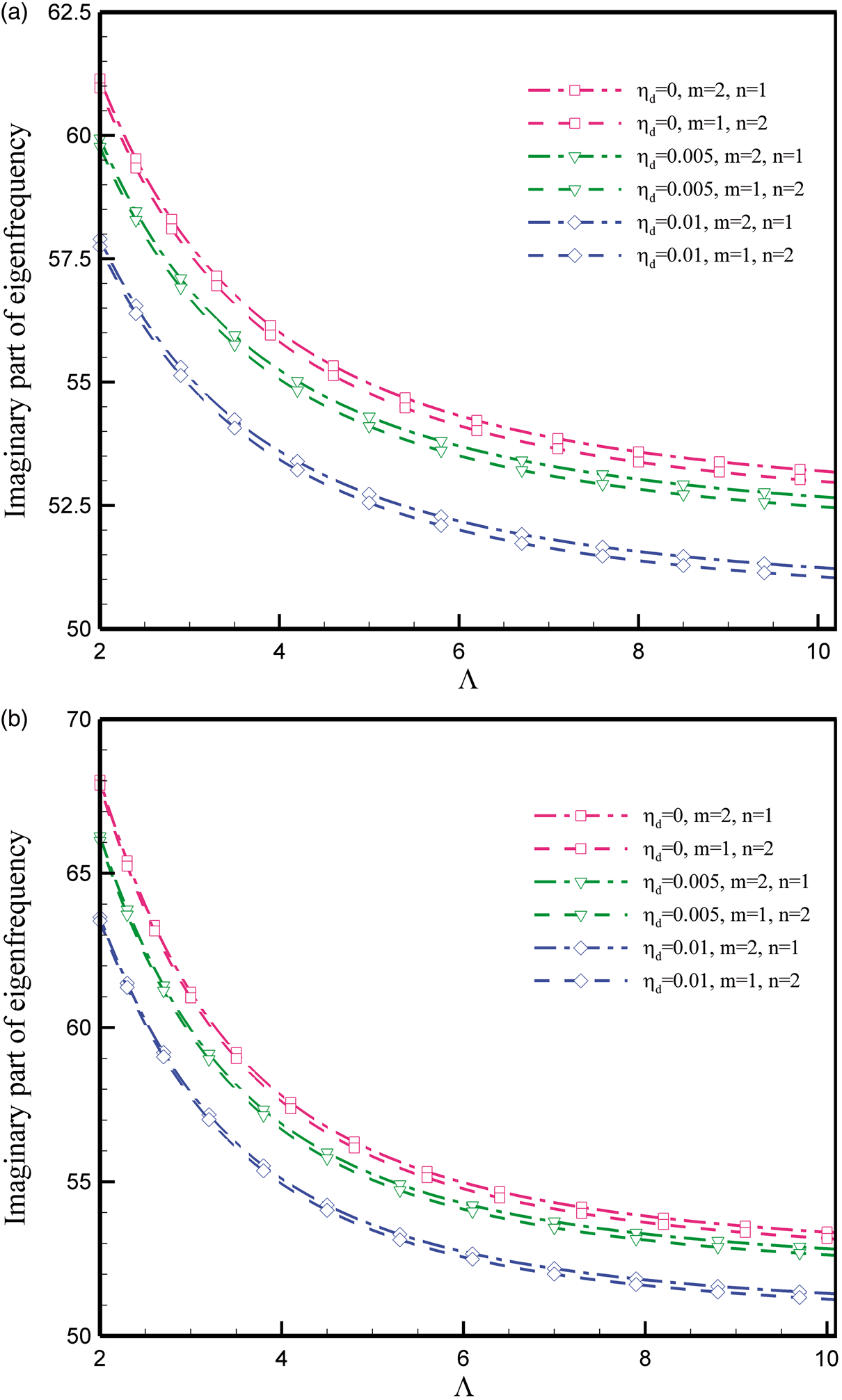
Conclusion
In this paper, vibration characteristics of an OMVMPS embedded in visco-Pasternak medium was studied based on the MSGT and Kirchhoff plate approach. Navier’s method and trigonometric method were used to determine an explicit closed-form expression for eigenfrequency of OMVMPS for the two chain conditions, namely “clamped chain” and “free chain” systems. Comparing the analytical and numerical solutions, the satisfactory agreement between them was observed. Some important conclusions can be drawn from the results: the number of microplates, the dimensionless length scale parameter
Footnotes
Declaration of Conflicting Interests
The author(s) declared no potential conflicts of interest with respect to the research, authorship, and/or publication of this article.
Funding
The author(s) received no financial support for the research, authorship, and/or publication of this article.