







Abstract
In this paper, modified strain-gradient theory is developed for size-dependent formulation of micro plate reinforced with functionally graded graphene nanoplatelets. The reinforced micro plate is subjected to thermal and mechanical loads. The functionally graded graphene nanoplatelets are distributed along the thickness direction based on various patterns. The effective material properties of reinforced structure including modulus of elasticity and density or Poisson’s ratio are calculated based on Halpin–Tsai model and rule of mixture, respectively. The kinematic relations are developed based on third-order shear deformation theory. The solution procedure is proposed based on analytical work for custom boundary condition. Before presentation of numerical results, a comprehensive comparative study is performed for validation of present formulation. The numerical results are presented to investigate the influence of important parameters such as weight fraction of GNPs, various distribution of GNPs, three micro length scale parameters and some non-dimensional geometric parameters on the vibration responses.
Keywords
Introduction
New materials and new methods of material production have been developed by various researchers to be used in new various conditions. These materials and production methods give a new opportunity for designer to produce materials and structures with novel properties applicable in various environments. In recent years, production of composite materials including nano reinforcements such as carbon nanotubes and graphene nanoplatelets offered some excellent options for designer to reach the structures with high stiffness and low density. Addition of carbon nanotubes and graphene nanoplatelets to matrixes such as polymer leads to increase of stiffness and decrease of density made of them. Some instances can be presented to show novel properties of composite structures reinforced with carbon nanotubes and graphene nanoplatelets. Some experiments were carried out to show that increase of 31% in Young’s modulus of elasticity of epoxy may be reached by addition of 0.1% weight fraction of graphene nanoplatelet reinforcement [1]. Another experiment was performed to show that increase of 76% in tensile strength and increase of 62% in Young’s modulus of elasticity are reached by the addition of 0.7% weight fraction of graphene platelet reinforcement [2]. One can conclude that although some experimental and theoretical works on the structures reinforced with carbon nanotube were published, however, the number of works about theoretical works of composite structures reinforced with graphene nanoplatelets is very limited. A literature review on the subject of this paper is presented to justify necessity of this paper.
The literature review is divided to three sections: first section is related to carbon nanotube reinforcements, second section is related to graphene nanoplatelets and third section is related to the application of non-classical theories such modified strain gradient and couple stress theories.
Wu et al. [3] investigated the nonlinear vibration analysis of imperfect composite beam reinforced with functionally graded carbon nanotubes based on first-order shear deformation theory (FSDT). The imperfection was assumed based on trigonometric and hyperbolic functions. The governing equations of motion were solved using Ritz method. Dynamic stability analysis of nanocomposite beam reinforced with single-walled carbon nanotubes was studied by Ke et al. [4] based on differential quadrature method. The numerical results including free vibration and buckling responses were provided in terms of nanotube volume fraction, slenderness ratio and end supports. Arefi and Zenkour [5,6] developed higher-order SDT (HSDT) to bending and free vibration analysis of sandwich plates including piezoelectric layers. Free vibration analysis of a composite elliptical plate reinforced with functionally graded carbon nanotube was studied by Ansari et al. [7] based on FSDT and Hamilton’s principle. Thermoelastic nonlinear frequency analysis of a sandwich structure reinforced with temperature-dependent functionally graded single-walled carbon nanotube was studied by Mehar et al. [8]. To include nonlinearity in derivation of governing equations of motion, Green–Lagrange nonlinear strain components were employed. The solution and numerical results were provided based on finite element method. Thang et al. [9] studied the nonlinear buckling analysis of imperfect functionally graded carbon nano-reinforced composite subjected to axial loading based on Kirchhoff model with von Karman-type of nonlinearity. The closed-form solution was derived based on Galerkin method and the Airy stress function.
Rafiee et al. [10] summarized some novel properties of graphene nanoribbons. They expressed that addition of 0.3% weight fraction of nanofillers leads to 30% increase in Young’s modulus of the epoxy composite while 0.3% weight fraction of multiwalled carbon nanotubes leads to 22% increase in Young’s modulus. Montazeri and Rafii-Tabar [11] presented a comprehensive work for the calculation of elastic constants of a polymeric nanocomposite embedded with graphene sheets, and carbon nanotubes based on molecular dynamics, molecular structural mechanics and finite element method. The reinforcement role of these nanofillers was investigated in transverse directions. In addition, the effect of sliding motion of graphene layers on the elastic constants of the nanocomposite was studied. Liu et al. [12] studied buckling and free vibration analysis of functionally graded cylindrical shell with initially stress reinforced with non-uniformly distributed graphene platelets (GPLs) based on three-dimensional elasticity theory and state-space formulation. The modified Halpin–Tsai model and rule of mixture are used for the calculation of effective material properties. They concluded on the influence of important parameters such as GPL weight fraction, dispersion pattern, geometry and size as well as the influence of initial stress on the buckling and free vibration responses. In addition, it was concluded that the addition of a small amount of GPLs leads to significant increase of buckling load and natural frequencies. Buckling analysis of composite cylindrical shell with opening reinforced with GPL was studied by Wang et al. [13] based on finite element method. The effective material properties of composite cylindrical shell were studied based on Halpin–Tsai micromechanics model and rule of mixture. The buckling load was evaluated in terms of important parameters such as location and geometry of opening, weight fraction and shape of GPL fillers. Critical buckling load and natural frequency analysis of nanocomposite plate reinforced with functionally graded graphene subjected to periodic uniaxial in-plane force and a uniform temperature rise was studied by Wu et al. [14] based on FSDT. The parametric analysis was performed to investigate the influence of various distributions, temperature change, static in-plane force, plate geometry and boundary condition on the parametric instability of functionally graded multilayer GPLRC plates. Thermoelastic bending analysis of nanocomposite rectangular plate reinforced with graphene nanoplatelets was studied by Yang et al. [15]. It was assumed that weight fraction of graphene nanoplatelets is changed gradually along the thickness direction for various distributions. The numerical results including stress and deformation distribution were presented in terms of GPL’s weight fraction, distribution pattern, geometry, temperature change and plate boundary conditions of the nanocomposite plates. Thermoelastic bending analysis of functionally graded polymer nanocomposite circular and annular plates reinforced with graphene nanoplatelets was studied by Yang et al. [16] based on three-dimensional elasticity theory. Three-dimensional thermoelastic analysis of a fucntionally graded elliptical plate with clamped edges was studied based in three-dimensional elasticity theory by Yang [17] for the case that weight fraction is changed gradually along the thickness direction.
Nonlinear size-dependent aanlysis of a fucntionally graded micro beam was studied by Arbind et al. [18] based on modified couple stress theory (MCST) and thrid-order SDT (TSDT). Nonlinearity was accounted based on von Karman strain-displacement relations. The bending results were derived based on an analytical methos in terms of micro length scale parameters. In addition, the nonlinear results were evaluated based on finite element method. Arefi et al. [19] studied free vibration analysis of three-layered nanoplate including functionally graded core and two piezoelectric layers based on nonlocal elasticity theory and concept of neutral surface. The numerical results were presented in terms of aspect ratio, non-dimensional geometric parameters and nonlocal parameter. Thai and Choi [20] investigated on the size-dependent bending, buckling and free vibration analysis of fucntionally graded plate based on Kirchhoff and Mindlin plate theories and MCST. They presented a model with one material length scale parameter instead of previous models that contain three material length scales. Modified couple stress formulation and a four variable-refined plate theory were employed by He et al. [21] for bending, buckling and free vibration responses of functionally graded rectangular microplate based on Hamilton’s principle. They performed a comparative work to show that employing the size dependent four variable model leads to more accurate results rather than size-dependent TSDT. Free vibration analysis of fucntionally graded Timoshenko micro beam was studied by Ansari et al. [22] based on strain-gradient theory (SGT). The governing equations of motion were derived based on Hamilton’s principle for a functionally graded beam obeying Mori–Tanaka scheme along the thickness direction. The effect of higher-order shear deformations and initial electric and magnetic potentials were studied on the sandwich nanoplate by Arefi and Zenkour [23]. To account size dependency and anisotropy, bending and free vibration analysis of fucntionally graded piezoelectric Timoshenko beam was studied by Li et al. [24] based on modified strain-gradient theory (MSGT). Size dependency was modelled using a model containing three material length scale parameters. Size dependency effect in micro scale and shear strains were included in derivation of governing equations of motion for bending, buckling and free vibration analyses of functionally graded micro-plates by Thai et al. [25]. Wang et al. [26] presented static bending and free vibration analysis of a micro scale Timoshenko beam based on strain-gradient elasticity theory. The governing equations of motion were derived based on Hamilton’s principle as well as initial conditions and boundary conditions. The problem was reduced to special case with removing two or all material length scale parameters. A refined SDT and strain-gradient elasticity theory were employed for bending, buckling and free vibration analysis of fucntionally graded microplate by Zhang et al. [27]. The advantage of this model was satisfying the stress-free boundary conditions on the top and bottom of plate without requiring the shear stress correction factor. The effects of material length scale parameter, material-gradient index, aspect ratio and transverse shear deformation were studied on the bending, buckling and vibration characteristics of microplate.
The aim of this work is to formulate a micro plate reinforced with functionally graded nanoplatelets based on TSDT and MSGT. To account size-dependency, MSGT is used. In addition, for accurate modelling of the micro plate with various ranges of dimensionless parameters, TSDT is employed. The micro plate is subjected to thermal loads while is resting on Pasternak’s foundation. Halpin–Tsai model and rule of mixture are employed to calculate the effective modulus of elasticity and Poisson’s ratio or density of composite-reinforced micro plate. The governing equations of motion are derived based on Hamilton’s principle. The natural frequencies of the reinforced micro plate are calculated in terms of weight fraction of GNPs, various distribution of GNPs, three micro length scale parameters and some non-dimensional geometric parameters such as side length to thickness ratio and thickness to micro length scale ratio. To verify the present formulation and corresponding numerical results, our formulations are reduced to modified couple stress and modified strain-gradient theories, and then the responses are compared with the literature results.
Modified strain-gradient formulation
The MSGT has been organized for size-dependent analysis of structures. This theory is organized using addition of the new terms to classical strain energy. The new terms are including the dilatation-gradient tensor
One can conclude that the first term is dilatation gradient as a first-order tensor, which implies the dilatations in each direction. In addition, the deviatoric stretch gradient is third-order tensor, which represents the stretching effect. Rotation gradient is second-order tensor, which expresses the rotation effect. The corresponding terms are including a micro length scale parameter in each term.
Strain energy of a structure is defined based on MSGT as follows [25]

In which the components of strain tensor and corresponding terms of MSGT are defined as follows [25]




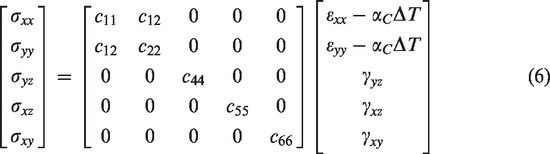
In equation (6),



In which
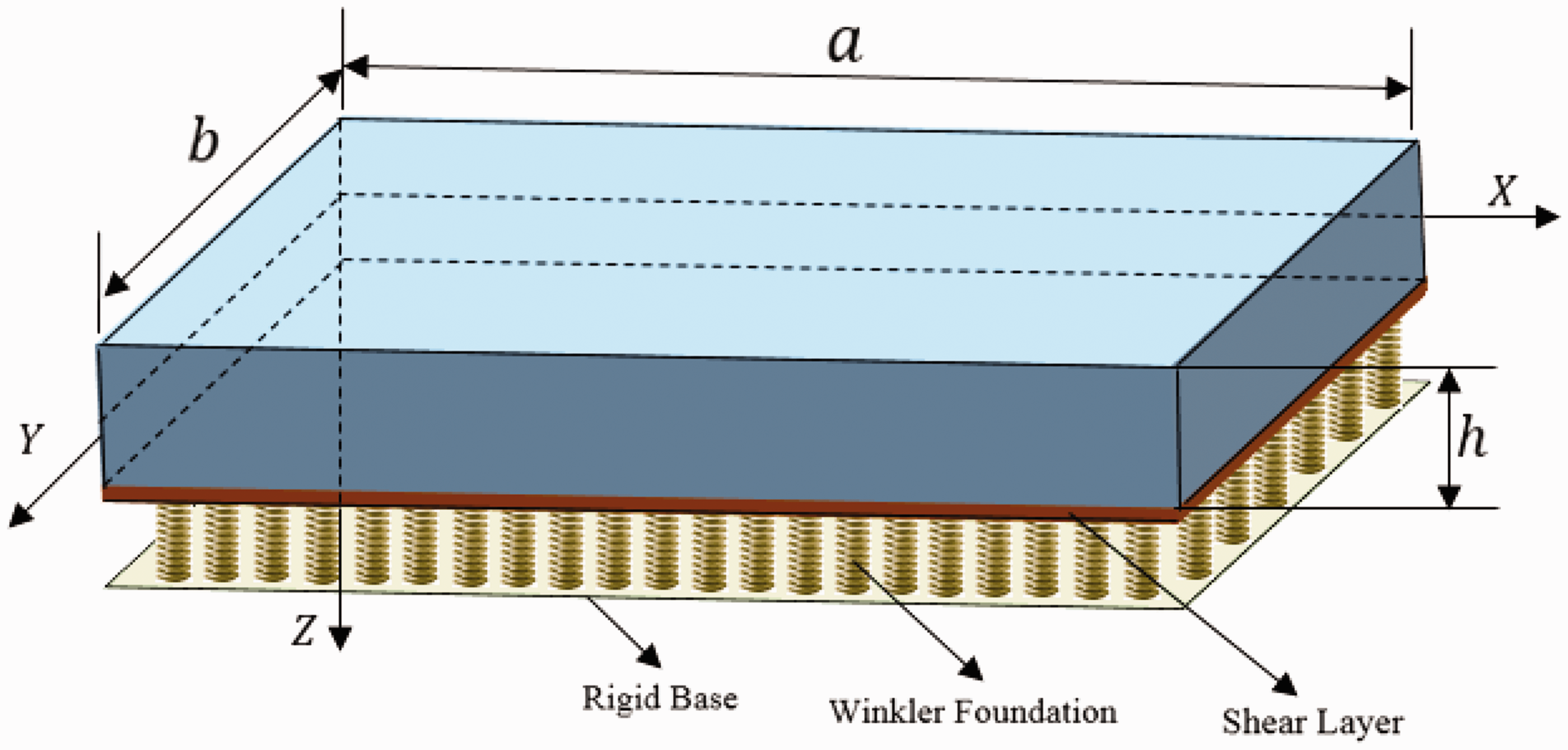
The schematic figure of composite micro plate reinforced with functionally graded graphene nanoplatelets resting on Pasternak’s foundation.
The non-classical and higher-order terms of stress (




Our problem in this paper is a composite rectangular micro-plate made of polymer matrix reinforced with graphene nanoplatelets. The coordinate system is defined as x,y,z located at the middle of plate. The length, width and thickness of micro-plate is assumed as a, b and h, respectively. The micro-plate is resting on Pasternak’s foundation. The effective modulus of elasticity based on extended Halpin–Tsai model is defined as follows [14,28,30]










In this work, three models are employed for the distribution of graphene nanoplatelets. These models that are presented in Figure 2 are described as follows [17].
Linear distribution with GNP weight fraction changing from the highest value on the top surface to zero at the bottom surface
Parabolic distribution where the GNP weight fraction is the maximum at the top and bottom surfaces and zero at the mid-plane
Uniform GNP distribution with constant weight fraction along the plate thickness




Various distributions of functionally graded graphene nanoplatelets.
Kinematic and constitutive relations
The displacement field is assumed based on TSDT, (Figure 1) as follows



In which
The shape function is assumed based on TSDT as follows

It is noticeable that this theory does not need to shear stress correction factor. The strain components are defined as follows





Using the displacement field and strain components defined in equations (25) and (27), the components of dilatation-gradient tensor



The components of symmetric part of rotation-gradient tensor are defined as






And the components of deviatoric stretch-gradient tensor are defined as
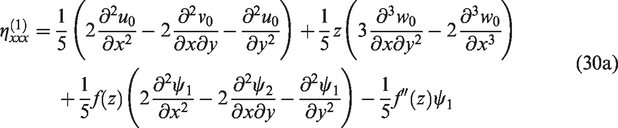
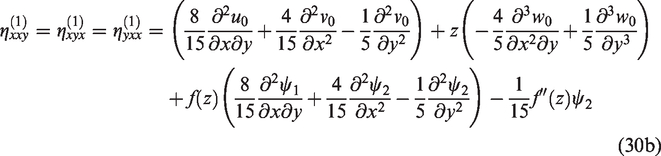

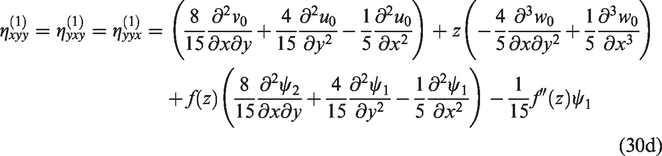
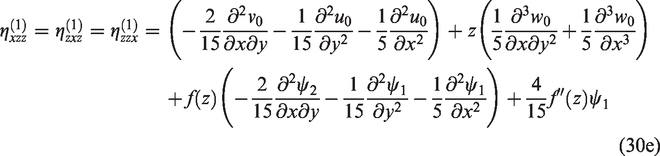
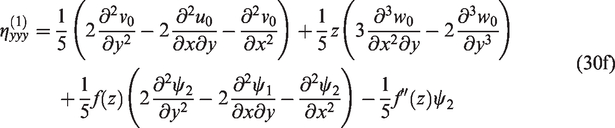

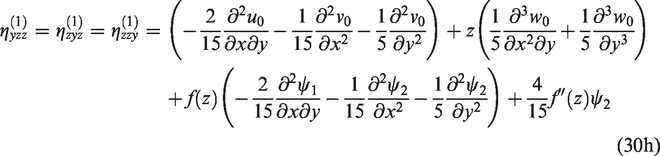


The non-classical components of stress are calculated using the above equations.
The Hamilton’s principle is used to derive governing equations of motion. This theory is defined as


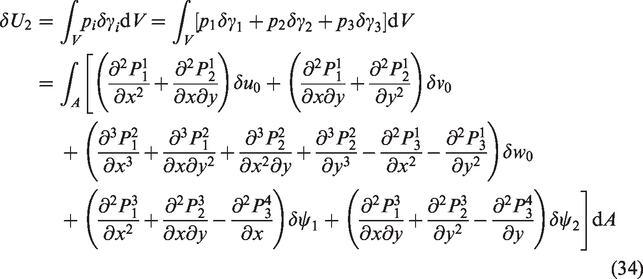
Substitution of variation of strain components into variational form of strain energy leads to resultant form of strain energy as
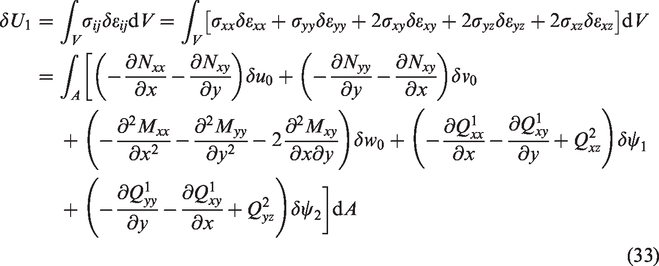
The variation form of strain energy of dilatation-gradient tensor is defined as
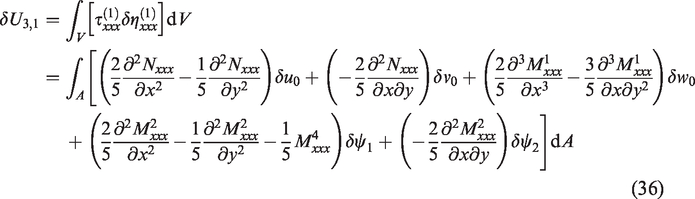
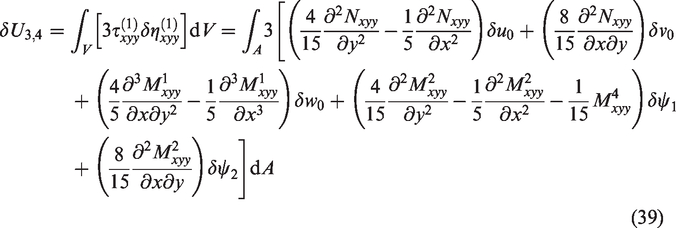
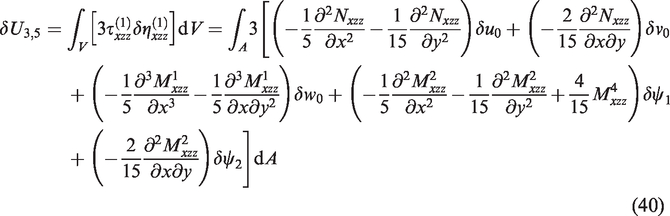
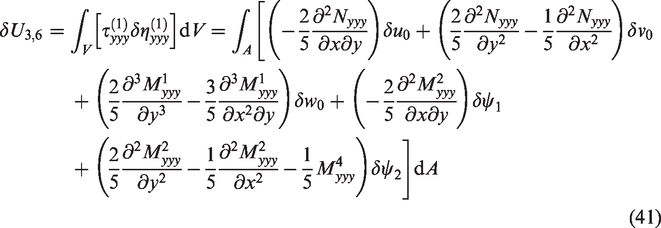
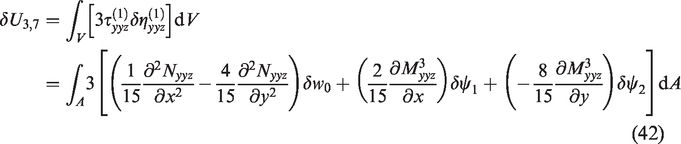
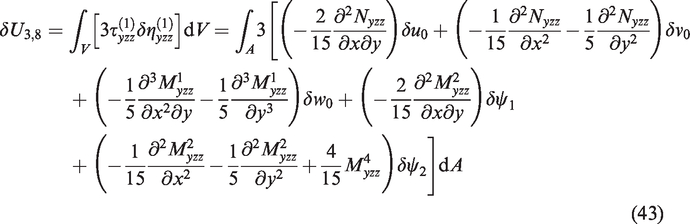
The variation of strain energy of deviatoric stretch-gradient tensor is including very long terms. Due to this situation, the variation of strain energy of deviatoric stretch-gradient tensor is divided to 10 terms as follows

In which the sub-terms are defined as follows


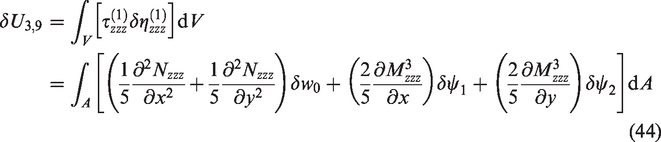
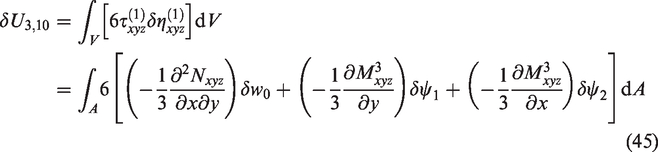
The variation form of strain energy of symmetric part of rotation-gradient tensor is defined as
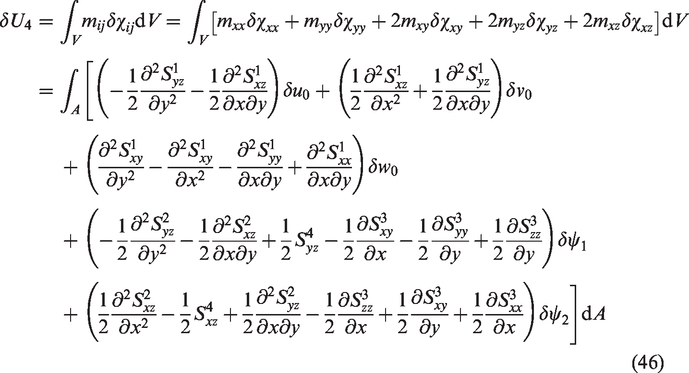
In which A is area of plate. The resultant components are defined as




The variation of kinetic energy is defined as
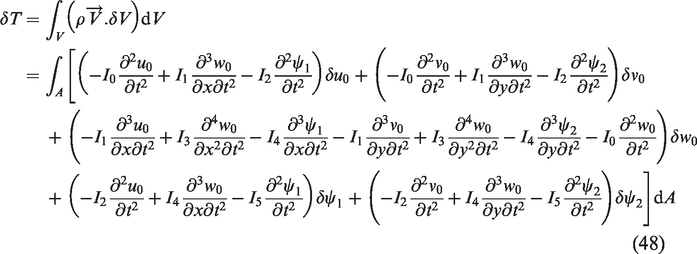
In which the integration constants are defined as

Finally, the variation of external works including the Pasternak’s foundation and pre-loads are defined as

In which the reaction of Pasternak’s foundation



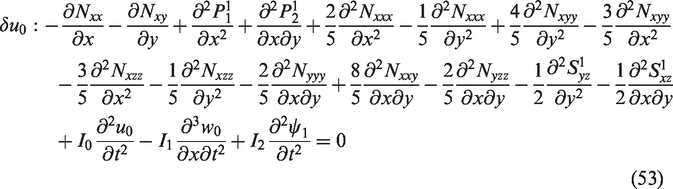
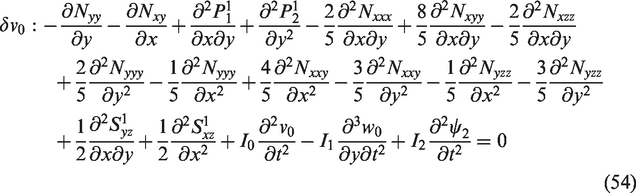
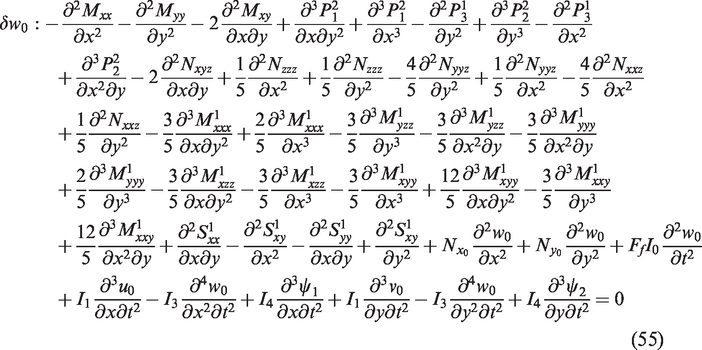
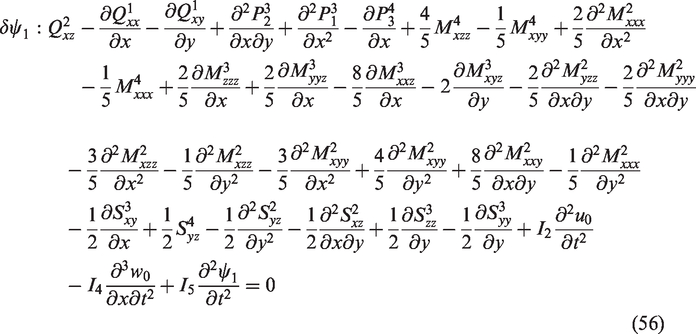
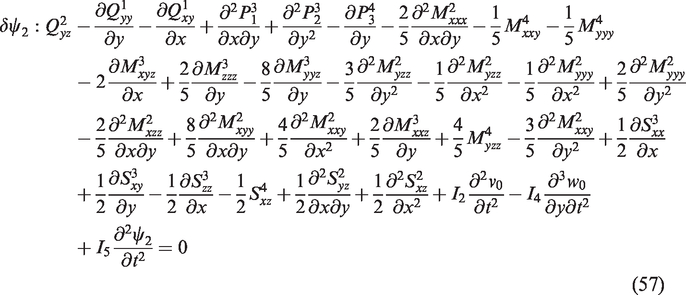
Substitution of variation of strain energy, kinetic energy and energy due to external works into Hamilton’s principle leads to governing equations of motion as follows
Solution procedure
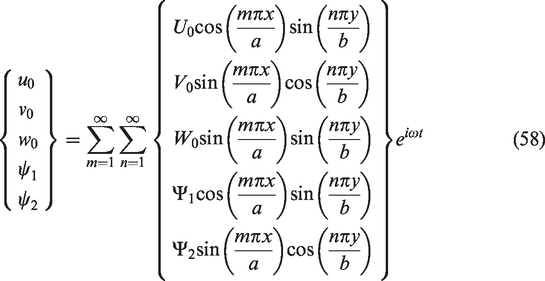
The solution procedure is developed in this section for functionally graded rectangular micro plate reinforced with graphene nanoplatelets. The harmonic displacement field for a simply supported rectangular micro plate is defined as

The natural frequencies are obtained using solution of characteristic equation as

Results and discussion
Numerical results and corresponding discussions on them are presented in this section. The numerical results are presented in terms of significant parameters of the problem such as weight fraction of GNPs, various distribution of GNPs, three micro length scale parameters and some non-dimensional geometric parameters such as side length to thickness ratio and thickness to micro length scale ratio.
Before presentation of full numerical results, a validation should be provided. The validation section is included in comparison with the results based on MCST and MSGT.
It is noticeable that if all micro length scale parameters
Validation
The validation of present numerical results is performed with the results of previous works based on MCST. The numerical results are calculated for FGM plate with simply supported boundary conditions. The material properties of FGM plate are considered based on the following relations
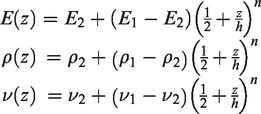

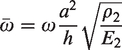
The above material properties and functionality are related to the results of Table 1. For this case, the non-dimensional natural frequencies are assumed as follows
Comparison of non-dimensional natural frequencies of FGM square plate with simply supported boundary condition based on modified couple stress theory.
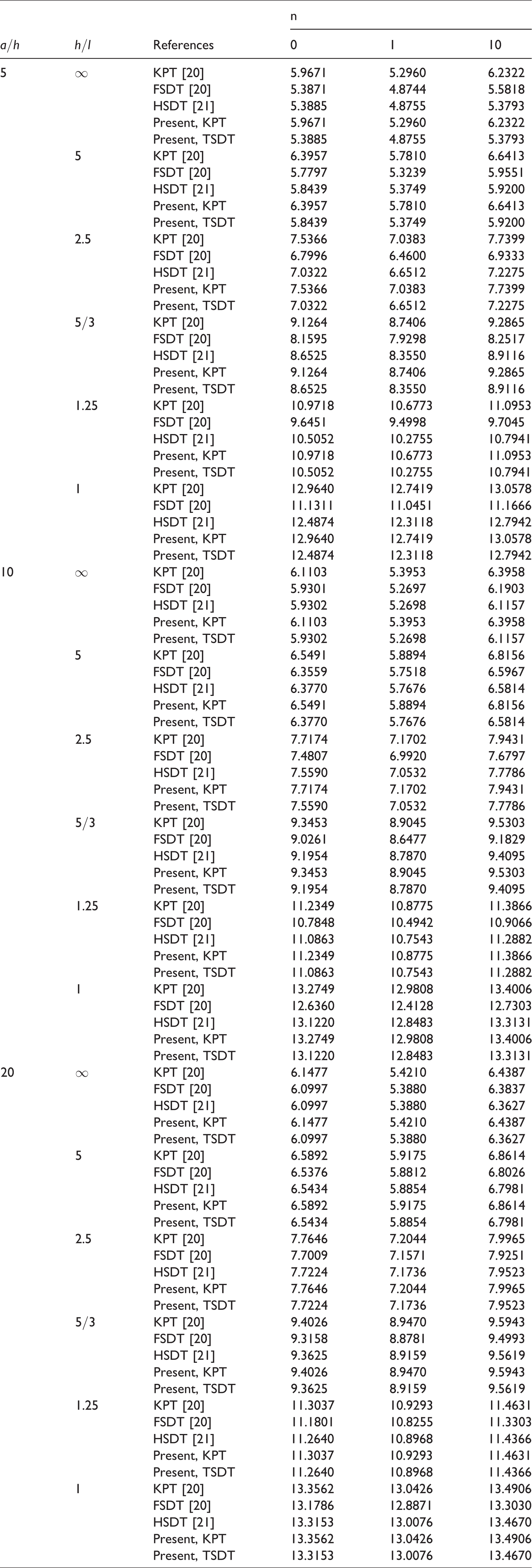
Table 1 lists the non-dimensional natural frequencies of FGM plate in terms of various values of side length to thickness ratio a/h for various values of thickness to micro length scale parameter ratio h/l and various non-homogeneous indexes. The numerical results are compared with the results of Thai and Choi [20] based on Kirchhoff plate theory (KPT) and FSDT and in another case with the results of He et al. [21] based on HSDT.
The numerical results indicate that the present numerical results are in good agreement with the previous results. In addition, for a plate with higher values of a/h, smaller values of non-homogeneous index and infinite values of h/l, the results obtained from various theories mentioned by Thai et al. [20] and He et al. [21] converge to a same value.
With decrease of
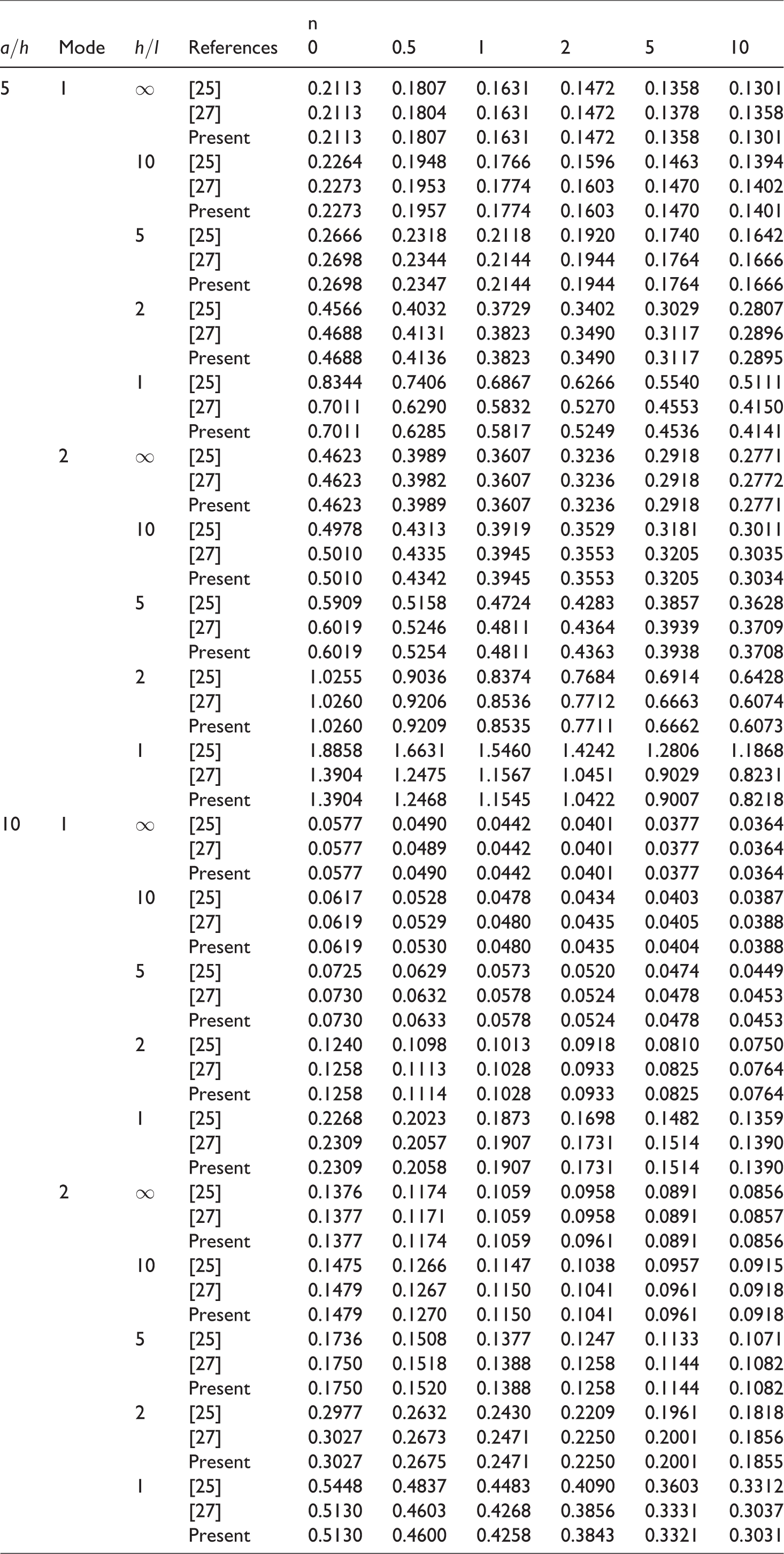
Table 2 lists the variation of non-dimensional natural frequencies of FGM square plate with simply supported boundary condition based MSGT. The numerical results obtained from present formulation are compared with the results of Thai et al. [25] and Zhang et al. [27]. The reference material properties for FGM plate is assumed as [27]

Comparison of non-dimensional natural frequencies of FGM square plate with simply supported boundary condition based on modified strain gradient theory.
In addition, it is assumed that three material length scales are the same and are equal to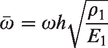
Table 2 lists the variation of non-dimensional natural frequencies of FGM plate in terms of various values of side length to thickness ratio a/h, thickness to material length scale parameter ratio and non-homogeneous index. The results are compared with the results of Thai et al. [25] and Zhang et al. [27]. The numerical results show that our numerical results are in excellent agreement with results of Zhang et al. [27] while have a small deviation with respect to the results of Thai et al. [25].
Free vibration characteristics of composite micro plate reinforced with grapheme nanoplatelets
In this section, the full numerical results of composite micro plate reinforced with graphene nanoplatelets are presented in terms of some significant parameters of the problem. The material properties of polymer matrix and graphene nanoplatelets are assumed as follows

In addition,
It is noticeable that the material length scale parameters should be derived from experimental results. However, there is no experimental work to predict the material length scale parameters for composite materials reinforced with graphene nanoplatelets. In this work, we use
In this work, the influence of important parameters such as the type of distribution, the weight fraction of GNPs, the thickness to length ratio
The non-dimensional natural frequencies are assumed as
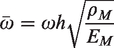
Table 3 lists the relationship between GNP-gradient index
The relationship between GNP gradient index
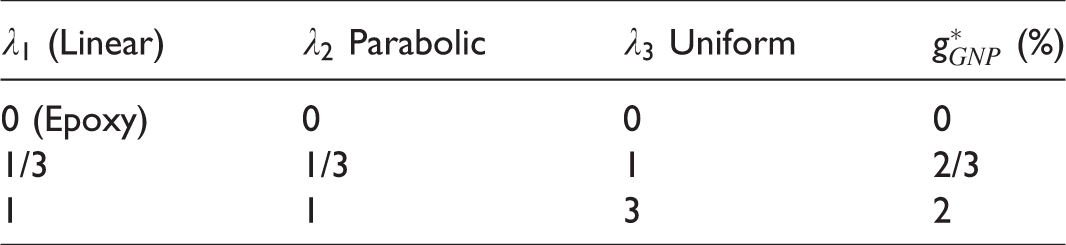
Table 4 lists the non-dimensional fundamental natural frequencies of composite micro plate reinforced with GNPs in terms of
Non-dimensional fundamental natural frequencies of composite micro plate reinforced with GNPs in terms of
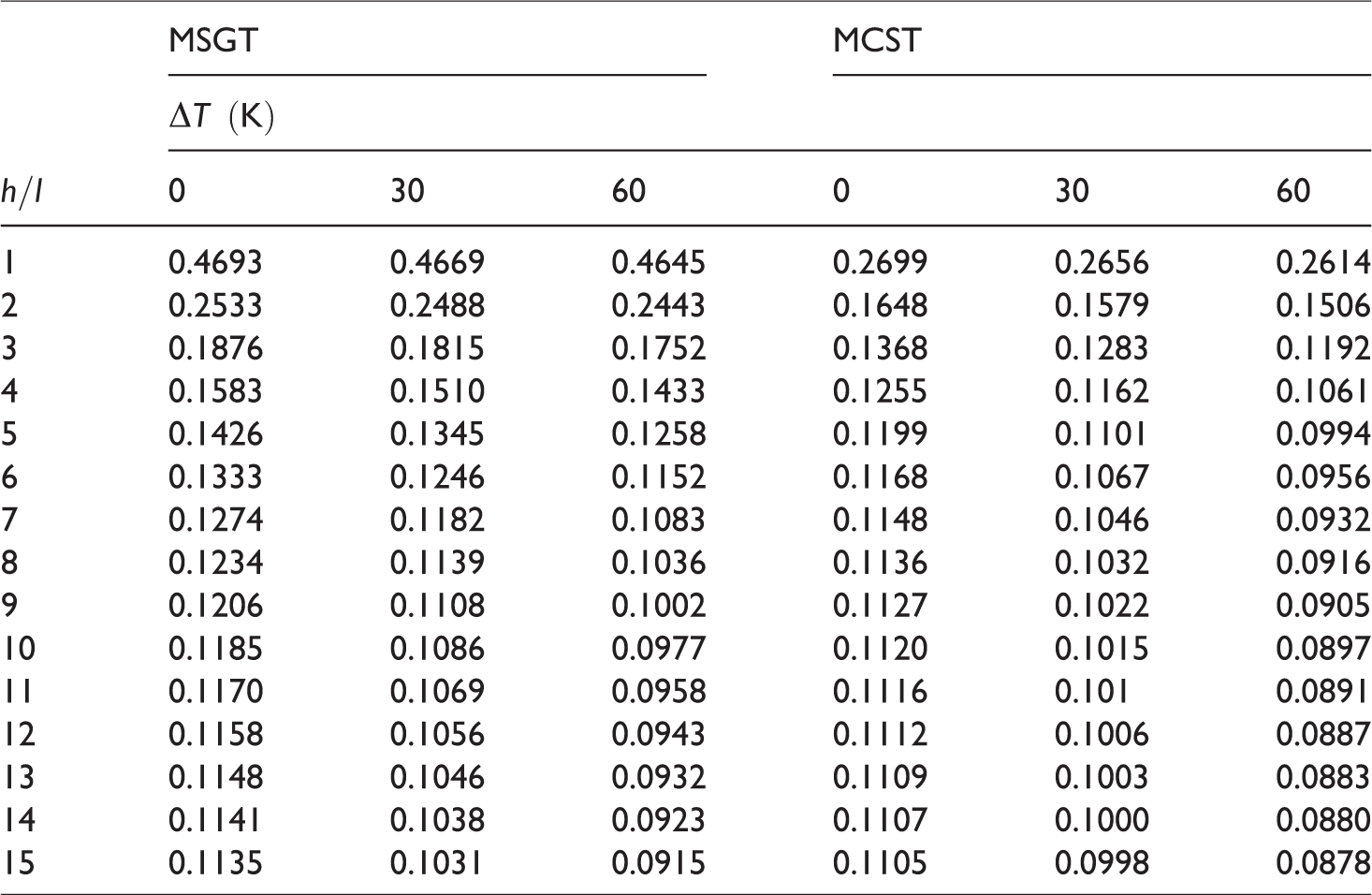
Table 5 lists the first six natural frequencies of composite micro plate in terms of
The first six natural frequencies of composite micro plate in terms of in terms of
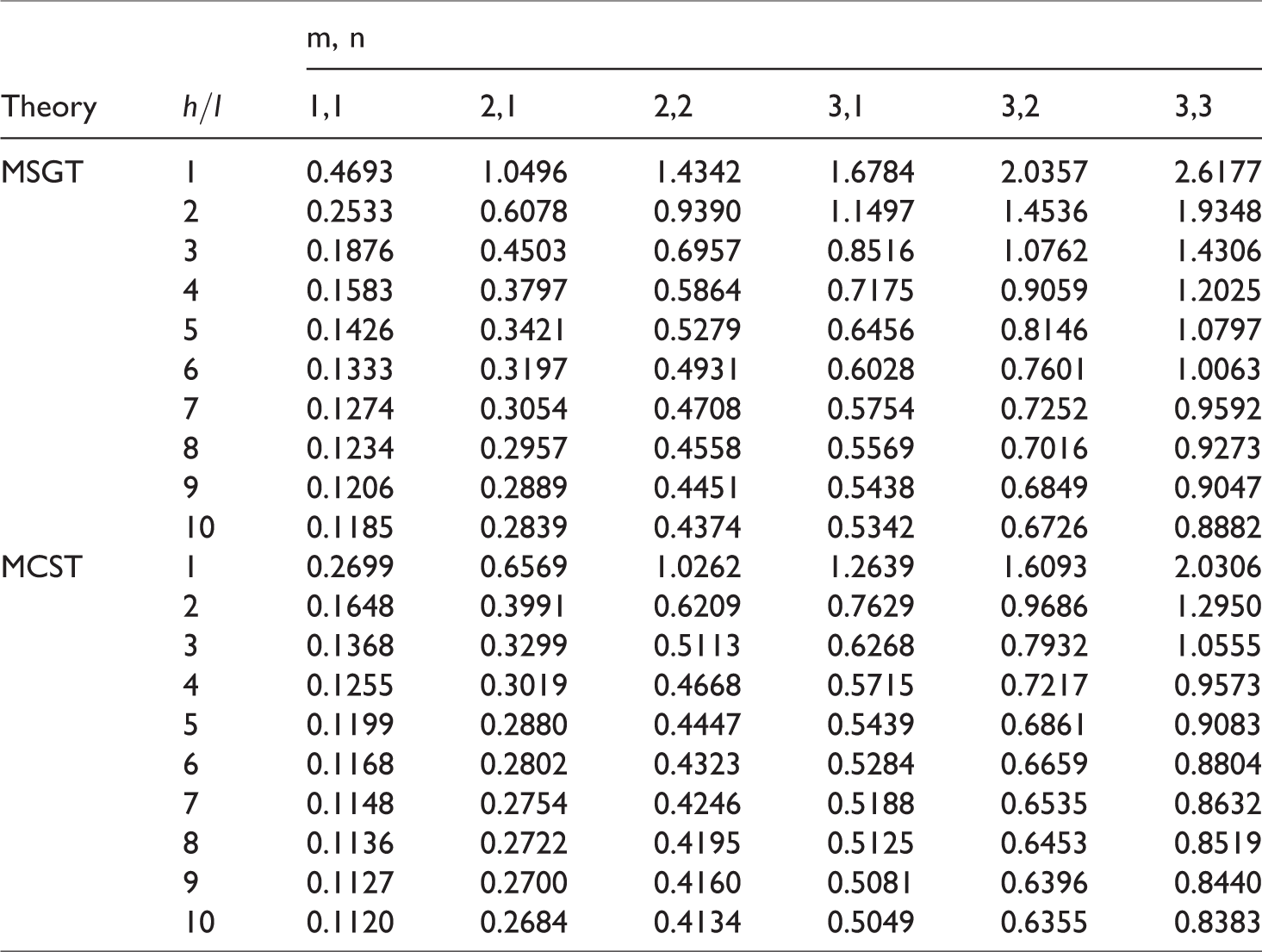
Figure 3 shows the variation of non-dimensional fundamental natural frequencies of composite micro plate reinforced with GNPs in terms of
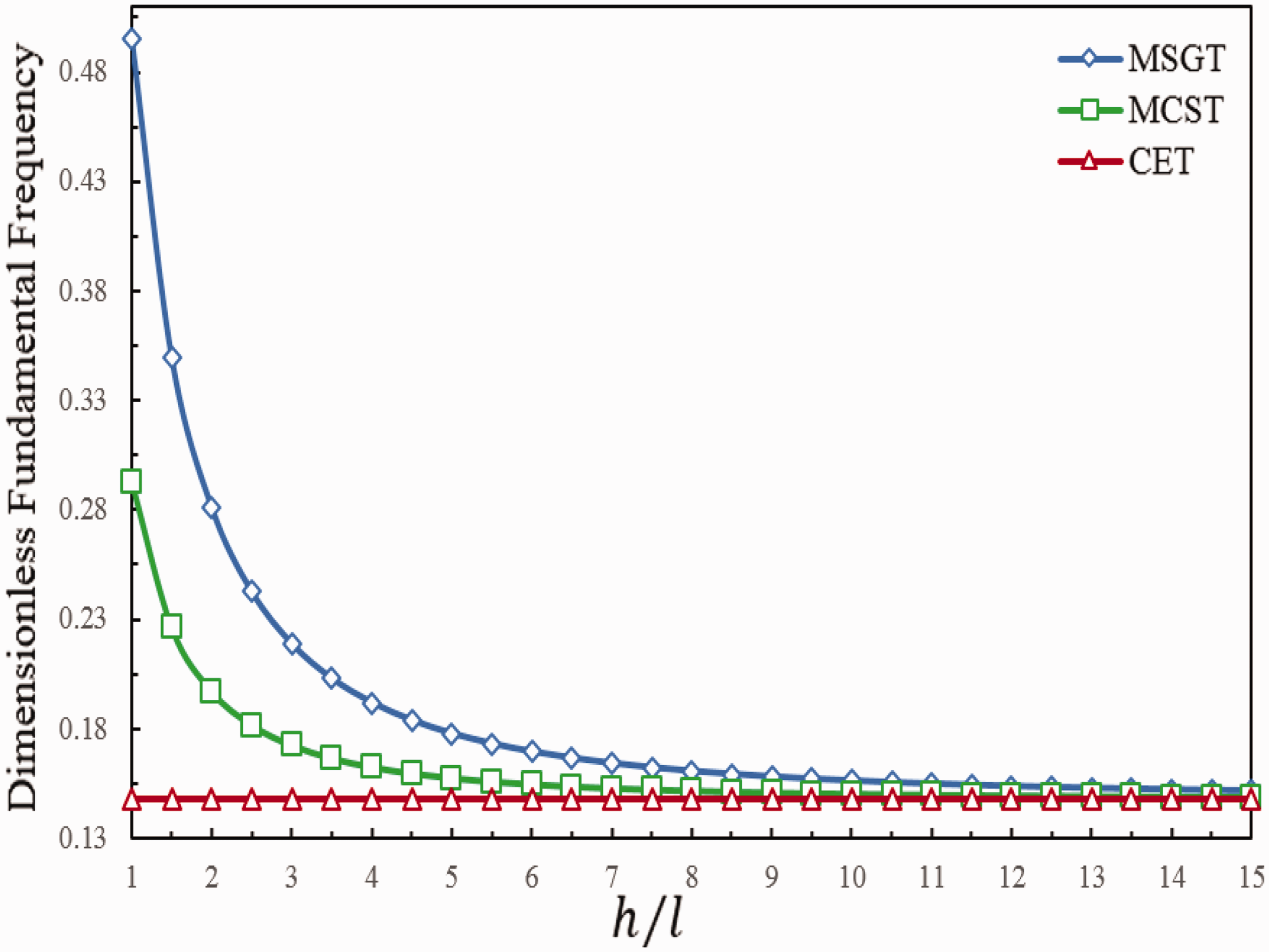
Variation of non-dimensional natural frequencies in terms of
The numerical results indicate that the highest values of natural frequencies are predicted by MSGT while the lowest by CET. In addition, it is concluded that the natural frequencies obtained from various theories (MSGT, MCST, CET) coincide with them for large values of
Variation of the non-dimensional natural frequencies of composite micro plate in terms of
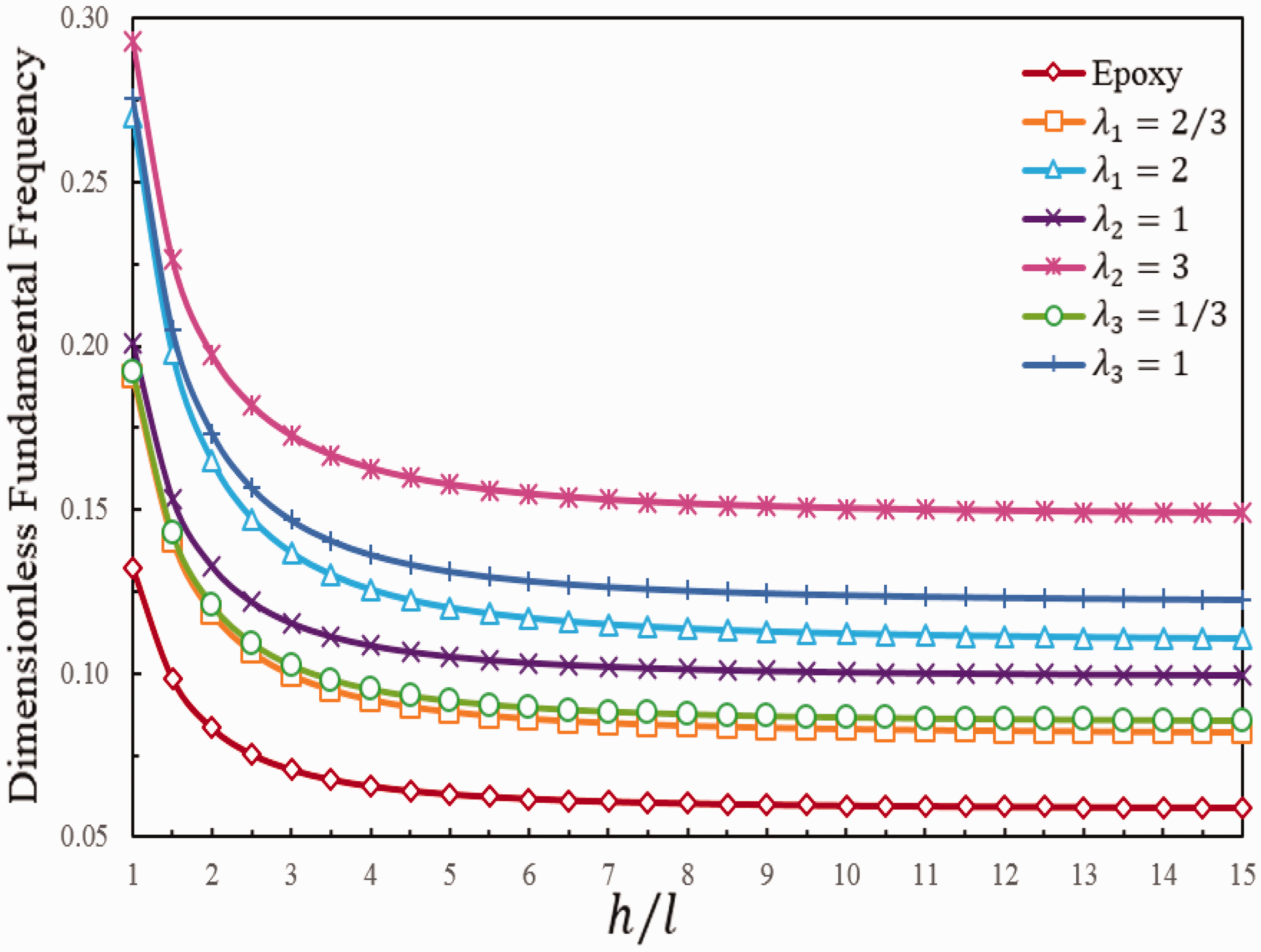
The non-dimensional natural frequencies of composite micro plate in terms of
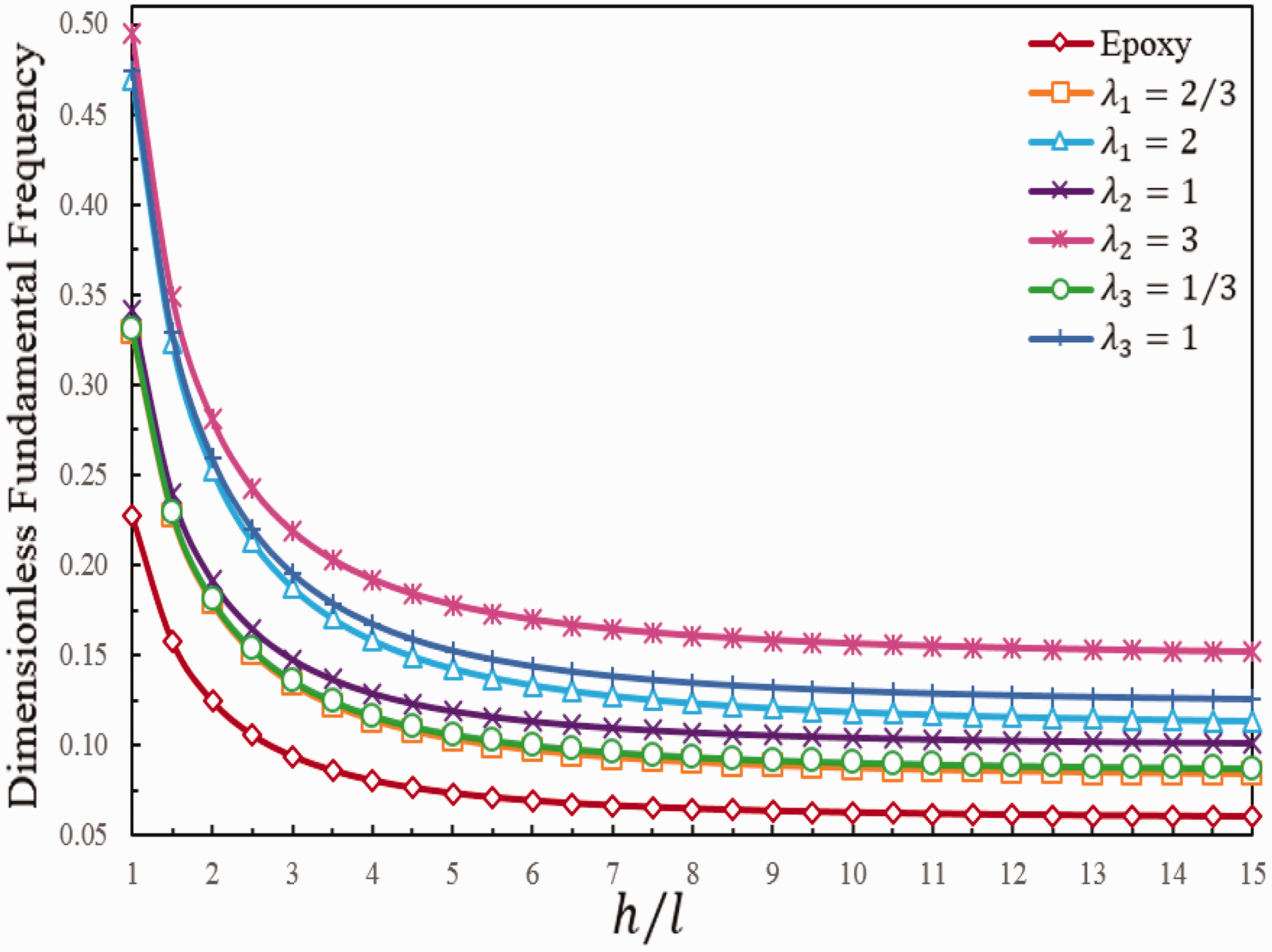
The non-dimensional natural frequencies of composite micro plate in terms of
The numerical results presented in Figure 5 indicate that the same conclusion can be expressed for results of MSGT. In addition, it is concluded that the obtained results based on MSGT is very larger than the corresponding results of MCST. One can conclude that employing the MCST leads to more flexible structure rather than modelling the structure using MSGT.
Shown in Figures 6 and 7 are variation of the non-dimensional natural frequencies of composite micro plate in terms of
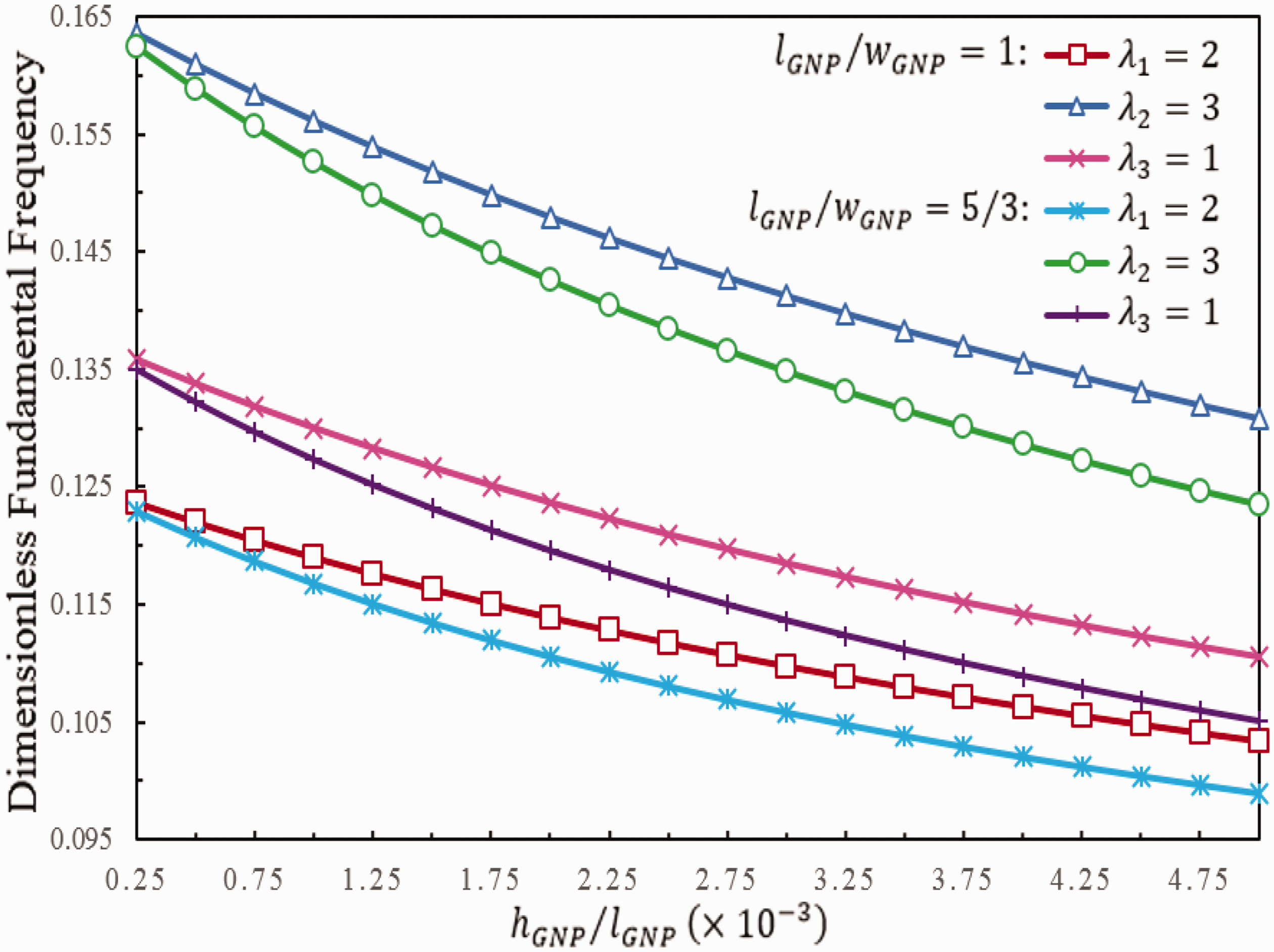
The non-dimensional natural frequencies of composite micro plate in terms of
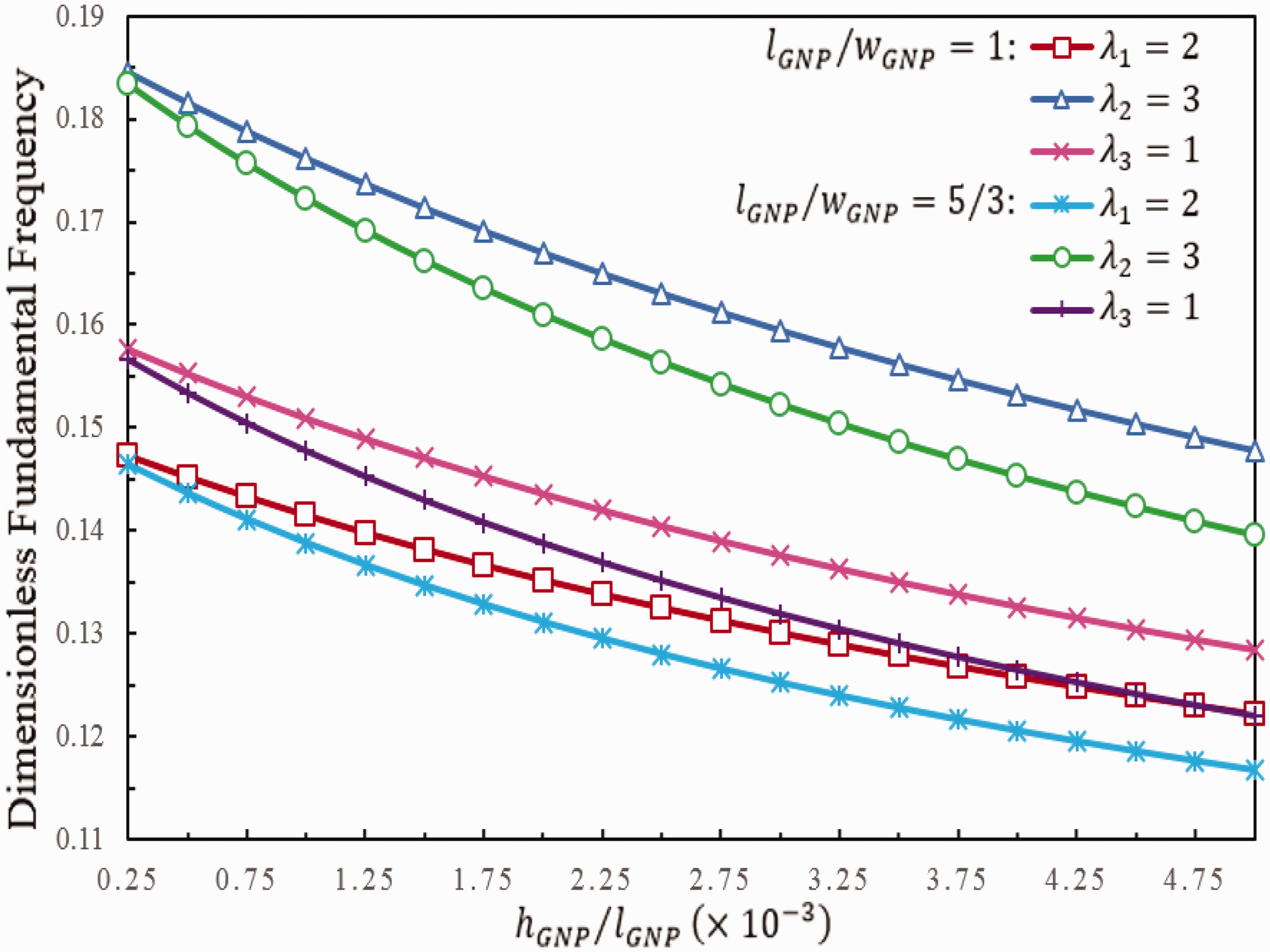
The non-dimensional natural frequencies of composite micro plate in terms of
Investigation on the influence of weight fraction and various distributions of GNPs leads to interesting conclusions. It is concluded that the maximum stiffness and maximum natural frequencies are obtained for
Figures 8 and 9 show variation of the non-dimensional natural frequencies of composite micro plate in terms of temperature rising
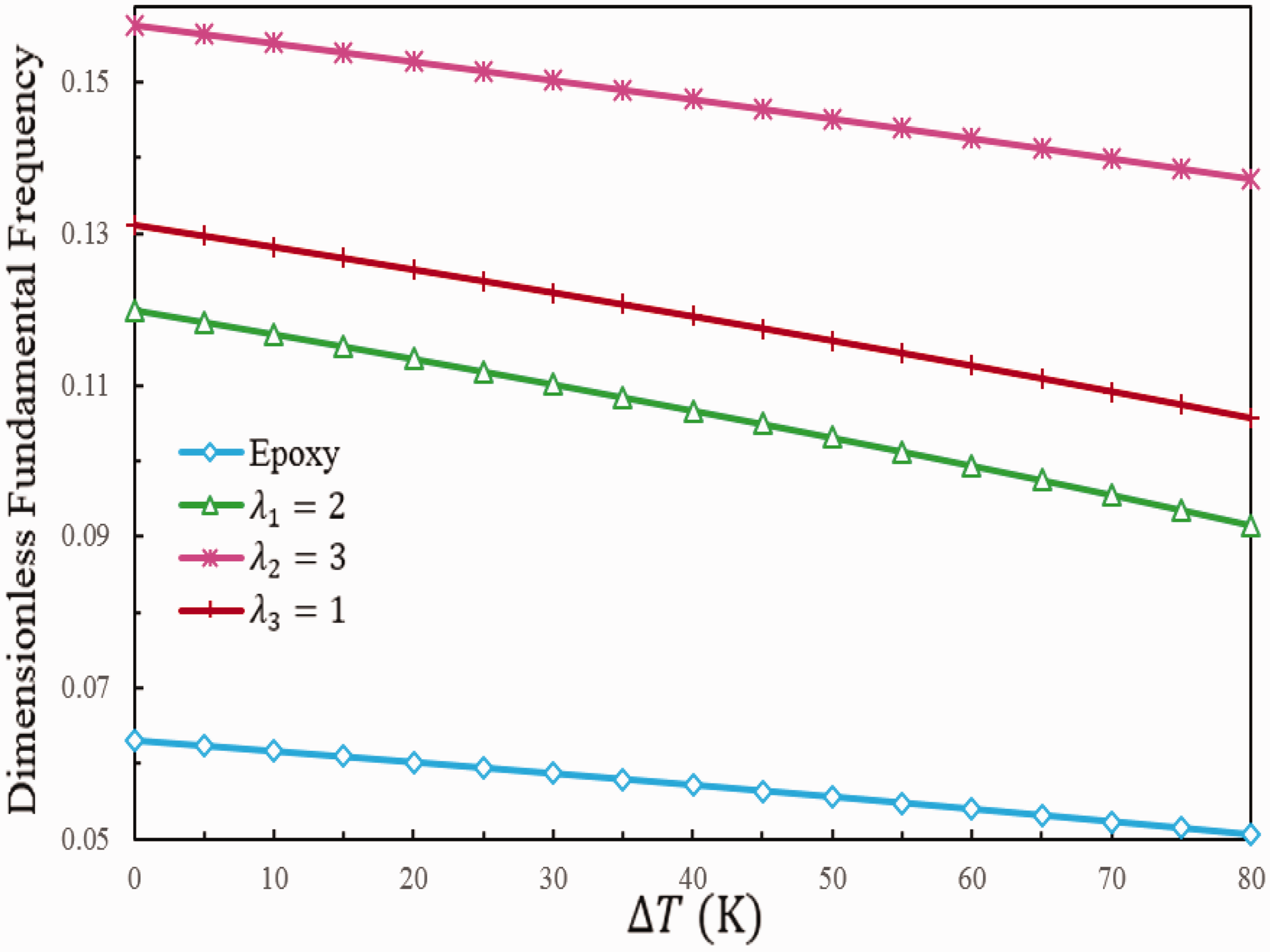
The non-dimensional natural frequencies of composite micro plate in terms of temperature rising
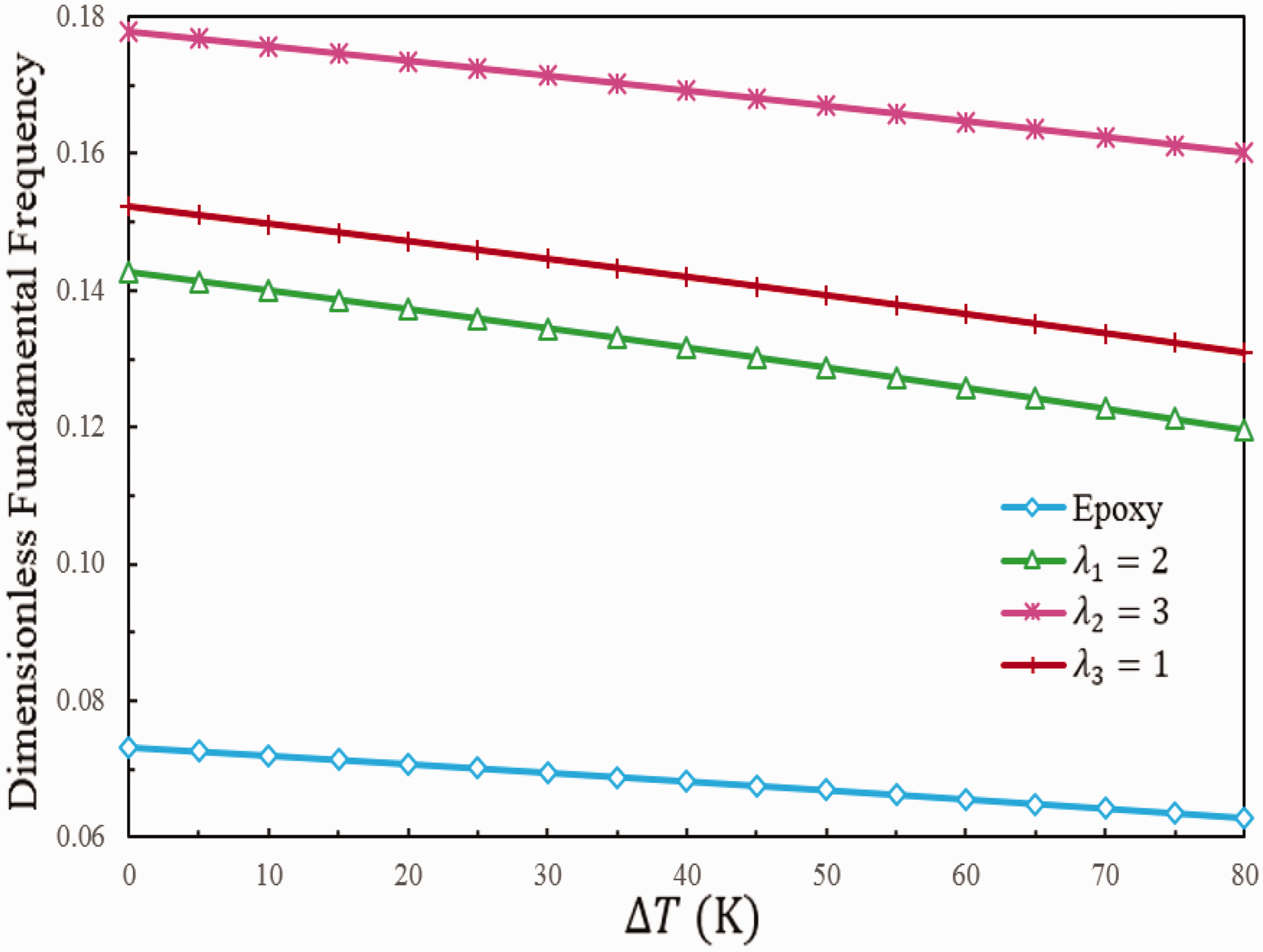
The non-dimensional natural frequencies of composite micro plate in terms of temperature rising
The influence of side length ratio
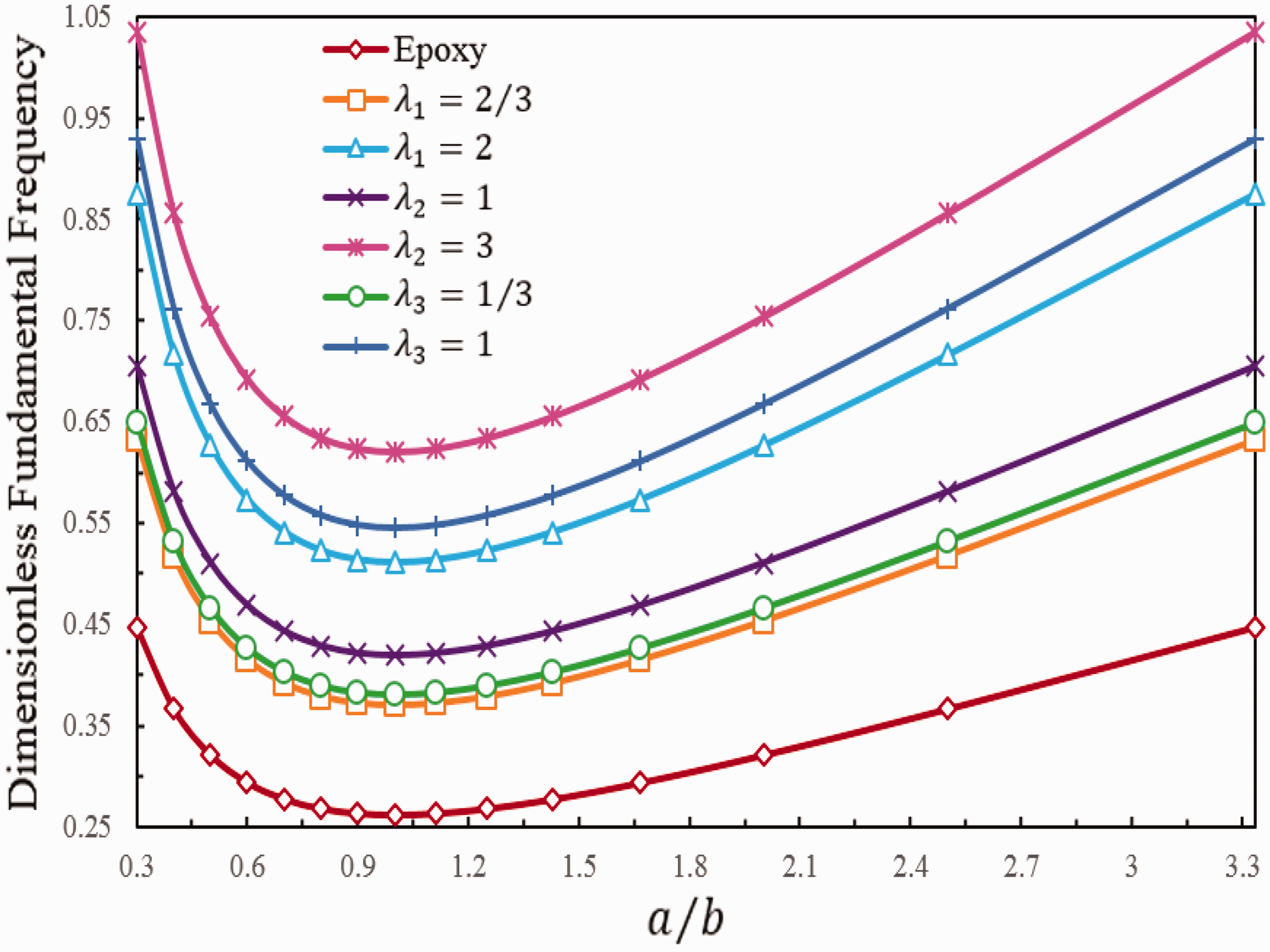
The non-dimensional natural frequencies of composite micro plate in terms of side length ratio
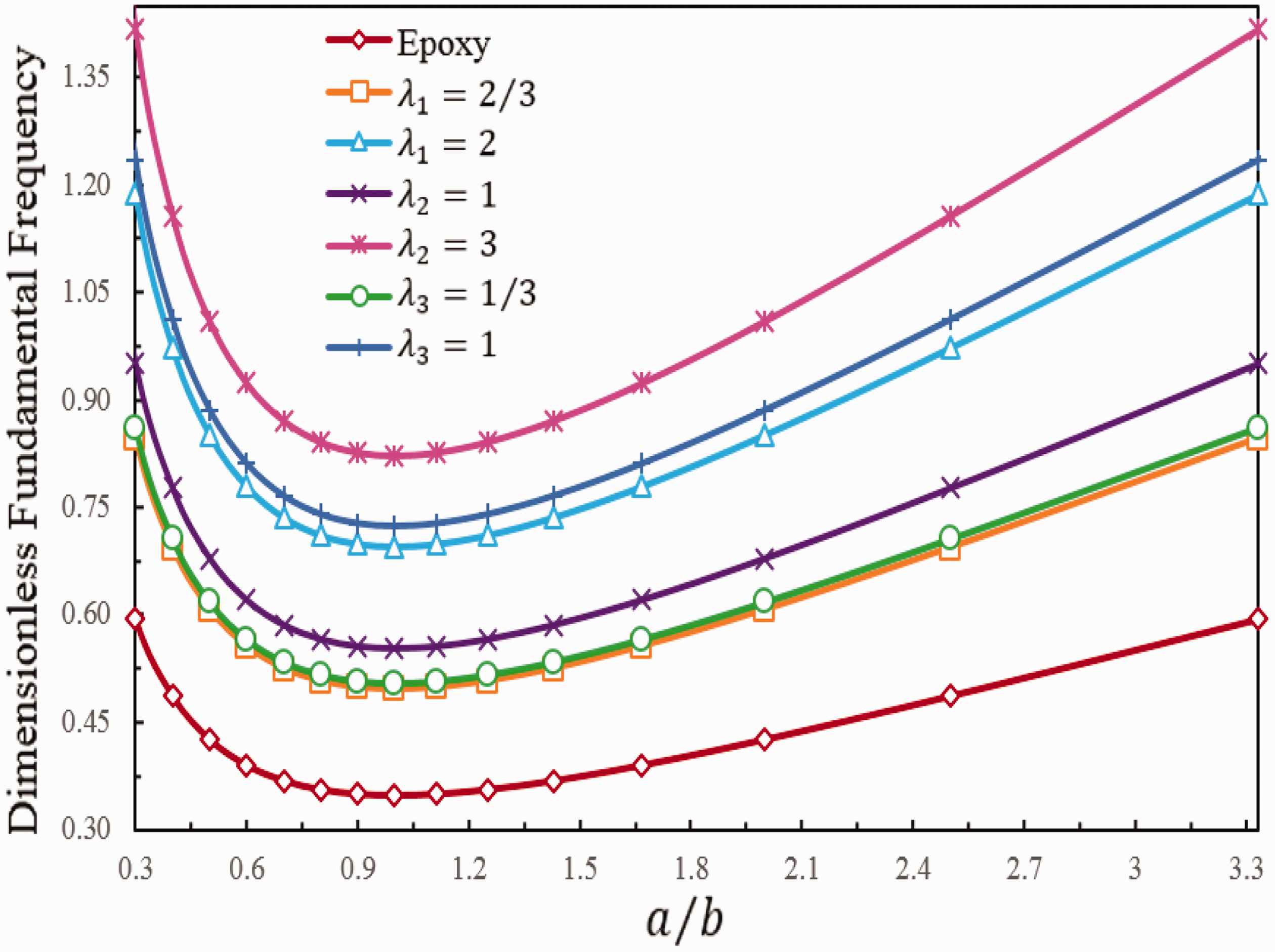
The non-dimensional natural frequencies of composite micro plate in terms of side length ratio
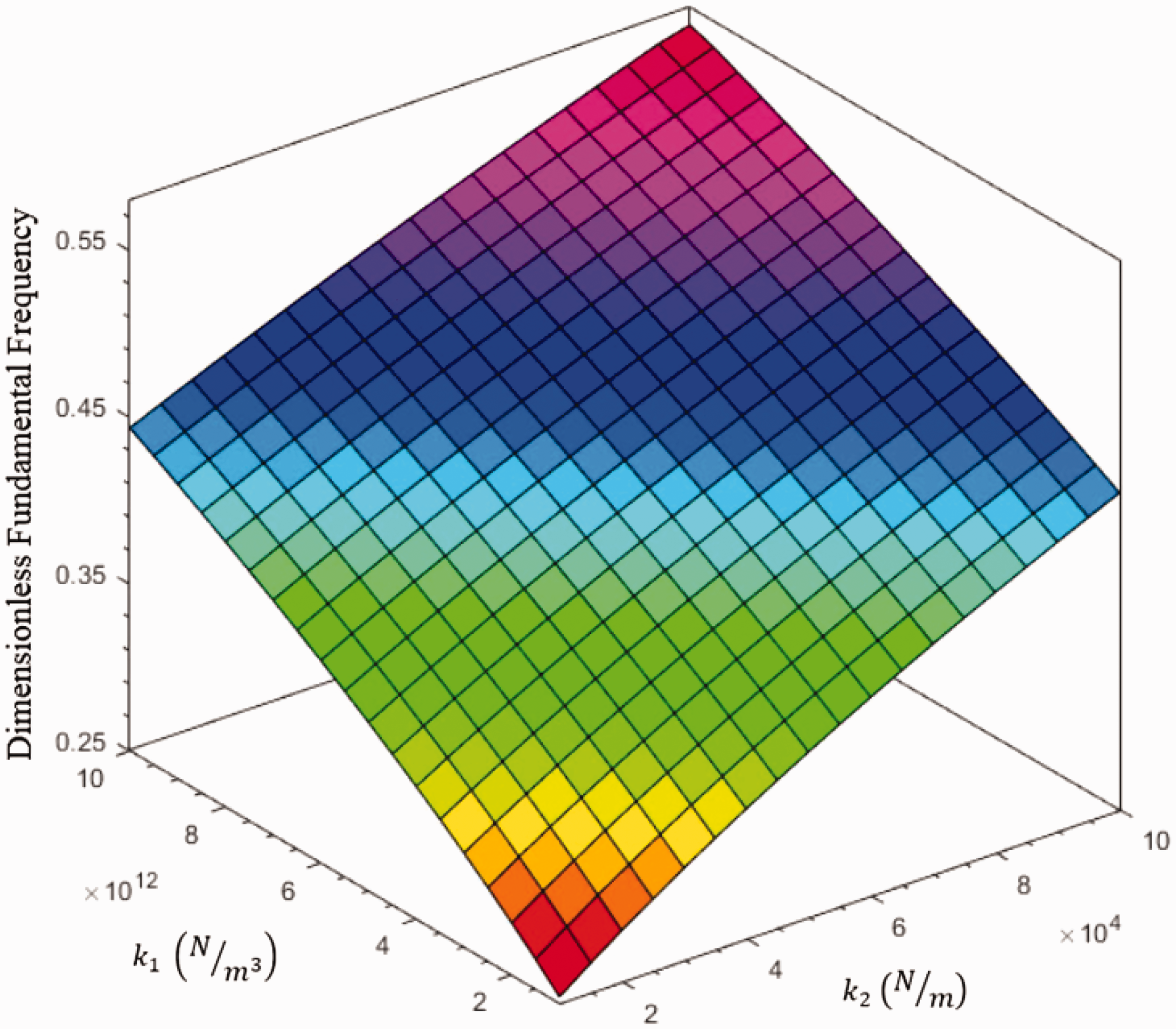
The non-dimensional natural frequencies of composite micro plate in terms of two parameters of Pasternak’s foundation.
The influence of two parameters of Pasternak’s foundation is studied on the natural frequencies of composite micro plate. Figure 12 shows two-dimensional distribution of natural frequencies in terms of spring and shear parameters of Pasternak’s foundation. The results are presented for
Conclusion
Free vibration analysis of composite micro plate reinforced with functionally graded nanoplatelets was studied in this paper based on MSGT and TSDT. The composite micro plate was reinforced with functionally graded graphene nanoplatelets with various distribution along the thickness direction. Size dependency was accounted in governing equations of motion through accounting the three material length scale parameters. The numerical results were presented based the analytical method for a simply supported micro plate. The numerical results were verified through comparison with previous works using reduction of governing equations of motion for more simple case with setting some material length scale to zero. Full numerical results were presented in terms of weight fraction of GNPs, various distribution of GNPs, three micro length scale parameters and some non-dimensional geometric parameters such as side length ratio, side length to thickness ratio and thickness to micro length scale ratio. The main conclusions of this study are presented as follows:
Comparisons with previous works were provided using results of modified couple stress and modified strain-gradient formulations. One can conclude that the present formulation and corresponding numerical results are in good agreement with the aforementioned literature. The comparison between results of MSGT and CET in terms of various The numerical results were presented in terms of various distribution of graphene nanoplatelets. It is concluded that the maximum stiffness is obtained for parabolic distribution while the minimum stiffness is obtained for linear distribution. The amount and geometry of graphene nanoplatelets have significant influence on the responses. It is concluded that increase of parameters The effect of thermal environment was studied on the natural frequencies of composite microplate. It is concluded that an increase in thermal loads decreases natural frequencies significantly.
Footnotes
Acknowledgements
The first author would also like to thank the Iranian Nanotechnology Development Committee for their financial support.
Declaration of Conflicting Interests
The author(s) declared no potential conflicts of interest with respect to the research, authorship, and/or publication of this article.
Funding
The author(s) disclosed receipt of the following financial support for the research, authorship, and/or publication of this article: The author(s) received financial support from the University of Kashan (Grant Number: 467893/0655) for the research, authorship, and/or publication of this article.