







Abstract
Janus nanofibrous membranes with thin fiber diameter, small pore size, and easy-tailored wettability/thickness gradient have attracted considerable attention in the directional water transport field. However, designing textiles that ensure continuous directional water transport and outstanding moisture permeable, breathable performances has remained a great challenge. In this study, a novel polyacrylonitrile/polyvinyl alcohol–thermoplastic polyurethane (TPU) sandwich nanofibrous membrane with robust moisture permeable, breathable, and directional water transport performance is successfully fabricated with an innovation strategy combining electrospinning with structure-induced method. A good water vapor transmission rate of 9760 g/m2 d and robust breathability of 103 mm/s are obtained by turning the mass ratio of polyacrylonitrile and polyvinyl alcohol and the opening porous structure of TPU; these values are approximately five times those of commercial membranes. The sandwich fibrous membranes are suggested as promising candidates for various applications, especially in moisture-wicking clothing.
Keywords
Introduction
The electrospinning is broadly used to produce micro/nanofibers due to their unique morphologies and physiochemical properties. In the electrospinning process, suitable solvent is used to make polymer solution and inject through a syringe. After the critical solution concentration, flow rate, working voltage, and working distance are arrived, the solvent gets evaporated and generation of polymer fibers and fibers are collected on the stationary or rotating drum. The morphologies and characteristics of electrospinning nanofibers depend on the polymer type and processing condition [1,2]. Recently, Janus electrospinning fibrous membranes have been widely applied in the directional water transport protective clothing field, such as sportswear, workwear, and soldiers’ uniforms due to their excellent high specific surface area, small pore size, abundant interconnected porous structure, and easy-tailored thickness gradient [3,4]. Conventional Janus fibrous membrane materials are made of two opposite wettability layers, namely a hydrophobic inner layer that ensures low water absorption and the hydrophilic outer layer that draws the sweat out from the hydrophobic side and transports it to the hydrophilic side [5]. Most current research on directional water transport through Janus electrospinning fibrous membranes concentrates on the architecture with controlled wettability and thickness of each individual layer. Dong et al. [6] prepared a bi-layered poly(vinylidene fluoride)–polyacrylonitrile (PAN) (core–shell)/cellulose acetate (CA) Janus fibrous membrane by tailoring the wettability gradient of each layer; they also developed bi-layered polystyrene–PAN/dopamine electrospinning membranes with better wettability after dopamine dip-coating treatment and single-nanofiber porous structural design [7]. Miao et al. [8] created tri-layered polyurethane (PU)/(PU–HPAN)/HPAN fibrous membranes that ensure continuous directional water transport and superior prevention of water penetration in the reverse direction by tailoring wettability with alkali treatment and introducing a transfer layer of certain thickness. Wu et al. [9] designed and prepared a Janus fibrous membrane with heterogeneous wettability and seamless coupling PU/crosslinked polyvinyl alcohol (PVA) by tailoring the thickness of a single PU layer. Babar et al. [10] studied the relationship between wettability/thickness gradient and directional transport performance in CA/DCA Janus fibrous membranes. Inspired by nature, several scholars have prepared various Janus fibrous membranes with different structural designs, which resemble cactus spine [11], butterfly wings [12], and spider silk [13]. Wang et al. [14] studied the feasibility of preparing antigravity directional water transport polylactic acid/CA/PU acetate fibrous Janus membranes with leaf-vein-like structural design. Ge et al. [15] introduced a nanofibrous skin layer with a lotus leaf-like surface by employing a specific transient state between electrospraying and electrospinning to improve the performance. Cao et al. [16] designed a hydrophobic/hydrophilic cooperative Janus structure by applying a modified microcopper mesh, leading to improved transport performance. The aforementioned phenomenon indicates that the wettability/thickness regulation and structural design of Janus fibrous membrane could enhance the directional water transport performance. Although a few scholars have employed the wettability/thickness gradient and structural design of membranes, no one has prepared sandwich Janus membranes with excellent water vapor transmission (WVT) rate and breathability directional transport and small thickness. From the comfort perspective, moisture-permeable and breathable products are lacking in the directional transport protective application. The first example to fabricate moisture-permeable and breathable TPU/TPU–TBAC dual-layer directional water transport electrospinning membrane was reported by Ju et al. [17]. However, the membranes exhibited limited WVT rate of 2170 g/m2 d and low breathability of 1.16 mm/s. Further investigation had been conducted by changing materials and tailoring thickness gradient, which resulted in a higher WVT rate of 12,110 g/m2 d, but breathability was not evaluated [10].
A composite material composed of at least two heterogeneous layers with different performances is needed to prepare highly permeable, breathable Janus directional water transport fibrous membranes. In this study, a PAN/PVA–TPU sandwich Janus fibrous membrane is fabricated for the first time. PVA, which is rich in –OH group, is used to tailor the surface hydrophilicity of PAN. The structure of the TPU fibrous membrane is designed to offer ample opportunities to pursue excellent permeable, breathable, and directional water transport performance. The Janus fibrous membrane is tested for morphologies, surface chemistry structure, wetting behavior, WVT rate, and air permeability to evaluate comfortable performance and transport capability. We hope that this study can serve as a foundation of future studies on comfortable directional water transport materials.
Experimental
Materials
TPU polymer (Tecoflex TPU EG-93A and TPU Pellethane 8663) is obtained from Lubrizol Corp. (Ohio, USA). N,N-dimethylformamide (DMF) and LiCl are purchased from Tianjin Kermel Chemical Reagent Co. Ltd (China). PVA (Mw = 84,000–89,000) is purchased from Changchun Chemical (China). PAN powder (average Mw = 90,000) is provided by Spectrum Chemical Manufacturing Corp. (California, USA).
Preparation of PAN, PVA, PAN/PVA, TPU1, and TPU2 single layer
PAN solution is prepared by dissolving PAN (3.6 g) in DMF (26.4 g) solutions with continuous stirring to ensure complete dissolution. The PVA solutions are stirred using a mechanical mixer at 90°C for 5 h. Single-layer fibrous membranes from PAN, PVA, and PAN/PVA are fabricated by electrospinning the respective solutions using a standard electrospinning machine. During electrospinning, flow rate control parameter is used to prepare various PAN/PVA blend fibrous membranes. The obtained PAN/PVA blend fibrous membranes are denoted as PAN/PVA −y (y is 2.0, 1.5, 1.0, and 0.5 with various mass ratios). For the preparation of hydrophobic TPU layers, TPUE (E and P with different types of TPU) is placed in LiCl/DMF ionic solution and stirred for 12 h at 70°C. TPUP is added in DMF with 24 h magnetic stirring. Table 1 shows the electrospinning formulas of samples. All membranes are dried in a laboratory vacuum dryer at 70°C for 2 h.
Electrospinning formulas.
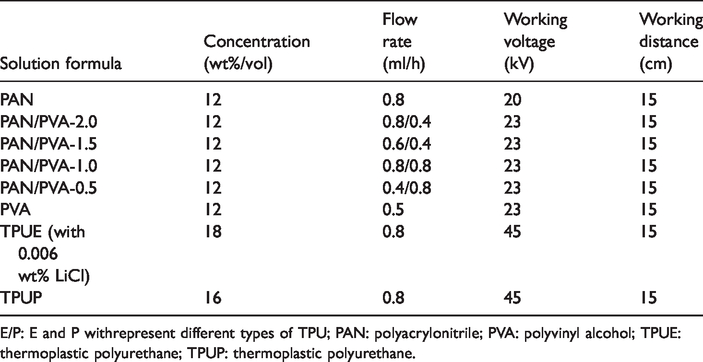
E/P: E and P withrepresent different types of TPU; PAN: polyacrylonitrile; PVA: polyvinyl alcohol; TPUE: thermoplastic polyurethane; TPUP: thermoplastic polyurethane.
Preparation of Janus fibrous membranes
Figure 1 shows the preparation process of Janus fibrous membranes. First, the obtained hydrophilic PAN/PVA fibrous membranes with a wide wetting area are designed after PVA blend electrospinning with PAN. Second, PAN/PVA–TPU Janus fibrous membranes are obtained via electrospinning of TPU/DMF solution, followed by hydrophilic fibrous membrane. The obtained PAN/PVA–TPU Janus fibrous membranes are denoted as PAN/PVA–TPU x (x is E and P with different types of TPU). Finally, the baking temperature and time of the obtained fibrous membranes are 70°C and 2 h, respectively. Table 2 shows the denotation of samples.
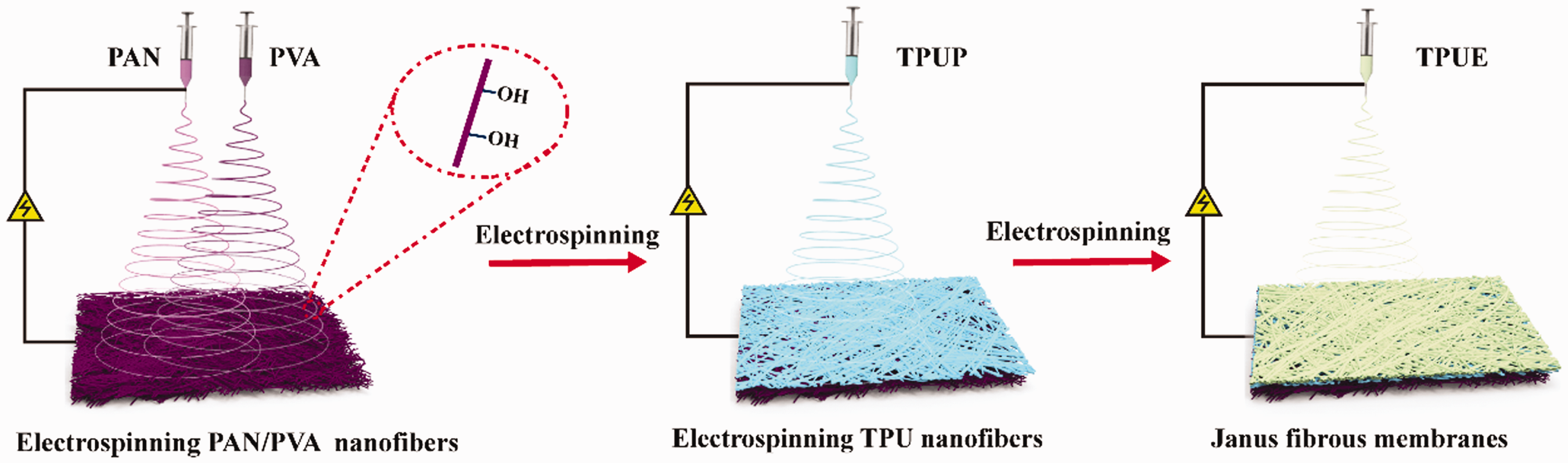
Preparation process of sandwich Janus fibrous membranes. PAN: polyacrylonitrile; PVA: polyvinyl alcohol; TPUE: thermoplastic polyurethane; TPUP: thermoplastic polyurethane.
Specifications of fibrous membranes.
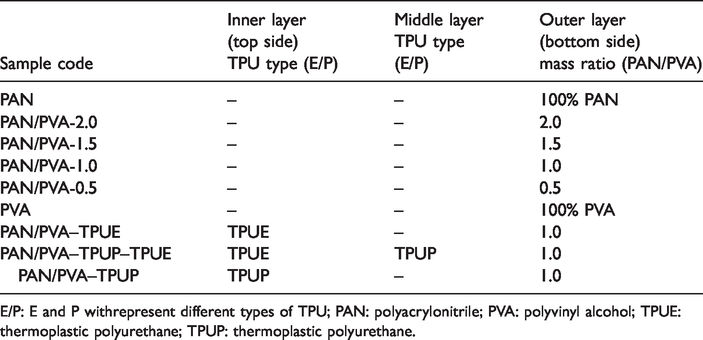
E/P: E and P withrepresent different types of TPU; PAN: polyacrylonitrile; PVA: polyvinyl alcohol; TPUE: thermoplastic polyurethane; TPUP: thermoplastic polyurethane.
Measurements and characterizations
The morphology of the fibrous membranes is obtained using a field emission scanning electron microscope (SEM, TM3030, HITACHI, Tokyo, Japan). Surface chemistry structure is analyzed using a FT-IR spectrometer (NICOLET iS10, Thermo Fisher Scientific, US). The wicking height test is measured as specified in AATCC TM 197 standard. Each sample has a specified size of 200 mm × 25 mm, then Rhodamine B is added in the distilled water for tracking the movement of water. The directional water transport tests are carried on a moisture management tester (MMT, SDL ATLAS) at room temperature. During the MMT examination, 0.2 g of salted water is consistently dropped for 20 s on the TPU side, and water movement in the bi-layered Janus fibrous membrane is observed for 120 s. The water contact angle of the samples is conducted using a surface contact angle instrument (JC2000DM, Shanghai Zhongchen Digital Testers, Shanghai, China). The WVT test is measured according to ASTM E96-CaCl2 standards (YG501D testing chamber (Wenzhou Fangyuan Instrument Co., Ltd, China). The test is conducted in the test chamber at 38°C and 90% RH. Samples are cut into circles of 70 mm in diameter, which is the same size as the mouth of the test cup. The air permeability is measured using an air permeability instrument (TEXTEST FX3300, Switzerland) according to ISO 9273:1995 standard test method. All the tests were repeated at least three times.
Results and discussion
Surface chemistry structure and wetting behavior of hydrophilic fibrous membrane
In this study, the surface chemistry structures are characterized by FT-IR and EDS (as shown in Figure 2(a) and (b)). Figure 2(a) depicts that the blend fibrous membrane displays the characteristic peak of PAN at 2230 cm−1 for the stretching vibration of the nitrile group (–CN). The peaks related to –OH stretch on the spectra become gradually stronger and are observed at approximately 3300 cm−1, indicating an increased concentration of PVA. The result is confirmed by the EDS spectra (Figure 2(b)). EDS mappings show the distribution of C, N, and O elements of the fibrous membrane, which proves that the PAN and PVA nanofibers blend successfully.
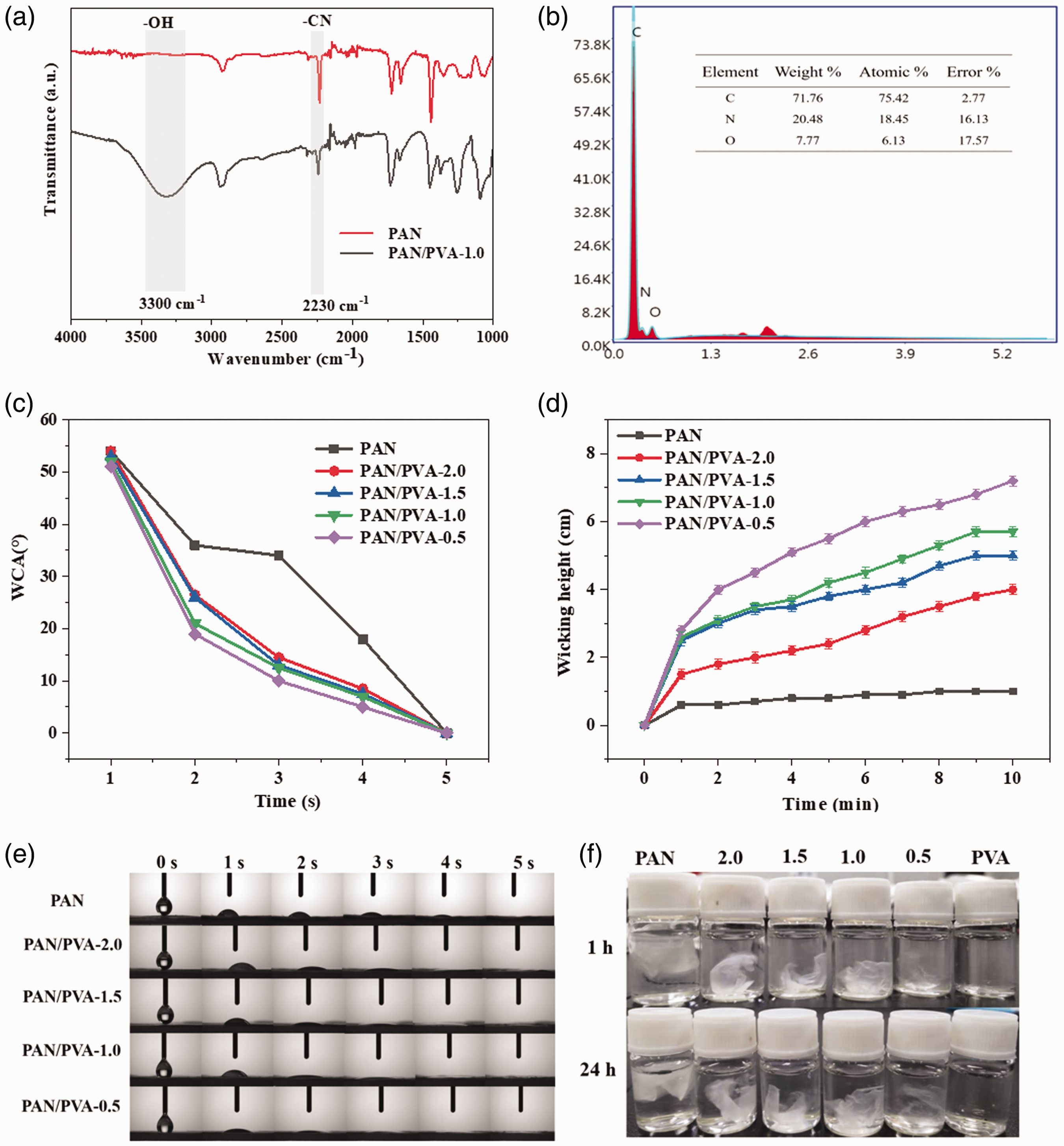
FT-IR and EDS spectrum of PAN/PVA-1.0 fibrous membranes. (a) FT-IR, (b) EDS. Wetting behavior of the PAN/PVA fibrous membranes with different mass ratio, 2.0, 1.5, 1.0, and 0.5, respectively. (c) WCA, (d) wicking height, (e) apparent WCA of the corresponding fibrous membranes, and (f) water solubility with different soaking time. PAN: polyacrylonitrile; PVA: polyvinyl alcohol; WCA: water contact angle.
Wicking height and water contact angle are evaluated with different PVA mass ratios to study the wetting behavior of the nanofibrous membrane, as shown in Figure 2(c) to (e). Figure 2(d) demonstrates that the maximum wicking height of the PAN/PVA nanofiber membrane is obtained at the mass ratio of 0.5 and reveals that the increase in –OH group could improve the hydrophilic performance. As a result, the PAN surface turns from hydrophilic to superhydrophilic because of the existence of PVA nanofibers. The Water contact angle (WCA) results shown in Figure 2(c) are consistent with the wicking height test. As reported in Figure 2(c), the water contact angle decreases with increments in PVA mass ratio, with 0.5 as the maximum. The water absorption times of fibrous membranes are 5, 3, 3, and 2 s. The water droplet of PAN/PVA fibrous membranes is unstable and rapidly spreads out in a short time, indicating that the fibrous membranes are excessively hydrophilic and that the mass ratio of PVA plays a positive role in accelerating the wetting behavior and triggering the water transport. However, Figure 2(f) shows that the mass ratio of PVA positively affects the hydrolysis ratio, which increases to 100 wt% with 100 wt% PVA. Thus, adding PVA not only changes the hydrophilic performance of the fibrous membranes but also influences the hydrolysis ratio of fibrous membranes.Water
Directional water transport and WVT rate of hydrophilic fibrous membrane
The as-prepared PAN/PVA blend fibrous membrane is first examined to study the water transport behavior and comfortable property of PAN/PVA hydrophilic nanofibrous membranes. The MMT results of the hydrophilic fibrous membrane are assessed with different mass ratios of PVA. As shown in Figure 3(a) to (e), no remarkable difference exists in the MMT results of the PAN/PVA fibrous membranes with 2.0 and 1.5 mass ratios, but a higher upward trend occurs when the mass ratio of PVA is 1.0. The evolution of MMT shows improved wettability with increased PVA mass ratio. The increase in MMT is mainly due to the high hydrophilic nature of hydroxyl groups. This finding is supported by the wetting behavior results shown in Figure 2(a) to (f).
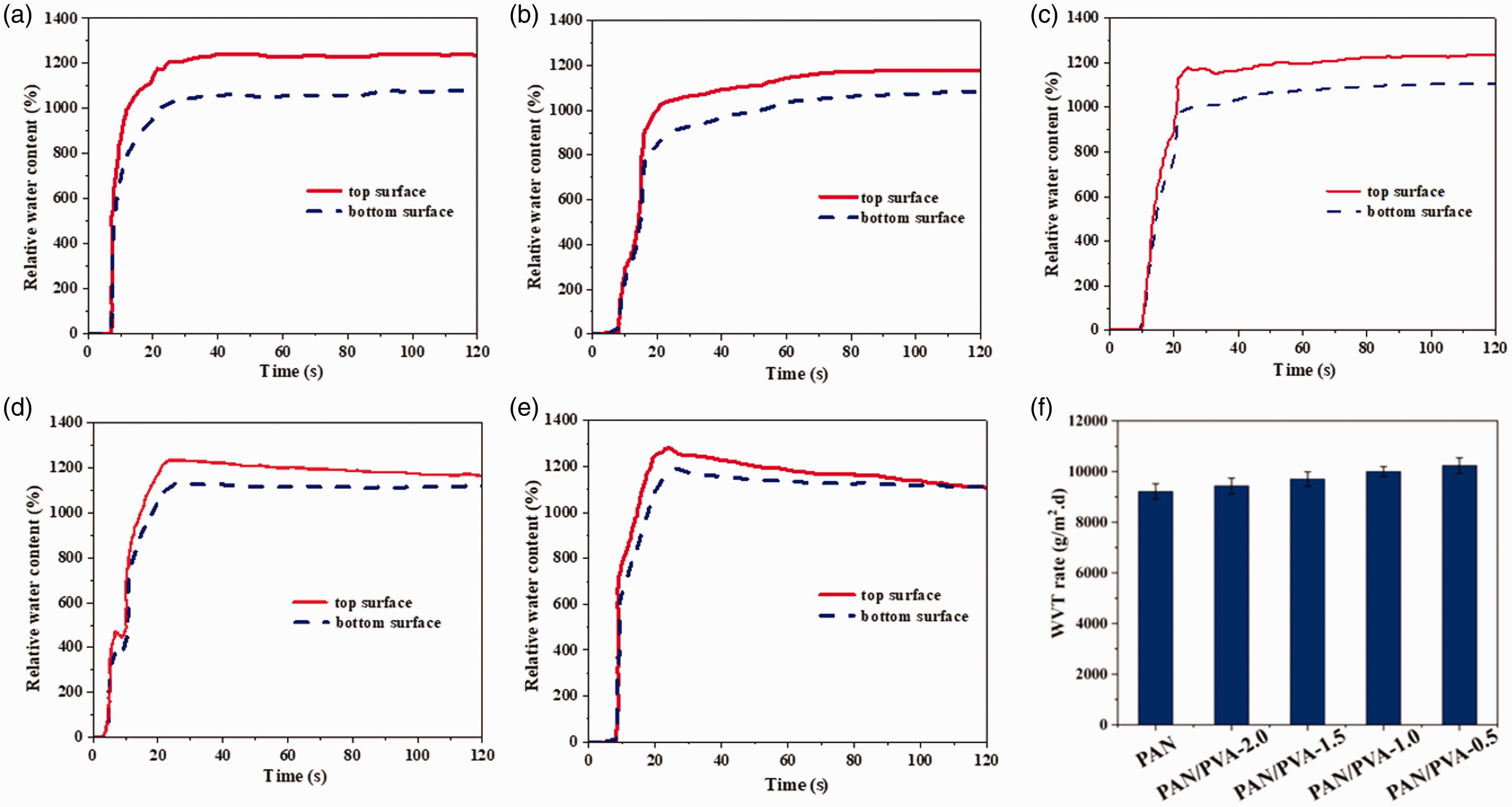
MMT results of PAN/PVA fibrous membranes with different mass ratio, (a) PAN, (b) 2.0, (c) 1.5, (d) 1.0, and (e) 0.5, respectively, (f) WVT rate of the PAN/PVA fibrous membranes as the PVA mass ratio increase. PAN: polyacrylonitrile; PVA: polyvinyl alcohol.
As mentioned, evaluation of hydrophilic property in porous nanofibers is important because good hydrophilic performance results in a strong capillary effect that leads to great wick water capability. However, from a functional perspective, the WVT rate is another critical comfort-related property of textiles. Figure 3(f) exhibits that the WVT rate of fibrous membranes increases with increasing PVA mass ratio, which could be attributed to the enhancement of the hydroxyl number among the blended fibers. The high affinity of hydroxyl for water aids the diffusion of water molecules, thereby causing excessively large water permeability values [18]. As a result, fibrous membranes containing more hydroxyl groups exhibit improved WVT performance. This conclusion is supported by the coating textiles [7,19–21]. Sarkar et al. [22] fabricated a type of waterproof-breathable conductive cotton fabric by employing NRL, PVA, and carbon black and confirmed that WVT rate increases with increasing dose level of aqueous solution of PVA. Nevertheless, the application of PVA always requires a crosslinking agent, such as glutaraldehyde, due to its soluble nature [23–25] (Figure 2(f)). Thus, PVA nanofibrous membranes with a mass ratio of 1.0 would be an optimal candidate for further research.
Morphology, directional water transport, WVT rate, and breathability of Janus fibrous membranes
In our study, two criteria are based on designing the Janus fibrous membranes. These criteria are as follows: (i) the Janus fibrous membranes must enable directional water transport based on different opening porous structures, and (ii) the membrane should be sufficiently thin to meet outstanding WVT rate and breathability through the porous matrix. We first prepare a TPUE fibrous membrane with traditional morphology to investigate the effectiveness of different structures in providing MMT, WVT rate, and breathable performance. The detailed formula of fibrous membranes is presented in Table 3. The representative SEM images of PAN/PVA–TPU fibrous membranes fabricated from various opening porous structures are presented in Figure 4. Figure 4(ai), (bi), and (ci) depicts that no remarkable difference exists in the morphology of PAN/PVA side of different structures. In Figure 4(aii), the TPUE side of PAN/PVA–TPUE fibrous membranes exhibits a tightly and randomly oriented 3D nonwoven morphology feature. Fibrous membranes containing uneven and uniform surfaces have been reported by numerous researchers; these membranes were mainly obtained by optimizing the electrospinning processing parameters [26, 27]. Small gas molecules (such as water vapor) with size less than 1 nm could easily pass through membranes via microporous channels [28]. Sheng et al. [29] reported a positive linear correlation between air permeability/WVT rate and porosity. The opening porous structure accounts for a large proportion of water transport. Thus, membranes with different opening porous structures are designed to pursue substantial transmission passage. Figure 4(c) shows the morphology of microporous membranes. Table 3 indicates that the water transport could occur by employing a TPUP structure membrane. Nonetheless, Figure 5(a) to (c) depicts that the directional water transport is obtained by PAN/PVA–TPUP–TPUE rather than PAN/PVA–TPUP, which shows a gradual increase in opening the porous structure from the outside to the inside of the membrane. Wang et al. [14] found that a gradient opening porous structure from the bottom to the top layer leads to ultrafast directional water transport. The reason is that the differential porous structure leads to different surface wettability and intrinsic water transport resistance, which play key roles in the water transport capacity [30–32]. Consequently, PAN/PVA–TPUP–TPUE exhibits an excellent directional water transport performance compared with PAN/PVA–TPUP (two-way water transport) and PAN/PVA–TPUE (nontransport) at the same thickness gradient.
Comparison with different structural design.
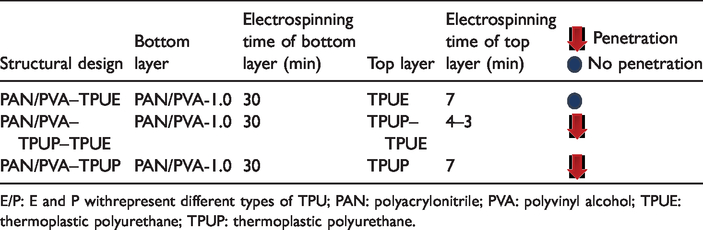
 Penetration
 No penetration
E/P: E and P withrepresent different types of TPU; PAN: polyacrylonitrile; PVA: polyvinyl alcohol; TPUE: thermoplastic polyurethane; TPUP: thermoplastic polyurethane.
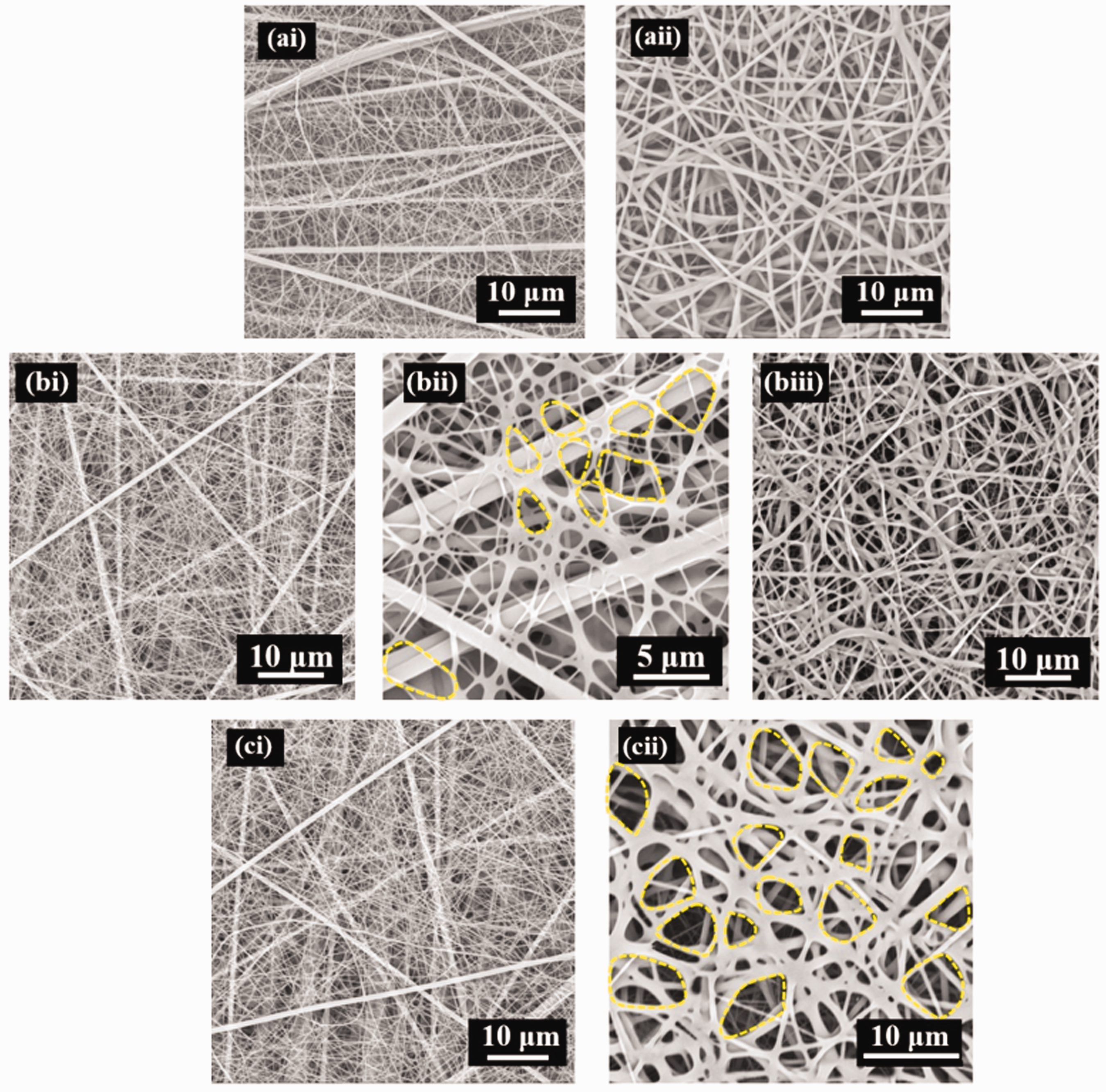
SEM micrographs showing the morphologies of (ai) PAN/PVA side of PAN/PVA–TPUE, (aii) TPUE side of PAN/PVA–TPUE; (bi) PAN/PVA side of PAN/PVA–TPUP–TPUE, (bii) middle TPUP side of PAN/PVA–TPUP–TPUE, (biii) top TPUE side of PAN/PVA–TPUP–TPUE; (ci) PAN/PVA side of PAN/PVA–TPUP, and (cii) TPUP side of PAN/PVA–TPUP.
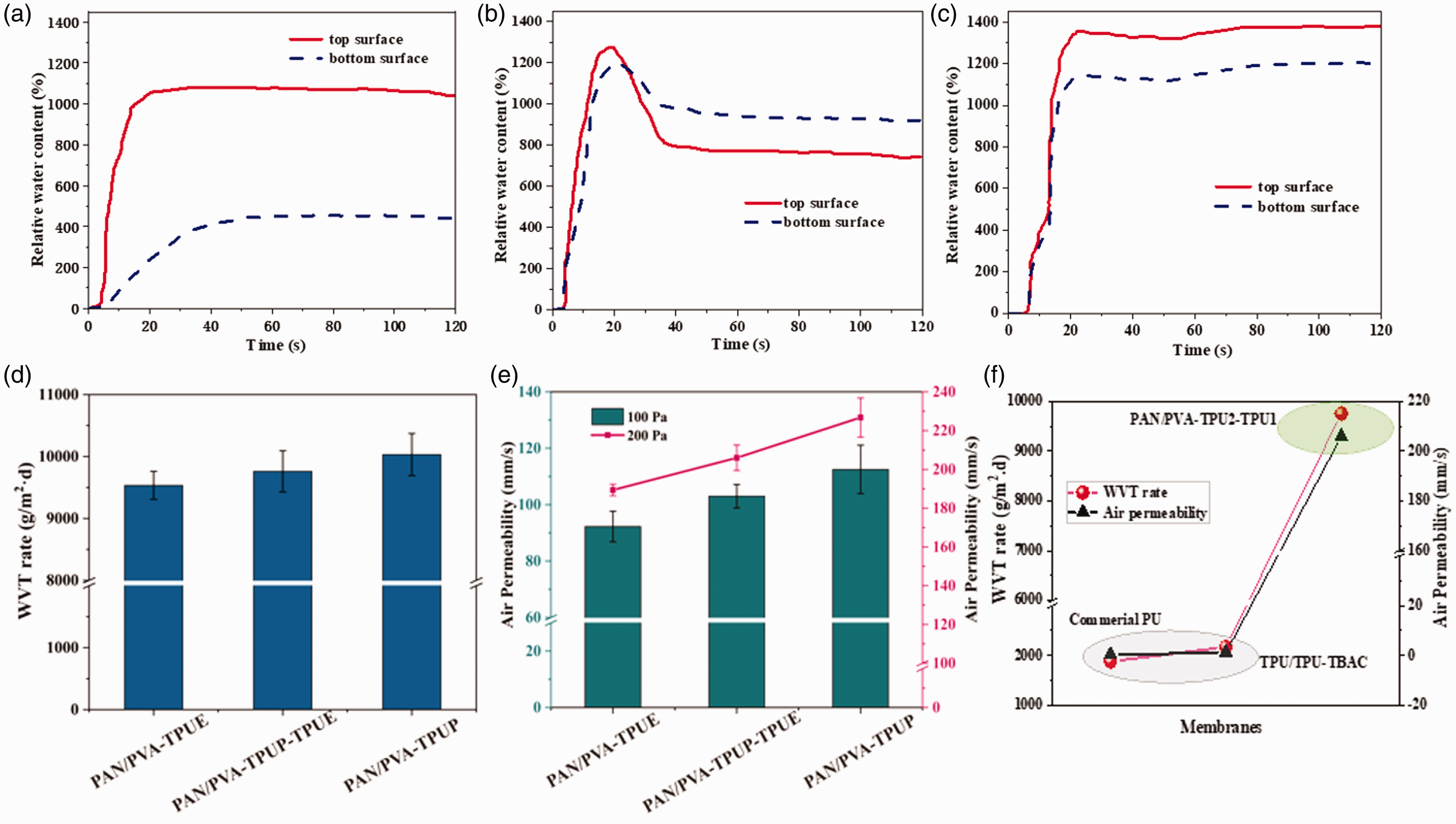
MMT results of the Janus fibrous membranes with respect to opening porous structure of top layer (a) to (c) PAN/PVA–TPUE, PAN/PVA–TPUP–TPUE, and PAN/PVA–TPUP, respectively. The solid line and dashed line, respectively, represent the water content of the TPU surface (top side) and PAN/PVA surface (bottom side). The water is dropped on the TPU surface. WVT rate and air permeability of the Janus fibrous membranes with various opening porous structure of top layer, (d) WVT rate and (e) air permeability, the pressure drop used is 100 and 200 Pa, respectively. (f) WVT rate and air permeability of PAN/PVA–TPU Janus fibrous membranes, commercial PU membrane, and double-layer TPU–TBAC/TPU membrane reported in Ju et al. [17]. PAN: polyacrylonitrile; PVA: polyvinyl alcohol; TBAC: tetrabutylammonium chloride; TPUE: thermoplastic polyurethane; TPUP: thermoplastic polyurethane; WVT: water vapor transmission.
As discussed, the interconnected pore structure of fibrous membranes plays a key role in the process of directional water transport. This finding is supported by the air permeability and WVT rate shown in Figure 5(d) and (e). Figure 4(e) shows that the WVT rate of the fibrous membranes increases from 9534 to 10,032 g/m2 d with the opening structure increment; the pore structure acts as an important unit with the interconnected fibers [33]. Similarly, Figure 5(e) shows the changes in opening porous structure and test condition (100 Pa/200 Pa) in fibrous membranes and reveals that pore structure has a considerable effect on breathable performance. A high opening porous structure leads to high breathable performance regardless of test condition. The breathable results with a pressure drop of 200 Pa have an air permeability value of 206.7 mm/s, which is twice higher than that of breathable results with a pressure drop of 100 Pa (103 mm/s). The Janus fibrous membranes exhibit high breathability due to their small thickness. Excessive thickness increases the transport resistance (because of the channel length increment) and fibrous packing density, which in turn results in low WVT rate and air permeability [9,34].
A comparison of the performances of the commercial PU membrane, TPU/TPU–TBAC, and PAN/PVA–TPU Janus fibrous membranes is presented in Figure 5(f7). Compared with the widely used commercial protective membrane, the Janus fibrous membranes exhibit outstanding air permeability (103 mm/s) and high WVT rate (9760 g/m2 d), which are five times those of commercial fabrics (0.302 mm/s, 1880 g/m2 d) and TPU/TPU–TBAC double layer (1.16 mm/s, 2170 g/m2 d), as indicated by Ju et al. [17]. Correspondingly, the Janus fibrous membranes exhibit excellent WVT rate and air permeability performances, suggesting a promising candidate for all types of potential applications in comfortable directional water transport textiles.
Conclusions
A highly permeable and breathable Janus fibrous membrane is prepared with the combination of PAN/PVA and TPU electrospinning nanofibers. The introduction of PVA into the hydrophilic bottom layers endows the blend fibrous membranes with superhydrophilic performance. Porous structure and asymmetric wettability are designed with different TPU types/TPU electrospinning parameters and surface energy gradients. The directional water transport, WVT rate, and air permeability of the fibrous membranes would be facilely regulated by designing the sandwich structure and tuning the wettability. As a result, the combination of inner and outer layers exhibits optimized directional water transport properties, an outstanding WVT rate of 9760 g/m2 d, and excellent air permeability of 103 mm/s (five times higher than that of the commercial membrane). The results of this study serve as a valuable reference for the design and tailoring of highly breathable, highly permeable, directional water transport 3D electrospinning fibrous membranes.
Footnotes
Declaration of Conflicting Interests
The author(s) declared no potential conflicts of interest with respect to the research, authorship, and/or publication of this article.
Funding
The author(s) disclosed receipt of the following financial support for the research, authorship and/or publication of this article: This work is supported by the Natural Science Foundation of Tianjin (18JCQNJC03400), the Natural Science Foundation of Fujian (2018J01504, 2018J01505), and the National Natural Science Foundation of China (grant number 11702187). This study is also supported by the Opening Project of Green Dyeing and Finishing Engineering Research Center of Fujian University (2017001A, 2017001B, and 2017002B) and the Program for Innovative Research Team in University of Tianjin (TD13-5043).
