







Abstract
In this manuscript, buckling of carbon nanotubes reinforced circular cylindrical composite shell under hydrostatic presser with its ends closed by rigid disks is investigated, using Fourier decomposition and the Galerkin method. The accuracy of the utilized method is verified with previous research in buckling behavior of circular cylindrical shells. Both types of functionally graded and uniform distribution patterns of carbon nanotubes are studied. The novelty of this study is investigating the influence of carbon nanotubes distribution type and volume fraction on buckling resistance of carbon nanotubes reinforced circular cylindrical composite shell. Furthermore, the effect of material type and volume fraction of metal layers on fiber metal laminates is illustrated. The results show that buckling resistance of composite cylindrical shells increase about 10% by reinforcing with 5% carbon nanotubes. Also, it is shown that metal types Az91 and Ti6AlV have about same effect on buckling resistance of fiber metal laminates cylinders, and their effect are about 15% more than the effect of Al2024. With exploiting the executed analysis, pipes with optimum buckling resistance to weight ratio can be designed for hydrostatic loading.
Keywords
Introduction
Cylindrical shells are widely used in the construction of tanks, submarines, ships, and fluid transfer pipes. For this reason, many researchers have studied the behavior of cylindrical shells and provided methods for predicting their behavior under different loading and boundary conditions. Due to the fact that the composites have high strength to weight ratios and are highly resistant to corrosion and impact, they have replaced metal structures in many cases. One of the most commonly used composite structures in today’s industries are composite pipes that are used to transfer oil and gas from underwater and are always hydrostatically pressurized. As a result, one of the major modes of damage to these pipes will be their buckling. Therefore, the buckling analysis of composite tubes has attracted the attention of many researchers in recent years. Hur et al. [1] examined the buckling and postbuckling of composite cylinders under external pressure using finite element method (FEM) and compared the results with experimental results. Moon et al. [2] predicted the critical buckling load of a composite cylinder of carbon epoxy with medium thickness, using finite element modeling. Chen et al. [3] by combining the perturbation method and Fourier series expansions proposed a method for calculating buckling loads of cylinders whose thickness varies throughout the cylinder’s length. The numerical solution method is also used in the research carried out by Tahir and Mandal [4] to analyze the buckling of a composite cylindrical shell. Also, the boundary layer theory was used by Li and Qiao [5] for buckling analysis of a composite cylinder under external pressure. Lopatin et al. [6] provided an analytical solution and a semi-analytic solution for calculating the critical buckling load of composite cylinders under the uniform hydrostatic pressures. Fan et al. [7] presented an analytical solution for calculating critical buckling loads of cylindrical shells. In their research, the critical buckling load of the cylinders whose wall thickness varies along the cylindrical length is calculated. Akrami and Erfani [8] studied the buckling of cracked cylindrical shell with analytical and numerical method. Using finite element modeling by ANSYS, Krishnaveni et al. [9] determined the stress and deformation values in a laminated composite cylindrical shell with a cutout by buckling and static analysis. Guo et al. [10] presented a novel method to increase buckling resistance of cylindrical shell, using clamped arrestors. Wagner et al. [11] using multiobjective method performed an optimization for the laminate stacking sequence of composite cylinder under axial loading. They applied decision tree-based machine learning to recommend a general design method which lead maximum resistance against buckling.
Adding CNTs to the matrix increase the electrical, mechanical, and thermal properties of the structure. Also, one of the reasons why nano-composites are widely used are their multifunctionality. For example, in a typical composite, an improvement in one of the properties usually weakens one of the other properties, but in nano-composites, several properties can be improved simultaneously. Shen [12] used the perturbation method to analyze the buckling and postbuckling of cylindrical shells reinforced with CNTs and concluded that the volume fraction of CNTs has a significant effect on the buckling and postbuckling behavior of cylindrical shells. Thomas and Roy [13] studied the effects of nanoparticles on the elastic properties of composite shells. In their study, which the distribution of nanoparticles is considered uniformly and functionally grading, it is shown that an increase in the volume percent of nanotubes affects all the elastic properties of composites. Using the generalized differential quadratic method (GDQM), Ansari and Torabi [14] analyzed the buckling, and the vibrations of the conical shells reinforced with nanotubes and showed that with increasing the volume percentage of CNTs, the nondimensional frequencies, and critical buckling loads of the shell increased. Tornabene et al. [15] investigated the effect of the reinforcing phase on the static response of composite shells reinforced by CNTs, using GDQM. They also considered the effect of CNTs agglomeration on the static response of composite shells. Nejati et al. [16] studied the buckling behavior of cylindrical shells reinforced by CNTs, considering thermal loads. They used GDQM to show the influence of functionally graded distribution of CNTs on the thermal buckling. Baltacioglu and Civalek [17] used the first-order shear deformation and Love’s shell theories for modeling of the CNTs reinforced panel vibration. They showed that the FG-X distribution type of CNTs has biggest frequency values for circular cylindrical panels. Guessas et al. [18] investigated buckling behavior of CNTs reinforced composite plates. They analyzed the effect of porosity on buckling of porous plates reinforced by tow distribution type of CNTs, using first order shear deformation theory. Kiani et al. [19] studied free vibration of crooked cylindrical composite panel reinforced by CNTs, considering uniform and functionally graded distribution of CNTs. They combined first-order shear deformation and Donnell’s kinematic assumptions for analyzing thin-to-moderately thick shells.
Fiber metal laminates (FMLs) are produced by putting together composite and metal layers. FMLs not only have a high strength and hardness but also have better properties for fatigue loads and impact [20]. Some studies have shown that use of FMLs in design of some structures can reduce up to 50% of the weight of the structure. In recent years, many studies have been carried out on FMLs, for example, Fu et al. [21] obtained the nonlinear dynamics response of a Timoshenko FML beam with temperature effects by GDQM. Ghasemi and Mohandes [22] compared the frequencies of FML with composite cylindrical shells. They used beam modal function model for vibration analysis. Also, Rahimi et al. [23] presented a method for the free vibration of a circular FML plate with the combination of GDQM, Fourier series and state–space method.
Based on the previous researches, only few literatures have investigated buckling behavior of CNTs reinforced circular cylindrical shell, without considering the effect of CNTs distribution types. Also, none of the available literatures have studied buckling behavior of four phases, metal/fiber/polymer/CNTs circular cylindrical shells. The novelties of present work are focusing on buckling behavior of metal/fiber/polymer/CNTs circular cylindrical shells and investigating the influence of CNT’s distribution. Fourier decomposition and the Galerkin method are used for solving the problem. The accuracy of this method is verified by previous analytical and FEM studied.
Governing equation
The FMLs circular cylindrical shell containing CNTs is shown in Figure 1 The length of the cylinder is L and its radius is R, and its axial, radial and angular coordinates are represented by x, z, and θ, respectively. The ends of the cylinder (
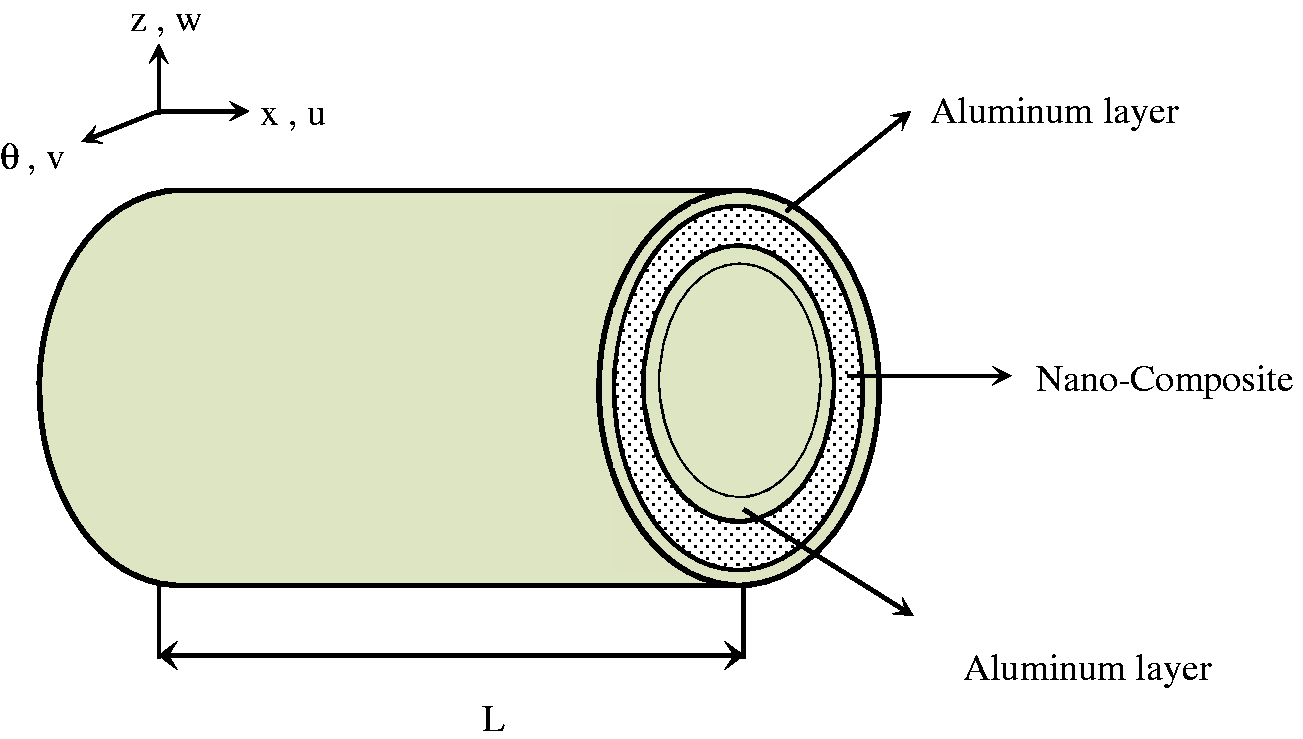
FMLs circular cylindrical shell reinforced by CNTs.
The buckling equations of the cylinder under the external pressure are as follows [24]





Strains at an arbitrary point of the cylindrical shell related to the middle surface and to the changes in the curvature and torsion of the middle surface are defined by the following relations [26]









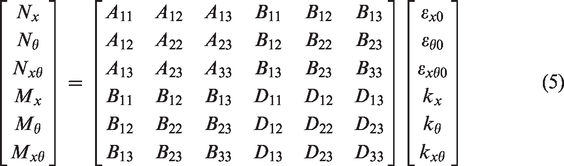
As extensional stiffness,




Young’s modulus
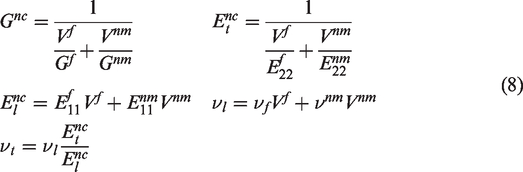

In this research, the volume fraction of CNTs is considered as functionally graded (FG) in direction of cylindrical shell’s radius. The FG-O, FG-X, and FG-U are distribution’s mood of CNTs. In the FG-O state, the intermediate surface is richer than the outer surfaces, and in the FG-X mode, the outer surfaces are richer than the middle surface and in the FG-U mode, the distribution of CNTs is uniform
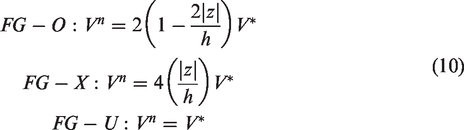
In the above relations,
Since the ends of the cylinder are closed by two rigid disks and the disks can move in axial direction, the boundary conditions of the cylindrical shell (x = 0, L) will be written as follows

If the hydrostatic uniform pressure applied to the cylinder is represented by

By substituting equations (12) and (5) into equation (1), the equations of buckling of the cylindrical shell basis of displacements,


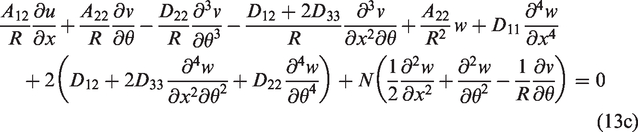
By solving the above system of homogeneous boundary value equations, the critical buckling pressure will be obtained.
Analytical solution procedure
The kinematic variables,



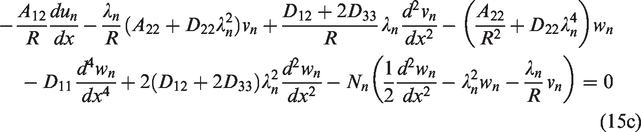
The Galerkin method is used to calculate the value of buckling load



In accordance with the Galerkin method and substituting equations (18) and (17) into equation (16), the following equation for errors can be derived

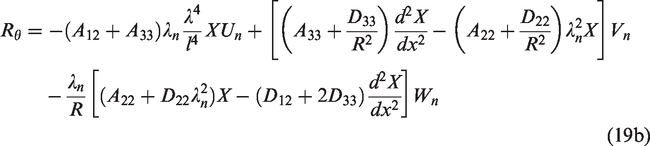
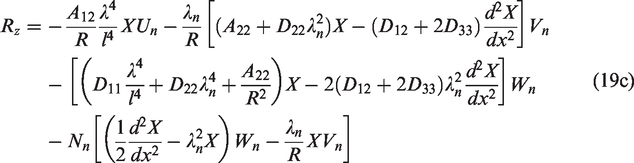
The conditions of orthogonality of these errors to the approximating functions are presented as follows

By substituting equation (19) into equation (20), the following equations can be derived



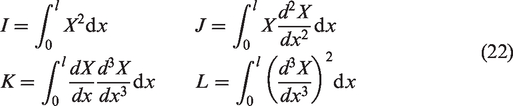

The system of equations (21) can be derived as follows



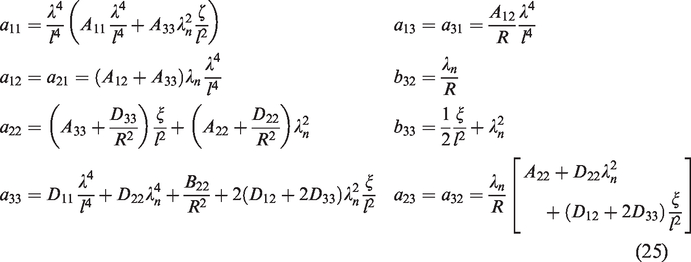
The system of equations (24) has a nontrivial answer if the determinant of its coefficient be zero. As a result, the buckling force for different buckling modes is calculated as follows

Numerical results and discussion
In this section, using the method described in the previous section, the critical buckling load for a FMLs circular cylindrical shell reinforced by CNTs is calculated. The carbon/epoxy and glass/epoxy composites and aluminum layers are used in this research.
Validation
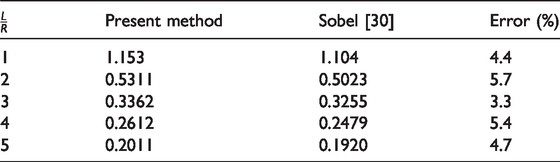
In order to make sure that the solution method used is correct, the results obtained for two types of cylinders are compared with results of other researchers. In the first case, the buckling load of metal cylinders is compared with the results of other analytical solution [30]. The following mechanical properties have been taken for desired metal cylinder:
Critical buckling loads
Also, in the second case, the critical buckling load of laminated composite cylinders is compared with results of FEM [32]. The following orthotropic mechanical properties have been taken for composite layers:
Critical buckling loads of laminated composite cylinders.
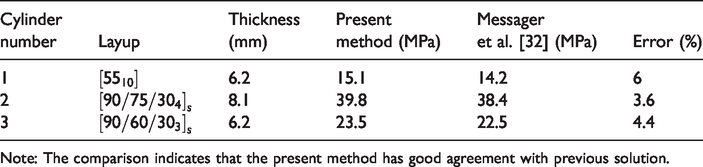
Note: The comparison indicates that the present method has good agreement with previous solution.
The effect of CNT’s volume fraction on critical buckling load
In order to illustrate the effect of CNT’s volume fraction on critical buckling load, carbon/epoxy cylindrical shell reinforced by different volume fraction of CNTs (0%, 1%, 3%, 5%) is investigated. The results are shown in Figures 2 and 3. The layups of the composite layers are
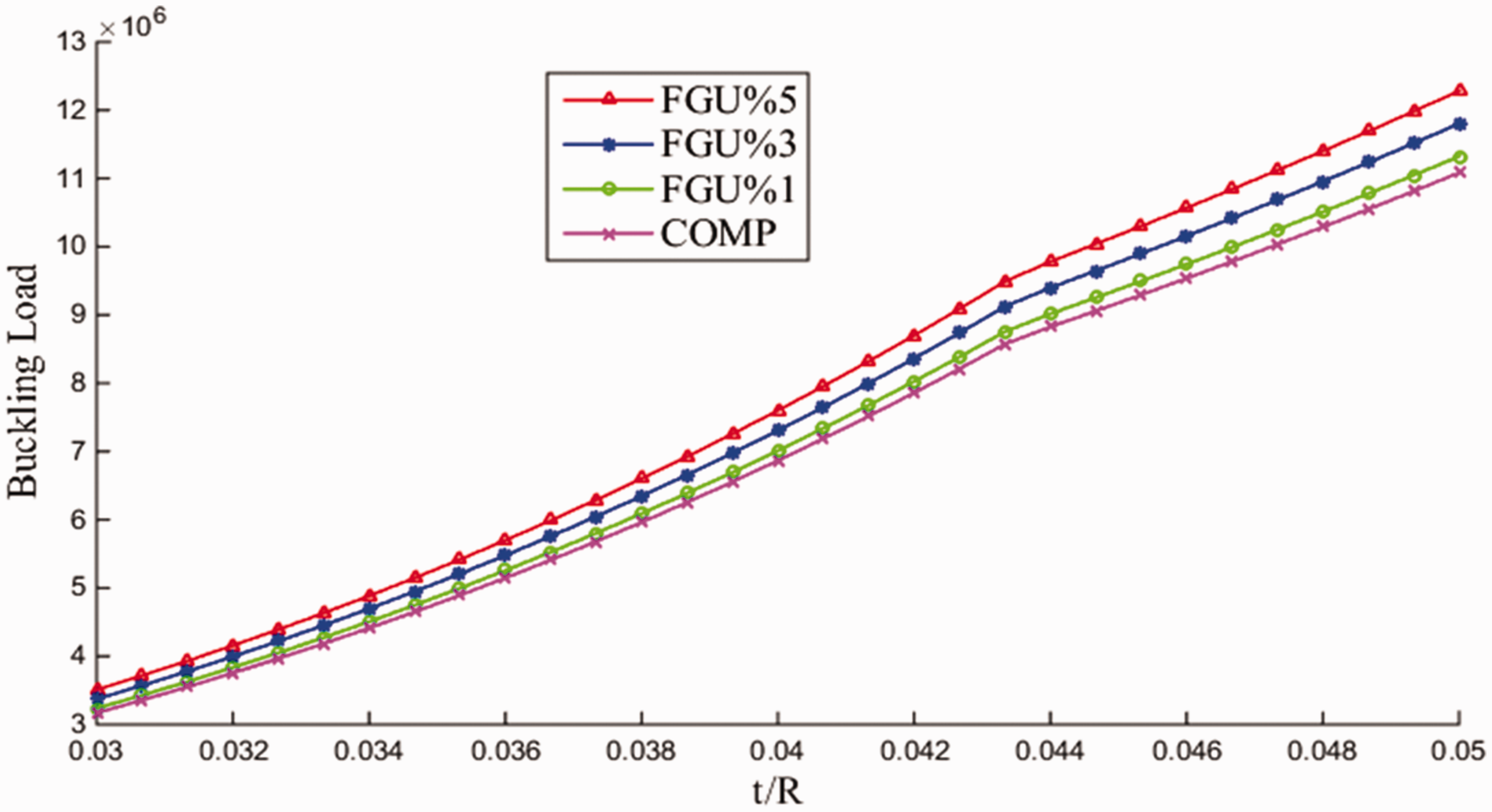
Buckling load of the laminated composite cylindrical shell vs. thickness to radius ratio (t/R) for different CNT’s volume fraction.
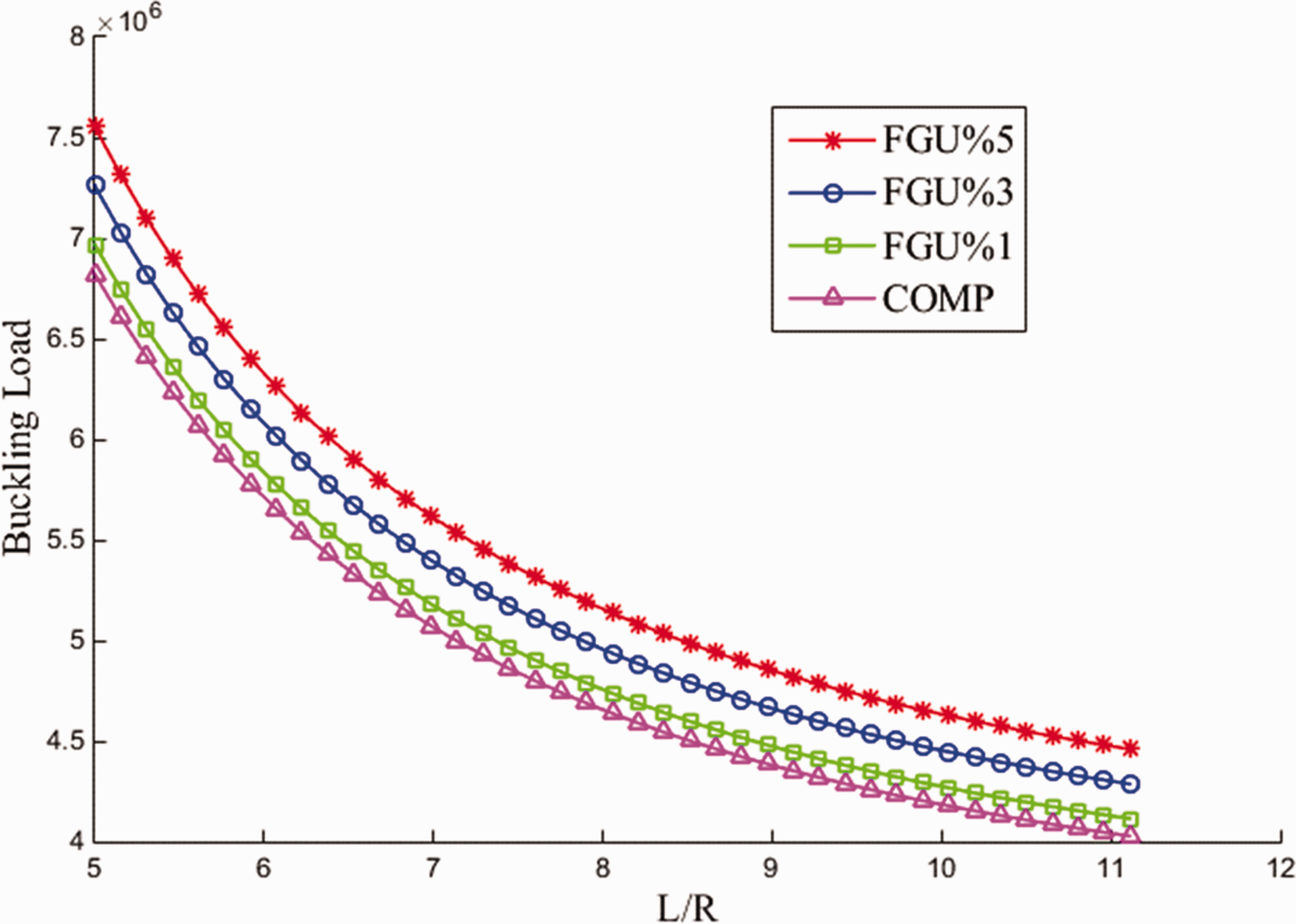
Buckling load of the laminated composite cylindrical shell vs. length to radius ratio (L/R) for different CNT’s volume fraction.
As shown in Figure 2, increasing the thickness of cylinders increases the buckling resistance. Furthermore, according to Figure 2, as the ratio of thickness to radius increases, the distance of the lines is increasing, indicating that CNTs have more effect on the buckling resistance of the thicker cylinders. Also, according to Figure 3, buckling resistance will be reduced by increasing length to radius ratio. It is also clear from both of the Figures 2 and 3 that an increase in the percentage of CNTs in a composite cylinder will always increase buckling resistance.
The effect of CNT’s distribution type on critical buckling load
In this section, to investigate the effect of the CNT’s distribution type on the critical buckling load, as in the previous section, cylinders with a thickness of 5 mm made of carbon/epoxy and glass/epoxy reinforced by different type of CNTs distribution (FGO, FGX, FGU) have been investigated. The results are shown in Figures 4 and 5.
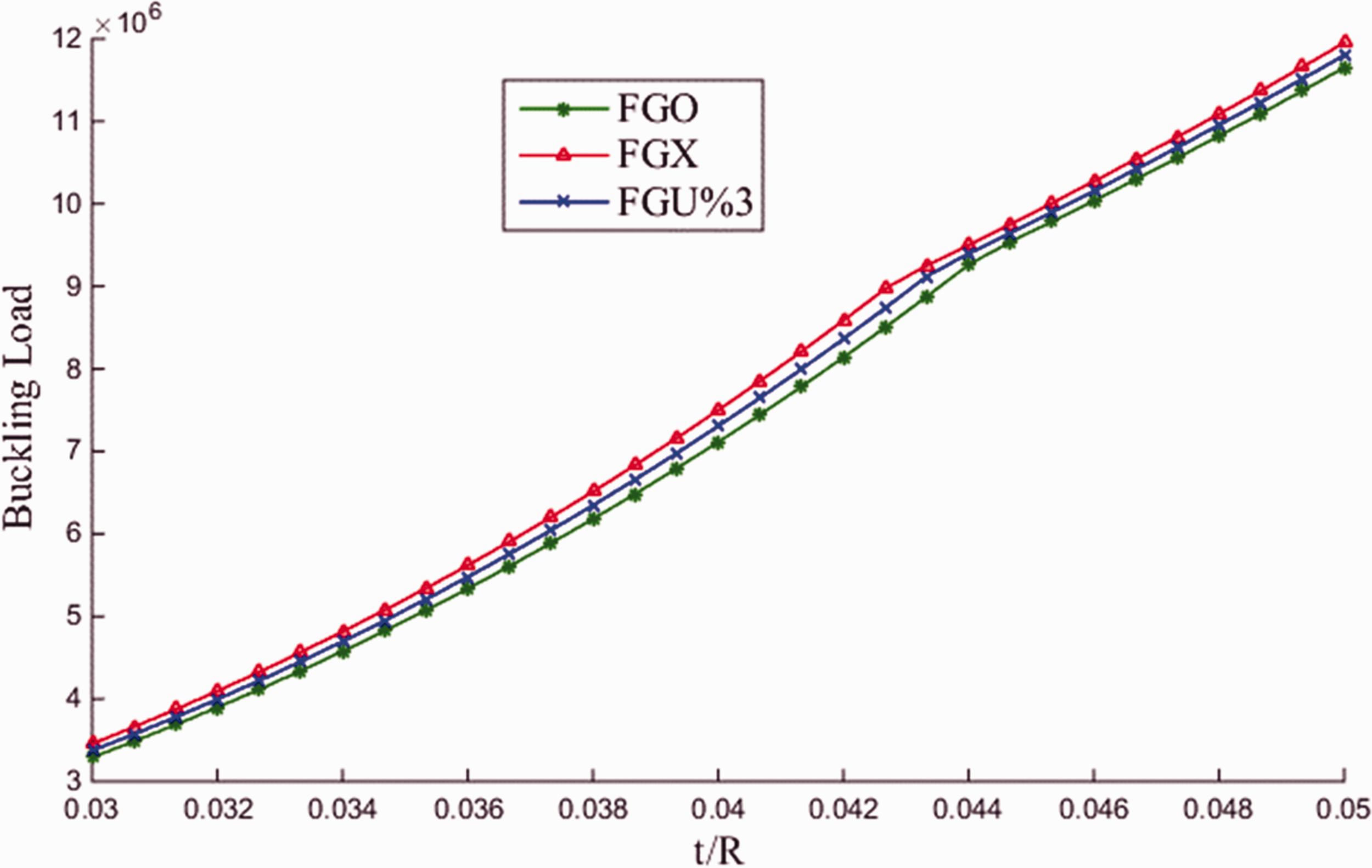
Buckling load of the laminated composite cylindrical shell vs. thickness to radius ratio (t/R) for different CNT’s distribution type.
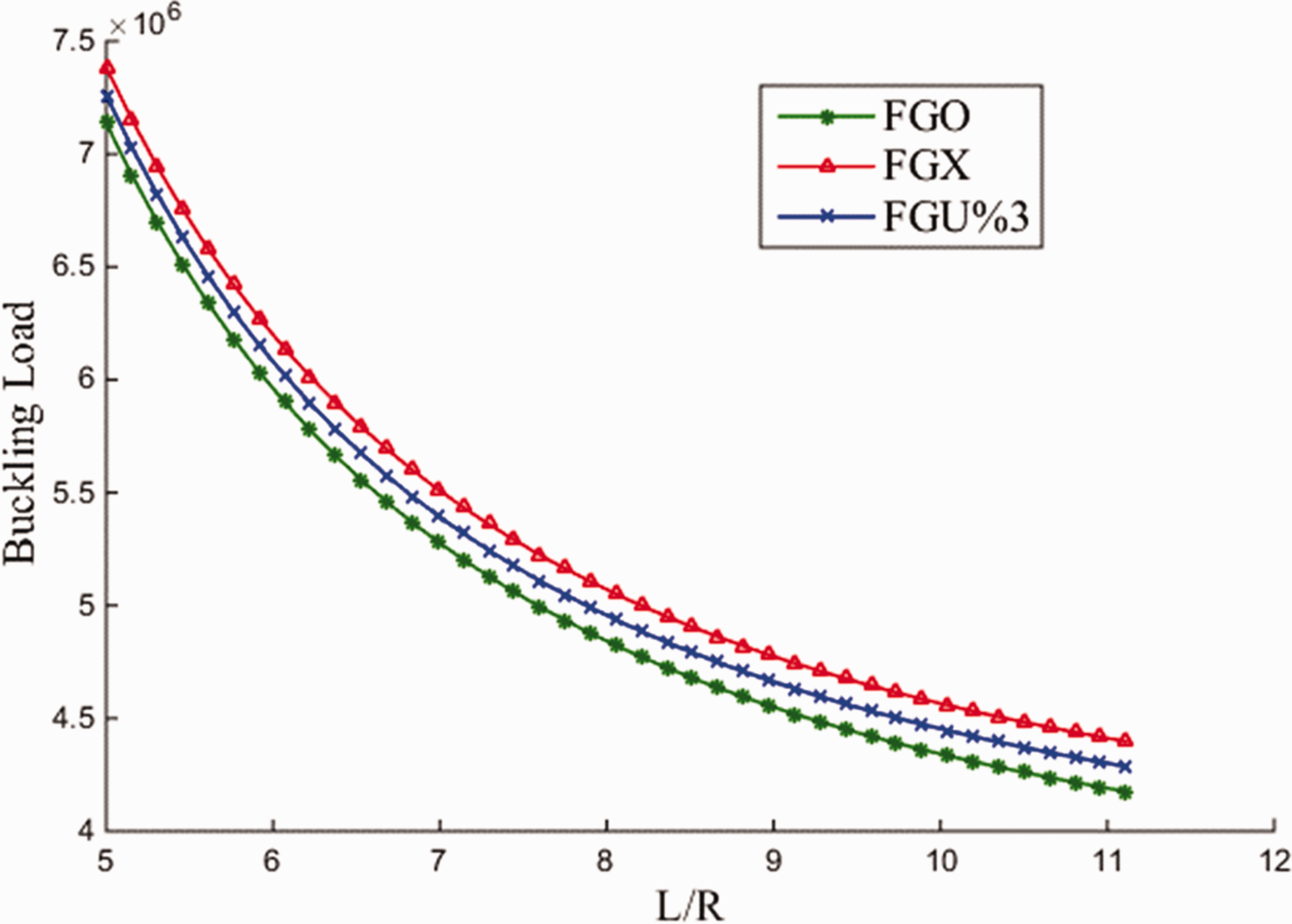
Buckling load of the laminated composite cylindrical shell vs. length to radius ratio (L/R) for different CNT’s distribution type.
As shown in Figures 4 and 5, although the general volume of CNTs in these three types of distribution is equal, the FG-X distribution is better than two other types against the buckling load, and the FG-O distribution type is not a suitable choice. It is clear that existence of CNTs in inner and outer surfaces has more effect than being in mid-span. This indicates that the use of CNTs to reinforce the pipes is not sufficient alone, and the CNTs distribution should also be considered when producing the pipes.
In Figures 6 and 7, the effects of metal’s volume fraction on the buckling resistance are shown for FMLs composite cylinder with different type of fibers.
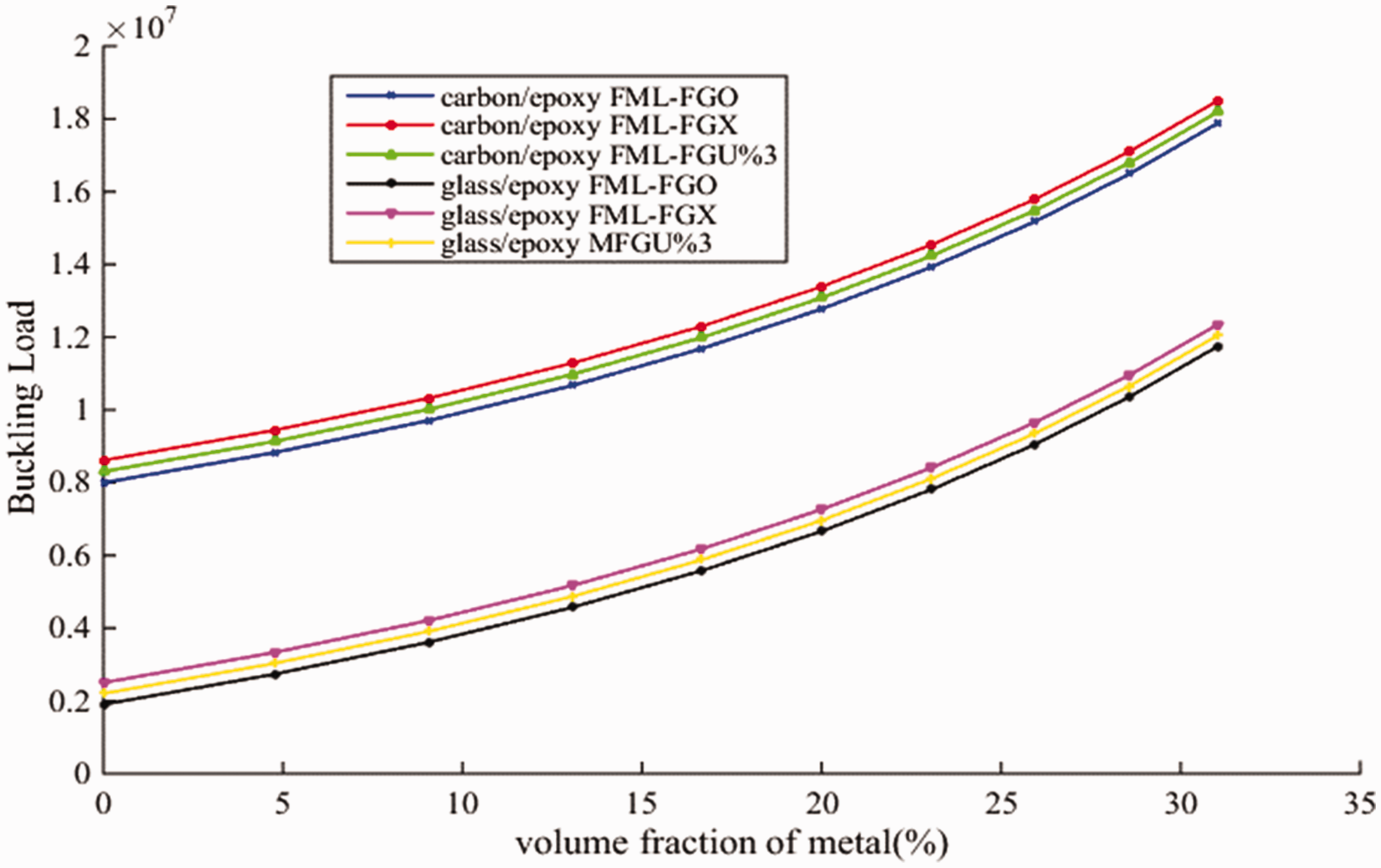
Buckling load of the fiber metal laminated composite cylindrical shell vs. volume fraction of metal layers for different CNT’s distribution and different fiber type.
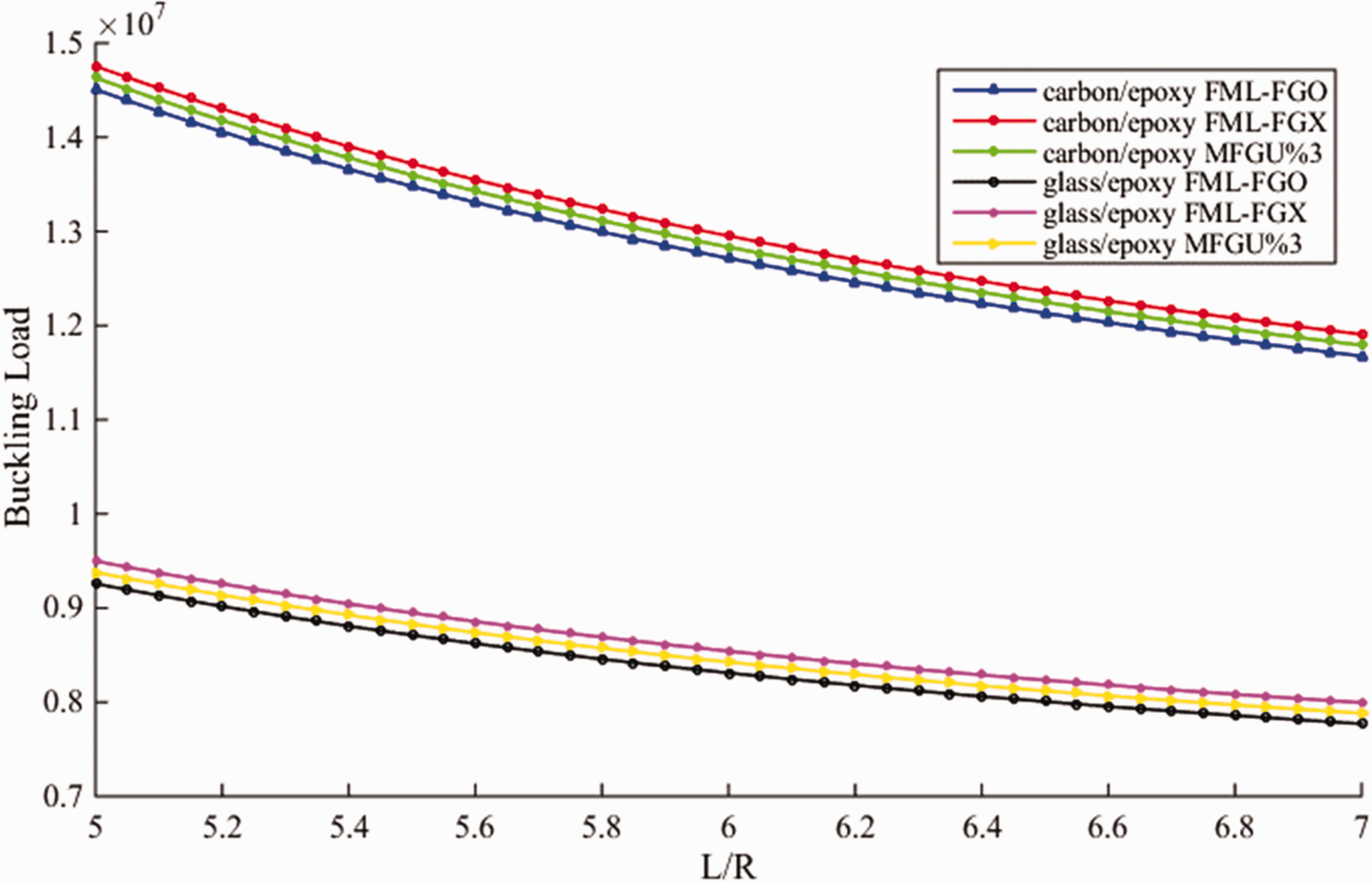
Buckling load of the fiber metal laminated composite cylindrical shell vs. length to radius ratio (L/R) for different CNT’s distribution and different fiber type.
As shown in Figure 6, increasing the volume fraction of metal layers has a good effect on buckling resistance of FML composite cylinders. But, it is visible in Figures 6 and 7 that the effect of volume fraction of metal layers and distribution type of CNTs are not related to fiber’s type, and in both types, carbon/epoxy and glass/epoxy the FGX distribution is the best type of CNT’s distribution for increasing the buckling resistance of composite cylinders.
The effect of metals layers on buckling resistance
In this section, the effect of metal laminate on the critical buckling load is studied. The buckling load is calculated for laminated composite cylinders, which are reinforced both by different type of CNT’s distribution and aluminum layers.
As shown in Figure 8, using a reinforcing layer of aluminum will have a significant effect on increasing the buckling resistance of the cylindrical shell.
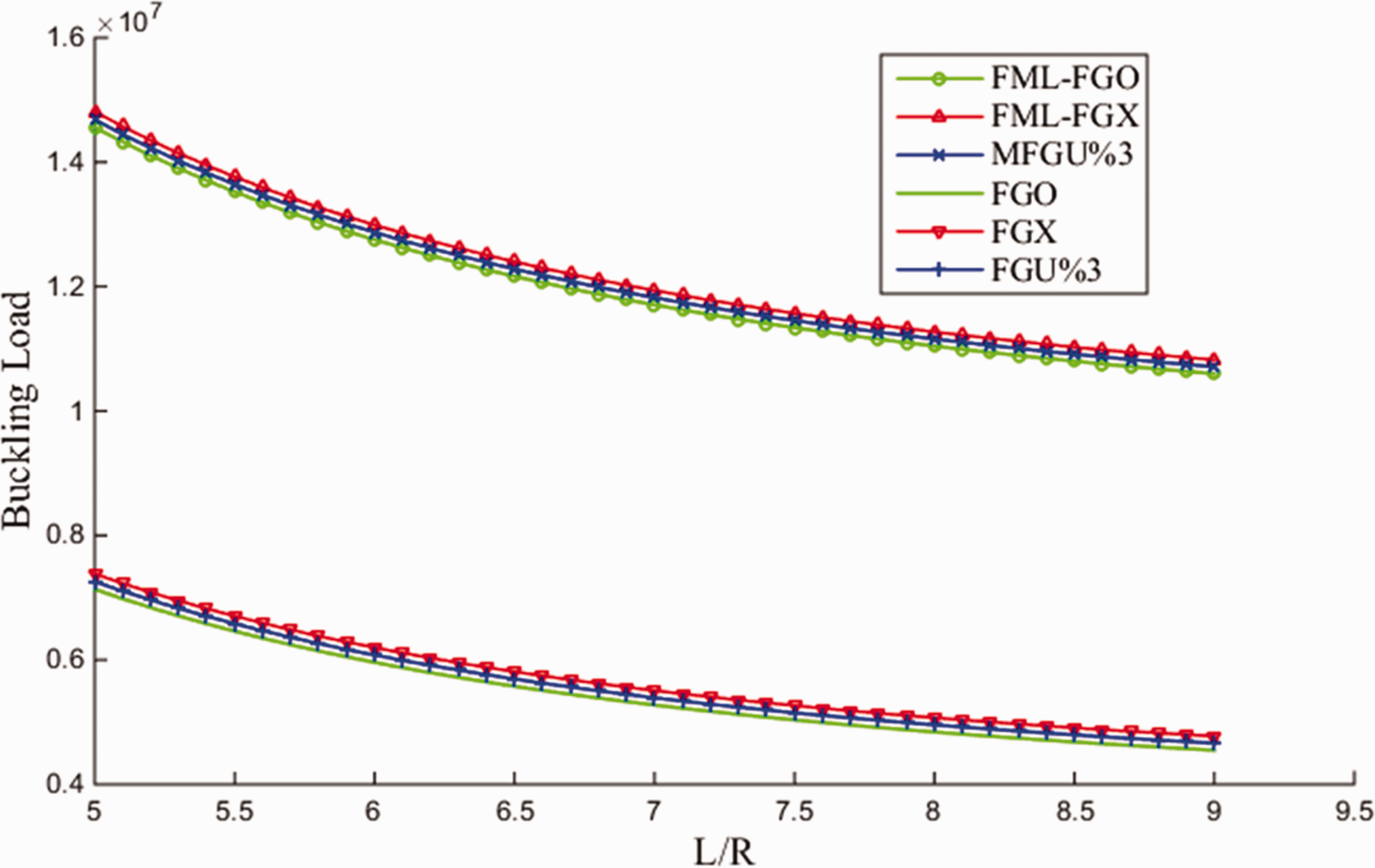
Buckling load of nano-composite cylindrical shell with and without metal layers vs. length to radius ratio (L/R) for different CNT’s distribution type.
Al2024, Az91, and Ti6Al4V are useful metals in FMLs production that their mechanical properties are shown in Table 3. Appropriate properties, availability and appropriate price are the reasons for choosing these metals.
Mechanical properties of different metal layers used in FML structure.

In order to investigating the effect of volume fraction of metal layers, buckling of carbon/epoxy cylindrical shell reinforced by CNTs with inner and outer metal layers is studied. Volume fraction of metal layers will increase by the rising the thickness of metal layers.
As shown in the Figure 9, increasing of volume fraction of all three types of aluminum has a big effect on buckling resistance generally. But, Ti6Al4V has the most effect on increase of the buckling resistance.
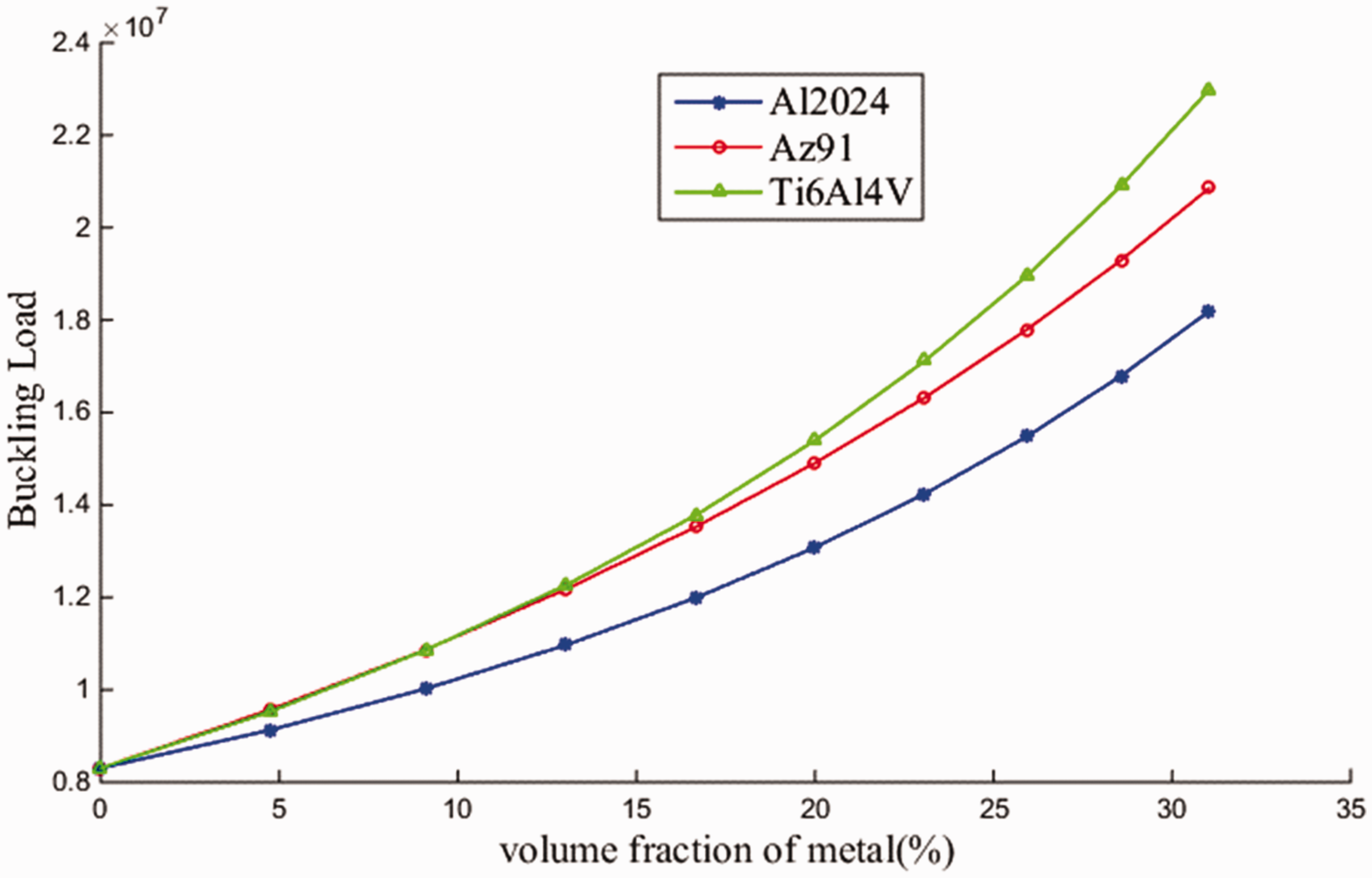
Buckling load of the fiber metal laminated composite cylindrical shell vs. volume fraction of metal layers for different metal type.
Conclusions
In this study, the buckling resistance of the circular cylindrical shells of FMLs reinforced with CNTs under hydrostatic pressure has been calculated. Considering the ends of cylinder in this study is closed using two rigid disks, it can be said that cylinder has the clamped–clamped boundary conditions. The analytical method employed in this study is a combination of the Galerkin method and the Fourier method, which is simpler than the previous methods and requires less computer computing. The effects of volume fraction of CNTs, CNT’s distribution types, volume fraction of metal layers, types of aluminum layers, fiber’s type, length to radius ratio (L/R), and thickness to radius ratio (t/R) on buckling resistance of FML composite cylindrical shells reinforced by CNTs have been shown in figures. According to the presented figures, the following conclusions can be expressed.
CNTs have more effect on the buckling resistance of the thicker cylinders. An increase in the percentage of CNTs in a composite cylinder will always increase buckling resistance. Analyzed samples show that in designing pipelines for transferring fluids from underwater, optimal design can be achieved by changing the volume fraction and distribution of CNTs. The effect of volume fraction of metal layers and distribution type of CNTs are not related to fiber’s type, and in both types, carbon/epoxy and glass/epoxy the FGX distribution is the best type of CNT’s distribution The use of aluminum metal layers in producing the pipes has a huge impact on increasing the buckling resistance of these pipes. By reinforcing composite cylinders with 5% carbon nanotubes, resistance to its buckling rises up about 10%. Az91 and Ti6Al4V have about same effects on buckling resistance of cylinders, and effects of these metals are about 15% more than effect of AL2024 on buckling resistance.
Footnotes
Declaration of Conflicting Interests
The author(s) declared no potential conflicts of interest with respect to the research, authorship, and/or publication of this article.
Funding
The author(s) received no financial support for the research, authorship, and/or publication of this article.
