







Abstract
This paper investigates the nonlinear bending behavior of sandwich plates with functionally graded auxetic 3D lattice core. First and foremost, an auxetic 3D lattice metamaterial with negative effective Poisson’s ratio (EPR) is designed and examined via theoretical and finite element methods with experimental verifications using specimens fabricated by 3D printing. Furthermore, three functionally graded configurations of the auxetic 3D lattice core through the plate thickness direction are proposed and compared with the uniform distribution case. Full-scale finite element modeling and nonlinear thermal-mechanical analysis are performed for the sandwich plates, with the temperature-dependent material properties of both core and face sheets taken into account. Numerical results revealed that the auxetic core can remarkably reduce the lateral deflections, with comparison to their non-auxetic counterpart with positive EPR. Parametric studies are further carried out to demonstrate the effects of functionally graded configurations, temperature rises, facesheet-to-core thickness ratios, boundary conditions, and strut radii on the nonlinear bending load-deflection curves, along with EPR-deflection curves in the large deflection region.
Keywords
Introduction
Metamaterials [2] are designed and made to possess macro-scale properties that are not found in naturally occurring materials [3], and this novelty is not gained from the constituent materials, but their microstructural design, which can achieve benefits that go beyond the limitation of conventional materials. Recently, auxetic [4] metamaterials have received a great deal of attention in virtue of their novel property of negative Poisson’s ratio (NPR) [5]. In 1987, the NPR material of thermoplastic open cell foam was manufactured by Lakes [6], which demonstrated that auxetic effects can be induced through microstructural design, e.g. making cell shape inverted [7]. In the existing literature, a variety of such metamaterials have been proposed, including re-entrant, chiral, as well as rotating rigid structures. However, most of them merely have two-dimensional (2D) microstructures.
Three-dimensional (3D) auxetic metamaterials are more suitable in many applications, and advanced manufacturing techniques, like additive manufacturing, have opened new opportunities to fabricate such metamaterials with complex microstructures. Using selective laser melting (SLM) method, Li et al. [8] built an NPR TiNi-based shape memory alloy (SMA) structure. Using finite element analysis (FEA) method, Xiong et al. [9] carried out a quantitative optimization of a modified re-entrant NPR structure whose overhanging struts were replaced with inclined ones to avoid the support structures, which were generally required in the SLM process. Chen and Fu [10] proposed a 3D lattice metamaterial by extending the existing 2D enhanced auxetic model to a 3D one and carried out theoretical and numerical analyses to gain a deeper understanding of the elastic behavior of the new 3D structure and its dependence on the geometric parameters.
From another point of view, sandwich construction is playing an increasingly important role in structures because of its exceptionally high-flexural stiffness-to-weight ratio compared to monocoque and other architectures [11]. A typical sandwich plate is composed of a lightweight core, such as foams [12–14] and honeycombs [15–17], to which two relatively thin, dense, high-strength, and high-stiffness face sheets or skins are adhered. The auxetic metamaterials have exhibited a great many of engineering advantages, such as increased shear resistance [6], indentation resistance [18,19], energy absorption [20–22], crashworthiness [23,24], and buckling capacity [25–27]. As a result, they are potentially the ideal core of sandwich structures.
Although many research works have been carried out on the bending and vibration responses of sandwich plates with 2D auxetic metamaterial core [15–17], few studies have been conducted on the sandwich plates with 3D auxetic lattice metamaterial core. Using the selective electron beam melting technique, Novak et al. [28] fabricated the auxetic cellular structures and showed that using the designed auxetic cellular cores can improve the dynamic response of sandwich structures. Imbalzano et al. [29] proposed sandwich panels with auxetic lattice cores confined between metallic facets for localized impact resistance applications and indicated that beam elements can be utilized to model lattice cores, instead of massive solid elements.
As a new generation of composite material, functionally graded material (FGM) [30] has microstructural details that vary in a spatially pattern and thus possess outstanding designability [31]. There are many new kinds of FGM, such as carbon nano-tube reinforced composite (CNTRC) material [32,33], graphene-reinforced composite material [34,35] and nano-scaled FGM [36–39]. Functionally graded auxetic metamaterials have gradual variations of cell size, shape, or strut radius over a prescribed volume [40], and the gradient configuration may lead to continuous distributions of effective stiffness and Poisson’s ratio. Two classes of gradient cellular layout were compared by Boldrin et al. [41], which has continuously varying internal cell angle or gradient cell wall aspect ratio. Furthermore, the nonlinear bending, thermal postbuckling, nonlinear vibration, and dynamic response of sandwich beams with functionally graded NPR honeycomb core were investigated by Li et al. [42–45]. In their studies, the EPR-deflection curves of the sandwich beams were obtained for the first time. More recently, Li et al. [27] investigated the in-plane effective Poisson’s ratio (EPR) of auxetic 3D lattice metamaterials and the postbuckling behavior of sandwich plates with such core, as well as their nonlinear vibration [45] and nonlinear dynamic response [46] behaviors. However, to the best of authors’ knowledge, the out-of-plane EPR of such metamaterials and nonlinear bending of sandwich structures with functionally graded auxetic 3D lattice core are remain to be explored.
In the present work, an auxetic 3D lattice metamaterial with NPR is firstly designed, modeled, analyzed and verified by experiments. The nonlinear bending behavior of sandwich plates with functionally graded (FG) auxetic 3D lattice core is then investigated. Three FG configurations are considered, in which the strut incline angles of microstructures vary along the sandwich plate thickness direction. The same sandwich plate with uniform distribution (UD) of auxetic 3D lattice core is also considered for comparison purpose. Moreover, the effect of thermal environmental conditions is considered, and the constituent material properties of both auxetic core and face sheets are taken to be temperature-dependent. Under transverse uniform pressure, large deflections of the plate will occur when the pressure is sufficiently large. In such a case, the shape of both sandwich plates and microstructures of the 3D lattice core, along with their effective stiffnesses, must be changed accordingly. Consequently, full-scale nonlinear FE modeling and analysis are conducted to investigate the nonlinear bending behavior of sandwich plates with FG–NPR 3D lattice core.
NPR of the auxetic 3D lattice metamaterial
A 3D lattice microstructure with NPR is expanded from the classical 2D re-entrant honeycombs, as illustrated in Figure 1. As an obvious advantage, the 3D lattice metamaterial possesses lower relative density compared with the 2D honeycombs. Furthermore, when the 3D lattice microstructure is compressed in one direction, both the other two directions will shrink due to NPR.
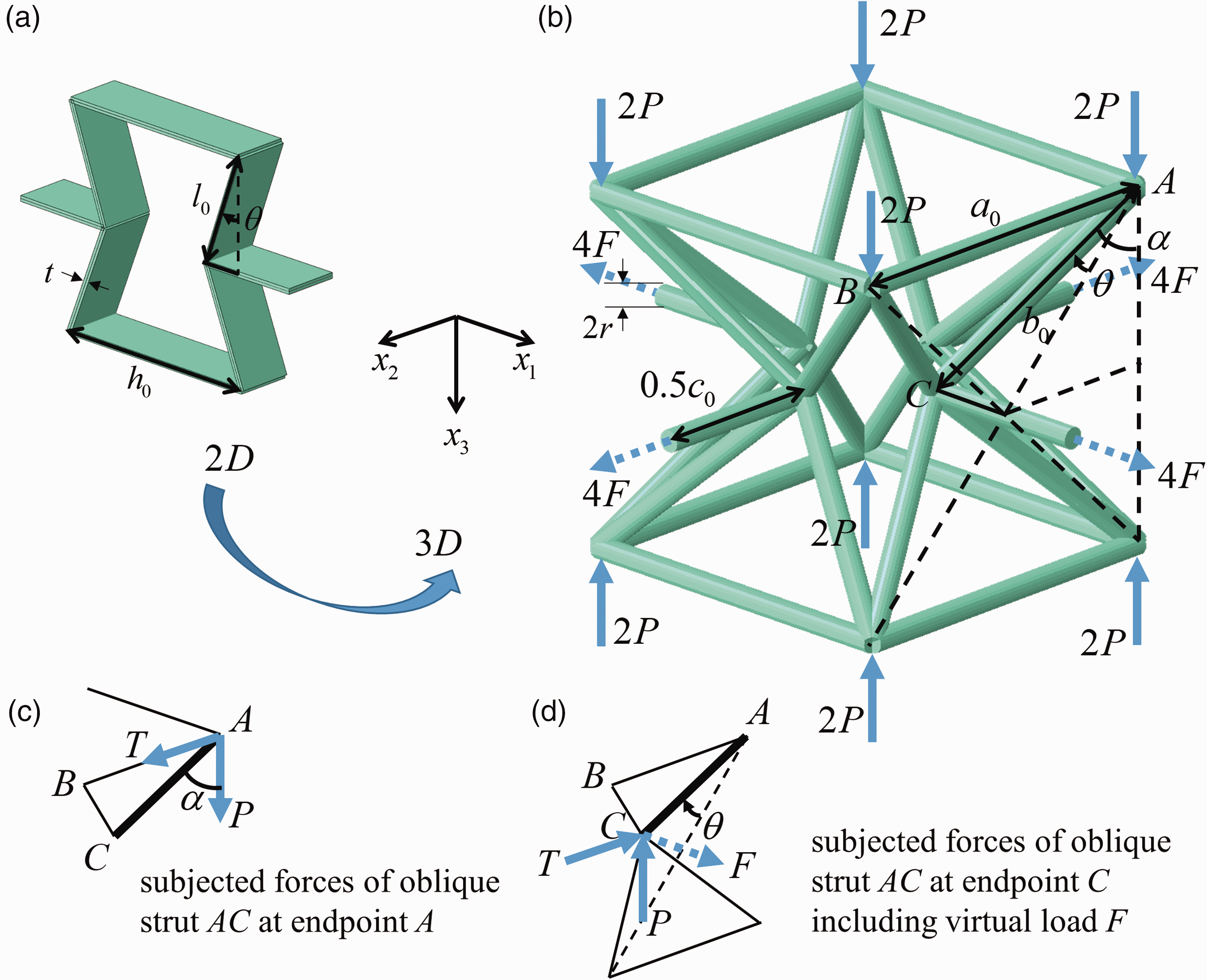
The microstructures of auxetic metamaterials: (a) 2D honeycomb; (b) 3D lattice; (c) subjected forces of oblique strut AC at endpoint A; (d) subjected forces of oblique strut AC at endpoint C including virtual load F.
The geometric features of the 3D lattice unit cell may be characterized by five parameters: the horizontal strut length a0, the oblique strut length b0, the link strut length c0, the strut incline angle θ, and the strut radius r, as shown in Figure 1(b), in which in-plane x1- and x2-directions are parallel to the horizontal struts, whereas the out-of-plane x3-direction is determined according to the right-handed coordinate system.
An obvious precondition of the microstructural design is that the struts should not contact or even intersect with each other, which requires

The overall dimensions of a unit cell could be expressed as

Moreover, the relative density could be expressed as

Effective Poisson’s ratio
Assuming that the microstructure illustrated in Figure 1(b) is linearly elastic and in equilibrium state under the action of compressive forces along x3-direction, the effective strain ε3 apparently comes from the relative displacement of two layers of horizontal struts, and the strain ε1 (or ε2) along the in-plane direction can be calculated from the relative displacement of link struts. Then, the EPR can be evaluated. To this end and according to the Castigliano’s second theorem, the total strain energy is established and used to determine the deflections.
Considering the symmetry about the plane of horizontal struts, there is only axial deformation within them. Assume the axial force in a horizon strut AB is 2T, then the displacement of its end point A would be

For the special microstructure with the condition of

Therefore, the total strain energy could be expressed as

The force T could then be determined by the axial displacement of point A using the following equation


And


The relationship between T and P can be written as

Subsequently, we can obtain the relative displacement along x3-direction, which is twice that of the point A



To calculate the displacement along in-plane direction, two pairs of opposite forces are then applied as virtual additional loads. As illustrated in Figure 1(d), the internal forces in the incline strut AC are
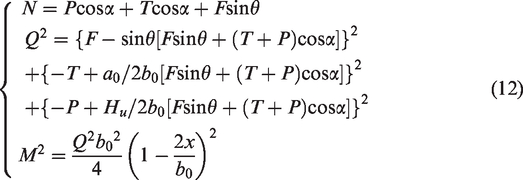
Thus, the relative displacement along in-plane direction could be expressed as twice that of point C as





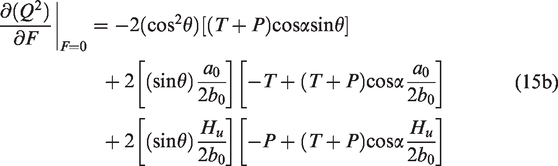
Finally, the EPR is established as

It is worth mentioning that all the displacements in this equation contain a factor of EI, so the value of
Finite element simulation
Before experiments, finite element (FE) models are created to predict the EPR of the lattice metamaterial. To clarify the influence of incline angles, models are designed to have different values of θ as −15°, −20°, and −25°. The specimen consists of
The unit cells are modeled by Timoshenko beam elements B31 that allow for transverse shear deformation, and two cover plates are modeled by SC8R elements. As shown in Figure 2(a), in which the beam profiles are rendered, the boundary conditions are considered to be that the bottom layer of nodes is constrained by all freedoms while the nodes lying on the top layer are constrained except for the freedom along the loading direction.
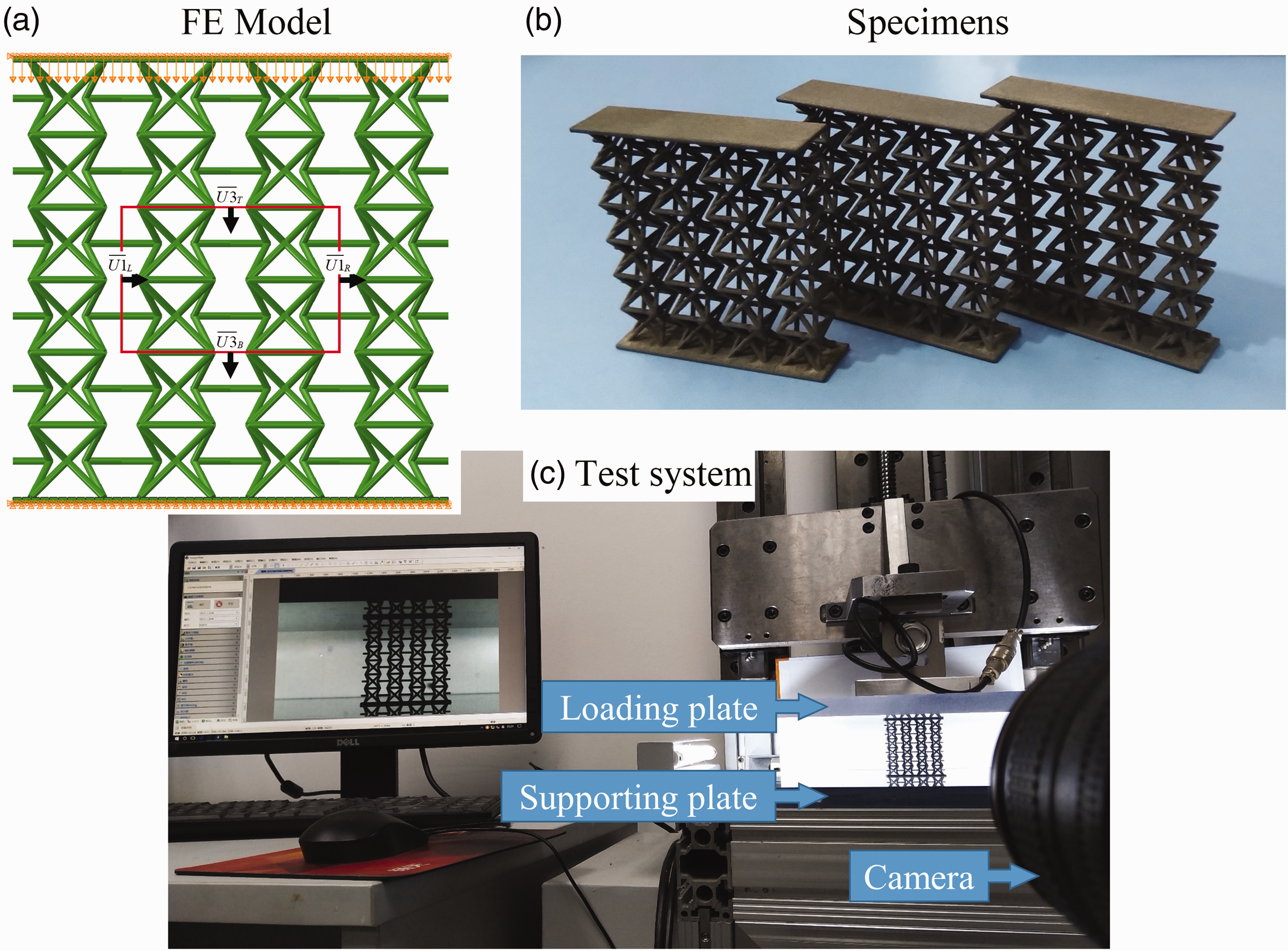
The FE model and test setup of EPR of the auxetic 3D lattice metamaterials.
For the auxetic 3D lattice metamaterials, we can trace and calculate the average displacement in each boundary of a specified effective region (marked by the red lines) and obtain the EPR

Experimental verification
The specimens are manufactured using 3D printing technology, as shown in Figure 2(b). The Poisson’s ratio of the PA 12 material is v = 0.37, as determined in our laboratory according to the ASTM D638-14 standard test method.
The test system includes a test machine with its control and data acquisition software installed in a computer, a camera with its images lively displayed on a monitor, as shown in Figure 2(c). For the purpose of keeping boundary and loading conditions consistent with the previous FE models, the specimens are rested in the supporting plate with the bottom facesheet prevented from moving and compressed by the uniaxial loading plate in the normal direction of both plates. The images of the specimens before and after deformation are processed using the Image Processing Toolbox of MATLAB (R2015a) to determine distances between selected pixels located on the effective boundaries, as illustrated in Figure 2(a), in the images.
Experimental results of EPR are obtained and compared with the theoretical results of equation (16) and FEM results of equation (17), as listed in Table 1, from which good agreements are observed. Furthermore, we can draw conclusion that the magnitude of EPR is decreased as the incline angles increase.
The EPR of the auxetic 3D lattice metamaterials with different incline angles.

Further discussion
According to equation (16), the NPR values of different strut incline angles and slenderness ratios are illustrated in Figure 3. The theoretical results revealed that the curves of different strut slenderness ratios possess significant differences, which will further enlarge for smaller magnitude of incline angles. Second, magnitudes of NPR values are decreased as the strut slenderness ratios increase, indicating a higher curve in the Figure 3. In conclusion, both strut incline angles and slenderness ratios will have significant effects on NPR of the auxetic 3 D lattice metamaterials.
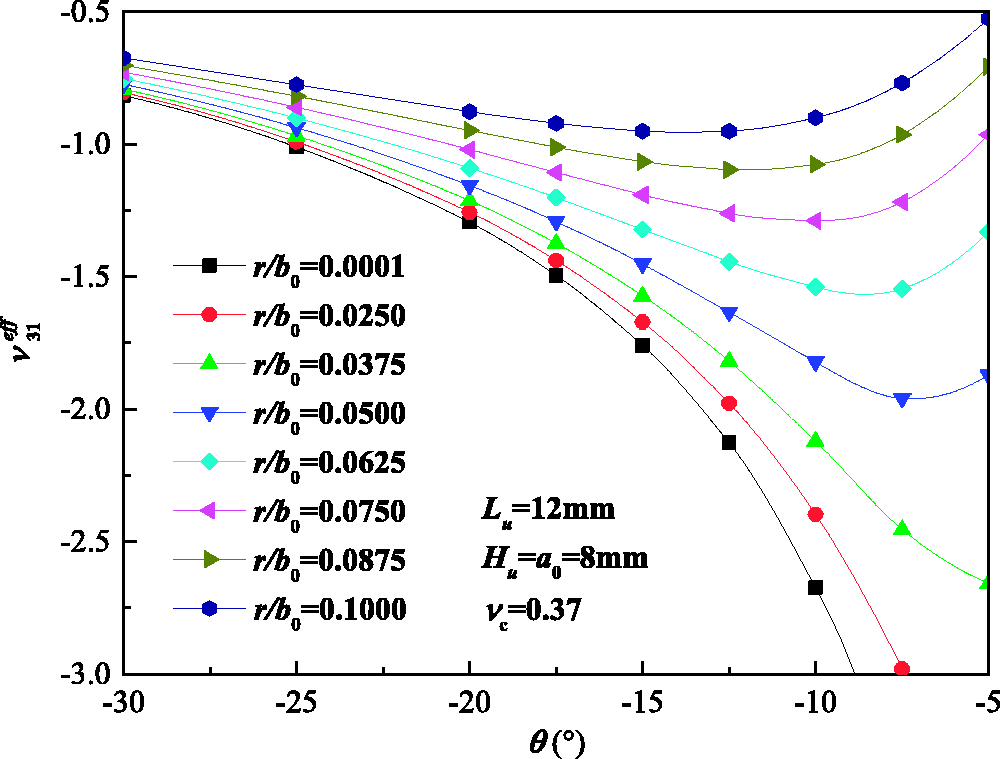
The EPR of auxetic 3D lattice metamaterials with different strut incline angles and slenderness ratios.
Furthermore, within the range of [−30, −5], the variation trends for cases of
Full-scale FE modeling and nonlinear analysis of sandwich plates
Consider a sandwich plate with length a, width b, and thickness
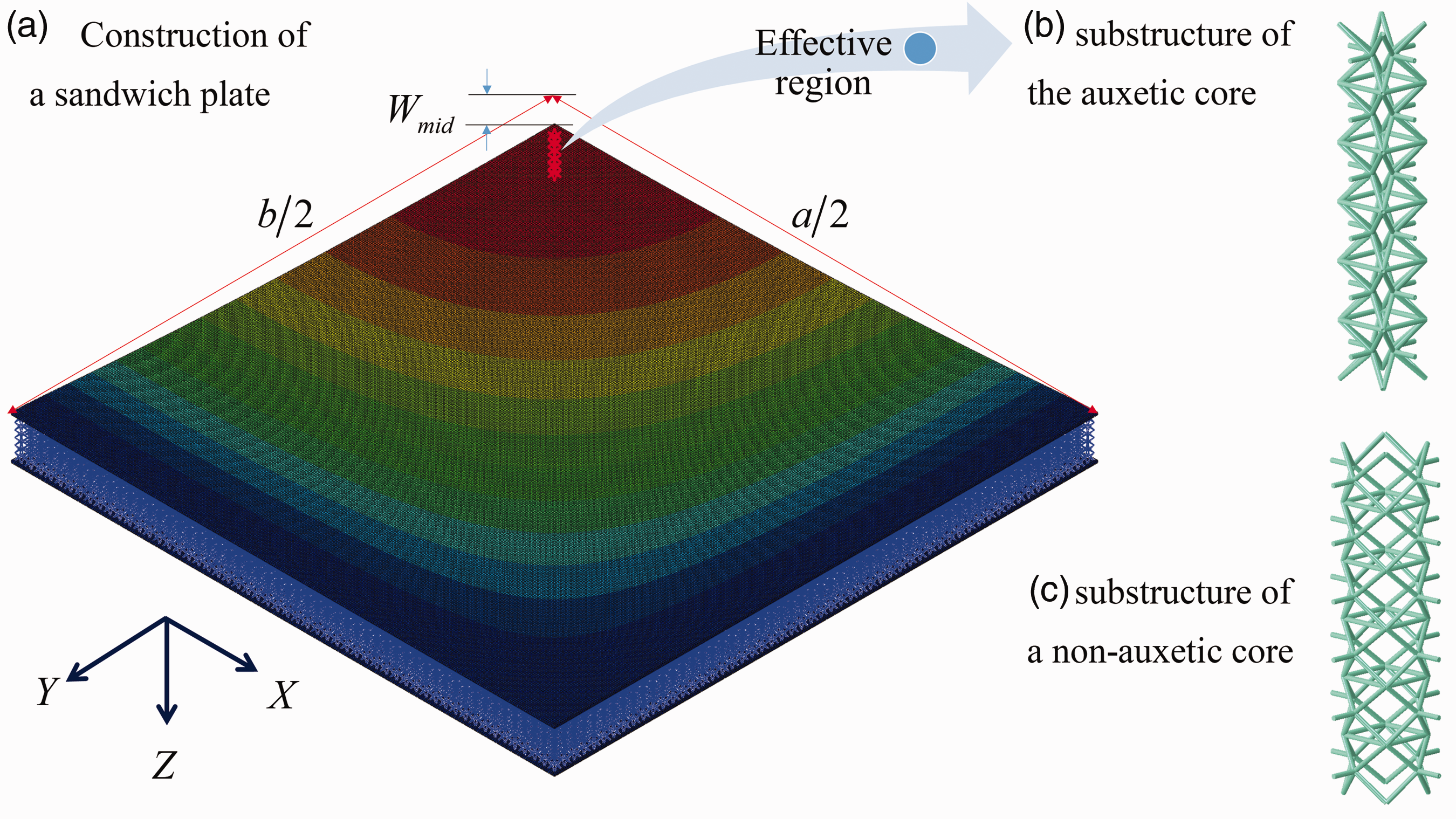
(a) Construction of a sandwich plate; (b) the substructure of the auxetic core (effective region for the EPR calculation); (c) the substructure of a non-auxetic core.
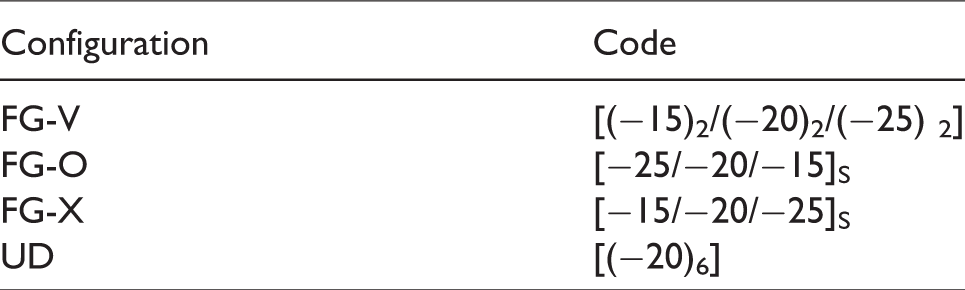
Specifically, three types of functionally graded configurations are considered. For the type V, i.e. [(
Full-scale FE modeling
The sandwich plates would have bending deformation when subjected to transverse uniform pressure, and large deflection will occur when the applied load is sufficiently large. In such a case, the shape of the sandwich plate and, hence, its stiffness changes as it deforms. Therefore, the geometric nonlinearity is necessary to be taken into account to achieve reasonable simulations.
For the intension of more precisely obtaining the nonlinear bending behaviors, 3D full-scale FE modeling is conducted, which indicates that all the structural details are modeled, rather than using the effective homogenization models. The main reason is that, in the large deflection region, the microstructures of auxetic 3D lattice core may deform to a different shape, and the effective mechanical properties will be changed accordingly. Therefore, the effective homogenization models are suitable for linear problems only.
For the nonlinear bending problem of functionally graded sandwich plates with auxetic 3D lattice core, we need to determine the load–deflection curves, along with the EPR-deflection curves. Moreover, in the structural analysis, the expected region to calculate the EPR is set to be the all the six unit cells in the thickness direction, with 2 × 2 unit cells in the XY-plane. It is worth noting that equation (17), directly modified from the definition of the Poisson’s ratio, is applicable for both linear and large deformation problems.
To perform the NPR effect of 3D lattice metamaterials in bending, the auxetic core is arranged to have the same out-of-plane direction with the sandwich plates, and the correspondence relationship between their two coordinate systems can be expressed as:
The full-scale nonlinear finite element modeling is conducted using FEA software ABAQUS. The thickness of core is assumed to be hc = 24 mm with Hu = 4 mm, and the facesheet-to-core thickness ratio might be hf/hc = 1/100, 2/100, 3/100, and 5/100. The width-to-thickness ratio of sandwich plates is taken to be b/h = 25, while the aspect ratio is fixed as a/b = 1, i.e. only square plates are considered. The number of 3D lattice unit cells along the width direction is then N = b/Lu, in which the length of a microstructure is Lu = 6 mm. For the UD microstructure configuration, the strut incline angle is taken to be −20°. While for the functionally graded cores, the unit-cell strut incline angles are arranged from the top one to the bottom one through the Z-direction of plate, as listed in Table 2.
Configuration codes of the auxetic 3 D lattice core.
The facesheets are meshed with one layer of continuum shell element SC8R, which can allow for changes in the thickness. For the unit cells of 3D lattice cores, Timoshenko beam element B31 is adopted, as in the analysis of auxetic 3D lattice metamaterials. To achieve a satisfactory compromise between costs of time and memory and accuracy of results, a convergence analysis was carried out, and finally the mesh size for facesheets is 1 mm, while the a0, b0, and c0 struts are meshed using one, two, and four elements, respectively. For the sake of simplicity, the face sheets and core are assumed to be perfectly connected, and the meshes are carefully arranged so as to share nodes along their interfaces. The detailed overall geometric parameters and meshes of sandwich plates with different facesheet-to-core thickness ratios are summarized in Table 3.
Overall geometric parameters and meshes of sandwich plates.

The loading is assumed to be uniform pressure and applied upon the top surface (
Three types of boundary conditions are considered, i.e. CCCC, CSCS, and SSSS, where “C” signifies the fully clamped boundary condition, “S” signifies the simply supported boundary condition with in-plane immovable conditions, and “CSCS” indicates that “C” for X = ±a/2 and “S” for Y = ±b/2. For “C,” all the degrees of freedom (DoFs) of the nodes at the plate edge are constrained, while for “S,” the boundary edges are constrained with only one rotation DoF is allowed. It is notable that three boundary conditions are also symmetric about X = 0 and Y = 0 plane, so only a quarter of sandwich plates needs to be modeled, as illustrated in Figure 4. In such cases, symmetric constraint conditions are applied upon nodes located on the symmetric planes. These three boundary conditions can be expressed as


Solution procedures and temperature-dependent material properties
The sandwich plates are further considered in different thermal environments, and the difference between the applied and initial temperatures will cause thermal strain if a thermal expansion coefficient is given for the material. Accordingly, a sequentially coupled thermal-mechanical analysis is performed. Specifically, a predefined field is created to define the initial temperature field as T0 = 300 K. Sequentially, a new analysis step is created and inserted to modify the predefined field as expected, after which mechanical analysis is performed. Based on the displacement field that is induced by the previous temperature field changes, mechanical loads of transverse pressure loading are then applied upon the sandwich plates.
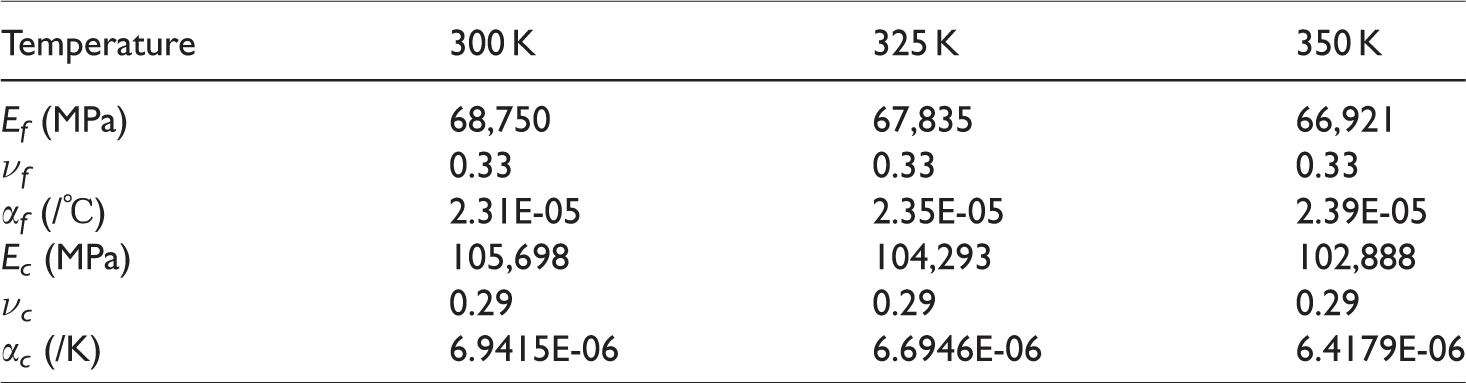
Moreover, in different thermal environments, significant changes in mechanical properties of the constituent materials are to be expected. For accurate prediction of the nonlinear bending of the sandwich plates, it is essential to take this temperature-dependency into consideration. Thus, the Young’s modulus E and thermal expansion coefficient α are assumed to be temperature-dependent, while the Poisson’s ratio ν remains constant. The face sheets are made from aluminum alloy. As for the 3D lattice core, the Ti-6Al-4V material is adopted, and the expressions of the mechanical properties are defined in Li et al. [42]. In the present FE simulations, three thermal environments are used, i.e. T = 300, 325, and 350 K, and the properties for the constituent materials of both facesheets and 3D lattice core under these thermal environments are listed in Table 4.
Temperature-dependent properties of facesheets and 3D lattice core.
Comparison studies
Before parametric studies, it is essential to validate the present FE method. As mentioned earlier, there are no existing studies covering the nonlinear bending of sandwich plates with NPR cores. Two reduced examples of nonlinear bending problems are re-calculated and compared. By default, the SC8R element is used to mesh the plates, and the seed density is determined by convergency analysis. Consider a CNTRC plate with different boundary conditions, which has an aspect ratio of a/b = 1 and width-to-thickness ratio of b/h = 100. The effective material properties of the CNTRC have been determined by Shen [47], and the matrix is poly{(mphenylenevinylene)-co-[(2,5-dioctoxy-p-phenylene) vinylene]}, referred to as PmPV, with Em = 2100 MPa when T = 300 K (room temperature). For the CNTRC lamina with VCN = 0.17 and resting at T = 300 K, E11 = 144,771.38 MPa, E22 = 3493.88 MPa, ν12 = 0.3120, G12 = 1303.66 MPa, and G23 = G13 = G12. The load–deflection curves of the CNTRC plate with SSSS and CCCC boundary conditions and subjected to a uniform pressure are presented in Figure 5, in which we can observe good agreements between present results and those obtained by Zhang et al. [48] using the element-free IMLS-Ritz method. The load–deflection curves of CNTRC plates with different boundary conditions and subjected to a uniform pressure. Consider a simply supported sandwich plate with FGM facesheets, which has an aspect ratio of a/b = 1, width-to-thickness ratio of b/h = 20, and core-to-facesheet thickness ratio of hcore/hF = 8. The effective Young’s modulus EF of the FGM facesheets may be expressed as EF = EcVc + EmVm, where Vc and Vm are the ceramic and metal volume fractions and Vc + Vm = 1. Furthermore, the plate is mid-plane symmetric, and for the lower facesheet, Comparison of nonlinear bending load–deflection curves of the sandwich plate with FGM face sheets subjected to a uniform pressure.Example 1
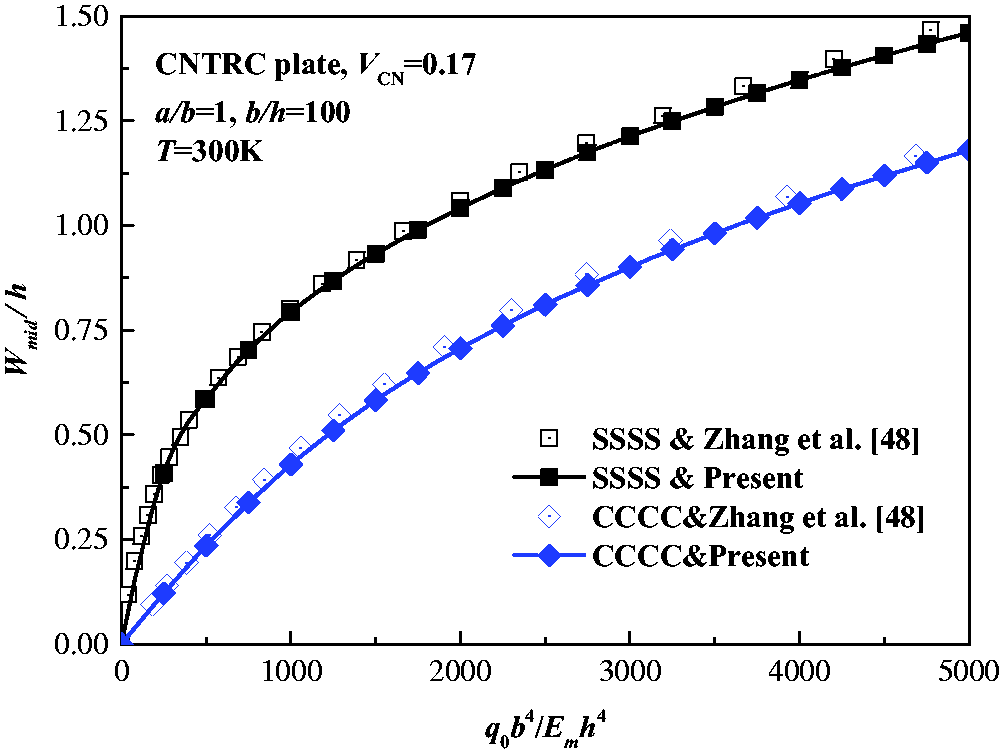
Example 2
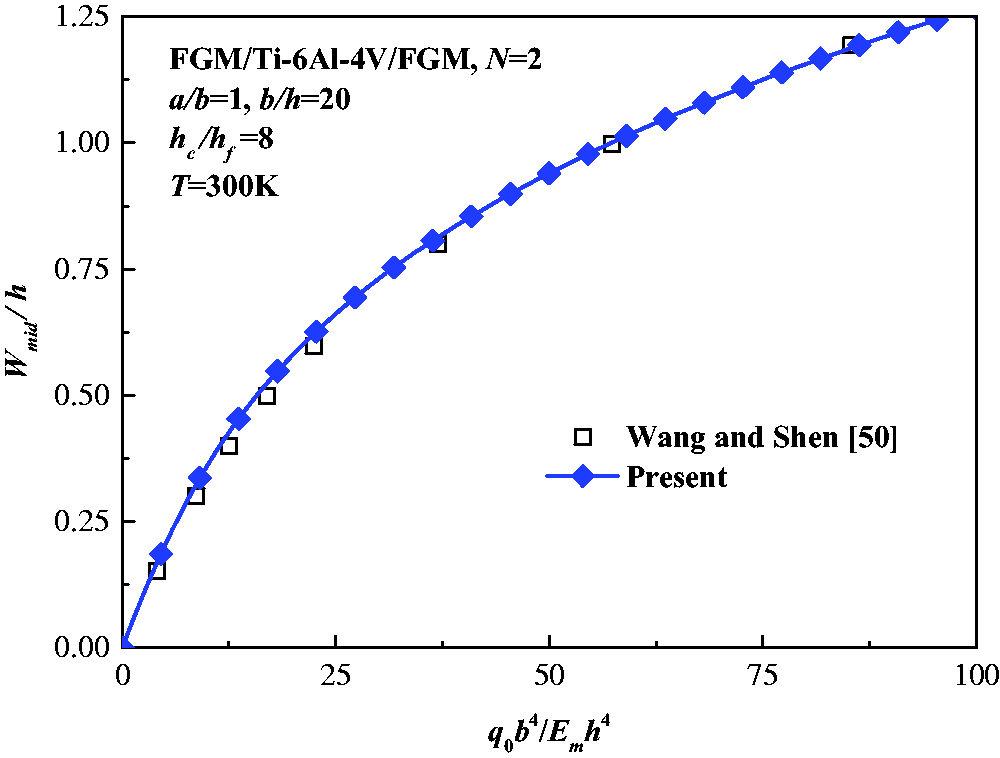
Parametric studies and discussion
In the following sections, parametric studies are carried out to demonstrate the novelty of NPR core, the effect of FG configurations, temperature rises, facesheet-to-core thickness ratios, boundary conditions, and strut radii on the nonlinear bending behavior and EPR variation of sandwich plates, in which EPR variation refers to the effective region of
The novelty of auxetic cores
To illuminate the novelty of auxetic cores, non-auxetic cores with positive EPR are modeled and compared. The only difference between two cores is the inclined angle, i.e. a negative one for the auxetic core with negative EPR, while a positive one for the non-auxetic core with positive EPR, and the microstructures of them are exhibited in Figure 4(b) and (c), respectively. The remaining dimensions are the same: a0 = 4 mm, b0 = 3 mm, c0 = 2 mm, and the same pressure loading of p = 0.01 MPa is applied upon the sandwich plates with a = b = 540 mm and hf = 0.5 mm. The resulting deflections are listed in Table 5, from which we conclude that the deflections of the sandwich plates with non-auxetic core are distinctly larger than that of their counterpart with auxetic core, and the differences enlarge with the thickness of struts increasing.
Comparisons of transverse deflection between sandwich plates with auxetic and non-auxetic 3D lattice cores.
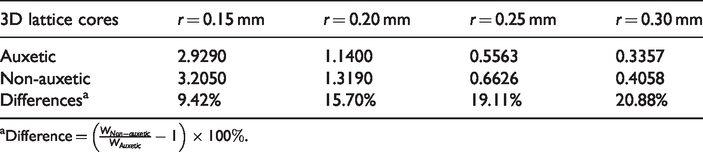
Difference =
The effects of FG configurations
The effects of functionally graded configurations on the nonlinear bending behavior and EPR variation of sandwich plates are shown in Figure 7(a) and (b), respectively. Three types of FG configurations, namely, FG-V, FG-O, and FG-X, are considered and compared with the UD case. All FG and UD sandwich plates have the same facesheet-to-core thickness ratio of hf/hc = 1/50, strut radius r = 0.15 mm, and are resting at thermal environment of T = 300 K. The boundary conditions are assumed to be CCCC. As shown in Figure 7(a), among the four configurations, the FG-X plate processes the best flexural property, which indicates that its deflection is smallest when subjected to the same pressure loading. Moreover, it is observed that the load–deflection curves are nonlinear because of the slopes gradually decrease as the increase of applied loads. From Figure 7(b), the EPR-deflection curves of sandwich plates with symmetric FG-O and FG-X configurations have the same variation trend with the UD plate, while the behavior of FG-V plate is quite different, which is due to the asymmetry of its 3D lattice core. Moreover, it is observed that all the EPRs will change significantly when Wmid/h < 0.3, whereas the changes become very limited in the large deflection region. Only FG-X and UD sandwich plates are included and compared in the following studies.
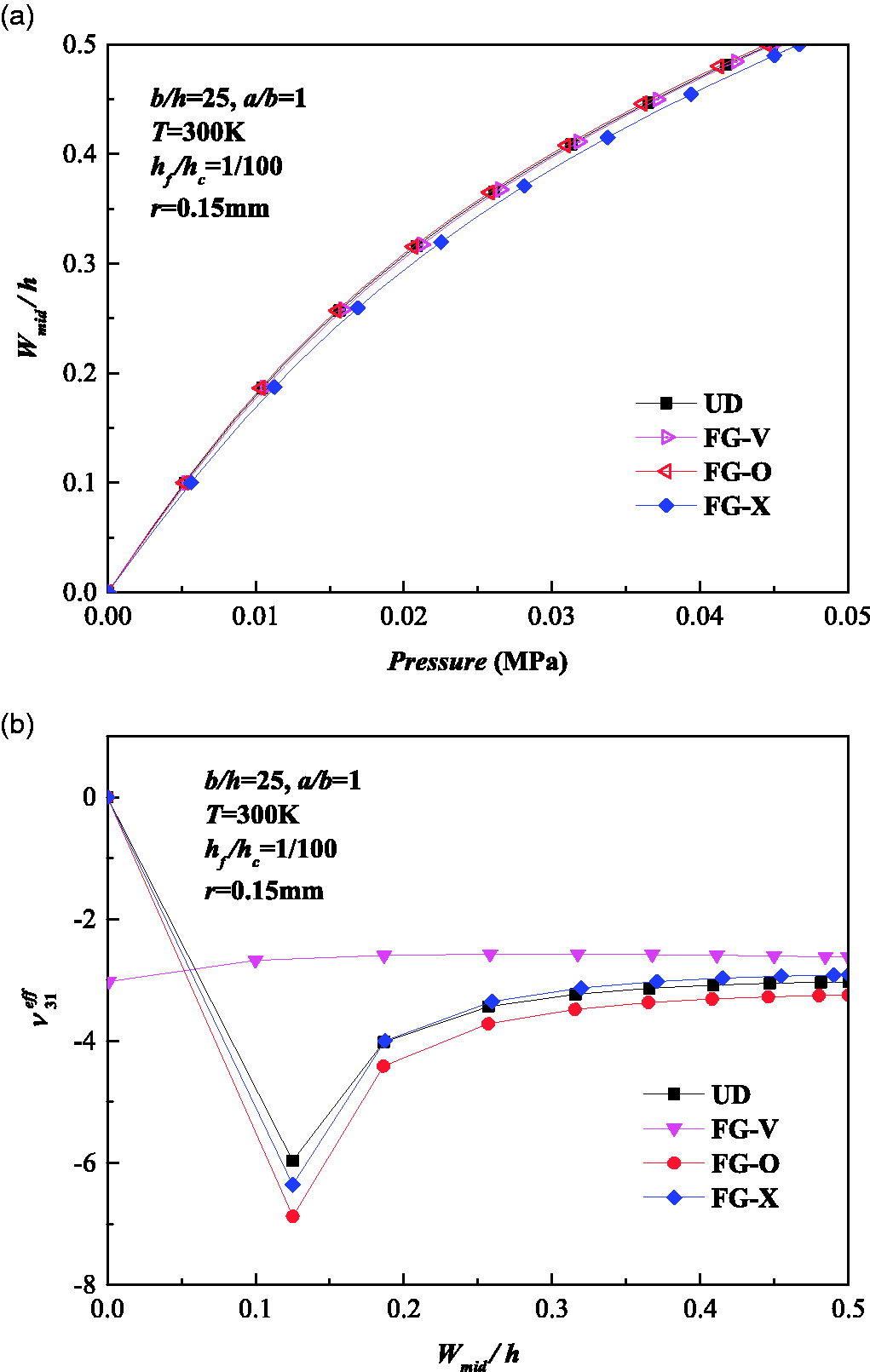
Effects of FG configurations on the nonlinear bending behavior and EPR variation of sandwich plates with FG–NPR 3D lattice cores: (a) nonlinear bending load–deflection curves; (b) EPR-deflection curves.
The effects of temperature changes
Figure 8 demonstrates the effects of temperature changes on the nonlinear bending behavior and EPR variation of sandwich plates with facesheet-to-core thickness ratio of hf/hc = 1/50. The plates have CCCC boundary conditions. The load–deflection curves of FG-X and UD plates are higher with increasing temperature, indicating that the stiffness decreases with temperature rise. However, as shown in Figure 8(a), they all share the same variation trend. On the other hand, the FG-X plates denoted by curves with hollow symbols have better flexural property than UD plates denoted by curves with solid symbols, and this is consistent with the results of the previous sub-section. From Figure 8(b), it is observed that when the higher temperature environments are considered, the variation of EPR-deflection curves is significantly different from that of the sandwich plate at T = 300 K. The explanation is that the temperature changes will bring about initial displacement fields. Therefore, we can conclude that thermal environments will greatly affect the load–deflection curves and in particular have prominent effect on the EPR of the effective region.
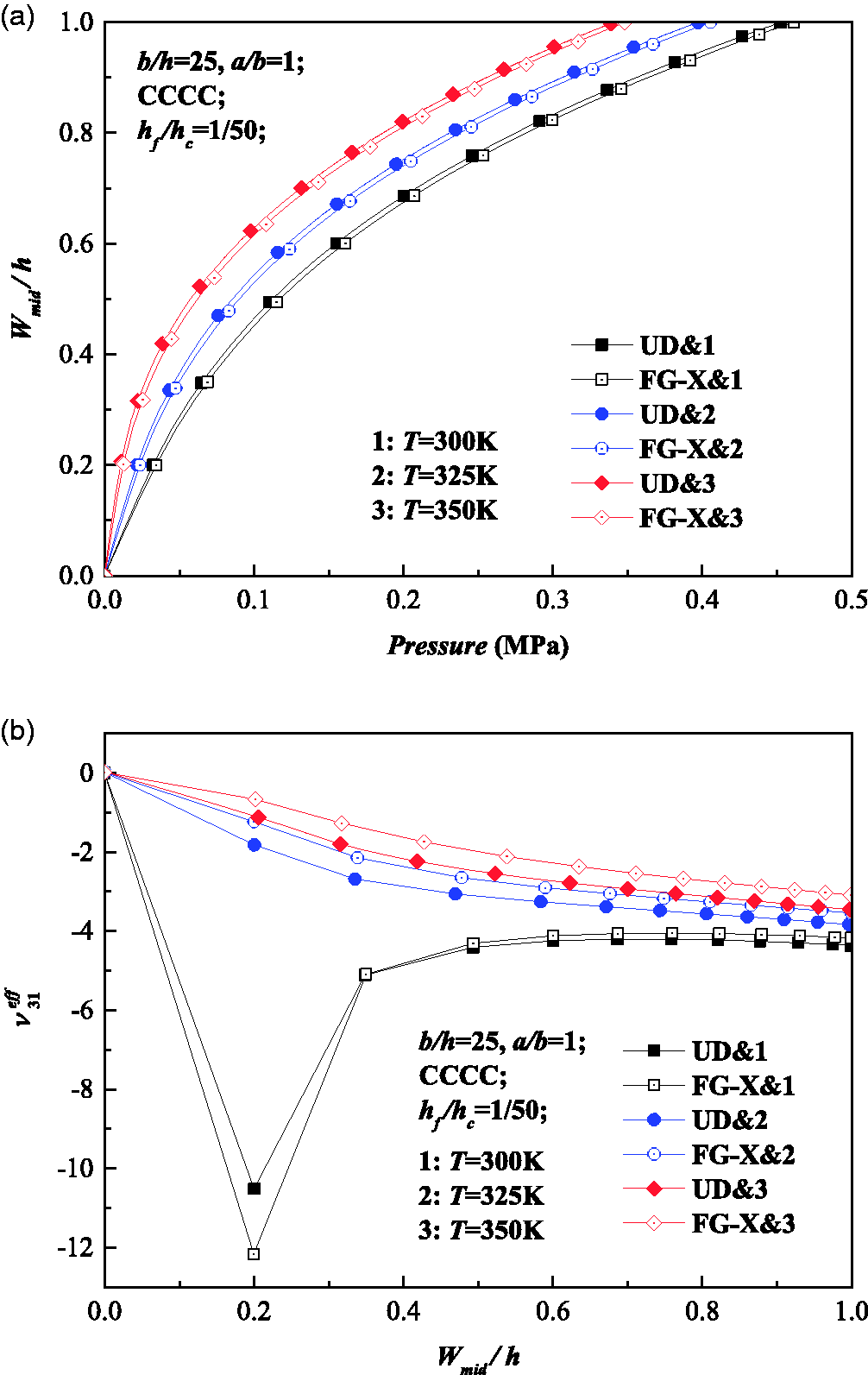
Effects of thermal environmental conditions on the nonlinear bending behavior and EPR variation of sandwich plates with FG–NPR 3D lattice cores: (a) nonlinear bending load–deflection curves; (b) EPR-deflection curves.
The effects of facesheet-to-core thickness ratios
The effects of facesheet-to-core thickness ratios (hf/hc) on the nonlinear bending behavior and EPR variation of sandwich plates are shown in Figure 9. The plates have the same boundary conditions of CCCC, and the thermal environment is assumed as T = 300 K. It can be seen in Figure 9(a) that the deflection decreases with increasing facesheet thickness. Moreover, as shown in Figure 9(b), the EPR curves are higher for thinner facesheets, meaning smaller magnitudes of EPR. Consequently, the conclusion can be drawn that facesheet-to-core thickness ratios not only have obvious effect on the flexural properties but also will significantly affect the EPR variation.
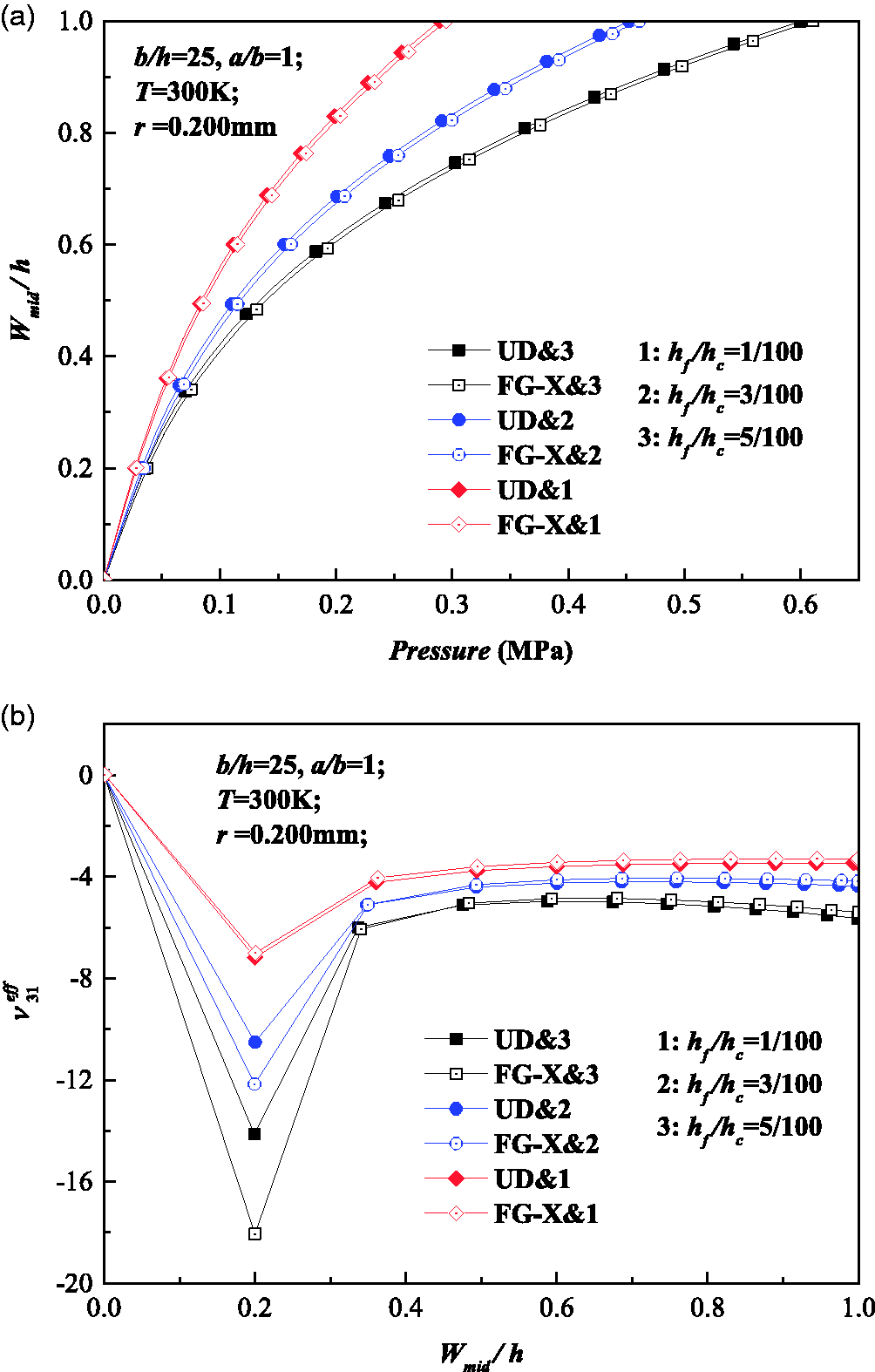
Effects of facesheet-to-core thickness ratios on the nonlinear bending behavior and EPR variation of sandwich plates with FG–NPR 3D lattice cores: (a) nonlinear bending load–deflection curves; (b) EPR-deflection curves.
The effects of boundary conditions
Figure 10 presents the effects of boundary conditions on the nonlinear bending behavior and EPR variation of sandwich plates at T = 300 K. The plates have facesheet-to-core thickness ratio of hf/hc = 1/20 and strut radius r = 0.275 mm. As shown in Figure 10(a), the CCCC plate has the lowest bending load–deflection curve, while the SSSS plate has the highest ones. However, the differences between different boundary conditions are not quite significant, indicating that the deformation of such sandwich plates is shear dominant, not bending dominant. From Figure 10(b), the EPR-deflection curves all show the same trend, and the difference merely exists in small deflection region. Thus, we come to a conclusion that boundary conditions have an only limited effect on the bending behavior of sandwich plates with auxetic 3D lattice core.
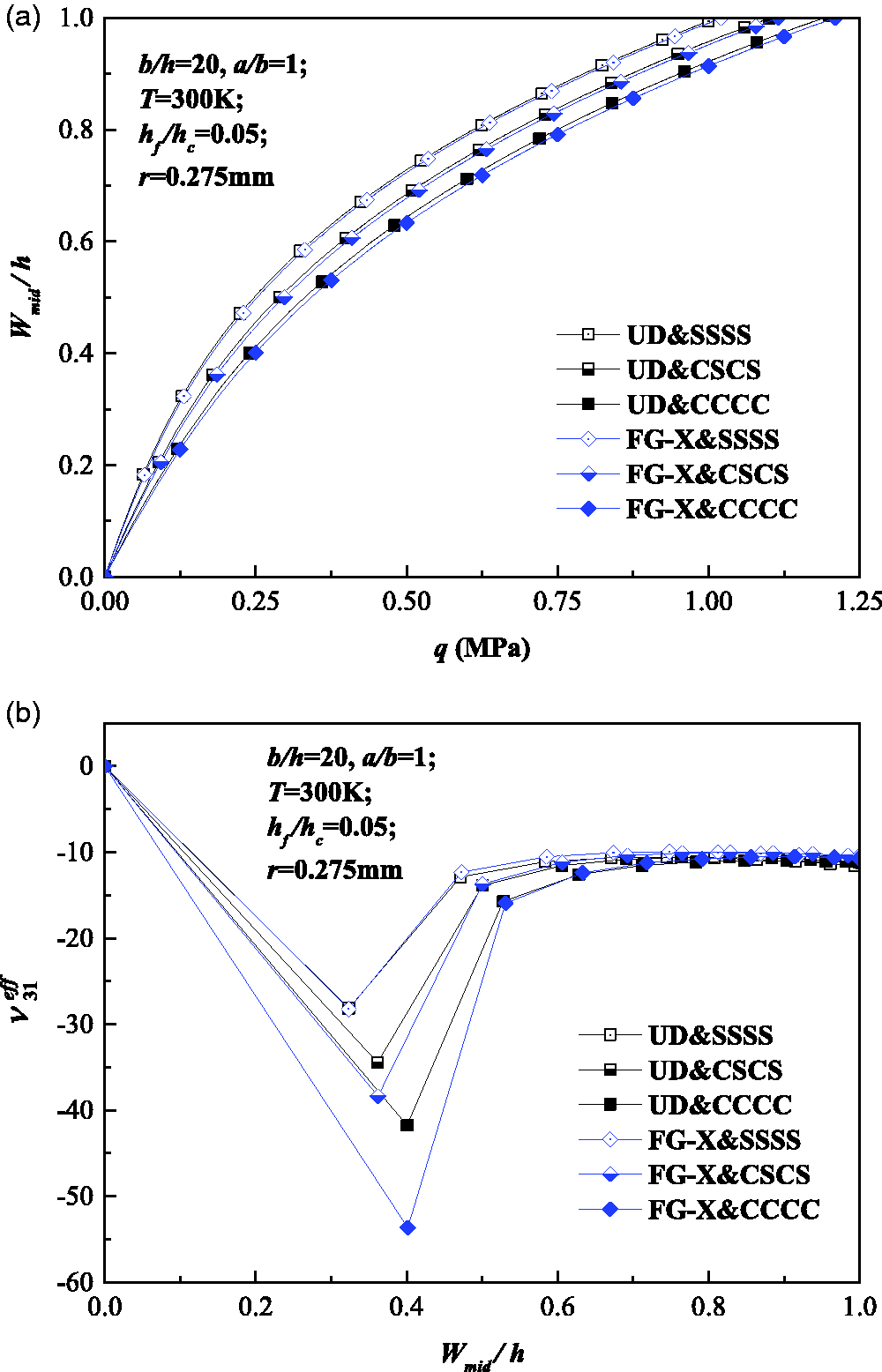
Effects of boundary conditions on the nonlinear bending behavior and EPR variation of sandwich plates with FG–NPR 3D lattice cores: (a) nonlinear bending load–deflection curves; (b) EPR-deflection curves.
The effects of strut radii
Figure 11 is dedicated to study the effects of strut radius r on the nonlinear bending behavior and EPR variation of sandwich plates with FG-NPR 3D lattice cores. The sandwich plate is subjected to a UD pressure at T = 300 K. The boundary condition is assumed to be CCCC. As the strut radius decreases, the load–deflection curves are lowered, which indicate a higher bending stiffness. Moreover, the EPR-deflection curve of the sandwich plates with bigger r is much lower than that of the plate with thinner structs, as shown in Figure 11(b). This indicates that the strut radius r will significantly affect the EPR variation of the effective region.
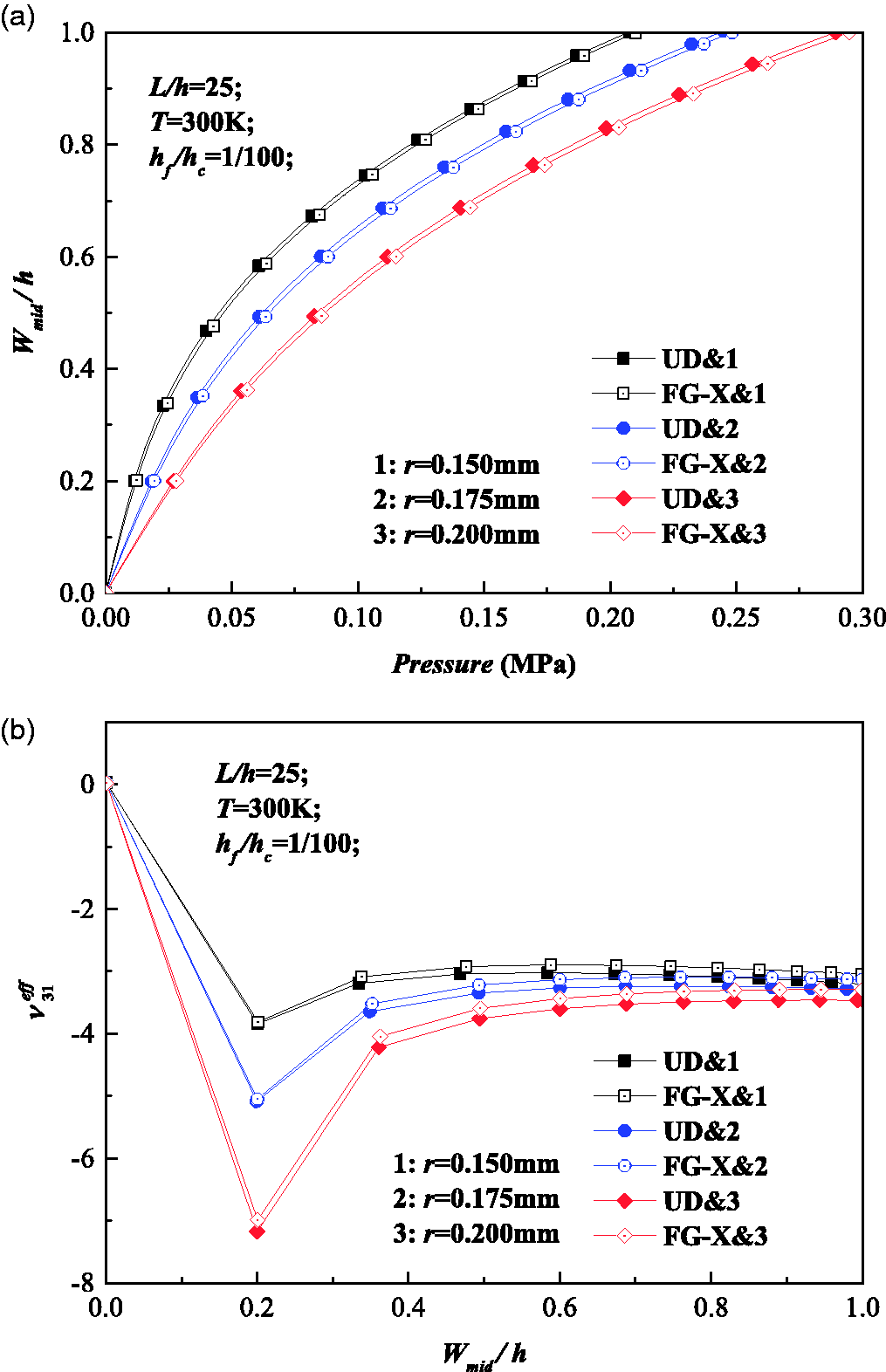
Effects of strut radii on the nonlinear bending behavior and EPR variation of sandwich plates with FG–NPR 3D lattice cores: (a) nonlinear bending load–deflection curves; (b) EPR-deflection curves.
Concluding remarks
Modeling and analysis of the nonlinear bending behavior of sandwich plates with FG auxetic 3D lattice core has been presented. An auxetic 3D lattice metamaterial expanded from the classical 2D re-entrant honeycomb was designed and studied using theoretical, FE, and experimental methods. It was found that both strut incline angles and slenderness ratios have significant effects on EPR of the auxetic 3D lattice metamaterials. Numerical studies were carried out for FG-V, FG-O, FG-X, and UD sandwich plates by using full-scale nonlinear finite element simulations, with consideration of temperature-dependent material properties of both face sheets and core. Finite element results revealed that, compared with the sandwich plates with non-auxetic 3D lattice core, the transverse deflection of those with auxetic core is distinctly smaller. Furthermore, the EPR-deflection curves of sandwich plates were obtained for the first time. Numerical results also indicated that the FG configurations, temperature changes, facesheet-to-core thickness ratios, and strut radii can significantly influence the EPR-deflection curves, while boundary conditions only have small effects. In addition, when the plate deflection is sufficiently large, all the EPR-deflection curves will enter to a stable region. It is expected that the present results could shed light on the EPR of auxetic 3D lattice metamaterials and the nonlinear bending responses of sandwich plates with FG-NPR 3D lattice core and could be conducive to further investigations.
Footnotes
Declaration of Conflicting Interests
The author(s) declared no potential conflicts of interest with respect to the research, author-ship, and/or publication of this article.
Funding
The author(s) disclosed receipt of the following financial support for the research, authorship, and/or publication of this article: The support for this work, provided by the National Natural Science Foundation of China under Grant 51779138, is gratefully acknowledged.
