







Abstract
This paper extends an optimization procedure to obtain the optimal dynamic properties of laminated sandwich multiphase nanocomposite truncated conical shell under magneto-hygro-thermal conditions. Based on principle of Hamilton, the equations of motion are obtained and solved by differential quadrature method and Bolotin's methods for obtaining the dynamic stability region. Based on particle swarm optimization and harmony search algorithms, a novel hybrid optimization method basis HS and PSO is proposed to enhance the performance and convergence of optimum dynamic conditions in this problem. By applying the hybrid optimization algorithm namely as HS-PSO, the volume percent of CNT and carbon fiber, number of laminas, cone semi vertex angle and moisture changes are optimized and the effects of magnetic field and temperature are shown on the dynamic stability of system. The result illustrates that proposed PSO-HS method with same conditions by other optimization methods as harmony memory size (number of particles) of 5 and total iterations of 100 shows the superior convergence performance compare to HS and PSO algorithms.
Keywords
Introduction
For the design of modern aerospace structures, the dynamic stability is an important subject especially in conical sandwich shells. The truncated conical sandwich shells have practical applications in pressure vessels, hoppers, space crafts, space vehicle, reactors and submarine [1]. One of the ways for increasing the stiffness and decreasing the weight of these structures are using carbon fiber and carbon nanotubes (CNT) as reinforcement phase. Hence, optimal design of conical sandwich shells with minimum instability region and maximum frequency has a great interest for aerospace industry.
In the field of mechanical response of conical shell, Demir et al. [2] presented buckling of conical shells utilizing Donnell theory of shell and method of discrete singular convolution. Van Dung and Quang Chan [3] studied buckling behavior of functionally graded (FG) conical truncated shells under the external uniform pressure using exact solution. Thermo-mechanical buckling of a FG truncated conical shell armed by carbon nanotubes (CNTs) were investigated by Duc et al. [4]. Mehri et al. [5] investigated dynamic responses of FG-CNT-reinforced conical truncated curved panels under the aerodynamic load. Sharif Zarei et al. [6] investigated dynamic stability in truncated laminated conical shell with nanocomposite layers assuming damping of the structure. Hajmohammad et al. [7] analyzed dynamic buckling in sandwich viscoelastic nanocomposite truncated conical shell under the temperature, moisture and magnetic field applying numerical methods. Vibration response of FG conical shell was presented by Chandra Mouli et al. [8] based on finite element model. Vibration response of rotating FG conical temperature-dependent shells was investigated by Shakouri [9] based on generalized differential quadrature (GDQ) method. Liang and Li [10] presented semi-analytical solution for obtaining the plastic limit solution in conical shell. Sofiyev [11] presented a complete review for the buckling load and vibration of FG conical shells. Using Ritz method, Refined Zigzag Theory was applied to explore the bending and free vibration of rectangular functionally sandwich plates [12]. Song et al. [13] focused on the influence of arbitrary boundary conditions on vibration analysis of the truncated conical shells. Mohammadi et al. [14] studied dynamic instability of truncated nanocomposite conical fluid-conveying-shells utilizing Novozhilov theory.
None of the mentioned works focus on the optimization of conical shell. In this regards, Kolahchi et al. [15] studied optimization in nanocomposite sandwich piezoelectric plates for dynamic stability response using algorithm of Grey Wolf. Utilizing Lyapunov–Bellman model, optimization of deflections and control forces were calculated by Fares et al. [16] in conical shells with clamped and simply supported boundary conditions. Li et al. [17] investigated thermal buckling and vibration of sandwich laminated plates reinforced by piezoelectric fibers under thermal conditions that feedback control strategy-based active temperature was proposed to optimize the buckling capacity of sandwich plate under fiber orientation. A method for analysis and optimization of composite conical under the external loads was presented by Belardi et al. [18]. Buckling load of truncated laminated conical shells with external pressure was investigated by Hu and Chen [19] using finite element program. Hu and Li [20] presented genetic algorithm for optimization of distributed smart actuators including size, position and angle of tilt. Applying topology optimization, Yan et al. [21] studied optimum parameters of materials with damp in the shell structures under the impact loads. The particle swarm optimization was applied for finding the optimum conditions of cantilevered functionally sandwich plates under design variables of aspect ratio, core thickness, plate thickness, and plate angles that the flutter characteristics of sandwich plates were computed using first-order shear deformation theory [22]. A multi-objective optimization in heat tube exchangers and shell was investigated by Rodríguez et al. [23] based on genetic algorithms. Roy and Majumder [24] utilized Kril Herd strategy algorithm for optimization of hidden layers in tube and shell heat exchangers. Hirschler et al. [25] used shape Isogeometric optimization for performing the non-conform patches. Cai et al. [26] optimized performance of blast loading for trapezoidal sandwich panels that blast performances were approximated based on Kriging models to improve the efficiency of the optimization process. Three failure criteria as maximum stress, failure mechanism and Tsai–Wu criterion were applied in the optimization of laminated composite systems based on two optimization methods PSO and genetic algorithms (GA) by Naik et al. [27]. GA was used as optimizer for multi-objective optimization of the double curved composite shells under two cost functions as weight and vibro-acoustic fitness of sandwich structures by Talebitooti et al. [28].
The optimization algorithms as Whale optimization, salp swarm, grey Wolf, moth-flame and the flower pollination optimizer were used to approximate the parameters of fractional-order chaotic systems [29]. The optimization process of the multiphase nanocomposite material to provide the stable region under the optimal dynamic buckling is more important in design of aircraft sandwich structures under thermal-magnetic conditions. However, the application of the optimization method to solve the nonlinear optimum conditions of dynamic properties of nanocomposite laminated sandwich conical shells is need to investigate. The optimization of dynamic stability in truncated laminated nanocomposite conical shells has not been investigated so far. Hence, the optimization for maximization of frequency-based optimum condition of instability region in truncated laminated conical shells is studied based on HS, PSO and HS-PSO algorithms. The aim of this works is optimization of volume percent of CNT and carbon fiber, number of laminas, cone semi vertex angle and moisture changes using a novel hybrid optimization method of harmony search combined by particle swarm optimization to improve the convergence rate and optimal results.
Motion equations
In Figure 1, the truncated laminated conical shell is shown with length of L, small radius of R1, large radius of R2 and cone semi vertex angle of α. The laminas are armed by CNTs and carbon fibers. The variable cone radius is described by
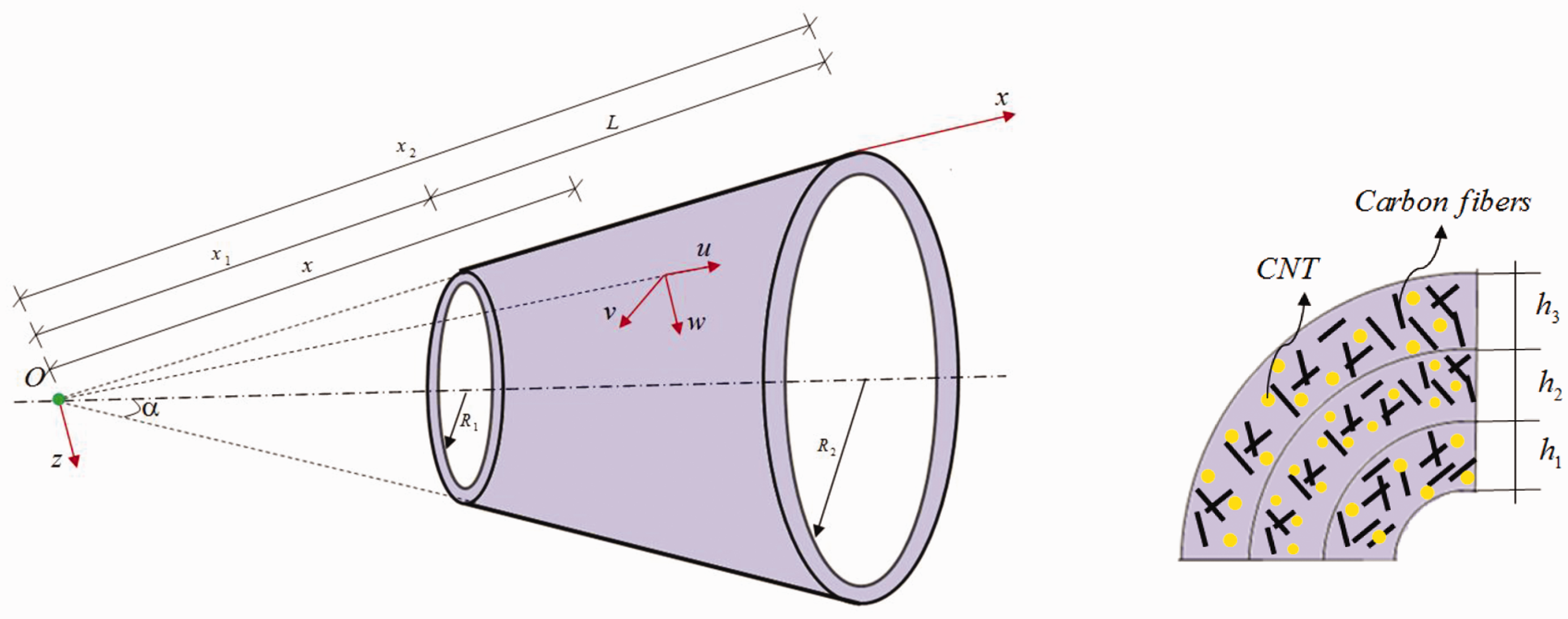
The truncated laminated conical shell with nanocomposite layers.
Based on classical theory, potential and kinetic energies as well and external work of the structure are [6, 30–32]
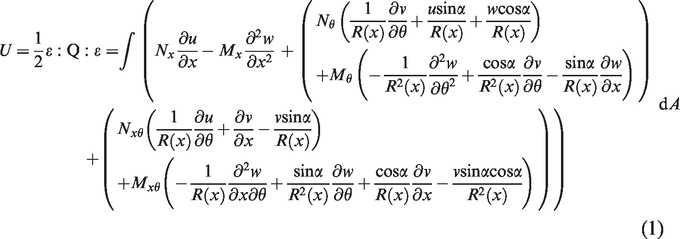







In which,



Optimization approach
Here, the optimization process of the multiphase nanocomposite laminated conical shells (MNLCS) under magnetic, temperature and moisture loads is presented. In the optimization process, the frequency and instability of MNLCS are used to define the objective and subjective functions. The optimization model for this problem has an objective function to maximize the dimensionless frequency (




In which,



In PSO, maximum (




Numerical results and discussion
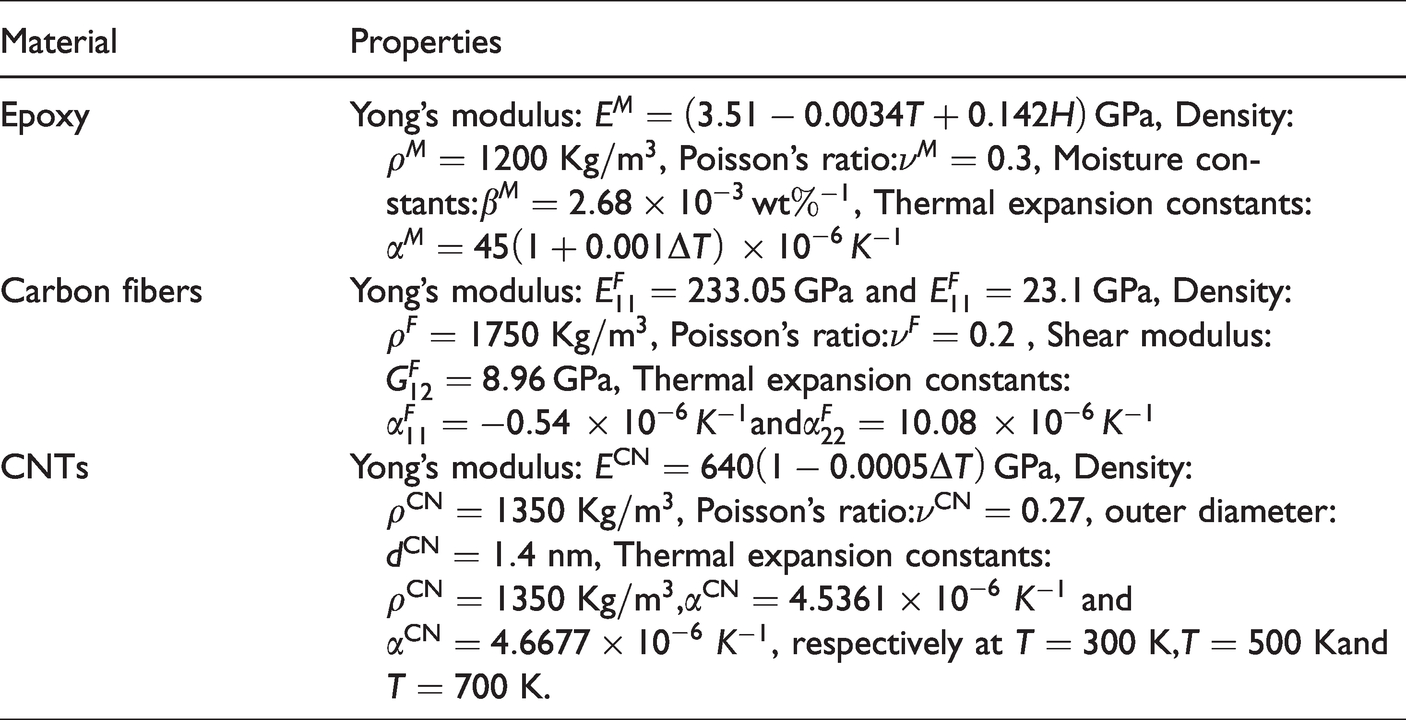
For optimization response of the laminated truncated conical shell, the layers are composed of Epoxy armed by CNTs and carbon fibers. The material characteristics are shown in Table 1 [33].
Material characteristics of Epoxy, CNTs and carbon fibers.
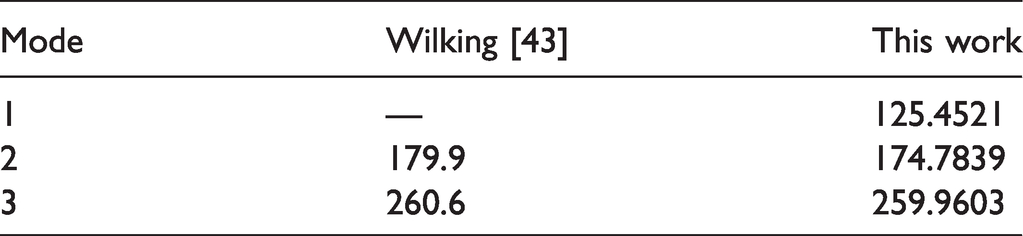
At the first, the results are validated with the work of Wilking [43] for vibration response of laminated conical shell. Assuming that material properties from Ref. [43], the dimensionless frequency for different mode numbers are illustrated in Table 2. It is evident that the present results are close to those obtained by Wilking [43].
Dimensionless frequency in conical laminated shell.
Parametric study-based optimization process
The iterative frequency of the different optimization algorithms as HS, PSO, proposed hybrid methods of HS-PSO is presented in Figure 2. By the applied these studied optimization methods, the optimum conditions are listed for design variables in Table 3. As seen, all optimization methods are converged but their optimum results are different. This means that the studied problem has several local minimums with complex condition that the search of the proposed method to find global optimization condition shows some drawbacks. However, the proposed hybrid method with same conditions with other methods as harmony memory size (number of particles) of 5 and total iterations of 100 shows the superior convergence performance compare to HS and PSO. The random search in the proposed method with the particle intelligent of the harmony element in the proposed method can be improved the excitation frequency in terms of a maximum value compared to other method. Thus, it can be applied the proposed HS-PSO to search the optimum conditions with suitable stable and maximum strength.
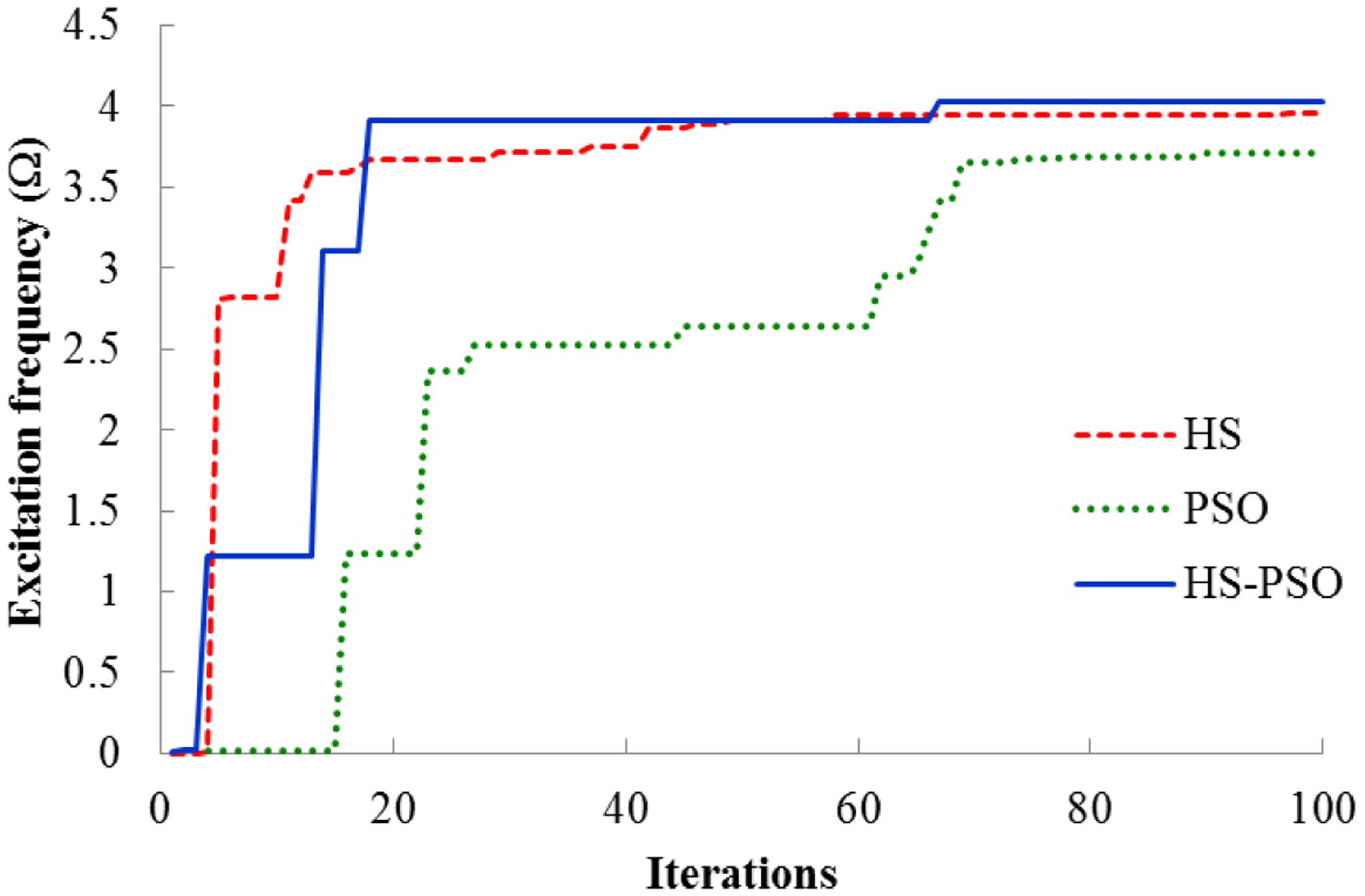
Comparative iterative frequency for optimization algorithms of HS, PSO and proposed HS-PSO.
Optimum results of the different optimization methods.
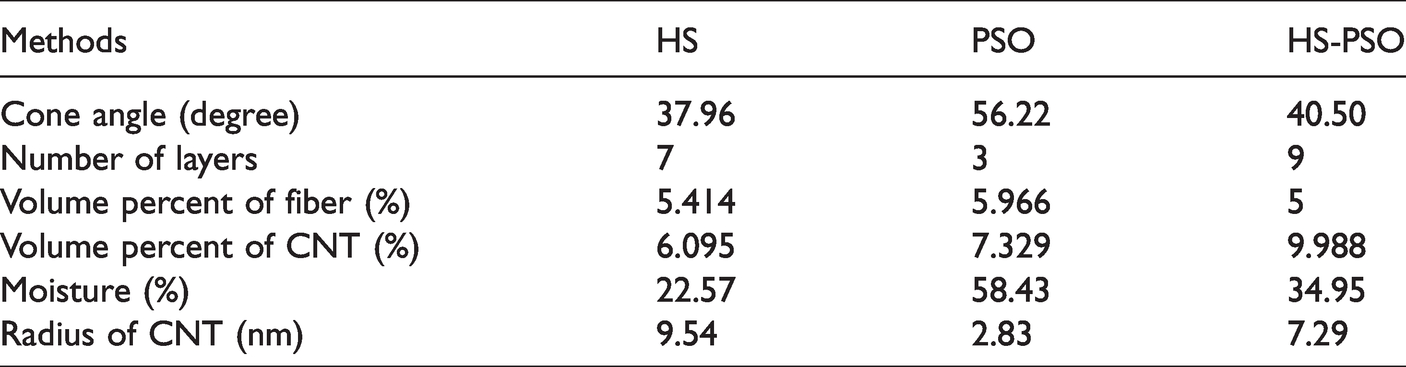
By comparing the results of Table 3, the optimum cone angle, number of layers, volume percent of fiber, volume percent of CNT, moisture and radius of CNT are respectively varied in the range from 35°, 3, 5%, 6%, 20% and 2 nm to 60°, 9, 6%, 10%, 60% and 10 nm with conditions of cone as h/r = 0.1, HX = 1 and T = 500. The results of the HS is covered the results of the proposed HS-PSO.
Using the optimum conditions obtained by optimization algorithms of HS, PSO and HS-PSO and data without optimization as cone angle = 45°, number of layers = 3, volume percent of fiber = 20%, volume percent of CNT = 5%, moisture = 45% and radius of CNT = 5nm, the dimensionless excitation frequency corresponding to dynamic load factor are presented in Figure 3. In this figure, the outside and inside regions of the figures show the stable and instable states. Comparing the four cases in Figure 3, it can be concluded that in the case of without optimization, the frequency is minimum and the area of the instability is maximum. In the case of optimization, the frequency and instability region of the HS-PSO have better condition with respect to HS and PSO algorithms since for HS-PSO algorithm, the frequency is maximum and area of the instability minimum which is the goal of this work.
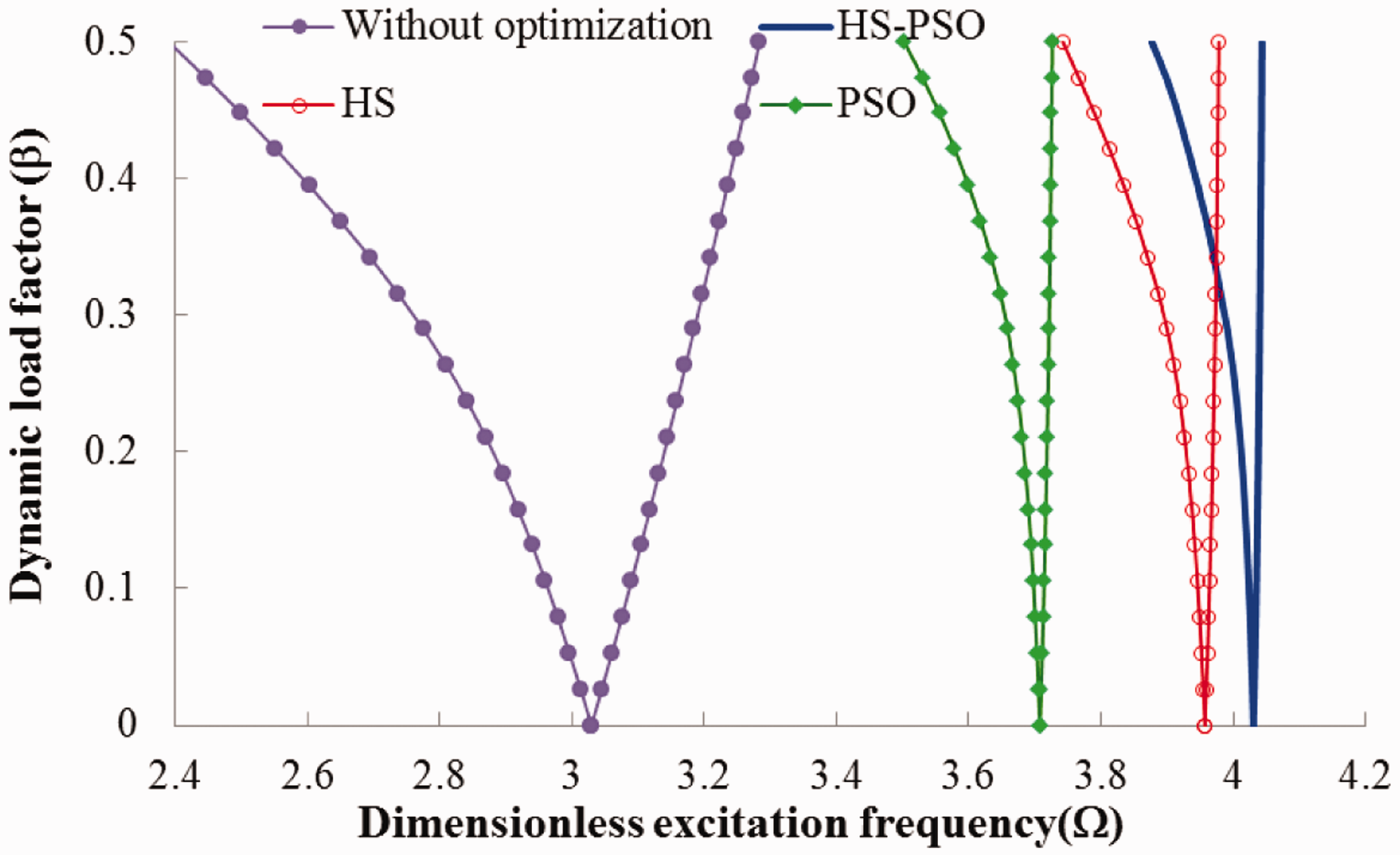
Dynamic stability region for the optimum conditions.
Figures 4 and 5 show the influence of temperature change and magnetic field on the non-dimensional excitation frequency versus the dynamic load factor in the optimum condition based on HS-PSO algorithm. It is shown that with decreasing the temperature change and enhancing the magnetic field, the region of dynamic stability moves to higher excitation frequencies due to increases in the stiffness of the structure. In the optimum condition, it is observed that for all temperature changes and magnetic fields, the frequency increases and the area of the inside figures decreases. It means that in the optimum condition, the region of the instability reduces which is a suitable state for design of the preset structure.
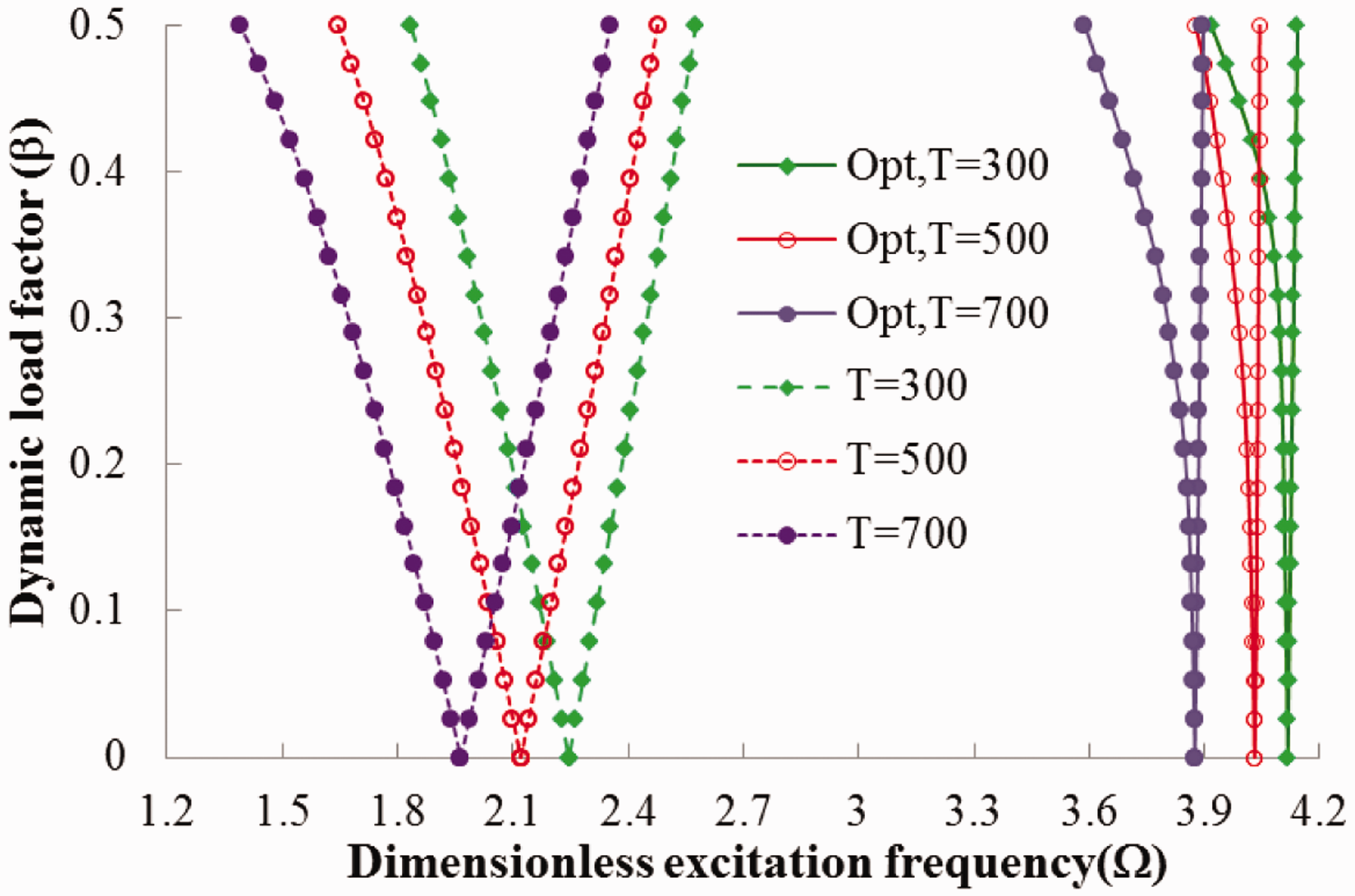
Temperature effects at the dynamic stability region for the optimum conditions.
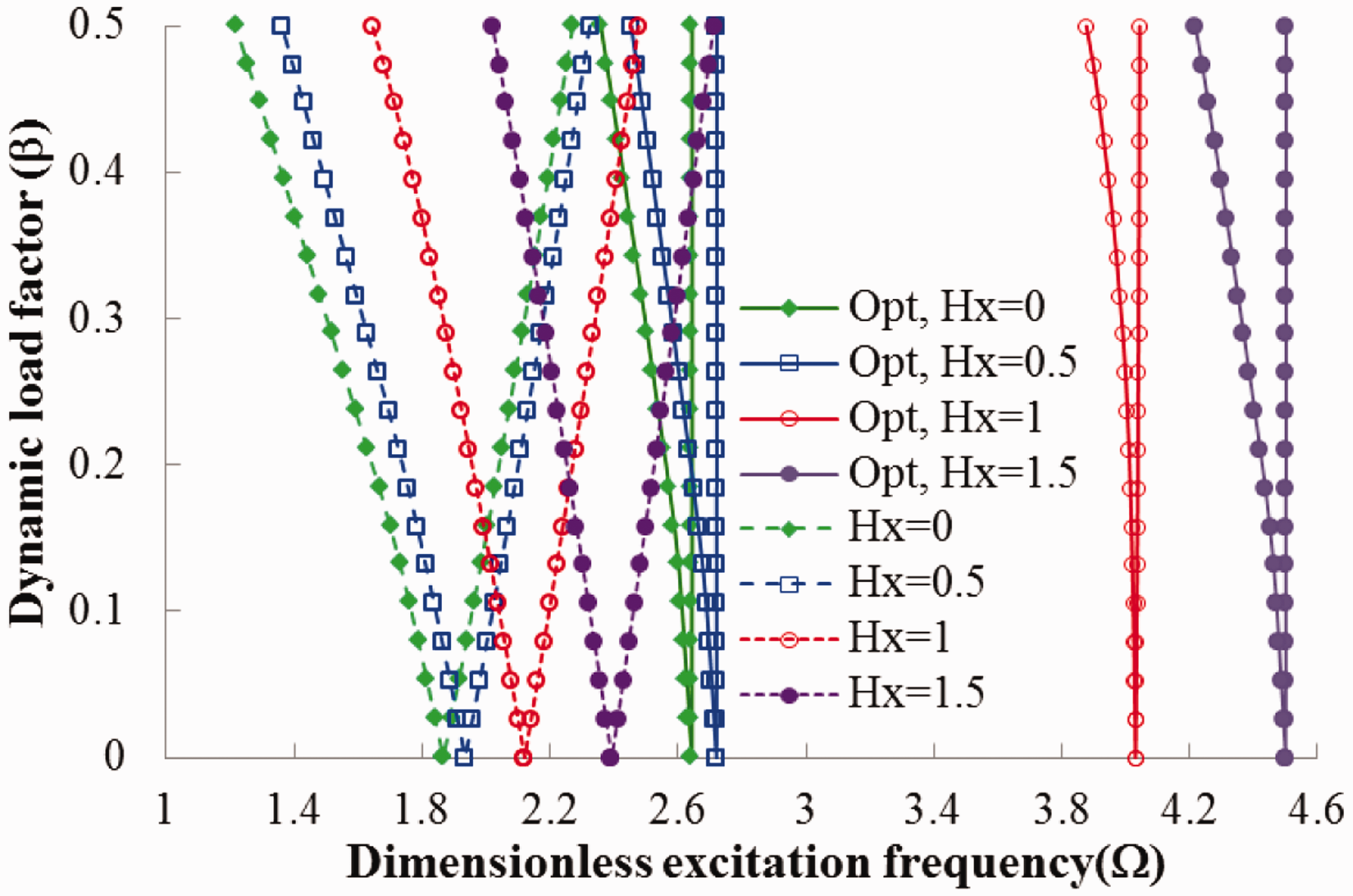
Magnetic effects at the dynamic stability region for the optimum conditions.
Comparative optimum results using HS-PSO
For two values of dimensional magnetic field of HX = 1 and 1.5, the effects of different design variables of the semi vertex cone angle (θ), layer numbers (NL), volume percent of fiber (Vf) and CNTs volume percent (ωCNT) are investigated in Figures 6 to 9, respectively on the dynamic stability region of system. In order to provide the comparative results, different values for studding design variable are given and other variables are set with the optimum conditions, which are obtained by the HS-PSO method.
Note from Figure 6 that the semi vertex cone angle has a variable influence on the dynamic stability region of the nanocomposite shell. In the optimum condition (i.e. maximum frequency in conjunction with minimum instability region), the optimum values for the semi vertex cone angle are 40.5 and 69, respectively for HX = 1 and HX = 1.5. As it is seen, in these semi vertex cone angles, we have a suitable frequency in conjunction with minimum instability region.
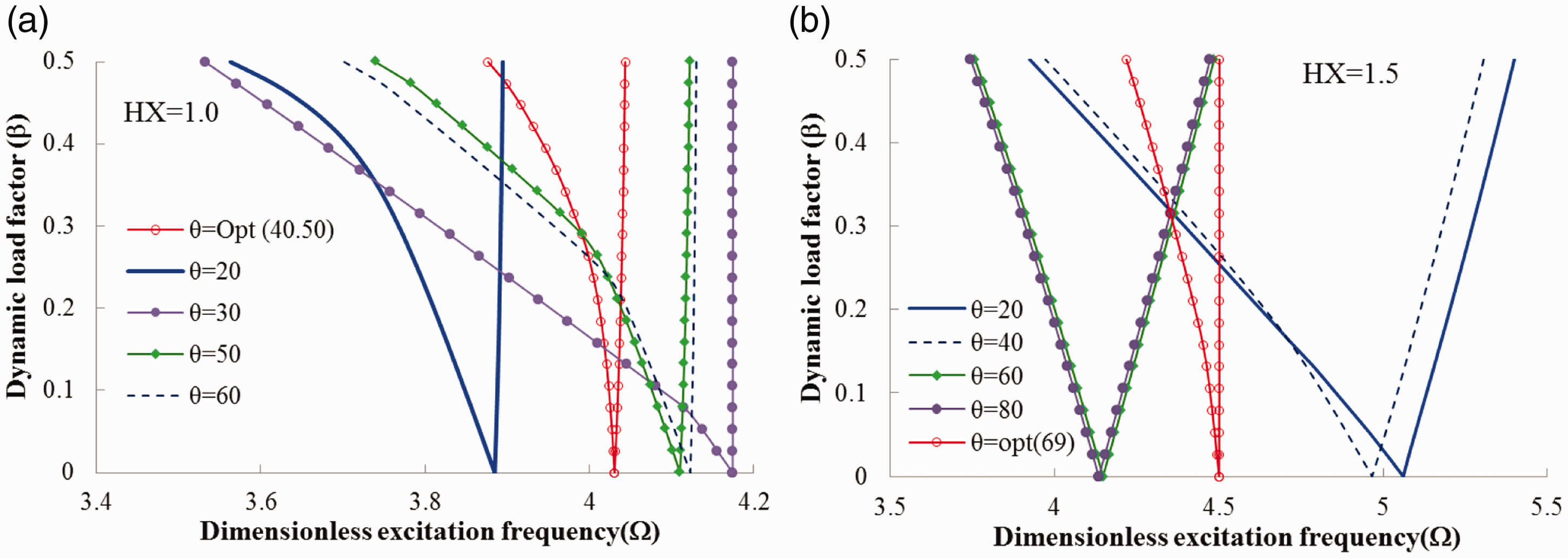
The influence of semi vertex cone angle on the dynamic stability region for (a) HX = 1 (b) HX = 1.5.
The effect of lamina layer numbers on the dynamic instability region is presented in Figure 7 for two cases of HX = 1 and 1.5. It is worth mentioning that the lamina layer numbers are dependent to magnetic field strongly so that for HX = 1.5, three layers of lamina leads to minimum frequency but for HX = 1, it is not minimum. It is found that the lamina layer numbers for two cases of HX = 1 and 1.5, respectively are 9 and 8. As shown in the optimum condition, the instability region is minimized with respect to other cases which are the suitable condition for the design of the present structure.
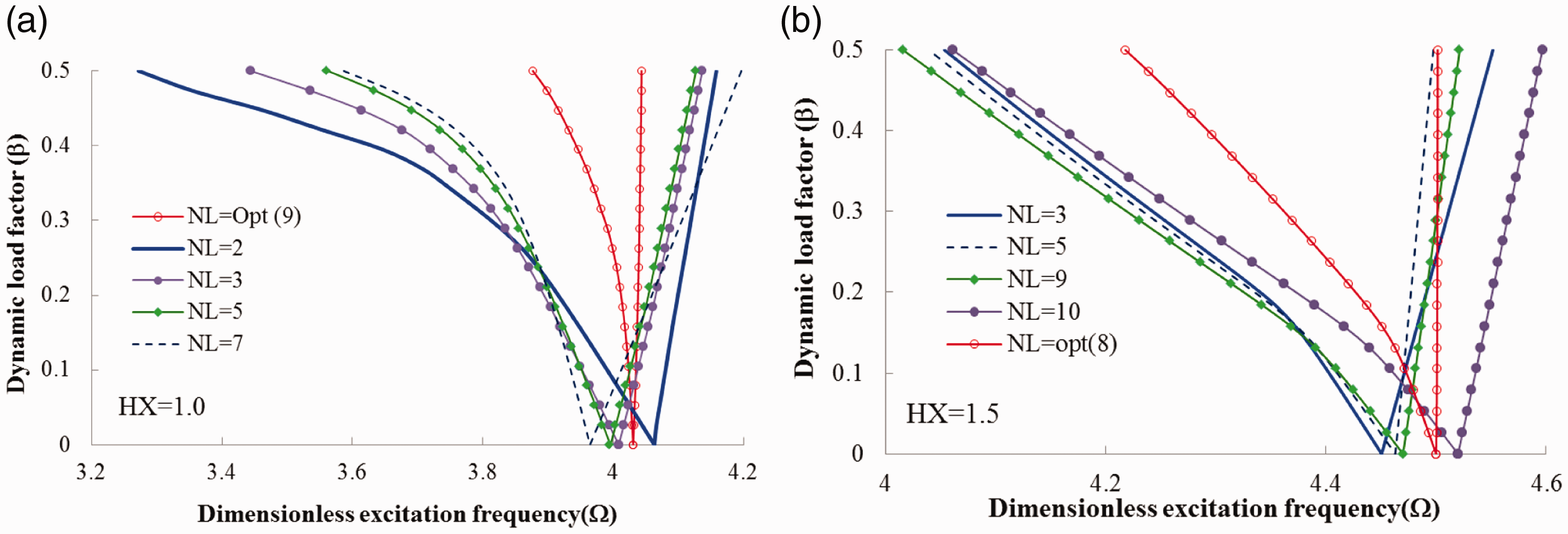
The influence of lamina layer number on the dynamic stability region for (a) HX = 1 (b) HX = 1.5.
Dynamic stability region of the nanocomposite system for various values of the carbon fibers volume percent is illustrated in Figure 8. It is found that the volume percent of 5.22 and 5 for HX = 1 and 1.5, respectively are optimum values since we have the maximum frequency while the instability region is controlled based on the minimum condition.
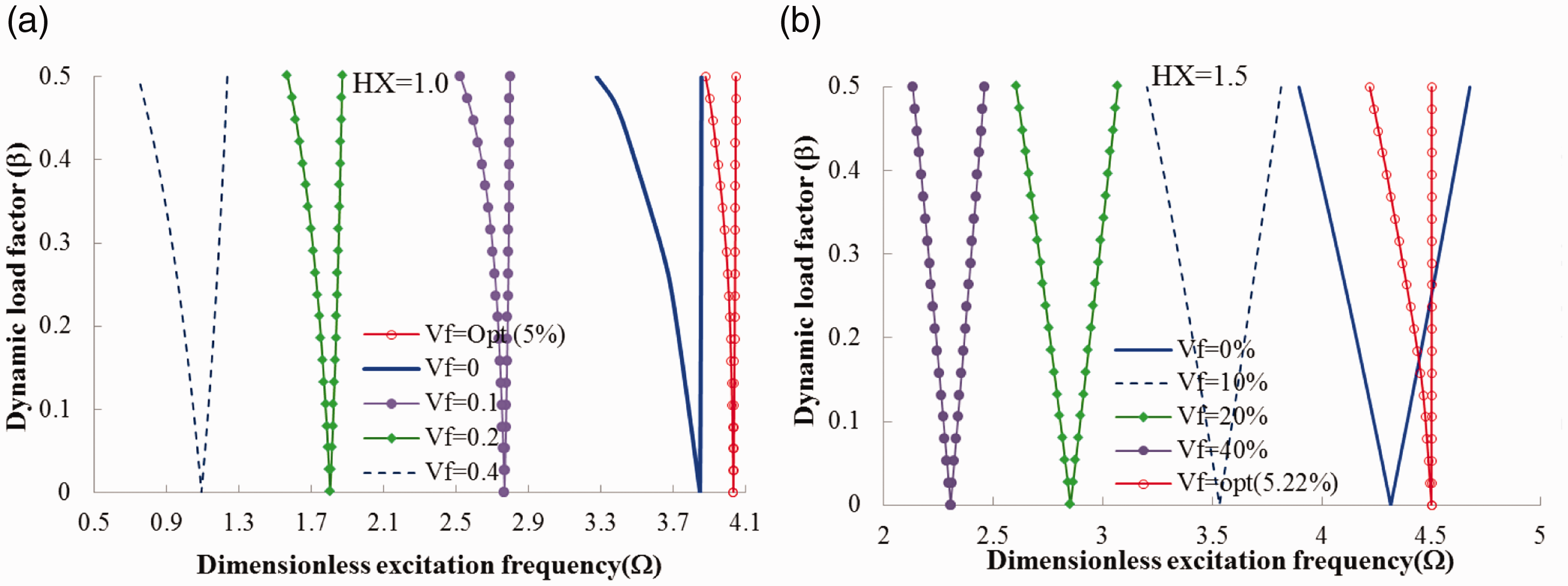
The influence of volume percent of carbon fibers on the dynamic stability region for (a) HX = 1 (b) HX = 1.5.
The influence of CNT volume percent on the dynamic stability region is demonstrated in Figure 9. It can be seen that the optimum values for the volume percent of CNT are 9.99 and 10, respectively for HX = 1 and 1.5. In these values, the instability regions are controlled which is important for design of the shell.
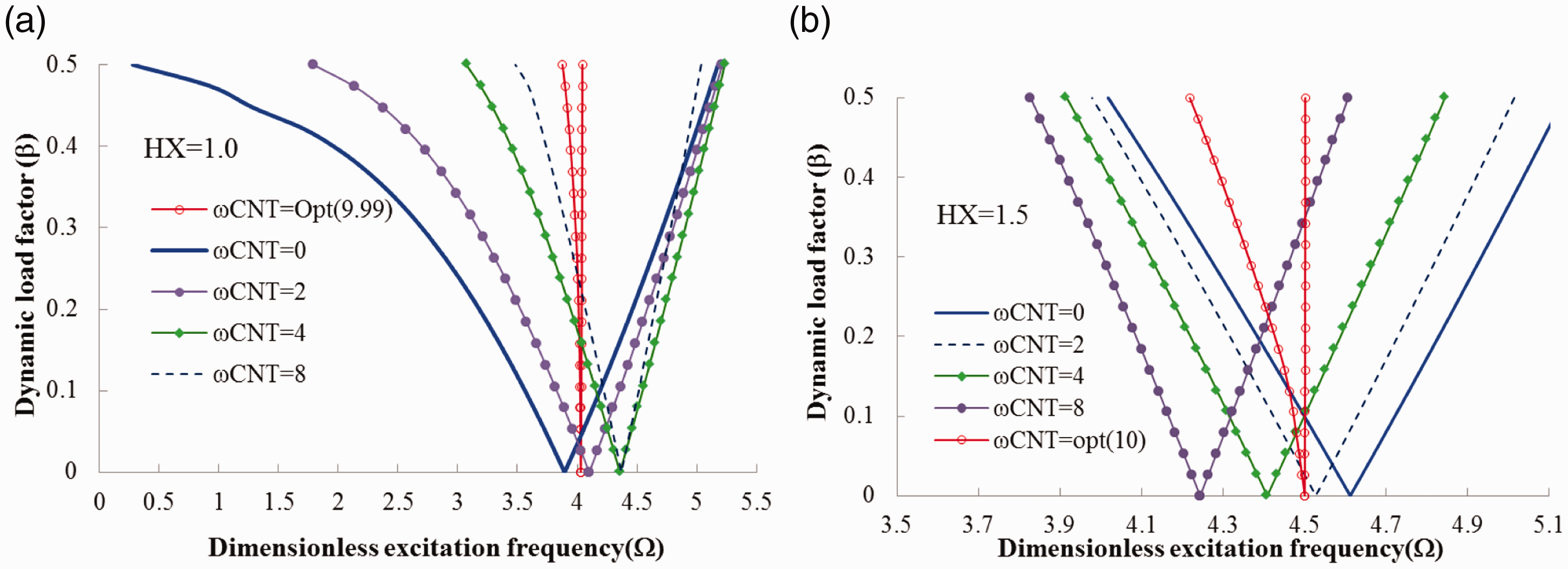
The influence of CNTs volume percent on the dynamic stability region for (a) HX = 1 (b) HX = 1.5.
Conclusion
In this study, a hybrid method for optimum design response of laminated nanocomposite sandwich conical shells is presented based on double steps in optimization and analysis process. The structure was modeled by classical theory and solved by DQ-Bolotin methods. In the optimization process, the adaptively hybrid optimization approach using the harmony search and particle swarm optimization named as HS-PSO was presented to search the optimum conditions of nanocomposite sandwich conical shells reformed by multiphase partials under magnetic field and temperature environment. The effects of various parameters such as number of layers, CNTs volume fraction, temperature and HX on the optimum conditions and the response of the DIR of the structure were studied. The most findings of this work are: The HS-PSO algorithm was converged by lower iteration with respect to HS and PSO one. In the case of optimization, the frequency and instability region of the HS-PSO have better condition with respect to without optimization since the frequency was maximized and area of the instability was controlled. With decreasing the temperature change and enhancing the magnetic field, the dynamic instability region moves to higher excitation frequencies. The optimum values for the cone semi vertex angle were 40.5 and 69, respectively for HX = 1 and HX = 1.5. It was worth to mention that the lamina layer numbers for two cases of HX = 1 and 1.5, respectively are 9 and 8. It was found that the volume percent of 5.22 and 5 for HX = 1 and 1.5, respectively were optimum values since we have the maximum frequency and minimum instability region. It can be seen that the optimum values for the volume percent of CNT were 9.99 and 10, respectively for HX = 1 and 1.5.
Footnotes
Author's Note
Behrooz KEshtegar is now affiliated with Department of Civil Engineering, Faculty of Engineering, University of Zabol, P.B. 9861335-856, Zabol, Iran.
Declaration of conflicting interests
The author(s) declared no potential conflicts of interest with respect to the research, authorship, and/or publication of this article.
Funding
The author(s) disclosed receipt of the following financial support for the research, authorship, and/or publication of this article: This work was supported by University of Zabol under Grant Nos. UOZ-GR-9618-1 and UOZ-GR-9719-1 and Iran National Science Foundation (INSF), Iran under project No. 97023031..
