







Abstract
Continuous real-time human motion and heart-rate monitoring systems can provide vital clinical information for disease diagnosis, preventive healthcare and rehabilitation care. However, it is still a challenge to design wearable pressure/strain sensors with great flexibility and sustainable power for motion detection and physiological signal monitoring. Here, a self-powered laminated fabric sensor based on Schottky contact was successfully fabricated. This laminated fabric sensor was constructed by sandwiching the polypyrrole (PPy)-coated fabric with the Ni-coated fabric and Al plastic film. The electrical outputs under strain were attributed to the single Schottky contact between PPy and Al. This fabric sensor exhibited excellent stability under continuous quick cycling operation and at high relative humidity, which could be adapted to different human body parts for continuous motion detection and heart-rate monitoring. This work is of great significance to demonstrate a promising strategy toward self-powered wearable pressure sensors used for human motion detecting and hear-rate monitoring.
Introduction
In recent years, the emerging of wearable human health monitoring has been promoted with the population aging and the acceleration of life rhythm [1–3]. The amplitude and frequency of human motion can give important information for reflecting the physiological status of the human body [4–6]. For example, tracking the body motions is beneficial for sport training. The heart-rate is a direct reflection of human cardiovascular health, which can provide accurate assessments and remarkable insights into the diagnosis and prognosis of related diseases [7–9]. Therefore, wearable human motion tracking and heart-rate monitoring systems can be used to continuous, non-invasive, real-time, and comfortable monitoring of biological characteristics of life, providing vital clinical information for disease diagnosis, preventive healthcare, and rehabilitation care. The monitoring of human motion and heart rate has boosted the development of flexible and wearable pressure/strain sensing devices with high sensitivity.
In general, the pressure/strain sensors can be divided into the following categories according to their different working mechanisms: piezoresistive sensors [6,10–12], piezoelectric sensors [13,14], capacitive sensors [15,16] and triboelectric sensors [17–23]. Among the various pressure/strain sensors, the triboelectric sensors have been intensively investigated as self-powered systems that can operate without the external power source [17–23]. For example, Sim and coworkers [18] prepared a novel kind of stretchable and weavable triboelectric fibers for sensing by rolling the electrospun polyvinylidene fluoride-co-trifluoroethylene mats on the silver-coated nylon/polyurethane fiber. Dong et al. [21] developed a high-power-output textile triboelectric nanogenerator (TENG) with 3 D orthogonal woven structure for active motion signal tracking, using the stainless steel/polyester fiber blended yarn, the polydimethylsiloxane-coated yarn, and nonconductive binding yarn. Lou et al. [23] fabricated a pressure sensor textile for motion sensing and pulse monitoring with nanofibrous membranes and conductive fabrics. One main drawback of the triboelectric sensors is that the electrical output of these sensors was diminished at the high relative humidity (RH) condition [24,25].
Recently, Shao et al. [26] proposed a new concept of using the single Schottky contact between a conducting polymer plate and a metal electrode to convert the strain motion into direct current signals. The built-in Schottky barrier plays an important role in the electrical outputs. However, to the best of our knowledge, there is no attempt to apply the conducting polymer-metal Schottky contact in the developments of wearable pressure/strain sensors for human motion sensing and heart-rate monitoring. Herein, a self-powered Al/PPy/Ni laminated fabric sensor based on the Schottky contact was successfully fabricated. This laminated fabric sensor was constructed with the PPy-coated fabric and Al plastic film serving as the electrodes of the single Schottky contact. The electrical outputs of the fabric sensor exhibited superior stability under continuous press-and-release impacts and at high RH conditions. The application of the developed fabric sensor for human motion sensing and heart-rate monitoring was investigated, which indicates the sensor has great potential in wearable flexible devices and health-care. This work demonstrates the potential use of Schottky contact in textronic materials for human motion detecting and heart-rate monitoring.
Experimental
Materials
Plain weave cotton fabrics (thickness: 0.2 mm and areal density: 182 g m−2) were supplied by Hubei Xiaomian Company. Cyanuric chloride (AR) and DL-malic acid (AR) were supplied by Shanghai Aladdin Bio-Chem Technology Company. Pyrrole (Py, CR), ferric chloride hexahydrate (FeCl3·6H2O, 99%), silver nitrate (AgNO3, AR,), sodium borohydride (NaBH4, AR), nickel sulfate (NiSO4, AR), succinic acid (AR), sodium hypophosphite (Na2H2PO2, AR), sodium carbonate (Na2CO3, AR), sodium hydrate (NaOH, AR), hydrochloric acid, 1,4-dioxane and acetone (AR) were purchased from Sinopharm Chemical Reagent Company. Al plastic film with a thickness of 0.1 mm was supplied by Sanbo Electrochemical Company. Deionized (DI) water was obtained with a ULUP-IV (ULUPURE, China) purification device. Before use, the cotton fabrics were boiled in 10 g L−1 NaOH aqueous solution for 60 min, followed by washing with DI water and drying.
Preparation of Ni-coated cotton fabrics
The Ni-coated cotton fabrics were prepared according to our previous work [10]. Typically, the cotton fabric (2 × 4 cm) was immersed successively into a solution of cyanuric chloride (100 g L−1) in 1,4-dioxane and an AgNO3 aqueous solution (2 g L−1) for 2 h at room temperature. Then, the sample was washed thoroughly with DI water and immersed into an aqueous solution of 10 g L−1 NaBH4 and 10 g L−1 NaOH for 10 min. After the surface activation, the sample was immersed into a Ni plating aqueous solution of 35 g L−1 NiSO4, 28 g L−1 succinic acid, 30 g L−1 DL-malic acid, 30 g L−1 Na2H2PO2 and 37 g L−1 NaOH. The deposition was performed for 2 h in an overhead-shaker at 75 °C. Finally, the sample was washed with DI water and dried in-vacuum at 60 °C.
Preparation of PPy-coated cotton fabrics
PPy was deposited on the cotton fabrics via in-situ chemical polymerization [27]. The cotton fabric (4 × 4 cm) was immersed into the pyrrole aqueous solution (1 mol L−1) for 1 h. An aqueous solution of FeCl3 (0.5 mol L−1) was added dropwise to initiate the polymerization. After stirring for 2 h at 5 °C, the fabric was immersed in HCl (0.1 mol L−1) for 1 h. Finally, the PPy-coated fabric was washed with DI water and dried in-vacuum at 60 °C.
Fabrication of the Al/PPy/Ni laminated fabric sensor
The self-powered laminated fabric sensor was assembled as shown in Figure 1. The PPy-coated fabric was sandwiched between the Ni-coated fabric and Al plastic film by sewing. Then, two copper bands were fixed at the edges of the Ni-coated fabric and Al plastic film for measurements. Finally, the device was aged under a fixed pressure of 5 kPa for 12 h.
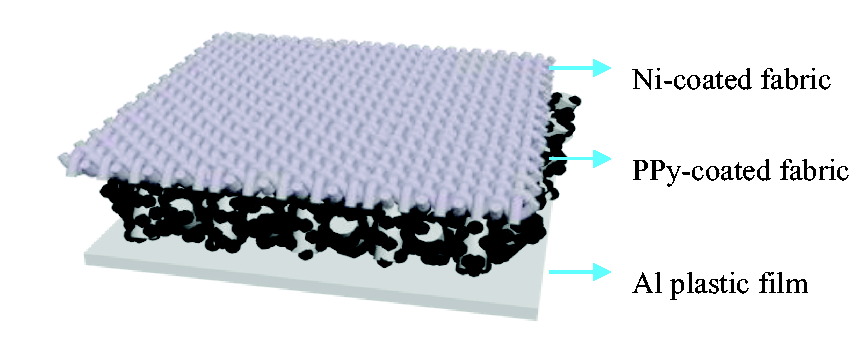
Schematic of the self-powered laminated fabric sensor.
Characterization
Fourier transform infrared spectroscopy (FTIR) was achieved by applying a Nicolet iS50 FTIR spectrometer (Thermo Scientific) in the range 600–4000 cm−1 at a resolution of 4 cm−1. The morphological features were analyzed by a JEOL (JSM-6510LV) scanning electron microscope (SEM) with an energy-dispersive X-ray spectroscopy (EDS) apparatus that enables the evaluation of elemental analysis. The surface conductivity tests were performed on a digital four-point probe resistance measurement station (RTS-9, Probes Tech. Co.). The electrical outputs were recorded by a CHI660C electrochemical working station (Chenhua Instruments Co. Ltd. Shanghai).
Results and discussion
The visual inspection of the Ni-coated and PPy-coated fabrics clearly demonstrated the effective deposition of Ni and PPy on the cotton fabrics by presenting their characteristic final black color, which was further confirmed by the SEM images (Figure 2). It can be observed that the surface of the pristine cotton fabrics was smooth and clean without any particles (inset of Figure 2(a)). After electroless Ni plating, the Ni coatings were uniformly distributed on the fiber surface with dense and uneven overage (Figure 2(a) and (b)). In the case of the PPy-coated fabric, the loose PPy coatings were aggregated into irregular clumps with sizes from about 300 nm to 1 μm on the surface and interspaces of the fibers (Figure 2(c) and (d)).
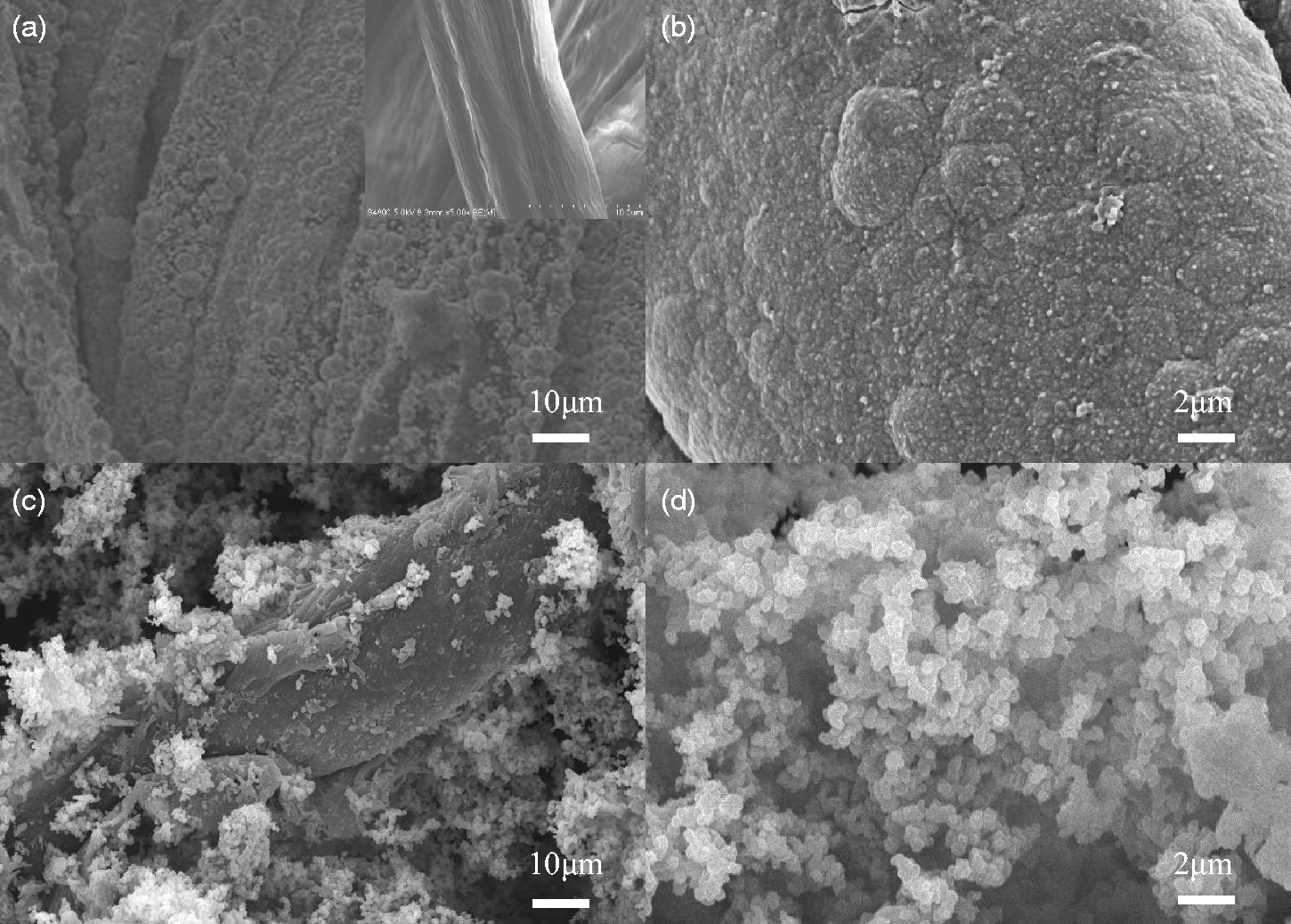
SEM images of (a–b) Ni-coated fabric and (c–d) PPy-coated fabric at different magnifications. Inset of (a): the pristine cotton fabric.
The FTIR spectra of the Ni-coated and PPy-coated fabrics are presented in Figure 3(a). The profile of the pristine cotton fabric exhibited the absorption peaks at 1425, 1359, 1159, 1028 and 898 cm−1, which were due to the –CH2 and –OCH in-plane bending, C–O–C stretching, C–O stretching and glucose ring stretching of cellulose, respectively [28,29]. For the Ni-coated fabric, these typical bands of cellulose could not be found, further demonstrating the dense coverage of the Ni layer on the fabric surface. In the case of PPy-coated fabric, the absorption peaks at 1520 and 1435 cm−1 were assigned to the C–C and C–N stretching in pyrrole ring, respectively. The peak at 1277 cm−1 was ascribed to the C–N in-plane deformation mode. The peak at 1086 cm−1 was attributed to the in-plane deformation vibration of N+H2 for doped PPy [30,31]. The C–C out-of-plane deformation peak of pyrrole ring appeared at around 959 cm−1.
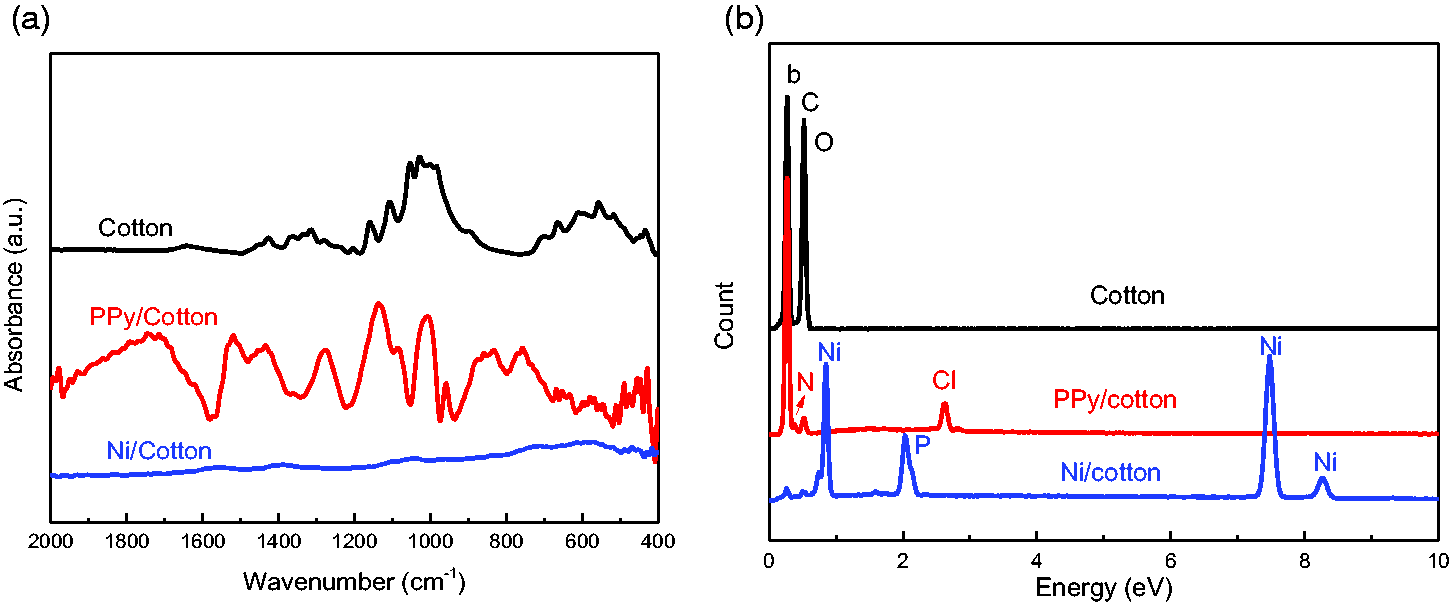
(a) FTIR and (b) EDS spectra of Ni-coated and PPy-coated cotton fabrics.
The compositions of the Ni-coated and PPy-coated fabrics were also investigated by the EDS results (Figure 3(b)). The peaks of O and C were observed in the spectrum of the pristine cotton fabric, which became very weak after the Ni plating. The intense peaks of Ni and P suggested that the fabric surface was densely overlapped with the Ni coating. For the PPy-coated fabric, the presence of the N peaks evidenced the formation of PPy. In addition, the peak of the Cl element was attributed to the doping of Cl- to PPy.
The Ni-coated and PPy-coated fabrics showed superior conductivity of 21.8 and 6.5 S cm−1, respectively. The self-powered laminated fabric sensor was assembled as shown in Figure 1. A home-made vibration exciter was used to press the device and the compression frequency was adjusted by the input voltage of the exciter. The corresponding electrical outputs were recorded on a CHI660C electrochemical working station. The electrical outputs were investigated for the device with different area and layer number of PPy-coated fabrics and the results are plotted in Figure 4. It can be found that the voltage output increased from 0.52 V to 0.71 V while the current output almost unchanged (9.5 to 10.0 μA) when the sample area increased from 0.4 to 2.5 cm2. The electrical outputs decreased significantly when four layers of PPy-coated fabrics were used, which was ascribed to the increased internal resistance.
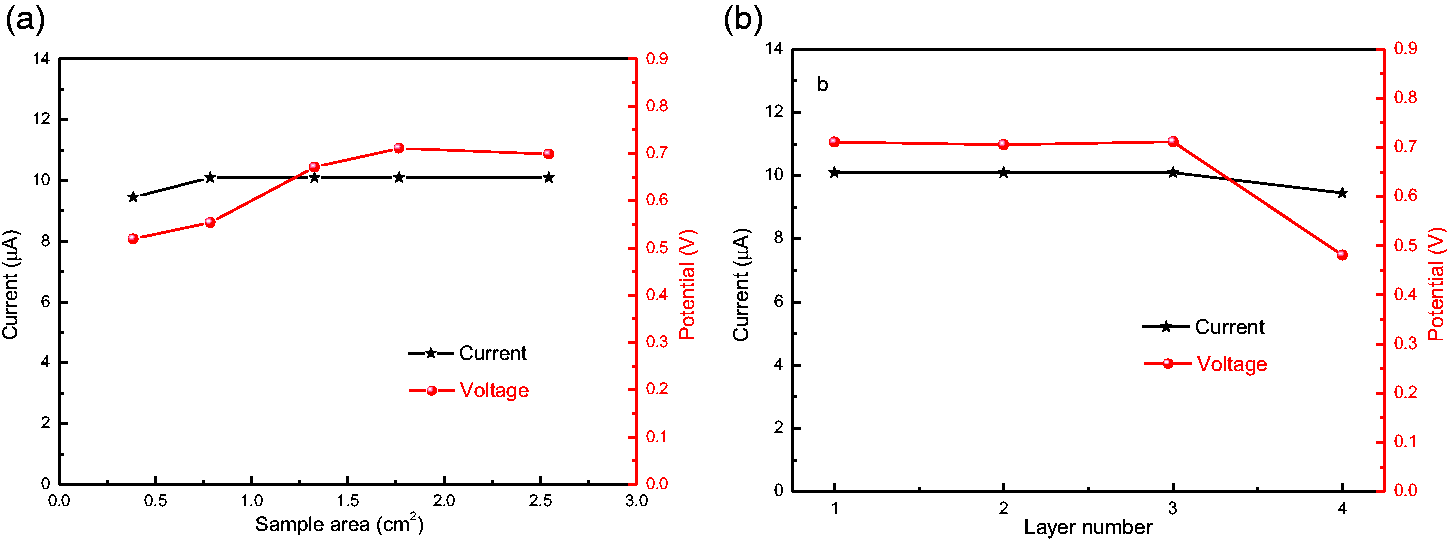
Effect of (a) sample area and (b) layer number of PPy-coated fabrics on electrical outputs. The maximum strain percentage was about 25.3%.
The effect of compression frequencies on the electrical outputs was further investigated. As seen in Figure 5(a), the voltage output increased slightly when the compression frequency increased from 1.5 to 2.5 Hz. The distortion rate of the device increased when the compression frequency increased. In fact, under the same external pressure, the larger impulse frequency could decrease the duration time of the current peak, consequently boosting the current amplitude and resulting in the increased voltage output. The flexibility of the self-powered laminated fabric sensor was examined by measuring the electrical outputs after folding and relaxing. As shown in the inset of Figure 5(b), the device was folded in half and then the measurements were performed without changing the wiring mode. It could be found that the output current remained almost the same when the device was folded, while the output voltage decreased to half of the initial value. The strain decreased to half under the same external impact force when the device was folded in half and the folded devices were connected in parallel when the device was compressed, thus resulting in the same output current and the half output voltage. When the device was relaxed, the electrical outputs returned to the original values, indicating the good flexibility of the device. The stability of the self-powered laminated fabric sensor was investigated by measuring the electrical outputs under repeated operation. It can be found from Figure 6 that both the output current and voltage did not exhibit any significant degradation under repeated compression for 1 h. These results indicated that the fabric device exhibited the excellent stability, which could be ascribed to the strong flexibility of the fabric sensor. In addition, the fabric sensor was tested at different humidity. As shown in Figure 5(c), the fabric sensor demonstrated no significant output voltage degradation at a RH of 90%, compared to the value at a RH of 50%. Nguyen and Yang [25] found that high humidity was not favorable for the electrical output of the vertical contact-separation-mode TENG. Hu et al. [32] also demonstrated that the voltage of the sliding-mode TENG decreased at a RH of 90% as compared to the value at a RH of 50% under the same mechanical excitation. However, the high humidity had a negligible effect on the output voltage of the proposed fabric sensor, indicating its superior humidity stability.
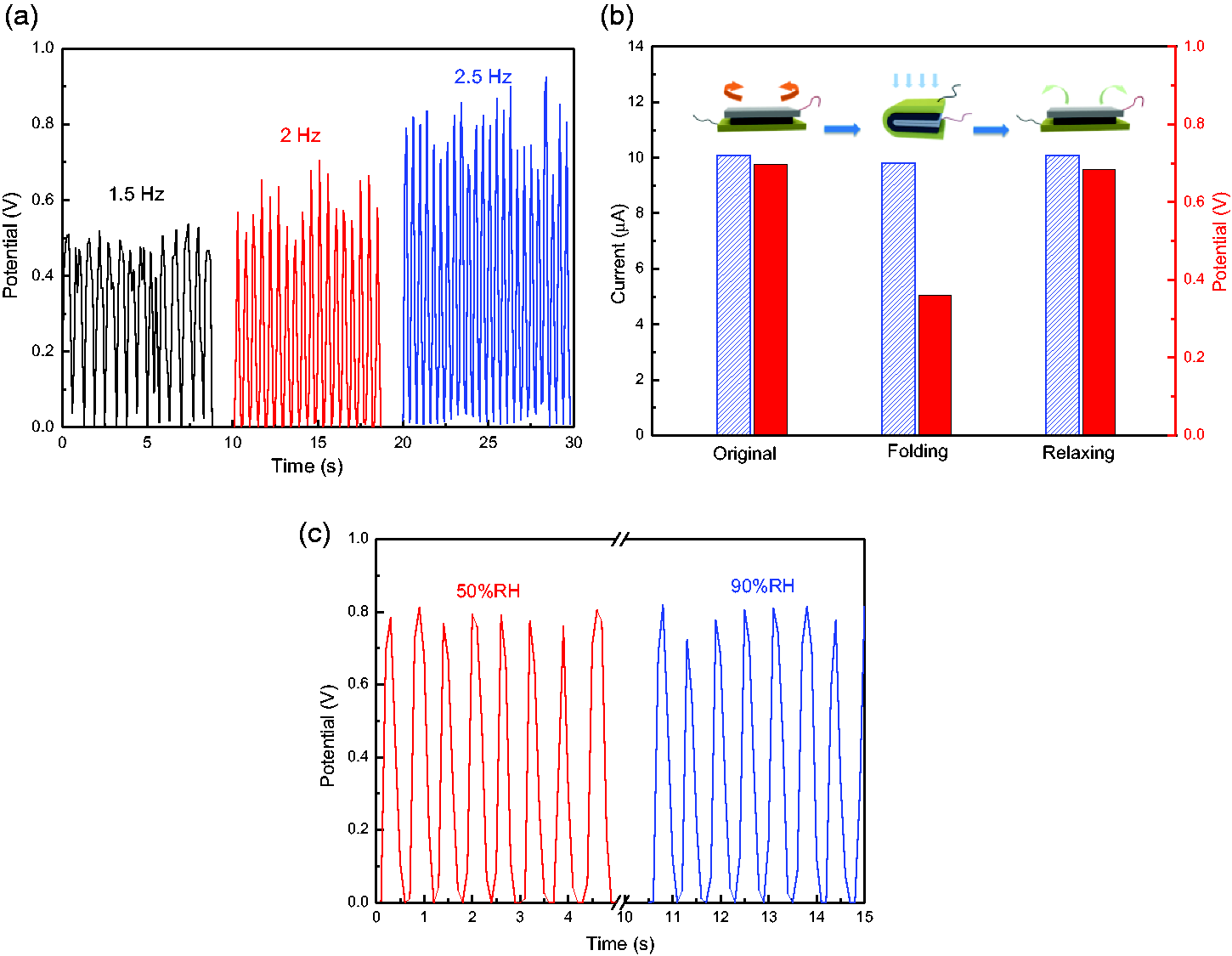
(a) Open-circuit voltage of the device under different compression frequencies; (b) short-circuit current and open-circuit voltage of the device after folding and relaxing; (c) open-circuit voltage of the device under different humidity. Area: 1.8 cm2.
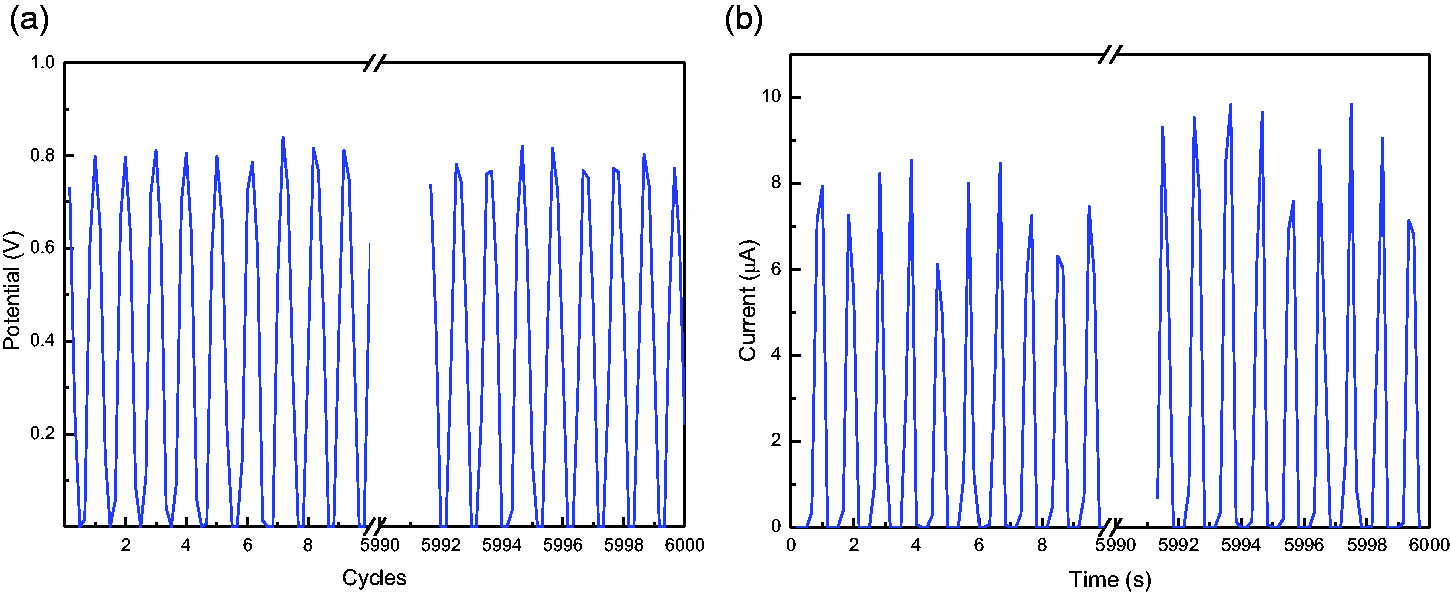
(a) Open-circuit voltage and (b) short-circuit current of the device under continuous press-and-release impacts. Area: 1.8 cm2.
The potential responses of the Al/PPy/Al and Ni/PPy/Ni laminated fabric devices were also tested for comparison. As shown in Figure 7, there were weak and irregular voltage output peaks near 0.2 V from the Al/PPy/Al device, but no electrical signals were observed in the Ni/PPy/Ni device under impacts. The output voltage of the Al/PPy/Al device was attributed to the flexibility of the laminated fabric device. Under compression, the strain on the upper Al/PPy and lower PPy/Al contacts were different, resulting in different output voltage and consequently the totally non-zero output voltage of the Al/PPy/Al device. It is known that Schottky contact forms between PPy and Al [33] and Ohmic contact forms between PPy and Ni [34]. The above results indicated that the single Schottky contact in the Al/PPy/Ni device plays an important role to convert mechanical energy into electrical outputs. The LUMO and HOMO energy levels of PPy are about −2.7 and −5.6 eV, respectively [35], while the work function of Al is about 4.28 eV. Thus, the Al-PPy Schottky contact could give rise to electron migration from PPy to Al. The saturation current density of the Ni/PPy/Al device can be calculated as follows [36]:



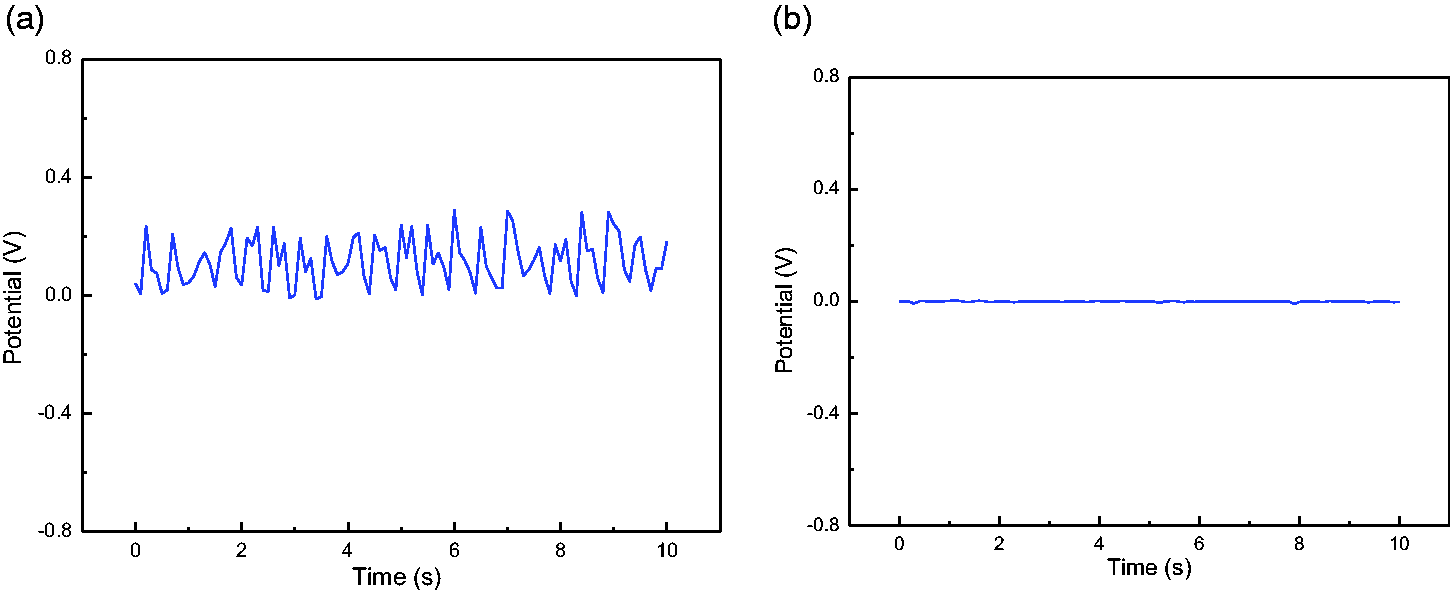
Potential responses of the (a) Al/PPy/Al and (b) Ni/PPy/Ni laminated fabric devices.
Here Jstrain and Jnon-strain are the current density at the same voltage in the linear part of the current-voltage curve. The barrier potential at strain state (φstrain) is lower than that at non-strain state (φnon-strain) due to Jstrain > Jnon-strain. The decrease of the barrier potential under compressive strain is beneficial to the electron migration. In addition, the compression strain decreased the volume of the PPy-coated fabric and consequently increased the charge density in PPy. The increase of the charge density and the decrease of the interfacial barrier in the PPy-coated fabric could admit more electron transfer to the Al electrode.
A variable external resistance was connected to the prepared Al/PPy/Ni laminated fabric sensor as shown in the inset of Figure 8(a). The current passing through the external resistance and the corresponding voltage were measured when the external resistance value increased. It was observed that the voltage showed an increasing tendency with the increased external resistance, while the current presented a decreasing trend due to the Ohmic loss (Figure 8(a)) [22]. Consequently, the maximum output power reached a value of 5.2 µW when the external resistance was 10 kΩ (Figure 8(b)). Moreover, a capacitor was applied to harvest the output energy of the Al/PPy/Ni laminated fabric. The voltage increases of the different capacitors charged by the Al/PPy/Ni laminated fabric device are shown in Figure 8(c). A 220 µF capacitor could be charged to 0.5 V for about 80 s, while the 1.0 and 2.2 mF capacitors were charged to 0.35 V for about 270 and 430 s, respectively.
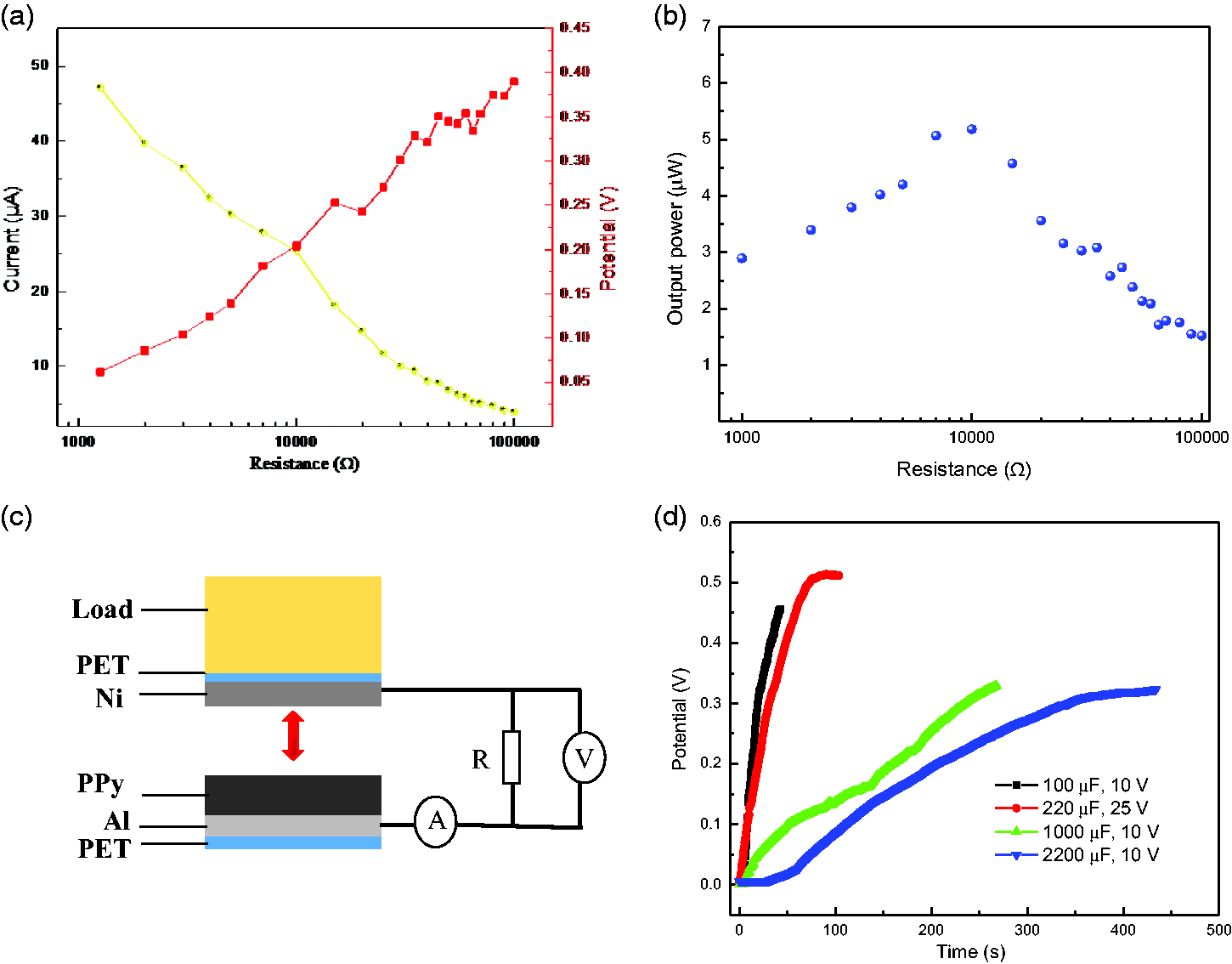
(a) Output current and voltage of the Ni/PPy/Al device under different external load resistance, measured at a frequency of 2.5 Hz; (b) output power of the Ni/PPy/Al device under external load resistances of 1000–100000 Ω; (c) scheme for the measurements in (a); and (d) voltage-time during charging of capacitors with the Ni/PPy/Al device.
To demonstrate the device for versatile practical applications in biological health monitoring, the fabric sensor was mounted on different body parts for daily motion detection and heart-rate monitoring in a self-powered manner. An output peak signal of the device corresponds to one body movement. As shown in Figure 9(a), this fabric sensor was attached on the finger joint to sense the finger’s bending. When the finger was bent from 30° to 90°, the output voltage increased gradually from about 0.15 to 0.55 V since the larger bending angle exerted more pressure to the fabric device. This sensor was also employed to detect the wrist’s motion, as shown in Figure 9(b). Periodical and regular changes in output voltage were observed when the wrist moved up and backward. More importantly, the fabric sensor was mounted on the breast to monitor the heart beating signals. Figure 9(c) demonstrates the real-time recording of the heart beating captured by the fabric sensor. It was noteworthy that there were twelve peaks recorded within 10 s, suggesting that the heart rate was about 72 beats per minute. The fabric sensor was also attached on the neck to monitor the heart-rate signal. The obtained heartbeats from the carotid artery were about 72 beats per minute, similar to the value monitored on the breast, confirming the reliability of the fabric sensor for heart and pulse rate monitoring. These results indicate that the fabric sensor could not only quantify various human limb motions but also capture subtle real-time heart beating.
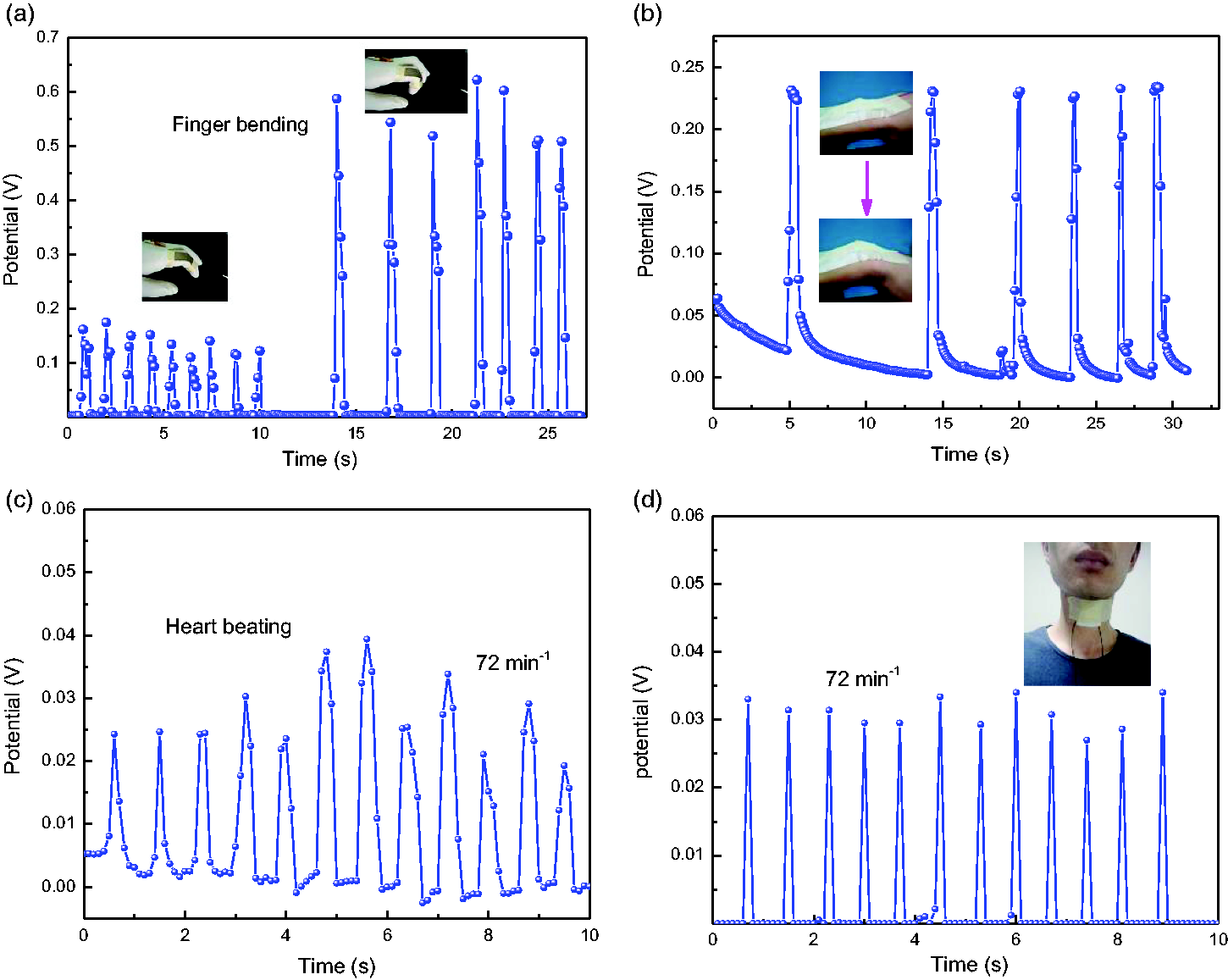
Applications of the self-powered Al/PPy/Ni device in real-time human physiology monitoring. (a) Finger bending; (b) wrist bending; (c) heart beating; (d) neck artery pulse.
Conclusions
In this study, the self-powered Al/PPy/Ni laminated fabric sensor based on Schottky contact was successfully fabricated. This laminated fabric sensor was constructed with the PPy-coated fabric and Al plastic film serving as the electrodes of the single Schottky contact. This fabric sensor exhibited rapid response time, superior flexibility and mechanical stability even under the condition of continuous and quick cycling operation of 1 h. Based on the above good performance of the fabric device, its potential application in motion detection and heart-rate monitoring in a self-powered manner was investigated in details. Different human motions associated with joints, such as fingers and wrists, could be detected. More significantly, real-time heart rates could be recorded when the fabric device was mounted on the breast and neck. Thus, the present work demonstrates a promising strategy for self-powered wearable pressure sensors used for human motion detecting and heart-rate monitoring.
Footnotes
Declaration of conflicting interests
The author(s) declared no potential conflicts of interest with respect to the research, authorship, and/or publication of this article.
Funding
The author(s) disclosed receipt of the following financial support for the research, authorship, and/or publication of this article: This work was supported by the Natural Science Foundation of China (No. 51703170), the Technical Innovation Special Project of Hubei Province (No. 2019AAA005), and Analytical and Testing Center (WTU).
