







Abstract
This work presents the results of experimental and numerical analyses of the static properties of architectural cores and the dynamic behavior of sandwich structures made with an auxetic or non-auxetic core. Three architectural cores have been studied which are re-entrant, rectangular and hexagonal honeycombs. Each configuration was produced with four relative densities depending on the number of cells in the width of the specimens. The specimens were made with additive manufacturing technology. The material used to make the specimens was polylactic acid with flax fibers. Several tensile tests were carried out on the architectural cores to analyze and understand the influence of the topology and the density of the core on the Poisson’s ratio and the Young’s modulus of these architectural structures. Then, vibration tests were carried out on the cores and the sandwich structures. The objective was to study the influence of these structures and their densities on the dynamic properties of sandwiches. The structural Poisson’s ratio shows a sensitive behavior to the core topology and density.
Introduction
Metamaterials 1 are developed to obtain characteristics that are not observed in natural materials. 2 These characteristics are derived from the architectural design of the metamaterials rather than the constituent material. Auxetic metamaterials 3 have aroused much interest in recent years for the unusual character of the Poisson’s ratio which is negative (noted “NPR”). These sandwich cores can be either foam or wood or even have specific architectures.4,5 The great diversity of materials and core geometry of composite structures allows them to exhibit a wide range of unique characteristics and special deformation properties. Auxetic structures with a negative Poisson’s ratio are among the architectures that can be used in core design for these characteristics.
A wide variety of two-dimensional auxetic and non-auxetic materials have been proposed, such as hexagonal, 6 chiral, 7 re-entrant 8 honeycombs and also three-dimensional metamaterials. 9 The development of additive manufacturing techniques has enabled the manufacture of increasingly complex structures. Auxetic materials have shown many technical advantages, such as energy absorption,10–12 resistance to indentation,13,14 shear resistance 15 and impact resistance.16,17 They can thus contribute all these many qualities to bio-sandwiches. A typical sandwich composite is composed of an architected core that is lightweight, such as honeycombs18,19 or re-entrant structures on which two solid, thin, high-stiffness, high-strength face sheets are printed. Many studies have been conducted on the vibration behavior of sandwich structures with cores made of auxetic materials.18,19 However, there are fewer studies of bio-composite sandwiches with auxetic and non-auxetic lattice material cores.
The mechanical properties of sandwich composites with auxetic and non-auxetic core under low velocity impact were studied by Hou et al. 20 Some authors have published the results of experimental tests under bending stress of hexagonal 21 and re-entrant 22 structures. Xu and Deng 23 analytically determined the effects of negative Poisson’s ratio and shear factor on the dynamic properties of auxetic and conventional thick cell structures, and also cite work on auxetic structures.24,25 Following the large deviation theory, Wan et al. 26 provided a theoretical method to determine the Poisson’s ratio of honeycombs. Essassi et al.22,27–29 extensively studied the static and dynamic behavior of bio-sourced sandwich structures with a re-entrant honeycomb core. These authors determined the effect of core density on the structural mechanical properties of sandwiches. Auxetic honeycombs with a new design were studied by Huang et al. 30 being composed of a re-entrant hexagonal part and a thin plate. The authors studied the in-plane mechanical characteristics of auxetic honeycombs. Duke et al. 31 studied the nonlinear dynamics and vibrations of a composite cylindrical sandwich material with auxetic alveolar cores on elastic foundations subjected to mechanical stresses. Conventional and auxetic honeycombs were compared in uniaxial and biaxial milling by Li et al. 32 The static and dynamic response of 3D printed sandwich beams was studied by Solyaev et al. 33
In the present work, the study of the vibrational behavior of bio-sandwich structures with auxetic and non-auxetic cores was carried out using numerical studies of finite element simulations and experimental tests. Three different types of core were produced (re-entrant, rectangular and hexagonal) and for each of these configurations, four elementary cell densities were evaluated depending on the width of the specimens. The first objective here was to compare the dynamic properties of different sandwich structures to determine the effect of core design and density on the overall behavior of bio-sandwiches. The second objective was to determine experimentally and numerically the influence of the Poisson’s ratio on the dynamic properties of sandwich structures. All these architectural cores were designed using CAD software and made on bio-sourced material, PLA with flax fibers using a 3D printing technique. Uniaxial tensile tests were carried out to study the static properties of these composite materials. The dynamic behavior of these architectures was studied using vibration tests during bending in clamped-free configuration. The effect of the number of cells in the width of the specimens (density of materials for each configuration) was measured and discussed to assess their overall potential on the mechanical properties. Parametric analyses were developed to analyze and understand the effects of cell geometry on the Poisson’s ratio and then on the static and dynamic properties of sandwich composites.
Material and manufacturing
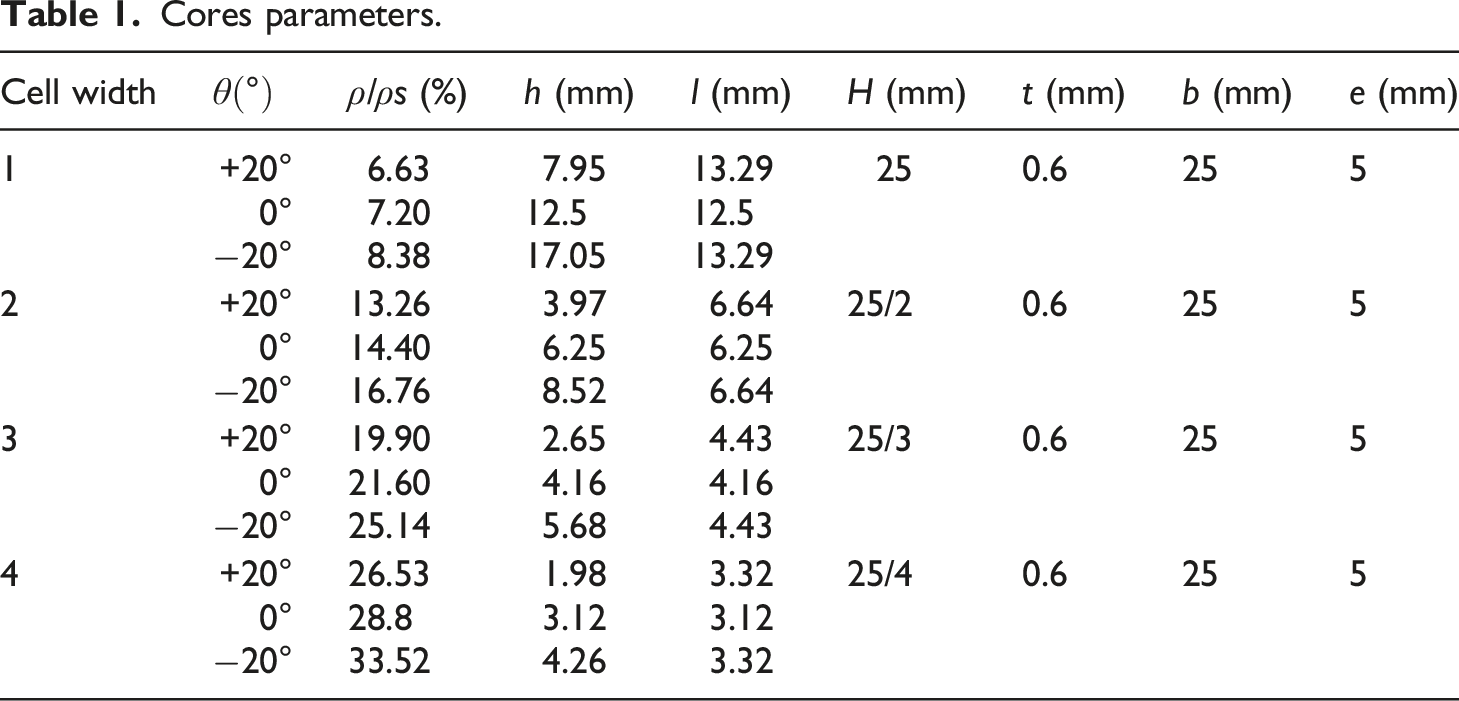
Cores parameters.
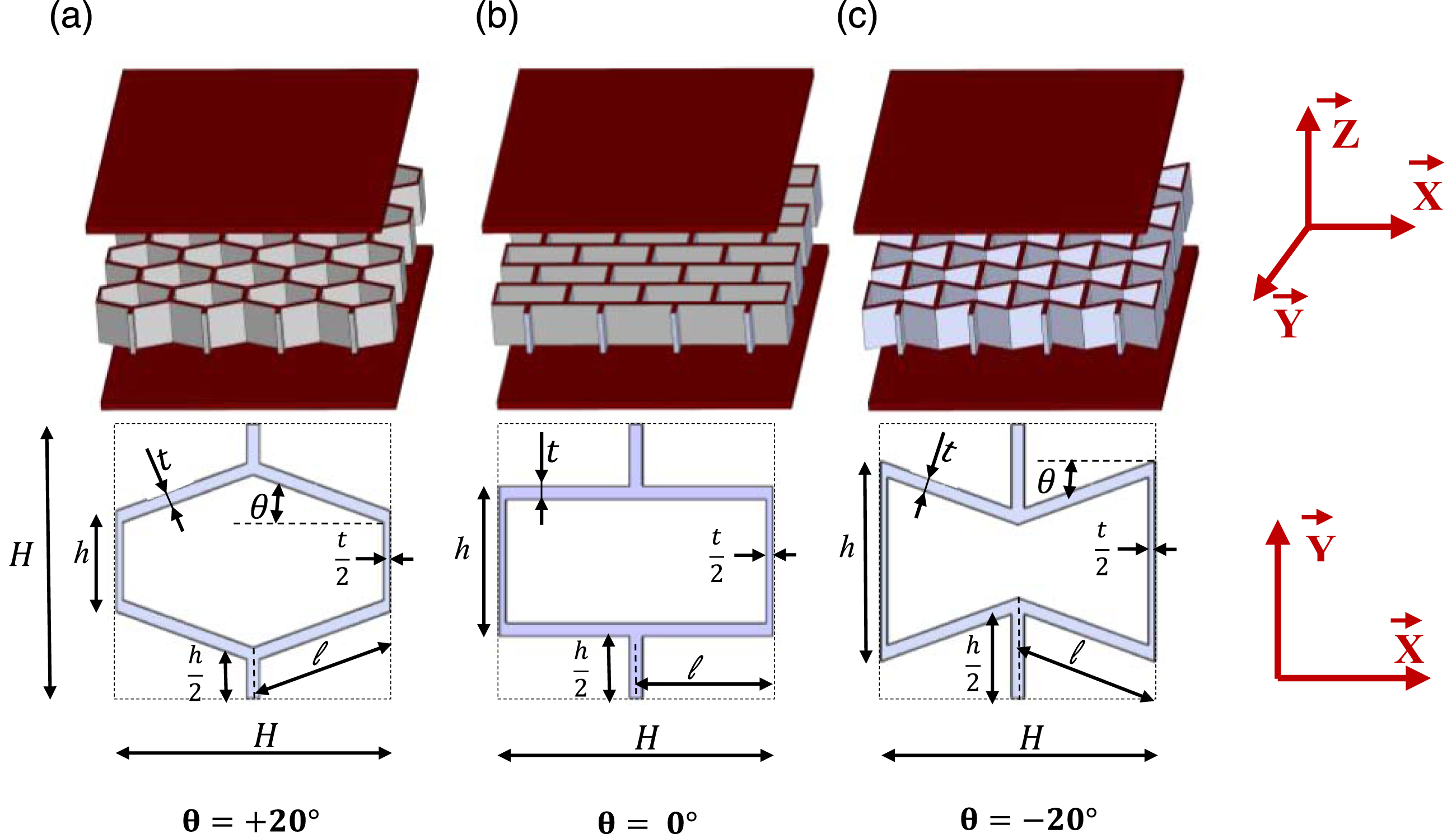
Sandwich structures with the three types of architectural cores are shown in Figure 1. The planar directions of the cells follow (X, Y) and the thickness of the core is the Z axis. l is the original length of the inclined cell walls and h is the length of the vertical walls. θ is the initial angle between the slanted walls and the X axis. t and e are the cell wall thickness and the sample thickness, respectively. All these periodic cells are inserted into a square with sides equal to H in order to have the same number of cells for the same width or length. H is the same unit cell length in both X and Y directions determined by the number of cells in width (b). This width, on the ordinate, is set to 25 mm in order to have a number of cells comprised between one and four cells depending on the width of the specimen. Each number of cells along the width gives a specific density to the architectural material. According to Figure 1, h = (H/2) (1-tgθ) and l = H/(2cosθ). In this study, the following three configurations are presented: hexagonal (+20°), rectangular (0°) and re-entrant (−20°). In addition, four different numbers of cells depending on the width of the specimens are chosen to produce architectural sandwiches. Relative densities are obtained by the expression (equation (1)): Core configurations (a) hexagonal (b) rectangular (c) re-entrant.
Vibration experimental protocol
Figure 2 shows the vibration device and specimens. All beams were printed with a width of 25 mm and a thickness of 5 mm for the cores and 7 mm for the sandwiches (1 mm for each face sheet and 5 mm for the core). Specimens were printed and tested with four different free lengths: 230, 200, 170 and 140 mm. To prevent damage to the architectural core when clamping the beams, a 25 mm × 40 mm rectangular block was printed at one end of each specimen. Experimental vibration device.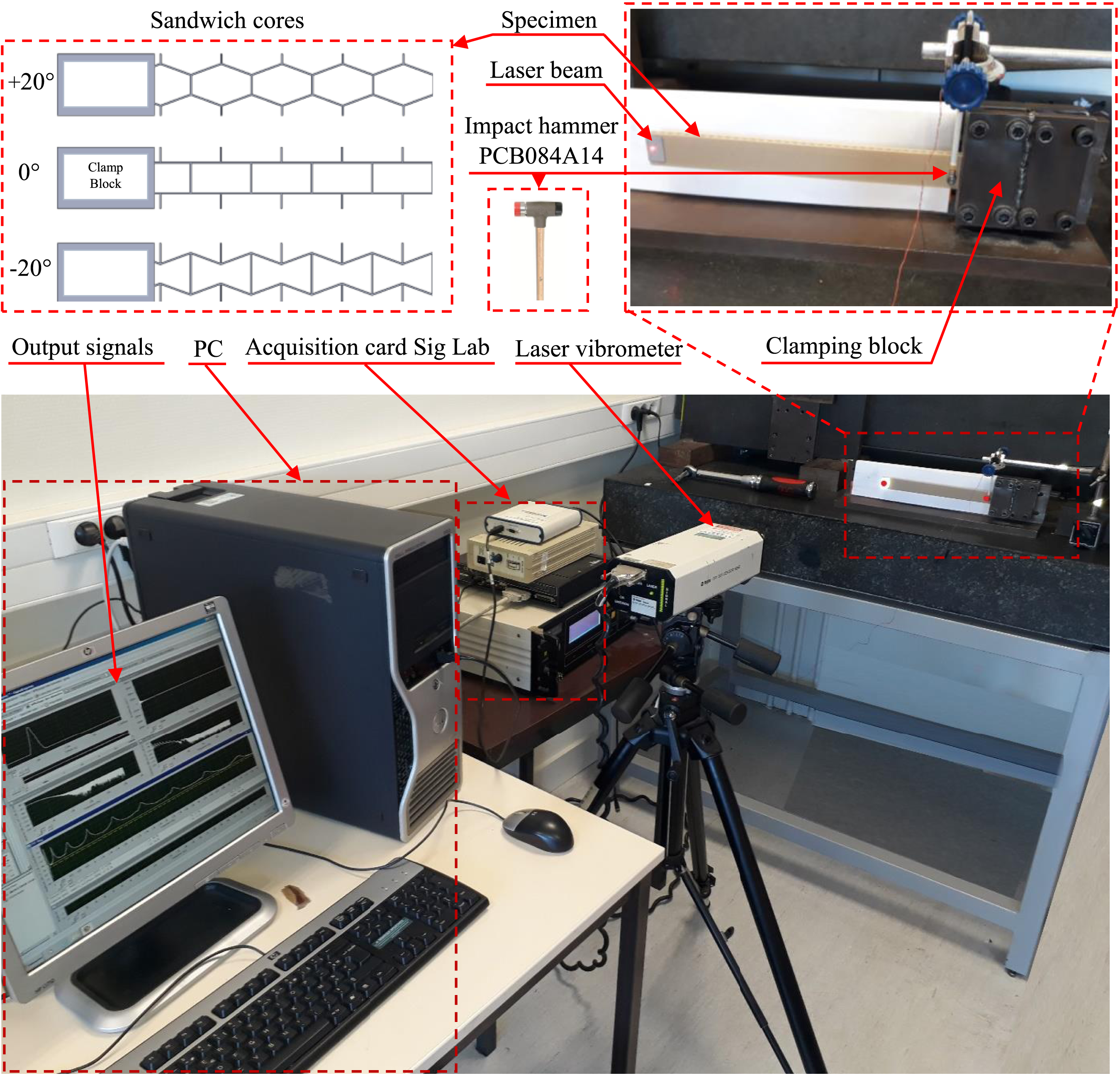
To study the vibration behavior of composite materials and sandwich beams, free vibration tests were carried out with the device shown in Figure 2. Beams were evaluated using a clamped-free configuration in accordance with ASTM E-756. 35 The sample was excited at a point near the fixed end (at a distance between 5 mm and 10 mm) with a special impact hammer to avoid anomalous results from a second hammer impact. The response was detected near the free end of the beam with a laser vibrometer. The excitation signals of the structure and those of the output of the vibrometer were then detected and processed by a device developed by SigLab whose function is to analyze dynamic signals. This analyzer is essentially composed of an acquisition and processing card, coupled with control and signal processing software. Amplitude and frequency were measured during beam bending for each resonance peak of the beam frequency response. These values of the peak frequencies as well as the loss factor of each mode were obtained using this approach. Modal damping factors were calculated using the half-power bandwidth (HPB) approach.


Coefficients for equivalent stiffness.

Numerical vibration model
Several numerical approaches are used to determine the damping properties of architectural materials. The first methods for evaluating the damping factor of composite materials were developed by Ungar and Kerwin. 45 Then, Adams and Bacon 46 proposed the strain energy method. This method is based on an analysis of the total energy dissipated in the composite. The method was then used and developed by several authors.22,37
The finite elements method for a dynamic problem is used in this work. The results obtained with this numerical method are close to the results of the experimental tests for the frequency response. The sample was excited at a point near the fixed edge by the force (F) and the response is detected near the other free edge. Several simulations were carried out to determine the modal response curves. The results are proposed with curves plot for amplitude (dB) versus frequency (Hz). These responses were used to estimate the loss factor of cores and sandwiches using the HPB method. Architectural structures were designed using Solidworks CAD software. Then, the model was converted into neutral compatible instructions and input into the finite element software ABAQUS/Standard. The sandwich beams were studied under clamped-free configuration where the face carried by the YZ plane is clamped. Figure 3 shows the boundary conditions of the model with the selected mesh in tetrahedral quadratic elements (C3D10). Depending on the core densities, the number of nodes used to mesh the sandwich was set to an interval from 16,312 (for rectangular structure with one cell wide) to 31,643 (for re-entrant structure with four cells wide). In the FE model, a linear elastic behavior was assumed for this composite material. The damping behavior introduced in the model is that determined experimentally for the face sheet by Hamrouni et al.
39
The samples tested by finite elements had the same dimensions as those tested experimentally. The Lanczos solver on ABAQUS was used to calculate the resonant frequencies of each sample. Boundary conditions and the first seven modal shapes of sandwich structure deduced from finite element simulation.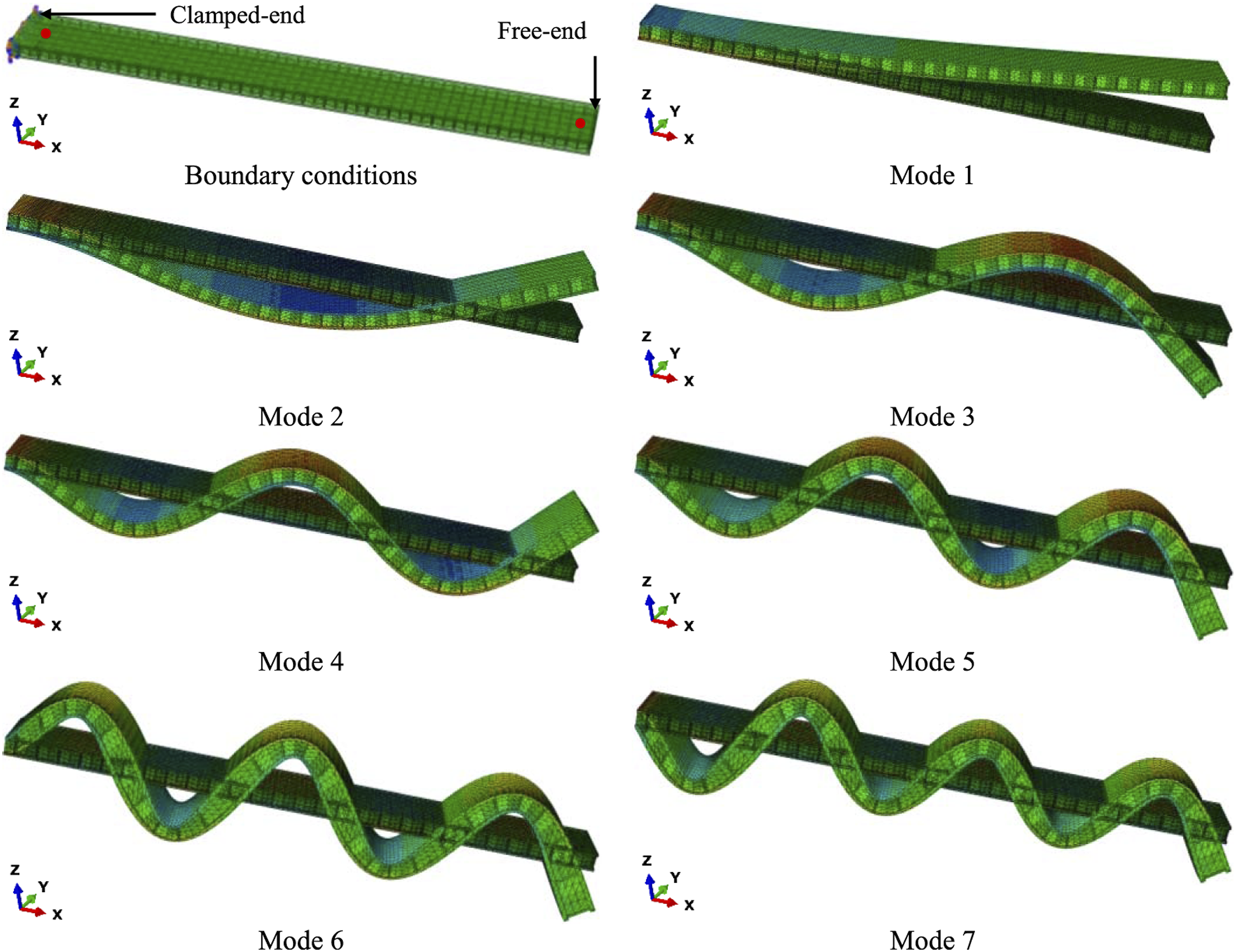
Results and discussion
Static behavior
Tensile tests were carried out on the three types of structures with the different angles θ, which are hexagonal (+20°), rectangular (0°) and re-entrant (−20°) structures. Each architectural core had four periodic cell numbers along the width of the specimens, as shown in Table 1. All the specimens were obtained with the 3D printing technique. A standard INSTRON hydraulic machine with a load cell of 1 kN and a speed of 1 mm/min is used for these tests according to the ASTM D638-14 standard.29,47 In the same way, all the nuclei were tested in order to define their structural Young’s modulus and their Poisson’s ratio. Specimens printed were 100 mm long, 25 mm wide and 5 mm thick as shown in Figure 4(a). (a) Tensile specimens one cell wide for hexagonal (+20°), rectangular (0°) and auxetic (−20°) structures (b) experimental tensile test equipment.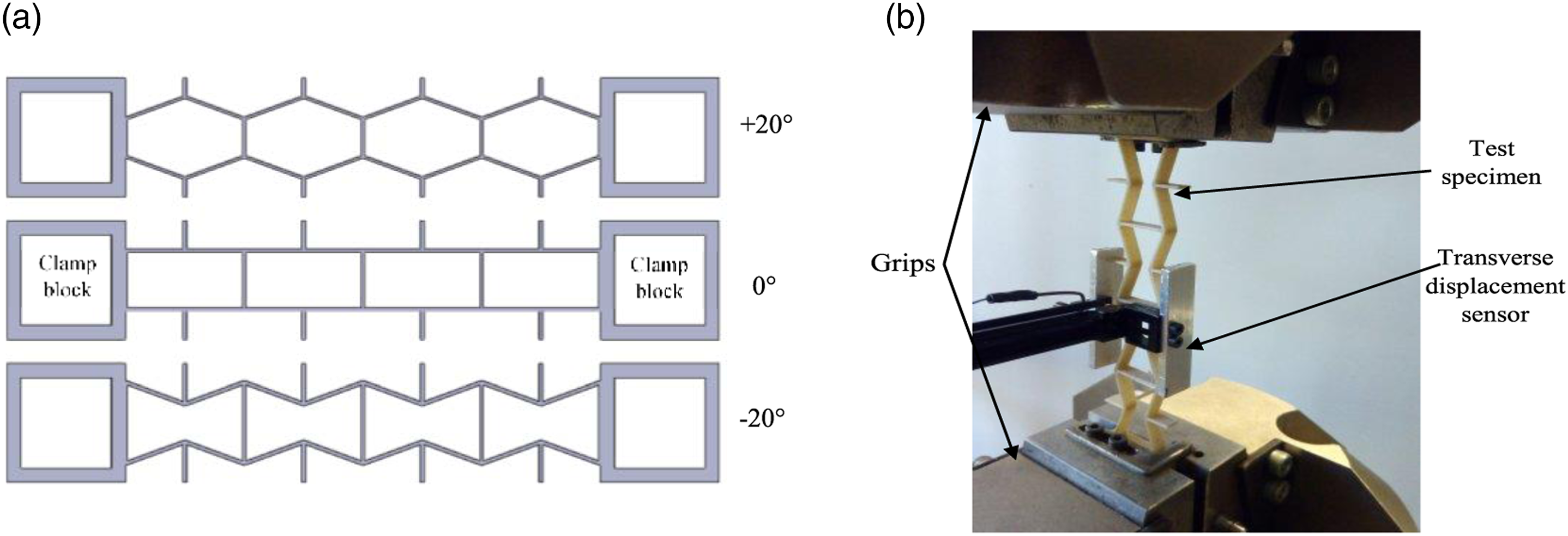
An extensometer was used to measure the transverse displacement of the cells in the center of the specimen, but the longitudinal displacement was determined from the position of the grips during the test as shown in Figure 4(b). Five samples were tested for each type of core during mechanical tests in order to consider the variability of the experimental results.
Figure 5(a) presents the results of the longitudinal and transverse stress/strain curves of the re-entrant cores. They show that the transverse deformation is positive for the structures made up of a re-entrant cell (−20°). In the re-entrant configuration, there was an overall transverse expansion when an axial tensile strain was applied. However, a transverse contraction was noted for the hexagonal and rectangular configurations. The Poisson’s ratio for each specimen was determined using the experimental strain curves. Poisson’s ratio values are determined in the elastic domain by dividing the negative of each transverse strain (a) Stress/strain diagrams of the re-entrant cores (b) Stress/longitudinal strain diagrams of the cores with two cells wide. Transverse strain/longitudinal strain diagrams of the cores with two cells wide.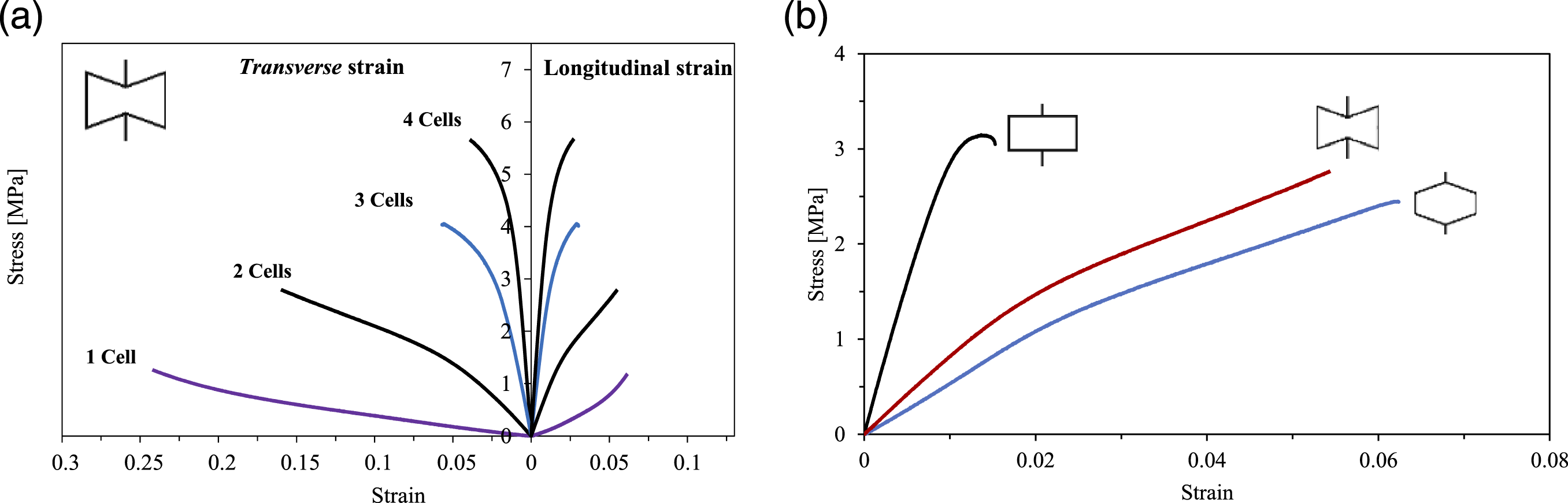
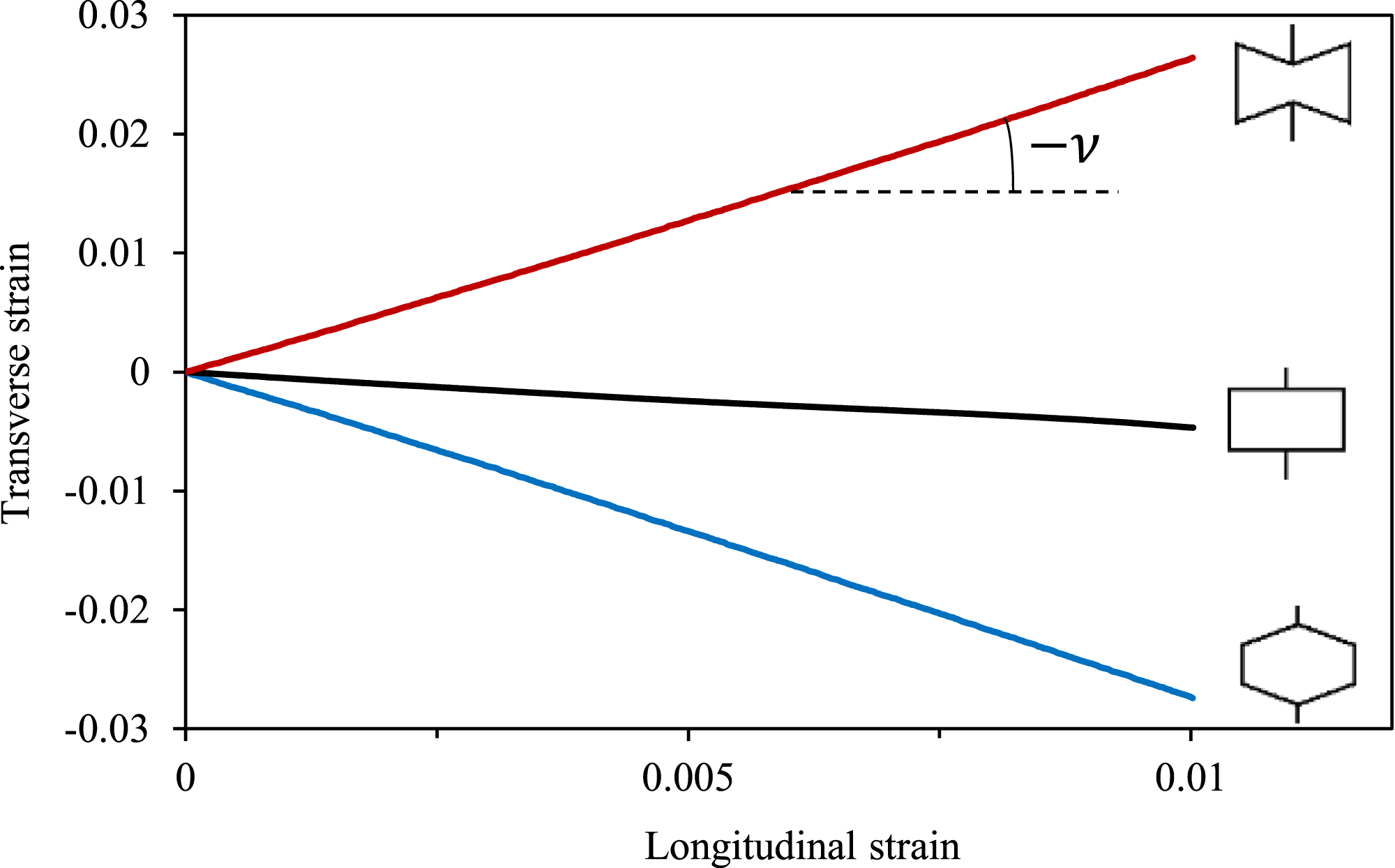
Figure 7 shows the comparison of the experimental and numerical variations of the Poisson’s ratio results for architectural structures with a rectangular, re-entrant and hexagonal configuration as a function of the number of cells in width of the specimens. The Poisson’s ratio was negative for re-entrant nuclei whose behavior was auxetic. However, this ratio was positive for other structures with rectangular and hexagonal cores. The results also show that the absolute values of the Poisson’s ratio increased as the number of cells along the width of the specimens decreased for the hexagonal and re-entrant nuclei. There was close agreement between the experimental Poisson’s ratio and that of the finite elements. Experimental and numerical results of the structural Poisson’s ratio for: (a) hexagonal, (b) rectangular and (c) re-entrant cores.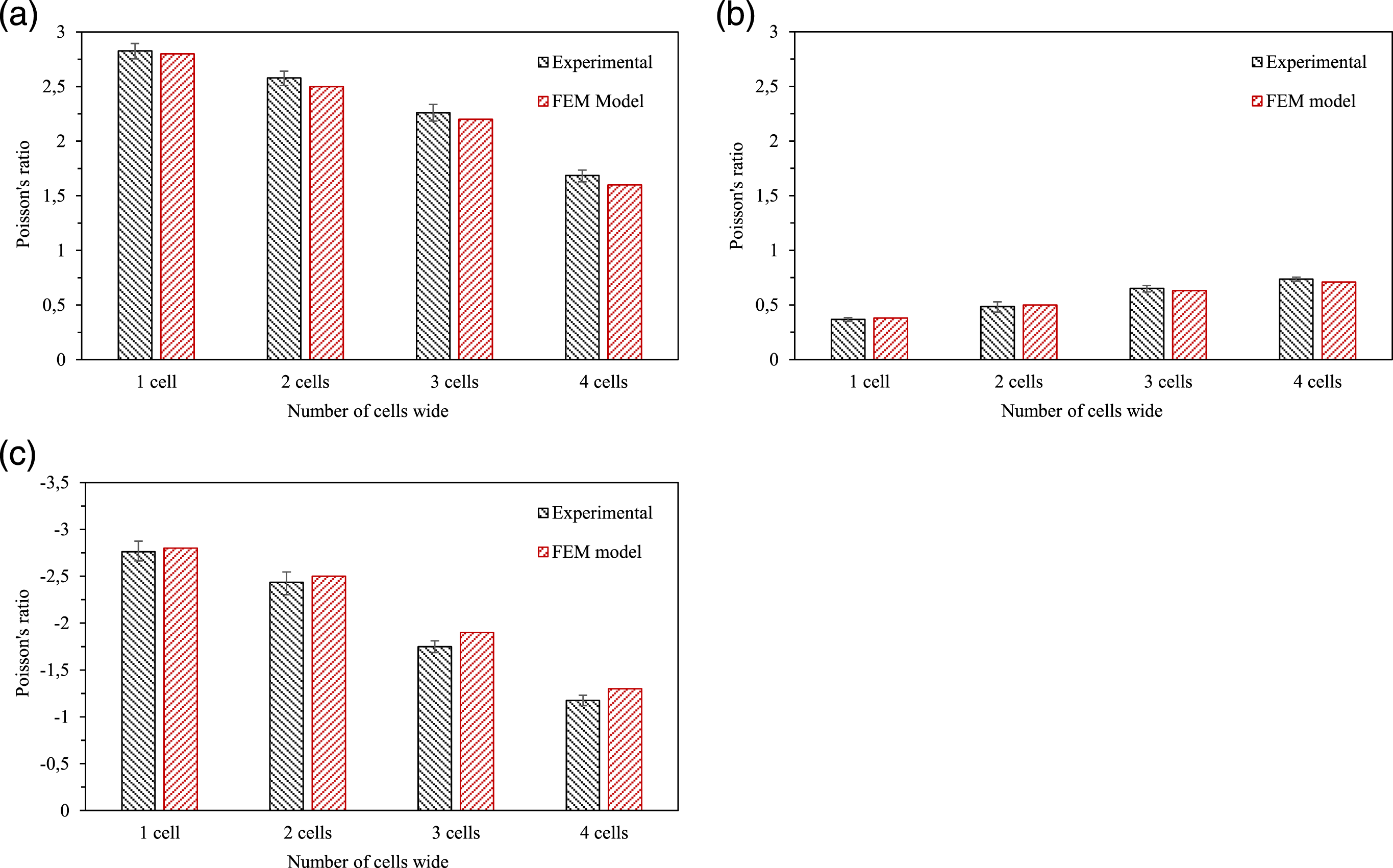
The structural Poisson’s ratio was sensitive to the design of the architecture, in particular the cell walls inclined with respect to the direction of the load which significantly influenced the transverse deformation. The increase in the number of cells on the Y axis generated an increase in the relative density which played an important role in the characterization of materials. For the rectangular structure, as the number of cells increased along the width of the specimens, the structural Poisson’s ratio gradually began to approach its usual value, in the present case (ν = 0.3). Thus, the symmetric behavior of the Poisson’s ratio of the hexagonal and re-entrant structures essentially depends on the angle θ and on the number of cells along to the width of the specimens.
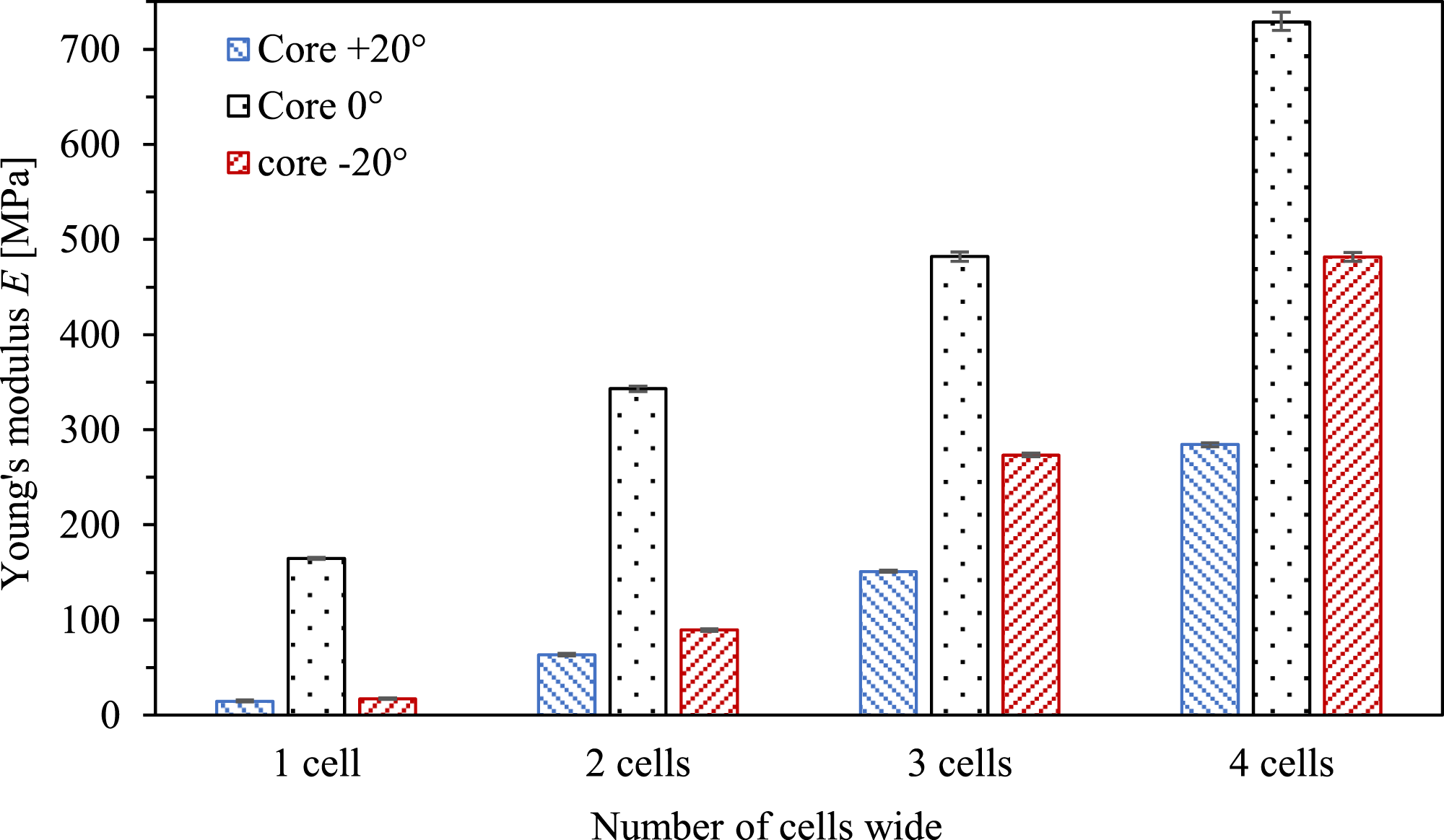
The structural Young’s modulus for each specimen was calculated from the experimental results of the stress/longitudinal strain curves as shown in Figure 5(b). The Young’s modulus was represented by the slope of each stress/longitudinal strain curve over the elastic domain (strain Experimental and numerical results of the structural Young’s modulus of: (a) hexagonal, (b) rectangular and (c) re-entrant cores. Young’s modulus of the three cores.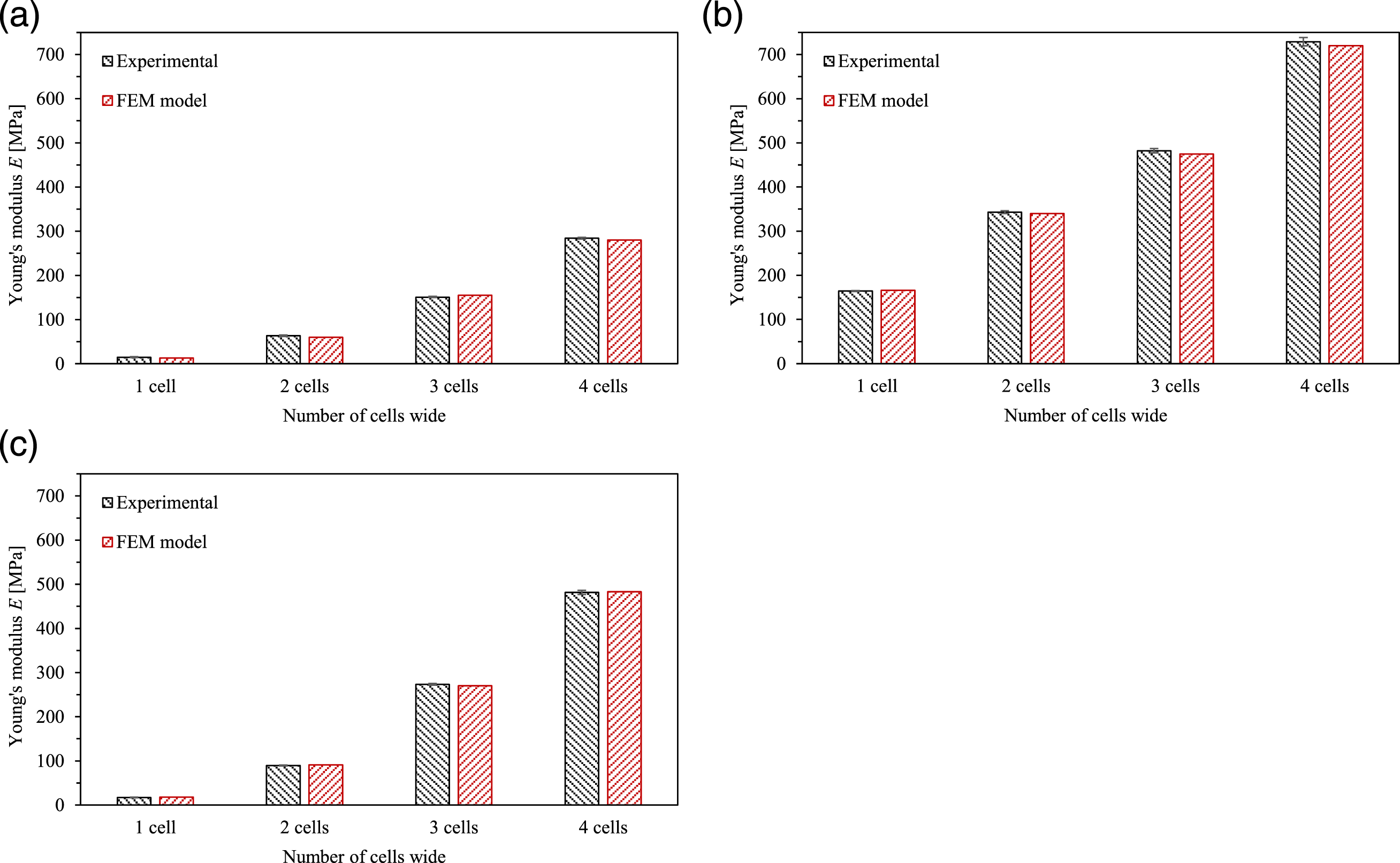
Vibration behavior
Free vibration experiments were carried out to study the variation in the vibratory behavior of sandwich structures with four lengths (140, 170, 200 and 230 mm) of the specimens, which makes it possible to acquire a variety of peak frequencies. In order to validate the dynamic properties obtained experimentally, calculation models based on the finite elements method were developed. The linear elastic properties of the PLA material filled with flax fibers were used for the cell wall material. Figure 10 shows an illustration of the experimental and numerical frequency response under impulse excitation. The damping behavior obtained from the experimental and numerical frequency responses shows close correlation. Indeed, the amplitude shift between the results of the finite element calculation and the results of the experimental tests has little influence on the loss factors which are determined by the HPB method (i.e. method at −3 dB). Experimental and numerical frequency response for an impulse excitation.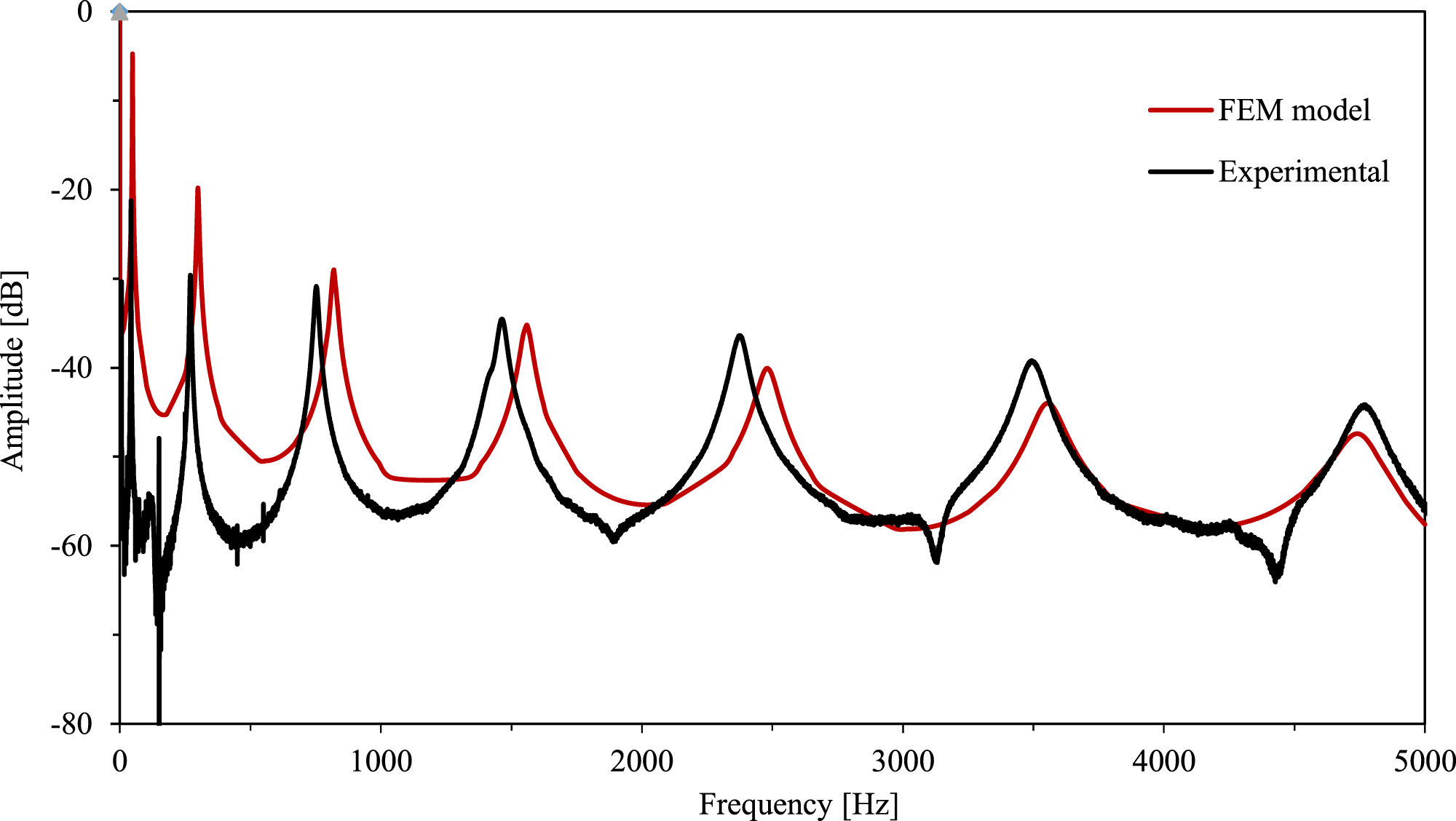
A slight difference is observed between the experimental and numerical damping properties. This difference can be explained by several reasons. First, the specimens were made using a 3D printer, which may cause some degradation of the PLA and flax fibers of the bundles when printed. In addition, the clamping conditions of the specimen used in the vibration tests have a very big impact on the result of the measured natural bending frequency. Finally, as a hypothesis for building the finite element model, it is considered that the composite is a “quasi homogeneous” material.
Damping behavior of auxetic cores
Figure 11 shows the results of the experimental and numerical damping factor of the re-entrant nuclei with 1, 2, 3 and 4 cells depending on the width of the specimen. The curves show that the structural damping factor increases with frequency. At low frequencies, this structural damping factor is between 1.55% and 1.8% for all core densities and configurations. For auxetic cores, the curves obtained with finite element simulations are correlated with those determined experimentally. Experimental and numerical loss factor for the re-entrant structure.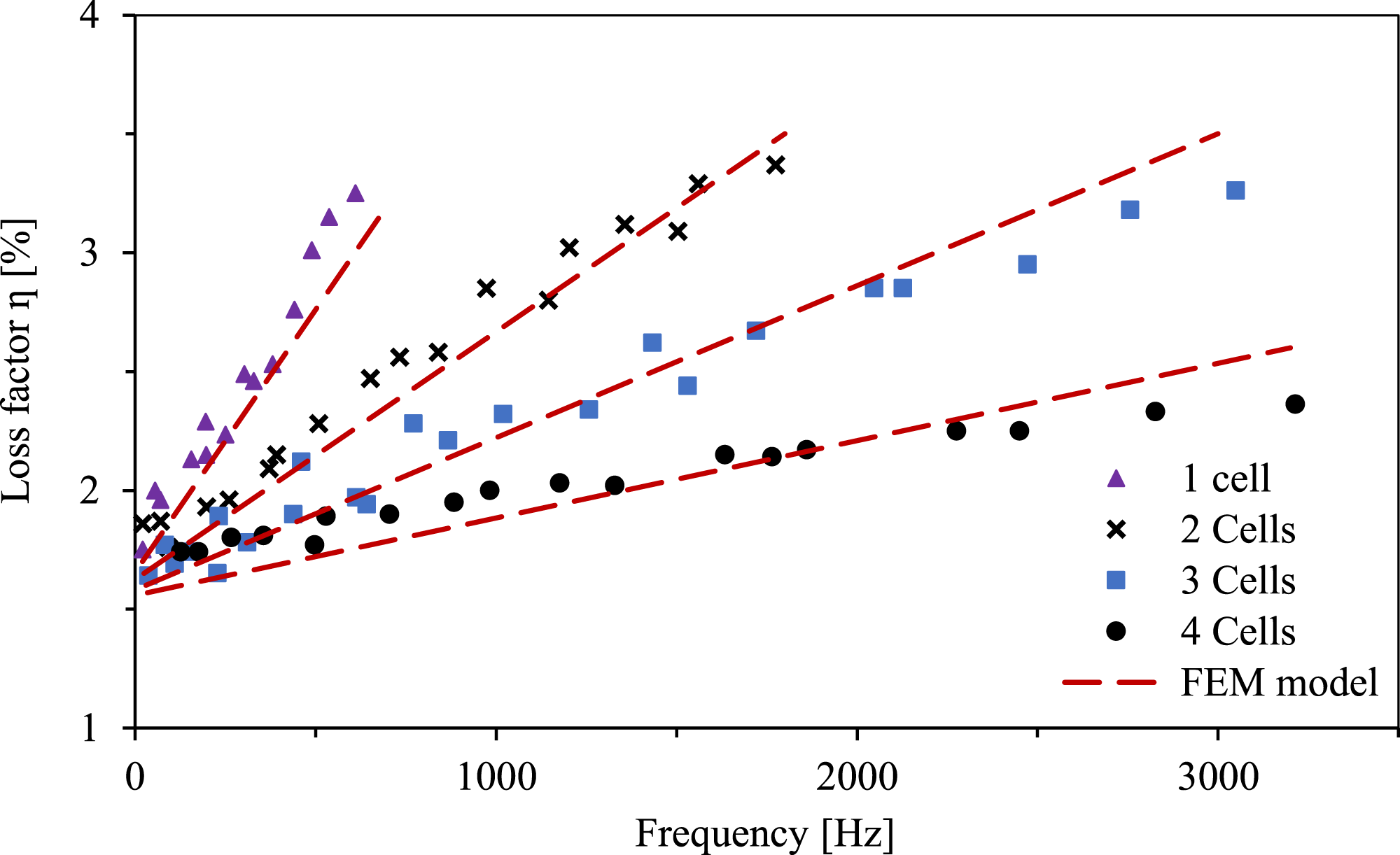
Damping behavior of sandwich structures
The influence of sandwich structures on the damping behavior of the bio-sourced composite has been investigated. The damping properties of sandwiches with auxetic and non-auxetic cores are determined for several densities and for three frequency levels. Figure 12 shows the results of the experimental and numerical loss factor as a function of the number of cells along the width of the sandwich specimens made with rectangular, re-entrant or hexagonal cores. The experimental results validate the numerical model used. The dynamic properties are determined from the loss factor curves of each sandwich as a function of frequency. The results show the influence of frequency and density on the energy absorption capacity of bio-sandwich structures. It has been noted that better damping occurs at high frequencies in a sandwich consisting of a low number of cells along the width of the specimen, regardless of the core topology. The results show that as the number of cells along the width increases, the slope of the structural damping factor curve decreases regardless of the sandwich core topology. At a frequency of 3000 Hz, the structural damping factor of sandwiches four-cells in width decreases compared to those one cell wide by 5%, 12% and 18% for the rectangular, hexagonal and re-entrant cores, respectively. Experimental and numerical loss factor of the sandwich structures: (a) hexagonal; (b) rectangular and (c) re-entrant.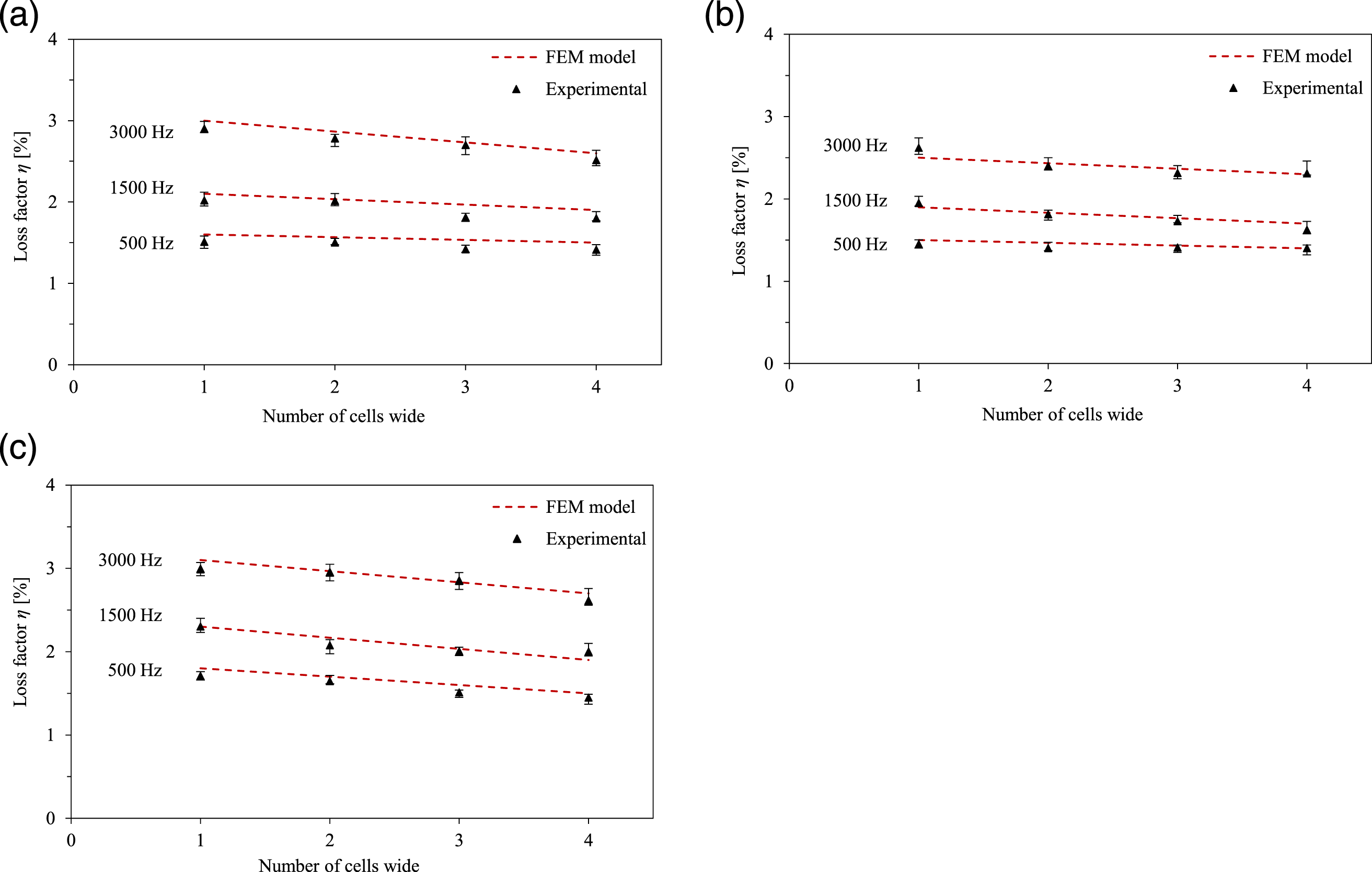
The damping behavior of the sandwich structures is compared a function of the number of cells along the width of the specimens. The results presented in Figure 13 indicate that sandwiches made with auxetic cores have better damping properties than those made with non-auxetic cores regardless of the number of cells along the width. We can also see that when the number of cells of the sandwich structures increases along the width, the difference in damping between them decreases. Damping properties of the sandwich structures with different core configurations.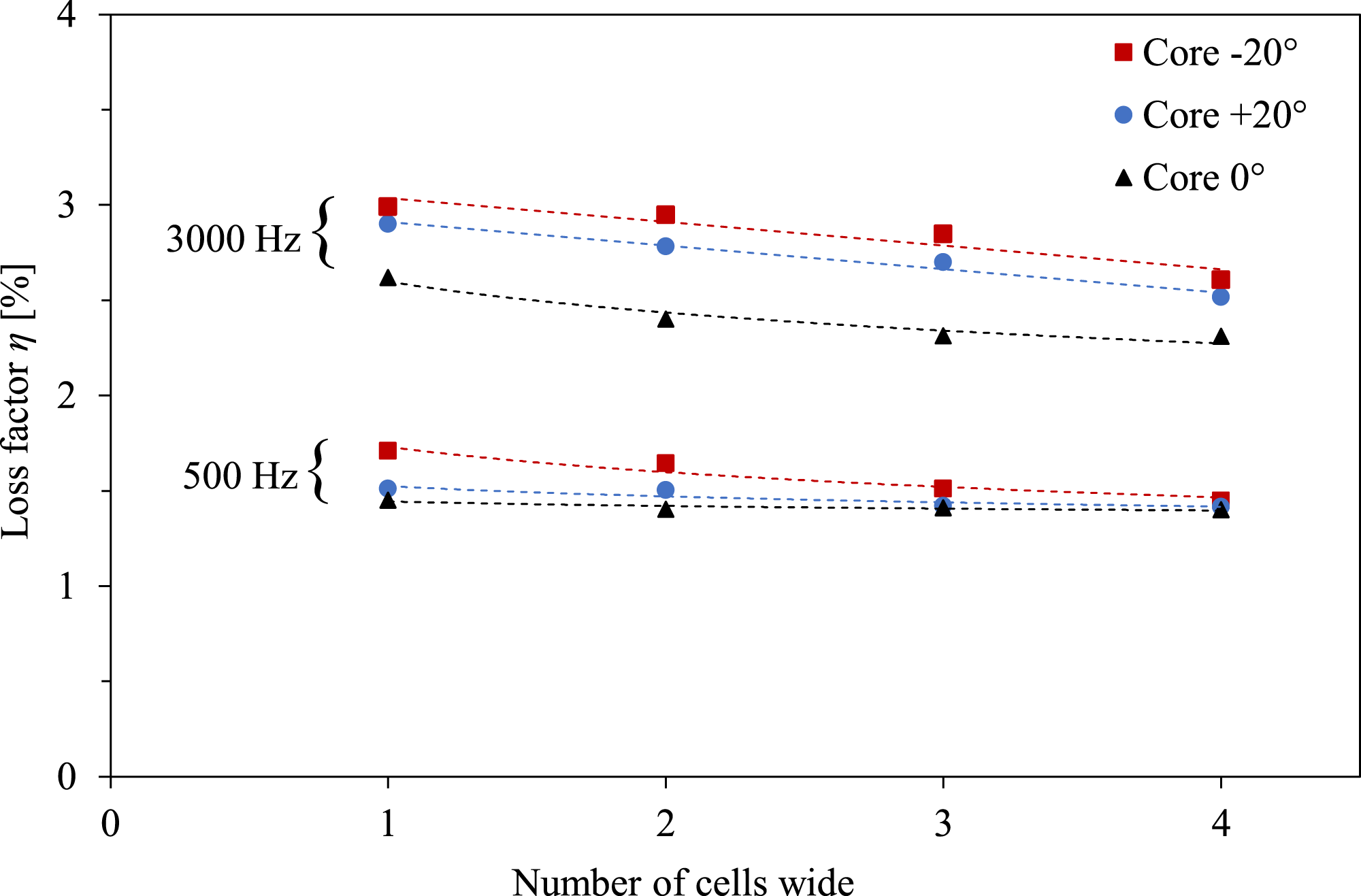
Equivalent stiffness of sandwich structures
The equivalent stiffness is determined for each sandwich structure studied in bending vibration, using equation (3). The results are shown in Figure 14 for rectangular, re-entrant and hexagonal sandwiches 1, 2, 3 and 4 cells wide. This study is conducted to understand and analyze the behavior of equivalent stiffness of sandwich structures as a function of frequency. For all sandwiches, the equivalent structural stiffness decreases as the frequency increases. At low frequencies, the equivalent stiffness remains almost constant for the majority of the specimens studied, between 15 × 105 and 17 × 105 N.mm2. When the number of cells increases along the width of the specimens the equivalent stiffness of the sandwich increases, as shown in Figure 15. Experimental results of the equivalent stiffness with the frequency (a) hexagonal; (b) rectangular and (c) re-entrant. Experimental results of the equivalent stiffness of the sandwich configurations for different frequencies: (a) hexagonal; (b) rectangular and (c) re-entrant.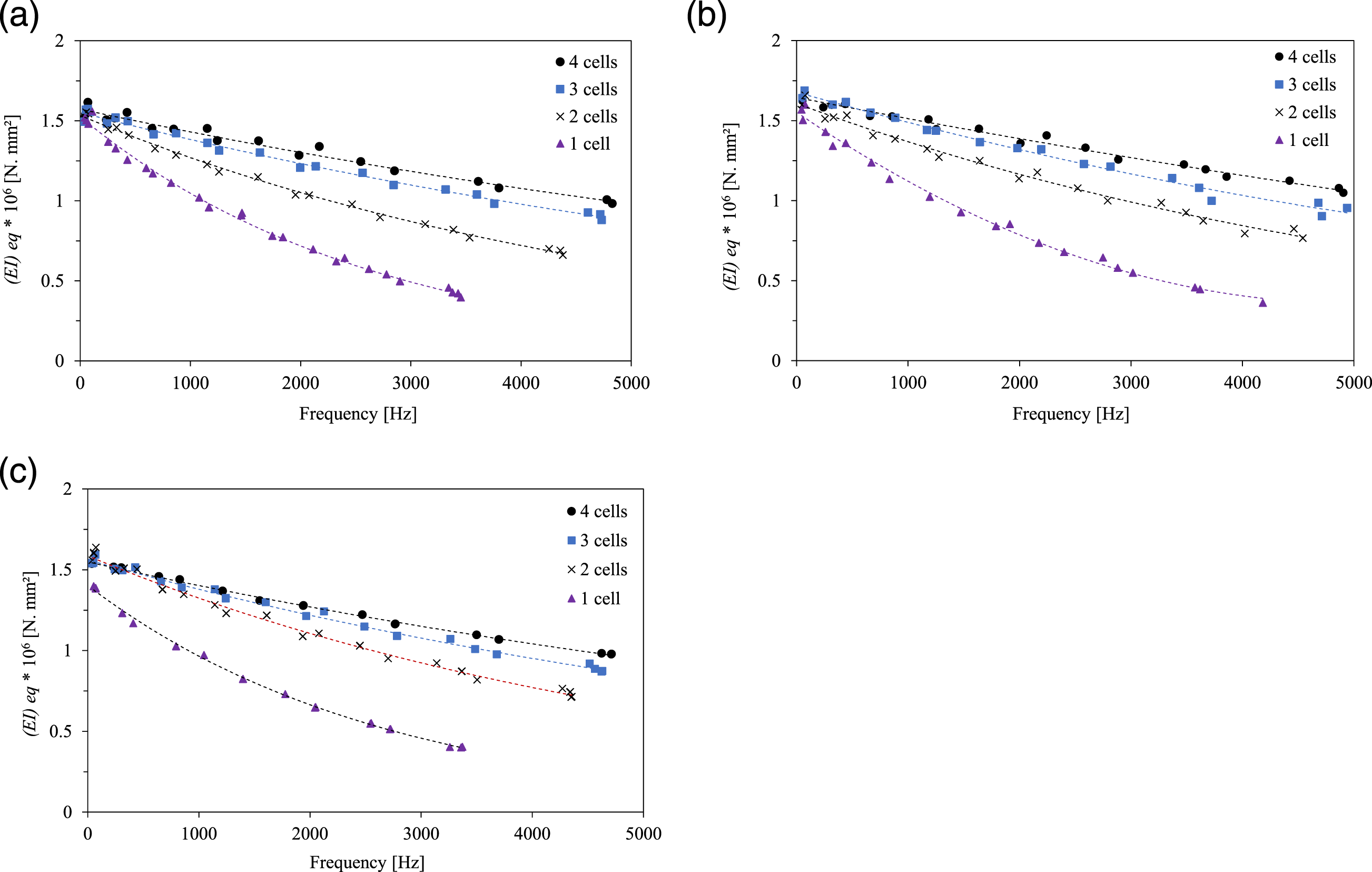
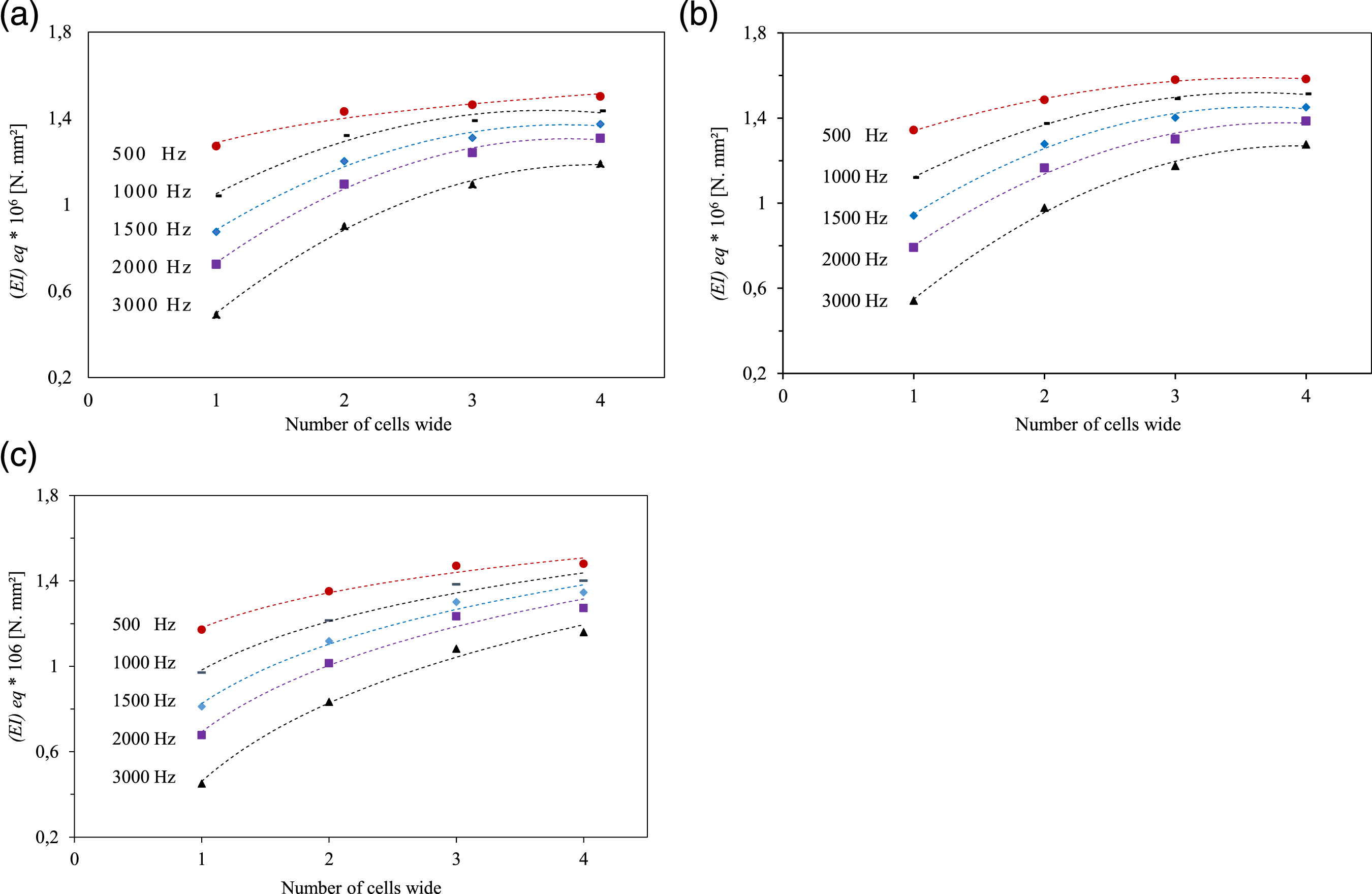
Moreover, with the same number of cells along the width of the specimens, the honeycomb design has an impact on the equivalent rigidity of ∼10%–15% between the three sandwiches as shown in Figure 16. The results show that the corner sandwiches θ = 0° are stiffer than the others. Equivalent stiffness of the sandwich structures with different core configurations.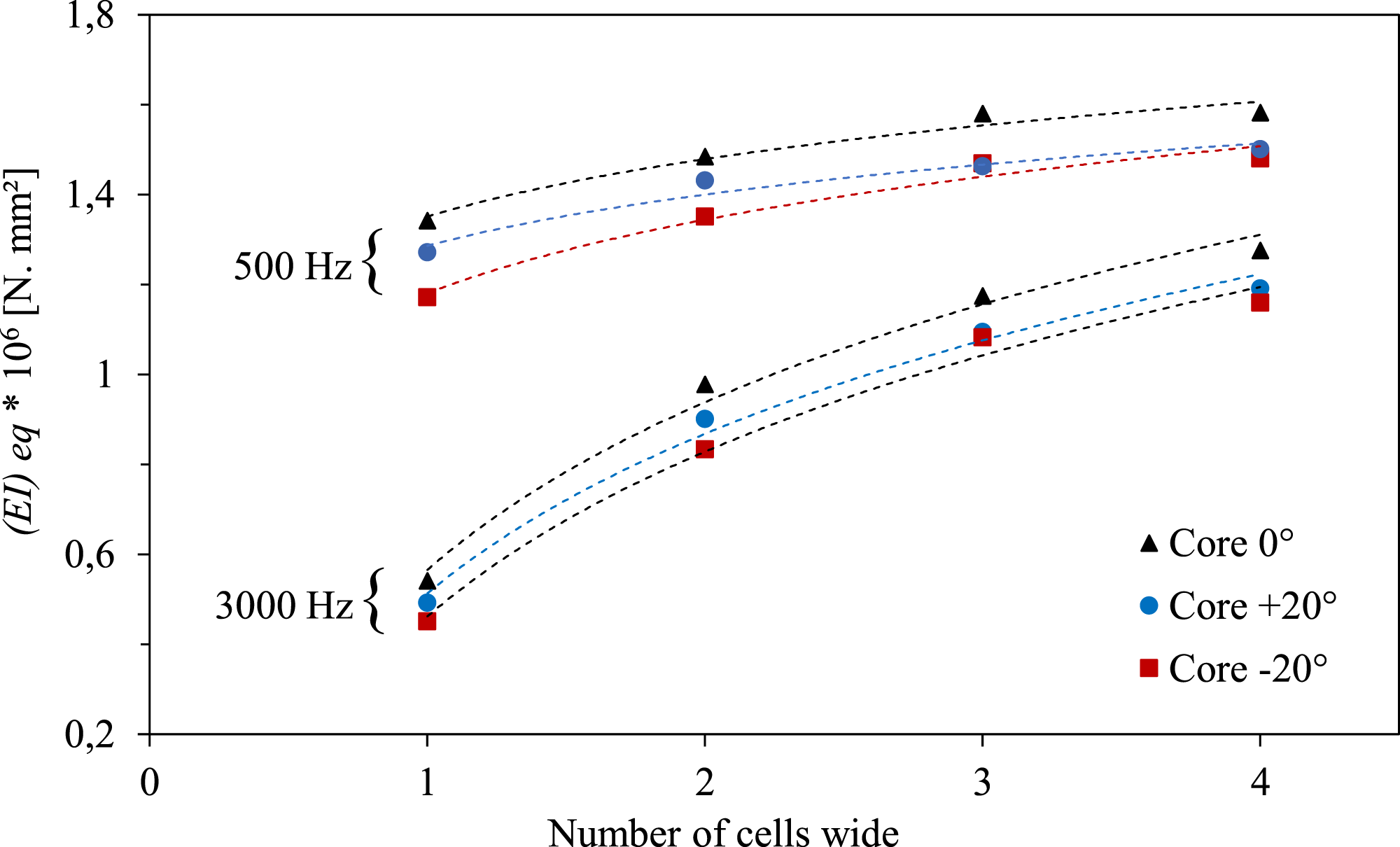
The damping and stiffness behavior of bio-sandwiches as a function of material, frequency and metamaterial design is explained by: The viscoelastic characteristics of PLA loaded with fiber flax represents a fraction of approximately 80% of the total volume and the cellulosic components and 20% of flax fibers. Moreover, the increase in frequency maximizes relaxation of the polymer network (PLA) after its deformation, which implies an increase in the structural loss factor and a decrease in stiffness. Moreover, the structural damping properties depend mainly on the geometry. In this study, it is found that the wastage factor of the sandwich made with auxetic cores is higher than that of the sandwiches with non-auxetic cores. This can be explained by the impact of the auxetic behavior of the core on stiffness and damping.
Conclusion
In this work, the static and vibrational properties of sandwich structures made with auxetic and non-auxetic cores are studied and presented. Experimental tests and numerical simulations with finite element models are carried out. The sandwich specimens and architectural cores are made from a bio-composite material which is PLA reinforced with flax fibers. CAD software was used to design the geometric models of the samples. A 3D printer was used to produce the specimens within the parameters recommended by the manufacturer. Experimental tensile tests and numerical simulations were carried out on the architectural cores for each number of cells along the width of the specimens in order to evaluate the structural Poisson’s ratio and the Young’s modulus of the metamaterials. Then, the vibration properties were studied to determine the dynamic damping and the stiffness using the HPB method. Close correlation exits between the results of the experimental tests and those obtained with the numerical simulations by finite elements.
PLA bio-composite materials filled with flax fibers have a good damping coefficient and good rigidity this can be an asset for certain industrial applications. A low number of cells along the width of the specimens leads to good damping and low rigidity. A large number of cells along the width of the specimens generates high rigidity and weakened damping. On the other hand, the loss factor and the equivalent stiffness are largely sensitive to the frequency.
In summary, it is observed that each architectural core has its own static and vibratory properties depending on the number of cells along the width of the samples. However, for sandwich structures, the effect of geometry variation on damping properties is apparently negligible. Indeed, the effect of the core on the damping factor decreases when it is confined by two face sheets. In addition, at constant thickness for all the cores, the sandwiches have a slight difference in damping behavior. A future study will be conducted on the vibrational behavior of sandwiches to evaluate the effect of core thickness and cell orientation on the overall properties of sandwich materials.
Footnotes
Declaration of conflicting interests
The author(s) declared no potential conflicts of interest with respect to the research, authorship, and/or publication of this article.
Funding
The author(s) received no financial support for the research, authorship, and/or publication of this article.
