







Abstract
Lattice-frame sandwich structures are widely used due to lightweight, high specific strength and potential multifunctions. The additive manufacturing technology further expends their designability and applicability in modern manufacturing industry, better realizing the integration of design, manufacturing and function. The reentrant lattice-frame materials generally show special negative Poisson’s ratio behavior and excellent energy absorption characteristics. In this paper, a 3D NPR lattice-frame sandwich structure is constructed by the orthogonal arrangement of 2D reentrant hexagonal honeycomb using the selective laser sintering 3D-printing. The reusable parent material and printing quality are characterized. The mechanical behaviors and fracture morphology of printing specimens are studied to explore the interlayer mechanism and potential effect of layer-by-layer printing. The uniaxial compression behaviors and energy absorption characteristics of NPR lattice-frame structures are analyzed by experimental and numerical methods. The influences of geometric parameters on mechanical property and failure mode are revealed. The negative Poisson’s ratio effect released during the deformation evolution of the structure can obviously improve the defamation tolerance and energy-absorbing capability.
Keywords
Introduction
Metamaterial is a kind of special artificial composite structure or composite material. Through the orderly architectured design of the unit cell constituted, it can show extraordinary physical properties rarely found in natural materials. The concept of metamaterial was first proposed by physicist Veselago 1 based on the electromagnetic property of materials, then gradually extended to other fields, such as optical, acoustic, mechanical, thermal and other properties.2–6 Mechanical metamaterials have become a research focus of structural materials, following by negative Poisson’s ratio (NPR), negative stiffness and negative thermal expansion discovered. The NPR materials are considered as ideal candidates for the sandwich cores from soft to stiff materials, due to high specific stiffness, anti-indentation resistance, curvature deformation and torsional properties, and excellent energy absorption characteristic.7–10 These materials have been widely employed in aircraft tail, engine blades, ship substrate and protection structures, body armor, and other engineering parts.11–13
Common NPR structures generally include reentrant structures, chiral structures, rotating rigid structures. Among these, the reentrant structures are more convenient for manufacturing and application due to their simple lattice-frame configurations. Gibson et al. 14 proposed a two-dimensional (2D) reentrant hexagonal honeycomb, which can laterally expand outward under uniaxial tensile loading, whose elastic constant are predicted with a Poisson’s ratio of −1. 15 Masters and Evans 16 topologically optimized 2D reentrant honeycomb to generate various other NPR configurations. Gao et al. 17 developed 2D tree-like auxetic lattice structure based on the stretch-dominant concept, which exhibits controlled anisotropic elastic properties and obvious NPR effect along omni-direction. A rapidly fabricating approach is further exploited for above auxetic structure with carbon fiber composites. 18 Researches on NPR materials are gradually developing from 2D to three-dimensional (3D) lattice-frame structures. Gao et al. 19 combined 2D triangular unit cell to construct a 3D double-arrow NPR structure, which effectively improves the elastic modulus of the structure. Fu et al. 20 folded 2D reentrant honeycomb into 3D auxetic structure, following a significant enhancement of NPR characteristics with the stiffness reduction of lattice nodes. Wang et al. 21 employed relatively softer materials at the predetermined deformation nodes, thereby increasing the deformation tolerance of 3D reentrant NPR structure. Lu et al. 22 and Chen et al. 23 incorporated the reinforcing ribs to enhance 3D reentrant hexagonal honeycomb, inducing the deforamtion evolution from bending-dominated to tension-dominated pattern. Liu and Wang 24 designed a reentrant arc angle to substitute the conventional tip angle, developing an adjustable 3D star-shaped NPR structure with significant improvement of compressive strength.
To meet complex engineering requirements, the adjustable design and multifunctional optimization of NPR lattice-frame structures are conducted to develop the desiring mechanical properties, energy-absorbing characteristics and intelligent protection performance. Wang et al. 25 modified the classical reentrant structure by adding arrow structure, which can significantly improve the stiffness without sacrificing the NPR effect. Zha et al. 26 proposed a pre-folded lattice-frame metamaterial with excellent energy absorption and vibration isolation capacity, displaying variable Poisson’s ratio characteristic under quasi-static compression. Lu et al. 27 designed a novel hierarchical NPR material combining reentrant structure with rotated square structure, and three-step ordered deformation emerges accompanied by three energy absorbing platforms. Liu et al. 28 studied the effect of printing path on Poisson’s ratio, compressive modulus and energy absorption for fiber reinforced NPR structures based on symmetrical orthogonal and one-stoke path planning. Zhang et al. 29 optimized the stiffness and load carrying capacity by grooving the structure and adjusting the angle of diagonal support rod. The NPR effect of the structure is more pronounced under impact loads, especically for the star-shaped body. Li et al.30,31 proposed a 3D petal-like fiber-reinforced composite auxetic structure to eliminate cliff-like stress drops. By introducing membrane and reasonable cavity design, the structure can produce low broadband noise reduction performance. Tian et al. 32 employed a reentrant honeycomb sandwich structure to improve the crashworthiness of the stiffened plate. An intelligent optimization method is established to balance lightweight design and mechanical property, providing a reference for design of new multi-functional ship structures.
Through structural design and topology optimization, more and more new mechanical metamaterial structures are been developing. The preparation of these complex artificial NPR structures can be carried out owing to additive manufacturing technology.33,34 However, the structural deformation process, damage evolution mechanism, and the influence of geometric configuration have not been fully understood. In this paper, a 3D NPR lattice structure is constructed by the orthogonal arrangement of 2D reentrant hexagonal honeycomb along the direction of lattice-frame straight-strut. The selective laser sintering (SLS) process is employed to realize the integrated manufacturing. The mechanical properties of parent material for printing and NPR lattice-frame sandwich structures are studied, exploring the effects of the printing process and core-configuration parameters. Based on the specific process used, the reusability of the parent material and the quality of the printed surface are effectively characterized from microscopic morphology to macroscopic performance. The deformation evolution, failure mechanism and energy absorption characteristics of NPR lattice-frame sandwich structures along the reentrant direction subjected to quasi-static uniaxial compression are fully illustrated by combining experimental and numerical methods. A preferred NPR engineering structure would possess lightweight, excellent load-bearing and energy absorption capabilities, and even muti-functionality of specific service requirements based on structural design and topology optimization.
Preparation and performance analysis of NPR lattice material
Design and fabrication of NPR lattice material
A typical two-dimensional reentrant hexagonal honeycomb is regularly arranged as staggered orthogonal array, constructing into the three-dimensional NPR lattice material, as shown in Figure 1. For the 2D NPR lattice material, the reentrant hexagonal can be regarded as unit cell marked with red dotted line. The unit cell consists of two kinds of lattice struts, straight-strut and inclined-strut. For the cellular materials, the relative density is an important factor affecting the mechanical properties. It is a dimensionless characterization of the cellular compactness, which can be expressed as the ratio of the actual density of the structure to the theoretical density of the material. Therefore, the relative density, NPR lattice-frame materials with reentrant hexagonal unit cells.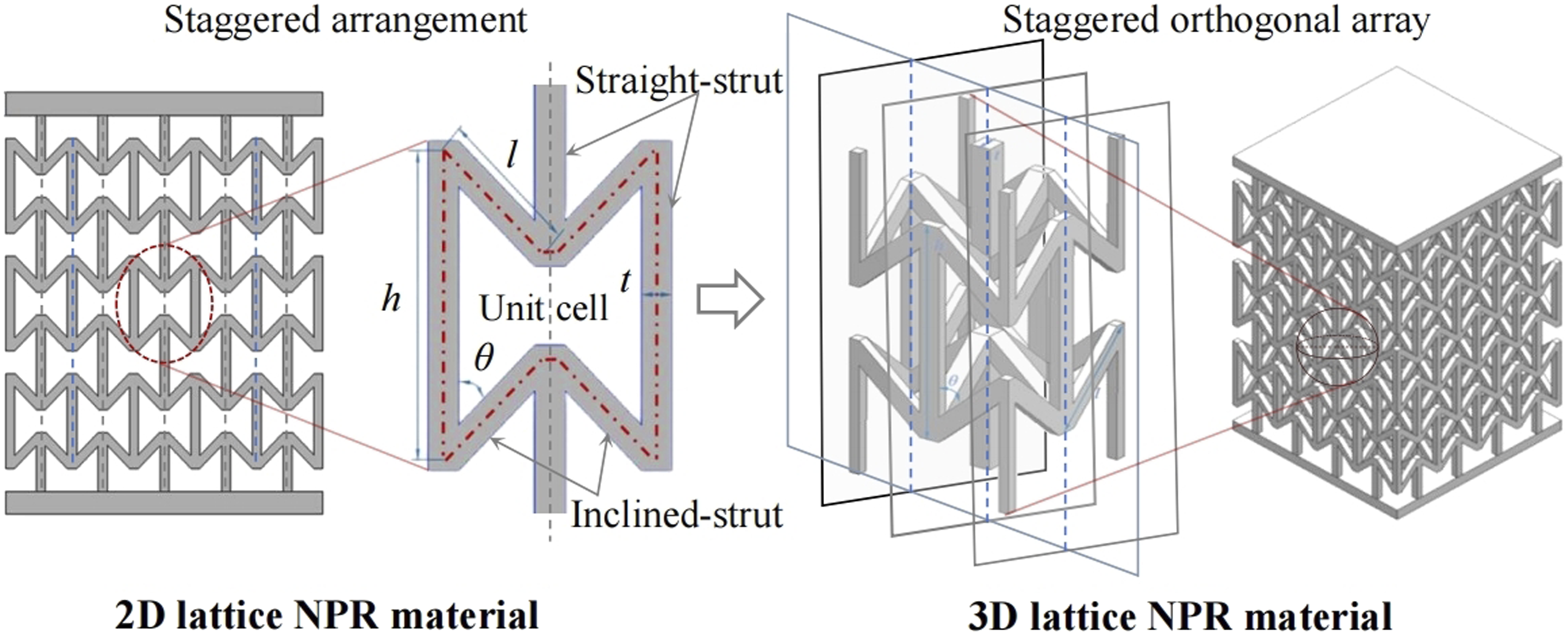


Selective laser sintering technology (SLS) is employed to manufacture the NPR lattice materials using the Formlabs Fuse Printer with printing accuracy 0.1 mm. The thermoplastic nylon 12 powders are sintered layer by layer from bottom to top. The print layers of 110 μm thickness would be gradually stacked and fused into the final specimens. The unsintered powders that plays a supporting role are recycled with 30% refresh rate as recommended in SLS Material Printability Chart published on the Formlabs official website. In this study, the length of straight-strut (h) and inclined-strut (l) of unit cell is designed as 20 mm and 10 mm. The thickness of lattice strut (t) is selected as 1.4 mm, 1.7 mm and 2 mm, and 30°, 45°, 60° for the angle between straight-strut and inclined-strut (θ).
As shown in Figure 2, the micromorphology of printing powders is observed and compared to the recycling powders. The particle size of the powders is relatively uniform and generally between 50∼80 μm. Nearly 60% of the powder particle size is concentrated between 60∼75 μm. The original powder is intact and spherical with smooth and regular surface. After the laser sintering process, parts of the recyclable unsintered powder on the printed product’s surface may crack due to adjacent thermal effects, resulting in the detachment of small particles. It would weaken the interface bonding strength among these sintering powders. Therefore, 30% refresh rate is necessary to ensure printing quality. For the printed specimens, the granular uneven surface emerges. The surface of last printing layer powders have are melted into fill the gap of the lower layer. These particles become small and irregular ellipsoid, even showing terraced topography. Some tiny particles are attached to the surface of the particles. As shown in Figure 2(c), it can be inferred that one or two printing layers on the printed specimen surface are not fully fused together. Micromorphology variation of printing powders: (a) original powders, (b) recyclable unsintered powders, (c) surface powders printed of specimen.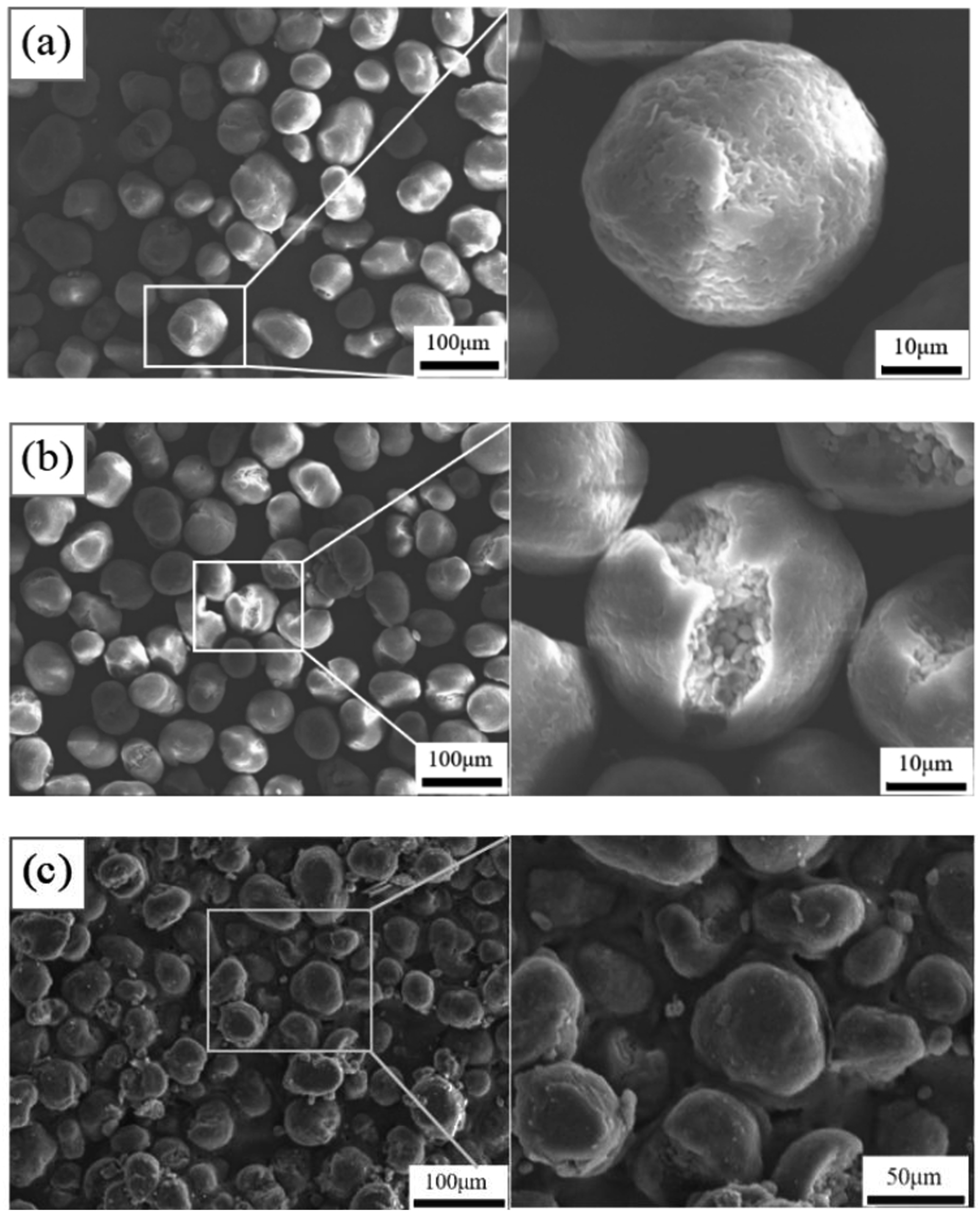
The layout of printed specimen maybe affect the printed quality. As shown in Figure 3, the differences of surface morphology of the specimen are displayed. In contrast, the roughness on lateral surface of side standing specimen printed is larger than that of flatwise layout. For the flatwise specimen, the roughness also has an obvious difference between the upper and lower surfaces of the printed specimen. During the sintering process, each layer is treated before printing to ensure the flatness and uniformly distribution. The laser only sinter the new powder layer at the top and bond them to the previous layer, forming a continuous and uniform structure. The bottom-up 3D-printing through layer upon layer can make the surface quality better and better. However, one or two layers powders on the surface are not still fully fused together, showing a certain roughness as shown in Figure 2(c). Therefore, it is necessary to lay the important surface flatwise to ensure uniform performance in the surface, or lay the large plane flatwise to avoid the accumulation of performance differences caused by bottom-up printing. Surface profile of 3D-printing specimens: (a) lateral surface, (b) lower surface, (c) upper surface, (d) average surface roughness.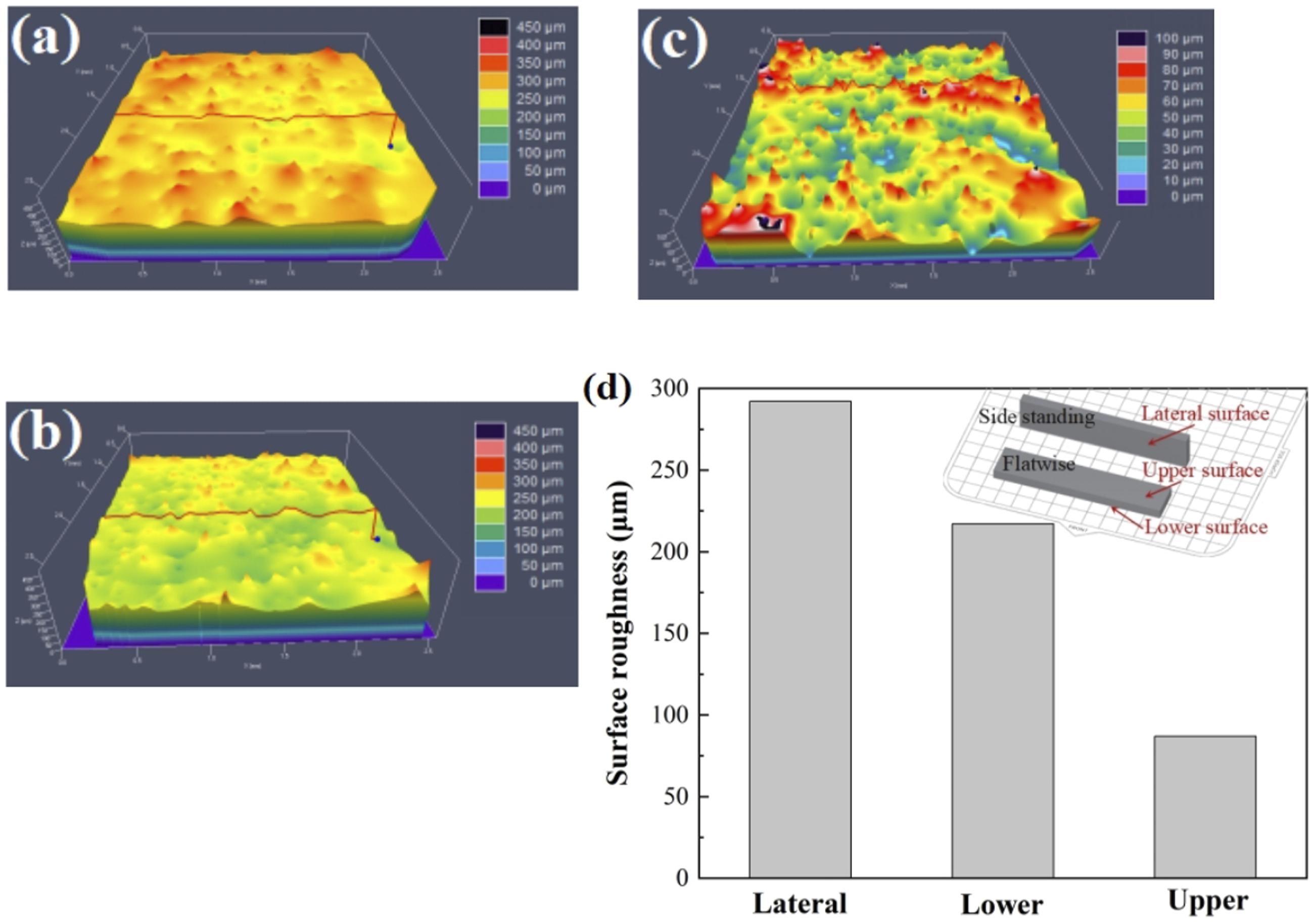
Experimental test and numerical simulation
Printing layer by layer can produce a series of interlayer interfaces perpendicular to the thickness direction of specimen. The interface property is characterized using shear tests, as shown in Figure 4. The shear stress-strain curves have a similar trend, increasing linearly until suddenly drops at the shear peak stress. It suggests that the SLS rapid prototyping can provide a uniform and stable interface, no obvious internal damage prematurely initiates during the shear tests. However, the potential printing defects, such as microvoid, incompletely fused particles, even their cluster and aggregation, are inevitable for SLS with powder recycling and reuse process. Furthermore, the layer by layer printing pattern is also prone to generate defects between printing layers. When the defects above-mentioned randomly occur on the shear interface, it would lead to a deviation within 10% in the ultimate strength. The average shear modulus and strength is 382.7 MPa and 8.61 MPa, respectively. Shear test of 3D-printing parent materials.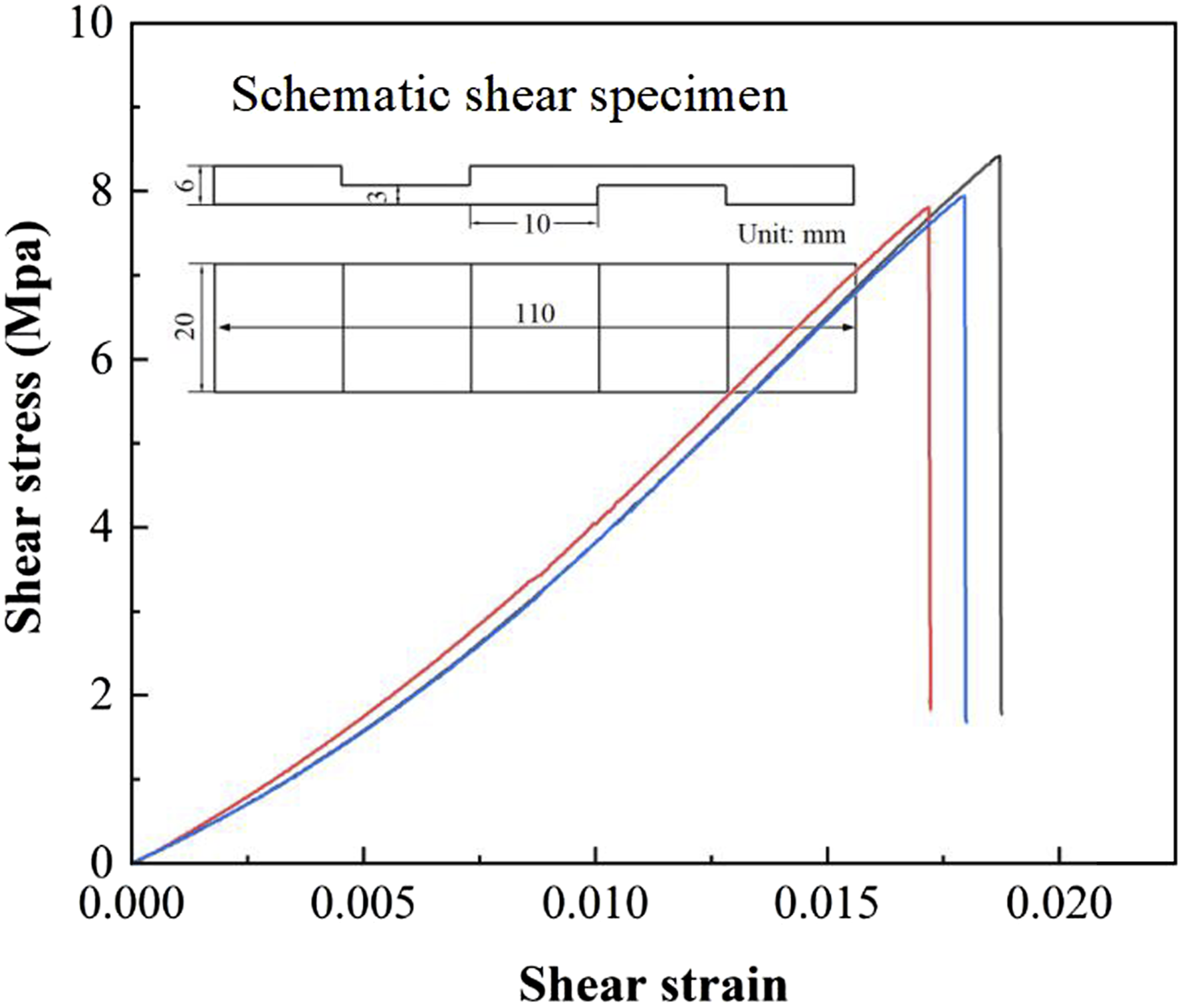
The load-bearing property also is affected by print angle to some extent as well as specimen layout. As shown in Figure 5, as the print angle varies from 0° to 90°, the shear strength and elongation both obviously decrease, and the modulus reduction is relatively small. It means that the optimal printing direction should be consistent with main bearing direction of the printed specimens, which can maximize the potential of the material. The flatwise specimen printed can provide more excellent shear strength than the side standing specimen, especially for 0° print angle. However, the effect of layout pattern, flatwise and side standing, on specimen property is suppressed with the increasing print angle due to the variation of printed interface orientation. The shear property is almost equivalent under 90° print angle. As the print angle increases, the dominant factor of mechanical property printed gradually changes from layout pattern to print angle, following obvious performance degradation. Shear response of 3D-printing parent materials on different print angles: (a) stress-strain curves, (b) shear strength.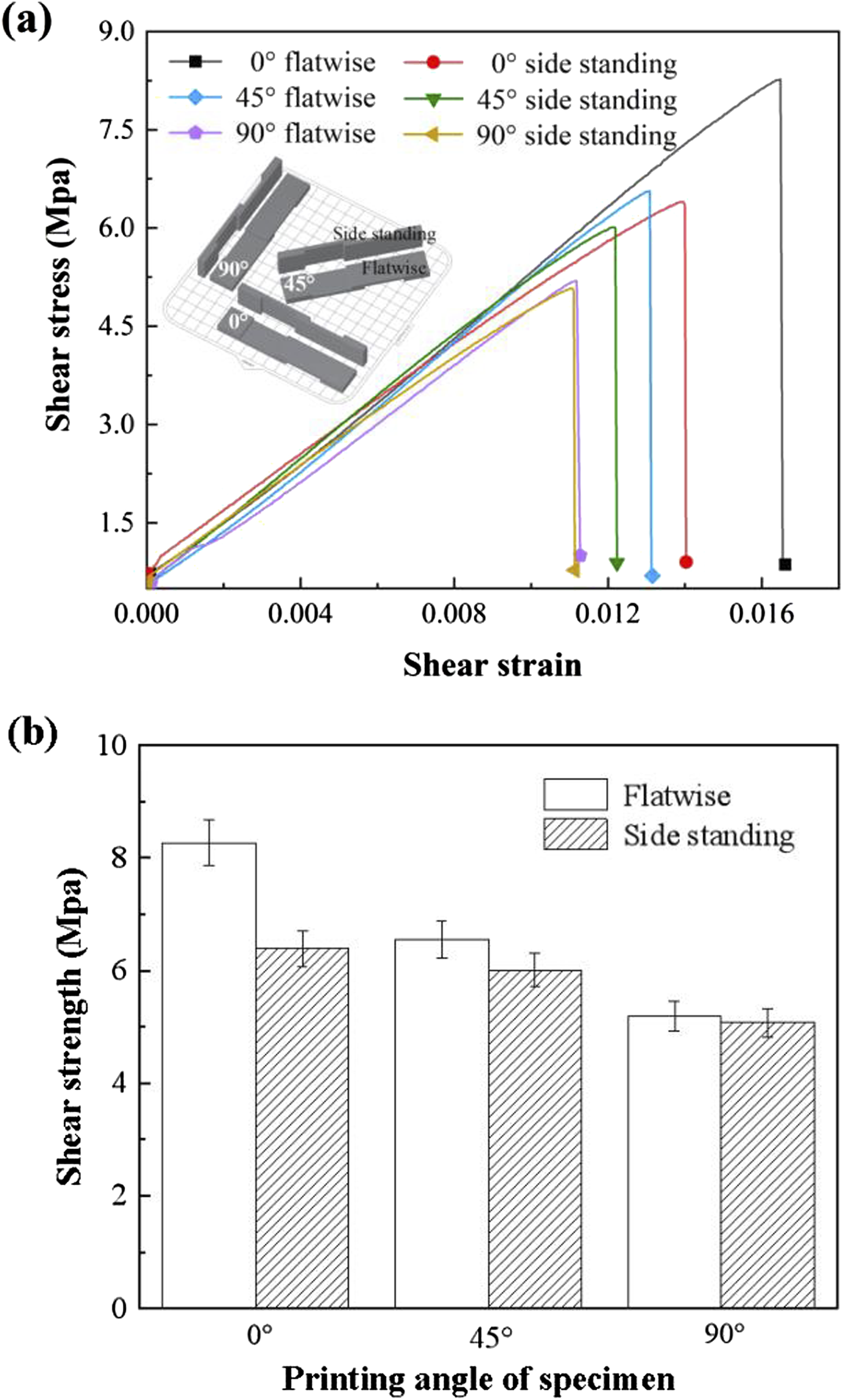
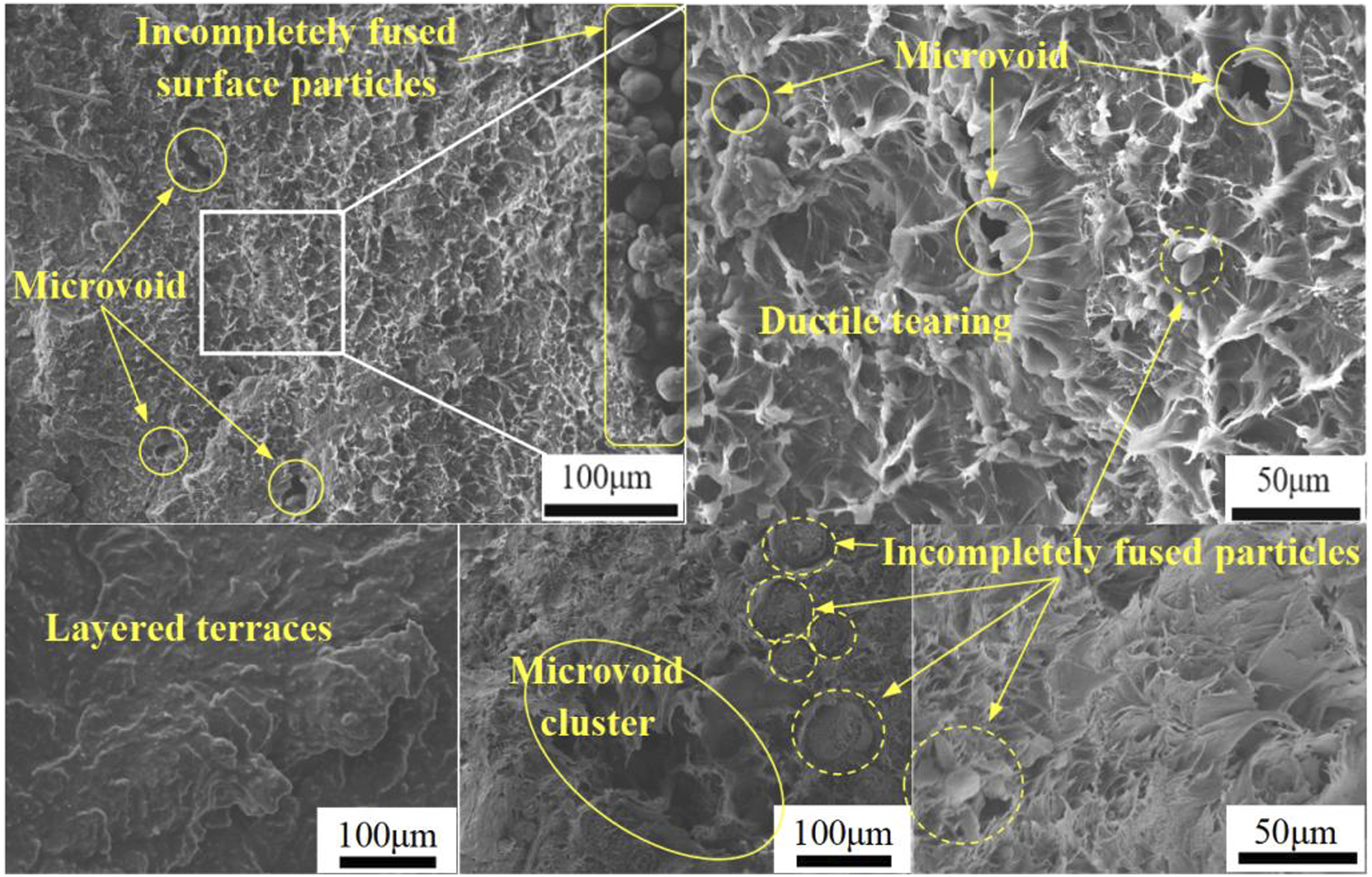
As shown in Figure 6, all tensile stress-strain curves display a bilinear trend, followed by a sudden drop. Though some defects are discovered on the printed surface, the internal morphology is still uniform due to self-repair behavior of layer by layer printing. The average tensile modulus is 1.95 GPa, the peak strength is 42 MPa. The tensile fracture morphology is relatively flat and a ductile tearing characteristic mainly emerges, as shown in Figure 7. Some incompletely fused particles are discovered on the fracture surface. Due to the variability of particle size, some large-sized particles may not be fully melted, which creates some residual small particles and incompletely fused interfaces. During the printing layer-by-layer, some gaps between particles may not be effectively compensated. Some random microvoids, even microvoid clusters appears. However, the layered terrace-like morphology is found occasionally on the edge of the fracture surface. Tensile stress-strain curves of 3D-printing parent materials. Tensile fracture morphology of 3D-printing parent materials.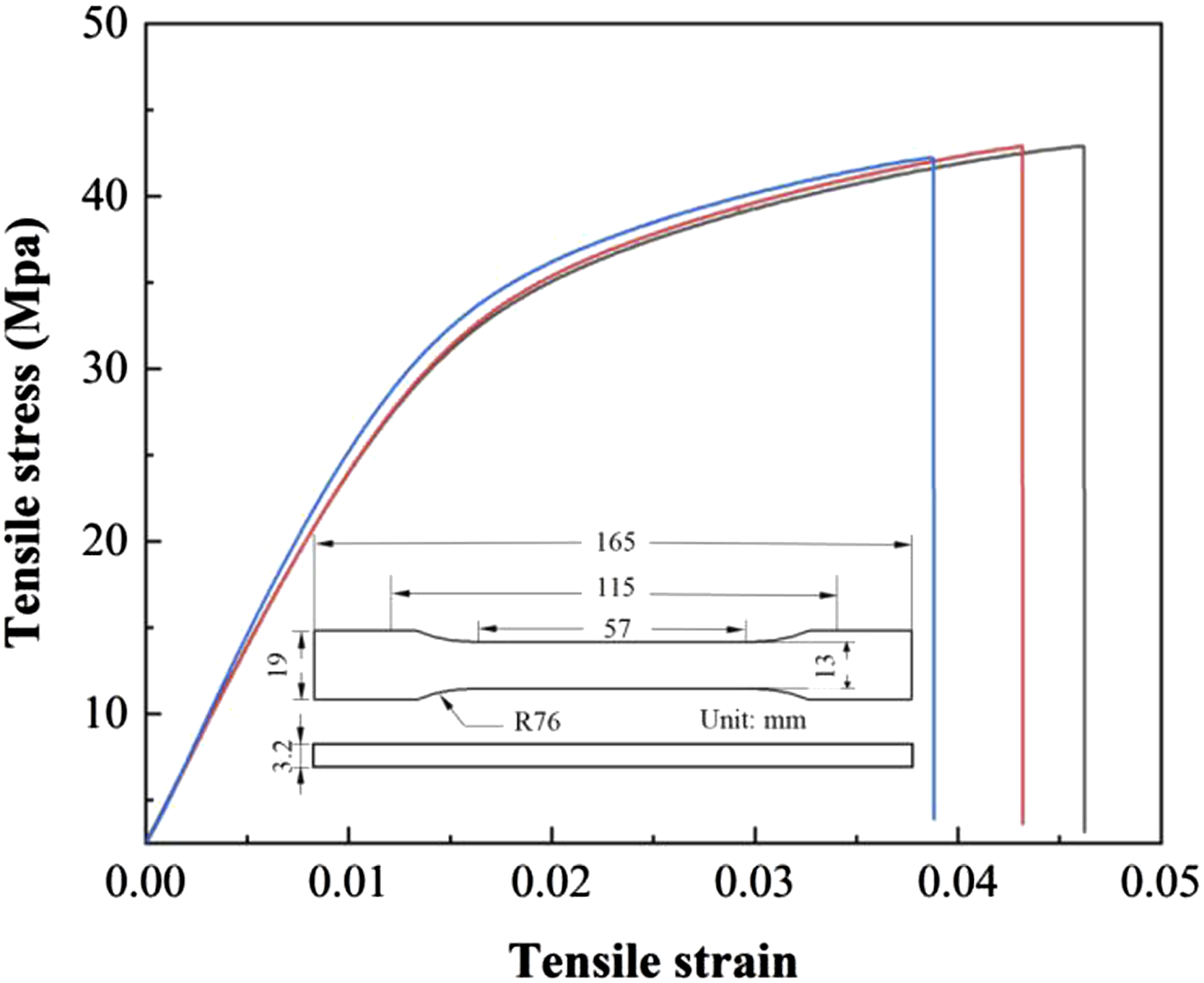
The numerical simulations are conducted to better explore the deformation behavior and evolution process of NPR lattice-frame sandwich panels. The ABAQUS/Explicit solver is employed to calculate the out-of-plane compression property with 0.01 analysis time and 5 × 10⁻⁷ time increment. Three-dimensional 8-node linear reduced integral element C3D8R is used for mesh generation. As shown in Figure 8, two pressure plates in compression test is modeled as rigid body, and the lower plate is fully constrained. The displacement load is applied to the reference point (RP) located in the center of the upper substrate of sandwich panel. The surface-to-surface contact is employed between pressure plate and the sandwich model. A friction coefficient of 0.3 is set along the tangential direction, and hard contact is applied in the normal direction. The mechanical property of parent material can be obtained from the above-mentioned experimental tests, as listed in Table 1. Nylon material and the NPR structure generally can both provide a larger deformation tolerance. These sandwich structure studied is not expected to cause obvious damage, the default damage model of ABAQUS is adopted. The grid independence verification is carried out, and the numerical results show a good agreement with the tests. However, due to imperfection of printing process, the numerical results are slightly higher than the experimental ones. Finite element simulation: (a) numerical model, (b) comparison between experimental and simulation results. Mechanical property parameters of nylon parent materials used.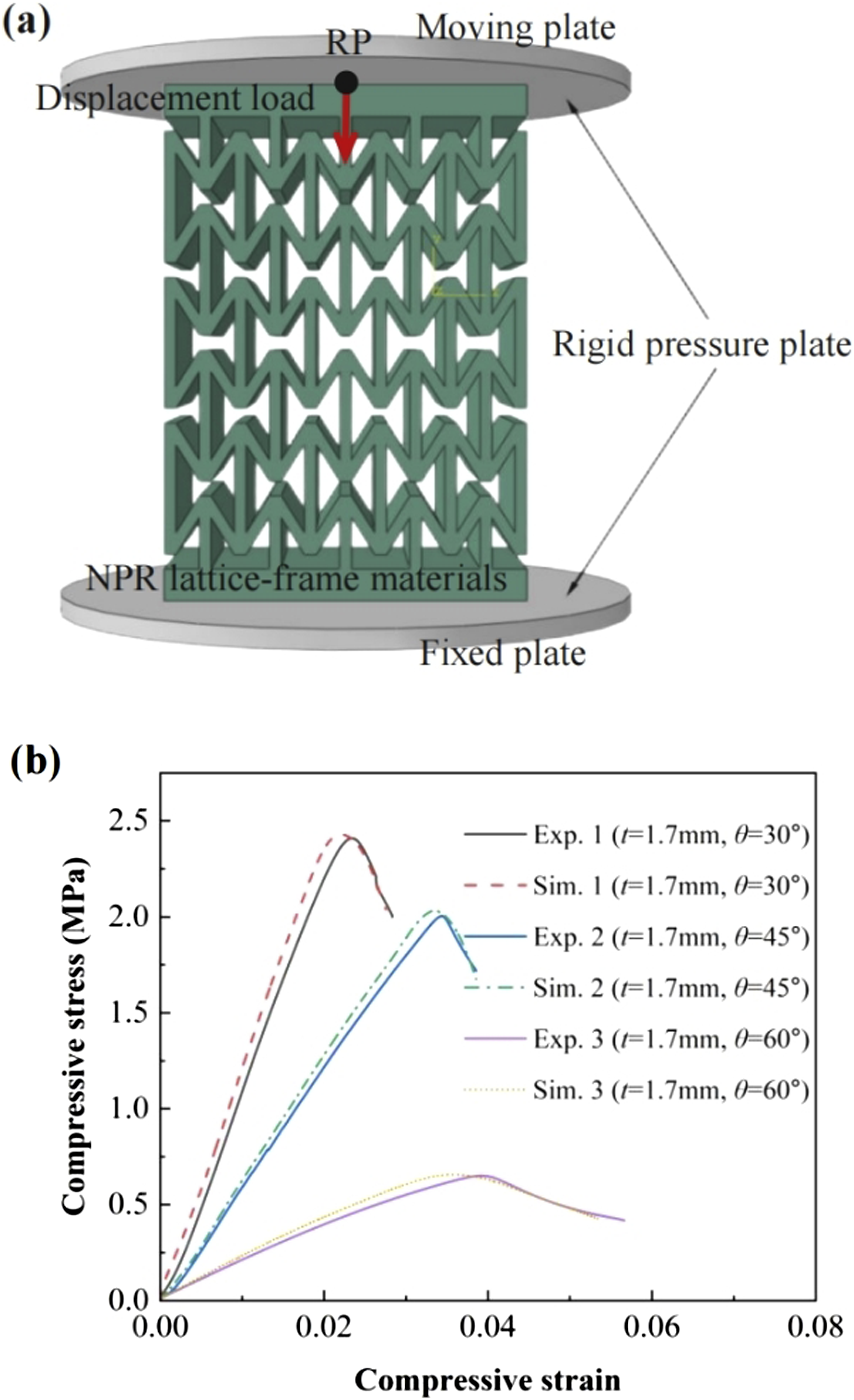

Results and discussion
Compressive behavior and energy absorption of 2D NPR lattice materials
The compression stress-strain curve of 2D NPR lattice cores generally can be divided into three stages: linear elastic, yield, stress drop until complete fracture, as shown in Figure 9. When the initial damage occurs and spreads, the lattice cores turn into the yield stage. After the peak stress, the bearing capacity decreases with a gradual slowing rate, followed by sudden complete failure. These can be With the decreasing reentrant angle or increasing strut-thickness, the peak strength and modulus can both be improved. Simultaneously, the stress-peak and breaking elongation gradually reduces as the reentrant angle decreases. For the lattice cores with smaller strut-thickness, a longer stress drop stage emerges in the range of large reentrant angles. In the range of relative small strut-thickness, the peak strength and modulus of lattice cores are both more sensitive to the thickness variation. The relatively greater influence of reentrant angle on structural modulus is displayed in the small angle range, but on the peak strength in the large angle range. Compressive properties of 2D NPR lattice-frame materials: (a) stress-strain curves under t = 1.4 mm, (b) stress-strain curves under t = 1.7 mm, (c) stress-strain curves under t = 2 mm, (d) modulus and peak strength, (e) energy absorption per unit volume, (f) energy absorption per unit mass.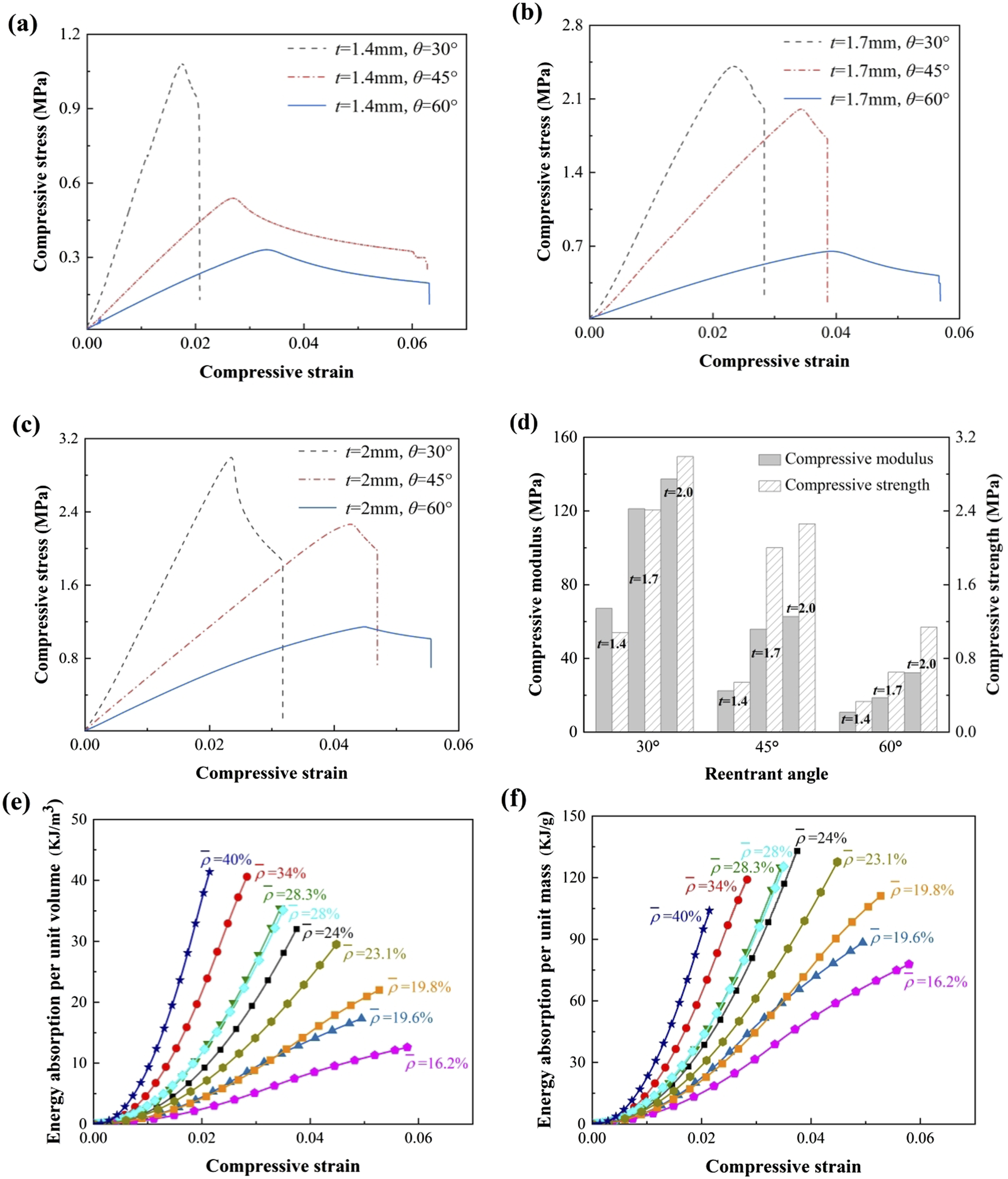
The quasi-static compressive energy absorption characteristics mainly depend on the structural carrying level and deformation tolerance. With the increase of relative density, the anti-buckling ability of the structure is improved and the load bearing level is continuously strengthened. However, the allowable compressive deformation of the structure is decreased. As shown in the Figure 9(e) and (f), with the core relative density increases, the energy absorption per unit mass first increases and then decreases. The energy absorption per unit volume is increasing, but its growth rate slows down in the higher relative density range. The unit energy absorption rate both increase with the increase of compressive strain and relative density. The energy absorption rate of the low-density core slows down at the later stage of deformation due to the lower bearing level.
As shown in Figure 10, three failure modes are observed for 2D NPR lattice cores with different relative densities subjected to out-of-plane compression, which exhibits negative Poisson’s ratio characteristics to a certain extent. Under compressive load, the the straight-struts of lattice core bear compressive stress, as well as tensile stress for the inclined-struts. With the increasing load, the thin struts of NPR cores are more likely to buckle. Each inclined-strut between adjacent nodes would carry a pair of shear stress to induce in-plane torsion of cores. However, the straight-struts in boundary layers are strictly constrained by the upper or lower substrate. An obvious twisting and Z-pattern folding appears would occur randomly in the upper or lower layer cores, followed by node rapture. The damage development process would be propagated up layer by layer. Therefore, the 2D NPR lattice cores with low relative density display more larger stress drop stage. Compressive failure modes of 2D NPR lattice-frame materials with different strut-thickness.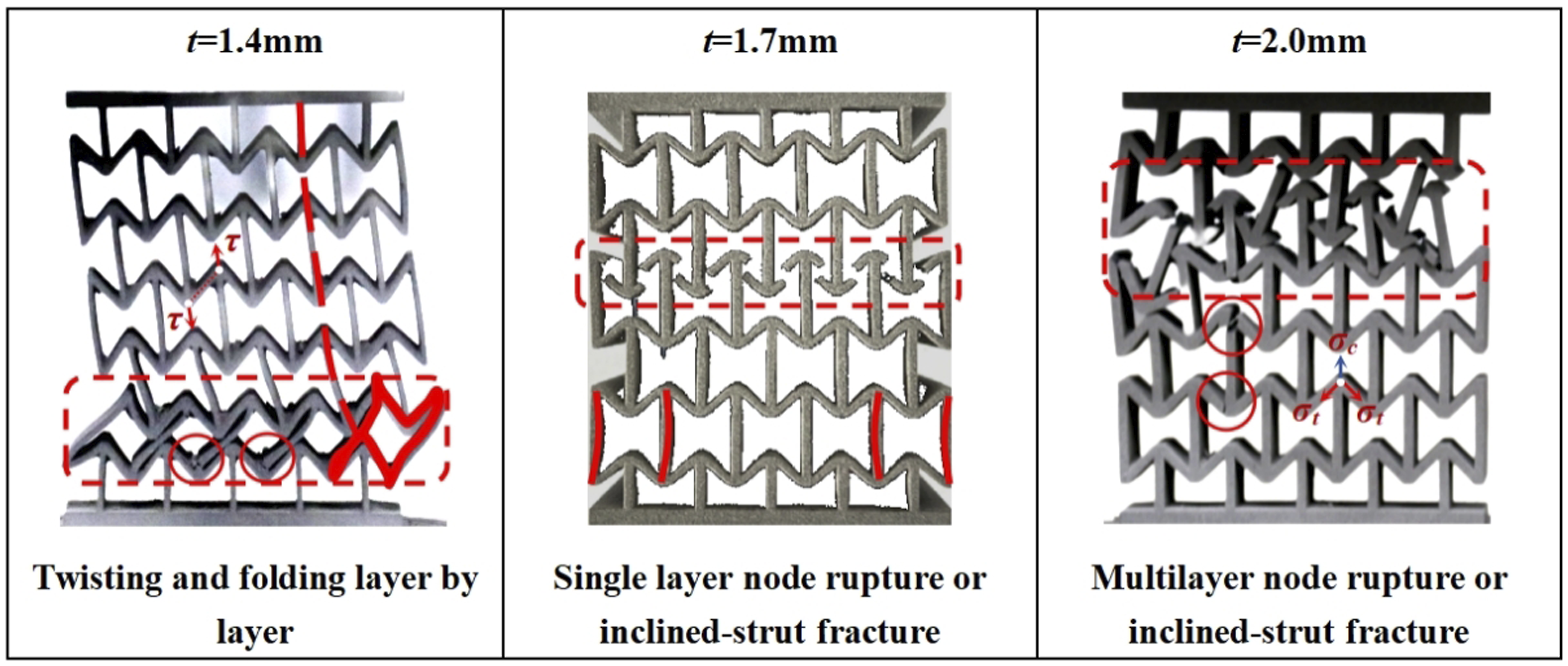
As the core-strut thickens, the strut buckling is gradually suppressed. Instead, the inclined-strut fracture occurs. The interlayer interface produced by layer-by-layer printing of laser sintering process would lead to weaker tensile property than compressive one. Therefore, these inclined-struts subjected to tensile stress would be more likely to fracture. Moreover, the node rupture also maybe appear due to stress concentration. Due to the compression-contraction deformation of negative Poisson ratio material, the above-mentioned failures generally occur in the middle layer of the lattice cores with maximum lateral shrinkage. When the core-strut becomes sturdy, the dominated node rupture erupts in multilayer, as well as some inclined-strut fracture occur simultaneously, leading to complete separation of straight-struts from the specimens.
The compressive deformation evolution processes of 2D NPR lattice cores with different relative density display good agreements between experiment (EXP) and simulation (FEA) as shown in Figure 11. With the longitudinal compressive load increases, the structures gradually show negative Poisson’s ratio characteristic with transverse contraction. The buckling of straight-struts is accompanied. The above phenomenon becomes more obvious as the relative density of the core decreases. The topological configuration of NPR lattice core is gradually changed from the reentrant butterfly shape to the Z-shaped or lightning-shaped, and finally is compacted into quadrilateral one. However, for the thin core-strut, the lattice tends to undergo sideways integral Euler buckling, followed by densification layer by layer due to the restriction of the substrate. As the core-strut thickens, the stiffness of lattice cores increases, the integral buckling would be effectively suppressed. The local in-plane buckling and torsion in each layer emerges, leading to a crossed wavy folding along the compressive direction. The folding and densification process of each core layer tends to be synchronized. The NPR lattice cores with large relative density (small reentrant angle in Figure 11) can show an obvious strength advantage, consuming the deformation tolerance of sandwich structures. By comparison, the layer-by-layer damage evolution for low density cores can product a longer stress degradation stage, as displayed in Figure 9(a). Evolutionary process of compressive deformation of 2D NPR lattice-frame materials.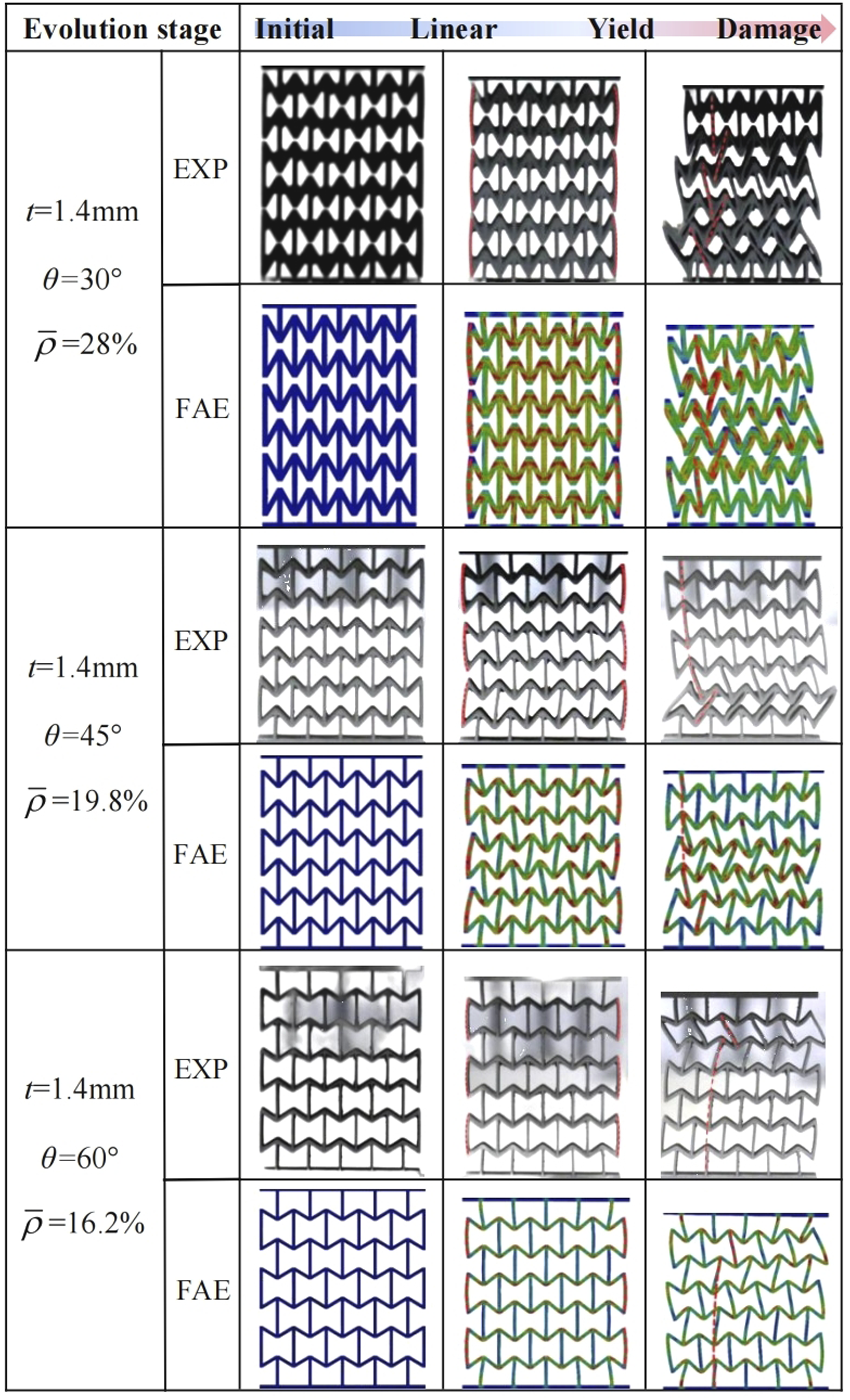
Compressive behavior and energy absorption of 3D NPR lattice materials
The 2D NPR lattice core are further developed into 3D periodic structure, and the out-of-plane compressive properties are displayed in Figure 12. The stress-strain curves generally increase first to the ultimate strength and then slowly decrease, which show large ultimate strain. The property degradation may be due to the buckling of core-struts. However, for the cores with relatively thick struts and small reentrant angles (t = 1.7 mm, θ = 45°), the core-strut buckling can be effectively suppressed and replaced by rapid fracture after reaching the peak load. As the thickness of the core-strut increases or the reentrant angle decreases, the compressive modulus and peak strength both increase. For the core with dominant buckling failure, the strain corresponding to the ultimate strength decreases with the increase of relative density. For high-density core ( Compressive properties of 3D NPR lattice-frame materials: (a) stress-strain curves (b) modulus and peak strength, (c) energy absorption per unit volume, (d) energy absorption per unit mass.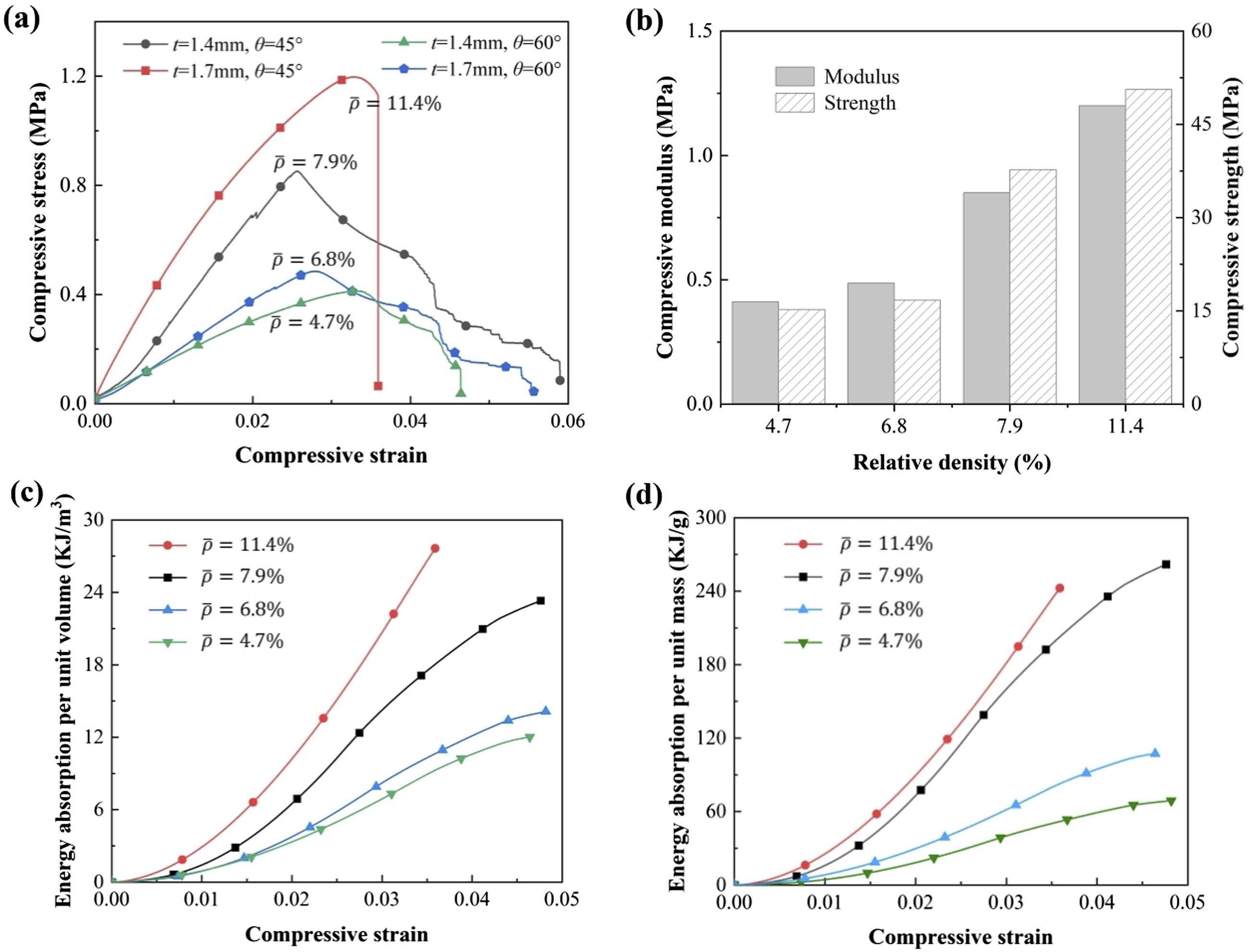
With the increase of core relative density, the dominant failure mode of 3D NPR lattice cores evolves from core-strut buckling to core-strut fracture. Accordingly, the strength and modulus of the structure are also continuously improved. Compared between
Compared with 2D NPR lattice structures, the 3D lattice cores have excellent isotropic characteristics due to their periodic unit-cell arrangement, which would show better overall coordination deformation ability. The compressive deformation process of 3D NPR lattice cores show good agreement between experiment and simulation, as shown in Figure 13. At the initial stage of load bearing, the negative Poisson’s ratio effect gradually emerges with volume shrinkage. The stretching-dominated lattice core-struts are mainly subjected to compressive or tensile stress along the direction of the struts, which can effectively suppress the premature global buckling failure. With the increase of compression deformation, the structure contour shows a reentrant double-C waist line shape. The deformation pattern of the structures is mainly the local distortion of the single-layer core followed by the core-truss fracture failure. These failures are similar to the sloping buildings due to the local fracture. However, the transverse shrinkage of the cores adjacent to substrate panels are severely restricted. The upper or lower core-layer would be subjected to higher total stress and shear-torsion stress. Therefore, the fracture layer randomly appears in the relatively weaker core-layer. Evolutionary process of compressive deformation of 3D NPR lattice-frame materials.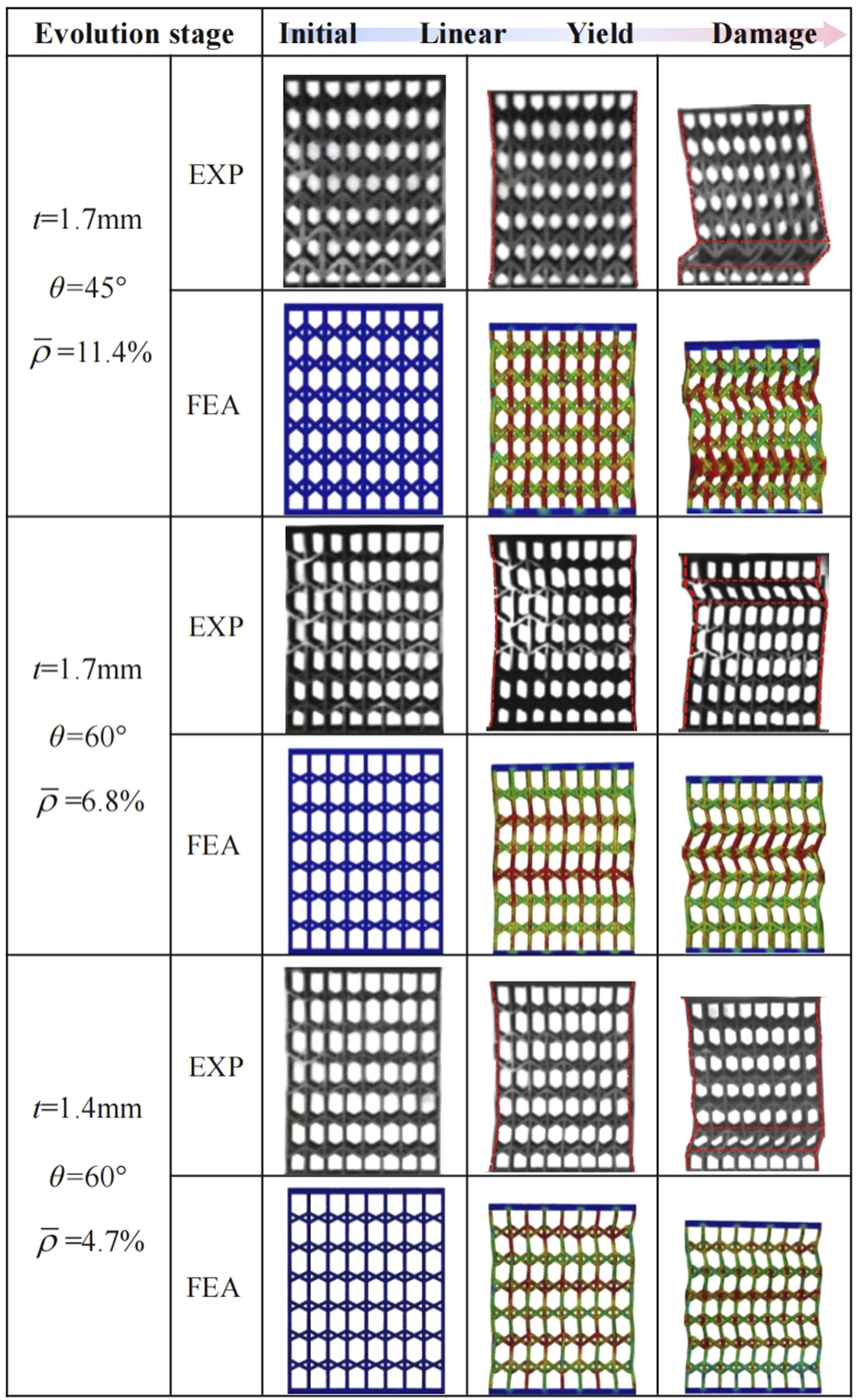
The stiffness of sandwich lattice cores generally improves with relative density increases. For the cores with high density, the core-trusses tend to instantaneously be fractured and completely lose the bearing capacity when the ultimate load of the boundary core-layer is reached. The straight-struts of lattice cores bear relatively larger compressive loading, displaying a red high stress zone. With the decrease of relative density, the overall flexibility of the sandwich cores increases, which would rouse better compression-contraction effect. The buckling potential of the core-struts is released to a certain extent, the core-layer fracture would be delayed. The failure mode of the sandwich structure tend to change from local fracture to global waved torsion. Therefore, the load capacity of the structure shows a slow downward trend, as shown in Figure 12(a). Meanwhile the torsional deformation of the sandwich lattice cores would induce the transfer of the high stress zone from the straight-struts to the joint of core-struts and the inclined-struts. The stress concentration is gradually weakened, thus delaying the serious damage and improving the deformation tolerance of the NPR lattice sandwich structure.
Conclusions
Light-weight NPR lattice-frame materials are widely employed as the sandwich cores due to the excellent specific strength, energy absorption and fatigue resistance. The additive manufacturing is ideally suitable for integrated preparation of complex multi-layer lattice-frame materials. Selective laser sintering technology is employed to fabricate the NPR lattice-frame sandwich structures with reentrant hexagonal cores using the thermoplastic nylon particles. The recycling of the parent material leads to certain differences in printing powders, as well as surface printing quality due to layer-by-layer printing mode. The interlayer shear and tensile tests are conducted to explore the printing mechanism, discovering some incompletely fused small particles, uncompensated voids and the layered terrace-like interfaces. The out-of-plane compression property and energy absorption characteristics of NPR lattice-frame sandwich materials are studied based on comparation between experiment and simulation. With the relative density of lattice core decreases, the compressive carrying capacity of sandwich structure gradually decreases. However, the twisting and folding layer by layer would induce a stress platform over a large strain range. Therefore, the low relative density cores still show great energy-absorbing and compressive deformation tolerance. The unit energy absorption increases with increasing relative density of lattice cores. Three failure modes are observed for 2D NPR lattice cores, and 3D sandwich structures are dominated by single-layer core fracture failure due to the improvement of anti-instability ability. In contrast, 3D NPR lattice sandwich structures show obvious advantages in specific strength, specific stiffness and unit energy-absorbing characteristics. Considering the actual load conditions, the most cost-effective NPR lattice cores can be further designed and applied in the fields of high energy consumption equipment.
Footnotes
Author contributions
Zhengwei Gong: Investigation, Methodology, Writing-original draft. Yi Chang: Methodology, Visualization. Liang Gao: Conceptualization, Funding Acquisition, Resources, Writing-review & editing. Mingyu Li: Investigation, Validation. Rui Zhang: Data curation, Writing-review & editing. Guoqing Zu: Conceptualization, Supervision. Zisu Li: Investigation, Data curation. Minhui Xie: Validation.
Declaration of conflicting interests
The author(s) declared no potential conflicts of interest with respect to the research, authorship, and/or publication of this article.
Funding
The author(s) disclosed receipt of the following financial support for the research, authorship, and/or publication of this article: This work is supported by Jilin Provincial Scientific and Technological Development Program (No. 20230201137GX and YDZJ202501ZYTS826).
