







Abstract
This study aims to enhance the impact damage resistance of 3D spacer woven composites. The novelty of this study is tailoring both core cell geometry and face sheet architecture of 3D spacer woven composites. The 3D square spacer composites exhibited superior impact resistance compared to the 3D triangular spacer composites at both 20 J and 40 J energy levels. This behaviour was attributed to the increased resilience and more flexible response of the 3D square spacer core structure. The impact resistance of the 3D spacer composites also increased with the reinforcement of 2D woven composites. The lowest deformation was achieved for the composites reinforced with satin 2D woven composites, which was related to the higher stiffness provided by the low-crimp satin weave under impact load, compared to the plain and twill weaves.
Keywords
Introduction
Sandwich composites are widely used in engineering applications owing to their high stiffness to weight ratio. Sandwich composites are typically manufactured by combining composite face sheets with various core materials, such as honeycombs or polymeric foams. However, in spite of the low density and high damage tolerance of the cores, poor interfacial adhesion often leads to face-core debonding under load.1,2
During service and maintenance, sandwich composites are frequently subjected to low-velocity impacts from foreign objects, which can trigger the initiation of fibre/matrix damage. Regarding impact damage resistance, improving the damage tolerance of sandwich composites through textile-based structural architectural design is of critical importance.3–7 The constraints associated with conventional sandwich structures can be effectively addressed through textile manufacturing methods, such as weaving, knitting, and stitching, which enable the formation of fibrous preforms for sandwich composite applications. 8 Nevertheless, stitching processes can damage fibres within the fabric layers of the preform and create resin-rich regions, which may adversely affect mechanical performance. 9 By contrast, weaving and knitting processes are suitable for the production of integrated preforms known as spacer fabrics. 10 Weaving, in particular, enables the efficient production of preforms incorporating integrated core configurations with a wide range of geometric designs.11,12 3D spacer woven composites represent compact structures that provide strong face-core integration without inducing damage during manufacturing.13,14
In the existing literature, the effects of diverse core cell geometries on the mechanical and impact behaviour of 3D spacer woven sandwich composites have been widely examined. Neje and Behera 15 developed integrated single- and double-layer 3D spacer woven structures with trapezoidal cell geometries and four different cell wall opening angles ranging from 45° to 65°. Increasing the wall opening angle from 45° to 65° resulted in increases of 86.9% and 85.9% in compressive strength for single- and double-layer structures, respectively, while the absorbed energy increased by 53.3% and 136.4%. The authors reported that wall alignment with the loading axis and wall thickness play a critical role in compression- and bending-dominated loading conditions. Kamble et al. 16 developed UD, 2D, and 3D spacer woven preforms with rectangular, trapezoidal, and triangular cell geometries. 3D woven composites showed negligible delamination compared to UD and 2D composites. Compressive and flexural performance was highest for double-wall rectangular structures, while pile-yarn composites exhibited high compressive load due to dense yarn connections. Neje and Behera 17 investigated 3D spacer woven composites with rectangular, trapezoidal, and triangular connecting walls reinforced with thickened face sheets. Additional 2D fabric layers were integrated with the top and bottom layers of the 3D spacer fabrics in a single weaving step, maintaining nearly identical cell geometries. Thickened face sheets increased bending load but reduced specific compressive and flexural strength due to higher composite thickness. Manjunath et al. 18 designed and fabricated 3D spacer fabrics with integrated connecting walls in three configurations. Produced using high-performance polyester yarns, composites with reinforced cores showed significant improvements in compressive and flexural performance compared to single-wall structures. The integrated connecting walls also provided strong resistance to delamination. Geerinck et al. 19 explored the industrial-scale single-step production of various 3D spacer woven fabrics on a modified loom. Fabrics with integrated prismatic voids were categorized into hexagonal (type I), rectangular (type II), and X-shaped (type III) based on internal connections. The effects of void fraction, wall layer number, and fibre reinforcement (high-strength polyester, glass, and para-aramid filaments) were investigated. In reinforced concrete applications, type III fabrics improved concrete ductility by deflecting cracks within the 3D spacer compartments. Although initial cracking occurred at lower stresses, the structures exhibited large deformations, highlighting their potential for load-sustaining applications. Mountasir et al. 20 fabricated 3D spacer woven composites using glass and polypropylene hybrid yarns. They noted that high yarn crimp leads to mechanical losses, highlighting the need to optimize the connection structure of 3D spacer fabrics.
Although spacer composites have been extensively studied, most existing research neglects the coupled interaction between core cell geometry and face sheet architecture on load transfer, stiffness distribution, interfacial stresses, and damage evolution under impact load. It is well established that the face sheets of 3D spacer composites carry a significant portion of the applied load and largely govern the overall mechanical properties of the structure. In conventional 3D spacer composites, the face sheets are relatively thin and may not sufficiently resist impact induced stresses. Therefore, in addition to core cell geometry, the architecture of the face sheets plays a critical role in improving the performance of 3D spacer woven sandwich composites. This study aims to enhance the impact damage resistance of 3D spacer woven sandwich composites. The novelty of this study is tailoring both core cell geometry and face sheet architecture of 3D spacer woven sandwich composites. 3D spacer woven composites with triangular and square cell geometries were reinforced with layered 2D woven composites of varying weaves (plain, twill, and satin) as face sheets. The incorporation of 2D woven composite face sheets was intended to enhance the load-bearing capacity. This study is expected to provide insight into the role of core cell geometry and face sheet architecture on impact response and energy absorption behaviour in 3D spacer woven composites.
Experiment
Manufacturing of 2D woven fabrics and 3D spacer woven fabrics
3D spacer fabrics were reinforced with layered 2D woven composites as face sheets. For this purpose, 2D woven fabrics in three weave types, plain (B 1/1), twill (D 2/2 Z), and satin (S 1/4 (3), were produced using a manual weaving loom (MGAH-8/16, Heramer, Türkiye). In the 2D woven fabrics, polypropylene (BCF, 150 tex, Eruslu, Türkiye) was used as the warp yarn, and E-glass (1200 tex, Cam Elyaf, Türkiye) as the weft yarn. Microscopical images of the 2D woven fabrics are presented in Figure 1. Microscopic images of the 2D woven fabrics (×10 magnification).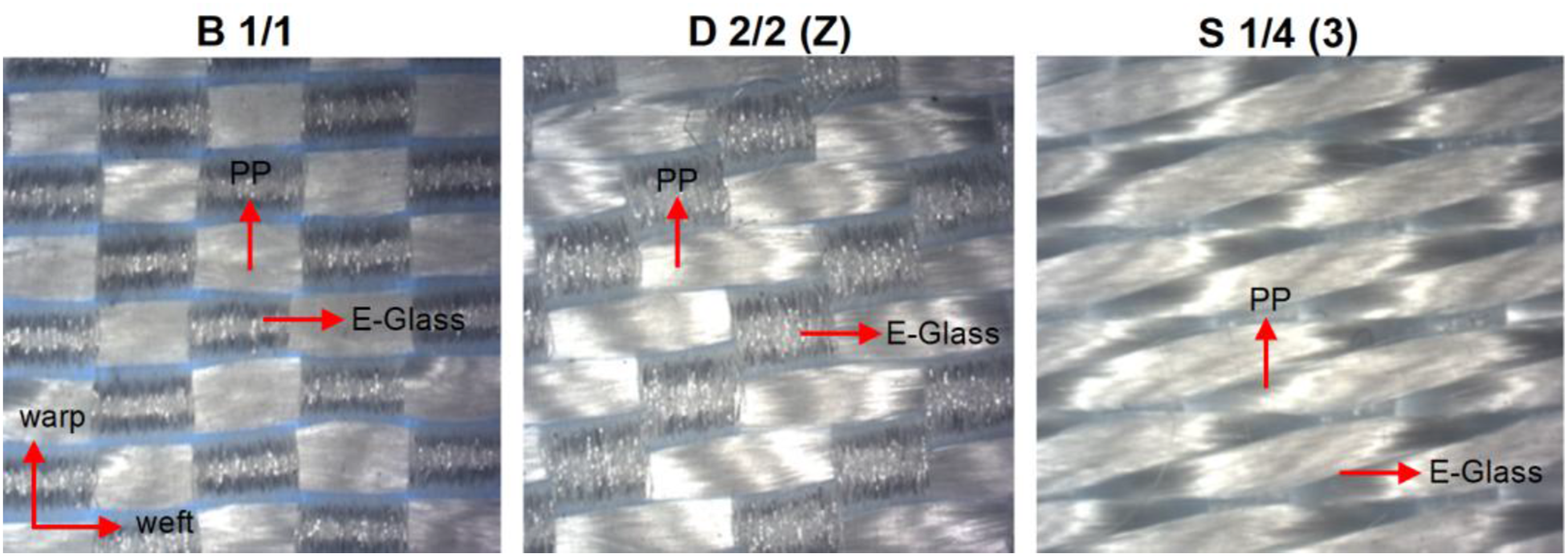
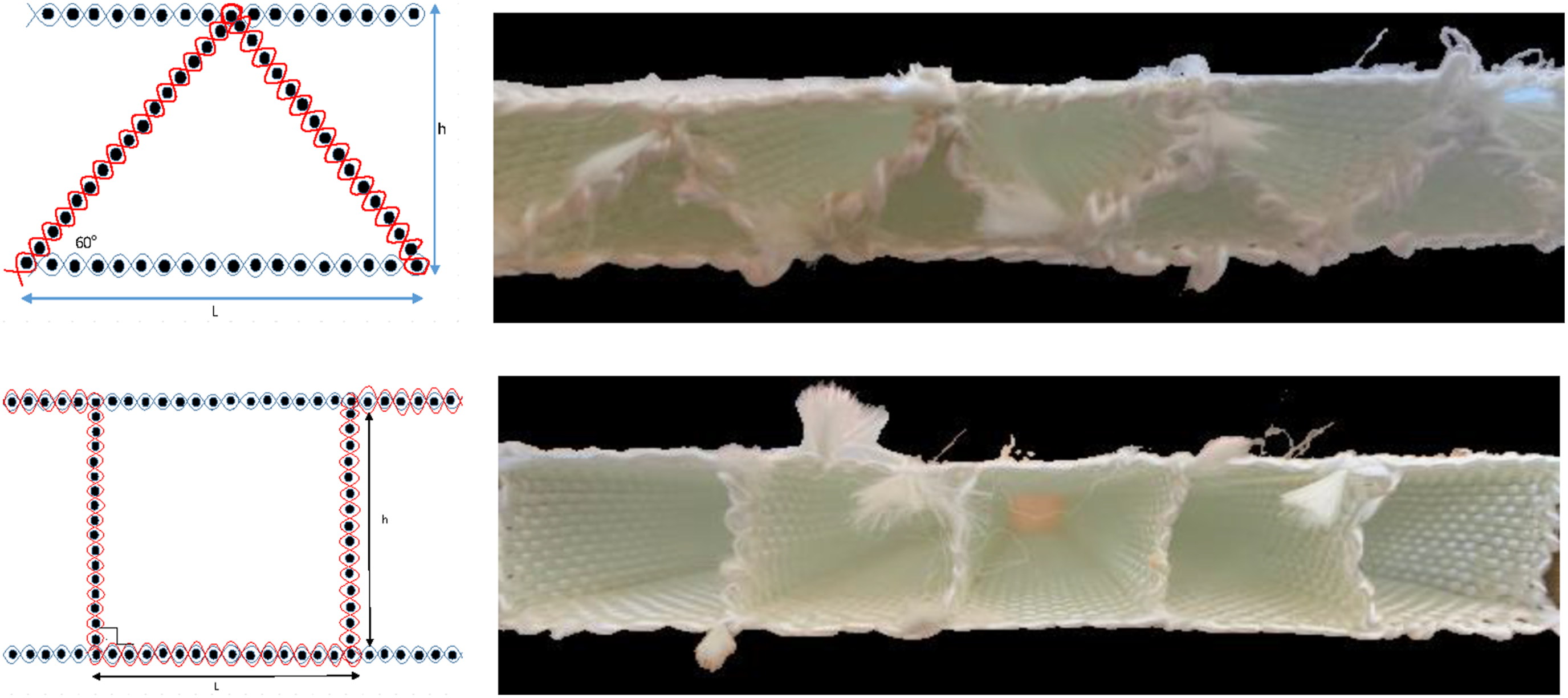
3D spacer woven fabrics with triangular and square cell geometries were produced using multi-end warps combined from two manual weaving looms (MGAH-8/16, Heramer, Türkiye). Polypropylene (BCF, 150 tex, Eruslu, Türkiye) and E-glass (1200 tex, Cam Elyaf, Türkiye) were used as the warp and weft yarns, respectively. The weaving loom used for the production of the 3D spacer fabrics is shown in Figure 2. Figure 3 presents cross-sectional views of the 3D triangular and square spacer woven fabrics. Weaving looms used for the production of 3D spacer woven fabrics. The cross-sectional views of the 3D triangular and square spacer woven fabrics.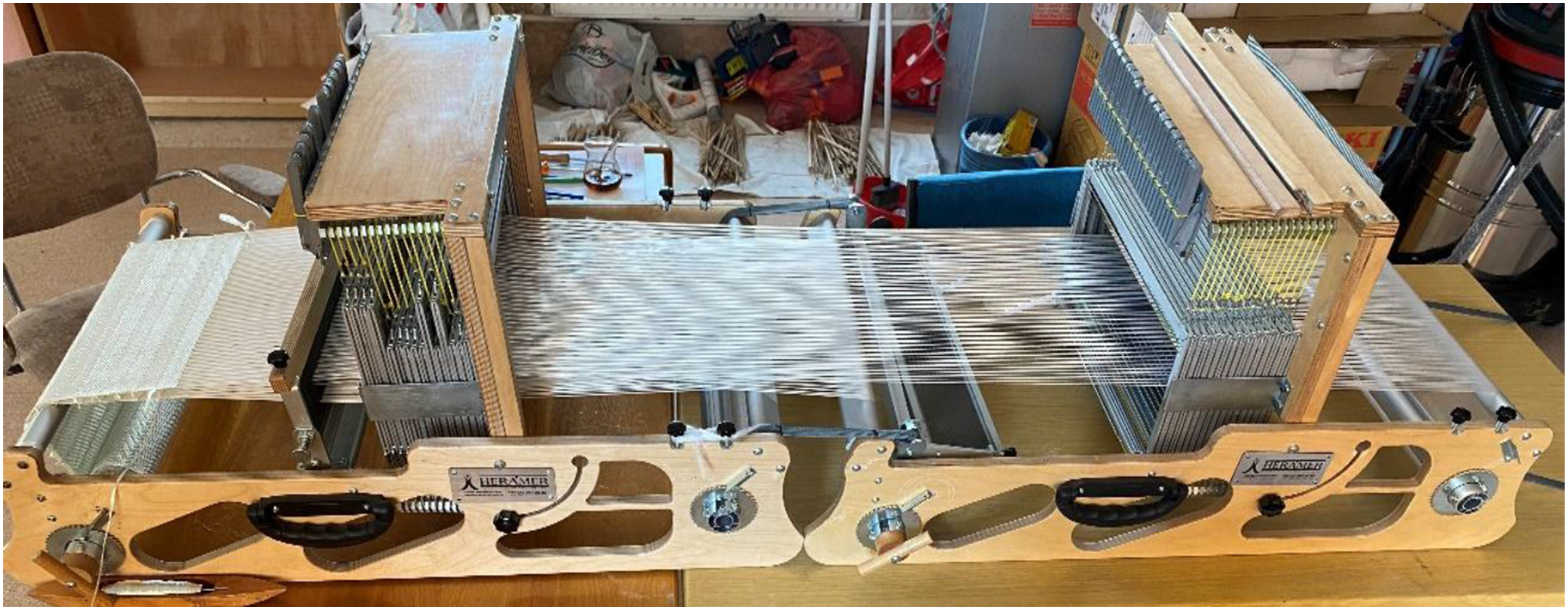
Manufacturing of 3D spacer woven sandwich composite
2D woven fabrics layered as [0°]2 were converted into composite structures using the vacuum infusion method. An epoxy resin system with hardener (MGS LR 160 resin/MGS LH160 hardener, 100:25) was used. Curing was performed at 80°C for 90 min. The manufacturing of 3D spacer woven composites was carried out via the hand lay-up method. An epoxy resin system with hardener (MGS LR 160 resin/MGS LH160 hardener, 100:25) was used. The resin was applied to the 3D spacer fabrics using a brush and roller. The wooden rods shaped into triangular and square cell geometries were coated with vacuum nylon and a mould release agent (Renrelease® QZ 5111, Huntsman, UK) to facilitate demoulding, and then placed inside the fabric cells. To prevent resin accumulation, the moulds were oriented vertically, and curing was conducted at room temperature for a duration of 24 h. Post-curing was performed at 80°C for 90 min. Figure 4 shows the manufacturing stages of the 3D spacer woven composites. After that, the 2D woven composites were bonded to the top and bottom surfaces of the 3D spacer woven composites using epoxy resin. Curing was achieved at room temperature for 24 h. The manufacturing stages of the 3D spacer woven composites.
In total, 8 types of sandwich composites were produced. The specimen notations indicate both the 3D spacer core cell geometry and the architectures of 2D woven composite reinforcement as face sheets. T-3D and S-3D refer to unreinforced 3D triangular and square spacer woven composites, respectively. T-3D-B, T-3D-D, and T-3D-S represent the 3D triangular spacer woven composites reinforced with 2D plain (B), twill (D), and satin (S) weaves, respectively. Similarly, S-3D-B, S-3D-D, and S-3D-S correspond to 3D square spacer woven composites reinforced with 2D plain, twill, and satin weaves. Figure 5 presents the images of manufactured 3D spacer woven composites. The images of manufactured 3D spacer woven composites.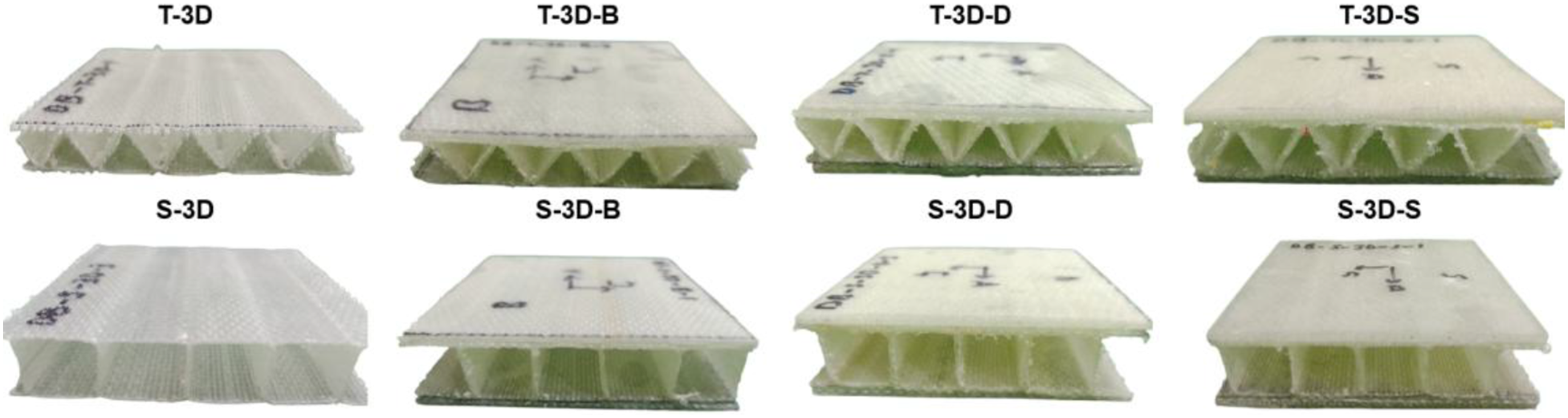
Composite tests
Composite density and fibre content tests
The densities of the 2D woven composites and the 3D spacer woven composites were measured in accordance with ASTM D792-13. Density tests were performed using a densitometer (Precisa® XP205) with three specimens for each sample. The fibre content of the 2D woven composites and 3D spacer woven composites was determined using a mechanical separation method. Initially, 2D woven fabrics and 3D triangular and square spacer fabrics were cut into 10 × 10 cm specimens and weighed on an analytical balance. The warp (PP) and weft (E-glass) yarns of each specimen were then mechanically separated and weighed. Finally, the corresponding 2D woven composites and 3D triangular and square spacer woven composites were weighed on the analytical balance to determine their fibre content.
Impact test
Impact testing of the 3D spacer woven composites was conducted on an Instron CEAST 9350 testing machine in accordance with ASTM D7136-15. Three specimens were tested for each sample and all results are presented as mean values with corresponding standard deviations. Specimen dimensions were 100 × 100 mm, and impact energies of 20 J and 40 J were applied. The selected impact energy levels (20J and 40J) were determined from preliminary tests and chosen to compare the response at different impact conditions for evaluating impact resistance of 3D spacer woven composites. A semi-cylindrical impactor with a 20 mm diameter was employed, and the specimens were positioned between upper and lower clamps of a frame containing a 40 mm circular opening. Penetration depth measurements were performed for post-impact behaviour of the 3D spacer woven composites.
Results and discussion
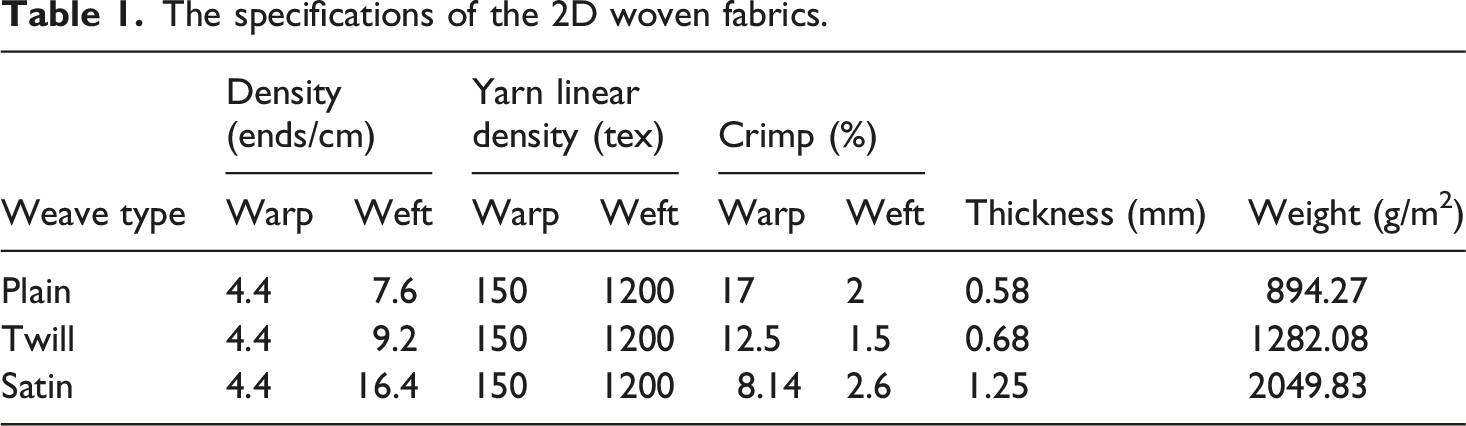
2D woven fabric specifications
The specifications of the 2D woven fabrics.
Core cell geometry of 3D spacer woven fabrics
The 3D spacer woven fabrics were produced both triangular and square core cell geometries. Figure 6 schematically shows the triangular and square cell configurations. In a unit cell, ‘a’ and ‘b’ represent the edge lengths, ‘θ’ denotes the edge angle, and ‘h’ indicates the cell height. Schematic views of the triangular and square core cell geometries of the 3D spacer woven fabrics.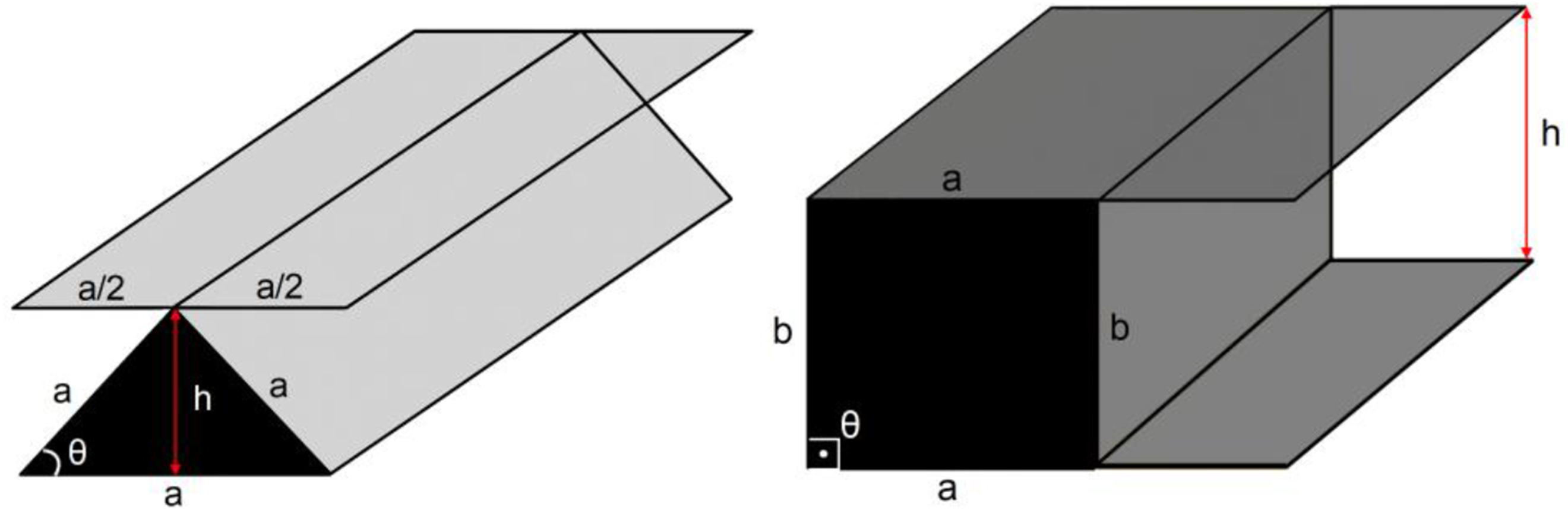
Geometric measurement results of 3D spacer woven fabrics.

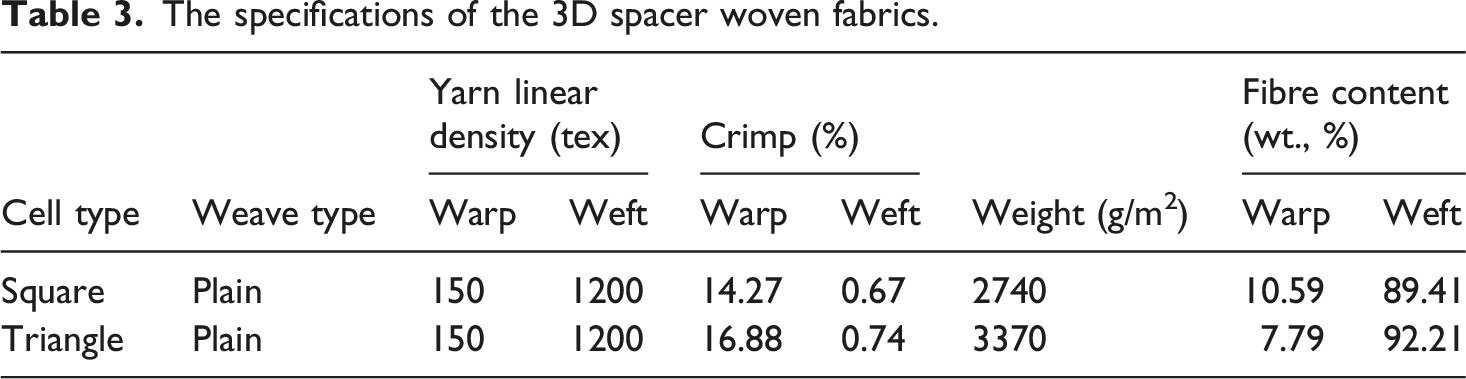
The specifications of the 3D spacer woven fabrics.
Cell analysis results of the 3D spacer woven fabrics.
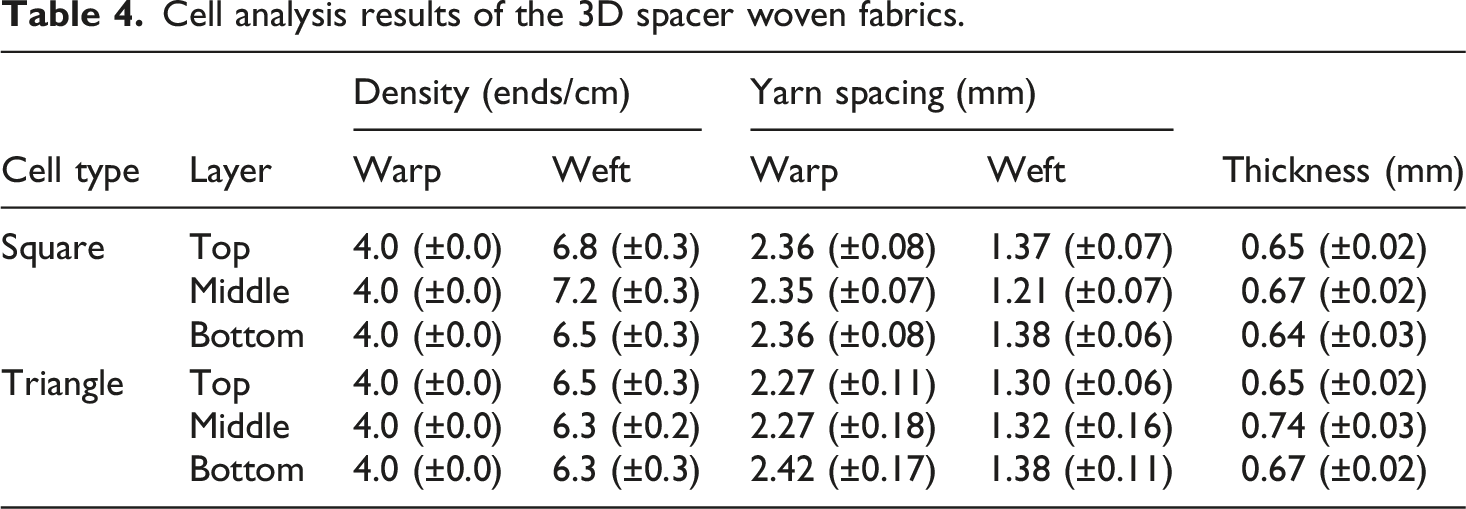
For both 3D spacer woven fabrics, the warp density was uniform in all layers and lower than the weft density. The weft densities of the 3D square spacer fabric were higher in each layer compared to the 3D triangular spacer fabric, with the middle layer of the square fabric exhibiting a higher weft density than the other layers. In the 3D triangular spacer fabric, the thicknesses of the top and middle layers were similar, although the middle layer was slightly thicker than the top and bottom layers. In contrast, the thicknesses of all layers in the 3D square spacer fabric were nearly identical. The increase in thickness could be attributed to the higher yarn density in the respective layers.
Composite density and fibre content test results
The density and fibre content results of the 2D woven composites.

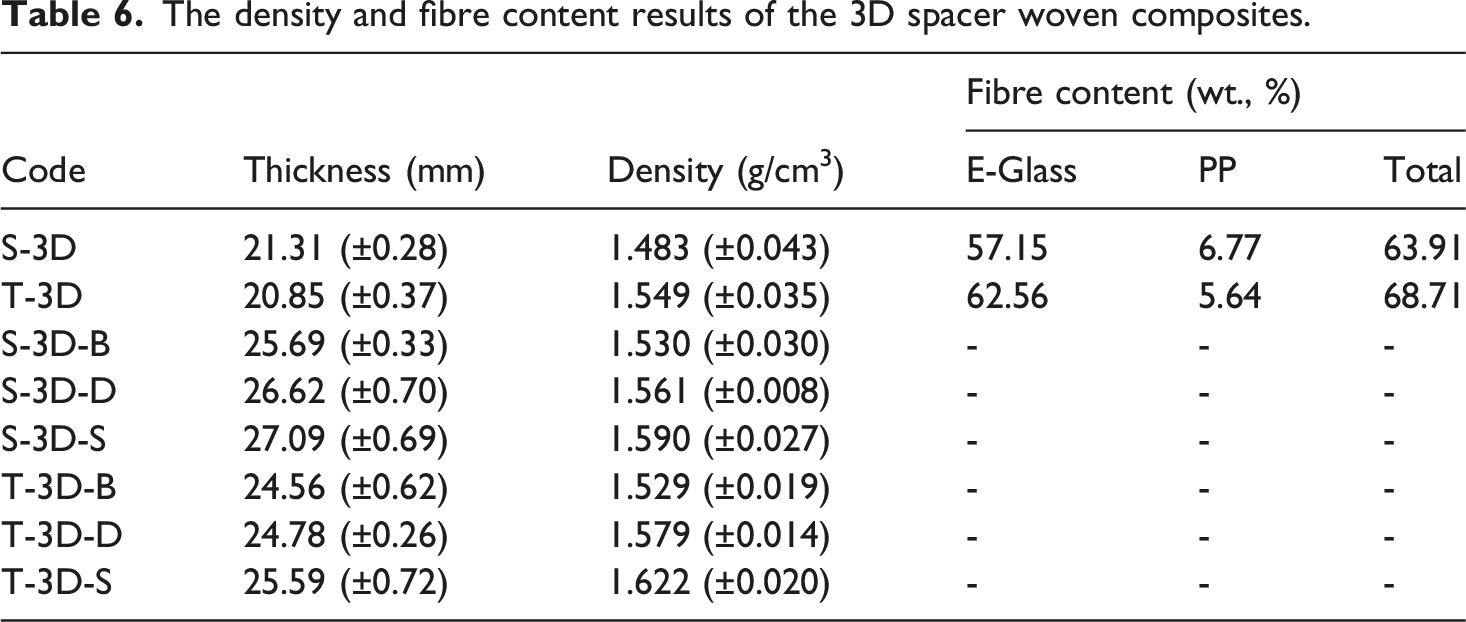
The density and fibre content results of the 3D spacer woven composites.
Impact test results
Impact test results of the 3D spacer woven sandwich composites.
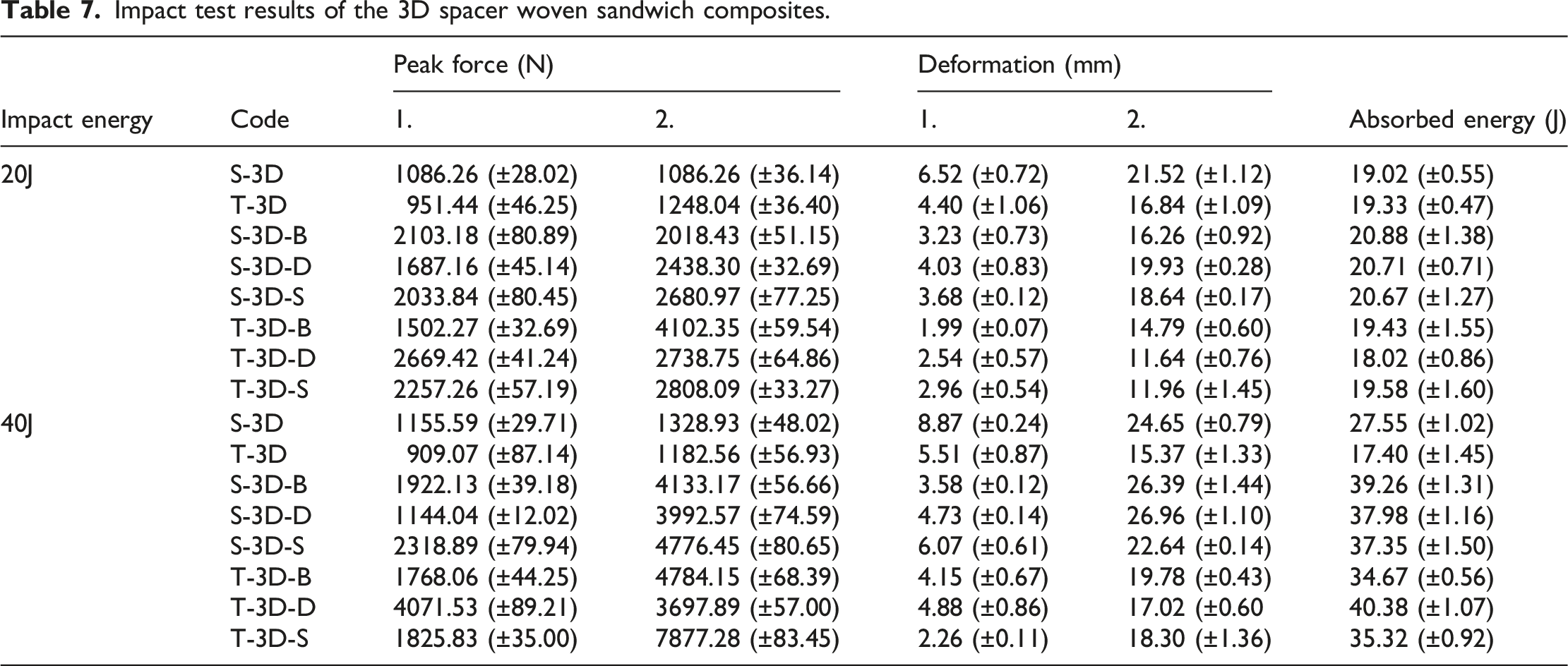
Figure 7 shows the peak force-time curve of the T-3D-D composite at 40 J impact energy. For impact energies of 20 J and 40 J, the second peak force was higher than the first peak force in general. This indicated that a significant portion of the impact energy was absorbed by the core cells and the bottom face sheet. Peak force-time curve of the T-3D-D composite under 40 J impact energy.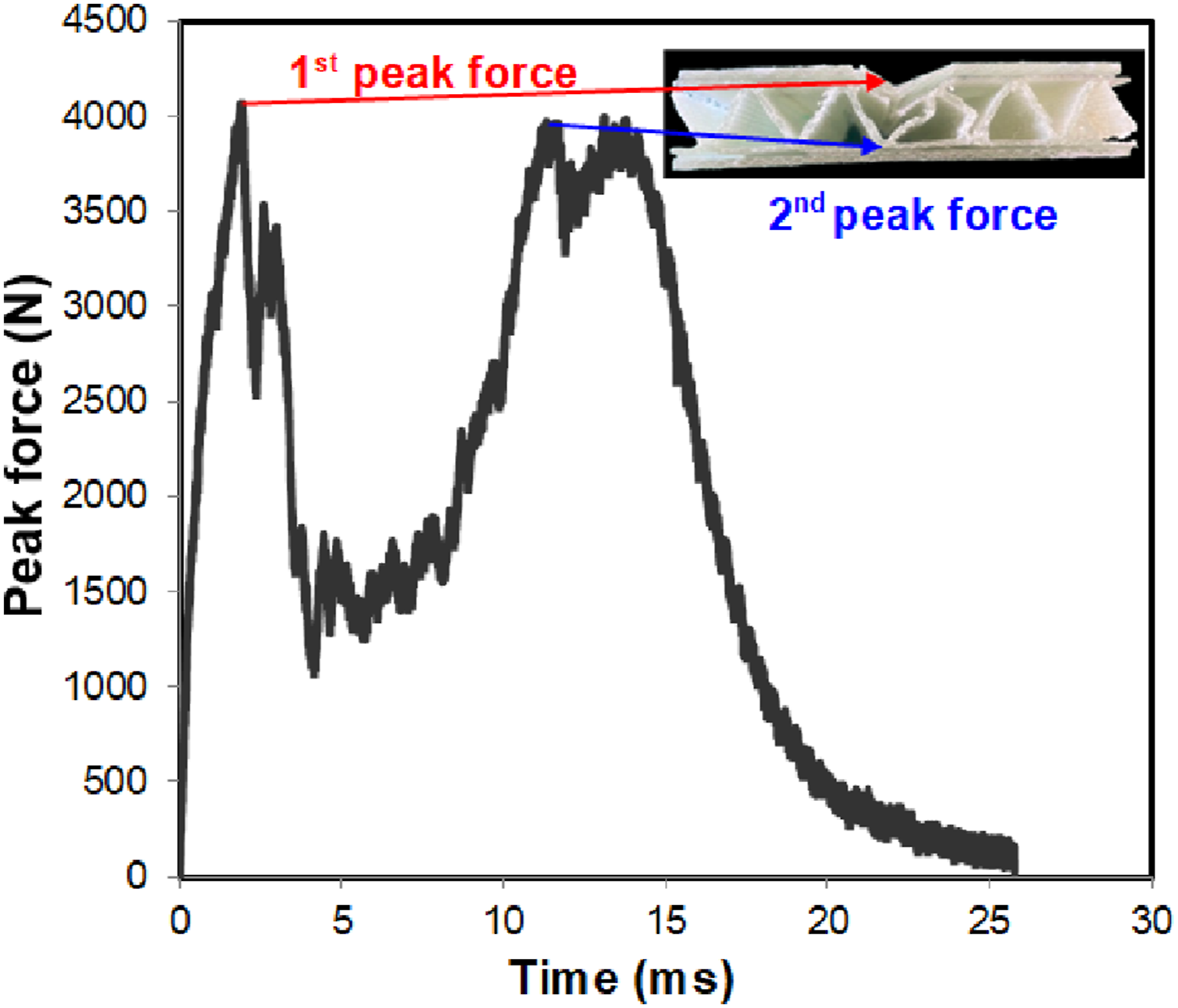
Figure 8 shows the peak force values of the 3D spacer woven composites at 20 J and 40 J impact energies. As the impact energy increased, the peak forces of both the triangular and square 3D spacer composites increased. For both energy levels, the 3D square spacer composites demonstrated a higher first peak force than the 3D triangular spacer composites. A similar trend was observed for the second peak forces. This behaviour was attributed to the increased resilience and more flexible response of the 3D square spacer core cells. The peak force values of the 3D spacer composites also increased with the reinforcement of 2D woven composites. Under impact load, the initial behaviour was primarily governed by the bending stiffness of the face sheets, which determined stress wave transmission and contact force distribution.
23
Low crimp satin weave face sheets provided higher in-plane stiffness, promoting more uniform load distribution and delaying the initiation of localized damage.
24
As the impact progressed, efficient load transfer between the face sheets and the core became critical, and this was largely controlled by the geometry and interconnection density of the spacer structure.
25
Peak forces of the 3D spacer woven composites at 20 J and 40 J impact energies.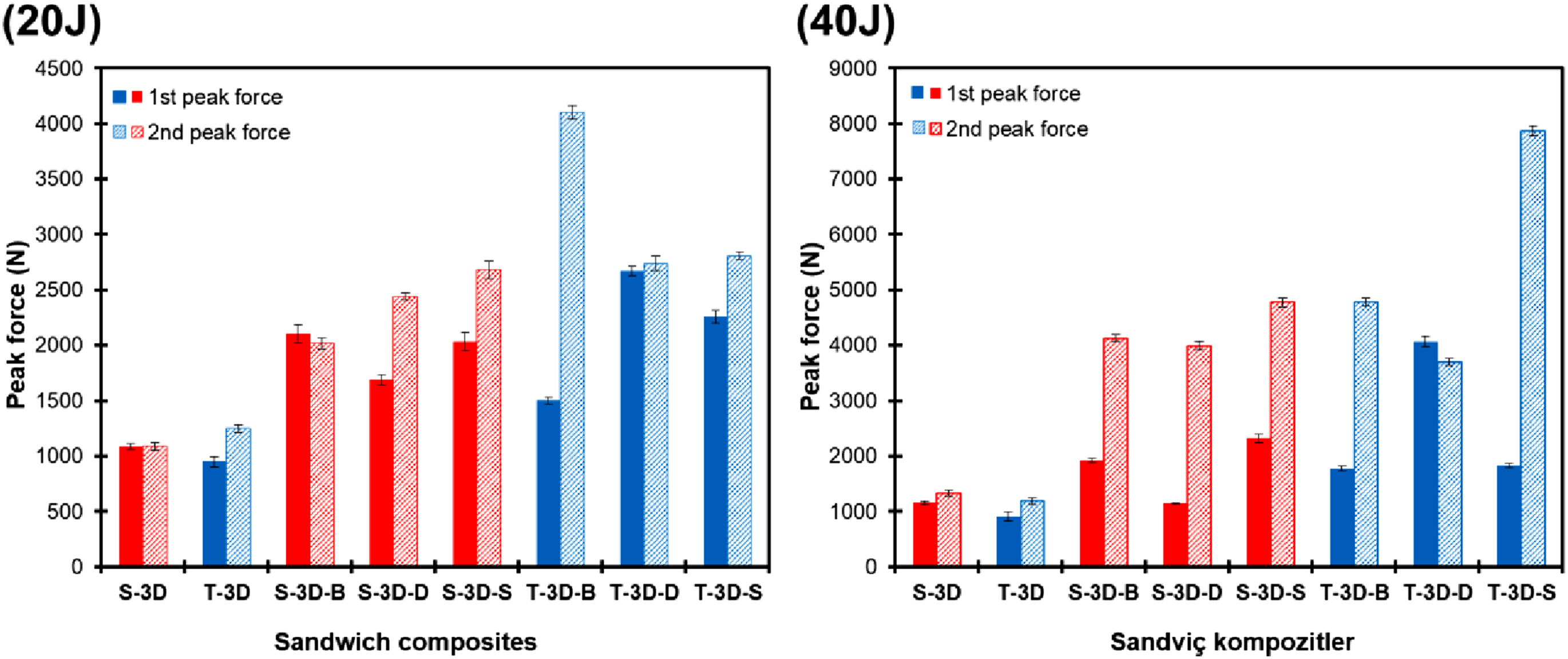
Figure 9 shows the deformation values of the 3D spacer woven composites at impact energies of 20 J and 40 J. At both energy levels, the second deformation values were higher than the first. The lowest deformation was recorded for the composites reinforced with satin (2S) 2D woven composites, for both the 3D square and triangular spacer core cells. This was attributed to the higher stiffness provided by the low-crimp satin weave under impact load, compared to the plain and twill weave types. The increased fabric intersection promotes localized stress concentrations, leading to reduced failure stress which is attributed to differences in yarn crimp.
19
Lower interlacement density and reduced crimp in satin weaves enhance stiffness and load transfer efficiency, whereas higher interlacement density in plain and twill weave architectures may promote stress concentrations and earlier damage initiation. Deformations of the 3D spacer woven composites at 20 J and 40 J impact energies.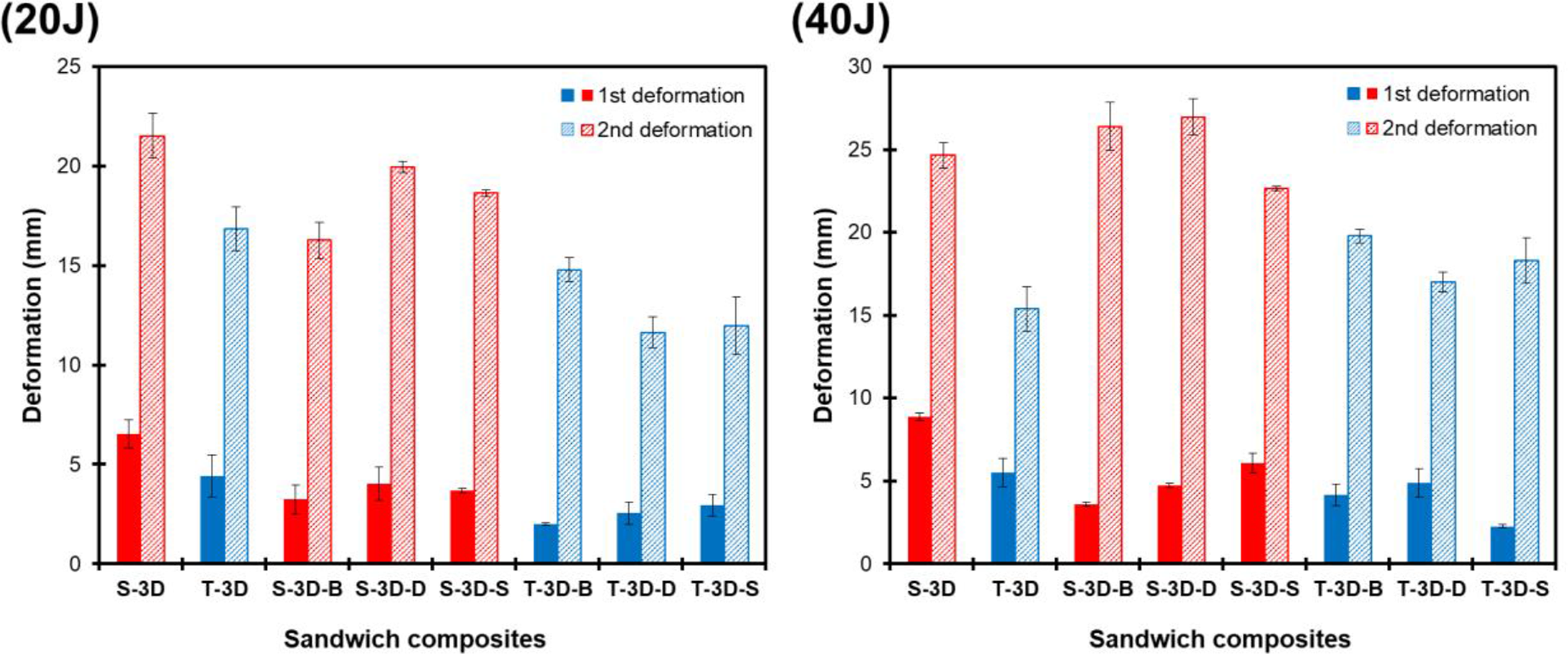
Figure 10 shows the energy absorption values of the 3D spacer woven composites at 20 J and 40 J impact energies. As the impact energy increased, the amount of absorbed energy also increased. At 20 J, the absorbed energies of the 3D triangular and square spacer core cells were similar, whereas at 40 J, the 3D square spacer cores absorbed more energy. This trend was consistent with the deformation values. At 20 J, the reinforcement of the 3D spacer composites with 2D woven composites had no significant effect on energy absorption, whereas the absorbed energy increased substantially at 40 J. Absorbed energies of the 3D spacer woven composites at 20 J and 40 J impact energies.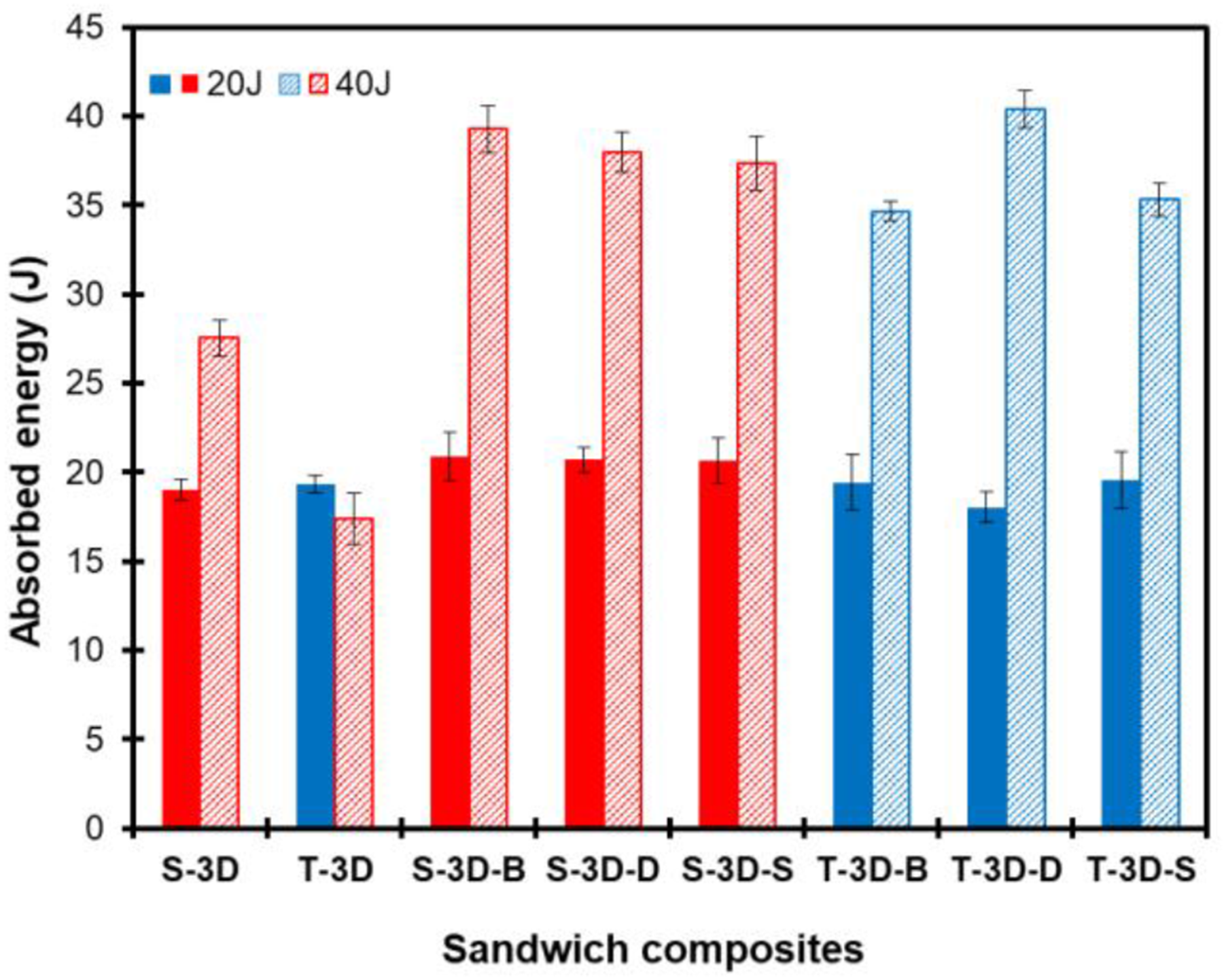
Figure 11 shows the peak force-time curves of the 3D spacer woven composites. The slope of the impact force curve for the 3D triangular spacer woven composites before reaching the first peak force was greater than that of the 3D square spacer woven composites at both 20 J and 40 J impact energies. This was because the bending stiffness of the 3D triangular spacer woven composites was greater than that of the 3D square spacer woven composites.
26
Overall, the second peak force values were higher than the first peak values, indicating that a significant portion of the impact energy was absorbed by the core cells and the bottom face sheet. Peak force-time curves of the 3D spacer woven composites.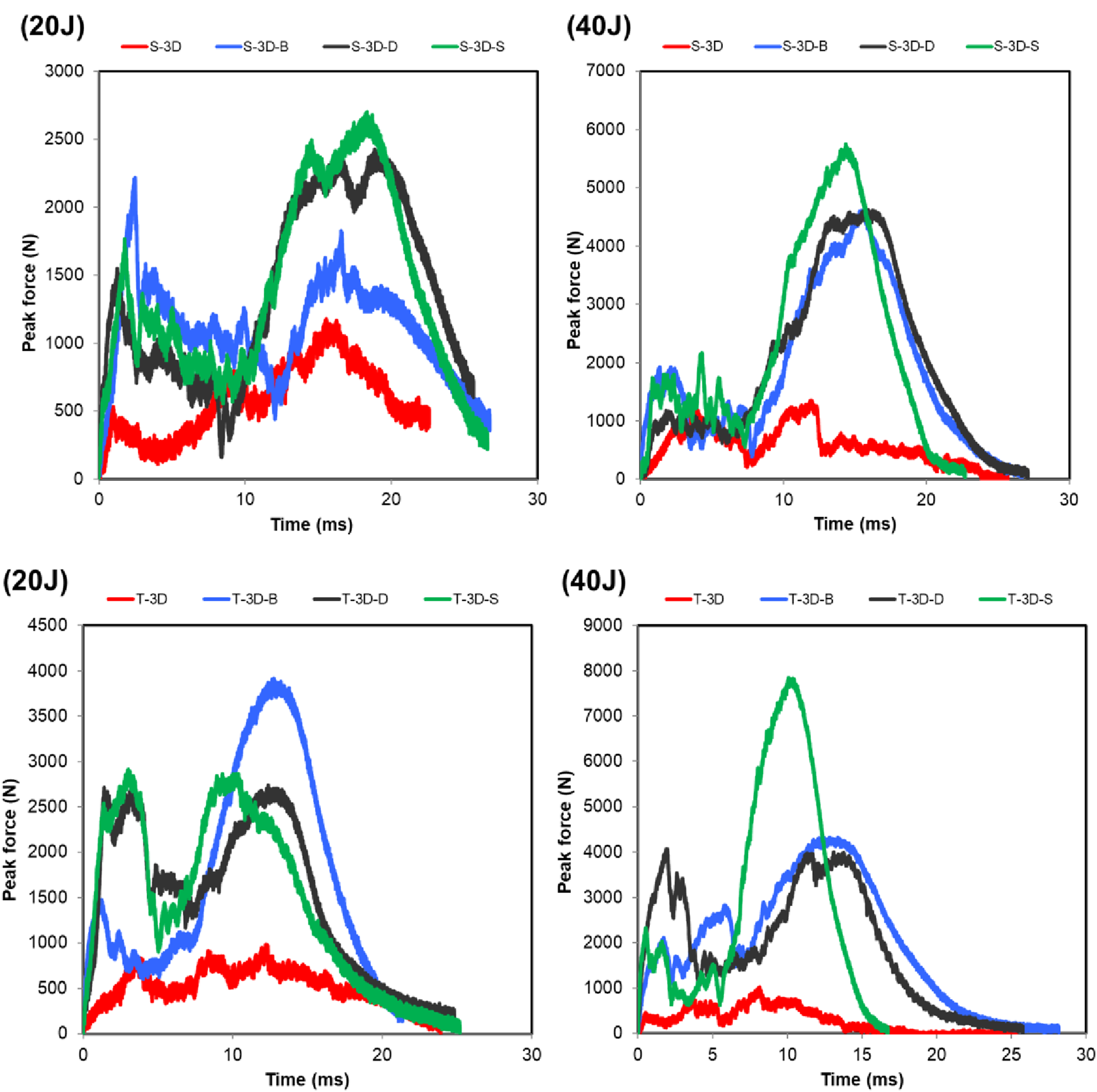
Figure 12 shows the peak force-deformation curves of the 3D spacer woven composites. At both 20J and 40J, the 3D square spacer woven sandwich composites exhibited greater permanent deformation compared to the 3D triangular spacer woven sandwich composites. This behaviour was attributed to the lower interconnection density between the core and the upper/lower face sheets per unit area, as well as the insufficient cell wall thickness of the 3D square spacer cores. The incorporation of 2D woven composite reinforcement into the 3D spacer woven sandwich composites effectively decreased the permanent deformation. Face sheet architecture plays a critical role in the low velocity impact behaviour of 3D spacer woven composites in which the structures with reduced crimp as satin exhibit enhanced impact resistance relative to plain counterparts.
27
Low crimp satin weave face sheets provided higher in-plane stiffness, promoting more uniform load distribution and delaying the initiation of localized damage. Peak force-deformation curves of the 3D spacer woven composites.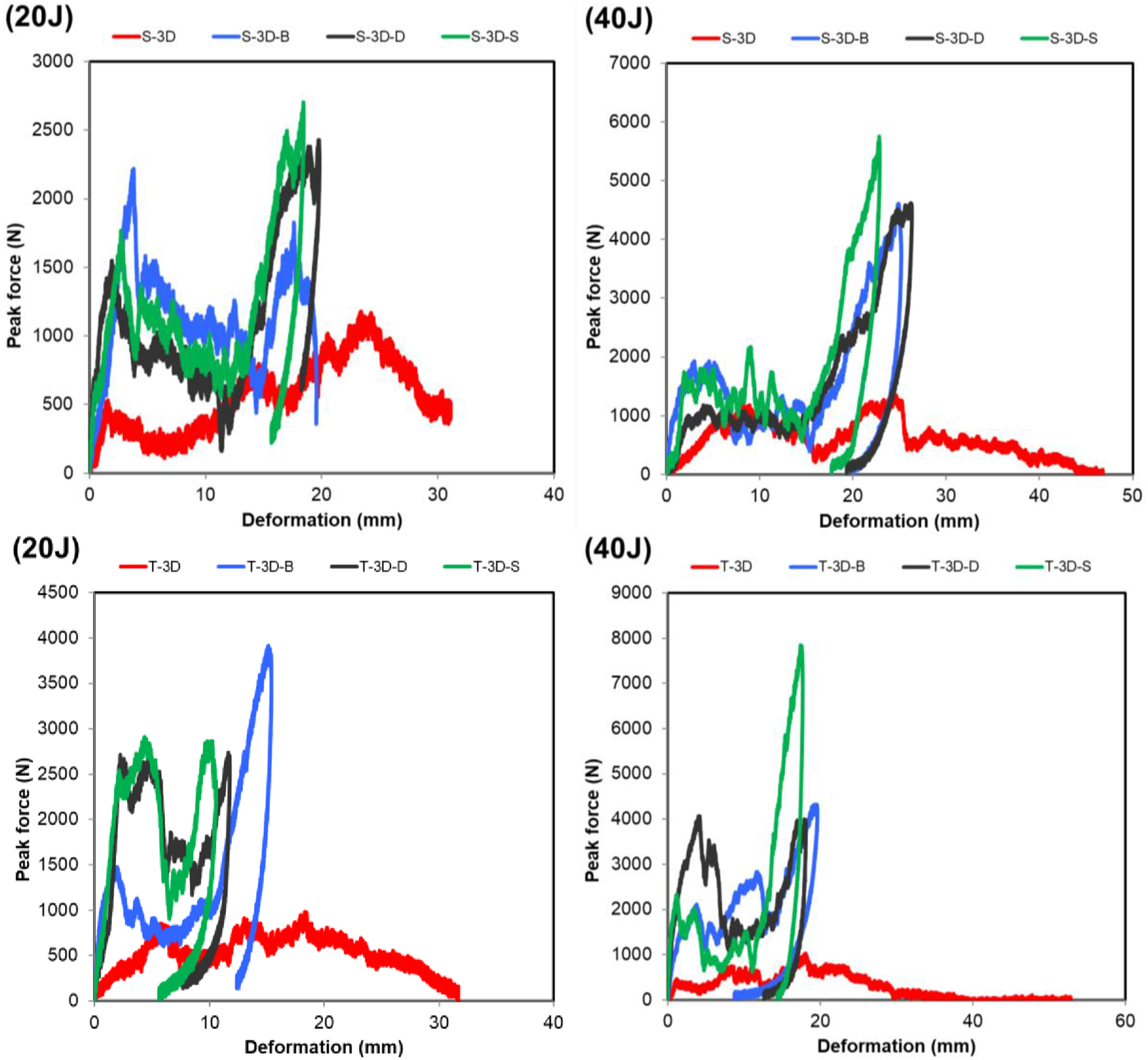
Figure 13 shows the absorbed energy-time curves of the 3D spacer woven composites. At both 20 J and 40 J energy levels, the incorporation of 2D woven composite reinforcement resulted in an increase in elastic recovery of the absorbed energy. Overall, the 3D triangular spacer woven composites exhibited higher elastic recovery compared to the 3D square spacer woven composites. In the unreinforced 3D spacer woven composites, no energy drop was observed, indicating the absence of recoverable deformation and therefore negligible elastic recovery. This response was attributed to the full perforation of both structures (S-3D and T-3D), where the impactor completely penetrated the structure, resulting in irreversible damage rather than partial deformation. Furthermore, 3D spacer woven composites reinforced with twill (2D) and satin (2S) woven composites exhibited a higher degree of elastic recovery compared to those reinforced with plain (2P) woven composites, due to their more efficient load distribution and reduced damage accumulation. Absorbed energy-time curves of the 3D spacer woven sandwich composites.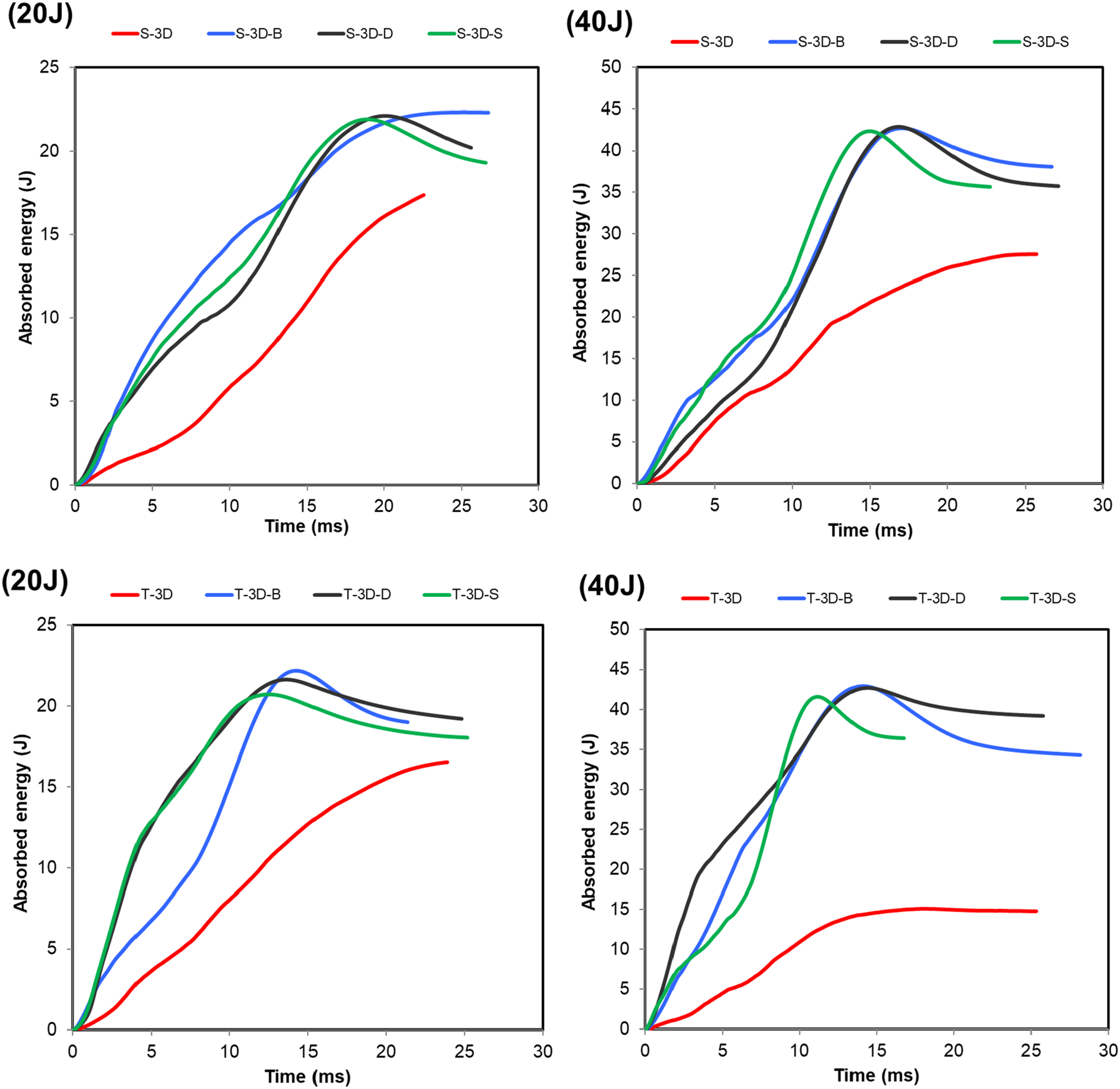
The post-impact penetration depth measurement results of the 3D spacer woven composites are presented in Figure 14. Accordingly, both core cell geometries were perforated at both impact energy levels. At an impact energy of 40 J, no perforation was observed in the 2D woven composite reinforced 3D triangular spacer woven composites. However, perforation occurred in the 3D square spacer woven composites reinforced with plain (2P) and twill (2T) 2D woven composites. The penetration depth values were lower for the triangular cells compared to the square cells. Additionally, the penetration depth increased with increasing impact energy. The post-impact penetration depths of the 3D spacer woven composites.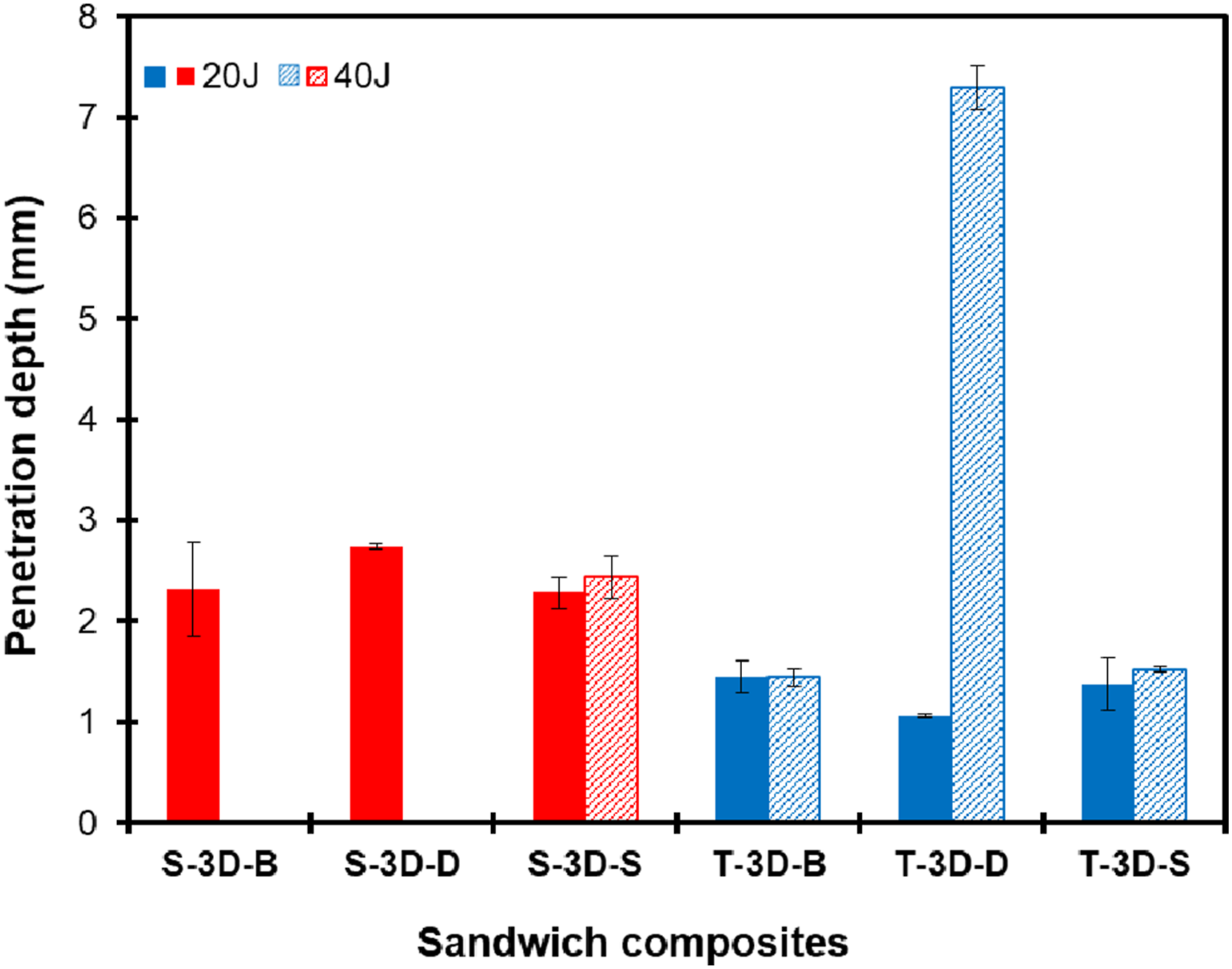
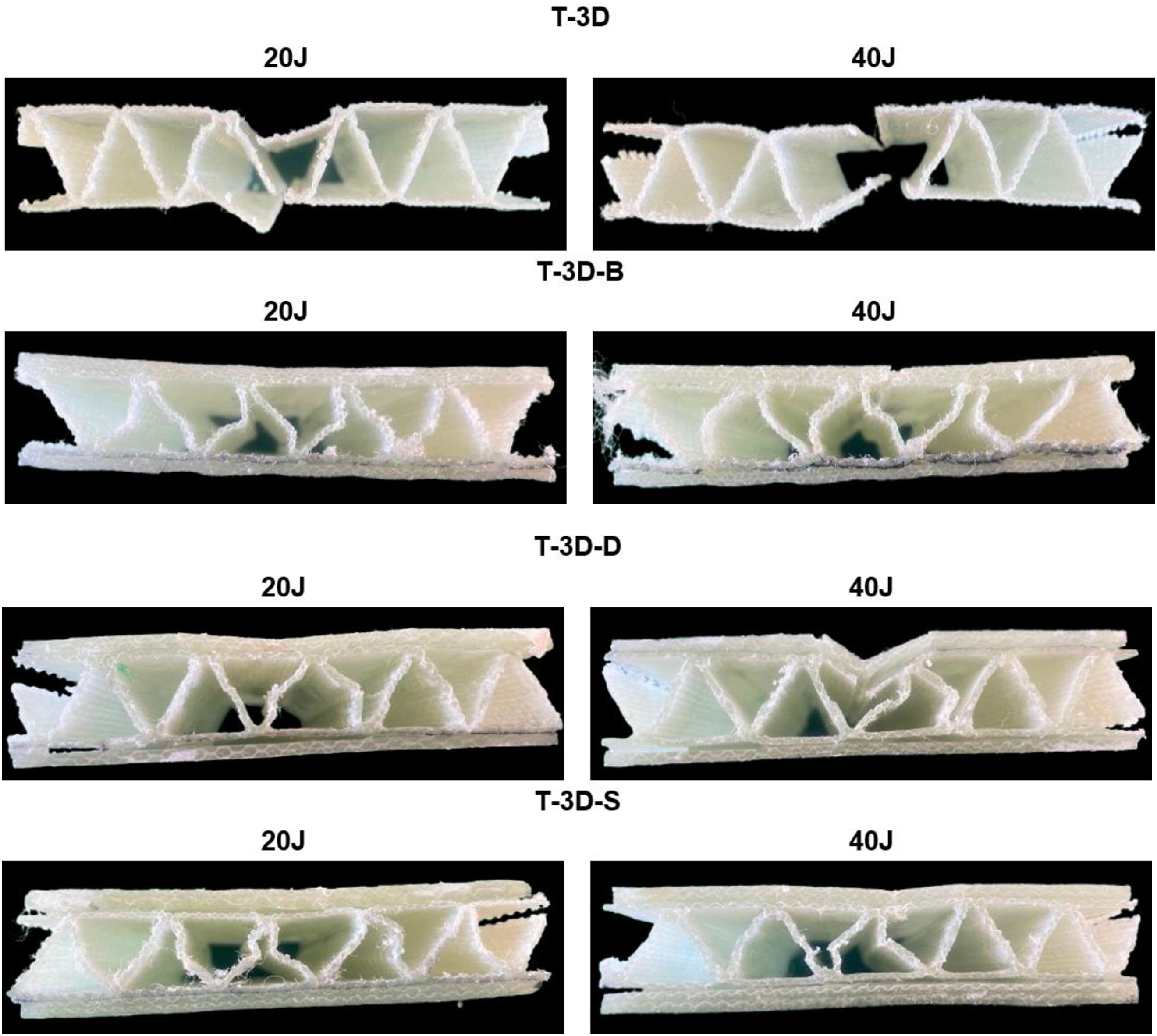
Figures 15 and 16 show the post-impact images of the 3D square and triangular spacer woven composites, respectively. At an impact energy of 20 J, the 3D square spacer woven core was entirely separated into two parts, whereas at the same energy level, only the upper face sheet of the 3D triangular spacer woven core was perforated, and the overall structural integrity was preserved. In the 3D square spacer woven composites, buckling and permanent deformation of the cell walls occurred under impact load due to the low interconnection density between the core and the upper/lower face sheets per unit area, as well as insufficient cell wall thickness. In contrast, the balanced interconnections inherent to the lattice architecture of the 3D triangular spacer woven composites resulted in a more resilient cellular structure, preventing permanent damage to the cell walls under impact load. At an impact energy level of 20 J, the 2D woven composite reinforced 3D triangular spacer woven composites exhibited reduced damage on the top face sheet, while only tilting and buckling dominated deformations were observed in the core.
25
It was also observed that the delamination occurred in the 2D woven composite reinforced 3D spacer woven composites with twill and satin 2D woven composite face sheets under impact load. The extent of delamination was found to be more pronounced in the 3D square spacer woven sandwich composites, which exhibit lower bending stiffness, in comparison to the 3D triangular structures. In square core configurations, the relatively low interconnection density between the core and face sheets led to localized stress concentrations, promoting cell wall bending, buckling, and progressive collapse. In contrast, triangular core geometries provided more efficient load paths and a more uniform stiffness distribution, enhancing structural stability and limiting excessive deformation.
28
The deformation behaviour was therefore governed by a transition from face sheet-dominated bending to core-controlled energy absorption mechanisms.
17
Post-impact images of the 3D square spacer woven composites. Post-impact images of the 3D triangular spacer woven composites.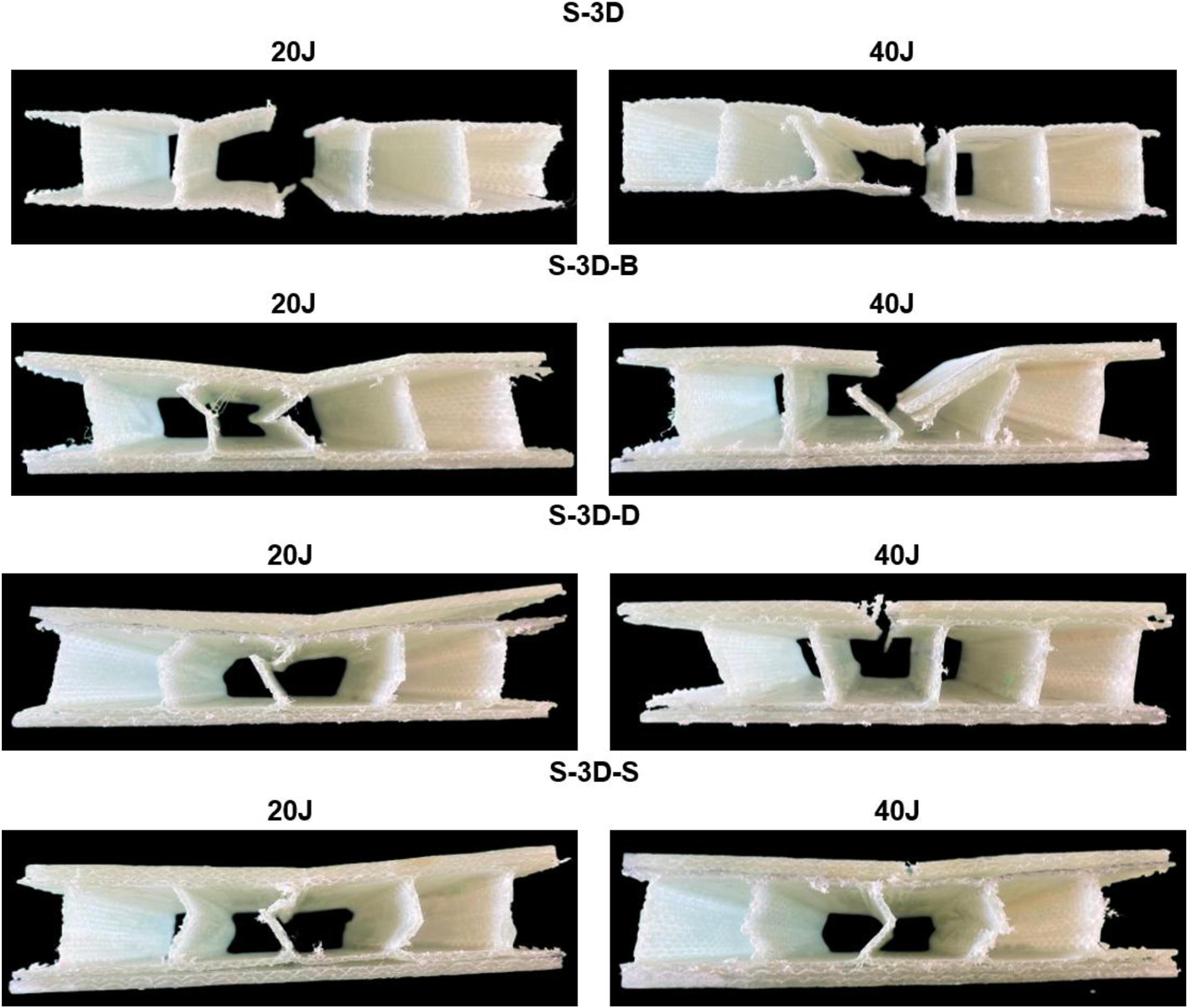
Conclusion
In this study, 3D spacer woven composites were developed by tailoring both core cell geometry and face sheet architecture to enhance the impact damage resistance. The conclusions are. - The 3D spacer woven composites showed two peak forces and two peak deformations under both 20 J and 40 J impact energy. This behaviour was attributed to permanent damage to the top face sheet and the subsequent penetration of the impactor into the bottom face sheet, which continued to absorb the remaining impact energy. - The incorporation of 2D woven composite face sheets increased the peak force values of the 3D spacer woven composites. - At both energy levels, the 3D square spacer woven composites sustained more extensive permanent deformation relative to their 3D triangular counterparts. This behaviour was attributed to the relatively low interconnection density between the core and face sheets which led to localized stress concentrations, promoting cell wall bending, buckling, and progressive collapse. In contrast, triangular core geometries provided more efficient load paths and a more uniform stiffness distribution, enhancing structural stability and limiting excessive deformation. The incorporation of 2D woven composite reinforcements effectively reduced the permanent deformation of the 3D spacer woven composites. - At both energy levels, the elastic recovery of the absorbed energy increased with the 2D woven composite reinforcement. Low crimp satin weave face sheets provided higher in-plane stiffness, promoting more uniform load distribution and delaying the initiation of localized damage. - In the 3D square spacer woven composites, buckling and permanent deformation of the cell walls occurred under impact load. In contrast, the balanced interconnections inherent to the lattice architecture of the 3D triangular spacer woven composites resulted in a more resilient cellular structure, preventing permanent damage to the cell walls under impact load. - The 3D triangular spacer woven composites exhibited higher impact damage tolerance compared to the 3D square spacer woven composites.
Footnotes

Funding
The authors disclosed receipt of the following financial support for the research, authorship, and/or publication of this article: This project has been carried under Kahramanmaras Sutcu Imam University Scientific Research Unit number 2022/3-12 YLS.
Declaration of conflicting interests
The authors declared no potential conflicts of interest with respect to the research, authorship, and/or publication of this article.