






Abstract
This paper presents a comparative analysis of discrete and continuous models for the pyramidal lattice truss core in sandwich plates. The study focuses on determining the fundamental vibration frequency as the basis for model comparison. The finite element method, implemented in ANSYS, was employed to address the dynamic problem. The sandwich plate with a pyramidal lattice truss core was modeled using shell and beam finite elements, while the continuous core plate was represented with shell and solid volume finite elements. The effects of the number of pyramidal cells, core thickness, and lattice truss core strut diameter on the fundamental frequency were examined. Fundamental frequencies obtained from both core models were compared, revealing that the continuous core model consistently overestimates the fundamental frequency. Additionally, a design algorithm for sandwich plates with a pyramidal lattice truss core was developed. The procedures for finite element model generation, fundamental frequency calculation, and structural design were implemented using APDL.
Keywords
Introduction
Sandwich plates have long been utilized in diverse engineering applications because of their high stiffness and strength. Traditionally, these plates have incorporated a limited range of core types to join the facings, with honeycomb cores being the most prevalent. The increasing adoption of additive manufacturing technologies has facilitated the development of novel core designs for sandwich plates. These new cores are cellular structures characterized by various spatially distributed architectures, consisting of repeating cells that completely fill the designated space. Owing to their potential applications, cellular structures have become a focus of intensive research. Comprehensive reviews of prior studies can be found in the works of Hanks et al., 1 Hunt et al., 2 Sajjad et al., 3 Tyagi and Manjaiah, 4 Yan et al., 5 Liu et al., 6 Miao et al., 7 and Khan and Riccio. 8
Many of the cellular structures reviewed in these articles are suitable as cores for sandwich plates, depending on the specific application. Among these, the pyramidal lattice truss core is of particular practical interest. Its unit cell comprises four struts that converge at a single point. The widespread adoption of this core type is largely attributed to its manufacturing simplicity. In recent years, extensive research has focused on the pyramidal lattice truss core. Notable findings are reported in the studies by Yungwirth et al., 9 Wu et al., 10 Li et al., 11 Wu et al., 12 Hu et al., 13 Ye et al.,14,15 Zhang et al.,16,17 Meng et al., 18 Yang et al., 19 Tao et al., 20 Ma et al., 21 Zhao et al., 22 Chen et al., 23 Zhang et al., 24 Fan et al., 25 Cadart et al., 26 and Sun et al. 27
Yungwirth et al. 9 evaluated the ballistic performance of edge-clamped stainless-steel sandwich panels by subjecting them to mid-span impacts with a spherical steel projectile. Each sandwich panel comprised two identical face sheets and a pyramidal truss core. Wu et al. 10 conducted compression and shear experiments to investigate the mechanical properties of lattice structures composed of carbon fibre composites. Li et al. 11 examined the impact of vacuum thermal cycling on the compression and shear performance of composite sandwich panels with pyramidal lattice truss cores. Wu et al. 12 studied the mechanical performance of hierarchical pyramidal-pyramidal grid materials as base materials for sandwich structures. Hu et al. 13 focused on the mechanical properties of hierarchical pyramidal-pyramidal grid materials used as core materials in sandwich structures subjected to compressive and transverse shear loading. Ye et al. 14 employed axial compression tests and finite element methods to assess the mechanical properties and energy absorption of pyramidal lattice truss structures. In a subsequent study, Ye et al. 15 investigated the influence of relative density on the compression performance and energy absorption characteristics of pyramidal lattice truss composite structures. Zhang et al. 16 designed and analysed the compression behaviour of continuous carbon fibre reinforced composite lattice sandwich structures, developing theoretical models to predict the compressive strength of tetrahedral, pyramidal, and hexagonal structures. Zhang et al. 17 proposed the fabrication of octet truss structures using continuous carbon fibre composites with additive manufacturing and provided both theoretical and experimental investigations of their mechanical properties at varying fibre volume fractions. Meng et al. 18 derived Legendre-Ritz solutions for the vibration characteristics of double-layer lattice truss sandwich plates, equating the pyramidal lattice core to a homogeneous plate based on the equivalence principle. Yang et al. 19 analysed the nonlinear static and dynamic responses of sandwich plates constructed with aluminium pyramidal lattice cores and composite face layers. Tao et al. 20 explored the effects of geometrical parameters and relative density on the deformation mechanisms and mechanical properties of sandwich structures with lattice metamaterial cores through experiments, numerical simulations, and theoretical predictions. Ma et al. 21 investigated the nonlinear dynamics, bifurcation, and chaotic properties of composite piezoelectric lattice sandwich plates with four simply supported edges. Zhao et al. 22 examined the compression behaviour of pyramidal lattice truss cores in sandwich structures using experimental, theoretical, and finite element analyses. Chen et al. 23 performed free vibration analysis and multiobjective robust optimisation of pyramidal truss core sandwich plates. Zhang et al. 24 studied the compressive behaviour and energy absorption capacity of additively manufactured lattice structures using uniaxial compression tests. Fan et al. 25 developed an analytical model to analyse the bending response of lattice core sandwich structures based on homogenisation and dehomogenisation methods. Cadart et al. 26 proposed an optimal penalty method for joint stiffening in beam models of additively manufactured lattice structures, concluding that beam element simulation within the finite element method is a more efficient alternative to traditional solid finite element simulations. Sun et al. 27 developed a variable-stiffness bio-inspired metamaterial based on carbon fibre-reinforced composites (CFRPs) by integrating a biomimetic helical design with S-shaped spring units. The authors established a theoretical model for the S-shaped spring, quantifying the relationship between linear stiffness characteristics and geometric parameters.
Our analysis of the referenced publications has enabled us to identify key characteristics of studies on pyramidal lattice truss cores. Most of these investigations focus on determining the average mechanical properties of the structures examined. Typically, the subject of analysis is a segment of a sandwich plate, comprising two facing fragments and one lattice truss core fragment. Researchers determine the stress-strain state parameters of this segment using experimental tests, finite element analysis, and analytical calculations of the truss core. The findings are then used to establish the averaged mechanical properties of the lattice structure. In this process, the discrete core fragment is modeled as a continuous medium with reduced modulus and density. This modeling is achieved through homogenisation, as outlined in the monograph by Gibson and Ashby. 28 Consequently, the entire core of the sandwich plate is assigned the averaged mechanical properties derived from its fragments.
The analysis and design of a sandwich plate with a solid core can be conducted using various established calculation methods. To evaluate the reliability of these results, it is necessary to compare them with outcomes from calculations that consider the discrete nature of a pyramidal lattice truss core. This comparison is typically performed by determining the fundamental vibration frequency of a sandwich plate with the specified core structure. Such results are frequently utilized in composite structure design calculations. The fundamental frequency is determined by the ratio of the plate’s bending stiffness to its mass per unit area. An increase in bending stiffness is invariably accompanied by an increase in mass per unit area. Consequently, the fundamental frequency serves as an effective criterion for assessing the mass efficiency of a sandwich plate, as it reflects the combined influence of bending stiffness and mass per unit area.
This paper presents a comparative analysis of discrete and continuous models of a pyramidal lattice truss core in sandwich plates by determining the fundamental vibration frequencies for both models. The dynamic problems were solved using the finite element method in ANSYS, employing shell and beam finite elements for the discrete model and shell and solid volume finite elements for the continuous model. These solutions enabled analysis of the effects of the number of pyramidal cells, core thickness, and lattice truss core strut diameter on the fundamental vibration frequency for both models. The resulting data facilitated a comparison of model behaviors. Additionally, a practical design algorithm was developed to achieve minimal mass for a sandwich plate with a pyramidal lattice truss core, subject to a specified fundamental frequency constraint.
Geometrical parameters of the sandwich plate and pyramidal lattice truss core
A rectangular sandwich plate is composed of identical composite orthotropic facings and a pyramidal lattice truss core with struts of circular cross section (Figure 1). The lower plane of the plate is referenced to the Sandwich plate with a pyramidal lattice truss core.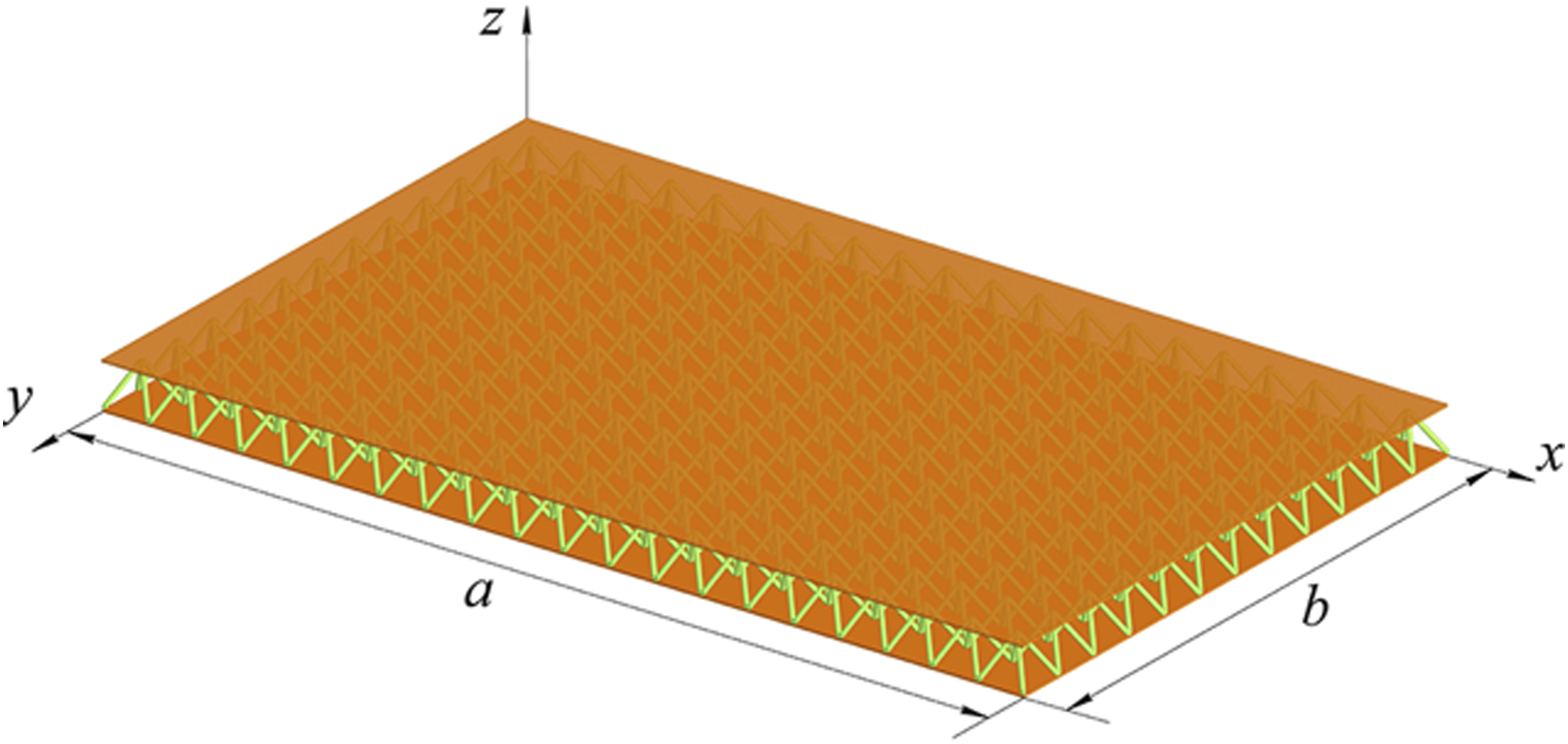
The thicknesses of the core and each facing are denoted by The geometric parameters of a pyramidal lattice unit cell.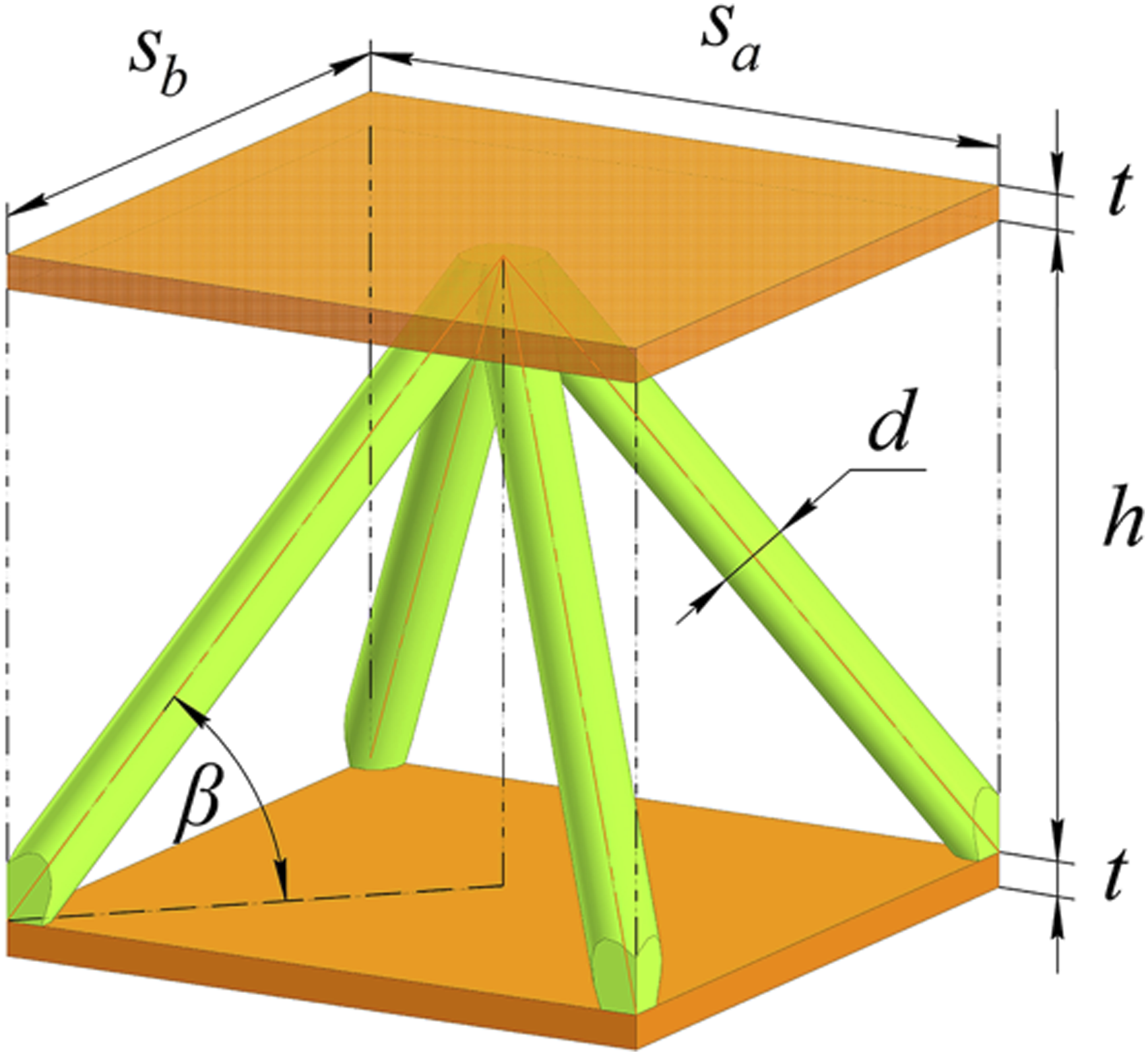
The sizes


When arbitrary values are assigned to The sizes of a unit cell.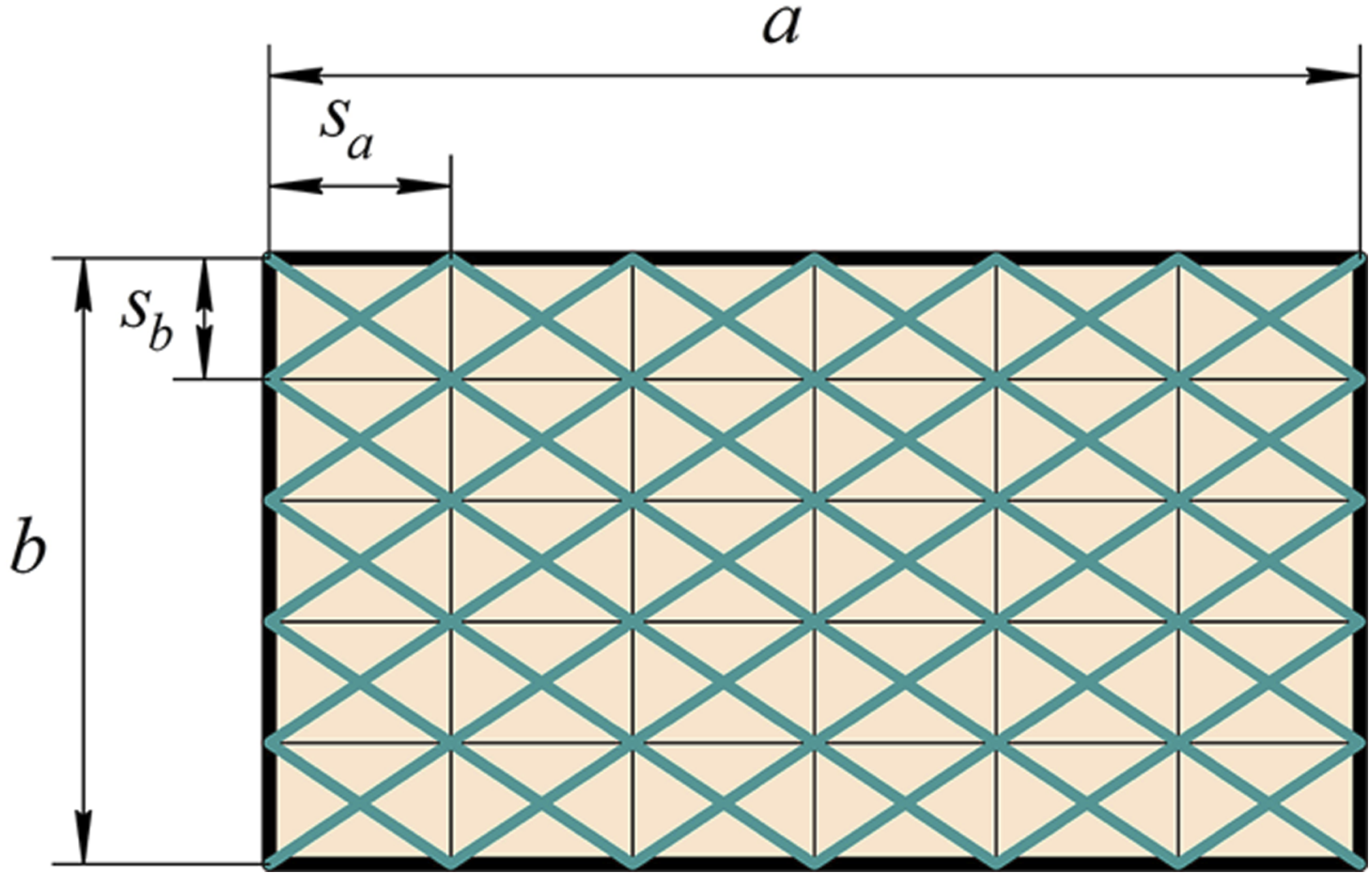
The stiffness parameters of the core along the sides of the plate

Given the known values of the unit cell dimensions


Continuous model of the core
A continuous model of the discrete core is constructed by replacing it with a continuous orthotropic layer (Figure 4). Sandwich plate with continuous solid core.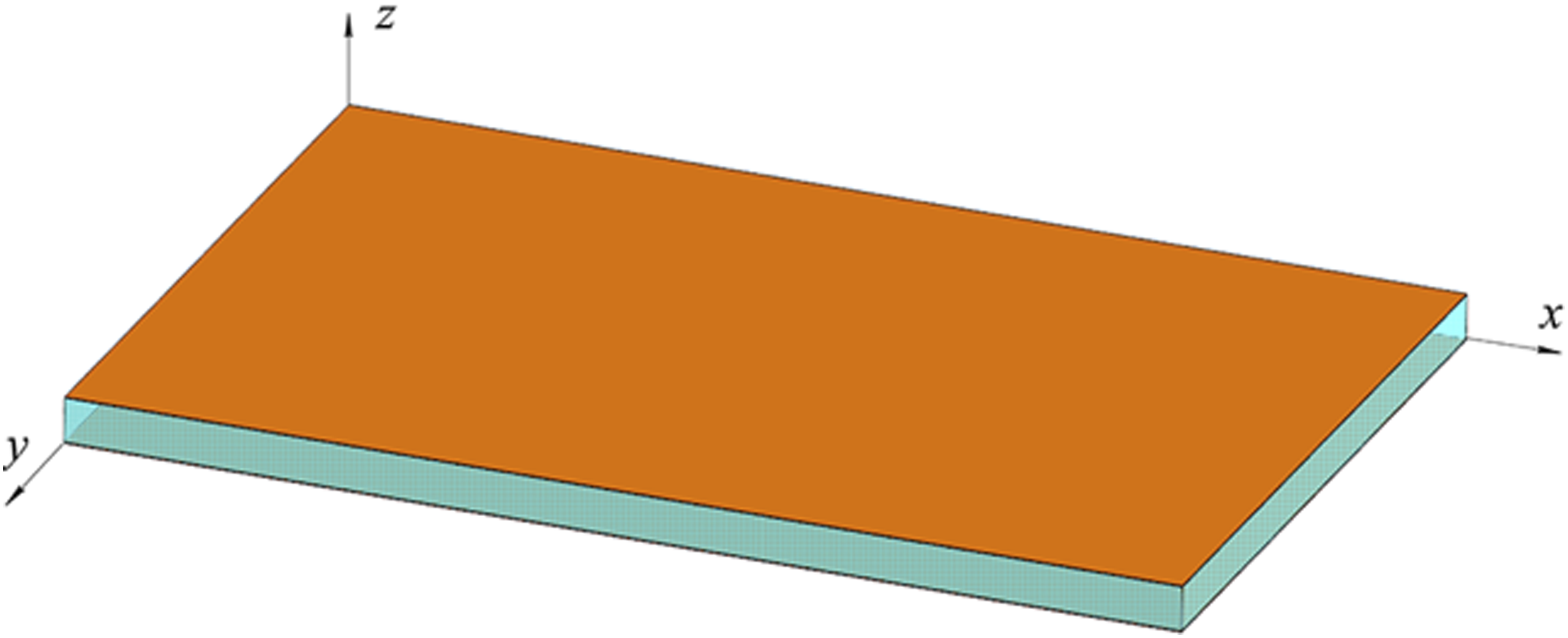
The material of this layer is generally characterized by averaged parameters, including density Unitary parallelepiped.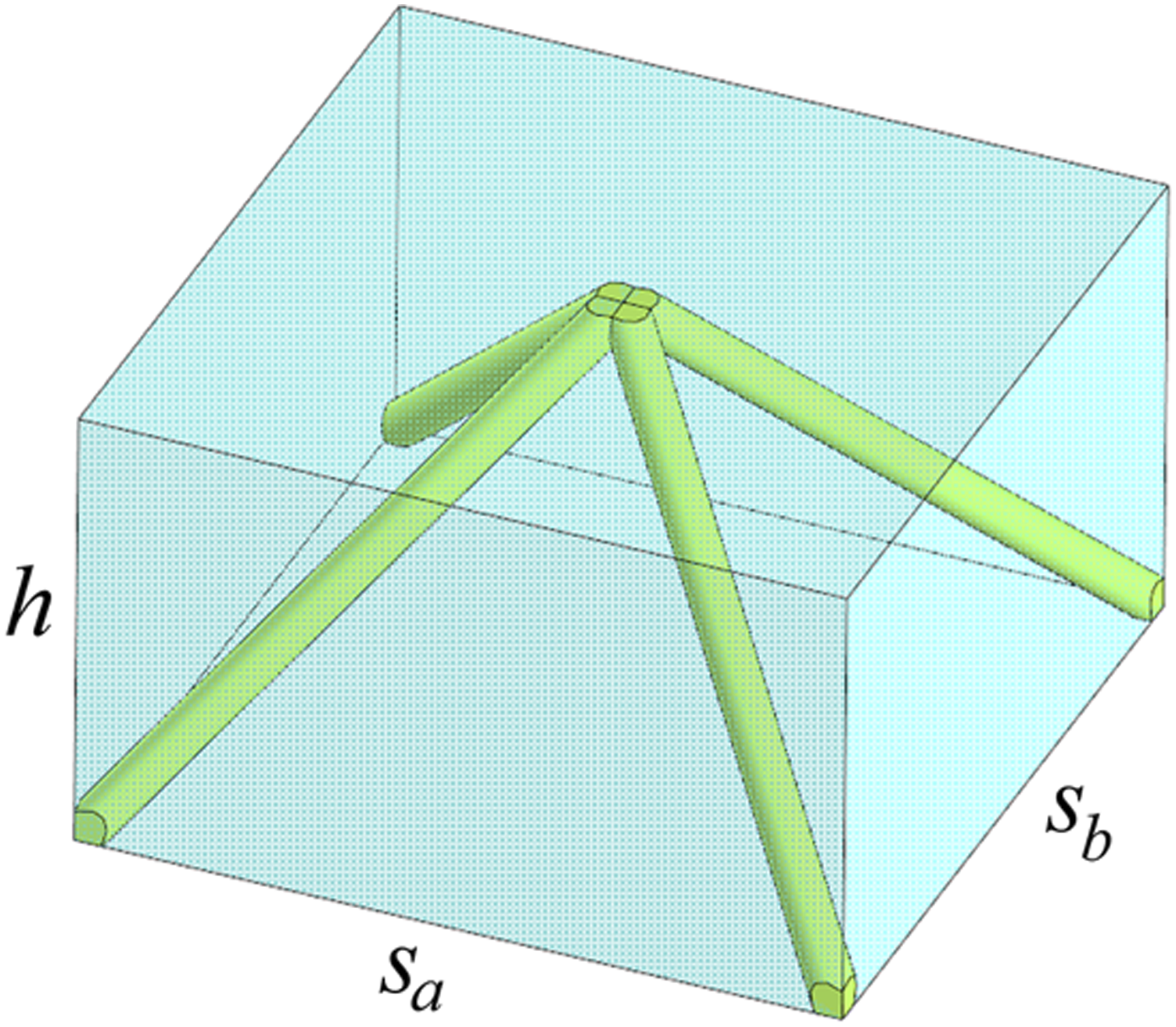
The averaged mechanical properties of the solid parallelepiped are determined using the corresponding mechanical properties of a strut. It is assumed that a layer of continuous core in a sandwich plate, which replaces a discrete structure, possesses the averaged mechanical characteristics of the considered elementary parallelepiped.
The averaged density of the parallelepiped is determined by first calculating the mass of the four struts that constitute a pyramidal lattice unit cell as follows:

The mass of the parallelepiped is expressed by the following formula:


We also aim to determine the average modulus of elasticity of the parallelepiped. To achieve this, we solve two problems involving the deformation of a pyramidal lattice unit cell and a parallelepiped, each subjected to the same force A pyramidal lattice unit cell and an unitary parallelepiped loaded by the 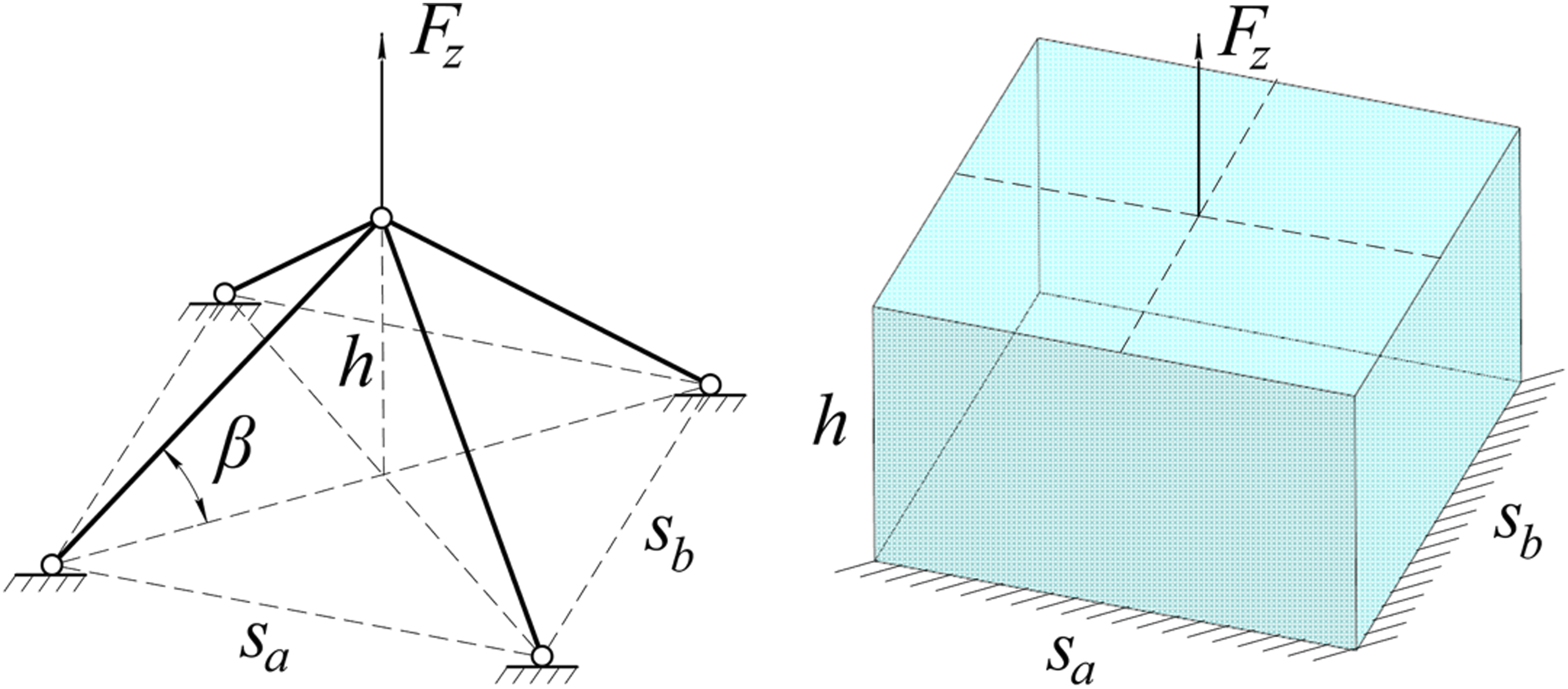
The first problem is addressed by modeling the pyramidal lattice unit cell as a spatial truss. Each strut end is subjected to the vertical force
The elongation of the strut Elongation of the strut caused by 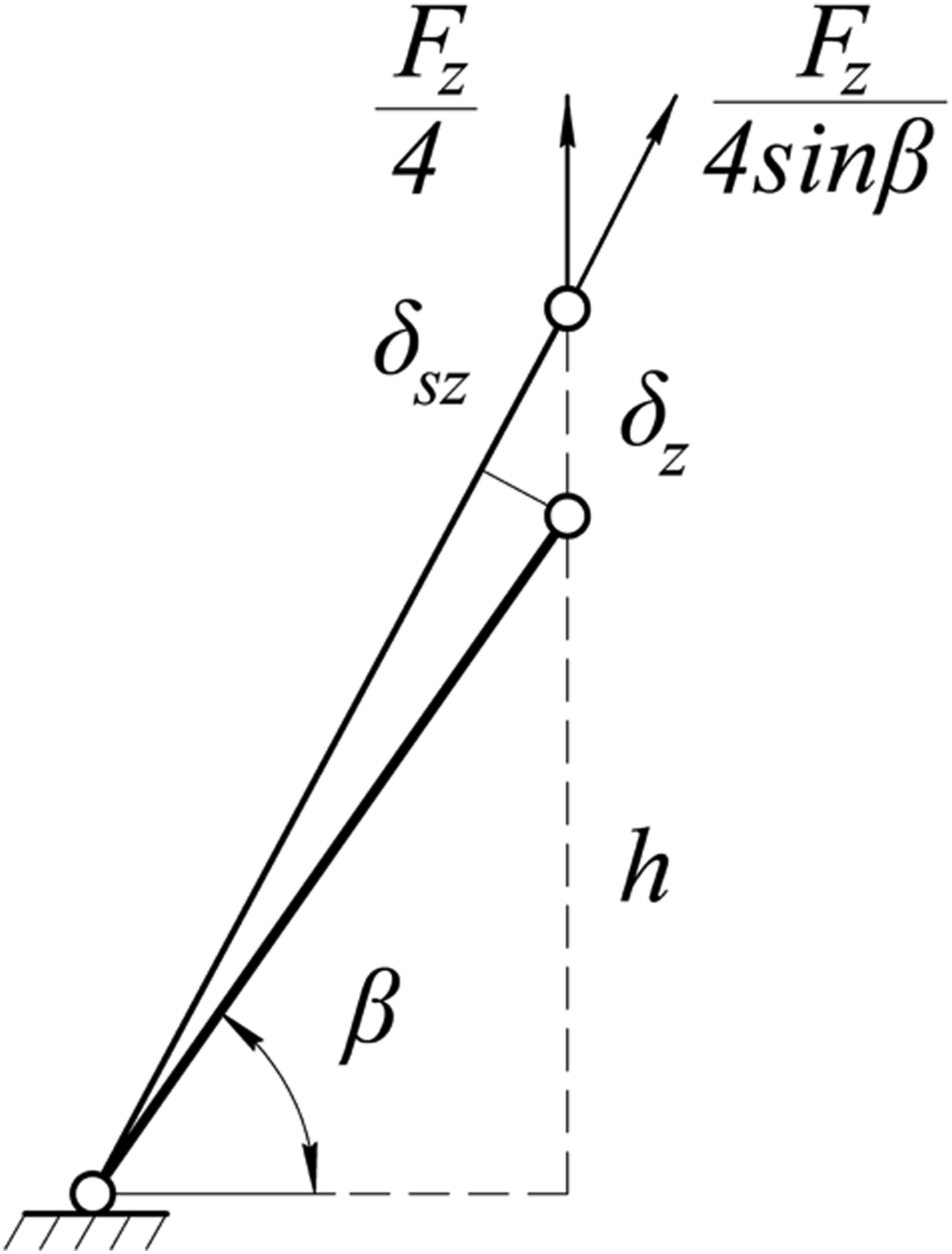

The vertical displacement at the end of the strut, as shown in Figure 7, is given by

By substituting equation (9) into equation (10), the following expression is obtained:

To address the second problem, the parallelepiped as a rod with length


The next step is to determine the averaged transverse shear modulus in the A pyramidal lattice unit cell and an unitary parallelepiped loaded by the 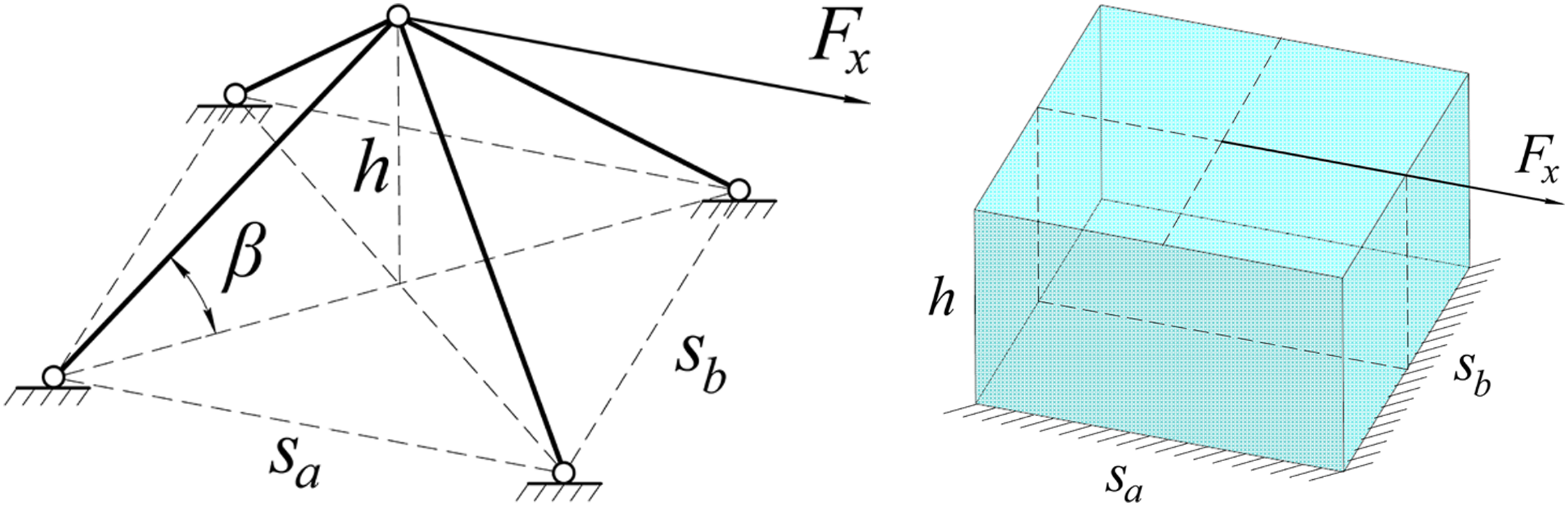
The solution to the first problem, considering the symmetry of the computational model, is conducted for one half of the pyramidal lattice unit cell. This structure is subjected to a shear force of Loading of a half pyramidal lattice unit cell by the 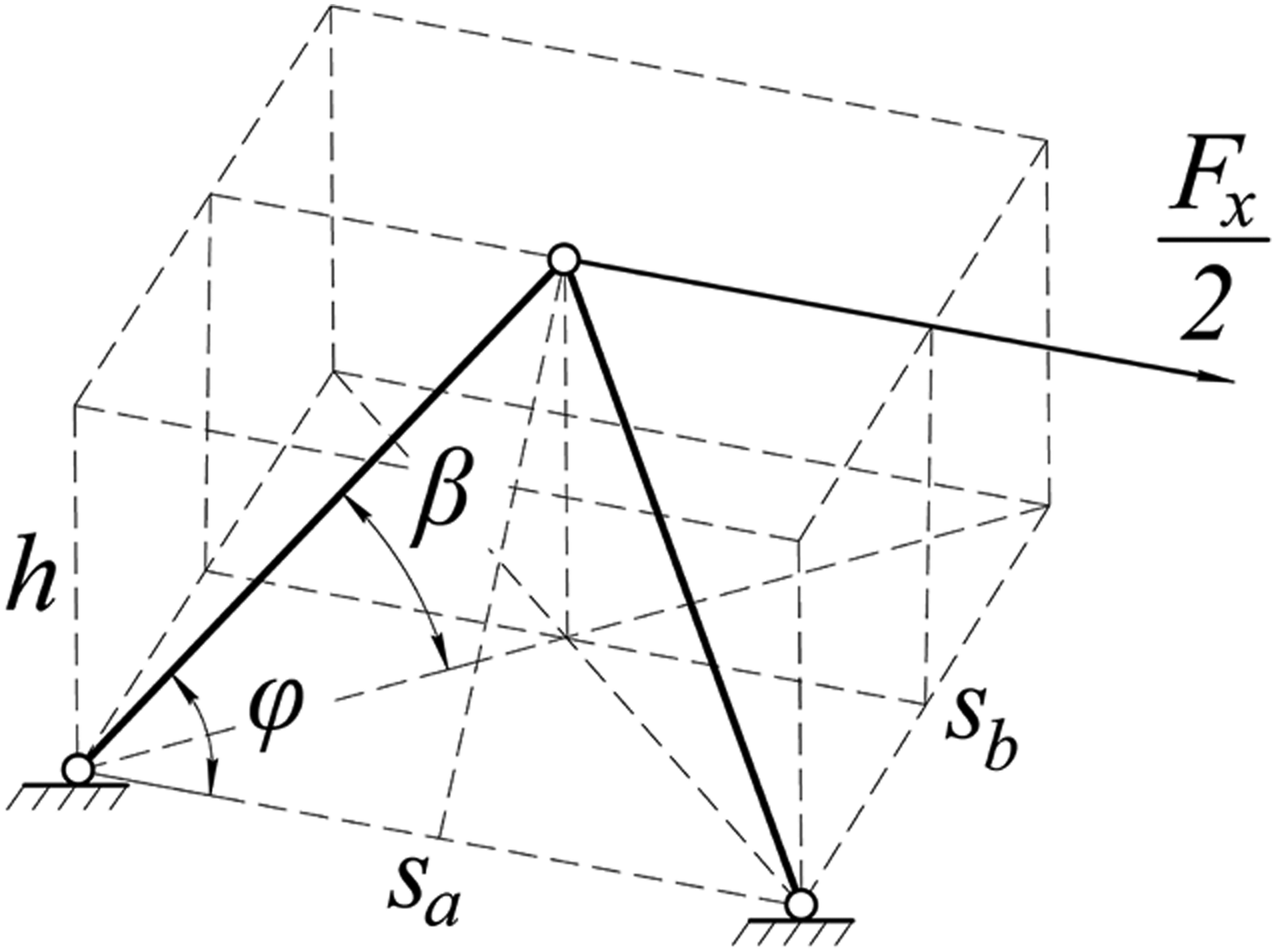
The applied force induces both tensile and compressive forces in the struts. Based on the equilibrium condition for the struts forming an isosceles triangle (Figure 10), these forces are equal in value and can be determined as follows: The force diagram of the struts.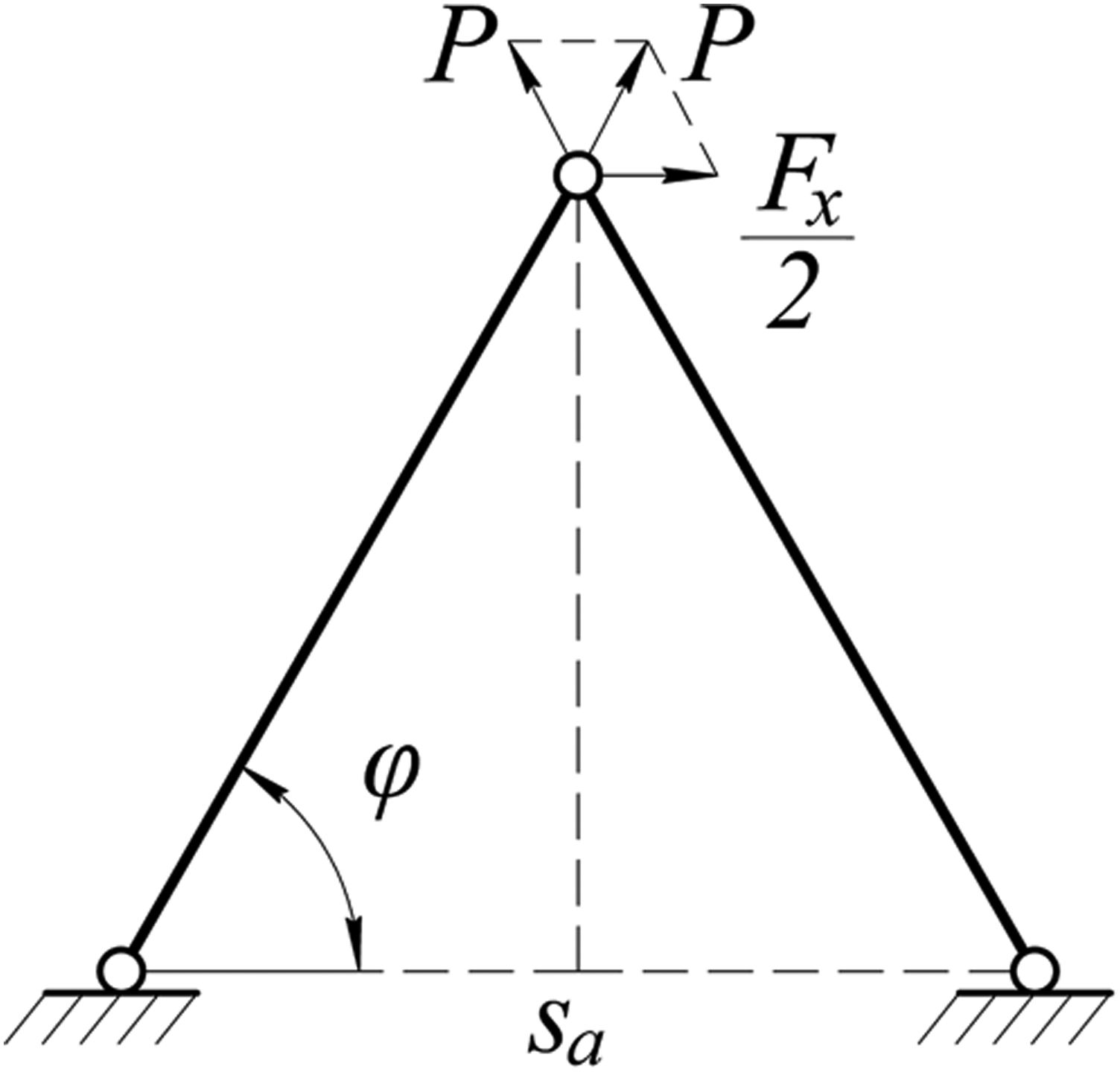
Elongation and shortening of the struts caused by 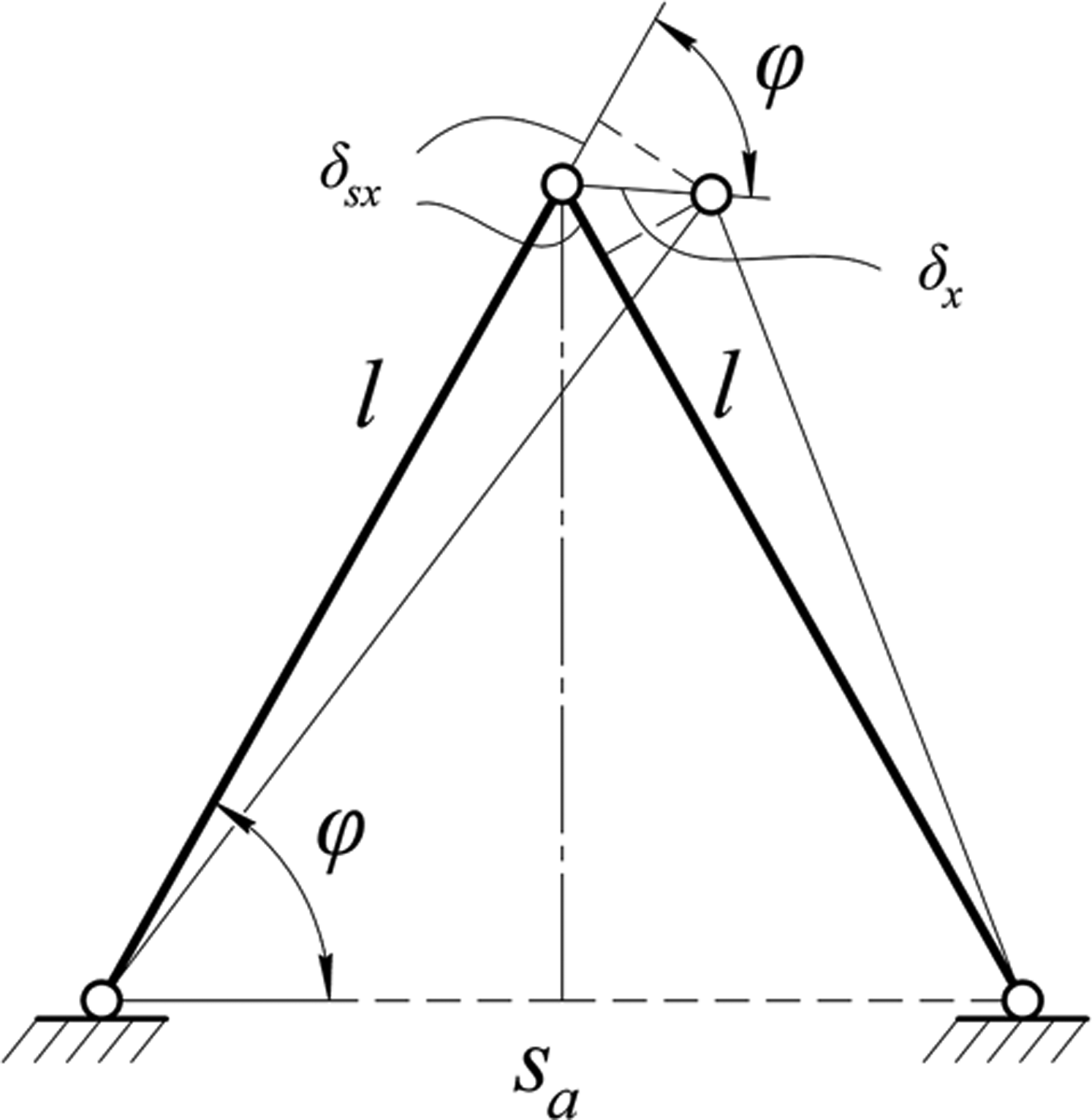


By substituting equation (14), this formula becomes:

We now determine the displacement of the force application point


To address the second problem, consider half of the parallelepiped (Figure 6) with height

Here,

Given that

The averaged shear modulus

The averaged density
Finite element models of the sandwich plate
Finite element models were developed for the sandwich plate with both a pyramidal lattice truss core and a continuous solid core. Both models were constructed using ANSYS.
30
The finite element model of the sandwich plate with a pyramidal lattice truss core was based on a typical unit cell (Figure 2) defined by the geometric parameters Generation of the finite element model of the sandwich plate with pyramidal lattice truss core.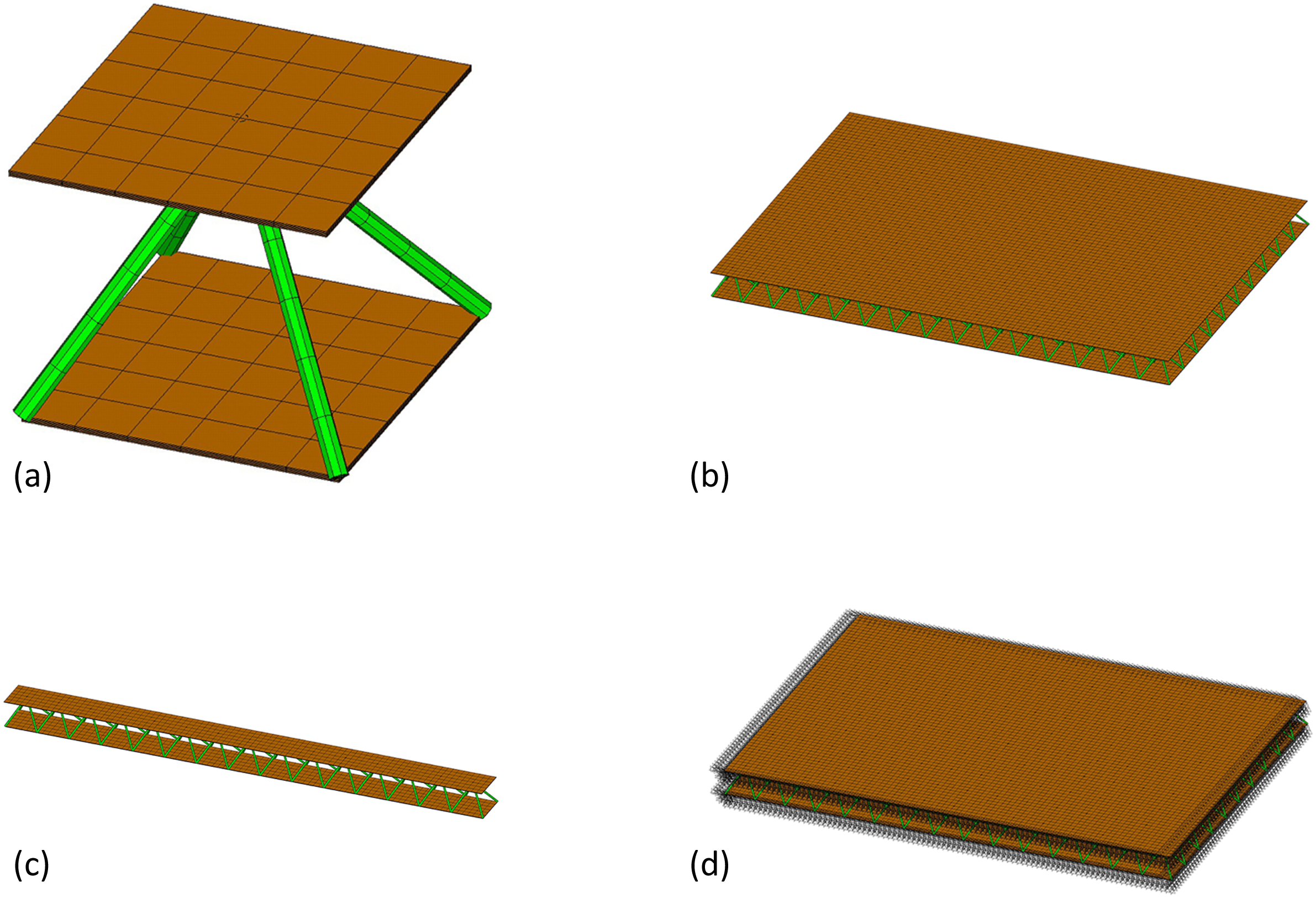
A finite element model of a sandwich solid core plate was developed using two types of finite elements. The facings were represented by the SHELL181 finite element (Figure 13(a)), while the solid core was modeled with the SOLID186 volume finite element (Figure 13(b)). The SOLID186 element contains 20 nodes, each possessing three degrees of freedom. The matching nodes of the facings and solid core elements were merged, followed by renumbering of the model nodes. The modeling process concluded with the application of boundary conditions at the clamped edges of the facings (Figure 13(c)). Generation of the finite element model of the sandwich plate with a continuous solid core.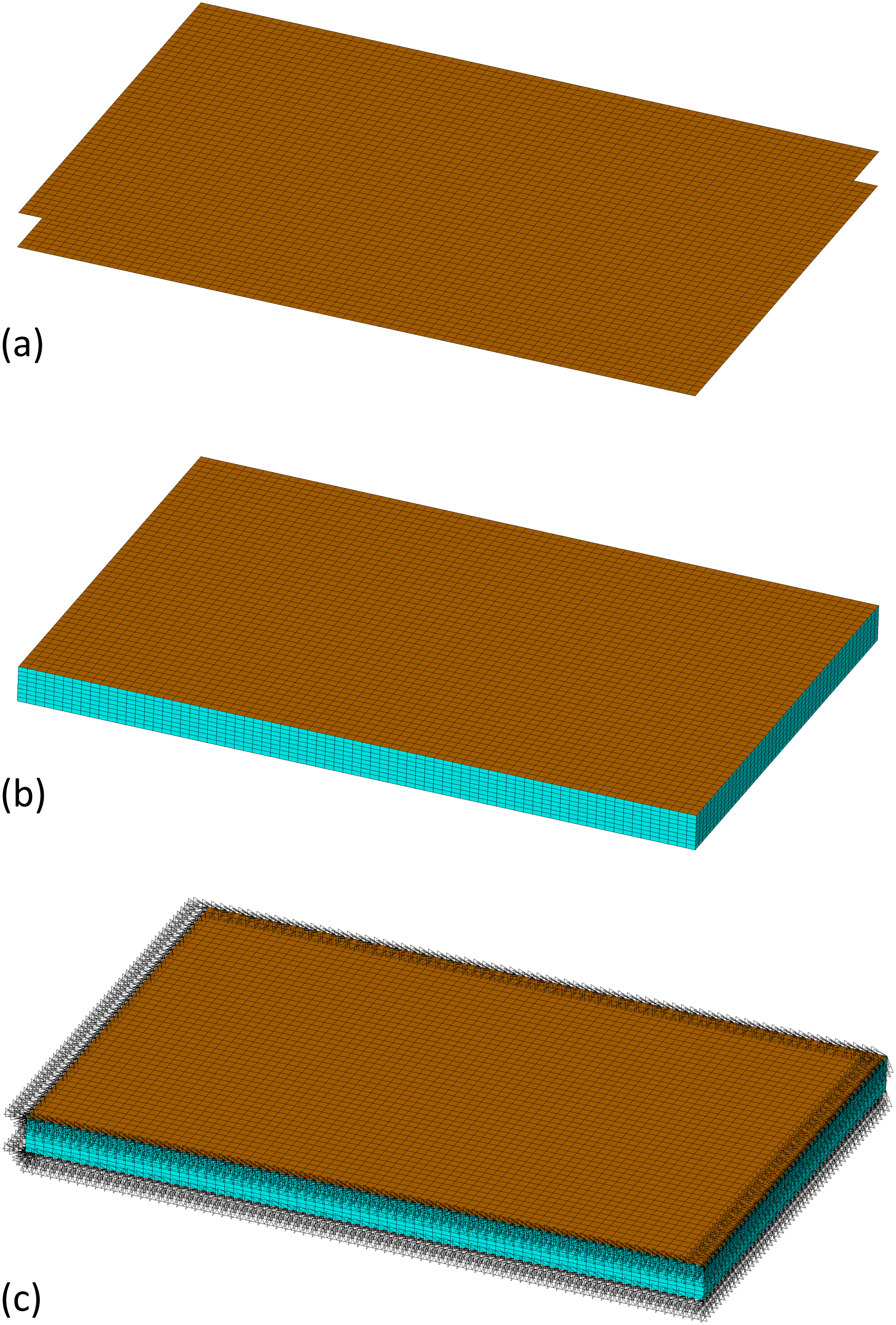
Numerical results
Finite element models of a sandwich plate with a pyramidal lattice truss core and a continuous solid core are employed to analyze the fundamental vibration frequency in bending. This frequency is determined by the geometrical parameters of both the plate and the core, as well as the mechanical properties of the constituent materials. Any variation in these parameters leads to a corresponding change in the fundamental vibration frequency. To ensure the dynamic analysis remains tractable, the number of influencing parameters is limited. The calculations fix the plate’s plan dimensions, the thickness of the facings, the elastic properties, and the material densities. The fundamental vibration frequency is determined for a plate with side lengths
Finite element models of the sandwich plate were developed using macros for each combination of the parameters
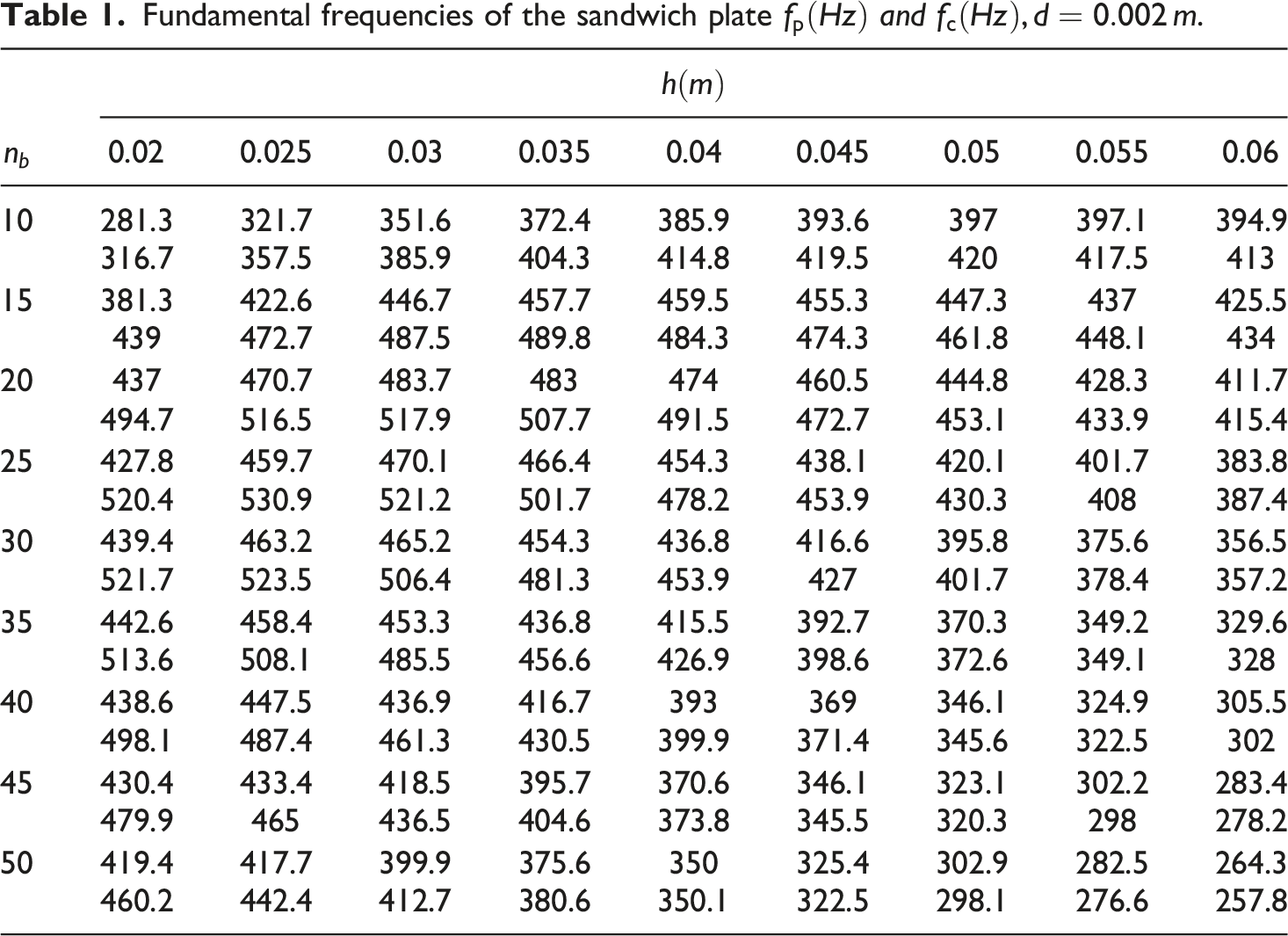
Fundamental frequencies of the sandwich plate
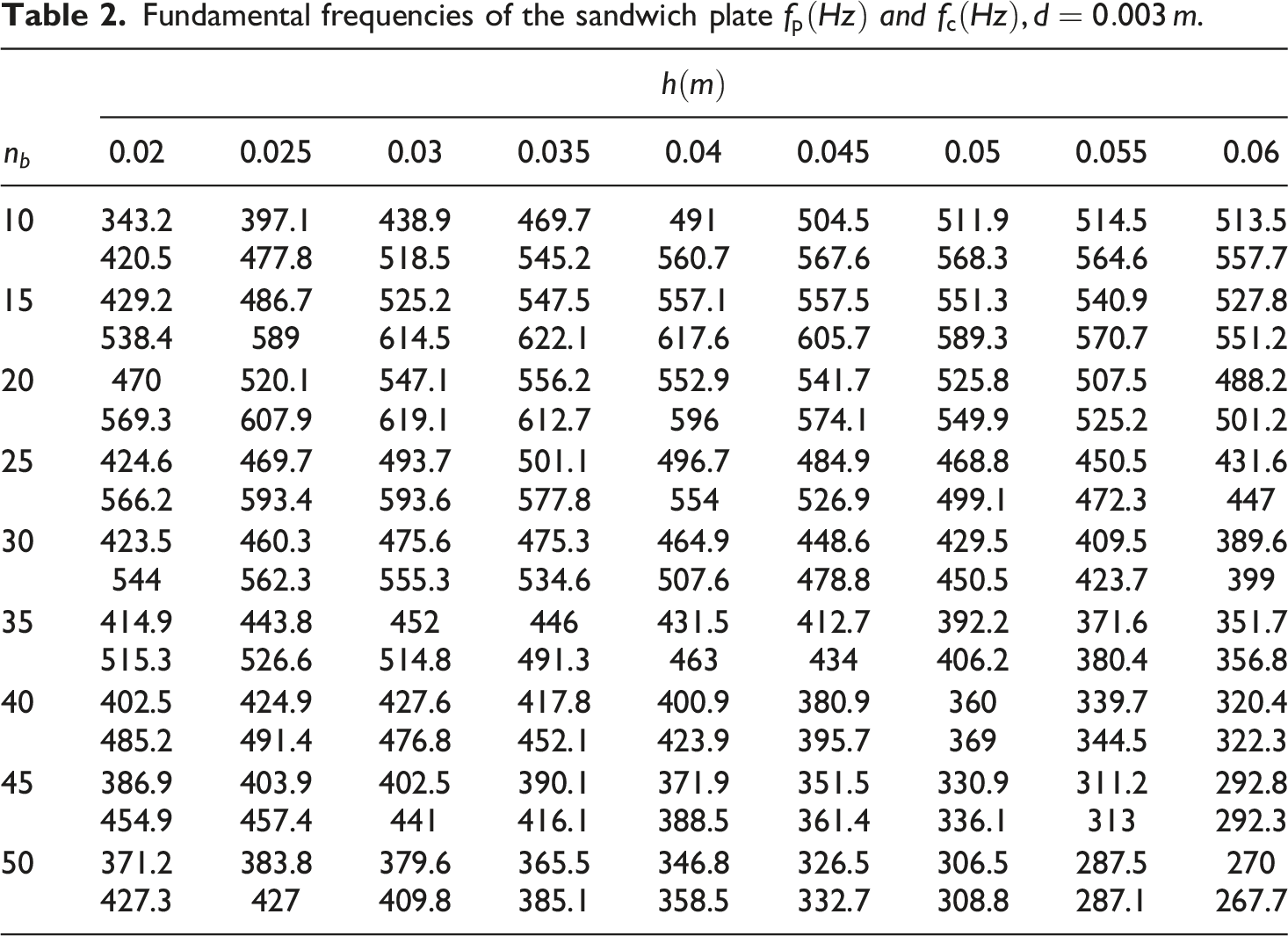
Fundamental frequencies of the sandwich plate
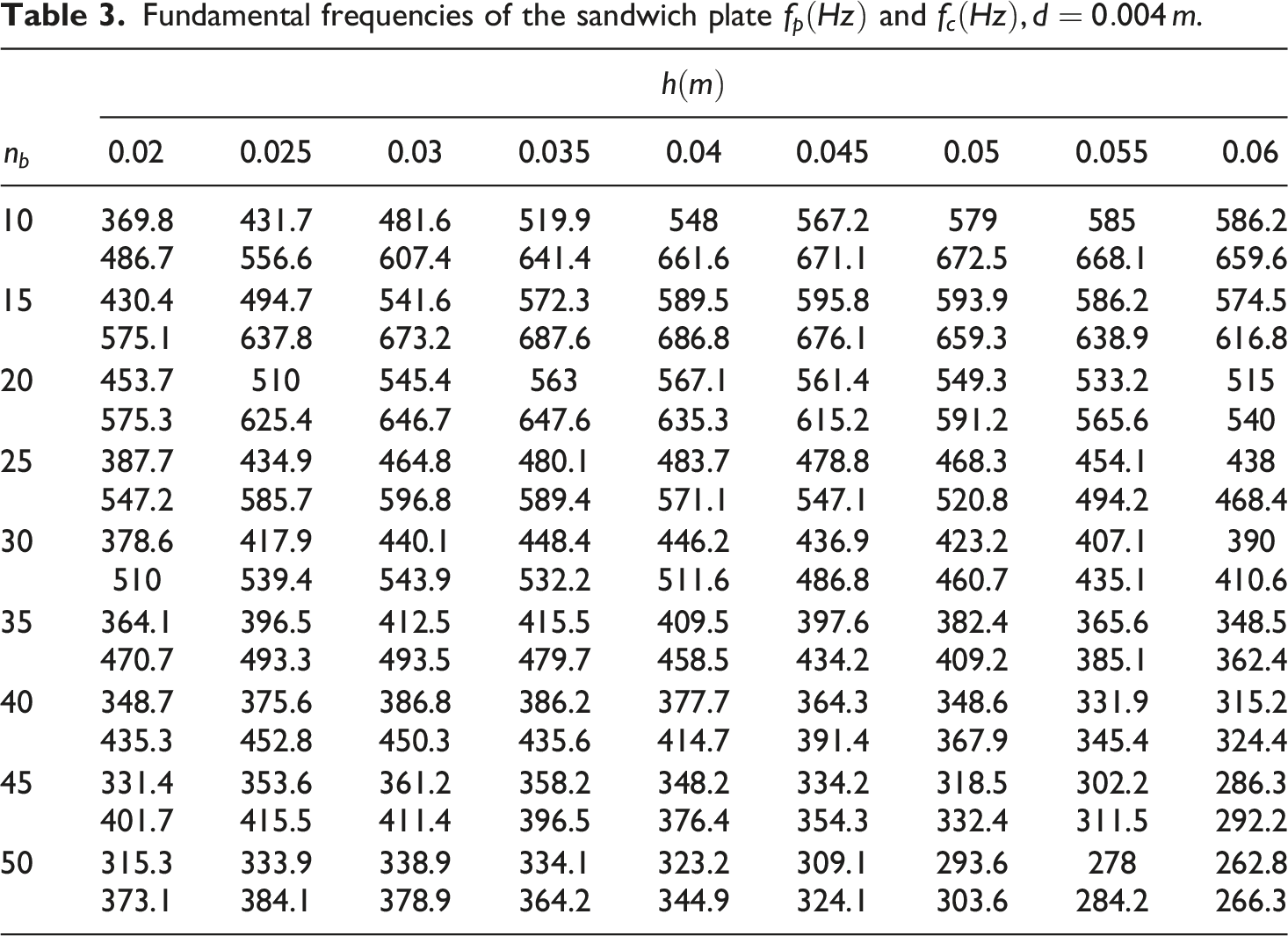
Fundamental frequencies of the sandwich plate
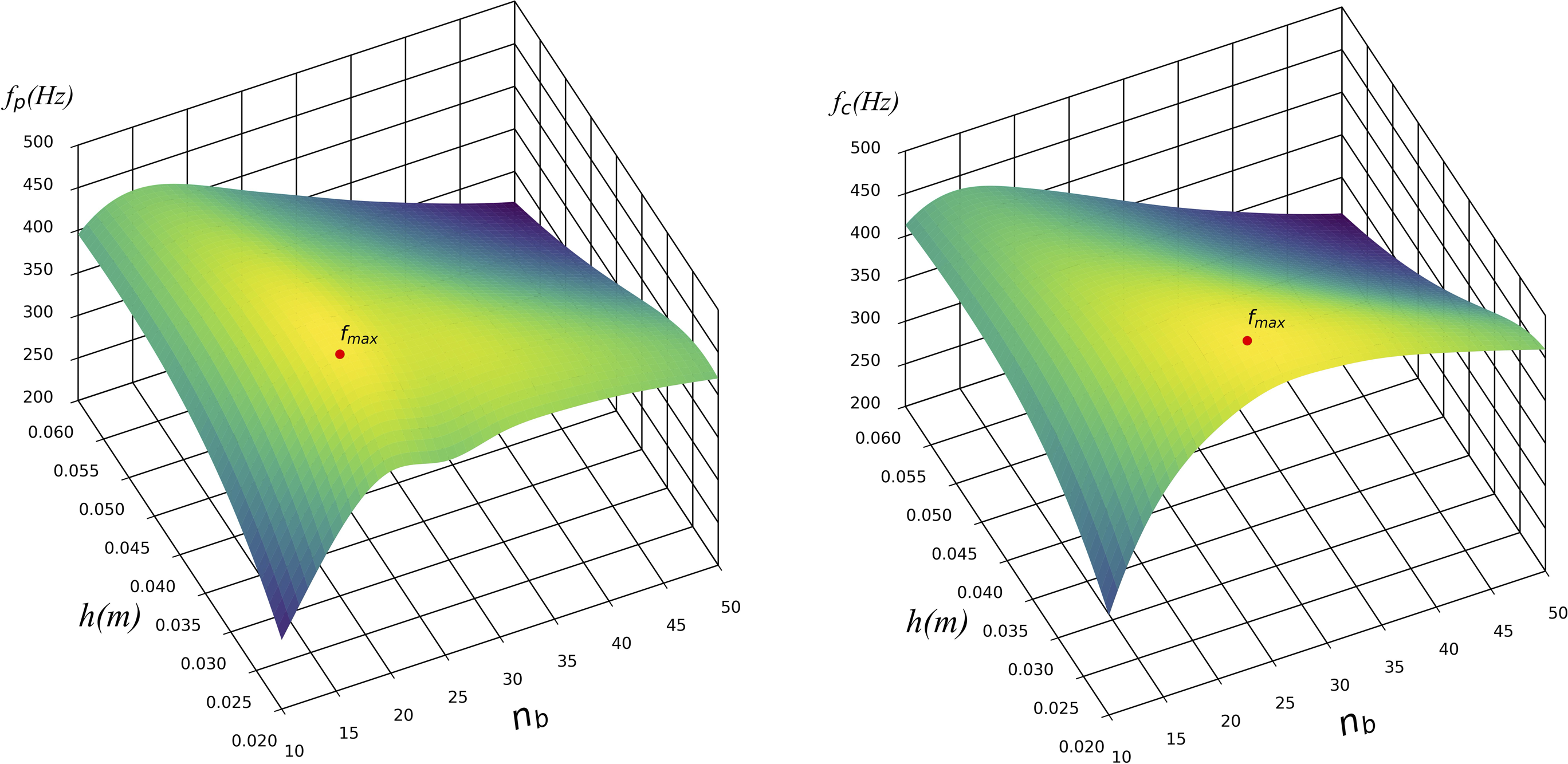
Functions
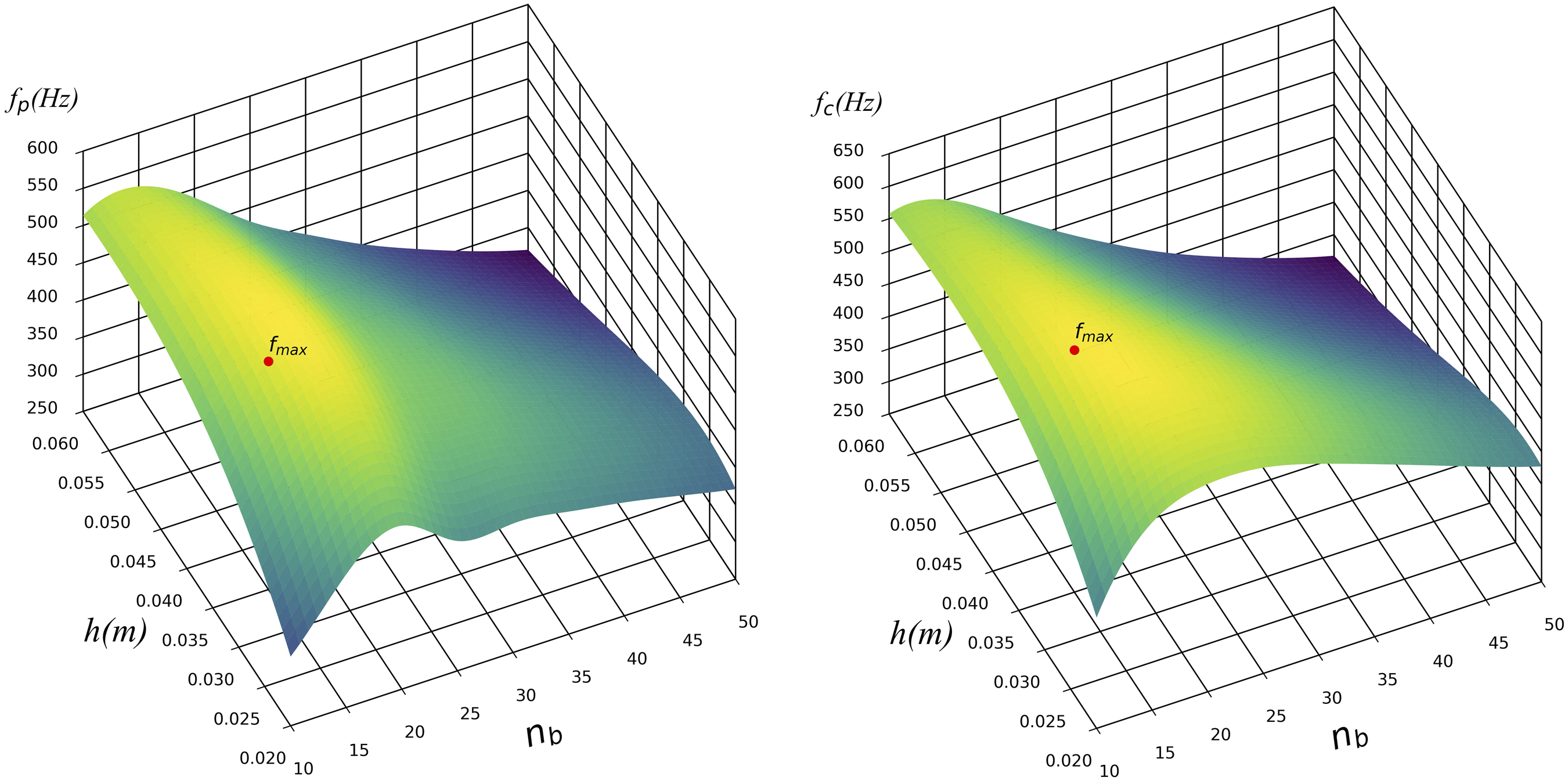
Functions
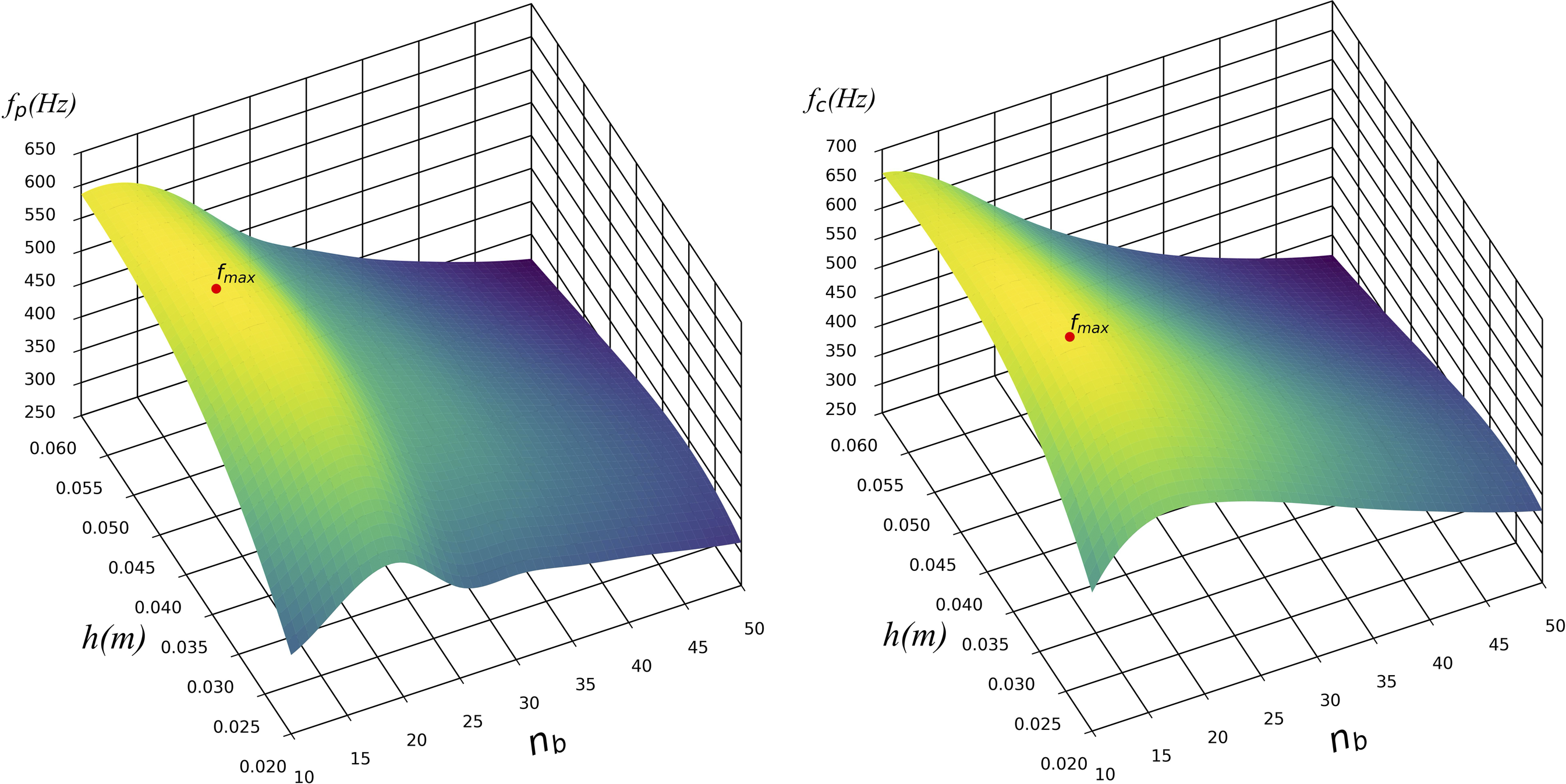
Functions
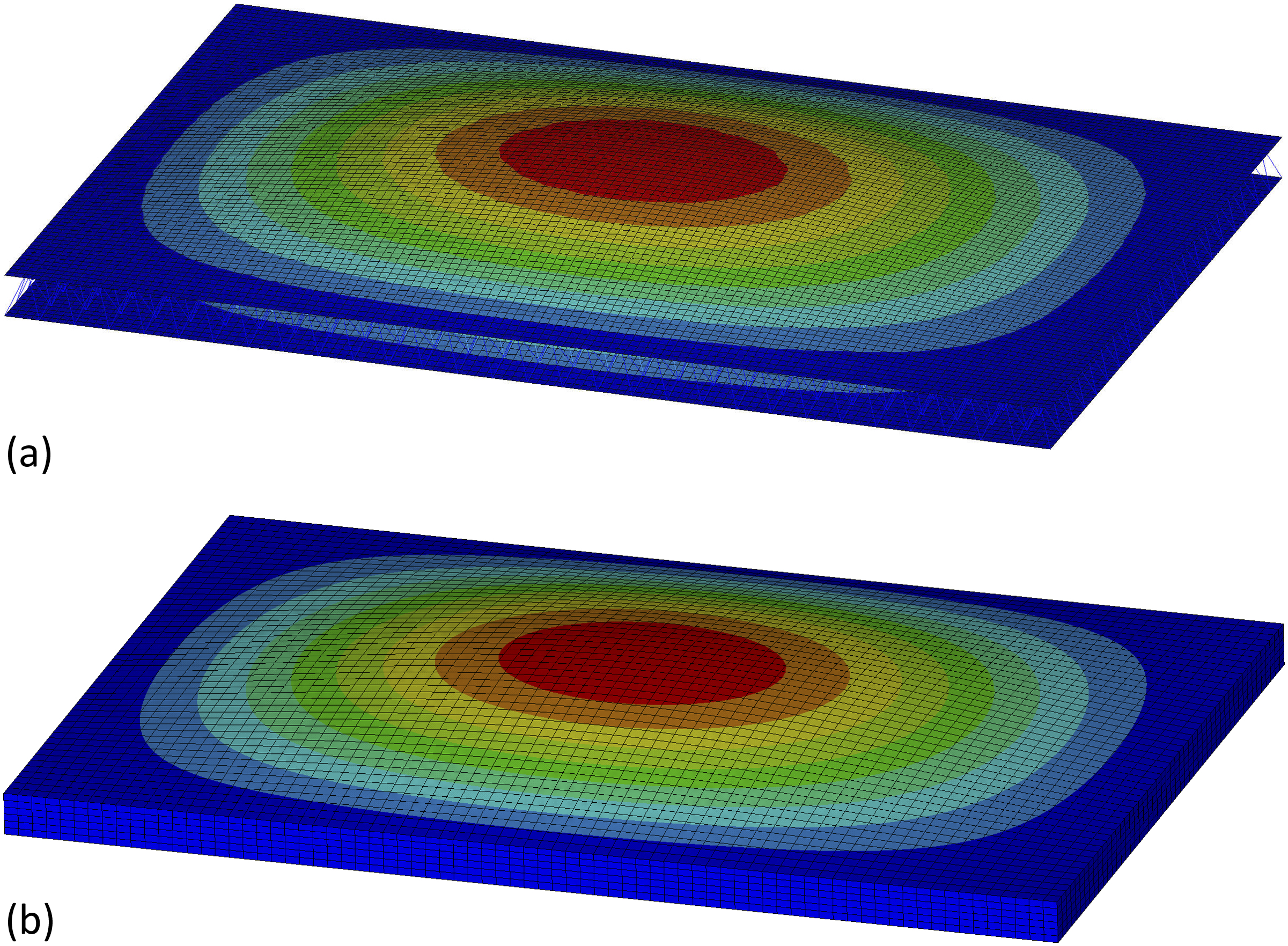
Fundamental vibration mode shapes of the sandwich plate with (a) a pyramidal lattice truss core (b) continuous solid core.
The analysis of the obtained results enables several conclusions regarding the behavior of vibration frequencies in the investigated structures: 1. For each strut diameter 2. For each Maximum values of the fundamental frequency of the sandwich plate with pyramidal lattice truss core and continuous solid core.
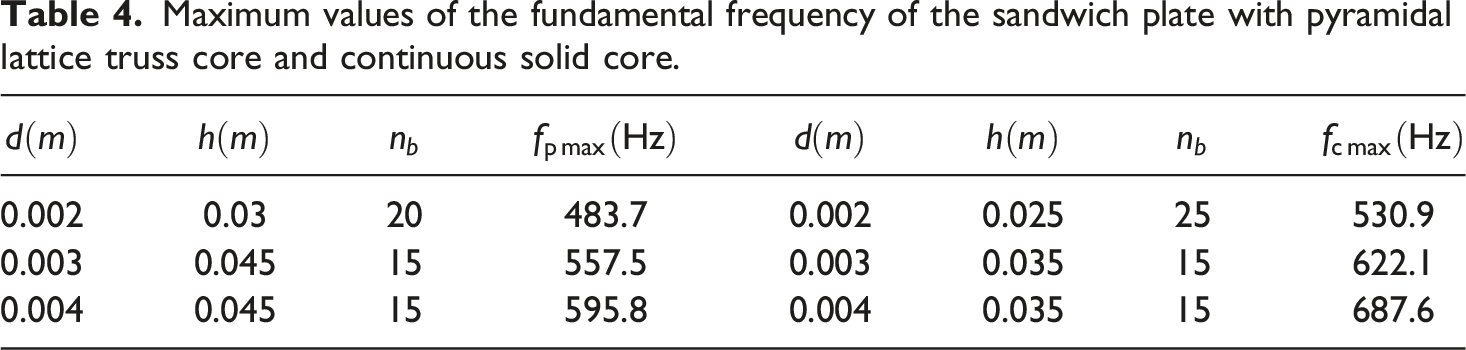
We compare the vibration frequencies of the sandwich plate obtained using the two core models. The relative difference between the frequencies 
The
The analysis indicates that as the core thickness
A sandwich plate with a homogeneous continuous core does not exhibit the local dynamic effects characteristic of a discrete core since the core is modelled as a solid block, and it is attached to the whole layer’s surfaces. However, small waves may develop in the facings of a sandwich plate with a pyramidal lattice truss core, with wavelengths comparable to the distance between the vertices of a pyramidal lattice unit cell. The analysis of such local dynamic effects may warrant a separate investigation focused on higher vibration modes. The present manuscript aims to determine the fundamental frequency of a sandwich plate using two models of the pyramidal lattice truss core. Future research will address the local dynamic effects that arise in the structure under consideration.
Sandwich plate design
The computational time required to generate the plate model and solve the dynamic problem depends on the number of finite elements. An analysis was conducted to determine the minimum number of finite elements in a typical unit cell necessary to accurately calculate the fundamental bending frequency of a sandwich plate. Employing a model with the minimal required number of finite elements is advantageous during the design process, as it enables efficient exploration of design parameters. Minimizing computational resources during this exhaustive search is desirable and depends on the size of the finite element model. In this analysis, the sizes of finite elements in a typical unit cell were incrementally increased. For each configuration, the fundamental bending vibration frequency of the plate was calculated and compared to the frequency obtained using the original finite element sizes. The element sizes were increased until the relative difference between the frequencies exceeded 2%.
Based on the analysis, a model of a typical unit cell with the minimum required number of finite elements was established. This model, illustrated in Figure 18, comprises eight shell-type finite elements and eight beam-type finite elements. We will now demonstrate the convergence of results obtained using a model of a typical unit cell with the minimum required number of finite elements. Specifically, we consider a sandwich plate with a pyramidal lattice truss core, where The unit cell model with the minimum required number of finite elements.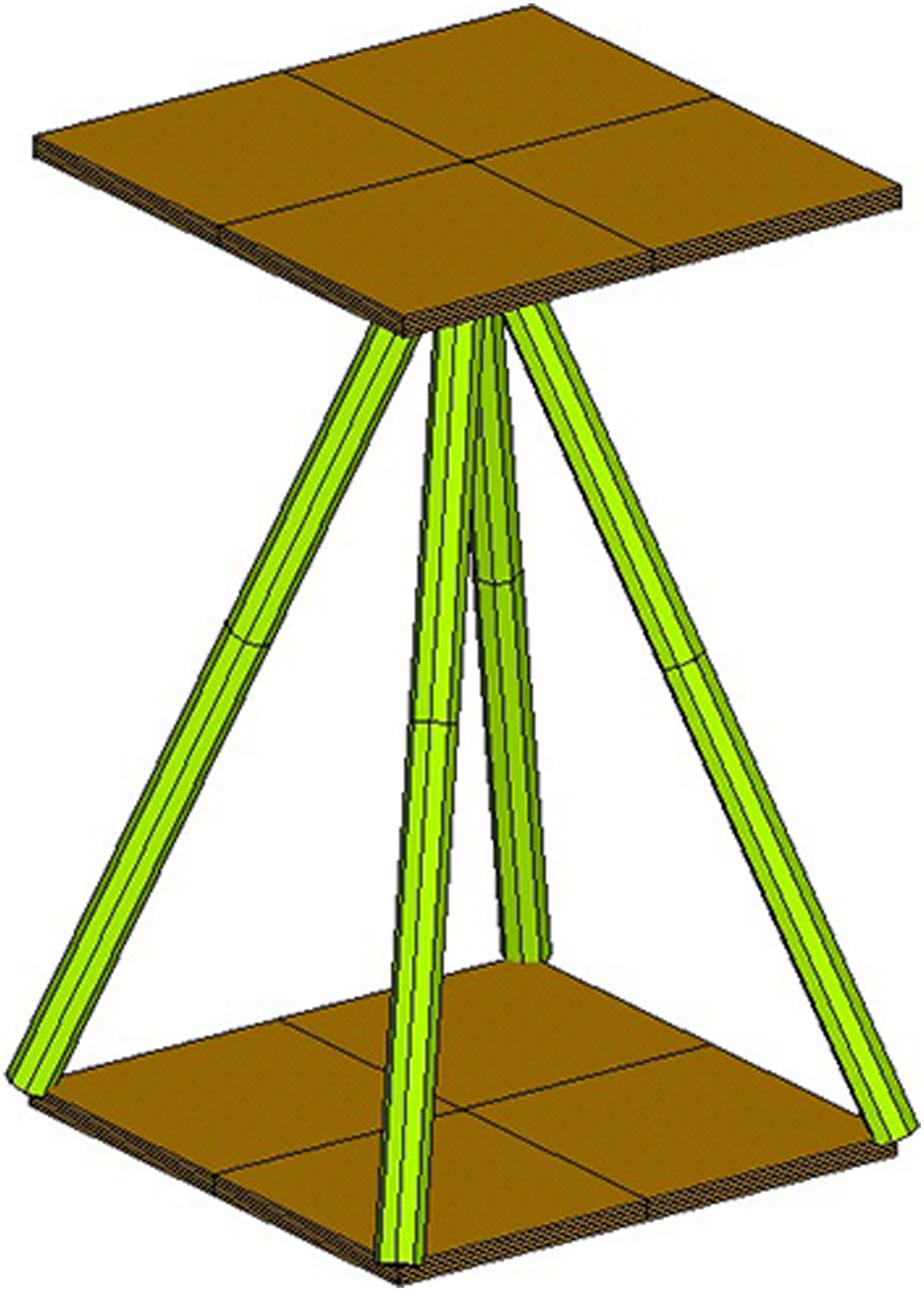
Utilizing this model of a typical unit cell significantly reduces the total number of finite elements required to determine the fundamental frequency of bending vibrations of a sandwich plate with a pyramidal lattice truss core. For the dynamic problem considered, the total number of finite elements in the plate model is reduced by an average of 77.5%. Simultaneously, the relative difference between the frequencies determined by the original and reduced finite element models of the plate does not exceed 3% on average.
A practical design algorithm for a sandwich plate with a pyramidal lattice truss core is proposed. In this design, the objective function is the mass of the structure, while the specified fundamental bending vibration frequency serves as a constraint. The selection of appropriate parameters for the sandwich plate is based on the previously developed finite element model of the structure with the minimum required number of finite elements.
In solving the design problem, parameters of the sandwich plate such as
The desired design problem can be formulated as follows. The objective is to identify combinations of parameters 
The design algorithm for the specified structure comprises the following sequential steps: 1. The variation range of parameter 2. The variation range of the parameter 3. For each value of 4. Given two consecutive values of the functions 5. If equation (27) is not satisfied, the index 6. If equation (27) is satisfied, the strut diameter is determined using the bisection method. The corresponding value of this diameter is denoted as 7. Given the parameters 8. The index 9. The calculation continues until



In some cases, the desired diameter
Once the calculations are complete, the values of
The design algorithm was implemented in APDL and structured as a macro. This macro facilitated the selection of parameters
The vibration frequency determined during the design of the plate was verified. Calculations were performed using the finite element model applied in the parametric analysis described in previous section. The resulting bending vibration frequency of the structure is 408.9 Hz. The relative difference between this value and the design frequency (400.3 Hz) is
Conclusions
The paper presents a comparative analysis of discrete and continuous models for the pyramidal lattice truss core of a sandwich plate. The fundamental vibration frequency of the sandwich plate was selected as the basis for model comparison. A continuous model of the pyramidal lattice truss core was developed, and its average mechanical properties were determined. The finite element method, implemented in ANSYS, was employed to address the dynamic problem. The finite element model of the sandwich plate with a pyramidal lattice truss core utilized shell and beam elements, while the model of the sandwich plate with a continuous core incorporated shell and solid volume elements.
The effects of the number of pyramidal cells, core thickness, and lattice truss core strut diameter on the fundamental vibration frequency of the sandwich plate were examined. For each strut diameter, a specific combination of cell number and filler thickness was identified that maximizes the fundamental bending vibration frequency. The study determined the ranges of core thickness and cell number in which increasing these parameters results in a decrease in the fundamental bending vibration frequency for sandwich plates with a pyramidal lattice core. This frequency behavior differs from that of sandwich plates with a honeycomb core, where increasing core thickness leads to an increase in the fundamental bending vibration frequency.
A comparison of the fundamental vibration frequency values obtained from discrete and continuous core models was conducted. The results indicate that the computational model of the sandwich plate with a solid core consistently overestimates the fundamental vibration frequency. Consequently, this model does not provide reliable results across a broad range of design parameters and should be approached with caution.
A practical design algorithm was developed for sandwich plates with a pyramidal lattice truss core, where the objective function is the structural mass and the fundamental frequency serves as a constraint. The design utilized a model with the minimum number of finite elements necessary to achieve the required frequency calculation accuracy. The selection of two key parameters of the pyramidal lattice truss core constitutes the solution to the design problem.
The procedure for generating finite element models of the sandwich plate was implemented using APDL and presented as macros. These macros enable rapid modification of model parameters, calculation of the plate’s fundamental frequency, and efficient execution of the design process.
The proposed approach for addressing the dynamic problem of sandwich plates with a pyramidal truss core is applicable to the research and design of sandwich structures featuring strut-based unit cell cores.
The discrete model developed for the pyramidal lattice truss core enables the investigation of higher vibration modes in sandwich plates. This model facilitates analysis of the dynamic behaviour of sandwich plates under various boundary conditions for the facings.
Supplemental material
Suppplemental Material - Finite-element analysis of the fundamental frequency of a sandwich plate with pyramidal lattice truss core: Comparison of the discrete and continuous core models
Suppplemental Material for Finite-element analysis of the fundamental frequency of a sandwich plate with pyramidal lattice truss core: Comparison of the discrete and continuous core models by Alexander V. Lopatin, Sergey A. Pikulin, and Elijah A. Lopatin in Journal of Sandwich Structures & Materials
Footnotes

Funding
The authors received no financial support for the research, authorship, and/or publication of this article.
Declaration of conflicting interests
The authors state that there are no known competing financial interests or personal relationships that could have influenced the work reported in this paper.
References
Supplementary Material
Please find the following supplemental material available below.
For Open Access articles published under a Creative Commons License, all supplemental material carries the same license as the article it is associated with.
For non-Open Access articles published, all supplemental material carries a non-exclusive license, and permission requests for re-use of supplemental material or any part of supplemental material shall be sent directly to the copyright owner as specified in the copyright notice associated with the article.
