







Abstract
Objective:
Unhealthy lifestyle behaviors, such as smoking, drinking, betel-quid chewing, insufficient exercise, and inadequate sleep are significantly correlated with metabolic syndrome (MetS). To further understand this relationship, this study examined the main effect of unhealthy lifestyle behaviors and their interaction on MetS by gender in young adults.
Method:
A cross-sectional study involving 694 young adults from a national survey was performed in which demographic characteristics, unhealthy lifestyle behaviors, anthropometric measurements, and blood chemistry panels were collected during face-to-face interviews.
Results:
The prevalence of MetS among young adults was 17.4% and was greater in males than females (19.0% vs. 7.8%). The unhealthy lifestyle-behavior risk factors associated with MetS included smoking (odds ratio [OR] = 4.53) and physical activity (OR = 0.51) among males and betel-quid chewing (OR = 8.90) and less sleep (OR = 0.08) among females. Significant interaction effects were observed between the abovementioned behaviors and gender for the risk of developing MetS.
Conclusion:
These results can guide health-care providers in reducing MetS risk by encouraging young adult males to reduce or quit cigarette smoking and maintain optimum levels of physical activity and young adult females to quit chewing betel quid and obtain appropriate amounts of sleep.
Metabolic syndrome (MetS) comprises a cluster of symptoms that can increase the risk of developing cardiovascular disease (CVD) and diabetes mellitus (Razzouk & Muntner, 2009). The prevalence rates of MetS were found to be 17.1% and 18.3% among young adults in Indonesia (Adam, Diatri, Adam, Seweng, & Tai, 2015) and the United States (Aguilar, Bhuket, Torres, Liu, & Wong, 2015), respectively. The prevalence of MetS in Taiwanese adults aged 18–30 and 31–44 years increased from 4.0% and 6.4% in 1993 to 6.4% and 19.1% in 2008, respectively, and the prevalence rate was greater in males than in females (Yeh, Chang, & Pan, 2011). In a population-based study in Taiwan, researchers attributed the higher prevalence of MetS in males (20.4%) compared to females (15.3%) to the finding that the mean prevalent age of MetS was younger in males than in females by 4.9 years (mean age 51.3 vs. 56.2 years; Hwang, Bai, Chen, & Chien, 2007). However, this gender-specific risk pattern reverses after the age of 45 years (Yeh et al., 2011). In a meta-analysis, Gami et al. (2007) confirmed that females had a higher risk of CVD associated with MetS. The abovementioned findings highlight the importance of understanding the association with MetS risk factors by gender in young adults.
Lifestyle is an important predictor of the acceleration or delay of diseases associated with MetS and the preservation of physical functioning. Undoubtedly, the adoption of unhealthy lifestyle behaviors among adults has resulted in the greater prevalence and severity of MetS globally. Lifestyle modification, such as exercising regularly, quitting smoking, limiting alcohol consumption, ceasing betel-quid (a stimulant commonly used in Asia) use, changing dietary habits (i.e., increasing consumption of fruits and vegetables), and getting adequate sleep are all recommended for managing MetS because research has shown that these proactive measures alleviate MetS and reduce MetS-related medical complications (Choi et al., 2011; Edwardson et al., 2012; Li et al., 2015; Rodriguez-Cano et al., 2015; Slagter et al., 2014; Tian, Su, Wang, Duan, & Jiang, 2018; Yamada, Hara, & Kadowaki, 2013; Yeh et al., 2011; Yu, Guo, Yang, Zheng, & Sun, 2014).
Unhealthy lifestyle behaviors are modifiable and usually established during youth or young adulthood. In Taiwan, the prevalence of unhealthy lifestyle behaviors such as smoking (19.1%), drinking (54.9%), and betel-quid chewing (4.6%) in those who have regular physical activity (28.7%) is higher among young adults 18–44 years of age than in middle and older age groups (Health Promotion Administration [HPA], 2017). Additionally, individuals are likely to engage in the above multiple unhealthy lifestyle behaviors simultaneously. The young adult period is critical for the development of lifelong healthy lifestyle behaviors, as well as for avoiding the biological precursors of chronic disease in later life.
Smoking is known to promote the development of atherosclerosis by changing lipid metabolism and insulin resistance, which can increase MetS risk (Campbell, Moffatt, & Stamford, 2008; Sun, Liu, & Ning, 2012). Physical activity decreases MetS risk by modulating the renin–angiotensin system, reducing sympathetic nervous system stimulation, and increasing insulin sensitivity (Golbidi, Mesdaghinia, & Laher, 2012). A U-shaped relationship exists between the number of hours of sleep and MetS (Li et al., 2015), and poor sleep is significantly correlated with overactivity of the sympathetic nervous system, which could increase insulin resistance (Hall et al., 2012). Chewing betel quid (a mixture of betel leaf, areca nut, and slaked lime) is associated with an increase in MetS risk because it disrupts adipocyte functioning (Yamada et al., 2013). Heavy alcohol consumption and frequent binge drinking are also risk factors for MetS, regardless of gender (Lee, 2012). The prevalence of MetS is significantly lower in light drinkers (<20 g ethanol/day) and higher in heavy drinkers (≥20 g and <60 g ethanol/day) than it is in nondrinkers (Hirakawa et al., 2015). Moderate ethanol intake decreases MetS risk due to the antioxidant, anti-inflammatory, vascular protective, and insulin-sensitizing properties of alcohol (Liu, Wang, Lam, & Xu, 2008).
While research has given us some insight into these effects, studies exploring gender differences in the relationship between unhealthy behaviors and MetS are, to our knowledge, limited (Huang et al., 2015). Therefore, the aim of the present study was to examine the main effect of unhealthy lifestyle behaviors and their interactive effects on MetS by gender in adults18–44 years of age. It is vital to provide our government with evidence allowing for the creation of guidelines for establishing gender-specific health promotion campaigns that will reduce the risks of MetS in young adults.
Materials and Methods
Study Design and Participants
We adopted a cross-sectional study design to examine the role of gender in the association between unhealthy lifestyle behavior and MetS. The Nutrition and Health Survey in Taiwan (NAHSIT) sample comprised 6,144 people, including 4,665 (≥18 years of age) adults. After excluding those older than 45 years of age and those with missing or incomplete MetS criteria data, we retained 694 young adults (18–44 years of age; 315 males and 379 females) for the final analysis. Kuang Tien General Hospital’s Institution Review Board approved this study (no. KTGH 10553), and it was conducted in accordance with the Declaration of Helsinki.
Data Collection and Measurements
The original data source for this study was the NAHSIT, a national population-based database of information collected via face-to-face interviews, anthropometric measurements, and biochemical analyses performed between 2004 and 2008 and the most up-to-date database currently available of health-related data in Taiwan. Sampling details have been previously reported (Tu et al., 2011). Briefly, we categorized 358 townships and city districts into eight sampling strata based on urbanization, dietary patterns, ethnic groups, and location. To ensure that the sample represented Taiwan’s population, we assigned each respondent a weighted value to achieve equal sampling probability.
For the purposes of the present study, we operationally defined MetS as the presence of any three of the following five conditions: a waist circumference (WC) ≥90 cm for males and ≥80 cm for females; systolic blood pressure ≥130 mmHg, diastolic blood pressure ≥85 mmHg, or the use of antihypertensive agents; high-density lipoprotein cholesterol (HDL-C) ≤40 mg/dl for males and ≤50 mg/dl for females; a fasting blood glucose (FBG) ≥100 mg/dl or the use of anti-hyperglycemic agents; and triglycerides (TG) ≥150 mg/dl (HPA, 2007; National Cholesterol Education Program, NCEPIII, 2002).
The NAHSIT database includes information regarding several unhealthy lifestyle behaviors. However, in our analysis, we only used behaviors significantly correlated with MetS in previous studies, including smoking history (“never,” “former,” and “current”), drinking (“never,” “moderate” [less than once a week to every other day] and “heavy” [> every other day]), betel-quid chewing (“yes,” “no”), number of hours of sleep (<6, 6–8, and ≥9), and dietary habit (“yes” [≥5 servings of fruits/vegetables daily], “no” [<5 servings of fruits/vegetables daily]). Physical activity was dichotomized (yes/no) based on whether the participants met the ≥75 min/week. World Health Organization (n.d.) minimum recommended requirement during the previous year.
Data Analysis
Participant characteristics and variables of interest were analyzed using descriptive statistics. Gender differences in the prevalence of MetS and its components were analyzed by performing χ2 tests. The associations between the unhealthy lifestyle behaviors and MetS components were analyzed by univariate logistic regression. MetS predictors were explored by first entering the demographic characteristics and then entering the lifestyle behaviors into a multivariate regression analysis. Finally, we analyzed the interaction effect of the unhealthy lifestyle behaviors on the risk of MetS by binary logistic regression. The statistical analyses were performed using Stata software (Version 11.0; Stata Corporation, College Station, TX). Statistical significance was determined at p < .05.
Results
Prevalence of MetS, Components of MetS, and Unhealthy Lifestyle Behaviors by Gender
Our sample of 694 young adults was predominantly female (54.6%), with a mean age of 32.5 ± 6.0 years, and almost all participants had at least a junior high school level of education (98.7%). We observed no significant differences in the demographic characteristics, WC, HDL-C, dietary habits, or physical activity between males and females. However, males had a significantly higher MetS prevalence than females (19.0% vs. 7.8%, respectively, p < .001), likely due to the significantly higher blood pressure (BP), TG, and FBG levels observed in the males. Lifestyle behaviors including drinking (never, moderate, and heavy), smoking (never, former, and current), betel-quid chewing, and number of sleep hours differed significantly by gender, with males reporting more drinking, smoking, and betel-quid chewing than females (all p < .001). As for sleep, males slept <6 hr/day more often than females, and females slept ≥9 hr/day more often than males (p = .037; Table 1).
Demographic Characteristics, Components of MetS, and Unhealthy Lifestyle Behaviors by Gender.
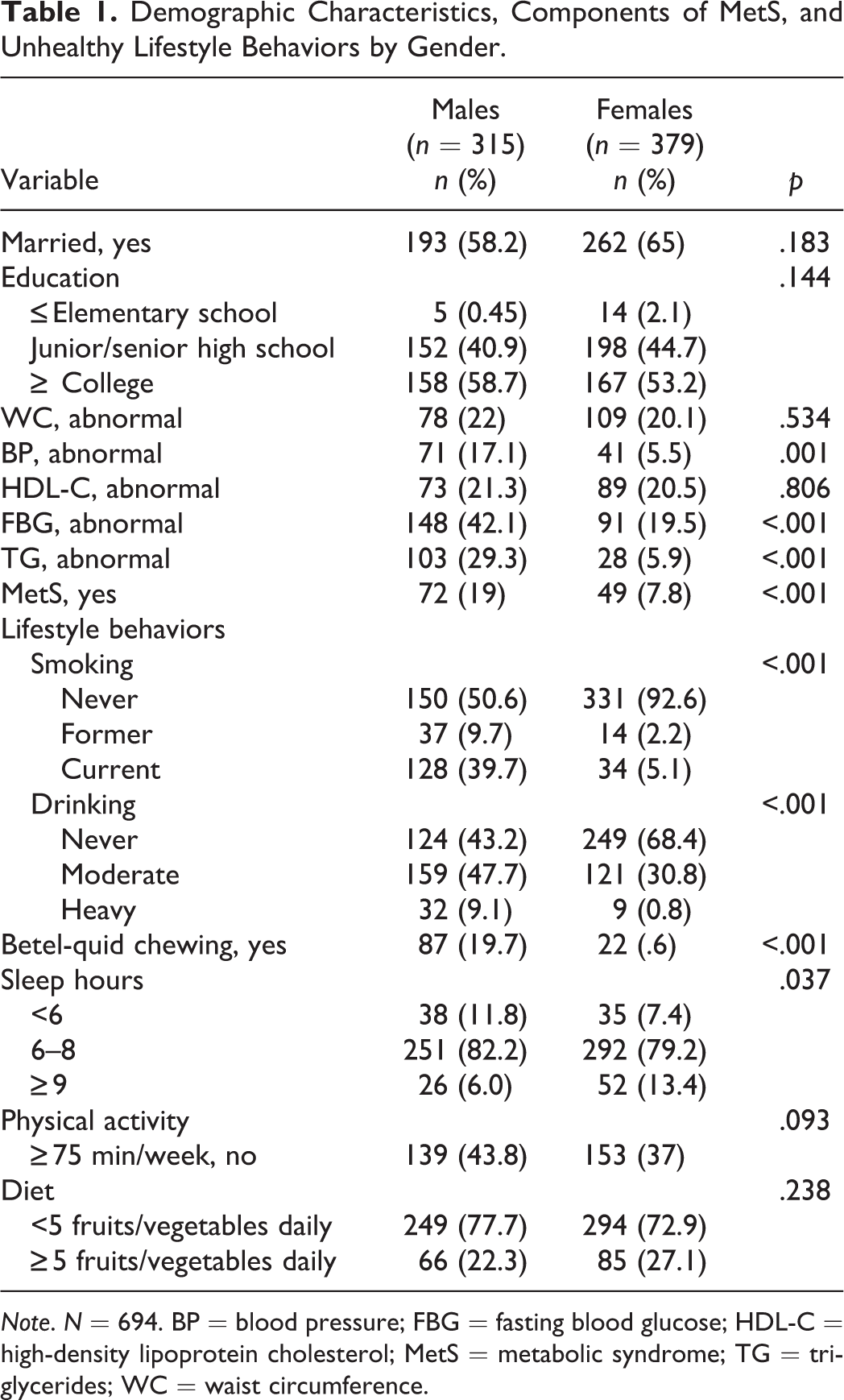
Note. N = 694. BP = blood pressure; FBG = fasting blood glucose; HDL-C = high-density lipoprotein cholesterol; MetS = metabolic syndrome; TG = triglycerides; WC = waist circumference.
Unhealthy Lifestyle Behaviors Associated With the Components of MetS by Gender
Among males and females, the risky behaviors of betel-quid chewing, inadequate physical activity, and poor dietary habits were not significantly associated with MetS components. However, males who drank heavily had an increased risk of higher levels of TG (odds ratio [OR] = 4.68) compared to those who never drank, and males who formerly smoked had higher risks of increased TG (OR = 3.59) and FBG levels (OR = 2.37) than those who never smoked. Furthermore, males who slept ≥9 hr per night had an increased risk of higher levels of TG (OR = 5.76) compared to those who slept 6–8 hr (Table 2).
Unhealthy Lifestyle Behaviors Associated With the Components of Metabolic Syndrome by Gender.
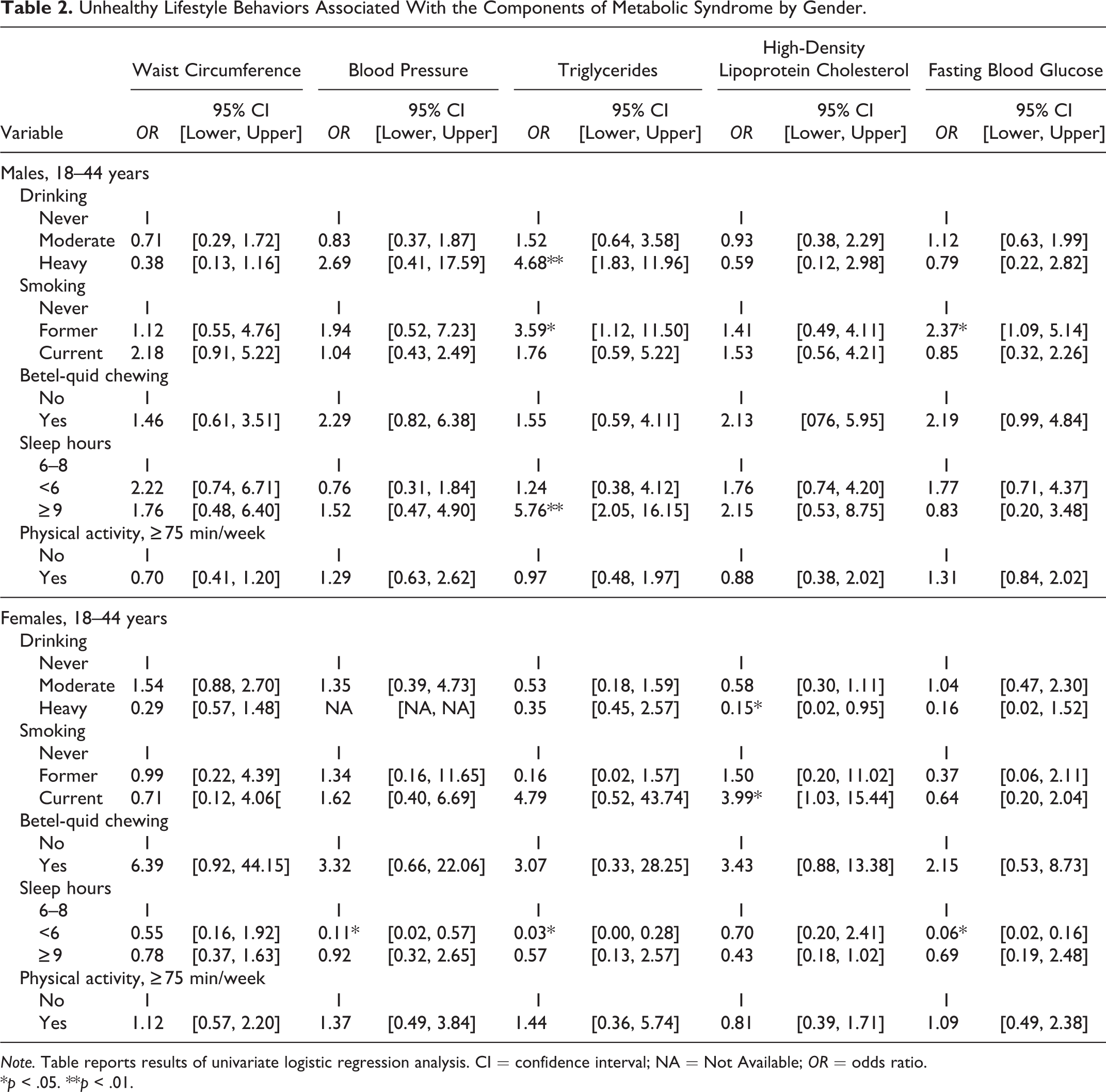
Note. Table reports results of univariate logistic regression analysis. CI = confidence interval; NA = Not Available; OR = odds ratio.
*p < .05. **p < .01.
Among the females, those who drank heavily had a decreased risk of lower HDL-C levels (OR = 0.15) compared to females who never drank. Current female smokers had an increased risk of lower HDL-C levels (OR = 3.99) compared to females who never smoked. Furthermore, females who slept <6 hr per night had decreased risks of elevated blood pressure (OR = 0.11) and higher TG (OR = 0.03) and FBG levels (OR = 0.06) compared to those who slept 6–8 hr (Table 2).
Unhealthy Lifestyle Behaviors Associated With MetS by Gender
Table 3 shows the results of the multivariate logistic regression analysis of the unhealthy lifestyle-behavior risk factors of MetS in males and females. After adjusting for age, education, and marital status, the significant unhealthy lifestyle-behavior risk factors for MetS among males included former smoking and physical activity less than 75 min a week (Table 3). The OR of the MetS risk was 4.53 times higher in males who formerly smoked than in those who never smoked, whereas the OR of the MetS risk was 0.51 times lower among males who engaged in physical activity more than 75 min a week than among those who engaged in less than 75 min a week.
Unhealthy Lifestyle Behaviors Associated With Metabolic Syndrome by Gender.
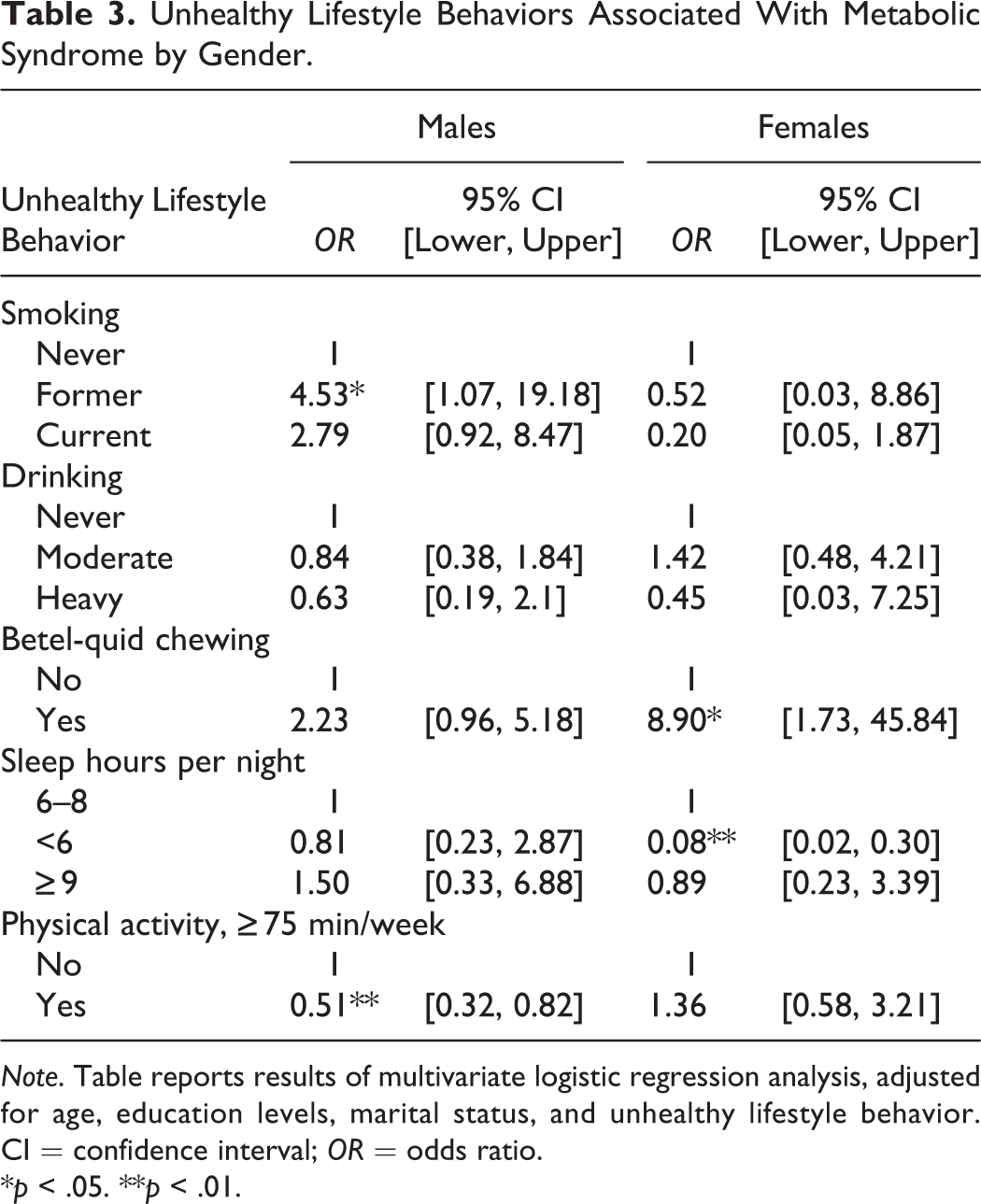
Note. Table reports results of multivariate logistic regression analysis, adjusted for age, education levels, marital status, and unhealthy lifestyle behavior. CI = confidence interval; OR = odds ratio.
*p < .05. **p < .01.
Among females, MetS risk was significantly predicted by betel-quid chewing and number of sleep hours. The OR of the MetS risk was 8.90 times higher in females who chewed betel quid than in those who never chewed betel quid; however, MetS risk was lower in females who slept <6 hr per night than in those who slept 6–8 hr (OR = 0.08).
Interaction Effects Between Unhealthy Lifestyle Behaviors and MetS by Gender
Table 4 shows the significant interaction effects between unhealthy lifestyle behaviors and MetS by gender. Males who never smoked and engaged in physical activity less than 75 min a week had a higher risk of developing MetS compared to those who never smoked and engaged in physical activity more than 75 min a week (OR = 4.13). Males who were former smokers and engaged in physical activity less or more than 75 min a week had a higher risk of developing MetS (OR = 14.80 and 11.80, respectively) compared to males who never smoked and engaged in physical activity more than 75 min a week. Similarly, males who were current smokers and engaged in physical activity less or more than 75 min a week had a higher risk of developing MetS (OR = 6.21 and 10.36, respectively) compared to males who never smoked and engaged in more than 75 min of physical activity per week.
Interaction Effects Between Unhealthy Lifestyle Behaviors and Metabolic Syndrome by Gender.
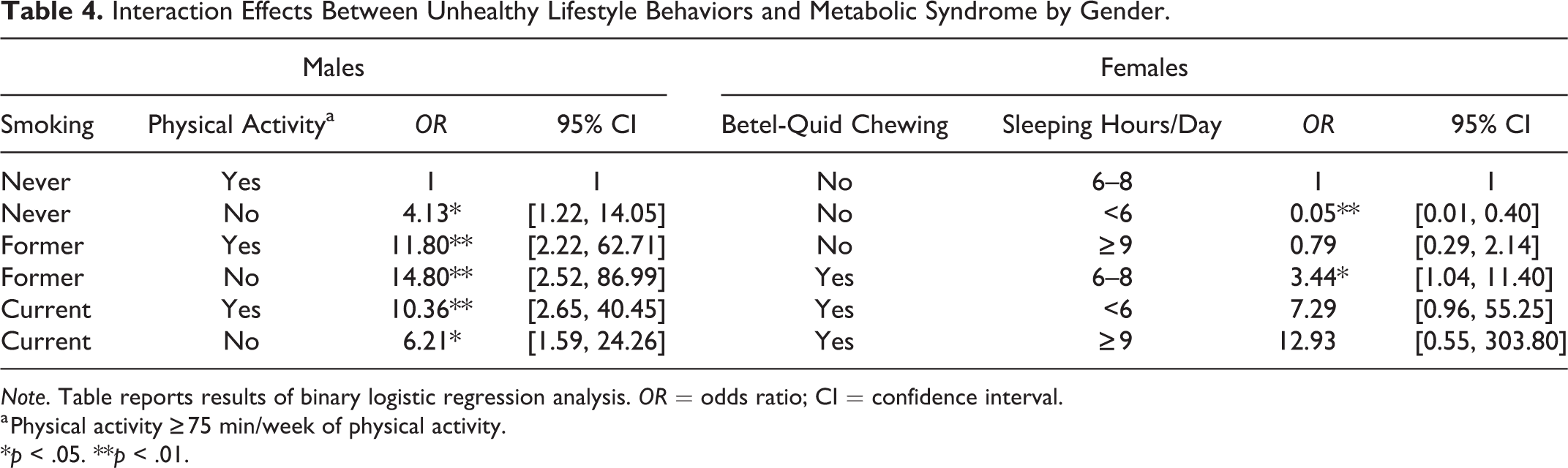
Note. Table reports results of binary logistic regression analysis. OR = odds ratio; CI = confidence interval.
a Physical activity ≥75 min/week of physical activity.
*p < .05. **p < .01.
Among females, we analyzed the interactive effects between two significant lifestyle behaviors (i.e., betel-quid chewing and sleeping hours) on MetS. Females who chewed betel quid and slept 6–8 hr per night had a higher risk of developing MetS than those who did not chew betel quid and slept 6–8 hr per night (OR = 3.44). However, females who did not chew betel quid and slept <6 hr per night were at a lower risk of developing MetS (OR = 0.05) than those who did not chew betel quid and slept 6–8 hr per night.
Discussion
Prevalence of MetS and Its Components by Gender
In the present study, the prevalence of MetS was significantly higher in young adult males than in their female counterparts. We also found that the prevalence of MetS was significantly associated with unhealthy lifestyle behaviors. In previous studies, researchers have found that males had a greater propensity for unhealthy lifestyle behaviors and were less motivated to engage in health-promoting activities than females, thus placing them at a higher risk of MetS (Chen, Wu, Hwang, & Li, 2010). Our result in the present study is consistent with the findings of a study involving Korean males aged 20–39 years in which young men had a higher prevalence of MetS than similarly aged women (Im & Seomun, 2015) but is inconsistent with reports of higher MetS prevalence in American females aged 20–39 years than in males of the same age (Aguilar et al., 2015). Generally, however, all of these results support the existence of gender differences in the prevalence of MetS, and the conflicting results are likely due to differences in the age and ethnicity of the populations surveyed and the MetS definitions used.
Our findings are consistent with those of previous reports (Adam et al., 2015; Chen et al., 2010; Im & Seomun, 2015) indicating significantly higher prevalence rates of hypertriglyceridemia, hypertension, and hyperglycemia in young adult males compared to young adult females, which researchers have attributed to variations in fat distribution, sex hormones, and ferritin levels (Jehn, Clark, & Guallar, 2004; Razzouk & Muntner, 2009). Premenopausal females have higher levels of estrogen than young adult males, which promotes insulin sensitivity, glucose homeostasis, favorable lipid profiles, less visceral fat accumulation (Geer & Shen, 2009; Pradhan, 2014), lower BP, and lower TG levels (Razzouk & Muntner, 2009).
Unhealthy Lifestyle Behaviors Associated With the Risk of MetS by Gender
In our sample, male former smokers had higher TG and FBG levels than males who never smoked, and female current smokers had lower HDL-C levels compared to females who never smoked. Our findings are similar to those of a previous study (Calo et al., 2013) in which researchers reported that current smoking is significantly associated with a high prevalence of MetS, higher levels of TG, and lower levels of HDL-C compared to never smoking among both male and female adults.
Although our findings demonstrated that physical activity significantly decreased the risk of MetS only in young adult males, our ability to determine causality is limited due to the cross-sectional study design. Our findings are, however, consistent with those of a previous study (Saylor & Friedmann, 2015), which indicated that physical activity is associated with a lower risk of developing MetS. In one study, males exhibited significantly larger improvements in insulin sensitivity than did females following an exercise-training program in the absence of substantial weight loss (Boulé et al., 2005). In contrast, our results are inconsistent with studies that report that a low frequency of physical activity per week is an independent predictor of MetS in both genders (Edwardson et al., 2012; Saylor & Friedmann, 2015).
Our results also demonstrated, as shown in Table 3, that less than 6 hr of sleep per day was associated with a decreased risk of MetS among females, but we were not able to establish a causal relationship between sleep hours and MetS risk through multivariate logistic analysis. For the most part, the literature has not explored the effects of the interaction between smoking and physical activity on the risk of MetS. In the present study, we found that the interaction between smoking and performing less than 75 min per week of physical activity significantly increased the risk of MetS in young males. Previous studies have shown that physical activity can alleviate the development of MetS (Laursen, Kristiansen, Marott, Schnohr, & Prescott, 2012). However, in the present study, regardless of the presence or absence of adequate physical activity, the effect of smoking, formerly or currently, significantly increased the risk of MetS, perhaps because smoking might play a role in the development of lipid-related diseases in people whether or not they are physically active (Katano, Ohno, & Yamada, 2013). Interestingly, the risk of MetS was significantly higher in males who were former smokers than in males who were current smokers in the present study, which is consistent with the results of Calo et al. (2013) who found MetS to be more prevalent in former smokers than in active and nonsmokers. Wada, Urashima, and Fukumoto (2007) found that after smoking cessation, the OR of the risk of developing MetS increased. The risk was highest during the first 5 years after cessation, and subjects who had smoked ≥20 cigarettes per day before cessation had an increased risk of developing MetS during the subsequent 20 years compared to those who had smoked <20 cigarettes per day. Overall, never developing a smoking habit reduces the risk of developing MetS more than does quitting smoking.
Our findings in the present study in regard to consumption of alcohol also differed by gender, but alcohol consumption was not significantly associated with risk of MetS in either males or females. Males who were heavy alcohol drinkers had significantly higher odds of developing hypertriglyceridemia than those who never drank, but we found an inverse association in females, where those who were heavy alcohol drinkers had significantly lower odds of developing low HDL-C, than those who never drank. Our findings are similar to those of a previous study conducted among Korean males in which alcohol drinkers had significantly higher odds of developing hypertriglyceridemia than those who never drank (Shin et al., 2013). However, our findings conflict with those of previous studies that indicated that drinking alcohol was associated with a lower risk of MetS in Japanese males aged 35–45 years (Wakabayashi, 2012) and that low HDL-C levels were inversely associated with drinking alcohol in older Koreans and 18–80-year-old Dutch of both sexes (Shin et al., 2013; Slagter et al., 2014). This inconsistency in findings might be attributable to gender, age, and ethnic differences across the study populations and to different types of alcoholic beverages and whether or not the drinking occurred with meals.
Betel-quid chewing was significantly associated with MetS risk in females but not males in the present study. This result is consistent with those of studies conducted in Bangladesh (Heck et al., 2012) and Pakistan (Shafique et al., 2013) that found that betel-quid chewing had more deleterious health effects in females than in males. Betel quid contains psychoactive alkaloids, such as arecoline, which stimulate the sympathetic nervous system, increase BP (Heck et al., 2012), and increase insulin resistance in mice (Hsu et al., 2010). Shafique et al. (2013) found that betel-quid chewing’s significant association with the risk of MetS is due to its disruption of adipocyte functioning.
Our findings in the present study further suggest that shorter sleep durations are associated with a lower risk of MetS in young adult females, but not in males, which contradicts previous reports showing that both short and long sleep durations are related to the risks of MetS and hyperglycemia in Chinese males (Li et al., 2015) and that sleeping <6 hr/day is associated with higher MetS prevalence in Korean females (Choi et al., 2011). Because we assessed no data about sleep quality or unrecognized confounders, such as obstructive sleep apnea, we might have missed other sleep-related factors that could lead to an increased risk of MetS (Wolk et al., 2005). Daily sleep duration was not objectively measured during the data collection and, since many young adults work at night, it is possible that they had disrupted circadian rhythms in their hormone levels, which is associated with risk of MetS.
Additionally, the interaction between betel-quid chewing and the amount of sleep had an effect on the risk of MetS in young females. Females who chewed betel quid and slept 6–8 hr per day had a higher risk of developing MetS than those who did not chew betel quid and slept 6–8 hr per day. Thus, having >6 hr of sleep did not decrease the risk associated with betel-quid chewing in these young adult females. These results confirm that betel-quid chewing has significant adverse effects on the risk of MetS in females.
Implications for Nursing
In order to reduce their patients’ risk of developing MetS, nurses should educate young people about the syndrome and encourage them to implement healthy lifestyle behaviors as early as possible. Positive motivation and education regarding the risks of MetS may empower young adults to practice healthier lifestyle behaviors and become more active in managing their health. For this reason, education programs for young adults should be based on the Health Promotion Model, which proposes that individuals develop lifestyle behaviors to optimize positive health outcomes rather than to merely avoid illness (Pender, Murdaugh, & Parsons, 2011). Notably, in the present study, the risk of developing MetS and its relationships with unhealthy behaviors were gender specific. Therefore, health professionals should consider gender in establishing guidelines for the design of health promotion programs to reduce the risk of MetS.
Limitations
The present study has several limitations. First, our cross-sectional design did not allow for inferences of causal relationships. Second, we did not delineate the duration, type, amount, or form of alcohol consumption, cigarette smoking, or betel-quid chewing. Third, the data for number of sleep hours were self-reported and did not include measures of sleep efficacy, insomnia, sleep apnea, mood disorders, or chronic illness, which are all associated with the development of MetS. These limitations do not, however, preclude the clear connection our data reveal between lifestyle behaviors and MetS.
Conclusions
MetS prevalence was significantly higher in young (18–44 years) adult males than in young adult females in the present study. In addition, we observed gender-specific differences in the lifestyle-behavior risk factors for MetS and its components. As expected, the major risk factors for males were smoking and engaging in less than 75 min per week of physical activity. In contrast, the major risk factors among young adult females included betel-quid chewing and longer sleep duration. Thus, age and gender are important factors for nurses to consider when developing strategies to reduce the risk of development of MetS. Although we do not show the data in the present article, we also found that the prevalence of MetS and unhealthy risk behaviors was higher in mountainous areas than in seven other areas. Our findings thus suggest that public health nurses should provide gender-specific health promotion programs in community and hospital settings to encourage prompt modification of unhealthy lifestyle behaviors among young adults, especially among aboriginal people in mountainous areas, in order to reduce these individuals’ risk of developing MetS later in life.
Footnotes
Acknowledgments
This study analyzed data obtained from the Nutrition and Health Survey in Taiwan (NAHSIT; 2004–2008). We would like to thank the Academia Sinica and the Ministry of Health and Welfare in Taiwan for providing the data.
Author Contribution
K. M. Lin was the principal researcher who contributed to the study conception and design, conducted the sampling protocol and statistical analysis, interpreted the results, and wrote the drafts. J. Y. Chiou and S. H. Ko provided substantial support guiding the conception and study design. J. Y. Tan was responsible for the completion of the literature review, data analysis, and theoretical discussion and provided critical guidance and important intellectual content. M. C. Lee and H. W. Kuo provided guidance regarding the use of statistical methods and helped draft and revise the manuscript. All authors read and approved the final manuscript.
Declaration of Conflicting Interests
The author(s) have no potential conflicts of interest with respect to this study, authorship, and/or publication of this article to declare.
Funding
The author(s) received no financial support for the research, authorship, and/or publication of this article.