







Abstract
Background
For better treatment outcome, exploring the knowledge of glaucoma and practices among glaucomatous patients is much more important.
Objective
The aimed of this study was to determine the knowledge and self-care practice and their associated factors towards glaucoma and its medications among glaucoma patients.
Methods
Cross section design study was conducted between May and July, 2017. The data was collected from glaucoma patients. Descriptive statistics was done to summarize socio demography data and associated factors with good knowledge and good practice were determined using binary logistic regression. Statistically significant variables were generated by considering p-value < 0.05.
Results
A total of 360 glaucoma patients were participated in this survey. The median age of the participant was 65 years. About 177 (49.25%) (95%CI: 43.9, 54.4) had good knowledge and a total of 197 or 54.7% (95%CI: 49.4, 59.7) had good practice about glaucoma and its medical treatments. The factors such as residence, marital status, educational status and stages of glaucoma of study participants were independently associated with having good knowledge. With respect to practice, educational status, duration of glaucoma, laterality and frequency of follow up were significantly associated with practice status of study participants.
Conclusion
In this study among glaucoma patients in a tertiary hospital, only half of patients have good knowledge about the disease and good practice pattern. Those with urban residence, higher education status and advanced stage of glaucoma were more likely to have good knowledge.
Introduction
Glaucoma is a progressive optic neuropathy characterized by retinal ganglion cells degenerations, optic nerve head changes and visual field damage. The ganglion cell damage and optic nerve head changes are mostly related with increased intraocular pressure so that reduction of intra ocular pressure is the only proven method of glaucoma either by medical treatment, surgical intervention or by laser therapy.1,2
Glaucoma is the worldwide leading causes of irreversible blindness and accounts for greater public health impacts especially in developing countries where there are resource limitation in diagnosing and managing it. The magnitude of glaucoma in 2020 is about 76 million and it has been projected to become 95.4 million in 2030 and 111.8million in 2040 and it affects more people living in Africa and Asia.3,4 In sub Saharan Africa, the prevalence of glaucoma is about 4.16% in older population of 40 years and above and it is one of the public health problem predominantly open angle glaucoma. 5
Even though, blindness and visual impairment caused by glaucoma is irreversible, the damage is preventable by early management and good patients’ compliances. The primary objective of glaucoma treatment is not for curing rather for prevention of progressive visual impairment and blindness. Thus it is so important that patients are fully aware and have good knowledge of glaucoma and its treatment options for better management of the cases.6,7
Many studies were conducted on knowledge, attitude and practice of glaucoma among general population in different parts of Ethiopia. For better treatment outcome, exploring the knowledge of glaucoma and self-care practices among glaucomatous patients is much more important. Such like studies were not well reported from Ethiopia especially from study area. Raising the knowledge of glaucoma and improving their self-care practical status about medications is hence an important step to increase treatment adherence and compliance. Therefore the current study was aimed to determine the knowledge and self-care practice and their associated factors towards glaucoma and its medications among glaucoma patients.
Methods
Study setting
Cross section design study was conducted at University of Gondar tertiary eye care and training center which is located in Gondar city, northwest Ethiopia between May and July, 2017. There are different subspecialty clinical services including glaucoma clinic, general ophthalmic clinics and surgical services.
Study population and data collection
The study population was all glaucoma patients on medical treatment for glaucoma and follow up at glaucoma clinic. The data was collected from glaucoma patients attending glaucoma clinic. All patients on medical treatments for glaucoma were selected with purposive sampling. For three days per week, each day, ten patients were selected and interviewed and it took about 3 months to get about 360 sample sizes. The data collection was done by trained optometrists working at the center and every subject's medical chart was reviewed using data extraction format and face to face interview was conducted by structured questionnaires for all study participants. The collected data includes six questions for socio-demographic characteristics, twelve knowledge questions and nine self-care practice questions. The knowledge questions includes meaning of glaucoma, signs and symptoms of glaucoma, risk factors for glaucoma, treatment options of glaucoma and prevention methods for progressive damage of glaucoma. The practice questions includes follow up status for the glaucoma treatment, how to use or administer medications, their eye treatment seeking practice for glaucoma, practice and cautions used to prevent the progression of glaucoma and their practical status in seeking advise or educations regarding way of using the medications, side effects and also risks of discontinuing them.
Ethical issue
Ethical clearance was obtained from University of Gondar College of medicine and health science school of medicine ethical review board and the study was conducted as per the declaration of Helsinki. All study subjects gave their oral informed consent to participate in to the study after they gate information about the objective of the study by data collectors and confidentiality of every subject was respected.
Operational definitions
Knowledge was categorized in to two using Modified Bloom's cut off point. Good knowledge was defines as those who get correct answers of 60% and above from twelve knowledge questions and poor knowledge was for those who obtained less than 60% correct answers. Similarly, practice was defined as good practice for those who get correct answers of 60% and above from nine practice questions and poor practice for less than 60% correct answers.
Statistical analysis
Data was entered using Epi Info 3.5.3 and analyzed by SPSS version 20. Descriptive statistics was done to summarize socio demography data of the study. The associated factors with good knowledge and good practice were determined using binary logistic regression. Statistically significant variables were generated by multivariable logistic regression by considering 95% confidence interval and p-value at less than 0.05.
Results
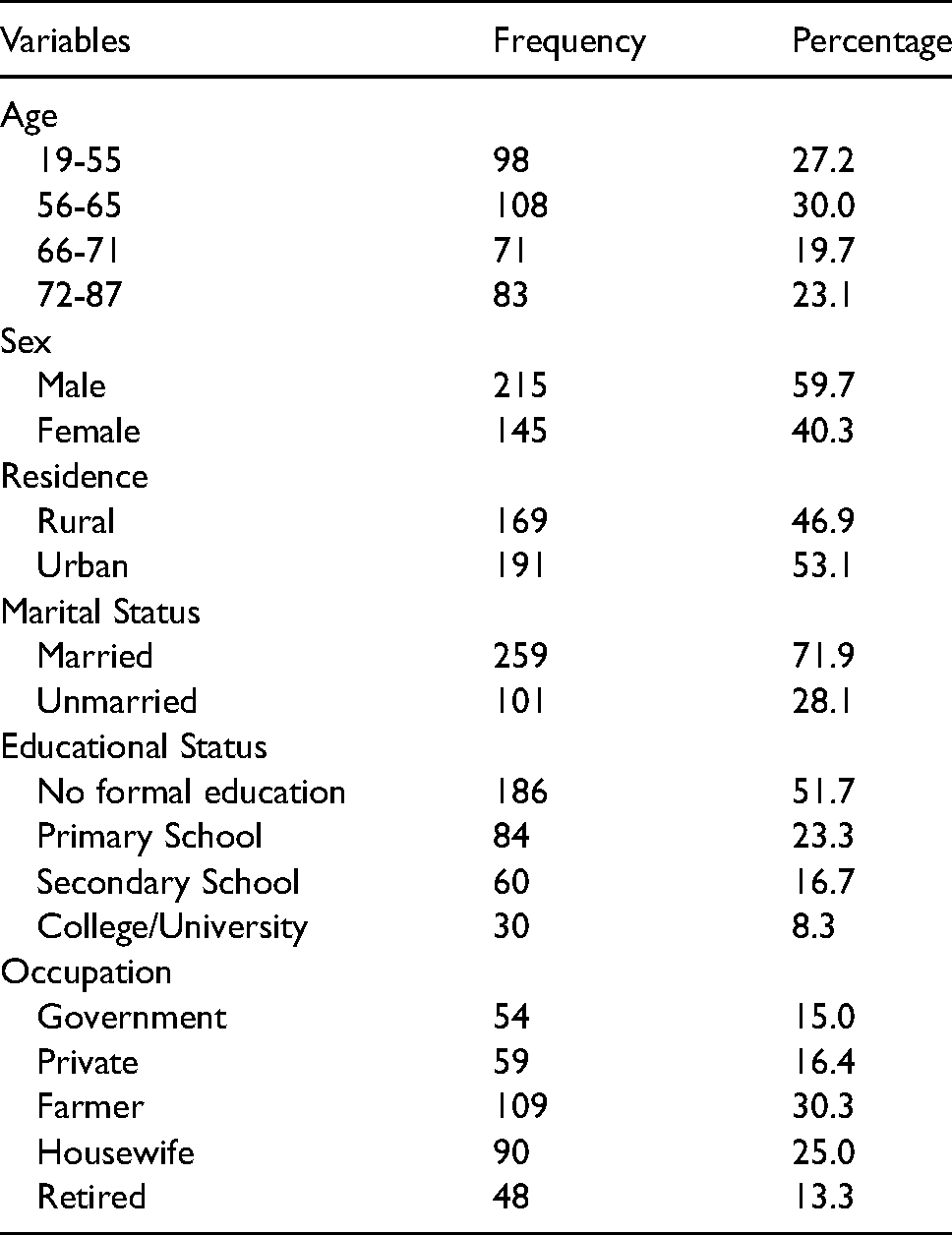
A total of 360 glaucoma patients participated in this survey. The median age of the participant was 65 years with a range of 17 −97 years. About a quarter 98(27.2%) of study participants were within the age group of 19–55 years and more than half 215(59.7%) of all were male in gender. About half 186(51.7%) of study participants did not have formal education and 48(13.3%) study participant were retired from their occupation. Table 1
Socio-demographic characteristics of study participants, 2017.
From the total study sample, a total of 177 (49.25%) had good knowledge about glaucoma and its medical treatments 49.25% (95%CI: 43.9, 54.4). Figure 1
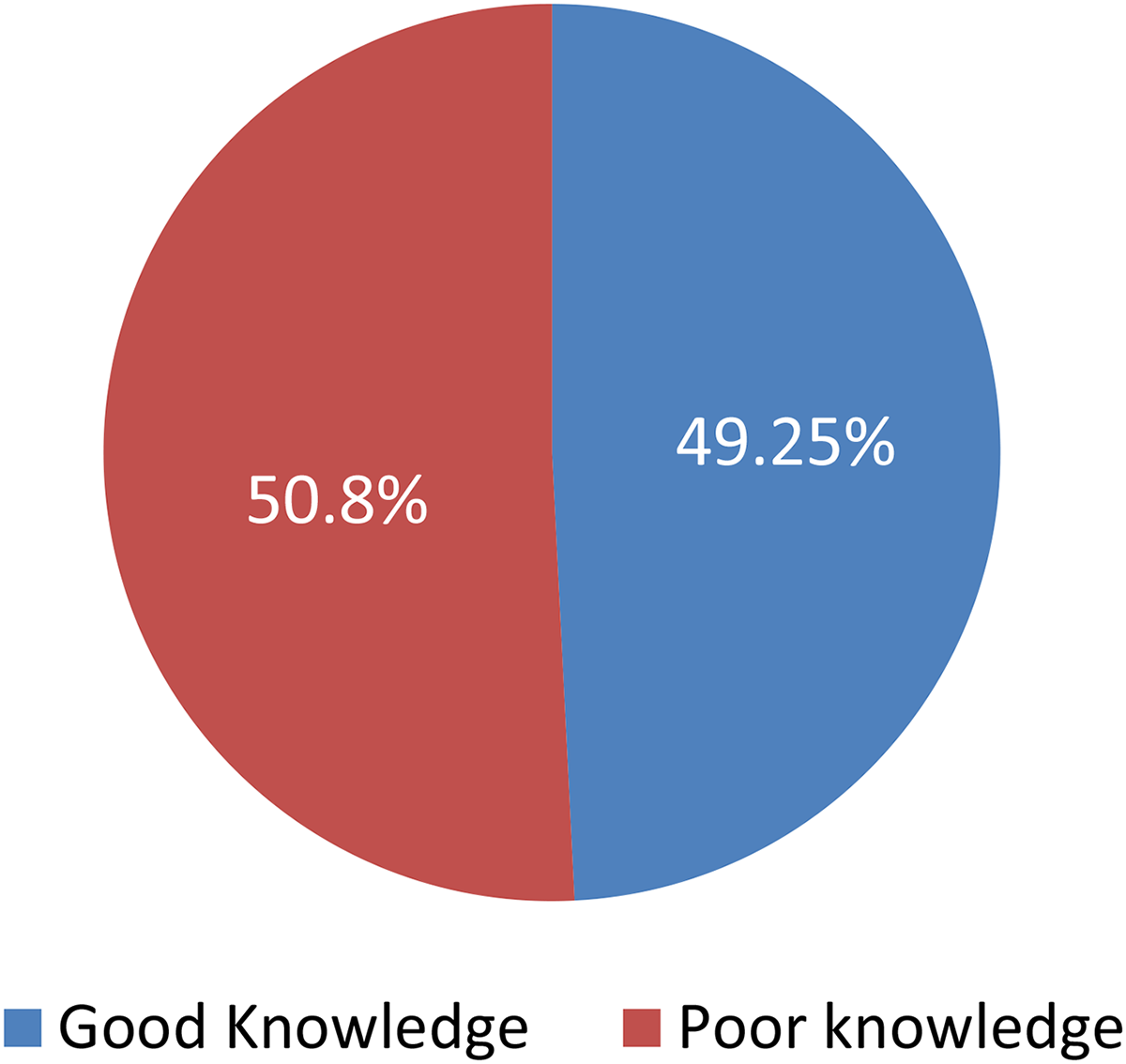
Level of knowledge about glaucoma and its medications among study participants, 2017.
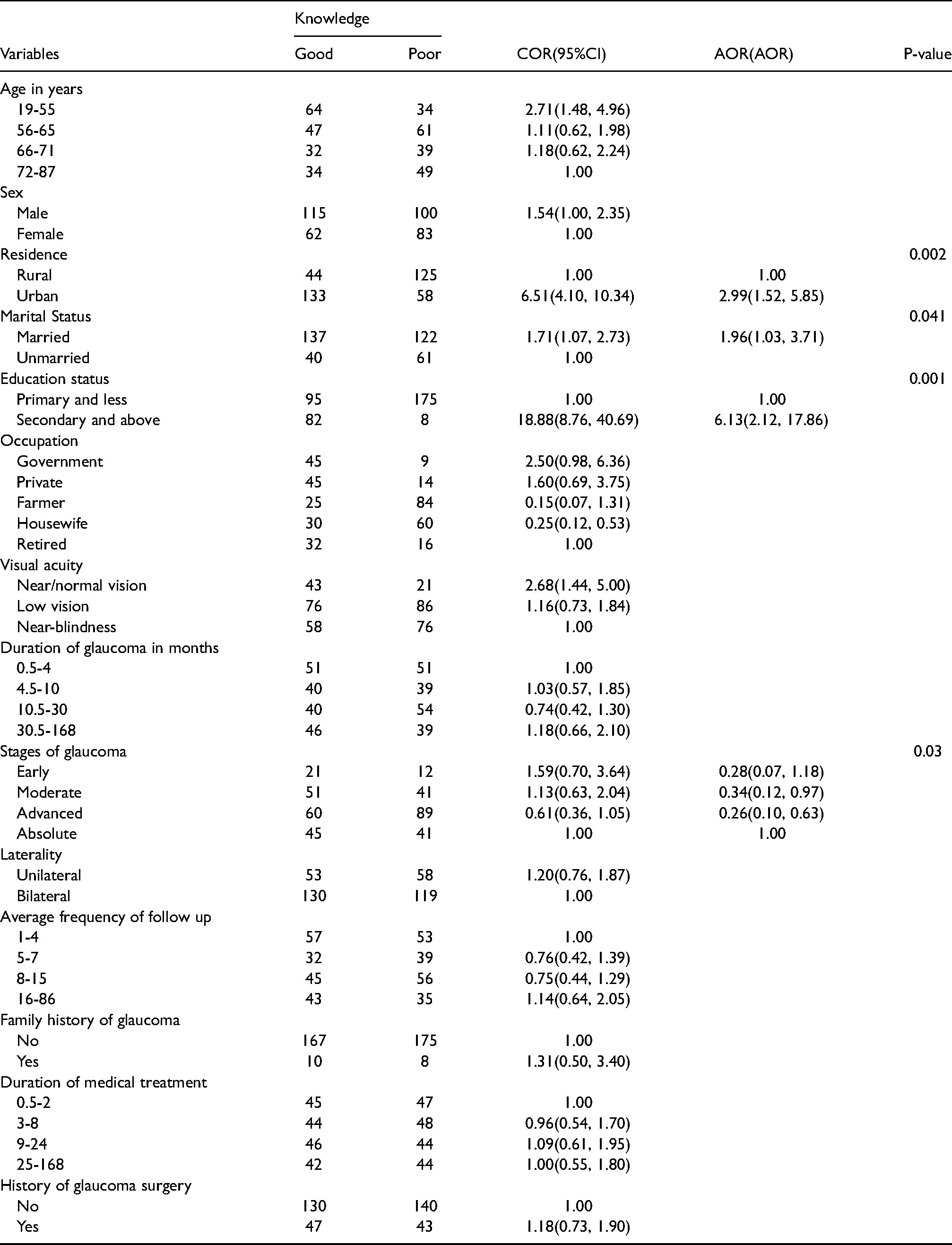
From the multivariable logistic regression analyses residence, marital status, educational status and stages of glaucoma of study participants were independently associated with having good knowledge about the glaucoma and its medications. As a result, urban residents were 2.74 times more likely to have good knowledge about glaucoma and its medication in comparison to rural residents (AOR = 2.74(95%CI: 1.47, 5.10)). Married participants were 1.95 times more likely to acquire good knowledge about glaucoma and its medications as compared to non-married (AOR = 1.95(95%CI: 1.07, 3.55)). Those participants who educated secondary school and above were 6.13 more likely to have good knowledge than less educated participants about glaucoma and its medications (AOR = 6.13(95%CI: 2.12, 17.86)). With regard to stages of glaucoma, participants with advanced stage have 74% more likely to have good knowledge than others (AOR = 0.26(95%CI: 0.10, 0.63)). Table 2
Factors associated with knowledge about glaucoma and its medication of study participants, 2017.
From the total study sample, a total of 197 or 54.7% had good practical level about glaucoma and its medical treatments 49.5% (95%CI: 49.4, 59.7). Figure 2.
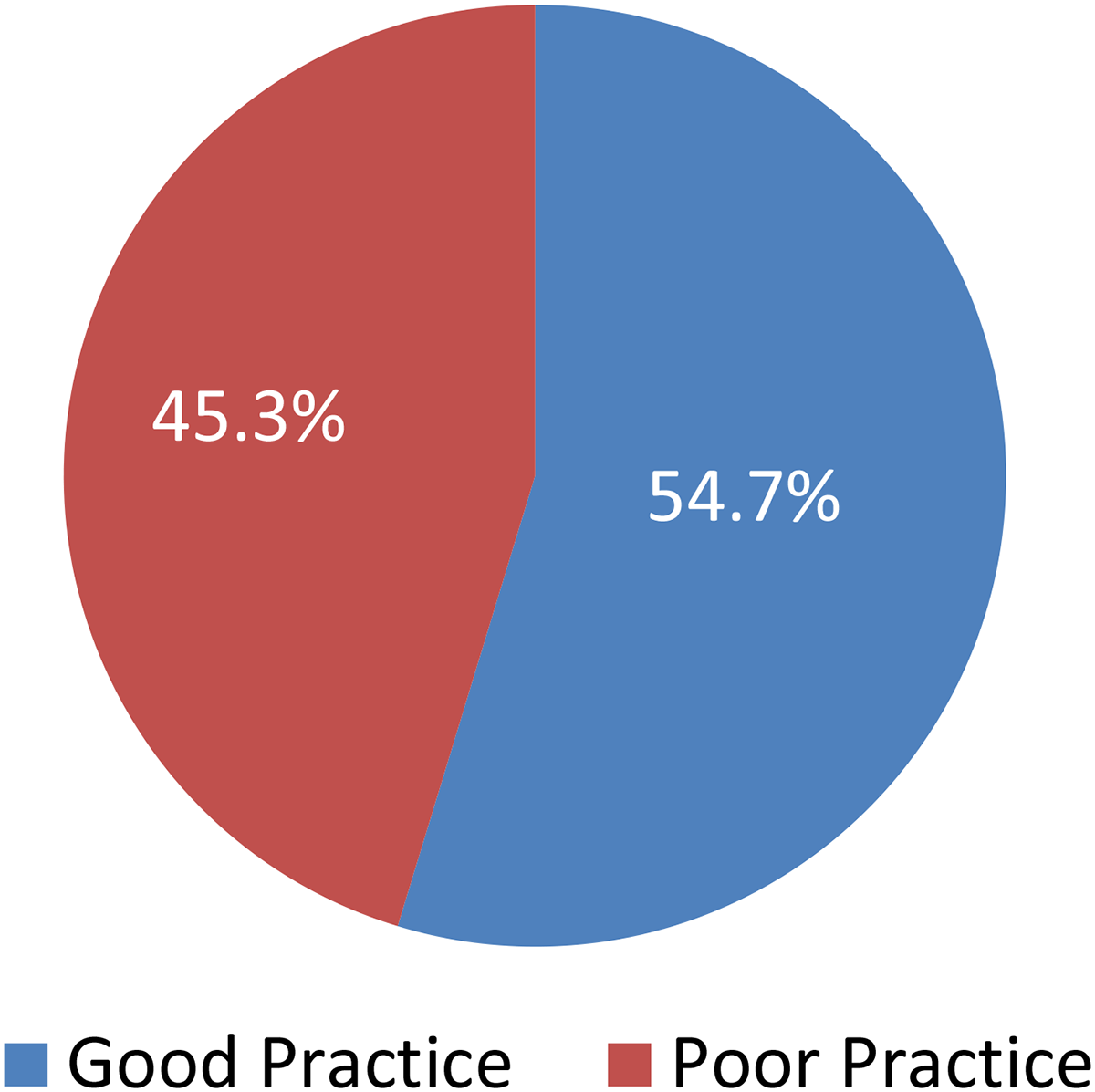
Level of practice about glaucoma and its medications among study participants, 2017.
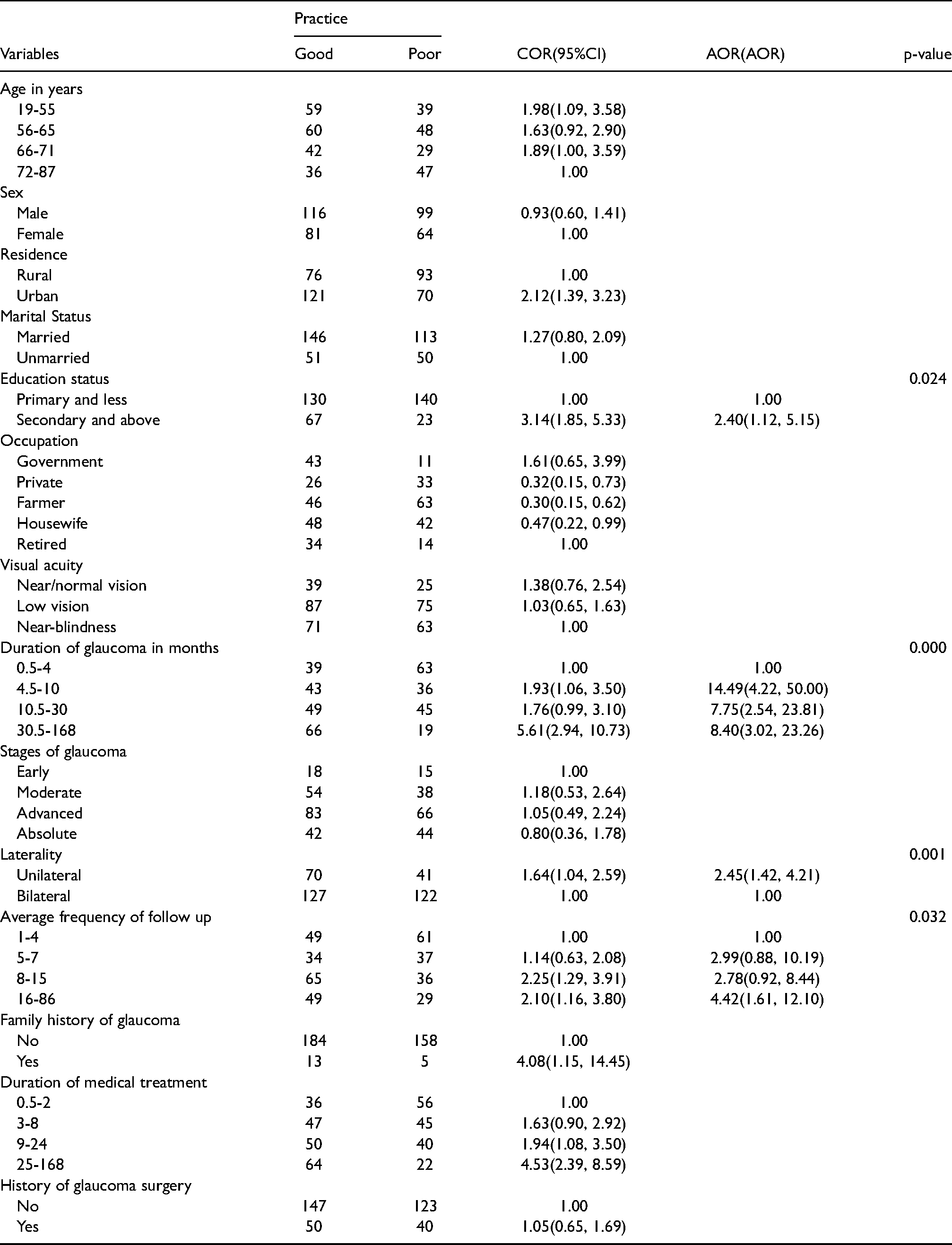
With respect to practice about glaucoma and its medications, using multivariable logistic regression analysis, educational status, duration of glaucoma, laterality and frequency of follow up were significantly associated with practice status of study participants. As a result, participants with secondary and above education were 2.40 more likely to have good practice as compared with those with primary and less educational level (AOR = 2.40(95%CI:1.12, 5.15)). As the duration of follow up patients had was longer, it was found that they were more likely to have good practice. For instance, those with duration of follow up of 30 months and above were 8.40 times more likely to have good practice than those with less than four months of follow up(AOR = 8.40(95%CI:3.02, 23.26)). Study subjects with unilateral glaucoma were 2.45 times more likely to have good practice than those with bilateral ones (AOR = 2.45(95%CI: 1.42, 4.21)), and those with multiple frequency for follow up were 4.42 more likely for good practice (AOR = 4.42(95%CI: 1.61, 12.10). Table 3
Factors associated with practice about glaucoma and its medication of study participants, 2017.
Discussion
Assessing the knowledge of glaucoma patients about their disease is very important as it helps to understand existing gaps and plan education, to improve adherence of their medication and acceptance of surgery. A positive correlation between better understanding of glaucoma and compliance has been reported. 8 However, there are no standardized criteria to assess the level of knowledge.
In this study, from the total study sample, a total of 177 (49.25%) had good knowledge about glaucoma and its medical treatments. This is in contrast to a study done in Kenyata National Hospital (KNH) in Nairobi that showed 13 (16.7%) patients to have fair to good knowledge of glaucoma. 9 On the other hand, only 19.2% of glaucoma patients at Guinness Eye Center, Nigeria, did not have any knowledge of glaucoma. 10 In another study among glaucoma patients in Upper Egypt, 84.5% of patients were unaware about glaucoma. 11 This indicated the need of work and certain strategies to increase the knowledge of glaucoma and also self-care practice as it has importance for improving patient adherence for medications.
From the multivariable logistic regression analyses, urban residence, being married, having secondary and above educational status and advanced stages of glaucoma of study participants were independently associated with good knowledge about glaucoma and its medications. Those with a better education had a significantly better knowledge level than those with less education. Many other studies have similarly shown more educated patients to have better knowledge about glaucoma 12 and this may be because of that more educated ones and those residing in urban area having better access to more sources of information about glaucoma so that they have better understanding of the condition. In contrast to a study done in Lagos, duration of diagnosis was not found to be associated with having better knowledge about glaucoma. This is interesting as one expects that glaucoma patients with longer duration of the disease expected to have more frequencies of educational forums on glaucoma and more time to explore about the disease.
Regarding risk factors for glaucoma, 76 (21.1%) of responders in our study mentioned older age, while 65 (18.1%) of them mentioned high IOP and only 17 (4.7%) of participants knew family history as a risk factor for having glaucoma. A the study from KNH found poor knowledge of risk factors for glaucoma with 54 (69.2%) patients not knowing a single risk factor for glaucoma.
Among the study participants, 218 (60.6%) mentioned drugs as a treatment option for glaucoma, while 76 (21.1%) mentioned surgery and 16 (4.4%) mentioned laser. The above study in kenya found 89.7% of patients knew of medical treatment for glaucoma, 35 (44.9%) knew of surgical treatment while only 15 (19.2%) knew of laser treatment. 9 The study in Guinness Eye Center showed 61.5% of patients knew of surgery and or drug treatment. 10
With respect to practice about glaucoma and its medications, a total of 197 (54.7%) had good practical level about glaucoma and its medical treatments (95%CI: 49.4, 59.7) and a multivariable logistic regression analysis showed having secondary and above educational status, longer duration of glaucoma, laterality and frequency of follow up to be significantly associated with practice status of study participants.
Conclusion
In this study among glaucoma patients in a tertiary hospital, only half of patients have good knowledge about the disease and good practice level. Those with urban residence, higher education status and advanced stage of glaucoma were more likely to have good knowledge. Having secondary and above educational status, longer duration of glaucoma, laterality and frequency of follow up to be significantly associated with practice status of study participants.
Footnotes
Authors contributions
Declaration of conflicting interests
The author(s) declared no potential conflicts of interest with respect to the research, authorship, and/or publication of this article.
Funding
The author(s) received no financial support for the research, authorship and/or publication of this article.
