







Abstract
Introduction
Corneal cross-linking (CXL) is a physiological procedure, which causes the biomechanical alteration of tissues damaged by a range of corneal pathologies, including ectatic cornea, refractive surgical procedures, corneal transplantation, infectious keratitis or corneal oedema.1–3
Numerous clinical studies have demonstrated the effectiveness of this procedure in slowing down the progression of keratoconus in adult patients.4–7 Gore et al. 8 demonstrated that it is a safe, effective, and refractively neutral intervention (when performed at 2 years), which can be used to halt the progression of this disorder. On the other hand, there are few reviewed scientific publications that address the effectiveness of crosslinking in paediatric patients. Most of the said studies covered small sample sizes with relatively short follow-up periods. Nevertheless, the results indicate that this treatment is also effective for children and that it is more effective than posterior penetrating keratoplasty.9,10
In recent years, cross-linking has been used in combination with other procedures, for example, photorefractive keratectomy (PRK). Patients in a pilot study reported improvements in the evaluated parameters, which included spherical equivalent, defocus equivalent, uncorrected and corrected distance visual acuity, higher-order aberrations and maximum keratometry, as well as stabilization of keratoconus during a follow up of 12–24 months.11–13 Another tested combination was CXL used in conjunction with intrastromal corneal ring segments (ICRS), which resulted in improved visual parameters, but without halting keratoconus progression. 14 Discrepancies have been found in the results attained using this combination, given that several studies have showed that this combination improves visual acuity, refraction and keratometry over a period of 7–12 months,15,16 however, other studies did not find any topographical or visual differences following ICRS implantation, either on its own or in conjunction with CXL.17,18
In recent times, there has been an increasing amount of research that looks to assess the efficacy of cross-linking in the management of infectious keratitis. Recent studies have shown that the use of Photoactivated Chromophore for Infectious Keratitis (PACK-CXL) is effective and reduces the complete healing time for such corneal infections.19–21 It has been suggested that this offers an increased resistance to pepsin and collagenase enzymes, which are produced by specific bacterial and fungal pathogens.22,23 UV radiation damages both the DNA and RNA of pathogens, inhibiting their replication, and photoactivated riboflavin releases free radicals that damage cell membranes and nucleic acids. 24
As a result, and given the steady increase in the number of publications on the efficacy of cross-linking in ophthalmic diseases, this study aimed to identify the different research areas, determine the most cited publications, and analyse the relationships that exist between publications and the different research groups by using the Citation Network Explorer (CitNetExplorer) software, which allows us to analyse the evolution of the scientific literature on a field of research.
Material and method
Database
The search of publications was carried out in the Web of Science (WOS) database, using the following search terms: crosslinking, cross-linking, ocular, vision, visual, cornea, ectasia AND Keratoconus; allowing for a complete field search. Likewise, the Boolean AND and OR operators were used to avoid repetition of articles. As a result, the search term that was employed was: (crosslinking OR cross-linking) AND (eye OR ocular OR vision OR visual OR cornea OR ectasia OR keratoconus). In our study, the following citation indexes were used: Social Sciences Citation Index, Science Citation Index Expanded and Emerging Sources Citation Index. The exclusion criteria was early access articles.
The first articles were published in 1972, so the selected time interval was from 1972 to December 2023. The publications were searched and downloaded on 10th November 2021.
Data analysis
The Citation Network Explorer software was used to analyse the publications and visualise the citation networks. Therefore, it was possible to use a citation network comprised of several million publications as the starting point, before conducting a more in-depth analysis that eventually yielded a smaller subnetwork containing 100 publications on the same topic.
A quantitative analysis of the most-mentioned publications was conducted using the Citation score attribute. As such, not only the internal connections within the WOS database were quantified, but also any external connections, with other databases taken into account. 25
Subsequently, the most connected publications were assigned to the same group using the Clustering function. The clustering functionality is achieved using the formula developed by Van Eck in 2012.
25

On the other hand, the CiteSpace software (5.6.R2) was used to perform scientometric analysis by establishing certain parameter indicators; the H index was used to evaluate the quantity and level of academic output of researchers or academic institutions. 26 The Degree indicated the number of connections existing among the authors (organisations, countries) in the co-occurrence knowledge graph; consequently, a higher value in this degree indicated that a greater level of communication and collaboration existed. “Intermediary centrality” measures the importance of nodes in the research cooperation network. Intermediary centrality is a measure of the number of times a node acts as a waypoint along the shortest path between two other nodes, geodetic distance. Finally, “half-life” is a parameter that represents the continuity of institutional research in time. It is defined as the number of years a post receives half of its citations since it was posted. A low citation half-life suggests citation activity that peaks and declines rapidly. A high cited half-life suggests citation activity that peaks and declines more slowly. 27
Results
Following the WoS search, 7161 publications and 59415 citation networks were found among all the fields.
The number of publications on crosslinking has increased significantly since 2008 (1972–2007: 39.3%; 2008–2023:60.7%). 2021 was the year with the highest number of publications, accounting for 571 publications and 135 citation networks.
Description of the publications
Of all the publications, 76.2% (n = 5545) were articles, 9.3% (n = 668) were reviews, 8.0% (n = 576) were meeting abstracts, 3.4% (n = 241) were proceedings papers, 1.2% (n = 130) were book chapters, 1.9% (n = 204) were letters.
Languages and countries
With regards to the language of the publications, 97.8% were in English, 1.5% were in German and 0.4% were in French. The countries with the highest number of publications and collaborations with other countries were: the United States (publications: 2238; degree: 59; connections: 1300), China (publications: 1039; degree: 43; connections: 496) and Germany (publications: 575; degree: 40; connections: 409).
Research areas
This is a multidisciplinary research area, and the fields of ophthalmology (55.1%) and surgery (9.9%) are particularly worth mentioning (Table 1).
Top 5 research areas with the highest number of publications.

Authors and institutions
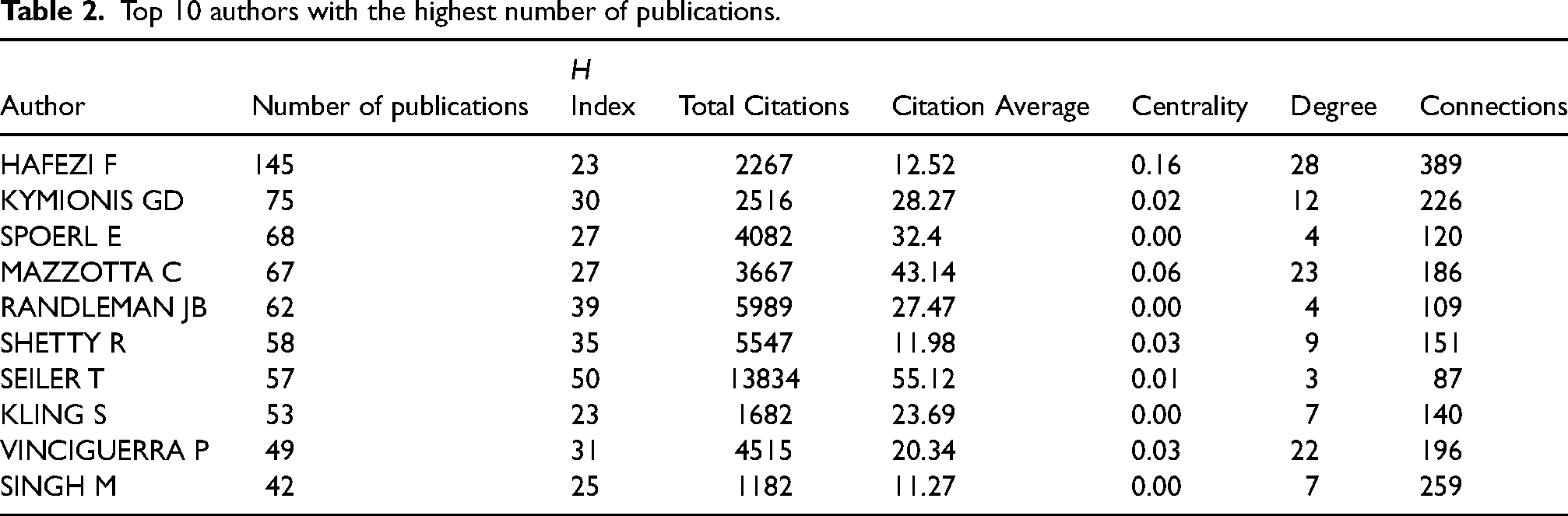
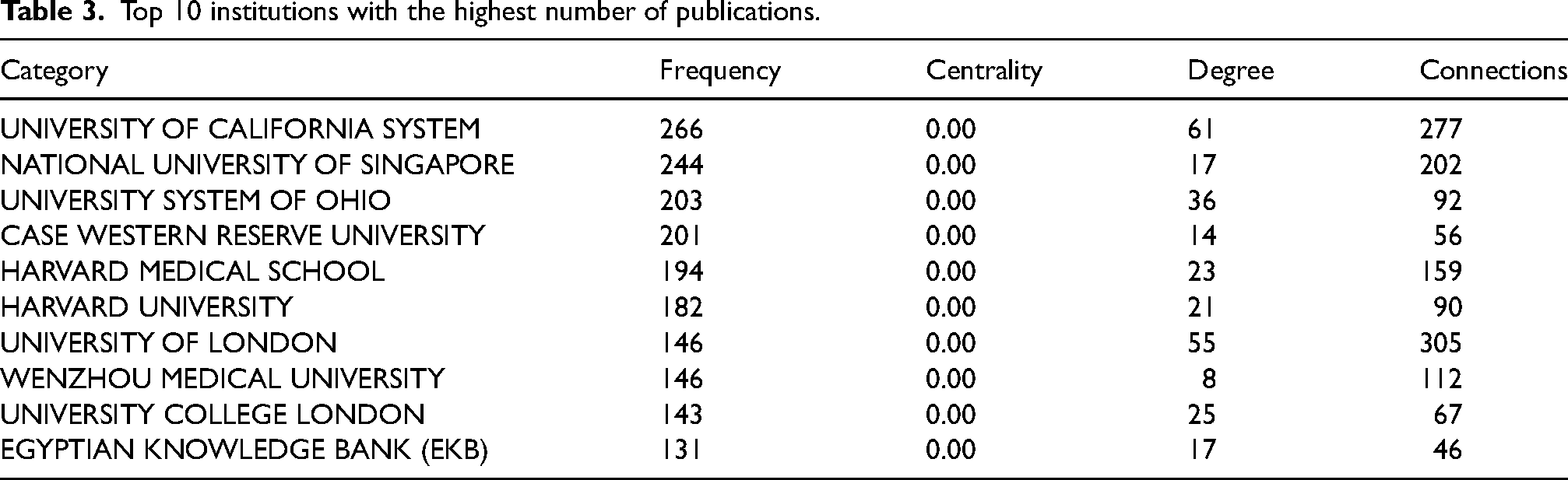
As shown in Table 2, the authors with the highest number of publications were Hafezi F (2.0%), Kymionis GD (1.0%) and Spoerl E (0.9%). The institutions with the highest number of publications (Table 3) were University of California System (3.7%), National University of Singapore (3.2%) and University System of Ohio Case Western Reserve University (2.8%).
Top 10 authors with the highest number of publications.
Top 10 institutions with the highest number of publications.
Journals
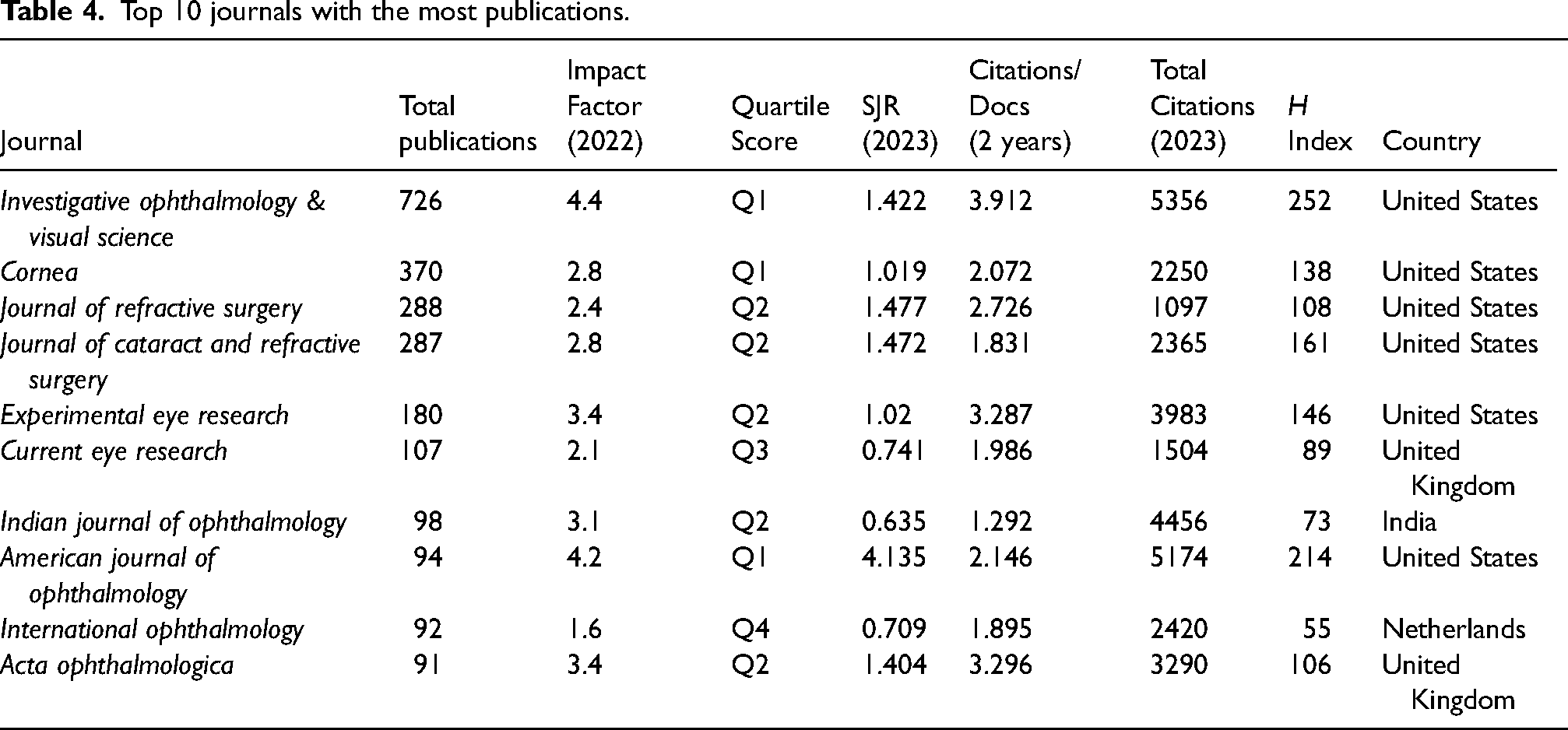
Table 4 shows the main journals and the number of publications in each journal according to the WoS database.
Top 10 journals with the most publications.
Keywords
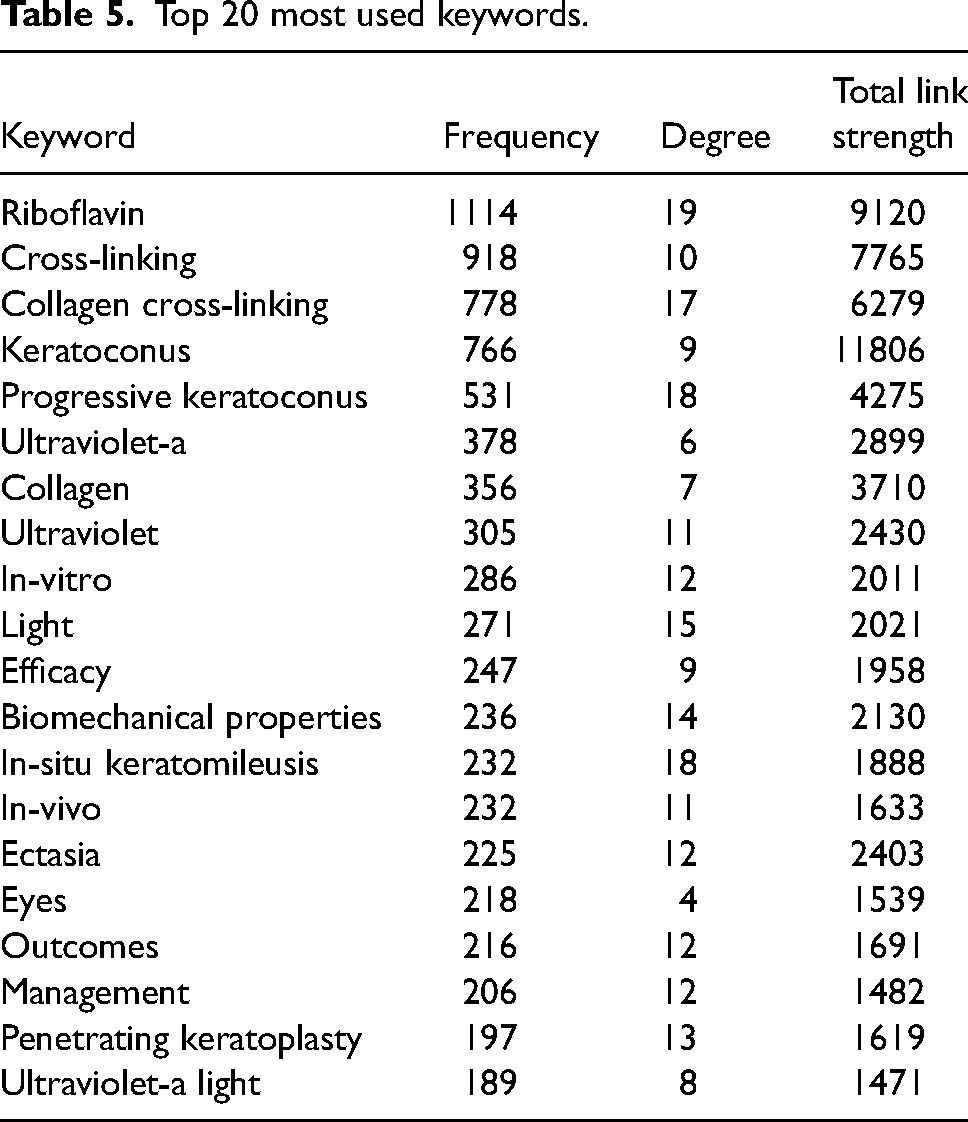
Additionally, the most commonly used keywords were “Riboflavin” “Cross-linking” and “collagen cross-linkin”. Table 5 shows the most used keywords in the most relevant publications.
Top 20 most used keywords.
Most cited publications
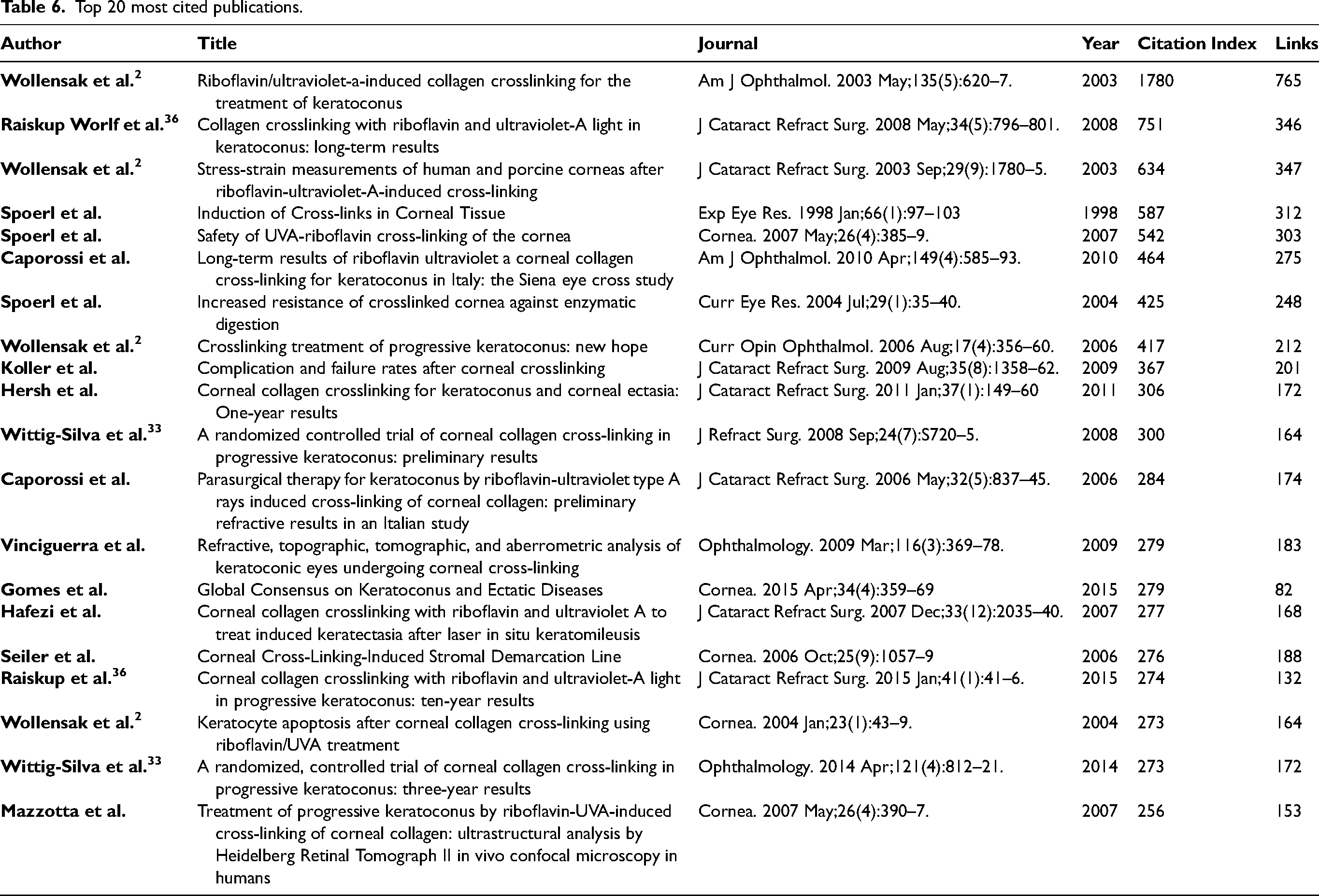
The most cited publication was the article by Wollensak et al. 2 (Table 6). This study examined the clinical usefulness of collagen cross-linking induced by riboflavin/UVA in order to detect keratoconus progression. The results showed that 16 eyes presented a regression of 1.14 diopters. Corneal and crystalline transparency, endothelial cells density and intraocular pression remained unaltered. Visual acuity slightly improved in 15 eyes (65%).
Top 20 most cited publications.
Clustering
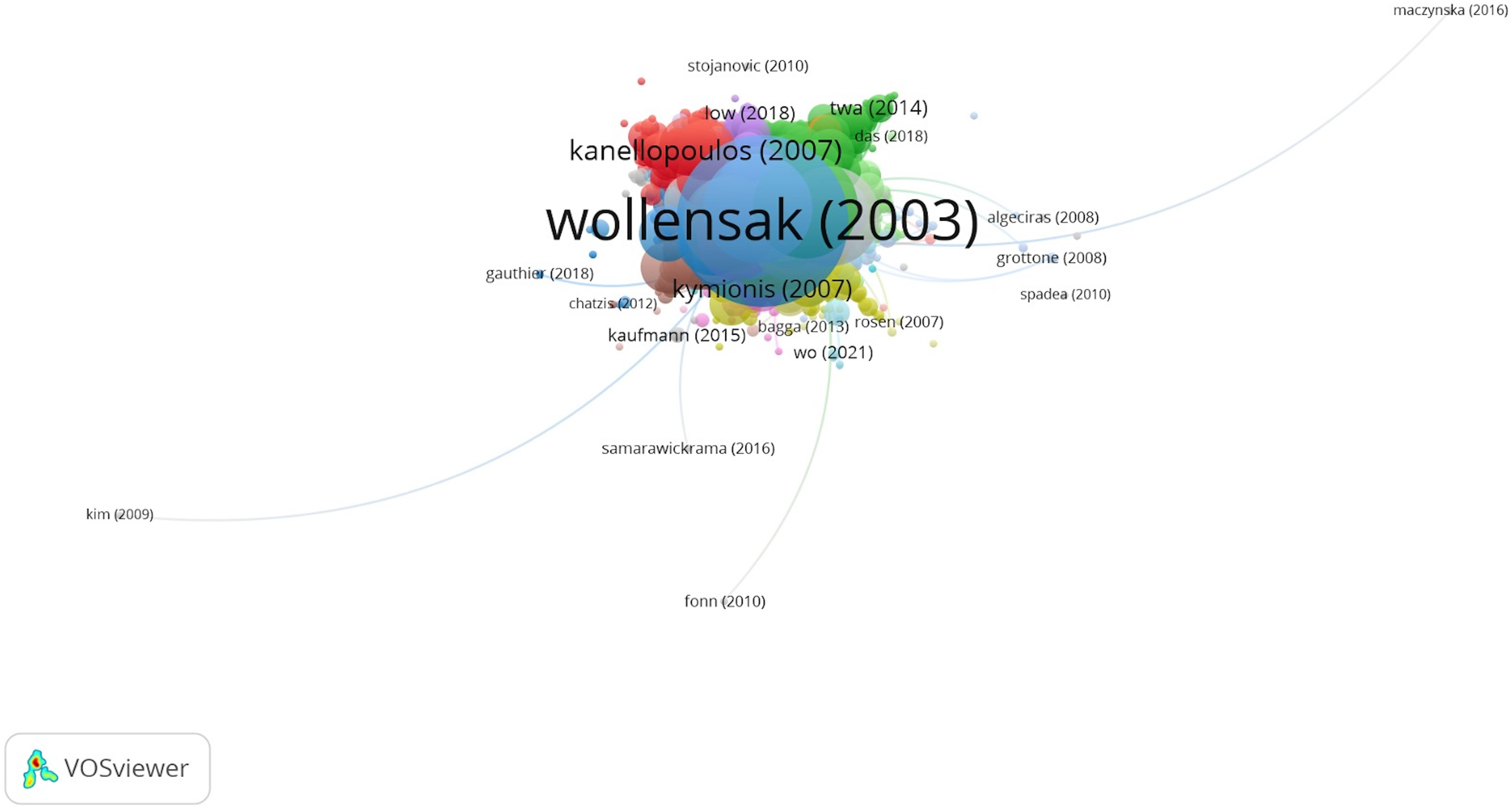
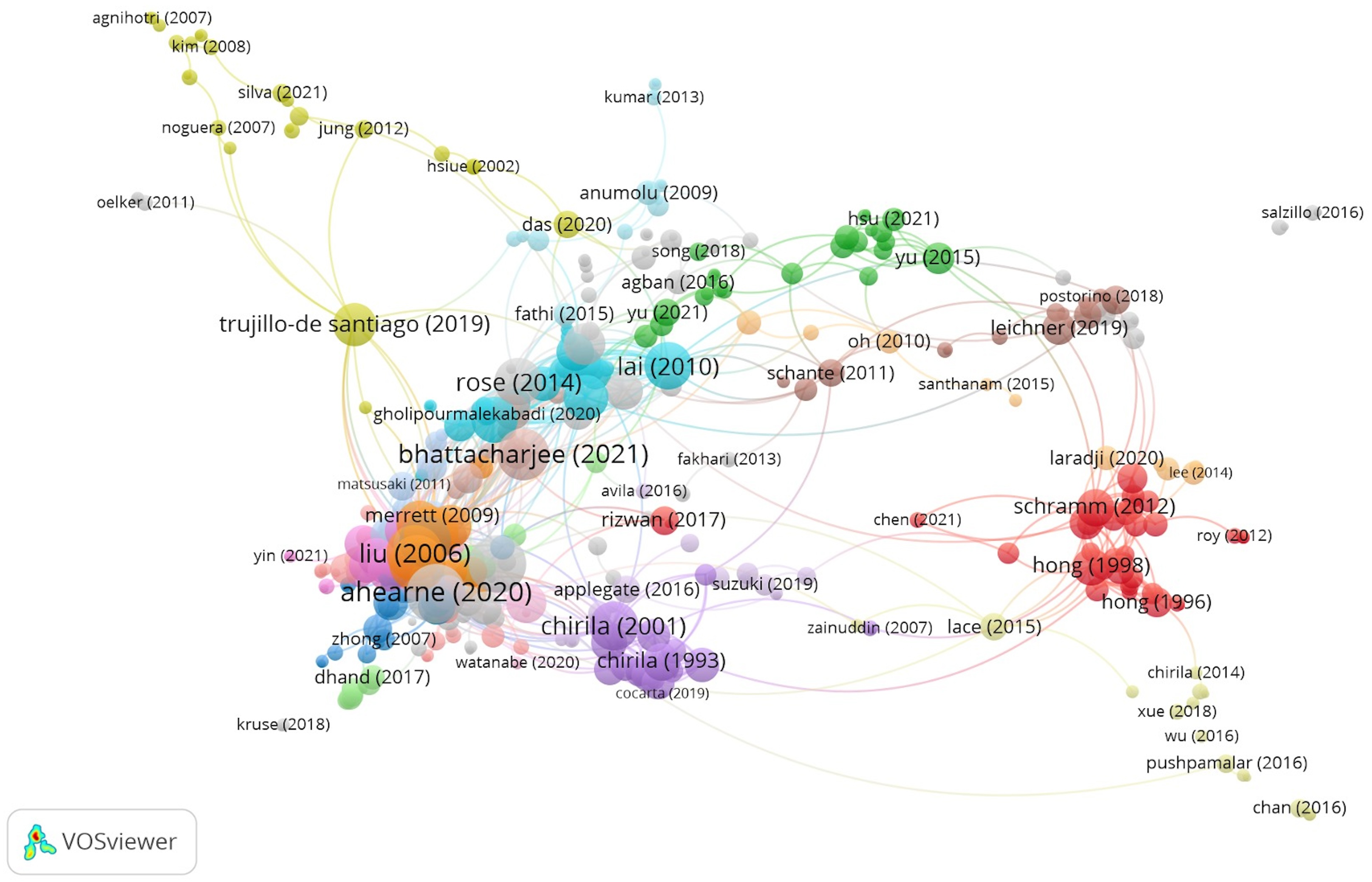
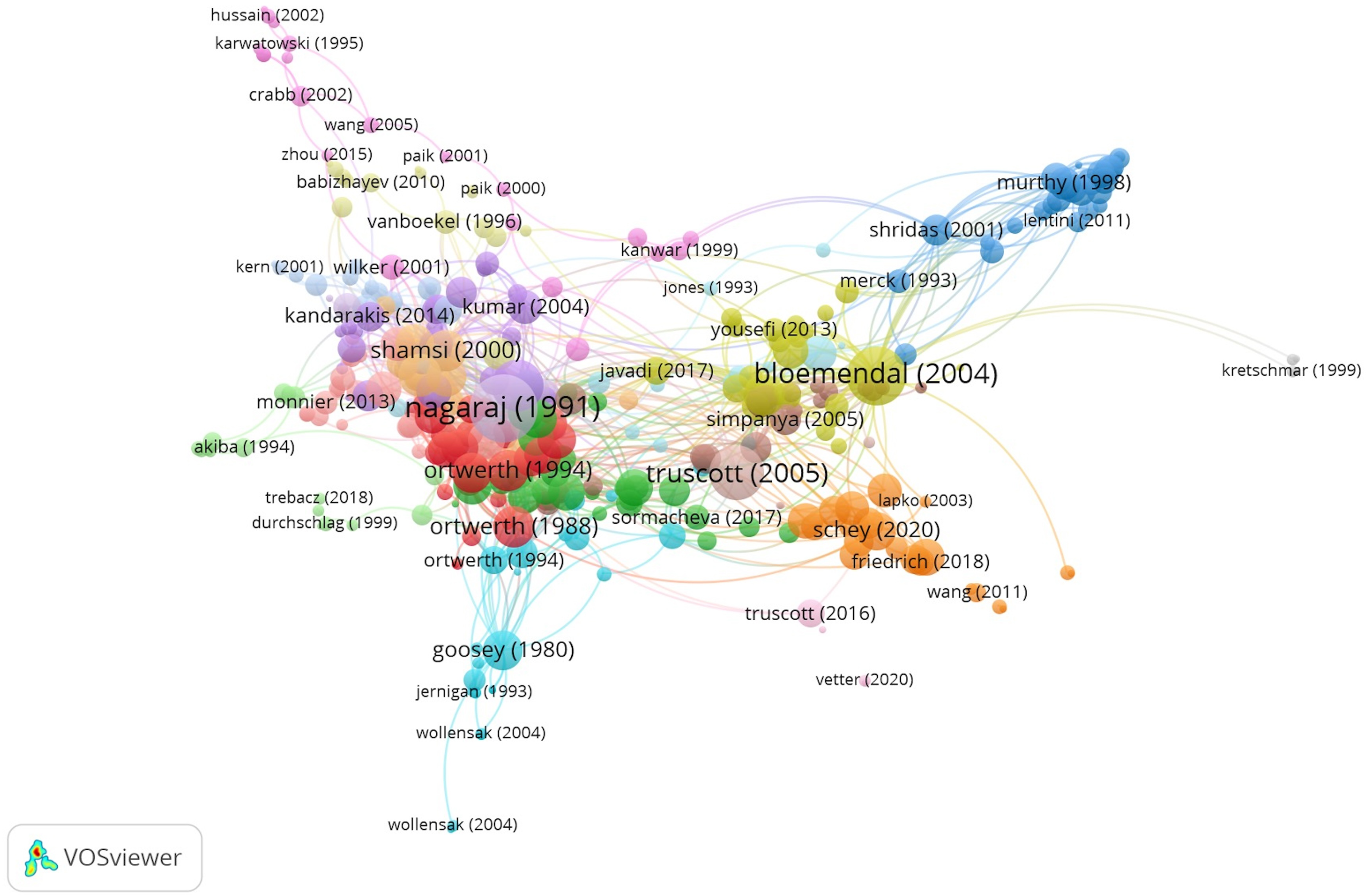
The clustering function identified 8 groups, 5 of which presented a significant number of publications. However, the remaining 3 groups only represented 1.5% of the publications. The colour of the article represents the group they belong to and the lines between elements represent bonds. In other words, each group has a different colour, and the lines are the unions with other groups. Also, the larger the circle means the greater the number of citations.
- In Group 1, 3149 publications and 46826 citations were found across the whole network. The most cited publication was the article by Wollensak et al.,
2
which was published in 2003 in the American Journal of Ophthalmology, which is the top cited publication amongst the 20 most cited publications. Therefore, the articles in this group analyses the collagen cross-linking induced by riboflavin/UVA in order to detect keratoconus progression (Figure 1). - In Group 2, 629 publications and 1935 citations were found across the whole network. The most cited publication was the article by Meek et al.,
28
which was published in 2015 in Progress in retinal and eye research. This study provided a three-dimensional description of the stroma at a microscopic level and the control mechanisms at a nanoscopic level that allow optic transparency.
Citation network in Group 1.
The articles in this group looked to review and analyse the development of artificial corneas (protheses and equivalent tissues) in transplants (Figure 2)
- In Group 3, 399 publications and 3130 citations were found across the whole network. The most cited publication was the article by Nagaraj et al.,
29
which was published in 1991 in the Proceedings of the National Academy of Sciences of the United States of America. This publication analysed the pentosidine formation in an aged crystalline. Thus, it was found a high relationship between the pentosidine crosslinking and the pigmentation degree in the crystalline with cataracts. Likewise, it was also found that pentosidine is mainly associated with alpha-crystal fractions from 300 to 5000 kDa. This data suggested that the redox imbalance in the senescent cellular systems could contribute to an irreversible oxidation of the ascorbate and the protein crosslinking due to xylitol.
Citation network in Group 2.
The article in this group analysed the importance of crosslinking in order to reduce the evolution of cataracts (Figure 3).
- In Group 4, 382 publications and 1371 citations were found across the whole network. The most cited publication was the article by Iseli et al.,
30
which was published in 2008 in Cornea. This publication assessed the efficiency of crosslinking with ultraviolet light in order to treat infectious keratitis. It was found that it is a promising alternative in patients who are treatment-resistant; therefore, avoiding emergency keratoplasty.
Citation network in Group 3.
The articles in this group analysed the efficiency of crosslinking in corneal inflammations (Figure 4).
- In Group 5, 303 publications and 1363 citations were found across the whole network. The most cited publication was the article by Wollensak et al.,
31
which was published in 2004 in the Journal of cataract and refractive surgery. In this group collagen crosslinking methods in the sclera were developed in order to increase the biomechanical force and treat the myopia progression. Thus, it was found out that collagen crosslinking induced by riboflavin-UVA, glyceraldehyde and glutaraldehyde led to a significant increase in the biomechanical force in the human and porcine sclera. Therefore, it was concluded that it could be a treatment option, although better application methods should be determined.
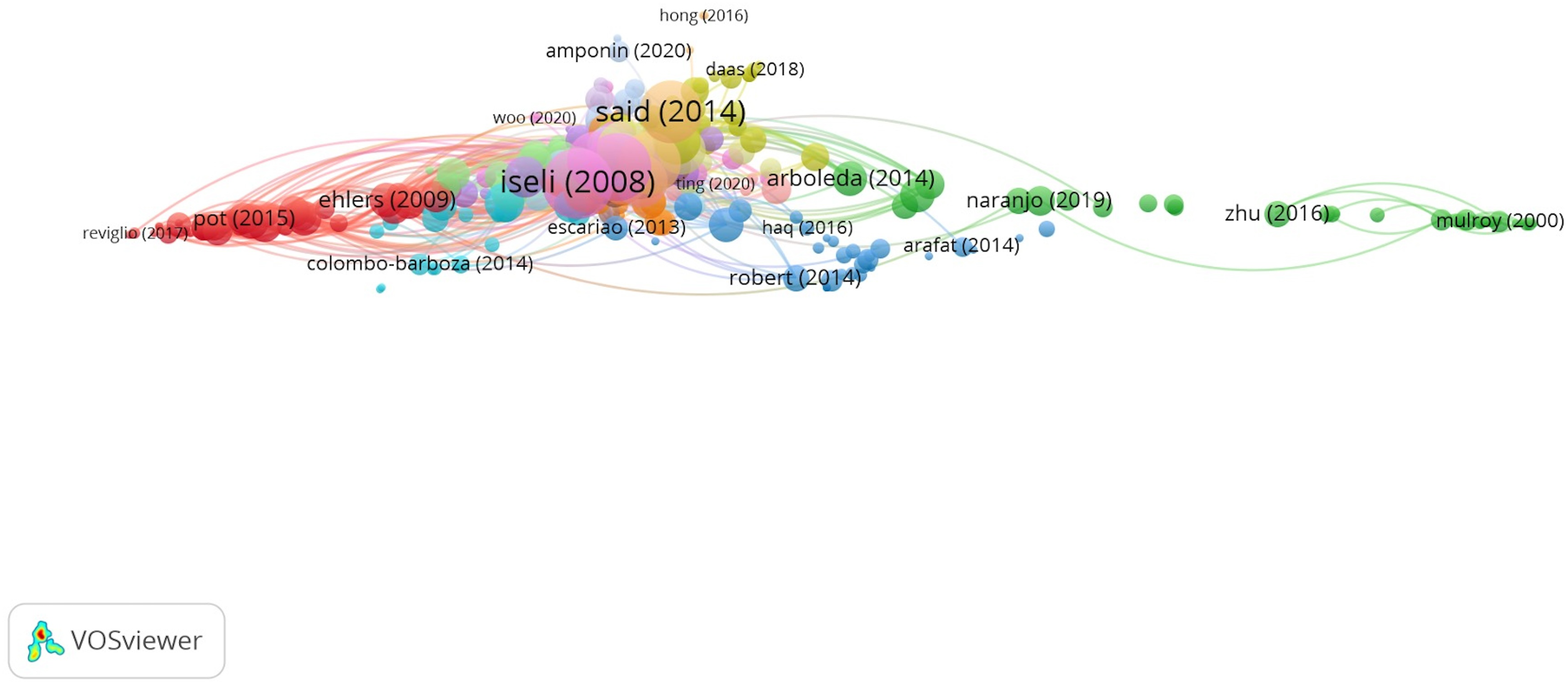
Citation network in Group 4.
The articles in this group analysed the crosslinking efficiency in the sclera in order to reduce axial growth (Figure 5).
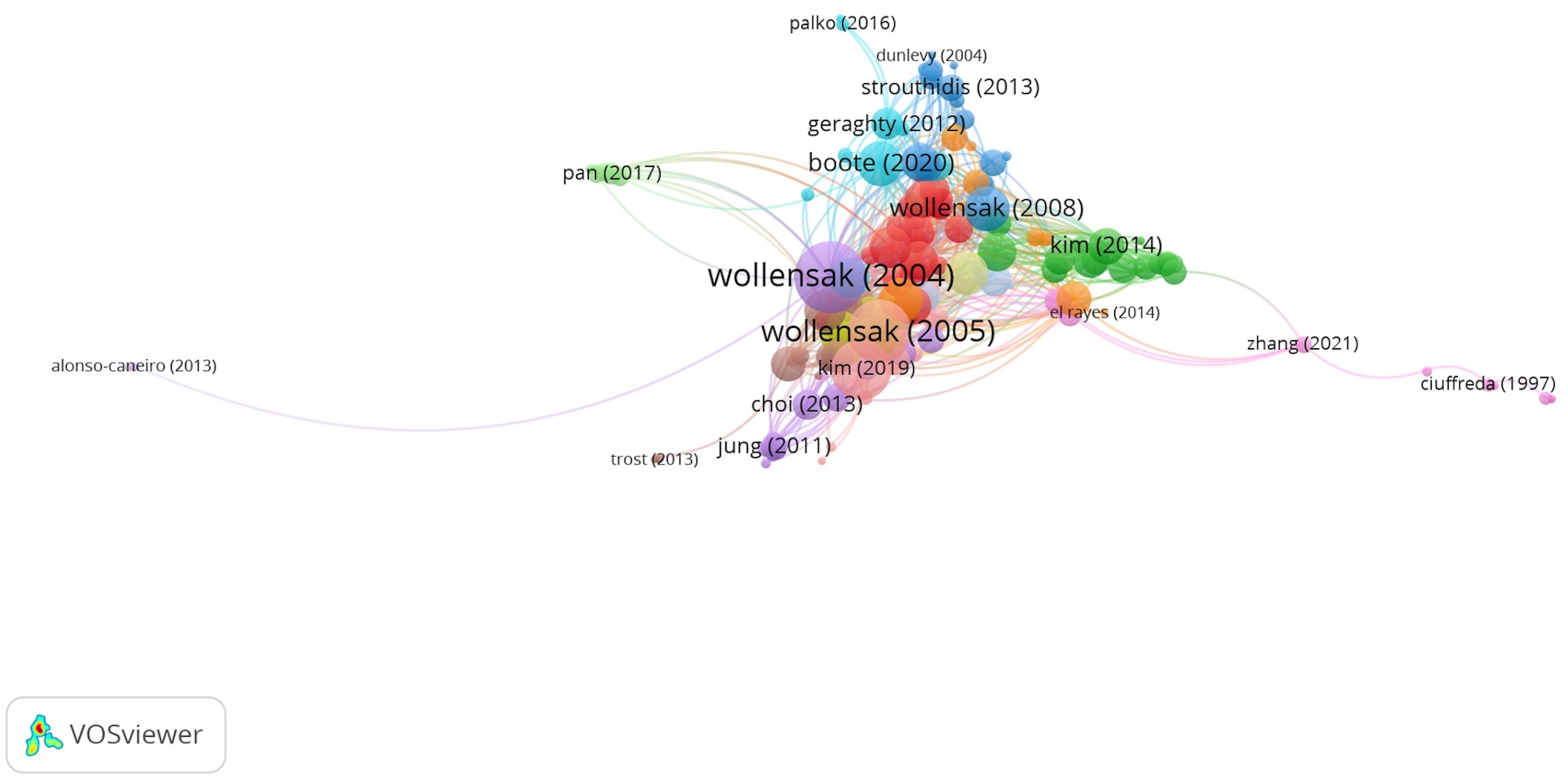
Citation network in Group 5.
Core function
4105 publications with 4 or more citations were found across the whole network, which was comprised of 57315 publications, representing 57.3%. This showed that it exists a clear approach in the research area, being collagen crosslinking efficiency to reduce keratoconus progression the most common topic.
Discussion
The main aim of this study was to analyse the existing literature on the importance of the crosslinking technique. The data used to create the citation network was obtained from the WOS database, given that it is one of the most extensive databases, with a search range that dates back to 1900. However, it is worth noting that the WOS only accepts international journals that have passed a rigorous selection process.
The CitNetExplorer and CiteSpace softwares enabled us to determine the connections that exist between the fields of study and the different research groups. Subsequently, the clustering functionality was used to group publications according to the relationships existing between the citations. The drilling down functionality was used to conduct a more in-depth analysis of the existing bibliography for each of the groups, and by using the core publications functionality it was possible to identify the main publications in each group. Likewise, by conducting scientometric analysis we obtained an important qualitative analysis about the existing bibliography in order to improve the understanding of this area of rapid growth.
The first publication in this field of research was the article published by Buckingham 32 in which it was determined that the yellow pigmentation of cataracts was caused by protein cross-linking. The number of publications on this subject matter increased from 2008 onwards, as clinicians began to consider cross-linking as a valid treatment method for keratoconus.33–35 In this year, the study by Raiskup-Wolf, 36 which showed that collagen cross-linking is an effective therapeutical option for progressive keratoconus, was particularly worth mentioning. Considering the high number of publications which emerged in 2021, it was considered as a “key year”. The article by Larkin et al. 37 is significant, demonstrating that corneal cross-linking is effective in stabilizing progressive keratoconus in young patients. The results from this randomized controlled trial showed that CXL significantly reduces the progression of keratoconus, improves maximum keratometry values, and enhances both corrected and uncorrected visual acuity 18 months post-treatment, with an excellent safety profile. Seiler et al. 38 conducted an experimental study on oxygen kinetics during CXL with and without supplementary oxygen, utilizing a femtosecond-laser-generated tunnel to measure local oxygen concentrations in de-epithelialized porcine eyes. They observed that supplementary oxygen significantly increases oxygen availability during CXL, particularly at higher irradiances, potentially enhancing the cross-linking process. Therefore, after years of research in this field, the efficacy and safety of corneal cross-linking for the treatment of keratoconus remain pivotal topics of investigation.
With regards to the journals and countries with the highest number of publications, our results concurred with the findings of another bibliometric study on keratoconus. 39 However, in the study by Zhao et al. 39 the journal with the highest number of publications was Cornea, which ranked in second place on our list. This difference may be due to the fact that keratoconus analysis encompasses other research topics, whereas the analysis of cross-linking focuses mainly on treatment. The countries with the highest number of publications were China and the United States. Approximately 180,000 cases of corneal transplantations are performed worldwide each year, of which 40,000 to 50,000 of said surgical interventions take place in the United States. In China, corneal diseases are the second leading cause of blindness.40–42 Xu et al. 43 found that, in 2012, the prevalence of keratoconus in Beijing in individuals over the age of 50 years was 0.9 ± 0.2%.
Nowadays, other topics of interest within this field include the effectiveness of cross-linking in the treatment of keratitis with Escherichia coli, 44 Acanthamoeba,45,46 Pseudomonas aeruginosa, 47 Staphylococcus aureus, Aspergillus, 48 Fusarium, 48 other types of bacteria and herpes viruses. 49 Current studies have shown that corneal cross-linking can be used, not only as an adjuvant treatment, but also as a rescue or stand-alone treatment in cases of infectious keratitis. Cross-linking is an effective solution for the management of bacterial keratitis thanks to its considerable number of bactericidal properties and the fact that it increases the corneal resistance to proteolytic enzymes. 50 However, its effectiveness against viral keratitis has not been demonstrated.50–52 In fact, it remains a controversial topic and there is still no protocol for infectious keratitis. It is only applied in severe infections which do not respond to antimicrobial treatment, in order to avoid or postpone emergency keratoplasty. Khoo et al. 53 found a predominant association with gram-positive bacteria in patients with microbial keratitis who had undergone cross-linking treatment, and in some cases these patients presented with delayed epithelialization. Therefore, they concluded that microbial keratitis post-CXL may lead to moderate to poor patient outcomes.
Another topic of growing interest in recent years is the effectiveness of cross-linking as a means of controlling progressive myopia by mechanically stabilizing the sclera. This is because it is thought that pathologic myopia is caused by uncontrolled, progressive scleral remodelling which leads to posterior staphylomas. Levy et al.'s study 54 determined that axial elongation may involve a biomechanical weakening mechanism, which causes the softening of the sclera. The use of genipin in corneal cross-linking procedure can restore scleral stiffness. In contrast, a study conducted by Chu et al. 55 found that treatment increased stiffness of the sclera, nonetheless, myopia development was not affected. Therefore, it is anticipated that in the future there will be an increased number of research studies involving human patients in order to confirm the benefits of this procedure in myopia. One of the longest follow-up clinical studies was the one conducted by Aslanides et al.. 56 After five years, it was determined that refractive surgery by PRK combined with corneal cross-linking offers safe and effective results. Refractive stability is one of the main advantages of this new combination, as well as the fact that it has a sterilization effect on the treated cornea without the potential side effects of mitomycin. In the future, the main research on this topic will look to explore the potential of increasing the effectiveness and safety of cross-linking in order to reduce patient discomfort. On the one hand, research will focus on developing transepithelial delivery systems for the absorption of riboflavin through healthy epithelium, which will therefore reduce associated morbidity. There will also be an increased amount of research on the idea of conducting cross-linking through contact lenses in order to improve the safety of the treatment in thin corneas. On the other hand, other research groups will conduct longer follow-up studies in order to analyse the effectiveness of cross-linking as a treatment for infectious keratitis using PACK-CXL, and for the treatment of corneal oedema. On the one hand, research will focus on developing transepithelial delivery systems for the absorption of riboflavin through healthy epithelium, which will therefore reduce associated morbidity. Research on cross-linking through contact lenses to improve the safety of the treatment in thin corneas will also increase. On the other hand, some research groups will conduct longer follow-up studies to analyse the effectiveness of cross-linking as a treatment for infectious keratitis using PACK-CXL, as well as for the treatment of corneal oedema. Finally, studies will focus on the use of cross-linking in conjunction with LASIK or PRK for better refractive stability, or they will look into ways in which it can be applied directly to the corneal curvature using Photorefractive Intrastromal Cross-linking (PiXL), without the need for corneal tissue ablation.
The trends identified in this study have significant practical implications. For instance, the widespread adoption of cross-linking for treating keratoconus could lead to standardized protocols that enhance patient outcomes globally. The combination treatments, such as cross-linking with PRK, suggest a move towards more comprehensive and effective treatment strategies, potentially improving visual acuity and long-term stability for patients. The research on cross-linking for infectious keratitis highlights its potential as a less invasive alternative to traditional treatments, which could reduce the need for emergency keratoplasty and associated complications. Furthermore, the exploration of cross-linking for controlling myopia progression indicates a promising avenue for managing a prevalent condition, potentially reducing the burden of high myopia in the population. The continuous advancements in delivery methods and safety improvements, such as transepithelial delivery systems and cross-linking through contact lenses, are likely to make the treatment more accessible and safer for a broader range of patients, including those with thinner corneas.
One limitation of this study is the high percentage of English publications, which might overlook significant research in other languages. While 97.8% of the publications analyzed are in English, this reflects a global trend towards publishing in this language in high-impact journals. However, it is important to recognize that valuable research in other languages, such as German (1.5%) and French (0.4%), may not be adequately represented. This linguistic bias can limit access to relevant studies and findings that could be crucial for a comprehensive understanding of the field. Future research could benefit from including databases that index publications in a wider range of languages, thereby improving the representativeness and completeness of bibliometric analyses.
In conclusion, this study provided a comprehensive and objective analysis on the effectiveness of crosslinking. The five main groups indicated what the main research topics were in this field. The most relevant one was the effectiveness of crosslinking in the treatment of keratoconus (5.4%), followed by the effectiveness of crosslinking in corneal transplants (0.84%), evolution of the cataracts (0.8) and in treating infectious keratitis (0.6%). Other topics of interest, which may have greater impact in the coming years included the effectiveness of crosslinking in reducing axial growth (0.3%).
Footnotes
Declaration of conflicting interests
The authors declared no potential conflicts of interest with respect to the research, authorship, and/or publication of this article.
Funding
The authors received no financial support for the research, authorship, and/or publication of this article.
