







Abstract
This study analyses teachers’ knowledge about child maltreatment in the family and explores their professional background in dealing with this problem. 227 pre-school and primary teachers from Andalusia (Spain) participated in the study. The majority of the teachers had never reported a case of child maltreatment during their professional background. These situations were experienced by the teachers with high levels of emotional impact, and both they and their schools showed high levels of involvement in cases identified. Three teacher profiles were identified, the group of trained teachers being the most capable of identifying more complex signs of child maltreatment, followed by those with more years of seniority. The process of detection and reporting of child maltreatment in the school setting is complex, and a wide range of elements need to be analysed conjointly.
Child maltreatment: the role of school context
Child maltreatment (hereafter CM) is a global problem with serious life-long consequences (World Health Organization [WHO], 2006). Despite the slight decrease observed in CM rates in the 2015–19 period (4.0%), statistics continue to report high global incidence (Children’s Bureau, 2021). In Spain, according to the notifications collected in the Unified Registry of Child Maltreatment (RUMI in its Spanish acronym), a total of 15,688 situations of suspected CM were recorded in 2020, representing a rate of 242.9 cases per 100,000 minors (Children’s Observatory [Observatorio de la Infancia], 2021). The most frequent situations were neglect (149.6 cases per 100,000 minors), emotional maltreatment (109.2/100,000) and physical maltreatment (53.6/100,000), with a very low incidence of sexual abuse. However, it is possible that these cases are just ‘the tip of the iceberg‘ (Gilbert et al., 2009), according to data provided by different retrospective studies showing that the real incidence of CM tends to be higher than that detected (Pereda, 2016).
Early detection and response to CM can prevent ongoing harm and adverse health outcomes (WHO, 2006). Schools play an important role, not just in preventing child abuse and neglect from occurring but also in detecting CM (Lago et al., 2021). Education is compulsory in Spain for all children and young people between the ages of six and 16 years. School is a privileged setting for detecting and reporting CM because children spend a large portion of their time there, there are professionals with specialized training in childhood and the close teacher–student interpersonal relationships favour the identification of changes in child development or the uncovering of a problem (Díaz-Aguado, 2001; Soriano, 2008). In accordance with the recent Organic Law for the comprehensive protection of children and adolescents against violence in Spain (Spanish acronym LOPIVI; Spanish Government, 2021), it is important to highlight the duty to inform authorities of any situations of violence that may arise, and this duty is particularly applicable to those persons who (by reason of their position, profession, trade or activity) are entrusted with the assistance, care, education or protection of minors (arts. 15 and 16), such as teachers. These professionals are in a unique position to identify CM and, eventually, to report cases to the appropriate services. However, and although there has been an increase in the number of CM cases reported in recent years from the school setting (Greco & Pereda, 2021), official data continue to show a low level of annual detection of CM in schools (around 11.92% of total notifications in Spain, dropping to 3.3% in Andalusia) compared to cases reported by other institutions or services (Children’s Observatory [Observatorio de la Infancia], 2021; Children’s Observatory in Andalusia [Observatorio de la Infancia en Andalucía], 2020).
Theoretical background
According to the ecological model, Belsky (1980) pointed out that cultural values and belief systems could influence how people perceive CM. In this way, the sociocultural approach asserts that each person manages to construct their ideas based on their experiences in a world full of meanings, languages and discourses (Wertsch, 1985). Thus, cultural beliefs can promote processes of signification that the individual acquires at the psychological level and that ultimately regulate their social behaviour (Vygostky, 1978). However, these internalization processes can also incorporate misconceptions, forming internal representations that ultimately influence the interpretation and explanation of what happens in their context (Raman & Hodes, 2012).
Lack of knowledge and misconceptions about CM have been shown to influence the detection and reporting of these situations (González-Sánchez & Sáinz-López, 2021; Pérez de Albéniz et al., 2011; Schols et al., 2013; Weegar & Romano, 2019). Simply observing students is sometimes not enough to detect CM. Liébana et al. (2015) point out that it may be difficult to detect the different physical and behavioural signs presented by students who are experiencing maltreatment. However, Farcas and Roth (2011) report that teachers do recognize physical indicators but find it more difficult to identify emotional and, again, behavioural indicators. In this sense, several authors have indicated that teacher training in CM is important both to eliminate misconceptions and to help recognize indicators of the different types of maltreatment (Hawkins & McCallum, 2001; Kenny, 2001). In fact, LOPIVI incorporates the obligation for professionals working with children to receive specific training to improve the detection of situations of violence and the response to these situations.
The effects of training in CM detection
The deliberate intervention of other members of the culture who provide valid and contrasted knowledge can influence the detection (and reporting) of CM. In this way, the person puts previously acquired knowledge into action in order to restructure it, which becomes a new, more adjusted, valid and reliable internal representation of reality. In this sense, teachers with more training are better at detecting CM without physical violence (Kenny, 2001; Vila et al., 2019), are more confident in their ability to recognize indicators of abuse and have a more developed sense of responsibility and a better understanding of what constitutes reasonable cause for reporting and how to respond appropriately to a child’s disclosure of abuse (Hawkins & McCallum, 2001; Sainz et al., 2020). Cerezo and Pons (2004) developed a training plan with 251 education professionals which, after the intervention, led to an increase of 24.5% in the total number of cases reported by schools.
Due to the prominent role of teachers in the detection of CM, the inclusion of specific subjects dealing with this phenomenon in the training of future professionals in higher education seems a relevant topic. Nevertheless, the basic training of primary and pre-school teachers in this area is therefore clearly insufficient. The current regulations about primary and pre-school education university degrees in Spain (Boletín Oficial del Estado (2007a) Order ECI/3857/2007 and Boletín Oficial del Estado (2007b) Order ECI/3854/2007) do not include specific contents about CM; until LOPIVI, the decision about whether or not to cover these issues lies in each university lecturer. Beyond the university degree, there is relevant postgraduate training (e.g., master’s degrees or specific courses) which can be voluntarily chosen by teachers for the exercise of their profession. Anyway, it seems essential that teachers have the opportunity to receive up-to-date and ongoing training in the core aspects of their profession.
There has been little research in Spain focusing on the training and knowledge about CM involving future education professionals or active teachers. Starting with the former, a longitudinal study with 241 pre-school and primary undergraduate students (Pérez-Padilla, Martí, et al., 2018) found that knowledge increased appreciably over the four years of training, although only 2% of the students correctly completed the entire knowledge assessment questionnaire about CM on completing their degree. In addition, final-year undergraduates in primary and pre-school education showed less knowledge about CM than other final-year students completing degrees in nursing or social work (Pérez-Padilla, Lago, et al., 2018). Once their university studies are complete and teachers take up their posts at schools, they do not have much opportunity to receive any further specialized training that they may require (Schols et al., 2013). This, together with the insufficient training received in higher education, may explain the level of knowledge shown by Spanish teachers regarding CM (Greco et al., 2017; Vila et al., 2019).
As for professional training, theoretical understanding of CM has to be complemented with practical knowledge about the reporting process on the ground (Sainz et al., 2020; Schols et al., 2013). Particularly, there is a single school-based action protocol for all teachers in southern Spain to follow in the event of suspected cases of CM (Andalusian Government, 2011). It is a clear guide outlining signs, procedures, steps to be taken and persons to be contacted depending on the severity of the case. Nevertheless, teachers are generally unaware of these action guidelines (Real & Jolluskin, 2002; Real & Mohamed, 2011) and attribute it to their lack of training (Liébana et al., 2015). Teachers tend to be unaware and/or feel unsure about where and how they should make the reporting (González & Guinart, 2011; Pérez de Albéniz et al., 2011) and evidence uncertainty regarding the effectiveness of the protocol (González & Guinart, 2011). Thus, García (2005) indicates that, in the absence of training on this subject, teachers may feel confused and very insecure when facing these situations.
Variability in detecting and reporting CM
Some studies have investigated possible variability in detecting and reporting cases of CM, mainly as a function of sociodemographic and professional indicators. Regarding the former, contradictory results have been found as to whether male or female teachers detect and report more frequently (Crenshaw et al., 1995, Kenny, 2001, 2004). As for the professional profile, teachers with greater seniority tend to report a higher number of suspected cases of CM (Goebbels et al., 2008; Greco et al., 2017). Finally, teachers report both internal barriers (teachers’ feelings of guilt towards children, fear of false positives, hesitation about interfering in family life) and external barriers (privacy laws, lack of parental cooperation, lack of support from school management) to reporting cases of CM (Díaz-Aguado, 2001; Farcas & Roth, 2011; González & Guinart, 2011; Pérez de Albéniz et al., 2011; Schols et al., 2013).
Objectives of the study
There is a lack of research investigating teachers’ knowledge and background in dealing with CM in Spain. This research aims to address three key objectives:
(1) To analyse the degree of reporting of CM (number of different detected and notified cases) from school, as well as the emotional impact of teachers, their personal involvement and the involvement of the school.
(2) To describe teachers’ knowledge about CM, in general and specifically in relation to school protocol, and how this may relate to specialized training received about CM.
(3) To identify teacher profiles according to their knowledge, training and experience in dealing with CM, examining differences associated with sociodemographic characteristics.
Method
Participants
The sample consisted of 227 pre-school (n = 99, 43.6%) and primary (n = 128, 56.4%) teachers from schools throughout Andalusia (southern Spain): 33% (n = 75) were from the province of Huelva; 26.4% (n = 60) from Seville; 24.7% (n = 56) from Cadiz; and 15.9% from Jaen (n = 36). Of these, 78% (n = 177) were women and 22% (n = 50) men, with a mean age of approximately 43 years (M = 43.01, SD = 9.57). On average, participants had a seniority (had been in their profession) of 17 years (M = 17.30, SD = 9.61).
Instruments
The information was collected through a questionnaire that addressed the following dimensions:
-
-
-
-
-
Procedure
The study design was descriptive, quantitative, transversal and integrated non-probability (convenience sample, for the selection of the schools, and volunteer sample, for the selection of the teachers from each school). The sample of schools that participated in this study were selected from a list of pre- and primary centres with which the research team had previous contact for teaching and/or research purposes (n = 79); the management teams of 41 of these 79 schools (51.9%) agreed to participate. After the school management agreed to participate, teachers were personally informed of the details of the research and asked to voluntarily participate. Those who were interested completed and signed an informed consent form, in which they stated that they had received all the information about the research and agreed to voluntarily collaborate, and gave permission to analyse and publish the resulting data. The participating teachers subsequently completed the evaluation instruments after receiving them by mail or after making an appointment with one of the members of the research team. This non-interventional study (based on surveys) complies with the Declaration of Helsinki and current Spanish legislation on research involving human subjects. Ethical approval by an ethics committee was not required.
Plan of analysis
Data were processed and analysed mainly with SPSS-25 (IBM Corp., 2017). The analyses were computed with the full study sample, since there were no statistically significant differences between pre-school and primary school teachers in any of the variables included in the study. Previously, the absence of both univariate and multivariate outliers was checked (by examining box-and-whisker plots and calculating the Mahalanobis distance, respectively), as well as the requirements for the use of parametric tests (Hair et al., 2019).
For the descriptive analyses of quantitative variables, means and standard deviations were calculated, and for qualitative variables, frequencies and percentages were computed. Likewise, regarding to bivariate analyses, Student’s t and Snedecor’s F statistics were used for means comparison, and Chi-Square was computed for the study of the distribution of frequencies. With regard to correlations, Cohen’s r statistic was used, and the effect size was estimated according to: r = .00 ⩽ .10, null correlation; .10 ⩽ .30, weak; .30 ⩽ .50, moderate; .50 ⩽ 1, strong.
Some indicators were transformed beforehand, specifically those referring to general knowledge about CM and school-based action protocol. Since the response scale is dichotomous in both cases, internal consistency was assessed with the KR20 index (Zaidi et al., 2018; Zubairi and Kassim, 2016) using TAP software (Brooks and Johanson, 2003). In accordance with recommendations for item difficulty analysis (e.g., Carr, 2004; Mahjabeen et al., 2017), participants with at least 70% correct answers to the items of each test (> 10 in knowledge about CM, > 4 in knowledge about the school-based action protocol) were considered in each case as informed; the rest were classified as uninformed about CM (⩽ 10 correct answers) or about the school-based action protocol (⩽ 4 correct answers).
To address Objective 3, a multivariate analysis was computed, specifically a Two-Step Cluster Analysis (hereafter TCA). TCA allows the identification of the grouping of similar cases according to a set of both continuous and categorical variables, and automatically (exclusively based on statistical criteria, without the intervention of the researcher) provides the optimal number of clusters (Kaufman & Rousseeuw, 2009; Rubio-Hurtado & Vilà-Baños, 2017). The specific characterization of each cluster is examined in a second step of TCA, through bivariate contrasts considering the membership group as dependent variable and the scores introduced in the analysis as independent variables. The TCA was computed with the log-likelihood statistic as distance measure and with Bayes Information Criterion (BIC) as the criterion for the algorithm to determine the optimal number of clusters (specifically, the solution with lower BIC values and higher BIC Change Ratio values). The goodness of the grouping established by the TCA was considered poor, correct or good based on the quality coefficient or silhouette measure.
Results
Teachers’ background in dealing with child maltreatment
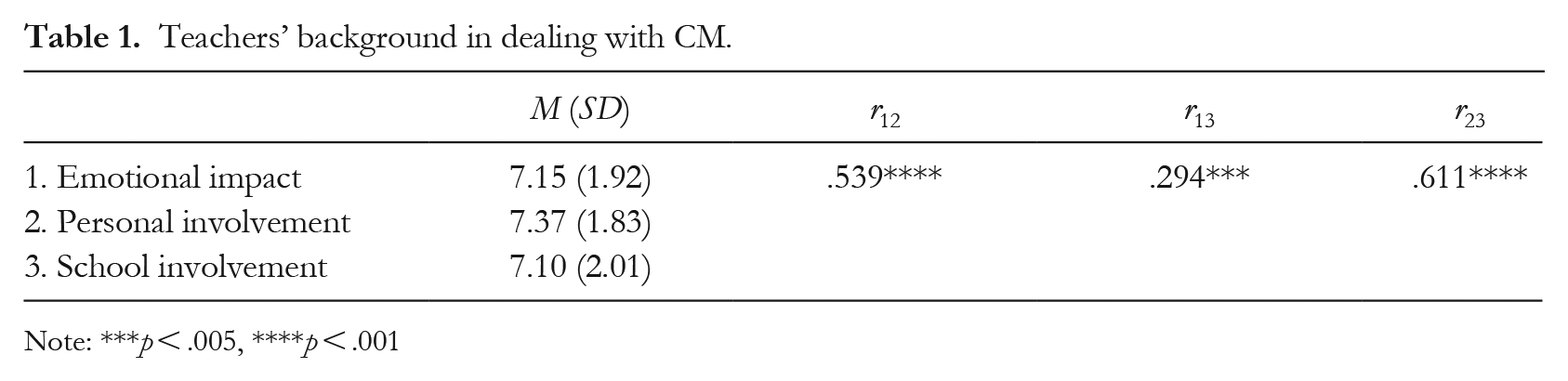
The majority (67.4% (n = 153) of the sample had never reported cases of CM during their teaching career, while 32.6% (n = 74) had done it at least once. Of the latter, 39.2% (n = 29) had reported one type of CM, 25.7% (n = 19) two, 23% (n = 17) three, and the rest (n = 9; 12.2%) four or more types of maltreatment. In general (see Table 1), these situations were experienced by the participants with high levels of emotional impact and their personal involvement was high, as was that of the school from their perspective. These three scores were positively and statistically significantly related to each other (see Table 1) and reached strong correlations.
Teachers’ background in dealing with CM.
Note: ***p < .005, ****p < .001
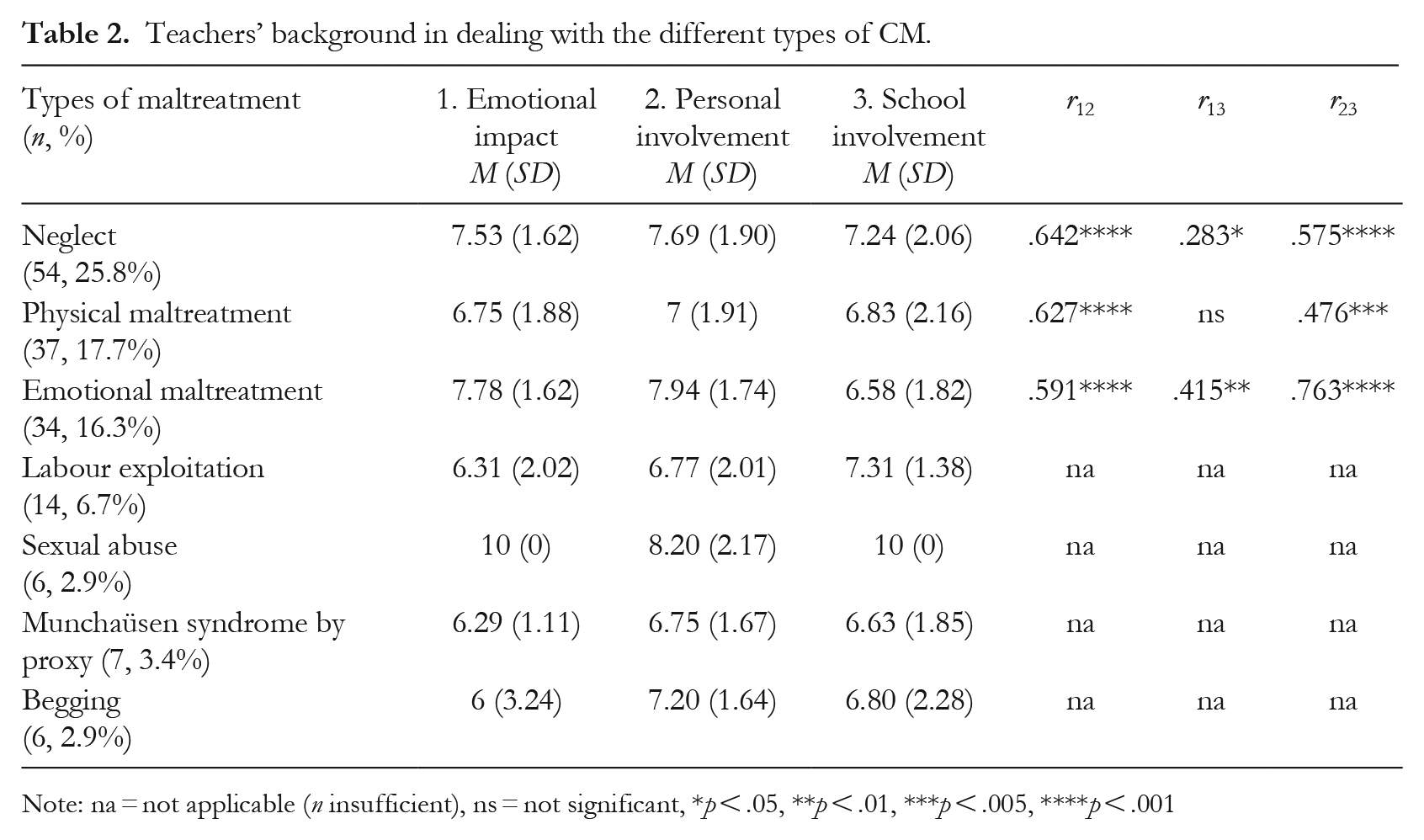
The types of CM most frequently notified were neglect, physical and emotional maltreatment (see Table 2). In general, teachers reported high levels of both emotional impact and personal involvement related to the cases, and for all types of CM, school involvement was on average high. Correlation analyses showed that emotional impact, personal involvement and school involvement were positively and statistically significantly related (see Table 2). Specifically, the relationships between emotional impact and school involvement and the different types of maltreatment reported reached a strong correlation. Personal involvement, on the other hand, correlated weakly with the detection of neglect and moderately with emotional maltreatment (see Table 2).
Teachers’ background in dealing with the different types of CM.
Note: na = not applicable (n insufficient), ns = not significant, *p < .05, **p < .01, ***p < .005, ****p < .001
Knowledge regarding child maltreatment
General knowledge about CM
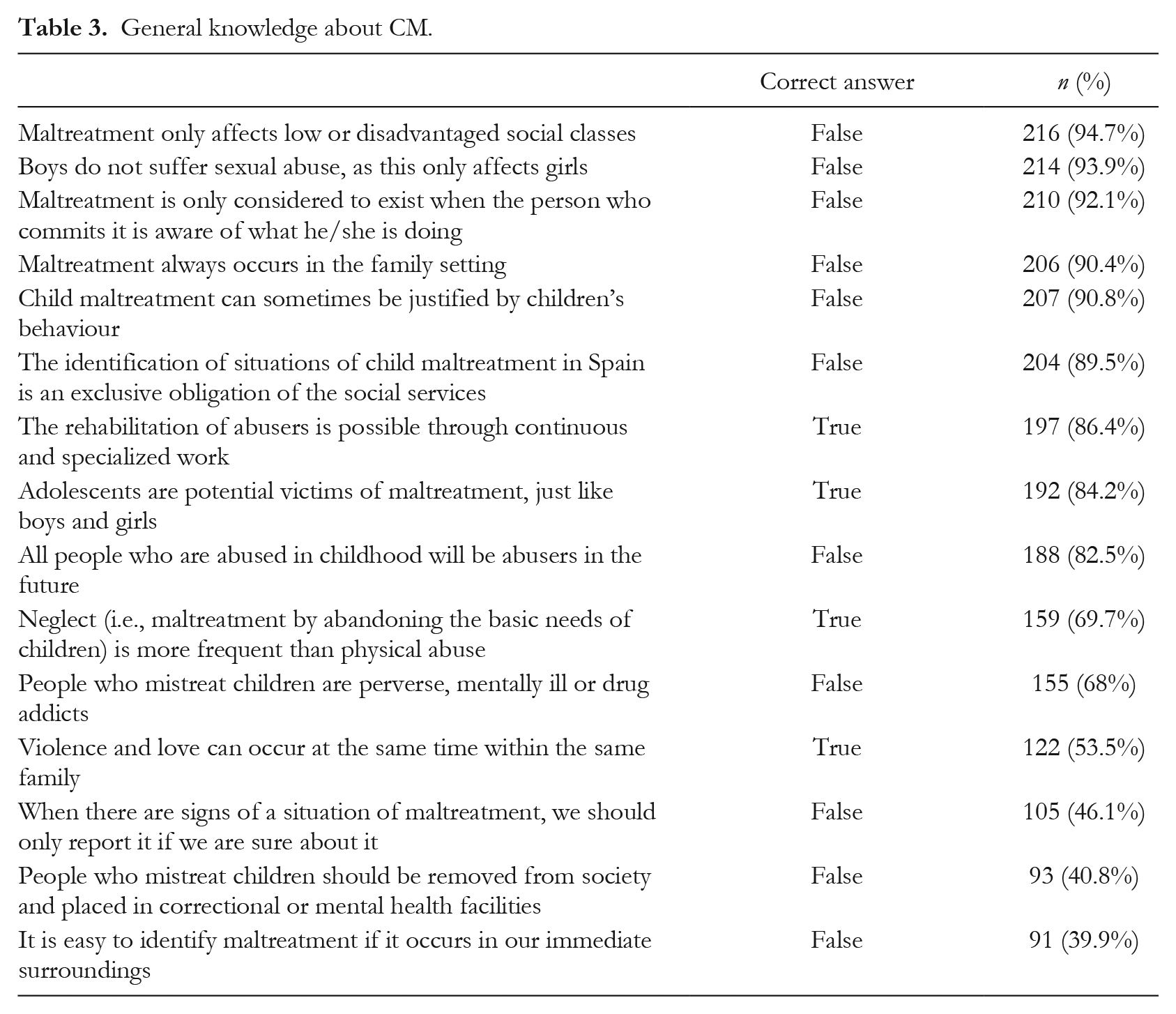
Table 3 presents results of the 15 statements in the questionnaire on general knowledge about CM in decreasing order according to the percentage of correct answers. The mean number of correct answers was 11.23 (SD = 2.46), with a minimum of three (n = 5, 2.2%) and a maximum of 15 (n = 6, 2.6%). To analyse the characteristics of the teachers in terms of their knowledge about CM, two groups were formed according to the number of correct answers following the guidelines above described (see Plan of analysis). A total of 71.1% (n = 160) of the teachers had a reasonably good knowledge about CM (informed CM group), while 28.9% (n = 65) belonged to the uninformed CM group because they answered fewer than 10 of the statements correctly.
General knowledge about CM.
Specific knowledge of the school-based action protocol in cases of CM
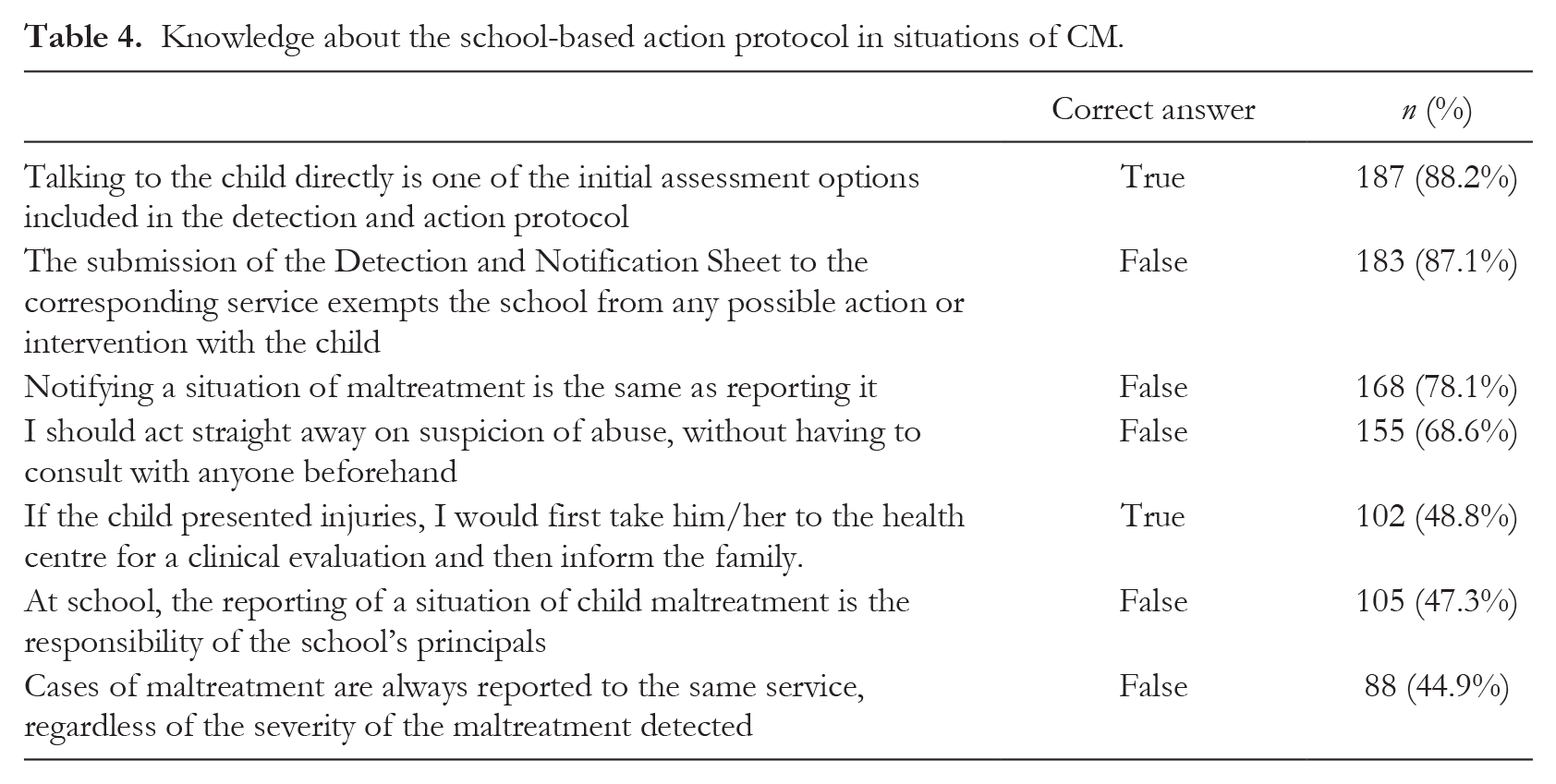
Table 4 shows the descriptive data for each of the questionnaire’s statements. The correct answers ranged around a mean of 4.55 (SD = 1.10), with a minimum of 2 and a maximum of 7 (n = 6, 3.3% in both cases). Results of the seven statements of the questionnaire are presented in decreasing order, according to the percentage of correct answers. Using the procedure described in the plan of analysis, two groups were formed according to their degree of knowledge about the guidelines for action in the school in cases of CM. Specifically, 58.4% of the sample (n = 118) was included in the protocol-informed group and 41.6% (n = 84) in the protocol-uninformed group.
Knowledge about the school-based action protocol in situations of CM.
The results on both types of knowledge were correlated. The analysis showed that the number of correct answers in both questionnaires was positively and statistically significantly related (r = .331, p < .001).
Teacher training in child maltreatment
The majority (n = 208, 91.6%) of the sample considered that specialized training in CM is fundamental for improving the identification of and response to these cases in the school setting. However, 74% (n = 168) of the participants had no specific training in CM.
No relationship was found between having training in CM and the degree of specific knowledge about the school-based action protocol, but there was a relationship with general knowledge of CM. Thus, teachers with training gave a greater number of correct answers (M = 12.14, SD = 1.76) than untrained teachers (M = 10.91, SD = 2.59) (t(223) = 3.33, p = .001), and they mostly belonged to the CM informed group (82.2%, χ2(226) = 4.32, p = .032, Phi = .150). In addition, teachers with training had reported more cases of CM in their years of seniority (χ2(201) = 6.81, p = .009, Phi = .182) and more diverse cases in terms of their typology (t(72) = 2.33, p = .022). In turn, these situations had affected to a greater degree (t(71) = 2.12, p = .037) teachers with training (M = 7.74, SD = 1.50) than those who had not received training (M = 6.78, SD = 2.07). Difference in personal involvement in these cases between trained (M = 7.97, SD = 1.45) and untrained (M = 6.97, SD = 2.07) participants was also statistically different (t(71) = 2.34, p = .022).
Teacher profiles on the basis of training, knowledge and experience in dealing with child maltreatment
Typology of teachers
To jointly analyse the results on training, knowledge and experience in dealing with CM at school, a TCA was computed with four indicators, two of which were ordinal (reported cases and specialized training) and two continuous (knowledge about CM and about the school-based action protocol). The results found three clusters, with a measure of good quality according to the silhouette analysis (see Figure 1). Specifically, this solution (log-likelihood = 2.66) shows both the lowest BIC value (352.49) and the highest BIC Change Ratio value (−120.71).
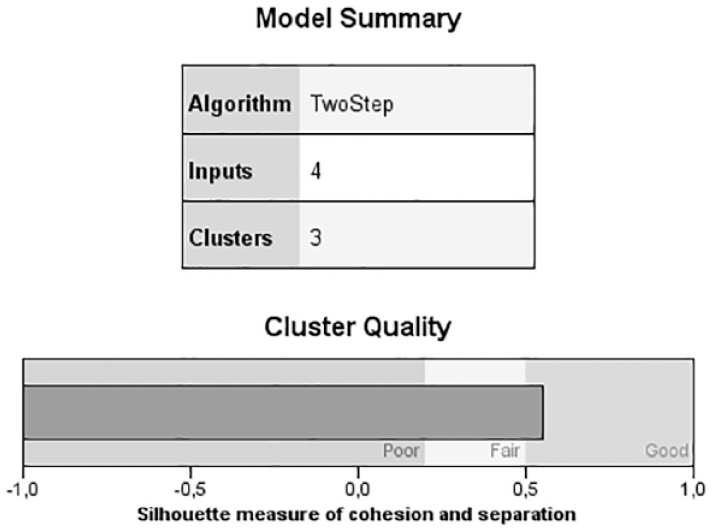
Results of the TCA.
To examine the characterization of each of these three clusters, in a second phase, we performed bivariate contrasts between the membership cluster and the four indicators introduced in the TCA (see Table 5).
Characterization of the three clusters formed by the TCA: Bivariate contrasts.
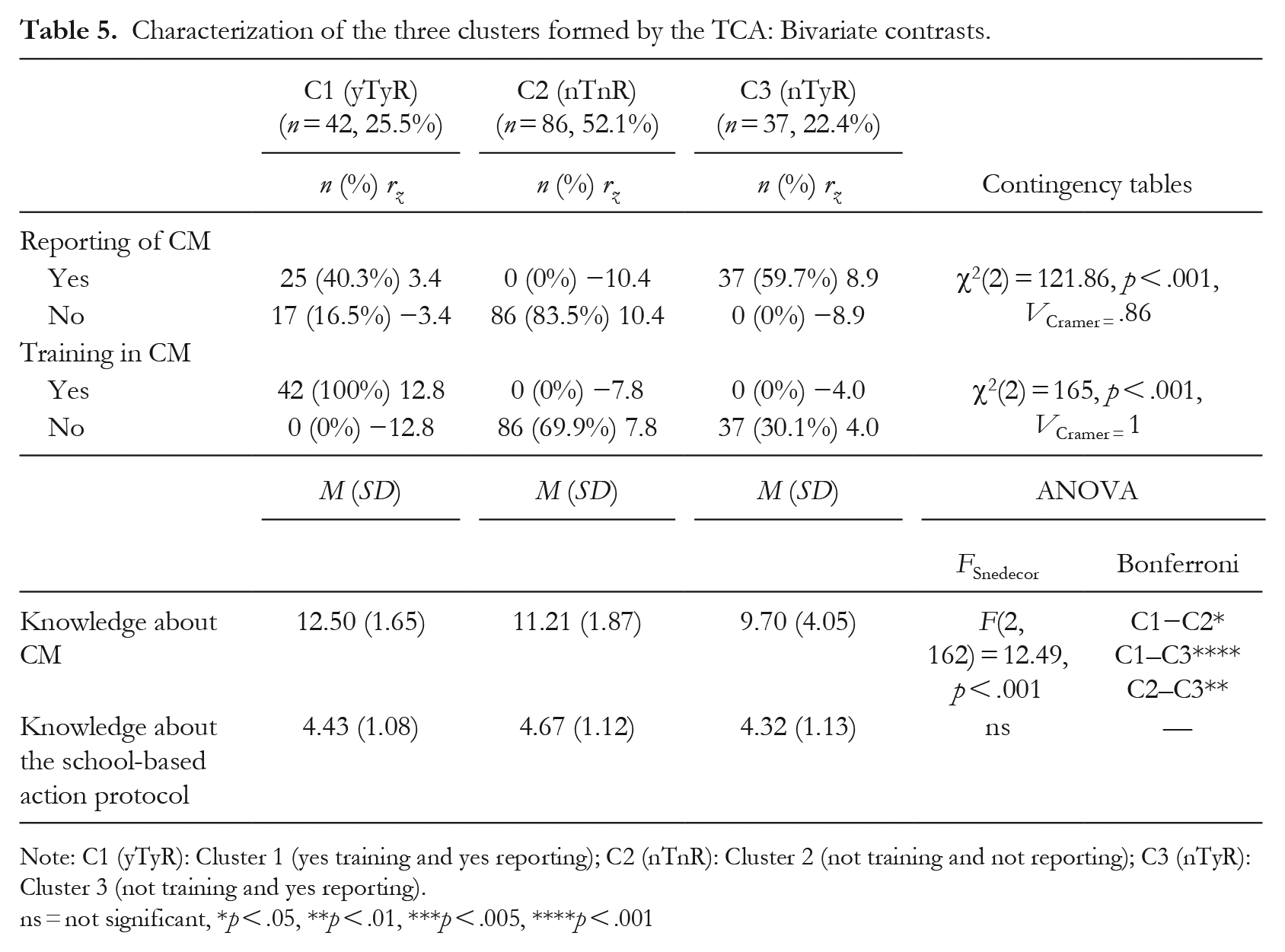
Note: C1 (yTyR): Cluster 1 (yes training and yes reporting); C2 (nTnR): Cluster 2 (not training and not reporting); C3 (nTyR): Cluster 3 (not training and yes reporting).
ns = not significant, *p < .05, **p < .01, ***p < .005, ****p < .001
As can be seen, C1 (n = 42, 25.5%) included all teachers with training in CM, most (n = 25, 59.5%) of whom had reported cases of maltreatment at some point in their years of seniority and were characterized by a high level of knowledge about CM. On the other hand, C2 (n = 86, 52.1%) was defined by not having received specialized training, not having reported cases of maltreatment in their professional career and having moderate levels of knowledge about CM. Finally, C3 (n = 37, 22.4%) was characterized by the fact that none of its members had received specialized training in CM, all had reported cases of maltreatment and their knowledge about this problem was limited. No differences were observed among the three clusters in terms of specific knowledge about the school-based action protocol.
Bivariate analyses were computed relating the teachers’ experience with CM (different types reported, emotional impact and personal and school involvement) and their degree of knowledge (informed — uninformed of CM, informed — uninformed of protocol) (see Table 6). The members of C1 were characterized by being informed about the phenomenon of CM, by having reported more different types of maltreatment and by having experienced these situations with a high emotional impact. On the other hand, the teachers in C3 showed low variability in the type of maltreatment detected. Finally, C2 was not defined in a statistically relevant way by any of the indicators.
Teacher profiles: relation between knowledge and background dealing with CM.
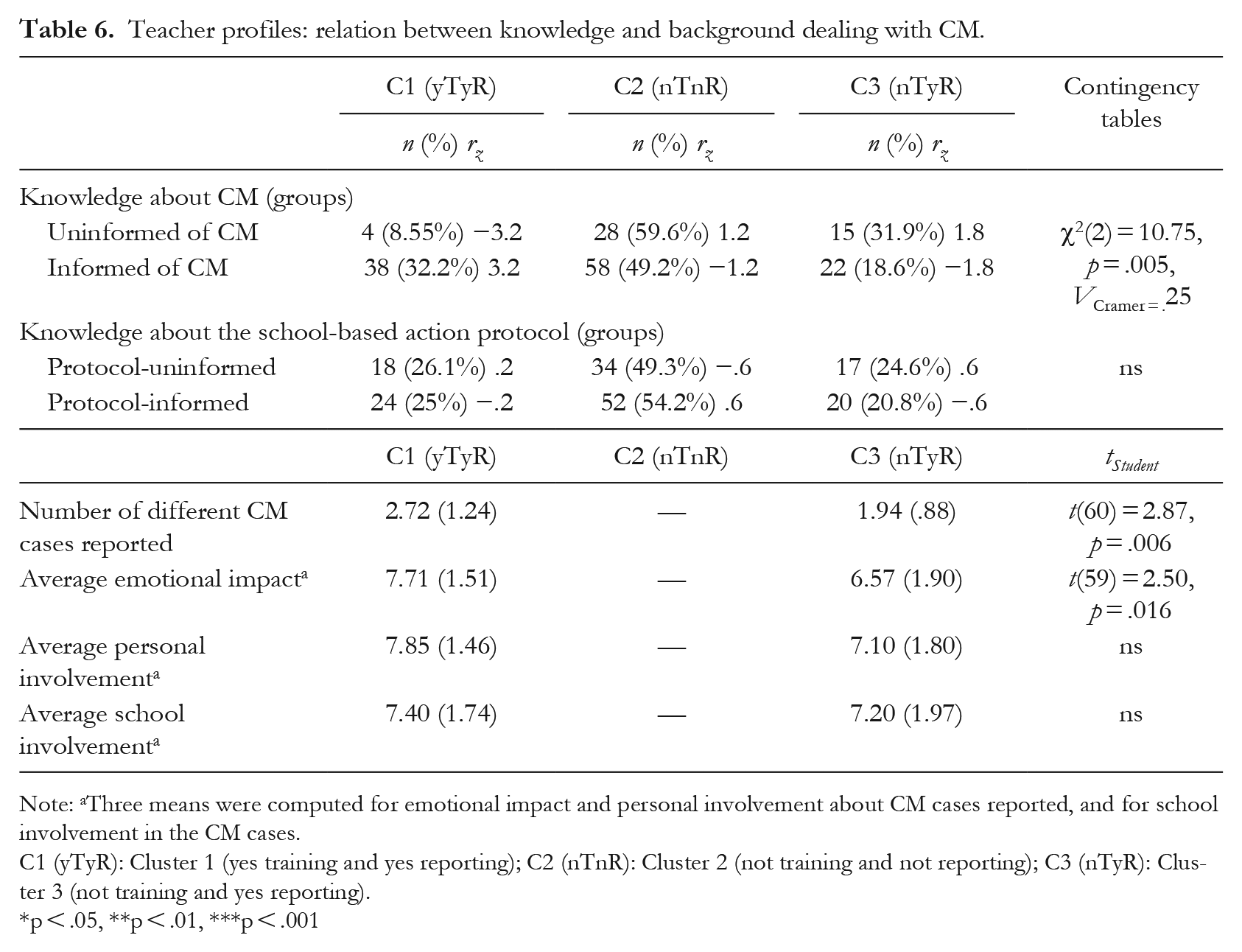
Note: aThree means were computed for emotional impact and personal involvement about CM cases reported, and for school involvement in the CM cases.
C1 (yTyR): Cluster 1 (yes training and yes reporting); C2 (nTnR): Cluster 2 (not training and not reporting); C3 (nTyR): Cluster 3 (not training and yes reporting).
p < .05, **p < .01, ***p < .001
Sociodemographic characterization of the teaching profiles
As Table 7 illustrates, women were the majority in C2, while C1 and C3 were mainly men. The results regarding age and years of seniority offered a similar profile: both indicators were lower in C1, intermediate in C2 and statistically high in C3.
Teacher profiles: relation between sociodemographic and professional characteristics.
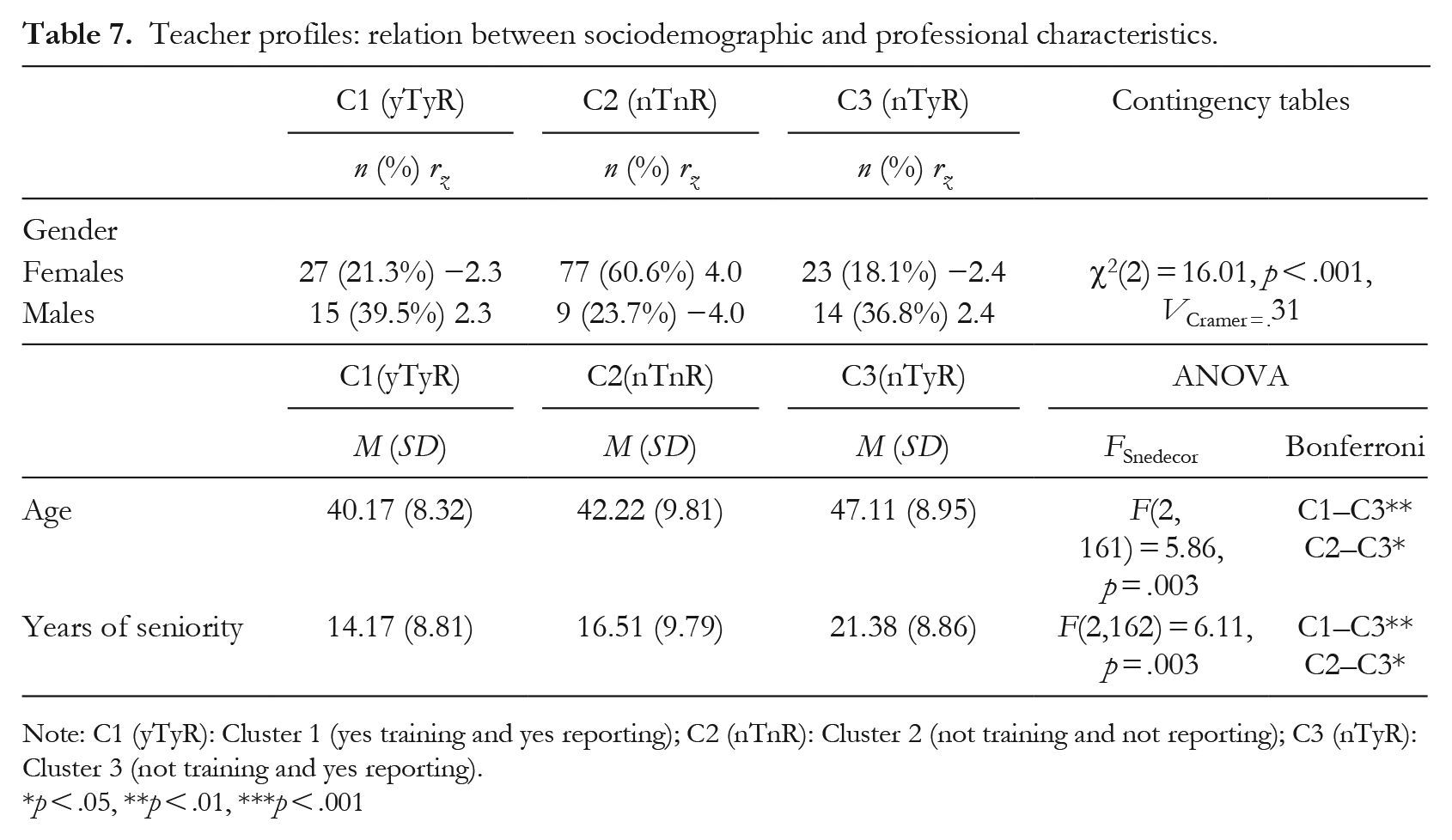
Note: C1 (yTyR): Cluster 1 (yes training and yes reporting); C2 (nTnR): Cluster 2 (not training and not reporting); C3 (nTyR): Cluster 3 (not training and yes reporting).
p < .05, **p < .01, ***p < .001
Discussion
The purpose of this work was to analyse the phenomenon of CM at school from the teachers’ perspective. Most teachers have not detected cases of CM in their students over the course of their teaching career (whereby detection means that the CM has been both recognized and notified). These results coincide with population-based evidence (Children’s Observatory [Observatorio de la Infancia], 2021; Children’s Observatory in Andalusia [Observatorio de la Infancia en Andalucía], 2020) and research with specific samples (Liébana et al., 2015; Pérez de Albéniz et al., 2011), which highlights the very modest role played by schools in the detection of CM. Taking into account that in Spain the approximate incidence rate is just over 200 cases per 100,000 minors (Children’s Observatory [Observatorio de la Infancia], 2021), and that in our country all minors are or should be at school, despite its privileged position (Díaz-Aguado, 2001; Soriano, 2008; WHO, 2006), school in this country is proving incapable of playing an effective role in reporting situations in which minors are victims of CM.
As for the teachers’ experience in dealing with these situations, the results showed that they tend to become quite involved in the cases of CM, and these situations affect them considerably at an emotional level, and in general they perceive significant levels of support from the school. These indicators have also been shown to be interrelated, in such a way that, in cases of CM, the teachers who are most involved tend to be those who feel most affected by the situation, but they are also the ones who receive the most support from the school. These issues have scarcely been addressed in previous research, so that, as far as is known, we have no data in our country on the personal experience of teachers when reporting abuse. However, the high emotional impact that teachers experience when facing this situation is evident, so that doubts about the consequences and implications of detection, as well as fear of the process itself, may become barriers to be taken into consideration when explaining the low incidence of CM detection at school (Díaz-Aguado, 2001; Farcas & Roth, 2011; González & Guinart, 2011; Pérez de Albéniz, et al., 2011; Schols et al., 2013). In any case, the results obtained regarding the high involvement of schools is noteworthy, especially in cases that are more intensely experienced by teachers. These results would appear to contradict the possible lack of support from the school as a barrier to notifying (Díaz-Aguado, 2001; González & Guinart, 2011; Pérez de Albéniz, et al., 2011).
Likewise, previous studies have specifically pointed out how poor or erroneous knowledge can be an impediment to detecting cases from school (Goebbels et al., 2008; González-Sánchez & Sáinz-López, 2021). In accordance with other authors (Greco et al., 2017; Vila et al., 2019), teachers’ general knowledge about this problem was, on average, not low but moderate. However, it is worth noting that approximately three out of 10 teachers with specialized training in CM, and whose work involves frequent and close contact with minors, had little or erroneous knowledge about what CM is, what it consists of and/or the way it manifests, along the same lines as other studies in our country (e.g., Liébana et al., 2015). With respect to knowledge about school-based action protocols (Andalusian Government, 2011), only around five out of 10 participants in this study were clear about what to do in these situations, a result that is consistent with the lack of knowledge found in other studies (González & Guinart, 2011; Farcas and Roth, 2011; Liébana et al., 2015; Pérez de Albéniz et al., 2011; Real & Jolluskin, 2002).
Regarding the extent of training in CM, previous evidence shows how most teachers feel unprepared to tackle CM in schools and consider that such preparation is very necessary (González-Sánchez & Sáinz-López, 2021; Greco et al., 2017; Vila et al., 2019). On this point, we would like to draw attention to the scarcity of training available to teachers in CM, training that the vast majority see as fundamental. This is no surprise given that one is unlikely to receive courses on this subject in either higher education or continuing professional development. The lack of training possibilities in this area is particularly worrying, given the available evidence on how training favours knowledge about CM and optimizes its detection (Cerezo & Pons, 2004; Goebbels et al., 2008; Greco et al., 2017; Hawkins & McCallum, 2001; Sethi et al., 2018). The results of this study point in the same direction: teachers with specialized training had better general knowledge about CM, had identified more cases and types of maltreatment and were more involved than those without training. It would have been interesting to know the type of training that the teachers in our sample have received (e.g., in the framework of a master’s degree or specific courses offered by the continuing professional development plans) in order to detect which of them improve the process of detection of CM.
However, analyses showed that general training in CM was not associated with better applied knowledge about the school-based action protocol. This is probably at least partly related to the fact that each management team is in charge of activating and monitoring the protocol, and therefore, a teacher who has not held management positions has probably not received this training. Once again, the discretionary nature of training teachers in both general and applied issues related to CM is observed. These results confirm LOPIVI’s recommendation that higher education institutions incorporate specific content on prevention, early detection and intervention in cases of violence in childhood and adolescence into the curricula of those professions that have regular contact with children and adolescents (articles 36 and 37). This research also invites reflection on the content of such training and the way it is provided. Furthermore, it would be advisable to create spaces for reflection and debate in schools in which all members of the educational community participate (Greco & Pereda, 2021). According to the sociocultural perspective, these interpersonal spaces would allow the construction of a common framework, at the level of meanings, languages and discourses, which would favour the process of detecting CM in each school. Likewise, these spaces for the construction of shared knowledge could reduce the levels of unawareness detected in the teaching staff (González & Guinart, 2011; Pérez de Albéniz et al., 2011).
In this study, the indicators mentioned earlier have been examined jointly, enabling the identification of three distinct profiles. The C1 underlined the importance of training and having a high level of knowledge about CM. This cluster of younger teachers had not only notified a high number of CM cases but had also detected a greater variability of types of maltreatment. Thus, while it may be difficult to detect different signs of maltreatment, especially emotional and behavioural signs (Farcas & Roth, 2011; Liébana et al., 2015), teachers who have received more training were capable of identifying more varied and complex signs of the phenomenon (Kenny, 2001). Thus, in order to identify the CM in schools, it is not enough to share hours with the students (Soriano, 2008), but it is also necessary to have previous specialized training and knowledge. These results clearly indicate that the improvement required in training on CM is not solely to do with quantity (more content on the subject, both in university studies and in subsequent continuing professional development plans) but also content (subjects and courses that facilitate specialized knowledge about this phenomenon, but also of the specific mechanisms and resources to address it from the school). Studies that have focused on the results of training interventions have emphasized the need to address the more procedural aspects of the reality of CM at school (Cerezo & Pons, 2004; Hawkins & McCallum, 2001; Kenny, 2001) to improve the effectiveness of the school context in detecting cases.
The other cluster with higher reports of this phenomenon was C3. These teachers, with many years of seniority, were not noted for either previous training or their knowledge about the subject. The results show the important role that seniority can play and the value that professional experience can have for teachers who have not had the opportunity of training in CM. These contents were probably not part of the curriculum when these professionals studied at university, and the lack of continuing education opportunities since then explains the lack of training received in this area. However, in line with other research, it is observed that teachers with more seniority reported a greater number of cases of abuse (Goebbels et al., 2008; González-Sánchez & Sáinz-López, 2021; Greco et al., 2017); however, we did not find in this cluster the high variability of CM typologies found in those teachers with training and knowledge. In any case, it is possible that their years of seniority and professional roles — perhaps in management positions — compensated for the lack of training and gave them greater security and confidence when tackling these situations (García, 2005). In this line, we would like to highlight that detecting CM is a sensitive process, and that it will be the Child Protection Service who will determine the existence or not of maltreatment. However, the fact that senior teachers accumulate a higher frequency of reports may be related to the schools’ satisfactory accompaniment of teachers in dealing with CM. It may be these senior teachers who, from management positions, accompany those with less professional background in the process of detection CM.
Finally, C2 was characterized by low reports and training compared to the other teacher profiles. This cluster included slightly over half of the sample; i.e., it represented the majority of the teachers in this study. C2 consisted mainly of female teachers, a result that contradicts the bivariate analyses in this same paper regarding detection according to the gender of the teacher. Once again, and in line with the existing literature, contradictions were found as to whether female or male teachers detect CM more frequently (Crenshaw et al., 1995; Kenny, 2001, 2004).
The examination of teacher profiles shows that the only indicator for which no statistical differences were found between clusters was specific knowledge about the school-based action protocol. Thus, regardless of general knowledge about CM, specialized training on this phenomenon and even experience in reporting cases of CM, there was little difference over the more practical and procedural issues among the three teacher profiles. In our opinion, the typology identified shows that CM in the school context is a complex reality involving very diverse issues that should be analysed both as a whole and separately.
This work has a series of limitations that should be noted. On the one hand, non-standardized instruments designed ad hoc have been used, although based on materials from other authors, because no instruments were found to assess these subjects with greater psychometric validity. On the other hand, while the sample could be considered large, it was limited to southern Spain. Nevertheless, this study offers interesting results, which are in line with studies carried out in different parts of Spain and in other countries. These findings allow us to highlight key aspects related to CM in terms of both research and professional practice.
We believe future research should address CM in schools in greater detail, covering specific types of maltreatment and including other forms of maltreatment that have been recognized and conceptualized more recently. In addition, the experience of teachers in dealing with these cases should be addressed in greater depth, since there is very little information on this subject in the literature. It would also be interesting to gauge the extent to which schools follow up cases once the competent authority has been notified, given that the lack of training detected among the teaching staff may also limit the fulfillment of this task.
In short, this study shows that the reporting of CM by schools is poor. In addition, the findings have also underlined the connection between training and knowledge about the phenomenon of CM and its detection and reporting. Fortunately, in Spain there is a school protocol for action when a case of CM is suspected; however, it is essentially rendered worthless since teachers are unaware of its existence and procedures. For teachers to be able to detect and intervene promptly, they require specialized training that covers misconceptions about CM, training in identifying physical and behavioural indicators of maltreatment and how to respond to signs of possible abuse, as well as the school protocol for action upon identification (WHO, 2006). Likewise, we are aware of how important it is for teachers to have the backing and support of their educational institution and society in general for them to feel secure; this is one of the main external barriers detected in other studies (McTavish et al., 2017; Schols et al., 2013). According to WHO (2022), the prevention of CM requires a multisector approach, with the school being a key social sector in the early recognition of cases, and this needs to be recognized with a coherent, integrated system of policies. The more effective the collaboration between services, the more likely it is that satisfactory results for preventing and responding to CM will be obtained, and the greater the benefits to the child and the society (Greco & Pereda, 2021; WHO 2022). Therefore, the creation of intersectoral networks should be promoted and the school’s relationships with other health, social and legal sectors should be strengthened. The work of the school in the area of CM does not end with the notification of the case: networking between different sectors, the joint approach (health, legal, social and school) and continuing attention for child victims and their families are all decisive for the effective protection of the child (WHO, 2006, 2022).