






Abstract
Research with indigenous peoples worldwide carries long histories of exploitation, distorted representation, and theft. New “indigenizing” methodologies centre the production of knowledge around the processes and knowledges of indigenous communities. Creative research methods involving artistic practices—such as photovoice, journaling, digital storytelling, dance, and theatre—may have a place within these new approaches, but their applications have yet to be systematically explored. We conducted a scoping review of 36 international research studies literature on arts-based research with indigenous peoples. The majority of studies used photovoice and were conducted in Canada, USA, Australia, or New Zealand. We identify five primary fields in which arts-based methods may offer benefit to an indigenous research agenda: (a) participant engagement, (b) relationship building, (c) indigenous knowledge creation, (d) capacity building, and (e) community action. We propose several opportunities to further explore arts-based methods with indigenous peoples.
If we have been researched to death, maybe it’s time we started researching ourselves back to life.
Introduction
There are 370 million indigenous people over 70 countries, according to the International Working Group of Indigenous Affairs. Contemporary uses of the word “indigenous” arose from international decolonizing movements, such as the United Nations (UN)–affiliated World Council of Indigenous Peoples that sought to align the agendas of self-determination and land claims among the first peoples of Asia, Europe, and the Americas (Manuel & Derrickson, 2015). Globally, there are significant similarities in the historical treatment of indigenous peoples, who contend with discourses and practices that maintain colonization and prevent their self-determination in social, political, and economic life.
Many indigenous groups have become suspicious and distrustful of research as it has historically acted as an arm of colonization, being driven by external agendas with little benefit to communities (Castellano, 2004). There are a wide range of colonial practices within research, including the theft and exploitation of local knowledges, consumption, and appropriation of indigenous cultures, and using selective knowledges from research to support the neglect and denial of basic indigenous rights (Smith, 2013).
It is common to hear indigenous peoples say they have been “researched to death”, a phrase loaded with historical allusions to the many uses of research to maintain colonial power. One of the most subtle but destructive ways research can perpetuate oppression is to maintain a narrative of indigenous victimhood and extinction, framing indigenous cultures as destitute, maladaptive to modern industrial life, and dying out. In Canada and elsewhere across the globe, this fatalistic narrative has a long history within colonial discourses as a strategy to both confirm the success of colonization (erasing evidence of resistance and survival) and mitigate settler guilt by suggesting indigenous extinction is inevitable (Francis, 2012; King, 2012; Lux, 2001).
An indigenous research agenda typically has four primary purposes: to decolonize, transform, mobilize, and heal indigenous communities from the effects of colonial oppression (Smith, 2013, pp. 144–162). Indigenous voices are often on the periphery of research, usually noted in passing but hardly normalized; new methodologies can bring their voices and priorities to the fore and to replace the dominant narrative of indigenous disappearance with what Anishinaabe author and literary theorist Gerald Vizenor (1999) described as narratives of “survivance”, that is, “the continuance of native stories . . . [that] are renunciations of dominance, tragedy and victimry” (p. vii).
Calls for the “indigenization” of research in the social sciences seek out innovative methodologies that resist colonial dynamics and empower communities to determine what and how knowledge is produced (e.g. Adair, Puhan, & Vohra, 1993; Gray & Coates, 2010). Artistic practices may offer one avenue towards current decolonization movements; just as Vizenor encouraged an aesthetic of resistance within Native literature, Sto:lo scholar Jo-Ann Archibald, or Q’um Q’um Xiiem, promoted an “indigenous storywork” methodology in the social sciences that recognizes indigenous expressive and aesthetic ways of knowing (Archibald, 2008). Using a scoping review, we sought to uncover a base of arts-based research tools that might serve purposes of decolonization (Arksey & Malley, 2005; Peters et al., 2015).
Arts-based, participatory approaches to research align with an indigenous research agenda through innovative and relational methodologies. There are many forms that art can assume in research, as when researchers use creative writing or visual arts to communicate and disseminate their research. Our focus within this article is “art in research”, that is, “a type of inquiry in which artistic methods are used [by participants] as a supporting tool for research” (Q. Wang, Coemans, Siegesmund, & Hannes, 2017). Arts-based methods (ABMs) include an array of modalities such as theatre, visual arts, music, storytelling, writing, and dance, and have gained traction within the participatory context for generating holistic and evocative knowledge, building connections, problem-solving, and amplifying marginalized voices to raise critical consciousness (Leavy, 2015; Liamputtong & Rumbold, 2008). ABM embraces multiple ways of knowing that are typically given little space in scientific discourse, such as intuitive/embodied, relational/intersubjective, sensory, kinaesthetic, and non-linguistic knowledges (Gerber et al., 2012). A recent scoping of ABM in health research found that creative practices are being used to increase participant engagement in research, develop programmes and policies to address health issues, extend access to research findings beyond academia, and open up critical reflection and dialogue (Boydell, Gladstone, Volpe, Allemang, & Stasiulis, 2012). The core ABM elements of defamiliarizing dominant knowledges and opening space for critical dialogue bring promise to its power in research with indigenous peoples.
According to Joseph Couture (2013), a pioneering psychologist and First Nations elder in Canada, “the Indian Way of knowing is metaphoric and symbolic in expression, intuitive and direct in its process” (p. 9). Creative research practices explore experiential knowledge as told through narrative and imagery, and this experiential approach finds camaraderie with many indigenous ontologies (Waters, 2004). For example, methods such as digital storytelling, in which participants record themselves telling a story and incorporate sound and images into it, have been shown to support and spread indigenous oral wisdom within a digital age (Willox, Harper, Edge, & Digital Media Lab Government of Rigolet Inuit Community, 2013).
It is not known, however, the extent to which ABM has been utilized with indigenous populations worldwide. A recent scoping review of ABM with vulnerable populations found few of the 131 studies included indigenous peoples, most were conducted in the USA (39%), Canada (23%), or the UK (14%), and the majority (n = 81) used photography (Coemans & Hannes, 2017). While clues to trends in ABM with marginalized peoples were provided, the specific uses and benefits for indigenous peoples have yet to be articulated. The purpose of this scoping review was to explore the use of ABMs among indigenous peoples and was organized around three gaps: (a) what creative practices have been used and why, (b) which areas of the world have they been used in, and (c) what has been the impact on participants or their communities.
Methods
Scoping reviews follow a systematic process of identifying articles relevant to key research questions, extracting and charting data, and reporting a summary of results (Arksey & Malley, 2005; Daudt, van Mossel, & Scott, 2013; Levac, Colquhoun, & Brien, 2010; Peters et al., 2015). An interdisciplinary research team from psychology, sociology, nursing, and biochemistry was assembled in fall 2015 to conduct a scoping review of arts-based research with indigenous populations. In keeping with rigorous reporting of scientific reviews, we outline our selection process following the Preferred Reporting Items for Systematic Reviews and Meta-Analyses (PRISMA) statement (Liberati et al., 2009). We report our results through standard scoping review practice: a narrative review, or map, of frequency distributions and thematic summaries of the extracted data (Arksey & Malley, 2005; Levac et al., 2010; Peters et al., 2015).
Identify research questions
The focus of this review was to identify gaps regarding ABM within indigenous research. In particular, the research questions of the scoping review were as follows:
What ABM has been used with indigenous populations?
In which areas of the world has ABM been used?
What were the stated impacts of ABM on indigenous participants and communities?
Identify relevant studies
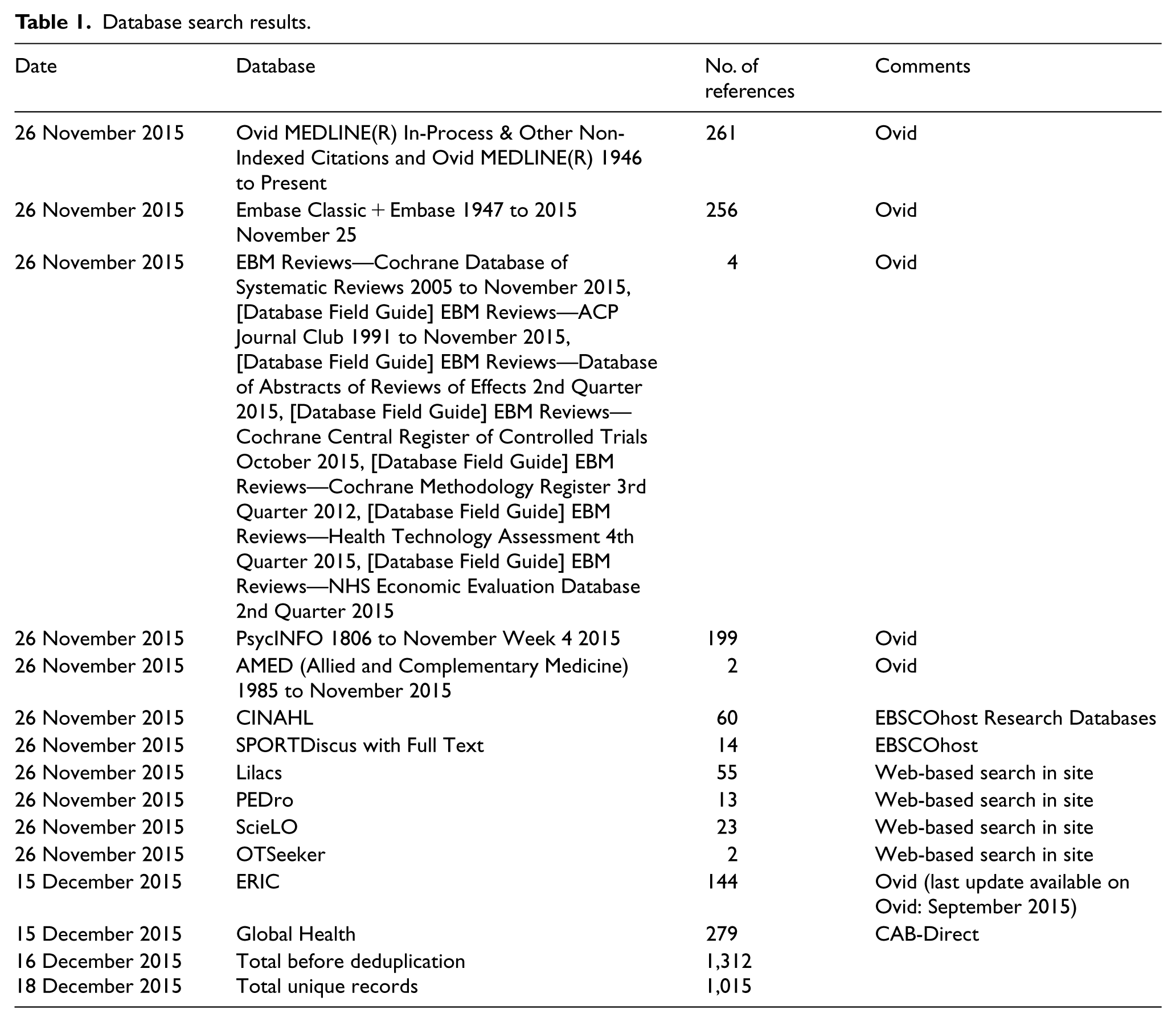
In collaboration with a health science librarian (M.-C.D.), we developed a comprehensive search strategy for searching 13 electronic databases (Table 1). The search encompassed 31 arts-based search terms (e.g. arts-based research, a/r/tography, creativ*, participatory research, cbpar), including secondary terms relating to specific artistic practices (e.g. photovoice, ethnodrama, poet*, danc*, sketching, beadwork*, handcraft*, scrapbook*). There were also 18 search terms related to indigenous populations and research methodologies (e.g. decoloni*, anti-coloni*, aborigin*, native*, first nations, first people, indigenous peoples).
Database search results.
Select qualifying studies
Our study selection process involved two rounds of screening (see PRISMA; Figure 1). The following criteria were used to screen articles:
Inclusion criteria
The population of study is defined as an indigenous population: ⩾50% of sample and indigenous-specific analyses and conclusions.
Participant use of an ABM that resulted in an aesthetic product or performance: video, beadwork, collage, poetry, dance, music, and so on.
Use of ABMs as a means of empowerment: decolonizing or indigenous research, social action/justice, emancipation, and so on.
Research articles and synthesis-based research articles such as systematic reviews, meta-analyses, and scoping reviews.
Exclusion criteria
Non-indigenous, or unclear/unstated population,
Interviews, focus groups, sharing circles, and so on,
Articles that are not based upon an underlying principle of social justice/action/change,
Grey literature and literature reviews.
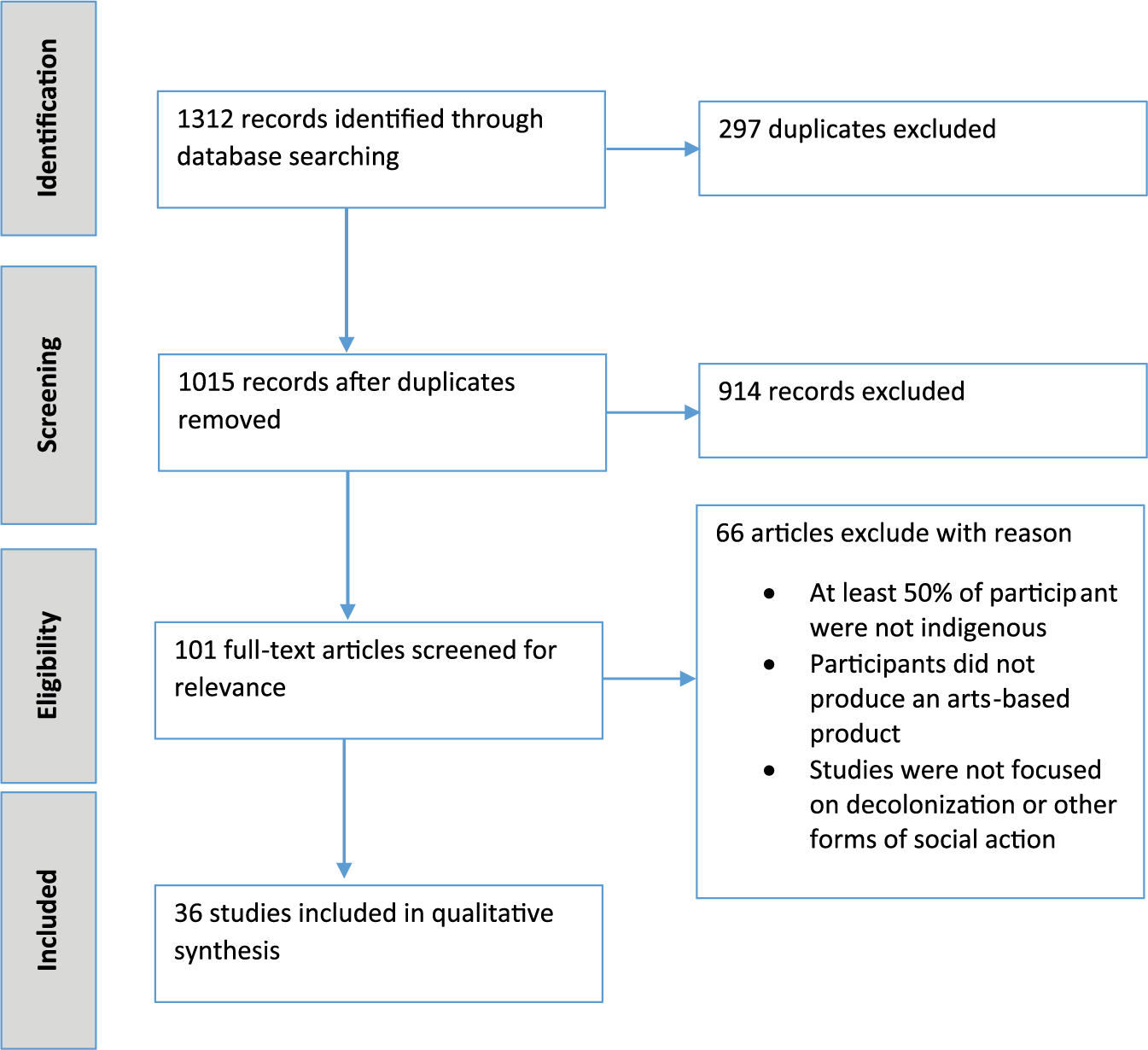
PRISMA chart.
A two-person review team was used to independently screen all articles, to complete data extraction using a standardized data extraction form, and to synthesize data into relevant themes and sub-themes. Inconsistencies were addressed through discussion to achieve consensus. When consensus was not achieved, a third reviewer was included to aid in decision-making. Synthesis of data occurred through a team discussion meeting to identify common themes and sub-themes, followed by team review of the final analyses.
Chart the data
Data extraction was completed by three team members (C.H., S.R., O.T.), which involved the following: (a) populate the chart (including research purpose, methods, theoretical perspective, duration, and results/impact) using Microsoft Excel, (b) review extracted data for accuracy and comprehensiveness, and (c) review and discuss any issues/inconsistencies flagged. As recommended by scholars on scoping reviews (Levac et al., 2010), we extracted data on the first five articles independently, then met to compare and agree upon a standard practice for extraction. Together, our team came to consensus about all concerns with the data, which for the most part related to lack of clarity about an article’s use of ABMs or the level of participatory involvement of indigenous peoples.
It might be argued from a qualitative standpoint that most qualitative methods generate narratives or stories that may be understood as aesthetic creations. However, the presence of narratives in research is not sufficient for employing an arts-based philosophy or methodology, which emphasizes the creative process itself and the multiple ways of knowing both entering into and emerging out of participation in artistic practices.
There are significant regional variations in how indigenous peoples are represented and how they represent themselves, beyond the name of a particular community, tribe, or nation, as in the terms Aboriginal (Australia/Canada), First Nations (Canada), Native (USA/Canada), and so on. Throughout our results, we follow the article authors in how they described the identities of the participating populations, aiming to be as specific as possible given the information provided in the articles. If participants were referred to as simply indigenous, we repeated this admittedly vague descriptor.
Results
The initial search yielded 1,312 articles, where 297 duplicates were removed (Table 1). Title and abstract screening identified 101 articles for full text review. Full text screening yielded 36 articles for qualitative synthesis (Table 2). At the beginning of the screening process, each article was assigned an ID number for easier reference (Daudt et al., 2013).
Data extraction of final results.
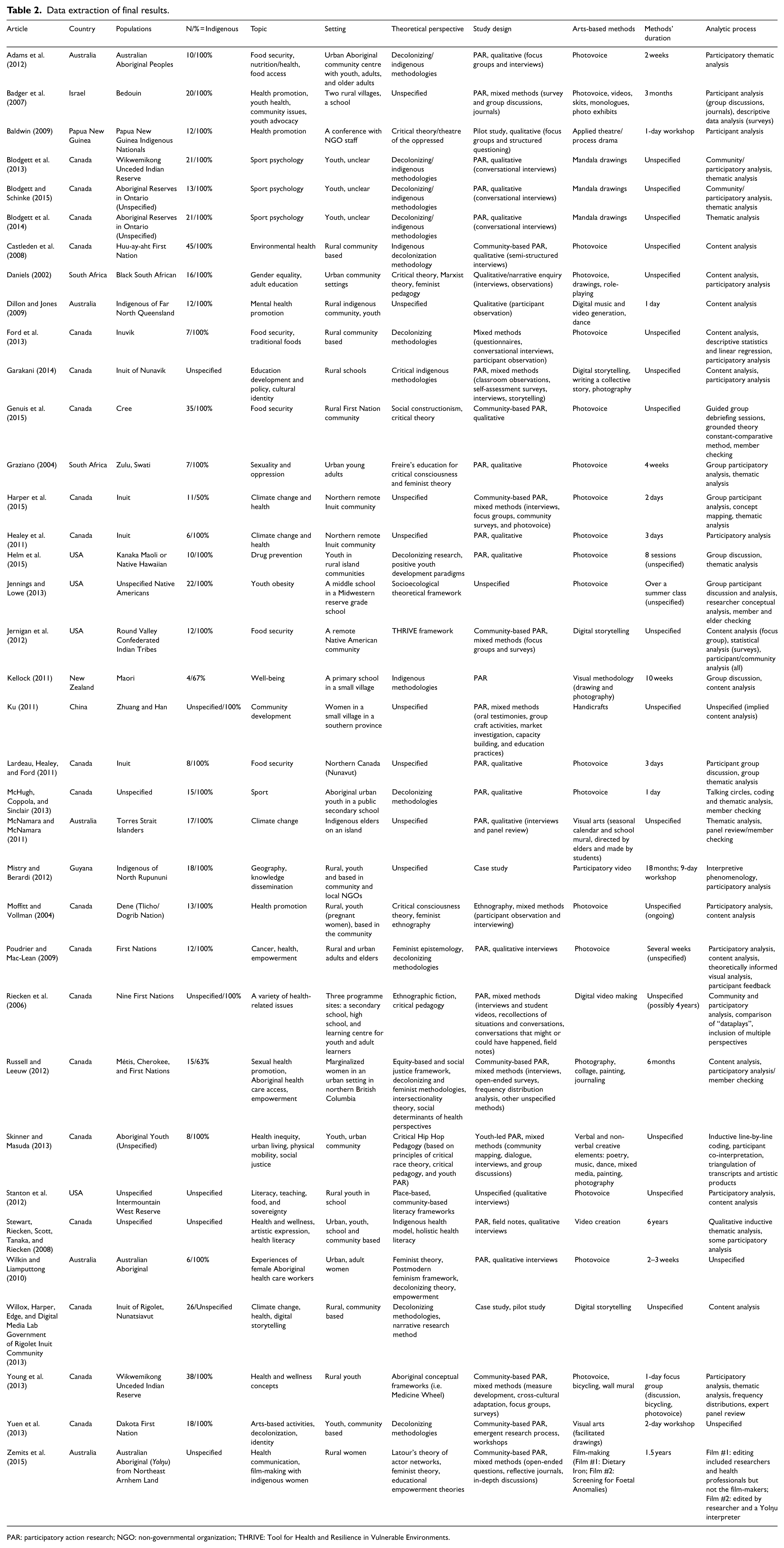
PAR: participatory action research; NGO: non-governmental organization; THRIVE: Tool for Health and Resilience in Vulnerable Environments.
The research designs within which the ABM took place were for the most part participatory action research (PAR) designs (n = 27), the particular forms of which were based on community consultations, needs, and protocols. Among these, eight studies used mixed-methods approaches; for example, Harper and colleagues (2015) incorporated interviews, focus groups, community surveys, and photovoice into their community-based PAR study of climate change and health in a northern Inuit community in Canada. Outside of PAR, the study designs included qualitative methodologies (n = 3) (e.g. grounded theory), case studies (n = 2), emergent methods (n = 2), or ethnography (n = 1), or were unspecified (n = 1).
A significant minority of studies did not report a theoretical orientation (n = 7); however, those that did tended towards a cluster of related perspectives. Using philosopher Michael Crotty’s spectrum of theoretical orientations used in social research—from positivism to postmodernism (Crotty, 1998)—the majority of articles leaned more towards constructionist and critical models of knowledge production, in which knowledge is understood to be local, contextual, and co-created within social interactions and power dynamics. It was not surprising to see participatory projects, typically rooted in action research principles, for the most part applied decolonizing or indigenous (n = 18) or critical theory (n = 10) frameworks. There was some use of feminist theory (n = 7), interpretivism or social constructionism (n = 5), and to a lesser extent socioecological models (n = 2) and youth-centred paradigms (n = 2).
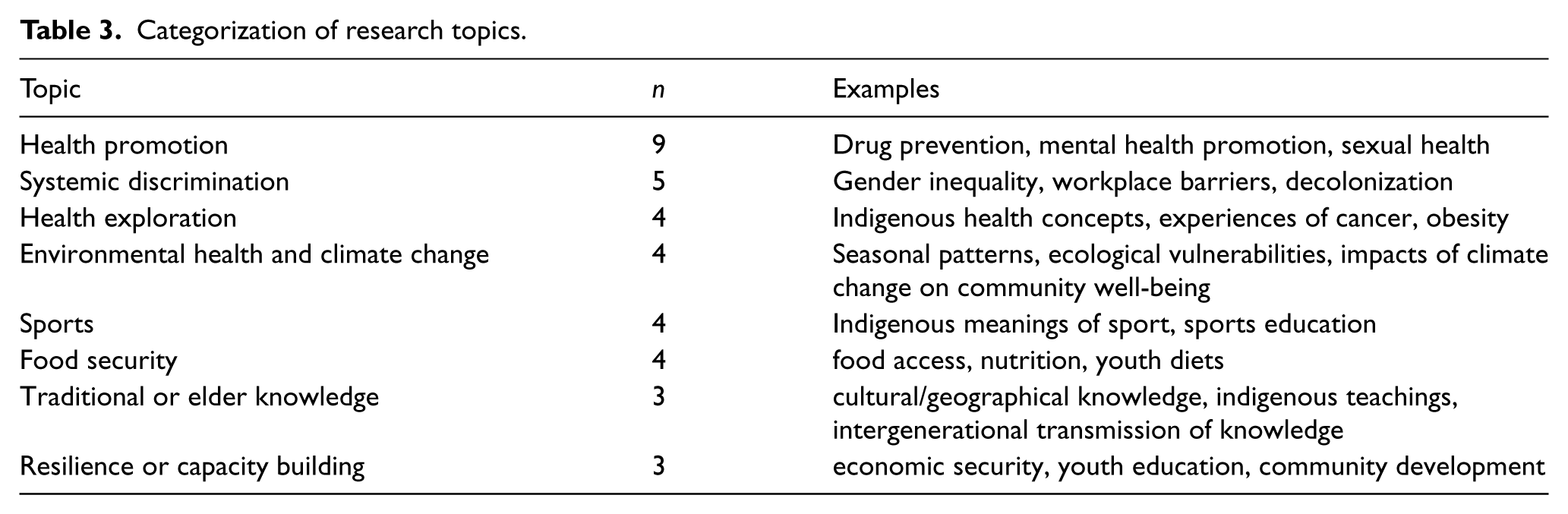
In total, the research topics of the reviewed articles fit into one of eight categories (Table 3). While the scope of our review was not restricted by research topic, health was a major theme in the resulting articles, operationalized within broader, ecological conceptions of health integrating social, cultural, and environmental processes. The second most dominant research topic was systemic discrimination, mostly in terms of colonization but sometimes intersecting with gender and sexual inequalities.
Categorization of research topics.
Below, we report on the findings according to each of our research questions.
What ABM has been used with indigenous populations?
Our resulting review of 36 articles found that, internationally, indigenous populations have engaged in a wide range of creative research methods. The most predominantly employed art forms were visual productions created through photos and images, video, and textile materials. Among the different ABMs, photovoice was the most frequently used, with 20 of the 36 articles including this method. The next most common method was video production, including seven studies engaging in such practices as documentary film-making and digital storytelling. Drawing was involved in six studies, and multimedia visual arts (e.g. murals, calendars, collages, mapping) were used in another six studies. The remaining articles reported applications of writing (e.g. journaling), music, dance, applied theatre (e.g. role-playing), painting, and handicrafts (Table 4).
Distribution and impacts of ABMs.
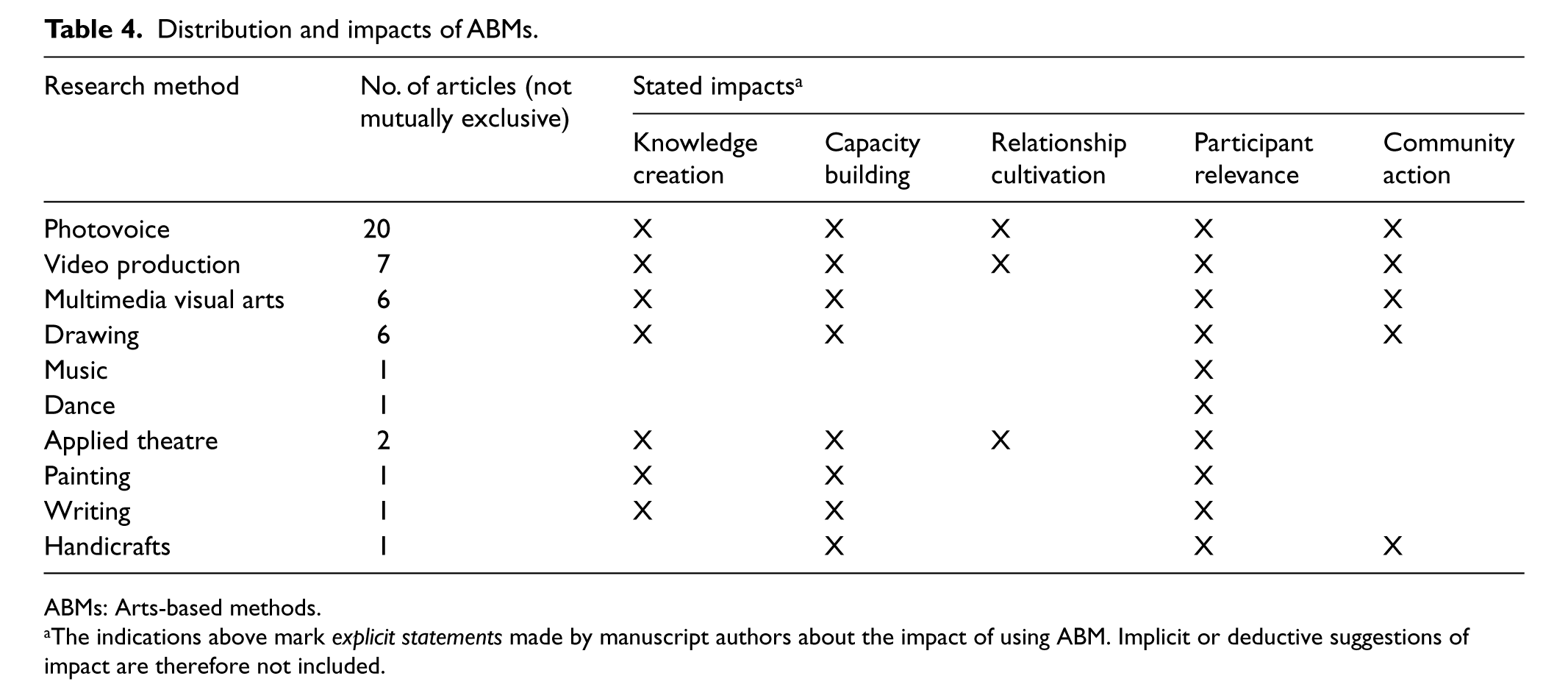
ABMs: Arts-based methods.
The indications above mark explicit statements made by manuscript authors about the impact of using ABM. Implicit or deductive suggestions of impact are therefore not included.
In which areas of the world has ABM been used?
Turning to the geography of the articles (Figure 2), we found that nearly half of the research was conducted in Canada (n = 20), largely in the Western provinces of British Columbia, Alberta, and Saskatchewan. Alongside Canadian representation, there were smaller pockets of research in Australia (n = 5) and the USA (n = 4). The remaining studies were spread thinly across several continents.
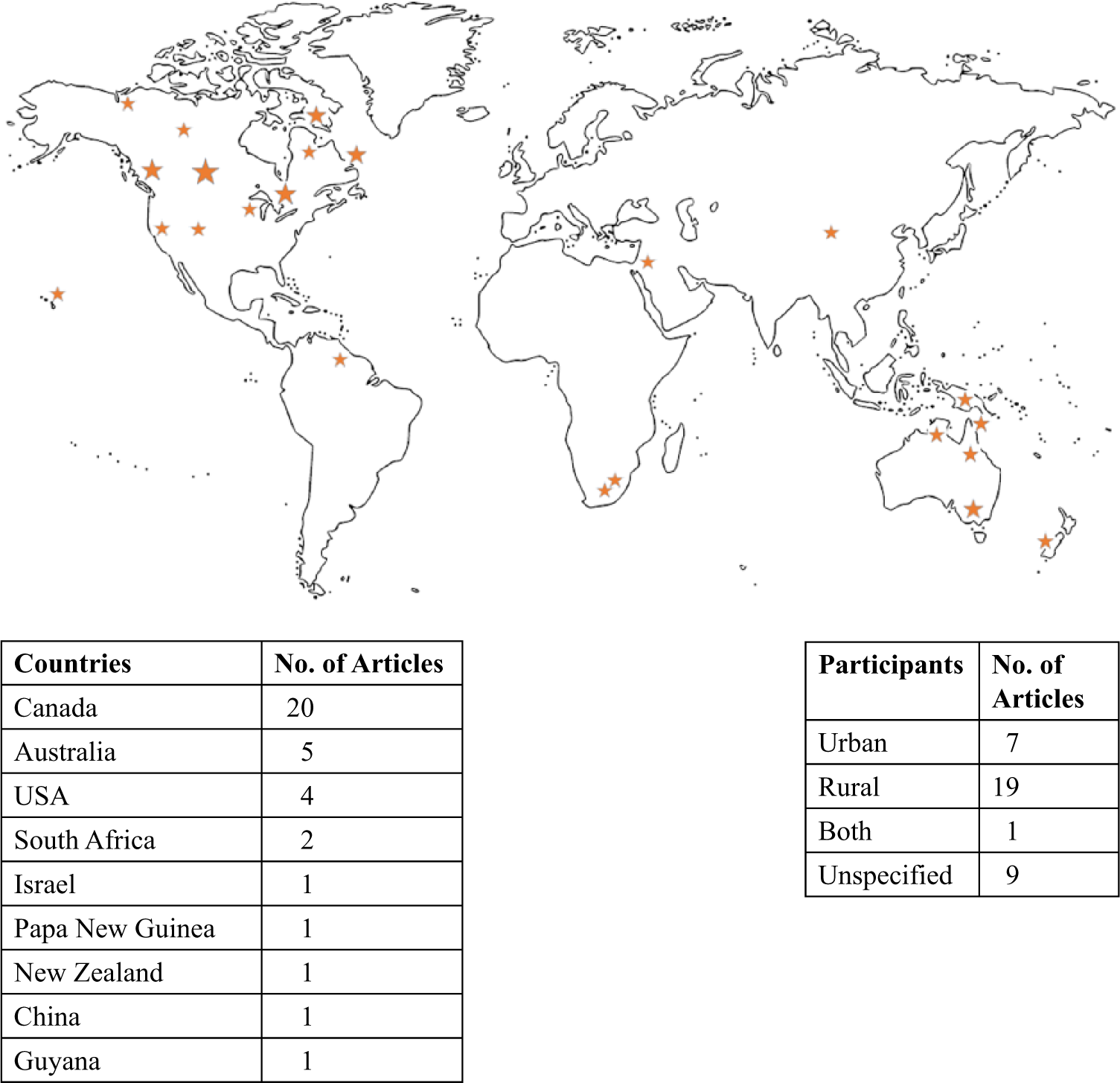
Distribution of studies by geography.
The most common regions in which the research took place were rural, remote, or isolated places (n = 19). In general, these sites were on lands historically designated for indigenous peoples. In Canada and Australia, for instance, most of the research was conducted within northern reserve lands and indigenous territories far from the main metropolitan areas.
In terms of target participant groups, 19 articles researched youth perspectives exclusively, while 5 focused on adults, 1 on elders, and 2 that worked across generations (e.g. elders interacting with youth). A total of 9 articles did not specify the age parameters of their study.
What were the stated impacts of ABM on indigenous participants and communities?
Our review extracted statements about the value and impacts of using ABM with indigenous peoples. We categorized these statements into five primary areas of impact, described below: (a) engaging participants in interesting and culturally relevant activities; (b) cultivating relationships of mutual trust, respect, and power; (c) creating new (forms of) knowledge; (d) building individual or community capacities; and (e) initiating community action and change (Table 4).
Engaging participants in interesting and culturally relevant activities
Crucial to an indigenous research agenda is that the research is relevant and engaging for communities (Smith, 2013). Most of the reviewed articles commented on how participants felt about the creative process itself, mainly in positive terms (e.g. Helm et al., 2015; McHugh, Coppola, & Sinclair, 2013). For example, using mandala drawings, researchers in Wikwemikong Unceded Indian Reserve, Canada, explored the sport experiences and challenges of acculturation among First Nations athletes (Blodgett et al., 2013; Blodgett et al., 2014). They report that the method of drawing “served a community-driven PAR agenda by producing knowledge that is directly amenable to local action and that sustains Aboriginal (i.e. circular) ways of thinking and being in the world” (Blodgett et al., 2013). Comparatively, they found visual forms of data were “much more accessible and relevant at the community-level than traditional forms of data presentation” like surveys (Blodgett et al., 2013). In general, ABM was determined to successfully engage indigenous communities, and only a couple articles identified limitations or barriers to engagement, such as the inaccessibility of costly digital equipment for making videos (Willox et al., 2013) or the different preferences among boys and girls for the artistic activities in which they engage (Dillon & Jones, 2009).
Many of the art forms were new to the communities participating (e.g. applied theatre, digital storytelling) but with proper protocols were incorporated into local ways of making meaning and representing experience. For instance, a pilot applied theatre project in Papua New Guinea was conducted with indigenous, non-government organizational staff, who responded that “this kind of theatrical demand was not experienced as culturally safe by local people, who were reluctant to take the spotlight as individuals in the context of a public performance” (Baldwin, 2009). However, with warm-up exercises and discussion of group rules to establish a connection beforehand, the foreign activity became “a structured environment in which group mores, cultural values, and social expectations, [could] be articulated, examined, questioned, and viewed from multiple perspectives” (Baldwin, 2009). These studies showed that introduction of new creative activities can be engaging to communities, if situated and used within locally appropriate customs.
Another aspect of engaging participants is that many indigenous communities found the creative processes interesting and enjoyable (e.g. Stewart, Riecken, Scott, Tanaka, & Riecken, 2008; Willox et al., 2013). For instance, the pleasure of doing photovoice with First Nations in Canada was tied to a sense of creating and owning something that encapsulates an expression of oneself and one’s culture (Castleden et al., 2008). Australian Aboriginal women also found both the visual and the oral (storytelling) components of photovoice were “appropriate” and aligned with cultural customs for sharing knowledge (Wilkin & Liamputtong, 2010). A study of urban indigenous youth experiences of sport in Canada reported that a participatory approach helped maintain youth engagement throughout the project’s duration: “Not only did the youth optimise on an opportunity to share their knowledge but, possibly more importantly, they requested and enjoyed the photovoice approach” (McHugh et al., 2013). This aspect of research was emphasized more with youth, with whom it may have been more of an incentive in participating; nevertheless, no matter the age of participants, it was deemed important to make the research process pleasurable.
In general, ABM was found to effectively engage indigenous populations. The emphasis articles placed on the relevance and pleasure of ABM for indigenous peoples point to the importance of process over product in indigenous research. Studies were clear that the research design must work for and with all those involved lest it reinforces power differences and a colonial structure of relations within research settings.
Cultivating relationships of mutual trust, respect, and power
The success of arts-based research in indigenous communities was founded on strong relationships within the research team, often entailing community–university partnerships. These research projects worked towards building trust through opportunities for the community to guide the research project, for example, a community advisory that could make recommendations in the design and topic of the research. A community-based photovoice project with a First Nation in Western Canada evaluated the method in its cultural relevance for indigenous populations. The authors note that “the historical imbalance of power, deep-seated mistrust, racism, and lack of control between Indigenous and non-Indigenous peoples in Canada has also permeated the research process,” calling for new modes of research that counter the unequal relationship between privileged researchers and indigenous participants; they found promise in photovoice to balance power and foster trust between those involved in the research process (Castleden et al., 2008). The authors state that, on a basic level, “entrusting cameras to participants allowed them to determine the subjects of their photographs rather than the researcher making such decisions,” and this “self-determination . . . demonstrated the researchers’ confidence in the participants’ knowledge and ability in prioritizing their issues” (Castleden et al., 2008). Photovoice also demanded “extensive community interaction and relationship-building” through home visits with participants, frequent check-ins, and researcher participation in community activities (Castleden et al., 2008).
A key practice within this theme of the review was the creation of safe spaces in which both communities and researchers expressed vulnerability. In their work with Inuit in Northern Canada, Willox and colleagues (2013) reported that “through its very form, digital storytelling transforms the research process, and requires that the roles of ‘researcher’ and ‘researched’ begin to change” requiring a trust built “from listening to the stories of others, and . . . through the sharing of our own stories.” ABM can involve the creation of safe spaces but are not by default relationship building; the authors of the reviewed articles either prepared or learned along the way that they had to give some of themselves (e.g. share their own stories, participate in community ceremonies) in order to connect with communities. These results indicate that successful ABM approaches to indigenous research must make a “ceremony” of research (Wilson, 2008), in which connections are made between all parties involved through storytelling within a supportive space.
The colonial politics of research, in which researchers maintain a privileged position of knowledge production and interpretation, can be made visible and subverted by participant-led creative methods. Mistry and Berardi (2012) used participatory video to produce geographical knowledge of the North Rupununi district of Guyana; they reported that the control participants had in what stories were told was “a positive development for the research, building trust, empathy and friendship within the [participatory video] team” (Mistry & Berardi, 2012). On the other hand, the process also “uncovered other, previously hidden, power issues,” including “our (unrealistic) expectations that the community researchers would assume the ‘academic’ persona of a co-researcher” (Mistry & Berardi, 2012). Within this study, planning a “participatory” study did not automatically release it from colonial histories and dynamics; participants needed to be involved with determining the context of the research—the questions asked, the setting data were created within, the interpretation and use of data, and so on—not just the contours of the data within the creative activity.
In another example, First Nations women in Saskatchewan, Canada, engaged in photovoice to talk about their experiences with breast cancer (Poudrier & Mac-Lean, 2009). Drawing on critical theories of “visuality”, in which images are understood as “sites of power and resistance,” the authors reported that the photos formed “a connection among the women and also with key stakeholder groups” in their disruptive representations of indigenous women and their struggles with racism in health care (Poudrier & Mac-Lean, 2009).
In summary, ABM provided opportunities to address historical issues of power difference and mistrust between researchers and indigenous communities whose knowledge has often been exploited, discounted, and erased within research.
Creating new (forms of) knowledge
Across most of the studies, the knowledge produced from the creative activities was described as novel, situated within local experiences, and often subversive to dominant representations—important to the process of undoing dominant colonial narratives of indigenous peoples. The participatory video study of geographical knowledge in Guyana revealed the community researchers had transformed the research purpose and process in the way they used the video cameras; they were collecting “social memory in use” that strayed “far beyond the social-ecological remit” of the project and “did not fit neatly into our academically-informed, well-defined and pre-conceived models” (Mistry & Berardi, 2012). They state this unexpected outcome “emerged directly from the way PV was undertaken by the community researchers” (Mistry & Berardi, 2012). In other words, participants reclaimed the research question so as to explore and interpret it within their own conceptions of what is and is not relevant knowledge.
Garakani (2014) engaged a rural school in Nunavik, Canada, to explore the influence of teachers’ perceptions and practices on student resilience and school perseverance. She used a mixed-methods approach entailing questionnaires, student “dream timetables”, digital storytelling, and a collective student-written story. The study results were reported to have surprised teachers, the school, and the community at large: “The findings indicated significantly higher levels of self-esteem and motivation than were perceived and reported by the teachers” (Garakani, 2014). Of the digital stories, the authors state that “community members, especially the elders, were touched by the videos and realized that they had underestimated the degree to which the youth were attached to their land, culture, language, and traditions” (Garakani, 2014). In sum, the creative activities were found to produce new knowledge for the community that revealed students’ own capacities and local knowledge.
Several studies indicated that participants infused their artistic productions with local cultural and moral concepts, applying indigenous frameworks to activities that may or may not have a historical tradition within their communities. A New Zealand PAR study with Maori primary school children employed a visual methodology (i.e. drawing and photography) to explore their notions of well-being (Kellock, 2011). The methods were seen to enable children to describe “what was important to them,” which they revealed was “the Māori cultural beliefs of whānau [extended family and friends] and a sense of community” (Kellock, 2011). ABM offered a flexibility and openness towards different ways of knowing that enabled the youth to incorporate their cultural knowledge into the process and outcome of research.
ABM was also found to preserve elder knowledge for future generations. A visual arts project with Torres Strait Islanders in Australia focused on documenting and transferring elder knowledge about seasonal patterns and climate change to youth on the island (McNamara & McNamara, 2011). The elders created a seasonal calendar and mural at a local school, reporting on their observations of tide changes, coral reef health, species migration patterns along with weather changes, the effects of climate change on food on the island, and the movement of debri in the ocean. These visual representations made traditional knowledge accessible and visibly present to the students, enabling them to better understand local environmental indicators, ecosystem functioning, and the survival of local species (McNamara & McNamara, 2011).
ABM provided a conduit for generating traditional, local knowledge in innovative and culturally relevant ways. According to the reviewed articles, participants’ artistic creations were found to be more accessible to their communities than the products of more mainstream methods of data collection, and this enabled communities to learn and benefit from the knowledge created.
Building individual or community capacities
ABM was found to instil in participants’ newfound competence, confidence, and skills as a result of engaging in creative activities. In Israel, a study with Bedouin youth to engage them in health promotion and youth-driven community action found that “the use of cameras in the engagement process was a very effective tool to help youth express concerns about their community” (Bader, Wanono, Hamden, & Skinner, 2007). Furthermore, “youth gained competence and confidence to take action on community issues,” and the project was particularly “empowering” for girls in one community where they were witnessing “major transitions from a patriarchical society” (Bader et al., 2007). The health promotion study in Papua New Guinea, in which a 1-day applied theatre workshop was introduced, revealed that the methods were “rich in forms that support individual and communal resilience and self-efficacy, and encourage positive interpersonal interactions” (Baldwin, 2009).
Sometimes (though not always), capacity-building outcomes were part of the project design and stated objectives. Daniels (2002) used a variety of ABMs—photovoice, drawings, and role-playing—to address gender inequality and empower women living in the Weiler’s Farm community in South Africa. She found that the photovoice and drawing elements “shed light on coping mechanisms that some of the women use[d] to deal with economic and social problems,” as identified in the phrase “U khu bambana Khuthle”, translated as “working together, and unity being wonderful” (Daniels, 2002). The role-play, meanwhile, helped participants see themselves “through the eyes of others” and “critically reflect on their actions and gain clarity” about issues of disempowerment, housing insecurity, and internal fighting within the community (Daniels, 2002).
Whether these built capacities were sustainable over time is a question that remains within most articles; however, some studies attempted to more palpably secure a positive future for communities. Rural Zhuang and Han women living in the Yunnan province of China participated in a community development project to build their economic and cultural capacity through traditional embroidery (Ku, 2011). The impetus for the project was the preservation of an indigenous community within an encroaching globalized world that threatened their cultural and economic sustenance. Through group craft activities alongside education on economic markets and financial management, the women developed capacity to make and sell traditional handicrafts within and outside their village. The article states that, by becoming active participants both in their communities and in local market economies, many of the villagers had “regained their sense of control over their own destiny and ha[d] developed a much stronger sense of identification with their cultural heritage” (Ku, 2011).
Most articles argued that indigenous participants left the research with skill sets that could open opportunities to participate in their communities—as critical subjects, facilitators and leaders, action mobilizers, and problem solvers. Studies described a variety of capacities being impacted by ABM, from the general (e.g. communication, self-efficacy, coping skills, and confidence) to the particular (e.g. increased savvy with photography or film editing practices). Whether intended or not, these capacities were evidently cultivated by engaging in the arts.
Initiating community action and change
A final and crucial outcome of the reviewed studies was the power of the arts to foster change in the social, economic, and political lives of indigenous peoples. One of the most common ways arts-based research sparked action was by exhibiting study findings in public spaces like community centres and museums (Bader et al., 2007; Lardeau, Healey, & Ford, 2011). Graziano (2004) worked with Zulu and Swati gay men and lesbian women in South Africa to identify how they coped with oppression. The method of photovoice “empowered participants to explore and ameliorate their present reality,” becoming aware of “their community’s strengths and weaknesses” (Graziano, 2004). A photo exhibit of the study’s findings was held at a local library, and this “provided a venue for participants to take action and speak out against social injustices . . . [and] share with the community their ideas and recommendations to improve public and social policy” (Graziano, 2004).
A large minority of studies went beyond community presentations to plan and deliver implementation strategies in order to close the knowledge–action gap. Photovoice exploring Anishinabek children’s (Canada) concepts of health led to the development of a culturally relevant Aboriginal Children’s Health and Well-Being Measure, distilled by a community advisory from over 200 concepts expressed in the photos to 60 questionnaire items and framed within the four quadrants of the Medicine Wheel (Young et al., 2013); the measure was subsequently integrated in programme evaluations of health services in the community. A photovoice study exploring food security for Aboriginal Australians in an urban area produced knowledge “about the localised situation” that was “used as part of the first action research cycle to develop interventions” through a local community centre: cooking classes for parents; a cookbook of accessible, healthy foods; plans to set up a food bank; and creation of a community garden (Adams et al., 2012), to name a few.
Digital storytelling was used within the Round Valley Confederate Indian Tribes, a remote Native American community, to identify community priority factors around food security (Jernigan, Salvatore, Styne, & Winkleby, 2011). The three top priorities identified by the digital stories were the lack of Native jobs and local ownership of food production/distribution; the lack of good quality, culturally appropriated, and traditional foods; and the lack of access to safe spaces to exercise; these three issues became the focus on designing and implementing community programmes. Some of the initiatives spawned from the study included (a) creation of a Producer’s Guild and a community coalition to keep produce in the community and guarantee growers payment for unused food, (b) negotiations with the farmer’s market vendors to allow Native clients to pay with food assistance funds, (c) additional shelf space created at the grocery story for fresh vegetables and fruits, (d) a programme to provide special bulk and traditional food orders for diabetics, and (e) creation of a bike path and biking programme incorporating indigenous art and education (Jernigan et al., 2011).
There were varying levels of community transformation and action across the studies, likely for a number of circumstantial reasons: the extent of community readiness for change, the strength of university–community partnerships, the integration of action into research objectives, the length of research funding, and so on. However, the potential for ABM to mobilize indigenous communities was highly visible across the studies and a significant strength towards building an indigenous research agenda.
Discussion
This review identified some promising trends in the benefits ABM may offer to research with indigenous peoples. First and foremost, there is evidence to show that ABM may be used to promote an indigenous research agenda by enabling communities to break out of the colonial cycle of being researched so that they may “research back” (Smith, 2013). Through participatory designs, ABM centred the research process around indigenous ontologies, enquiries, and knowledges. While there were variable levels of community engagement and change across the studies, the outcomes of the research increased communities’ readiness, capacity, and tactics for implementing positive changes.
We can glean a number of recommendations that, across international contexts, seemed to enhance the participatory and transformative potential of ABM with indigenous populations. Some of these recommendations include (a) creating community-level partnerships from beginning to end of study in order to build mutual understanding and trust; (b) breaking from the standard elegiac narrative of indigenous existence by highlighting individual and community strengths, innovation, and capacity; and (c) ensuring participant decision-making power not only in data production (i.e. the creative activities themselves) but also in research design and purpose, and in analysis and dissemination.
As part of the larger landscape of methodological pluralism, ABM offers new forms of knowledge embedded within different sensory modalities, as well as opportunities to create existing or anticipated knowledge in creative, transformative ways (Leavy, 2015). The study of Black South African women found that photos initiated more discussion about life in settlements more than one-on-one interviews, drawings helped them represent things they could not represent or were not satisfied with in their photographs, role-playing enabled participants to see themselves through the eyes of others, and all of the above overcame barriers of the participants’ literacy levels (Daniels, 2002).
Blodgett et al. (2013) cautioned that research methods that “rely on language as the sole medium for creation and communication of knowledge” can produce “one-dimensional forms that are not recognizable at the community level,” thus obstructing a decolonizing path. Their study about indigenous athletes’ sport experiences used mandala drawings because their circular structure was found to be culturally relevant as an image of the cycles of life and nature (Blodgett et al., 2013). The core of an indigenous research agenda is to engage in knowledge production that is relevant, respectful, and actionable among the communities participating in and impacted by the knowledge (Smith, 2013). Research for the sake of transforming colonial dynamics must therefore consider how knowledge is produced (i.e. which methods and modes of representation will resonate best with indigenous communities) as well as the intent behind it.
When used in combination with other methods, ABM can also be used for a variety of purposes as defined within the mixed-method literature, from triangulation (confirming evidence) to initiation (sparking further questions; Greene, 2007). Often researchers who conducted mixed-methods research used photovoice to triangulate findings and to ensure a robust representation of complex issues like food security and climate change (e.g. Ford et al., 2013; Harper et al., 2015; Jernigan et al., 2011). In this way, the authors demonstrated that the unique forms of data produced in ABM complemented and provided further substantiation to other data sets used within their research.
This review also reinforced the need to drive indigenous research by a robust ethics of reflexivity, relationship building, and respect for diverse ways of knowing. There continues to be slippage within research spaces to fall into dominant power dynamics between indigenous and non-indigenous peoples. For example, a case study of Inuit youth’s resistance to a social circus programme found that arts programming, despite its intended design for empowering youth, can still reproduce colonial dynamics in its structure and response when there is a lack of indigenous engagement (Schwan & Lightman, 2015). The authors stated that “quitting [the program] may be an act of resistance to Qallunaat [non-Inuit] time discipline,” which is a colonial tactic often used in “schools, industry, government practices, churches, and Euro-American models of the nuclear family” (Schwan & Lightman, 2015). A knowledge synthesis of 40 community-based arts-for-social-change programmes covering a wide range of research topics highlighted 12 ethical concerns to consider when there are community–university–artist partnerships, and among them the most pertinent for indigenous research are issues of meaningful engagement, determination of ownership of artistic productions, misrepresentation of participants, and maintenance of good, compassionate team relationships (Yassi et al., 2016). These studies show that ABM does not automatically disrupt power dynamics between indigenous participants and researchers, but instead (as does all research) require reflective and relational work.
The decolonizing promise of ABM over non-ABM is in the participatory ethics embedded within it (Leavy, 2015; Liamputtong & Rumbold, 2008), which when properly applied can foster indigenous empowerment and self-determination (Castleden et al., 2008; LaVeaux & Christopher, 2009). ABM is founded upon the prioritizing of participant expression through creative process. With its emphasis on participant-centred constructions of knowledge, ABM has an affinity with community-based, PAR designs, which this scoping review demonstrated by the fact that three-quarters of the reviewed studies had used such designs. Whatever the topic and the arrangement with communities, each research project requires a framework and clear process in place for engaging in reflexive practice and ensuring indigenous empowerment (Yassi et al., 2016).
Limitations
There are some identifiable limitations to the scoping review methodology and results. Visual arts methods, particularly photovoice, dominate the landscape of ABM with indigenous peoples. This trend might reflect the cultural relevance and appropriateness of using imagery and oral storytelling to impart indigenous knowledges, as stated in the methods justification of several of the reviewed articles (e.g. Castleden et al., 2008; Poudrier & Mac-Lean, 2009; Wilkin & Liamputtong, 2010). With the growing mass production of digital cameras and phone cameras, the method has also become increasingly versatile, mobile, and affordable. Photovoice is generally more popular and established within the broader field of ABM, particularly in terms of establishing participants’ voices, conducting needs assessments, promoting health, and facilitating community change (C. Wang & Burris, 1997; C. C. Wang, Yi, Tao, & Carovano, 1998). A scoping review of ABM health research, for instance, found photovoice was overrepresented compared to other art forms (except for theatre), as the method was used in 21 out of 71 studies (Boydell et al., 2012). Despite the demonstrated strengths of photovoice, its current prevalence overshadows the vast field of ABM inhabited by many modalities, each with their own unique process and access to different ways of knowing. Music and dance are two areas very rarely explored to date, despite their nearly universal presence in cultural traditions.
Our global comparative lens to the review risks glossing over the local contexts in which indigenous peoples engage in, experience, and understand different art forms. In part, this is due to using the catch-all term “indigenous” as a search category; while it has been used successfully to unify voices from all over the world in their shared struggles for decolonization, we acknowledge its limitations in accounting for the “national and regional particularities and various historical and cultural backgrounds” that the UN Declaration on the Rights of Indigenous Peoples (United Nations General Assembly, 2007) identifies as crucial to understanding populations’ experiences and needs. Although our comments are intentionally general, it is important to situate the potential value and uses of ABM within the specific population(s) participating in a given research project. Furthermore, if revitalizing cultures and legitimizing indigenous experiences is a primary purpose of an indigenous or decolonizing research agenda, then we should see more use of communities’ own, dominant art forms as a way to create and disseminate knowledge.
Another major limitation of the current literature is in relation to where ABM research is occurring. Nearly three-quarters of the studies were conducted in Canada, USA, and Australia alone. Perhaps indigenous issues within these countries are better resourced, more visible, or are prioritized in funding (e.g. one of the 13 national, government-funded Canadian Institutes of Health Research is the Institute of Aboriginal Peoples’ Health). However, these countries are far from the dominant locations of indigenous peoples, nor do they always provide leadership in advancing indigenous agendas in land claims and sovereignty; along with New Zealand, the three countries above were the only UN members to vote against the Declaration on the Rights of Indigenous Peoples.
Our search strategy drew upon terminologies that are more in operation and identifiable within North America, Australia, and New Zealand; for example, the search included “First Nations”, “Native”, and “Maori”, but not the Wayúu of Colombia, the Sami of northern Europe, the Ainu of Japan, Tibetans, Myanmar’s Shan or Akha, or most of the thousands of indigenous groups across the globe. Even the term “indigenous” is not used by all potentially applicable groups or the colonial governments that dominate discourse on their identities. The disproportionate representation of indigenous groups in Anglo-dominant countries was also maintained by a strictly English-language search. These factors in our scoping review search may have missed important arts-based research in Asia, Africa, Europe, and South America.
Conclusion
The colonization of indigenous peoples worldwide has drawn upon common, tested tactics of imperialism over time, such as pulling from Latin doctrines of terra nullius [nobody’s land] and divide et impera [divide and conquer] to legitimize colonial claims to land and governance. Apartheid, for instance, was described as “perfect racism” by South African social commentator and comedian, Trevor Noah, as the government drew upon internationally proven tactics of oppression: “They went to Australia. They went to the Netherlands. They went to America . . . [Then they] used that knowledge to build the most advanced system of racial oppression” (Noah, 2016, p. 19). Just as colonizers have shared their tactics with each other, disseminating tools used to decolonize indigenous lives in one region may help another region mobilize its people. Within this scoping review, we identified several potential impacts ABMs may offer to an indigenous research agenda, features that must support community priorities, and participation at all stages of the research process. These results highlight the primacy of relationships within indigenous research, especially between researchers and the communities they work within.
There are two key areas where more research is needed in this field. The first is in ABM outside of photovoice, such as music, dance/performance, and literary arts; while they each show promise (Table 4), there needs to be more research to determine the extent of their power. The second key area is in “non-Western” countries, that is, beyond North America, Australia, and New Zealand. While there is strong evidence for using ABM within these geographic and cultural settings, there may be many indigenous groups across the globe who could benefit from ABM, and to date, it is unclear what ABM is relevant to which groups.
The main message from our scoping review supports the extant literature on indigenous or decolonizing methodologies, which insists upon the necessity of mutual respect, trust, and self-governance within indigenous research (e.g. Kovach, 2010; Smith, 2013; Wilson, 2008). The Indigenous World (2017) annual report publishes a breakdown of the advancements indigenous peoples have made in hopes that individuals and organizations “find it useful in their advocacy work” (p. 20). In a similar regard, we hope that we have brought to light research tools from the field of ABM that may be used fruitfully to advance an indigenous research agenda of healing, decolonizing, transforming, and mobilizing communities.
Footnotes
Declaration of conflicting interests
The author(s) declared no potential conflicts of interest with respect to the research, authorship, and/or publication of this article.
Funding
The author(s) received no financial support for the research, authorship, and/or publication of this article.
Glossary
divide et impera divide and conquer
terra nullius nobody’s land
u khu bambana khuthle working together, and unity being wonderful
whānau extended family and friends
